 filings.tools
Item 2. Properties.
106K characters. Original on sec.gov · Markdown
Item 2. Properties.
We operate globally, with our principal executive offices located in Charlotte, North Carolina and regional shared services offices located in Budapest, Hungary and Dalian, China. Each of these properties are leased. We and our affiliates also operate regional sales and administrative offices in various locations throughout the world, which are generally leased.
We believe that our production facilities, research and development facilities, and sales and administrative offices are generally well maintained, effectively used and are adequate to operate our business. During 2023, the Company’s manufacturing plants operated at approximately 75% capacity, in the aggregate.
Set forth below is information regarding our production facilities operated by us and our affiliates. Additional details regarding our significant mineral properties can be found below the table.
| Location | Principal Use | Owned/Leased | ||||||||||||||||||
| Energy Storage | ||||||||||||||||||||
| Chengdu, China | Production of lithium carbonate and technical and battery-grade lithium hydroxide | Owned | ||||||||||||||||||
| Greenbushes, Australia(a) | Production of lithium spodumene minerals and lithium concentrate | Owned(c) | ||||||||||||||||||
| Kemerton, Australia | Production of lithium carbonate and technical and battery-grade lithium hydroxide | Owned | ||||||||||||||||||
| Kings Mountain, NC | Production of technical and battery-grade lithium hydroxide, lithium salts and battery-grade lithium metal products | Owned | ||||||||||||||||||
| La Negra, Chile | Production of technical and battery-grade lithium carbonate and lithium chloride | Owned | ||||||||||||||||||
| Qinzhou, China | Production of lithium carbonate and technical and battery-grade lithium hydroxide | Owned | ||||||||||||||||||
| Salar de Atacama, Chile(a) | Production of lithium brine and potash | Owned(d) | ||||||||||||||||||
| Silver Peak, NV(a) | Production of lithium brine, technical-grade lithium carbonate and lithium hydroxide | Owned | ||||||||||||||||||
| Wodgina, Australia(a) | Production of lithium spodumene minerals and lithium concentrate | Owned and leased(c) | ||||||||||||||||||
| Xinyu, China | Production of lithium carbonate and technical and battery-grade lithium hydroxide | Owned | ||||||||||||||||||
| Specialties | ||||||||||||||||||||
| Baton Rouge, LA | Research and product development activities, and production of fire safety solutions | Leased | ||||||||||||||||||
| Langelsheim, Germany | Production of butyllithium, lithium chloride, specialty products, lithium hydrides, cesium and special metals | Owned | ||||||||||||||||||
| Magnolia, AR(a) | Production of fire safety solutions, bromine, inorganic bromides, agricultural intermediates and tertiary amines | Owned | ||||||||||||||||||
| New Johnsonville, TN | Production of butyllithium and specialty products | Owned | ||||||||||||||||||
| Safi, Jordan(a) | Production of bromine and derivatives and fire safety solutions | Owned and leased(c) | ||||||||||||||||||
| Taichung, Taiwan | Production of butyllithium | Owned | ||||||||||||||||||
| Twinsburg, OH | Production of bromine-activated carbon | Leased | ||||||||||||||||||
| Ketjen | ||||||||||||||||||||
| Amsterdam, the Netherlands | Production of refinery catalysts, research and product development activities | Owned | ||||||||||||||||||
| Bitterfeld, Germany | Refinery catalyst regeneration, rejuvenation, and sulfiding | Owned(c) | ||||||||||||||||||
| La Voulte, France | Refinery catalysts regeneration and treatment, research and development activities | Owned(c) |
| Albemarle Corporation and Subsidiaries | ||||||||
| Location | Principal Use | Owned/Leased | ||||||||||||||||||
| McAlester, OK | Refinery catalyst regeneration, rejuvenation, pre-reclaim burn off, as well as specialty zeolites and additives marketing activities | Owned(c) | ||||||||||||||||||
| Niihama, Japan | Production of refinery catalysts | Leased(c) | ||||||||||||||||||
| Pasadena, TX(b) | Production of aluminum alkyls, orthoalkylated anilines, refinery catalysts and other specialty chemicals; refinery catalysts regeneration services and research and development activities | Owned | ||||||||||||||||||
| Santa Cruz, Brazil | Production of catalysts, research and product development activities | Owned(c) | ||||||||||||||||||
| Takaishi City, Osaka, Japan | Production of aluminum alkyls | Owned(c) |
(a) See below for further discussion of these significant mineral extraction facilities.
(b) The Pasadena, Texas location includes three separate manufacturing plants, primarily utilized by Ketjen, that are owned, including one plant that is owned by an unconsolidated joint venture.
(c) Owned or leased by joint venture.
(d) Ownership will revert to the Chilean government once we have sold all remaining amounts under our contract with the Chilean government pursuant to which we obtain lithium brine in Chile.
Mineral Properties
Set forth below are details regarding our mineral properties operated by us and our affiliates, which have been prepared in accordance with the requirements of subpart 1300 of Regulation S-K issued by the SEC. The following terms used in this Annual Report on Form 10-K are defined and used in accordance with subpart 1300 of Regulation S-K:
Mineral resource - a concentration or occurrence of material of economic interest in or on the Earth's crust in such form, grade or quality, and quantity that there are reasonable prospects for economic extraction.
Measured mineral resource - that part of a mineral resource for which quantity and grade or quality are estimated on the basis of conclusive geological evidence and sampling. The level of geological certainty associated with a measured mineral resource is sufficient to allow a qualified person to apply modifying factors in sufficient detail to support detailed mine planning and final evaluation of the economic viability of the deposit.
Indicated mineral resource - that part of a mineral resource for which quantity and grade or quality are estimated on the basis of adequate geological evidence and sampling. The level of geological certainty associated with an indicated mineral resource is sufficient to allow a qualified person to apply modifying factors in sufficient detail to support mine planning and evaluation of the economic viability of the deposit.
Inferred mineral resource - that part of a mineral resource for which quantity and grade or quality are estimated on the basis of limited geological evidence and sampling. The level of geological uncertainty associated with an inferred mineral resource is too high to apply relevant technical and economic factors likely to influence the prospects of economic extraction in a manner useful for evaluation of economic viability.
Mineral reserve - an estimate of tonnage and grade or quality of indicated and measured mineral resources that, in the opinion of the qualified person, can be the basis of an economically viable project.
Proven mineral reserve - the economically mineable part of a measured mineral resource and can only result from conversion of a measured mineral resource.
Probable mineral reserve – the economically mineable part of an indicated and, in some cases, a measured mineral resource.
Cutoff grade - the grade (i.e., the concentration of metal or mineral in rock) that determines the destination of the material during mining. For purposes of establishing “prospects of economic extraction,” the cut-off grade is the grade that distinguishes material deemed to have no economic value from material deemed to have economic value.
Under subpart 1300 of Regulation S-K, mineral resources may not be classified as “mineral reserves” unless the determination has been made by a qualified person (“QP”) that the mineral resources can be the basis of an economically viable project.
Except for that portion of mineral resources classified as mineral reserves, mineral resources do not have demonstrated economic value. Inferred mineral resources are estimates based on limited geological evidence and sampling and have a too
| Albemarle Corporation and Subsidiaries | ||||||||
high of a degree of uncertainty as to their existence to apply relevant technical and economic factors likely to influence the prospects of economic extraction in a manner useful for evaluation of economic viability. Estimates of inferred mineral resources may not be converted to a mineral reserve. It cannot be assumed that all or any part of an inferred mineral resource will ever be upgraded to a higher category. A significant amount of exploration must be completed in order to determine whether an inferred mineral resource may be upgraded to a higher category. Therefore, it cannot be assumed that all or any part of an inferred mineral resource exists, that it can be the basis of an economically viable project, that it will ever be upgraded to a higher category, or that all or any part of the mineral resources will ever be converted into mineral reserves. See risk factor - “Our inability to acquire or develop additional reserves that are economically viable could have a material adverse effect on our future profitability,” in Item 1A. Risk Factors.
Overview
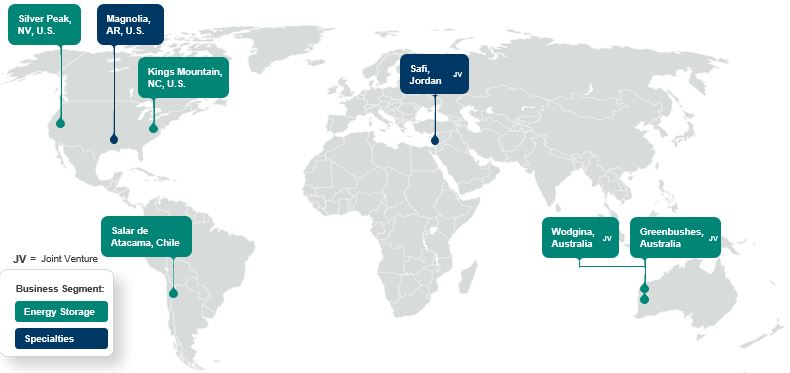
At December 31, 2023, we had the following mineral extraction facilities:
| Location | Business Segment | Ownership % | Extraction Type | Stage | |||||||||||||||||||
| Australia | |||||||||||||||||||||||
| Greenbushes | Energy Storage | 49% | Hard rock | Production | |||||||||||||||||||
| Wodgina(a) | Energy Storage | 50% | Hard rock | Production | |||||||||||||||||||
| Chile | |||||||||||||||||||||||
| Salar de Atacama(b) | Energy Storage | 100% | Brine | Production | |||||||||||||||||||
| Jordan | |||||||||||||||||||||||
| Safi(b) | Specialties | 50% | Brine | Production | |||||||||||||||||||
| United States | |||||||||||||||||||||||
| Kings Mountain, NC | Energy Storage | 100% | Hard rock | Development | |||||||||||||||||||
| Magnolia, AR(b) | Specialties | 100% | Brine | Production | |||||||||||||||||||
| Silver Peak, NV(b) | Energy Storage | 100% | Brine | Production |
(a) Production of spodumene concentrate at the Wodgina mine resumed in the second quarter of 2022 after it had been idled in 2019, following the acquisition of our interest in Wodgina. On October 18, 2023, we completed the restructuring of our MARBL joint venture, which reduced our ownership percentage of Wodgina from 60% to 50%.
(b) Site includes on-site, or otherwise near-by, exclusive conversion facilities. See individual property disclosure below for further details.
Aggregate annual production from our mineral extraction facilities is shown in the below table. Amounts represent Albemarle’s attributable portion based on ownership percentages noted above and are shown in thousands of metric tonnes of
| Albemarle Corporation and Subsidiaries | ||||||||
lithium metal and bromine production. Lithium and bromine is extracted as brine or hard rock concentrate at the extraction facilities. These are then further converted into various compounds and products at on-site processing facilities or other conversion facilities owned by Albemarle around the world. In addition, the brine or concentrate can be used by tolling entities for further processing.
| Aggregate Annual Production (metric tonnes in thousands) | |||||||||||||||||
| Year Ended December 31, | |||||||||||||||||
| 2023 | 2022 | 2021 | |||||||||||||||
| Lithium (lithium metal)****(a) | |||||||||||||||||
| Australia | |||||||||||||||||
| Greenbushes(b) | 21 | 19 | 13 | ||||||||||||||
| Wodgina(c) | 7 | 3 | — | ||||||||||||||
| Chile | |||||||||||||||||
| Salar de Atacama(d) | 10 | 10 | 8 | ||||||||||||||
| United States | |||||||||||||||||
| Silver Peak, NV | 1 | 1 | 1 | ||||||||||||||
| Total lithium metal | 39 | 33 | 22 | ||||||||||||||
| Bromine | |||||||||||||||||
| Jordan | |||||||||||||||||
| Safi(e)(f) | 58 | 60 | 57 | ||||||||||||||
| United States | |||||||||||||||||
| Magnolia, AR(g) | 82 | 73 | 71 | ||||||||||||||
| Total bromine | 140 | 133 | 128 |
(a) Lithium production amounts shown as lithium metal. Conversion to LCE is 0.1878 metric tonne of lithium metal to 1 metric tonne of LCE.
(b) Production from Greenbushes represents 49% of production of the Greenbushes mine, which is attributable to the Company’s interest in the Windfield joint venture.
(c) Production of spodumene concentrate at the Wodgina mine resumed in the second quarter of 2022 after it had been idled in 2019. Production amounts presented from Wodgina represent 60% of production of the Wodgina mine which is attributable to the Company’s interest in the MARBL joint venture until October 18, 2023, when we reduced our ownership percentage to 50% following the restructuring of the MARBL joint venture with MRL. The above production amounts reflect that change in ownership percentage beginning on October 18, 2023.
(d) The Salar de Atacama operation also produces potash (potassium chloride), bichofite, halite and sylvinite as byproducts. However, the Company does not consider production of these byproducts as material to the economics of the operation.
(e) Production from Safi represents the 50% production by the Jordan Bromine Project, which is attributable to the Company’s interest in the JBC joint venture.
(f) The Safi operation also produces potassium hydroxide (“KOH”) as a byproduct. However, the Company does not consider production of this byproduct as material to the economics of the operation.
(g) In addition, elemental sulfur and sodium hydrosulfide solution (“NaHS”) are manufactured from the sour gas produced by the Magnolia operation. However, the Company does not consider these products as material to the economics of the operation.
See individual property disclosure below for further details regarding mineral rights, titles, property size, permits and other information for our significant mineral extraction properties. The extracted brine or hard rock is processed at facilities on location (as described below) or processed, or further processed, at other facilities throughout the world.
The following table provides a summary of our mineral resources, exclusive of reserves, at December 31, 2023. The below mineral resource amounts are rounded and shown in thousands of metric tonnes. Where applicable, the amounts represent Albemarle’s attributable portion based on ownership percentages noted. The relevant technical information supporting mineral resources for each material property is included in the “Material Individual Properties” section below, as well as in the technical report summaries filed as Exhibits 96.1 to 96.6 to this report.
| Albemarle Corporation and Subsidiaries | ||||||||
| Measured Mineral Resources | Indicated Mineral Resources | Measured and Indicated Mineral Resources | Inferred Mineral Resources | ||||||||||||||||||||||||||||||||||||||||||||
| Amount (‘000s metric tonnes) | Grade (Li2O%) | Amount (‘000s metric tonnes) | Grade (Li2O%) | Amount (‘000s metric tonnes) | Grade (Li2O%) | Amount (‘000s metric tonnes) | Grade (Li2O%) | ||||||||||||||||||||||||||||||||||||||||
| Lithium - Hard Rock: | |||||||||||||||||||||||||||||||||||||||||||||||
| Australia | |||||||||||||||||||||||||||||||||||||||||||||||
| Greenbushes(a) | — | — | 37,100 | 1.48% | 37,100 | 1.48% | 5,800 | 1.19% | |||||||||||||||||||||||||||||||||||||||
| Wodgina(b) | — | — | 8,800 | 1.31% | 8,800 | 1.31% | 81,700 | 1.12% | |||||||||||||||||||||||||||||||||||||||
| United States | |||||||||||||||||||||||||||||||||||||||||||||||
| Kings Mountain, NC | — | — | 46,816 | 1.37% | 46,816 | 1.37% | 42,869 | 1.10% | |||||||||||||||||||||||||||||||||||||||
| Amount (‘000s metric tonnes) | Concentration (mg/L) | Amount (‘000s metric tonnes) | Concentration (mg/L) | Amount (‘000s metric tonnes) | Concentration (mg/L) | Amount (‘000s metric tonnes) | Concentration (mg/L) | ||||||||||||||||||||||||||||||||||||||||
| Lithium - Brine: | |||||||||||||||||||||||||||||||||||||||||||||||
| Chile | |||||||||||||||||||||||||||||||||||||||||||||||
| Salar de Atacama | 471 | 2,390 | 363 | 1,943 | 834 | 2,195 | 237 | 1,617 | |||||||||||||||||||||||||||||||||||||||
| United States | |||||||||||||||||||||||||||||||||||||||||||||||
| Silver Peak, NV | 14 | 153 | 36 | 144 | 50 | 146 | 90 | 121 | |||||||||||||||||||||||||||||||||||||||
(a) Through our Windfield joint venture, we own a 49% interest in the Greenbushes mine. We are therefore reporting 49% of Greenbushes’ mineral resources.
(b) Through our MARBL joint venture, we own a 50% interest in Wodgina. We are therefore reporting 50% of Wodgina’s mineral resources.
The feedstock for the Safi, Jordan site, owned 50% by Albemarle through its JBC joint venture, is drawn from the Dead Sea, a nonconventional reservoir owned by the nations of Israel and Jordan. As such, there are no specific resources owned by JBC, but Albemarle’s joint venture partner, Arab Potash Company (“APC”) has exclusive rights granted by the Hashemite Kingdom of Jordan to withdraw brine from the Dead Sea and process it to extract minerals. The measured resource of bromide ion attributable to Albemarle’s 50% interest in its JBC joint venture is estimated to be approximately 175.69 million metric tonnes. JBC is extracting approximately 1 percent of the bromine available in Jordan’s share of the Dead Sea. Bromide concentration in the Dead Sea is estimated to average approximately 5,000 parts per million (“ppm”).
There are no mineral resource estimates at the Magnolia, AR bromine extraction site. All bromine mineral accumulations of economic interest and with reasonable prospects for eventual economic extraction within the Magnolia production lease area are either currently on production or subject to an economically viable future development plan and are classified as mineral reserves.
The following table provides a summary of our mineral reserves at December 31, 2023. The below mineral reserve amounts are rounded and shown in thousands of metric tonnes. The amounts represent Albemarle’s attributable portion based on ownership percentages noted above. The relevant technical information supporting mineral reserves for each material property is included in the “Material Individual Properties” section below, as well as the in the technical report summaries referenced in Exhibits 96.1 to 96.6 to this report.
| Albemarle Corporation and Subsidiaries | ||||||||
| Proven Mineral Reserves | Probable Mineral Reserves | Total Mineral Reserves | |||||||||||||||||||||||||||||||||
| Amount (‘000s metric tonnes) | Grade (Li2O%) | Amount (‘000s metric tonnes) | Grade (Li2O%) | Amount (‘000s metric tonnes) | Grade (Li2O%) | ||||||||||||||||||||||||||||||
| Lithium - Hard Rock**(a):** | |||||||||||||||||||||||||||||||||||
| Australia | |||||||||||||||||||||||||||||||||||
| Greenbushes(b) | — | — | 71,800 | 1.82% | 71,800 | 1.82% | |||||||||||||||||||||||||||||
| Amount (‘000s metric tonnes) | Concentration (mg/L) | Amount (‘000s metric tonnes) | Concentration (mg/L) | Amount (‘000s metric tonnes) | Concentration (mg/L) | ||||||||||||||||||||||||||||||
| Lithium - Brine: | |||||||||||||||||||||||||||||||||||
| Chile | |||||||||||||||||||||||||||||||||||
| Salar de Atacama | 321 | 2,354 | 210 | 2,050 | 531 | 2,226 | |||||||||||||||||||||||||||||
| United States | |||||||||||||||||||||||||||||||||||
| Silver Peak, NV | 14 | 94 | 54 | 95 | 68 | 95 | |||||||||||||||||||||||||||||
| Bromine: | |||||||||||||||||||||||||||||||||||
| United States | |||||||||||||||||||||||||||||||||||
| Magnolia, AR(c) | 2,706 | 611 | 3,317 |
(a) The Wodgina mine is at an initial assessment level, and as a result, contains no mineral reserves. Mineral reserve estimates are not applicable for the Kings Mountain site.
(b) Through our Windfield joint venture, we own a 49% interest in the Greenbushes mine. We are therefore reporting 49% of Greenbushes’ mineral reserves.
(c) The concentration of bromine at the Magnolia site varies based on the physical location of the field and can range over 6,000 mg/L.
All bromine reserves reported by Albemarle for the JBC project are classified as proven mineral reserves. The mineral reserve estimate for the Safi, Jordan bromine site attributable to Albemarle’s 50% interest in its JBC joint venture is approximately 2.07 million metric tonnes of bromine from the Dead Sea. This estimate is based on the time available under the concession agreement with the Hashemite Kingdom of Jordan and the processing capability of the JBC plant. As only approximately one percent of the available resource is consumed from the Dead Sea, as noted above, the reserve estimate is based on the amount the JBC plant can produce over until the end of 2058, when the APC concession agreement ends. Bromine concentration used to calculate the reserve estimate from the Dead Sea was approximately 7,645 ppm based on historical pumping.
Mineral resource and reserve estimates were prepared by a QP with an effective date provided in the individual technical report summaries referenced in Exhibits 96.1 to 96.6 to this report. Differences between the amounts in the table above and those amounts in the technical report summaries represent estimated depletion from the effective date of the report until December 31, 2023, and in the case of Wodgina, the decrease in ownership interest to 50% from 60%. Our mineral resource and reserve estimates are based on many factors, including the area and volume covered by our mining rights, assumptions regarding our extraction rates based upon an expectation of operating the mines on a long-term basis and the quality of in-place reserves.
Internal Controls
The modeling and analysis of our mineral resources and reserves was developed by our site personnel and reviewed by several levels of internal management, as well as the QP for each site. The development of such resources and reserves estimates, including related assumptions, were prepared by a QP.
When determining resources and reserves, as well as the differences between resources and reserves, management developed specific criteria, each of which must be met to qualify as a resource or reserve, respectively. These criteria, such as demonstration of economic viability, points of reference and grade, are specific and attainable. The QP and management agree on the reasonableness of the criteria for the purposes of estimating resources and reserves. Calculations using these criteria are reviewed and validated by the QP.
| Albemarle Corporation and Subsidiaries | ||||||||
Estimations and assumptions were developed independently for each significant mineral location. All estimates require a combination of historical data and key assumptions and parameters. When possible, resources and data from public information and generally accepted industry sources, such as governmental resource agencies, were used to develop these estimations.
Each site has developed quality control and quality assurance (“QC/QA”) procedures, which were reviewed by the QP, to ensure the process for developing mineral resource and reserve estimates were sufficiently accurate. QC/QA procedures include independent checks (duplicates) on samples by third party laboratories, blind blank/standard insertion into sample streams, duplicate sampling, among others. In addition, the QPs reviewed the consistency of historical production at each site as part of their analysis of the QC/QA procedures. See details of the controls for each site in the technical summary reports filed as Exhibits 96.1 to 96.6 to this report.
We recognize the risks inherent in mineral resource and reserve estimates, such as the geological complexity, the interpretation and extrapolation of field and well data, changes in operating approach, macroeconomic conditions and new data, among others. The capital, operating and economic analysis estimates rely on a range of assumptions and forecasts that are subject to change. In addition, certain estimates are based on mineral rights agreements with local and foreign governments. Any changes to these access rights could impact the estimates of mineral resources and reserves calculated in these reports. Overestimated resources and reserves resulting from these risks could have a material effect on future profitability.
Material Individual Properties
Greenbushes, Australia

The Greenbushes mine is a hard rock, open pit mine (latitude 33° 52´S, longitude 116° 04´ E) located approximately 250km south of Perth, Western Australia, 90km southeast of the port of Bunbury, a major bulk-handling port in the southwest of Western Australia. The lithium mining operation is near the Greenbushes townsite located in the Shire of Bridgetown-
| Albemarle Corporation and Subsidiaries | ||||||||
Greenbushes. Access to the Greenbushes Mine is via the paved South Western Highway between Bunbury and Bridgetown to Greenbushes Township and via the paved Maranup Ford Road to the Greenbushes Mine.
Lithium production from the Greenbushes Mine has been undertaken continuously for more than 20 years. Modern exploration has been undertaken on the property since the mid-1980s, first by Greenbushes Limited, then by Lithium Australia Ltd and in turn by Sons of Gwalia prior to the acquisition of Greenbushes by Talison in 2007. Initial exploration focused largely on tantalum, with the emphasis changing to lithium from around 2000. In 2014, Rockwood acquired a 49% ownership interest in Windfield, which owns 100% of Talison, from Sichuan Tianqi Lithium Industries Inc. This 49% ownership in Windfield was assumed by Albemarle in 2015 as part of the acquisition of Rockwood. We purchase lithium concentrate from Windfield, and our investment in the joint venture is reported as an unconsolidated equity investment on our balance sheet.
About 55% of the tenements held by Talison are covered by Western Australia’s State Forest, which is under the authority of the Western Australia Department of Biodiversity, Conservation and Attractions. The majority of the remaining land is private land that covers about 40% of the surface rights. The remaining ground comprises crown land, road reserves and other miscellaneous reserves. The tenements cover a total area of approximately 10,000 hectares and include the historic Greenbushes tin, tantalum and current lithium mining areas. See section 3 of the Greenbushes technical report summary, filed as Exhibit 96.1 to this report, for a listing of tenements held by the Greenbushes site. Talison holds the mining rights for all lithium minerals on these tenements. The operating open pit lithium mining and processing plant area covers approximately 3,500 hectares comprising three mining leases. All lithium mining activities, including tailings storage, processing plant operations, open pits and waste rock dumps, are currently carried out within the boundaries of the three mining leases plus two general purpose leases. In order to keep the granted tenements in good standing, Talison is required to maintain permits, make an annual contribution to the statutory Mining Rehabilitation Fund and pay a royalty on concentrate sales for lithium mineral production as prescribed under the Mining Act 1978 in Western Australia. There are no private royalties that apply to the Greenbushes property. Talison continues to review all tenements on an annual basis and ensures compliance with relevant regulatory requirements and fees for maintenance of these tenements.
The Greenbushes pegmatite deposit consists of a primary pegmatite intrusion (Central Lode) with a smaller, sub-parallel pegmatite to the east (Kapanga). The primary intrusion and its subsidiary dikes and pods are concentrated within shear zones within a metamorphic belt consisting of granofels, ultramafic schists and amphibolites. The pegmatites are crosscut by mafic dolerite dikes. The Central Lode pegmatite is over 3 kilometers long (north by northwest), up to 300 meters wide (normal to dip), strikes north to north-west and dips moderately to steeply west to south-west. The Kapanga deposit sits approximately 300 m to the east of the Central Lode deposit with strike length of 1.8 km, thickness averaging 150 meters and dips between 40o and 60o toward the west. Current drilling has defined the Kapanga deposit to approximately 450 meters depth below surface. The major minerals from the Greenbushes pegmatite are quartz, spodumene, albite and K-feldspar.
The main lithium-bearing minerals are spodumene (containing approximately 8% lithium oxide) and varieties kunzite and hiddenite. Minor to trace lithium minerals include lepidolite mica, amblygonite and lithiophilite. Lithium is readily leached in the weathering environment and thus is virtually non-existent in weathered pegmatite. Exploration drilling at Greenbushes has been ongoing for over 40 years using reverse circulation and diamond drill holes.
Three lithium mineral processing plants are currently operating on the Greenbushes site, two chemical grade plants and a technical grade plant. Tailings are discharged to the tailings storage facility without the need for any neutralization process. Additional infrastructure on site includes power and water supply facilities, a laboratory, administrative offices, occupational health/safety/training offices, dedicated mines rescue area, stores, storage sheds, workshops and engineering offices. The Greenbushes site also leases production drills, excavators, trucks and various support equipment to extract the ore deposit by open pit methods. Talison’s power is delivered by a local distribution system and reticulated and metered within the site. Water is sourced from rainfall and stored in several process dams located on site. We consider the condition of all of our plants, facilities and equipment to be suitable and adequate for the businesses we conduct, and we maintain them regularly. As of December 31, 2023, our 49% ownership interest of the gross asset value of the facilities at the Greenbushes site was approximately $803.5 million. Greenbushes is currently constructing a new chemical grade plant with a target completion in 2025 and is developing plans for a fourth chemical grade plant to be constructed in 2027. Other planned upgrades to the infrastructure include a new mine service area, a new mine access road, expansions of warehouse and laboratories and the expansion of tailings facilities.
Talison ships the chemical-grade lithium concentrate in vessels to our facilities in Meishan and Xinyu, China, and by land transport to our Kemerton, Australia facility, to process into battery-grade lithium hydroxide. In addition, the output from Talison can be used by tolling entities in China to produce both lithium carbonate and lithium hydroxide.
| Albemarle Corporation and Subsidiaries | ||||||||
A summary of the Greenbushes facility’s lithium mineral resources, exclusive of reserves, and reserves as of December 31, 2023 is shown in the following tables. SRK Consulting (U.S.) Inc. (“SRK”), a third-party firm comprising mining experts in accordance with Item 1302(b)(1) of Regulation S-K, served as the QP and prepared the estimates of lithium mineral resources and reserves at the Greenbushes facility, with an effective date of December 31, 2023. A copy of the QP’s most recent technical report summary with respect to the lithium mineral resource and reserve estimates at the Greenbushes facility, dated February 9, 2024, with an effective date of June 30, 2023, is filed as Exhibit 96.1 to this report. The amounts represent Albemarle’s attributable portion based on a 49% ownership percentage, and are presented as metric tonnes of lithium ore in thousands.
The Greenbushes mineral resources, exclusive of reserves, estimates with depletion from production from the effective date of the report through December 31, 2023 are summarized in the following table:
| Amount (‘000s metric tonnes) | Grade (Li2O%) | |||||||||||||
| Indicated mineral resources | 37,100 | 1.48% | ||||||||||||
| Inferred mineral resources | 5,800 | 1.19% | ||||||||||||
-
Albemarle’s attributable portion of mineral resources is 49%.
-
Mineral resources are reported exclusive of mineral reserves. Mineral resources are not mineral reserves and do not have demonstrated economic viability.
-
Mineral resources have been reported as in situ (hard rock within an optimized pit shell and above the effective cutoff grade).
-
Mineral resources have been categorized subject to the opinion of the QP based on the quality of informing data for the estimate, consistency of geological/grade distribution, and data quality.
-
Mineral resources which are contained within the mineral reserves pit design may be excluded from mineral reserves due to an Inferred classification.
-
All indicated stockpiled resources have been converted to mineral reserves.
-
Open pit mineral resources are reported considering a nominal set of assumptions for reporting purposes:
◦Chemical grade plant weight recovery (mass yield) varies as a function of Li2O% grade. The mass yield equation used for reasonable prospects for economic extraction pit optimization is Mass Yield %=9.362 x Li2O%^1.319 - 1.5, subject to a 97% recovery limitation when the Li2O grade exceeds 5.8%. Recovery is set to zero when the mass yield equation result for a block is less than zero.
◦Derivation of economic cutoff grade for mineral resources is based on the mine gate pricing of $1,525/t of 6% Li2O concentrate. The mine gate price is based on $1,650/t-conc CIF less $125/t-conc for government royalty and transportation to China.
◦Costs estimated in Australian Dollars (“AUD”) were converted to U.S. dollars based on an exchange rate of AUD1.00:$0.68.
◦The economic cutoff grade calculation is based on $2.67/t-ore incremental ore mining cost, $31.90/t-ore processing cost, $9.24/t-ore G&A cost, and $2.35/t-ore sustaining capital cost. Incremental ore mining costs are the costs associated with the run-of-mine loader, stockpile rehandling, grade control assays and rockbreaker.
◦The price, cost and mass yield parameters produce a calculated resource economic cutoff grade of 0.576% Li2O. However, due to the internal constraints of the current operations, an elevated mineral resource cutoff grade of 0.7% Li2O has been applied. SRK notes actual economic cutoff grade is lower, but it is the QP’s opinion to use a 0.7% Li2O cutoff grade to align with current site practices.
◦An overall 40° (east side) and 47° (west side) pit slope angle, 0% mining dilution, and 100% mining recovery.
◦Mineral resources were reported above the assigned 0.7% Li2O cutoff grade and are constrained by an optimized 0.90 revenue factor pit shell.
◦No infrastructure movement capital costs have been added to the optimization.
- Mineral resources tonnage and contained metal have been rounded to reflect the accuracy of the estimate, and numbers may not add due to rounding.
The Greenbushes indicated mineral resources of 37.1 million metric tonnes at December 31, 2023 increased by 70% from 21.8 million metric tonnes at December 31, 2022. The Greenbushes inferred mineral resources of 5.8 million metric tonnes at December 31, 2023 decreased by 80% from 28.3 million metric tonnes at December 31, 2022. The overall decrease in mineral resources was primarily driven by an update of the resource model as a result of the availability of new drilling data as well as mine depletion during 2023.
| Albemarle Corporation and Subsidiaries | ||||||||
The Greenbushes mineral reserve estimates with depletion from production from the effective date of the report through December 31, 2023 are summarized in the following table:
| Amount (‘000s metric tonnes) | Grade (Li2O%) | |||||||||||||
| Probable mineral reserves: | ||||||||||||||
| Reserve Pit | 70,400 | 1.81% | ||||||||||||
| Stockpiles | 1,400 | 2.51% |
-
Albemarle’s attributable portion of mineral resources and mineral reserves is 49%.
-
Mineral reserves are reported exclusive of mineral resources.
-
Indicated in situ resources have been converted to Probable reserves.
-
Indicated stockpile resources have been converted to Probable mineral reserves.
-
Mineral reserves are reported considering a nominal set of assumptions for reporting purposes:
◦Mineral reserves are based on a mine gate price of $1,383/metric tonne of chemical grade concentrate (6% Li2O).
◦Mineral reserves assume 93% global mining recovery.
◦Mineral reserves are diluted at approximately 5% at zero grade for all mineral reserve blocks in addition to internal dilution built into the resource model (2.8% with the assumed selective mining unit of 5 meter x 5 meter x 5 meter).
◦The mass yield for reserves processed through the chemical grade plants is estimated based on mass yield formulas that vary depending on the Li2O% grade of the plant feed. For chemical grade plant 1, the formula is Mass Yield %=9.362 x Li2O%^1.319, subject to a 97% recovery limitation when the Li2O grade exceeds 5.5%. For chemical grade plant 2, chemical grade plant 3 and chemical grade plant 4, the formula is Mass Yield %=9.362 x Li2O%^1.319 - 1.5 subject to a 97% recovery limitation when the Li2O grade exceeds 5.8%. The weighted average life of mine mass yield for the four chemical grade plants is 19.5%.
◦The formula for mass yield for reserves processed through the technical grade plant is Mass Yield %=26.629 x Li2O% - 60.455. There is approximately 3.2 million metric tonnes of technical grade plant feed at 3.7% Li2O. The average life of mine mass yield for the technical grade plant is 38.0%.
◦Although Greenbushes produces a technical grade product from the current operation, it is assumed that the reserves reported herein will be sold as a chemical grade product. This assumption is necessary because feed for the technical grade plant is currently only defined at the grade control or blasting level. Therefore, it is conservatively assumed that concentrate produced by the technical grade plant will be sold at the chemical grade product price.
◦Derivation of economic cutoff grade for reserves is based on mine gate pricing of $1,383/t of 6% Li2O concentrate. The mine gate price is based on $1,500/t-conc CIF less $117/t-conc for government royalty and transportation.
◦Costs estimated in AUD were converted to U.S. dollars based on an exchange rate of AUD1.00:$0.68.
◦The economic cutoff grade calculation is based on US$2.67/t-ore incremental ore mining cost, $31.90/t-ore processing cost, $9.24/t-ore G&A cost, and $2.35/t-ore sustaining capital cost. Incremental ore mining costs are the costs associated with the run-of-mine loader, stockpile rehandling, grade control assays and rockbreaker
◦The price, cost and mass yield parameters produce a calculated economic cutoff grade of 0.606% Li2O. However, due to the internal constraints of the current operations, an elevated Mineral Reserves cutoff grade of 0.7% Li2O has been applied.
◦The cutoff grade of 0.7% Li2O was applied to reserves that are constrained by the ultimate pit design and are detailed in a yearly mine schedule.
◦Stockpile reserves have been previously mined and are reported at a 0.7% Li2O cutoff grade.
-
Waste tonnage within the reserve pit is 716.6 million metric tonnes at a strip ratio of 4.93:1 (waste to ore – not including mineral reserve stockpiles).
-
Mineral reserve tonnage, grade and mass yield have been rounded to reflect the accuracy of the estimate, and numbers may not add due to rounding. Mineral reserves metric tonnes are rounded to the nearest hundred thousand tonnes.
The Greenbushes total mineral reserves of 71.8 million metric tonnes at December 31, 2023 decreased by 7% from 77.0 million metric tonnes at December 31, 2022. The decrease in total mineral reserves was primarily driven by a different mineral resources block model, a higher strip ratio, an increase in estimated operating costs and 2023 mine depletion from 2023 production.
The life of mine sustaining capital cost of $2.35/metric tonne of ore was used only for the purposes of pit optimization and cut-off grade calculation. This sustaining capital cost was based on estimates of life of mine annual sustaining capital costs for Greenbushes that were included in the 2024 budget. Subsequent to pit optimization, design and scheduling, a detailed estimate of life of mine sustaining capital costs was prepared.
Additional information about key assumptions and parameters relating to the lithium mineral resources and reserves at the Greenbushes facility is discussed in sections 11 and 12, respectively, of the Greenbushes technical report summary.
| Albemarle Corporation and Subsidiaries | ||||||||
Wodgina, Australia
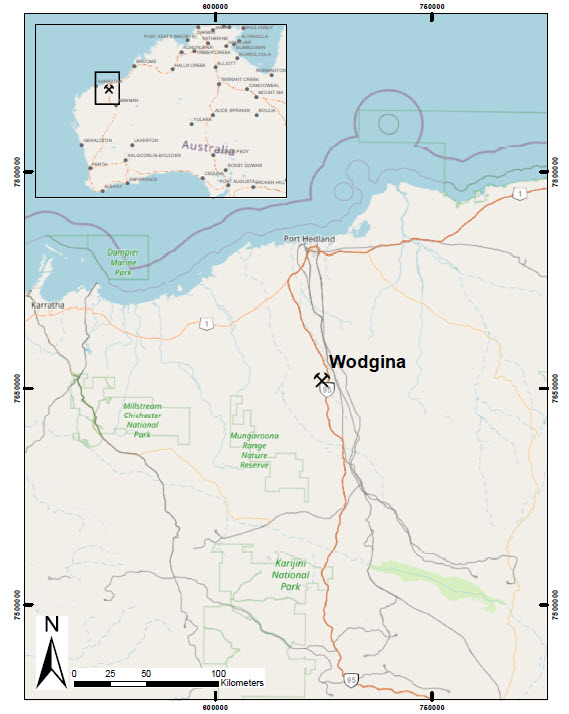
The Wodgina property, which includes a hard rock, open pit mine (latitude -21° 11' 25"S, longitude 118° 40' 25"E) is located approximately 110 km south-southeast of Port Hedland, Western Australia between the Turner and Yule Rivers. The area includes multiple prominent greenstone ridges up to 180 m above mean sea level surrounded by granitic plains and lowlands. The property is accessible via National Highway 1 to National highway 95 to the Wodgina camp road. All roads to site are paved. The nearest large regional airport is in Port Hedland which also hosts an international deep-water port facility. In addition, a site dedicated all-weather airstrip is located near to site, capable of landing certain aircrafts.
The Wodgina pegmatite deposits were discovered in 1902. Since then, the pegmatite-hosted deposits have been mined for tin, tantalum, beryl, and lithium by various companies. Mining occurred sporadically until Goldrim Mining formed a new partnership with Pan West Tantalum Pty Ltd., who opened open pit mining at the site in 1989 and progressively expanded during the 1990s. Active mining at the Mt. Cassiterite pit has been started and stopped regularly between 2008 and the present. The mine was placed on care and maintenance in 2008, 2012, and most recently in 2019. In 2016, MRL acquired the mine and upgraded the processing facilities and site infrastructure to 750ktpa spodumene plant producing 6% spodumene concentrate, completed in 2019. On October 31, 2019, we completed the acquisition of a 60% interest in this hard rock lithium mine project and formed an unincorporated joint venture with MRL, named MARBL. We formed MARBL for the exploration, development, mining, processing and production of lithium and other minerals (other than iron ore and tantalum) from Wodgina. Production of spodumene concentrate from the first and second trains at the Wodgina mine was achieved in May and July of 2022, respectively, after it had been idled following its acquisition in 2019. On October 18, 2023, we closed on the restructuring of the MARBL joint venture with MRL, which resulted in the reduction of our ownership interest in Wodgina to 50% from 60%.
Wodgina holds mining tenements within the Karriyarra native title claim and are subject to the Land Use Agreement dated March 2001 between the Karriyarra People and Gwalia Tantalum Ltd (now Wodgina Lithium, a 100% subsidiary of MRL, our MARBL joint venture partner). See section 3 of the Wodgina technical report summary, filed as Exhibit 96.2 to this report, for a listing of all mining and exploration land tenements, which are in good standing and without any known impediments. Certain
| Albemarle Corporation and Subsidiaries | ||||||||
tenements are due for renewal in 2026 and another in 2030. Drilling and exploration activities have been conducted throughout the mining life of the Wodgina property.
The Wodgina mine is a pegmatite lithium deposit with spodumene the dominant mineral. The lithium mineralization occurs as 10 - 30 cm long grey-white spodumene crystals within medium grained pegmatites comprising primarily of quartz, feldspar, spodumene, and muscovite. Typically, the spodumene crystals are oriented orthogonal to the pegmatite contacts.
The facilities at Wodgina consist of a three stage crushing plant, the spodumene concentration plant, administrative offices, an accommodation camp, a power station, gas pipeline, three mature and reliable water bore fields, extension for future tailing storage and a fleet of owned and leased mine production equipment. The gas pipeline feeds the site power station to provide the power to the facilities. Water is obtained from the dedicated water bore fields. We consider the condition of all of our plants, facilities and equipment to be suitable and adequate for the businesses we conduct, and we maintain them regularly. As of December 31, 2023, our 50% ownership interest of the gross asset value of the facilities at our Wodgina site was approximately $271.0 million.
A summary of the Wodgina facility’s lithium mineral resources as of December 31, 2023 is shown in the following table. SRK served as the QP and prepared the estimates of lithium mineral resources at the Wodgina facility, with an effective date of December 31, 2023. No reserves have been declared at Wodgina. A copy of the QP’s most recent technical report summary with respect to the lithium mineral resource estimates at the Wodgina facility, dated February 14, 2023, with an effective date of December 31, 2022, is filed as Exhibit 96.2 to this report. The mineral resource economic assumptions remain unchanged from December 31, 2022. The December 31, 2022 resource has been depleted for actual production and adjusted for the new 50% ownership percentage noted above, and is reported as of December 31, 2023 in the below table. Mineral resources represent 50% interest in Wodgina, which is attributable to the Company’s interest in the MARBL joint venture. Amounts are presented as metric tonnes of lithium ore in thousands.
The Wodgina mineral resources, exclusive of reserves, estimates with depletion from production from the effective date of the report through December 31, 2023 are summarized in the following table:
| Amount (‘000s metric tonnes) | Grade (Li2O%) | |||||||||||||
| Indicated mineral resources | 8,800 | 1.31% | ||||||||||||
| Inferred mineral resources | 81,700 | 1.12% |
-
The summary mineral resources attributable tonnes reflects Albemarle’s 50% ownership percentage in Wodgina.
-
All significant figures are rounded to reflect the relative accuracy of the estimates.
-
The mineral resource estimate has been classified in accordance with SEC S-K 1300 guidelines and definitions.
-
The Cassiterite Deposit comprises the historically mined Mt. Cassiterite pit and undeveloped North Hill areas.
-
Mineral resources are not mineral reserves and do not have demonstrated economic viability. Inferred mineral resources have a high degree of uncertainty as to their economic and technical feasibility. It cannot be assumed that all or any part of an inferred mineral resources can be upgraded to measured or indicated mineral resources.
-
Metallurgical recovery of lithium has been estimated on a block basis at a consistent 65% based on documentation from historical plant production.
-
To demonstrate reasonable prospects for eventual economic extraction of Mineral Resources, a cut-off grade of 0.5% Li2O based on metal recoverability assumptions, long-term price assumptions of $584 per metric tonne, variable mining costs averaging $3.40/metric tonne, processing costs and G&A costs totaling $23/metric tonne.
-
Mass yield is defined as (Li2O%*metallurgical recovery) / concentrate grade where Li2O% = lithium oxide grade in percent, metallurgical recovery = 65% and concentrate grade = 6%.
-
The mineral resources are constrained by an economic pit shell using an overall 43° pit slope angle, 0% mining dilution, and 100% mining recovery.
-
There are no known legal, political, environmental, or other risks that could materially affect the potential development of the Mineral Resources based on the level of study completed for this property.
The Wodgina indicated mineral resources of 8.8 million metric tonnes at December 31, 2023 decreased by 30% from 12.6 million metric tonnes at December 31, 2022. The Wodgina inferred mineral resources of 81.7 million metric tonnes at December 31, 2023 decreased by 17% from 98.3 million metric tonnes at December 31, 2022. The decrease in mineral resources was driven by the change in ownership interest in Wodgina from 60% to 50% as a result of the restructuring of the MARBL joint venture agreement, and depletion during the year. There were no changes to the model.
The Wodgina mine is at an initial assessment level, and as a result, contains no mineral reserves. Additional information about key assumptions and parameters relating to the lithium mineral resources at the Wodgina facility is discussed in section 11 of the Wodgina technical report summary.
| Albemarle Corporation and Subsidiaries | ||||||||
Salar de Atacama/La Negra, Chile
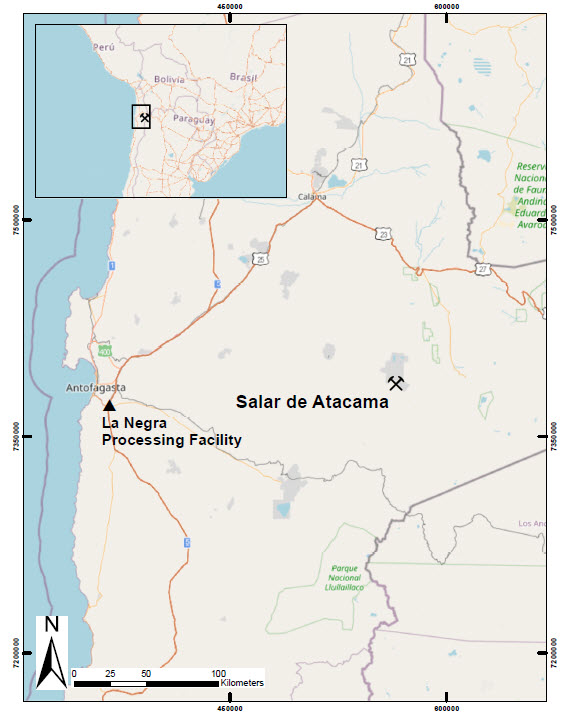
The Salar de Atacama is located in the commune of San Pedro de Atacama, with the operations approximately 100 kilometers to the south of this commune, in the extreme east of the Antofagasta Region and close to the border with the republics of Argentina and Bolivia. Access to the property is on the major four-lane paved Panamericana Route 5 north from Antofagasta, Chile approximately 60 km northeast to B-385. On B-385, a two-lane paved highway, the Albemarle Salar de Atacama project (latitude 23°38'31.52"S, longitude 68°19'30.31"W) is approximately 175 km to the east. The site has a small private airport that serves the project. A small paved runway airport is also located near San Pedro de Atacama and a large international airport is located in Antofagasta. The La Negra plant (latitude 23°45'20.31"S, longitude 70°18'36.92"W) has direct access roads and located approximately 20 km by paved four lane highway Route 28 southeast of Antofagasta turning north approximately 3 km on Route 5.
In the early 1960s, water with high concentrations of salts was discovered in the Salar de Atacama Basin. In January 1975, one of our predecessors, Foote Mineral Company, signed a long-term contract with the Chilean government for mineral rights with respect to the Salar de Atacama consisting exclusively of the right to access lithium brine, covering an area of approximately 16,700 hectares. See section 3 of the Salar de Atacama technical report summary, filed as Exhibit 96.3 to this report, for a listing of mining concessions at the Salar de Atacama site. The contract originally permitted the production and sale of up to 200,000 metric tons of lithium metal equivalent (“LME”), a calculated percentage of LCE. In 1981, the first construction of evaporation ponds in the Salar de Atacama began. The following year, the construction of the lithium carbonate plant in La Negra began. In 1990, the facilities at the Salar de Atacama were expanded with a new well system and the capacity of the lithium carbonate plant in the La Negra plant was expanded. In 1998, the lithium chloride plant in La Negra began operating, the same year that Chemetall purchased Foote Mineral Company. Subsequently, in 2004, Chemetall was acquired by Rockwood, and in 2015, Rockwood was acquired by Albemarle. Effective January 1, 2017, the Chilean government and Albemarle entered into an annex to the original agreement through which its duration was modified, extending it until the
| Albemarle Corporation and Subsidiaries | ||||||||
balance of: (a) the original 200,000 metric tons of LME and an additional 262,132 metric tons of LME granted through this annex have been exploited, processed, and sold, or (b) on January 1, 2044, whichever comes first. In addition, the amended agreement provides for commission payments to the Chilean government based on sales price/metric ton on the amounts sold under the additional quota granted, our support of research and development in Chile of lithium applications and solar energy, and our support of local communities in Northern Chile. Albemarle currently operates its extraction and production facilities in Chile under this mineral rights agreement with the Chilean government.
The Salar de Atacama is a salt flat, the largest in Chile, located in the Atacama Desert in northern Chile, which is the driest place on the planet and thus has an extremely high annual rate of evaporation and extremely low annual rainfall. Our extraction through evaporation process works as follows: snow in the Andes Mountains melts and flows into underground pools of water containing brine, which generally have high concentrations of lithium. We then pump the water containing brine above ground through a series of pumps and wells into a network of large evaporation ponds. Over the course of approximately eighteen months, the desert sun evaporates the water causing other salts to precipitate and leaving behind concentrated lithium brine. If weather conditions are not favorable, the evaporation process may be prolonged. After we obtain the lithium brine from the Salar de Atacama, we process it into lithium carbonate and lithium chloride at our manufacturing facilities in nearby La Negra, Chile.
The filling materials of the Salar de Atacama Basin are dominated by the Vilama Formation and the more recently, in geologic time, by evaporitic and clastic materials that are currently being deposited in the basin. These units house the basin's aquifer system and are composed of evaporitic chemical sediments that include carbonate, gypsum and halite intervals interrupted by volcanic deposits of large sheets of ignimbrite, volcanic ash and smaller classical deposits. Lithium-rich brines are extracted from the halite aquifer that is located within the nucleus of the salt flat. The Salar de Atacama basin contains a continental system of lithium-rich brine. These types of systems have six common (global) characteristics: arid climate; closed basin that contains a salt flat (salt crust), a salt lake, or both; igneous and/or hydrothermal activity; tectonic subsidence; suitable sources of lithium; and sufficient time to concentrate the lithium in the brine.
In the Salar de Atacama basin, lithium-rich brines are found in a halite aquifer. Carbonate and sulfates are found near the edges of the basin. The average, minimum and maximum concentrations of lithium in the Salar de Atacama basin are approximately 1,400, 900 and 7,000 mg/L, respectively. From 2017 through 2019, two drilling campaigns were carried out in order to obtain geological and hydrogeological information at the Albemarle mining concession.
The facilities at the Salar de Atacama consist of extraction wells, evaporation and concentration ponds, leaching plants, a potash plant, a drying plant, a salar yield improvement plant, services and general areas, including salt stockpiles, as well as a fleet of owned and leased equipment. In addition, the site includes administrative offices, an operations building and a laboratory. The extracted concentrated lithium brine is sent to the La Negra plant by truck for processing. The Salar de Atacama has its own powerhouse that generates the energy necessary for the entire operation of the facilities. We also have permanent and continuous groundwater exploitation rights for two wells that are for industrial use and to supply the Salar de Atacama facilities. The La Negra facilities consist of a boron removal plant, a calcium and magnesium removal plant, two lithium carbonate conversion plants, a lithium chloride plant, evaporation-sedimentation ponds, an offsite area where the raw materials are housed and the inputs that are used in the process are prepared, a dry area where the various products are prepared, as well as a fleet of owned and leased equipment. La Negra is supplied electricity from a local company and has rights to a well in the Peine community for its water supply. We completed construction of the third lithium carbonate conversion plant in late 2022. We consider the condition of all of our plants, facilities and equipment to be suitable and adequate for the businesses we conduct, and we maintain them regularly. As of December 31, 2023, the combined gross asset value of our facilities at the Salar de Atacama and in La Negra, Chile (not inclusive of construction in process) was approximately $1.9 billion.
A summary of the Salar de Atacama facility’s lithium mineral resources, exclusive of reserves, and reserves as of December 31, 2023 are shown in the following tables. SRK served as the QP and prepared the estimates of lithium mineral resources (exclusive of reserves) and reserves at the Salar de Atacama facility, with an effective date of December 31, 2023. A copy of the QP’s most recent technical report summary with respect to the lithium mineral resource and reserve estimates at the Salar de Atacama facility, dated February 14, 2023, with an effective date of August 31, 2022, is filed as Exhibit 96.3 to this report. The mineral resource economic assumptions remain unchanged from August 31, 2022. The August 31, 2022 resource has been depleted for actual production and is reported as of December 31, 2023 in the below table. The amounts represent Albemarle’s attributable portion based on a 100% ownership percentage, and are presented as metric tonnes of lithium metal in thousands.
| Albemarle Corporation and Subsidiaries | ||||||||
The Salar de Atacama mineral resource, exclusive of reserves, estimates with depletion from production from the effective date of the report to December 31, 2023 are summarized in the following table:
| Amount (‘000s metric tonnes) | Li Concentration (mg/L) | |||||||||||||
| Measured mineral resources | 471 | 2,390 | ||||||||||||
| Indicated mineral resources | 363 | 1,943 | ||||||||||||
| Measured and Indicated mineral resources | 834 | 2,195 | ||||||||||||
| Inferred mineral resources | 237 | 1,617 |
-
Mineral resources are reported exclusive of mineral reserves. Mineral resources are not mineral reserves and do not have demonstrated economic viability.
-
Given the dynamic reserve versus the static resource, a direct measurement of resources post-reserve extraction is not practical. Therefore, as a simplification, to calculate mineral resources, exclusive of reserves, the quantity of lithium pumped in the life of mine plan was subtracted from the overall resource without modification to lithium concentration. Measured and indicated resource were deducted proportionate to their contribution to the overall mineral resource.
-
Resources are reported on an in situ basis.
-
Resources are reported above the elevation of 2,200 meters above sea level. Resources are reported as lithium metal.
-
Resources have been categorized subject to the opinion of a QP based on the amount/robustness of informing data for the estimate, consistency of geological/grade distribution, survey information.
-
Resources have been calculated using drainable porosity estimated from measured values in Upper Halite and Volcano-sedimentary units, and bibliographical values based on the lithology and QP’s experience in similar deposits.
-
The estimated economic cutoff grade utilized for resource reporting purposes is 800 mg/l lithium, based on the following assumptions:
◦A technical grade lithium carbonate price of $22,000/metric tonne CIF La Negra. This is a 10% premium to the price utilized for reserve reporting purposes. The 10% premium applied to the resource versus the reserve was selected to generate a resource larger than the reserve, ensuring the resource fully encompassed the reserve while still maintaining reasonable prospect for eventual economic extraction.
◦Recovery factors for the salar operation increase gradually over the span of 4 years, from 40% in 2022 to the proposed salar yield improvement program 65% recovery in 2025. After that point, evaporation pond recovery is relatively constant at 65%. An additional recovery factor of 80% lithium recovery is applied to the La Negra lithium carbonate plant.
◦An average annual brine pumping rate of 414 L/s is assumed to meet drawdown constraint consistent with Albemarle’s permit conditions.
◦Operating cost estimates are based on a combination of fixed brine extraction, G&A and plant costs and variable costs associated with raw brine pumping rate or lithium production rate. Average life of mine operating cost is calculated at approximately $4,155/metric tonne CIF Asia.
◦Sustaining capital costs are included in the cut-off grade calculation and post the salar yield improvement program installation, average around $98 million per year.
- Mineral Resources tonnage and contained metal have been rounded to reflect the accuracy of the estimate, and numbers may not add due to rounding.
The Salar de Atacama measured and indicated mineral resources, exclusive of reserves, as of December 31, 2023 did not change from the reported balances as of December 31, 2022 as all 2023 production was depleted from the reserves.
The Salar de Atacama reserve estimates with depletion from production from the effective date of the report through December 31, 2023 are summarized in the following table:
| Amount (‘000s metric tonnes) | Concentration (mg/L) | |||||||||||||
| Proven mineral reserves: | ||||||||||||||
| In Situ | 297 | 2,316 | ||||||||||||
| In Process | 24 | 2,841 | ||||||||||||
| Probable mineral reserves: | ||||||||||||||
| In Situ | 210 | 2,050 | ||||||||||||
| Total mineral reserves: | ||||||||||||||
| In Situ | 507 | 2,198 | ||||||||||||
| In Process | 24 | 2,841 |
- In process reserves quantify the prior 24 months of pumping data and reflect the raw brine, at the time of pumping. These reserves represent the first 24 months of feed to the lithium process plant in the 2022 economic model.
| Albemarle Corporation and Subsidiaries | ||||||||
-
Proven reserves have been estimated as the lithium mass pumped during Years 2024 through 2033 of the proposed life of mine plan.
-
Probable reserves have been estimated as the lithium mass pumped from 2034 until the end of the proposed life of mine plan (2041).
-
The ratio of in situ proven to probable reserves has remained consistent through depletion since the development of the reserve model in 2022 with approximately 57% of the reserve designated as probable and 43% of the reserve designated as proven.
-
Reserves are reported as lithium metal
-
This mineral reserve estimate was derived based on a production pumping plan truncated in December 31, 2041 (i.e., approximately 19 years). This plan was truncated to reflect the projected depletion of Albemarle’s authorized lithium production quota.
-
The 2022 reserve model used as the basis for depletion has not been updated. The following assumptions were used in developing that model:
◦The estimated economic cut-off grade for the Project is 858 mg/l lithium, based on the assumptions discussed below. The truncated production pumping plan remained well above the economic cut-off grade (i.e., the economic cut-off grade did not result in a limiting factor to the estimation of the reserve).
◦A technical grade lithium carbonate price of $20,000/metric tonne CIF Asia.
◦Recovery factors for the salar operation increase gradually over the span of 4 years, from 40% in 2022 to the proposed salar yield improvement program 65% recovery in 2025. After that point, evaporation pond recovery remains relatively constant at 65%, An additional recovery factor of 80% lithium recovery is applied to the La Negra lithium carbonate plant.
◦A fixed average annual brine pumping rate of 414 L/s is assumed to meet consistent with Albemarle’s permit conditions.
◦Operating cost estimates are based on a combination of fixed brine extraction, G&A and plant costs and variable costs associated with raw brine pumping rate or lithium production rate. Average life of mine operating cost is calculated at approximately $4,155/metric tonne CIF Asia.
◦Sustaining capital costs are included in the cut-off grade calculation and post the salar yield improvement program installation, average around $98 million per year.
- Mineral reserve tonnage, grade and mass yield have been rounded to reflect the accuracy of the estimate and numbers may not add due to rounding.
The Salar de Atacama total mineral reserves of 531,000 metric tonnes at December 31, 2023 decreased by 6% from 566,000 metric tonnes at December 31, 2022. The decrease in total mineral reserves was driven by depletion during the year as there were no changes to the model.
Additional information about key assumptions and parameters relating to the lithium mineral resources and reserves at the Salar de Atacama facility is discussed in sections 11 and 12, respectively, of the Salar de Atacama technical report summary.
| Albemarle Corporation and Subsidiaries | ||||||||
Silver Peak, Nevada
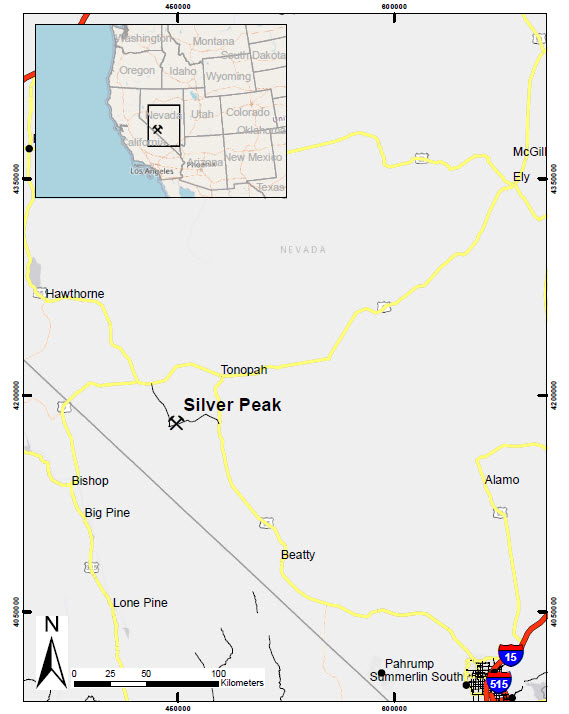
The Silver Peak site (latitude 37.751773°N, longitude 117.639027°W) is located in a rural area approximately 30 miles southwest of Tonopah, in Esmeralda County, Nevada. It is located in the Clayton Valley, an arid valley historically covered with dry lake beds (playas). The operation borders the small, unincorporated town of Silver Peak, Nevada. Albemarle uses the Silver Peak site for the production of lithium brines, which are used to make lithium carbonate and, to a lesser degree, lithium hydroxide. Access to the site is off of the paved highway SR-265 in the town of Silver Peak, Nevada. The administrative offices are located on the south side of the road. The process facility is on the north side of the road and the brine operations are located approximately three miles east of Silver Peak on Silver Peak Road and occupy both the north and south sides of the road. In addition, access to the site is also possible via gravel/dirt roads from Tonopah, Nevada and Goldfield, Nevada.
Lithium brine extraction in the Clayton Valley began in the mid-1960’s by one of our predecessors, the Foote Mineral Company. Since that time, lithium brine operations have been operated on a continuous basis. In 1998, Chemetall purchased Foote Mineral Company. Subsequently, in 2004, Chemetall was acquired by Rockwood, and in 2015, Rockwood was acquired by Albemarle. Our mineral rights in Silver Peak consist of our right to access lithium brine pursuant to our permitted and certified senior water rights, a settlement agreement with the U.S. government, originally entered into in June 1991, and our patented and unpatented land claims. Pursuant to the 1991 agreement, our water rights and our land claims, we have rights to all lithium that we can remove economically from the Clayton Valley Basin in Nevada. See section 3 of the Silver Peak technical report summary, filed as Exhibit 96.4 to this report, for a listing of patented and unpatented claims at the Silver Peak site. We have been operating at the Silver Peak site since 1966. Our Silver Peak site covers a surface of over 13,500 acres, more than 10,500 acres of which we own through a subsidiary. The remaining acres are owned by the U.S. government from whom we lease the land pursuant to unpatented land claims that are renewed annually. Actual surface disturbance associated with the operations is 7,390 acres, primarily associated with the evaporation ponds. The manufacturing and administrative activities are confined to an area approximately 20 acres in size.
| Albemarle Corporation and Subsidiaries | ||||||||
We extract lithium brine from our Silver Peak site through substantially the same evaporation process we use at the Salar de Atacama. We process the lithium brine extracted from our Silver Peak site into lithium carbonate at our plant in Silver Peak. It is hypothesized that the current levels of lithium dissolved in brine originate from relatively recent dissolution of halite by meteoric waters that have penetrated the playa in the last 10,000 years. The halite formed in the playa during the aforementioned climatic periods of low precipitation and that the concentrated lithium was incorporated as liquid inclusions into the halite crystals. There are no current exploration activities on the Silver Peak lithium operation. However, in January 2021, we announced that we will expand capacity in Silver Peak and begin a program to evaluate clays and other available Nevada resources for commercial production of lithium. As previously announced, we are investing in our Silver Peak site with the goal of doubling the current production in Silver Peak by 2025 by making full use of the brine water rights.
The facilities at Silver Peak consist of extraction wells, evaporation and concentration ponds, a lithium carbonate plant, a lithium anhydrous plant, a lithium hydroxide plant, a new liming plant, wellfield and mill maintenance, a shipping and packaging facility and administrative offices, as well as a fleet of owned and leased equipment. Silver Peak is supplied electricity from a local company and we currently have two operating fresh water wells nearby that supply water to the facilities. We consider the condition of all of our plants, facilities and equipment to be suitable and adequate for the businesses we conduct, and we maintain them regularly. As of December 31, 2023, the gross asset value of our facilities at our Silver Peak site was approximately $139.1 million.
A summary of the Silver Peak facility’s lithium mineral resources, exclusive of reserves, and reserves as of December 31, 2023 is shown in the following tables. SRK served as the QP and prepared the estimates of lithium mineral resources (exclusive of reserves) and reserves at the Silver Peak facility, with an effective date of December 31, 2023. A copy of the QP’s most recent technical report summary with respect to the lithium mineral resource and reserve estimates at the Silver Peak facility, dated February 14, 2023, with an effective date of September 30, 2022, is filed as Exhibit 96.4 to this report. The mineral resource economic assumptions remain unchanged from September 30, 2022. The September 30, 2022 resource has been depleted for actual production and is reported as of December 31, 2023 in the below table. The amounts represent Albemarle’s attributable portion based on a 100% ownership percentage, and are presented as metric tonnes of lithium metal in thousands.
The Silver Peak mineral resources, exclusive of reserves, estimates with depletion from production from the effective date of the report through December 31, 2023 are summarized in the following table:
| Amount (‘000s metric tonnes) | Concentration (mg/L) | |||||||||||||
| Measured mineral resources | 14 | 153 | ||||||||||||
| Indicated mineral resources | 36 | 144 | ||||||||||||
| Measured and Indicated mineral resources | 50 | 146 | ||||||||||||
| Inferred mineral resources | 90 | 121 |
-
Mineral resources are reported exclusive of mineral reserves. Mineral resources are not mineral reserves and do not have demonstrated economic viability.
-
Given the dynamic reserve versus the static resource, a direct measurement of resources post-reserve extraction is not practical. Therefore, as a simplification, to calculate mineral resources, exclusive of reserves, the quantity of lithium pumped in the life of mine plan was subtracted from the overall resource without modification to lithium concentration. Measured and indicated resource were deducted proportionate to their contribution to the overall mineral resource.
-
Resources are reported on an in situ basis.
-
Resources are reported as lithium metal.
-
The resources have been calculated from the block model above 740 meters above sea level.
-
Resources have been categorized subject to the opinion of a QP based on the amount/robustness of informing data for the estimate, consistency of geological/grade distribution, survey information.
-
Resources have been calculated using drainable porosity estimated from bibliographical values based on the lithology and QP’s experience in similar deposits.
-
The estimated economic cutoff grade utilized for resource reporting purposes is 50 mg/l lithium, based on the following assumptions:
◦A technical grade lithium carbonate price of $22,000/metric tonne CIF North Carolina. This is a 10% premium to the price utilized for reserve reporting purposes. The 10% premium applied to the resource versus the reserve was selected to generate a resource larger than the reserve, ensuring the resource fully encompassed the reserve while still maintaining reasonable prospect for eventual economic extraction.
◦Recovery factors for the wellfield are = -206.23*(Li wellfield feed)2 +7.1903*(wellfield Li feed)+0.4609. An additional recovery factor of 78% lithium recovery is applied to the lithium carbonate plant.
◦A fixed brine pumping rate of 20,000 acre feet per year, ramped up from 2022 levels over a period of five years.
| Albemarle Corporation and Subsidiaries | ||||||||
◦Operating cost estimates are based on a combination of fixed brine extraction, G&A and plant costs and variable costs associated with raw brine pumping rate or lithium production rate. Average life of mine operating costs is calculated at approximately $6,200/metric tonne lithium carbonate CIF North Carolina.
◦Sustaining capital costs are included in the cut-off grade calculation and include a fixed component at $7.0 million per year and an additional component tied to the estimated number of wells replaced per year and other planned capital programs.
- Mineral Resources tonnage and contained metal have been rounded to reflect the accuracy of the estimate, and numbers may not add due to rounding.
The Silver Peak measured and indicated mineral resources, exclusive of reserves, as of December 31, 2023 did not change from the reported balances as of December 31, 2022 as all 2023 production was depleted from the reserves.
The Silver Peak reserve estimates with depletion from production from the effective date of the report through December 31, 2023 are summarized in the following table:
| Amount (‘000s metric tonnes) | Concentration (mg/L) | |||||||||||||
| Proven mineral reserves: | ||||||||||||||
| In Situ | 12 | 93 | ||||||||||||
| In Process | 1 | 101 | ||||||||||||
| Probable mineral reserves: | ||||||||||||||
| In Situ | 54 | 95 | ||||||||||||
| Total mineral reserves: | ||||||||||||||
| In Situ | 66 | 95 | ||||||||||||
| In Process | 1 | 101 |
-
In process reserves quantify the prior 24 months of pumping data and reflect the raw brine, at the time of pumping. These reserves represent the first 24 months of feed to the lithium process plant in the 2022 economic model.
-
Proven reserves have been estimated as the lithium mass pumped during the years 2024 through 2028 of the proposed life of mine plan.
-
Probable reserves have been estimated as the lithium mass pumped from 2029 until the end of the proposed life of mine plan (2052).
-
The ratio of in situ proven to probable reserves has remained consistent through depletion since the development of the reserve model in 2022 with approximately 82% of the reserve designated as Probable and 18% of the reserve designated as Proven.
-
Reserves are reported as lithium metal.
-
This mineral reserve estimate was derived based on a production pumping plan truncated at the end of year 2052 (i.e., approximately 29.5 years). This plan was truncated to reflect the QP’s opinion on uncertainty associated with the production plan as a direct conversion of measured and indicated resource to proven and probable reserve is not possible in the same way as a typical hard-rock mining project.
-
The 2022 reserve model used as the basis for depletion has not been updated. The following assumptions were used in developing that model:
◦The estimated economic cut-off grade for the Silver Peak project is 57 mg/l lithium, based on the assumptions discussed below. The production pumping plan was truncated due to technical uncertainty inherent in long-term production modeling and remained well above the economic cut-off grade (i.e., the economic cut-off grade did not result in a limiting factor to the estimation of the reserve).
◦A technical grade lithium carbonate price of $20,000/metric tonne CIF North Carolina.
◦Recovery factors for the wellfield are = -206.23*(Li wellfield feed)^2 +7.1903*(wellfield Li feed) + 0.4609. An additional recovery factor of 78% lithium recovery is applied to the lithium carbonate plant.
◦A fixed brine pumping rate of 20,000 acre feet per year, ramped up from 2022 levels over a period of five years.
◦Operating cost estimates are based on a combination of fixed brine extraction, G&A and plant costs and variable costs associated with raw brine pumping rate or lithium production rate. Average life of mine operating costs is calculated at approximately $6,200/metric tonne LC CIF North Carolina.
◦Sustaining capital costs are included in the cut-off grade calculation and include a fixed component at $7.0 million per year and an additional component tied to the estimated number of wells replaced per year and other planned capital programs.
- Mineral reserve tonnage, grade and mass yield have been rounded to reflect the accuracy of the estimate (thousand tonnes), and numbers may not add due to rounding.
The Silver Peak total mineral reserves of 67,500 metric tonnes at December 31, 2023 decreased by 2% from 69,100 metric tonnes at December 31, 2022. The decrease in total mineral reserves was driven by depletion during the year as there were no changes to the model.
Additional information about key assumptions and parameters relating to the lithium mineral resources and reserves at the Silver Peak facility is discussed in sections 11 and 12, respectively, of the Silver Peak technical report summary.
| Albemarle Corporation and Subsidiaries | ||||||||
Safi, Jordan

Our 50% interest in JBC, a consolidated joint venture established in 1999, with operations in Safi, Jordan, acquires bromine that is originally sourced from the Dead Sea. JBC processes the bromine at its facilities into a variety of end products. The JBC operation (latitude 31°8'34.85"N , longitude 35°31'34.68"E) is located in Safi, Jordan, and is located on a 26-hectare area on the southeastern edge of the Dead Sea, about 6 kilometers north of the of the APC plant. JBC also has a 2-hectare storage facility within the free-zone industrial area at the Port of Aqaba. The Jordan Valley Highway/Route 65 is the primary method of access for supplies and personnel to JBC. The Port of Aqaba is the main entry point for supplies and equipment for JBC, where imported shipping containers are offloaded from ships and are transported by truck to JBC via the Jordan Valley Highway. Aqaba is approximately 205 km south of JBC via Highway 65. Major international airports can be readily accessed either at Amman or Aqaba. Jordan’s railway transport runs north-south through Jordan and is not used to transport JBC employees and product.
In 1958, the Government of the Hashemite Kingdom of Jordan granted APC a concession for exclusive rights to exploit the minerals and salts from the Dead Sea brine until 2058; at that time, APC factories and installations would become the property of the Government. APC was granted its exclusive mineral rights under the Concession Ratification Law No. 16 of 1958. APC produces potash from the brine extracted from the Dead Sea. A concentrated bromide-enriched brine extracted from APC’s evaporation ponds is the feed material for the JBC plant. Following the formation of the joint venture, the JBC bromine plant began operations in 2002. Expansion of the facilities to double its bromine production capacity went into operation in 2017.
The climate, geology and location provide a setting that makes the Dead Sea a valuable large-scale natural resource for potash and bromine. Today, the Dead Sea has a surface area of 583 km2 and a brine volume of 110 km3. The Dead Sea is the world’s saltiest natural lake, containing high concentrations of ions compared to that of regular seawater and an unusually high amount of magnesium and bromine. There is an estimated 900 million tonnes of bromine in the Dead Sea.
| Albemarle Corporation and Subsidiaries | ||||||||
Mining methods consist of all activities necessary to extract brine from the Dead Sea and extract Bromine. The low rainfall, low humidity and high temperatures in the Dead Sea area provide ideal conditions for recovering potash from the brine by solar evaporation. JBC obtains its feedbrine from APC’s evaporation pond and this supply is intimately linked to the APC operation. As evaporation takes place the specific gravity of the brine increases until its constituent salts progressively crystallize and precipitate out of solution, starting with sodium chloride (common salt) precipitating out to the bottom of the ponds (pre-carnallite ponds). Brine is transferred to other pans in succession where its specific gravity increases further, ultimately precipitating out of the sodium chloride. Carnallite precipitation takes place at the evaporation pond where it is harvested from the brine and pumped as slurry to a process plant (where the potassium chloride is separated from the magnesium chloride). JBC extracts the bromide-rich, “carnallite-free” brine through a pumping station. This brine feeds the bromine and magnesium plants. There is no exploration as typically conducted for the characterization of a mineral deposit.
Infrastructure and facilities to support the operation of the bromine production plant at the Safi site is compact and contained in an approximately 33 hectare area. JBC ships product in bulk through a storage terminal in Aqaba. There are above ground storage tanks as well as pumps and piping for loading these products onto ships. JBC main activities at Aqaba are raw material/product storing, importing, and exporting. An evaporation pond collects the waste streams from pipe flushing, housekeeping, and other activities. Fresh water is sources from the Mujib Reservoir, a man-made reservoir. JBC is supplied electricity from the National Electric Power Company of Jordan. We consider the condition of all of our plants, facilities and equipment to be suitable and adequate for the businesses we conduct, and we maintain them regularly. As of December 31, 2023, our 50% ownership interest of the gross asset value of the facilities at the Safi, Jordan site was approximately $243.7 million.
A summary of the Safi facility’s bromine mineral resources and reserves as of December 31, 2023 is provided below. RPS Energy Canada Ltd (“RPS”), a third-party firm comprising mining experts in accordance with Item 1302(b)(1) of Regulation S-K, served as the QP and prepared the estimates of bromine mineral resources and reserves at the Safi facility, with an effective date of December 31, 2023. A copy of the QP’s amended technical report summary with respect to the bromine mineral resource and reserve estimates at the Safi facility, dated February 14, 2024, is filed as Exhibit 96.5 to this report.
The feedstock is drawn from the Dead Sea, a nonconventional reservoir owned by the nations of Israel and Jordan. As such, there are no specific resources owned by JBC, but Albemarle’s joint venture partner, APC, has exclusive rights granted by the Hashemite Kingdom of Jordan to withdraw brine from the Dead Sea and process it to extract minerals. Revenues are based on a forecast bromine price ranging from $1,938 to $3,525 per metric tonne and the operating cost ranges between $648 and $972 per metric tonne. The measured resource of bromide ion attributable to Albemarle’s 50% interest in its JBC joint venture is estimated to be approximately 175.69 million metric tonnes. JBC is extracting approximately 1 percent of the bromine available in Jordan’s share of the Dead Sea. Bromide concentration in the Dead Sea is estimated to average approximately 5,000 ppm. The cut-off grade of the Albemarle bromine operations has been estimated to be at 1,000 ppm. The bromide ion concentration in the brine extracted which feeds the bromine plants, significantly exceeds the selected cut-off grade.
The Safi measured mineral reserves of 175.69 million metric tonnes at December 31, 2023 decreased by 1% from 178.3 million metric tonnes at December 31, 2022. The decrease in measured mineral resources was driven by depletion and evaporation in the Dead Sea during 2023. The end date of the forecast remained unchanged due to the concession agreement.
All bromine reserves reported by Albemarle for the JBC project are classified as proven mineral reserves. The mineral reserve estimate attributable to Albemarle’s 50% interest in its JBC joint venture is approximately 2.07 million metric tonnes of bromine from the Dead Sea. This estimate is based on the time available under the concession agreement with the Hashemite Kingdom of Jordan and the processing capability of the JBC plant. As only approximately one percent of the available resource is consumed from the Dead Sea, as noted above, the reserve estimate is based on the amount the JBC plant can produce over until the end of 2058, when the APC concession agreement ends. Revenues are based on a forecast bromine price ranging from $1,938 to $3,525 per metric tonne and the operating cost ranges between $648 and $972 per metric tonne. At the plant process recovery of 90 to 95 percent (bromine from bromide), product bromine is estimated at approximately 118,000 metric tonnes per year. Bromine concentration used to calculate the reserve estimate from the Dead Sea was approximately 7,645 ppm based on historical pumping. The cut-off grade of the Albemarle bromine operations has been estimated to be at 1,000 ppm. The bromide ion concentration in the brine extracted which feeds the bromine plants, significantly exceeds the selected cut-off grade.
The Safi total mineral reserves of 2.07 million metric tonnes at December 31, 2023 decreased by 13% from 2.38 million metric tonnes at December 31, 2022. The decrease in total mineral reserves was driven by depletion and evaporation in the Dead Sea during 2023. The end date of the forecast remained unchanged due to the concession agreement.
Additional information about key assumptions and parameters relating to the bromine mineral resources and reserves at the Safi facility is discussed in sections 11 and 12, respectively, of the Safi technical report summary.
| Albemarle Corporation and Subsidiaries | ||||||||
Magnolia, Arkansas
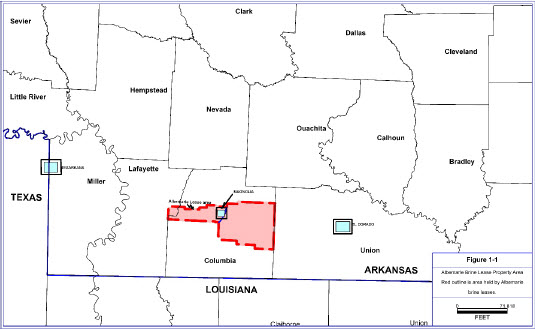
Magnolia is located in the southwest Arkansas, north of the center of Columbia County, approximately 50 miles east of Texarkana and 135 miles south of Little Rock. Our facilities include two separate production plants, the South Plant and the West Plant. The South Plant (latitude 33.1775°N, longitude 93.2161°W) is accessible via U.S. Route 79 and paved local roads. The West Plant (latitude 33.2648°N, longitude 93.3151°W) is accessible by U.S. Route 371 and paved local roads. The decentralized well sites around the brine fields are accessed via paved Arkansas Highway 19, 98, 160 and 344.
In Magnolia, bromine is recovered from underground brine wells and then processed into a variety of end products at the plant on location. Albemarle has more than 50 brine production and injection wells that are currently active on the property. Albemarle’s area of bromine operation is comprised of over 9,500 individual leases with local landowners comprising a total area of over 99,500 acres. The leases have been acquired over time as field development extended across the field. Each lease continues for a period of 25 years or longer until after a two year period where brine is not injected or produced from/to a well within two miles of lease land areas, as long as lease rentals are continuing to be paid. See section 3 of the Magnolia technical report summary, filed as Exhibit 96.6 to this report, for a map of leases and burdens on those leases at the Magnolia site.
Bromine extraction began in Magnolia in 1965 as the first brine supply well was drilled, and additional wells were put into production over the next few years. In 1987, a predecessor company took over operations of certain brine supply and injection wells, which Albemarle continues to operate to this day. In 2019, Albemarle completed, and put into production, two new brine production supply wells in Magnolia.
In Magnolia, bromine exists as sodium bromide in the formation waters or brine of the Jurassic age Smackover Formation, a geological formation in Arkansas, in the subsurface at 7,000 to 8,500 feet below sea level. The mineralization occurs within the highly saline Smackover Formation waters or brine where the bromide has an abnormally rich composition. The bromine concentration is more than twice as high as that found in normal evaporated seawater. The bromine mineralization of the brine is distributed throughout the porous intervals of the upper and middle Smackover on the property. The strong permeability and porosity of the Smackover grainstones provide excellent continuity of the bromine mineralization within the brine.
The facilities at Magnolia consist of brine production and injection wells, brine ponds, two bromine processing plants, pipelines between the plants and wells, a laboratory, storage and warehouses, administrative offices, as well as a fleet of owned and leased equipment. Our Magnolia facilities are supplied electricity from a local company and we currently have several operating freshwater wells nearby that supply water to the facilities. In addition, both plants have dedicated rail spurs that provide access to several rail lines to transport product throughout the country. We consider the condition of all of our plants, facilities and equipment to be suitable and adequate for the businesses we conduct, and we maintain them regularly. As of December 31, 2023, the gross asset value of our facilities at our Magnolia site was approximately $932.5 million.
| Albemarle Corporation and Subsidiaries | ||||||||
A summary of the Magnolia facility’s bromine mineral reserves as of December 31, 2023 is shown in the following table. RPS served as the QP and prepared the estimates of bromine mineral reserves at the Magnolia facility, with an effective date of December 31, 2023. A copy of the QP’s most recent technical report summary with respect to the bromine mineral resource and reserve estimates at the Magnolia facility, dated February 14, 2023, with an effective date of December 31, 2023, is filed as Exhibit 96.6 to this report. The amounts represent Albemarle’s attributable portion based on a 100% ownership percentage, and are presented as metric tonnes in thousands.
There are no mineral resource estimates at the Magnolia, AR bromine extraction site. All bromine mineral accumulations of economic interest and with reasonable prospects for eventual economic extraction within the Magnolia production lease area are either currently on production or subject to an economically viable future development plan and are classified as mineral reserves.
| Amount (‘000s metric tonnes) | ||||||||||||||
| Proven mineral reserves | 2,706 | |||||||||||||
| Probable mineral reserves | 611 | |||||||||||||
| Total mineral reserves | 3,317 |
-
Reserves are reported as bromine, on an in situ basis.
-
The estimated economic cutoff grade utilized for reserve reporting purposes is 1,000 mg/L bromine, with a bromine price ranging from $1,938 to $3,525 per metric tonne and operating costs ranging from $1,328 to $1,992 per metric tonne.
-
Recovery factors for the Magnolia are 82% and 88% for the proven mineral reserves and total mineral reserves, respectively.
-
The concentration of bromine at the Magnolia site varies based on the physical location of the field and can range up to over 6,000 mg/L.
The Magnolia total mineral reserves of 3.3 million metric tonnes at December 31, 2023 increased by 11% from 3.0 million metric tonnes at December 31, 2022. The increase in total mineral reserves was driven by an update of the reserve model for expanded leasing, partially offset by depletion of the reserve during 2023.
Additional information about key assumptions and parameters relating to the bromine mineral reserves at the Magnolia facility is discussed in section 12 of the Magnolia technical report summary.
Previous: Item 1C. Cybersecurity. · Next: Item 3. Legal Proceedings.