 filings.tools
Atmos Energy 10-K 2022-09-30
Filed 2022-11-14. 22 sections, 439K characters. Original on sec.gov · Markdown · JSON
Cover and table of contents
UNITED STATES SECURITIES AND EXCHANGE COMMISSION
Washington, D.C. 20549
Form 10-K
(Mark One)
☑ ANNUAL REPORT PURSUANT TO SECTION 13 OR 15(d) OF THE SECURITIES EXCHANGE ACT OF 1934
For the fiscal year ended September 30, 2022
OR
☐ TRANSITION REPORT PURSUANT TO SECTION 13 OR 15(d) OF THE SECURITIES EXCHANGE ACT OF 1934
For the transition period from to
Commission file number 1-10042
Atmos Energy Corporation
(Exact name of registrant as specified in its charter)
Texas and Virginia 75-1743247
(State or other jurisdiction of (IRS employer
incorporation or organization) identification no.)
1800 Three Lincoln Centre
5430 LBJ Freeway
Dallas, Texas 75240
(Address of principal executive offices) (Zip code)
Registrant’s telephone number, including area code:
(972) 934-9227
Securities registered pursuant to Section 12(b) of the Act:
| Table of each class | Trading Symbol | Name of each exchange on which registered | |||||||||
| Common stock | No Par Value | ATO | New York Stock Exchange |
Securities registered pursuant to Section 12(g) of the Act:
None
Indicate by check mark if the registrant is a well-known seasoned issuer, as defined in Rule 405 of the Securities Act. Yes þ No ¨
Indicate by check mark if the registrant is not required to file reports pursuant to Section 13 or Section 15(d) of the Act. Yes ¨ No þ
Indicate by check mark whether the registrant (1) has filed all reports required to be filed by Section 13 or 15(d) of the Securities Exchange Act of 1934 during the preceding 12 months (or for such shorter period that the registrant was required to file such reports), and (2) has been subject to such filing requirements for the past 90 days. Yes þ No ¨
Indicate by check mark whether the registrant has submitted electronically every Interactive Data File required to be submitted pursuant to Rule 405 of Regulation S-T (§ 232.405 of this chapter) during the preceding 12 months (or for such shorter period that the registrant was required to submit such files). Yes þ No ¨
Indicate by check mark whether the registrant is a large accelerated filer, an accelerated filer, a non-accelerated filer, a smaller reporting company or an emerging growth company. See definitions of “large accelerated filer,” “accelerated filer,” “smaller reporting company” and "emerging growth company" in Rule 12b-2 of the Exchange Act. (Check one):
| Large accelerated filer | ☑ | Accelerated filer | ☐ | Non-accelerated filer | ☐ | Smaller reporting company | ☐ | Emerging growth company | ☐ |
If an emerging growth company, indicate by check mark if the registrant has elected not to use the extended transition period for complying with any new or revised financial accounting standards provided pursuant to Section 13(a) of the Exchange Act. ¨
Indicate by check mark whether the registrant has filed a report on and attestation to its management’s assessment of the effectiveness of its internal control over financial reporting under Section 404(b) of the Sarbanes-Oxley Act (15 U.S.C. 7262(b)) by the registered public accounting firm that prepared or issued its audit report. ☑
Indicate by check mark whether the registrant is a shell company (as defined in Rule 12b-2 of the Act). Yes ☐ No þ
The aggregate market value of the common voting stock held by non-affiliates of the registrant as of the last business day of the registrant’s most recently completed second fiscal quarter, March 31, 2022, was $16,491,263,629.
As of November 7, 2022, the registrant had 140,900,576 shares of common stock outstanding.
DOCUMENTS INCORPORATED BY REFERENCE
Portions of the registrant’s Definitive Proxy Statement to be filed for the Annual Meeting of Shareholders on February 8, 2023 are incorporated by reference into Part III of this report.
TABLE OF CONTENTS
GLOSSARY OF KEY TERMS
| Adjusted diluted net income per share | Non-GAAP measure defined as diluted net income per share before the one-time, non-cash income tax benefit | ||||
| Adjusted net income | Non-GAAP measure defined as net income before the one-time, non-cash income tax benefit | ||||
| AFUDC | Allowance for funds used during construction | ||||
| AOCI | Accumulated Other Comprehensive Income | ||||
| ARM | Annual Rate Mechanism | ||||
| ATO | Trading symbol for Atmos Energy Corporation common stock on the NYSE | ||||
| Bcf | Billion cubic feet | ||||
| COSO | Committee of Sponsoring Organizations of the Treadway Commission | ||||
| DARR | Dallas Annual Rate Review | ||||
| ERISA | Employee Retirement Income Security Act of 1974 | ||||
| FASB | Financial Accounting Standards Board | ||||
| FERC | Federal Energy Regulatory Commission | ||||
| GAAP | Generally Accepted Accounting Principles | ||||
| GRIP | Gas Reliability Infrastructure Program | ||||
| GSRS | Gas System Reliability Surcharge | ||||
| LIBOR | London Interbank Offered Rate | ||||
| LTIP | 1998 Long-Term Incentive Plan | ||||
| Mcf | Thousand cubic feet | ||||
| MDWQ | Maximum daily withdrawal quantity | ||||
| Mid-Tex ATM Cities | Represents a coalition of 47 incorporated cities or approximately 10 percent of the Mid-Tex Division's customers. | ||||
| Mid-Tex Cities | Represents all incorporated cities other than Dallas and Mid-Tex ATM Cities, or approximately 72 percent of the Mid-Tex Division’s customers. | ||||
| MMcf | Million cubic feet | ||||
| Moody’s | Moody’s Investor Service, Inc. | ||||
| NGPA | Natural Gas Policy Act of 1978 | ||||
| NTSB | National Transportation Safety Board | ||||
| NYSE | New York Stock Exchange | ||||
| PHMSA | Pipeline and Hazardous Materials Safety Administration | ||||
| PPA | Pension Protection Act of 2006 | ||||
| PRP | Pipeline Replacement Program | ||||
| RRC | Railroad Commission of Texas | ||||
| RRM | Rate Review Mechanism | ||||
| RSC | Rate Stabilization Clause | ||||
| S&P | Standard & Poor’s Corporation | ||||
| SAVE | Steps to Advance Virginia Energy | ||||
| SEC | United States Securities and Exchange Commission | ||||
| SIP | System Integrity Program | ||||
| SIR | System Integrity Rider | ||||
| SOFR | Secured Overnight Financing Rate | ||||
| SRF | Stable Rate Filing | ||||
| SSIR | System Safety and Integrity Rider | ||||
| TCJA | Tax Cuts and Jobs Act of 2017 | ||||
| WNA | Weather Normalization Adjustment |
PART I
The terms “we,” “our,” “us,” “Atmos Energy” and the “Company” refer to Atmos Energy Corporation and its subsidiaries, unless the context suggests otherwise.
Item 1. Business.
Overview and Strategy
Atmos Energy Corporation, headquartered in Dallas, Texas, and incorporated in Texas and Virginia, is the country’s largest natural-gas-only distributor based on number of customers. We safely deliver reliable, affordable, efficient and abundant natural gas through regulated sales and transportation arrangements to approximately 3.3 million residential, commercial, public authority and industrial customers in eight states located primarily in the South. We also operate one of the largest intrastate pipelines in Texas based on miles of pipe.
Atmos Energy's vision is to be the safest provider of natural gas services. We will be recognized for exceptional customer service, for being a great employer and for achieving superior financial results.
Since 2011, our operating strategy has focused on modernizing our business and infrastructure while reducing regulatory lag. This operating strategy supports continued investment in safety, innovation, environmental sustainability and our communities.
Operating Segments
As of September 30, 2022, we manage and review our consolidated operations through the following reportable segments:
-
The distribution segment is primarily comprised of our regulated natural gas distribution and related sales operations in eight states.
-
The pipeline and storage segment is comprised primarily of the pipeline and storage operations of our Atmos Pipeline-Texas division and our natural gas transmission operations in Louisiana.
Distribution Segment Overview
The following table summarizes key information about our six regulated natural gas distribution divisions, presented in order of total rate base.
| Division | Service Areas | Communities Served | Customer Meters | |||||||||||||||||
| Mid-Tex | Texas, including the Dallas/Fort Worth Metroplex | 550 | 1,822,036 | |||||||||||||||||
| Kentucky/Mid-States | Kentucky | 230 | 184,547 | |||||||||||||||||
| Tennessee | 162,392 | |||||||||||||||||||
| Virginia | 24,898 | |||||||||||||||||||
| Louisiana | Louisiana | 270 | 376,515 | |||||||||||||||||
| West Texas | Amarillo, Lubbock, Midland | 80 | 329,378 | |||||||||||||||||
| Mississippi | Mississippi | 110 | 273,934 | |||||||||||||||||
| Colorado-Kansas | Colorado | 170 | 127,565 | |||||||||||||||||
| Kansas | 140,959 |
We operate in our service areas under terms of non-exclusive franchise agreements granted by the various cities and towns that we serve. At September 30, 2022, we held 1,028 franchises having terms generally ranging from five to 35 years. A significant number of our franchises expire each year, which require renewal prior to the end of their terms. Historically, we have successfully renewed these franchises and believe that we will continue to be able to renew our franchises as they expire.
Revenues in this operating segment are established by regulatory authorities in the states in which we operate. These rates are intended to be sufficient to cover the costs of conducting business, including a reasonable return on invested capital. In addition, we transport natural gas for others through our distribution systems.
Rates established by regulatory authorities often include cost adjustment mechanisms for costs that (i) are subject to significant price fluctuations compared to our other costs, (ii) represent a large component of our cost of service and (iii) are generally outside our control.
Purchased gas cost adjustment mechanisms represent a traditional and common form of cost adjustment mechanism. Purchased gas cost adjustment mechanisms provide a method of recovering purchased gas costs on an ongoing basis without filing a rate case because they provide a dollar-for-dollar offset to increases or decreases in the cost of natural gas. Therefore, although substantially all of our distribution operating revenues fluctuate with the cost of gas that we purchase, distribution operating income is generally not affected by fluctuations in the cost of gas.
Additionally, some jurisdictions have performance-based ratemaking adjustments to provide incentives to minimize purchased gas costs through improved storage management and use of financial instruments to reduce volatility in gas costs. Under the performance-based ratemaking adjustments, purchased gas costs savings are shared between the Company and its customers.
Our supply of natural gas is provided by a variety of suppliers, including independent producers and marketers. The gas is delivered into our systems by various pipeline companies, withdrawals of gas from proprietary and contracted storage assets and base load and peaking arrangements, as needed.
Supply arrangements consist of both base load and peaking quantities and are contracted from our suppliers on a firm basis with various terms at market prices. Base load quantities are those that flow at a constant level throughout the month and peaking quantities provide the flexibility to change daily quantities to match increases or decreases in requirements related to weather conditions.
Except for local production purchases, we select our natural gas suppliers through a competitive bidding process by periodically requesting proposals from suppliers. We select these suppliers based on their ability to reliably deliver gas supply to our designated firm pipeline receipt points at the lowest reasonable cost. Major suppliers during fiscal 2022 were ConocoPhillips Company, EnLink Gas Marketing LP, Enterprise Navitas Midstream Midland Basin LLC, EOG Resources, Inc., Hartree Partners, L.P., Sequent Energy Management LLC, Symmetry Energy Solutions, LLC, Targa Gas Marketing LLC, Texla Energy Management, Inc. and Twin Eagle Resource Management, LLC.
The combination of base load and peaking agreements, coupled with the withdrawal of gas held in storage, allows us the flexibility to adjust to changes in weather, which minimizes our need to enter into long-term firm commitments. We estimate our peak-day availability of natural gas supply to be approximately 4.4 Bcf. The peak-day demand for our distribution operations in fiscal 2022 was on February 3, 2022, when sales to customers reached approximately 3.6 Bcf.
Currently, our distribution divisions utilize 38 pipeline transportation companies, both interstate and intrastate, to transport our natural gas. The pipeline transportation agreements are firm and many of them have “pipeline no-notice” storage service, which provides for daily balancing between system requirements and nominated flowing supplies. These agreements have been negotiated with the shortest term necessary while still maintaining our right of first refusal. The natural gas supply for our Mid-Tex Division is delivered primarily by our APT Division.
To maintain our deliveries to high priority customers, we have the ability, and have exercised our right, to interrupt or curtail service to certain customers pursuant to contracts and applicable state regulations or statutes. Our customers’ demand on our system is not necessarily indicative of our ability to meet current or anticipated market demands or immediate delivery requirements because of factors such as the physical limitations of gathering, storage and transmission systems, the duration and severity of cold weather, the availability of gas reserves from our suppliers, the ability to purchase additional supplies on a short-term basis and actions by federal and state regulatory authorities. Interruption and curtailment rights provide us the flexibility to meet the human-needs requirements of our customers on a reliable basis. Priority allocations imposed by federal and state regulatory agencies, as well as other factors beyond our control, may affect our ability to meet the demands of some of our customers.
Pipeline and Storage Segment Overview
Our pipeline and storage segment consists of the pipeline and storage operations of APT and our natural gas transmission operations in Louisiana. APT is one of the largest intrastate pipeline operations in Texas with a heavy concentration in the established natural gas-producing areas of central, northern and eastern Texas, extending into or near the major producing areas of the Barnett Shale, the Texas Gulf Coast and the Permian Basin of West Texas. Through its system, APT provides transportation and storage services to our Mid-Tex Division, other third party local distribution companies, industrial and electric generation customers, marketers and producers. As part of its pipeline operations, APT owns and operates five underground storage reservoirs in Texas.
Revenues earned from transportation and storage services for APT are subject to traditional ratemaking governed by the RRC. Rates are updated through periodic filings made under Texas’ GRIP. GRIP allows us to include in our rate base annually approved capital costs incurred in the prior calendar year provided that we file a complete rate case at least once every five
years; the most recent of which was completed in August 2017. APT’s existing regulatory mechanisms allow certain transportation and storage services to be provided under market-based rates.
Our natural gas transmission operations in Louisiana are comprised of a 21-mile pipeline located in the New Orleans, Louisiana area that is primarily used to aggregate gas supply for our distribution division in Louisiana under a long-term contract and, on a more limited basis, to third parties. The demand fee charged to our Louisiana distribution division for these services is subject to regulatory approval by the Louisiana Public Service Commission. We also manage two asset management plans that serve distribution affiliates of the Company, which have been approved by applicable state regulatory commissions. Generally, these asset management plans require us to share with our distribution customers a significant portion of the cost savings earned from these arrangements.
Ratemaking Activity
Overview
The method of determining regulated rates varies among the states in which our regulated businesses operate. The regulatory authorities have the responsibility of ensuring that utilities in their jurisdictions operate in the best interests of customers while providing utility companies the opportunity to earn a reasonable return on their investment. Generally, each regulatory authority reviews rate requests and establishes a rate structure intended to generate revenue sufficient to cover the costs of conducting business, including a reasonable return on invested capital.
Our rate strategy focuses on reducing or eliminating regulatory lag, obtaining adequate returns and providing stable, predictable margins, which benefit both our customers and the Company. As a result of our ratemaking efforts in recent years, Atmos Energy has:
-
Formula rate mechanisms in place in four states that provide for an annual rate review and adjustment to rates.
-
Infrastructure programs in place in all of our states that provide for an annual adjustment to rates for qualifying capital expenditures. Through our annual formula rate mechanisms and infrastructure programs, we have the ability to recover approximately 90 percent of our capital expenditures within six months and substantially all of our capital expenditures within twelve months.
-
Authorization in tariffs, statute or commission rules that allows us to defer certain elements of our cost of service such as depreciation, ad valorem taxes and pension costs, until they are included in rates.
-
WNA mechanisms in seven states that serve to minimize the effects of weather on approximately 96 percent of our distribution residential and commercial revenues.
-
The ability to recover the gas cost portion of bad debts in five states which represents approximately 81 percent of our distribution residential and commercial revenues.
The following table provides a jurisdictional rate summary for our regulated operations as of September 30, 2022. This information is for regulatory purposes only and may not be representative of our actual financial position.
| Division | Jurisdiction | Effective Date of Last Rate/GRIP Action | Rate Base (thousands)****(1) | Authorized Rate of Return**(1)** | Authorized Debt/ Equity Ratio**(1)** | Authorized Return on Equity**(1)** | |||||||||||||||||||||||||||||
| Atmos Pipeline — Texas | Texas | 05/18/2022 | $3,432,180 | 8.87% | 47/53 | 11.50% | |||||||||||||||||||||||||||||
| Colorado-Kansas | Colorado | 05/03/2018 | 134,726 | 7.55% | 44/56 | 9.45% | |||||||||||||||||||||||||||||
| Colorado SSIR | 01/01/2022 | 98,695 | 7.55% | 44/56 | 9.45% | ||||||||||||||||||||||||||||||
| Kansas | 04/01/2020 | 242,314 | 7.03% | 44/56 | 9.10% | ||||||||||||||||||||||||||||||
| Kansas GSRS | 02/01/2022 | 35,612 | 7.03% | 44/56 | 9.10% | ||||||||||||||||||||||||||||||
| Kansas SIP | 04/01/2022 | 5,881 | 7.03% | 44/56 | 9.10% | ||||||||||||||||||||||||||||||
| Kentucky/Mid-States | Kentucky | 05/20/2022 | 568,506 | 6.82% | 45/55 | 9.23% | |||||||||||||||||||||||||||||
| Kentucky-PRP | 10/01/2020 | 39,368 | 7.49% | 42/58 | 9.65% | ||||||||||||||||||||||||||||||
| Tennessee | 07/01/2022 | 447,448 | 7.53% | 39/61 | 9.80% | ||||||||||||||||||||||||||||||
| Virginia | 04/01/2019 | 47,827 | 7.43% | 42/58 | 9.20% | ||||||||||||||||||||||||||||||
| Virginia-SAVE | 10/01/2021 | 7,466 | 7.43% | 42/58 | 9.20% | ||||||||||||||||||||||||||||||
| Louisiana | Louisiana | 07/01/2022 | 942,422 | 7.30% | (4) | (4) | |||||||||||||||||||||||||||||
| Mid-Tex | Mid-Tex Cities(6) | 12/01/2021 | 4,394,489(5) | 7.36% | 42/58 | 9.80% | |||||||||||||||||||||||||||||
| Mid-Tex ATM Cities | 06/10/2022 | 5,121,370(5) | 7.97% | 40/60 | 9.80% | ||||||||||||||||||||||||||||||
| Mid-Tex Environs | 06/10/2022 | 5,121,376(5) | 7.97% | 40/60 | 9.80% | ||||||||||||||||||||||||||||||
| Mid-Tex — Dallas | 05/25/2022 | 5,051,984(5) | 7.41% | 41/59 | 9.80% | ||||||||||||||||||||||||||||||
| Mississippi | Mississippi(7) | 11/01/2021 | 473,932 | 7.81% | (4) | (4) | |||||||||||||||||||||||||||||
| Mississippi - SIR(7) | 11/01/2021 | 323,695 | 7.81% | (4) | (4) | ||||||||||||||||||||||||||||||
| West Texas | West Texas Cities(8) (10) | 12/01/2021 | 758,951(9) | 7.36% | 42/58 | 9.80% | |||||||||||||||||||||||||||||
| West Texas - ALDC | 06/11/2022 | 857,631(9) | 7.35% | 41/59 | (4) | ||||||||||||||||||||||||||||||
| West Texas - Environs | 06/11/2022 | 855,152(9) | 7.97% | 40/60 | 9.80% |
| Division | Jurisdiction | Bad Debt Rider**(2)** | Formula Rate | Infrastructure Mechanism | Performance Based Rate Program**(3)** | WNA Period | |||||||||||||||||||||||||||||
| Atmos Pipeline — Texas | Texas | No | Yes | Yes | N/A | N/A | |||||||||||||||||||||||||||||
| Colorado-Kansas | Colorado | No | No | Yes | No | N/A | |||||||||||||||||||||||||||||
| Kansas | Yes | No | Yes | Yes | October-May | ||||||||||||||||||||||||||||||
| Kentucky/Mid-States | Kentucky | Yes | No | Yes | Yes | November-April | |||||||||||||||||||||||||||||
| Tennessee | Yes | Yes | Yes | Yes | October-April | ||||||||||||||||||||||||||||||
| Virginia | Yes | No | Yes | No | January-December | ||||||||||||||||||||||||||||||
| Louisiana | Louisiana | No | Yes | Yes | No | December-March | |||||||||||||||||||||||||||||
| Mid-Tex Cities | Texas | Yes | Yes | Yes | No | November-April | |||||||||||||||||||||||||||||
| Mid-Tex — Dallas | Texas | Yes | Yes | Yes | No | November-April | |||||||||||||||||||||||||||||
| Mississippi | Mississippi | No | Yes | Yes | No | November-April | |||||||||||||||||||||||||||||
| West Texas | Texas | Yes | Yes | Yes | No | October-May |
(1)The rate base, authorized rate of return, authorized debt/equity ratio and authorized return on equity presented in this table are those from the most recent regulatory filing for each jurisdiction. These rate bases, rates of return, debt/equity ratios and returns on equity are not necessarily indicative of current or future rate bases, rates of return or returns on equity.
(2)The bad debt rider allows us to recover from customers the gas cost portion of customer accounts that have been written off.
(3)The performance-based rate program provides incentives to distribution companies to minimize purchased gas costs by allowing the companies and their customers to share the purchased gas costs savings.
(4)A rate base, rate of return, return on equity or debt/equity ratio was not included in the respective state commission’s final decision.
(5)The Mid-Tex rate base represents a “system-wide,” or 100 percent, of the Mid-Tex Division’s rate base.
(6)The Mid-Tex Cities approved the Formula Rate Mechanism filing with rates effective October 1, 2022, which included a rate base of $5,235.0 million, an authorized return of 7.28%, a debt/equity ratio of 42/58 and an authorized ROE of 9.80%.
(7)The Mississippi Public Service Commission approved a settlement at its meeting on October 4, 2022, which included a rate base of $915.6 million and an authorized return of 7.53%. New rates were implemented November 1, 2022.
(8)The West Texas Cities includes all West Texas Division cities except Amarillo, Lubbock, Dalhart and Channing (ALDC).
(9)The West Texas rate base represents a "system-wide," or 100 percent, of the West Texas Division's rate base.
(10)The West Texas Cities approved the Formula Rate Mechanism filing with rates effective October 1, 2022, which included a rate base of $855.3 million, an authorized return of 7.28%, a debt/equity ratio of 42/58 and an authorized ROE of 9.80%.
Although substantial progress has been made in recent years to improve rate design and recovery of investment across our service areas, we are continuing to seek improvements in rate design to address cost variations and pursue tariffs that reduce regulatory lag associated with investments. Further, potential changes in federal energy policy, federal safety regulations and changing economic conditions will necessitate continued vigilance by the Company and our regulators in meeting the challenges presented by these external factors.
Recent Ratemaking Activity
The amounts described in the following sections represent the annual operating income that was requested or received in each rate filing, which may not necessarily reflect the stated amount referenced in the final order, as certain operating costs may have changed as a result of the commission's or other governmental authority's final ruling. Our ratemaking outcomes include the refund (return) of excess deferred income taxes (EDIT) resulting from previously enacted tax reform legislation and do not reflect the true economic benefit of the outcomes because they do not include the corresponding income tax benefit. The following tables summarize the annualized ratemaking outcomes we implemented in each of the last three fiscal years.
| Rate Action | Annual Increase (Decrease) in Operating Income | EDIT Impact | Annual Increase (Decrease) in Operating Income Excluding EDIT | |||||||||||||||||
| (In thousands) | ||||||||||||||||||||
| 2022 Filings: | ||||||||||||||||||||
| Annual formula rate mechanisms | $ | 169,354 | $ | 33,249 | $ | 202,603 | ||||||||||||||
| Rate case filings | 5,938 | 7,379 | 13,317 | |||||||||||||||||
| Other ratemaking activity | (370) | — | (370) | |||||||||||||||||
| Total 2022 Filings | $ | 174,922 | $ | 40,628 | $ | 215,550 | ||||||||||||||
| 2021 Filings: | ||||||||||||||||||||
| Annual formula rate mechanisms | $ | 181,459 | $ | 39,306 | $ | 220,765 | ||||||||||||||
| Rate case filings | 5,119 | 1,168 | 6,287 | |||||||||||||||||
| Other ratemaking activity | (877) | — | (877) | |||||||||||||||||
| Total 2021 Filings | $ | 185,701 | $ | 40,474 | $ | 226,175 | ||||||||||||||
| 2020 Filings: | ||||||||||||||||||||
| Annual formula rate mechanisms | $ | 160,857 | $ | — | $ | 160,857 | ||||||||||||||
| Rate case filings | (1,057) | — | (1,057) | |||||||||||||||||
| Other ratemaking activity | 353 | — | 353 | |||||||||||||||||
| Total 2020 Filings | $ | 160,153 | $ | — | $ | 160,153 |
The following ratemaking efforts seeking $144.5 million in annual operating income were initiated during fiscal 2022 but had not been completed or implemented as of September 30, 2022:
| Division | Rate Action | Jurisdiction | Operating Income Requested | |||||||||||||||||
| (In thousands) | ||||||||||||||||||||
| Colorado-Kansas | Rate Case | Colorado | $ | 7,554 | ||||||||||||||||
| Colorado-Kansas | Rate Case | Kansas | 7,989 | |||||||||||||||||
| Kentucky/Mid-States | Infrastructure Mechanism | Virginia (1) | 477 | |||||||||||||||||
| Kentucky/Mid-States | Infrastructure Mechanism | Kentucky (2) | 1,904 | |||||||||||||||||
| Mid-Tex | Formula Rate Mechanism | Mid-Tex Cities (3) | 92,615 | |||||||||||||||||
| Mississippi | Infrastructure Mechanism | Mississippi (4) | 10,006 | |||||||||||||||||
| Mississippi | Formula Rate Mechanism | Mississippi (4) | 15,700 | |||||||||||||||||
| West Texas | Formula Rate Mechanism | West Texas Cities (5) | 8,208 | |||||||||||||||||
| $ | 144,453 |
(1) On August 12, 2022, the State Corporation Commission of Virginia approved a rate increase of $0.5 million effective October 1, 2022.
(2) On August 12, 2022, the Kentucky Public Service Commission approved a rate increase of $1.9 million effective October 2, 2022, subject to refund.
(3) The Mid-Tex Cities approved a rate increase of $81.4 million, which includes $(0.4) million related to the return of excess deferred income taxes that will be offset by lower income tax expense. New rates were implemented on October 1, 2022.
(4) The Mississippi Public Service Commission (MPSC) approved an increase in operating income of $8.6 million for the SIR filing. The MPSC also approved an increase in operating income of $12.2 million for the SRF filing, which includes $0.8 million related to the refund of excess deferred income taxes that will be offset by lower income tax expense. New rates for both filings were implemented November 1, 2022.
(5) The West Texas Cities approved a rate increase of $7.3 million. New rates were implemented on October 1, 2022.
Our recent ratemaking activity is discussed in greater detail below.
Annual Formula Rate Mechanisms
As an instrument to reduce regulatory lag, formula rate mechanisms allow us to refresh our rates on an annual basis without filing a formal rate case. However, these filings still involve discovery by the appropriate regulatory authorities prior to the final determination of rates under these mechanisms. We currently have specific infrastructure programs in all of our distribution divisions with tariffs in place to permit the investment associated with these programs to have their surcharge rate adjusted annually to recover approved capital costs incurred in a prior test-year period. The following table summarizes our annual formula rate mechanisms by state.
| Annual Formula Rate Mechanisms | ||||||||||||||
| State | Infrastructure Programs | Formula Rate Mechanisms | ||||||||||||
| Colorado | System Safety and Integrity Rider (SSIR) | — | ||||||||||||
| Kansas | Gas System Reliability Surcharge (GSRS), System Integrity Program (SIP) | — | ||||||||||||
| Kentucky | Pipeline Replacement Program (PRP) | — | ||||||||||||
| Louisiana | (1) | Rate Stabilization Clause (RSC) | ||||||||||||
| Mississippi | System Integrity Rider (SIR) | Stable Rate Filing (SRF) | ||||||||||||
| Tennessee | (1) | Annual Rate Mechanism (ARM) | ||||||||||||
| Texas | Gas Reliability Infrastructure Program (GRIP), (1) | Dallas Annual Rate Review (DARR), Rate Review Mechanism (RRM) | ||||||||||||
| Virginia | Steps to Advance Virginia Energy (SAVE) | — |
(1) Infrastructure mechanisms in Texas, Louisiana and Tennessee allow for the deferral of all expenses associated with capital expenditures incurred pursuant to these rules, which primarily consists of interest, depreciation and other taxes (Texas only), until the next rate proceeding (rate case or annual rate filing), at which time investment and costs would be recoverable through base rates.
The following table summarizes our annual formula rate mechanisms with effective dates during the fiscal years ended September 30, 2022, 2021 and 2020:
| Division | Jurisdiction | Test Year Ended | Increase (Decrease) in Annual Operating Income | EDIT Impact | Increase (Decrease) in Annual Operating Income Excluding EDIT | Effective Date | ||||||||||||||||||||||||||||||||
| (In thousands) | ||||||||||||||||||||||||||||||||||||||
| 2022 Filings: | ||||||||||||||||||||||||||||||||||||||
| Kentucky/Mid-States | Tennessee ARM | 09/2021 | $ | 2,466 | $ | — | $ | 2,466 | 07/01/2022 | |||||||||||||||||||||||||||||
| Louisiana | Louisiana (1) | 12/2021 | 17,650 | (10,389) | 7,261 | 07/01/2022 | ||||||||||||||||||||||||||||||||
| West Texas | Amarillo, Lubbock, Dalhart and Channing | 12/2021 | 6,122 | — | 6,122 | 06/11/2022 | ||||||||||||||||||||||||||||||||
| West Texas | Triangle | 12/2021 | 1,549 | — | 1,549 | 06/11/2022 | ||||||||||||||||||||||||||||||||
| West Texas | Environs | 12/2021 | 1,221 | — | 1,221 | 06/11/2022 | ||||||||||||||||||||||||||||||||
| Mid-Tex | ATM Cities | 12/2021 | 12,815 | — | 12,815 | 06/10/2022 | ||||||||||||||||||||||||||||||||
| Mid-Tex | Environs | 12/2021 | 5,646 | — | 5,646 | 06/10/2022 | ||||||||||||||||||||||||||||||||
| Mid-Tex | DARR (2) | 09/2021 | 13,201 | — | 13,201 | 05/25/2022 | ||||||||||||||||||||||||||||||||
| Atmos Pipeline - Texas | Texas | 12/2021 | 78,750 | — | 78,750 | 05/18/2022 | ||||||||||||||||||||||||||||||||
| Colorado-Kansas | Kansas SIP | 12/2021 | 623 | — | 623 | 04/01/2022 | ||||||||||||||||||||||||||||||||
| Colorado-Kansas | Kansas GSRS | 09/2021 | 1,820 | — | 1,820 | 02/01/2022 | ||||||||||||||||||||||||||||||||
| Colorado-Kansas | Colorado SSIR | 12/2022 | 2,610 | — | 2,610 | 01/01/2022 | ||||||||||||||||||||||||||||||||
| Mid-Tex | Mid-Tex Cities RRM | 12/2020 | 21,673 | 33,851 | 55,524 | 12/01/2021 | ||||||||||||||||||||||||||||||||
| West Texas | West Texas Cities RRM | 12/2020 | 151 | 3,347 | 3,498 | 12/01/2021 | ||||||||||||||||||||||||||||||||
| Mississippi | Mississippi - SIR | 10/2022 | 8,354 | 2,123 | 10,477 | 11/01/2021 | ||||||||||||||||||||||||||||||||
| Mississippi | Mississippi - SRF | 10/2022 | (5,624) | 4,317 | (1,307) | 11/01/2021 | ||||||||||||||||||||||||||||||||
| Kentucky/Mid-States | Virginia - SAVE | 09/2022 | 327 | — | 327 | 10/01/2021 | ||||||||||||||||||||||||||||||||
| Total 2022 Filings | $ | 169,354 | $ | 33,249 | $ | 202,603 | ||||||||||||||||||||||||||||||||
| 2021 Filings: | ||||||||||||||||||||||||||||||||||||||
| Mid-Tex | Environs | 12/2020 | $ | 4,632 | $ | — | $ | 4,632 | 09/01/2021 | |||||||||||||||||||||||||||||
| Louisiana | Louisiana | 12/2020 | (2,407) | 24,192 | 21,785 | 07/01/2021 | ||||||||||||||||||||||||||||||||
| Mid-Tex | ATM Cities (3) | 12/2020 | 11,085 | — | 11,085 | 06/11/2021 | ||||||||||||||||||||||||||||||||
| West Texas | Triangle (3) | 12/2020 | 416 | — | 416 | 06/11/2021 | ||||||||||||||||||||||||||||||||
| West Texas | Environs (3) | 12/2020 | 1,267 | — | 1,267 | 06/11/2021 | ||||||||||||||||||||||||||||||||
| Mid-Tex | DARR (3) | 09/2020 | 1,708 | 15,114 | 16,822 | 06/09/2021 | ||||||||||||||||||||||||||||||||
| Kentucky/Mid-States | Tennessee ARM | 09/2020 | 10,260 | — | 10,260 | 06/01/2021 | ||||||||||||||||||||||||||||||||
| Atmos Pipeline - Texas | Texas | 12/2020 | 43,868 | — | 43,868 | 05/11/2021 | ||||||||||||||||||||||||||||||||
| Colorado-Kansas | Kansas GSRS | 09/2020 | 1,695 | — | 1,695 | 02/01/2021 | ||||||||||||||||||||||||||||||||
| Colorado-Kansas | Colorado SSIR | 12/2021 | 2,366 | — | 2,366 | 01/01/2021 | ||||||||||||||||||||||||||||||||
| Mid-Tex | Mid-Tex Cities RRM | 12/2019 | 82,645 | — | 82,645 | 12/01/2020 | ||||||||||||||||||||||||||||||||
| West Texas | West Texas Cities RRM | 12/2019 | 5,645 | — | 5,645 | 12/01/2020 | ||||||||||||||||||||||||||||||||
| Mississippi | Mississippi - SIR | 10/2021 | 10,556 | — | 10,556 | 11/01/2020 | ||||||||||||||||||||||||||||||||
| Mississippi | Mississippi - SRF | 10/2021 | 5,856 | — | 5,856 | 11/01/2020 | ||||||||||||||||||||||||||||||||
| Kentucky/Mid-States | Virginia - SAVE | 09/2021 | 305 | — | 305 | 10/01/2020 | ||||||||||||||||||||||||||||||||
| Kentucky/Mid-States | Kentucky PRP | 09/2021 | 1,562 | — | 1,562 | 10/01/2020 | ||||||||||||||||||||||||||||||||
| Total 2021 Filings | $ | 181,459 | $ | 39,306 | $ | 220,765 | ||||||||||||||||||||||||||||||||
| 2020 Filings: | ||||||||||||||||||||||||||||||||||||||
| Mid-Tex | DARR | 09/2019 | $ | 14,746 | $ | — | $ | 14,746 | 09/01/2020 | |||||||||||||||||||||||||||||
| Louisiana | Louisiana | 12/2019 | 14,781 | — | 14,781 | 07/01/2020 | ||||||||||||||||||||||||||||||||
| West Texas | Environs (4) | 12/2019 | 1,031 | — | 1,031 | 06/16/2020 | ||||||||||||||||||||||||||||||||
| Kentucky/Mid-States | Tennessee ARM | 05/2019 | 714 | — | 714 | 06/15/2020 | ||||||||||||||||||||||||||||||||
| Mid-Tex | ATM Cities (4) | 12/2019 | 11,148 | — | 11,148 | 06/12/2020 | ||||||||||||||||||||||||||||||||
| Mid-Tex | Environs (4) | 12/2019 | 4,440 | — | 4,440 | 05/20/2020 | ||||||||||||||||||||||||||||||||
| Atmos Pipeline - Texas | Texas | 12/2019 | 49,251 | — | 49,251 | 05/20/2020 | ||||||||||||||||||||||||||||||||
| West Texas | Amarillo, Lubbock, Dalhart and Channing (4) | 12/2019 | 5,937 | — | 5,937 | 04/28/2020 | ||||||||||||||||||||||||||||||||
| Colorado-Kansas | Colorado SSIR | 12/2020 | 2,082 | — | 2,082 | 01/01/2020 | ||||||||||||||||||||||||||||||||
| Mississippi | Mississippi - SIR | 10/2020 | 7,586 | — | 7,586 | 11/01/2019 | ||||||||||||||||||||||||||||||||
| Mississippi | Mississippi - SRF | 10/2020 | 6,886 | — | 6,886 | 11/01/2019 | ||||||||||||||||||||||||||||||||
| Kentucky/Mid-States | Virginia - SAVE | 09/2020 | 84 | — | 84 | 10/01/2019 | ||||||||||||||||||||||||||||||||
| Kentucky/Mid-States | Kentucky PRP | 09/2020 | 2,912 | — | 2,912 | 10/01/2019 | ||||||||||||||||||||||||||||||||
| Mid-Tex | Mid-Tex RRM Cities | 12/2018 | 34,380 | — | 34,380 | 10/01/2019 | ||||||||||||||||||||||||||||||||
| West Texas | West Texas Cities RRM | 12/2018 | 4,879 | — | 4,879 | 10/01/2019 | ||||||||||||||||||||||||||||||||
| Total 2020 Filings | $ | 160,857 | $ | — | $ | 160,857 | ||||||||||||||||||||||||||||||||
(1) Rates were implemented on July 1, 2022, subject to refund.
(2) The rate increase for this filing was approved based on the effective date herein; however, the new rates were implemented beginning September 1, 2022.
(3) The rate increases for these filings were approved based on the effective dates herein; however, the new rates were implemented beginning September 1, 2021.
(4) The rate increases for our Texas GRIP filings were approved based on the effective date herein; however, the new rates were implemented beginning September 1, 2020.
Rate Case Filings
A rate case is a formal request from Atmos Energy to a regulatory authority to increase rates that are charged to customers. Rate cases may also be initiated when the regulatory authorities request us to justify our rates. This process is referred to as a “show cause” action. Adequate rates are intended to provide for recovery of the Company’s costs as well as a reasonable rate of return to our shareholders and ensure that we continue to safely deliver reliable, reasonably priced natural gas service to our customers.
The following table summarizes our recent rate case activity during the fiscal years ended September 30, 2022, 2021 and 2020:
| Division | State | Increase (Decrease) in Annual Operating Income | EDIT Impact | Increase (Decrease) in Annual Operating Income Excluding EDIT | Effective Date | |||||||||||||||||||||||||||
| (In thousands) | ||||||||||||||||||||||||||||||||
| 2022 Rate Case Filings: | ||||||||||||||||||||||||||||||||
| Kentucky/Mid-States | Kentucky (1) | $ | 5,938 | $ | 7,379 | $ | 13,317 | 05/20/2022 | ||||||||||||||||||||||||
| Total 2022 Rate Case Filings | $ | 5,938 | $ | 7,379 | $ | 13,317 | ||||||||||||||||||||||||||
| 2021 Rate Case Filings: | ||||||||||||||||||||||||||||||||
| West Texas (ALDC) | Texas | $ | 5,119 | $ | 1,168 | $ | 6,287 | 06/01/2021 | ||||||||||||||||||||||||
| Total 2021 Rate Case Filings | $ | 5,119 | $ | 1,168 | $ | 6,287 | ||||||||||||||||||||||||||
| 2020 Rate Case Filings: | ||||||||||||||||||||||||||||||||
| West Texas (Triangle) | Texas | $ | (808) | $ | — | $ | (808) | 04/21/2020 | ||||||||||||||||||||||||
| Colorado-Kansas | Kansas | (249) | — | (249) | 04/01/2020 | |||||||||||||||||||||||||||
| Total 2020 Rate Case Filings | $ | (1,057) | $ | — | $ | (1,057) | ||||||||||||||||||||||||||
(1) The rate case outcome for Kentucky is inclusive of the fiscal 2022 pipeline replacement program.
Other Ratemaking Activity
The following table summarizes other ratemaking activity during the fiscal years ended September 30, 2022, 2021 and 2020:
| Division | Jurisdiction | Rate Activity | Increase (Decrease) in Annual Operating Income | Effective Date | ||||||||||||||||||||||
| (In thousands) | ||||||||||||||||||||||||||
| 2022 Other Rate Activity: | ||||||||||||||||||||||||||
| Colorado-Kansas | Kansas | Ad Valorem (1) | $ | (370) | 02/01/2022 | |||||||||||||||||||||
| Total 2022 Other Rate Activity | $ | (370) | ||||||||||||||||||||||||
| 2021 Other Rate Activity: | ||||||||||||||||||||||||||
| Colorado-Kansas | Kansas | Ad Valorem (1) | $ | (877) | 02/01/2021 | |||||||||||||||||||||
| Total 2021 Other Rate Activity | $ | (877) | ||||||||||||||||||||||||
| 2020 Other Rate Activity: | ||||||||||||||||||||||||||
| Colorado-Kansas | Kansas | Ad-Valorem (1) | $ | 353 | 02/01/2020 | |||||||||||||||||||||
| Total 2020 Other Rate Activity | $ | 353 | ||||||||||||||||||||||||
(1)The Ad Valorem filing relates to property taxes that are either over or undercollected compared to the amount included in our Kansas service area's base rates.
Other Regulation
We are regulated by various state or local public utility authorities. We are also subject to regulation by the United States Department of Transportation with respect to safety requirements in the operation and maintenance of our transmission and distribution facilities. In addition, our operations are also subject to various state and federal laws regulating environmental matters. From time to time, we receive inquiries regarding various environmental matters. We believe that our properties and operations comply with, and are operated in conformity with, applicable safety and environmental statutes and regulations. There are no administrative or judicial proceedings arising under environmental quality statutes pending or known to be contemplated by governmental agencies which would have a material adverse effect on us or our operations. The Pipeline and Hazardous Materials Safety Administration (PHMSA), within the U.S. Department of Transportation, develops and enforces regulations for the safe, reliable and environmentally sound operation of the pipeline transportation system. The PHMSA pipeline safety statutes provide for states to assume safety authority over intrastate natural transmission and distribution gas pipelines. State pipeline safety programs are responsible for adopting and enforcing the federal and state pipeline safety regulations for intrastate natural gas transmission and distribution pipelines.
The Federal Energy Regulatory Commission (FERC) allows, pursuant to Section 311 of the Natural Gas Policy Act (NGPA), gas transportation services through our APT assets “on behalf of” interstate pipelines or local distribution companies served by interstate pipelines, without subjecting these assets to the jurisdiction of the FERC under the NGPA. Additionally, the FERC has regulatory authority over the use and release of interstate pipeline and storage capacity. The FERC also has authority to detect and prevent market manipulation and to enforce compliance with FERC’s other rules, policies and orders by companies engaged in the sale, purchase, transportation or storage of natural gas in interstate commerce. We have taken what we believe are the necessary and appropriate steps to comply with these regulations.
The SEC and the Commodities Futures Trading Commission, pursuant to the Dodd–Frank Act, established numerous regulations relating to U.S. financial markets. We enacted procedures and modified existing business practices and contractual arrangements to comply with such regulations. There are, however, some rulemaking proceedings that have not yet been finalized, including those relating to capital and margin rules for (non–cleared) swaps. We do not expect these rules to directly impact our business practices or collateral requirements. However, depending on the substance of these final rules, in addition to certain international regulatory requirements still under development that are similar to Dodd–Frank, our swap counterparties could be subject to additional and potentially significant capitalization requirements. These regulations could motivate counterparties to increase our collateral requirements or cash postings.
Competition
Although our regulated distribution operations are not currently in significant direct competition with any other distributors of natural gas to residential and commercial customers within our service areas, we do compete with other natural gas suppliers and suppliers of alternative fuels for sales to industrial customers. We compete in all aspects of our business with alternative energy sources, including, in particular, electricity. Electric utilities offer electricity as a rival energy source and compete for the space heating, water heating and cooking markets. Promotional incentives, improved equipment efficiencies
and promotional rates all contribute to the acceptability of electrical equipment. The principal means to compete against alternative fuels is lower prices, and natural gas historically has maintained its price advantage in the residential, commercial and industrial markets.
Our pipeline and storage operations have historically faced competition from other existing intrastate pipelines seeking to provide or arrange transportation, storage and other services for customers. In the last few years, several new pipelines have been completed, which has increased the level of competition in this segment of our business.
Employees
The Corporate Responsibility, Sustainability, and Safety Committee of the Board of Directors oversees matters relating to equal employment opportunities, diversity, and inclusion; human workplace rights; employee health and safety; and the Company’s vision, values, and culture. It oversees the Company's policies, practices and procedures relating to sustainability to support the alignment of the Company's sustainability strategy with the Company's corporate strategy.
Part of our vision is to create a culture that respects and appreciates diversity. For this reason, we strive to have a workforce that reflects the communities we serve. At September 30, 2022, we had 4,791 employees, substantially unchanged from last year. We monitor our workforce data on a calendar year basis. As of December 31, 2021, 61 percent of our employees worked in field roles and 39 percent worked in support/shared services roles. No employees are subject to a collective bargaining agreement.
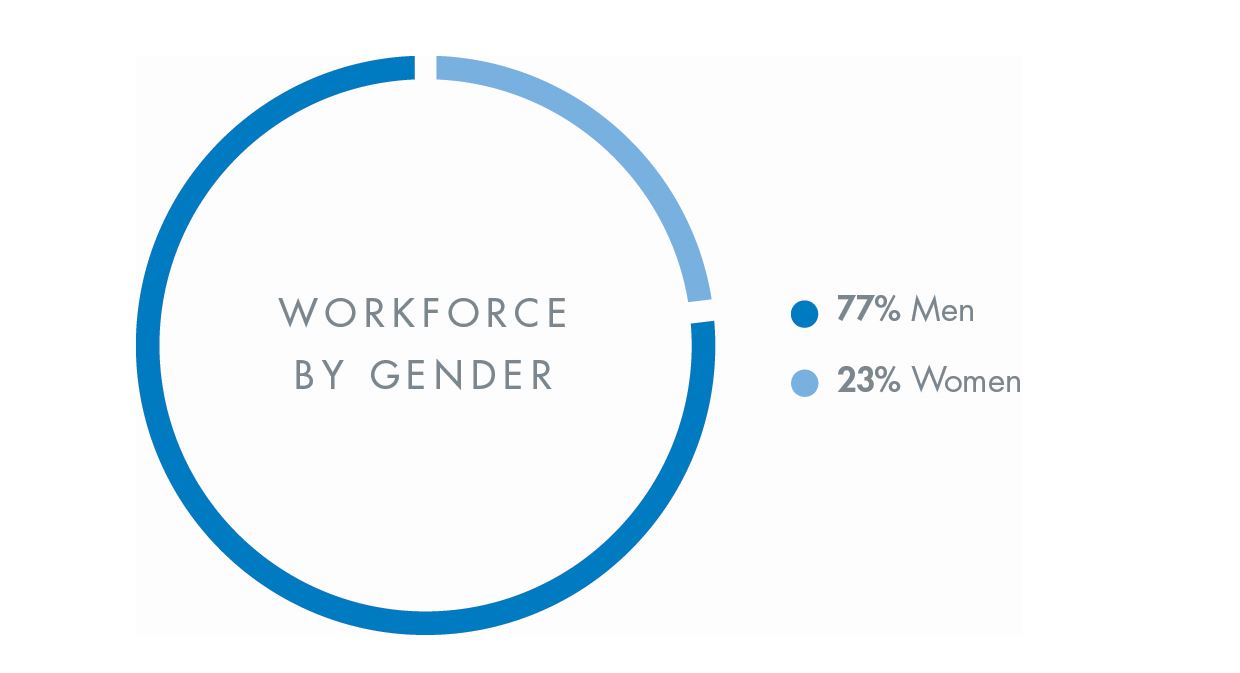
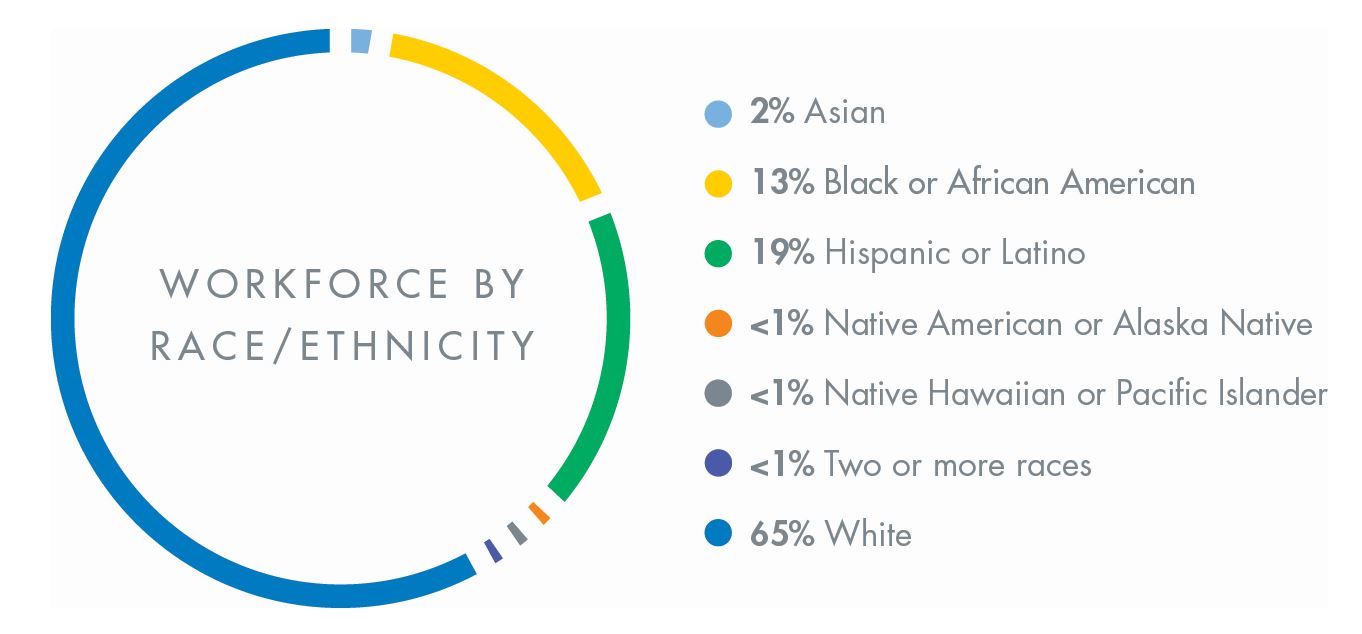
To recruit and hire individuals with a variety of skills, talents, backgrounds and experiences, we value and cultivate our strong relationships with hundreds of community and diversity outreach sources. We also target jobs fairs including those focused on minority, veteran and women candidates and partner with local colleges and universities to identify and recruit qualified applicants in each of the cities and towns we serve. Over the last five calendar years, we hired over 2,000 employees. Our culture is also reflected in our employee benefits. The physical, mental and financial health of our employees and their families is a top priority for the Company, which is why we have a strong, competitive benefits program to help employees and their families manage and protect their health, wealth and time.
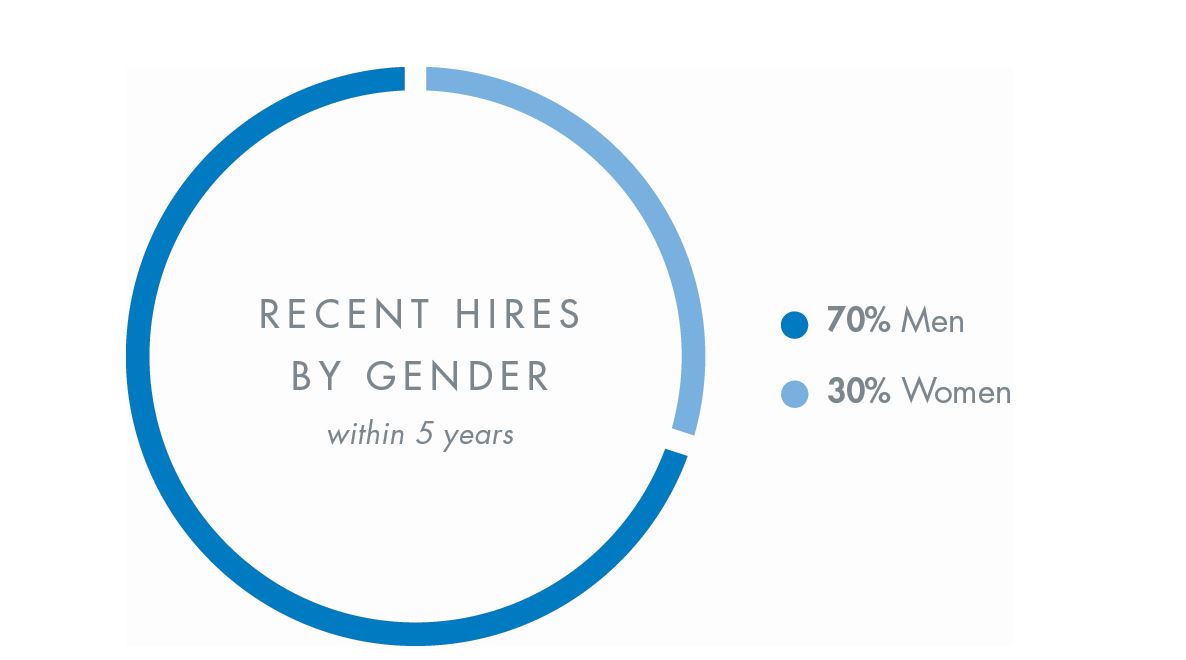
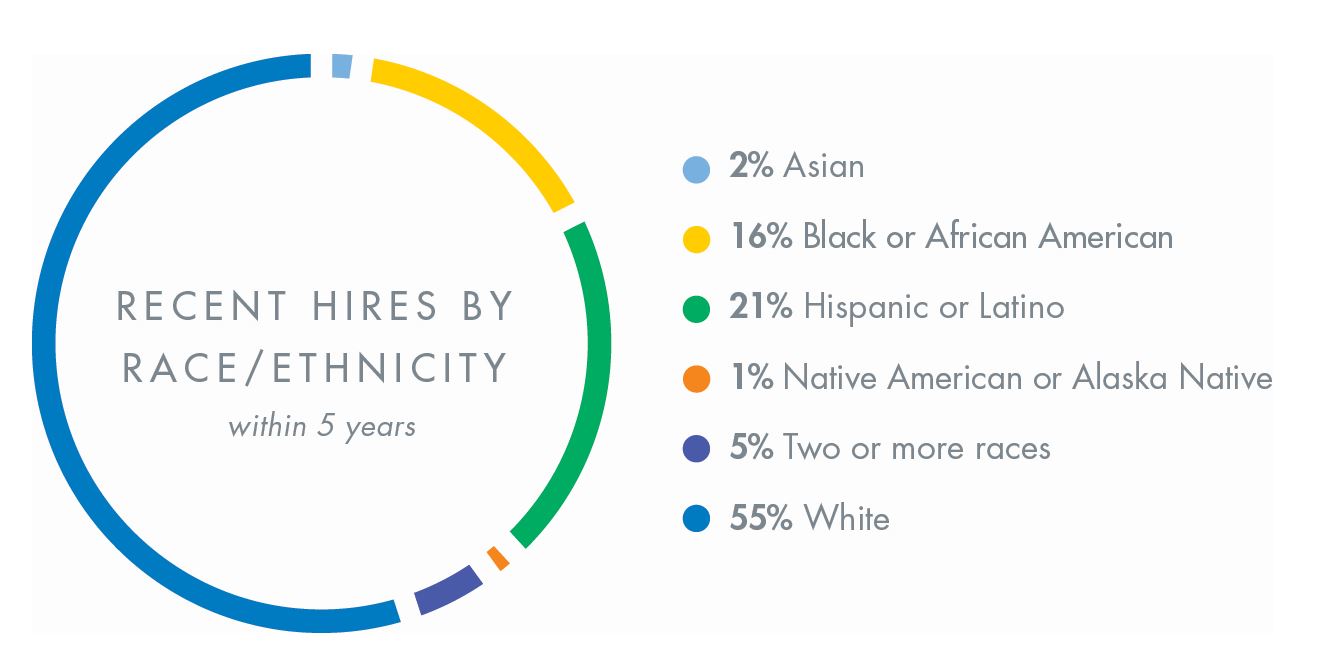
We perform succession planning annually to ensure that we develop and sustain a strong bench of talent capable of performing at the highest levels. Not only is talent identified, but potential paths of development are discussed to ensure that employees have an opportunity to build their skills and are well-prepared for future roles. The strength of our succession planning process is evident through our long history of promoting our leaders from within the organization.
Available Information
Our Annual Reports on Form 10-K, Quarterly Reports on Form 10-Q, Current Reports on Form 8-K and other reports, and amendments to those reports, and other forms that we file with or furnish to the Securities and Exchange Commission (SEC) at their website, www.sec.gov, are also available free of charge at our website, www.atmosenergy.com/company/publications-and-sec-filings, as soon as reasonably practicable, after we electronically file these reports with, or furnish these
reports to, the SEC. We will also provide copies of these reports free of charge upon request to Shareholder Relations at the address and telephone number appearing below:
Shareholder Relations
Atmos Energy Corporation
P.O. Box 650205
Dallas, Texas 75265-0205
972-855-3729
Corporate Governance
In accordance with and pursuant to relevant related rules and regulations of the SEC as well as corporate governance-related listing standards of the New York Stock Exchange (NYSE), the Board of Directors of the Company has established and periodically updated our Corporate Governance Guidelines and Code of Conduct, which is applicable to all directors, officers and employees of the Company. In addition, in accordance with and pursuant to such NYSE listing standards, our Chief Executive Officer during fiscal 2022, John K. Akers, certified to the New York Stock Exchange that he was not aware of any violations by the Company of NYSE corporate governance listing standards. The Board of Directors also annually reviews and updates, if necessary, the charters for each of its Audit, Human Resources, Nominating and Corporate Governance and Corporate Responsibility, Sustainability and Safety Committees. All of the foregoing documents are posted on our website at www.atmosenergy.com/company/corporate-responsiblity-reports. We will also provide copies of all corporate governance documents free of charge upon request to Shareholder Relations at the address listed above.
Item 1A. Risk Factors.
Our financial and operating results are subject to a number of risk factors, many of which are not within our control. Investors should carefully consider the following discussion of risk factors as well as other information appearing in this report. These factors include the following, which are organized by category:
Regulatory and Legislative Risks
We are subject to federal, state and local regulations that affect our operations and financial results.
We are subject to regulatory oversight from various federal, state and local regulatory authorities in the eight states that we serve. Therefore, our returns are continuously monitored and are subject to challenge for their reasonableness by the appropriate regulatory authorities or other third-party intervenors. In the normal course of business, as a regulated entity, we often need to place assets in service and establish historical test periods before rate cases that seek to adjust our allowed returns to recover that investment can be filed. Further, the regulatory review process can be lengthy in the context of traditional ratemaking. Because of this process, we suffer the negative financial effects of having placed assets in service without the benefit of rate relief, which is commonly referred to as “regulatory lag.”
Regulatory authorities in the states we serve have approved various infrastructure and annual rate adjustment mechanisms to effectively reduce the regulatory lag inherent in the ratemaking process. Regulatory lag could significantly increase if the regulatory authorities modify or terminate these rate mechanisms. The regulatory process also involves the risk that regulatory authorities may (i) review our purchases of natural gas and adjust the amount of our gas costs that we pass through to our customers or (ii) limit or disallow the costs we may have incurred from our cost of service that can be recovered from customers.
We are also subject to laws, regulations and other legal requirements enacted or adopted by federal, state and local governmental authorities relating to protection of the environment and health and safety matters, including those that govern discharges of substances into the air and water, the management and disposal of hazardous substances and waste, the clean-up of contaminated sites, groundwater quality and availability, plant and wildlife protection, as well as work practices related to employee health and safety. Environmental legislation also requires that our facilities, sites and other properties associated with our operations be operated, maintained, abandoned and reclaimed to the satisfaction of applicable regulatory authorities. Failure to comply with these laws, regulations, permits and licenses may expose us to fines, penalties or interruptions in our operations that could be significant to our financial results. In addition, existing environmental regulations may be revised or our operations may become subject to new regulations.
Some of our operations are subject to increased federal regulatory oversight that could affect our operations and financial results.
FERC has regulatory authority over some of our operations, including the use and release of interstate pipeline and storage capacity. FERC has adopted rules designed to prevent market power abuse and market manipulation and to promote compliance with FERC’s other rules, policies and orders by companies engaged in the sale, purchase, transportation or storage of natural
gas in interstate commerce. These rules carry increased penalties for violations. Although we have taken steps to structure current and future transactions to comply with applicable current FERC regulations, changes in FERC regulations or their interpretation by FERC or additional regulations issued by FERC in the future could also adversely affect our business, financial condition or financial results.
We may experience increased federal, state and local regulation of the safety of our operations.
The safety and protection of the public, our customers and our employees is our top priority. We constantly monitor and maintain our pipeline and distribution systems to ensure that natural gas is delivered safely, reliably and efficiently through our network of more than 75,000 miles of distribution and transmission lines. As in recent years, natural gas distribution and pipeline companies are continuing to encounter increasing federal, state and local oversight of the safety of their operations. Although we believe these are costs ultimately recoverable through our rates, the costs of complying with new laws and regulations may have at least a short-term adverse impact on our operating costs and financial results.
Operational Risks
We may incur significant costs and liabilities resulting from pipeline integrity and other similar programs and related repairs.
PHMSA requires pipeline operators to develop integrity management programs to comprehensively evaluate certain areas along their pipelines and to take additional measures to protect pipeline segments located in “high consequence areas” where a leak or rupture could potentially do the most harm. As a pipeline operator, the Company is required to:
-
perform ongoing assessments of pipeline integrity;
-
identify and characterize applicable threats to pipeline segments that could impact a “high consequence area”;
-
improve data collection, integration and analysis;
-
repair and remediate the pipeline as necessary; and
-
implement preventative and mitigating actions.
The Company incurs significant costs associated with its compliance with existing PHMSA and comparable state regulations. Although we believe these are costs ultimately recoverable through our rates, the costs of complying with new laws and regulations may have at least a short-term adverse impact on our operating costs and financial results. For example, the adoption of new regulations requiring more comprehensive or stringent safety standards could require installation of new or modified safety controls, new capital projects, or accelerated maintenance programs, all of which could require a potentially significant increase in operating costs.
Distributing, transporting and storing natural gas involve risks that may result in accidents and additional operating costs.
Our operations involve a number of hazards and operating risks inherent in storing and transporting natural gas that could affect the public safety and reliability of our distribution system. While Atmos Energy, with the support from each of its regulatory commissions, is accelerating the replacement of pipeline infrastructure, operating issues such as leaks, accidents, equipment problems and incidents, including explosions and fire, could result in legal liability, repair and remediation costs, increased operating costs, significant increased capital expenditures, regulatory fines and penalties and other costs and a loss of customer confidence. We maintain liability and property insurance coverage in place for many of these hazards and risks. However, because some of our transmission pipeline and storage facilities are near or are in populated areas, any loss of human life or adverse financial results resulting from such events could be large. If these events were not fully covered by our general liability and property insurance, which policies are subject to certain limits and deductibles, our operations or financial results could be adversely affected.
If contracted gas supplies, interstate pipeline and/or storage services are not available or delivered in a timely manner, our ability to meet our customers’ natural gas requirements may be impaired and our financial condition may be adversely affected.
In order to meet our customers’ annual and seasonal natural gas demands, we must obtain a sufficient supply of natural gas, interstate pipeline capacity and storage capacity. If we are unable to obtain these, either from our suppliers’ inability to deliver the contracted commodity or the inability to secure replacement quantities, our financial condition and results of operations may be adversely affected. If a substantial disruption to or reduction in interstate natural gas pipelines’ transmission and storage capacity occurred due to operational failures or disruptions, legislative or regulatory actions, hurricanes, tornadoes, floods, extreme cold weather, terrorist or cyber-attacks or acts of war, our operations or financial results could be adversely affected.
Our operations are subject to increased competition.
In residential and commercial customer markets, our distribution operations compete with other energy products, such as electricity and propane. Our primary product competition is with electricity for heating, water heating and cooking. Increases in the price of natural gas could negatively impact our competitive position by decreasing the price benefits of natural gas to the consumer. This could adversely impact our business if our customer growth slows or if our customers further conserve their use of gas, resulting in reduced gas purchases and customer billings.
In the case of industrial customers, such as manufacturing plants, adverse economic conditions, including higher gas costs, could cause these customers to use alternative sources of energy, such as electricity, or bypass our systems in favor of special competitive contracts with lower per-unit costs. Our pipeline and storage operations historically have faced limited competition from other existing intrastate pipelines and gas marketers seeking to provide or arrange transportation, storage and other services for customers. However, in the last few years, several new pipelines have been completed, which has increased the level of competition in this segment of our business.
Failure to attract and retain a qualified workforce could adversely affect our results of operations.
The competition for talent has become increasingly intense and we may experience increased employee turnover due to a tightening labor market. If we are unable to recruit and retain an appropriately qualified workforce, the Company could encounter operating challenges primarily due to a loss of institutional knowledge and expertise, errors due to inexperience, or the lengthy time period typically required to adequately train replacement personnel. In addition, higher costs could result from loss of productivity, increased safety compliance issues, or cost of contract labor.
Additionally, our ability to operate is contingent on maintaining a healthy workforce and a safe working environment. As a provider of essential services, we have an obligation to provide natural gas services to customers. Incidents of COVID-19 or any other future pandemic in our workforce could challenge the availability of our workforce which could threaten the continuity of our business operations.
Natural disasters, terrorist activities or other significant events could adversely affect our operations or financial results.
Natural disasters are always a threat to our assets and operations. In addition, the threat of terrorist activities could lead to increased economic instability and volatility in the price of natural gas that could affect our operations. Also, companies in our industry may face a heightened risk of exposure to actual acts of terrorism, which could subject our operations to increased risks. As a result, the availability of insurance covering such risks may become more limited, which could increase the risk that an event could adversely affect our operations or financial results.
Technology and Cybersecurity Risks
Increased dependence on technology may hinder the Company’s business operations and adversely affect its financial condition and results of operations if such technologies fail.
Over the last several years, the Company has implemented or acquired a variety of technological tools including both Company-owned information technology and technological services provided by outside parties. These tools and systems support critical functions including scheduling and dispatching of service technicians, automated meter reading systems, customer care and billing, operational plant logistics, management reporting and external financial reporting. The failure of these or other similarly important technologies, or the Company’s inability to have these technologies supported, updated, expanded, or integrated into other technologies, could hinder its business operations and adversely impact its financial condition and results of operations.
Although the Company has, when possible, developed alternative sources of technology and built redundancy into its computer networks and tools, there can be no assurance that these efforts would protect against all potential issues related to the loss of any such technologies.
Cyber-attacks or acts of cyber-terrorism could disrupt our business operations and information technology systems or result in the loss or exposure of confidential or sensitive customer, employee or Company information.
Our business operations and information technology systems may be vulnerable to an attack by individuals or organizations intending to disrupt our business operations and information technology systems, even though the Company has implemented policies, procedures and controls to prevent and detect these activities. We use our information technology systems to manage our distribution and intrastate pipeline and storage operations and other business processes. Disruption of those systems could adversely impact our ability to safely deliver natural gas to our customers, operate our pipeline and storage systems or serve our customers timely. Accordingly, if such an attack or act of terrorism were to occur, our operations and financial results could be adversely affected.
In addition, we use our information technology systems to protect confidential or sensitive customer, employee and Company information developed and maintained in the normal course of our business. Any attack on such systems that would
result in the unauthorized release of customer, employee or other confidential or sensitive data could have a material adverse effect on our business reputation, increase our costs and expose us to additional material legal claims and liability. Even though we have insurance coverage in place for many of these cyber-related risks, if such an attack or act of terrorism were to occur, our operations and financial results could be adversely affected to the extent not fully covered by such insurance coverage.
Compliance with and changes in cybersecurity requirements have a cost and operational impact on our business, and failure to comply with such laws and regulations could adversely impact our reputation, results of operations, financial condition and/or cash flows.
As cyber-attacks are becoming more sophisticated, U.S. government warnings have indicated that critical infrastructure assets, including pipeline infrastructure, may be specifically targeted by certain groups. In 2021, the Transportation Security Administration (TSA) announced two new security directives in response to a ransomware attack on the Colonial Pipeline that occurred earlier in the year. These directives require critical pipeline owners to comply with mandatory reporting measures, designate a cybersecurity coordinator, provide vulnerability assessments, and ensure compliance with certain cybersecurity requirements. Such directives or other requirements may require expenditure of significant additional resources to respond to cyber-attacks, to continue to modify or enhance protective measures, or to assess, investigate and remediate any critical infrastructure security vulnerabilities. Any failure to comply with such government regulations or failure in our cybersecurity protective measures may result in enforcement actions that may have a material adverse effect on our business, results of operations and financial condition. In addition, there is no certainty that costs incurred related to securing against threats will be recovered through rates.
Climate Risks
Adverse weather conditions could affect our operations or financial results.
We have weather-normalized rates for approximately 96 percent of our residential and commercial revenues in our distribution operations, which substantially mitigates the adverse effects of warmer-than-normal weather for meters in those service areas. However, there is no assurance that we will continue to receive such regulatory protection from adverse weather in our rates in the future. The loss of such weather-normalized rates could have an adverse effect on our operations and financial results. In addition, our operating results may continue to vary somewhat with the actual temperatures during the winter heating season. Additionally, sustained cold weather could challenge our ability to adequately meet customer demand in our operations.
Greenhouse gas emissions or other legislation or regulations intended to address climate change could increase our operating costs, adversely affecting our financial results, growth, cash flows and results of operations.
Six of the eight states in which we operate have passed legislation to block attempts by local governments to limit the types of energy available to customers. However, federal, regional and/or state legislative and/or regulatory initiatives may attempt to control or limit the causes of climate change, including greenhouse gas emissions, such as carbon dioxide and methane. Such laws or regulations could impose costs tied to greenhouse gas emissions, operational requirements or restrictions, or additional charges to fund energy efficiency activities. They could also provide a cost advantage to alternative energy sources, impose costs or restrictions on end users of natural gas, or result in other costs or requirements, such as costs associated with the adoption of new infrastructure and technology to respond to new mandates. The focus on climate change could adversely impact the reputation of fossil fuel products or services. The occurrence of the foregoing events could put upward pressure on the cost of natural gas relative to other energy sources, increase our costs and the prices we charge to customers, reduce the demand for natural gas or cause fuel switching to other energy sources, and impact the competitive position of natural gas and the ability to serve new or existing customers, adversely affecting our business, results of operations and cash flows.
The operations and financial results of the Company could be adversely impacted as a result of climate change.
As climate change occurs, our businesses could be adversely impacted. To the extent climate change results in temperatures that differ materially from temperatures we are currently experiencing, financial results could be adversely affected through lower gas volumes and revenues. Climate change could also cause shifts in population, including customers moving away from our service territories.
It could also result in more frequent and more severe weather events, such as hurricanes and tornadoes, which could increase our costs to repair damaged facilities and restore service to our customers or impact the cost of gas. If we were unable to deliver natural gas to our customers, our financial results would be impacted by lost revenues, and we generally would have to seek approval from regulators to recover restoration costs. To the extent we would be unable to recover those costs, or if higher rates resulting from our recovery of such costs would result in reduced demand for our services, our future business, financial condition or financial results could be adversely impacted.
Financial, Economic and Market Risks
Our growth in the future may be limited by the nature of our business, which requires extensive capital spending.
Our operations are capital-intensive. We must make significant capital expenditures on a long-term basis to modernize our distribution and transmission system and to comply with the safety rules and regulations issued by the regulatory authorities responsible for the service areas we operate. In addition, we must continually build new capacity to serve the growing needs of the communities we serve. The magnitude of these expenditures may be affected by a number of factors, including new regulations, the general state of the economy and weather.
The liquidity required to fund our working capital, capital expenditures and other cash needs is provided from a combination of internally generated cash flows and external debt and equity financing. The cost and availability of borrowing funds from third party lenders or issuing equity is dependent on the liquidity of the credit markets, interest rates and other market conditions. This in turn may limit the amount of funds we can invest in our infrastructure.
The Company is dependent on continued access to the credit and capital markets to execute our business strategy.
Our long-term debt is currently rated as “investment grade” by Standard & Poor’s Corporation and Moody’s Investors Service, Inc. Similar to most companies, we rely upon access to both short-term and long-term credit and capital markets to satisfy our liquidity requirements. If adverse credit conditions were to cause a significant limitation on our access to the private credit and public capital markets, we could see a reduction in our liquidity. A significant reduction in our liquidity could in turn trigger a negative change in our ratings outlook or even a reduction in our credit ratings by one or more of the credit rating agencies. Such a downgrade could further limit our access to private credit and/or public capital markets and increase our costs of borrowing.
While we believe we can meet our capital requirements from our operations and the sources of financing available to us, we can provide no assurance that we will continue to be able to do so in the future, especially if the market price of natural gas increases significantly. The future effects on our business, liquidity and financial results of a deterioration of current conditions in the credit and capital markets could be material and adverse to us, both in the ways described above or in other ways that we do not currently anticipate.
We are exposed to market risks that are beyond our control, which could adversely affect our financial results.
We are subject to market risks beyond our control, including (i) commodity price volatility caused by market supply and demand dynamics, counterparty performance or counterparty creditworthiness and (ii) interest rate risk. We are generally insulated from commodity price risk through our purchased gas cost mechanisms. With respect to interest rate risk, increases in interest rates could adversely affect our future financial results to the extent that we do not recover our actual interest expense in our rates.
The concentration of our operations in the State of Texas exposes our operations and financial results to economic conditions, weather patterns and regulatory decisions in Texas.
Approximately 70 percent of our consolidated operations are located in the State of Texas. This concentration of our business in Texas means that our operations and financial results may be significantly affected by changes in the Texas economy in general, weather patterns and regulatory decisions by state and local regulatory authorities in Texas.
A deterioration in economic conditions could adversely affect our customers and negatively impact our financial results.
Any adverse changes in economic conditions in the states in which we operate could adversely affect the financial resources of many domestic households. As a result, our customers could seek to use less gas and it may be more difficult for them to pay their gas bills. This would likely lead to slower collections and higher than normal levels of accounts receivable. This, in turn, could increase our financing requirements. Additionally, should economic conditions deteriorate, our industrial customers could seek alternative energy sources, which could result in lower transportation volumes.
Increased gas costs could adversely impact our customer base and customer collections and increase our level of indebtedness.
Rapid increases in the costs of purchased gas would cause us to experience a significant increase in short-term or long-term debt. We must pay suppliers for gas when it is purchased, which can be significantly in advance of when these costs may be recovered through the collection of monthly customer bills for gas delivered. Increases in purchased gas costs also slow our natural gas distribution collections as customers are more likely to delay the payment of their gas bills, leading to higher than normal accounts receivable. This could result in higher short-term debt levels, greater collection efforts and increased bad debt expense.
The costs of providing health care benefits, pension and postretirement health care benefits and related funding requirements may increase substantially.
We provide health care benefits, a cash-balance pension plan and postretirement health care benefits to eligible full-time employees. The costs of providing health care benefits to our employees could significantly increase over time due to rapidly increasing health care inflation, and any future legislative changes related to the provision of health care benefits. The impact of additional costs which are likely to be passed on to the Company is difficult to measure at this time.
The costs of providing a cash-balance pension plan to eligible full-time employees prior to 2011 and postretirement health care benefits to eligible full-time employees and related funding requirements could be influenced by changes in the market value of the assets funding our pension and postretirement health care plans. Any significant declines in the value of these investments due to sustained declines in equity markets or a reduction in bond yields could increase the costs of our pension and postretirement health care plans and related funding requirements in the future. Further, our costs of providing such benefits and related funding requirements are also subject to a number of factors, including (i) changing demographics, including longer life expectancy of beneficiaries and an expected increase in the number of eligible former employees over the next five to ten years; (ii) various actuarial calculations and assumptions which may differ materially from actual results due primarily to changing market and economic conditions, including changes in interest rates, and higher or lower withdrawal rates; and (iii) future government regulation.
The costs to the Company of providing these benefits and related funding requirements could also increase materially in the future, should there be a material reduction in the amount of the recovery of these costs through our rates or should significant delays develop in the timing of the recovery of such costs, which could adversely affect our financial results.
Item 1B. Unresolved Staff Comments.
Not applicable.
Item 2. Properties.
Distribution, transmission and related assets
At September 30, 2022, in our distribution segment, we owned an aggregate of 73,243 miles of underground distribution and transmission mains throughout our distribution systems. These mains are located on easements or rights-of-way. We maintain our mains through a program of continuous inspection and repair and believe that our system of mains is in good condition. Through our pipeline and storage segment we also owned 5,652 miles of gas transmission lines.
Storage Assets
We own underground gas storage facilities in several states to supplement the supply of natural gas in periods of peak demand. The following table summarizes certain information regarding our underground gas storage facilities at September 30, 2022:
| State | Usable Capacity (Mcf) | Cushion Gas (Mcf)****(1) | Total Capacity (Mcf) | Maximum Daily Delivery Capability (Mcf) | ||||||||||||||||||||||
| Distribution Segment | ||||||||||||||||||||||||||
| Kentucky | 7,956,991 | 9,562,283 | 17,519,274 | 146,660 | ||||||||||||||||||||||
| Kansas | 3,239,000 | 2,300,000 | 5,539,000 | 32,000 | ||||||||||||||||||||||
| Mississippi | 1,907,571 | 2,442,917 | 4,350,488 | 29,136 | ||||||||||||||||||||||
| Total | 13,103,562 | 14,305,200 | 27,408,762 | 207,796 | ||||||||||||||||||||||
| Pipeline and Storage Segment | ||||||||||||||||||||||||||
| Texas | 46,083,549 | 15,878,025 | 61,961,574 | 1,710,000 | ||||||||||||||||||||||
| Louisiana | 411,040 | 256,900 | 667,940 | 56,000 | ||||||||||||||||||||||
| Total | 46,494,589 | 16,134,925 | 62,629,514 | 1,766,000 | ||||||||||||||||||||||
| Total | 59,598,151 | 30,440,125 | 90,038,276 | 1,973,796 |
(1)Cushion gas represents the volume of gas that must be retained in a facility to maintain reservoir pressure.
Additionally, we contract for storage service in underground storage facilities on many of the interstate and intrastate pipelines serving us to supplement our proprietary storage capacity. The following table summarizes our contracted storage capacity at September 30, 2022:
| Segment | Division/Company | Maximum Storage Quantity (MMBtu) | Maximum Daily Withdrawal Quantity (MDWQ)****(1) | |||||||||||||||||
| Distribution Segment | ||||||||||||||||||||
| Colorado-Kansas Division | 6,343,728 | 147,965 | ||||||||||||||||||
| Kentucky/Mid-States Division | 8,175,103 | 226,320 | ||||||||||||||||||
| Louisiana Division | 2,594,875 | 177,765 | ||||||||||||||||||
| Mid-Tex Division | 6,000,000 | 230,000 | ||||||||||||||||||
| Mississippi Division | 5,299,536 | 202,764 | ||||||||||||||||||
| West Texas Division | 5,000,000 | 161,000 | ||||||||||||||||||
| Total | 33,413,242 | 1,145,814 | ||||||||||||||||||
| Pipeline and Storage Segment | ||||||||||||||||||||
| Trans Louisiana Gas Pipeline, Inc. | 1,000,000 | 47,500 | ||||||||||||||||||
| Total Contracted Storage Capacity | 34,413,242 | 1,193,314 |
(1)Maximum daily withdrawal quantity (MDWQ) amounts will fluctuate depending upon the season and the month. Unless otherwise noted, MDWQ amounts represent the MDWQ amounts as of November 1, which is the beginning of the winter heating season.
Item 3. Legal Proceedings.
See Note 13 to the consolidated financial statements, which is incorporated in this Item 3 by reference.
Item 4. Mine Safety Disclosures.
Not applicable.
PART II
Item 5. Market for Registrant’s Common Equity, Related Stockholder Matters and Issuer Purchases of Equity Securities.
Our stock trades on the New York Stock Exchange under the trading symbol “ATO.” The dividends paid per share of our common stock for fiscal 2022 and 2021 are listed below.
| Fiscal 2022 | Fiscal 2021 | |||||||||||||
| Quarter ended: | ||||||||||||||
| December 31 | $ | 0.680 | $ | 0.625 | ||||||||||
| March 31 | 0.680 | 0.625 | ||||||||||||
| June 30 | 0.680 | 0.625 | ||||||||||||
| September 30 | 0.680 | 0.625 | ||||||||||||
| $ | 2.72 | $ | 2.50 |
Dividends are payable at the discretion of our Board of Directors out of legally available funds. The Board of Directors typically declares dividends in the same fiscal quarter in which they are paid. As of October 31, 2022, there were 10,052 holders of record of our common stock. Future payments of dividends, and the amounts of these dividends, will depend on our financial condition, results of operations, capital requirements and other factors. We sold no securities during fiscal 2022 that were not registered under the Securities Act of 1933, as amended.
Performance Graph
The performance graph and table below compares the yearly percentage change in our total return to shareholders for the last five fiscal years with the total return of the S&P 500 Stock Index (S&P 500) and the total return of the S&P 500 Utilities Industry Index. The graph and table below assume that $100.00 was invested on September 30, 2017 in our common stock, the S&P 500 and the S&P 500 Utilities Industry Index ax, as well as a reinvestment of dividends paid on such investments throughout the period.
Comparison of Five-Year Cumulative Total Return
among Atmos Energy Corporation, S&P 500 Index and
S&P 500 Utilities Industry Index
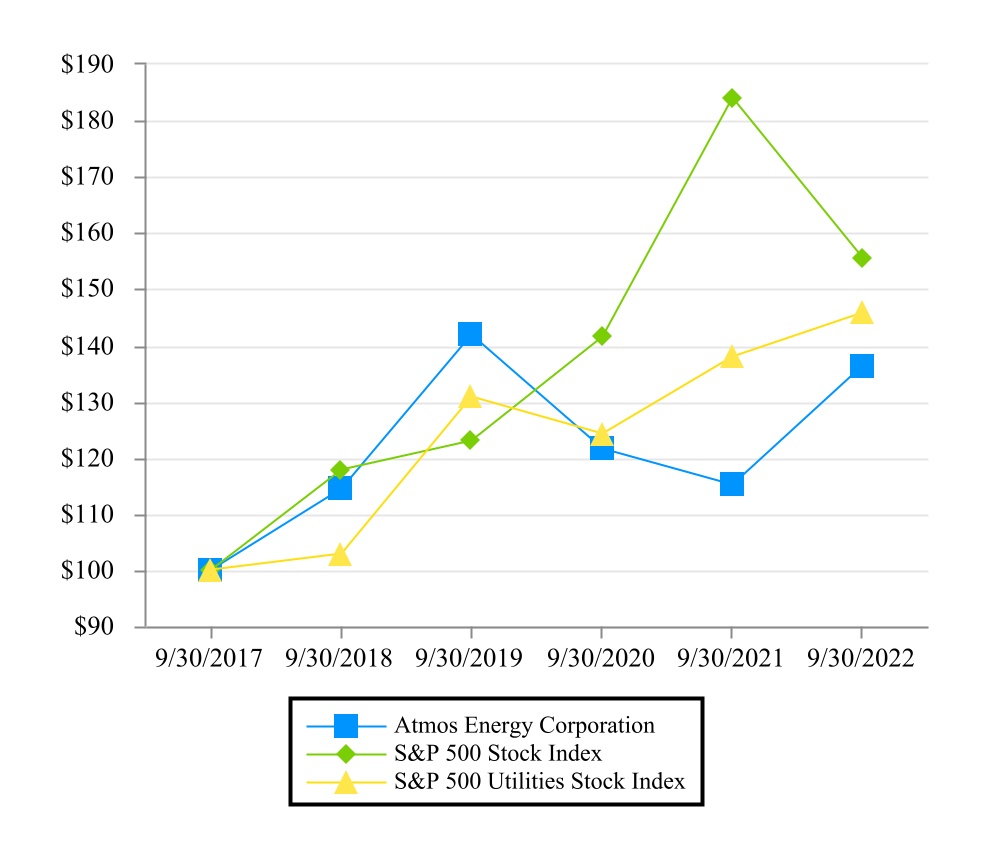
| Cumulative Total Return | |||||||||||||||||||||||||||||||||||
| 9/30/2017 | 9/30/2018 | 9/30/2019 | 9/30/2020 | 9/30/2021 | 9/30/2022 | ||||||||||||||||||||||||||||||
| Atmos Energy Corporation | 100.00 | 114.53 | 141.78 | 121.61 | 115.14 | 136.38 | |||||||||||||||||||||||||||||
| S&P 500 Stock Index | 100.00 | 117.91 | 122.93 | 141.55 | 184.02 | 155.55 | |||||||||||||||||||||||||||||
| S&P 500 Utilities Stock Index | 100.00 | 102.93 | 130.82 | 124.32 | 138.01 | 145.71 |
The following table sets forth the number of securities authorized for issuance under our equity compensation plans at September 30, 2022.
| Number of securities to be issued upon exercise of outstanding options, warrants and rights | Weighted-average exercise price of outstanding options, warrants and rights | Number of securities remaining available for future issuance under equity compensation plans (excluding securities reflected in column (a)) | |||||||||||||||
| (a) | (b) | (c) | |||||||||||||||
| Equity compensation plans approved by security holders: | |||||||||||||||||
| 1998 Long-Term Incentive Plan | 696,744 | (1) | $ | — | 874,481 | ||||||||||||
| Total equity compensation plans approved by security holders | 696,744 | — | 874,481 | ||||||||||||||
| Equity compensation plans not approved by security holders | — | — | — | ||||||||||||||
| Total | 696,744 | $ | — | 874,481 |
(1)Comprised of a total of 301,403 time-lapse restricted stock units, 195,184 director share units and 200,157 performance-based restricted stock units at the target level of performance granted under our 1998 Long-Term Incentive Plan.
Item 6. Selected Financial Data.
No disclosure required by Regulation S-K.
Item 7. Management’s Discussion and Analysis of Financial Condition and Results of Operations.
INTRODUCTION
This section provides management’s discussion of the financial condition, changes in financial condition and results of operations of Atmos Energy Corporation and its consolidated subsidiaries with specific information on results of operations and liquidity and capital resources. It includes management’s interpretation of our financial results, the factors affecting these results, the major factors expected to affect future operating results and future investment and financing plans. This discussion should be read in conjunction with our consolidated financial statements and notes thereto.
Several factors exist that could influence our future financial performance, some of which are described in Item 1A above, “Risk Factors”. They should be considered in connection with evaluating forward-looking statements contained in this report or otherwise made by or on behalf of us since these factors could cause actual results and conditions to differ materially from those set out in such forward-looking statements.
Cautionary Statement for the Purposes of the Safe Harbor under the Private Securities Litigation Reform Act of 1995
The statements contained in this Annual Report on Form 10-K may contain “forward-looking statements” within the meaning of Section 27A of the Securities Act of 1933 and Section 21E of the Securities Exchange Act of 1934. All statements other than statements of historical fact included in this Report are forward-looking statements made in good faith by us and are intended to qualify for the safe harbor from liability established by the Private Securities Litigation Reform Act of 1995. When used in this Report, or any other of our documents or oral presentations, the words “anticipate”, “believe”, “estimate”, “expect”, “forecast”, “goal”, “intend”, “objective”, “plan”, “projection”, “seek”, “strategy” or similar words are intended to identify forward-looking statements. Such forward-looking statements are subject to risks and uncertainties that could cause actual results to differ materially from those expressed or implied in the statements relating to our strategy, operations, markets, services, rates, recovery of costs, availability of gas supply and other factors. These risks and uncertainties include the following: federal, state and local regulatory and political trends and decisions, including the impact of rate proceedings before various state regulatory commissions; increased federal regulatory oversight and potential penalties; possible increased federal, state and local regulation of the safety of our operations; possible significant costs and liabilities resulting from pipeline integrity and other similar programs and related repairs; the inherent hazards and risks involved in distributing, transporting and storing natural gas; the availability and accessibility of contracted gas supplies, interstate pipeline and/or storage services; increased competition from energy suppliers and alternative forms of energy; failure to attract and retain a qualified workforce; natural disasters, terrorist activities or other events and other risks and uncertainties discussed herein, all of which are difficult to predict and many of which are beyond our control; increased dependence on technology that may hinder the Company's business if such technologies fail; the threat of cyber-attacks or acts of cyber-terrorism that could disrupt our business operations and information technology systems or result in the loss or exposure of confidential or sensitive customer, employee or Company information; the impact of new cybersecurity compliance requirements; adverse weather conditions; the impact of
greenhouse gas emissions or other legislation or regulations intended to address climate change; the impact of climate change; the capital-intensive nature of our business; our ability to continue to access the credit and capital markets to execute our business strategy; market risks beyond our control affecting our risk management activities, including commodity price volatility, counterparty performance or creditworthiness and interest rate risk; the concentration of our operations in Texas; the impact of adverse economic conditions on our customers; changes in the availability and price of natural gas; and increased costs of providing health care benefits, along with pension and postretirement health care benefits and increased funding requirements. Accordingly, while we believe these forward-looking statements to be reasonable, there can be no assurance that they will approximate actual experience or that the expectations derived from them will be realized. Further, we undertake no obligation to update or revise any of our forward-looking statements whether as a result of new information, future events or otherwise.
CRITICAL ACCOUNTING POLICIES
Our consolidated financial statements were prepared in accordance with accounting principles generally accepted in the United States. Preparation of these financial statements requires us to make estimates and judgments that affect the reported amounts of assets, liabilities, revenues and expenses and the related disclosures of contingent assets and liabilities. We base our estimates on historical experience and various other assumptions that we believe to be reasonable under the circumstances. Actual results may differ from estimates.
Our significant accounting policies are discussed in Note 2 to our consolidated financial statements. The accounting policies discussed below are both important to the presentation of our financial condition and results of operations and require management to make difficult, subjective or complex accounting estimates. Accordingly, these critical accounting policies are reviewed periodically by the Audit Committee of the Board of Directors.
| Critical Accounting Policy | Summary of Policy | Factors Influencing Application of the Policy | ||||||
| Regulation | Our distribution and pipeline operations meet the criteria of a cost-based, rate-regulated entity under accounting principles generally accepted in the United States. Accordingly, the financial results for these operations reflect the effects of the ratemaking and accounting practices and policies of the various regulatory commissions to which we are subject. As a result, certain costs that would normally be expensed under accounting principles generally accepted in the United States are permitted to be capitalized or deferred on the balance sheet because it is probable they can be recovered through rates. Further, regulation may impact the period in which revenues or expenses are recognized. The amounts expected to be recovered or recognized are based upon historical experience and our understanding of the regulations. Discontinuing the application of this method of accounting for regulatory assets and liabilities or changes in the accounting for our various regulatory mechanisms could significantly increase our operating expenses as fewer costs would likely be capitalized or deferred on the balance sheet, which could reduce our net income. | Decisions of regulatory authorities Issuance of new regulations or regulatory mechanisms Assessing the probability of the recoverability of deferred costs Continuing to meet the criteria of a cost-based, rate regulated entity for accounting purposes | ||||||
| Unbilled Revenue | We follow the revenue accrual method of accounting for distribution segment revenues whereby revenues attributable to gas delivered to customers, but not yet billed under the cycle billing method, are estimated and accrued and the related costs are charged to expense. When permitted, we implement rates that have not been formally approved by our regulatory authorities, subject to refund.We recognize this revenue and establish a reserve for amoun |
Showing the first 8K of 63K characters. Open the full section
Item 7A. Quantitative and Qualitative Disclosures About Market Risk.
We are exposed to risks associated with commodity prices and interest rates. Commodity price risk is the potential loss that we may incur as a result of changes in the fair value of a particular instrument or commodity. Interest-rate risk is the potential increased cost we could incur when we issue debt instruments or to provide financing and liquidity for our business activities. Additionally, interest-rate risk could affect our ability to issue cost effective equity instruments.
We conduct risk management activities in our distribution and pipeline and storage segments. In our distribution segment, we use a combination of physical storage, fixed-price forward contracts and financial instruments, primarily over-the-counter swap and option contracts, in an effort to minimize the impact of natural gas price volatility on our customers during the winter heating season. Our risk management activities and related accounting treatment are described in further detail in Note 15 to the consolidated financial statements. Additionally, our earnings are affected by changes in short-term interest rates as a result of our issuance of short-term commercial paper and our other short-term borrowings.
Commodity Price Risk
We purchase natural gas for our distribution operations. Substantially all of the costs of gas purchased for distribution operations are recovered from our customers through purchased gas cost adjustment mechanisms. Therefore, our distribution operations have limited commodity price risk exposure.
Interest Rate Risk
Our earnings are exposed to changes in short-term interest rates associated with our short-term commercial paper program and other short-term borrowings. We use a sensitivity analysis to estimate our short-term interest rate risk. For purposes of this analysis, we estimate our short-term interest rate risk as the difference between our actual interest expense for the period and estimated interest expense for the period assuming a hypothetical average one percent increase in the interest rates associated with our short-term borrowings. Had interest rates associated with our short-term borrowings increased by an average of one percent, our interest expense would not have materially increased during 2022.
Item 8. Financial Statements and Supplementary Data.
Index to financial statements and financial statement schedules:
All financial statement schedules are omitted because the required information is not present, or not present in amounts sufficient to require submission of the schedule or because the information required is included in the financial statements and accompanying notes thereto.
REPORT OF INDEPENDENT REGISTERED PUBLIC ACCOUNTING FIRM
To the Shareholders and the Board of Directors of Atmos Energy Corporation
Opinion on the Financial Statements
We have audited the accompanying consolidated balance sheets of Atmos Energy Corporation (the Company) as of September 30, 2022 and 2021, the related consolidated statements of comprehensive income, shareholders’ equity and cash flows for each of the three years in the period ended September 30, 2022, and the related notes (collectively referred to as the "consolidated financial statements"). In our opinion, the consolidated financial statements present fairly, in all material respects, the financial position of the Company at September 30, 2022 and 2021, and the results of its operations and its cash flows for each of the three years in the period ended September 30, 2022, in conformity with U.S. generally accepted accounting principles.
We also have audited, in accordance with the standards of the Public Company Accounting Oversight Board (United States) (PCAOB), the Company’s internal control over financial reporting as of September 30, 2022, based on criteria established in Internal Control — Integrated Framework issued by the Committee of Sponsoring Organizations of the Treadway Commission (2013 framework) and our report dated November 14, 2022 expressed an unqualified opinion thereon.
Basis for Opinion
These financial statements are the responsibility of the Company’s management. Our responsibility is to express an opinion on the Company’s financial statements based on our audits. We are a public accounting firm registered with the PCAOB and are required to be independent with respect to the Company in accordance with the U.S. federal securities laws and the applicable rules and regulations of the Securities and Exchange Commission and the PCAOB.
We conducted our audits in accordance with the standards of the PCAOB. Those standards require that we plan and perform the audit to obtain reasonable assurance about whether the financial statements are free of material misstatement, whether due to error or fraud. Our audits included performing procedures to assess the risks of material misstatement of the financial statements, whether due to error or fraud, and performing procedures that respond to those risks. Such procedures included examining, on a test basis, evidence regarding the amounts and disclosures in the financial statements. Our audits also included evaluating the accounting principles used and significant estimates made by management, as well as evaluating the overall presentation of the financial statements. We believe that our audits provide a reasonable basis for our opinion.
Critical Audit Matter
The critical audit matter communicated below is a matter arising from the current period audit of the financial statements that was communicated or required to be communicated to the audit committee and that: (1) relates to accounts or disclosures that are material to the financial statements and (2) involved our especially challenging, subjective or complex judgments. The communication of the critical audit matter does not alter in any way our opinion on the consolidated financial statements, taken as a whole, and we are not, by communicating the critical audit matter below, providing a separate opinion on the critical audit matter or on the accounts or disclosures to which it relates.
| Determination of Capital Costs | |||||
| Description of the Matter | As more fully described in Note 2 to the financial statements, the Company capitalizes the direct and indirect costs of construction. Once a project is completed, it is placed into service and included in the Company’s rate base. Costs of maintenance and repairs that are not included in the Company’s rate base are charged to expense. For the year ended September 30, 2022, the Company capitalized approximately $2.4 billion of construction-related costs for regulated property, plant and equipment. Auditing management’s identification of capital additions and maintenance and repairs expense involved significant effort and auditor judgment. These amounts have both a higher magnitude and a higher likelihood of potential misstatement. As a cost-based, rate-regulated entity, the rates charged to customers are designed to recover the entity’s costs and provide a rate of return on rate base. Net property, plant and equipment is the most significant component of the Company’s rate base. As a result, inappropriate capitalization of costs could affect the amount, timing and classification of revenues and expenses in the financial statements. |
| How We Addressed the Matter in Our Audit | We obtained an understanding, evaluated the design and tested the operating effectiveness of the Company’s controls over the initial determination and approval of expenditures for either capital additions or maintenance and repair. For example, we selected a sample of projects initiated during the year to evaluate the effectiveness of management’s review controls to determine the proper categorization of project expenditures as either capitalizable costs or current-period expense. Our audit procedures included, among others, testing a sample of projects initiated during the year, including the evaluation of the nature of the project, with Company personnel outside of accounting and financial reporting. For example, we evaluated project setup through inspection of each project’s description for compliance with the Company’s capitalization policy as described in Note 2 and a series of inquiries of the project approver to understand how they assessed whether projects should be treated as capital or expense. Other audit procedures included evaluating whether the descriptions and amounts included on third-party invoices either support or contradict the project classification as capital, evaluating the appropriateness of individuals capitalizing direct labor charges to projects by assessing the relevance of their job function to the capital project, and recalculating other overhead costs capitalized to projects. |
/s/ Ernst & Young LLP
We have served as the C
Showing the first 8K of 223K characters. Open the full section
Item 9. Changes in and Disagreements With Accountants on Accounting and Financial Disclosure.
None.
Item 9A. Controls and Procedures.
Management’s Evaluation of Disclosure Controls and Procedures
We carried out an evaluation, under the supervision and with the participation of our management, including our principal executive officer and principal financial officer, of the effectiveness of the Company’s disclosure controls and procedures, as such term is defined in Rule 13a-15(e) under the Securities Exchange Act of 1934, as amended (Exchange Act). Based on this evaluation, the Company’s principal executive officer and principal financial officer have concluded that the Company’s disclosure controls and procedures were effective as of September 30, 2022 to provide reasonable assurance that information required to be disclosed by us, including our consolidated entities, in the reports that we file or submit under the Exchange Act is recorded, processed, summarized, and reported within the time periods specified by the SEC’s rules and forms, including a reasonable level of assurance that such information is accumulated and communicated to our management, including our principal executive and principal financial officers, as appropriate to allow timely decisions regarding required disclosure.
Management’s Report on Internal Control over Financial Reporting
Our management is responsible for establishing and maintaining adequate internal control over financial reporting, as such term is defined in Exchange Act Rule 13a-15(f), in providing reasonable assurance regarding the reliability of financial reporting and the preparation of financial statements for external purposes in accordance with generally accepted accounting principles. Under the supervision and with the participation of our management, including our principal executive officer and principal financial officer, we evaluated the effectiveness of our internal control over financial reporting based on the framework in Internal Control-Integrated Framework issued by the Committee of Sponsoring Organizations of the Treadway Commission (2013 framework) (COSO). Based on our evaluation under the framework in Internal Control-Integrated Framework issued by COSO and applicable Securities and Exchange Commission rules, our management concluded that our internal control over financial reporting was effective as of September 30, 2022, in providing reasonable assurance regarding the reliability of financial reporting and the preparation of financial statements for external purposes in accordance with generally accepted accounting principles.
Ernst & Young LLP has issued its report on the effectiveness of the Company’s internal control over financial reporting. That report appears below.
| /s/ JOHN K. AKERS | /s/ CHRISTOPHER T. FORSYTHE | |||||||
| John K. Akers | Christopher T. Forsythe | |||||||
| President, Chief Executive Officer and Director | Senior Vice President and Chief Financial Officer | |||||||
| November 14, 2022 |
REPORT OF INDEPENDENT REGISTERED PUBLIC ACCOUNTING FIRM
To the Shareholders and the Board of Directors of Atmos Energy Corporation
Opinion on Internal Control Over Financial Reporting
We have audited Atmos Energy Corporation’s internal control over financial reporting as of September 30, 2022, based on criteria established in Internal Control - Integrated Framework issued by the Committee of Sponsoring Organizations of the Treadway Commission (2013 framework) (the COSO criteria). In our opinion, Atmos Energy Corporation (the Company) maintained, in all material respects, effective internal control over financial reporting as of September 30, 2022, based on the COSO criteria.
We also have audited, in accordance with the standards of the Public Company Accounting Oversight Board (United States) (PCAOB), the 2022 consolidated financial statements of the Company and our report dated November 14, 2022 expressed an unqualified opinion thereon.
Basis for Opinion
The Company’s management is responsible for maintaining effective internal control over financial reporting and for its assessment of the effectiveness of internal control over financial reporting included in the accompanying Management’s Report on Internal Control over Financial Reporting. Our responsibility is to express an opinion on the Company’s internal control over financial reporting based on our audit. We are a public accounting firm registered with the PCAOB and are required to be independent with respect to the Company in accordance with the U.S. federal securities laws and the applicable rules and regulations of the Securities and Exchange Commission and the PCAOB.
We conducted our audit in accordance with the standards of the PCAOB. Those standards require that we plan and perform the audit to obtain reasonable assurance about whether effective internal control over financial reporting was maintained in all material respects.
Our audit included obtaining an understanding of internal control over financial reporting, assessing the risk that a material weakness exists, testing and evaluating the design and operating effectiveness of internal control based on the assessed risk, and performing such other procedures as we considered necessary in the circumstances. We believe that our audit provides a reasonable basis for our opinion.
Definition and Limitations of Internal Control Over Financial Reporting
A company’s internal control over financial reporting is a process designed to provide reasonable assurance regarding the reliability of financial reporting and the preparation of financial statements for external purposes in accordance with generally accepted accounting principles. A company’s internal control over financial reporting includes those policies and procedures that (1) pertain to the maintenance of records that, in reasonable detail, accurately and fairly reflect the transactions and dispositions of the assets of the company; (2) provide reasonable assurance that transactions are recorded as necessary to permit preparation of financial statements in accordance with generally accepted accounting principles, and that receipts and expenditures of the company are being made only in accordance with authorizations of management and directors of the company; and (3) provide reasonable assurance regarding prevention or timely detection of unauthorized acquisition, use, or disposition of the company’s assets that could have a material effect on the financial statements.
Because of its inherent limitations, internal control over financial reporting may not prevent or detect misstatements. Also, projections of any evaluation of effectiveness to future periods are subject to the risk that controls may become inadequate because of changes in conditions, or that the degree of compliance with the policies or procedures may deteriorate.
/s/ Ernst & Young LLP
Dallas, Texas
November 14, 2022
Changes in Internal Control over Financial Reporting
We did not make any changes in our internal control over financial reporting (as defined in Rule 13a-15(f) and 15d-15(f) under the Act) during the fourth quarter of the fiscal year ended September 30, 2022 that have materially affected, or are reasonably likely to materially affect, our internal control over financial reporting.
Item 9B. Other Information.
Not applicable.
PART III
Item 10. Directors, Executive Officers and Corporate Governance.
Information regarding directors is incorporated herein by reference to the Company’s Definitive Proxy Statement for the Annual Meeting of Shareholders on February 8, 2023. Information regarding executive officers is reported below:
INFORMATION ABOUT OUR EXECUTIVE OFFICERS
The following table sets forth certain information as of September 30, 2022, regarding the executive officers of the Company. It is followed by a brief description of the business experience of each executive officer.
| Name | Age | Years of Service | Office Currently Held | |||||||||||||||||
| John K. Akers | 59 | 31 | President, Chief Executive Officer and Director | |||||||||||||||||
| Christopher T. Forsythe | 51 | 19 | Senior Vice President and Chief Financial Officer | |||||||||||||||||
| John S. McDill | 58 | 35 | Senior Vice President, Utility Operations | |||||||||||||||||
| Karen E. Hartsfield | 52 | 7 | Senior Vice President, General Counsel and Corporate Secretary | |||||||||||||||||
| John M. Robbins | 52 | 9 | Senior Vice President, Human Resources |
John K. (Kevin) Akers was named President and Chief Executive Officer and was appointed to the Board of Directors effective October 1, 2019. Mr. Akers joined the company in 1991. Mr. Akers assumed increased responsibilities over time and was named President of the Mississippi Division in 2002. He was later named President of the Kentucky/Mid-States Division in May 2007, a position he held until December 2016. Effective January 1, 2017, Mr. Akers was named Senior Vice President, Safety and Enterprise Services and was responsible for customer service, facilities management, safety and supply chain management. In November 2018, Mr. Akers was named Executive Vice President and assumed oversight responsibility for APT.
Christopher T. Forsythe was named Senior Vice President and Chief Financial Officer effective February 1, 2017. Mr. Forsythe joined the Company in June 2003 and prior to this promotion, served as the Company's Vice President and Controller from May 2009 through January 2017. Prior to joining Atmos Energy, Mr. Forsythe worked in public accounting for 10 years.
John S. McDill was named Senior Vice President, Utility Operations, effective October 1, 2021. In this role, Mr. McDill is responsible for the operations of Atmos Energy's six utility divisions as well as gas supply. Prior to this promotion, Mr. McDill served as Vice President, Pipeline Safety from May 2012 to September 2021. Mr. McDill also served as Vice President of Operations in our Mississippi Division. Mr. McDill's years of service include that with Mississippi Valley Gas, a company acquired by Atmos Energy in 2002.
Karen E. Hartsfield was named Senior Vice President, General Counsel and Corporate Secretary of Atmos Energy, effective August 7, 2017. Ms. Hartsfield joined the Company in June 2015, after having served in private practice for 19 years, most recently as Managing Partner of Jackson Lewis LLP in its Dallas office from July 2013 to June 2015. Prior to joining Jackson Lewis as a partner in January 2009, Ms. Hartsfield was a partner with Baker Botts LLP in Dallas.
John M. (Matt) Robbins was named Senior Vice President, Human Resources, effective January 1, 2017. Mr. Robbins joined the Company in May 2013 and prior to this promotion served as Vice President, Human Resources from February 2015 to December 2016. Before joining Atmos Energy, Mr. Robbins had over 20 years of experience in human resources.
Identification of the members of the Audit Committee of the Board of Directors as well as the Board of Directors’ determination as to whether one or more audit committee financial experts are serving on the Audit Committee of the Board of
Directors is incorporated herein by reference to the Company’s Definitive Proxy Statement for the Annual Meeting of Shareholders on February 8, 2023.
The Company has adopted a code of ethics for its principal executive officer, principal financial officer and principal accounting officer. Such code of ethics is represented by the Company’s Code of Conduct, which is applicable to all directors, officers and employees of the Company, including the Company’s principal executive officer, principal financial officer and principal accounting officer. A copy of the Company's Code of Conduct, as well as any amendment to or waiver granted from a provision of the Company's Code of Conduct is posted on the Company's website at www.atmosenergy.com/company/corporate-responsibility-reports.
Item 11. Executive Compensation.
Information on executive compensation is incorporated herein by reference to the Company’s Definitive Proxy Statement for the Annual Meeting of Shareholders on February 8, 2023, under the captions "Director Compensation," "Compensation Discussion and Analysis," "Other Executive Compensation Matters" and "Named Executive Officer Compensation."
Item 12. Security Ownership of Certain Beneficial Owners and Management and Related Stockholder Matters.
Security ownership of certain beneficial owners and of management is incorporated herein by reference to the Company’s Definitive Proxy Statement for the Annual Meeting of Shareholders on February 8, 2023, under the heading "Beneficial Ownership of Common Stock." Information concerning our equity compensation plans is provided in Part II, Item 5, “Market for Registrant’s Common Equity, Related Stockholder Matters and Issuer Purchases of Equity Securities”, of this Annual Report on Form 10-K.
Item 13. Certain Relationships and Related Transactions, and Director Independence.
Information on certain relationships and related transactions as well as director independence is incorporated herein by reference to the Company’s Definitive Proxy Statement for the Annual Meeting of Shareholders on February 8, 2023, under the heading "Corporate Governance and Other Board Matters," and "Proposal One – Election of Directors."
Item 14. Principal Accountant Fees and Services.
Information on our principal accountant’s fees and services is incorporated herein by reference to the Company’s Definitive Proxy Statement for the Annual Meeting of Shareholders on February 8, 2023, under the heading "Proposal Two – Ratification of Appointment of Independent Registered Public Accounting Firm."
PART IV
Item 15. Exhibits and Financial Statement Schedules.
(a) 1. and 2. Financial statements and financial statement schedules.
The financial statements listed in the Index to Financial Statements in Part II, Item 8 are filed as part of this Form 10-K. All financial statement schedules are omitted because the required information is not present, or not present in amounts sufficient to require submission of the schedule or because the information required is included in the financial statements and accompanying notes thereto.
3*. Exhibits*
| Exhibit Number | Description | Page Number or Incorporation by Reference to | ||||||||||||
| Articles of Incorporation and Bylaws | ||||||||||||||
| 3.1 | Restated Articles of Incorporation of Atmos Energy Corporation - Texas (As Amended Effective February 3, 2010) | Exhibit 3.1 to Form 10-Q dated March 31, 2010 (File No. 1-10042) | ||||||||||||
| 3.2 | Restated Articles of Incorporation of Atmos Energy Corporation - Virginia (As Amended Effective February 3, 2010) | Exhibit 3.2 to Form 10-Q dated March 31, 2010 (File No. 1-10042) |
| 3.3 | Amended and Restated Bylaws of Atmos Energy Corporation (as of February 5, 2019) | Exhibit 3.1 to Form 8-K dated February 5, 2019 (File No. 1-10042) | ||||||||||||
| Instruments Defining Rights of Security Holders, Including Indentures | ||||||||||||||
| 4.1(a) | Specimen Common Stock Certificate (Atmos Energy Corporation) | Exhibit 4.1 to Form 10-K for fiscal year ended September 30, 2012 (File No. 1-10042) | ||||||||||||
| 4.1(b) | Description of Registrant's Securities | Exhibit 4.1(b) to Form 10-K for fiscal year ended September 30, 2021 (File No. 1-10042) | ||||||||||||
| 4.2 | Indenture dated as of November 15, 1995 between United Cities Gas Company and Bank of America Illinois, Trustee | Exhibit 4.11(a) to Form S-3 dated August 31, 2004 (File No. 333-118706) | ||||||||||||
| 4.3 | Indenture dated as of July 15, 1998 between Atmos Energy Corporation and U.S. Bank Trust National Association, Trustee | Exhibit 4.8 to Form S-3 dated August 31, 2004 (File No. 333-118706) | ||||||||||||
| 4.4 | Indenture dated as of May 22, 2001 between Atmos Energy Corporation and SunTrust Bank, Trustee | Exhibit 99.3 to Form 8-K dated May 22, 2001 (File No. 1-10042) | ||||||||||||
| 4.5 | Indenture dated as of March 26, 2009 between Atmos Energy Corporation and U.S. Bank National Corporation, Trustee | Exhibit 4.1 to Form 8-K dated March 26, 2009 (File No. 1-10042) | ||||||||||||
| 4.6(a) | Debenture Certificate for the 6 3/4% Debentures due 2028 | Exhibit 99.2 to Form 8-K dated July 29, 1998 (File No. 1-10042) | ||||||||||||
| 4.6(b) | Global Security for the 5.95% Senior Notes due 2034 | Exhibit 10(2)(g) to Form 10-K for fiscal year ended September 30, 2004 (File No. 1-10042) | ||||||||||||
| 4.6(c) | Officers' Certificate dated June 10, 2011 | Exhibit 4.1 to Form 8-K dated June 13, 2011 (File No. 1-10042) | ||||||||||||
| 4.6(d) | Global Security for the 5.5% Senior Notes due 2041 | Exhibit 4.2 to Form 8-K dated June 13, 2011 (File No. 1-10042) | ||||||||||||
| 4.6(e) | Officers' Certificate dated January 11, 2013 | Exhibit 4.1 to Form 8-K dated January 15, 2013 (File No. 1-10042) | ||||||||||||
| 4.6(f) | Global Security for the 4.15% Senior Notes due 2043 | Exhibit 4.2 to Form 8-K dated January 15, 2013 (File No. 1-10042) | ||||||||||||
| 4.6(g) | Officers' Certificate dated October 15, 2014 | Exhibit 4.1 to Form 8-K dated October 17, 2014 (File No. 1-10042) | ||||||||||||
| 4.6(h) | Global Security for the 4.125% Senior Notes due 2044 | Exhibit 4.2 to Form 8-K dated October 17, 2014 (File No. 1-10042) | ||||||||||||
| 4.6(i) | Officers' Certificate dated June 8, 2017 | Exhibit 4.1 to Form 8-K dated June 8, 2017 (File No. 1-10042) | ||||||||||||
| 4.6(j) | Officers' Certificate dated October 4, 2018 | Exhibit 4.1 to Form 8-K dated October 4, 2018 (File No. 1-10042) | ||||||||||||
| 4.6(k) | Global Security for the 4.300% Senior Notes due 2048 | Exhibit 4.2 to Form 8-K dated October 4, 2018 (File No. 1-10042) | ||||||||||||
| 4.6(l) | Global Security for the 4.300% Senior Notes due 2048 | Exhibit 4.3 to Form 8-K dated October 4, 2018 (File No. 1-10042) | ||||||||||||
| 4.6(m) | Officers' Certificate dated March 4, 2019 | Exhibit 4.1 to Form 8-K dated March 4, 2019 (File No. 1-10042) | ||||||||||||
| 4.6(n) | Global Security for the 4.125% Senior Notes due 2049 | Exhibit 4.2 to Form 8-K dated March 4, 2019 (File No. 1-10042) | ||||||||||||
| 4.6(o) | Officers' Certificate dated October 2, 2019 | Exhibit 4.1 to Form 8-K dated October 2, 2019 (File No. 1-10042) |
| 4.6(p) | Global Security for the 2.625% Senior Notes due 2029 | Exhibit 4.2 to Form 8-K dated October 2, 2019 (File No. 1-10042) | ||||||||||||
| 4.6(q) | Global Security for the 3.375% Senior Notes due 2049 | Exhibit 4.3 to Form 8-K dated October 2, 2019 (File No. 1-10042) | ||||||||||||
| 4.6(r) | Officers' Certificate dated October 1, 2020 | Exhibit 4.1 to Form 8-K dated October 1, 2020 (File No. 1-10042) | ||||||||||||
| 4.6(s) | Global Security for the 1.500% Senior Notes due 2031 | Exhibit 4.2 to Form 8-K dated October 1, 2020 (File No. 1-10042) | ||||||||||||
| 4.6(t) | Global Security for the 1.500% Senior Notes due 2031 | Exhibit 4.3 to Form 8-K dated October 1, 2020 (File No. 1-10042) | ||||||||||||
| 4.6(u) | Fixed Rate Notes Officers' Certificate dated March 9, 2021 | Exhibit 4.1 to Form 8-K dated March 9, 2021 (File No. 1-10042) | ||||||||||||
| 4.6(v) | Floating Rate Notes Officers' Certificate dated March 9, 2021 | Exhibit 4.2 to Form 8-K dated March 9, 2021 (File No. 1-10042) | ||||||||||||
| 4.6(w) | Global Security for the 0.625% Senior Notes due 2023 | Exhibit 4.3 to Form 8-K dated March 9, 2021 (File No. 1-10042) | ||||||||||||
| 4.6(x) | Global Security for the 0.625% Senior Notes due 2023 | Exhibit 4.4 to Form 8-K dated March 9, 2021 (File No. 1-10042) | ||||||||||||
| 4.6(y) | Global Security for the 0.625% Senior Notes due 2023 | Exhibit 4.5 to Form 8-K dated March 9, 2021 (File No. 1-10042) | ||||||||||||
| 4.6(z) | Global Security for the Floating Rate Senior Notes due 2023 | Exhibit 4.6 to Form 8-K dated March 9, 2021 (File No. 1-10042) | ||||||||||||
| 4.6(aa) | Global Security for the Floating Rate Senior Notes due 2023 | Exhibit 4.7 to Form 8-K dated March 9, 2021 (File No. 1-10042) | ||||||||||||
| 4.6(bb) | Global Security for the Floating Rate Senior Notes due 2023 | Exhibit 4.8 to Form 8-K dated March 9, 2021 (File No. 1-10042) | ||||||||||||
| 4.6(cc) | Officers' Certificate dated October 1, 2021 | Exhibit 4.1 to Form 8-K dated October 1, 2021 (File No. 1-10042) | ||||||||||||
| 4.6(dd) | Global Security for the 2.850% Senior Notes due 2052 | Exhibit 4.2 to Form 8-K dated October 1, 2021 (File No. 1-10042) | ||||||||||||
| 4.6(ee) | Global Security for the 2.850% Senior Notes due 2052 | Exhibit 4.3 to Form 8-K dated October 1, 2021 (File No. 1-10042) | ||||||||||||
| 4.6(ff) | Officers' Certificate dated January 14, 2022 | Exhibit 4.1 to Form 8-K dated January 14, 2022 (File No. 1-10042) | ||||||||||||
| 4.6(gg) | Global Security for the 2.625% Senior Notes due 2029 | Exhibit 4.2 to Form 8-K dated January 14, 2022 (File No. 1-10042) | ||||||||||||
| 4.6(hh) | Officers' Certificate dated October 3, 2022 | Exhibit 4.1 to Form 8-K dated October 3, 2022 (File No. 1-10042) | ||||||||||||
| 4.6(ii) | Global Security for the 5.450% Senior Notes due 2032 | Exhibit 4.2 to Form 8-K dated October 3, 2022 (File No. 1-10042) | ||||||||||||
| 4.6(jj) | Global Security for the 5.750% Senior Notes due 2052 | Exhibit 4.3 to Form 8-K dated October 3, 2022 (File No. 1-10042) | ||||||||||||
| Material Contracts | ||||||||||||||
| 10.1(a) | Revolving Credit Agreement, dated as of March 31, 2021, among Atmos Energy Corporation, Crédit Agricole Corporate and Investment Bank, as the Administrative Agent, the agents, arrangers and bookrunners named therein, and the lenders named therein | Exhibit 10.1 to Form 8-K dated March 31, 2021 (File No. 1-10042) |
| 10.1(b) | First Amendment to Revolving Credit Agreement, dated as of March 31, 2022, among Atmos Energy Corporation, Credit Agricole Corporate and Investment Bank, as the Administrative Agent, the agents, arrangers and bookrunners named therein, and the lenders named therein | Exhibit 10.2 to Form 8-K dated April 1, 2022 (File No. 1-10042) | ||||||||||||
| 10.2(a) | Revolving Credit Agreement, dated as of March 31, 2021, among Atmos Energy Corporation, Crédit Agricole Corporate and Investment Bank, as the Administrative Agent, the agents, arrangers and bookrunners named therein, and the lenders named therein | Exhibit 10.2 to Form 8-K dated March 31, 2021 (File No. 1-10042) | ||||||||||||
| 10.2(b) | First Amendment to Revolving Credit Agreement, dated as of March 31, 2022, among Atmos Energy Corporation, Credit Agricole Corporate and Investment Bank, as the Administrative Agent, the agents, arrangers and bookrunners named therein, and the lenders named therein | Exhibit 10.1 to Form 8-K dated April 1, 2022 (File No. 1-10042) | ||||||||||||
| 10.3(a) | Equity Distribution Agreement, dated as of February 12, 2020, among Atmos Energy Corporation and the Managers and Forward Purchasers named in Schedule A thereto | Exhibit 1.1 to Form 8-K dated February 12, 2020 (File No. 1-10042) | ||||||||||||
| 10.3(b) | Form of Master Forward Sale Confirmation | Exhibit 1.2 to Form 8-K dated February 12, 2020 (File No. 1-10042) | ||||||||||||
| 10.4(a) | Equity Distribution Agreement, dated as of June 29, 2021, among Atmos Energy Corporation and the Managers and Forward Purchasers named in Schedule A thereto | Exhibit 1.1 to Form 8-K dated June 29, 2021 (File No. 1-10042) | ||||||||||||
| 10.4(b) | Form of Master Forward Sale Confirmation | Exhibit 1.2 to Form 8-K dated June 29, 2021 (File No. 1-10042) | ||||||||||||
| 10.5(a) | Equity Distribution Agreement, dated as of March 23, 2022, among Atmos Energy Corporation and the Managers and Forward Purchases named in Schedule A thereto | Exhibit 1.1 to Form 8-K dated March 23, 2022 (File No. 1-10042) | ||||||||||||
| 10.5(b) | Form of Master Forward Sale Confirmation | Exhibit 1.2 to Form 8-K dated March 23, 2022 (File No. 1-10042) | ||||||||||||
| Executive Compensation Plans and Arrangements | ||||||||||||||
| 10.6(a)* | Form of Atmos Energy Corporation Change in Control Severance Agreement - Tier I | Exhibit 10.7(a) to Form 10-K for fiscal year ended September 30, 2010 (File No. 1-10042) | ||||||||||||
| 10.6(b)* | Form of Atmos Energy Corporation Change in Control Severance Agreement - Tier II | Exhibit 10.7(b) to Form 10-K for fiscal year ended September 30, 2010 (File No. 1-10042) | ||||||||||||
| 10.7(a)* | Atmos Energy Corporation Executive Retiree Life Plan | Exhibit 10.31 to Form 10-K for fiscal year ended September 30, 1997 (File No. 1-10042) | ||||||||||||
| 10.7(b)* | Amendment No. 1 to the Atmos Energy Corporation Executive Retiree Life Plan | Exhibit 10.31(a) to Form 10-K for fiscal year ended September 30, 1997 (File No. 1-10042) | ||||||||||||
| 10.8* | Atmos Energy Corporation Annual Incentive Plan for Management (as amended and restated August 3, 2021) | Exhibit 10.1 to Form 8-K dated August 3, 2021 (File No. 1-10042) | ||||||||||||
| 10.9(a)* | Atmos Energy Corporation Supplemental Executive Benefits Plan, Amended and Restated in its Entirety August 7, 2007 | Exhibit 10.8(a) to Form 10-K for fiscal year ended September 30, 2008 (File No. 1-10042) |
| 10.9(b)* | Form of Individual Trust Agreement for the Supplemental Executive Benefits Plan | Exhibit 10.3 to Form 10-Q for quarter ended December 31, 2000 (File No. 1-10042) | ||||||||||||
| 10.10(a)* | Atmos Energy Corporation Supplemental Executive Retirement Plan (As Amended and Restated, Effective as of January 1, 2016) | Exhibit 10.7(a) to Form 10-K for fiscal year ended September 30, 2016 (File No. 1-10042) | ||||||||||||
| 10.10(b)* | Atmos Energy Corporation Performance-Based Supplemental Executive Benefits Plan Trust Agreement, Effective Date December 1, 2000 | Exhibit 10.1 to Form 10-Q for quarter ended December 31, 2000 (File No. 1-10042) | ||||||||||||
| 10.11* | Atmos Energy Corporation Account Balance Supplemental Executive Retirement Plan (As Amended and Restated, Effective as of January 1, 2022) | Exhibit 10.1 to Form 10-Q dated December 31, 2021 (File No. 1-10042) | ||||||||||||
| 10.12(a)* | Mini-Med/Dental Benefit Extension Agreement dated October 1, 1994 | Exhibit 10.28(f) to Form 10-K for fiscal year ended September 30, 2001 (File No. 1-10042) | ||||||||||||
| 10.12(b)* | Amendment No. 1 to Mini-Med/Dental Benefit Extension Agreement dated August 14, 2001 | Exhibit 10.28(g) to Form 10-K for fiscal year ended September 30, 2001 (File No. 1-10042) | ||||||||||||
| 10.12(c)* | Amendment No. 2 to Mini-Med/Dental Benefit Extension Agreement dated December 31, 2002 | Exhibit 10.1 to Form 10-Q for quarter ended December 31, 2002 (File No. 1-10042) | ||||||||||||
| 10.13* | Atmos Energy Corporation Equity Incentive and Deferred Compensation Plan for Non-Employee Directors, Amended and Restated as of January 1, 2012 | Exhibit 10.1 to Form 10-Q for quarter ended December 31, 2011 (File No. 1-10042) | ||||||||||||
| 10.14(a)* | Atmos Energy Corporation 1998 Long-Term Incentive Plan (as amended and restated February 3, 2021) | |||||||||||||
| 10.14(b)* | Form of Award Agreement of Time-Lapse Restricted Stock Units under the Atmos Energy Corporation 1998 Long-Term Incentive Plan | Exhibit 10.13(b) to Form 10-K for fiscal year ended September 20, 2020 (File No. 1-10042) | ||||||||||||
| 10.14(c)* | Form of Award Agreement of Performance-Based Restricted Stock Units under the Atmos Energy Corporation 1998 Long-Term Incentive Plan | Exhibit 10.13(c) to Form 10-K for fiscal year ended September 20, 2020 (File No. 1-10042) | ||||||||||||
| 10.14(d)* | Form of Non-Employee Director Award Agreement of Time-Lapse Restricted Stock Units Under the Atmos Energy Corporation 1998 Long-Term Incentive Plan | Exhibit 10.11(d) to Form 10-K for fiscal year ended September 30, 2019 (File No. 1-10042) | ||||||||||||
| 10.14(e)* | Form of Non-Employee Director Award Agreement of Stock Unit Awards Under The Atmos Energy Corporation 1998 Long-Term Incentive Plan | Exhibit 10.11(e) to Form 10-K for fiscal year ended September 30, 2019 (File No. 1-10042) | ||||||||||||
| Other Exhibits, as indicated | ||||||||||||||
| 21 | Subsidiaries of the registrant | |||||||||||||
| 23.1 | Consent of independent registered public accounting firm, Ernst & Young LLP | |||||||||||||
| 24 | Power of Attorney | Signature page of Form 10-K for fiscal year ended September 30, 2022 | ||||||||||||
| 31 | Rule 13a-14(a)/15d-14(a) Certifications | |||||||||||||
| 32 | Section 1350 Certifications** | |||||||||||||
| Interactive Data File | ||||||||||||||
| 101.INS | XBRL Instance Document - the Instance Document does not appear in the Interactive Data File because its XBRL tags are embedded within the Inline XBRL document | |||||||||||||
| 101.SCH | Inline XBRL Taxonomy Extension Schema | |||||||||||||
| 101.CAL | Inline XBRL Taxonomy Extension Calculation Linkbase | |||||||||||||
| 101.DEF | Inline XBRL Taxonomy Extension Definition Linkbase |
| 101.LAB | Inline XBRL Taxonomy Extension Labels Linkbase | |||||||||||||
| 101.PRE | Inline XBRL Taxonomy Extension Presentation Linkbase | |||||||||||||
| 104 | Cover Page Interactive Data File - the cover page interactive data file does not appear in the interactive data file because its XBRL tags are embedded within the Inline XBRL document |
| * | This exhibit constitutes a "management contract or compensatory plan, contract, or arrangement." | ||||
| ** | These certifications pursuant to 18 U.S.C. Section 1350 by the Company’s Chief Executive Officer and Chief Financial Officer, furnished as Exhibit 32 to this Annual Report on Form 10-K, will not be deemed to be filed with the Securities and Exchange Commission or incorporated by reference into any filing by the Company under the Securities Act of 1933 or the Securities Exchange Act of 1934, except to the extent that the Company specifically incorporates such certifications by reference. |
Item 16. Form 10-K Summary.
Not applicable.
SIGNATURES
Pursuant to the requirements of Section 13 or 15(d) of the Securities Exchange Act of 1934, the registrant has duly caused this report to be signed on its behalf by the undersigned, thereunto duly authorized.
| ATMOS ENERGY CORPORATION | ||||||||||||||
| (Registrant) | ||||||||||||||
| By: | /s/ CHRISTOPHER T. FORSYTHE | |||||||||||||
| Christopher T. Forsythe Senior Vice President and Chief Financial Officer |
Date: November 14, 2022
POWER OF ATTORNEY
KNOW ALL MEN BY THESE PRESENTS, that each person whose signature appears below hereby constitutes and appoints John K. Akers and Christopher T. Forsythe, or either of them acting alone or together, as his true and lawful attorney-in-fact and agent with full power to act alone, for him and in his name, place and stead, in any and all capacities, to sign any and all amendments to this Annual Report on Form 10-K, and to file the same, with all exhibits thereto, and all other documents in connection therewith, with the Securities and Exchange Commission, granting unto said attorney-in-fact and agent full power and authority to do and perform each and every act and thing requisite and necessary to be done in and about the premises, as fully to all intents and purposes as he might or could do in person, hereby ratifying and confirming all that said attorney-in-fact and agent, may lawfully do or cause to be done by virtue hereof.
Pursuant to the requirements of the Securities Exchange Act of 1934, this report has been signed below by the following persons on behalf of the registrant and in the capacities and on the date indicated:
| /s/ KIM R. COCKLIN | Chairman of the Board | November 14, 2022 | ||||||||||||
| Kim R. Cocklin | ||||||||||||||
| /s/ JOHN K. AKERS | President, Chief Executive Officer and Director | November 14, 2022 | ||||||||||||
| John K. Akers | ||||||||||||||
| /s/ CHRISTOPHER T. FORSYTHE | Senior Vice President and Chief Financial Officer | November 14, 2022 | ||||||||||||
| Christopher T. Forsythe | ||||||||||||||
| /s/ RICHARD M. THOMAS | Vice President and Controller (Principal Accounting Officer) | November 14, 2022 | ||||||||||||
| Richard M. Thomas | ||||||||||||||
| /s/ JOHN C. ALE | Director | November 14, 2022 | ||||||||||||
| John C. Ale | ||||||||||||||
| /s/ KELLY H. COMPTON | Director | November 14, 2022 | ||||||||||||
| Kelly H. Compton | ||||||||||||||
| /s/ SEAN DONOHUE | Director | November 14, 2022 | ||||||||||||
| Sean Donohue | ||||||||||||||
| /s/ RAFAEL G. GARZA | Director | November 14, 2022 | ||||||||||||
| Rafael G. Garza | ||||||||||||||
| /s/ RICHARD K. GORDON | Director | November 14, 2022 | ||||||||||||
| Richard K. Gordon | ||||||||||||||
| /s/ NANCY K. QUINN | Director | November 14, 2022 | ||||||||||||
| Nancy K. Quinn | ||||||||||||||
| /s/ RICHARD A. SAMPSON | Director | November 14, 2022 | ||||||||||||
| Richard A. Sampson | ||||||||||||||
| /s/ DIANA J. WALTERS | Director | November 14, 2022 | ||||||||||||
| Diana J. Walters | ||||||||||||||
| /s/ FRANK YOHO | Director | November 14, 2022 | ||||||||||||
| Frank Yoho |