 filings.tools
Item 1. BUSINESS
104K characters. Original on sec.gov · Markdown
Item 1. BUSINESS
The Company
With a history dating back to 1886, American Water is the largest and most geographically diverse, publicly-traded water and wastewater utility company in the United States, as measured by both operating revenues and population served. A holding company originally incorporated in Delaware in 1936, the Company employs approximately 6,500 professionals who provide drinking water, wastewater and other related services to over 14 million people in 24 states. The Company conducts the majority of its business through regulated utilities that provide water and wastewater services, collectively presented as the “Regulated Businesses.” The Company also operates other market-based businesses that provide water and wastewater services to the U.S. government on military installations, as well as municipalities. Individually, these market-based businesses do not meet the criteria of a reportable segment in accordance with generally accepted accounting principles in the United States (“GAAP”), and are collectively presented throughout this Annual Report on Form 10-K within “Other,” which is consistent with how management assesses the results of these businesses.
On December 9, 2021 (the “Closing Date”), the Company sold all of the equity interests of the HOS subsidiaries. See Item 1—Business—Other—Sale of Homeowner Services Group below and Note 5—Acquisitions and Divestitures in the Notes to Consolidated Financial Statements for additional information.
On January 1, 2022, the Company completed the sale of its New York subsidiary, see Item 1—Business—Regulated Businesses—Sale of New York American Water Company, Inc. below and Note 5—Acquisitions and Divestitures in the Notes to Consolidated Financial Statements for additional information.
Throughout this Annual Report on Form 10-K, unless the context otherwise requires, references to “we,” “us,” “our,” the “Company,” and “American Water” mean American Water Works Company, Inc. and its subsidiaries, taken together as a whole. References to “parent company” mean American Water Works Company, Inc., without its subsidiaries.
Regulated Businesses
The Company’s primary business involves the ownership of utilities that provide water and wastewater services to residential, commercial, industrial, public authority, fire service and sale for resale customers. The Company’s utilities operate in approximately 1,600 communities in 14 states in the United States, with 3.4 million active customers in its water and wastewater networks. Services provided by the Company’s utilities are subject to regulation by multiple state utility commissions or other entities engaged in utility regulation, collectively referred to as public utility commissions (“PUCs”). Federal, state and local governments also regulate environmental, health and safety, and water quality and water accountability matters. The Company reports the results of the services provided by its utilities in the Regulated Businesses segment. Operating revenues for the Regulated Businesses were $3,505 million for 2022, $3,384 million for 2021 and $3,255 million for 2020, accounting for 92%, 86% and 86%, respectively, of the Company’s total operating revenues for the same periods.
Presented in the table below is a geographic summary of the Regulated Businesses’ operating revenues and the number of customers the Company serves, by type of service, for and as of the year ended December 31, 2022:
| Operating Revenues (in millions) | Number of Customers (in thousands) | ||||||||||||||||||||||||||||||||||||||||||||||
| Water (a) | Wastewater | Total | % of Total | Water | Wastewater | Total | % of Total | ||||||||||||||||||||||||||||||||||||||||
| New Jersey | $ | 858 | $ | 51 | $ | 909 | 25.9 | % | 663 | 59 | 722 | 20.9 | % | ||||||||||||||||||||||||||||||||||
| Pennsylvania | 714 | 105 | 819 | 23.4 | % | 679 | 97 | 776 | 22.5 | % | |||||||||||||||||||||||||||||||||||||
| Missouri | 367 | 16 | 383 | 10.9 | % | 480 | 22 | 502 | 14.6 | % | |||||||||||||||||||||||||||||||||||||
| Illinois | 310 | 39 | 349 | 10.0 | % | 297 | 71 | 368 | 10.7 | % | |||||||||||||||||||||||||||||||||||||
| California | 281 | 4 | 285 | 8.1 | % | 189 | 3 | 192 | 5.6 | % | |||||||||||||||||||||||||||||||||||||
| Total—Top Five States (b) | 2,530 | 215 | 2,745 | 78.3 | % | 2,308 | 252 | 2,560 | 74.2 | % | |||||||||||||||||||||||||||||||||||||
| Other (c) | 733 | 27 | 760 | 21.7 | % | 853 | 36 | 889 | 25.8 | % | |||||||||||||||||||||||||||||||||||||
| Total Regulated Businesses | $ | 3,263 | $ | 242 | $ | 3,505 | 100.0 | % | 3,161 | 288 | 3,449 | 100.0 | % |
(a)Includes other operating revenues consisting primarily of miscellaneous utility charges, fees and rents.
(b)The Company’s “Top Five States” are determined based upon operating revenues.
(c)Includes the Company’s utility operations in the following states: Georgia, Hawaii, Indiana, Iowa, Kentucky, Maryland, Tennessee, Virginia and West Virginia and other revenue attributable collectively to the Regulated Businesses. The Company completed the sale of its New York subsidiary on January 1, 2022 and the sale of its Michigan subsidiary on February 4, 2022.
Customers
The Company’s Regulated Businesses have a large and geographically diverse customer base. A customer is defined as a person, business, municipality or any other entity that purchases the Company’s water or wastewater services as of the last business day of a reporting period. One single customer may purchase the Company’s services for use by multiple individuals or businesses. Examples of these customers are homes, apartment complexes, businesses and governmental entities.
The vast majority of the Company’s regulated water customers are metered, which allows the Company to measure and bill for its customers’ water usage, typically on a monthly basis. The Company employs a variety of methods of customer meter reading to monitor consumption. These methods range from meters with mechanical registers where consumption is manually recorded by meter readers, to meters with electronic registers capable of transmitting consumption data to proximity devices or via radio frequency to mobile or fixed network data collectors. The Company’s wastewater customers are billed either a flat rate or based upon their water consumption.
Residential customers make up a substantial portion of the Company’s customer base in all of the states in which it operates. The Company also serves (i) commercial customers, such as food and beverage providers, commercial property developers and proprietors, and energy suppliers, (ii) fire service customers, where the Company supplies water through its distribution systems to public fire hydrants for firefighting purposes and to private fire customers for use in fire suppression systems in office buildings and other facilities, (iii) industrial customers, such as large-scale manufacturers, mining and production operations, (iv) public authorities, such as government buildings and other public sector facilities, including schools and universities, and (v) other utilities and community water and wastewater systems in the form of bulk contracts for the supply of water or the treatment of wastewater for their own customers.
The following chart depicts the allocation of the Company’s Regulated Businesses’ operating revenue of $3,505 million by type, including a breakout of the total water services revenues by class of customer, for the year ended December 31, 2022:
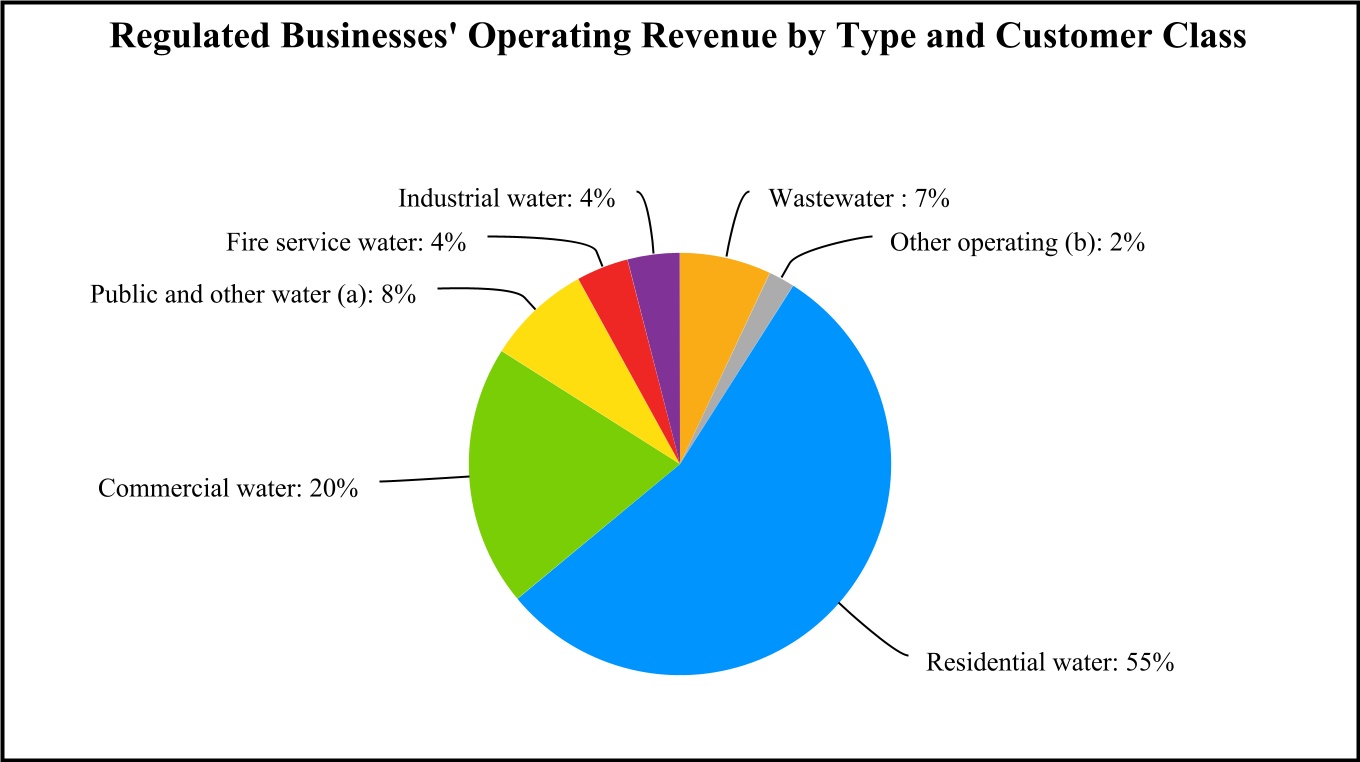
(a)Includes water revenues from public authorities and other utilities and community water systems under bulk contracts.
(b)Includes other operating revenues consisting primarily of miscellaneous utility charges, fees and rents.
Presented in the table below is the number of water and wastewater customers the Company served by class as of December 31, 2022, 2021 and 2020, which represents approximately 14 million people served as of December 31, 2022:
| 2022 | 2021 | 2020 | |||||||||||||||||||||||||||||||||
| (In thousands) | Water | Wastewater | Water | Wastewater | Water | Wastewater | |||||||||||||||||||||||||||||
| Residential | 2,870 | 270 | 2,972 | 245 | 2,948 | 236 | |||||||||||||||||||||||||||||
| Commercial | 219 | 17 | 225 | 15 | 225 | 15 | |||||||||||||||||||||||||||||
| Fire service | 51 | — | 52 | — | 50 | — | |||||||||||||||||||||||||||||
| Industrial | 4 | — | 4 | — | 4 | — | |||||||||||||||||||||||||||||
| Public and other (a) | 17 | 1 | 16 | 1 | 17 | 1 | |||||||||||||||||||||||||||||
| Total (b) | 3,161 | 288 | 3,269 | 261 | 3,244 | 252 |
(a) Includes public authorities and other utilities and community water and wastewater systems under bulk contracts. Bulk contracts, which are accounted for as a single customer in the table above, generally result in service to multiple customers.
(b)The Company completed the sale of its New York subsidiary on January 1, 2022 and the sale of its Michigan subsidiary on February 4, 2022.
Customer growth in the Company’s Regulated Businesses is primarily from (i) adding new customers to its customer base through acquisitions of water and/or wastewater utility systems, (ii) population growth in its authorized service areas, and (iii) sale of water to other water utilities and community water systems.
Capital Investment
The Company plans to invest between $30 billion and $34 billion over the next 10 years for capital improvements, including acquisitions, to its Regulated Businesses’ water and wastewater infrastructure, largely for pipe replacement and upgrading aging water and wastewater treatment facilities. The Company has proactively improved its pipe renewal rate from a 250-year replacement cycle in 2009 to an expected 110-year replacement cycle by 2027, which it anticipates will enable the Company to replace nearly 2,100 miles of mains and collection pipes between 2023 and 2027. In addition, from 2023 to 2027, the Company’s capital investment in treatment plants, storage tanks and other key, above-ground facilities is expected to increase, further seeking to address infrastructure renewal, resiliency, water quality, operational efficiency, technology and innovation, and emerging regulatory compliance needs. Additionally, the Company continues to invest significantly in resiliency projects to address the impacts of climate and weather variability by hardening its assets.
Regulation and Rate Making
The operations of the Company’s Regulated Businesses are generally subject to regulation by PUCs in the states in which they operate, with the primary responsibility of the PUCs being the promotion of the overall public interest by balancing the interest of customers and utility investors. Specific authority might differ from state to state, but in most states, PUCs review and approve rates charged to customers, accounting treatments, long-term financing programs and cost of capital, operation and maintenance (“O&M”) expenses, capital expenditures, taxes, affiliated transactions and relationships, reorganizations, mergers and acquisitions, and dispositions, along with imposing certain penalties or granting certain incentives. Regulatory policies vary from state to state and can change over time. These policies will affect the timing, as well as the extent, of recovery of expenses and the realized return on invested capital.
Periodic changes in customer rates generally occur through the filing of a rate case by the utility with the PUC. The timing of rate case filings is typically determined by either periodic requirements in the regulatory jurisdiction or by the utility’s need to increase its revenue requirement to recover capital investment costs, changes in operating revenues, operating costs or other market conditions. The Company attempts to minimize “regulatory lag,” which is the time between the occurrence of an event that triggers a change in the utility’s revenue requirement and the recognition in rates of that change.
The Company’s Regulated Businesses support regulatory practices at the PUCs and state legislatures that mitigate the adverse impact of regulatory lag. Presented in the table below are examples of approved regulatory practices:
| Regulatory Practices | Description | States Allowed | ||||||||||||
| Infrastructure replacement surcharge mechanisms | Allows rates to change periodically, outside a general rate case proceeding, to reflect recovery of capital investments made to replace infrastructure necessary to sustain safe and reliable services for the Company’s customers. These mechanisms typically involve periodic filings and reviews to ensure transparency. | IA, IL, IN, KY, MO, NJ, PA, TN, VA, WV | ||||||||||||
| Future test year | A “test year” is a period used for setting rates, and a future test year describes the first 12 months that new rates are proposed to be effective. The use of a future test year allows current or projected revenues, expenses and capital investments to be collected on a more timely basis. | CA, HI, IA, IL, IN, KY, PA, TN, VA | ||||||||||||
| Hybrid test year | A historical test year sets rates using data from a 12-month period that ends prior to a general rate case filing. A hybrid test year allows an update to historical data for “known and measurable” changes that occur subsequent to the historical test year. | MD, MO, NJ, WV | ||||||||||||
| Utility plant recovery mechanisms | Allows recovery of the full return on utility plant costs during the construction period, instead of capitalizing an allowance for funds used during construction (“AFUDC”). In addition, some states allow the utility to seek pre-approval of certain capital projects and associated costs. In this pre-approval process, the PUC may assess the prudency of such projects. | CA, IL, KY, PA, TN, VA | ||||||||||||
| Expense mechanisms | Allows changes in certain operating expenses, which may fluctuate based on conditions beyond the utility’s control, to be recovered outside of a general rate case proceeding or deferred until the next general rate case proceeding. | CA, HI, IL, IN, MD, MO, NJ, PA, TN, VA | ||||||||||||
| Revenue stability mechanisms | Adjusts rates periodically to ensure that a utility recovers the revenues authorized in its general rate case, regardless of sales volume, including recognition of declining sales resulting from reduced consumption, while providing an incentive for customers to use water more efficiently. | CA, IL | ||||||||||||
| Consolidated tariffs | Use of a unified rate structure for water systems owned and operated by a single utility, which may or may not be physically interconnected. The consolidated tariff pricing structure may be used fully or partially in a state, and is generally used to moderate the price impact of periodic fluctuations in local costs, while lowering administrative costs for customers. Pennsylvania and West Virginia also permit a blending of water and wastewater revenue requirements. | CA, IA, IL, IN, KY, MD, MO, NJ, PA, VA, WV | ||||||||||||
| Deferred accounting | A regulator’s willingness to defer recognition of financial impacts when setting rates for utilities. | All |
The Company pursues enhancements to these regulatory practices to facilitate efficient recovery of its costs and capital investments and to continue to provide safe, clean, reliable and affordable services to its customers. The ability to seek regulatory treatment using the regulatory practices described above does not guarantee that the PUCs will accept the Company’s proposal in the context of a particular rate case, and these regulatory practices may reduce, but not eliminate, regulatory lag associated with traditional rate making processes. It is also the Company’s strategy to expand the use of these mechanisms in areas where they may not currently apply and enhance certain mechanisms where they already exist.
Acquisitions and Strategic Growth
The U.S. water and wastewater industries include investor-owned systems as well as municipal systems that are owned and operated by local governments or governmental subdivisions. According to the U.S. Environmental Protection Agency (“EPA”), as of 2017, approximately 84% of the water market is served by municipal systems and approximately 98% of the country’s wastewater systems are government owned. The EPA also estimates, as of 2017, that there are over 50,000 community water systems and over 15,000 community wastewater systems in the United States, with approximately 80% of the community water systems serving a population of 3,000 or less.
A fundamental aspect of the Company’s growth strategy is to pursue acquisitions of water and/or wastewater systems in geographic proximity to areas where the Company operates its Regulated Businesses, see Item 7—Management’s Discussion and Analysis of Financial Condition and Results of Operations for additional information. The proximity of acquisition opportunities to the Company’s regulated footprint allows it to integrate and manage the acquired systems and operations primarily using the Company’s existing management (although the Company typically retains the majority, if not all, of the employees of the acquired systems) and to achieve operational efficiencies and prioritize capital investment needs. The Company’s current customer mix of 92% water and 8% wastewater also presents strategic opportunities for wastewater growth and consolidation, allowing the Company to add wastewater customers where it already serves water customers. The Company intends to continue to expand its regulated footprint geographically by acquiring water and wastewater systems in its existing markets and, if appropriate, pursuing acquisition opportunities in certain domestic markets where the Company does not currently operate its Regulated Businesses. Before entering new regulated markets, the Company will evaluate the business and regulatory climates to ensure that it will have the opportunity to achieve an appropriate rate of return on its investment while maintaining its high standards for providing safe, reliable and affordable services to its customers. The Company will also evaluate whether there is a line of sight to grow to sufficient scale in a new regulated market so that it can attain efficiencies after entering a new domestic market.
Increasingly stringent environmental, health and safety, cybersecurity and water quality and water accountability regulations, the amount of infrastructure in need of significant capital investment, financial challenges and industry legislation are several elements, among others, that may drive more municipalities to consider selling their water and wastewater assets.
Sale of New York American Water Company, Inc.
On January 1, 2022, the Company completed the sale of its New York subsidiary to Liberty Utilities (Eastern Water Holdings) Corp. (“Liberty”), an indirect, wholly owned subsidiary of Algonquin Power & Utilities Corp. Under the terms of the Stock Purchase Agreement, dated November 20, 2019, as amended, by and among the Company, the Company’s New York subsidiary and Liberty (the “Stock Purchase Agreement”), Liberty purchased from the Company all of the capital stock of the Company’s New York subsidiary for a purchase price of $608 million in cash. The sale was approved by the New York State Department of Public Service on December 16, 2021. The Company’s regulated New York operations had approximately 127,000 customers in the State of New York. See Note 5—Acquisitions and Divestitures in the Notes to Consolidated Financial Statements for additional information.
Industry Legislation
On November 15, 2021, the Infrastructure Investment and Jobs Act (the “IIJA”) was signed into law and provides for up to $55 billion to aid in improving the country’s ailing water infrastructure, including $23.4 billion for drinking water and wastewater, $15 billion for lead service line replacement (through the drinking water state revolving fund), and $10 billion for the treatment of per- and polyfluoroalkyl substances (“PFAS”) and other contaminants of emerging concern. The IIJA also included a low-income assistance program, in which eligible low-income customers who receive their water from public and private entities may participate. The Company has leveraged these funds throughout its service areas to benefit its customers.
In December 2020, Congress passed, and the President signed into law, a $900 billion COVID-19 relief and $1.4 trillion U.S. government appropriations package for 2021, which included $638 million for a low-income water assistance program and $2.8 billion for capitalization grants under the Clean Water and Drinking Water state revolving funds.
In 2017, New Jersey enacted the Water Quality Accountability Act (the “WQAA”), which sets operational standards for all water utilities in New Jersey, including municipal and investor-owned utilities with more than 500 service connections. This law imposes requirements in areas such as asset management, water quality reporting, remediation of notices of violation, and hydrant and valve maintenance. The WQAA requires the most senior water manager, or either the executive director for municipal utility authorities or the mayor or chief executive officer for municipally owned public water systems, to certify that the system meets the requirements under the WQAA. Enhanced WQAA legislation includes additional enforcement requirements for disclosure of results, requires the sale of systems for prolonged violations and imposes new cybersecurity requirements and asset management plans. The new amendments, which provide for both civil and criminal penalties for falsification of documents, were signed by the Governor with an effective date of November 8, 2021.
In 2018, Indiana passed a law to set minimum operational expectations for all water and wastewater utilities in the state, including municipal and investor-owned utilities. The law requires water and wastewater utilities to conduct rate analyses, develop capital asset management plans and conduct cybersecurity and water loss audits.
In 2020, Missouri enacted the Water Safety and Security Act, which requires small and medium-sized water providers to create cybersecurity, valve inspection and hydrant inspection programs.
The Company’s regulated subsidiaries in California, Illinois, Indiana, Iowa, Kentucky, Maryland, Missouri, New Jersey, Pennsylvania, Tennessee, Virginia and West Virginia have access to utility valuation legislation and regulation for private sector investment in public sector water and wastewater systems. The Company supports full optionality for municipalities, including state legislation that enables the consolidation of the largely fragmented water and wastewater industries through third-party fair market valuations of purchased property. Fair market value assessment of water and wastewater systems is an alternative to the traditional depreciated original cost method of valuation, which allows the Company to offer municipalities a purchase price for their system assets that is reflective of the assets’ fair market value, while providing the Company with increased opportunity to recover the purchase price over the life of the purchased system assets, subject to PUC approval. In 2021, the Tennessee Public Utility Commission implemented acquisition valuation rules that include a methodology to value water and wastewater assets based upon the new replacement cost of the assets less the depreciation, in addition to other valuation methodology options.
Consolidated tariffs use a unified rate structure for systems owned and operated by a single utility, which may or may not be physically interconnected. Consolidated tariff pricing moderates the impact of periodic fluctuations in local costs and promotes a more universal water infrastructure investment in a jurisdiction. As a result, consolidated tariffs can make it easier to incorporate new systems into an existing utility, support economies of scale for even the smallest of systems and prioritize capital needs across the jurisdiction. Overall, the Company believes that consolidated tariffs bring cost-effective, high-quality services to a larger number of customers. Eleven of the Company’s regulated jurisdictions currently have some form of consolidated tariff pricing, including California, Illinois, Indiana, Iowa, Kentucky, Maryland, Missouri, New Jersey, Pennsylvania, Virginia and West Virginia.
Competition
The Company’s Regulated Businesses generally do not face direct competition in their existing markets because (i) the Company operates in those markets pursuant to franchises, charters, certificates of public convenience and necessity or similar authorizations (collectively, “CPCNs”) issued by state PUCs or other authorities, and (ii) the high cost of constructing a new water and wastewater system in an existing market creates a significant barrier to market entry. However, the Company’s Regulated Businesses do face competition from governmental agencies, other investor-owned utilities, large industrial customers with the ability to provide their own water supply/treatment process and strategic buyers that are entering new markets and/or making strategic acquisitions. When pursuing acquisitions, the Company’s largest investor-owned competitors, based on a comparison of operating revenues and population served, include Essential Utilities, Inc., American States Water Company and California Water Service Group. From time to time, the Company also faces competition from infrastructure funds, multi-utility companies and others, such as Algonquin Power and Utilities Corp., Eversource Energy, SouthWest Water Company and Corix Infrastructure, Inc.
Condemnation and Eminent Domain
All or portions of the Regulated Businesses’ utility assets could be acquired by state, municipal or other government entities through one or more of the following methods: (i) eminent domain (also known as condemnation); (ii) the right of purchase given or reserved by a municipality or political subdivision when the original CPCN was granted; and (iii) the right of purchase given or reserved under the law of the state in which the utility subsidiary was incorporated or from which it received its CPCN. The acquisition consideration related to such a proceeding initiated by a local government may be determined consistent with applicable eminent domain law, or may be negotiated or fixed by appraisers as prescribed by the law of the state or the jurisdiction of the particular CPCN.
As such, the Regulated Businesses are periodically subject to condemnation proceedings in the ordinary course of business. For example, the Monterey water service system assets (the “Monterey system assets”) of the Company’s California subsidiary (“Cal Am”) are the subject of a potential condemnation action by the Monterey Peninsula Water Management District (the “MPWMD”) stemming from a November 2018 public ballot initiative. In 2019, the MPWMD issued a preliminary valuation and cost of service analysis report, finding in part that (1) an estimate of the Monterey system assets’ total value plus adjustments would be approximately $513 million, (2) the cost of service modeling results indicate significant annual reductions in revenue requirements and projected monthly water bills, and (3) the acquisition of the Monterey system assets by the MPWMD would be economically feasible. In 2020, the MPWMD certified a final environmental impact report, analyzing the environmental impacts of the MPWMD’s project to (1) acquire the Monterey system assets through the power of eminent domain, if necessary, and (2) expand its geographic boundaries to include all parts of this system.
In February 2021, the MPWMD filed an application with the Local Agency Formation Commission of Monterey County (“LAFCO”) seeking approval to become a retail water provider and annex approximately 58 parcels of land into the MPWMD’s boundaries. In June 2021, LAFCO’s commissioners voted to require a third-party independent financial study as to the feasibility of an acquisition by the MPWMD of the Monterey system assets. In December 2021, LAFCO’s commissioners denied the MPWMD’s application to become a retail water provider, determining that the MPWMD does not have the authority to proceed with a condemnation of the Monterey system assets. On April 1, 2022, the MPWMD filed a lawsuit against LAFCO challenging its decision to deny the MPWMD’s application seeking approval to become a retail water provider. For more information on the lawsuit against LAFCO, see Item 3—Legal Proceedings—Proposed Acquisition of Monterey System Assets — Local Area Formation Commission Litigation. By letter dated October 3, 2022, the MPWMD notified Cal Am of a decision to appraise the Monterey system assets and requesting access to a number of Cal Am’s properties and documents to assist the MPWMD with such an appraisal. Cal Am responded by letter on October 24, 2022, denying the request for access, stating that the MPWMD does not have the right to appraise Cal Am’s system without LAFCO approval to become a retail water provider.
Also, five municipalities in the Chicago, Illinois area (approximately 30,300 customers in total) formed a water agency and filed an eminent domain lawsuit against the Company in January 2013, seeking to condemn the water pipeline that serves those five municipalities. During a valuation trial held in January 2023, the parties settled the lawsuit and the water agency dismissed the eminent domain case, and as a result the Company will retain the pipeline. As part of the dismissal, the Company’s Illinois subsidiary and another subsidiary entered into a settlement agreement with the water agency agreeing to, among other things, maintain through December 31, 2027 the utility-specific wholesale water rate passed through to customers of the pipeline, such that the rate, exclusive of other pass-through charges, remains no higher than the current rate.
Furthermore, the law in certain jurisdictions in which the Regulated Businesses operate provides for eminent domain rights allowing private property owners to file a lawsuit to seek just compensation against a public utility, if a public utility’s infrastructure has been determined to be a substantial cause of damage to that property. In these actions, the plaintiff would not have to prove that the public utility acted negligently. In California, for example, lawsuits have been filed in connection with large-scale natural events such as wildfires. Some of these lawsuits have included allegations that infrastructure of certain utilities triggered the natural event that resulted in damage to the property. In some cases, the PUC has allowed certain costs or losses incurred by the utility to be recovered from customers in rates, but in other cases such recovery in rates has been disallowed. Also, the utility may have obtained insurance that could respond to some or all of such losses, although the utility would be at risk for any losses not ultimately subject to rate or insurance recovery or losses that exceed the limits of such insurance.
Water Supply and Wastewater Services
The Company’s Regulated Businesses generally own the physical assets used to store, pump, treat and deliver water to its customers and collect, treat, transport and recycle wastewater. Typically, the Company does not own the water, which is held in public trust and is allocated to the Company through contracts, permits and allocation rights granted by federal and state or multi-state agencies or through the ownership of water rights pursuant to local law. The Company is dependent on defined sources of water supply and obtains its water supply from surface water sources such as reservoirs, lakes, rivers and streams; from groundwater sources, such as wells and aquifers; and water purchased from third-party water suppliers. The level of water treatment the Company applies varies significantly depending upon the quality of the water source and customer stipulations. Surface water sources typically require significant treatment, while groundwater sources often require chemical treatment only.
Presented in the chart below are the Company’s sources of water supply as of December 31, 2022:
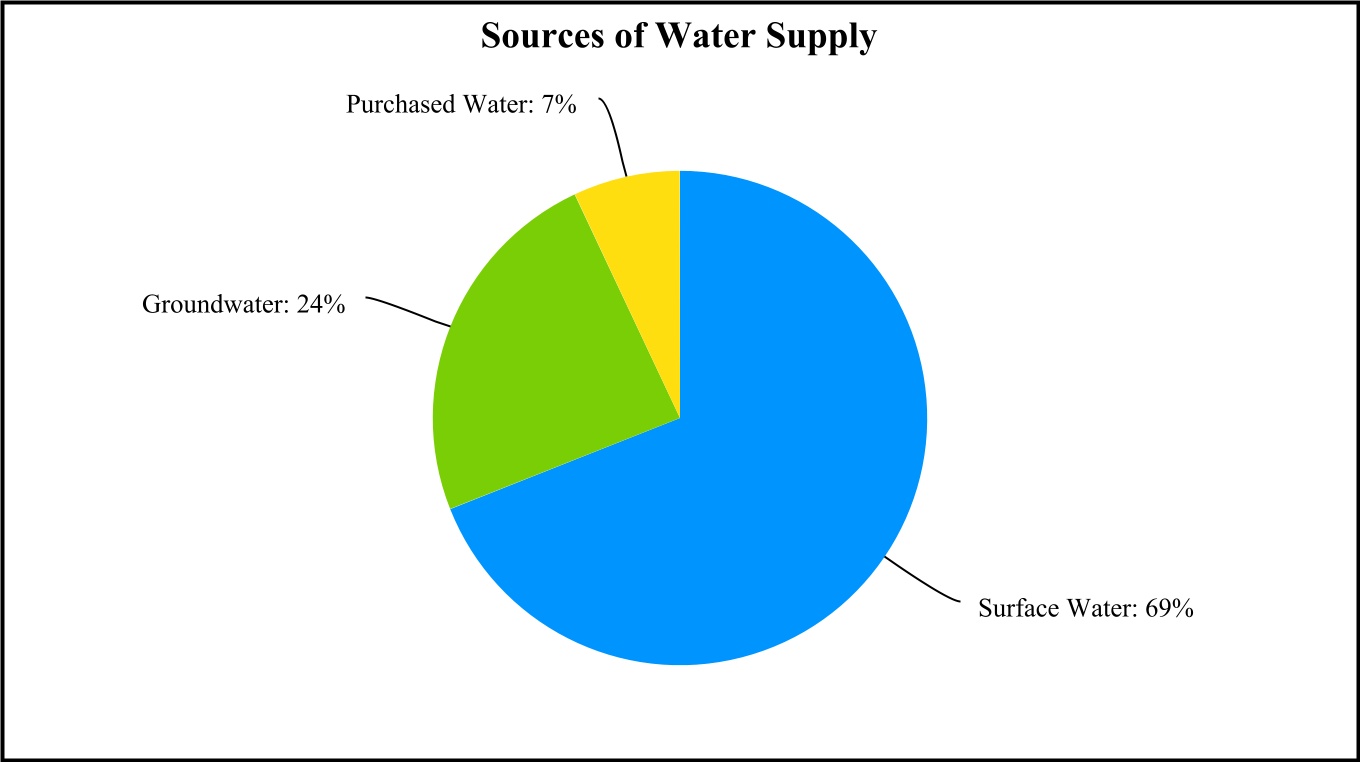
Presented in the table below are the percentages of water supply by source type for the Company’s Top Five States for the year ended December 31, 2022:
| Surface Water | Ground Water | Purchased Water | |||||||||||||||
| New Jersey | 74% | 22% | 4% | ||||||||||||||
| Pennsylvania | 91% | 7% | 2% | ||||||||||||||
| Missouri | 78% | 21% | 1% | ||||||||||||||
| Illinois | 54% | 35% | 11% | ||||||||||||||
| California | — | 68% | 32% |
The Company’s ability to meet the existing and future water demands of its customers depends on an adequate water supply. Drought, governmental restrictions, overuse of sources of water, the protection of threatened species or habitats, contamination or other factors may limit the availability of ground and surface water. The Company employs a variety of measures in an effort to obtain adequate sources of water supply, both in the short-term and over the long-term. The geographic diversity of the Company’s service areas may mitigate some of the economic effects on the water supply associated with weather extremes the Company might encounter in any particular service territory. For example, in any given summer, some areas may experience drier than average weather, which may reduce the amount of source water available, while other areas the Company serves may experience wetter than average weather.
The Company evaluates quality, quantity, growth needs and alternate sources of water supply as well as transmission and distribution capacity to provide water service to its customers. Water supply is seasonal in nature and weather conditions can have a pronounced effect on supply. In order to ensure that the Company has adequate water supply, it uses long-term planning processes and maintains contingency plans to minimize the potential impact on service caused by climate variability and a wide range of weather fluctuations. The Company reviews current climate science and global models related to temperature, precipitation and sea level rise on an ongoing basis. Where actionable forecasts are available, the Company will use this information in its comprehensive planning studies and asset management plans. These studies and plans, which are used by the Company to develop its asset management and system reliability strategies, assess the climate risk and resiliency of the Company’s water and wastewater systems over short-, medium- and long-term time horizons, and include evaluations of the availability of water supplies and system capacity against a number of different factors, projections and estimates.
In connection with supply planning for most surface or groundwater sources, the Company employs models to determine safe yields under different rainfall and drought conditions. Surface and ground water levels are routinely monitored so that supply capacity deficits may, to the extent possible, be predicted and mitigated through demand management and additional supply development. In California, where the state has been experiencing a multi-year drought, the Company utilizes multiple water supply options including numerous ground water wells in multiple aquifers as well as various long-term purchase water agreements with regional water suppliers to optimize supplies while assuring resiliency during dry years. An example of the Company’s use of long-term planning to ensure that it has adequate water supply is its involvement in the Monterey Peninsula Water Supply Project (the “Water Supply Project”) in California. The Water Supply Project includes the construction of a desalination plant, to be owned by the Company’s California subsidiary, and the construction of wells that would supply water to the desalination plant. In addition, the Water Supply Project also includes the California subsidiary’s purchase of water from a groundwater replenishment project (the “GWR Project”) between Monterey One Water (formerly known as the Monterey Regional Water Pollution Control Agency) and the MPWMD. The Water Supply Project is intended, among other things, to fulfill obligations of the California subsidiary to eliminate unauthorized diversions from the Carmel River as required under orders of the California State Water Resources Control Board (the “SWRCB”). For more information, see Item 3—Legal Proceedings—Alternative Water Supply in Lieu of Carmel River Diversions and Note 16—Commitments and Contingencies—Contingencies—Alternative Water Supply in Lieu of Carmel River Diversions, in the Notes to the Consolidated Financial Statements.
Wastewater services involve the collection of wastewater from customers’ premises through sewer lines. The wastewater is then transported through a sewer network to a treatment facility, where it is treated to meet required regulatory standards for wastewater before being returned to the environment. The solid waste by-product of the treatment process is disposed of or recycled in accordance with applicable standards and regulations.
Seasonality
Customer demand for the Company’s water service is affected by weather and tends to vary with temperature and amount and frequency of rainfall. Customer demand is generally greater during the warmer months, primarily due to increased water usage for irrigation systems and other outdoor water use. As such, the Company typically expects its operating revenues to be the highest in the third quarter of each year. Weather that is hotter and/or drier than average generally increases operating revenues, whereas, weather that is cooler and/or wetter than average generally suppresses customer water demand and can reduce water operating revenues. Two of the Company’s jurisdictions, California and Illinois, have adopted revenue stability mechanisms which permit the Company to collect state PUC-authorized revenue for a given period that is not tied to the volume of water sold during that period, thereby lessening the impact of weather variability. See —Regulation and Rate Making for additional information regarding revenue stability mechanisms.
Other
Other primarily includes the MSG business, which enters into long-term contracts with the U.S. government to provide water and wastewater services on various military installations. The Company also has four contracts with municipal customers to operate and manage water and wastewater facilities and provide other related services through its Contract Services Group (“CSG”). Other also includes CSG, corporate costs that are not allocated to the Company’s Regulated Businesses, interest income related to the seller promissory note and income from the revenue share agreement from the sale of HOS, eliminations of inter-segment transactions and fair value adjustments related to acquisitions that have not been allocated to the Regulated Businesses segment. Previously, the Company provided home services primarily to residential and smaller commercial customers through its former HOS business, which was sold on the Closing Date. As a result of the sale of HOS, the categories which were previously shown as “Market-Based Businesses” and “Other” have been combined and are shown as Other. The businesses included within Other are not subject to regulation by state PUCs and the services provided generally do not require significant capital investment. Operating revenues for Other were $287 million for 2022, $546 million for 2021 and $522 million for 2020, accounting for 8%, 14% and 14%, respectively, of the Company’s total operating revenues for the same periods.
Military Services Group
MSG operates on 18 military installations under 50-year contracts with the U.S. government as part of its Utilities Privatization Program. The scope of these contracts generally includes the operation and maintenance of the installation’s water and wastewater systems and a capital program focused on asset replacement and, in certain instances, systems expansion. The replacement of assets assumed when a contract is awarded to MSG is completed either through a discrete set of projects executed in the first five years of the contract or through the long-term recapitalization program performed over the life of the contract. Traditionally, both of these programs are funded from the contract fee. At times, new assets are required to support the installation’s mission, and the construction of these assets is funded by the U.S. government as separate modifications or amendments to the contract. The capital for these assets historically has not been funded through the Company’s debt or equity issuances; rather, the Company has used limited working capital for short-term needs under these contracts. In April 2018, the U.S. Army instituted a requirement that a bidder must offer financing in its proposal for these new capital projects under existing contracts, but the U.S. Army’s implementation of this requirement on existing contracts has limited the need for such financing. However, recent U.S. Army and Navy Utilities Privatization solicitations have included requirements for the successful bidder to finance discrete initial capital projects over either a five- or ten-year period after project completion. Four of MSG’s current contracts require such capital project financing, which the Company is currently addressing through internal sources of liquidity.
The contract price for four of MSG’s contracts with the U.S. government is subject to redetermination two years after commencement of operations, and every three years thereafter. Price redetermination is a contract mechanism to periodically adjust the service fee in the next period, to reflect changes in contract obligations and anticipated market conditions. The remaining 14 contracts with the U.S. government are subject to annual price adjustments under a mechanism called “Economic Price Adjustment.” All 18 contracts could be terminated, in whole or in part, prior to the end of the 50-year term for convenience of the U.S. government, or as a result of default or non-performance by the MSG subsidiary performing the contract. In either event, pursuant to termination provisions applicable to all of these contracts, MSG would be entitled to recover allowable costs that it may have incurred under the contract, plus the contract profit margin on incurred costs. MSG’s backlog of revenue associated with its contracts with the U.S. government is approximately $6.9 billion, with an average remaining contract term of 40 years.
Sale of Homeowner Services Group
Prior to the Closing Date, the Company provided various warranty protection programs and other home services primarily to residential and smaller commercial customers through its HOS operations. On the Closing Date, the Company sold all of the equity interests in its HOS subsidiaries to an indirect, wholly owned subsidiary of funds advised by Apax Partners LLP, a global private equity advisory firm (the “Buyer”), for total consideration of approximately $1.275 billion. See Item 7—Management’s Discussion and Analysis of Financial Condition and Results of Operations and Note 5—Acquisitions and Divestitures in the Notes to Consolidated Financial Statements for additional information.
Competition
MSG faces competition from a number of service providers, including American States Water Company and Veolia Environnement S.A.
Environmental, Health and Safety, Water Quality and Other Regulation
The Company’s water and wastewater operations, including the services provided by its Regulated Businesses, MSG and CSG, are subject to extensive federal, state and local laws and regulations governing the protection of the environment, health and safety, the provision of water and wastewater services, particularly with respect to the quality of water the Company delivers to its customers, and the manner in which it collects, treats, discharges, recycles and disposes of wastewater. In the United States, these regulations are developed under federal legislation including the Safe Drinking Water Act, the Reduction of Lead in Drinking Water Act and the Clean Water Act, and under a variety of applicable state laws. Environmental, health and safety, and water quality regulations are complex and may vary from state to state in those instances where a state has adopted a standard that is more stringent than the federal standard. For example, while the EPA has announced the intention to propose drinking water regulations for two PFAS compounds (perfluorooctanoic acid, or PFOA, and perfluorooctane sulfonic acid, or PFOS) and issued non-enforceable lifetime Health Advisory Levels for PFOA, PFOS and two other PFAS compounds, the New Jersey Department of Environmental Protection has already established enforceable drinking water standards for three PFAS compounds (PFOA, PFOS, and perfluorononanoic acid, or PFNA) and the Pennsylvania Department of Environmental Protection also recently announced enforceable drinking water standards for PFOA and PFOS in advance of the federal EPA proposed regulations. The Company is also subject to various federal, state, and local laws and regulations governing the storage of hazardous materials, the management and disposal of hazardous and solid wastes, discharges to air and water, the cleanup of contaminated sites, dam safety and other matters relating to the protection of the environment and health and safety. PUCs also set conditions and standards for the water and wastewater services the Company delivers.
The Company maintains an environmental program that includes responsible business practices focused on compliance with environmental laws and regulations and the effective use of natural resources, recognizing that drinking water standards have generally, over time, increased in number and become increasingly more stringent. As newer or stricter standards are introduced, the Company’s capital and operating costs needed to comply with them will likely increase. The Company incurs substantial costs associated with compliance with the environmental, health and safety, and water quality standards to which its operations are subject and the Company invests in technology solutions for enhanced detection and monitoring of water quality issues. The Company estimates that it will make capital expenditures of approximately $800 million over the next five years, and $195 million in 2023 for environmental control facilities, which the Company defines for this purpose as any project (or portion thereof) that involves the preservation of air, water or land. The Company believes that its operations are materially in compliance with, and in many cases surpass, minimum standards required by applicable environmental laws and regulations.
The Company’s operations also involve the use, storage and disposal of hazardous substances and wastes. For example, the Company’s water and wastewater treatment facilities store and use chlorine and other chemicals that generate wastes that require proper handling and disposal under applicable environmental requirements. The Company also could incur remedial costs in connection with any contamination relating to its operations or facilities or its off-site disposal of waste. The Comprehensive Environmental Response, Compensation, and Liability Act of 1980 (“CERCLA”), authorizes the EPA, and comparable state laws authorize state environmental authorities, to issue orders and bring enforcement actions to compel responsible parties to investigate and take remedial actions at any site that is determined to present an actual or potential threat to human health or the environment because of an actual or threatened release of one or more hazardous substances. Parties that generated or transported hazardous substances to such sites, as well as current and former owners and operators of such sites, may be deemed liable, without regard to fault, under CERCLA or comparable state laws. Although the Company is not aware of any material cleanup or decontamination obligations, the discovery of contamination or the imposition of such obligations in the future could result in additional costs to the Company. The Company’s facilities and operations are also subject to requirements under the U.S. Occupational Safety and Health Act and inspections thereunder.
Safe Drinking Water Act
The Safe Drinking Water Act and related regulations establish national quality standards for drinking water. The EPA has issued rules governing the levels of numerous, naturally occurring and manufactured chemical and microbial contaminants and radionuclides allowable in drinking water, and continues to propose new rules. These rules also prescribe testing requirements for detecting regulated contaminants, the treatment systems that may be used for removing those contaminants, and other requirements. To date, the EPA has set standards for over 90 contaminants and water quality indicators for drinking water, and there is a process in place to make a regulatory determination on at least five additional compounds every five years.
The process of developing new drinking water standards is long and complex, but the Company actively participates with the EPA and other water industry groups by sharing research and water quality operational knowledge. See —Research and Development—Contaminants of Emerging Concern for additional information.
The Company is within the EPA’s time frame for compliance with standards and rules developed under the regulation of the Safe Drinking Water Act, which includes sample collection, data analysis, and, in some instances engineering planning and implementation of treatment enhancements. Further, the EPA is actively considering regulations for a number of contaminants, including strontium, hexavalent chromium, fluoride, nitrosamines, some pharmaceuticals and certain volatile organic compounds. The Company does not anticipate that any such regulations, if enacted, will require implementation in 2023.
Although it is difficult to project the ultimate costs of complying with the above or other pending or future requirements, the Company expects current cost requirements under the Safe Drinking Water Act and other similar laws to be recoverable through the regulatory process and therefore compliance costs are not expected to have a material impact on its operations or financial condition. In addition, capital expenditures and operating costs to comply with environmental mandates have been traditionally recognized by PUCs as appropriate for inclusion in establishing rates. As a result, the Company expects to recover the operating and capital costs resulting from these pending or future requirements.
Lead and Copper Rule and Reduction of Lead in Drinking Water Act
In 1991, the EPA published the Lead and Copper Rule (“LCR”) to control lead and copper in drinking water and, since that time, has issued minor revisions in 2000, 2004 and 2007, enhancing monitoring, reporting and public education requirements. In 2011, Congress enacted the Reduction of Lead in Drinking Water Act regarding the use and introduction into commerce of lead pipes, plumbing fittings for fixtures, solder and flux. While these advances have made an impact in reducing lead exposure in drinking water, legacy lead plumbing materials, primarily in building plumbing, still remain in many communities. The failure of certain water systems in the United States to comply with the requirements of the LCR has received recent media attention and scrutiny, and in certain cases, has led to a number of investigations and the imposition of significant penalties and sanctions against the operators of those systems and others. As part of its ongoing water main replacement and service line renewal projects, the Company has started to replace lead service lines (“LSLs”) in accordance with current scientific guidance. Also, the Company utilizes appropriate corrosion control techniques as necessary to comply with current water quality regulatory requirements. On December 21, 2021, the EPA announced next steps to strengthen the regulatory framework on lead in drinking water, including implementing the Lead and Copper Rule Revisions (“LCRR”) and indicated their intent to finalize a forthcoming Lead and Copper Rule Improvements (“LCRI”) prior to October 16, 2024, the initial compliance date in the LCRR. The Company is executing an implementation strategy to comply with the initial LCRR requirement to complete a lead service line inventory. Capital expenditures and operating costs associated with the LCRI will be determined once the EPA finalizes the rule, but as previously noted, costs associated with compliance with federal water quality regulations have been traditionally recognized by PUCs as appropriate for inclusion in establishing rates.
The Company currently estimates that less than 5% of the service lines within its regulated service territories contain lead on either the Company or customer portion of the service line. The Company is replacing LSLs as part of its ongoing water main replacement and service line renewal projects. The Company’s goal is to work with the communities it currently serves to replace a significant majority of presently known LSLs in most of its service areas by the end of 2030, at an estimated additional investment range of $600 million to $1.2 billion. The Company believes this will be attainable for most of its service areas where public policy is supportive of this goal. The IIJA was signed into law in November 2021 and provides for up to $15 billion for lead service line replacement through drinking water state revolving funds. The Company is awaiting further guidance on eligibility, the application process and the distribution of these funds. With regard to future acquisitions, the Company will work with those communities as part of the acquisition process to set LSL removal goals appropriate for those systems. The prioritization of LSL removal is dependent on several factors, including the Company’s planned water main and service line renewal projects, adjacent projects by municipalities or other utilities, LCR compliance monitoring results, and cooperation with its customers with respect to replacing the customer-owned portion of the LSL as necessary. In certain cases, these and other factors may result in a shorter or longer time frame for replacement. Because replacing the external LSL in its entirety is advised by several water industry organizations including the U.S. National Drinking Water Advisory Council, the Lead Service Line Replacement Collaborative, and the American Water Works Association, the Company’s preferred approach is to replace the entire external LSL if lead is found on either the Company or customer portion of the service line; full LSL replacement is also consistent with the LCRR. The Lead Service Line Replacement Collaborative is a diverse group of public health, water utility, environmental, labor, consumer and housing organizations from across the country working together to encourage communities to accelerate the full replacement of LSLs through collaborative efforts at the local level.
Clean Water Act
The Clean Water Act regulates discharges from drinking water and wastewater treatment facilities into lakes, rivers, streams and groundwater. In addition to requirements applicable to the Company’s wastewater collection systems, its operations require discharge permits under the National Pollutant Discharge Elimination System (“NPDES”) permit program established under the Clean Water Act, which must be renewed every five years. Pursuant to the NPDES permit program, the EPA and implementing states set maximum discharge limits for wastewater effluents and overflows from wastewater collection systems. Discharges that exceed the limits specified under NPDES permits can lead to the imposition of fines and penalties, and persistent non-compliance could lead to significant fines and penalties and other compliance costs. In addition, the difficulty of obtaining and complying with NPDES permits, and renewing expiring permits, may impose time and cost burdens on the Company’s operations. From time to time, discharge violations occur at the Company’s facilities, some of which result in fines. The Company does not expect any such violations or fines to have a material impact on its results of operations or financial condition. The EPA has identified leveraging wastewater discharge permitting and application of biosolids, or sewage sludge, containing PFAS as areas of focus in its PFAS Strategic Roadmap. Individual states may also take action in these areas. As indicated previously, capital expenditures and operating costs to comply with environmental mandates have been traditionally recognized by PUCs as appropriate for inclusion in establishing rates. As a result, the Company expects to recover the operating and capital costs resulting from any new requirements in these areas.
Research and Development
The Company’s Research and Development Program
The Company maintains an industry-leading research and development (“R&D”) program that is designed to enhance its services, support its compliance activities, improve service quality and operational effectiveness, and provide environmental leadership. For more than three decades from its inception, American Water’s R&D program has evolved into an industry-leading effort and has achieved numerous advancements in the science of drinking water, wastewater, and desalination. Through laboratory and industry resources and the team’s expertise, efforts are focused on contaminants of emerging concern, including but not limited to COVID-19, PFAS, Legionella, cyanotoxin-forming algal blooms, a variety of pathogens (for example, Cryptosporidium, Giardia, enteric viruses, and various bacteria), microbial indicators and disinfection byproducts. The Company’s R&D personnel are located at the Company’s corporate headquarters and at two laboratory testing facilities in New Jersey and Illinois, the latter housing its quality control and testing laboratory, which supports the Company’s R&D activities through testing and analysis.
The Company continues to leverage its expertise and collaborates with the EPA and state agencies to help establish effective environmental, health and safety, and water quality standards and regulations. This relationship includes the sharing of the Company’s research, such as its treatment and distribution system optimization research and its national water quality monitoring data. The Company’s engagement with the EPA provides it with early insight into emerging regulatory issues and initiatives, thereby allowing the Company to anticipate and to accommodate its future compliance requirements. The Company also frequently engages with the Centers for Disease Control and Prevention, other state environmental agencies, and national and international water research foundations. The Company believes that continued R&D activities are critical for providing safe, reliable and affordable services, as well as maintaining its leadership position in the industry, which provides the Company with a competitive advantage as it seeks business and operational growth.
Contaminants of Emerging Concern
Contaminants of emerging concern include numerous chemicals such as PFAS, pharmaceuticals, personal care products, pesticides, herbicides, antibiotic resistant bacteria (ARB), antibiotic resistant genes (ARG), endocrine disrupting compounds, microplastics and industrial chemicals, as well as certain naturally occurring microbes, such as bacteria, viruses and parasites, which have been detected in drinking water supplies, for which the risk to the public’s health is not fully understood and/or has not been assessed. Technological advances have only recently made it possible to detect many of these contaminants at trace levels. The ability to detect contaminants, even at trace levels, has invited discussion about these contaminants among regulators and government agencies, which in turn shapes the public’s perception of drinking water quality.
The Chemicals Abstract Service Registry contains over 203 million registered chemicals, with an estimated 1,400 species of disease-causing microbes that can affect humans. The Company is continually investigating new substances and contaminants, employing a team of scientists, engineers and public health professionals to identify threats to its water supply, to act on emerging regulations and new health advisories, and to evaluate the benefits of alternative or advanced treatment technologies. The Company utilizes water quality testing equipment and implements new and emerging technologies to help detect potential water supply contamination issues. Examples of the Company’s efforts include:
-
monitoring impacts of environmental pathogen loads and removal through wastewater systems;
-
characterizing factors that contribute to the formation of potentially carcinogenic disinfection by-products to define best practices for their mitigation;
-
advancing the science on holistic management strategies to improve distribution system water quality further;
-
using its research findings to communicate information to its customers regarding potential actions to limit occurrences of Legionella in their buildings; in this regard, the Centers for Disease Control and Prevention statistics indicate that water-associated disease from Legionella is on the rise, with exposure typically associated with customer-owned plumbing systems in large buildings;
-
defining a framework to support management or possible future regulation of opportunistic pathogens;
-
developing expanded monitoring methods for short-chain and fluorinated replacement PFAS and piloting treatment techniques;
-
systematically investigating PFAS removal by treatment processes in a wide range of water matrices;
-
leading a PFAS risk communication strategy for the water sector;
-
using innovative technologies to detect and manage algal blooms to help prevent taste and odor events and cyanotoxins before they get to the water treatment plant;
-
monitoring of taste and odor issues that impact customer satisfaction using expanded analytical methods to detect compounds, and evaluating and recommending treatment practices;
-
implementing water source assessment tools, including sensors and data analytics, to evaluate and track chemical storage and aid in the identification of source water contamination events;
-
developing methodology and advanced measurement techniques for contaminants of emerging concern to investigate transport, occurrence and treatment; and
-
implementing activated carbon, biofiltration and ion exchange treatment to seek to control contaminants of emerging concern.
Service Company and Security
American Water Works Service Company, Inc. (“Service Company”) is a wholly owned subsidiary of the Company that provides support and operational services to the Company and its affiliates. These services are predominantly provided to the Company’s Regulated Businesses under contracts that have been approved by PUCs, where necessary, and are also provided to the MSG and CSG businesses as requested or may otherwise be necessary. Services provided by Service Company may include accounting and finance, administration, business development, communications, compliance, education and training, engineering, health and safety, human resources, information systems, internal audit, investor relations, legal and governance, operations, procurement, R&D, rates and regulatory support, security, risk management and insurance, treasury, and water quality. Service Company also provides customer support to the Company’s Regulated Businesses, which includes call handling, billing, a major accounts program and other related services. Services are provided by Service Company at cost, enabling the Company’s operating subsidiaries to fulfill their responsibilities in a cost-effective manner, while providing them access to in-depth, functional expertise.
The Company’s security team provides oversight and policy guidance on physical, cyber and information security, as well as business continuity, throughout its operations. It is responsible for designing, implementing, monitoring and supporting effective physical and technical security controls for the Company’s physical assets, business systems and operational technologies. Risk assessments are conducted periodically to evaluate the effectiveness of existing security controls and serve as the basis for additional safeguards, security controls and measures. Operational and technical security controls are deployed and integrated as safeguards against unauthorized access to the Company’s information systems. These controls are aimed at (i) assuring the continuity of business processes that are dependent upon automation, (ii) maintaining the integrity of the Company’s data, (iii) supporting regulatory and legislative compliance requirements, and (iv) maintaining safe and reliable service to the Company’s customers. The Company engages in partnerships with U.S. federal, state and local law enforcement agencies to coordinate and improve the security of its water delivery systems and to safeguard its water supply and operations.
Environmental, Social Responsibility and Governance
The Company considers environmental, social responsibility and governance (“ESG”) principles fundamental to its corporate strategy and values. Integration of these principles into the Company’s daily operations emphasizes its belief that “how” a company operates is just as important as “what” a company does.
Delivering a reliable supply of safe, clean and affordable water to customers and treating wastewater has been fundamental to the Company’s business for decades. Within every community in which the Company operates, there is an opportunity to make a sustainable positive impact on the community, reflect the communities served with diverse and skilled employees, and maintain the governance and diligence to meet or exceed service expectations for decades to come.
Key Highlights
Demonstrated ESG Leadership
-
The Company’s values and actions have achieved prestigious recognition by many leading firms devoted to recognizing companies that demonstrate ESG leadership.
-
The Company was ranked fifth in the Energy and Utilities industry category within Newsweek’s 2023 list of America’s Most Responsible Companies and ranked 19th within Barron’s list of the 100 Most Sustainable Companies in 2022.
-
The Company was included in the Bloomberg Gender Equality Index for the fifth consecutive year, was recognized as a top-scoring company, for the fourth consecutive year, on the Disability Equality Index (DEI)®, as well as a Military Friendly Employer and Supplier.
-
The Company earned the U.S. Department of Homeland Security SAFETY Act Designation for its internal enterprise security program, which includes risk management processes, personnel training and emergency exercises, and security oversight activities. The Company was the first U.S. water and wastewater company and third utility to earn this designation.
Environmental and Sustainability
-
Emissions for the Company’s Regulated Businesses
-
The Company established medium- and long-term goals that are science-based and aligned with the Paris Agreement, for scope 1 (direct) and scope 2 (indirect, derived from the Company’s purchase of power) greenhouse gas emissions reductions.
-
The goals aim to reduce absolute scope 1 and 2 emissions by 50% by 2035 (from a 2020 baseline year) and achieve net zero scope 1 and scope 2 emissions by 2050.
-
These goals complement the Company’s existing short-term goal of reducing absolute scope 1 and 2 greenhouse gas emissions by more than 40% by 2025 (from a 2007 baseline year).
-
The Company has also estimated certain of its scope 3 greenhouse gas emissions, including Categories 1 (Purchased Goods and Services), 2 (Capital Goods), 3 (Fuel and Energy Related Activities) and 6 (Business Travel).
-
Water Quality & Wastewater
-
The Company employs a team of R&D scientists dedicated to partnering with water research organizations on water quality and technology-based source water monitoring.
-
The Company received 11 drinking water Notices of Violation (“NOVs”) in 2022, two of which were related to water quality and maximum contaminant level exceedances. These metrics are determined by counting the overall number of drinking water NOVs and drinking water NOVs related to maximum contaminant level exceedances received by the Company in accordance with internally established procedures, which may exclude NOVs related to newly-acquired systems and associated with third-party violations, among others.
-
The Company invested approximately $2.3 billion in renewing and improving assets of the Regulated Businesses in 2022 and expects to invest between $12.5 billion to $13 billion over the next five years. Nearly 70% of the Company’s capital plan is dedicated to infrastructure renewal and improvement, 10% to 12% is allocated to resiliency, and the balance is invested in water quality, operational efficiency, system expansion and other categories.
-
Policy Leadership
-
The Company collaborates and partners with federal and state agencies to support effective environmental, health and safety, and water quality and affordability standards and regulations.
-
The Company participates in many industry organizations at the local, state and national level, including: The National Association of Water Companies (NAWC), American Water Works Association (AWWA) and Edison Electric Institute (EEI).
Social Responsibility
-
Customers
-
The Company’s average monthly residential water bills were approximately $57 in 2022, or 0.77% of the median household income, based on data from the U.S. Census Bureau’s American Community Survey. The Company is focused on keeping customer bills affordable compared to income, driving a culture of continuous improvement, diligent cost management, and technology enhancements that help drive affordability.
-
The Company supports low-income customer assistance programs across 12 states: California, Illinois, Indiana, Iowa, Kentucky, Maryland, Missouri, New Jersey, Pennsylvania, Tennessee, Virginia and West Virginia.
-
To better reflect the customers that the Company serves, the Company increased spend with diverse suppliers and small businesses in 2022 by more than 35% compared to last year.
-
For 2022, the Company achieved an aggregate residential customer satisfaction rating in the top half among the Company’s industry peer group. We measure performance on Customer Experience through our performance on the J.D. Power U.S. Water Utility Residential Customer Satisfaction Study. The study measures the satisfaction of residential water customers of the 90 largest water utilities in the United States and considers six factors to score companies on a 1,000-point scale: quality and reliability; price; conservation; billing and payment; communications; and customer service.
-
Employees
-
During 2022, over 117,000 hours of safety training, including physical security and cybersecurity training, were completed by the Company’s employees, as well as a mandatory Code of Ethics training requirement.
-
The Company has made significant progress toward its zero injuries goal, reducing workplace injuries by 52% since 2017. Through year-end 2022, the Company has further reduced its OSHA recordable injury rate (“ORIR”) to 0.85, the lowest in the Company’s recorded history, which is approximately two times better than the water industry average.
-
During 2022, approximately 83% of the Company’s job requisitions had a diverse candidate pool, with approximately 46% of transfers or promotions filled by diverse individuals.
-
Communities
-
More than $900,000 was donated in 2022 by the Company’s employees and the American Water Charitable Foundation (AWCF), a 501(c)(3) private foundation established by American Water in 2010, of which over $430,000 was provided by employees through workplace giving campaigns including the United Way, Water For People and other volunteering giving campaigns that supported more than 1,600 public charities nationwide. These efforts were in addition to the $2.3 million given by the AWCF through the Keep Communities Flowing Grant Program - more than $3 million combined.
-
Stakeholder Engagement
-
In 2022, the Company completed a materiality assessment to align ESG efforts with stakeholder priorities. Participants included, among others, regulators, investors, customers, employees, and a member of the Company’s Board of Directors. The results of the assessment will be included in the Company’s 2021-2022 Sustainability Report, which will be published in 2023.
Governance
-
Board and Committees
-
The Board of Directors and each of its standing committees are led by an independent, non-executive chair.
-
The Board of Directors met 15 times in 2022.
-
The Board of Directors’ Safety, Environmental, Technology and Operations (SETO) Committee, which oversees several key ESG matters, met four times in 2022.
-
The Board of Directors reflects gender, racial and experiential diversity. As of December 31, 2022, approximately 64% of the Company’s directors voluntarily self-identified as diverse based on gender, race, disability and military veteran status.
-
The Company’s average director tenure was approximately 7 years as of December 31, 2022.
-
The members of the Company’s Board of Directors have demonstrated expertise, including, among others, experience in utility operations, regulatory matters, sustainability, customer service, cybersecurity, the military, financial services and capital markets, service as a public company CEO, CFO and/or board member, and management of global operations.
-
ESG-Related Disclosures and Transparency
-
The Company issued its annual ESG Data Summary on its website, covering sustainability performance for key metrics within the 2022 calendar year.
-
In addition, the Company issued its second annual Inclusion, Diversity & Equity Report and launched a new diversity website, which describes the Company’s inclusion and diversity strategies, practices, policies and programs from across the business. New disclosures include:
-
EEO-1 data for 2020 and 2021;
-
Summary of results and conclusions from the Company’s third-party pay equity studies and internal labor market analyses; and
-
Two new people-related goals in the 2022 Annual Performance Plan (“APP”) meant to increase representation of women and increase ethnic and racial diversity among employees at American Water, adding to existing APP sustainability goals.
-
The Company discloses on its website its Political Contributions Policy, and, on an annual basis, information related to its political contributions, payments to tax-exempt organizations and trade associations, and lobbying expenditures.
Human Capital Resources
Overview
The Company’s people are a critical part of its business, and the Company’s investment in its people begins with the recruitment of qualified and diverse talent and continues throughout employment. The Company’s employee value proposition, called weCARE, is a central part of the Company’s human capital resources mission and focuses on employee experience as an influencer of an employee’s opinions and emotional response about the Company as an employer.
Additionally, the Company believes that representing the communities in which it serves plays a key role in its ability to serve its customers and improves its talent. To support this proposition, the Company promotes an inclusive culture where its employees are given the opportunity to develop to their fullest potential and understand that they directly contribute to the Company’s ability to operate, grow, and serve its customers. The Company also believes that investing in the safety, health and well-being of its employees is a key component of its people and culture goals, and that these investments allow employees to generate great ideas, provide quality customer service and make a difference in the lives of the Company’s customers.
Employee Health and Safety
A longstanding value and strategy of the Company is safety. In this regard, the Company continues to focus on the safety of its employees and contractors so that they may return home from work in the same, or better, condition than when they arrived. The Company strives for all employees to feel emotionally safe, live a healthy lifestyle and be physically safe at work and at home. The Company assesses occupational health and safety to measure performance across the entire organization, with the ultimate goal of achieving zero incidents, injuries and fatalities for the Company’s employees and contractors.
To uphold the Company’s commitment to safety, the Company’s employees completed over 117,000 hours of employee safety training, including physical security and cybersecurity training, during 2022. Additionally, through frequent labor-management meetings, the Company encourages open exchanges to explore new ways to further enhance safety on the job. All employees are empowered to demonstrate safety leadership by taking the time they need to complete a task safely and to use “Stop Work Authority” — the power to stop working immediately whenever they believe a task is unsafe — to personally mitigate the hazard or issue or collaborate with management to create a safe situation. The Company believes that this Stop Work Authority is so important that it is stated on the back of every employee’s identification badge.
For 2022, the Company had its lowest ORIR injury rate in its recorded history, achieving an 18.8% reduction in injuries compared to 2021, taking into account a 7% decrease in labor hours due to the sales of HOS and the Company’s New York subsidiary. Also, the number of Days Away Restricted or Transferred (“DART”) injuries decreased by 36.1% compared to 2021. This decrease shows a significant improvement in those injuries that have a higher severity. For 2022, the Company’s ORIR was 0.85 (52 injuries) and its DART rate was 0.37 (23 injuries), compared to an ORIR of 0.97 (64 injuries) and a DART rate of 0.54 (36 injuries) in 2021.
In 2022, American Water teams led by promoting safety leading indicator activities, including pre-job safety briefings and near miss reporting, and by achieving internal Certified Safe Worker designations. Near miss reports, where employees report potential hazards or incidents in a safe and secure manner, increased by 20% in 2022 over 2021, and 97% of near miss incident corrective actions were completed, with nearly 90% completed within 30 days. The Company utilizes near miss reporting and timely corrective actions as key measurements of employee engagement and safety performance.
The commitment to safety as a strategic imperative also includes building a culture of well-being where all employees can feel emotionally safe and live a healthy lifestyle. Through well-being education, the Company is able to encourage employees to take preventative actions and increase participation in annual well-care exams and cancer screenings, which increased by over 4% during 2022, compared to 2021.
Employee and Workplace Reintegration
As an essential business that provides water and wastewater services, during 2022, the Company continued to focus on the care and safety of its employees, contractors, vendors and others who work at or visit the Company’s worksites. The Company launched its employee and workplace reintegration plan to bring its employees safely back to the workplace and in its field operations in the wake of easing of COVID-19-related restrictions by federal, state and local governmental and health authorities. The Company instituted greater workplace flexibility, including hybrid work opportunities, where feasible. The Company supported these reintegration efforts by keeping employees’ safety, health and emotional well-being as a top priority and by continuing to follow guidance from the U.S. Centers for Disease Control and Prevention, as well as federal, state and local health authorities. The Company also continued to provide employees with temporary medical and emotional health benefits as needed during 2022. To keep employees informed on the changing conditions during reintegration and to support their emotional well-being, the Company held several all-employee podcasts featuring medical and emotional health speakers who discussed the status of the pandemic, provided updates on vaccine and booster activity, and led sessions focused on workforce and personal change management related to reintegration.
Inclusion, Diversity and Equity
During 2022, the Company continued to focus on creating a culture through its promotion of inclusion, diversity and equity. At all levels, the Company strives to understand, respect, value and provide equal opportunity to each employee, and to foster an environment where employees’ differences are embraced and celebrated. The Company holds as an essential concept the right of employees to proudly share their ideas and unique perspectives in an environment built on mutual respect, equity and inclusion. The Company is committed to diversity among its workforce, executive and senior management leadership teams, by reflecting the diversity of the communities in which the Company serves. The Company expects all leaders to lead with inclusion, diversity and equity.
In 2022, the Company included in its APP new workforce diversity performance goals designed to increase the representation of women and ethnic and racial diversity in the Company’s workplace. The goals measure the percentage of female and racial/ethnic diversity among the Company’s workforce based on voluntary self-identification. In addition, the Company continues to hold its leaders accountable for developing a diverse workforce by maintaining management level representation goals.
In addition, in 2022, the Company introduced its DiversityatAW.com website to provide transparency and communicate progress on the Company’s workforce diversity initiatives. This web site currently includes, among other information, the Company’s ID&E report, its EEO-1 data for 2021, key employee diversity metrics (which are updated quarterly), and a discussion of the Company’s pay equity study and internal labor market analysis.
During 2022, 83.1% of the Company’s hiring candidate pools were diverse. Additionally, for 2022, approximately 46.4% of the Company’s internal employee transfers and promotions were filled with a diverse individual, reflecting the Company’s commitment to employee development and career growth as well as the Company’s focus on diversity, inclusion and equity. For purposes of these metrics, diversity refers to gender, race, ethnicity, disability, veteran/military spouse status, and LGBTQ+ status, all based on voluntary, self-identified employee information.
The Company maintains active memberships with groups such as Hiring our Heroes, Military Spouse Employment Partnership, American Corporate Partners, CEO Action for Diversity and Inclusion, Disability: IN, Paradigm for Parity, and Out and Equal, to further enhance its ability to recruit and retain diverse employees. Among this year’s recognitions, the Company was designated as a 2022 Military Friendly® Silver Employer and recognized by Military Times for its industry-leading efforts on hiring and supporting U.S. military veterans.
The Company was also a top scorer in the 2022 Disability Equality Index for the fourth consecutive year and was recognized by U.S. Veterans Magazine as a veteran-friendly company and as an organization with a veteran-friendly supplier diversity program. The Company also received the 2022 DiversityInc Top Utility recognition for 2022.
In keeping with the Company’s values, the Company does not tolerate discrimination, harassment or retaliation by or toward any employee, vendor, customer or other person in its workplace. All employees are required to complete anti-harassment, workplace respect and dignity, unconscious bias and inclusion and diversity training. In addition, annual Code of Ethics training is provided to all employees, which includes instructions on using the Company’s anonymous hotline for reporting potential Code of Ethics violations.
The Company’s four Employee Business Resource Groups (“EBRGs”), which represent diverse employee demographics (Women, African American/Black, LGBTQ+ and Disabilities/Caregivers), strive to create measurable and long-lasting positive impacts on employees’ careers, as well as the Company’s culture and communities in which it serves. EBRG members participate in community events throughout the year, which highlight the importance of supporting community partnerships. For example, employees participated in the annual Juneteenth Unity Walk that supported the National Alliance on Mental Illness, an organization that provides advocacy, education, and support for, and public awareness of, mental illness.
Total Rewards
American Water’s health and well-being programs are approached holistically by offering the following benefits, among others: medical, prescription, dental, vision, disability, a retirement savings plan, and life insurance coverage, as well as a health and wellness program and a menu of additional voluntary benefits. The Company’s Total Rewards programs are designed to reflect many aspects of employee health and well-being, cultivate an inclusive workforce, and motivate, attract and retain talent to seek to achieve the Company’s strategic business priorities.
As part of Total Rewards, the Company provides a comprehensive compensation and benefit program designed to recognize the vital roles the Company’s employees play. Further, all the Company’s employees, including those who are union-represented, participate in the APP, to promote alignment between performance-based compensation and the Company’s short-term performance goals. As part of its commitment to providing an inclusive and equitable culture for all employees, the Company regularly reviews pay equity to make sure pay decisions are based on the responsibilities, talents and skills of our employees, rather than, factors such as gender, race or ethnicity.
All employees who average 30 hours or more per week receive full-time benefits. Approximately 90% of all benefit eligible employees are enrolled in the Company’s healthcare benefits. Full-time employees pay approximately 16% of the total cost of medical, dental and vision coverage. Additional medical benefits include coverage for applied behavior analysis, autism treatment, transgender services and hearing aids, as well as a fertility assistance benefit. The Company also offers additional employment benefits, including holiday, vacation and sick time, which are at levels generally greater than or equal to those offered by other companies in the utility industry.
Every five years, the Company negotiates national health and welfare benefits with its union-represented employees. On November 30, 2022, a five-year extension of the Company’s national benefits agreement with its union-represented employees was reached and ratified, effective through July 2028. See —Workforce Data below for more information. The extension agreement includes, among other things, a revised benefit cost sharing allocation, six weeks of paid family leave, an increase in the target payout under the APP for covered employees, and coverage for infertility treatment beginning in plan year 2025.
Talent Development
The Company partners with business leaders to understand the key behaviors and competencies required to operate safely and effectively, and to foster professional growth with the goal to create and deploy programs designed to attract, motivate, develop and retain talented employees, and foster a learning culture. The Company also requires every employee, including its union-represented employees, to complete a minimum of 25 hours of training each year. Approximately 96.7% of active full-time employees hired before October 1, 2022, met this requirement for 2022, with over 302,000 hours of total training completed during the year. In addition to required role-based training, managers assist employees to identify professional development opportunities, utilizing a framework of on-the-job learning, social learning, and formal learning, to help them reach their full potential and grow their careers.
Developing talent to provide a pathway to executive leadership is a critical priority for the Company. During 2022, the Company engaged in succession planning activities for the Company’s business-critical and business-impact positions. These succession plans aid in providing continued leadership for the growth and future of the Company’s business, while also seeking to promote diversity, retention and development. In addition to succession of executive and senior leadership roles, in 2022, the Company initiated talent reviews, which served to identify critical skills and competency areas as well as top and emerging talent with a focus on diversity, and supported a discussion of strengths, gaps and development plans. Talent reviews were conducted for a select group of employees, including employees who are being assessed for senior leadership or other critical roles.
Employee Experience
The Company has established its weCARE employee value proposition that focuses on employee experience as an influencer of an employee’s opinions and emotional response about the Company as an employer. weCARE is composed of five elements: deeper connections; personal growth; shared purpose; flexibility; and well-being. weCARE represents the Company’s commitment to value its employees and build a safe, healthy and inclusive culture where every employee knows their value and is appreciated for their talents and commitment to supporting the Company’s success. The Company offers employees programs covering each of the five components of weCARE. The Company is committed to improving the employee experience by listening to employees through focus group discussions and employee surveys, among other tools. To that end, the Company captures employee feedback, which helps the Company understand how employees are feeling and permits appropriate refinement of the Company’s employee programs, benefits and support.
In early 2022, the Company introduced a new development role of Culture Champion. Each Culture Champion is responsible for partnering with their local leadership and managing and communicating local activities and actions that seek to advance the Company’s culture.
Workforce Data
As of December 31, 2022, the Company had approximately 6,500 employees. For 2022, the Company’s employee turnover rate, which the Company defines as the ratio of the number of separated employees to the 12-month average headcount during 2022, was 12.3%, down from 13.1% in 2021. American Water seeks to reduce regrettable employee turnover by assessing the effectiveness of weCARE and through its efforts to foster the Company’s employee experience.
As of December 31, 2022, approximately 47% of the Company’s workforce was represented by unions, which include 75 collective bargaining agreements with 14 different unions. In 2022, the Company entered into three new collective bargaining agreements that cover approximately 215 employees, and renegotiated all 21 collective bargaining agreements that were set to expire during the year. During 2023, 18 of the Company’s collective bargaining agreements will expire in accordance with their terms and the Company expects to be able to negotiate these agreements during the year. In addition, on November 30, 2022, a five-year extension of the Company’s national benefits agreement was ratified through July 31, 2028. This agreement covers approximately 3,000 of the Company’s union-represented employees and their families and provides them with healthcare and other benefits. The Company also collaborates with union leadership on topics such as safety, customer, technology and employee benefits in forums such as the Joint Healthcare Committee, National Labor Management Committee and the annual Labor Management Conference.
Board Oversight
The Executive Development and Compensation Committee (ED&CC) of the Board of Directors establishes and reviews the Company’s overall compensation philosophy and oversees the compensation and benefits plans and programs for its executive officers. The ED&CC oversees the process of planning for executive officer succession. It also provides oversight of the Company’s inclusion, diversity and equity programs and initiatives. Further, the ED&CC is responsible for reviewing and assessing, at least annually, the Company’s culture and related culture engagement, its organizational and leadership development plans and programs, and its programs designed to identify, attract and retain high-potential employees.
Information About Our Executive Officers
Presented in the table below are the name, age, offices held and business experience for each of the Company’s executive officers, as of February 15, 2023:
| Name | Age | Office and Experience | ||||||||||||
| M. Susan Hardwick | 60 | President and Chief Executive Officer. Ms. Hardwick has served as President and Chief Executive Officer of the Company since February 2, 2022. She joined the Company in June 2019 as the Company's Executive Vice President—Finance and served as the Company's Chief Financial Officer from July 2019 until May 16, 2022. From December 7, 2021 until January 31, 2022, Ms. Hardwick also served as Interim Chief Executive Officer. Prior to joining the Company, Ms. Hardwick served as the Executive Vice President and Chief Financial Officer of Vectren Corporation, which was sold to CenterPoint Energy, Inc., an electric and natural gas utility, on February 1, 2019. Ms. Hardwick joined Vectren Corporation in January 2000 and served in a variety of positions, including: Vice President, Controller and Assistant Treasurer; Senior Vice President, Finance; Senior Vice President, Chief Financial Officer; and Executive Vice President and Chief Financial Officer. Prior to joining Vectren, Ms. Hardwick was Assistant Corporate Comptroller at Cinergy Corp. She began her career with Arthur Andersen & Co. Ms. Hardwick is a Certified Public Accountant. Since September 2020, Ms. Hardwick has served on the Board of Directors of New Jersey Resources Corporation, a diversified energy services company, where she is currently serving a three-year term expiring in 2024, and since January 1, 2021, she has served as a member of its Audit Committee. | ||||||||||||
| James H. Gallegos | 62 | Executive Vice President and General Counsel. Mr. Gallegos joined the Company on April 1, 2022 as its Executive Vice President and General Counsel. Prior to joining the Company, since February 2020, Mr. Gallegos served as the Executive Vice President, General Counsel and Corporate Secretary of Alliant Energy Corporation, a regulated, investor-owned public utility holding company, and its two utility subsidiaries (collectively, “Alliant Energy”). From February 2015 to February 2020, Mr. Gallegos served as Senior Vice President, General Counsel and Corporate Secretary of Alliant Energy. Prior to that, Mr. Gallegos served in various positions with U S WEST, Inc., which merged with Qwest Communications International Inc. in 2000. | ||||||||||||
| John C. Griffith | 56 | Executive Vice President and Chief Financial Officer. Mr. Griffith joined the Company on May 16, 2022 as its Executive Vice President and Chief Financial Officer. Prior to joining the Company, since 2014, Mr. Griffith served as Managing Director, Mergers and Acquisitions, for Bank of America Securities’ Global Regulated Utilities and Renewable Energy practice. Prior to joining Bank of America Securities, from 2008 to 2014, Mr. Griffith served as the Chief Executive Officer of HighWave Energy, a renewable fuels start-up company, and from 1995 to 2008, he served in various capacities of increasing responsibility with Merrill Lynch & Co. | ||||||||||||
| Melanie M. Kennedy | 49 | Executive Vice President, Chief Human Resources Officer. Ms. Kennedy has served as the Company’s Executive Vice President, Chief Human Resources Officer since December 2021, and as Senior Vice President, Chief Human Resources Officer from December 2020 to December 2021. Prior to that, she served as the Company’s Senior Vice President, Human Resources from March 2017 to December 2020. From August 2014 through February 2017, Ms. Kennedy served as the Company's Vice President, Human Resources, and from August 2012 to August 2014, she served as Director, Human Resources in the Company’s Northeast Division. Ms. Kennedy initially joined the Company in 2007, and before that time, she practiced law for nine years. | ||||||||||||
| Cheryl Norton | 58 | Executive Vice President and Chief Operating Officer. Ms. Norton has over 30 years of employment with the Company serving in various roles, including operational leadership, environmental stewardship, laboratory management and research. She has been serving as the Company’s Executive Vice President and Chief Operating Officer since March 2021 and served as its Senior Vice President, Chief Environmental Officer from March 2020 to March 2021. She was also the Company’s Senior Vice President, Eastern Division and President of its New Jersey subsidiary from March 2019 to March 2021. Prior to that, Ms. Norton served as President of the Company’s Missouri subsidiary from November 2015 to March 2019, and President of its Kentucky subsidiary from January 2011 until November 2015. In addition, Ms. Norton also serves as a member of the Board of Directors of the Water Research Foundation. |
Each executive officer is elected annually by the Board of Directors and serves until their respective successor has been elected and qualified or their earlier death, resignation or removal.
Available Information
The Company is subject to the reporting requirements of the Exchange Act. The Company files or furnishes annual, quarterly and current reports, proxy statements and other information with the SEC. Readers may obtain a copy of the Company’s Annual Reports on Form 10-K, its Quarterly Reports on Form 10-Q or its Current Reports on Form 8-K, or any amendments to them, that are filed with or furnished to the SEC, free of charge, from the Investor Relations section of the Company’s website, https://ir.amwater.com, as soon as reasonably practicable after the Company files or furnishes the information to the SEC.
The Company maintains a website at https://amwater.com. Information contained on the Company’s website, including its Sustainability Report, its Inclusion, Diversity & Equity Annual Report, and other reports or documents, including the information and data on the Company’s diversity website https://Diversityataw.com, shall not be deemed incorporated into, or to be a part of, this report, and any website references included herein are not intended to be made through active hyperlinks. The Company recognizes its website as a key channel of distribution to reach public investors and as a means of disclosing information to comply with SEC Regulation FD.
The American Water corporate governance guidelines and the charters for each of the standing committees of the Board of Directors, together with the American Water Code of Ethics and additional information regarding the Company’s corporate governance, are available on its Investor Relations website, https://ir.amwater.com, and will be made available, without charge, in print to any shareholder who requests such documents from its Investor Relations Department, American Water Works Company, Inc., 1 Water Street, Camden, NJ, 08102.
Previous: Cover and table of contents · Next: Item 1A. RISK FACTORS