 filings.tools
Item 1. Business
118K characters. Original on sec.gov · Markdown
Item 1. Business
OVERVIEW, VISION, GOALS AND VALUES
Quest Diagnostics Incorporated is the world's leading provider of diagnostic information services. We play a crucial role in the healthcare ecosystem, empowering people to take action to improve health outcomes. Derived from the world's largest database of clinical lab results, our diagnostic insights reveal new avenues to identify and treat disease, inspire healthy behaviors and improve health care management. In the right hands and with the right context, our diagnostic insights can inspire actions that transform lives.
Quest Diagnostics was incorporated in Delaware in 1990; its predecessor companies date back to 1967. We conduct business through our headquarters in Secaucus, New Jersey, and our laboratories, patient service centers, offices and other facilities around the United States and in selected locations outside the United States. Unless the context otherwise requires, the terms “Quest Diagnostics,” the “Company,” “we” and “our” mean Quest Diagnostics Incorporated and its consolidated subsidiaries.
The patients we serve comprise approximately one-third of the adult population of the United States annually, and approximately one-half of the adult population in the United States over a three-year period. We estimate that annually we serve approximately half of the physicians and half of the hospitals in the United States.
During 2018, we generated net revenues of $7.5 billion. Additional financial information concerning Quest Diagnostics, including our consolidated subsidiaries and businesses, for each of the years ended December 31, 2018, 2017 and 2016 is included in the consolidated financial statements and notes thereto in “Financial Statements and Supplementary Data” in Part II, Item 8.
We have the following vision, goals and values.
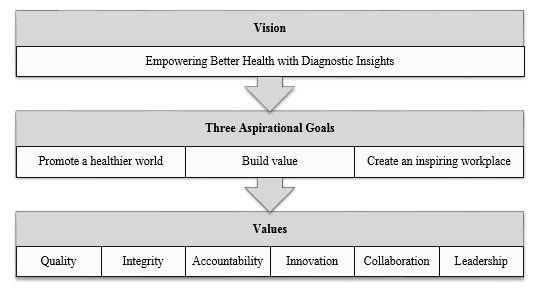
OUR STRATEGY
We have a two-point business strategy, reviewed by our Board of Directors and most recently updated at our Investor Day in November 2018, to achieve our vision and our goals.
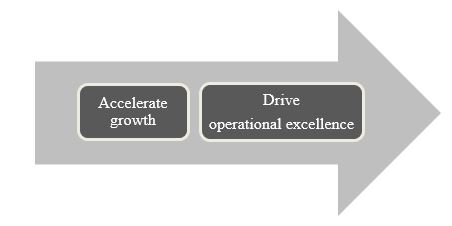
Accelerate Growth
Our strategy to accelerate revenue growth is based on looking at the Company’s portfolio of services, from the perspective of growth, as discussed in the following table.
| Table 1 - Portfolio Growth | |||
| Theme | Key Characteristics | At A Glance | Quest Value Proposition |
| General Diagnostics | Testing services generating strong cash flows and steady growth | Routine and non-routine testing services Largest revenue stream Essential portion of health care delivery | Scale Operational excellence Access and convenience |
| Advanced Diagnostics | Testing services providing faster growth through innovation testing model | Genetic and advanced molecular testing services An important part of precision medicine A growing set of unique, innovation-based competitors | Rich clinical, scientific and medical innovation expertise Quality and reliability of new assays Ability to manage potential new regulatory requirements |
| Diagnostic Services | Laboratory and data-related healthcare opportunities providing faster growth | Enables partners to deliver health care more efficiently (e.g., risk assessment; Professional Laboratory Services; wellness) Services to support population health (e.g., data analytics; extended care services) | Extensive diagnostic capability Large and growing database and analytics expertise Partnerships with industry leaders across healthcare landscape |
The Company has identified the following five approaches to accelerate growth.
| Table 2 - Approaches to Accelerate Growth |
| 1. Delivering a compound annual revenue growth rate of more than 2% through accretive, strategic acquisitions |
| Plus organic growth through: |
| 2. Partnering with health plans, IDNs and other risk bearing entities |
| 3. Offering the broadest access to diagnostic innovation |
| 4. Being recognized as the consumer-friendly provider of diagnostic information services |
| 5. Supporting population health with data analytics and extended care services |
-
Growing through acquisitions. The Company has maintained a strategy since November 2012 to grow revenue each year by a 1-2% compound annual growth rate through accretive, strategic acquisitions. At our Investor Day in November 2018, we announced that, in view of key trends in the clinical testing industry (see the discussion of Key Trends on page13, our strategy now is to generate a compound annual growth rate of more than 2%. The Company's approach to acquisitions is discussed below on page 7, under the heading Deliver disciplined capital deployment.
-
Partnering with health plans, IDNs and other risk bearing entities. To help accelerate growth, we are focusing significant resources on large opportunities to partner with outside entities. We are deepening our relationships with health plans. We attempt to build strong partnerships with health plans through engagement, including of the plans, employers, members and clinicians. We strengthen our relationships with health plans and increase the volume of our services for their members by driving value with employers and providing strong value propositions for members and clinicians. This includes building an information platform to help health plans manage utilization and population health, and enhancing processes to help plans keep laboratory testing in network. In 2018, the Company established a long-term strategic partnership with UnitedHealthcare, including collaborating on a variety of value-based programs, became a preferred provider to Horizon Blue Cross Blue Shield of New Jersey (with the exception of its managed Medicaid and Dual Eligible Special Needs plan beneficiaries) and became a participating provider to Blue Cross Blue Shield of Georgia. As a result, the Company began 2019 with access to more than 43 million additional insured lives.
We believe that the growing challenges faced by IDNs provides us with an opportunity to more effectively partner with IDNs as they reconsider their laboratory testing strategy. We have deployed a dedicated health systems team to strengthen our relationships with IDNs, including with respect to their reference testing. We provide reference testing for approximately 50% of hospitals in the U.S., and are the leading provider of this testing in the country. Through our Professional Laboratory Services offerings, we have developed a full suite of solutions to help IDNs build and execute their laboratory strategy. Our industry-leading offering, highlighted in table 3 below, enables IDNs to improve quality, reduce the cost of care and focus on core competencies. We believe that market forces including continued price transparency, cost and utilization pressure, evolving healthcare payment models, capital needs, changing technology and limited resources will drive demand for our expertise. In 2018, we implemented a new Professional Laboratory Services relationship with Regional Medical Center Health System, a regional health care provider for a five-county service area in northeast Alabama.
| Table 3 - Key Professional Laboratory Services Offerings | |
| Lab management outsourcing | Advanced data solutions |
| Joint venture | Reference testing, including advanced diagnostics |
| Outreach acquisition | Supply chain management and purchasing |
| Test menu optimization and spend consolidation | Blood utilization management |
- Offering the broadest access to diagnostic innovation. Our diagnostic solutions deliver high clinical value to the medical community across the U.S. We create value through scientific and product innovation and solution delivery for major clinical opportunities. Starting with a clinical focus on a specific disease state or clinical problem, we take advantage of advanced technology for more precise, comprehensive and actionable information, and deliver the information to the medical community in a meaningful way. We make innovative diagnostic solutions available to community physicians through our connectivity solutions, operational footprint and by making complex results actionable. The 2018 acquisitions of the U.S. laboratory services business of Oxford Immunotec, Inc. (adding the T-SPOT.TB tuberculosis and Accutix® tick-borne disease testing services to our portfolio of innovative infectious disease testing services) and ReproSource (a national leader in specialty fertility diagnostic services) demonstrate our commitment to expand the reach of diagnostic innovation. We plan to expand our innovative diagnostic solutions through research and development, as well as partnerships with academic institutions, other technology and healthcare leaders and public health agencies.
Our clinical franchises, working with our research and development team, focus on these opportunities and coordinate with our commercial organization to deliver new and improved solutions. Our franchises, listed in table 4 below, are designed to enable us to perform like a boutique service provider while maintaining the advantages of our scale, and to identify and access growing market segments so that we can more wisely deploy our resources and target opportunities to best serve our customers and patients.
| Table 4 - Clinical Franchises | |
| Cardiovascular, Metabolic and Endocrinology | Oncology |
| General Health and Wellness | Prescription Drug Monitoring and Toxicology |
| Infectious Diseases and Immunology | Sports Science and Human Performance |
| Neurology | Women’s and Reproductive Health |
Our 2018 introduction of Cardio IQ® Insulin Resistance Panel with Score and familial hypercholesterolemia in the cardiometabolic and endocrine area, the growth of tuberculosis testing in our infectious diseases and immunology offerings and the continued growth of our prescription drug monitoring and toxicology testing are recent examples of the power of our clinical franchises to deliver new solutions and foster growth.
- Being recognized as the consumer-friendly provider of diagnostic information services. Consumers expect more from their healthcare providers. They seek convenience, a superior and personalized experience relevant to their needs, and to be empowered to make their own healthcare decisions. Those desires inform our design for our consumer experience. We plan to continue to increase our retail presence, improve the consumer experience and offer consumers the ability to directly access
our quality diagnostic information services. The Company has a long history of focusing on consumer interests, including being the first national diagnostic information services provider to offer on-line patient appointment scheduling and a patient connectivity solution. We are a leader in unaided consumer brand awareness among lab services providers and have a high level of satisfaction among patients who have used our services. We have multiple consumer-centric initiatives, highlighted in table 5, focused on securing growth.
| Table 5 - Recent Consumer-Centric Initiatives | |
| Enhance patient experience | • Electronic check-in at patient service centers. • Improved on-line pre-registration and appointment scheduling. • Real-time payment determination for additional payers. |
| Expand convenient access | • Partnerships with Walmart Stores and Safeway to expand convenient access to testing services at select Walmart and Safeway locations across the United States; the number of locations significantly increased in 2018 to over 200. |
| Consumer-initiated testing | • QuestDirectTM, our consumer-initiated testing service, is now available in 48 states. • Consumers can choose from 35 test packages including general health, men's and women's health, digestive health, heart health, infectious disease and sexually transmitted disease testing. |
| Expand consumer connectivity and access to information | • >6.5 million registered users in our MyQuest® health portal and mobile connectivity solution. Implemented MyQuest Advanced Access®, which enables patients to access their historical laboratory test results and trends. • Patients can manage healthcare for a circle of individuals and receive personal appointment reminders via text messaging. • MyQuest® now supports Health Records using the Apple Health app. |
| Expand access to basic health care services | • Launched partnership with Walmart Stores to expand access to basic health care services. |
| Expand sports diagnostics offering | • Continued enhancement and expansion of our Blueprint for Athletes® offerings. |
| Self-collection technology | • Launched proprietary, consumer-friendly self-collection technology to engage consumers at home. |
| Expand consumer awareness | • Multi-year global collaboration with AncestryDNA to provide genotyping test services. |
- Supporting population health with data analytics and extended care services. We support population health by offering services designed to identify gaps in care in a population, provide clinical solutions to close the gaps and foster consumer engagement with a solution. Our services help healthcare providers, health plans, sponsors and IDNs deliver better care to their patient populations by identifying and filling gaps in care for their patient populations. We pursue opportunities to provide solutions centered on evidence-supported standards of care and guideline mandated testing. Our offerings include data analytics and extended care services, including services designed to capture and document information. Our services leverage the power of our information assets and integrate our extensive clinical data, to offer solutions using data information services and strategies that enable our customers to deliver the most effective healthcare to the right populations and individuals. Our extended care services leverage our assets and capabilities (e.g., call centers, patient service centers and mobile workforce) and our collaborative approach. In 2018, we acquired Mobile Medical Examination ServiceTM, LLC, a leading national provider of home-based health risk assessments and related services with a network of mobile professionals, expanding the services that we provide and strengthening our capabilities to help close gaps in care.
Drive operational excellence
We strive to enhance operational excellence and improve our quality and efficiency across every portion of our value chain and supporting operations, from the time that we interact with a potential customer until the time we receive payment. Improving our operations will yield many benefits, including: enhancing customer experience; improving our quality and competitiveness; strengthening our foundation for growth; and increasing employee engagement and shareholder value.
We are building a superior experience, at lower cost, for all of our customers, including patients, health plans, IDNs and clinicians. We endeavor to improve our processes and effectiveness at the same time. We are guided by a service dashboard that focuses throughout our operations on quality for patients, health care providers and employees, including medical quality, on-time delivery, competitive costs and employee safety. We are focusing on the following major themes to drive operational excellence.
| Table 6 - Major Themes to Drive Operational Excellence | |
| Reduce denials and patient concessions | Standardize and automate |
| Digitize the customer experience | Optimize |
In 2018, we made strong progress on our initiatives. For example, we completed outfitting our patient service centers with electronic patient check-in, significantly increased the number of health plans using real-time estimation of consumer bills, standardized multiple test platforms (e.g., prescription drug monitoring and hematology) and commenced construction of our new 250,000 square foot flagship laboratory in Clifton, New Jersey.
Our cost excellence program, Invigorate, includes structured plans to drive savings and improve performance across the end-to-end value chain, including in such areas as revenue services, information technology and procurement. We exited 2017 with total run-rate savings in excess of $1.3 billion, compared to 2011. We currently aim annually to save approximately 3% of our costs, and in 2018 we achieved that goal.
OUR STRENGTHS
We are the world's leading provider of diagnostic information services. We are the leading provider in the United States of clinical laboratory and anatomic pathology testing, and related services. We offer high value diagnostic information services and diagnostic solutions that are attractive to our customers (discussed under the heading Customers beginning on page 17). We believe that our customers prefer providers that offer a comprehensive and innovative range of tests and services and convenient access to those services. We believe that, by offering such services, we strengthen our market offering, market position and reputation. Our strengths are discussed below.
Strong operating principles
We have a foundation of three strong operating principles: strengthen organizational capabilities; remain focused on diagnostic information services; and deliver disciplined capital deployment.
Strengthen organizational capabilities. We continuously strive to strengthen our organizational capabilities to support our strategy, enable growth and productivity, better focus on our customers, speed decision-making and empower employees. Highlights include:
| • | Our organization is designed to align around future growth opportunities, coordinate units in our business for seamless execution and leverage our company-wide infrastructure to gain more capability, value and efficiency. The value creation side of our business includes product and commercial marketing and is organized by clinical franchise and focuses on customer solutions for the marketplace, including new test development and diagnostic insights. The value delivery side includes sales, laboratory operations, field operations, logistics and client services. |
| • | We use the Quest Management System to manage our Company. This system provides a foundation for day-to-day management, and includes best-in-class business performance tools to help us develop new capabilities to improve our Company. The system enables us to run the Company with a common language, approach and philosophy, and supports our efforts as we build a high-performance culture, with employees focused on behaviors to make us more agile, transparent, customer-focused, collaborative and performance oriented. |
| • | Our Everyday Excellence program, which includes guiding principles for our entire organization to support a superior customer experience and to inspire our employees to be their best every day, with every person and with every customer interaction. In 2018, we integrated these principles into our performance assessments and frontline employee behavioral standards. |
| • | Our Leading Quest Academy, which is designed to strengthen our more senior employee leaders through a highly experiential leadership development program focused on creating a high-performance culture and sharpening the capabilities needed to lead our organization, and leadership training programs for other employees. |
| • | Our Code of Ethics reinforces our commitment to integrity as one of our core values and aligns with our vision, goals and brand. |
Remain focused on diagnostic information services. We maintain a sharp focus on providing diagnostic information services. In 2016, we completed our efforts to refocus on these services when we concluded the disposition of our products business. Since 2012, our asset dispositions, including the 2018 sale of our diagnostic information services business in India, collectively generated approximately $1 billion of proceeds.
Deliver disciplined capital deployment. Our disciplined capital deployment framework includes dividends, share repurchases and investment in our business. The framework is grounded in maintaining an investment grade credit rating. We expect to return a majority of our free cash flow to investors through a combination of dividends and share repurchases. Consistent with that expectation, in November 2018 we announced that we increased our quarterly common stock dividend by 6%, from $0.50 per common share to $0.53 per common share. This represents our eighth increase in the dividend since 2011. For many years, we have maintained a common stock repurchase program. Since the beginning of 2013, we have returned approximately $2.8 billion to stockholders through repurchases of our common stock. Our share repurchases, dividends and capital expenditures in each of the last five years are presented in Selected Historical Financial Data of Our Company beginning on page 49.
The Company's strategy includes generating growth through value-creating, strategically-aligned acquisitions using disciplined investment criteria. We screen potential acquisitions using guidelines that assess strategic fit and financial considerations, including value creation, return on invested capital and impact on our earnings. In 2018, we consummated seven acquisitions, including Mobile Medical Examination Services, LLC (a leading national provider of home-based health risk assessments and related services) and the U.S. laboratory services business of Oxford Immunotec, Inc. (adding the T-SPOT.TB tuberculosis and Accutix® tick-borne disease testing services to our portfolio of innovative infectious disease testing services). Our material acquisitions in each of the last three years are further discussed in Note 6 to the Consolidated Financial Statements (Part II, Item 8 of this Report).
We will continue to invest in our business in a disciplined manner, including focusing on enhancing our solid foundation of strategic assets and capabilities, accelerating growth and driving operational excellence. Our near-term investments in growth are likely to focus on the strategies to accelerate growth set forth in table 2 above. Our near-term investments to drive operational excellence are likely to focus on improving the customer experience and gaining efficiency, systems standardization, digital enablement of our processes and footprint optimization.
Assets and capabilities to deliver value
We have unmatched size, scale and capabilities. Competitors differ in the services they provide and the reimbursement they receive. We take advantage of our scale, and through the quality and breadth of services that we offer, the manner in which we offer them and the reimbursement that we receive for them, we focus on delivering value to our customers.
| Table 7 - Assets and Capabilities | |
| ● Provide healthcare connectivity solutions to >335,000 clinician and hospital accounts and interface with approximately 700 electronic health records systems | ● Own or control approximately 1000 issued and 475 pending patents worldwide in 2018 |
| ● Strong logistics capabilities • make approximately 77,000 stops daily • approximately 3,750 courier vehicles • 25 aircraft serving the U.S. | ● One of the largest medical and scientific staffs in the industry to provide interpretive consultation • >600 M.D.s and Ph.D.s, many of whom are recognized leaders in their field • Genetic counselors |
| ● Approximately 22,000 phlebotomists, paramedics, nurses and other health and wellness professionals | ● >6,600 patient access points, the most extensive network in the U.S., including phlebotomists in physician offices and >2,250 of our own patient service centers |
| ● Access to approximately 90% of U.S. insured lives | ● Processed approximately 168 million test requisitions in 2018 |
| ● Industry-leading test menu | ● The largest private database of de-identified test results: >44 billion patient data points delivered over past decade |
Innovation
We are a leading innovator in diagnostic information services. We continue to introduce new tests, including many with a focus on personalized and targeted medicine, and new services. Our capabilities include discovery, technology development and clinical validation of diagnostic tests. We develop tests at our esoteric laboratories, such as Quest Diagnostics®, Nichols Institute®, Athena Diagnostics®, Med FusionTM, LLC and Cleveland HeartLab®, Inc.
We transfer technical innovations to the market through our in-house expertise and our relationships with technology developers, including the academic community, pharmaceutical and biotechnology firms, emerging medical technology companies and others that develop and commercialize novel diagnostics, pharmaceutical and device technologies. We search for new opportunities and continue to build a robust pipeline of new solutions. Through our strengths in assay development and the commercialization of testing services, we believe that we are the partner of choice for developers of new technologies, services and tests to introduce their products to the marketplace.
We seek innovations and solutions that help healthcare providers care for their patients through better testing for predisposition, screening, monitoring, diagnosis, prognosis and treatment choices, and that will reduce the overall cost of healthcare. We seek to develop innovations and solutions that help to determine a patient's genotype or gene expression profile relative to a particular disease and its potential therapies, because they can help healthcare providers to determine a patient's susceptibility to disease or to tailor medical care to an individual's needs - such as determining if a medication might be an optimum choice for a particular person, or tailoring the right dosage once the proper medicine is prescribed. In addition, we aim to develop holistic solutions responsive to challenges that healthcare providers and patients face, by developing solutions of multiple tests, information and services focused on specific clinical challenges, and taking advantage of the latest informatics capabilities. We also look for innovations and solutions that are less invasive than currently available options, to increase the choices that healthcare providers and patients have for the collection of diagnostic samples. We additionally seek innovation in the ways we bring solutions to customers, and in the customer experience, including enhanced services and end-to-end solutions for convenience and support.
Collaboration
We believe that strategic relationships, including with healthcare providers, public health authorities, consumer-focused entities and others, can position us for growth at the center of healthcare and that healthcare companies that can partner effectively with others will be successful in the long term. We collaborate with partners that can help us to achieve our vision of empowering better health through diagnostic insights and have relationships across the spectrum of healthcare. We plan to continue to pursue strategic relationships to help accelerate growth and drive operational excellence.
Through our relationships, we believe that we are a leader in bringing to the market innovation and the ability to empower better health through diagnostic insights. As the industry leader with the largest and broadest U.S. network, we
believe we are the distribution channel of choice for developers of new solutions, including large commercial manufacturers, academic medical centers and pharmaceutical and biotechnology firms, to introduce their products to the marketplace. We maintain relationships with advisers and consultants who are leaders in key fields of science and medicine. We work with key groups and organizations, including world class healthcare and consumer-focused leaders, to foster important advances in healthcare, including in precision medicine and healthcare delivery.
In 2018, the Company forged several new strategic relationships, including with Rutgers University (to conduct research related to human athletic performance) and the Synaptic Alliance (establishing a pilot program applying blockchain technology in an effort to improve data quality and reduce administrative costs in healthcare).
Medical and Scientific Expertise
We have strong medical and scientific expertise and aspire to be a trusted authority in diagnostics medicine, provide insights and tools to support public and personal health, lead and facilitate scientific discussion and inspire innovation. Our medical and scientific experts regularly provide presentations, symposia and webinars regarding diagnostic testing and participate on scientific committees determining guidelines for diagnostic usage. They also publish research that demonstrates the clinical value and importance of diagnostic testing, including in connection with our research and development efforts, in peer-reviewed journals, textbooks and other publications. Our Quest Diagnostics Drug Testing IndexTM is a periodic report of trends, derived from our aggregate drug testing results, cited by employers, the federal government and the media to help identify and quantify drug abuse among the nation's workforce.
Health Information Technology Solutions and Information Assets
We have a history of providing leading information technology for diagnostic information services, including for patients, clinicians and healthcare organizations. We were the first national diagnostic information services provider to offer on-line patient appointment scheduling and a patient connectivity solution. Our MyQuest® patient healthcare portal, with over 6.5 million registered users at year-end 2018, enables patients to manage healthcare and medical information for themselves and a circle of others and, among other things, use their smartphone or computer to order a test, receive appointment reminders, receive and archive their Quest Diagnostics test results, find a Quest Diagnostics location and schedule appointments. In 2018, we were a founding member of the Synaptic Healthcare Alliance, which is running a pilot program applying blockchain technology to improve data quality and reduce administrative costs associated with changes to health care provider demographic data.
We also have significant information assets, including many years of test result data, and offer a robust portfolio of powerful analytics that inspire action and deliver value to an array of customers. We offer an array of Quanum® solutions based on data insights, including retrospective analytics solutions for healthcare professionals and practices, health plans, IDNs, pharmaceutical companies and public health. We believe that solutions can tap the potential of large amounts of clinical information to: enhance the customer experience; deliver more precise, comprehensive solutions and actionable information; provide increased and interactive insights and analytics; foster greater adherence to clinical and reimbursement guidelines; and advance the development of precision medicine. In addition, we are developing workflow analytics solutions for lab stewardship and predictive analytics solutions for risk stratification. We believe that the breadth and depth of our data, combined with our powerful analytics capabilities, enables us to take advantage of important data-based opportunities in diagnostics, and provides us a competitive advantage.
Quality
Our goal is to provide every patient with services and products of superior quality. We strive to accomplish that through commitment, leadership, and establishing rigorous processes which we measure and continually seek to improve, and by using the Quest Management System, which provides best-in-class business performance tools to create and implement effective and sustainable quality processes. The Quest Diagnostics Quality Program includes policies and procedures to document, measure and monitor the effectiveness of our laboratory operations in providing and improving quality and meeting applicable regulatory requirements. The Quality Program is designed so that the quality of laboratory services is monitored objectively and evaluated systematically to deliver superior quality care, identify opportunities to improve patient care and resolve identified problems. To help achieve our goal of becoming recognized as the undisputed quality leader in the diagnostics information services industry, we have implemented our Quality System Framework, which serves as a reference guide for our employees and describes our Quality System Elements, which provide the structure for each laboratory to achieve and maintain quality processes. We also have a robust Supplier Quality Program designed to ensure we have a high quality supplier network and to raise the bar of quality expectations across that network.
Customer Focus
The customer is at the center of everything we do. Customers have a choice when it comes to selecting a healthcare provider and we strive to give them reason to put their trust in us. We use customer insights in developing our approach and processes, listening to the voice of external and internal customers. Focusing on a thorough understanding of customer needs and requirements, we seek to identify and implement solutions and processes that will result in a superior customer experience. Our experienced staff has a passion for providing the highest quality service to our customers. We strive to provide a superior experience for our customers because we believe that this will drive customer loyalty. Our brand -- Action from Insight® -- reflects our commitment to a superior customer experience. We also maintain our Everyday Excellence program, which includes guiding principles to support a superior customer experience, inspiring our employees to be their best every day, with every person and with every customer interaction.
BUSINESS OPERATIONS
As of December 31, 2018, the Company was made up of two businesses: Diagnostic Information Services and Diagnostic Solutions. Our Diagnostic Information Services business develops and delivers diagnostic information services, providing insights that empower and enable a broad range of customers, including patients, clinicians, hospitals, IDNs, health plans, employers and ACOs. Our Diagnostic Solutions group includes our risk assessment services business, which offers solutions for insurers, and our healthcare information technology businesses, which offers solutions for healthcare providers. Our services primarily are provided under the Quest Diagnostics brand, but we also provide services under other brands, including AmeriPath®, Dermpath Diagnostics®, Athena Diagnostics®, ExamOne®, and Quanum®.
We conduct substantially all of our business in the United States. We see opportunities to bring our experience and expertise in diagnostic information services to markets outside the United States, including leveraging existing facilities to serve new markets. We have laboratory facilities in Mexico and Puerto Rico, and have a majority interest in a joint venture in Brazil providing drugs of abuse testing in that market. In 2018, with other leading diagnostic laboratories outside the United States, we established the Global Diagnostics NetworkTM, a strategic working group of diagnostic laboratories committed to unleashing and sharing local innovation to increase global access to diagnostic science, information and services and generating enhanced diagnostic insights to improve the delivery of global healthcare.
We leverage our capabilities and assets to serve our multiple customer bases. The following table shows the percentage of our 2018 net revenues generated by the activities identified.

Diagnostic Information Services
Background - clinical testing. Clinical testing is an essential element in the delivery of healthcare services. Clinicians use clinical testing for predisposition, screening, monitoring, diagnosis, prognosis and treatment choices of diseases and other medical conditions. Clinical testing is generally categorized as clinical laboratory testing and anatomic pathology services.
Clinical laboratory testing, which can be characterized as routine, non-routine or advanced, generally is performed on whole blood, serum, plasma and other body fluids, such as urine, and specimens such as microbiology samples. Clinical laboratory tests which can be performed by most clinical laboratories are considered routine. Routine testing measures various important bodily health parameters such as the functions of the kidney, heart, liver, thyroid and other organs. Commonly ordered routine tests include blood chemistries, urinalysis, allergy tests and complete blood cell counts. Non-routine tests may require professional “hands-on” attention from highly-skilled technical personnel, generally require more sophisticated
informatics, technology, equipment or materials, may be performed less frequently than routine tests and may be reimbursed at higher levels than routine tests. It may not be practical, from a cost-effectiveness or infrastructure perspective, for many hospitals, IDNs, ACOs, commercial laboratories or physician office laboratories to develop and perform a broad menu of non-routine tests, or to perform low-volume non-routine testing in-house. Such tests generally are outsourced to a clinical testing laboratory which can perform these non-routine tests. Some non-routine tests are advanced. Advanced tests include procedures in the areas of molecular diagnostics (including next-generation sequencing), oncology, neurology, companion diagnostics and non-invasive pre-natal and other germline genetic testing.
Anatomic pathology services are performed on tissues, such as biopsies, and other samples, such as human cells. Anatomic pathology involves the diagnosis of cancer and other diseases and medical conditions through examination of tissue and cell samples taken from patients.
Our services. We are the world's largest provider of diagnostic information services. We provide information and insights based on the industry-leading menu of routine, non-routine and advanced clinical testing and anatomic pathology testing, and other diagnostic information services. We have built strong testing capabilities, including services for the predisposition, diagnosis, treatment and monitoring of cancers and other diseases, and offer advanced tests in many fields, including endocrinology, immunology, neurology and oncology. Increasingly, we are focused on providing solutions and insights to our customers, based on the testing that we perform, the data that we gather and our extensive medical, information and connectivity assets. We believe that offering services, solutions and insights based on a full range of tests, information assets and other capabilities strengthens our market offering, market position and reputation.
We offer the broadest access in the United States to diagnostic information services. We maintain a nationwide network of laboratories, including advanced laboratories (such as our world renowned Quest Diagnostics Nichols Institute®) as well as rapid response laboratories (smaller facilities where we can quickly perform an abbreviated menu of routine tests for customers that require rapid turnaround times). We operate 24 hours a day, 365 days a year. Our nationwide network also includes patient service centers, phlebotomists in physician offices, and our connectivity resources, including call centers and mobile paramedics, nurses and other health and wellness professionals. We provide interpretive consultation to healthcare providers through a large medical and scientific staff. Our in-house experts, including medical directors, scientific directors, genetic counselors and board certified geneticists, provide medical and scientific consultation to healthcare providers and patients regarding our tests and test results, and help them best utilize our services to improve outcomes and enhance satisfaction. We also provide testing services, inpatient anatomic pathology and medical director services at hospital laboratories.
We are a leading provider of infectious disease diagnostic information services and strive to be the first to provide diagnostic solutions for emerging infectious diseases, including our offerings for Zika, West Nile Virus, SARS and Influenza A H1N1. We have leading positions in prescription drug monitoring and toxicology, in neurology diagnostics, in advanced cardiovascular diagnostic information services, including our CardioIQ® and Cleveland HeartLab® offerings, and in cancer diagnostics, including our QuestVantage® and Med FusionTM offerings. We are a leader in providing testing for the detection of employee use of drugs of abuse, offering a full range of solutions, including urine, hair, blood and oral fluid tests. We are the largest workplace drug testing provider certified by the U.S. Department of Health and Human Services to perform drug testing using electronic custody and control forms for federally-mandated, safety-sensitive workers.
We are a leading provider of wellness services, including biometric wellness screenings, flu shots and related preventative services that leverage clinical data to improve population health outcomes and reduce healthcare spend. Our wellness solution, Blueprint for Wellness®, begins with biometric screenings conveniently offered at the worksite or through our patient service centers. The solution includes highly personalized reporting and incentive management services. Our offering includes intervention programs focused on connecting participants to the right care at the right time, such as a program designed to prevent diabetes and other chronic conditions, and another program that enables participants to speak with a board-certified physician about their results and to be guided about actions based on those results. These services are sold directly to employers and through reseller partnerships with many health plans. We strengthened our wellness offering during 2018 by acquiring the assets of Provant Health, a provider of employer health and wellness services focused on whole person wellness and care cost management.
We offer Quanum® health information technology solutions, including our products and national healthcare provider network, to help healthcare organizations and clinicians empower better health by leveraging the power of our significant information assets, including many years of test result data, and our technology prowess, including our history of providing leading information technology for diagnostic information services. Our portfolio of offerings is designed to address analytic, clinical and financial needs. The solutions help healthcare organizations and clinicians analyze and put in context data, and enable them to connect across the healthcare system and engage with their stakeholders. They can enter, share and access clinical information without costly information technology implementation or significant workflow disruption. We carefully review our healthcare information technology solutions for compliance with relevant privacy laws and regulations, and for consistency with our Global Privacy Statement.
We offer an array of population health solutions to empower achievement of the triple aim of healthcare: improved quality of care; improved experience for the patient; and better management of overall health care cost. Our services build on the power of our information assets and data capabilities and help clinicians, health plans, sponsors and IDNs deliver better care to their patient populations by identifying gaps in care in a population, providing clinical solutions to close the gaps and fostering consumer engagement with a solution. Our extended care services, including home-based health risk assessments and related services, leverage our assets and capabilities (e.g., call centers, patient service centers and mobile workforce) and focus on extending the reach of clinician offices beyond their traditional four walls to assess the health of their populations, and doing so when and where it is convenient for consumers. Once gaps are identified, we engage patients in our retail sites, in home or by telephone, including through our call centers and our mobile base capabilities, including highly-trained healthcare professionals. We also offer services focused on chronic care management, and other services like post-hospital discharge visits, diabetic retinopathy and bone density examinations.
We also offer services to pharmaceutical companies. We have expertise with laboratory developed tests for companion and complementary diagnostics, and offer an array of assets and services to support the development of companion diagnostics, including our robust data set and patient services network. We also offer Quest Clinical Trials ConnectTM, to help speed drugs to market through better patient recruitment and involvement and improved physician outreach.
Diagnostic Solutions
We are the leading provider of risk assessment services for the life insurance industry. In addition, we offer healthcare organizations and clinicians robust health information technology solutions.
Risk Assessment Services. ExamOne® is the largest provider of risk assessment services to the life insurance industry in North America. We also provide risk assessment services for insurance companies operating outside North America. Our risk assessment services comprise underwriting support services, including data gathering, paramedical examinations and clinical laboratory testing and analytics, designed to assist life insurance companies objectively to evaluate the mortality risks of applicants. Most specimen collections and paramedical examinations are performed by our network of paramedical examiners at the applicant's home or workplace, but they also are offered at approximately 900 Company patient service centers in the United States and approximately 550 additional locations in North America. We also contract with third parties to coordinate providing these exams outside North America.
Healthcare Information Technology. Our healthcare information technology offerings, including our Quanum® electronic health records system and our award-winning Quanum® Enterprise Content Solutions for hospitals and IDNs, connect data to decision-making and help clinicians advance clinical and operational strategies. Healthcare organizations have contracted for the use of Quanum® Enterprise Content Solutions at over 300 sites in North America. Our Quanum® electronic health records offering enables clinicians to generate a complete record of a clinical patient encounter, automates and streamlines the clinician's workflow, provides clinical decision support tools, captures patient encounter notes and lab and radiology results and enables secure communication with patients and other clinicians.
Other
Q2 Solutions®, a joint venture with IQVIA Holdings Inc. in which we own a minority interest, is the second largest central laboratory services company in the world and provides services to customers across all segments of the biopharmaceutical industry. Central laboratory testing services are critical to advances in genomics, precision medicine and drug development. Q2 Solutions® has helped develop many of the oncology precision medicine drugs approved by the FDA in recent years.
THE UNITED STATES CLINICAL TESTING INDUSTRY
The U.S. clinical testing industry consists of two segments. The following table discusses how we believe the industry is structured.
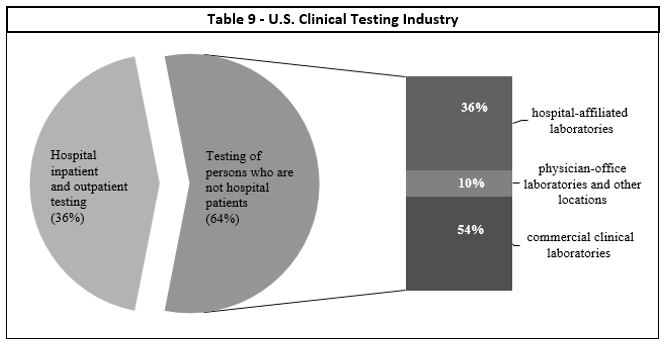
Key Trends
The healthcare system in the United States is evolving; significant change is taking place in the system. We expect that the evolution of the healthcare industry will continue, and that industry change is likely to be extensive. There are a number of key trends that are having, and that we expect will continue to have, a significant impact on the diagnostic information services business in the United States and on our business. These trends, discussed in the table below, present both opportunities and risks. We believe that several of the trends, including consolidation, price transparency and increased consumer involvement, are favorable to our business.
Because diagnostic information services is an essential healthcare service and because of the key trends discussed below, we believe that the industry will continue to grow over the long term. In addition, we believe that medical laboratory testing market fundamentals are changing. We believe that PAMA-driven reimbursement pressure will induce structural change; that health plan approaches to laboratory testing services will reduce variation in spending on these services; and that growing consumerization in healthcare is sharpening focus on price disparities. We believe that these changing market fundamentals will benefit low-cost, high-value providers like Quest and that we are well positioned to grow from the changing market conditions and benefit from the long-term growth expected in the industry.
| Table 10 - Key Trends | |
| Prevention and wellness | We believe that the value of detection, prevention, wellness and personalized care is well recognized. Consumers, employers, ACOs, IDNs, health plans and government agencies increasingly focus on helping the healthy stay healthy, detecting symptoms among those at risk and providing preventive insight and care that helps avoid disease. |
| Medical innovation | Medical advances allow for more accurate and earlier diagnosis and treatment of diseases. Continuing advances in genomics and proteomics are expected to yield new, more sophisticated and specialized diagnostic tests. These advances also are spurring interest in and demand for precision medicine, which relies on diagnostic and prognostic testing and in which data information services and strategies are used to deliver the most effective healthcare to the right populations and individuals. Pharmacogenomic testing increasingly is used as a parameter to help speed drug approval processes and to better focus therapy based on patient and tumor-specific genetic markers. Demand also is growing toward comprehensive care management solutions that serve patients, payers and healthcare providers by improving clinical decision support and access to patient data, and by increasing patient participation in care management and population health management. There is increasing focus on access to patient data and data-driven insights. |
| Customers and payers; industry consolidation | Our customers and payers, including clinicians, health plans, IDNs, ACOs, employers and others, have been consolidating, converging and diversifying. For example, an increased number of hospital systems are considering establishing or have established health insurance plans, and health insurance plans are considering providing or are providing healthcare services. CVS Health, a leading provider of retail medical clinics and pharmacy benefits management services, has acquired Aetna, a leading health insurance provider. Cigna Corporation, a leading health insurance provider, has acquired Express Scripts, a leading pharmacy benefits manager. United Health Group, the parent of UnitedHealthcare, provides a wide array of health care services through its Optum subsidiaries. Health plans are entering agreements with other providers of healthcare services, including laboratory testing services providers, to partner on value-based approaches to delivering health care to populations. Consolidation is increasing pricing transparency and bargaining power, and may encourage internalization of clinical testing. Physicians frequently now are employed by hospital systems, IDNs, ACOs or large group practices integrated with healthcare systems, instead of organizing physician-owned practices, which is changing the dynamics for whether clinical testing is performed in or outside of a hospital. Physicians and other clinicians also increasingly are being employed by health plans or their affiliates. Value-based reimbursement is contributing to changes in the healthcare system. ACOs and patient-centered medical homes have grown as a means to deliver patient care. Healthcare services increasingly are being provided by non-traditional providers (e.g., physician assistants), in non-traditional venues (e.g., retail medical clinics, urgent care centers) and using new technologies (e.g., telemedicine; digital pathology). In addition, federal healthcare reform legislation adopted in 2010, the ACA, is resulting in changes in the way that some healthcare services are purchased and delivered in the United States. Hospitals and IDNs are under significant pressure, and are evolving. Patients are also our customers. Increasingly, patients are engaged in their own healthcare, being empowered to manage and understand their healthcare and are bearing responsibility for payment for the services provided to them. See also the discussion under the heading Patients in table 12. |
| Pricing transparency | There has been a trend toward greater pricing transparency in the healthcare marketplace. This transparency, combined with increased patient financial responsibility for medical care, is enhancing purchasing sophistication and changes in behavior in the healthcare marketplace. We believe that increased price transparency should benefit low cost, high value providers like our Company. |
| Competition | The diagnostic information services industry remains fragmented, is highly competitive and is subject to new competition. Competition is emerging from new technologies (e.g., digital pathology) and growing from non-traditional competitors. Increased hospital acquisitions of physician practices may enhance clinician ties to hospital-affiliated laboratories and may strengthen their competitive position. New industry entrants with extensive resources may make acquisitions or expand into our traditional areas of operations. |
| Healthcare utilization | In the past few years, healthcare utilization in the United States has fluctuated based on a number of factors. These factors include, without limitation, the economy, healthcare benefits design, patients delaying medical care and increased patient financial responsibility for medical care. The ACA contained provisions eliminating patient cost-sharing for preventive services, and additional provisions that we believe have increased the number of patients that have health insurance, including Medicaid, and thus better access to diagnostic testing. |
| Reimbursement pressure; affordability | There is a strong focus in the United States on controlling the overall cost of healthcare. Healthcare market participants, including governments, are focused on controlling costs. Examples of cost control approaches include reducing reimbursement for healthcare services, changing reimbursement for healthcare services (e.g., shift from fee for service to capitation), changing medical coverage policies (e.g., healthcare benefits design), denying coverage for services, requiring preauthorization of laboratory testing, requiring co-pays, introducing laboratory spend management utilities and payment and patient care innovations such as ACOs and patient-centered medical homes. In light of continued pressure to reduce systemic healthcare costs, hospitals may change their approach to providing clinical testing services. The Health Transformation Alliance, a group of over 40 major U.S. companies, was formed to improve and reform the healthcare system in the United States. The rising cost of healthcare in the United States was a key driver for the formation of this alliance. In 2018, Amazon.com Inc., Berkshire Hathaway Inc. and JPMorgan Chase &Co., citing rising health care costs, announced plans to reduce their workers' health care costs by forming a non-profit venture that would provide simplified, high-quality healthcare for their workers. Pursuant to PAMA, CMS has promulgated revised reimbursement rates schedules for clinical laboratory testing services provided under Medicare for 2018, 2019 and 2020. Under the revised Medicare Clinical Laboratory Fee Schedule, reimbursement rates for clinical laboratory testing was reduced in 2018 and is scheduled to be reduced again by approximately 10% in each of 2019 and 2020. PAMA calls for further revision of the Medicare Clinical Laboratory Fee Schedule for years after 2020, based on future surveys of market rates; further reduction in reimbursement rates may result from such revisions. The American Clinical Laboratory Association, of which the Company is a member, initiated a lawsuit charging that in implementing PAMA, CMS failed to follow a Congressional directive to implement a market-based laboratory payment system. The lawsuit was dismissed; appeal of the dismissal is pending. The Company supports this lawsuit and also is pursuing a legislative solution from the revised Medicare Clinical Laboratory Fee Schedule implemented by CMS under PAMA, which the Company contends resulted from a flawed process and failed to protect access to laboratory services for Medicare beneficiaries. In 2018, CMS finalized a national coverage determination for next-generation sequencing cancer panels. Under the determination, tests that gain FDA approval or clearance as an in vitro companion diagnostic will automatically receive full coverage, provided other coverage criteria are met. Coverage determinations for other diagnostic laboratory tests using next-generation sequencing will be made by Medicare Administrative Contractors. Clinical laboratory services providers are discussing this determination and others with CMS and Medicare Administrative Contractors to attempt to ensure that such providers can continue to provide these essential diagnostic services, but those discussions may not be successful. While pressure to control healthcare costs poses a risk to our Company, it also creates opportunities, such as an opportunity for increased proper utilization of testing as an efficient means to manage the total cost of healthcare. We believe that it also creates greater opportunities for consolidation and gaining share for high value, low-cost providers, like our Company, as compared to other providers. |
| Legislative, regulatory and policy environment | Government oversight of and attention to the healthcare industry in the United States is significant and increasing; healthcare payment reform is a top issue. In late 2018, legislation was introduced in Congress that would enable the FDA to regulate LDTs, in vitro diagnostics, software and other items used in the diagnosis of disease. If this legislation were to become law, the FDA could regulate diagnostic tests and components and platforms used as part of these tests. If such legislation were to become law, it could have a significant impact on the clinical laboratory testing industry, including regulating LDTs in new ways and creating avenues of opportunity and competition regarding clinical laboratory testing. New competitors may enter the industry, and competition may come in new forms. The ACA has created significant uncertainty as healthcare markets react to changes. For example, more than half of the states have opted in to Medicaid expansion and employers may discontinue offering group health insurance to their employees, shifting more people to exchange products. Certain aspects of the ACA have been repealed, delayed or modified. The scope and timing of any further legislation to repeal, amend, replace, or reform the rest of the ACA is uncertain, but if such legislation were to become law, it could have a significant impact on the U.S. healthcare system. In addition, uncertainty regarding the status of the ACA prior to any such repeal, amendment, replacement or reform could create uncertainty generally in the healthcare market. A federal court has recently determined that the ACA is unconstitutional; that ruling has been appealed. Uncertainty about court rulings regarding the ACA could add to uncertainty in the healthcare market. |
| Informatics; technology; privacy concerns | The increased availability of healthcare data, including data made available as a result of next generation DNA sequencing, and the increased ability to effectively analyze that data at population and patient levels, is impacting healthcare practices. It is anticipated that the increased use of data in healthcare, coupled with mobile healthcare IT solutions for doctors and patients, will help to improve patient outcomes and reduce overall healthcare costs. Informatics, including integrated diagnostic and decision support solutions, predictive analytics, use of population data and healthcare information technology, is spurring advances in precision medicine, including medical decision making and value, for populations and individuals. The increased focus on data and its use is increasing focus on maintaining the privacy of patient data. There is a need for technology solutions to harness these opportunities. In addition, new technology, social media and mobile technology are changing the way that healthcare markets interact with each other, and the expectations that they have about how services are provided, what services are provided, and other capabilities of healthcare market participants. These developments are creating new opportunities and new challenges and disrupting the healthcare environment. For example, digital pathology is an emerging technology that may change the practice of pathology. Information technology that includes self-learning or "artificial intelligence" features is growing and may impact the healthcare industry. Healthcare market participants, including pharmaceutical companies, health plans, clinicians, ACOs and IDNs, are striving to leverage interoperability, informatics and analytics to positively influence the health of patient populations while maintaining patient privacy. |
| Chronic diseases and conditions; gaps in care | We believe that the cost and challenges of identifying, treating and controlling chronic diseases and conditions such as diabetes and heart disease are now well recognized. As a result of multiple factors, including increased focus on population health management and pressure to reduce the systemic costs associated with such diseases and conditions, there is increased focus on better identifying and attempting to reduce or eliminate the gaps in care historically associated with these diseases and conditions. Healthcare market participants are developing new approaches for this purpose. |
| Healthcare services delivery | Healthcare delivery is moving out of hospitals, doctor offices and other traditional locations in which it had been provided. Care is increasingly being provided in new settings, such as out-patient and home settings. For example, see the discussion of Emerging Retail Healthcare Providers in table 12. This dynamic offers new opportunities and challenges for healthcare providers and reflects not only efforts to take advantage of new technologies, but also the focus, discussed in this table above under the heading Reimbursement pressure; affordability, on controlling the overall cost of healthcare. |
The Value of Diagnostic Information Services
As noted in table 10, there is an increased focus on the affordability of healthcare. There also is increased focus on a disease-oriented approach to diagnostics, treatment and management. Healthcare providers, consumers and payers increasingly recognize the value of diagnostic information services as a means to improve health and reduce the overall cost of healthcare through early detection, prevention and treatment. Healthcare providers increasingly rely on diagnostic information services to help identify risk for a disease, to detect the symptoms of disease earlier, to aid in the choice of therapeutic regimen, to monitor patient compliance and to evaluate treatment results. Table 11 highlights how diagnostic information services contribute to improving care and reducing health care costs.
| Table 11 - Contributing to Reducing Healthcare Costs and Improving Care |
| • Identifying patients at risk for disease before they require urgent care, hospital treatment or expensive therapies |
| • Helping clinicians to target the right medicines for the right patients (those who will benefit from the medicines) |
| • Identifying treatment-related side effects |
| • Early assessment of the efficacy of a therapy, enabling changes or discontinuation of ineffective therapies |
| • Enabling population health management by utilizing diagnostic information, identifying gaps in care and delivering targeted solutions to individuals who need care |
| • Identification and proactive management of individuals at risk for developing chronic diseases, to decrease progression and associated costs and morbidity |
| • Providing telemedicine services along with laboratory testing to help individuals interpret and obtain appropriate advice and referrals into needed care |
Customers
We provide diagnostic information services to a broad range of customers, including those discussed below. As discussed in table 10 above, customers are consolidating, converging and diversifying. In many cases, the customer that orders our services is not responsible to pay for them. Depending on the billing arrangement and applicable law, the payer may be the patient or a third party, such as a health plan, Medicare or a Medicaid program. In light of healthcare reform, there is increased market activity regarding alternative payment models, including bundled payment models. Increasingly, patients are bearing greater responsibility for some portion of the payment for the services we provide to them, even if a third party is primarily responsible for payment.
| Table 12 - Customers | |
| Health plans including managed care organizations and other health insurance providers | These customers typically reimburse us as a contracted (or out-of-network) provider on behalf of their members. In certain locations, health plans may delegate to IPAs or other alternative delivery systems (e.g., physician hospital organizations, ACOs, patient-centered medical homes) the ability to negotiate for diagnostic information services on behalf of certain members. Health plans and IPAs often require that diagnostic information services providers accept discounted fee structures or assume all or a portion of the financial risk associated with providing such services through capitated payment arrangements. Under capitated payment arrangements, we provide services at a predetermined monthly reimbursement rate for each covered member, generally regardless of the number or cost of services provided by us. Reimbursement under programs that do not provide for capitated payments is typically negotiated on a fee-for-service basis. Health plans increasingly are adopting policies, practices and procedures based on requirements imposed by government payers such as Medicare and Medicaid. These policies, practices and procedures are subject to change, and may be changed without notice to us. Reimbursement from our five largest health plans totaled approximately 20%, and no one health plan accounted for 10%, of our consolidated net revenues in 2018. Health plans typically negotiate directly or indirectly with a number of diagnostic information services providers, and represent approximately one-half of our total clinical testing volumes and approximately 35% of our net revenues from diagnostic information services. There has been a trend of consolidation among health plans. Some health plans also have narrowed their provider networks. We are also sometimes a member of a “complementary network.” A complementary network generally is a set of contractual arrangements that a third party will maintain with various providers that provide discounted fees for the benefit of its customers. A member of a health plan may choose to access a non-contracted provider that is a member of a complementary network; if so, the provider will be reimbursed at a rate negotiated by the complementary network. We offer to health plans services and programs that leverage our Company's expertise and resources, including our superior access, extensive test menu, medical staff, data, information technology solutions, and wellness and population health management capabilities. Effective January 1, 2019, Quest Diagnostics had its best access to health plan members in over a decade, as a result of becoming a participating provider to UnitedHealthCare, Blue Cross Blue Shield of Georgia and Horizon Blue Cross and Blue Shield in New Jersey. With access to an additional approximately 43 million insured lives, the Company now has access to approximately 90% of the insured lives in the U.S., including very strong access in key high-population states. We believe that this improved access increases our attractiveness to other customer groups, including clinicians, patients and employers. |
| Clinicians | Clinicians, including primary care physicians, specialists and physician assistants, requiring diagnostic information services for patients are the primary referral source for our services when patients choose their diagnostic information services provider. In recent years, there has been a marked increase in the number of physician practices owned by IDNs and hospital systems. There also has been a notable increase in some branches of medicine of the establishment of very large "rolled-up" specialty physician practice groups. Hospitals that own physician practices may require the practices to refer outreach testing to the hospital's affiliated laboratory. Large specialty physician groups may encourage their members to refer testing to other members of the group. In each case, referrals to independent diagnostic services providers may be reduced. Clinicians determine which laboratory to recommend or use based on a variety of factors, including those set forth in table 13. |
| Hospitals | We believe that we are the industry's leader in servicing hospitals. We provide services to hospitals throughout the United States, including advanced testing services, in some cases helping manage their laboratories and serving as the medical directors of the hospital's histology or clinical laboratory, including through our Professional Laboratory Services offerings. Hospitals generally maintain an on-site laboratory to perform the significant majority of clinical testing for their patients (inpatients and outpatients) and refer certain testing to outside service providers, which typically charge the hospitals on a negotiated fee-for-service basis. Fee schedules for hospital reference testing services often are negotiated on behalf of hospitals by group purchasing organizations. Hospitals also provide outreach testing, and historically were able to negotiate higher reimbursement rates with health plans than commercial clinical laboratories for comparable services. They may seek to leverage their relationships with community clinicians by encouraging the clinicians to send their outreach testing to the hospital's laboratory. Increased hospital acquisitions of physician practices may enhance clinician ties to hospital-affiliated laboratories and may strengthen their competitive position. We also have joint venture arrangements with leading hospitals or IDNs in several metropolitan areas. These joint venture arrangements, which provide diagnostic information services for affiliated hospitals as well as for unaffiliated clinicians and other local healthcare providers, serve as our principal facilities in their service areas. Typically, we have either a majority ownership interest in, or day-to-day management responsibilities for, our joint venture relationships. In light of continued pressure to reduce systemic healthcare costs, hospitals may change their approach to providing clinical testing services, including by insourcing tests, seeking ways to improve profitability or to better utilize their laboratory capacity. We believe that our combination of services positions us to be an attractive partner for hospitals, offering a full range of strategic relationships. |
| ACOs and IDNs | An ACO is a network of providers and facilities that share financial risk in providing or arranging for the provision of healthcare. An IDN is a network of providers and facilities working together in providing or arranging for the provision of healthcare. ACOs and IDNs have increased in number; their impact on the provision of healthcare services to date has varied. ACOs and IDNs may exercise operational and financial control over providers across the continuum of care, and may function as a payer. Thus, they may be able to manage the health of a population group within a defined geography, and also may be able to influence the cost and quality of healthcare delivery, for example through owned entities and through ancillary services. ACOs may be encouraged to consider exclusive arrangements with healthcare providers that become part of the ACO, or to limit service providers to the ACO, since members of the ACO share financial risk. We are actively engaging with ACOs and IDNs to demonstrate the value of our services. |
| Employers | Employers use tests for drugs of abuse to determine an individual's employability and his or her “fitness for duty.” Companies with high employee turnover, safety conscious environments or regulatory testing requirements provide the highest volumes of testing. Factors such as the general economy and job market can impact the utilization of drugs-of-abuse testing. Employers also are investing in health and wellness services. We meet their needs by providing nationwide access to our customizable wellness services (discussed above at page 11), directly and through health plan and health improvement providers. These services help employers, employees and others manage healthcare costs and capitalize on trends in personalized health. We seek to grow our employer business through offering new and innovative programs to help them with their goals of (1) maintaining a safe and productive workplace, (2) improving healthcare for employees and (3) lowering healthcare costs for employees and employers. |
| Patients | Patients are taking increased interest in and responsibility for their healthcare. Some patients are interested in ordering their own diagnostics tests, rather than relying upon a healthcare professional to order the tests. In addition, patients often are bearing increased financial responsibility for their healthcare (e.g., high deductible health plans; rising deductibles). Patients are paying greater attention to their healthcare, are increasing their demands of healthcare providers, have increased expectations regarding their healthcare experiences and are becoming more sophisticated regarding healthcare. For example, in our experience, patients are more focused on transparency, ease of doing business and understanding diagnostics information services than they have been in the past. In addition, patients are seeking prompt, direct access to their test results. The changing expectations of patients about their healthcare and their healthcare transactions are influencing the way that we think about our business and the services that we provide. We are well positioned to provide information and insights to patients to help them take actions to improve their healthcare, and increasingly we are providing patients with tools to do this. See the discussion of our consumer strategy at page 4. |
| Emerging Retail Healthcare Providers | In recent years, as the healthcare sector changes, retail providers of healthcare services have emerged and are growing. These providers include "big-box" retailers, pharmacy chains, supermarkets, urgent care centers and Internet-based service providers. We are taking advantage of opportunities to work with these providers, not only to offer new access points for our services (e.g., our collaboration with Safeway), but also to grow our business by expanding our service offerings (e.g., our joint venture with Walmart). See the discussion of our consumer strategy at page 4. |
| Government Agencies | We provide services on a fee-for-service basis to federal, state and local governmental agencies. Historically, most Medicare and Medicaid beneficiaries were covered under the traditional Medicare and Medicaid programs administered by the federal government. Over the last several years, the federal government has expanded its contracts with private health insurance plans for Medicare beneficiaries and has encouraged such beneficiaries to switch from the traditional programs to the private programs, called “Medicare Advantage” programs. There has been growth of health insurance providers offering Medicare Advantage programs and of beneficiary enrollment in these programs. States also have mandated that Medicaid beneficiaries enroll in private managed care arrangements. |
| Pharmaceutical companies | We offer an array of assets and services to support the development of companion diagnostics. We also offer Quest Clinical Trials ConnectTM, to help speed drugs to market through better patient recruitment and involvement and improved physician outreach. |
| Other Laboratories | We provide services on a fee-for-service basis to other commercial clinical laboratories. |
Competition. While there has been significant consolidation in the diagnostic information services industry in recent years, our industry remains fragmented and highly competitive. We primarily compete with three types of clinical testing providers: commercial clinical laboratories, hospital-affiliated laboratories and physician-office laboratories. Our largest commercial clinical laboratory competitor is Laboratory Corporation of America Holdings, Inc. In addition, we compete with many smaller regional and local commercial clinical laboratories and specialized advanced laboratories. In anatomic pathology, we compete with anatomic pathology practices, including those in academic institutions and large physician group practices, and providers of emerging digital pathology solutions. There also has been a trend among specialty physician practices to establish their own histology laboratory capabilities and/or bring pathologists into their practices, thereby reducing referrals from these practices and increasing the competitive position of these practices.
We believe that healthcare providers consider a number of factors when selecting a diagnostic information services provider. Those factors include:
| Table 13 - Factors Considered When Selecting a Diagnostic Information Services Provider | |
| • Service capability and quality | • Reputation in the medical community |
| • Accuracy, timeliness and consistency in reporting test results | • Healthcare information technology solutions, including connectivity options |
| • Access to medical/scientific thought leaders for consultation | • Patient access, including the number, convenience and geographic coverage of patient service centers |
| • Patient insurance coverage and experience | • Ability to develop new and useful tests and services |
| • Number and type of tests performed | • Qualifications of its staff |
| • Pricing and overall value | • Provider office workflow |
| • Real time payment determination | • Capabilities to support population health initiatives |
We believe that providing the most attractive service offering in the industry, including the most comprehensive test menu, innovative test offerings, a positive customer experience, a staff including medical and scientific experts, strong quality, unparalleled access and distribution, and data-powered integrated information technology solutions provide us with a competitive advantage.
We believe that large diagnostic information services providers have a competitive advantage due to their large networks and lower cost structures, including as a result of PAMA. These advantages should enable larger providers to more effectively serve customers. In addition, we believe that consolidation in the diagnostic information services industry will continue. However, a significant portion of clinical testing is likely to continue to be performed by hospitals, which generally have affiliations with community clinicians and may have more, or more convenient, locations in a market. As a result, we compete against hospital-affiliated laboratories primarily on the basis of service capability, quality and pricing. In addition, market activity may increase the competitive environment. For example, hospital ownership of physician practices may enhance the ties of the clinicians to hospital-affiliated laboratories, enhancing the competitive position of hospital-affiliated laboratories. The formation of ACOs and IDNs, and their approach to contracts with healthcare providers, in addition to the impact of informatics, also may impact competition to provide diagnostic information services.
The diagnostic information services industry is faced with changing technology, new product introductions and new service offerings. Competitors may compete using advanced technology, including technology that enables more convenient or cost-effective testing. Digital pathology is an example of this. Competitors also may compete on the basis of new service offerings. Competitors also may offer testing to be performed outside of a commercial clinical laboratory, such as (1) point-of-care testing that can be performed by physicians in their offices; (2) testing that can be performed by hospitals in their own laboratories; and (3) home testing that can be carried out without requiring the services of outside providers.
The risk assessment and healthcare information technology industries are highly competitive. We have many competitors, some of which have much more extensive experience in these industries and some of which have greater resources. We compete in the risk assessment business by seeking to provide a superior applicant experience, faster services completion and a wider array of quality, integrated services than our competitors. We compete in the healthcare information technology industry by offering solutions that foster better patient care and improve performance for healthcare providers, including smaller and medium sized physician practices.
GENERAL
Sales and Marketing. Our Diagnostic Information Services business has a unified commercial organization focused on the sale of most of our services. It coordinates closely with our clinical franchises (discussed above at page 4) and marketing organization. The commercial organization is centrally led, and is organized regionally, in conjunction with our operations organization, to focus on local customer needs and to ensure aligned delivery for our customers. Our commercial organization employs world-class processes and tools and strong management discipline. We continue to invest in talent, provide industry-leading training and development, focus on opportunities with IDNs and specialty physicians, and foster a customer-focused, performance-driven culture.
We also maintain sales and marketing organizations for our employer drugs-of-abuse testing services in Diagnostic Information Services and our offerings in Diagnostic Solutions.
Information Technology. We use information systems extensively in virtually all aspects of our business, including clinical testing, test ordering and reporting, billing, customer service, logistics and management of medical data. We endeavor to establish systems that create value and efficiencies for our Company and customers. The successful delivery of our services depends, in part, on the continued and uninterrupted performance of our information technology systems. We take precautionary measures to prevent problems that could affect our information technology systems.
Some of our historic growth has come through acquisitions and, as a result, we continue to use multiple information systems. We have made significant progress implementing common systems, and we continue to standardize laboratory information and billing systems across our operations. We expect that our standardization effort will take several more years to complete, and will result in significantly more centralized systems, improved operating efficiency, more positive customer experiences and enhanced control over our operational environment. Even after we complete our efforts to standardize our historic systems, future business acquisitions may create additional opportunities where we may conclude that system standardization would benefit our company.
Quality Assurance. As discussed further under the heading Quality beginning on page 9, our goal is to provide every patient with services and products of superior quality, and to meet that goal we have adopted the Quest Diagnostics Quality Program and use the Quest Management System. We have a culture of continuous improvement. Employing root cause analysis, process improvements and rigorous tracking and measuring, we seek to enhance quality, continuously reduce defects, streamline processes, further increase the efficacy and efficiency of our operations and processes, eliminate waste and help standardize operations across our Company.
In our laboratory operations, our quality assurance efforts focus on pre-analytic, analytic and post-analytic processes, including positive patient identification of specimens, specimen tracking, analysis and report accuracy, proficiency testing, reference range relevance, process audits, statistical process control and personnel training for all of our laboratories and patient service centers. As part of our quality assurance program, we utilize internal proficiency testing, comprehensive quality control and rigorous process audits. For most clinical laboratory tests, quality control samples are processed in parallel with the analysis of patient specimens. The results of tests on these quality control samples are monitored to identify trends, biases or imprecision in our analytical processes. We also focus on the licensing, credentialing, training and competence of our professional and technical staff.
In addition, we participate in external proficiency testing and have accreditation or licenses for our clinical laboratory operations from various regulatory agencies or accrediting organizations, such as CMS, CAP and certain states. All of our laboratories participate in various external quality surveillance programs, including proficiency testing programs administered by CAP or states. CAP is an independent, nongovernmental organization of board-certified pathologists approved by CMS to inspect clinical laboratories to determine compliance with the standards required by CLIA. CAP offers an accreditation program to which clinical laboratories may voluntarily subscribe. All of our major laboratories, including our laboratories outside the U.S., and a number of our rapid response laboratories, are accredited by CAP. Accreditation includes on-site inspections and participation in the CAP (or equivalent) proficiency testing program. Also, our cytotechnologists and pathologists participate in an internal peer-review evaluation and one or more external individual proficiency testing programs. In addition, some of our laboratories have achieved International Organization for Standardization certification for their quality management systems.
Intellectual Property Rights. We own significant intellectual property, including patents, patent applications, technology, trade secrets, know-how, copyrights and trademarks in the United States and other countries. From time to time, we also license U.S. and non-U.S. patents, patent applications, technology, trade secrets, know-how, copyrights or trademarks owned by others; we also may license our intellectual property to others. In the aggregate, our intellectual property assets and licenses are of material importance to our business. We believe, however, that no single patent, technology, trademark, intellectual property asset or license is material to our business as a whole.
Our approach is to manage our intellectual property assets, to safeguard them and to maximize their value to our enterprise. We actively defend our important intellectual property assets and pursue protection of our products, processes and other intellectual property where possible.
Our success in remaining a leading innovator in the diagnostic information services industry by continuing to introduce new tests, technology and services will depend, in part, on our ability to license new and improved technologies on favorable terms. Other companies or individuals, including our competitors, may obtain patents or other property rights on tests or processes that we may be performing, that could prevent, limit or interfere with our ability to develop, perform or sell our tests or operate our business.
Enterprise Risk Management Program. We maintain an enterprise risk management program designed to assure a culture of risk awareness throughout the Company's key business, operations and support functions. Our program, which is integrated with the Company’s governance, performance management and internal control frameworks, entails a formal continuous process that identifies, assesses, mitigates and manages the risks from both internal and external conditions that could significantly impact the Company and influence its business strategy and performance. The program is based on the most recent framework issued by the Committee of Sponsoring Organizations of the Treadway Commission, which focuses on the following risk types:
| • | Operational risk - risks arising from systems, processes, people and external events that affect the Company’s operational objectives or fundamental reason for its existence, including: product life-cycle and execution; service quality and performance; information management and data protection and security, including cybersecurity; supply chain and business disruption; and other risks, including human capital and reputation. |
| • | Financial risk - risks arising from the Company’s ability to meet its financial obligations pursuant to its strategic and operational objectives, including exposure to broad market and more specific industry risk that could impact liquidity, interest rate, credit, pricing and reimbursement, and also to internal and external financial reporting. |
| • | Legal and compliance risk - risks arising from government and regulatory environment and action, legal proceedings and compliance with integrity policies and procedures. |
| • | Strategic risk - risks that will impede the Company’s plan to achieve its mission and vision and apply its core values, including changes in the broad market and Company's industry, business development and restructuring activities, competitive threats and practices, technology and product innovation, and public policy. |
As part of our program, executive management routinely assesses our enterprise level risks, overall Company-level risk tolerance and the effectiveness of risk management, and monitors the progress of and resources applied to risk mitigation; our Board of Directors plays an active role in overseeing our program. Our primary risk factors are discussed in Risk Factors beginning on page 30.
Billing; Government Reimbursement. We generally bill for diagnostic information services on a fee-for-service basis under one of two types of fee schedules. These fees may be negotiated or discounted. The types of fee schedules are:
| • | “Client” fees charged to physicians, hospitals and institutions for which services are performed on a wholesale basis and which are billed on a monthly basis. |
| • | “Patient” fees charged to individual patients and certain third-party payers on a claim-by-claim basis. |
Billing for diagnostic information services is very complicated; we maintain compliance policies and procedures for our billing practices. Patients, insurance companies, Medicare, Medicaid, physicians, hospitals, IDNs, ACOs and employer groups all have different billing requirements. Some billing arrangements require us to bill multiple payers, and there are several other factors that complicate billing (e.g., disparity in coverage and information requirements among various payers; incomplete or inaccurate billing information provided by ordering clinicians; and lack of access to patients before performing tests). Auditing for compliance with applicable laws and regulations as well as internal policies and procedures adds further cost to the billing process.
With regard to the clinical testing services performed on behalf of Medicare beneficiaries, we generally must bill Medicare directly and must accept the Medicare carrier's fee schedule amount for covered services as payment in full. In addition, state Medicaid programs are prohibited from paying more (and in most instances, pay significantly less) than Medicare. Currently, Medicare does not require the beneficiary to pay a co-payment for diagnostic testing services reimbursed under the Clinical Laboratory Fee Schedule, but generally does require a patient deductible for anatomic pathology services.
Part B of the Medicare program contains fee schedule payment methodologies for clinical testing services performed for covered patients, including a national ceiling on the amount that carriers could pay under their local Medicare clinical testing fee schedules. Historically, the Medicare Clinical Laboratory Fee Schedule and the Medicare Physician Fee Schedule established under that program have been subject to change, including each year. Pursuant to PAMA, which was implemented in 2018, CMS promulgated revised reimbursement schedules for 2018 - 2020 for clinical laboratory testing services provided under Medicare. Reimbursement rates for clinical laboratory testing was reduced in 2018 and is scheduled to be reduced again by approximately 10% in each of 2019 and 2020. PAMA calls for further revision of the Medicare Clinical Laboratory Fee Schedule for years after 2020, based on future surveys of market rates; reimbursement reduction from 2021-23 is capped by PAMA at 15% annually. The following table sets forth the percentage of our consolidated net revenues reimbursed under Medicare and Medicaid in 2018.
.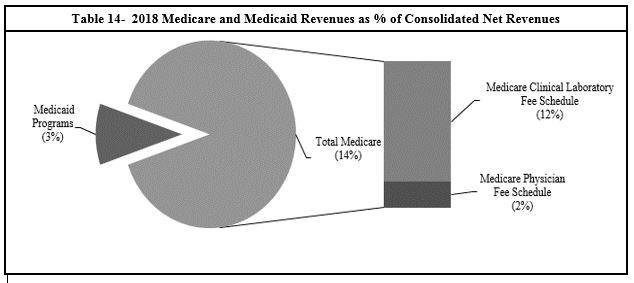
Employees. At December 31, 2018, we employed approximately 46,000 people. This total excludes employees of the joint ventures where we do not have a majority ownership interest. We have no collective bargaining agreements with unions covering employees in the United States, and we believe that our overall relations with our employees are good.
REGULATION
Key Regulatory Schemes. Our businesses are subject to or impacted by extensive and frequently changing laws and regulations in the United States (at both the federal and state levels) and the other jurisdictions in which we conduct business, including some particular to our business and others relating to conducting business generally (e.g., U.S. Foreign Corrupt Practices Act). We also are subject to inspections and audits by governmental agencies. The table below highlights key regulatory schemes applicable to our businesses.
| Table 15 - Key Regulatory Schemes | |
| CLIA and State Clinical Laboratory Licensing | CLIA regulates the operations of virtually all clinical laboratories, requiring that they be certified by the federal government and that they comply with various technical, operational, personnel and quality requirements intended to ensure that the services provided are accurate, reliable and timely. State laws may require additional personnel qualifications or licenses, quality control, record maintenance, proficiency testing or detailed review of our scientific method validations and technical procedures for certain tests. Violations of these laws and regulations may result in monetary fines, criminal and civil penalties and/or suspension or exclusion from participation in Medicare, Medicaid and other federal or state healthcare programs. |
| Medicare and Medicaid; Fraud and Abuse | Diagnostic testing services provided under Medicare and Medicaid programs are subject to complex, evolving, stringent and frequently ambiguous federal and state laws and regulations, including those relating to billing, coverage and reimbursement. Anti-kickback laws and regulations prohibit making payments or furnishing other benefits to influence the referral of tests billed to Medicare, Medicaid or certain other federal or state healthcare programs. In addition, federal and state anti-self-referral laws generally prohibit Medicare and Medicaid payments for clinical tests referred by physicians who have an ownership or investment interest in, or a compensation arrangement with, the testing laboratory, unless specific exceptions are met. Federal substance abuse legislation enacted in 2018 contains anti-kickback provisions that are, by their terms, applicable to laboratory testing paid for by all payers. We are attempting to clarify the application of that legislation. Some states have similar laws that are not limited in applicability to only Medicare and Medicaid referrals and could also affect tests that are paid for by health plans and other non-governmental payers. Violations of these laws and regulations may result in monetary fines, criminal and civil penalties and/or suspension or exclusion from participation in Medicare, Medicaid and other federal or state healthcare programs. |
| FDA | The FDA has regulatory responsibility over, among other areas, instruments, software, test kits, reagents and other devices used by clinical laboratories to perform diagnostic testing in the United States. The FDA also regulates drugs-of-abuse testing for employers and insurers, testing for blood bank purposes and testing of donors of human cells for purposes such as in vitro fertilization. A number of advanced tests we develop internally are offered as LDTs. The FDA has claimed regulatory authority over all LDTs, but has stated that it exercised enforcement discretion with regard to most LDTs performed by high complexity CLIA-certified laboratories. Pursuant to the 21st Century Cures Act, the FDA issued guidance regarding its position on the regulation of clinical decision software, which may be used in, or in connection with, LDTs. The guidance attempts to address uncertainty regarding whether FDA approval of certain software is required. In January 2019 the FDA issued a draft guidance on a pre-certification pilot program to help software developers have a speedier and less restrictive path to clearance or approval of their software. In late 2018, legislation was introduced in Congress that would enable the FDA to regulate LDTs, in vitro diagnostics, software and other items used in the diagnosis of disease. If this legislation were to become law, the FDA could regulate diagnostic tests and components and platforms used as part of these tests. If such legislation were to become law, it could have a significant impact on the clinical laboratory testing industry, including regulating LDTs in new ways and creating avenues of opportunity and competition regarding clinical laboratory testing. New competitors may enter the industry, and competition may come in new forms. |
| Environmental, Health and Safety | We are subject to laws and regulations related to the protection of the environment, the health and safety of employees and the handling, transportation and disposal of medical specimens, infectious and hazardous waste and radioactive materials. For example, the U.S. Occupational Safety and Health Administration has established extensive requirements relating specifically to workplace safety for healthcare employers in the U.S. This includes requirements to develop and implement multi-faceted programs to protect workers from exposure to blood-borne pathogens, including preventing or minimizing any exposure through needle stick injuries. For purposes of transportation, some biological materials and laboratory supplies are classified as hazardous materials and are subject to regulation by one or more of the following agencies: the U.S. Department of Transportation, the U.S. Public Health Service, the U.S. Postal Service and the International Air Transport Association. |
| Physicians | Our pathologists are required to hold a valid license to practice medicine in the jurisdiction in which they practice. Many of our pathologists enter into an employment agreement. These agreements have varying terms, but generally can be terminated at any time, upon advance notice. Most of the agreements contain covenants generally limiting the activities of the pathologist within a defined geographic area for a limited period of time after termination of employment; the enforceability of these covenants may be limited under state law. Several jurisdictions, including some in which our businesses are located, prohibit business corporations from engaging in the practice of medicine. In certain jurisdictions, business corporations are prohibited from employing licensed healthcare professionals to provide services on behalf of the corporation; these laws vary. In some jurisdictions, anatomic pathology services are delivered through physician-owned entities that employ the practicing pathologists. The manner in which licensed physicians can be organized to perform medical services may be governed by the laws of the jurisdictions in which medical services are provided and by the medical boards or other entities authorized by these jurisdictions to oversee the practice of medicine. |
| Privacy and Security of Health and Personal Information | We are subject to laws and regulations regarding protecting the security and privacy of certain healthcare and personal information, including: (a) the federal Health Insurance Portability and Accountability Act and the regulations thereunder, which establish (i) a complex regulatory framework including requirements for safeguarding protected health information and (ii) comprehensive federal standards regarding the uses and disclosures of protected health information; (b) state laws; and (c) the European Union's General Data Protection Regulation. A healthcare provider may be subject to penalties for non-compliance and may be required to notify individuals or state, federal or county governments if the provider discovers certain breaches of personal information or protected health information. |
| Drug Testing; Controlled Substances | All U.S. laboratories that perform drug testing for certain public sector employees and employees of certain federally regulated businesses are required to be certified as meeting the detailed performance and quality standards of the Substance Abuse and Mental Health Services Administration. To obtain access to controlled substances used to perform drugs-of-abuse testing in the United States, laboratories must be licensed by the Drug Enforcement Administration. |
Compliance. We strive to conduct our business in compliance with all applicable laws and regulations. We license and maintain appropriate accreditations for all of our laboratories and, where applicable, patient service centers, as required by the appropriate federal and state agencies. We have a long-standing and well-established compliance program. The Quality, Safety and Compliance Committee of our Board of Directors oversees, and receives periodic management reports regarding, our compliance program. Our program includes detailed policies and procedures and training programs intended to ensure the implementation and observance of all applicable laws and regulations (including regarding billing and reimbursement) and Company policies. Further, we conduct in-depth reviews of procedures and facilities to assure regulatory compliance throughout our operations. We conduct annual training of our employees on these compliance policies and procedures.
As an integral part of our billing compliance program, we investigate reported or suspected failures to comply with federal and state healthcare reimbursement requirements. Any Medicare or Medicaid overpayments resulting from non-compliance are refunded by us. As a result of these efforts, we have periodically identified and reported overpayments, refunded the payers for overpayments and taken appropriate corrective action.
Many of the laws and regulations applicable to us, including many of those relating to billing and reimbursement for tests and relationships with clinicians and hospitals, are vague or indefinite or have not been interpreted by the courts. The applicability or interpretation of laws and regulations also may not be clear in light of emerging changes in clinical testing science, healthcare technology and healthcare organizations. They may be interpreted or applied by a prosecutorial, regulatory or judicial authority in a manner that could require us to make changes in our operations, including our pricing and/or billing practices. Such occurrences, regardless of their outcome, could, among other things:
| • | increase our administrative, billing or other operating costs; |
| • | decrease the amount of reimbursement related to diagnostic information services performed; |
| • | damage our reputation; or |
| • | adversely affect important business relationships with third parties. |
Violations of laws relating to billing government healthcare programs or federal and state fraud and abuse laws may result in civil and criminal fines and penalties, exclusion from participation in governmental healthcare programs and the loss of various licenses, certificates and authorizations necessary to operate our business, as well as incur additional liabilities from third-party claims, all of which could have a material adverse effect on our business. Certain violations of these laws may also provide the basis for a civil remedy under the federal False Claims Act, including fines and damages of up to three times the amount claimed. The qui tam provisions of the federal False Claims Act and similar provision in certain state false claims acts allow private individuals to bring lawsuits against healthcare companies on behalf of government payers, private payers and/or patients alleging inappropriate billing practices.
The federal or state governments may bring claims based on our current practices, which we believe are lawful. The federal and state governments have substantial leverage in negotiating settlements since the amount of potential damages and fines far exceeds the rates at which we are reimbursed, and the government has the remedy of excluding a non-compliant provider from participation in the Medicare and Medicaid programs. We believe that federal and state governments continue aggressive enforcement efforts against perceived healthcare fraud. Legislative provisions relating to healthcare fraud and abuse provide government enforcement personnel with substantial funding, powers, penalties and remedies to pursue suspected cases of fraud and abuse.
AVAILABLE INFORMATION
The Securities and Exchange Commission (the “SEC”) maintains an internet site, www.sec.gov, that contains annual, quarterly and current reports, proxy and information statements and other information that issuers file electronically with the SEC. We file reports, proxy statements and other information with the SEC; our filings are available to the public at the SEC's internet site.
Our internet address is www.QuestDiagnostics.com. You can access our Investor Relations webpage at www.QuestDiagnostics.com/investor. The information on our website is not incorporated by reference into this Report. We make available free of charge, on or through our Investor Relations webpage, our proxy statements, Annual Report on Form 10-K, Quarterly Reports on Form 10-Q, Current Reports on Form 8-K and any amendments to those reports filed or furnished pursuant to the Securities Exchange Act of 1934, as amended (the “Exchange Act”), as soon as reasonably practical after such material is filed with, or furnished to, the SEC.
We also have a webpage, www.QuestDiagnostics.com/governance, that provides information about our corporate governance, including the following information.
| Table 16 - Information Available at Our Corporate Governance Webpage | |
| • Directors | • Corporate Governance Guidelines |
| • Composition of the committees of our Board of Directors | • Code of Ethics |
| • Senior management | • Certificate of Incorporation |
| • Charters for the standing committees of our Board of Directors | • Bylaws |
| • Information about our corporate political contributions | • Values |
| • Statements of beneficial ownership of our equity securities filed by our directors, officers and others under Section 16 of the Exchange Act |
EXECUTIVE OFFICERS OF THE COMPANY
The following persons serve as executive officers of the Company.
| Table 17 - Executive Officers | |
| Name, Age, Title | Background |
| Stephen H. Rusckowski (61) Chairman of the Board, President and Chief Executive Officer | Mr. Rusckowski joined the Company in May 2012 as President and Chief Executive Officer and became Chairman of the Board on January 1, 2017. From October 2006 until he joined the Company, he was Chief Executive Officer of Philips Healthcare, the largest unit of Royal Philips Electronics, and a member of the Board of Management of Royal Philips Electronics and its Executive Committee. Previously, he was CEO of the Imaging Systems business of Royal Phillips Electronics. Before joining Philips in 2001, Mr. Rusckowski held numerous management positions with the healthcare division of Hewlett-Packard/Agilent Technologies. Mr. Rusckowski has been a director of the Company since May 2012. He was a director of Xerox Corporation from February 2015 to 2018, and a director of Covidien plc from December 2013 to January 2015. Mr. Rusckowski served as Chairman of the American Clinical Laboratory Association from 2013 to 2016. |
| Everett V. Cunningham (52) Senior Vice President, Commercial | Mr. Cunningham is responsible for the commercial organization for the Company's Diagnostic Information Services business. Prior to joining the Company in October 2012, he spent 21 years with Pfizer, Inc., where he served from June 2011 to October 2012 as Regional President, Established Products, Asia. From 2009 to 2011, Mr. Cunningham served as Regional President, West Business Unit, Primary Care. From 2007 to 2009, he served as Vice President, Human Resources, Corporate Groups. Before that Mr. Cunningham served Pfizer in a series of sales and leadership and general management roles. |
| James E. Davis (56) Executive Vice President, General Diagnostics | In January 2017, Mr. Davis became Executive Vice President, General Diagnostics; previously he was Senior Vice President and Group Executive - Regional Businesses. In January 2015, he assumed responsibility for the general management of the Company's regional Diagnostic Information Services business. Mr. Davis was responsible for our products business from February 2014 until 2016. From February 2014 to January 2015, he was responsible for operations for the Company's Diagnostic Information Services business. He joined Quest Diagnostics in April 2013 as Senior Vice President, Diagnostics Solutions, with responsibility for the healthcare information technology, risk assessment, clinical trials, diagnostic products and employer solutions businesses. Prior to joining Quest Diagnostics, from March 2012 to April 2013, Mr. Davis served as Lead Director, and then as Chief Executive Officer, of InSightec, Inc., a medical device company that designs and develops ultrasound ablation devices that are guided by magnetic resonance imaging systems. Previously, Mr. Davis held a number of senior positions in General Electric’s healthcare business, including from 2007 to 2012 as Vice President and General Manager of GE Healthcare’s magnetic resonance imaging business. Prior to joining GE Healthcare, Mr. Davis held leadership positions in GE’s aviation business and led the development of strategic and operational improvement initiatives for clients of McKinsey & Company, Inc. |
| Catherine T. Doherty (56) Senior Vice President and Group Executive - Clinical Franchise Solutions and Marketing | Since January 2013, Ms. Doherty has been responsible for overseeing the development of clinical franchise solutions in the areas of general health and wellness, cardiovascular, metabolic and endocrinology, infectious disease and immunology, and prescription drug monitoring and toxicology, as well as enterprise-wide marketing. Ms. Doherty is also responsible for the employer solutions and risk assessment businesses. Additionally, in October 2018, QuestDirect, our consumer initiated testing platform was launched under her leadership. She also was responsible for clinical franchise solutions in the areas of neurology and women's health from January 2013 to January 2017 and for the healthcare information technology business from February 2014 to January 2017. From May 2011 to December 2012, she served as Senior Vice President, Physician Services. Prior to May 2011, Ms. Doherty held a variety of positions of increasing responsibility since joining the Company in 1990, including Vice President, Hospital Services; Vice President, Office of the Chairman; Vice President, Finance and Administration for the Hospital business; Vice President, Communications and Investor Relations; and Chief Accounting Officer. |
| Carrie Eglinton Manner (44) Senior Vice President, Advanced Diagnostics | Ms. Eglinton Manner joined the Company in January 2017. She is responsible for the Company's advanced testing activities, including overseeing the development of clinical franchise solutions in the areas of neurology, oncology and women's health. Previously, Ms. Eglinton Manner spent over 20 years in various leadership roles in healthcare businesses at General Electric. From 2015 to 2016, she served as President and CEO of the Detection and Guidance Solutions business, delivering advanced x-ray technologies spanning the continuum of healthcare. From 2013 to 2015, Ms. Eglinton Manner served as President and CEO of OEC Surgical Mobile C-arm systems. She was President and CEO of General Electric's diagnostic pathology laboratory services business from 2012 to 2013, and President of the Maternal Infant Care Business from 2009 to 2012. |
| Mark J. Guinan (57) Executive Vice President and Chief Financial Officer | Mr. Guinan joined the Company in July 2013. From 2010 until joining Quest Diagnostics in 2013, he served as Chief Financial Officer for Hill-Rom Holdings Inc., a manufacturer and provider of medical technologies and related services for the health care industry. Mr. Guinan has served as a director of Myovant Sciences, Ltd. since July 2018. Previously, he had served in a number of finance and operations roles in a long career at Johnson & Johnson including 2009 to 2010 as Vice President, Chief Procurement Officer, and 2005 to 2009 as Vice President, Group Finance Pharmaceuticals. Before joining Johnson & Johnson in 1997, he held a number of financial roles at Procter & Gamble. |
| Michael E. Prevoznik (57) Senior Vice President and General Counsel | Mr. Prevoznik joined the Company as Vice President and General Counsel in August 1999. In 2003, he assumed responsibility for governmental affairs. From 1999 until April 2009, Mr. Prevoznik also had responsibility for the Company's Compliance Department. In addition, from April 2011 to January 2017, he had management responsibility for the Company's diagnostic information services activities outside the U.S., and from April 2011 to January 2013, he had management responsibility for the Company's clinical trials business. Prior to joining the Company, Mr. Prevoznik served in positions of increasing responsibility within the compliance organization at SmithKline Beecham, most recently as Vice President, Compliance, with responsibility for coordinating all SmithKline Beecham compliance activities worldwide. |
Previous: Cover and table of contents · Next: Item 1A. Risk Factors