 filings.tools
Item 1. BUSINESS
72K characters. Original on sec.gov · Markdown
Item 1. BUSINESS
General
Danaher is a global science and technology innovator committed to helping customers solve complex challenges and improving quality of life around the world. Danaher is comprised of more than 20 operating companies with leadership positions in the biotechnology, life sciences, diagnostics, environmental and applied sectors, organized under four segments (Biotechnology; Life Sciences; Diagnostics; and Environmental & Applied Solutions). United by the DANAHER BUSINESS SYSTEM (“DBS”), our businesses are also typically characterized by a high level of products and services that are sold on a recurring basis, primarily through a direct sales model and to a geographically diverse customer base. Our business’ research and development, manufacturing, sales, distribution, service and administrative facilities are located in more than 60 countries.
Danaher strives to create shareholder value primarily through three strategic priorities:
-
strengthening our competitive advantage through consistent application of DBS tools;
-
enhancing our portfolio in attractive science and technology markets through strategic capital allocation; and
-
consistently attracting and retaining exceptional talent.
Danaher measures its progress against these strategic priorities over the long-term based primarily on financial metrics relating to revenue growth, profitability, cash flow and capital returns, as well as certain non-financial metrics. To further the strategic objectives set forth above, the Company also acquires businesses and makes investments that either complement its existing business portfolio or expand its portfolio into new and attractive markets. Given the rapid pace of technological development and the specialized expertise typical of Danaher’s served markets, acquisitions, strategic alliances and investments provide the Company access to important new technologies and domain expertise. Danaher believes there are many acquisition and investment opportunities available within its targeted markets. The extent to which we identify, consummate and effectively integrate appropriate acquisitions and consummate appropriate investments affects our overall growth and operating results. Danaher also continually assesses the strategic fit of its existing businesses and may separate or otherwise dispose businesses based on strategic and other considerations. In particular, we have announced our intention to separate Danaher’s Environmental & Applied Solutions segment to create a publicly-traded company in the fourth quarter of 2023, subject to the satisfaction of customary conditions, including obtaining final approval from the Danaher Board of Directors, satisfactory completion of financing and receipt of tax opinions, favorable rulings from the Internal Revenue Service and other regulatory approvals.
DBS is not only the set of business processes and tools our operating companies use on a daily basis, but is more broadly our culture. As reflected in our logo, DBS features five core values (the “Core Values”):
1.The Best Team Wins
2.Customers Talk, We Listen
3.Kaizen is our Way of Life
4.Innovation Defines our Future
5.We Compete for Shareholders
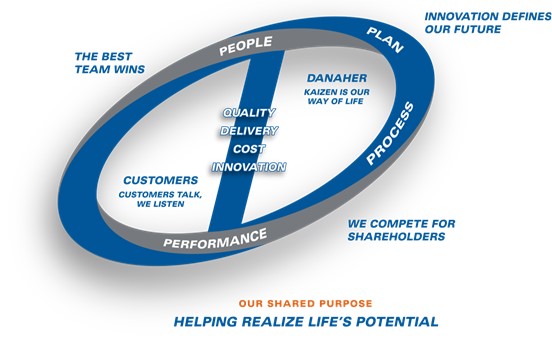
Underpinned by these five Core Values as well as our Shared Purpose – Helping Realize Life’s Potential, the DBS tools are organized into four pillars that are designed to apply to every aspect of our business: Growth, Lean, Leadership and the DBS Fundamentals.
The idea for Danaher originated in the early 1980s when the Company’s founders, Steven M. and Mitchell P. Rales, envisioned a business that would generate sustainable long-term value for customers, associates and shareholders. Through a series of acquisitions and divestitures, Danaher has evolved over time into the science and technology innovator it is today. While the operating companies that make up Danaher have changed, DBS continues to be the guiding philosophy for the Company.
Sales in 2022 by geographic destination (geographic destination refers to the geographic area where the final sale to the Company’s unaffiliated customer is made) as a percentage of total 2022 sales were: North America, 44% (including 42% in the United States); Western Europe, 22%; other developed markets, 5%; and high-growth markets, 29%. The Company defines North America as the United States and Canada. The Company defines high-growth markets as developing markets of the world experiencing extended periods of accelerated growth in gross domestic product and infrastructure which include Eastern Europe, the Middle East, Africa, Latin America (including Mexico) and Asia (with the exception of Japan, Australia and New Zealand). The Company defines developed markets as all markets of the world that are not high-growth markets.
BIOTECHNOLOGY
The Biotechnology segment includes the bioprocessing and discovery and medical businesses and offers a broad range of tools, consumables and services that are primarily used by customers to advance and accelerate the research, development, manufacture and delivery of biological medicines. The biotherapeutics that the Company’s solutions support range from replacement therapies such as insulin, vaccines, recombinant proteins and other biologic drugs, to novel cell, gene, mRNA and other nucleic acid therapies. Sales in 2022 for this segment by geographic destination (as a percentage of total 2022 sales) were: North America, 35%; Western Europe, 30%; other developed markets, 4%; and high-growth markets, 31%.
Danaher established the Biotechnology segment, which was previously part of the former Life Sciences segment, in 2022. The Biotechnology segment includes the Pall life sciences business, acquired in 2015, and Cytiva, acquired in 2020.
The Biotechnology segment consists of the following businesses:
Bioprocessing—The bioprocessing business is a leading provider of technologies, consumables, services and solutions that advance, accelerate and integrate the development and manufacture of therapeutics. These therapeutics include protein-based and other biological therapies as well as a new emerging class of highly-targeted therapies such as cell and gene therapies, nucleic acid-based therapies, and others requiring viral vectors and lipid nanoparticles in their manufacture. The business offers tools, solutions and services to support biomanufacturers across their workflows from the earliest stages of process development to large scale commercial and turn-key manufacturing. The bioprocessing business’ offering includes cell line and cell culture media development services; cell culture media, process liquids and buffers for manufacturing, chromatography
resins, filtration technologies, aseptic fill finish, as well as single-use hardware and consumables and services such as the design and installation of full manufacturing suites. The bioprocessing business’ offering in data connectivity and automation, advanced process training, process development services and equipment services for maintaining continuous performance, all help to ensure customers’ processes are optimized and compliant. Typical users of these products and services include pharmaceutical and biopharmaceutical companies, translational medicine institutions, biotechnology companies and contract manufacturing organizations.
Discovery and Medical—The discovery and medical business is a leading provider of solutions to accelerate biotherapeutic research and discovery through high quality sample preparation, and reliable diagnostic assays in addition to ensuring sterility and safety in medical liquids and gasses. The business provides solutions and technologies for: lab filtration, separation, and purification; lab-scale protein purification and analytical tools to support bio-molecular analysis, identification, and characterization; reagents, membranes and services for diagnostic and assay development; and healthcare filtration solutions for drug delivery and patient care that help minimize patient risk from viral infections in clinical settings. Typical users of these products include professionals in the areas of academic, translational and commercial research, medical diagnostics, clinical care and biopharmaceutical development.
Customers served by the Biotechnology segment select products based on several factors, including product quality and reliability, the product’s capacity to enhance productivity and flexibility, innovation (particularly productivity and sensitivity improvements), product performance and ergonomics, access to an advanced technical expertise, service and support network and the other factors described under “—Competition.” The businesses in Danaher’s Biotechnology segment market their products and services under several key brands including CYTIVA and PALL. Manufacturing facilities are in North America, Europe, and Asia. The business sells to customers through direct sales personnel and independent distributors.
LIFE SCIENCES
The Life Sciences segment offers a broad range of instruments and consumables that are primarily used by customers to study the basic building blocks of life, including DNA and RNA, nucleic acid, proteins, metabolites and cells, in order to understand the causes of disease, identify new therapies, and test and manufacture new drugs, vaccines and gene editing technologies. Additionally, the segment provides products and consumables used to filter and remove contaminants from a variety of liquids and gases in many end-market applications. Sales in 2022 for this segment by geographic destination (as a percentage of total 2022 sales) were: North America, 45%; Western Europe, 20%; other developed markets, 7%; and high-growth markets, 28%.
Danaher established the life sciences business in 2005 through the acquisition of Leica Microsystems and has expanded the business through numerous subsequent acquisitions, including the acquisitions of AB Sciex and Molecular Devices in 2010, Beckman Coulter in 2011, Pall in 2015, Phenomenex in 2016, IDT in 2018 and Aldevron in 2021.
The Life Sciences segment consists of the following businesses:
Flow Cytometry, Genomics, Lab Automation, Centrifugation, Particle Counting and Characterization—The business offers workflow instruments and consumables that help researchers analyze genomic, protein and cellular information. Key product areas include sample preparation equipment such as centrifugation and consumables; liquid handling automation instruments and associated consumables; flow cytometry instrumentation and associated antibodies and reagents; particle counting and characterization instrumentation; and genomic sample preparation. Researchers use these products to study biological function in the pursuit of basic research, as well as therapeutic and diagnostic development. Typical users include pharmaceutical and biotechnology companies, universities, medical schools and research institutions and in some cases industrial manufacturers.
Mass Spectrometry—The mass spectrometry business is a leading global provider of high-end mass spectrometers as well as related consumables, software and services. Mass spectrometry is a technique for identifying, analyzing and quantifying elements, chemical compounds and biological molecules, individually or in complex mixtures. The mass spectrometers utilize various combinations of quadrupole, time-of-flight and ion trap technologies. The business’ mass spectrometer systems and related products are used in numerous applications such as drug discovery and clinical development of therapeutics as well as in basic research, clinical testing, food and beverage quality testing and environmental testing. The business’ global services network provides implementation, validation, training and maintenance to support customer installations around the world. Typical users of these mass spectrometry and related products include molecular biologists, bioanalytical chemists, toxicologists and forensic scientists as well as quality assurance and quality control technicians. The business also provides high-performance bioanalytical measurement systems, including capillary electrophoresis instruments, associated reagents, software and services. Typical users of these capillary electrophoresis instruments and related products are bioanalytical chemists and quality control technicians engaged in the development and manufacture of new biotherapeutics.
Microscopy—The microscopy business is a leading global provider of professional microscopes designed to capture, manipulate and preserve images and enhance the user’s visualization and analysis of microscopic structures. The Company’s microscopy products include laser scanning (confocal) microscopes, compound microscopes and related equipment, surgical and other stereo microscopes and specimen preparation products for electron microscopy. Typical users of these products include research, medical and surgical professionals operating in research and pathology laboratories, academic settings and surgical theaters.
Industrial Filtration—The filtration, separation and purification technologies business is a leading provider of products used to remove solid, liquid and gaseous contaminants from a variety of liquids and gases in industrial settings, primarily through the sale of filtration consumables and to a lesser extent systems that incorporate filtration consumables and associated hardware. The business’ core materials and technologies can be applied in many ways to solve complex fluid separation challenges and are sold across a wide array of applications. Virtually all of the raw materials, process fluids and waste streams that are found in industry are candidates for multiple stages of filtration, separation and purification. In addition, most of the machines used in complex production processes require filtration to protect sensitive parts from degradation due to contamination. The business’ technologies enhance the quality and efficiency of manufacturing processes and prolong equipment life in applications such as microelectronics, aircraft, oil refineries, power generation turbines, petrochemical plants and food and beverage plants. Within these segments, demand is driven by end-users and original equipment manufacturers seeking to improve product performance, increase production and efficiency, reduce operating costs, extend the life of their equipment, conserve water and meet environmental regulations. The business also serves the filtration needs of the food and beverage markets, helping customers ensure the quality and safety of their products while lowering operating costs and minimizing waste.
Genomic Consumables—The genomic consumables businesses are leading providers of custom nucleic acid products for the life sciences industry, primarily through the manufacture of custom DNA and RNA oligonucleotides and gene fragments utilizing a proprietary manufacturing ecosystem. The businesses have developed proprietary technologies for genomics applications such as next generation sequencing, CRISPR genome editing, qPCR, and RNA interference. Additionally, the businesses are a leading manufacturer of high-quality plasmid DNA, RNA and proteins. These products are used in the research, development and manufacture of gene and cell therapies, DNA and RNA vaccines and gene editing technologies. Typical users of these products include professionals in the areas of academic and commercial research, agriculture, medical diagnostics, pharmaceutical development, biotechnology companies and research institutions across discovery, clinical and commercial applications.
Customers served by the Life Sciences segment select products based on a number of factors, including product quality and reliability, the product’s capacity to enhance productivity, innovation (particularly productivity and sensitivity improvements), product performance and ergonomics, access to a service and support network and the other factors described under “—Competition.” The businesses in Danaher’s Life Sciences segment market their products and services under key brands including ALDEVRON, BECKMAN COULTER, IDT, LEICA MICROSYSTEMS, MOLECULAR DEVICES, PALL, PHENOMENEX and SCIEX. Manufacturing facilities are located in North America, Europe and Asia. The business sells to customers through direct sales personnel and independent distributors.
DIAGNOSTICS
The Diagnostics segment offers clinical instruments, reagents, consumables, software and services that hospitals, physicians’ offices, reference laboratories and other critical care settings use to diagnose disease and make treatment decisions. Sales in 2022 for this segment by geographic destination (as a percentage of total 2022 sales) were: North America, 51%; Western Europe, 17%; other developed markets, 4%; and high-growth markets, 28%.
Danaher established the diagnostics business in 2004 through the acquisition of Radiometer and expanded the business through numerous subsequent acquisitions, including the acquisitions of Vision Systems in 2006, Beckman Coulter in 2011, Iris International and Aperio Technologies in 2012, HemoCue in 2013, Devicor Medical Products in 2014, the clinical microbiology business of Siemens Healthcare Diagnostics in 2015 and Cepheid in 2016. The Diagnostics segment consists of the following businesses:
Core Lab - Clinical—The core lab-clinical business is a leading manufacturer and marketer of biomedical testing instruments, systems and related consumables that are used to evaluate and analyze samples made up of body fluids and cells. The information generated is used to diagnose disease, monitor and guide treatment and therapy, assist in managing chronic disease and assess patient status in hospital, outpatient and physicians’ office settings. The business offers the following products.
-
Chemistry systems use electrochemical detection and chemical reactions with patient samples to detect and quantify substances of diagnostic interest in blood, urine and other body fluids. Commonly performed tests include glucose, cholesterol, triglycerides, electrolytes, proteins and enzymes, as well as tests to detect urinary tract infections and kidney and bladder disease.
-
Immunoassay systems also detect and quantify biochemicals of diagnostic interest (such as proteins and hormones) in body fluids, particularly in circumstances where more specialized diagnosis is required. Commonly performed immunoassay tests assess thyroid function, screen and monitor for cancer and cardiac risk and provide important information in fertility and reproductive testing.
-
Hematology products are used for cellular analysis. The business’ hematology systems use principles of physics, optics, electronics and chemistry to separate and interrogate cells of diagnostic interest and then characterize and quantify them, allowing clinicians to study formed elements in blood (such as red and white blood cells and platelets).
-
Microbiology systems are used for the identification of bacteria and antibiotic susceptibility testing (ID/AST) from human clinical samples. These systems detect and quantify bacteria related to microbial infections in urine, blood, and other body fluids, and also detect infections such as urinary tract infections, pneumonia and wound infections. The business’ technology enables direct testing of clinical isolates to ensure reliable detection of resistance to antibiotics.
-
Automation systems reduce manual operation and associated cost and errors from the pre-analytical through post-analytical stages, including sample barcoding/information tracking, centrifugation, aliquoting, storage and conveyance. These systems, along with the analyzers described above, are controlled through laboratory-level software that enables laboratory managers to monitor samples, results and lab efficiency.
Typical users of the segment’s core lab products include hospitals, physician’s offices, reference laboratories and pharmaceutical clinical trial laboratories.
Molecular Diagnostics—The molecular diagnostics business is a leading provider of biomedical testing instruments, systems and related consumables that enable DNA-based testing for organisms and genetic-based diseases in both clinical and non-clinical markets. These products integrate and automate the complicated and time-intensive steps associated with DNA-based testing (including sample preparation and DNA amplification and detection) to allow the testing to be performed in both laboratory and non-laboratory environments with minimal training and infrastructure. These products also include systems which commonly test for health care-associated infections, respiratory disease, sexual health and virology.
Acute Care Diagnostics—The acute care diagnostics business is a leading worldwide provider of instruments, software and related consumables and services that are used in both laboratory and point-of-care environments to rapidly measure critical parameters, including blood gases, electrolytes, metabolites and cardiac markers, as well as for anemia and high-sensitivity glucose testing. Typical users of these products include hospital central laboratories, intensive care units, hospital operating rooms, hospital emergency rooms, physician’s office laboratories and blood banks.
Pathology Diagnostics—The pathology diagnostics business is a leader in the anatomical pathology industry, offering a comprehensive suite of instrumentation and related consumables used across the entire workflow of a pathology laboratory. The anatomical pathology diagnostics products include chemical and immuno-staining instruments, reagents, antibodies and consumables; tissue embedding, processing and slicing (microtomes) instruments and related reagents and consumables; slide cover-slipping and slide/cassette marking instruments; imaging instrumentation including slide scanners, microscopes and cameras; software solutions to store, share and analyze pathology images digitally; and minimally invasive, vacuum-assisted breast biopsy and lesion excision instruments and breast surgery localization solutions. Typical users of these products include pathologists, lab managers and researchers.
Customers in the diagnostics industry select products based on a number of factors, including product quality and reliability, the scope of tests that can be performed, the accuracy and speed of the product, the product’s ability to enhance productivity, ease of use, total cost of ownership and access to a highly qualified service and support network as well as the other factors described under “—Competition.” The businesses in Danaher’s Diagnostics segment market their products and services under key brands including BECKMAN COULTER, CEPHEID, HEMOCUE, LEICA BIOSYSTEMS, MAMMATOME and RADIOMETER. Manufacturing facilities are located in North America, Europe, Asia and Australia. The business sells to customers primarily through direct sales personnel and, to a lesser extent, through independent distributors.
ENVIRONMENTAL & APPLIED SOLUTIONS
In September 2022, the Company announced its intention to spin-off its Environmental & Applied Solutions business into a publicly traded company. The transaction is expected to be tax-free to the Company’s shareholders. The Company is targeting to complete the EAS Separation in the fourth quarter of 2023, subject to the satisfaction of certain conditions, including obtaining final approval from the Danaher Board of Directors, satisfactory completion of financing, receipt of tax opinions, receipt of favorable rulings from the Internal Revenue Service (“IRS”) and receipt of other regulatory approvals.
The Environmental & Applied Solutions segment offers products and services that help protect precious resources and keep global food and water supplies safe. Sales in 2022 for this segment by geographic destination (as a percentage of total 2022
sales) were: North America, 46%; Western Europe, 22%; other developed markets, 3%; and high-growth markets, 29%. The Company’s Environmental & Applied Solutions segment consists of the following businesses:
Water Quality—The Company’s water quality business is a leading provider of instrumentation, consumables, software, services and disinfection systems to help analyze, treat and manage the quality of ultra-pure, potable, industrial, waste, ground, source and ocean water in residential, commercial, municipal, industrial and natural resource applications. Danaher entered the water quality sector in the late 1990’s through the acquisitions of Dr. Lange and Hach Company and has enhanced the geographic coverage and capabilities of its products and services through subsequent acquisitions, including the acquisition of Trojan Technologies Inc. in 2004 and ChemTreat, Inc. in 2007. The water quality business designs, manufactures and markets:
-
a wide range of analytical instruments, related consumables, software and services that detect and measure chemical, physical and microbiological parameters in ultra-pure, potable, industrial, waste, municipal, ground, source and ocean water;
-
chemical treatment solutions intended to address corrosion, scaling and biological growth problems in boiler, cooling water and wastewater applications as well as associated analytical services, primarily in applied and industrial end markets; and
-
ultraviolet disinfection systems, consumables and services, which disinfect billions of gallons of municipal, industrial and consumer water every day.
Typical users of these products and services include professionals in municipal drinking water and wastewater treatment plants, industrial process and discharge water facilities, wastewater treatment facilities, third-party testing laboratories and environmental operations. Customers in these industries choose suppliers based on a number of factors including the customer’s existing supplier relationships, application expertise, product performance and ease of use, the comprehensiveness of the supplier’s solutions offering, after-sales service and support and the other factors described under “—Competition.” The Company’s water quality businesses provide products under a variety of key brands, including AQUATIC INFORMATICS, CHEMTREAT, HACH, MCCROMETER, OTT HYDROMET, SEA-BIRD and TROJAN TECHNOLOGIES. Manufacturing facilities are primarily located in North America, Europe and Asia. Sales are made through the business’ direct sales personnel, e-commerce, independent representatives and independent distributors.
Product Identification—The Company’s product identification business is a leading provider of printers, instruments, software, services and consumables for various color and appearance management, packaging design and quality management, packaging converting, printing, marking, coding and traceability applications for consumer, pharmaceutical and industrial products. Danaher entered the product identification market through the acquisition of Videojet in 2002, and has expanded the product and geographic coverage through various subsequent acquisitions, including the acquisitions of EskoArtwork in 2011 and X-Rite in 2012. The product identification business designs, manufactures and markets:
-
printers, consumables and solutions used to give products unique identities by printing date, lot and bar codes and other information on primary and secondary packaging, applying high-quality alphanumeric codes, logos and graphics to a wide range of surfaces at a variety of production line speeds, angles and locations on a product or package. Its vision inspection and track-and-trace solutions also help pharmaceutical and consumer goods manufacturers safeguard the authenticity of their products through supply chains.
-
software for online collaboration, three-dimensional virtualization, workflow automation, quality approvals and prepress processes to manage structural design, artwork creation, color and product information for branded packaging and marketing materials. Its packaging solutions help consumer goods manufacturers improve their business processes, shorten time to market and reduce costs across internal departments and external suppliers.
-
innovative color and appearance solutions through standards, software, measurement devices and related services. The business’ expertise in inspiring, virtualizing, selecting, specifying, formulating and measuring color and appearance helps users improve the quality and relevance of their products and reduce costs.
-
flexographic computer-to-plate imaging equipment, solutions for print process control, press control and quality assurance systems for the packaging, labels and commercial print industries. Its automation, print process and press control solutions help packaging manufacturers reduce lead time and satisfy their customers’ demands for smaller, more frequent print jobs.
Typical users of these products include manufacturers of consumer goods, pharmaceuticals, paints, plastics and textiles, retailers, graphic design firms and packaging printers and converters. Customers in these industries choose suppliers based on a number of factors, including domain experience, speed and accuracy, ease of connection to the internet and other software
systems, equipment uptime and reliable operation without interruption, ease of maintenance, service coverage and the other factors described under “—Competition.” The product identification business’ products are primarily marketed under key brands including AVT, ESKO, LAETUS, LINX, PANTONE, VIDEOJET and X-RITE. Manufacturing and software development facilities are located in North America, Europe, Latin America and Asia. Sales are generally made through the business’ direct sales personnel, independent distributors and e-commerce.
The following discussion includes information common to all of Danaher’s segments.
Materials
The Company’s manufacturing operations employ a wide variety of raw materials, including metallic-based components, electronic components, chemistries, OEM products, plastics and other petroleum-based products. Prices of oil and gas also affect the Company’s costs for freight and utilities and also have an indirect impact on the cost of other purchased materials. While the price of, and global instability with respect to the supply of, oil and gas did not materially, adversely affect the Company’s operations in 2022, the Company is continuing to monitor the oil and gas commodity markets and will seek to mitigate price and/or availability risks as needed. The Company purchases raw materials from a large number of independent sources around the world. No single supplier is material, although for some components that require particular specifications or regulatory or other qualifications there may be a single supplier or a limited number of suppliers that can readily provide such components. The Company utilizes a number of techniques to address potential disruption in and other risks relating to its supply chain, including in certain cases the use of safety stock, alternative materials and qualification of multiple supply sources.
The supply chain disruptions that began in 2021 for a number of our businesses continued in 2022 (including in some cases shortages of supply, cost inflation and shipping delays), as well as labor availability constraints and labor cost increases. Through the application of DBS tools and processes (including the implementation of price increases), the Company largely mitigated the impact of these pressures on the Company’s profitability and as a result these pressures did not have a material, adverse effect on the business in 2022. These pressures continue to varying degrees as of the date of this Annual Report. We are continuing to work with our suppliers to understand the existing and potential future impacts of these trends on our supply chain and we continue to take actions in an effort to mitigate such impacts, including purchasing components in the open market and qualifying additional suppliers. Due to the uncertainty regarding the duration and impact of these trends in 2023, there can be no assurance that these factors will not have an adverse impact on our business and financial statements in the future. For a further discussion of risks related to the materials and components required for the Company’s operations, refer to “Item 1A. Risk Factors.”
Russia-Ukraine Conflict
In response to the ongoing conflict in Ukraine, in addition to suspending sales prohibited by sanctions, the Company has suspended the shipment of products to Russia with the exception of products for the purposes of diagnosing and treating patients and producing vaccines and therapeutics. In the first quarter of 2022, the Company recorded a pretax charge of $43 million, primarily related to the impairment of accounts receivable and inventory, as well as accruals for contractual obligations related to Russian operations. Russia has significantly reduced the export of natural gas to Europe, creating upward pressure on natural gas prices and a reduced supply of natural gas. If this trend continues, the Company’s European manufacturing facilities could face increased costs and risks of production disruptions. The Company’s European customers and suppliers could experience similar adverse impacts, which could further adversely impact the Company’s supply chain and also adversely impact the demand for its products. The Company will continue monitoring the military, social, political, regulatory and economic environment in Ukraine and Russia and its broader impacts, and will consider further actions as appropriate. For a discussion of risks related to the Company’s operations as a result of the military conflict between Russia and Ukraine, refer to “Item 1A. Risk Factors.”
Intellectual Property
The Company owns numerous patents, trademarks, copyrights, trade secrets and licenses to intellectual property owned by others. Although in aggregate the Company’s intellectual property is important to its operations, the Company does not consider any single patent, trademark, copyright, trade secret or license (or any related group of any such items) to be of material importance to any segment or to the business as a whole. From time to time the Company engages in litigation to protect its intellectual property rights. For a discussion of risks related to the Company’s intellectual property, refer to “Item 1A. Risk Factors.” All capitalized brands and product names throughout this document are trademarks owned by, or licensed to, Danaher.
Competition
Although the Company’s businesses generally operate in highly competitive markets, the Company’s competitive position cannot be determined accurately in the aggregate or by segment since none of its competitors offer all of the same product and service lines or serve all of the same markets as the Company, or any of its segments, does. Because of the range of the products and services the Company sells and the variety of markets it serves, the Company encounters a wide variety of competitors, including well-established regional competitors, competitors who are more specialized than it is in particular markets, as well as large companies or divisions of large companies with substantial sales, marketing, research and financial capabilities. The Company is facing increased competition in a number of its served markets as a result of the entry of well-resourced companies into certain markets, the entry of competitors based in low-cost manufacturing locations, the development of competitive technologies by early-stage and emerging companies and increasing consolidation in particular markets. The number of competitors varies by product and service line. Management believes that the Company has a leadership position in many of the markets it serves. Key competitive factors vary among the Company’s businesses and product and service lines, but include the specific factors noted above with respect to each particular business and typically also include price, quality and safety, performance, delivery speed, application expertise, service and support, technology and innovation, distribution network, breadth of product, service and software offerings and brand name recognition. For a discussion of risks related to competition, refer to “Item 1A. Risk Factors.”
Human Capital
As of December 31, 2022, the Company had approximately 81,000 employees (whom we refer to as “associates”), of whom approximately 32,000 were employed in the North America, 25,000 in Western Europe, 3,000 in other developed markets and 21,000 in high-growth markets. Approximately 79,000 of the Company’s total employees were full-time and 2,000 were part-time employees. Of the United States employees, approximately 400 were hourly-rated, unionized employees. Outside the United States, the Company has government-mandated collective bargaining arrangements and union contracts in certain countries, particularly in Europe where many of the Company’s employees are represented by unions and/or works councils.
Danaher is committed to attracting, developing, engaging and retaining the best people from around the world to sustain and grow our science and technology leadership. As noted above, “Consistently attracting and retaining exceptional talent” is one of our three strategic priorities and “The Best Team Wins” is one of our five Core Values, reflecting the critical role our human capital plays in supporting our strategy. Our human capital strategy spans multiple, key dimensions, including the following:
- Culture and Governance**
◦Our culture is rooted in DBS and in our Shared Purpose, Helping Realize Life’s Potential. At its core, DBS reflects a commitment to use process to continuously improve every aspect of our business. Our Shared Purpose gives meaning and direction to our continuous improvement.
◦Danaher’s Board of Directors reviews the Company’s human capital strategy annually and at other times during the year in connection with significant initiatives and acquisitions, supported by the Compensation Committee’s oversight of our executive and equity compensation programs. At the management level, our Senior Vice President of Human Resources, who reports directly to our President and CEO, is responsible for the development and execution of the Company’s human capital strategy.
- Recruitment**
◦As part of our commitment to the Core Value “The Best Team Wins”, we focus on identifying, attracting and recruiting diverse talent to meet our current and future business needs. We have invested in comprehensive talent acquisition capabilities across all levels of recruitment (including robust branding, labor market analytics, advanced sourcing tools, leading technology and streamlined processes). Our diversity attraction efforts are an important component of our overall talent acquisition strategy and focus on: (1) establishing and fostering partnerships with diverse organizations, and (2) effectively sourcing diverse talent.
- Engagement**
◦General. Our engagement strategy focuses on developing the best workplace and best people leaders to meet our associates’ needs every day. Further, we believe that better associate engagement helps enable better retention and better business performance. We assess our engagement performance through our annual Associate Engagement Survey, which addresses engagement, direct supervisor effectiveness, behavior change and performance enablement, as well as through our voluntary turnover rate.
◦D + I. We seek to continuously improve and sustain a diverse and inclusive culture free of systemic bias and where all associates feel they belong. We believe a diverse workforce and culture of inclusion is essential to drive innovation, fuel growth and help ensure our technologies and products effectively serve a global customer base. Danaher’s Office of Diversity + Inclusion is led by our Vice President of Global Diversity + Inclusion, who is responsible for the execution of Danaher’s D+I strategy and reports to Danaher’s Senior Vice President of Human Resources. Both serve on the Danaher Diversity + Inclusion Council along with executives who lead our businesses. The D+I Council is responsible for overseeing Danaher’s D+I strategic direction; creating D+I accountability measures; and operationalizing D+I initiatives and programming across our businesses.
We have leveraged DBS with the goal of driving progress on diversity representation and inclusive culture, including by requiring all of our operating companies to implement a D+I Policy Deployment initiative in each of 2021, 2022 and 2023. Our D+I initiatives focus on broadening our candidate pools, sourcing diverse slates in the hiring process, developing people leaders’ competency in and accountability for D+I and implementing and sustaining programs (such as our Associate Resource Groups for Women, Black, Latinx, LGBTQ and Asian descent associates and friends/allies) that offer mentorship, support and engagement to help our associates succeed and thrive. As of December 31, 2022, (1) 38% of our total associates were female and females represented 32%, 34% and 39% of our executives/senior leaders, managers and individual contributors, respectively; and (2) 41% of our total U.S. associates were People of Color and People of Color represented 24%, 31% and 43% of our U.S. executives/senior leaders, managers and individual contributors, respectively.
◦In support of our D+I commitment, we conduct regular pay reviews from a race (in the United States) and gender (globally) perspective that serve to proactively identify and address potential pay differences. In 2020 we achieved base pay equity for women and for racial and ethnic minorities in the U.S. and in 2021 expanded the U.S. analysis to include both base pay and short-term incentive compensation.
- Retention
◦Compensation and Benefits. We are committed to offering competitive compensation and benefits, tailored in form and amount to geography, industry, experience and performance and designed to attract associates, motivate and reward performance, drive growth and support retention. We have a common job architecture across our businesses to provide a standardized framework for defining jobs, job families, and career levels, and set market-aligned pay structures for each career level (adjusted as appropriate for the particular job family, industry, and geography) based on a range of compensation surveys.
◦Performance Management. Performance for Growth (“P4G”), our annual performance management program, supports our high-performance culture by seeking to ensure that high-performing associates are recognized and rewarded for their contributions. P4G guides associates and their managers in setting clear personal performance goals aligned to our strategic priorities. Annual reviews under the program assess performance against these formal, annual objectives and against our Core Behaviors.
◦Talent Development and Career Mobility. Our talent development program (which is generally structured to consist of 70% on-the-job learning, 20% coaching and mentoring and 10% formal training) strives to provide every associate with appropriate development opportunities. In particular, we make available to people leaders at every level training, coaching and developmental resources to help them be effective leaders and advance their careers. We further encourage internal promotion and mobility through our Danaher Go program, which makes open positions throughout the organization visible to associates and proactively encourages our associates to seek promotional opportunities. We assess our performance in this area using metrics including internal fill rate (which tracks the percentages of open roles at particular levels filled by our own associates) as well as the percentage of eligible associates with completed talent assessments/career plans.
◦Safety and Risk Management. Associate safety is deeply embedded in our culture. Our Environment, Health and Safety (“EHS”) Policy establishes the core principles upon which our EHS management programs are built, and associates use our DBS-based “4E” toolkit to identify, assess and control hazards related to ergonomics, energetics, exposures and environment. In addition, we evaluate and manage risks relating to our human capital strategy as part of Danaher’s enterprise risk management program. Key quantitative measures that we use to assess performance in this category include total recordable incident rate (defined as the number of work-related injuries or illness cases serious enough to require treatment beyond first aid, per
100 associates) and days away, restricted or transferred (defined as the number of work-related injuries or illness cases that result in an employee working with physical restrictions, being away from work or unable to do their job or transferring to other work, per 100 associates).
The health and well-being of our associates has been a key area of focus in our response to the COVID-19 pandemic. We launched a global Employee Assistance Program in 2020 to ensure a consistent support structure for mental health and well-being across the Company and have since expanded the program to provide enhanced support with respect to childcare, eldercare and tutoring, among other areas. In the United States, we have provided benefits beyond the requirements of the Families First Act, for example by extending our leave policy to cover elder care and providing for voluntary leaves even in certain circumstances not required by the law. We have also implemented safety precautions on a facility-specific basis.
Research and Development (“R&D”)
The Company conducts R&D activities for the purpose of developing new products, enhancing the functionality, effectiveness, ease of use and reliability of its existing products and expanding the applications for which uses of its products are appropriate. The Company’s R&D efforts include internal initiatives and those that use licensed or acquired technology, and we work with a number of leading research institutions, universities and clinicians around the world to develop, evaluate and clinically test our products. The Company conducts R&D activities primarily in North America, Europe and Asia and generally on a business-by-business basis. The Company anticipates that it will continue to make significant expenditures for R&D as it seeks to provide a continuing flow of innovative products and services to maintain and improve its competitive position. For a discussion of the risks related to the need to develop and commercialize new products and product enhancements, refer to “Item 1A. Risk Factors.”
Government Contracts
Although the substantial majority of the Company’s revenue in 2022 was from customers other than governmental entities, each of Danaher’s segments has agreements relating to the sale of products to government entities. As a result, the Company is subject to various statutes and regulations that apply to companies doing business with governments. For a discussion of risks related to government contracting requirements, refer to “Item 1A. Risk Factors.” No material portion of Danaher’s business is subject to renegotiation of profits or termination of contracts at the election of a government entity.
Regulatory Matters
The Company faces extensive government regulation both within and outside the United States relating to the development, manufacture, marketing, sale and distribution of its products and services. The following sections describe certain significant regulations that the Company is subject to. These are not the only regulations that the Company’s businesses must comply with. For a description of the risks related to the regulations that the Company’s businesses are subject to, refer to “Item 1A. Risk Factors.”
Medical Device Regulations
Many of our products are classified as medical devices and are subject to restrictions under domestic and foreign laws, rules, regulations, self-regulatory codes, circulars and orders, including, but not limited to, the U.S. Food, Drug, and Cosmetic Act (the “FDCA”). The FDCA requires these products, when sold in the United States, to be safe and effective for their intended uses and to comply with the regulations administered by the U.S. Food and Drug Administration (“FDA”). The FDA regulates the design, development, research, preclinical and clinical testing, introduction, manufacture, advertising, labeling, packaging, marketing, distribution, import and export and record keeping for such products. Many medical device products are also regulated by comparable agencies in non-U.S. countries in which they are produced or sold.
Unless an exemption applies, the FDA requires that a manufacturer introducing a new medical device or a new indication for use of an existing medical device obtain either a Section 510(k) premarket notification clearance or a premarket approval (“PMA”) before introducing it into the U.S. market. The type of marketing authorization is generally linked to the classification of the device. The FDA classifies medical devices into one of three classes (Class I, II or III) based on the degree of risk the FDA determines to be associated with a device and the level of regulatory control deemed necessary to ensure the device’s safety and effectiveness.
The process of obtaining a Section 510(k) clearance generally requires the submission of performance data and clinical data, which in some cases can be extensive, to demonstrate that the device is “substantially equivalent” to a device that was on the market before 1976 or to a device that has been found by the FDA to be “substantially equivalent” to such a pre-1976 device. A predecessor device is referred to as “predicate device.” As a result, FDA clearance requirements may extend the development process for a considerable length of time.
Medical devices can be marketed only for the indications for which they are cleared or approved. After a device has received 510(k) clearance for a specific intended use, any change or modification that significantly affects its safety or effectiveness, such as a significant change in the design, materials, method of manufacture or intended use, may require a new 510(k) clearance or PMA approval and payment of an FDA user fee. The determination as to whether or not a modification could significantly affect the device’s safety or effectiveness is initially left to the manufacturer using available FDA guidance; however, the FDA may review this determination to evaluate the regulatory status of the modified product at any time and may require the manufacturer to cease marketing and recall the modified device until the required 510(k) clearance or PMA approval is obtained.
Any medical devices we manufacture and distribute are subject to pervasive and continuing regulation by the FDA and certain state and non-U.S. agencies. These include product listing and establishment registration requirements, which help facilitate inspections and other regulatory actions. As a medical device manufacturer, our manufacturing facilities are subject to inspection on a routine basis by the FDA. We are required to adhere to the Current Good Manufacturing Practices (“CGMP”) requirements, as set forth in the Quality Systems Regulation (“QSR”), which require manufacturers, including third-party manufacturers, to follow stringent design, testing, control, documentation and other quality assurance procedures during all phases of the design and manufacturing process.
We must also comply with post-market surveillance regulations, including medical device reporting (“MDR”) requirements which require that we review and report to the FDA any incident in which our products may have caused or contributed to a death or serious injury. We must also report any incident in which our product has malfunctioned if that malfunction would likely cause or contribute to a death or serious injury if it were to recur.
Labeling and promotional activities are subject to scrutiny by the FDA and, in certain circumstances, by the Federal Trade Commission (“FTC”) (and similar regulators in other jurisdictions). Medical devices approved or cleared by the FDA may not be promoted for unapproved or uncleared uses, otherwise known as “off-label” promotion. The FDA and other agencies actively enforce the laws and regulations prohibiting the promotion of off-label uses.
In the European Union (“EU”), our products are subject to the medical device and in vitro medical device laws of the various member states, which for many years were based on Directives of the European Commission. However, in May 2017, the EU adopted new, formal regulations to replace such Directives; specifically, the EU Medical Device Regulation (the “EU MDR”) and In Vitro Diagnostic Regulation (the “EU IVDR”), each of which imposes stricter requirements for the marketing and sale of medical devices and in vitro devices, including in the area of clinical evaluation requirements, quality systems and post-market surveillance. The EU regulations were adopted with staggered transitional periods that have since been updated. In January 2023, the European Commission endorsed a proposal to extend the original compliance dates for both MDR and EU IVDR, subject to approval by the European Parliament and European Council. The proposal would extend the current MDR transitional period deadline of May 2024 to 2027 or 2028, based upon the risk class of the device. The EU IVDR became fully applicable in May 2022, with transition periods for certain classes of in vitro diagnostic devices extending until 2027 and the EU Commission is considering additional extensions to the EU IVDR deadlines. Regulatory requirements in the United Kingdom (“UK”) are also changing as a result of Brexit (the UK’s withdrawal from the EU), and regulatory requirements in Switzerland are changing as a result of the country’s withdrawal from its Mutual Recognition Agreement with the EU Commission. Complying with the EU MDR, EU IVDR and the evolving regulatory regimes in the UK and Switzerland requires modifications to our quality management systems, additional resources in certain functions and updates to technical files, among other changes, which has not and is not expected to have a material impact on the Company’s financial results.
Other Healthcare Laws
We are also subject to the U.S. Foreign Corrupt Practices Act and various health care related laws regulating fraud and abuse, research and development, pricing and sales and marketing practices, and the privacy and security of health information, including the U.S. federal regulations described below. Many states, foreign countries and supranational bodies have also adopted laws and regulations similar to, and in some cases more stringent than, the U.S. federal regulations discussed above and below, including the UK Bribery Act and similar anti-bribery laws.
- Many of our healthcare-related products are purchased by healthcare providers that typically bill various third-party payers, such as governmental healthcare programs (e.g., Medicare, Medicaid and comparable non-U.S. programs), private insurance plans and managed care plans, for the healthcare services provided to their patients. The ability of our customers to obtain appropriate reimbursement for products and services from third-party payers is critical because it affects which products customers purchase and the prices they are willing to pay. As a result, many of our healthcare-related products are subject to regulation regarding quality and cost by the U.S. Department of Health and Human Services (“HHS”), including the Centers for Medicare & Medicaid Services (“CMS”), as well as comparable state and non-U.S. agencies responsible for reimbursement and regulation of healthcare goods and services, including
laws and regulations related to kickbacks, false claims, self-referrals and healthcare fraud. Third-party payers are increasingly reducing reimbursements for medical products and services and, in international markets, many countries have instituted price ceilings on specific products and therapies. Price ceilings, decreases in third-party reimbursement for any product or a decision by a third-party payor not to cover a product could reduce usage and patient demand for the product.
-
The U.S. Federal Anti-Kickback Statute prohibits persons from knowingly and willfully soliciting, offering, receiving or providing remuneration (including any kickback or bribe), directly or indirectly, in exchange for or to induce either the referral of an individual, or the furnishing or arranging for a good or service, for which payment may be made in whole or in part under a federal health care program, such as Medicare or Medicaid. A person or entity does not need to have actual knowledge of the statute or specific intent to violate it in order to have committed a violation.
-
The Health Insurance Portability and Accountability Act of 1996 (“HIPAA”) prohibits knowingly and willfully (1) executing, or attempting to execute, a scheme to defraud any health care benefit program, including private payors, or (2) falsifying, concealing or covering up a material fact or making any materially false, fictitious or fraudulent statement in connection with the delivery of or payment for health care benefits, items or services. In addition, HIPAA, as amended by the Health Information Technology for Economic and Clinical Health Act of 2009, also restricts the use and disclosure of patient identifiable health information, mandates the adoption of standards relating to the privacy and security of patient identifiable health information and requires the reporting of certain security breaches with respect to such information. Similar to the U.S. Federal Anti-Kickback Statute, a person or entity does not need to have actual knowledge of the healthcare fraud statute implemented under HIPAA or specific intent to violate it in order to have committed a violation.
-
The False Claims Act imposes liability on any person or entity that, among other things, knowingly presents, or causes to be presented, a false or fraudulent claim for payment by a federal health care program, knowingly makes, uses or causes to be made or used, a false record or statement material to a false or fraudulent claim, or knowingly makes a false statement to avoid, decrease or conceal an obligation to pay money to the U.S. federal government. The qui tam provisions of the False Claims Act allow a private individual to bring actions on behalf of the federal government alleging that the defendant has submitted a false claim to the federal government, and to share in any monetary recovery. In addition, the government may assert that a claim including items and services resulting from a violation of the U.S. Federal Anti-Kickback Statute constitutes a false or fraudulent claim for purposes of the civil False Claims Act.
-
The federal Civil Monetary Penalties Law prohibits, among other things, the offering or transferring of remuneration to a Medicare or Medicaid beneficiary that the person knows or should know is likely to influence the beneficiary’s selection of a particular supplier of Medicare or Medicaid payable items or services.
-
The Open Payments Act requires manufacturers of medical devices covered under Medicare, Medicaid or the Children’s Health Insurance Program (subject to certain exceptions) to record payments and other transfers of value to a broad range of healthcare providers and teaching hospitals and to report this data as well as ownership and investment interests held by the physicians described above and their immediate family members to HHS for subsequent public disclosure. Similar reporting requirements have also been enacted on the state level, and an increasing number of countries either have adopted or are considering similar laws requiring transparency of interactions with health care professionals.
In addition, some of the in vitro diagnostic drugs-of-abuse assays and reagents sold by the Company’s subsidiaries contain small amounts of controlled substances, and as a result some of the Company’s facilities are inspected periodically by the United States Drug Enforcement Administration to assess whether the Company properly handles, stores and disposes of controlled substances in the manufacture of those products.
Federal consumer protection and unfair competition laws broadly regulate marketplace activities and activities that potentially harm consumers. Analogous U.S. state laws and regulations, such as state anti-kickback and false claims laws, also may apply to our business practices, including but not limited to, research, distribution, sales and marketing arrangements and claims involving healthcare items or services reimbursed by any third-party payor, including private insurers. Further, there are state laws that require medical device manufacturers to comply with the voluntary compliance guidelines and the relevant compliance guidance promulgated by the U.S. federal government, or otherwise restrict payments that may be made to healthcare providers and other potential referral sources; state laws and regulations that require manufacturers to file reports relating to pricing and marketing information, which requires tracking gifts and other remuneration and items of value provided to healthcare professionals and entities; state and local laws requiring the registration of sales representatives; and state laws governing the privacy and security of health information in certain circumstances, many of which differ from each other in significant ways and often are not preempted by HIPAA.
For a discussion of risks related to regulation by the FDA and comparable agencies of other countries, and the other regulatory regimes referenced above, please refer to “Item 1A. Risk Factors.”
Healthcare Reform
In the U.S. and certain non-U.S. jurisdictions, there have been, and we expect there will continue to be, a number of legislative and regulatory changes to the healthcare system. There is significant interest in promoting changes in healthcare systems with the stated goals of containing healthcare costs, improving quality or expanding access. For example, in the United States, in March 2010, the U.S. Patient Protection and Affordable Care Act (as amended by the Health Care and Education Affordability Reconciliation Act) (collectively, the “PPACA”) was signed into law, which substantially changed the way healthcare is financed by both governmental and private insurers and significantly affected the healthcare industry. Since its enactment, there have been judicial, Congressional and executive challenges to certain aspects of the PPACA, and there may be additional challenges and amendments to the PPACA in the future.
Moreover, there has recently been heightened governmental scrutiny over the manner in which manufacturers set prices for their marketed products, which has resulted in several Congressional inquiries and proposed and enacted legislation designed, among other things, to bring more transparency to product pricing, review the relationship between pricing and manufacturer patient programs and reform government program reimbursement methodologies for medical products. Individual states in the U.S. have also become increasingly active in implementing regulations designed to control product pricing, including price or patient reimbursement constraints, discounts, restrictions on certain product access and marketing cost disclosure and transparency measures and, in some cases, mechanisms to encourage importation from other countries and bulk purchasing.
Data Privacy and Security Laws
As a global organization, we are subject to data privacy and security laws, regulations, and customer-imposed controls in numerous jurisdictions as a result of having access to and processing confidential, personal and/or sensitive data in the course of our business. For example, the European Union’s General Data Protection Regulation (“GDPR”) imposes significant restrictions on how we collect, transmit, process and retain personal data, including, among other things, in certain circumstances a requirement for almost immediate notice of data breaches to supervisory authorities with significant fines for non-compliance. In the U.S., HIPAA privacy and security rules require certain of our operations to maintain controls to protect the availability and confidentiality of patient health information, individual states regulate data breach and security requirements, and multiple governmental bodies assert authority over aspects of the protection of personal privacy. State privacy laws in California impose some of the same features as the GDPR and have prompted several other states to enact similar laws. Additionally, a bipartisan bill under consideration in Congress would, if adopted, impose broad privacy requirements at the federal level. Several other countries such as China and Russia have passed, and other countries are considering passing, privacy laws that require personal data relating to their citizens to be maintained on local servers or impose significant restrictions on data transfer. For a discussion of risks related to these laws, refer to “Item 1A. Risk Factors.”
Environmental Laws and Regulations
For a discussion of the environmental laws and regulations that the Company’s operations, products and services are subject to and other environmental contingencies, refer to Note 18 to the Consolidated Financial Statements included in this Annual Report. For a discussion of risks related to compliance with environmental and health and safety laws and risks related to past or future releases of, or exposures to, hazardous substances, refer to “Item 1A. Risk Factors.”
Antitrust Laws
The U.S. federal government, most U.S. states and many other countries have laws that prohibit certain types of conduct deemed to be anti-competitive. Violations of these laws can result in various sanctions, including criminal and civil penalties. Private plaintiffs also could bring civil lawsuits against us in the United States for alleged antitrust law violations, including claims for treble damages.
Export/Import Compliance
The Company is required to comply with various U.S. export/import control and economic sanctions laws, including:
-
the International Traffic in Arms Regulations administered by the U.S. Department of State, Directorate of Defense Trade Controls, which, among other things, imposes license requirements on the export from the United States of defense articles and defense services listed on the U.S. Munitions List;
-
the Export Administration Regulations administered by the U.S. Department of Commerce, Bureau of Industry and Security, which, among other things, impose licensing requirements on the export, in-country transfer and re-export of certain dual-use goods, technology and software (which are items that have both commercial and military, or proliferation applications);
-
the regulations administered by the U.S. Department of Treasury, Office of Foreign Assets Control, which implement economic sanctions imposed against designated countries, governments and persons based on United States foreign policy and national security considerations; and
-
the import regulatory activities of the U.S. Customs and Border Protection and other U.S. government agencies.
Other nations’ governments have implemented similar export/import control and economic sanction regulations, which may affect the Company’s operations or transactions subject to their jurisdictions.
In addition, under U.S. laws and regulations, U.S. companies and their subsidiaries and affiliates outside the U.S. are prohibited from participating or agreeing to participate in unsanctioned foreign boycotts in connection with certain business activities, including the sale, purchase, transfer, shipping or financing of goods or services within the U.S. or between the U.S. and other countries. If we, or third parties through which we sell or provide goods or services, violate anti-boycott laws and regulations, we may be subject to civil or criminal enforcement action and varying degrees of liability.
For a discussion of risks related to export/import control and economic sanctions laws, refer to “Item 1A. Risk Factors.”
International Operations
The Company’s products and services are available worldwide, and its principal markets outside the U.S. are in Europe and Asia. The Company also has operations around the world, and this geographic diversity allows the Company to draw on the skills of a worldwide workforce, provides greater stability to its operations, allows the Company to drive economies of scale, provides revenue streams that may help offset economic trends that are specific to individual economies and offers the Company an opportunity to access new markets for products. In addition, the Company believes that future growth depends in part on its ability to continue developing products and sales models that successfully target high-growth markets.
The manner in which the Company’s products and services are sold outside the U.S. differs by business and by region. Most of the Company’s sales in non-U.S. markets are made by its subsidiaries located outside the U.S., though the Company also sells directly from the U.S. into non-U.S. markets through various representatives and distributors and, in some cases, directly. In countries with low sales volumes, the Company generally sells through representatives and distributors.
Information about the effects of foreign currency fluctuations on the Company’s business is set forth in “Item 7. Management’s Discussion and Analysis of Financial Condition and Results of Operations” (“MD&A”) included in this Annual Report. For a discussion of risks related to the Company’s non-U.S. operations and foreign currency exchange, refer to “Item 1A. Risk Factors.”
Sustainability
The Company views sustainability as a fundamental responsibility and a strategic priority. Our sustainability strategy is to help generations of our stakeholders realize life’s potential by innovating products that improve lives and our planet, building the best team, and protecting our environment. This strategy aligns with Danaher’s Shared Purpose and Core Values, as well as key UN Sustainable Development Goals (UN SDGs) under the United Nations 2030 Agenda for Sustainable Development. Our sustainability strategy is also informed by and grounded in the feedback we continually solicit from our stakeholders, including our regular sustainability prioritization assessments. Within each of the strategic elements of our sustainability program referenced above, where feasible and appropriate, we seek to quantify our performance and set goals to encourage continuous improvement.
Available Information
The Company maintains an internet website at www.danaher.com. The Company makes available free of charge on the website its annual reports on Form 10-K, quarterly reports on Form 10-Q and current reports on Form 8-K and amendments to those reports, filed or furnished pursuant to Section 13(a) or 15(d) of the Securities Exchange Act of 1934, as amended (“the Exchange Act”), as soon as reasonably practicable after filing such material with, or furnishing such material to, the SEC. Danaher’s internet site and the information contained on or connected to that site are not incorporated by reference into this Form 10-K.
Previous: Cover and table of contents · Next: Item 1A. RISK FACTORS