 filings.tools
Item 1. Business
106K characters. Original on sec.gov · Markdown
Item 1. Business
Unless otherwise indicated in this Annual Report on Form 10-K “DaVita”, “the Company” “we”, “us”, “our” and other similar terms refer to DaVita Inc. and its consolidated subsidiaries. Our annual report on Form 10-K, quarterly reports on Form 10-Q, current reports on Form 8-K and amendments to those reports filed or furnished pursuant to section 13(a) or 15(d) of the Securities Exchange Act of 1934, as amended, are made available free of charge through our website, located at http://www.davita.com*, as soon as reasonably practicable after the reports are filed with or furnished to the Securities and Exchange Commission (SEC). The SEC also maintains a website at* http://www.sec.gov where these reports and other information about us can be obtained. The contents of our website are not incorporated by reference into this report.
Overview of DaVita Inc.
DaVita is a leading healthcare provider focused on transforming care delivery to improve quality of life for patients globally. Incorporated as a Delaware corporation in 1994, we are one of the largest providers of kidney care services in the U.S. and have been a leader in clinical quality and innovation for over 20 years. DaVita is committed to bold, patient-centric care models, implementing the latest technologies and moving toward integrated care offerings. Over the years, we have established a value-based culture with a philosophy of caring that is focused on both our patients and teammates. This culture and philosophy fuel our continuous drive towards achieving our mission to be the provider, partner and employer of choice and fulfilling our vision to "build the greatest healthcare community the world has ever seen."
The loss of kidney function is normally irreversible. Kidney failure is typically caused by Type I and Type II diabetes, hypertension, polycystic kidney disease, long-term autoimmune attack on the kidneys and prolonged urinary tract obstruction. End stage renal disease or end stage kidney disease (ESRD or ESKD) is the stage of advanced kidney impairment that requires continued dialysis treatments or a kidney transplant to sustain life. Dialysis is the removal of toxins, fluids and salt from the blood of patients by artificial means. Patients suffering from ESRD generally require dialysis at least three times a week for the rest of their lives.
Our U.S. dialysis and related lab services (U.S. dialysis) business treats patients with chronic kidney failure and ESRD in the United States, and is our largest line of business. As of December 31, 2019, we provided dialysis and administrative services and related laboratory services throughout the U.S. via a network of 2,753 outpatient dialysis centers in 46 states and the District of Columbia, serving a total of approximately 206,900 patients and provided acute inpatient dialysis services in approximately 900 hospitals. Our robust platform to deliver kidney care services also includes established nephrology and payor relationships as well as home programs. In addition, as of December 31, 2019, we provided dialysis and administrative services to a total of 259 outpatient dialysis centers located in ten countries outside of the U.S., serving approximately 28,700 patients. The Company also consists of our ancillary services and strategic initiatives, which include the aforementioned international operations (collectively, our ancillary services), as well as our corporate administrative support.
Our patient-centric care model leverages our platform of kidney care services to maximize patient choice in both models and modalities of care. We believe that the flexibility we offer coupled with a focus on comprehensive kidney care supports our commitments to help improve clinical outcomes and quality of life for our patients. For the seventh consecutive year, we are an industry leader in the Centers for Medicare & Medicaid Services’ (CMS) Quality Incentive Program (QIP), which promotes high quality services in outpatient dialysis facilities treating patients with ESRD. We are also an industry leader for the sixth consecutive year under CMS’ Five-Star Quality Rating system, which rates eligible dialysis centers based on the quality of outcomes to help patients, their families, and caregivers make more informed decisions about where patients receive care. In addition, we are an industry leader for the total number of patients in home-based dialysis services.
Our quality clinical outcomes are driven by our experienced and knowledgeable teammates. We employ registered nurses, licensed practical or vocational nurses, patient care technicians, social workers, registered dietitians, biomedical technicians and other administrative and support teammates who strive to achieve superior clinical outcomes at our dialysis facilities. In addition to our teammates at our dialysis facilities, as of December 31, 2019, our Chief Medical Officer leads a team of 15 senior nephrologists in our physician leadership team as part of our Office of the Chief Medical Officer (OCMO). This team represents a variety of academic, clinical practice, and clinical research backgrounds. We also have a Physician Counsel that serves as an advisory body to senior management, which is composed of nine physicians with extensive experience in clinical practice, as well as eight Group Medical Directors as of December 31, 2019.
On June 19, 2019, we completed the sale of our DaVita Medical Group (DMG) business, a patient and physician-focused integrated healthcare delivery and management company, to Collaborative Care Holdings, LLC (Optum), a subsidiary of UnitedHealth Group Inc. As a result, the DMG business has been classified as discontinued operations and its results of
operations are reported as discontinued operations for all periods presented in the consolidated financial statements included in this report.
For financial information about DMG, see Note 22 to the consolidated financial statements included in this report.
U.S. dialysis business
Our U.S. dialysis business is a leading provider of kidney dialysis services for patients suffering from ESRD. As of December 31, 2019, we provided dialysis and administrative services in the U.S. through a network of 2,753 outpatient dialysis centers in 46 states and the District of Columbia, serving a total of approximately 206,900 patients. We also provide acute inpatient dialysis services in approximately 900 hospitals and related laboratory services throughout the U.S.
According to the United States Renal Data System (USRDS), there were over 523,000 ESRD dialysis patients in the U.S. in 2017. Based on the most recent 2019 annual data report from the USRDS, the underlying ESRD dialysis patient population has grown at an approximate compound rate of 3.6% from 2007 to 2017 and a compound rate of 3.3% from 2012 to 2017, which suggests that the rate of growth of the ESRD patient population is declining. A number of factors may impact ESRD growth rates, including, among others, the aging of the U.S. population, transplant rates, incidence rates for diseases that cause kidney failure such as diabetes and hypertension, mortality rates for dialysis patients and growth rates of minority populations with higher than average incidence rates of ESRD.
Since 1972, the federal government has provided healthcare coverage for ESRD patients under the Medicare ESRD program regardless of age or financial circumstances. ESRD is the first and only disease state eligible for Medicare coverage both for dialysis and dialysis-related services and for all benefits available under the Medicare program. For patients with Medicare coverage, all ESRD payments for dialysis treatments are made under a single bundled payment rate. See page 5 for further details.
Although Medicare reimbursement limits the allowable charge per treatment, it provides industry participants with a relatively predictable and recurring revenue stream for dialysis services provided to patients without commercial insurance. For the year ended December 31, 2019, approximately 90% of our total dialysis patients were covered under some form of government-based program, with approximately 74% of our dialysis patients covered under Medicare and Medicare-assigned plans.
Treatment options for ESRD
Treatment options for ESRD are dialysis and kidney transplantation.
Dialysis options
| • | Hemodialysis |
Hemodialysis, the most common form of ESRD treatment, is usually performed at a freestanding outpatient dialysis center, at a hospital-based outpatient center, or at the patient’s home. The hemodialysis machine uses an artificial kidney, called a dialyzer, to remove toxins, fluids and salt from the patient’s blood. The dialysis process occurs across a semi-permeable membrane that divides the dialyzer into two distinct chambers. While blood is circulated through one chamber, a pre-mixed fluid is circulated through the other chamber. The toxins, salt and excess fluids from the blood cross the membrane into the fluid, allowing cleansed blood to return back into the patient’s body. Each hemodialysis treatment that occurs in the outpatient dialysis centers typically lasts approximately three and one-half hours and is usually performed three times per week.
Hospital inpatient hemodialysis services are required for patients with acute kidney failure primarily resulting from trauma, patients in early stages of ESRD and ESRD patients who require hospitalization for other reasons. Hospital inpatient hemodialysis is generally performed at the patient’s bedside or in a dedicated treatment room in the hospital, as needed.
Some ESRD patients who are healthier and more independent may perform home hemodialysis in their home or residence through the use of a hemodialysis machine designed specifically for home therapy that is portable, smaller and easier to use. Patients receive training, support and monitoring from registered nurses, usually in our outpatient dialysis centers, in connection with their home hemodialysis treatment. Home hemodialysis is typically performed with greater frequency than dialysis treatments performed in outpatient dialysis centers and on varying schedules.
| • | Peritoneal dialysis |
Peritoneal dialysis uses the patient’s peritoneal or abdominal cavity to eliminate fluid and toxins and is typically performed at home. The most common methods of peritoneal dialysis are continuous ambulatory peritoneal dialysis (CAPD)
and continuous cycling peritoneal dialysis (CCPD). Because it does not involve going to an outpatient dialysis center three times a week for treatment, peritoneal dialysis is generally an alternative to hemodialysis for patients who are healthier, more independent and desire more flexibility in their lifestyle.
CAPD introduces dialysis solution into the patient’s peritoneal cavity through a surgically placed catheter. Toxins in the blood continuously cross the peritoneal membrane into the dialysis solution. After several hours, the patient drains the used dialysis solution and replaces it with fresh solution. This procedure is usually repeated four times per day.
CCPD is performed in a manner similar to CAPD, but uses a mechanical device to cycle dialysis solution through the patient’s peritoneal cavity while the patient is sleeping or at rest.
Kidney transplantation
Although kidney transplantation, when successful, is generally the most desirable form of therapeutic intervention, the shortage of suitable donors, side effects of immunosuppressive pharmaceuticals given to transplant recipients and dangers associated with transplant surgery for some patient populations have generally limited the use of this treatment option. An executive order signed in July 2019 (the 2019 Executive Order) directed the Department of Health and Human Services (HHS) to develop policies addressing, among other things, the goal of making more kidneys available for transplant. As directed by the 2019 Executive Order, the CMS, through its Center for Medicare and Medicaid Innovation (CMMI), subsequently released the framework for certain proposed voluntary payment models that would adjust payment incentives to encourage kidney transplants. For more information regarding the 2019 Executive Order and these payment models, please see the discussion below under the heading “-New models of care and Medicare and Medicaid program reforms.”
U.S. dialysis services we provide
Outpatient hemodialysis services
As of December 31, 2019, we operated or provided administrative services through a network of 2,753 outpatient dialysis centers in the U.S. that are designed specifically for outpatient hemodialysis. In 2019, our overall network of U.S. outpatient dialysis centers increased by 89 primarily as a result of the opening of new dialysis centers and acquisitions, net of center closures, representing a total increase of approximately 3.3% from 2018.
As a condition of our enrollment in Medicare for the provision of dialysis services, we contract with a nephrologist or a group of associated nephrologists to provide medical director services at each of our dialysis centers. In addition, other nephrologists may apply for practice privileges to treat their patients at our centers. Each center has an administrator, typically a registered nurse, who supervises the day-to-day operations of the center and its staff. The staff of each center typically consists of registered nurses, licensed practical or vocational nurses, patient care technicians, a social worker, a registered dietician, biomedical technician support and other administrative and support personnel.
Under Medicare regulations, we cannot promote, develop or maintain any kind of contractual relationship with our patients that would directly or indirectly obligate a patient to use or continue to use our dialysis services, or that would give us any preferential rights other than those related to collecting payments for our dialysis services. Our total patient turnover, which is based upon all causes, averaged approximately 24% in both 2019 and 2018. However, in 2019, the overall number of patients to whom we provided services in the U.S. increased by approximately 2.1% from 2018, primarily from the opening of new dialysis centers and acquisitions, and continued growth within the industry.
Hospital inpatient hemodialysis services
As of December 31, 2019, we provided hospital inpatient hemodialysis services, excluding physician services, to patients in approximately 900 hospitals throughout the U.S. We render these services based on a contracted per-treatment fee that is individually negotiated with each hospital. When a hospital requests our services, we typically administer the dialysis treatment at the patient’s bedside or in a dedicated treatment room in the hospital, as needed.
Home-based dialysis services
Home-based dialysis services includes home hemodialysis and peritoneal dialysis. Many of our outpatient dialysis centers offer certain support services for dialysis patients who prefer and are able to perform either home hemodialysis or peritoneal dialysis in their homes. Home-based hemodialysis support services consist of providing equipment and supplies, training, patient monitoring, on-call support services and follow-up assistance. Registered nurses train patients and their families or other caregivers to perform either home hemodialysis or peritoneal dialysis. The 2019 Executive Order and related HHS guidance described above also included a stated goal of increasing the relative number of new ESRD patients that receive dialysis at home as compared to those receiving dialysis in center or at a hospital.
According to the most recent 2019 annual data report from the USRDS, in 2017 approximately 12% of ESRD dialysis patients in the U.S. perform home-based dialysis.
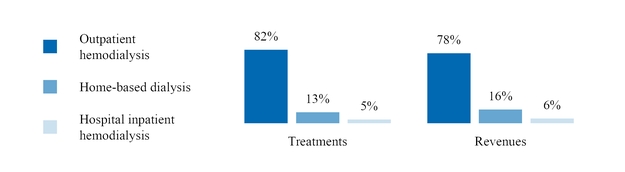
The following graph summarizes our U.S. dialysis treatments by modality and U.S. dialysis patient services revenues by modality for the year ended December 31, 2019.
Treatments and revenues by modality:
Other
ESRD laboratory services
We operate one separately licensed and highly automated clinical laboratory which specializes in ESRD patient testing. This specialized laboratory provides routine laboratory tests for dialysis and other physician-prescribed laboratory tests for ESRD patients which are integral components of the overall dialysis services that we provide. Our laboratory provides these tests predominantly for our network of ESRD patients throughout the U.S. These tests are performed to monitor a patient’s ESRD condition, including the adequacy of dialysis, as well as other medical conditions of the patient. Our laboratory utilizes information systems which provide information to certain members of the dialysis centers’ staff and medical directors regarding critical outcome indicators.
Management services
We currently operate or provide management and administrative services pursuant to management and administrative services agreements to 44 outpatient dialysis centers located in the U.S. in which we either own a noncontrolling interest or which are wholly-owned by third parties. Management fees are established by contract and are recognized as earned typically based on a percentage of revenues or cash collections generated by the outpatient dialysis centers.
Sources of revenue—concentrations and risks
Our U.S. dialysis revenues represent approximately 92% of our consolidated revenues for the year ended December 31, 2019. Our U.S. dialysis revenues are derived primarily from our core business of providing dialysis services and related laboratory services and, to a lesser extent, the administration of pharmaceuticals and management fees generated from providing management and administrative services to certain outpatient dialysis centers, as discussed above.
The sources of our U.S. dialysis revenues are principally from government-based programs, including Medicare and Medicare-assigned plans and Medicaid and managed Medicaid plans and commercial insurance plans. Our largest source of revenue is from Medicare and Medicare-assigned plans which accounted for 59% of our overall U.S. dialysis patient services revenues for the year ended December 31, 2019. Other sources of our U.S. dialysis patient services revenues for the year ended December 31, 2019, were from commercial payors (including hospital dialysis services) accounting for 31% of revenues, Medicaid and Managed Medicaid plans accounting for 6% of our revenues and other government programs accounting for 4% of our revenues.
Medicare revenue
Government dialysis related payment rates in the U.S. are principally determined by federal Medicare and state Medicaid policy. For patients with Medicare coverage, all ESRD payments for dialysis treatments are made under a single bundled payment rate which provides a fixed payment rate to encompass all goods and services provided during the dialysis treatment that are related to the dialysis treatment, including certain pharmaceuticals, such as Epogen® (EPO), vitamin D analogs and iron supplements, irrespective of the level of pharmaceuticals administered to the patient or additional services performed except for calcimimetics, a drug class taken by many patients with ESRD to treat mineral bone disorder. As of
January 1, 2018, calcimimetics became part of the Medicare Part B ESRD payment, subject to a transitional drug add-on payment adjustment (TDAPA). Most lab services are also included in the bundled payment. Under the ESRD Prospective Payment System (PPS), the bundled payments to a dialysis facility may be reduced by as much as 2% based on the facility’s performance in specified quality measures set annually by CMS through its Quality Incentive Program (QIP). CMS established QIP through the Medicare Improvements for Patients and Providers Act of 2008 to promote high quality services in outpatient dialysis facilities treating patients with ESRD. QIP associates a portion of Medicare reimbursement directly with a facility’s performance on quality of care measures. Reductions in Medicare reimbursement result when a facility’s overall score on applicable measures does not meet established standards. The bundled payment rate is also adjusted for certain patient characteristics, a geographic usage index and certain other factors.
Uncertainty about future payment rates remains a material risk to our business, as well as the potential implementation of or changes in coverage determinations or other rules or regulations by CMS or Medicare Administrative Contractors (MACs) that may impact reimbursement. An important provision in the Medicare ESRD statute is an annual adjustment, or market basket update, to the ESRD PPS base rate. Absent action by Congress, the ESRD PPS base rate is automatically updated annually by a formulaic inflation adjustment.
In November 2019, CMS issued a final rule to update the Medicare ESRD PPS payment rate and policies. Among other things, the final rule expands the transitional drug add-on payment to certain new renal dialysis drugs and biological products and amends the reporting measures in the ESRD QIP. CMS estimates the overall impact of the final rule will increase Medicare reimbursement to ESRD facilities by 1.7% in 2020.
As a result of the Budget Control Act of 2011 (BCA) and subsequent activity in Congress, a $1.2 trillion sequester (across-the-board spending cuts) in discretionary programs took effect in 2013 reducing Medicare payments by 2%, which was subsequently extended through fiscal year 2027. These across-the-board spending cuts have affected and will continue to adversely affect our business, results of operations, financial condition and cash flows. Although the Bipartisan Budget Act (BBA) of 2018 passed in February 2018 enacted a two-year federal spending agreement and raised the federal spending cap on non-defense spending for fiscal years 2018 and 2019, the Medicare program is frequently mentioned as a target for spending cuts.
ESRD patients receiving dialysis services become eligible for primary Medicare coverage at various times, depending on their age or disability status, as well as whether they are covered by a commercial insurance plan. Generally, for a patient not covered by a commercial insurance plan, Medicare becomes the primary payor for ESRD patients receiving dialysis services either immediately or after a three-month waiting period. For a patient covered by a commercial insurance plan, Medicare generally becomes the primary payor after 33 months, which includes the three-month waiting period, or earlier if the patient’s commercial insurance plan coverage terminates. When Medicare becomes the primary payor, the payment rates we receive for that patient shift from the commercial insurance plan rates to Medicare payment rates, which are on average significantly lower than commercial insurance rates.
Medicare pays 80% of the amount set by the Medicare system for each covered dialysis treatment. The patient is responsible for the remaining 20%. In most cases, a secondary payor, such as Medicare supplemental insurance, a state Medicaid program or a commercial health plan, covers all or part of these balances. Some patients who do not qualify for Medicaid, but otherwise cannot afford secondary insurance in the form of a Medicare Supplement Plan, can apply for premium payment assistance from charitable organizations to obtain secondary coverage. If a patient does not have secondary insurance coverage, we are generally unsuccessful in our efforts to collect from the patient the remaining 20% portion of the ESRD composite rate that Medicare does not pay. However, we are able to recover some portion of this unpaid patient balance from Medicare through an established cost reporting process by identifying these Medicare bad debts on each center’s Medicare cost report.
In recent years, federal legislative and executive action has been focused on developing new models of kidney care for Medicare beneficiaries. For example, CMMI is working with various healthcare providers to develop, refine and implement Accountable Care Organizations (ACOs) and other innovative models of care for Medicare and Medicaid beneficiaries, including ACOs, the Comprehensive ESRD Care (CEC) Model (which includes the development of ESRD Seamless Care Organizations (ESCOs)) and the Duals Demonstration. In addition, federal bipartisan legislation related to full capitation demonstration for ESRD was proposed in late 2017. Legislation, which has yet to secure introduction to the 116th Congress, would build on prior coordinated care models, such as the CEC Model, and would establish a demonstration program for the provision of integrated care to Medicare ESRD patients. More recently, the 2019 Executive Order directed CMS to create payment models to evaluate the effects of creating payment incentives for the greater use of home dialysis and kidney transplants for those already on dialysis. For additional detail on these and other developments in models of care, see the discussion below under the heading “—New models of care and Medicare and Medicaid program reforms.”
Medicaid revenue
Medicaid programs are state-administered programs partially funded by the federal government. These programs are intended to provide health coverage for patients whose income and assets fall below state-defined levels and who are otherwise uninsured. These programs also serve as supplemental insurance programs for co-insurance payments due from Medicaid-eligible patients with primary coverage under the Medicare program. Some Medicaid programs also pay for additional services, including some oral medications that are not covered by Medicare. We are enrolled in the Medicaid programs in the states in which we conduct our business.
Commercial revenue
Before a patient becomes eligible to elect to have Medicare as their primary payor for dialysis services, a patient’s commercial insurance plan, if any, is generally responsible for payment of such dialysis services for up to the first 33 months, as discussed above. Although commercial payment rates vary, average commercial payment rates established under commercial contracts are generally significantly higher than Medicare rates. The payments we receive from commercial payors generate nearly all of our profits and all of our nonacute dialysis profits come from commercial payors. Payment methods from commercial payors can include a single lump-sum per treatment, referred to as bundled rates, or in other cases separate payments for dialysis treatments and pharmaceuticals, if used as part of the treatment, referred to as FFS rates. Commercial payment rates are the result of negotiations between us and insurers or third-party administrators. Our out-of-network payment rates are on average higher than in-network commercial contract payment rates. Some of our commercial contracts pay us under a single bundled payment rate for all dialysis services provided to covered patients. However, some of our commercial contracts also pay us for certain other services and pharmaceuticals in addition to the bundled payment. Our commercial contracts typically contain annual price escalator provisions.
Approximately 25% of our U.S. dialysis patient services revenues and approximately 10% of our U.S. dialysis patients are associated with non-acute commercial payors for the year ended December 31, 2019. Non-acute commercial patients as a percentage of our total U.S. dialysis patients for 2019 were relatively flat compared to 2018. Less than 1% of our U.S. dialysis revenues are due directly from patients. There is no single commercial payor that accounted for more than 10% of total U.S. dialysis revenues for the year ended December 31, 2019. See Note 2 to the consolidated financial statements included in this report for disclosure on our concentration related to our commercial payors on a total consolidated revenue basis.
Both the number of our patients under commercial plans and the rates under these commercial plans are subject to change based on a number of factors. These factors include, among others, a highly competitive rate environment that shapes our ongoing negotiations with commercial payors; changes in commercial plan design; and the health of the U.S. economy. In addition, changes in state and federal legislation, regulations, rules, laws, guidance or other requirements may impact the availability and scope of commercial insurance, including, among others, developments that impact the healthcare exchanges introduced by the Patient Protection and Affordable Care Act of 2010, as amended by the Health Care and Education Reconciliation Act of 2010 (Affordable Care Act (ACA)) and commercial payor participation in that marketplace as well as developments that impact the availability of charitable premium assistance. For additional detail on the potential impact of these factors on our commercial revenue, see the risk factors in Item 1A Risk Factors under the headings “Changes in federal and state healthcare legislation or regulations could have a material adverse effect on our business, results of operations, financial condition and cash flows”; “If the average rates that commercial payors pay us decline significantly or if patients in commercial plans are subject to restriction in plan designs, it would have a material adverse effect on our business, results of operations, financial condition and cash flows”; and “If the number of patients with higher-paying commercial insurance declines, it could have a material adverse effect on our business, results of operations, financial condition and cash flows.”
Revenue from other pharmaceuticals
The impact of physician-prescribed pharmaceuticals on our overall revenues that are separately billable has significantly decreased since Medicare’s single bundled payment system went into effect beginning in January 2011, and as a result of commercial contracts that pay us a single bundled payment rate.
Effective January 1, 2018, both oral and intravenous forms of calcimimetics, a drug class taken by many patients with ESRD to treat mineral bone disorder, became the financial responsibility of our U.S. dialysis business for our Medicare patients and are now reimbursed under Medicare Part B. Previously, calcimimetics were reimbursed for Medicare patients through Part D and dispensed through traditional pharmacies. Currently, the oral and intravenous forms of calcimimetics remain separately reimbursed and therefore are not part of the ESRD PPS bundled payment. During the initial pass-through period, Medicare payments for calcimimetics are based on a pass-through rate of the average sales price plus approximately 6% before sequestration (or 4% adjusted for sequestration), however, in 2020 they will be reimbursed at average sales price plus 0%, before sequestration. CMS has stated intentions to enter calcimimetics into the ESRD bundled payment as of January 1, 2021.
Physician relationships
Joint Venture Partners
We own and operate certain of our dialysis centers through entities that are structured as joint ventures. We generally hold controlling interests in these joint ventures, with certain nephrologists, hospitals, management services organizations, and/or other healthcare providers holding minority equity interests. These joint ventures are typically formed as limited liability companies. For the year ended December 31, 2019, revenues from joint ventures in which we have a controlling interest represented approximately 26% of our net U.S. dialysis revenues. We expect to continue to enter into new U.S. dialysis-related joint ventures in the ordinary course of business.
Community Physicians
An ESRD patient generally seeks treatment at an outpatient dialysis center near their home where their treating nephrologist has practice privileges. Our relationships with local nephrologists and our ability to provide quality dialysis services and to meet the needs of their patients are key factors in the success of our dialysis operations. Over 5,600 nephrologists currently refer patients to our outpatient dialysis centers.
Medical Directors
Participation in the Medicare ESRD program requires that dialysis services at an outpatient dialysis center be under the general supervision of a medical director. Per these requirements, this individual is usually a board certified nephrologist. We have engaged physicians or groups of physicians to serve as medical directors for each of our outpatient dialysis centers. At some outpatient dialysis centers, we also separately contract with one or more other physicians or groups to serve as assistant or associate medical directors over other modalities such as home dialysis. We have over 1,000 individual physicians and physician groups under contract to provide medical director services.
Medical directors for our dialysis centers enter into written contracts with us that specify their duties and fix their compensation generally for periods of ten years. The compensation of our medical directors is the result of arm’s length negotiations, consistent with fair market value, and generally depends upon an analysis of various factors such as the physician’s duties, responsibilities, professional qualifications and experience.
Our medical director contracts and joint venture operating agreements generally include covenants not to compete or own interests in other competing outpatient dialysis centers within a defined geographic area for various time periods, as applicable. These non-compete agreements do not restrict or limit the physicians from practicing medicine or prohibit the physicians from referring patients to any outpatient dialysis center, including competing centers.
As part of our Corporate Integrity Agreement, as described below, we agreed not to enforce investment non-compete restrictions relating to dialysis clinics or programs that were established pursuant to a partial divestiture joint venture transaction. Therefore, to the extent a joint venture partner or medical director has a contract(s) with us covering dialysis clinics or programs that were established pursuant to a partial divestiture, we will not enforce the investment non-compete provision relating to those clinics and/or programs.
Capacity and location of our U.S. dialysis centers
Typically we are able to increase our capacity by extending hours at our existing dialysis centers, expanding our existing dialysis centers, relocating our dialysis centers, developing new dialysis centers and by acquiring dialysis centers. The development of a typical outpatient dialysis center by us generally requires approximately $2.4 million for leasehold improvements and other capital expenditures. Based on our experience, a new outpatient dialysis center typically opens within a year after the property lease is signed, normally achieves operating profitability in the second year after Medicare certification and normally reaches maturity within three to five years. Acquiring an existing outpatient dialysis center requires a substantially greater initial investment, but profitability and cash flows are generally accelerated and more predictable. To a limited extent, we enter into agreements to provide management and administrative services to outpatient dialysis centers in which we own a noncontrolling interest or which are wholly-owned by third parties in return for management fees.
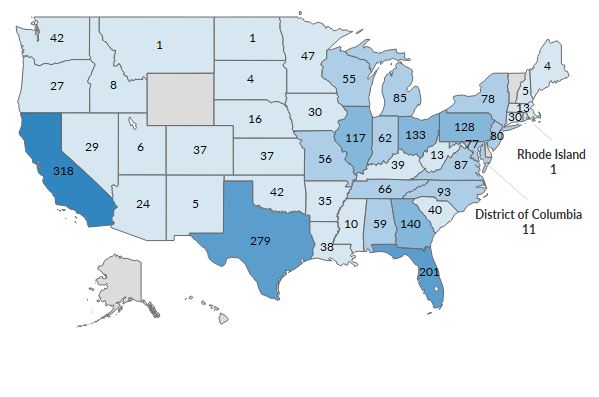
As of December 31, 2019, we operated or provided administrative services to a total of 2,753 U.S. outpatient dialysis centers. A total of 2,709 of such centers are consolidated in our financial statements. Of the remaining 44 non-consolidated U.S. outpatient dialysis centers, we own a noncontrolling interest in 41 centers and provide management and administrative services to three centers that are wholly-owned by third parties. The locations of the 2,709 U.S. outpatient dialysis centers consolidated in our financial statements at December 31, 2019, were as follows:
Ancillary services and strategic initiatives businesses, including our international operations
As of December 31, 2019, our ancillary services and strategic initiatives consisted primarily of disease management services, physician services, ESRD seamless care organizations, comprehensive care, vascular access services and clinical research programs, and our international operations and relate primarily to our core business of providing kidney care services.
Ancillary Services and Strategic Business Initiatives
Integrated Care and Chronic Kidney Care. We have made and continue to make investments in building our integrated care capabilities, including the operation of certain strategic business initiatives that are intended to integrate care amongst healthcare participants across the renal care continuum from chronic kidney disease (CKD) to ESRD to kidney transplant. Through improved technology and data sharing, as well as an increasing focus on value based contracting and care, these initiatives seek to bring together physicians, nurses, dieticians, pharmacists, hospitals, dialysis clinics, transplant centers and payors with a view towards improving clinical outcomes for our patients and reducing the overall cost of comprehensive kidney care.
| • | Disease management services. VillageHealth DM, LLC doing business as DaVita Integrated Kidney Care (DaVita IKC) provides advanced integrated care management services to health plans and government programs for members/beneficiaries diagnosed with ESRD, chronic kidney failure, and/or poly-comorbid conditions. Through a combination of clinical coordination, innovative interventions, medical claims analysis and information technology, we endeavor to assist our customers and patients in obtaining superior renal healthcare and improved clinical outcomes, as well as helping to reduce overall medical costs. Integrated kidney care management revenues from commercial and Medicare Advantage insurers can be based upon either an established contract fee recognized as earned over the contract period, or related to the operation of value-based programs, including pay for performance, shared savings, and capitation contracts. DaVita IKC also contracts with payors to operate Medicare Advantage ESRD Special Needs Plans to provide ESRD patients full service healthcare. We are at risk for all medical costs of the program in excess of the capitation payments. Furthermore, in October 2015, DaVita IKC entered into |
management service agreements to support three ESCO joint ventures in which we are an investor through certain wholly- or majority-owned dialysis clinics.
| • | Physician services. Nephrology Practice Solutions (NPS) is an independent business that partners with physicians committed to providing outstanding clinical and integrated care to patients. NPS provides nephrologist recruitment and staffing services in select markets which are billed on a per search basis. NPS also offers physician practice management services to nephrologists under administrative services agreements. These services include physician practice management, billing and collections, credentialing, coding, and other support services that enable physician practices to increase efficiency and manage their administrative needs. Additionally, NPS owns and operates nephrology practices in multiple states. Fees generated from these services are recognized as earned typically based upon flat fees or cash collections generated by the physician practice. |
| • | ESRD Seamless Care Organization joint ventures (ESCO JVs). In October 2015, certain of our dialysis clinics entered into partnerships with various nephrology practices, health systems, and other providers to establish three ESCO JVs in Phoenix-Tucson Arizona, South Florida, and Philadelphia Pennsylvania-Camden, New Jersey. The ESCO JVs were formed under the CMS Innovation Center’s Comprehensive ESRD Care (CEC) Model, a demonstration to assess the impact of care coordination for ESRD patients in a dialysis-center oriented ACO setting. Each ESCO JV has a shared risk arrangement with CMS and the programs are evaluated on a performance year basis. The delivery of improved quality outcomes for patients and program savings depend on the contributions of the dialysis center teammates, nephrologists, health system and hospital partners, pharmacy providers, other primary care and specialty care providers and facilities, and integrated care management support from DaVita IKC, which is also the manager of the ESCO JVs. In 2019, CMS published the results for the 2017 performance year, and all three ESCO JVs earned shared savings payments. Results for 2018 and 2019 performance years are anticipated to be released in 2020. |
| • | Comprehensive care. Vively Health (formerly known as DaVita Health Solutions) was created to provide comprehensive care through house calls and post-acute care programs to help chronically ill patients through use of community based, physician- and nurse practitioner-led care teams to deliver medical, behavioral, social and palliative care within the patient's home or skilled nursing facility. |
Other Strategic Business Initiatives
| • | Clinical research programs. DaVita Clinical Research (DCR) is a provider-based specialty clinical research organization with a full spectrum of services for clinical drug research and device development. DCR uses its extensive, applied database and real-world healthcare experience to assist in the design, recruitment and completion of retrospective and prospective pragmatic and clinical trials. Revenues are based upon an established fee per study, as determined by contract with drug companies and other sponsors and are recognized as earned according to the contract terms. |
| • | Vascular access services. Lifeline provides management and administrative services to physician-owned vascular access clinics that provide vascular services for dialysis and other patients. Lifeline is also the majority-owner of three vascular access clinics. Management fees generated from providing management and administrative services are recognized as earned typically based on a percentage of revenues or cash collections generated by the clinics. Revenues associated with the vascular access clinics that are majority-owned are recognized in the period when the services are provided. |
During 2018, we transitioned the customer service and fulfillment functions of our pharmacy business, DaVita Rx, to third parties and ceased our related distribution operations. DaVita Rx was a pharmacy that specialized in providing oral medications and medication management services to patients with ESRD. In addition, effective June 1, 2018, we sold 100% of the stock of Paladina Health, our direct primary care business. For additional discussion of our ancillary services and strategic initiatives businesses, see Item 7 Management’s Discussion and Analysis of Financial Condition and Results of Operations.
International dialysis operations
As of December 31, 2019, we operated or provided administrative services to a total of 259 outpatient dialysis centers, which includes consolidated and nonconsolidated centers located in ten countries outside of the U.S., serving approximately 28,700 patients. Our international dialysis operations have continued to grow steadily and expand as a result of acquiring and developing outpatient dialysis centers in various strategic markets. Our international operations are included as part of our ancillary services and strategic initiatives.
The locations of our international outpatient dialysis centers are as follows:
| Germany | 59 | |
| Poland | 50 | |
| Brazil | 46 | |
| Malaysia(1) | 39 | |
| Saudi Arabia | 23 | |
| Colombia | 22 | |
| Portugal | 9 | |
| Taiwan(1) | 7 | |
| China(1) | 2 | |
| Singapore(1) | 2 | |
| 259 |
| (1) | Includes centers that are operated or managed by our Asia Pacific Joint Venture (APAC JV). |
Corporate Administrative Support
Corporate administrative support consists primarily of labor, benefits and long-term incentive compensation costs for departments which provide support to all of our different operating lines of business. These expenses are included in our consolidated general and administrative expenses and are partially offset by the allocation of management fees.
Government regulation
We operate in a complex regulatory environment and are subject to an extensive and evolving set of federal, state and local government laws, regulations and requirements. These laws and regulations require us to meet various standards relating to, among other things, government payment programs, dialysis facilities and equipment, management of centers, personnel qualifications, maintenance of proper records, and quality assurance programs and patient care. Additional discussion on certain of these laws, regulations and requirements is set forth below in this section.
If any of our personnel, representatives or operations are found to violate applicable laws, regulations or other requirements, we could suffer severe consequences that would have a material adverse effect on our business, results of operations, financial condition, cash flows, reputation and stock price, including, among others:
| • | Loss of required certifications, suspension or exclusion from, or termination of our participation in government payment programs; |
| • | Refunds of amounts received in violation of law or applicable payment program requirements dating back to the applicable statute of limitation periods; |
| • | Loss of licenses required to operate healthcare facilities or administer pharmaceuticals in the states in which we operate; |
| • | Reductions in payment rates or coverage for dialysis and ancillary services and pharmaceuticals; |
| • | Criminal or civil liability, fines, damages or monetary penalties, which could be material; |
| • | Enforcement actions, investigations, or audits by governmental agencies and/or state law claims for monetary damages by patients who believe their protected health information (PHI) has been used, disclosed or not properly safeguarded in violation of federal or state patient privacy laws, including, among others, the Health Insurance Portability and Accountability Act of 1996 (HIPAA) and the Privacy Act of 1974; |
| • | Mandated changes to our practices or procedures that significantly increase operating expenses or that could subject us to ongoing audits and reporting requirements as well as increased scrutiny of our billing and business practices, any of which could lead to potential fines, among other things; |
| • | Termination of various relationships and/or contracts related to our business, such as joint venture arrangements, medical director agreements, real estate leases and consulting agreements with physicians; and |
| • | Harm to our reputation which could negatively impact our business relationships and stock price, affect our ability to attract and retain patients, physicians and teammates, affect our ability to obtain financing and decrease access to new business opportunities, among other things. |
We expect that our industry will continue to be subject to extensive and complex regulation, the scope and effect of which are difficult to predict. We are currently subject to various legal proceedings, such as lawsuits, investigations, audits and inquiries by various government and regulatory agencies, all as further described in Note 16 to the consolidated financial statements. Our operations and activities could be reviewed or challenged by regulatory authorities at any time in the future. For additional detail on risks related to each of the foregoing, see the discussion in Item 1A. Risk Factors under the headings, "If we fail to adhere to all of the complex government laws, regulations and requirements that apply to our business, we could suffer severe consequences that could have a material adverse effect on our business, results of operations, financial condition and cash flows, and could materially harm our reputation and stock price."; "Changes in federal and state healthcare legislation or regulations could have a material adverse effect on our business, results of operations, financial condition and cash flows"; and "We are, and may in the future be, a party to various lawsuits, demands, claims, qui tam suits, governmental investigations and audits (including, without limitation, investigations or other actions resulting from our obligation to self-report suspected violations of law) and other legal matters, any of which could result in, among other things, substantial financial penalties or awards against us, mandated refunds, substantial payments made by us, required changes to our business practices, exclusion from future participation in Medicare, Medicaid and other healthcare programs and possible criminal penalties, any of which could have a material adverse effect on our business, results of operations, financial condition, cash flows, reputation and stock price."
Licensure and certification
Our dialysis centers are certified by CMS, as is required for the receipt of Medicare payments. Certain of our payor contracts also condition payment on Medicare certification. In some states, our outpatient dialysis centers also are required to secure additional state licenses and permits. Governmental authorities, primarily state departments of health, periodically inspect our centers to determine if we satisfy applicable federal and state standards and requirements, including the conditions of participation in the Medicare ESRD program.
We have experienced some delays in obtaining Medicare certifications from CMS, though recent changes by CMS in the prioritizing of dialysis providers as well as legislation allowing private entities to perform initial dialysis facilities certifications has helped to decrease or limit certain delays.
In addition, in November 2019, CMS finalized a Provider Enrollment Rule creating new onerous disclosure obligations for all providers enrolled in Medicare, Medicaid and the Children’s Health Insurance Plan (CHIP). The final rule imposes a stronger revocation authority and increases the bar for re-enrollment for providers who submit incomplete or inaccurate information or who have affiliations with other providers that CMS has determined pose undue risk of fraud, waste or abuse. If we fail to comply with these and other applicable requirements on our licensure and certification programs, particularly in light of increased penalties that include a 10-year ban to re-enrollment, under certain circumstances it could have a material adverse impact on our business, results of operations, financial condition, cash flows and reputation.
Federal Anti-Kickback Statute
The federal Anti-Kickback Statute prohibits, among other things, knowingly and willfully offering, paying, soliciting or receiving remuneration, directly or indirectly, in cash or kind, to induce or reward either the referral of an individual for, or the purchase, or order or recommendation of, any good or service, for which payment may be made under federal and state healthcare programs such as Medicare and Medicaid.
Federal criminal penalties for the violation of the federal Anti-Kickback Statute include imprisonment, fines and exclusion of the provider from future participation in the federal healthcare programs, including Medicare and Medicaid. Violations of the federal Anti-Kickback Statute are punishable by imprisonment for up to ten years and fines of up to $100,000 or both. Larger fines can be imposed upon corporations under the provisions of the U.S. Sentencing Guidelines and the Alternate Fines Statute. Individuals and entities convicted of violating the federal Anti-Kickback Statute are subject to mandatory exclusion from participation in Medicare, Medicaid and other federal healthcare programs for a minimum of five years. Civil penalties for violation of this law include up to $100,000 in monetary penalties per violation, repayments of up to three times the total payments between the parties to the arrangement and suspension from future participation in Medicare and Medicaid. Court decisions have held that the statute may be violated even if only one purpose of remuneration is to induce referrals. The ACA amended the federal Anti-Kickback Statute to clarify the intent that is required to prove a violation. Under the statute as amended, the defendant may not need to have actual knowledge of the federal Anti-Kickback Statute or have the specific intent to violate it. In addition, the ACA amended the federal Anti-Kickback Statute to provide that any claims for
items or services resulting from a violation of the federal Anti-Kickback Statute are considered false or fraudulent for purposes of the False Claims Act (FCA).
The federal Anti-Kickback Statute includes statutory exceptions and regulatory safe harbors that protect certain arrangements. Business transactions and arrangements that are structured to comply fully with an applicable safe harbor do not violate the federal Anti-Kickback Statute. Transactions and arrangements that do not satisfy all elements of a relevant safe harbor do not necessarily violate the law. When an arrangement does not satisfy a safe harbor, the arrangement must be evaluated on a case-by-case basis in light of the parties’ intent and the arrangement’s potential for abuse. Arrangements that do not satisfy a safe harbor may be subject to greater scrutiny by enforcement agencies.
DaVita and its subsidiaries enter into several arrangements with physicians and other potential referral sources, that potentially implicate the Anti-Kickback Statute, such as:
Medical Director Agreements. Because our medical directors may refer patients to our dialysis centers, our arrangements with these physicians are designed to substantially comply with the safe harbor for personal service arrangements. Although we endeavor to structure the Medical Director Agreements we enter into with physicians to substantially comply with the safe harbor for personal service arrangements, including the requirement that compensation be consistent with fair market value, the safe harbor requires that when services are provided on a part-time basis, the agreement must specify the schedule of intervals of services, and their precise length and the exact charge for such services. Because of the nature of our medical directors’ duties, it is impossible to fully satisfy this technical element of the safe harbor. As a result, these arrangements could be subject to scrutiny since they do not expressly describe the schedule of part-time services to be provided under the arrangement.
Joint Ventures. As noted above, we own a controlling interest in numerous U.S. dialysis related joint ventures. Our internal policies, procedures, and template agreements were developed and are utilized for compliance with the Anti-Kickback Statute. However, we recognize that at times these joint ventures do not fully satisfy all of the requirements of the safe harbor for investments in small entities. Although failure to comply with a safe harbor does not render an arrangement illegal under the federal Anti-Kickback Statute, an arrangement that does not operate within a safe harbor may be subject to scrutiny by both federal and state government enforcement agencies including the Department of Health and Human Services’ Office of Inspector General (OIG) and the Department of Justice (DOJ). Joint ventures that fall outside the safe harbors are evaluated on a case-by-case basis under the federal Anti-Kickback Statute.
Lease Arrangements. We lease space from entities in which physicians, hospitals or medical groups hold ownership interests, and we sublease space to referring physicians. We endeavor to structure these arrangements to comply with the federal Anti-Kickback Statute safe harbor for space rentals in all material respects.
Consulting Agreements. From time to time, we enter into consulting agreements with physicians. Engaged physicians provide services including providing input on processes, services and protocols as well as providing education on assorted topics. We endeavor to structure these arrangements to comply with the federal Anti-Kickback Statute safe harbor for personal services in all material respects.
Employment Agreements. Our subsidiary Nephrology Practice Solutions employs physicians to provide administrative and clinical services. We endeavor to structure these arrangements to comply with the federal Anti-Kickback Statute safe harbor for employment in all material respects.
Common Stock. Some referring physicians may own our common stock. We believe that these interests materially satisfy the requirements of the Anti-Kickback Statute safe harbor for investments in large publicly traded companies.
Discounts. Our dialysis centers and subsidiaries sometimes acquire certain items and services at a discount that may be reimbursed by a federal healthcare program. We endeavor to structure our vendor contracts that include discount or rebate provisions to comply with the federal Anti-Kickback Statute safe harbor for discounts.
If any of our business transactions or arrangements, including those described above, were found to violate the federal Anti-Kickback Statute, we, among other things, could face criminal, civil or administrative sanctions, including possible exclusion from participation in Medicare, Medicaid and other state and federal healthcare programs. Any findings that we have violated these laws could have a material adverse impact on our business, results of operations, financial condition, cash flows, reputation and stock price.
As part of the Department of Health and Human Services (HHS) Regulatory Sprint to Coordinated Care (Regulatory Sprint), in October 2019, OIG issued proposed modifications to certain of its Anti-Kickback and Civil Monetary Penalties regulations. OIG has not issued final rules at this time so the impact on future modifications is unknown, but we will continue to monitor to assess the anticipated impact on our business, results of operations and financial condition.
Stark Law
The Stark Law prohibits a physician who has a financial relationship, or who has an immediate family member who has a financial relationship, with entities providing Designated Health Services (DHS), from referring Medicare and Medicaid patients to such entities for the furnishing of DHS, unless an exception applies. DHS is defined to mean any of the following enumerated items or services; clinical laboratory services; physical therapy services; occupational therapy services; radiology services, including magnetic resonance imaging, computerized axial tomography scans, and ultrasound services; radiation therapy services and supplies; durable medical equipment and supplies; parenteral and enteral nutrients, equipment, and supplies; prosthetics, orthotics and prosthetic devices and supplies; home health services; outpatient prescription drugs; inpatient and outpatient hospital services; and outpatient speech-language pathology services. The types of financial arrangements between a physician and a DHS entity that trigger the self-referral prohibitions of the Stark Law are broad and include direct and indirect ownership and investment interests and compensation arrangements. The Stark Law also prohibits the DHS entity receiving a prohibited referral from presenting, or causing to be presented, a claim or billing for the services arising out of the prohibited referral. The prohibition applies regardless of the reasons for the financial relationship and the referral; unlike the federal Anti-Kickback Statute, intent to induce referrals is not required. If the Stark Law is implicated, the financial relationship must fully satisfy a Stark Law exception. If an exception is not satisfied, then the parties to the arrangement could be subject to sanctions. Sanctions for violation of the Stark Law include denial of payment for claims for services provided in violation of the prohibition, refunds of amounts collected in violation of the prohibition, a civil penalty of up to $15,000 for each service arising out of the prohibited referral, a civil penalty of up to $100,000 against parties that enter into a scheme to circumvent the Stark Law prohibition, civil assessment of up to three times the amount claimed, and potential exclusion from the federal healthcare programs, including Medicare and Medicaid. Amounts collected for prohibited claims must be reported and refunded generally within 60 days after the date on which the overpayment was identified. Furthermore, Stark Law violations and failure to return overpayments timely can form the basis for FCA liability as discussed below.
The definition of DHS under the Stark Law excludes services paid under a composite rate, even if some of the components bundled in the composite rate are DHS. Although the ESRD bundled payment system is no longer titled a composite rate, we believe that the former composite rate payment system and the current bundled system are both composite systems excluded from the Stark Law. Since most services furnished to Medicare beneficiaries provided in our dialysis centers are reimbursed through a bundled rate, the services performed in our facilities generally are not DHS, and the Stark Law referral prohibition does not apply to those services. Certain separately billable drugs (drugs furnished to an ESRD patient that are not for the treatment of ESRD that CMS allows our centers to bill for using the so-called AY modifier) may be considered DHS. However, we have implemented certain billing controls designed to limit DHS being billed out of our dialysis clinics. Likewise, the definition of inpatient hospital services, for purposes of the Stark Law, also excludes inpatient dialysis performed in hospitals that are not certified to provide ESRD services. Consequently, our arrangements with such hospitals for the provision of dialysis services to hospital inpatients do not trigger the Stark Law referral prohibition.
In addition, although prescription drugs are DHS, there is an exception in the Stark Law for calcimimetics, EPO and other specifically enumerated dialysis drugs when furnished in or by an ESRD facility such that the arrangement for the furnishing of the drugs does not violate the Stark Law.
We have entered into several types of financial relationships with referring physicians, including compensation arrangements. If our dialysis centers were to bill for a non-exempted drug and the financial relationships with the referring physician did not satisfy an exception, we could be required to change our practices, face civil penalties, pay substantial fines, return certain payments received from Medicare and beneficiaries or otherwise experience a material adverse effect as a result of a challenge to payments made pursuant to referrals from these physicians under the Stark Law. Additionally, certain of our subsidiaries, were they to bill DHS, would implicate the Stark Law. As such we endeavor to structure arrangements with relevant physicians to fit within the existing exceptions to the Stark Law. If we were to fail to satisfy an applicable exception, we could similarly be required to change practices, face penalties and fines, return certain payments or otherwise face adverse consequences.
Medical Director Agreements. We endeavor to structure our medical director agreements to satisfy the personal services arrangement exception to the Stark Law. While we believe that the compensation provisions included in our medical director agreements are the result of arm’s length negotiations and result in fair market value payments for medical director services, an enforcement agency could nevertheless challenge the level of compensation that we pay our medical directors.
Lease Agreements. We lease space from entities in which referring physicians hold interests and we sublease space to referring physicians at some of our dialysis centers. The Stark Law provides an exception for lease arrangements if specific requirements are met. We endeavor to structure our leases and subleases with referring physicians to satisfy the requirements for this exception.
Consulting Agreements. From time to time, we enter into consulting agreements with physicians. Engaged physicians provide services including providing input on processes, services and protocols as well as providing education on assorted topics. We endeavor to structure these arrangements to comply with the Stark Law exception for personal services.
Employment Agreements. We employ physicians to provide administrative and clinical services. We endeavor to structure these arrangements to comply with the relevant Stark Law exceptions.
Common Stock. Some referring physicians may own our common stock. We believe that these interests satisfy the Stark Law exception for investments in large publicly traded companies.
Joint Ventures. Some of our referring physicians also own equity interests in entities that operate our dialysis centers and subsidiaries. We believe that none of the Stark Law exceptions applicable to physician ownership interests in entities to which they make DHS referrals apply to the kinds of ownership arrangements that referring physicians hold in several of our subsidiaries that operate dialysis centers. Accordingly, these dialysis centers do not bill Medicare for DHS referrals from physician owners. If the dialysis centers bill for DHS referred by physician owners, the dialysis centers or subsidiaries would be subject to the Stark Law penalties described above.
Ancillary Services. The operations of our ancillary and subsidiary businesses are also subject to compliance with the Stark Law, and any failure to comply with these requirements, particularly in light of the strict liability nature of the Stark Law, could subject these operations to the Stark Law penalties and sanctions described above.
If CMS or other regulatory or enforcement authorities determined that we have submitted claims in violation of the Stark Law, or otherwise violated the Stark Law, we would be subject to the penalties described above. In addition, it might be necessary to restructure existing compensation agreements with our medical directors and to repurchase or to request the sale of ownership interests in subsidiaries and partnerships held by referring physicians or, alternatively, to refuse to accept referrals for DHS from these physicians, or take other actions to modify our operations. Any such penalties and restructuring or other required actions could have a material adverse effect on our business, results of operations, financial condition, cash flows, stock price and reputation.
Fraud and abuse under state law
Some states in which we operate dialysis centers have laws prohibiting physicians from holding financial interests in various types of medical facilities to which they refer patients. Some of these laws could potentially be interpreted broadly as prohibiting physicians who hold shares of our publicly traded stock or are physician owners from referring patients to our dialysis centers if the centers use our laboratory subsidiary to perform laboratory services for their patients or do not otherwise satisfy an exception to the law. States also have laws similar to or stricter than the federal Anti-Kickback Statute that may affect our ability to receive referrals from physicians with whom we have financial relationships, such as our medical directors. Some state anti-kickback laws also include civil and criminal penalties. Some of these laws include exemptions that may be applicable to our medical directors and other physician relationships or for financial interests limited to shares of publicly traded stock. Some, however, may include no explicit exemption for certain types of agreements and/or relationships entered into with physicians. If these laws are interpreted to apply to referring physicians with whom we contract for medical director and similar services, to referring physicians with whom we hold joint ownership interests or to referring physicians who hold interests in DaVita Inc. limited solely to our publicly traded stock, and for which no applicable exception exists, we may be required to terminate or restructure our relationships with or refuse referrals from these referring physicians and could be subject to criminal, civil and administrative sanctions, refund requirements and exclusions from government healthcare programs, including Medicare and Medicaid, which could have a material adverse effect on our business, results of operations, financial condition, cash flows, reputation and stock price.
Corporate Practice of Medicine and Fee-Splitting
There are states in which we operate that have laws that prohibit business entities, such as our Company and our subsidiaries, from practicing medicine, employing physicians to practice medicine or exercising control over medical decisions by physicians (known collectively as the corporate practice of medicine). These states also prohibit entities from engaging in certain financial arrangements, such as fee-splitting, with physicians. In some states these prohibitions are expressly stated in a statute or regulation, while in other states the prohibition is a matter of judicial or regulatory interpretation. Violations of the corporate practice of medicine vary by state and may result in physicians being subject to disciplinary action, as well as to forfeiture of revenues from payors for services rendered. For lay entities, violations may also bring both civil and, in more extreme cases, criminal liability for engaging in medical practice without a license. Some of the relevant laws, regulations, and agency interpretations in states with corporate practice of medicine restrictions have been subject to limited judicial and regulatory interpretation. Moreover, state laws are subject to change.
False Claims Act
The federal FCA is a means of policing false bills or false requests for payment in the healthcare delivery system. In part, the FCA authorizes the imposition of up to three times the government’s damages and civil penalties on any person who, among other acts:
| • | Knowingly presents or causes to be presented to the federal government, a false or fraudulent claim for payment or approval; |
| • | Knowingly makes, uses or causes to be made or used, a false record or statement material to a false or fraudulent claim; |
| • | Knowingly makes, uses, or causes to be made or used, a false record or statement material to an obligation to pay the government, or knowingly conceals or knowingly and improperly, avoids or decreases an obligation to pay or transmit money or property to the federal government; or |
| • | Conspires to commit the above acts. |
In addition, amendments to the FCA impose severe penalties for the knowing and improper retention of overpayments collected from government payors. Under these provisions, within 60 days of identifying and quantifying an overpayment, a provider is required to follow certain notification and repayment processes. An overpayment impermissibly retained could subject us to liability under the FCA, exclusion from government healthcare programs, and penalties under the federal Civil Monetary Penalty statute. As a result of these provisions, our procedures for identifying and processing overpayments may be subject to greater scrutiny.
On February 1, 2019, the DOJ issued a final rule announcing penalties for a violation of the FCA range from $11,463 to $22,927 for each false claim, plus up to three times the amount of damages caused by each false claim, which can be as much as the amounts received directly or indirectly from the government for each such false claim. The federal government has used the FCA to prosecute a wide variety of alleged false claims and fraud allegedly perpetrated against Medicare and state healthcare programs, including coding errors, billing for services not rendered, the submission of false cost reports, billing for services at a higher payment rate than appropriate, billing under a comprehensive code as well as under one or more component codes included in the comprehensive code and billing for care that is not considered medically necessary. The ACA provides that claims tainted by a violation of the federal Anti-Kickback Statute are false for purposes of the FCA. Some courts have held that filing claims or failing to refund amounts collected in violation of the Stark Law can form the basis for liability under the FCA. In addition to the provisions of the FCA, which provide for civil enforcement, the federal government can use several criminal statutes to prosecute persons who are alleged to have submitted false or fraudulent claims for payment to the federal government.
Civil Monetary Penalties Statute
The Civil Monetary Penalties Statute, 42 U.S.C. § 1320a-7a, authorizes the imposition of civil money penalties, assessments, and exclusion against an individual or entity based on a variety of prohibited conduct, including, but not limited to:
| • | Presenting, or causing to be presented, claims for payment to Medicare, Medicaid, or other third-party payors that the individual or entity knows or should know are for an item or service that was not provided as claimed or is false or fraudulent; |
| • | Offering remuneration to a Federal healthcare program beneficiary that the individual or entity knows or should know is likely to influence the beneficiary to order or receive healthcare items or services form a particular provider; |
| • | Arranging contracts with an entity or individual excluded from participation in the Federal healthcare programs; |
| • | Violating the federal Anti-Kickback Statute; |
| • | Making, using, or causing to be made or used, a false record or statement material to a false or fraudulent claim for payment for items and services furnished under a Federal healthcare program; |
| • | Making, using, or causing to be made any false statement, omission, or misrepresentation of a material fact in any application, bid, or contract to participate or enroll as a provider of services or a supplier under a Federal healthcare program; and |
| • | Failing to report and return an overpayment owed to the federal government. |
Substantial civil monetary penalties may be imposed under the federal Civil Monetary Penalty Statute and vary, depending on the underlying violation. In addition, an assessment of not more than three times the total amount claimed for each item or service may also apply, and a violator may be subject to exclusion from Federal and state healthcare programs.
Foreign Corrupt Practices Act
We are subject to regulations imposed by the Foreign Corrupt Practices Act (FCPA) in the United States and similar laws in other countries, which generally prohibit companies and those acting on their behalf from making improper payments to foreign government officials for the purpose of obtaining or retaining business. A violation of specific laws and regulations by us and/or our agents or representatives could result in, among other things, the imposition of fines and penalties on us, changes to our business practices, the termination of our contracts or debarment from bidding on contracts, or harm to our reputation, any of which could have a material adverse effect on our business, results of operations, financial condition and cash flows.
Privacy and Security
The Health Insurance Portability and Accountability Act of 1996 and its implementing privacy and security regulations, as amended by the federal Health Information Technology for Economic and Clinical Health Act (HITECH Act), (collectively referred to as HIPAA), require us to provide certain protections to patients and their health information. The HIPAA privacy and security regulations extensively regulate the use and disclosure of PHI and require covered entities, which include healthcare providers, to implement and maintain administrative, physical and technical safeguards to protect the security of such information. Additional security requirements apply to electronic PHI. These regulations also provide patients with substantive rights with respect to their health information.
The HIPAA privacy and security regulations also require us to enter into written agreements with certain contractors, known as business associates, to whom we disclose PHI. Covered entities may be subject to penalties for, among other activities, failing to enter into a business associate agreement where required by law or as a result of a business associate violating HIPAA if the business associate is found to be an agent of the covered entity and acting within the scope of the agency. Business associates are also directly subject to liability under the HIPAA privacy and security regulations. In instances where we act as a business associate to a covered entity, there is the potential for additional liability beyond our status as a covered entity.
Covered entities must report breaches of unsecured PHI to affected individuals without unreasonable delay but not to exceed 60 days of discovery of the breach by a covered entity or its agents. Notification must also be made to the HHS, and, for breaches of unsecured PHI involving more than 500 residents of a state or jurisdiction, to the media. All non-permitted uses or disclosures of unsecured PHI are presumed to be breaches unless the covered entity or business associate establishes that there is a low probability the information has been compromised. Various state laws and regulations may also require us to notify affected individuals in the event of a data breach involving individually identifiable information without regard to whether there is a low probability of the information being compromised.
Penalties for impermissible use or disclosure of PHI were increased by the HITECH Act by imposing tiered penalties of more than $50,000 per violation and up to $1.5 million per year for identical violations. In addition, HIPAA provides for criminal penalties of up to $250,000 and ten years in prison, with the severest penalties for obtaining and disclosing PHI with the intent to sell, transfer or use such information for commercial advantage, personal gain or malicious harm. Further, state attorneys general may bring civil actions seeking either injunction or damages in response to violations of the HIPAA privacy and security regulations that threaten the privacy of state residents.
In addition to the protection of PHI, healthcare companies must meet privacy and security requirements applicable to other categories of personal information. Companies may process consumer information in conjunction with website and corporate operations. They may also handle employee information, including Social Security Numbers, payroll information, and other categories of sensitive information, to further their employment practices. In processing this additional information, companies must comply with the privacy and security requirements of consumer protection laws, labor and employment laws, and its publicly-available notices.
Data protection laws are evolving globally, and may add additional compliance costs and legal risks to our international operations. In Europe, the General Data Protection Regulation (GDPR) became effective on May 25, 2018. The GDPR applies to entities that are established in the European Union (EU), as well as extends the scope of EU data protection laws to foreign companies processing data of individuals in the EU. The GDPR imposes a comprehensive data protection regime with the potential for regulatory fines as well as data breach litigation by impacted data subjects. Under GDPR, regulatory penalties may be passed by data protection authorities for up to the greater of 4% of worldwide turnover or €20 million. The costs of compliance with, and other burdens imposed by, the GDPR and other new laws, regulations and policies implementing the
GDPR may impact our European operations and/or limit the ways in which we can provide services or use personal data collected while providing services. If we fail to comply with the requirements of GDPR, we could be subject to penalties that would have a material adverse impact on our business, results of operations, financial condition and cash flows.
Data protection laws are also evolving nationally, and may add additional compliance costs and legal risks to our U.S. operations. For example, the California legislature recently passed the California Consumer Protection Act (CCPA), which became effective January 1, 2020. The CCPA is a privacy law that requires certain companies doing business in California to enhance privacy disclosures regarding the collection, use and sharing of a consumer's personal data. The CCPA grants consumers additional privacy rights that are broader than current Federal privacy rights. The CCPA also permits the imposition of civil penalties, grants enforcement authority to the state Attorney General and provides a private right of action for consumers where certain personal information is breached due to unreasonable information security practices. Several other states, including Nevada and Maine, have passed data protection laws similar to CCPA. These laws would impose organizational requirements and grant individual rights that are comparable to those established in the CCPA, and other states may pass similar legislation in the future.
In addition to the breach reporting requirements under HIPAA, companies are subject to state breach notification laws. Each state enforces a law requiring companies to provide notice of a breach of certain categories of sensitive personal information, e.g. Social Security Number, financial account information, or username and password. A company impacted by a breach must notify affected individuals, attorney’s general or other agencies within a certain time frame. If a company does not provide timely notice with the required content, it may be subject to civil penalties brought by attorney’s generals or affected individuals.
Companies must also safeguard personal information in accordance with federal and state data security laws and requirements. These requirements are akin to the HIPAA requirements to safeguard PHI, described above. The Federal Trade Commission, for example, requires companies to implement reasonable data security measures relative to its operations and the volume and complexity of the information it processes. Also, various state data security laws require companies to safeguard data with technical security controls and underlying policies and processes. Due to the constant changes in the data security space, companies must continuously review and update data security practices to mitigate any potential operational or legal liabilities stemming from data security risks.
Healthcare reform
In March 2010, broad healthcare reform legislation was enacted in the U.S. through the ACA, but the ACA’s regulatory framework and other related healthcare reforms continue to evolve as a result of executive, legislative, regulatory and administrative developments and judicial proceedings. As such, there remains considerable uncertainty surrounding the continued implementation of the ACA and what similar healthcare reform measures or other changes might be enacted at the federal and/or state level. While legislative attempts to completely repeal the ACA have been unsuccessful to date, there have been multiple attempts to repeal or amend the ACA through legislative action and legal challenges. As a result, any specific changes to the ACA and related regulatory framework, as well as the timing of any such changes, are not possible to predict. Nevertheless, previously enacted reforms and future changes could have a material adverse effect on our business, results of operations, financial condition and cash flows. For example, the ACA's health insurance exchanges, which provide a marketplace for eligible individuals and small employers to purchase health insurance, initially increased the accessibility and availability of commercial insurance. However, certain legislative developments, such as the repeal of the individual mandate under the Tax Cuts and Jobs Act of 2017, have adversely impacted the risk pool in certain exchange markets, and the nature and extent of commercial payor participation in the exchanges has fluctuated as a result. Other proposed legislative developments or administrative decisions, such as moving to a universal health insurance or “single payor” system whereby health insurance is provided to all Americans by the government under government programs, or lowering or eliminating the cost-sharing reduction subsidies under the ACA, could impact the percentage of our patients with higher-paying commercial health insurance, impact the scope of coverage under commercial health plans and increase our expenses, among other things.
The ACA also requires that all non-grandfathered individual and small group health plans sold in a state, including plans sold through the state-based exchanges created pursuant to the healthcare reform laws, cover essential health benefits (EHBs) in ten general categories. The scope of the benefits is intended to equal the scope of benefits under a typical employer plan.
On February 25, 2013, HHS issued the final rule governing the standards applicable to EHB benchmark plans, including new definitions and actuarial value requirements and methodology, and published a list of plan benchmark options that states can use to develop EHBs. The rule describes specific coverage requirements that (i) prohibit discrimination against individuals because of pre-existing or chronic conditions, (ii) ensure network adequacy of essential health providers, and (iii) prohibit benefit designs that limit enrollment and that prohibit access to care for enrollees. Subsequent regulations relevant to the EHB have continued the benchmark plan approach for 2016 and future years and have implemented clarifications and modifications
to the existing EHB regulations, including the prohibition on discrimination, network adequacy standards and other requirements. In recent years, CMS has issued an annual Notice of Benefit and Payment Parameters rulemaking and related guidance setting forth standards for insurance plans provided through the exchanges.
Other aspects of the ACA may affect our business as well, including provisions that impact the Medicare and Medicaid programs. For example, the ACA broadened the potential for penalties under the FCA for the knowing and improper retention of overpayments collected from government payors and reduced the timeline to file Medicare claims. Nevertheless, as an example of how the healthcare regulatory environment continues to change in the wake of ACA, in February 2018 Congress passed the BBA, which included a provision that repealed an Independent Payment Advisory Board initially established by the ACA. While certain provisions of the BBA may increase the scope of benefits available for certain chronically ill federal healthcare program beneficiaries beginning in 2020, the ultimate impact of such changes cannot be predicted.
New models of care and Medicare and Medicaid program reforms
CMMI is working with various healthcare providers to develop, refine and implement ACOs and other innovative models of care for Medicare and Medicaid beneficiaries. We are uncertain of the extent to which the long-term operation and evolution of these models of care, including ACOs, the CEC Model (which includes the development of ESCOs), the Duals Demonstration, or other models, will impact the healthcare market over time. We may choose to participate in one or several of these models either as a partner with other providers or independently. We are currently participating in the CEC Model with CMMI, including with organizations in Arizona, Florida, and adjacent markets in New Jersey and Pennsylvania. We may choose to participate in additional models either as a partner with other providers or independently. Even in areas where we are not directly participating in these or other CMMI models, some of our patients may be assigned to an ACO, another ESRD Care Model, or another program, in which case the quality and cost of care that we furnish will be included in an ACO's, another ESRD Care Model's, or other program's calculations.
In addition, as noted above, federal bipartisan legislation related to full capitation demonstration for ESRD was proposed in late 2017. Legislation, which has yet to secure introduction to the 116th Congress, would build on prior coordinated care models, such as the CEC Model, and would establish a demonstration program for the provision of integrated care to Medicare ESRD patients. We have made and continue to make investments in building our integrated care capabilities, but there can be no assurances that initiatives such as this or similar legislation will be introduced or passed into law. If such legislation is passed, there can be no assurances that we will be able to successfully execute on the required strategic initiatives that would allow us to provide a competitive and successful integrated care program on the broader scale contemplated by this legislation, and in the desired time frame. Additionally, the ultimate terms and conditions of any such potential legislation remain unclear-for example, our costs of care could exceed our associated reimbursement rates under such legislation.
More recently, the 2019 Executive Order directed CMS to create payment models to evaluate the effects of creating payment incentives for the greater use of home dialysis and kidney transplants for those already on dialysis. CMS subsequently announced in a proposed rule the ESRD Treatment Choices (ETC) mandatory payment model, which will be administered through the CMMI and is proposed to launch in 50% of dialysis clinics across the country in 2020. Under the proposed rule, which was subject to a comment period that ended in September 2019, CMS would select ESRD facilities and clinicians to participate in the model according to their location in randomly selected geographic areas and would require participation to minimize the potential for selection effect. We support the administration's emphasis on and move towards home dialysis and kidney transplant; however, we believe that if launched as proposed, the ETC model would negatively impact patient clinical care, Medicare coverage and/or payment for ESRD claims and, depending on the final requirements of the ETC model, ultimately could have a material adverse effect on our business, results of operations, financial condition and cash flows.
In connection with the 2019 Executive Order, CMS also announced the implementation of four voluntary payment models with the stated goal of helping healthcare providers reduce the cost and improve the quality of care for patients with late-stage chronic kidney disease and ESRD. CMS has stated these payment models are aimed to prevent or delay the need for dialysis and encourage kidney transplantation. These payment models are scheduled to run from 2020 through December 2023. In October 2019, CMS released initial guidance around the voluntary payment models, and we expect additional guidance in the coming months. The details and specifics of these voluntary models have not yet been provided, and we anticipate that such details will be released in the second half of 2020. We continue to assess these models and their viability for us and the industry, and our assessment will continue to develop as additional details become available.
The 21st Century Cures Act, enacted in December 2016, includes a provision that will allow Medicare beneficiaries with ESRD to choose to obtain coverage under a Medicare Advantage (MA) plan, which could broaden access to certain enhanced benefits offered by MA plans. We continue to evaluate the potential impact of this change in benefit eligibility, as there is significant uncertainty as to how many or which newly eligible ESRD patients will seek to enroll in MA plans for their ESRD
benefits and how quickly any such changes would occur. Until the effective date of this law, January 1, 2021, this choice is available only to Medicare beneficiaries without ESRD.
For additional discussion on the risks associated with the evolving payment and regulatory landscape for kidney care, see the discussion in Item 1A Risk Factors, including the discussion under the heading, “Changes in federal and state healthcare legislation or regulations could have a material adverse effect on our business, results of operations, financial condition and cash flows.”
Other regulations
Our U.S. dialysis and related lab services operations are subject to various state hazardous waste and non-hazardous medical waste disposal laws. These laws do not classify as hazardous most of the waste produced from dialysis services. Occupational Safety and Health Administration regulations require employers to provide workers who are occupationally subject to blood or other potentially infectious materials with prescribed protections. These regulatory requirements apply to all healthcare facilities, including dialysis centers, and require employers to make a determination as to which employees may be exposed to blood or other potentially infectious materials and to have in effect a written exposure control plan. In addition, employers are required to provide or employ hepatitis B vaccinations, personal protective equipment and other safety devices, infection control training, post-exposure evaluation and follow-up, waste disposal techniques and procedures and work practice controls. Employers are also required to comply with various record-keeping requirements.
In addition, a few states in which we do business have certificate of need programs regulating the establishment or expansion of healthcare facilities, including dialysis centers.
Corporate compliance program
Our businesses are subject to extensive regulations. Management has designed and implemented a corporate compliance program as part of our commitment to comply fully with applicable criminal, civil and administrative laws and regulations and to maintain the high standards of conduct we expect from all of our teammates. We continuously review this program and enhance it as appropriate. The primary purposes of the program include:
| • | Assessing and identifying risks for existing and new businesses; |
| • | Training and educating our teammates and affiliated professionals to promote awareness of legal and regulatory requirements, a culture of compliance, and the necessity of complying with all these laws; |
| • | Developing and implementing compliance policies and procedures and creating controls to support compliance with these laws and our policies and procedures; |
| • | Auditing and monitoring the activities of our operating units and business support functions to identify and mitigate risks and potential instances of noncompliance in a timely manner; and |
| • | Ensuring that we promptly take steps to resolve any instances of noncompliance and address areas of weakness or potential noncompliance. |
We have a code of conduct that each of our teammates, members of our Board of Directors, affiliated professionals and certain third parties must follow, and we have an anonymous compliance hotline for teammates and patients to report potential instances of noncompliance that is managed by a third party. Our Chief Compliance Officer administers the compliance program. The Chief Compliance Officer reports directly to our Chief Executive Officer and the Chair of the Compliance Committee of our Board of Directors (Board Compliance Committee).
On October 22, 2014, DaVita entered into a Corporate Integrity Agreement (CIA) with HHS and the OIG. The term of the CIA expired on October 22, 2019, and the independent monitor is completing both her annual review and annual report. We are in the process of preparing our final annual report, which we will submit to HHA-OIG by March 11, 2020. The CIA (i) required that we maintain certain elements of our compliance programs; (ii) imposed certain expanded compliance-related requirements during the term of the CIA; (iii) required ongoing monitoring and reporting by an independent monitor, imposed certain reporting, certification, records retention and training obligations, allocated certain oversight responsibility to the Board’s Compliance Committee, and necessitated the creation of a Management Compliance Committee and the retention of an independent compliance advisor to the Board; and (iv) contained certain business restrictions related to a subset of our joint venture arrangements.
Until OIG closes out the CIA following review of the aforementioned final annual reports, OIG retains the right to impose penalties, sanctions and other consequences on us under the CIA, including, without limitation, potential exclusion from federal healthcare programs.
Any future penalties, sanctions or other consequences under the CIA or otherwise could be more severe in circumstances in which OIG or a similar regulatory authority determines that we have repeatedly failed to comply with applicable laws, regulations or requirements that apply to our business, including substantial penalties and exclusion from participation in federal healthcare programs that could have a material adverse effect on our business, results of operations, financial condition and cash flows, reputation and stock price.
Competition
The U.S. dialysis industry has experienced some consolidation over the last few years, but remains highly competitive. Patient retention and the continued referrals of patients from referral sources such as hospitals and nephrologists, as well as acquiring or developing new outpatient dialysis centers are some of the important parts of our growth strategy. In our U.S. dialysis business, we continue to face intense competition from large and medium-sized providers, among others, which compete directly with us for limited acquisition targets, for individual patients who may choose to dialyze with us and for physicians qualified to provide required medical director services. Competition for growth in existing and expanding geographies or areas is intense and is not limited to large competitors with substantial financial resources or established participants in the dialysis space. We also compete with individual nephrologists, former medical directors or physicians that have opened their own dialysis units or facilities. Moreover, as we continue our international dialysis expansion into various international markets, we face competition from large and medium-sized providers, among others, for acquisition targets as well as physician relationships. We also experience competitive pressures from other dialysis providers in recruiting and retaining qualified skilled clinical personnel as well as in connection with negotiating contracts with commercial healthcare payors and inpatient dialysis service agreements with hospitals. Acquisitions, developing new outpatient dialysis centers, patient retention and physician relationships are significant components of our growth strategy and our business could be adversely affected if we are not able to continue to make dialysis acquisitions on reasonable and acceptable terms, continue to develop new outpatient dialysis centers, maintain or establish new relationships with physicians or if we experience significant patient attrition relative to our competitors.
Together with our largest competitor, Fresenius Medical Group (FMC), we account for approximately 73% of outpatient dialysis centers in the U.S. Many of the centers not owned by us, FMC or other large for profit dialysis providers are owned or controlled by hospitals or non-profit organizations. Hospital-based and non-profit dialysis units typically are more difficult to acquire than physician-owned dialysis centers.
FMC also manufactures a full line of dialysis supplies and equipment in addition to owning and operating outpatient dialysis centers worldwide. This may give FMC cost advantages over us because of its ability to manufacture its own products or prevent us from accessing existing or new technology on a cost-effective basis. Additionally, FMC has been one of our largest suppliers of dialysis products and equipment over the last several years. In 2018, we entered into and subsequently extended an agreement with FMC to purchase a certain amount of dialysis equipment, parts and supplies from FMC through December 31, 2020. The amount of purchases from FMC over the remaining term of this agreement will depend upon a number of factors, including the operating requirements of our centers, the number of centers we acquire, and growth of our existing centers.
There have been a number of announcements by non-traditional dialysis providers and others, which relate to entry into the dialysis and pre-dialysis space, the development of innovative technologies, or the commencement of new business activities that could be disruptive to the industry. These developments over time may shift the competitive landscape in which we operate. For additional discussion on these developments and associated risks, see the risk factor in Item 1A Risk Factors under the heading, “If we are unable to compete successfully, including, without limitation, implementing our growth strategy and/or retaining patients and physicians willing to serve as medical directors, it could materially adversely affect our business, results of operations, financial condition and cash flows.”
Insurance
We are predominantly self-insured with respect to professional and general liability and workers' compensation risks through wholly-owned captive insurance companies. We are also predominantly self-insured with respect to employee medical and other health benefits. We also maintain insurance, excess coverage, or reinsurance for property and general liability, professional liability, directors’ and officers’ liability, workers' compensation, cybersecurity and other coverage in amounts and on terms deemed adequate by management, based on our actual claims experience and expectations for future claims. Future claims could, however, exceed our applicable insurance coverage. Physicians practicing at our dialysis centers are required to maintain their own malpractice insurance, and our medical directors are required to maintain coverage for their individual
private medical practices. Our liability policies cover our medical directors for the performance of their duties as medical directors at our outpatient dialysis centers.
Teammates
As of December 31, 2019, we employed approximately 65,000 teammates, including our international teammates.
Our businesses require skilled healthcare professionals with specialized training for treating patients with complex care needs. Recruitment and retention of nurses are continuing concerns for healthcare providers due to short supply. We have an active program of investing in our professional healthcare teammates to help ensure we meet our recruitment and retention targets, including expanded training opportunities, tuition reimbursements and other incentives, but there can be no assurances that we will meet our goals in this regard. For additional information, see the risk factor in Item 1A Risk Factors under the heading, "If our labor costs continue to rise, including due to shortages, changes in certification requirements and higher than normal turnover rates in skilled clinical personnel; or currently pending or future rules, regulations, legislation or initiatives impose additional requirements or limitations on our operations or profitability; or, if we are unable to attract and retain key leadership talent, we may experience disruptions in our business operations and increases in operating expenses, among other things, which could have a material adverse effect on our business, results of operations, financial condition and cash flows."
Previous: Cover and table of contents · Next: Item 1A. Risk Factors