 filings.tools
GE HealthCare Technologies 10-K 2024-12-31
Filed 2025-02-13. 24 sections, 610K characters. Original on sec.gov · Markdown · JSON
Cover and table of contents
UNITED STATES SECURITIES AND EXCHANGE COMMISSION
Washington, D.C. 20549
FORM 10-K
☑ ANNUAL REPORT PURSUANT TO SECTION 13 or 15(d) OF THE SECURITIES EXCHANGE ACT OF 1934
For the fiscal year ended December 31, 2024
Commission file number 001-41528

GE HEALTHCARE TECHNOLOGIES INC.
(Exact name of registrant as specified in its charter)
| Delaware | 88-2515116 | |||||||
| (State or other jurisdiction of incorporation or organization) | (I.R.S. Employer Identification No.) | |||||||
| 500 W. Monroe Street, Chicago, IL | 60661 | |||||||
| (Address of principal executive offices) | (Zip Code) |
(Registrant’s telephone number, including area code) (833) 735-1139
Securities Registered Pursuant to Section 12(b) of the Act:
| Title of each class | Trading Symbol(s) | Name of each exchange on which registered | ||||||
| Common stock, par value $0.01 per share | GEHC | The Nasdaq Stock Market LLC |
Indicate by check mark if the registrant is a well-known seasoned issuer, as defined in Rule 405 of the Securities Act. Yes ☑ No ☐
Indicate by check mark if the registrant is not required to file reports pursuant to Section 13 or Section 15(d) of the Act. Yes ☐ No ☑
Indicate by check mark whether the registrant (1) has filed all reports required to be filed by Section 13 or 15(d) of the Securities Exchange Act of 1934 during the preceding 12 months (or for such shorter period that the registrant was required to file such reports), and (2) has been subject to such filing requirements for the past 90 days. Yes ☑ No ☐
Indicate by check mark whether the registrant has submitted electronically every Interactive Data File required to be submitted pursuant to Rule 405 of Regulation S-T during the preceding 12 months (or for such shorter period that the registrant was required to submit such files). Yes ☑ No ☐
Indicate by check mark whether the registrant is a large accelerated filer, an accelerated filer, a non-accelerated filer, a smaller reporting company or an emerging growth company. See definitions of “large accelerated filer,” “accelerated filer,” “smaller reporting company” and “emerging growth company” in Rule 12b-2 of the Exchange Act.
| Large accelerated filer | ☑ | Accelerated filer | ☐ | ||||||||
| Non-accelerated filer | ☐ | Smaller reporting company | ☐ | ||||||||
| Emerging growth company | ☐ |
If an emerging growth company, indicate by check mark if the registrant has elected not to use the extended transition period for complying with any new or revised financial accounting standards provided pursuant to Section 13(a) of the Exchange Act. ☐
Indicate by check mark whether the registrant has filed a report on and attestation to its management’s assessment of the effectiveness of its internal control over financial reporting under Section 404(b) of the Sarbanes-Oxley Act (15 U.S.C. 7262(b)) by the registered public accounting firm that prepared or issued its audit report. ☑
If securities are registered pursuant to Section 12(b) of the Act, indicate by check mark whether the financial statements of the registrant included in the filing reflect the correction of an error to previously issued financial statements. ☐
Indicate by check mark whether any of those error corrections are restatements that required a recovery analysis of incentive-based compensation received by any of the registrant’s executive officers during the relevant recovery period pursuant to §240.10D-1(b). ☐
Indicate by check mark whether the registrant is a shell company (as defined in Rule 12b-2 of the Act). Yes ☐ No ☑
The aggregate market value of the outstanding common stock of the Registrant held by non-affiliates as of June 28, 2024, the last business day of the registrants most recently completed second fiscal quarter, was approximately $33 billion. There were 457,298,310 shares of common stock with a par value of $0.01 per share outstanding as of February 6, 2025.
DOCUMENTS INCORPORATED BY REFERENCE
The definitive proxy statement relating to the registrant’s Annual Meeting of Stockholders, to be held May 28, 2025, is incorporated by reference into Part III of this Annual Report on Form 10-K to the extent described therein.
FORWARD-LOOKING STATEMENTS
This Annual Report on Form 10-K contains forward-looking statements. These forward-looking statements might be identified by words, and variations of words, such as “will,” “expect,” “may,” “would,” “could,” “plan,” “believe,” “anticipate,” “intend,” “estimate,” “potential,” “position,” “forecast,” “target,” “guidance,” “outlook,” and similar expressions. These forward-looking statements may include, but are not limited to, statements about our business; financial performance, financial condition, and results of operations, including revenue, revenue growth, profit, taxes, earnings per share, and cash flows; the impacts of macroeconomic and market conditions and volatility on our business operations, financial results, and financial position and on supply chains and the world economy; our cost structure; our funding and liquidity; the impacts on our business of manufacturing, sourcing, and supply chain management; the Russia and Ukraine conflict; our operations as a stand-alone company; and risks related to foreign currency exchange, interest rates, and commodity price volatility. These forward-looking statements involve risks and uncertainties, many of which are beyond our control. Factors that could cause our actual results to differ materially from those described in our forward-looking statements include, but are not limited to, operating in highly competitive markets; global geopolitical and economic instability, including as a result of the conflict between Ukraine and Russia, tensions in the Middle East, and changes in trade and tariff policy; public health crises, epidemics, and pandemics, and their effects on our business; changes in third-party and government reimbursement processes, rates, and contractual relationships, including related to government shutdowns, and changes in the mix of public and private payers; demand for our products, services, or solutions and factors that affect that demand; the delayed China stimulus and the ongoing anti-corruption campaign; our ability to control increases in healthcare costs and any subsequent effect on demand for our products, services, or solutions; our ability to successfully complete strategic transactions; the impacts related to our increasing focus on and investment in cloud, edge computing, artificial intelligence (“AI”), and software offerings; management of our supply chain and our ability to cost-effectively secure the materials we need to operate our business; disruptions in our operations; the actions or inactions of third parties with whom we partner and the various collaboration, licensing, and other partnerships and alliances we have with third parties; the impact of potential information technology (“IT”), cybersecurity, or data security breaches; maintenance and protection of our intellectual property rights, as well as maintenance of successful research and development efforts with respect to commercially successful products and technologies; our ability to attract and/or retain key personnel and qualified employees; environmental, social, and governance (“ESG”) matters; compliance with the various legal, regulatory, tax, privacy, and other laws to which we are subject, such as the Foreign Corrupt Practices Act and similar anti-corruption and anti-bribery laws globally, and related changes, claims, inquiries, investigations, or actions; the impact of potential product liability claims; our level of indebtedness, as well as our general ability to comply with covenants under our debt instruments, and any related effect on our business; and our ability to operate effectively as an independent, publicly traded company. Please also see Item 1A, “Risk Factors” of this Annual Report on Form 10-K filed with the United States Securities and Exchange Commission (“SEC”) and any updates or amendments we make in future filings. There may be other factors not presently known to us or which we currently consider to be immaterial that could cause our actual results to differ materially from those projected in any forward-looking statements we make. We do not undertake any obligation to update or revise our forward-looking statements except as required by applicable law or regulation.
PART I
Item 1. BUSINESS
GE HealthCare Technologies Inc. (“GE HealthCare,” the “Company,” “our,” or “we”) is a trusted partner and leading global healthcare solutions provider, innovating medical technology, pharmaceutical diagnostics, and integrated, cloud-first AI-enabled solutions, services, and data analytics. We have approximately 53,000 colleagues dedicated to our mission to create a world where healthcare has no limits. We operate at the center of the healthcare ecosystem, enabling precision care by increasing health system capacity, enhancing productivity, digitizing healthcare delivery, and improving clinical outcomes while serving patients’ demand for greater efficiency, access, and personalized medicine. Our products, services, and solutions are designed to enable clinicians to make more informed decisions quickly and efficiently, improving patient care from screening and diagnosis to therapy and monitoring. We have more than 125 years of experience and one of the strongest reputations in the global healthcare industry, built from our demonstrated record of delivering industry-defining innovation. This is complemented by our broad service capabilities and dedication to quality and integrity with a strong operational culture, deeply embedded in lean continuous improvement.
Precision care is expected to drive continued demand and the need for novel technologies and future innovation, as healthcare providers and researchers seek new solutions and tools for managing various disease states. The pursuit of precision care opportunities significantly expands our addressable markets to include integrated diagnostics, AI and machine learning-based clinical decision support, highly personalized therapies enabled by more precise diagnostics, and remote patient monitoring. The scale and breadth of our portfolio, combined with our innovation capabilities, position us to be a leading enabler of precision care.
We generate revenue from the sale of medical devices, consumable products, service capabilities, and digital solutions. We serve customers in over 160 countries with a global team of approximately 9,800 sales professionals and 8,300 field service engineers. Our customers are healthcare providers and researchers, including public, private, and academic institutions. We are organized into four business segments that are aligned with the industries we serve: Imaging, Advanced Visualization Solutions (“AVS”), Patient Care Solutions (“PCS”), and Pharmaceutical Diagnostics (“PDx”). Our portfolio of solutions addresses the biggest challenges facing healthcare providers and patients today, and helps drive better patient outcomes and improved productivity for customers. These qualities foster trust, loyalty, and partnership with our global customer base. Our revenues and operating profits vary from quarter to quarter. Financial results in the fourth quarter have historically been higher than in other quarters due to the spending patterns of our customers.
GE HealthCare Technologies Inc. is a Delaware corporation with corporate headquarters in Chicago, Illinois. On January 3, 2023, the General Electric Company, which now operates as GE Aerospace (“GE”), completed the spin-off of GE HealthCare (the “Spin-Off”). Refer to Note 1, “Organization and Basis of Presentation” for further information regarding the Spin-Off.
OUR SEGMENTS
We develop, manufacture, and market a broad portfolio of products, services, and complementary digital solutions used in the diagnosis, treatment, and monitoring of patients. We have a large, global installed base of medical imaging, ultrasound, and patient monitoring systems.
Effective July 1, 2024, Image Guided Therapies (“IGT”), previously part of the Imaging segment, was realigned to the Ultrasound segment to better match its clinical usage and realize stronger business and customer impact by providing the right image guidance in the right care setting. The Ultrasound segment was subsequently renamed Advanced Visualization Solutions. Following this realignment, the Company continues to have four reportable segments: Imaging, AVS, PCS, and PDx, as described below.
IMAGING.
GE HealthCare is a global leader in medical imaging with a comprehensive portfolio of scanning devices, clinical applications, service capabilities, and digital solutions. Our Imaging portfolio spans the care continuum and provides critical tools for clinicians, from initial screening and diagnosis, through therapeutic decision-making and monitoring of patient progression. Our products support providers in the delivery of care for a broad spectrum of clinical specialties, including oncology, cardiology, neurology, nuclear medicine, orthopedics, women’s health, pediatrics, and surgery.
Our Imaging portfolio includes five product lines and associated service capabilities: Molecular Imaging (“MI”), Computed Tomography (“CT”), Magnetic Resonance (“MR”), Women’s Health, and X-ray. We manage our Molecular Imaging and Computed Tomography product lines together (“MI/CT”) and our Women’s Health and X-ray product lines together (“WH/XR”).
-
Molecular imaging enables the visualization, characterization, and quantification of functional processes taking place at the cellular and subcellular levels within patients. The images produced by MI systems allow clinicians to study the cellular and molecular pathways and mechanisms of disease in patients. We offer a complete MI solution from cyclotrons, chemistry synthesis, positron emission tomography (“PET”), computed tomography (“PET/CT”), PET/MR, and nuclear medicine to advanced digital and AI-enabled solutions. Our Molecular Imaging team works closely with the PDx segment and their innovations and collaborations with pharmaceutical companies.
-
Computed tomography scans render 3D anatomical images of structures, such as bone, soft tissue, and air cavities using an X-ray tube that rotates around a patient. The images are used in a wide variety of applications, including the detection of tumors or lesions, blocked blood vessels in the brain, abnormal heart conditions, complex bone fractures, and internal injuries from trauma. Our comprehensive Computed Tomography portfolio includes multi-purpose and specialty scanners.
-
Magnetic resonance is a non-invasive imaging technology that produces detailed anatomical images of almost every internal structure in the human body, such as the brain, spinal cord, heart, breast, kidneys, muscles, ligaments, and tendons. MR can also be used for functional imaging, and it is well-suited for disease detection, diagnosis, and treatment monitoring of a variety of conditions, including stroke, cancer, trauma, aneurysm, multiple sclerosis, cardiomyopathy, and congenital disorders. Our Magnetic Resonance portfolio includes scanners for a range of clinical capabilities through different bore sizes, magnetic field strengths, and scalable platforms.
-
Women’s Health products use X-ray technology to help clinicians screen for and diagnose breast cancer as well as bone and metabolic diseases in women. The product portfolio includes imaging and biopsy positioning systems designed to image the breast and dual energy X-ray absorptiometry scanners designed to image bones with low mineral density.
-
X-ray systems are used by clinicians to perform first-line diagnostic imaging examinations of anatomical structures in the body, such as bones, lungs, and the gastrointestinal tract. Our X-ray product portfolio includes systems for three distinct clinical situations: fixed room radiography products installed in hospitals and imaging centers; mobile radiography products used for bedside or other point-of-care imaging needs; and fluoroscopy products installed in hospitals for dynamic or “moving” X-ray imaging in applications like gastrointestinal examinations.
We also offer a suite of AI-enabled software and applications that help clinicians improve productivity, address staff shortages, and deliver better patient outcomes. These software solutions and applications are upgradable through the lifecycle of the equipment and are especially beneficial for multi-site, multi-disciplinary networks that have complex operations. We also offer Picture Archiving and Communication Systems (“PACS”) and Radiological Information Systems to manage the storage and reporting of radiology images.
In addition to our core products, digital solutions, and service offerings, we provide complementary enterprise solutions, such as education and training and data integration services. Our broad enterprise solutions used along the imaging continuum enable us to drive connectivity across healthcare systems and throughout the product lifecycle.
ADVANCED VISUALIZATION SOLUTIONS.
GE HealthCare is a global leader in ultrasound, image guided therapies, and interventional solutions with a broad portfolio that spans the continuum of care, including screening, diagnosis, treatment, and monitoring of certain diseases. Our AVS business is focused on designing solutions that are aligned by specialties or care areas for specific clinical workflows to better serve the unique needs of our customers and improve patient outcomes. We continue to deliver innovative solutions to support interventional procedures, all with digital and AI-enabled solutions that help clinicians increase diagnostic confidence, while simplifying clinical and operational workflows.
The AVS segment has a portfolio that serves customers across two core areas: Specialized Ultrasound and Procedural Guidance. Specialized Ultrasound includes Comprehensive Care Ultrasound, and Women’s Health Ultrasound. Procedural Guidance includes CardioVascular and Interventional Solutions, and Surgical Innovations.
-
Comprehensive Care Ultrasound includes systems that produce images to support precise screening, diagnosis, monitoring, and treatment across the whole body, including liver, thyroid, kidney, breast, vascular, and transcranial applications. These systems include point of care and handheld ultrasound devices to support clinical decision-making throughout various care pathways in diverse sites of care. Our systems combine high image quality with comprehensive clinical tools including measurement quantification, workflow automation, cross-modality networking, real-time and AI-enabled scan guidance, and cloud-based technologies with versatility, accessibility, and portability required to deliver care.
-
Women’s Health Ultrasound provides systems to support obstetrics, gynecology, and assisted reproductive medicine. These care areas require specially designed ultrasound products that account for patient comfort and workflow constraints to enable practitioners to provide higher-quality screening, exams, and procedural care, and give clinicians images with the clarity and definition they need to focus on early detection and intervention.
-
CardioVascular and Interventional Solutions provides clinicians with tools to diagnose, treat, and monitor cardiovascular conditions with precision and confidence as well as technologies to help assist clinicians and surgeons during open surgeries and minimally invasive and interventional procedures. This includes ultrasound systems used to assess the structure and function of the heart, as well as real-time advanced X-ray imaging that integrates with ultrasound and other imaging and diagnostic systems. These technologies support planning, guiding, and assessing a variety of surgical procedures like cardiac interventions and those that involve insertion of devices like deep brain stimulators, spinal implants, and other neurological devices.
-
Surgical Innovations products are used in the operating environment and include a broad portfolio of advanced mobile surgical C-arms that meet clinical needs for surgical imaging and are designed to be easily maneuverable in crowded operating rooms and adaptable for various surgical procedures. Surgical visualization and guidance technology expands the use of ultrasound beyond diagnostics to provide real-time information during surgical procedures to help guide interventions and navigate inside the human body.
Each clinical area is supported with our digital and AI-enabled ultrasound solutions that are designed to deliver optimal, simplified, and scalable clinical and operational workflows. They are designed to increase efficiencies that support care for more patients by: providing AI-guided ultrasound to help clinicians of all experience levels acquire quality diagnostic images; eliminating keystrokes to shorten exam time; and providing clinical decision support tools. Clinicians are further supported by our broad probe portfolio which includes specialized probes for interventional procedures. Our equipment, digital, and AI solutions are complemented by service offerings that are highly regionalized according to local requirements, varying customer needs, and cross-modality service strategies.
PATIENT CARE SOLUTIONS.
GE HealthCare’s PCS segment is a leading global provider of medical devices, proprietary parameters and consumables, services, and digital solutions that acquire and transform complex clinical data into real-time visualization and clinical decision support to ease the way to more confident patient care and improve patient outcomes. These solutions form a broad and integrated portfolio that support patient care needs and care teams within and beyond most acute healthcare environments.
Our PCS portfolio serves care teams and healthcare systems across multiple patient care needs including Monitoring Solutions and Life Support Solutions. Monitoring Solutions includes Patient Monitoring, Diagnostic Cardiology, Consumables and Services portfolio, and Digital Solutions. Life Support Solutions includes Maternal Infant Care and Anesthesia.
-
Our flexible Patient Monitoring solutions enable clinicians to flex care based on a patient’s acuity and across the care continuum. Our portfolio ranges from spot-check to continuous patient monitoring, including comprehensive multi-parameter monitors; central stations; continuous, wearable, and mobile monitors; transport monitors; cardiac telemetry solutions; spot-check monitors; and visualization, alarm distribution, and care team collaboration solutions. Our Patient Monitoring business includes proprietary parameters and complementary consumables as well as original equipment manufacturers’ parameters that are integrated into our monitoring fleet, of which a significant portion represents recurring revenue streams.
-
In Diagnostic Cardiology, we offer electrocardiogram (“ECG” or “EKG”) solutions, that are usually the first diagnostic tool to detect cardiovascular disease, a leading cause of death globally. We provide resting ECG devices, stress ECG devices, and ECG management digital solutions, including interpretation algorithms. Our ECG ecosystem obtains, interprets, and stores ECGs captured from devices in both hospital and home settings, supporting patients and clinicians along the continuum of cardiology care.
-
Our Consumables and Services portfolio consists of approximately 1,000 consumables that are used throughout the hospital primarily with our monitors and therapy devices, such as blood pressure, ECG, pulse oximetry, temperature, respiratory rate, blood oxygen level, and brain activity. Our service offerings are flexible and can range from preventative maintenance to comprehensive, onsite biomedical service engineering contracts. Both our consumables and services provide our customers with ongoing clinical impact and protect their capital investment while providing us with recurring revenue streams.
-
The Patient Care Solutions portfolio also includes digital solutions that provide clinical decision support in acute and other care settings, simplifying clinical and operational workflows to drive efficiencies and helping improve delivery of precision medicine and patient outcomes. These solutions aggregate and integrate clinical data from various devices across care settings in real time and simplify visualization to guide clinical and operational decisions, enabling more efficient care team collaboration, virtually. These solutions are interoperable and vendor-agnostic to integrate with customer environments in a multi-vendor setting and provide a recurring revenue stream.
-
Our Maternal Infant Care products are used in the labor and delivery department to monitor important maternal and fetal parameters, and in neonatal intensive care to assist in critical care for newborns. Our product portfolio includes neonatal incubators, infant warmers, resuscitation devices, phototherapy equipment, maternal and fetal monitors, and digital offerings, such as maternal and fetal heart rate surveillance software. Our products have added innovation in design, including integrated scales, hands-free alarm silencing, angled radiant heating, and thermoregulation.
-
Anesthesia products offer life support solutions via ventilation technology and are used by anesthesiologists and nurse anesthetists to ventilate and deliver general anesthetic drugs to patients during surgeries. Our products are installed in many operating rooms, non-operating room anesthesia environments, and ambulatory surgical centers across the world.
Our broad portfolio of connected devices and digital solutions is complemented by a comprehensive suite of service offerings, including parts, labor, and training, as well as emerging data, analytics, and networking solutions enabled by AI to aid our customers in improving uptime and efficiency of their medical technology fleets.
PHARMACEUTICAL DIAGNOSTICS.
GE HealthCare is a leading supplier of contrast and radiopharmaceutical imaging agents to the global radiology and nuclear medicine industries. These agents help clinicians assess patients to enable more precise diagnoses, monitor disease progression, and enable better therapy selection. We distribute products globally that help meet patient and procedural needs across a multitude of modalities. PDx’s diagnostic agents are complementary to the imaging and ultrasound devices we offer, including CT, angiography and X-ray, MR, single-photon emission computed tomography (“SPECT”) and PET, and are also compatible with systems from other equipment vendors.
PDx operates within a strictly regulated industry with unique operational needs. Diagnostic agents require a sophisticated supply chain for manufacturing, supported by a global infrastructure of commercial, marketing, medical affairs, market access, application, regulatory, and pharmacovigilance teams that help monitor products. Customers require timely and reliable supply of diagnostic agents as shortages or delays can be highly disruptive to workflows and even cause exam cancellations.
Our PDx business develops and produces two types of imaging agents: contrast media and radiopharmaceuticals.
-
Contrast media are pharmaceuticals that are administered to a patient prior to certain diagnostic scans in order to increase the visibility of tissues or structures during imaging exams. Contrast media increases the diagnostic value of imaging and can be critical in the visualization of small or nuanced areas of diagnostic interest, such as cancer lesions or vascular structures, and to plan medical interventions, such as angioplasties, biopsies, or radiation therapy. We offer contrast media to three imaging modality groups: (1) CT, angiography, and X-ray, (2) MR, and (3) Ultrasound. Our business also includes contrast injection devices that are automated devices used to monitor and control the injection of contrast into patients, providing valuable productivity benefits in the imaging suite. We offer contrast injectors through collaborations with third-party original equipment manufacturers.
-
Radiopharmaceuticals, or molecular imaging agents, are molecular tracers labeled with radioisotopes that are injected into a patient prior to a diagnostic imaging scan. These agents work by accumulating in an area of diagnostic interest, such as a tumor, and emitting energy that is detected by a SPECT or PET scanner. Because they have specific molecular targets, they allow visualization and assessment of cell function, providing a more detailed dimension of biological activity. Our radiopharmaceuticals support diagnosis and therapy selection in various care areas, such as neurology, cardiology, and oncology, and are also used by pharmaceutical companies and researchers in selecting target populations for clinical trials.
Our unique combination of imaging equipment and pharmaceutical diagnostics enables building capabilities across disease states through diagnostic pharmaceuticals, hardware, software, and AI and digital solutions. Our strong portfolio of diagnostic agents and advanced global supply chain, combined with our imaging, cyclotron, and advanced visualization software, positions us to grow in existing markets as well as emerging adjacencies.
ACQUISITIONS
Our business strategy includes the acquisition of technologies and businesses that expand or complement our existing business. Refer to Note 8, “Acquisitions, Goodwill, and Other Intangible Assets” for further information.
RESEARCH AND DEVELOPMENT ACTIVITIES
Our research and development (“R&D”) efforts focus on scientific discovery and research into promising technologies that lead to potential healthcare applications, creating new products, services and solutions, discovery of novel clinical applications for on-market products and solutions, and enhancing our existing products to help improve outcomes for customers and their patients. We deliver value through innovative medical technology solutions across the patient care continuum (including screening, diagnosis, and therapy, monitoring) by leveraging hardware, software, AI, and digital technologies. We engage in and sponsor clinical research and product development through collaborations with universities, medical centers, and other organizations. We occasionally enter into agreements with third parties related to collaboration on R&D activities associated with the development of new or innovative products.
INTELLECTUAL PROPERTY
We have a substantial portfolio of intellectual property (“IP”). We rely on a combination of patent, design, utility model, trademark, copyright, trade secret, and regulatory exclusivity period protections, as well as confidentiality agreements to protect our IP. Our IP team collaborates with our R&D and product teams to develop product-line-focused IP strategies and secure IP rights as appropriate. We generally file patent applications in the United States and other countries that have strong technology patent protections. We also license from third parties a variety of IP that complements our internal R&D efforts and our product offerings. While, in aggregate, our patents and other IP are vital to our operations, we do not consider any single IP asset or group of assets to be of material importance to any segment or to the business as a whole; rather, we believe understanding our customers’ needs, technology expertise, and manufacturing know-how are critical for our business.
We rely on confidentiality agreements with colleagues, contractors, consultants, and third parties to help protect our trade secrets, proprietary technology, and other confidential information. We also monitor development and commercialization activities of third parties so our IP rights are not infringed upon. In addition, we make infrastructure investments to secure our IP assets and conduct audits to assess the effectiveness of our IP protection program.
We believe that invention leads to value for our customers and stakeholders, and that a culture of innovation across GE HealthCare is a core element of our success.
As part of the Spin-Off from GE, we secured IP specific to our business and GE granted us a license to use other IP required for our business. We also entered into a long-term trademark license agreement with GE that enables GE HealthCare to continue building upon our brand.
COMPETITORS
The global medical technology industry is highly competitive and includes global and regional participants of all sizes that can vary by product line. Because of the diversity of our products and offerings, we face a wide variety of competitors, including a broad range of manufacturers, third-party distributors, and service providers. In the industries we serve, we believe our primary global competitors include Siemens Healthineers, Philips Healthcare, Canon, Mindray, and United Imaging, among others. In our PDx business segment, we primarily compete with Bayer, Bracco, Guerbet, and Curium. We also both compete and partner with various digital health and healthcare AI participants.
While key competitive factors and trends vary among our segments, these typically include value, quality and performance, safety, delivery speed, service and support, technology and innovation, software offering, and brand reputation. For further discussion of risks related to competition, please refer to Item 1A. “Risk Factors.”
HUMAN CAPITAL
We are a purpose-driven global workforce of approximately 53,000 colleagues with an average tenure that reflects a strong, engaged culture. Our colleagues are committed to serving our customers and enabling them to provide high quality patient care. Our Cultural Operating Principles emphasize safety for patients, customers, and colleagues; servant leadership with unyielding integrity; and fostering a sense of belonging for every one of our colleagues to fulfill our mission of delivering precision care innovation. We monitor our human capital priorities throughout the year, including as a part of our monthly business operating reviews. Our senior leadership is a diverse and global team of industry veterans with the skills and expertise required to lead a large, global, publicly listed medical technology, pharmaceutical diagnostics, and digital solutions company. We embrace a workplace where every voice makes a difference and helps build a healthier world.
Below are our human capital priorities:
-
Protect the health and safety of our workforce**: Safety is integrated into everything we do, from manufacturing to installation, operation, and service. We are committed to prioritizing safety over delivery and cost. We maintain rigorous health and safety standard protocols across our businesses that are designed to align with regulatory requirements, industry practices, and company values. Our efforts extend to promoting the mental and emotional health and well-being of our workforce.
-
Evolve our culture**: Our senior management team continues to lead our company through a transformational period, having completed the Spin-Off in January 2023 and now executing on our next phase as a public company. We have aligned the organization around Cultural Operating Principles that represent a shared understanding of how we expect colleagues to work with each other and interact with stakeholders to enable our growth strategy, deliver on our purpose, and create value for our colleagues, customers, patients, stockholders, and communities. Our culture amplifies the value of each person’s unique identity, background, and experiences. We are committed to fostering a culture in which every colleague feels empowered to do their best work because they feel accepted, respected, and a sense of belonging. We have objective measures in place to gauge the progress of our culture.
Our Cultural Operating Principles are:
-
Serve our people, patients, and customers;
-
Lead with a lean mindset;
-
Empower entrepreneurial spirit;
-
Deliver the future of healthcare; and
-
Winning with an inclusive team.
-
Attract, develop, and cultivate our talent***:* GE HealthCare’s approach to talent management is designed to facilitate strong individual and company performance, foster innovation, enhance employee engagement, and drive sustainable organizational growth. This starts with attracting qualified candidates to the organization with a strong company value proposition and competitive total rewards. A key pillar of our talent strategy is having senior management-led talent processes that yield succession readiness, strong leaders, and a more engaged, productive, and retained workforce. Ensuring professional development and continuous learning of our colleagues remains a fundamental priority for the organization as a whole.
-
Retain, motivate, and reward our talent:** GE HealthCare’s approach to total rewards is underpinned by a philosophy designed to provide programs that attract, retain, and motivate our people to fulfill our purpose to create a world where healthcare has no limits. Our philosophy is further supported by four principles that guide the total rewards we provide, which are:
-
Business-focused and differentiated by performance;
-
Ownership-oriented;
-
Competitive, motivating, and fair; and
-
Simple and transparent.
Of our approximately 53,000 colleagues, 17,000 are located in the United States and 7,000 in China, our next largest country. We have approximately 900 union-represented manufacturing colleagues in the United States. GE HealthCare’s relationship with employee-representative organizations outside the United States takes many forms, including in Europe where GE HealthCare engages the representative bodies for colleagues, such as works councils and trade unions, in accordance with local law. We strive to unlock the ambition of all our people so they can innovate, grow, and reach their full potential. Our well-established colleague development strategy allows us to attract and retain innovative leaders, which is instrumental to our long-term success.
SUSTAINABILITY
GE HealthCare is committed to delivering products and solutions that build a healthier and more sustainable world for current and future generations. We have an ESG program and governance structure that is aligned with our business strategy, the priorities of our stakeholders, our goals and ambitions, and our need to adapt to changes in societal, environmental, and regulatory expectations.
The Board of Directors (the “Board”) oversees management’s establishment and execution of corporate strategy, along with our ESG program and activities. Our Enterprise Stewardship Program Committee, a committee of our management team, works in partnership with all segments, regions, and functions to support GE HealthCare’s ongoing goals in connection with environmental stewardship, corporate social responsibility, human capital, governance, and sustainability. It proactively identifies, assesses, and responds to risks and opportunities that could impact the company’s business and operations, and implements GE HealthCare’s sustainability strategy, while maintaining transparent and open communication with stakeholders.
We have five focus areas that build upon our long-standing commitments to innovation, product quality, and integrity. They are:
-
Expanding access to quality healthcare;
-
Promoting a culture of belonging for all;
-
Mitigating our climate impact and improving resiliency;
-
Advancing the circular economy and environmental design; and
-
Protecting patient data and cybersecurity
More information on our ESG program can be found in our annual Sustainability Report available on our website (which is not incorporated by reference herein).
SALES AND DISTRIBUTION MODEL
GE HealthCare deploys a global multi-channel commercial model consisting of approximately 9,800 sales professionals and a network of over 5,000 indirect third-party partners. Our reach into top hospitals and health systems is evidenced by our long-standing collaborations with leading institutions around the world. Our commercial model is organized according to the needs of our customers and includes global and regional marketing, regional inside sales teams, field-based sales teams, sales agents, and distributors. Our equipment sales representatives partner closely with their service sales counterparts to position both equipment contracts and long-term maintenance agreements along with system upgrades and software as a service (“SaaS”) agreements. We complement our direct and indirect sales channels with end-to-end virtual sales teams. Our direct and indirect channel mix helps us expand our market coverage, increase customer satisfaction, and win more business in broad geographies and emerging markets. In developed markets, we supplement our commercial model with strategic account executive and collaboration teams that bring the depth and breadth of our overall portfolio to the senior leadership of our top customers to deliver long-term commercial collaborations, which can be tied to specific outcomes.
GLOBAL INTEGRATED SUPPLY CHAIN, SOURCING, AND LOGISTICS
Our sourcing, production, and distribution network is managed globally while our products are manufactured at and distributed by facilities serving specific regions. We believe our global scale, complemented by local focus, allows us to provide our customers with improved supply chain security, reduced costs, and compliance with regional or national trade and marketing requirements. We have manufacturing, assembly, and pharmaceutical production in 43 facilities across 17 countries. We use globally managed and coordinated quality assurance programs across our manufacturing and distribution facilities, and we regularly inspect and audit our sites. We hold our suppliers to the same rigorous operating standards. Our supply chain design drives resilience and redundancy, including maintaining buffer capacity, diversifying our sourcing and manufacturing bases, and utilizing advanced risk-focused analytics.
REGULATION
REGULATION OF MEDICAL DEVICES AND PHARMACEUTICAL PRODUCTS.
The development, manufacturing, marketing, sale, promotion, and distribution of medical devices and pharmaceutical products are subject to stringent government regulation globally. We commit extensive resources to maintain compliance with these regulations.
The U.S., European Union (“EU”), and China are our most significant regions based on revenue and the regulatory landscape within these regions. The Food and Drug Administration (“FDA”) in the United States, the European Medicines Agency (“EMA”) (for pharmaceuticals) and European National Competent Authorities and Notified Bodies (for devices) in Europe, the National Medical Products Administration (“NMPA”) in China and other government agencies, such as state and local authorities, in the United States, Europe, and China, administer strict requirements governing the design, development, testing, performance, safety, quality, manufacturing, packaging, labeling, distribution, import/export, sale, servicing, marketing, and post-market surveillance of medical products, including medical devices and pharmaceutical products. In addition, we are subject to applicable national and sub-national laws and regulations of other countries.
Our ability to market and sell our products globally depends upon our compliance with the laws and regulations in each jurisdiction in which we develop, manufacture, or distribute our products. This requires, among other things, compliance with laws and regulations related to developing, testing, conducting clinical trials if needed, and receiving appropriate marketing authorization from the appropriate regulatory authorities prior to commercialization of our products where necessary. We are also subject to extensive laws and regulations requiring ongoing compliance and monitoring of our products throughout the product lifecycle. For example, we have extensive processes and procedures for monitoring the post-market safety and performance of our products, reporting applicable events to regulators, and taking action to address potential safety or quality concerns where needed. In addition, regulators across the globe have the authority to conduct periodic inspections of our facilities, products, and Quality Management System processes and procedures to evaluate our compliance with applicable laws and regulations. Regulators also monitor our advertising and promotion of products for compliance with applicable laws and regulations.
Complying with requirements imposed on our products and business is an ongoing process as we introduce additional products and/or product modifications and seek to comply with changing legal and regulatory requirements. The time required to obtain authorization to market and sell products varies by country. The ability to comply with global post-market requirements requires extensive and ongoing resources. An enforcement or adverse action by a regulator could limit our ability to obtain regulatory authorizations or impact our ability to develop, market, distribute, or otherwise make our products available, depending on the nature of the action.
DATA PRIVACY LAWS.
Due to our extensive global footprint and handling of personal data as both a data controller (on our own behalf) and data processor (on behalf of third parties, primarily customers), we are also subject to an extensive collection of global laws and regulations protecting the privacy, security, and integrity of the personal data, sensitive personal data, and patient health information that we create, receive, use, and maintain as a business.
Among the most relevant and material to our business, based on the volume and sensitivity of the data at issue, are: the U.S. Health Insurance Portability and Accountability Act of 1996, as amended by the Health Information and Technology for Economic and Clinical Health Act (collectively “HIPAA”); the EU General Data Protection Regulation (Regulation (EU) 2016/679) (“GDPR”), similar U.K. legislation resulting from the European Union (Withdrawal) Data Act of 2018 (“U.K. GDPR”), and other EU country-level laws; the Lei Geral de Proteção de Dados Pessoias (“Brazil LGPD”); the various laws and accompanying regulations in China governing data privacy and cybersecurity (e.g., the Cybersecurity Law of the People’s Republic of China, Personal Information Protection Law (“China PIPL”) & Data Security Law (“China DSL”)), the Digital Personal Data Protection Act of India, and significant privacy legislation recently adopted in the Middle East and Africa Personal Data Protection Law (“PDPL”) Royal Decree No. M/19 on September 16, 2021. In addition, there are also various U.S. state-level laws (e.g., the California Consumer Privacy Act), country regional laws, and proposed legislation that we monitor for applicability and impact to our business. These laws present a continuing challenge to businesses to structure their data collection, storage, use, and cross-border transmission in a compliant manner.
Many of these laws impose a significant compliance burden on organizations within their scope, and failure to comply can result in a variety of sanctions, including, with respect to GDPR, administrative fines for the most serious compliance failures up to 4% of a company’s global total annual revenue of the preceding fiscal year. While there have been some recent enforcement actions by EU country-level data protection authorities resulting in substantial fines pursuant to GDPR, there remains uncertainty as to how data protection authorities throughout the rest of the globe will choose to interpret and enforce violations of applicable privacy laws and regulations (e.g., Brazil LGPD, China PIPL). Furthermore, these laws and regulations are continuously evolving, and further clarification in the form of implementing rules, guidelines, and related guidance from the data protection authorities is necessary to understand the full picture of the compliance obligations imposed on businesses within their scope. Additionally, in recent years, the EU has introduced upcoming legislation that would regulate the use and transfer of non-personal, technical data only.
GLOBAL HEALTHCARE COMPLIANCE.
The marketing, promotion, and sale of medical devices, drugs, and services are regulated by the U.S. Department of Health and Human Services and comparable U.S. state and non-U.S. governments and agencies responsible for reimbursement and regulation of the delivery of healthcare items and services, representing government’s interest in regulating the quality and cost of healthcare. Industry trade associations (such as Advanced Medical Technology Association (“AdvaMed”) and MedTech) increasingly provide guidance on applicable laws and regulations.
U.S. federal healthcare laws apply when we or our customers submit claims for items or services that are reimbursed under Medicare, Medicaid, or other federally funded healthcare programs, including laws related to kickbacks, false claims, self-referrals, and healthcare fraud and abuse. Similar state false claims, anti-kickback, anti-self-referral, and insurance laws also apply to state-funded Medicaid and other healthcare programs and private third-party payers. Any failure to comply with these laws and regulations could subject us or our officers and colleagues to criminal and civil financial penalties and expose us to civil liability and risk of further enforcement action under the U.S. Anti-Kickback Statute (“AKS”), the False Claims Act (“FCA”), or other healthcare fraud and abuse laws. In addition, as a manufacturer of U.S. FDA-cleared and -approved devices and drugs reimbursable by federal healthcare programs, we are subject to the U.S. federal Physician Payments Sunshine Act (the “Sunshine Act”), which requires us to annually track and report to the federal government certain payments and other transfers of value we make to U.S.-licensed physicians and other healthcare professionals or U.S. teaching hospitals. Similar laws exist in some U.S. states as well.
The U.S. Foreign Corrupt Practices Act, the U.K. Bribery Act of 2010, and similar anti-corruption and anti-bribery laws in other jurisdictions generally prohibit companies from making improper payments to or otherwise engaging in bribery of government officials. These laws apply to many of our customer interactions, as healthcare professionals in other countries are often considered government officials, and in some cases lay out requirements of how to operationalize compliance with the legal requirements. Countries outside the United States have enacted similar local laws requiring medical device companies to report transfers of value to healthcare providers licensed in those countries. Failure to comply with these laws may expose us to criminal and civil enforcement actions, monetary fines and penalties, and reputational harm.
INFORMATION ABOUT OUR EXECUTIVE OFFICERS
The following table presents the names, ages, and positions of our executive officers as of the date of this Annual Report.
| Name | Age | Position | ||||||
| Peter J. Arduini | 60 | President, Chief Executive Officer, and Director | ||||||
| James K. Saccaro | 52 | Vice President and Chief Financial Officer | ||||||
| Adam Y. Holton | 54 | Chief People Officer | ||||||
| Frank R. Jimenez | 60 | General Counsel and Corporate Secretary | ||||||
| Taha Kass-Hout | 53 | Chief Science and Technology Officer | ||||||
| Kevin M. O’Neill | 56 | President and CEO, Pharmaceutical Diagnostics | ||||||
| Philip Rackliffe | 51 | President and CEO, Advanced Visualization Solutions | ||||||
| Roland Rott | 53 | President and CEO, Imaging | ||||||
| Kenneth Stacherski | 54 | Chief Global Supply Chain and Service Officer | ||||||
| Thomas J. Westrick | 56 | President and CEO, Patient Care Solutions |
The following are brief biographies describing the backgrounds of our executive officers.
Peter J. Arduini. Mr. Arduini was appointed as our President and Chief Executive Officer in connection with our Spin-Off from GE. He served as the President and Chief Executive Officer of GE’s healthcare business from January 2022 until the Spin-Off. Previously, Mr. Arduini was the President and Chief Executive Officer of Integra LifeSciences (“Integra”), a global medical technologies and solutions company, from January 2012 to December 2021. During his tenure as Chief Executive Officer, the Integra portfolio evolved significantly to a faster growing and more profitable company through multiple acquisitions and a sustainable research and development pipeline.
Prior to Integra, Mr. Arduini worked at Baxter Healthcare as President of its Medication Delivery division. Before Baxter Healthcare, he spent 15 years at GE’s healthcare business in a variety of leadership roles in the United States and globally, including leading the Computed Tomography and Molecular Imaging business, Healthcare Services, and U.S. sales. Mr. Arduini serves on the boards of the Bristol-Myers Squibb Company (NYSE: BMY), where he serves as chair of the compensation and management development committee; AdvaMed, where he serves as Chairman of the Board; and the National Italian American Foundation.
James K. Saccaro*.* Mr. Saccaro has served as our Vice President and Chief Financial Officer since June 2023. Previously, Mr. Saccaro served as the Chief Financial Officer of Baxter International Inc. (NYSE: BAX) (“Baxter”), a multinational healthcare company, starting in 2015. He held a variety of positions of increasing responsibility at Baxter from 2002 through 2013, including Vice President of Financial Planning and Analysis; Vice President of Finance for Baxter’s operations in Europe, the Middle East, and Africa; Vice President of Strategy; and Corporate Vice President and Treasurer. Mr. Saccaro served as Senior Vice President and Chief Financial Officer of Hill-Rom Holdings, Inc. from 2013 to 2014 prior to rejoining Baxter as Special Assistant to the Chief Executive Officer in 2014. Prior to Baxter, he held strategy and business development positions at Clear Channel Communications and The Walt Disney Company.
Adam Y. Holton. Mr. Holton has served as our Chief People Officer since June 2024. Previously, Mr. Holton served as Chief People Officer of Amedisys, a home health company, from October 2022 to June 2024. Prior to that role, he served as Chief Human Resources Officer at Numotion, a provider of rehab technology from February 2019 to October 2022. Mr. Holton also previously worked as Senior Vice President of Human Resources at USAA, a financial services company and as Chief Human Resources Officer at CHS Inc., a Fortune-100 agricultural cooperative. Earlier in his career, Mr. Holton worked at GE, including GE’s healthcare business. He has served on the Board of Sierra Delta since February 2018 and served as Board Chair from November 2018 until November 2023.
Frank R. Jimenez. Mr. Jimenez has served as our General Counsel and Corporate Secretary since our Spin-Off from GE. He served as the General Counsel of GE’s healthcare business from February 2022 until the Spin-Off. Previously, Mr. Jimenez served as Vice President, General Counsel and Corporate Secretary of Raytheon Company, a defense contractor, from January 2015 to April 2020 and, following Raytheon’s merger with United Technologies Corporation, as Executive Vice President and General Counsel (April 2020 to December 2021) and Special Advisor to the Chairman and Chief Executive Officer (December 2021 to February 2022) of Raytheon Technologies Corporation, an aerospace and defense company. In prior public company positions, Mr. Jimenez served as General Counsel of Bunge Limited, ITT Corporation, and ITT spin-off Xylem Inc. In prior public service positions, Mr. Jimenez served as General Counsel of the Navy, Deputy General Counsel of the U.S. Department of Defense, Principal Deputy General Counsel of the Navy, Chief of Staff at the U.S. Department of Housing and Urban Development, and Deputy Chief of Staff and Acting General Counsel for former Florida Governor Jeb Bush. He was previously a litigation partner at Steel Hector & Davis LLP (now Squire Patton Boggs LLP). Mr. Jimenez serves on the boards of Huntington Ingalls Industries (NYSE: HII), where he serves on the compensation committee and the governance and policy committee; the Ann & Robert H. Lurie Children’s Hospital of Chicago and Medical Center; and Equal Justice Works, where he serves as Chairman. He also serves on the advisory boards of the Columbia University Mailman School of Public Health and the Yale Law School Center for the Study of Corporate Law, as well as on the University of Miami President’s Council.
Taha Kass-Hout. Dr. Taha Kass-Hout, MD, MS, has served as GE HealthCare’s Global Chief Science and Technology Officer since January 2023. Merging his background in interventional cardiology with AI and machine learning, he is driving advancements in AI-based medical imaging, diagnostics, and health system operational efficiency. Prior to his role at GE HealthCare, Dr. Kass-Hout served as Vice President of Machine Learning, Distinguished Engineer, and Chief Medical Officer at Amazon from May 2017 to January 2023, where he led the company’s health AI strategy, technologies and solutions, including Amazon Comprehend Medical, AWS HealthLake, and Amazon Pharmacy. He also played a critical role in establishing Amazon’s COVID-19 diagnostics lab, including Amazon’s first U.S. FDA authorization for testing its associates globally—later offered to the public for at-home testing. From 2013 to 2016, Dr. Kass-Hout was the first Chief Health Informatics Officer at the FDA, where he championed data transparency through initiatives including openFDA and precisionFDA. Dr. Kass-Hout is also the current Chair of the AdvaMed Digital Health Tech Division Board of Directors.
Kevin M. O’Neill. Mr. O’Neill has served as our President and Chief Executive Officer, Pharmaceutical Diagnostics since the Spin-Off. He served as Chief Executive Officer, Pharmaceutical Diagnostics of GE’s healthcare business from July 2017 until the Spin-Off and served as President and Chief Executive Officer, GE Ireland and U.K., from January 2018 until the Spin-Off. Prior to that, he was the Chief Financial Officer of the Life Sciences division of GE’s healthcare business starting in August 2013. Mr. O’Neill has over 20 years of experience with GE, beginning in the Energy services business in the U.K. and U.S. followed by a series of chief financial officer roles in GE’s healthcare business, including in the Life Sciences business, supply chain, Western Europe, and the PDx business. Prior to joining GE, Mr. O’Neill was Financial Controller for Eurostar, the European high-speed train operator.
Philip Rackliffe. Mr. Rackliffe has served as our President and Chief Executive Officer, Advanced Visualization Solutions since July 2024. Previously, Mr. Rackliffe served as President and Chief Executive Officer of our IGT business from August 2022 to June 2024. From October 2019 to August 2022, Mr. Rackliffe served as the Chief Executive Officer of Centerline Biomedical, a biomedical device and imaging company. He has over 25 years of global experience in medtech, medical device, imaging and pharmaceutical companies, both public and private, including Baxter, Boston Scientific, and Pfizer.
Roland Rott. Mr. Rott has served as our President and Chief Executive Officer, Imaging since July 2024. Prior to that, Mr. Rott served as our Chief Executive Officer, Ultrasound from the Spin-Off to June 2024. He served as Chief Executive Officer, Ultrasound of GE’s healthcare business from April 2021 until the Spin-Off. Mr. Rott joined GE’s healthcare business in 2011 and has held several leadership roles including in the global Women’s Health Ultrasound and Ultrasound IT segments as well as Maternal Infant Care. Before joining GE, Mr. Rott was Managing Director, Europe, the Middle East, and Africa and Asia Pacific, and Executive Board Member of Exact Holding. In his early career, he had an entrepreneurial start, founding and successfully exiting two software companies in Austria.
Kenneth Stacherski. Mr. Stacherski has served as the Chief Global Supply Chain and Service Officer of GE HealthCare since the Spin-Off. He served as the Chief Global Supply Chain and Service Officer of GE’s healthcare business from October 2022 until the Spin-Off. Previously, from July 2021 to October 2022 he served as the Chief Operations Officer of Array Technologies, a solar tracking company, where he led the company’s global integrated supply chain strategy. Before joining Array Technologies, Mr. Stacherski served for over ten years in various leadership roles with Honeywell, a diversified technology and manufacturing company, including Vice President of Integrated Supply Chain from October 2019 to June 2021; Vice President of Enterprise Digital Transformation from November 2018 to October 2019; Vice President of Portfolio Transformation from October 2017 to October 2018; Vice President and General Manager of Honeywell UOP from April 2016 to October 2017; Vice President of Procurement, Logistics, and Trade Compliance from May 2013 to April 2016; and Global Director of Integrated Supply Chain from June 2011 to May 2013. Prior to Honeywell, he acted as President and Chief Operating Officer of Composite Technologies Corporation and spent 13 years at Ford Motor Company.
Thomas J. Westrick. Mr. Westrick has served as our President and Chief Executive Officer, Patient Care Solutions since the Spin-Off. He served as Chief Executive Officer, Patient Care Solutions of GE’s healthcare business from September 2020 until the Spin-Off. Previously, he led the Global Quality, Medical, Regulatory Affairs and Global Research organization for GE’s healthcare business from January 2016 to September 2020. Mr. Westrick joined GE’s healthcare business in 2003 as Global Controller and Chief Accounting Officer. He was also named Chief Risk Officer in 2010 and was responsible for leading a comprehensive enterprise risk management program. Prior to joining GE’s healthcare business, Mr. Westrick spent 13 years in public accounting with Arthur Andersen LLP and Deloitte & Touche LLP in the audit and consulting practice serving a variety of complex global companies.
ETHICS AND GOVERNANCE
We have adopted The Spirit & The Letter (GE HealthCare’s code of conduct), which qualifies as a code of ethics under Item 406 of Regulation S-K. The code applies to all of our directors, officers, and employees, including our principal executive officer, principal financial officer, principal accounting officer or controller, and persons performing similar functions.
Our code of ethics is available free of charge on our website, gehealthcare.com, and will be provided free of charge to any stockholder submitting a written request to: Corporate Secretary, GE HealthCare Technologies Inc., 500 W. Monroe Street, Chicago, IL 60661. We will disclose any waiver we grant to an executive officer or director under our code of ethics, or certain amendments to the code of ethics, on our website.
In addition, we have adopted Governance Principles and charters for each of the three standing committees of our Board. All of these materials are available on our web site, gehealthcare.com, and will be provided free of charge to any stockholder requesting a copy by writing to: Corporate Secretary, GE HealthCare Technologies Inc., 500 W. Monroe Street, Chicago, IL 60661.
ADDITIONAL INFORMATION ABOUT GE HEALTHCARE
GE HealthCare’s Internet address is gehealthcare.com, and our Investor Relations website is investor.gehealthcare.com. Our Annual Report on Form 10-K, Quarterly Reports on Form 10-Q, Current Reports on Form 8-K, and amendments to those reports filed or furnished pursuant to Section 13(a) or 15(d) of the Securities Exchange Act of 1934, as amended (the “Exchange Act”), are available, without charge, on our website, as soon as reasonably practicable after they are filed electronically with the SEC. Reports filed with the SEC may be viewed at sec.gov. The information on our website is not, and shall not be deemed to be, a part of this Annual Report on Form 10-K or incorporated into any other filings we make with the SEC.
Item 1A. RISK FACTORS
SUMMARY OF RISK FACTORS.
An investment in our company is subject to a number of risks. These risks relate to our business; competition; the healthcare industry; data privacy and cybersecurity; laws surrounding quality, regulation, and compliance; geopolitical megatrends; financing and capital markets activities; and our common stock. Any of these risks and other risks could materially and adversely affect our business, results of operations, cash flows, and financial condition and the actual outcome of matters as to which forward-looking statements are made in this Annual Report on Form 10-K. Some of the more significant challenges and risks we face include the following:
-
We operate in highly competitive markets, competition may increase in the future, and our industry may be disrupted, requiring us to lower prices or resulting in a loss of market share, and our inability to successfully complete strategic transactions could adversely affect our business.
-
Global geopolitical instability, such as continuing uncertainties and challenging conditions in regional economies and global economic instability, such as public health crises, have and could in the future adversely affect our business, customers, and suppliers.
-
Efforts by public and private payers to control the growth of healthcare costs may lead to lower reimbursements or increased utilization controls related to the use of our products by healthcare providers, which may affect the price of and demand for our products, services, or solutions.
-
Our increasing focus on and investment in cloud, edge computing, AI, and software offerings present risks to our business. We may not be successful in driving the global deployment and customer adoption of digital offerings characterized by digital applications and solutions.
-
Our inability to manage our supply chain or obtain supplies of components or raw materials, as well as any interruption in the operations of our facilities, our suppliers’, customers’, or third-party providers’ facilities, has restricted, and could continue to restrict, the manufacturing of products, cause delays in delivery, impair our ability to deliver products or provide services or significantly increase our costs.
-
If we do not successfully manage our collaboration arrangements, licensing arrangements, joint ventures, or strategic alliances with third parties, we may not realize the expected benefits from such arrangements, which could adversely affect our business.
-
Increased cybersecurity requirements, vulnerabilities, threats, and more sophisticated and targeted cyber crimes pose a risk to our systems, networks, products, solutions, services, and data, as well as our reputation, and we may be unable to obtain, maintain, protect, or effectively enforce our IP rights, which could adversely affect our business.
-
If we are unable to attract or retain key personnel and qualified employees or maintain relations with our employees or other employee representatives, it could adversely affect our business.
-
Increasing attention to ESG matters, including environmental, health, and safety (“EH&S”) matters, may impose additional costs and expose us to new risks.
-
Our research and development efforts may not succeed in developing commercially successful products and technologies, which could adversely affect our business.
-
If our Spin-Off from GE is determined to be a taxable transaction, it could result in significant tax liability to GE and its stockholders and we could have an indemnification obligation to GE, which could adversely affect our business, financial condition, cash flows, and results of operations.
-
Our business operations are tightly regulated by the U.S. FDA and equivalent global agencies and are subject to extensive laws and regulations, including the Foreign Corrupt Practices Act (the “FCPA”), similar anti-corruption and anti-bribery laws, anti-kickback and false claims laws, antitrust and competition laws, and stringent privacy laws and information securities regulations, and applicable tax laws and any changes thereto or violations thereof could have a material adverse effect on our business.
-
We are subject to laws and regulations governing government contracts, public procurement, and government reimbursements in many jurisdictions, as to which the failure to comply could adversely affect our business.
-
In addition to potential litigation, arbitration, and governmental proceedings, we are exposed to risks associated with product liability claims that have been and may be brought against us or as a result of the actions or inactions of our customers or third parties that are outside of our control.
-
Developments following regulatory authorization, including results in post-approval device or pharmaceutical Phase 4 trials or other studies, could adversely affect sales or decrease demand for our medical devices or pharmaceutical products.
-
Our certificate of incorporation provides that certain courts in the State of Delaware or the federal district courts of the United States will be the sole and exclusive forum for substantially all disputes between us and our stockholders, which could limit our stockholders’ ability to obtain a favorable judicial forum for disputes with us or our directors, officers, or employees.
-
Complying with our requirements under our debt instruments could adversely affect our business, results of operations, cash flows, and financial condition.
-
We have significant postretirement benefit liabilities, including pension, healthcare, and life insurance benefits obligations, and the actual costs and related cash flows of these obligations are uncertain and could exceed current estimates.
-
Changes in foreign currency exchange rates, equity prices, and interest rates, and unfavorable changes in economic conditions or uncertainties that effect the capital markets could adversely affect our financial performance.
-
Future material impairments in the value of our long-lived assets, including goodwill, could adversely affect our business.
-
Certain of our directors and employees may have actual or potential conflicts of interest because of their financial interests in GE or because of their previous or continuing positions with GE.
-
Certain provisions in our certificate of incorporation, bylaws, and Delaware law may discourage takeovers.
-
We or GE may fail to perform under various transaction agreements executed as part of the Spin-Off.
You should carefully consider the following risks and other information in this Annual Report on Form 10-K in evaluating GE HealthCare and GE HealthCare’s common stock. Any of the following risks could materially and adversely affect GE HealthCare’s business, financial condition, or results of operations.
INDUSTRY AND ECONOMIC RISKS.
We operate in highly competitive markets, competition may increase in the future, and our industry may be disrupted, requiring us to lower prices or resulting in a loss of market share.
Healthcare markets are characterized by rapidly evolving technology, frequent introduction of new products, intense competition, and pricing pressures. We face substantial competition from international and domestic companies of all sizes; these competitors often differ across our businesses. Competition is primarily focused on cost effectiveness, price, service, product performance, and technological innovation. Our ability to compete successfully may be adversely affected by factors such as:
-
the introduction of new or more affordable products or product enhancements by competitors, including products that could substitute for our products or reprocessed products or generic versions when our proprietary products lose their patent protection;
-
the development of new technology, the application of known or unknown technology, advances in medicine, or new developments in the treatment or diagnosis of disease that transform our industry or
Showing the first 8K of 135K characters. Open the full section
Item 1B. UNRESOLVED STAFF COMMENTS
None.
Item 1C. CYBERSECURITY
CYBERSECURITY RISK MANAGEMENT.
GE HealthCare employs practices, processes, and procedures to proactively and comprehensively manage risks, including risks related to cybersecurity, through its enterprise risk management (“ERM”) program. We aim to identify material cybersecurity risks via multiple strategies, including user and external reporting, audit and assessment activities, and technology programs. We utilize risk identification and risk mitigation strategies.
-
Risk identification begins with understanding the devices and equipment in use across the company, including laptops and other data devices, industrial equipment and machinery, and associated risks related to the use of those devices and equipment.
-
Risk mitigation entails protecting our data and operational systems via a system of controls. We monitor and collect data about the devices and users that touch our network resources, reviewing this data for anomalies. When we identify anomalies, we investigate to determine if the anomaly represents a threat. We have a process to contain and remediate identified threats. As discussed further below, we have incident response processes in place to utilize in case of threats or incidents. We conduct regular crisis simulations.
Our processes also address cybersecurity threat risks associated with our use of third-party service providers, including those in our supply chain or who have access to our customer and employee data or our systems. Third-party risks are included within our ERM assessment program as well as our cybersecurity-specific risk identification program, as discussed above. In addition, cybersecurity considerations affect the selection and oversight of our third-party service providers. We perform diligence on third parties that have access to our systems, data, or facilities that house such systems or data, and monitor cybersecurity threat risks identified through such diligence.
We have a dedicated team of cyber professionals who report to our Chief Information Security Officer (“CISO”). This team publishes information technology and security policies, measures compliance, and operates a program to mitigate risks and threats. Our risk mitigation activities include network segmentation, cyber protection and containment, detection and reaction, and recovery. This team operates to decrease the risk of cyber incidents having a material impact. We measure our programs against the National Institute of Standards and Technology Cyber Security Framework and regularly test our controls and incident response plans.
We maintain incident response plans that guide our activities in preparing for, detecting, responding to, and recovering from cybersecurity incidents. These plans cover the range of activities we undertake in connection with responding to cybersecurity incidents, including assessment, investigation, containment, remediation, and mitigation, as well as compliance with legal obligations including any necessary regulatory reporting.
As part of these processes, we regularly engage with assessors, consultants, auditors, and other third parties to review our cybersecurity program to help identify areas for continued focus, improvement, and compliance.
To date, the Company is not aware of any cybersecurity incident that has had or is reasonably likely to have a material impact on the Company, including its business strategy, results of operations, or financial condition. However, despite our security measures, there can be no assurance that the Company, or the third parties with which we interact, will not experience a cybersecurity incident in the future that may materially affect us. We describe whether and how cybersecurity-related risks could materially affect our business in item 1A. “Risk Factors” under the heading “Increased cybersecurity requirements, vulnerabilities, threats, and more sophisticated and targeted cyber crimes pose a risk to our systems, networks, products, solutions, services, and data, as well as our reputation, which could adversely affect our business.”
CYBERSECURITY GOVERNANCE.
Cybersecurity is an important part of our risk management processes and an area of focus for our Board and management. The Audit Committee of our Board is responsible for the oversight of cybersecurity-related risks. The Audit Committee regularly receives reports from management on our cybersecurity threat risk management and strategy processes, including on topics such as our data security posture, results from third-party assessments, progress towards pre-determined risk-mitigation-related goals, incident response plans, and cybersecurity threat risks or incidents and developments, as well as the steps management has taken to respond to these risks. The Audit Committee received reports from our Chief Information Officer (“CIO”) and/or CISO five times in 2024.
Our cybersecurity risk management and strategy processes, which are discussed in greater detail above, are led by our CISO. The CISO works closely with the CIO, Chief Privacy Officer (“CPO”), and other members of the legal team who report to the General Counsel, to review the cybersecurity program while monitoring global data protection regulations and cyber security laws. The CISO, CIO, and CPO, collectively, have over 35 years of work experience in various roles involving managing information security, developing cybersecurity strategy, and implementing effective information and cybersecurity programs. Our CISO is currently a board member for the National Technology Security Coalition, a non-profit, non-partisan trade association serving as the voice of CISOs to help improve national cybersecurity and has served on the board of advisors of many security technology companies.
Item 2. PROPERTIES
GE HealthCare is a global organization with major centers in or near Chicago, Milwaukee, Paris, Bangalore, and Shanghai, and is headquartered in Chicago, Illinois. We own or lease over 300 facilities around the world excluding third-party logistics sites. We have 43 manufacturing facilities, of which 30 are owned. We have 15 manufacturing facilities located in the United States and 28 located outside of the United States, including in China, India, Israel, Mexico, Brazil, Austria, Denmark, France, Germany, Ireland, the Netherlands, Norway, Sweden, Finland, South Korea, and Japan. Many of these facilities serve more than one business line and may be used for multiple purposes, such as administration, sales, research, manufacturing, warehousing, service, and distribution. We consider our facilities suitable and adequate for the purposes for which they are used and do not anticipate difficulty in renewing existing leases as they expire or in finding alternative facilities.
Item 3. LEGAL PROCEEDINGS
Information on material pending legal proceedings is incorporated herein by reference to the information set forth in Note 14, “Commitments, Guarantees, Product Warranties, and Other Loss Contingencies” to the financial statements included elsewhere in this Annual Report on Form 10-K.
Item 4. MINE SAFETY DISCLOSURES
Not applicable.
PART II
Item 5. MARKET FOR REGISTRANT’S COMMON EQUITY, RELATED STOCKHOLDER MATTERS AND ISSUER PURCHASES OF EQUITY SECURITIES
PRINCIPAL MARKET.
The principal market on which GE HealthCare’s common stock is traded is The Nasdaq Stock Market LLC (“Nasdaq”) under the symbol “GEHC”.
A “when issued” trading market for GE HealthCare’s common stock began on Nasdaq on December 16, 2022, and “regular way” trading of GE HealthCare’s common stock began on January 4, 2023. Prior to December 16, 2022 there was no public market for GE HealthCare’s common stock.
STOCKHOLDERS.
There were 189,289 stockholders of record of GE HealthCare common stock as of February 6, 2025.
DIVIDENDS.
We declared and paid a quarterly dividend of $0.03 per share to our stockholders of record for the first, second, and third quarter of 2024. In the fourth quarter of 2024, we declared a dividend of $0.035 per share to be paid in the first quarter of 2025.
The timing, declaration, amount, and payment of future dividends to stockholders, if any, will fall within the discretion of the Board of Directors taking into consideration matters such as the capital needs of GE HealthCare and opportunities to retain future earnings for use in the operation of our business and to fund future growth.
STOCK PERFORMANCE GRAPH.
The following graph compares the total return on the Company’s common stock for the last 24 months with the Standard & Poor’s 500 (“S&P 500”) and S&P 500 Healthcare indices. The graph assumes $100 was invested in each of these indices on the first day of “regular way” trading for our common stock, and that all dividends were reinvested.
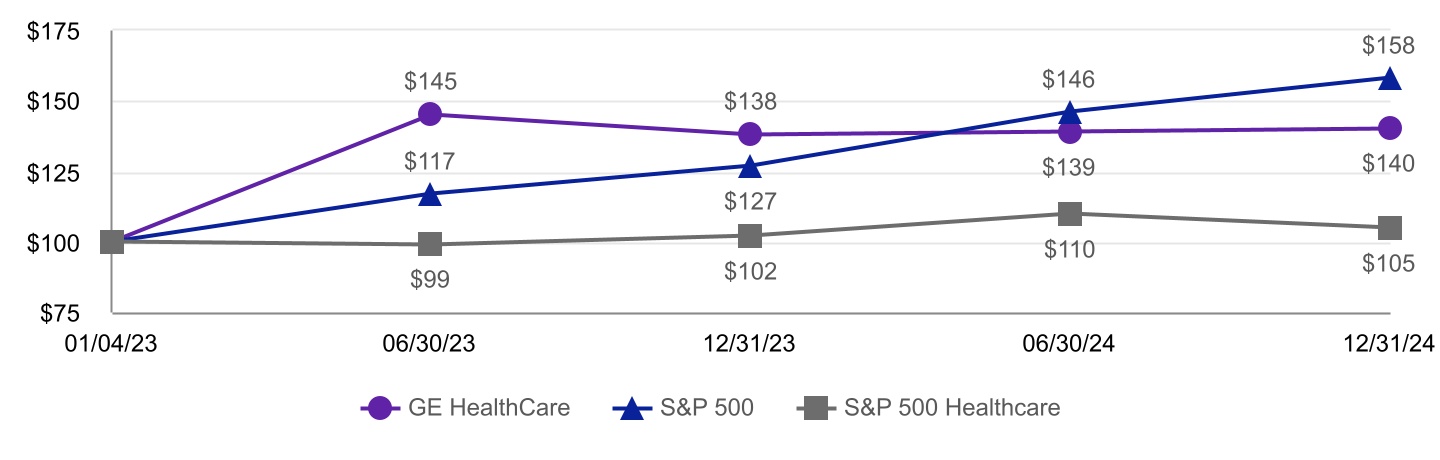
Item 6. [RESERVED]
Item 7. MANAGEMENT’S DISCUSSION AND ANALYSIS OF FINANCIAL CONDITION AND RESULTS OF OPERATIONS
| Part II. Financial Information | |||||
| Index | |||||
| Item 7. Management’s Discussion and Analysis of Financial Condition and Results of Operations (“MD&A”) | Page | ||||
| Trends and Factors Impacting Our Performance | 39 | ||||
| Summary of Key Performance Measures | 40 | ||||
| Results of Operations | 41 | ||||
| Results of Operations – Segments | 44 | ||||
| Non-GAAP Financial Measures | 45 | ||||
| Liquidity and Capital Resources | 50 | ||||
| Recently Issued Accounting Pronouncements | 52 | ||||
| Critical Accounting Estimates | 52 |
MANAGEMENT’S DISCUSSION AND ANALYSIS OF FINANCIAL CONDITION AND RESULTS OF OPERATIONS
The following discussion and analysis of our financial results should be read in conjunction with the consolidated and combined financial statements and corresponding notes (the “financial statements”) included elsewhere in this Annual Report on Form 10-K. The following discussion and analysis provide information management believes to be relevant to understanding the financial results of GE HealthCare Technologies Inc. and its subsidiaries (“GE HealthCare,” the “Company,” “our,” “us,” or “we”) for the years ended December 31, 2024, 2023, and 2022. This discussion contains forward-looking statements that are based upon current expectations and are subject to uncertainty and changes in circumstances; see “Forward-Looking Statements.” Our actual results could differ materially from the results contemplated by these forward-looking statements due to a number of factors, including those discussed below and elsewhere in this Annual Report on Form 10-K, and particularly in Item 1A, “Risk Factors.”
On January 3, 2023, the General Electric Company, which now operates as GE Aerospace (“GE”), completed the spin-off of GE HealthCare Technologies Inc. (the “Spin-Off”). For further information regarding the Spin-Off, refer to Note 1, “Organization and Basis of Presentation.”
The following tables are presented in millions of United States (“U.S.”) dollars unless otherwise stated, except for per-share amounts which are presented in U.S. dollars. Certain columns and rows may not sum due to the use of rounded numbers. Percentages presented are calculated from the underlying whole-dollar amounts, and unless otherwise stated, represent changes year-over-year.
Effective July 1, 2024, Image Guided Therapies, previously part of the Imaging segment, was realigned to the Ultrasound segment to better match its clinical usage and realize stronger business and customer impact by providing the right image guidance in the right care setting. The Ultrasound segment was subsequently renamed Advanced Visualization Solutions (“AVS”). Following this realignment, the Company continues to have four reportable segments: Imaging, Advanced Visualization Solutions, Patient Care Solutions (“PCS”), and Pharmaceutical Diagnostics (“PDx”). These segments have been identified based on the nature of the products sold and how the Company manages its operations. Historical segment financial information presented within this report has been recast to conform to the new reportable segments structure. For additional information on the nature of our business and our segments, refer to Item 1, “Business” and Note 4, “Segment and Geographical Information.”
TRENDS AND FACTORS IMPACTING OUR PERFORMANCE
We believe that our performance and future success depend on a number of factors that present significant opportunities for us but also pose risks and challenges, including those discussed below and particularly in Item 1A, “Risk Factors.”
KEY TRENDS AFFECTING RESULTS OF OPERATIONS.
Russia and Ukraine Conflict
We had $162 million and $153 million of assets in, or directly related to, Russia and Ukraine as of December 31, 2024 and December 31, 2023, respectively, none of which are subject to sanctions that impact the carrying value of the assets. We generated revenues of $363 million, $340 million, and $395 million from customers in these two countries for the years ended December 31, 2024, 2023, and 2022, respectively. The potential inability to repatriate earnings from these two countries will not have a material impact on our ability to operate.
We continue to monitor the effects of Russia’s invasion of Ukraine, including the consideration of financial impact, cybersecurity risks, the applicability and effect of sanctions, and the employee base in Ukraine and Russia. Under the current U.S. Department of Commerce regulations, we are permitted to export, re-export, or transfer medical equipment and spare parts that meet stated criteria under a License Exception, which has eliminated the need for us to obtain individual U.S. licenses in most cases; however, licenses still may be needed for some transactions. The European Union and other countries have also expanded licensing requirements for certain spare parts, services, software, and other items. We will continue to apply for licenses to supply to these customers and to support our business in Russia, as required. The implementation of these measures affected our ability to supply customers in Russia during the years ended December 31, 2024 and 2023 and will continue to do so as we confirm applicability of the U.S. License Exception to our transactions and continue to obtain licenses. There is no guarantee we will obtain all of the licenses for which we applied, that any approvals we obtain will be on a timely basis, or that our business in Russia will not be further disrupted due to evolving legal or operational considerations. The Board, together with management, will continue to assess whether developments related to the conflict have had, or are reasonably likely to have, a material impact on the Company.
China Market
We continue to monitor developments in the market in China. In March 2024, the government in China announced a new stimulus program (“2024 stimulus”) that includes the healthcare sector and is being implemented through China’s provinces. In addition, an anti-corruption campaign directed at the healthcare sector remains ongoing. Both of these factors contributed to delayed orders and sales in our China business throughout 2024. We expect the 2024 stimulus program will result in opportunities for our business in China in the longer term, but it has had a short-term impact as provinces develop and announce their plans and customers begin to make purchasing decisions. We expect the effects of the delay in the 2024 stimulus and the anti-corruption campaign to continue to impact our orders and sales in the near term, although we are unable to predict the exact duration or magnitude of the impact. We expect both of these impacts to be temporary, and we believe the focus of government policy in China on expanding access to healthcare will benefit our business in China in the long term.
Tariffs
In February 2025, the United States imposed additional tariffs on products from China. These tariffs, and any future tariffs, including on products from Mexico or Canada, by the United States or other countries, will likely result in additional costs to us. The impact of tariffs wil
Showing the first 8K of 86K characters. Open the full section
Item 7A. QUANTITATIVE AND QUALITATIVE DISCLOSURES ABOUT MARKET RISK
We are exposed to market risk primarily from changes in foreign currency exchange rates, interest rates, commodity prices, and equity prices, which may impact future income, cash flows, and fair value of our business. In certain situations, we may seek to reduce cash flow volatility associated with changes in foreign currency exchange rates, the foreign currency risk associated with our net investment in foreign operations, or the fair value interest rate risk of our financial instruments bearing fixed interest by entering into financial arrangements intended to provide a hedge against a portion of such risks. We continue to have exposure to such risks to the extent they are not hedged. We enter into derivative contracts to the extent they meet the objectives described above, and not for speculative purposes. See Note 13, “Financial Instruments and Fair Value Measurements” for further information about our risk exposures, our use of derivatives, and the effects of this activity on our financial statements.
FOREIGN CURRENCY RISK.
As a result of our global operations, we generate and incur a significant portion of our revenues and expenses, including those arising from intercompany transactions, in currencies other than the functional currency of our foreign operations creating exposure to foreign currency translation risk. Such principal currencies include the Euro, the Chinese Renminbi, the Japanese Yen, the Norwegian Krone, and the British Pound Sterling, among others. Operating entities with functional currencies other than the USD also create exposure to foreign currency risk realized upon their sale or a complete or substantially complete liquidation.
We use a number of techniques to manage the effects of foreign currency exchange risk, including hedging of significant currency exposures. We use cash flow hedging primarily to reduce or eliminate the effects of foreign currency exchange rate changes on purchase and sale contracts and economic hedges when we have exposures to foreign currency exchange risk for which we are unable to meet the requirements for hedge accounting. We use net investment hedging to hedge the foreign currency risk of our net investment in foreign operations against adverse movements in exchange rates against the USD. As a result of the above mitigating activities, we have been able to significantly reduce the financial impact of volatility from currency fluctuations.
The potential decrease in fair value of our foreign currency derivative contracts from a 10% decrease in USD spot rates against other applicable currencies would have been $82 million as of December 31, 2024. This excludes foreign currency derivative contracts designated as net investment hedges as changes in the fair value of those contracts are not expected to impact earnings. The sensitivity analysis assumes a uniform weakening of USD spot rates against the other applicable currencies, compared to the actual exchange rates applied as of December 31, 2024, with all other factors remaining constant. This sensitivity analysis disregards the offsetting change in value of the underlying hedged currency exposures in earnings.
The effect arising from foreign currency transactions, including the remeasurement of derivatives mentioned above, can result in significant fluctuations at points in time, but generally will be offset as the underlying hedged item is recognized in earnings. The global nature of our customer base and manufacturing footprint allows for the natural offset of certain income and costs denominated in foreign currencies. See Note 2, “Summary of Significant Accounting Policies” for net gains (losses) from foreign currency transactions for the years ended December 31, 2024, 2023, and 2022.
INTEREST RATE RISK.
We are exposed to interest rate risk due to changes in benchmark interest rates related to the fair value of our borrowings bearing fixed interest rates and variability of cash flows related to our investments and borrowings bearing variable interest rates.
As of December 31, 2024, we have $8,250 million of fixed-rate debt and $750 million outstanding on the Term Loan Facility which carries a variable interest rate. As of December 31, 2024, we have $2,889 million of Cash, cash equivalents, and restricted cash, of which $1,885 million is invested in short-term investments that generate income based on variable interest rates.
A change in interest rates would impact the fair value of our fixed-rate debt and would impact our earnings and cash flows associated with our floating-rate debt. A hypothetical change of interest rates by 100 basis points would increase or decrease our annual interest expense by approximately $35 million, partially offset by the change in interest income from our cash investments.
We primarily manage interest rate risk by using a mix of fixed-rate and variable-rate debt that we deem appropriate. As of December 31, 2024, we executed an aggregate notional amount of interest rate swap contracts to synthetically convert $2,700 million of our senior unsecured notes from fixed rates to variable rates as part of our interest rate risk management strategy.
COMMODITY RISK.
We rely upon supplies of certain raw materials including helium, iodine, and rare earth minerals. Worldwide demand, availability, and pricing of these raw materials have been volatile, and we expect that availability and pricing will continue to fluctuate in the future. If supply of these materials is restricted or if prices increase, this could constrain our manufacturing of affected products, reduce our profit margins, or otherwise adversely affect our business, our customers, and patients who may rely on our products.
Similarly, commodities and energy prices are subject to significant volatility. If the costs of certain commodities or of energy, shipping, or transportation increase and we are unable to pass along these costs to our customers, our profit margins would be adversely affected. Furthermore, increasing our prices to our customers could result in long-term sales declines or loss of market share if our customers find alternative suppliers, which could have a material adverse effect on our results of operations.
Disruptions in deliveries, capacity constraints, production disruptions up- or down-stream, price increases, or decreased availability of raw materials or commodities (including as a result of war, natural disasters, climate change-related physical and transitional risks, actual or threatened public health emergencies, or other business continuity events) adversely affect our operations and, depending on the length and severity of the disruption, can limit our ability to meet our commitments to customers or significantly impact our operating profit or cash flows.
We may from time to time engage in hedging transactions to reduce the impact to earnings from commodity price fluctuations. The impact of commodity hedges is recognized in earnings in the applicable current period.
EQUITY RISK.
As of December 31, 2024, we have $260 million of deferred compensation liabilities subject to the risk of changes in equity prices. A change in the U.S equity markets would result in a corresponding change in the value of these deferred compensation liabilities, which would impact our earnings and cash flows. We may from time to time engage in hedging transactions to reduce the impact to earnings from equity price fluctuations.
Item 8. FINANCIAL STATEMENTS AND SUPPLEMENTARY DATA
REPORT OF INDEPENDENT REGISTERED PUBLIC ACCOUNTING FIRM
To the stockholders and the Board of Directors of GE HealthCare Technologies, Inc.
Opinion on the Financial Statements
We have audited the accompanying consolidated statements of financial position of GE HealthCare Technologies, Inc. (the "Company") as of December 31, 2024 and 2023, the related consolidated and combined statements of income, comprehensive income (loss), changes in equity, and cash flows, for each of the three years in the period ended December 31, 2024, and the related notes (collectively referred to as the "financial statements"). In our opinion, the financial statements present fairly, in all material respects, the financial position of the Company as of December 31, 2024 and 2023, and the results of its operations and its cash flows for each of the three years in the period ended December 31, 2024, in conformity with accounting principles generally accepted in the United States of America.
We have also audited, in accordance with the standards of the Public Company Accounting Oversight Board (United States) (PCAOB), the Company's internal control over financial reporting as of December 31, 2024, based on criteria established in Internal Control — Integrated Framework (2013) issued by the Committee of Sponsoring Organizations of the Treadway Commission and our report dated February 13, 2025, expressed an unqualified opinion on the Company's internal control over financial reporting.
Basis for Opinion
These financial statements are the responsibility of the Company's management. Our responsibility is to express an opinion on the Company's financial statements based on our audits. We are a public accounting firm registered with the PCAOB and are required to be independent with respect to the Company in accordance with the U.S. federal securities laws and the applicable rules and regulations of the Securities and Exchange Commission and the PCAOB.
We conducted our audits in accordance with the standards of the PCAOB. Those standards require that we plan and perform the audit to obtain reasonable assurance about whether the financial statements are free of material misstatement, whether due to error or fraud. Our audits included performing procedures to assess the risks of material misstatement of the financial statements, whether due to error or fraud, and performing procedures that respond to those risks. Such procedures included examining, on a test basis, evidence regarding the amounts and disclosures in the financial statements. Our audits also included evaluating the accounting principles used and significant estimates made by management, as well as evaluating the overall presentation of the financial statements. We believe that our audits provide a reasonable basis for our opinion.
Critical Audit Matter
The critical audit matter communicated below is a matter arising from the current-period audit of the financial statements that was communicated or required to be communicated to the audit committee and that (1) relates to accounts or disclosures that are material to the financial statements and
Showing the first 8K of 266K characters. Open the full section
Item 9. CHANGES IN AND DISAGREEMENTS WITH ACCOUNTANTS ON ACCOUNTING AND FINANCIAL DISCLOSURE
None.
Item 9A. CONTROLS AND PROCEDURES
EVALUATION OF DISCLOSURE CONTROLS AND PROCEDURES.
Under the supervision and with the participation of the Company’s management, including the Chief Executive Officer and Chief Financial Officer, the Company evaluated its disclosure controls and procedures as defined in Rules 13a-15(e) and 15d-15(e) under the Exchange Act. Based on this evaluation, the Chief Executive Officer and Chief Financial Officer concluded that the Company’s disclosure controls and procedures were effective as of December 31, 2024, and that the information required to be disclosed by the Company in the reports that it files or submits under the Exchange Act is recorded, processed, summarized, and reported, within the time periods specified in the SEC’s rules and forms, and that such information is accumulated and communicated to management, including the Chief Executive Officer and Chief Financial Officer, as appropriate, to allow timely decisions regarding required disclosure.
MANAGEMENT’S REPORT ON INTERNAL CONTROL OVER FINANCIAL REPORTING.
The Company’s management is responsible for establishing and maintaining adequate internal control over financial reporting. Management has evaluated the effectiveness of the internal control over financial reporting, based on the framework and criteria established in Internal Control – Integrated Framework (2013) issued by the Committee of Sponsoring Organizations of the Treadway Commission, and concluded that they were effective as of December 31, 2024. All internal control systems have inherent limitations; as such, they may not prevent or detect all misstatements or fraud. Therefore, even those internal control systems determined to be effective can provide only reasonable assurance with respect to financial statements preparation and reporting. Additionally, projections of any evaluation of effectiveness to future periods are subject to the risk that the current control structure may become inadequate for changes in conditions or the degree of compliance with the policies may deteriorate.
The effectiveness of such controls has been audited by Deloitte & Touche LLP, our independent registered public accounting firm, as stated in their report included in Item 8, “Financial Statements and Supplementary Data” of this Annual Report on Form 10-K.
CHANGES IN INTERNAL CONTROL OVER FINANCIAL REPORTING.
During the quarter ended December 31, 2024, the Company continued to exit from various transition service agreements with GE, primarily related to IT systems that impact financial reporting. Consequently, responsibility for execution of related internal controls transferred to the Company, including general IT controls in connection with IT environment changes. Other than those discussed in the preceding sentences, there were no changes in the Company’s internal control over financial reporting that occurred during the quarter ended December 31, 2024 that materially affected or are reasonably likely to materially affect the Company’s internal control over financial reporting.
Item 9B. OTHER INFORMATION
DIRECTOR AND OFFICER TRADING ARRANGEMENTS.
None of our directors or executive officers adopted or terminated a Rule 10b5-1 trading arrangement or a non-Rule 10b5-1 trading arrangement (as defined in Item 408(c) of Regulation S-K) during the quarterly period covered by this report.
Item 9C. DISCLOSURE REGARDING FOREIGN JURISDICTIONS THAT PREVENT INSPECTIONS
Not applicable.
PART III
Item 10. DIRECTORS, EXECUTIVE OFFICERS AND CORPORATE GOVERNANCE
The information required under this item, with the exception of “Information About Our Executive Officers” and “Ethics and Governance” located under Item 1, “Business” of this Annual Report on Form 10-K, is incorporated by reference to the Company’s definitive proxy statement pursuant to Regulation 14A, which will be filed with the Securities and Exchange Commission no later than 120 days after the close of the Company’s fiscal year ended December 31, 2024.
Item 11. EXECUTIVE COMPENSATION
The information required under this item is incorporated by reference to the Company’s definitive proxy statement pursuant to Regulation 14A, which will be filed with the Securities and Exchange Commission no later than 120 days after the close of the Company’s fiscal year ended December 31, 2024.
Item 12. SECURITY OWNERSHIP OF CERTAIN BENEFICIAL OWNERS AND MANAGEMENT AND RELATED STOCKHOLDER MATTERS
The information required under this item is incorporated by reference to the Company’s definitive proxy statement pursuant to Regulation 14A, which will be filed with the Securities and Exchange Commission no later than 120 days after the close of the Company’s fiscal year ended December 31, 2024.
Item 13. CERTAIN RELATIONSHIPS AND RELATED TRANSACTIONS, AND DIRECTOR INDEPENDENCE
The information required under this item is incorporated by reference to the Company’s definitive proxy statement pursuant to Regulation 14A, which will be filed with the Securities and Exchange Commission no later than 120 days after the close of the Company’s fiscal year ended December 31, 2024.
Item 14. PRINCIPAL ACCOUNTANT FEES AND SERVICES
The information required under this item is incorporated by reference to the Company’s definitive proxy statement pursuant to Regulation 14A, which will be filed with the Securities and Exchange Commission no later than 120 days after the close of the Company’s fiscal year ended December 31, 2024.
PART IV
Item 15. EXHIBITS AND FINANCIAL STATEMENT SCHEDULES
FINANCIAL STATEMENTS.
Refer to Item 8, “Financial Statements and Supplementary Data” for a listing of our financial statements.
FINANCIAL SCHEDULES.
Schedules required by Regulation S-X (17 CFR 210) are omitted because they are either not applicable or the financial information is already included within the financial statements or notes thereto.
EXHIBITS.
Item 16. FORM 10-K SUMMARY
Registrants may voluntarily include a summary of information required by Form 10-K under this Item 16. The Company has elected to not include such summary information.
SIGNATURES
Pursuant to the requirements of Section 13 or 15(d) of the Securities Exchange Act of 1934, the Registrant has duly caused this report to be signed on its behalf by the undersigned, thereunto duly authorized.
| GE HealthCare Technologies Inc. | ||||||||
| (Registrant) | ||||||||
| February 13, 2025 | /s/ James K. Saccaro | |||||||
| Date | James K. Saccaro, Vice President & Chief Financial Officer (Principal Financial Officer) |
Pursuant to the requirements of the Securities Exchange Act of 1934, this report has been signed below by the following persons on behalf of the Registrant and in the capacities indicated on February 13, 2025.
| Signature | /s/ Peter J. Arduini | |||||||
| Title | Peter J. Arduini, President & Chief Executive Officer and Director (Principal Executive Officer) | |||||||
| /s/ James K. Saccaro | ||||||||
| James K. Saccaro, Vice President & Chief Financial Officer (Principal Financial Officer) | ||||||||
| /s/ George A. Newcomb | ||||||||
| George A. Newcomb, Chief Accounting Officer (Principal Accounting Officer) | ||||||||
| /s/ H. Lawrence Culp, Jr. | ||||||||
| H. Lawrence Culp, Jr., Chairman of the Board of Directors | ||||||||
| /s/ Rodney F. Hochman | ||||||||
| Rodney F. Hochman, Director | ||||||||
| /s/ Lloyd W. Howell, Jr. | ||||||||
| Lloyd W. Howell, Jr., Director | ||||||||
| /s/ Risa Lavizzo-Mourey | ||||||||
| Risa Lavizzo-Mourey, Director | ||||||||
| /s/ Catherine Lesjak | ||||||||
| Catherine Lesjak, Director | ||||||||
| /s/ Anne T. Madden | ||||||||
| Anne T. Madden, Director | ||||||||
| /s/ Tomislav Mihaljevic | ||||||||
| Tomislav Mihaljevic, Director | ||||||||
| /s/ William J. Stromberg | ||||||||
| William J. Stromberg, Director | ||||||||
| /s/ Phoebe L. Yang | ||||||||
| Phoebe L. Yang, Director |