 filings.tools
Item 1. BUSINESS
54K characters. Original on sec.gov · Markdown
Item 1. BUSINESS
COMPANY OVERVIEW
IDEXX was incorporated in Delaware in 1983. We develop, manufacture, and distribute products and provide services primarily for the companion animal veterinary, livestock and poultry, dairy and water testing markets. We also sell a line of portable electrolytes and blood gas analyzers for the human point-of-care medical diagnostics market. Our primary products and services are:
| • | Point-of-care veterinary diagnostic products, comprised of instruments, consumables, and rapid assay test kits; |
| • | Veterinary reference laboratory diagnostic and consulting services; |
| • | Practice management and diagnostic imaging systems and services used by veterinarians; |
| • | Health monitoring, biological materials testing, laboratory diagnostic instruments, and services used by the biomedical research community; |
| • | Diagnostic, health-monitoring products for livestock, poultry, and dairy; |
| • | Products that test water for certain microbiological contaminants; and |
| • | Point-of-care electrolytes and blood gas analyzers used in the human point-of-care medical diagnostics market. |
Our purpose guides our strategy: to be a great company that creates exceptional long-term value for our customers, employees, and stockholders by enhancing the health and well-being of pets, people, and livestock.
DESCRIPTION OF BUSINESS BY SEGMENT
We operate primarily through three business segments:
 Companion Animal Group (“CAG”) - Diagnostic and information management-based products and services for the veterinary market.
 Water quality products (“Water”) - Design, development, manufacture, and distribution of products used in the detection of various microbiological parameters in water.
 Livestock, Poultry and Dairy (“LPD”) - Diagnostic products and services for livestock and poultry health and to ensure the quality and safety of milk and food, and improve producer efficiency.
Our Other operating segment combines and presents products for the human point-of-care medical diagnostics market (“OPTI Medical”) with our out-licensing arrangements because they do not meet the quantitative or qualitative thresholds for reportable segments.
The performance of our business is particularly subject to various risks that are associated with doing business internationally. For the year ended December 31, 2019, sales of products and services to customers outside the U.S. accounted for approximately 38% of our overall revenue. See “Part I, Item 1A. Risk Factors”, “Part II, Item 7. Management’s Discussion and Analysis of Financial Condition and Results of Operations” and "Part II, Item 8. Financial Statements and Supplementary Data, Note 16. Segment Reporting" to the consolidated financial statements for the year ended December 31, 2019, included in this Annual Report on Form 10-K for more information about our segments and revenue from customers outside of the U.S.
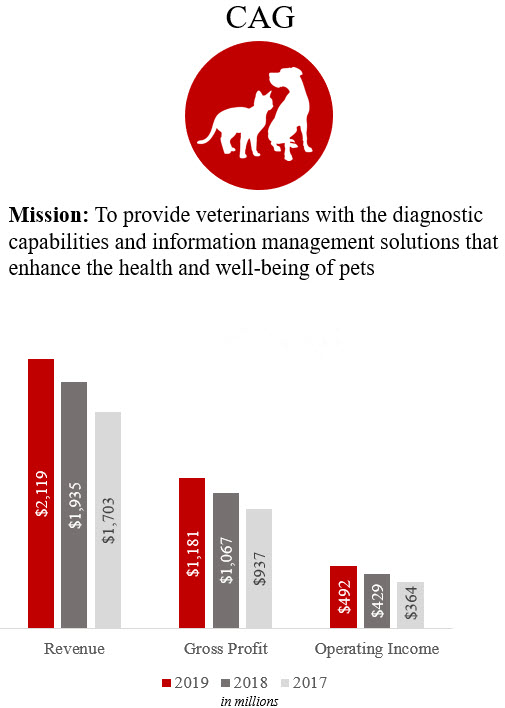
We believe that the breadth of our full diagnostic solution, including novel products and services developed and made available only by IDEXX, as well as the seamless software integration of our offering provide a unique competitive advantage by giving veterinarians the tools and services to offer advanced veterinary medical care. We believe that with the use of our products and services, veterinary practices significantly improve the quality of veterinary care provided to their patients, increase staff efficiencies, and effectively communicate the value of this medical care to the pet owner. We believe that these capabilities, enabled by the use of IDEXX products and services, improve the financial health of the veterinary practice.
CAG Diagnostics
We provide diagnostic capabilities that meet veterinarians’ diverse needs through a variety of modalities, including in-clinic diagnostic solutions and outside reference laboratory services. Regardless of modality utilized, veterinarians are provided with clinically relevant data which is integrated within our information management technologies. The result is a comprehensive view of patient diagnostic information that is easily accessible by both the veterinarian and pet owner.
Integrated Diagnostic Information Management
VetConnect PLUS is a cloud-based technology that enables veterinarians to access and analyze patients’ data from all of IDEXX’s diagnostic modalities. These integrated diagnostic results provide the veterinarian with a visualization of patient-specific testing results, allowing the veterinarian to easily see and trend diagnostic results, enabling greater medical insight and enhanced decision-making. In addition, VetConnect PLUS provides instant mobile or browser-based access to results, which can be printed or emailed to pet owners and other veterinarians. In this way, VetConnect PLUS can aid veterinarians and practice staff in engaging the pet owner in the patient’s care, which can support greater compliance with medical recommendations or preventive care protocols. Customers have activated VetConnect PLUS in over 100 countries.
In-Clinic Diagnostic Solutions
Our in-clinic diagnostic solutions are comprised of our IDEXX VetLab suite of in-clinic chemistry, hematology, immunoassay, urinalysis, and coagulation analyzers, as well as associated proprietary consumable products that provide real-time reference lab quality diagnostic results. Our in-clinic diagnostic solutions also include a broad range of single-use, handheld IDEXX SNAP rapid assay test kits that provide quick, accurate, and convenient point-of-care diagnostic test results for a variety of companion animal diseases and health conditions.
The IDEXX VetLab suite includes several instrument systems, as well as associated proprietary consumable products, all of which are described below. Additionally, we offer extended maintenance agreements in connection with the sale of our instruments.
Blood and Urine Chemistry. We have three blood and urine chemistry analyzers that are used by veterinarians to measure levels of certain enzymes and other substances in blood or urine for monitoring health status and assisting in diagnosing physiologic conditions. We currently sell two of these chemistry analyzers, the Catalyst One Chemistry analyzer and the VetTest Chemistry analyzer. We continue to support our Catalyst Dx Chemistry analyzer, previously sold as part of the Catalyst platform. These three instruments use consumables manufactured for IDEXX by Ortho-Clinical Diagnostics, Inc. (“Ortho”) based on Ortho’s dry slide technology. In addition, the Catalyst analyzers also use dry slide electrolyte consumables manufactured by IDEXX at our Roswell, Georgia facility, as well as certain slides that are manufactured at our Westbrook, Maine facility. Blood tests commonly run on these analyzers include glucose, alkaline phosphatase, ALT (alanine aminotransferase), albumin, calcium, creatinine, blood urea nitrogen, total protein, and many others. Tests are sold individually and in prepackaged panels, called clips. All three analyzers also run a urine test called urine protein:creatinine ratio, which assists in the detection of renal disease.
The Catalyst analyzers provide significantly improved throughput, ease of use and test menu relative to the VetTest analyzer (our original chemistry analyzer), including the ability to run electrolytes, phenobarbital, fructosamine, total thyroxine (“T4”), C-reactive protein, and SDMA, as part of one run. Key ease-of-use features include the ability to run a whole blood sample using an on-board centrifuge, the ability to run pre-packaged, multi-slide clips in addition to single chemistry slides and an automated metering system. These analyzers also enable automated dilutions, which is an ease-of-use feature both for certain blood chemistries and the test for urine protein:creatinine ratio. The Catalyst Dx analyzer allows a veterinarian to run multiple patient samples simultaneously and both the Catalyst Dx and Catalyst One analyzers run different sample types including whole blood, plasma, serum, and urine. The Catalyst SDMA test allows our customers to use the Catalyst One and Catalyst Dx analyzers to screen for SDMA, an innovative proprietary test that detects the onset of canine and feline kidney disease months or years earlier than traditional methods. The Catalyst SDMA Test is also available in a combo kit with T4.
The Catalyst One analyzer is engineered to deliver the same laboratory-quality results and real-time work flow as the Catalyst Dx analyzer. The Catalyst One analyzer currently offers all the same tests as the Catalyst Dx, including an expanded menu of 33 tests.
We also have two other chemistry analyzers, the VetLyte Electrolyte analyzer and the VetStat Electrolyte and Blood Gas analyzer. The VetStat analyzer runs single-use disposable cassettes that are manufactured by IDEXX at our Roswell, Georgia facility.
Sales of consumables to customers who use our chemistry analyzers provide the majority of our instrument consumables revenues from our installed base of IDEXX VetLab instruments.
Hematology. We sell four hematology analyzers that assess the cellular components of blood, including red blood cells, white blood cells, and platelets (also called a complete blood count). These analyzers include the ProCyte Dx hematology analyzer, the first and only in-clinic analyzer to combine laser-flow cytometry, optical fluorescence, and laminar-flow impedance in its analysis; the LaserCyte Dx hematology analyzer, which uses laser-flow cytometry technology in their analysis; and the IDEXX VetAutoread hematology analyzer, our original hematology analyzer. In addition, the ProCyte Dx hematology analyzer, the LaserCyte Dx hematology analyzer, and the LaserCyte hematology analyzer each have the ability to analyze the components of certain body fluids. We also sell the Coag Dx analyzer, which permits the detection and diagnosis of blood clotting disorders.
The ProCyte Dx analyzer, our premier hematology analyzer, provides significantly improved throughput and accuracy and more complete medical information relative to the LaserCyte, LaserCyte Dx and VetAutoread hematology analyzers. The ProCyte Dx analyzer provides up to 27 different blood parameters, including the ability to detect band neutrophils, nucleated red blood cells, and reticulocyte hemoglobin for a more complete picture of a patient’s health. The ProCyte Dx is validated for
many animal species (canine, feline, equine, bovine, ferret, rabbit, gerbil, pig, guinea pig, mini pig, llama, alpaca, camel, sheep, goat, dolphin, and hamster). The LaserCyte and LaserCyte Dx analyzers are the only other point of care hematology analyzers in the veterinary market able to report absolute reticulocyte counts.
Immunoassay Testing Instruments. Our SNAP Pro Analyzer, which automatically activates a SNAP test, properly times the run, and captures an image of the result. This device improves medical care by allowing veterinarians to share the test results with the pet owner on the SNAP Pro Analyzer screen, or via VetConnect PLUS. In addition, the SNAP Pro Analyzer improves staff efficiency and ensures that all SNAP test runs are captured and entered into the patient record for customer billing. ProRead is a software upgrade that enables the SNAP Pro Analyzer to interpret the test results.
With multiple-patient testing functionality, the SNAPshot Dx analyzer provides quantitative measurements of total T4, cortisol and bile acids to assist in the evaluation of thyroid, adrenal and liver function, respectively. The SNAPshot Dx analyzer also reads, interprets, and records the results of many IDEXX rapid assay SNAP tests, including our canine SNAP 4Dx Plus test, feline SNAP FIV/FeLV Combo test, canine SNAP cPL test, feline SNAP fPL test, and canine SNAP Heartworm RT test.
Urinalysis. The SediVue Dx analyzer is designed to provide automated real-time results in a fraction of the time of manual microscope analysis. The SediVue Dx analyzer brings automation, speed and consistency to urinalysis, a traditionally laborious and variable process. Its leading-edge technology allows veterinary staff to perform a urine sediment analysis in approximately 3 minutes. The SediVue Dx analyzer uses proprietary image processing algorithms similar to facial recognition technology to identify clinically relevant particles found in urine and to capture high-contrast digital images that become part of the permanent patient record. The SediVue Dx analyzer leverages its algorithmic software and machine-learning, a type of artificial intelligence, to better identify abnormalities with each result generated, which we refer to as Neural Network 4.0. The IDEXX VetLab UA analyzer provides rapid, automated capture of semi-quantitative chemical urinalysis from IDEXX UA strips and is validated specifically for veterinary use.
IDEXX VetLab Station. The IDEXX VetLab Station (“IVLS”) connects and integrates the diagnostic information from all the IDEXX VetLab analyzers, and thus, provides reference laboratory information management system capability. IVLS securely connects to the Internet, and in this way, enables IDEXX to perform, through its SmartService Solutions wireless services, remote instrument service and software updates to IVLS and certain connected instruments. IVLS also sends all results created on connected instruments instantly to VetConnect PLUS. We sell IVLS as an integral component of the Catalyst One, Catalyst Dx, LaserCyte, LaserCyte Dx and ProCyte Dx analyzers, SNAP Pro Analyzer, SNAPshot Dx analyzer and also as a standalone hardware platform. The IVLS includes a touch screen user interface to simplify laboratory work flow, connect with a practice management system and send information to run the individual analyzers. IVLS also generates one integrated patient report incorporating all of the lab work generated by the IDEXX VetLab suite, stores, retrieves and analyzes historical patient diagnostics data, including SNAP test results, and sends and receives information from practice management systems, including the Cornerstone system, as well as a wide variety of third-party systems.
The SNAP rapid assays are single-use, handheld test kits that can work without the use of instrumentation, although many kits may also be read and recorded automatically by the SNAPshot Dx analyzer or activated and captured automatically by the SNAP Pro Analyzer and interpreted using ProRead, as discussed above. The principal SNAP rapid assay tests are as follows:
Single-Use Canine Tests:
| • | SNAP 4Dx Plus, which tests for the six vector-borne diseases; Lyme disease, Ehrlichia canis, Ehrlichia ewingii, Anaplasma phagocytophilum and Anaplasma platys, and canine heartworm; |
| • | SNAP Heartworm RT, which tests for heartworm; |
| • | SNAP Parvo, which tests for parvovirus, a virus causing life-threatening damage to the immune system and intestinal tract; |
| • | SNAP cPL, which tests for canine pancreatitis; |
| • | SNAP Giardia, which is a fecal test for soluble Giardia antigens, a common cause of waterborne infection; and |
| • | SNAP Lepto, which tests for leptospirosis, a life-threatening bacterial infection spread through contact with water or soil that has been contaminated by the urine of infected animals. |
Sales of canine vector-borne disease tests, including SNAP 4Dx Plus and SNAP Heartworm RT, are greater in the first half of our fiscal year due to seasonality of disease testing in the veterinary practices in the Northern Hemisphere.
Single-Use Feline Tests:
| • | SNAP Feline Triple, which tests for feline immunodeficiency virus (“FIV”) (which is similar to the virus that leads to AIDS in humans), feline leukemia virus (“FeLV”) and feline heartworm; |
| • | SNAP FIV/FeLV Combo Test, which tests for FIV and FeLV; |
| • | SNAP fPL, which tests for feline pancreatitis; |
| • | SNAP Giardia, which is a fecal test for soluble Giardia antigens; and |
| • | SNAP Feline proBNP, which uses a cardiac biomarker (NT proBNP) to test for stretch and stress on the heart. |
Outside Reference Laboratory Diagnostic and Consulting Services
We offer commercial reference laboratory diagnostic and consulting services to veterinarians in many developed markets worldwide, including customers in the U.S., Europe, Canada, Australia, Japan, New Zealand, South Africa, South Korea, and Brazil, through a network of over 80 laboratories. We have reference laboratories in Memphis, Tennessee; Louisville, Kentucky and Leipzig, Germany that are strategically located near large logistics hubs of major air cargo carriers. Customers use our services by submitting samples by courier or overnight delivery to one of our facilities. Most test results have same-day or next-day turnaround times.
Our reference laboratories offer a large selection of tests and diagnostic panels to detect a number of disease states and other conditions in animals, including all tests that can be run in-clinic at the veterinary practice with our instruments or rapid assays. This menu of tests also includes a number of specialized and proprietary tests that we have developed that allow practitioners to diagnose increasingly relevant diseases and conditions in dogs and cats, including parasites, heart disease, allergies, pancreatitis, diabetes, and infectious diseases. Canine vector-borne disease testing volumes are greater in the first half of our fiscal year due to seasonality of disease testing in the veterinary practices in the Northern Hemisphere.
Our broad range of innovative tests include our IDEXX SDMA test, which is an innovative proprietary kidney test that detects the onset of canine and feline kidney disease months or years earlier than traditional methods, as well as our hookworm, roundworm, and whipworm antigen tests on all fecal panels that detect the presence of intestinal worms often undiagnosed by current methods, including finding them earlier in the infection cycle and therefore enabling earlier disease diagnosis and treatment intervention.
Additionally, we provide specialized veterinary consultation, telemedicine, and advisory services, including radiology, cardiology, internal medicine, and ultrasound consulting. These services enable veterinarians to obtain readings and interpretations of test results transmitted by telephone and over the Internet.
Our diagnostic laboratory business also provides health monitoring and diagnostic testing services to biomedical research customers in North America, Europe, and Asia.
Veterinary Software, Services and Diagnostic Imaging Systems
Veterinary Software and Services. We develop, market, and sell a portfolio of software and services for independent veterinary clinics and corporate groups. This portfolio includes:
| • | Practice management systems. Software, hardware, and integrated services that run key functions of veterinary clinics, including managing patient electronic health records (EHR), scheduling, client communication, billing, and inventory management. Our principal practice management systems are Cornerstone (on-premise), IDEXX Neo (cloud-based), DVMAX (on-premise), and IDEXX Animana (cloud-based, available in Europe). We also support several other practice management systems including Better Choice, VPM, VetLINK, and BeeFree. To support the software system needs of practices, IDEXX provides integrated services including: Hardware, Payment Solutions, Data Backup & Recovery, and Practice Supplies including PetDetect boarding collars. |
| • | Software applications that extend workflow capabilities for practices and groups. With our Smart Flow cloud offering, which we acquired in the third quarter of 2018, we are able to improve overall patient management and workflow optimization through coordination and tracking of every step of a patient during a hospital stay. Smart Flow works in conjunction with major veterinary practice management systems, including IDEXX Cornerstone, DVMAX, IDEXX Animana, IDEXX Neo, and certain third-party practice management systems. |
| • | Client marketing and wellness plan management. In addition, we offer cloud-based client communication (Pet Health Network Pro and Pet Health Network 3D) and preventive care plan management software (Petly Plans) designed to strengthen the relationship between the veterinarian and the pet owner. To support the communication needs between general practices and specialty referral practices, IDEXX offers rVetLink software, which we acquired in the second quarter of 2017. Lastly, IDEXX Enterprise provides centralized management and reporting capabilities for groups of veterinary practices. |
Diagnostic Imaging Systems. Our diagnostic imaging systems capture radiographic images in digital form, replacing traditional x-ray film and the film development process, which generally requires the use of hazardous chemicals and darkrooms. We market and sell three diagnostic imaging systems primarily used in small animal veterinary applications: the IDEXX ImageVue DR50, the IDEXX ImageVue DR40, and the IDEXX ImageVue CR20.
Our newest radiography system, the IDEXX ImageVue DR50, enables low-dose radiation image capture without sacrificing clear, high-quality images, a component in reducing the risk posed by excess radiation exposure for veterinary professionals. The IDEXX ImageVue DR50 system also offers wireless capabilities for flexibility in patient positioning.
Our diagnostic imaging systems employ picture archiving and communication system (“PACS”) software called IDEXX-PACS, which facilitates radiographic image capture and review. IDEXX Web PACS is our cloud-based software-as-a-service (“SaaS”) offering for viewing, accessing, storing, and sharing multi-modality diagnostic images. IDEXX Web PACS is integrated with Cornerstone, IDEXX Neo and IDEXX VetConnect PLUS to provide centralized access to diagnostic imaging results alongside patient diagnostic results from any internet connected device. IDEXX Web PACS updates automatically and offers secure storage for an unlimited number of diagnostic images. The software features advanced radiology measurement tools as well as an interactive collaboration feature that allows veterinarians to collaborate and consult remotely with other practitioners.
IDEXX I-Vision Mobile is a software application that allows veterinarians with IDEXX digital radiography systems the ability to request, view and send images using an iPad® or an Android™ mobile tablet. This application integrates with our IDEXX-PACS software.

Our principal products are the Colilert, Colilert-18, and Colisure tests, which detect the presence of total coliforms and E. coli in water. These organisms are broadly used as microbial indicators for potential fecal contamination in water. Our products utilize nutrient-indicators that produce a change in color or fluorescence when metabolized by target microbes in the sample. Our water tests are used by government laboratories, water utilities and private certified laboratories to test drinking water in compliance with regulatory standards, including U.S. Environmental Protection Agency (“EPA”) standards. The tests also are used in evaluating water used in production processes (for example, in beverage and pharmaceutical applications) and in evaluating bottled water, recreational water, wastewater, and water from private wells.
Our Enterolert products detect the presence of enterococci in drinking, waste, and recreational waters. Enterococci, bacteria normally found in human and animal waste, are organisms broadly used as microbial indicators for potential fecal contamination in water. Our Pseudalert products detect the presence of Pseudomonas aeruginosa in pool, spa, and bottled water. Pseudomonas aeruginosa is a pathogen that can cause “hot-tub rash,” “swimmer’s ear”, and potentially fatal infections in individuals with weakened immune systems. Our Filta-Max and Filta-Max xpress products are used in the detection of Cryptosporidium and Giardia in water. Cryptosporidium and Giardia are parasites that can cause potentially fatal gastrointestinal illness if ingested. We also distribute certain water testing kits manufactured by Thermo Fisher Scientific, Inc. that complement our Cryptosporidium and Giardia testing products.
In 2016, we launched Legiolert, a simple culture method test for the detection of Legionella pneumophila, the most common Legionella species in water, and the primary cause of Legionnaires’ disease. The Legiolert test is designed to be used on potable or non-potable water sources with results in seven days.
Our Quanti-Tray products, when used in conjunction with our Colilert, Colilert-18, Colisure, Enterolert, Pseudalert, Heterotrophic Plate Count (HPC) or Legiolert products, provide users quantitative measurements of microbial contamination rather than a presence/absence indication. In 2015, we launched the Quanti-Tray Sealer PLUS, a next generation instrument of the previously available Quanti-Tray Sealer 2X. These instruments are used with the Quanti-Tray products for the determination of bacterial density in water samples. Our SimPlate for HPC product detects the total number of the most common bacteria in a water sample.
We also sell consumables, parts, and accessories to be used with many of our water testing products.
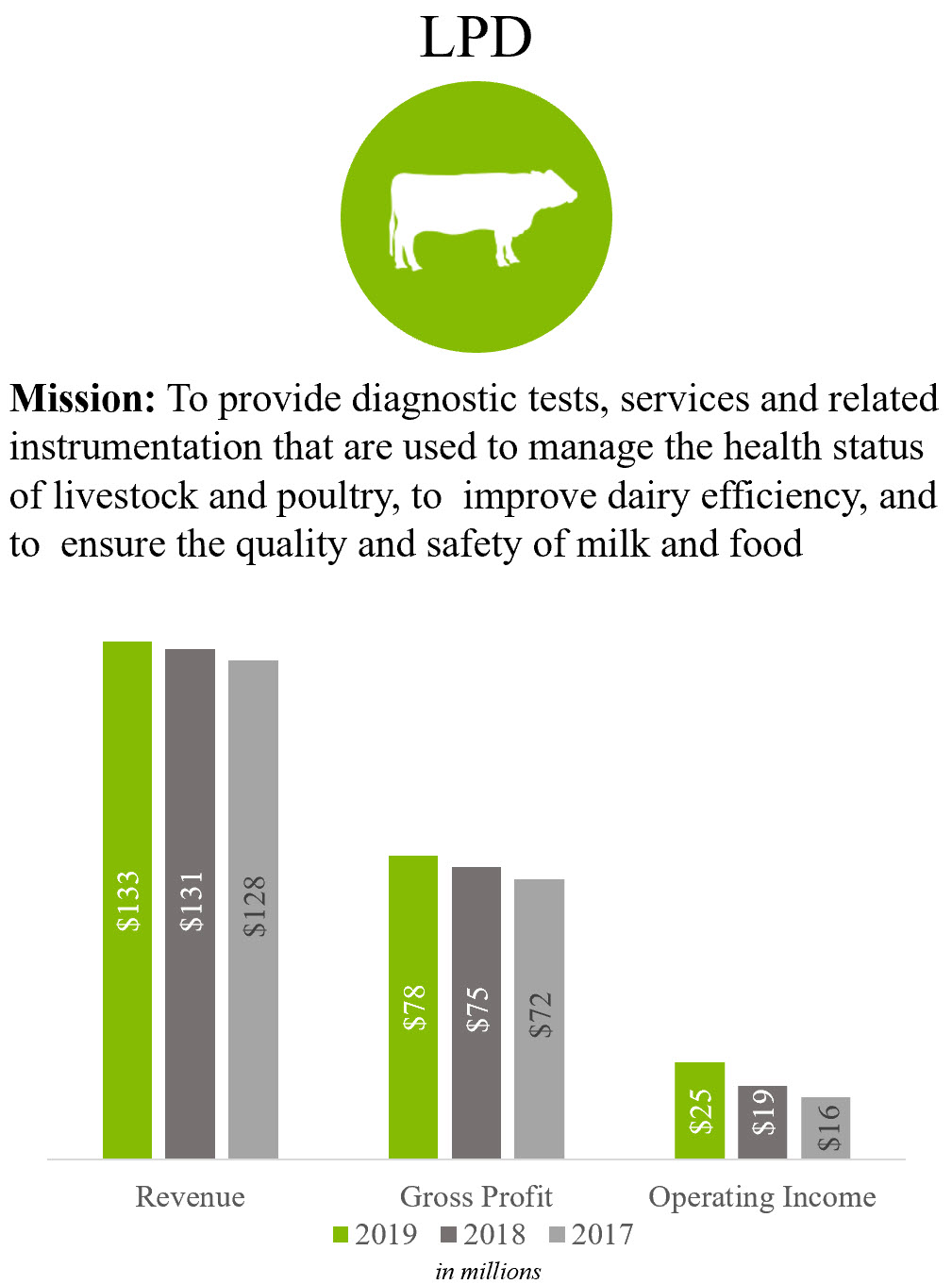
We sell diagnostic tests, services and related instrumentation that are used to manage the health status of livestock and poultry, to improve producer efficiency, and to ensure the quality and safety of milk and food. Our livestock and poultry diagnostic products are purchased by government and private laboratories that provide testing services to livestock veterinarians, producers, and processors. Our herd health screening services are offered to livestock veterinarians and producers. Our principal livestock and poultry diagnostic products include tests for Bovine Viral Diarrhea Virus (“BVDV”) and Porcine Reproductive and Respiratory Syndrome (“PRRS”). BVDV is a common and contagious viral infection that suppresses the immune system, making the animal susceptible to a host of other infections, impacting beef and dairy production yields as a result. PRRS is a contagious virus causing reproductive problems and respiratory diseases in swine, leading to increased piglet mortality, reduced growth, and vulnerability to secondary infections.
Our principal dairy products use our SNAP test platform and are used by dairy producers and processors worldwide to detect antibiotic drug residue in milk. Our primary product lines are SNAP Beta-Lactam ST and SNAPduo Beta-Tetra ST, which detect certain beta lactam and tetracycline antibiotic residues. We also sell SNAP tests for the detection of certain other contaminants in milk, such as Aflatoxin M1.
In 2016, we launched the RealPCR ASFV Test, which is a real-time polymerase chain reaction (PCR) assay for African Swine Fever (ASFV) in domestic and wild swine species. This test provides early and accurate detection of ASFV supporting prevention, control, and eradication programs by veterinarians and producers.
OTHER
OPTI Medical
Through OPTI Medical, we sell point-of-care analyzers and related consumables for use in human medical hospitals and clinics to measure electrolytes, blood gases, acid-base balance, glucose, lactate, blood urea nitrogen and ionized calcium, and to calculate other parameters such as base excess and anion gap. These OPTI analyzers are used primarily in emergency rooms, operating rooms, cardiac monitoring areas and other locations where time-critical diagnostic testing is performed within the hospital setting. Our latest generation OPTI CCA-TS2 Blood Gas and Electrolyte analyzer, which launched in 2013, contains many new features relative to previous generation blood gas analyzers including customized work flows, faster time to result, improved communication, and a multi-level electronic control. Similar to our earlier generation OPTI CCA and OPTI Touch Electrolyte analyzers, the OPTI CCA-TS2 runs whole blood, plasma, and serum samples on single-use disposable cassettes that contain various configurations of analytes.
Other Activities
We own certain drug delivery technology intellectual property, that we continue to seek to commercialize through agreements with third parties, such as pharmaceutical companies, that are included in the Other segment.
MARKETING AND DISTRIBUTION
We market, sell, and service our products worldwide through our marketing, customer service, sales, and technical service groups, as well as through independent distributors and other resellers. We maintain sales offices outside the U.S. in all major regions including Africa, Asia Pacific, Canada, Europe, Middle East, and Latin America.
Generally, we select the appropriate distribution channel for our products based on the type of product, technical service requirements, number and concentration of customers, regulatory requirements, and other factors. We market our companion animal diagnostic products to veterinarians directly in the U.S. Outside the U.S., we sell our companion animal diagnostic products through our direct sales force and, in certain countries, through distributors and other resellers. We sell our veterinary reference laboratory diagnostic and consulting services worldwide, generally through our direct sales force. We market our diagnostic imaging products primarily through our direct sales force in the U.S. and Canada. We market our software products primarily through our direct sales force in the U.S., Canada, Europe, and Australia. We market our Water and LPD products primarily through our direct sales force in the U.S. and Canada. Outside the U.S. and Canada, we market these products through our direct sales force and, in certain countries, through selected independent distributors. We sell our OPTI electrolyte and blood gas analyzers both directly and through independent human medical product distributors in the U.S. and we sell most of the related consumables through the distribution channel. Outside the U.S., we sell our OPTI products primarily through distributors and other resellers.
RESEARCH AND DEVELOPMENT
Our business includes the development and introduction of new products and services and may involve entry into new business areas. We maintain active research and development programs in each of our business segments. Our research and development expenses, which consist of salaries, employee benefits, materials and external consulting and development costs, were $133.2 million for the year ended December 31, 2019, or 5.5% of our consolidated revenue, $117.9 million for the year ended December 31, 2018, or 5.3% of our consolidated revenue and $109.2 million for the year ended December 31, 2017, or 5.5% of our consolidated revenue.
PATENTS AND LICENSES
We actively seek to obtain patent protection in the U.S. and other countries for inventions covering our products and technologies. We also license patents and technologies from third parties. Patents and licenses of patents and technologies from third parties are considered important to the Company based on a variety of factors, including providing protection for the Company’s inventions and other proprietary intellectual property, affording protection from competitors in certain markets, enabling the use of more effective and efficient technologies in the development and production of our products and offerings, strengthening our reputation and standing among customers, employees and key suppliers, and acting as a deterrent against counterfeiters, imitators and other copiers of technologies.
Important patents and licenses include:
| • | An exclusive license from Tulane University to patents that started to expire in 2019 and are continuing into 2020 relating to reagents for the detection of Lyme disease utilized in certain of our SNAP products and a reference laboratory diagnostic test; |
| • | An exclusive license from Cornell University to patents covering methods for detecting BVDV that started to expire in 2017 and will continue into 2022; |
| • | Patents relating to reagents and methods for the detection of Anaplasma phagocytophilum utilized in certain of our SNAP products that started to expire in 2017 and will continue into 2022; |
| • | Patents relating to reagents and methods for the detection of Ehrlichia canis utilized in certain of our SNAP products that expire beginning in 2019 and continuing into 2022; |
| • | A patent concerning LaserCyte consumables that expires in 2020; |
| • | Patents concerning Catalyst consumables that expire beginning in 2020 and will continue into 2035; |
| • | Patents concerning Catalyst instruments that expire beginning in 2026 and will continue into 2032; |
| • | Patents relating to reagents and methods for the detection of canine pancreatic lipase that expire in 2026; and |
| • | Patents relating to reagents and methods for the detection of SDMA that expire in 2029. |
In addition, we have pending U.S. patent applications concerning reagents and methods for detecting SDMA. If such applications are granted, we expect the associated patents would have expirations ranging from 2036 to 2038.
While we consider these proprietary technology rights to be important to us, a range of factors help to mitigate the future effects of patent and license expiration on our results of operations and financial position. These factors include publications, including peer-reviewed third-party studies, that demonstrate the accuracy of our products; our brand strength and reputation in the marketplace; the breadth, quality and integration of our product offerings; our existing customer relationships and our customer support; our sales force; our online ordering platform that enables direct ordering of (including establishing automatic reorder schedules for) our consumables, tests and other products by our customers; the applicable regulatory approval status for certain products; our continued investments in innovative product improvements that often result in new technologies and/or additional patents; our investment in diagnostic innovations that results in new product offerings that often are patentable and that expand the test menu for our in-clinic instruments and/or reference laboratory business; and our significant know-how, scale and investments related to manufacturing processes of associated product offerings and certain supply arrangements for consumables that are compatible with our instruments. Although we have several patents and licenses of patents and technologies from third parties that expired during 2019, and are expected to expire in 2020 and beyond, the expiration of these patents, individually or in the aggregate, is not expected to have a material effect on the Company’s financial position or future operations. In addition, we already face notable competition in certain areas as other companies have been successful in bringing competitive products to market, despite the protections afforded by these proprietary technology rights.
To the extent some of our products may now, or in the future, embody technologies protected by patents, copyrights, or trade secrets of others, we may be required to obtain licenses to such technologies in order to continue to sell our products. These licenses may not be available on commercially reasonable terms or at all. Our failure to obtain any such licenses may delay or prevent the sale of certain new or existing products. See “Part I, Item 1A. Risk Factors.”
PRODUCTION AND SUPPLY
Many of the instruments that we sell are manufactured by third parties. We rely on third parties in our supply chain to supply us, and our direct suppliers, with certain important components, raw materials and consumables used in or with our products. In some cases, these third parties are sole or single source suppliers. From time to time, we seek to qualify alternative suppliers.
Instruments and consumables. Significant products supplied by sole and single source providers include certain Catalyst Dx and Catalyst One consumables (other than electrolyte consumables and the fructosamine, T4, CRP, and SDMA slides), progesterone, VetLyte consumables, LaserCyte and LaserCyte Dx consumables, VetTest, VetAutoread and ProCyte Dx analyzers and consumables, SediVue Dx urinalysis instrument and consumables, and components of our SNAP Pro Mobile Device.
VetTest and certain Catalyst chemistry slides are supplied by Ortho under supply agreements that are currently set to expire in December of 2028. We are required to purchase all of our requirements for our current menu of VetTest and Catalyst chemistry slides from Ortho to the extent Ortho is able to supply those requirements. The agreements provide for pricing based on purchase volumes and a fixed annual inflationary adjustment. The agreements also prohibit Ortho from promoting and selling these chemistry slides in the veterinary market, excluding the EU, other than to IDEXX.
We purchase other analyzers and consumables under supply agreements with terms extending through 2034, which in some cases may be extended at our option. We have minimum purchase obligations under some of these agreements, and our failure to satisfy these obligations may result in loss of some or all of our rights under these agreements. See “Part I, Item 1A. Risk Factors.”
Other components. We purchase certain other products, raw materials, and components from sole and single source suppliers. These products include certain diagnostic imaging systems and certain components used in our SNAP rapid assay and dairy devices, livestock, and poultry testing kits and water testing products.
We have been successful in ensuring an uninterrupted supply of products purchased from sole and single source suppliers. However, there can be no assurance that uninterrupted supply can be maintained if these agreements terminate for any reason or our suppliers otherwise are unable to satisfy our requirements for products. See “Part I, Item 1A. Risk Factors.”
BACKLOG
We do not generally maintain a significant backlog of orders and believe that our backlog at any particular date historically has not been indicative of future sales.
COMPETITION
We compete with many companies ranging from large human and animal health pharmaceutical and medical diagnostics companies to small businesses focused on animal health. Our companion animal veterinary diagnostic products and services compete with both reference laboratory service and in-clinic product providers. Our competitors vary in our different markets. In some markets, academic institutions, governmental agencies, and other public and private research organizations conduct research activities and may commercialize products or services which could compete with our products, on their own or through joint ventures. Several of our direct and potential competitors have substantially greater financial and managerial resources than us, as well as greater experience in manufacturing, marketing, research and development, and obtaining regulatory approvals than we do. For more information on risks related to our competition, see “Part I, Item 1A. Risk Factors."
Competitive factors in our different business areas are detailed below:
| • | Companion animal diagnostic offerings. We compete primarily on the basis of ease of use and speed of our products, diagnostic accuracy, product quality, breadth of our product line and services, unique product innovations, fully integrated technology, information management capability, availability of medical consultation, effectiveness of our sales and distribution channels, quality of our technical and customer service, and our pricing relative to the value of our products and services in comparison with competitive products and services. Our major competitors in most geographic locations in North America are Antech Diagnostics, a unit of VCA Inc., a division of Mars, Incorporated; Zoetis Inc. (including its wholly-owned subsidiary Abaxis, Inc.); Heska Corporation; Samsung Electronics Co., Ltd., and FUJIFILM North America Corporation. We also compete in certain international markets with Zoetis, Fujifilm Holdings Corporation, Samsung Electronics, Arkray, Inc., and BioNote, Inc. |
| • | Water, livestock, poultry, and dairy testing products. We compete primarily on the basis of the ease of use, speed, accuracy, product quality and other performance characteristics of our products and services (including unique tests), the breadth of our product line and services, the effectiveness of our sales and distribution channels, the quality of our technical and customer service, our ability to receive regulatory approvals from governing agencies and our pricing relative to the value of our products in comparison with competitive products and services. Our competitors include highly focused smaller companies and multibillion-dollar companies with small livestock and poultry diagnostics and water testing solution franchises. |
| • | Veterinary Software, Services and Diagnostic Imaging Systems. We compete primarily on the basis of functionality, connectivity to equipment and other systems, performance characteristics, effectiveness of our implementation, training process and customer service, information handling capabilities, advances in technologies and our pricing relative to the value of our products and services. We sell these products primarily in North America and Europe. Our largest competitor in North America and the U.K. is Covetrus, Inc., which offers several systems and leverages its animal health distribution business in sales and service. We also compete with numerous focused smaller companies throughout the markets in which we offer veterinary software, including those offering cloud-based solutions. |
| • | Electrolyte and blood gas analyzers for the human point-of-care medical diagnostics market. We compete primarily on the basis of the ease of use, menu, convenience, international distribution and service, instrument reliability, and our pricing relative to the value of our products. We compete primarily with large human medical diagnostics companies such as Radiometer A/S, Siemens Medical Solutions Diagnostics, Instrumentation Laboratory Company, Abbott Diagnostics, a division of Abbott Laboratories and Roche Diagnostics Corporation. |
GOVERNMENT REGULATION
Many of our products are subject to comprehensive regulation by U.S. and foreign regulatory agencies that relate to, among other things, product approvals, product registrations, manufacturing, import, export, distribution, marketing and promotion, labeling, recordkeeping, testing, quality, storage, product disposal, environmental compliance, and workplace safety. The following is a description of the principal regulations affecting our businesses.
Veterinary diagnostic products. These products include our diagnostic test kits for companion and food animal infectious diseases, including most of our livestock and poultry products and our rapid assay products. These products are licensed and regulated in the U.S. by the Center for Veterinary Biologics within the United States Department of Agriculture (“USDA”) Animal and Plant Health Inspection Service (“APHIS”). These products must be approved by APHIS before they may be sold in and from the U.S. The APHIS regulatory approval process involves the submission of product validation data, including manufacturing process and facility documentation. Following regulatory licensure to market a product, APHIS requires that each lot of product be submitted for test review before release to customers. In addition, APHIS requires special approval to market products where test results are used in part for government-mandated disease management programs. A number of foreign governments accept APHIS approval, to support product registration for sale, distribution, and use within their countries. However, compliance with extensive country-specific regulatory processes is required in connection with importing and marketing diagnostic products in Japan, Germany, Canada, Brazil, the Netherlands, China, and many other countries. We are also required to have a facility license from APHIS to manufacture USDA-licensed products. We have a facility license for our manufacturing facility in Westbrook, Maine which also covers our distribution center in Memphis, Tennessee. Our LPD manufacturing facility in Montpellier, France has been approved by APHIS and we have a permit to import products manufactured in Montpellier, France to the U.S. for distribution.
Our veterinary diagnostic slide and instrument systems, including T4, fructosamine, progesterone, CRP, and SDMA, are veterinary medical devices regulated by the FDA under the Food, Drug and Cosmetics Act (the “FDC Act”). Other FDA regulated products include our non-licensed Rapid Assay products such as SNAP Pancreatic Lipase, Cortisol, Bile Acid, Foal IgG, and ProBNP. While the sale of these products does not require premarket approval by the FDA and does not subject us to the FDA’s current Good Manufacturing Practices regulations (“cGMP”), the FDC Act specifies that these products must not be adulterated, mislabeled, or misbranded.
Water testing products. Our water tests are not subject to formal premarket regulatory approval. However, before a test can be used as part of a water quality monitoring program in the U.S. that is regulated by the EPA, the test must first be approved by the EPA. The EPA approval process involves submission of extensive product performance data in accordance with an EPA-approved protocol, evaluation of the data by the EPA and publication for public comment of any proposed approval in the Federal Register before final approval. Our Colilert, Colilert-18, Colisure, Quanti-Tray, Filta-Max xpress, Enterolert and SimPlate for heterotrophic plate counts products have been approved by the EPA for use under various
regulatory programs. Water testing products are subject to similarly extensive regulatory processes in other countries around the world.
Dairy testing products. Dairy products used in National Conference on Interstate Milk Shipments (“NCIMS”) milk-monitoring programs in the U.S. are regulated by the FDA as veterinary medical devices. However, before products requiring FDA approval can be sold in the U.S., performance data must be submitted in accordance with an FDA-approved protocol administered by an independent body, such as the Association of Analytical Communities Research Institute (“AOAC RI”). Following approval of a product by the FDA, the product must also be approved by NCIMS, an oversight body that includes state, federal and industry representatives. Our SNAP Beta-Lactam antibiotic residue test product has been approved by the FDA, NCIMS and AOAC RI for sale in the U.S. While some foreign countries accept AOAC RI approval as part of their regulatory approval process, many countries have separate regulatory processes.
Human point-of-care electrolyte and blood gas analyzers. Our OPTI instrument systems are classified as Class I and/or Class II medical devices, and their design, manufacture and marketing are regulated by the FDA. Accordingly, we must comply with cGMP in the manufacture of our OPTI products. The FDA’s Quality System regulations further set forth standards for product design and manufacturing processes, require the maintenance of certain records and provide for inspections of our facilities by the FDA. New OPTI products fall into FDA classifications that require notification of and review by the FDA before marketing, and which are submitted as a 510(k) application. OPTI Medical products are also subject to the European Medical Device Directives and regulations governing the manufacture and marketing of medical devices in other countries in which they are sold.
Other Environmental Regulations. All IDEXX products must comply with applicable global product regulations, including those governing consumer product safety and materials requirements such as the Europeans Union's Electromagnetic Compatibility ("EMC") Directive, the European Regulation for Registration, Evaluation, Authorization and Restriction of Chemical Substances ("REACH"), the Restriction of Hazardous Substances ("RoHS") Directive, and the Waste Electrical and Electronic Equipment ("WEEE") Directive. These complex regulatory requirements create risk to IDEXX’s ability to market and sell our products, our business and our financial performance. For more information about the risks associated with various U.S. and foreign government regulation, see "Various U.S. and foreign government regulations could limit or delay our ability to market and sell our products or otherwise negatively impact our business" under "Part I, Item 1A. Risk Factors."
In the European Union, our analyzers and certain associated equipment are subject to the requirements of the RoHS Directive, which regulates and restricts certain hazardous substances in electrical and electronic equipment. Other countries, including China, Russia, the United Arab Emirates, and Turkey have implemented or anticipate implementing regulatory regimes similar to the RoHS Directive. Our veterinary diagnostic instrument systems are not subject to regulation under the European Medical Device Directive or the In Vitro Diagnostic Directive, which are both strictly applicable to human use products. However, these systems are required to meet CE certification, which required compliance with the RoHS Directive, the EMC Directive, and other safety requirements. Similar requirements are specified by most counties in which we sell our products and are subject to increasing harmonization globally.
The European Union was among the first to regulate and restrict the use of certain substances that we currently use in our products. These requirements include the Biocidal Products Regulation, which requires the use of approved biocides in our products prior to being exported to the European Union, and REACH, which regulates and restricts the use of certain chemicals in the European Union. Compliance with these regulations (and similar regulations that have been or may be adopted elsewhere, such as Turkey, Korea, and other countries) may require registration of the applicable substances or the redesign or reformulation of our products. Some of our products, including some of our Companion Animal products, may be subject to pending restriction of microplastics pursuant to REACH.
In the US, the EPA regulates chemical use similarly to the EU. In addition, certain states have their own chemical regulations, such as California's Proposition 65, which requires businesses to provide warnings to California residents about significant risk of exposures to chemicals in products that are known to cause cancer, birth defects or other reproductive harm.
In addition to the foregoing, our business is generally subject to various U.S. and foreign regulatory authorities, including the U.S. Federal Trade Commission (the “FTC”) and other anti-competition authorities, and we are also subject to anti-bribery and anti-corruption laws, such as the Foreign Corrupt Practices Act, import and export laws and regulations, including U.S. import and export control and sanctions laws, and laws and regulations governing the collection, use, retention, sharing and security of data. Development or acquisition of new products and technologies may subject us to additional areas of government regulation. These may involve medical device, water-quality and other regulations of the FDA, the EPA, the USDA, the FTC, and other federal agencies, as well as state, local and foreign governments.
EMPLOYEES
As of February 7, 2020, we had approximately 9,200 employees.
AVAILABLE INFORMATION
Our principal executive offices are located at One IDEXX Drive, Westbrook, Maine 04092, our telephone number is 207-556-0300, and our internet address is www.idexx.com. References to our website in this Annual Report on Form 10-K are inactive textual references only and the content of our website should not be deemed incorporated by reference for any purpose.
We make available free of charge at www.idexx.com our Annual Report on Form 10-K, Quarterly Reports on Form 10-Q, Current Reports on Form 8-K, and amendments to those reports filed or furnished pursuant to Section 13(a) or 15(d) of the Exchange Act as soon as reasonably practicable after we file such information with, or furnish it to, the SEC. In addition, copies of our reports filed electronically with the SEC may be accessed at www.sec.gov.
Our Corporate Governance Guidelines and our Code of Ethics are also available on our website at www.idexx.com.
Previous: Cover and table of contents · Next: Item 1A. RISK FACTORS