 filings.tools
Invesco 10-K 2022-12-31
Filed 2023-02-23. 23 sections, 515K characters. Original on sec.gov · Markdown · JSON
Cover and table of contents
UNITED STATES
SECURITIES AND EXCHANGE COMMISSION
Washington, D.C. 20549
Form 10-K
(Mark One)
| ☑ | ANNUAL REPORT PURSUANT TO SECTION 13 OR 15(d) OF THE SECURITIES EXCHANGE ACT OF 1934 |
For the fiscal year ended December 31, 2022
OR
| ☐ | TRANSITION REPORT PURSUANT TO SECTION 13 OR 15(d) OF THE SECURITIES EXCHANGE ACT OF 1934 |
For the transition period from to
Commission file number 001-13908

Invesco Ltd.
(Exact Name of Registrant as Specified in Its Charter)
| Bermuda | 98-0557567 | ||||||||||||||||
| (State or Other Jurisdiction of Incorporation or Organization) | (I.R.S. Employer Identification No.) | ||||||||||||||||
| 1555 Peachtree Street, N.E., | Suite 1800, | Atlanta, | GA | 30309 | |||||||||||||
| (Address of Principal Executive Offices) | (Zip Code) |
(404) 892-0896
(Registrant’s telephone number, including area code)
Securities registered pursuant to Section 12(b) of the Act:
| Title of each class | Trading Symbol(s) | Name of each exchange on which registered | ||||||
| Common stock, $0.20 par value | IVZ | New York Stock Exchange |
Securities registered pursuant to Section 12(g) of the Act: None
Indicate by check mark if the registrant is a well-known, seasoned issuer, as defined in Rule 405 of the Securities Act. Yes ☑ No ☐
Indicate by check mark if the registrant is not required to file reports pursuant to Section 13 or Section 15(d) of the Act. Yes ☐ No ☑
Indicate by check mark whether the registrant: (1) has filed all reports required to be filed by Section 13 or 15(d) of the Securities Exchange Act of 1934 during the preceding 12 months (or for such shorter period that the registrant was required to file such reports), and (2) has been subject to such filing requirements for the past 90 days. Yes ☑ No ☐
Indicate by check mark whether the registrant has submitted electronically every Interactive Data File required to be submitted pursuant to Rule 405 of Regulation S-T (§ 232.405 of this chapter) during the preceding 12 months (or for such shorter period that the registrant was required to submit such files).
Yes ☑ No ☐
Indicate by check mark whether the registrant is a large accelerated filer, an accelerated filer, a non-accelerated filer, smaller reporting company, or an emerging growth company. See the definitions of “large accelerated filer,” “accelerated filer,” “smaller reporting company,” and "emerging growth company" in Rule 12b-2 of the Exchange Act. (Check one):
| Large accelerated filer | ☑ | Accelerated filer | ☐ | Non-accelerated filer | ☐ | Smaller reporting company | ☐ | ||||||||||||||||
| Emerging growth company | ☐ |
If an emerging growth company, indicate by check mark if the registrant has elected not to use the extended transition period for complying with any new or revised financial accounting standards provided pursuant to Section 13(a) of the Exchange Act. ☐
Indicate by check mark whether the registrant has filed a report on and attestation to its management’s assessment of the effectiveness of its internal control over financial reporting under Section 404(b) of the Sarbanes-Oxley Act (15 U.S.C. 7262(b)) by the registered public accounting firm that prepared or issued its audit report. ☑
If securities are registered pursuant to Section 12(b) of the Act, indicate by check mark whether the financial statements of the registrant included in the filing reflect the correction of an error to previously issued financial statements. ☐
Indicate by check mark whether any of those error corrections are restatements that required a recovery analysis of incentive-based compensation received by any of the registrant’s executive officers during the relevant recovery period pursuant to §240.10D-1(b). ☐
Indicate by check mark whether the registrant is a shell company (as defined in Rule 12b-2 of the Exchange Act.) Yes ☐ No ☑
At June 30, 2022, the aggregate market value of the voting stock held by non-affiliates was $7.7 billion, based on the closing price of the registrant's Common Shares, par value U.S. $0.20 per share, on the New York Stock Exchange. At January 31, 2023, the most recent practicable date, the number of Common Shares outstanding was 454,751,498.
DOCUMENTS INCORPORATED BY REFERENCE
The registrant will incorporate by reference information required in response to Part III, Items 10-14 in its definitive Proxy Statement for its annual meeting of shareholders, to be filed with the Securities and Exchange Commission within 120 days after December 31, 2022.
TABLE OF CONTENTS
We include cross references to captions elsewhere in this Annual Report on Form 10-K, which we refer to as this “Report,” where you can find related additional information. The following table of contents tells you where to find these captions.
GLOSSARY OF DEFINED TERMS
| APAC | — | Asia-Pacific | ||||||
| AUM | — | Assets under management | ||||||
| bps | — | Basis points | ||||||
| CDSC | — | Contingent deferred sales charge | ||||||
| CEO | — | Chief Executive Officer | ||||||
| CFTC | — | Commodity Future Trading Commission | ||||||
| CIP | — | Consolidated investment products | ||||||
| CLOs | — | Collateralized loan obligations | ||||||
| Companies Act | — | Companies Act 1981 of Bermuda | ||||||
| COSO | — | Committee of Sponsoring Organizations of the Treadway Commission | ||||||
| DOL | — | The Department of Labor | ||||||
| EBITDA | — | Earnings before income tax, depreciation and amortization | ||||||
| EMEA | — | Europe, Middle East and Africa | ||||||
| EMIR | — | European Market Infrastructure Regulation | ||||||
| EPS | — | Earnings per share | ||||||
| ERISA | — | Employee Retirement Income Security Act of 1974 | ||||||
| ESG | — | Environmental, social and governance | ||||||
| ETFs | — | Exchange-traded funds | ||||||
| EU | — | European Union | ||||||
| FCA | — | Financial Conduct Authority | ||||||
| GDPR | — | General Data Protection Regulation | ||||||
| GEIP ST | — | 2010 Global Equity Incentive Plan ST | ||||||
| IGW or Invesco Great Wall | — | Invesco Great Wall Fund Management Company Limited | ||||||
| LIBOR | — | The London Inter-Bank Offered Rate | ||||||
| MassMutual | — | Massachusetts Mutual Life Insurance Company | ||||||
| NAV | — | Net asset value | ||||||
| NYSE | — | New York Stock Exchange | ||||||
| PCAOB | — | Public Company Accounting Oversight Board | ||||||
| RSAs | — | Restricted stock awards | ||||||
| RSUs | — | Restricted stock units | ||||||
| S&P | — | Standard & Poor's | ||||||
| SEC | — | U.S. Securities and Exchange Commission | ||||||
| SFC | — | Securities Futures Commission of Hong Kong | ||||||
| the Parent | — | Invesco Ltd. | ||||||
| TRS | — | Total return swaps | ||||||
| UITs | — | Unit Investment Trusts | ||||||
| U.K. | — | United Kingdom | ||||||
| U.S. | — | United States | ||||||
| U.S. GAAP | — | U.S. Generally Accepted Accounting Principles | ||||||
| UCITS | — | Undertakings for the Collective Investment in Transferable Securities | ||||||
| UTBs | — | Unrecognized tax benefits | ||||||
| VIE | — | Variable interest entity | ||||||
| VOE | — | Voting interest entity | ||||||
| XBRL | — | Extensible Business Reporting Language |
i
SPECIAL CAUTIONARY NOTE REGARDING FORWARD-LOOKING STATEMENTS
This Report, other public filings and oral and written statements by us and our management, may include statements that constitute “forward-looking statements” within the meaning of the United States (U.S.) securities laws. These statements are based on the beliefs and assumptions of our management and on information available to us at the time such statements are made. Forward-looking statements include information concerning future results of our operations, expenses, earnings, liquidity, cash flows and capital expenditures, industry or market conditions, assets under management (AUM), geopolitical events and the COVID-19 pandemic and their respective potential impact on the company, acquisitions and divestitures, debt and our ability to obtain additional financing or make payments, regulatory developments, demand for and pricing of our products, the prospects for certain legal contingencies, and other aspects of our business or general economic conditions. In addition, when used in this Report or such other documents or statements, words such as “believes,” “expects,” “anticipates,” “intends,” “plans,” “estimates,” “projects,” “forecasts,” and future or conditional verbs such as “will,” “may,” “could,” “should,” and “would,” and any other statement that necessarily depends on future events, are intended to identify forward-looking statements. None of this information should be considered in isolation from, or as a substitute for, historical financial statements.
Forward-looking statements are not guarantees and they involve risks, uncertainties and assumptions. There can be no assurance that actual results will not differ materially from our expectations. In most cases, such assumptions will not be expressly stated. We caution investors not to rely unduly on any forward-looking statements.
The following important factors, and other factors described elsewhere in this Report or contained in our other filings with the U.S. Securities and Exchange Commission (SEC), among others, could cause our results to differ materially from any results described in any forward-looking statements:
-
significant fluctuations in the performance of capital and credit markets worldwide;
-
adverse changes in the global economy;
-
the performance of our investment products;
-
significant changes in net asset flows into or out of the accounts we manage or declines in market value of the assets in, or redemptions or other withdrawals from, those accounts;
-
competitive pressures in the investment management business, including consolidation, which may force us to reduce fees we earn;
-
any inability to adjust our expenses quickly enough to match significant deterioration in markets;
-
the effect of fluctuations in interest rates, liquidity and credit markets in the U.S. or globally, including regulatory reform of benchmarks, such as the London Inter-Bank Offered Rate (LIBOR);
-
failure to maintain adequate corporate and contingent liquidity;
-
our ability to acquire and integrate other companies into our operations successfully and the extent to which we can realize anticipated product sales, cost savings or synergies from such acquisitions;
-
the occurrence of breaches and errors in the conduct of our business, including errors in our quantitative models and index tracking investment solutions, any failure to properly safeguard confidential and sensitive information, cyber-attacks or acts of fraud;
-
our ability to attract and retain key personnel, including investment management professionals;
-
limitations or restrictions on access to distribution channels for our products;
-
our ability to develop, introduce and support new investment products and services;
-
our ability to comply with client contractual requirements and/or investment guidelines despite preventative compliance procedures and controls;
-
variations in demand for our investment products or services, including termination or non-renewal of our investment management agreements;
-
harm to our reputation;
-
our ability to maintain our credit ratings and access the capital markets in a timely manner;
-
our debt and the limitations imposed by our credit facility;
-
exchange rate fluctuations, especially as against the U.S. Dollar;
-
pandemics or other widespread health crises and governmental responses to the same;
-
the effect of political, economic or social instability in or involving countries in which we invest or do business (including the effect of terrorist attacks, war and other hostilities);
-
the effect of failures or delays in support systems or customer service functions, and other interruptions of our operations;
-
the effect of systems and other technological limitations on our ability to manage and grow our business;
-
the effect of non-performance by our counterparties, third-party service providers and other key vendors to fulfill their obligations;
-
impairment of goodwill and other intangible assets;
-
adverse results in litigation and any other regulatory or other proceedings, governmental investigations and enforcement actions;
-
the selling of our common stock by our significant shareholders; and
-
enactment of adverse federal, state or foreign legislation or changes in government policy or regulation (including accounting standards) affecting our operations, our capital requirements or the way in which our profits are taxed.
Other factors and assumptions not identified above were also involved in the derivation of these forward-looking statements, and the failure of such other assumptions to be realized may also cause actual results to differ materially from those projected. For more discussion of the risks affecting us, please refer to Item 1A, “Risk Factors.”
You should consider the areas of risk described above in connection with any forward-looking statements that may be made by us and our businesses generally. We expressly disclaim any obligation to update any of the information in this or any other public report if any forward-looking statement later turns out to be inaccurate, whether as a result of new information, future events or otherwise. For all forward-looking statements, we claim the “safe harbor” provided by Section 27A of the Securities Act of 1933, as amended, and Section 21E of the Securities Exchange Act of 1934, as amended.
PART I
Item 1. Business
Introduction
Invesco Ltd. (the Parent) and its consolidated subsidiaries (collectively, Invesco or the company) is an independent investment management firm dedicated to delivering an investment experience that helps people get more out of life. Our comprehensive range of active, passive and alternative investment capabilities has been constructed over many years to help clients achieve their investment objectives. We draw on this comprehensive range of capabilities to provide customized solutions designed to deliver key outcomes aligned to client needs.
With approximately 8,600 employees and an on-the-ground presence in more than 20 countries, Invesco is well positioned to meet the needs of investors across the globe. We have specialized investment teams managing investments across a broad range of asset classes, investment styles and geographies. For decades, individuals and institutions have viewed Invesco as a trusted partner for a comprehensive set of investment needs. We have a significant presence in the retail and institutional markets within the investment management industry in the Americas, Europe, Middle East and Africa (EMEA) and Asia-Pacific (APAC), serving clients in more than 110 countries. As of December 31, 2022, the firm managed approximately $1.4 trillion in assets for investors around the world.
The key drivers of success for Invesco are long-term investment performance, high-quality client service and effective distribution relationships delivered across a diverse spectrum of investment management capabilities, distribution channels, geographic areas and market exposures. Through our focus on these areas, we seek to deliver better outcomes for clients and generate competitive investment results, positive net flows, increased AUM and associated revenues.
We measure relative investment performance by comparing our investment capabilities to competitors' products, industry benchmarks and client investment objectives. Generally, distributors, investment advisors and consultants take into consideration longer-term investment performance (e.g., three-year and five-year performance) in their selection of investment products and manager recommendations to their clients. Third-party ratings may also influence client investment decisions. We monitor the quality of client service in a variety of ways, including periodic client satisfaction surveys, analysis of response times and redemption rates, competitive benchmarking of services and feedback from investment consultants.
The company is organized under the laws of Bermuda. Our common shares are listed and traded on the New York Stock Exchange (NYSE) under the symbol “IVZ.” We maintain a website at www.invesco.com/corporate. (Information contained on our website shall not be deemed to be part of, or be incorporated into, this document.)
Strategy
The company focuses on four key long-term strategic objectives that are designed to sharpen our focus on client needs, further strengthen our business over time and help ensure our long-term success:
-
Achieve strong, long-term investment performance** across distinct investment capabilities with clearly articulated investment philosophies and processes, aligned with client needs;
-
Be instrumental to our clients' success** by delivering our distinctive investment capabilities worldwide to meet their needs;
-
Harness the power of our global platform** by continuously improving execution effectiveness to enhance quality and productivity, and allocating our resources to the opportunities that will best benefit clients and our business; and
-
Perpetuate a high-performance organization** by driving greater transparency, accountability, diversity of thought, fact-based decision making and execution at all levels.
As an integrated global investment manager, we are keenly focused on meeting clients' needs and operating effectively and efficiently. We take a unified approach to our business and present our financial statements and other disclosures under the single operating segment “investment management.”
We believe one of Invesco's greatest strengths is our separate, distinct investment teams in multiple markets across the globe. A key focus of our business is fostering a strong investment culture and providing the support that enables our investment teams to maintain well-performing investment capabilities. We believe the ability to leverage the capabilities of our investment teams to help clients across the globe achieve their investment objectives is a significant differentiator for our firm.
Industry Trends
Trends around the world continue to transform the investment management industry and underscore the need to be well diversified with broad capabilities globally and across asset classes:
-
Distribution partners are becoming more selective and continuing to maintain fewer relationships and partners, reducing the number of trusted investment managers with whom they work. Invesco provides a comprehensive range of capabilities, a robust set of value-added services and investment solutions that deliver key outcomes aligned to their investment objectives.
-
Clients and distribution partners are also demanding more from investment managers. While investment performance remains paramount, competitive pricing, client engagement and value-added services (including portfolio analytics and consultative solutions) increasingly differentiate managers. Clients and distribution partners are also increasingly discerning and focused on greater value for their money. Invesco delivers competitive pricing, investor education, thought leadership, digital platforms and other value-added services that enhance the client experience. The firm is also working to enhance the client user experience through digital marketing (web, mobile, social) and improved service.
-
Investors continue to demand alternative, passive and smart beta strategies. As a consequence, the industry is seeing client demand for certain active core equities portfolios decline as a share of global flows. Invesco is the 4th largest exchange-traded funds (ETFs) provider globally. Invesco sponsors 72 ETFs each with greater than $500 million in AUM. Invesco also has a strong lineup of alternative and multi-asset strategies supported by ongoing product development.
-
Environmental, social and governance (ESG) investing is one of the fastest-growing segments of the asset management industry. Invesco offers a broad range of ESG investment capabilities, which enables clients to align their investments with their values. Our approach is "client-led" and "investment-driven" – that is, we seek to offer clients investment products tailored to their specific investment objectives. We offer a broad range of ESG capabilities for clients seeking strategies that align with their interests and investment objectives. We deliver these capabilities through equities, fixed income, multi-asset, alternatives, real estate, ETFs and custom solutions. We also integrate financially material ESG considerations in our investment capabilities.
-
The asset management industry is experiencing pressure on net revenue yield, arising from increased use of low-fee passive products and further concentration within channel distribution partners (which increases their ability to negotiate pricing).
-
Regulatory activity remains at increased levels and is influencing competitive dynamics. Increased regulatory scrutiny of asset managers has focused on many areas, including transparency/unbundling of fees, inducements, conflicts of interest, capital, liquidity, solvency, leverage, operational risk management, controls and compensation. Invesco continues to work proactively with regulators around the world to better understand and help shape the evolving regulatory landscape. Efforts to further modernize and strengthen our global platform will enhance our ability to
compete effectively across markets while complying with the variety of applicable regulatory regimes. This is a key differentiator for large, scaled firms such as Invesco.
-
Although the developed markets in the U.S. and Europe are the two largest markets for financial assets by a wide margin, other key emerging markets in the world, such as Greater China, are growing faster and are positioned for greater future growth over the long term. In particular, the Chinese mutual fund management industry has grown from zero to nearly $4 trillion, and it is expected to become the second-largest fund management market in the world by 2025 with nearly $6 trillion in assets. Building on nearly two decades' presence in the market, Invesco is the largest foreign-owned asset manager with an onshore presence in China. Additionally, population age differences between emerging and developed markets will result in differing investment needs and horizons among countries. Asset allocation and retirement savings schemes also differ substantially among countries. We believe firms such as Invesco, with experience across a variety of key markets and diversified investment capabilities and product types, are best positioned to meet clients' needs in this global competitive landscape.
-
Technology advances are impacting core elements of the investment management industry, which lags other industries in its use of technology. Clients increasingly seek to interact digitally with their investment portfolios. This is leading to established managers investing in and/or acquiring technology platforms. As the investment management business becomes more complex, automation will become increasingly important to serve clients effectively and efficiently. Invesco is leveraging technology across its business and exploring opportunities to work with third-party technology firms to enhance our clients' investment experience. In addition, over the past few years, Invesco has made investments in its digital wealth business, intelliflo.
These dynamics are driving fundamental changes within the industry and, we believe, will drive increasing consolidation. We believe the steps we have taken over the past decade strengthened our ability to understand, anticipate and meet client needs and will help ensure Invesco is well-positioned to compete within our industry over the long term.
Investment Management Capabilities
We believe that the proven strength of our distinct and globally located investment teams and their well-defined investment disciplines and risk management approaches provide us with a robust competitive advantage. There are few independent investment managers with teams as globally diverse as Invesco's and with the same breadth and depth of investment capabilities and vehicles. We offer multiple investment objectives within the various asset classes and products that we manage. Our asset classes, broadly defined, include equity, fixed income, balanced, alternatives and money market. We offer custom solutions across all asset classes and increasingly incorporate financially material ESG considerations into our investment capabilities and processes. Our Global ESG team provides support and analysis, while our investment managers maintain discretion on portfolio decisions.
The following sets forth our major managed investment objectives by asset class:
| Equity | Fixed Income | Balanced | Alternatives | Money Market | ||||||||||
| ● Custom Solutions | ● Custom Solutions | ● Custom Solutions | ● Custom Solutions | ● Custom Solutions | ||||||||||
| ● Environmental, Social and Governance | ● Environmental, Social and Governance | ● Environmental, Social and Governance | ● Environmental, Social and Governance | ● Cash Plus | ||||||||||
| ● Core/Value/Growth Style | ● Buy and Hold | ● Balanced Risk | ● Absolute Return | ● Government/Treasury | ||||||||||
| ● Emerging Markets | ● Convertibles | ● Global/Regional | ● Commodities | ● Prime | ||||||||||
| ● International/Global | ● Core/Core Plus | ● Single Country | ● Currencies | ● Taxable | ||||||||||
| ● Large/Mid/Small Cap | ● Emerging Markets | ● Target Date | ● Direct Lending | ● Tax-Free | ||||||||||
| ● Low Volatility/Defensive | ● Government Bonds | ● Target Risk | ● Distressed Debt | |||||||||||
| ● Passive/Enhanced | ● High-Yield Bonds | ● Traditional Balanced | ● Financial Structures | |||||||||||
| ● Regional/Single Country | ● International/Global | ● Global Macro | ||||||||||||
| ● Smart Beta/Factor-based | ● Investment Grade Credit | ● Infrastructure and MLPs | ||||||||||||
| ● Thematic/Sector | ● Multi-Sector | ● Long/Short Equity | ||||||||||||
| ● Municipal Bonds | ● Managed Futures | |||||||||||||
| ● Passive/Enhanced | ● Multi-Alternatives | |||||||||||||
| ● Regional/Single Country | ● Private Real Estate | |||||||||||||
| ● Short/Ultra-Short Duration | ● Public Real Estate Securities | |||||||||||||
| ● Stable Value | ● Senior Secured Loans | |||||||||||||
| ● Structured Securities | ||||||||||||||
| ● Smart Beta/Factor-based |
Distribution Channels
Retail AUM typically originate from clients investing into funds available to the public in the form of shares or units. Institutional AUM originate from entities such as individual corporate clients, insurance companies, endowments, foundations, government authorities, universities or charities. AUM disclosed as retail channel AUM include AUM distributed by the company's retail sales team. AUM disclosed as institutional channel AUM include AUM distributed by the company's institutional sales team.
The company operates as an integrated global investment manager, presenting itself as a single firm to clients around the world. Dedicated sales forces deliver our investment strategies through a variety of vehicles that meet the needs of retail and institutional clients. Note that not all products sold in the retail distribution channel are in "retail" vehicles, and not all products sold in the institutional channel are in "institutional" vehicles, as described in the table below. This aggregation, however, is viewed as a proxy for presenting AUM in the retail and institutional markets in which we operate.
The following lists our primary investment vehicles by distribution channel:
| Retail | Institutional | ||||||||||
| ● Closed-end Mutual Funds | ● Collective Trust Funds | ||||||||||
| ● ETFs | ● ETFs | ||||||||||
| ● Individual Savings Accounts | ● Institutional Separate Accounts | ||||||||||
| ● Investment Companies with Variable Capital | ● Open-end Mutual Funds | ||||||||||
| ● Investment Trusts | ● Private Funds | ||||||||||
| ● Open-end Mutual Funds | |||||||||||
| ● Separately Managed Accounts | |||||||||||
| ● Société d'investissement à Capital Variable | |||||||||||
| ● Unit Investment Trusts (UITs) | |||||||||||
| ● Variable Insurance Funds |
Retail
Retail AUM were $872.3 billion at December 31, 2022. We offer retail products within all of the major asset classes. Our retail products are primarily distributed through third-party financial intermediaries, including major wire houses, fund supermarkets, regional broker-dealers, insurance companies, banks and financial planners in the Americas, and independent brokers and financial advisors, banks and supermarket platforms in EMEA and APAC.
The Americas and EMEA retail operations rank among the largest by AUM in their respective markets. As of December 31, 2022, Invesco's U.S. retail business, including our ETFs franchise, is a top 10 asset manager in the U.S. by total AUM, and Invesco's retail business in EMEA is among the largest non-proprietary investment managers in the retail channel. In addition, Invesco Great Wall Fund Management Company Limited (IGW or Invesco Great Wall), our joint venture in China, is one of the largest Sino-foreign managers of equity products in China, with total AUM of approximately $89.3 billion at December 31, 2022. We provide our retail clients with one of the industry's most robust and comprehensive product lines.
Institutional
Institutional AUM were $536.9 billion at December 31, 2022. We offer a broad suite of domestic and global strategies, including traditional and quantitative equities, fixed income (including money market funds for institutional clients), real estate, financial structures and absolute return strategies. Regional sales forces distribute our products and provide services to clients and intermediaries around the world. We have a diversified client base that includes major public and private entities, unions, non-profit organizations, endowments, foundations, pension funds, financial institutions and sovereign wealth funds. Invesco's institutional money market funds serve some of the largest financial institutions, government entities and companies in the world.
AUM Diversification
One of Invesco's competitive strengths is the diversification of AUM by client domicile, distribution channel and asset class. We serve clients in more than 110 countries. The following tables present a breakdown of AUM by client domicile, distribution channel and asset class as of December 31, 2022. Additionally, the fourth table below illustrates the split of our AUM as Passive and Active. Passive AUM include index-based ETFs, UITs, non-management fee earning AUM and other passive mandates. Active AUM are total AUM less Passive AUM. See the company's disclosures regarding the changes in AUM for the year ended December 31, 2022 in Part II, Item 7, "Management's Discussion and Analysis of Financial Condition and Results of Operations - Assets Under Management” section for additional information regarding the changes in AUM.
| By Client Domicile |  | |||||||||||||
| ($ in billions) | Total | 1-Yr Change | ||||||||||||
| c Americas | 999.4 | (11.8) | % | |||||||||||
| c EMEA | 186.3 | (19.4) | % | |||||||||||
| c APAC | 223.5 | (9.6) | % | |||||||||||
| Total | 1,409.2 | |||||||||||||
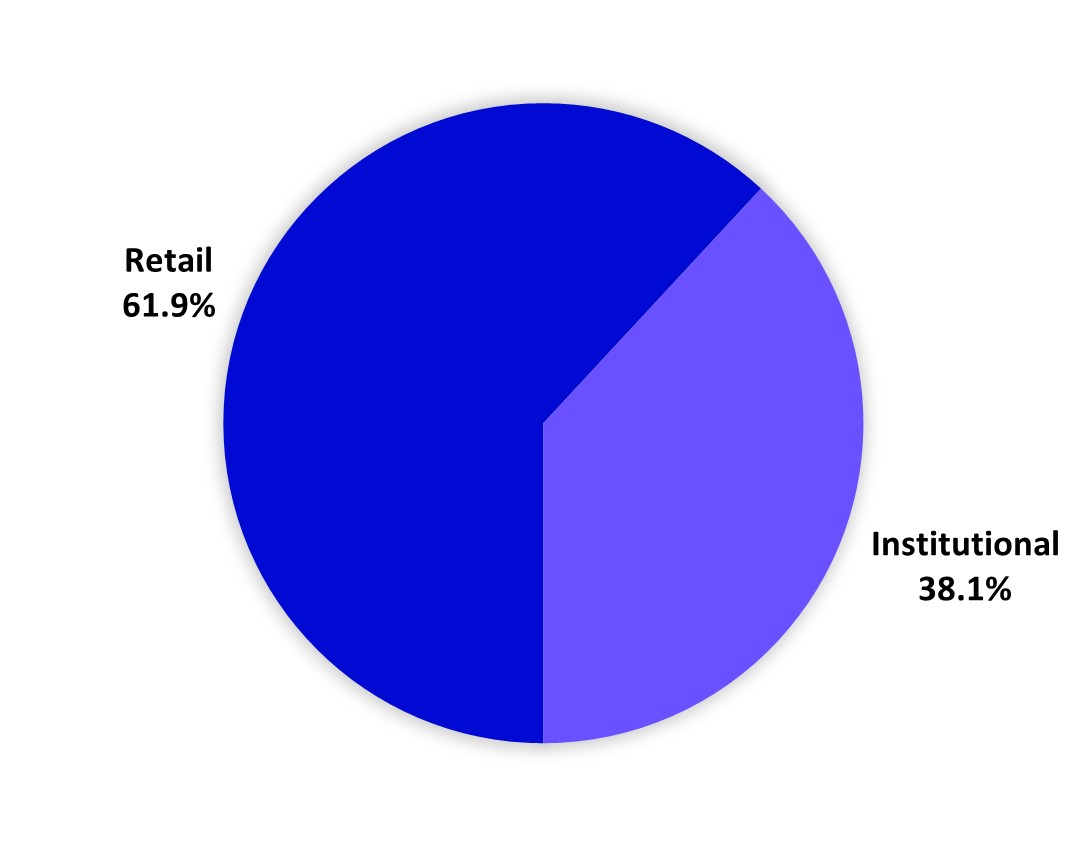 | ||||||||||||||
| By Distribution Channel | ||||||||||||||
| ($ in billions) | Total | 1-Yr Change | ||||||||||||
| c Retail | 872.3 | (21.2) | % | |||||||||||
| c Institutional | 536.9 | 6.4 | % | |||||||||||
| Total | 1,409.2 | |||||||||||||
| By Asset Class | 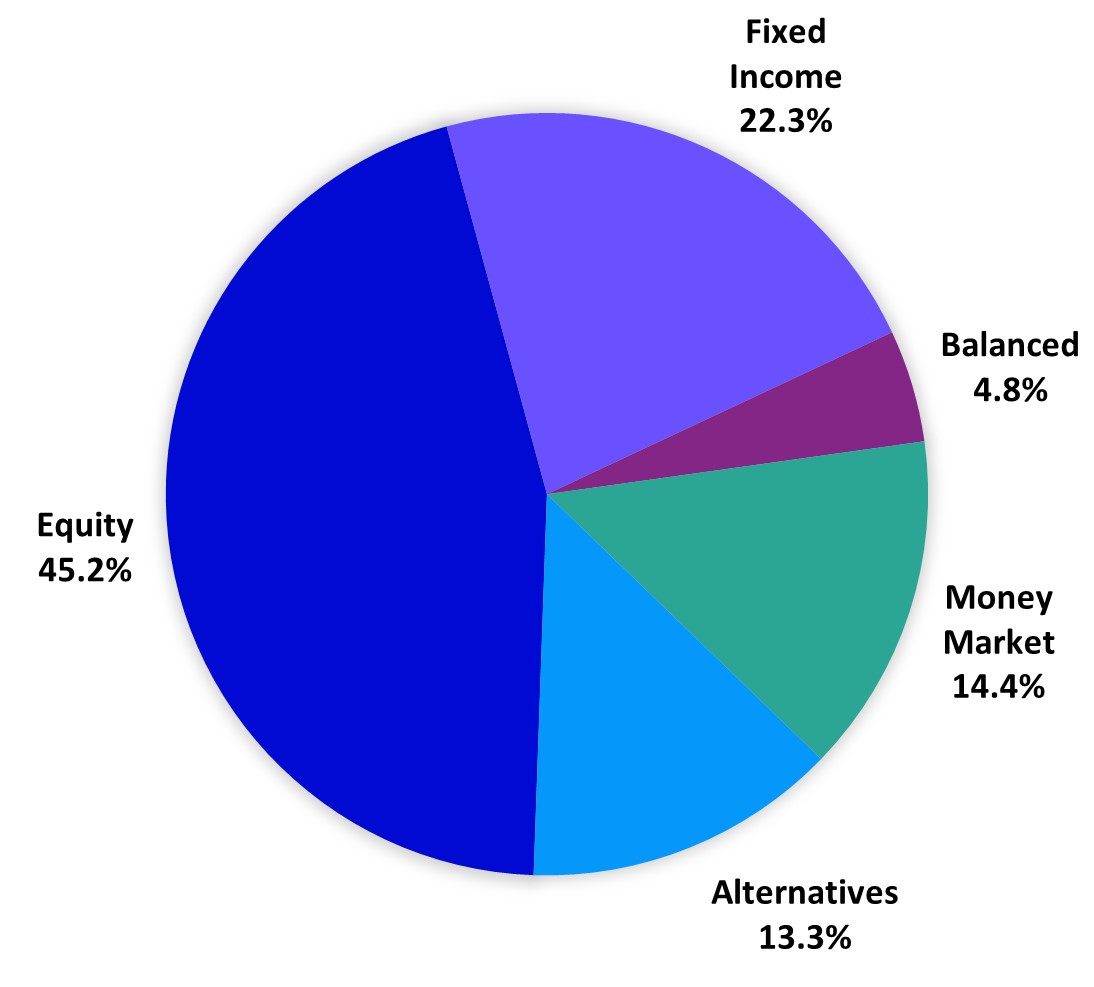 | |||||||||||||
| ($ in billions) | Total | 1-Yr Change | ||||||||||||
| c Equity | 637.0 | (24.3) | % | |||||||||||
| c Fixed Income | 313.7 | (6.3) | % | |||||||||||
| c Balanced | 67.1 | (24.3) | % | |||||||||||
| c Money Market | 203.5 | 36.8 | % | |||||||||||
| c Alternatives | 187.9 | (4.7) | % | |||||||||||
| Total | 1,409.2 | |||||||||||||
| Active vs. Passive | 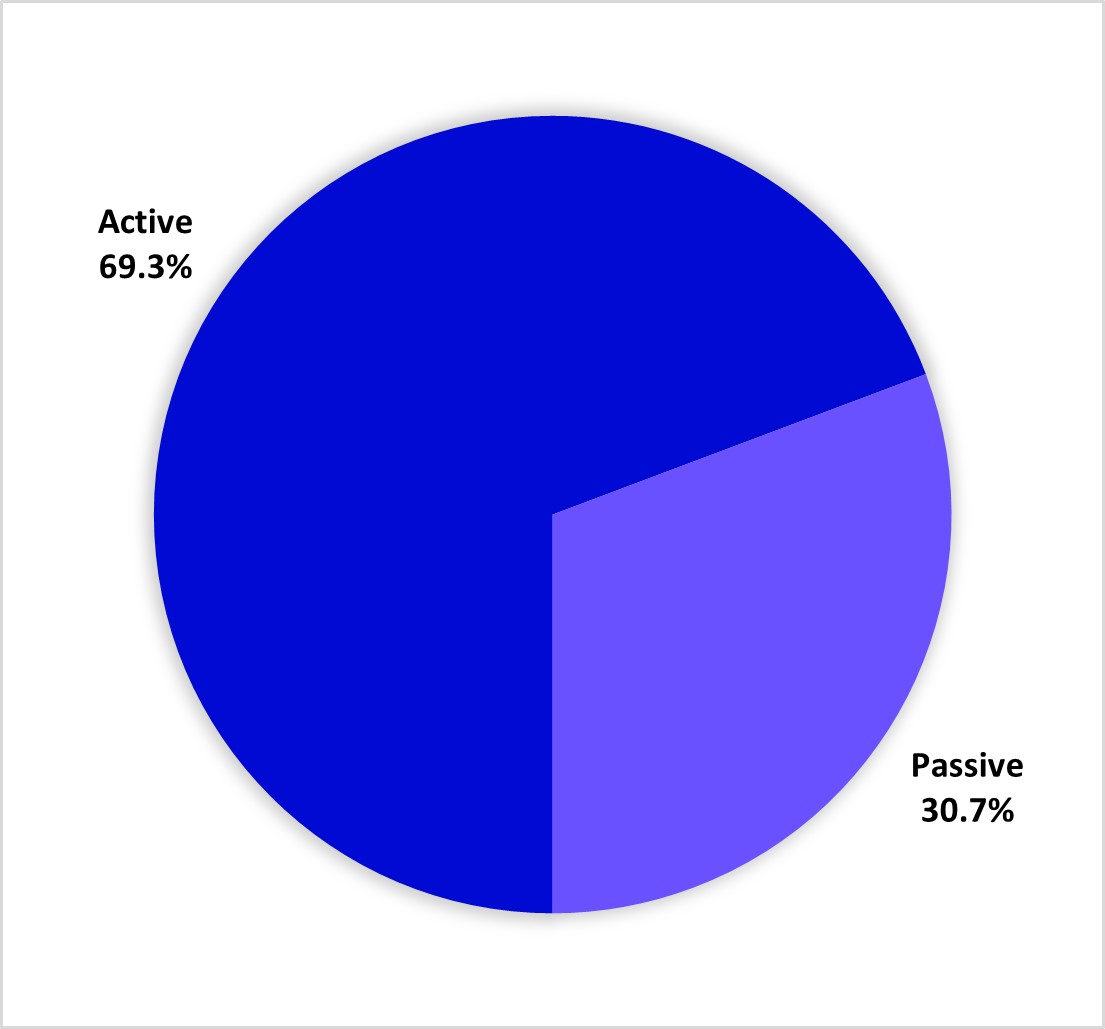 | |||||||||||||
| ($ in billions) | Total | 1-Yr Change | ||||||||||||
| c Active | 976.2 | (9.8) | % | |||||||||||
| c Passive | 433.0 | (18.1) | % | |||||||||||
| Total | 1,409.2 | |||||||||||||
Corporate Responsibility and Human Capital
Invesco’s long-term success depends on our ability to retain, develop, engage and attract top talent. Invesco invests significantly in talent development, health and welfare programs, technology and other resources that support our employees in developing their full potential both personally and professionally. We believe that an employee community that is diverse and inclusive, engaged in community involvement and invested in employee well-being will drive positive outcomes for our clients and shareholders.
We believe that diversity and inclusion are both moral and business imperatives. We are committed to further strengthening diversity at all levels and in all functions across our global business as evidenced by our Chief Executive Officer (CEO) and senior managing directors including a diversity and inclusion goal in their performance goals. Increasing representation of women and other underrepresented employees remains a focus for Invesco, as does building a more inclusive work environment. At the end of 2022, our global workforce was 40% female and 60% male (2021: 39% female and 61% male), with
37% of senior managers worldwide being women (2021: 35%). All new employees are required to take unconscious bias training. Our employees are also encouraged to participate in any of our twelve business resource groups where employees with diverse backgrounds, experiences and perspectives can connect. Our business resource groups are sponsored by senior leaders and are designed by employees, for employees.
As of December 31, 2022, the company had 8,611 employees with an on-the-ground presence in over 20 countries (December 31, 2021: 8,513). Our employees are not covered under collective bargaining agreements.
The company is committed to reducing our impact on the environment. Across Invesco offices, we carefully manage our operational activities with a focus on using natural resources wisely, increasing efficiencies wherever possible and providing a safe and healthy workplace for employees and visitors. This is the foundation of our environmental, health and safety management approach.
Competition
The investment management business is highly competitive, with points of differentiation including investment performance, fees, range of products offered, brand recognition, business reputation, financial strength, depth and continuity of relationships and quality of service. We compete with a large number of investment management firms, commercial banks, investment banks, broker-dealers, hedge funds, insurance companies and, increasingly, firms outside the traditional financial services industry, such as technology providers. Many of these competitors have greater financial resources and higher brand recognition than Invesco. However, we believe our experience as a trusted partner to clients, the quality and diversity of our investment capabilities, product types and channels of distribution, and our commitment to innovation enable us to compete effectively in the global investment management business. There are few independent investment managers with teams as globally diverse as Invesco's and with the same breadth and depth of investment capabilities and vehicles. We offer multiple investment objectives within the various asset classes and products that we manage. We also believe being an independent investment manager is a competitive advantage, as our business model avoids conflicts that are inherent within institutions that both manage and distribute and/or service those products. Lastly, we believe continued execution against our strategic objectives will further strengthen our long-term competitive position.
Management Contracts
We derive substantially all of our revenues from investment management contracts. Fees vary with the type of assets being managed, with higher fees earned on actively managed equity and balanced accounts, along with real estate and other alternative asset products, and lower fees earned on fixed income, money market and stable value accounts and ETFs. Investment management contracts are generally terminable upon thirty or fewer days' notice. Typically, retail investors may withdraw their funds at any time without prior notice and institutional clients may elect to terminate their relationship with investment managers or reduce the aggregate amount of AUM with very short notice periods.
Risk Management
Invesco is committed to continually strengthening and evolving our risk management approach and activities to ensure they keep pace with business change and client expectations. We believe a key factor in our ability to manage through challenging market conditions and significant business change is our integrated and global approach to risk management. We seek to embed risk management in our day-to-day decision-making as well as our strategic planning process, while our global risk management framework seeks to enable consistent and meaningful risk dialogue up, down and across the company.
Our framework leverages two governance structures: (i) our Global Performance and Risk Committee oversees the management of core investment risks; and (ii) our Enterprise Risk Management Committee oversees the management of all other business- and strategy-related risks. A network of regional, business unit and risk-specific management committees, with oversight by the Enterprise Risk Management Committee, provides ongoing identification, assessment, management and monitoring of existing and emerging risks across all domains of our business.
Available Information
The SEC maintains a website that contains reports, proxy and information statements and other information regarding issuers at www.sec.gov. We make available free of charge on our website, www.invesco.com/corporate, our Annual Report on Form 10-K, Quarterly Reports on Form 10-Q, Current Reports on Form 8-K, proxy statement and amendments to those reports filed or furnished pursuant to Section 13(a) or 15(d) of the Securities Exchange Act of 1934, as amended, as soon as reasonably practicable after we electronically file such material with, or furnish it to, the SEC.
Item 1A. Risk Factors
Risks Related to Market Dynamics and Volatility
Volatility and disruption in global or regional capital and credit markets, as well as adverse changes in the global economy, could negatively affect our AUM, revenues, net income and liquidity.
In recent years, capital and credit markets have experienced substantial volatility. In this regard:
-
In the event of extreme circumstances, including economic, political or business crises, such as a widespread systemic failures or disruptions in the global or regional financial systems or failures of firms that have significant obligations as counterparties on financial instruments, we may suffer significant declines in AUM and severe liquidity or valuation issues in managed investment products in which client and company assets are invested, all of which would adversely affect our operating results, financial condition, liquidity, credit ratings, ability to access capital markets and ability to retain and attract key employees. Additionally, these factors could impact our ability to realize the carrying value of our goodwill and other intangible assets.
-
Illiquidity and/or volatility of the global or regional fixed income and/or equity markets could negatively affect our ability to manage client inflows and outflows or to timely meet client redemption requests.
-
Uncertainties regarding geopolitical developments, such as nation state sovereignty, border disputes, diplomatic developments, social instability or changes in governmental policies, can produce volatility in global financial markets. This may impact the levels and composition of our AUM and also negatively impact investor sentiment, which could result in reduced or negative flows.
-
Changes to U.S. tax, tariff and import/export regulations and economic sanctions may have a negative effect on global or regional economic conditions, financial markets and our business. Any changes with respect to trade policies, treaties, taxes, government regulations and tariffs, or the perception that any of these changes could occur, may have a material adverse effect on global or regional economic conditions and the stability of global financial markets, and may significantly reduce global trade or trade between certain nations. Given we are a global business, we could be more adversely affected than others by such market uncertainties.
Our revenues and net income would likely be adversely affected by any reduction in AUM as a result of either a decline in market value of such assets or net outflows, each of which would reduce the investment management fees we earn.
We derive substantially all our revenues from investment management contracts with clients. Under these contracts, the investment management fees paid to us are generally based on the market value of AUM. AUM may decline for various reasons. For any period in which revenues decline, our net income and operating margin would likely decline by a greater proportion because a majority of our expenses remain fixed. Factors that could decrease AUM, revenues, and net income include the following:
Declines in the market value of AUM in client portfolios. Our AUM as of January 31, 2023 were $1,482.7 billion. We cannot predict whether volatility in the markets will result in substantial or sustained declines in the markets generally or result in price declines in market segments in which our AUM are concentrated. Any of the foregoing could negatively impact the market value of our AUM, revenues and net income.
Redemptions and other withdrawals from, or shifting among, client portfolios. These changes could be caused by investors reducing their investments in client portfolios in general or in the market segments in which we focus; investors taking profits from their investments; and portfolio risk characteristics, which could cause investors to move assets to other investment managers. Poor performance relative to other competing products tends to result in decreased sales and increased redemptions with corresponding decreases in our revenues, which may have a material adverse effect on us. Furthermore, the fees we earn vary with the types of assets being managed, with higher fees earned on actively managed equity and balanced accounts, real estate and other alternative asset products, and lower fees earned on fixed income, stable value accounts and passively managed products. Our revenues may decline if clients continue to shift their investments to lower fee accounts.
Our revenues and net income from money market and other fixed income assets may be harmed by interest rates, liquidity and credit volatility.
Inflation is currently at its highest level in 40 years in the U.S. and is hitting decade-long highs in other countries. Central banks, such as the Federal Reserve, are raising interest rates in response to the increase in inflation, which has negatively
impacted and may materially and negatively continue to affect the value of the assets that we manage. Certain institutional investors using money market products and other short-term duration fixed income products for cash management purposes may shift these investments to direct investments in comparable instruments in order to realize higher yields. These redemptions would reduce AUM, thereby reducing our revenues. If securities within a money market portfolio default or investor redemptions force the portfolio to realize losses, there could be negative pressure on its net asset value (NAV). Although money market investments are not guaranteed instruments, the company might decide, under such a scenario, that it is in its best interest to provide support in the form of a support agreement, capital infusion or other methods to help stabilize a declining NAV, which may have an adverse impact on our profitability. Additionally, we have investments in fixed income assets, including collateralized loan obligations (CLOs), real estate-related loans, commercial loans and seed money in fixed income funds, the valuation of which could change with changes in interest and default rates. Declines in the values of AUM could lead to reduced revenues as management fees are generally calculated based upon the size of AUM.
Certain changes in the manner in which interest rates are calculated could also impact our client portfolios. LIBOR will be eliminated as a benchmark reference rate as a result of regulatory reform. We are transitioning our corporate exposure at a corporate and client portfolio level away from LIBOR to alternative short-term rates (such as the Secured Overnight Financing Rate) according to regulatory timelines and guidance. We continue to actively monitor client portfolios holding LIBOR based instruments and strategies utilizing LIBOR as a benchmark and/or performance target and remediate as necessary. Despite our preparations, the discontinuance of LIBOR may adversely affect our client portfolios or products we manage. These changes may also impact the market liquidity and market value of these portfolio investments decreasing AUM, and therefore revenues and net income of the company.
Our financial condition and liquidity would be adversely affected by losses on our seed capital and co-investments**.**
The company has investments in managed investment products that invest in a variety of asset classes, including equities, fixed income products, commodities, derivatives, other similar financial instruments, real estate and other alternative investments. Investments in these products are generally made to establish a track record, meet purchase size requirements for trading blocks or demonstrate economic alignment with other investors in our funds. Adverse market conditions may result in the need to write down the value of these seed capital and co-investments, which may adversely affect our results of oper
Showing the first 8K of 78K characters. Open the full section
Item 1B. Unresolved Staff Comments
None.
Item 2. Properties
Our registered office is located in Hamilton, Bermuda, and our corporate headquarters is in leased office space at 1555 Peachtree Street N.E., Suite 1800, Atlanta, Georgia, 30309, U.S.A. In addition, Invesco's future headquarters, which will also be leased, will be located at 1331 Spring Street, Suite 2500, Atlanta, Georgia, 30309, U.S.A. Our principal regional centers are maintained in leased facilities, except as noted below, in the following locations:
-
Americas: 11 Greenway Plaza, Houston, Texas 77046; 225 Liberty St, New York City, New York 10281
-
EMEA: Perpetual Park, Henley-on-Thames, Oxfordshire, RG9 1HH, United Kingdom (owned facilities)
-
APAC: Champion Tower, No. 3 Garden Road, Hong Kong
We maintain a global enterprise center in Hyderabad, India in leased facilities at DivyaSree Orion in the Ranga Reddy District of Hyderabad, India. We lease office space in over 20 countries.
Item 3. Legal Proceedings
See Item 8, Financial Statements and Supplementary Data, Note 18, "Commitments and Contingencies" for information regarding legal proceedings.
Item 4. Mine Safety Disclosures
Item 5. Market for Registrant's Common Equity, Related Stockholder Matters and Issuer Purchases of Equity Securities
Our common shares are listed and traded on the NYSE under the symbol “IVZ.” At January 31, 2023, there were approximately 5,000 holders of record of our common shares.
The following graph illustrates the cumulative total shareholder return of our common shares over the five-year period beginning from the market close on the last trading day of 2017 through and including the last trading day in the fiscal year ended December 31, 2022 and compares it to the cumulative total return of the S&P 500 Index and to a group of peer investment management companies. This table is not intended to forecast future performance of our common shares.
Cumulative Shareholder Returns
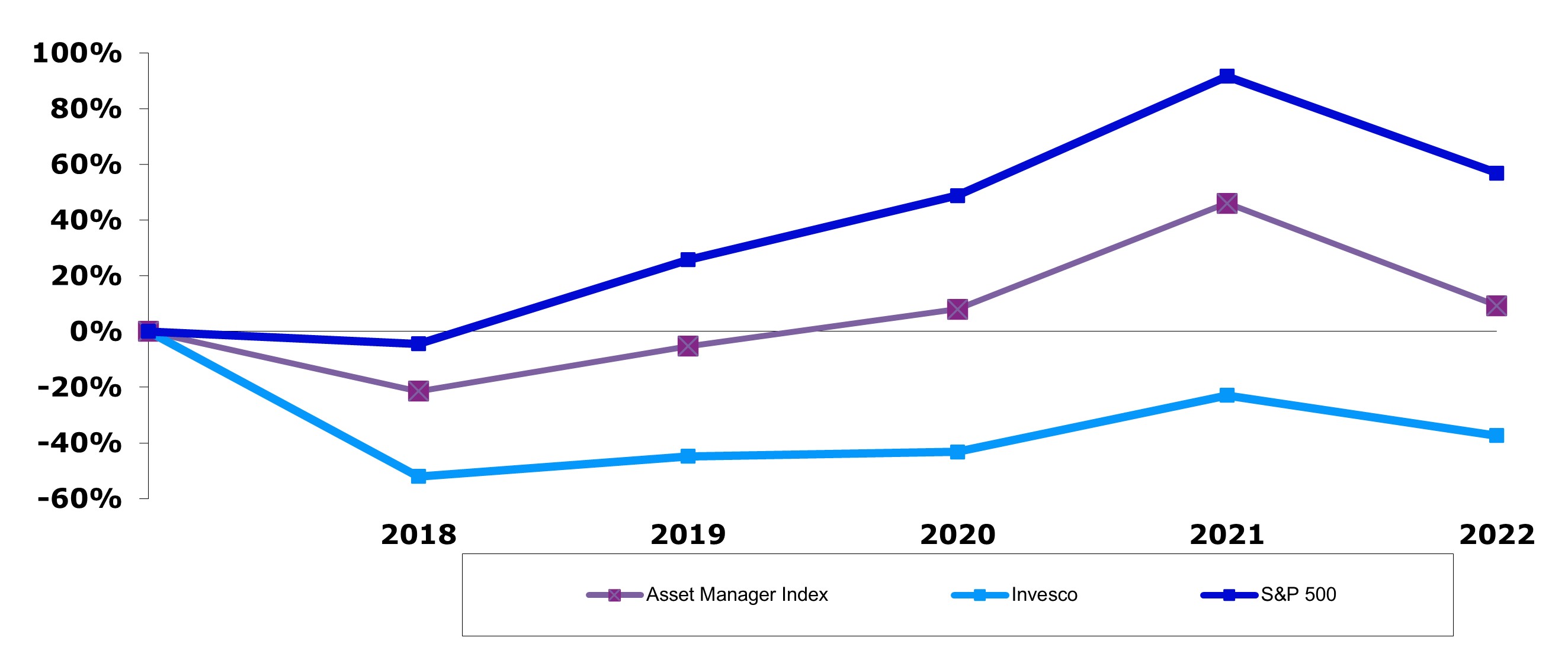
Note: Asset Manager Index includes Alliance Bernstein, Bank of New York Mellon, BlackRock, Franklin Resources,
Invesco Ltd., Janus Henderson, Lazard, Northern Trust, State Street and T. Rowe Price.
Securities Authorized for Issuance under Equity Compensation Plans
The equity compensation plan information required in Item 201(d) of Regulation S-K is set forth in the definitive Proxy Statement for the company's annual meeting of shareholders, which will be filed with the SEC no later than 120 days after the close of the fiscal year ended December 31, 2022 and is incorporated by reference in this Report.
Repurchases of Equity Securities
The following table shows common share repurchase activity during the three months ended December 31, 2022:
| Month | Total Number of Common Shares Purchased (1) | Average Price Paid Per Common Share | Total Number of Common Shares Purchased as Part of Publicly Announced Plans or Programs (2) | Approximate Dollar Value of Common Shares that May Yet Be Purchased Under the Plans or Programs (2) (millions) | |||||||||||||||||||
| October 1 - 31, 2022 | 8,697 | $ | 14.24 | — | $ | 532.2 | |||||||||||||||||
| November 1 - 30, 2022 | 6,407 | $ | 19.26 | — | $ | 532.2 | |||||||||||||||||
| December 1 - 31, 2022 | 201,989 | $ | 19.01 | — | $ | 532.2 | |||||||||||||||||
| 217,093 | — |
(1) An aggregate of 217,093 common shares were surrendered to us by Invesco employees to satisfy tax withholding obligations in connection with the vesting of equity awards during the three months ended December 31, 2022.
(2) At December 31, 2022, a balance of $532.2 million remains available under the common share repurchase authorization approved by the Board on July 22, 2016.
Item 6. [Reserved]
Item 7. Management's Discussion and Analysis of Financial Condition and Results of Operations
The discussion and analysis disclosed herein apply to material changes in the Consolidated Financial Statements for 2022 and 2021. For the comparison of 2021 and 2020, see the Management's Discussion and Analysis of Financial Condition and Results of Operations in Part II, Item 7 of the company’s 2021 Annual Report on Form 10-K, filed with the SEC on February 18, 2022. The following discussion and analysis of the results of operations and financial condition of Invesco should be read in conjunction with the “Forward-looking Statements” disclosure set forth in Part I and the “Risk Factors” set forth in Item 1A of Part I of this Annual Report on Form 10‑K, each of which describe our risks, uncertainties and other important factors in more detail.
Executive Overview
The following executive overview summarizes the significant trends affecting our results of operations and financial condition for the periods presented. This overview and the remainder of this management's discussion and analysis supplements and should be read in conjunction with the Consolidated Financial Statements of Invesco and the notes thereto contained elsewhere in this Annual Report on Form 10-K.
Global capital markets in 2022 were challenging for the asset management industry and for Invesco, as investors reacted to uncertainty associated with rising interest rates and high inflation in most major economies as well as geopolitical tensions. The table below summarizes the year ended December 31 returns based on price appreciation/(depreciation) of several major market indices for 2022 and 2021:
| Year ended December 31, | |||||||||||||||||||||||
| Equity Index | Index expressed in currency | 2022 | 2021 | ||||||||||||||||||||
| S&P 500 | U.S. Dollar | (19.4)% | 26.9% | ||||||||||||||||||||
| FTSE 100 | British Pound | 0.9% | 14.3% | ||||||||||||||||||||
| FTSE 100 | U.S. Dollar | (9.8)% | 13.3% | ||||||||||||||||||||
| S&P/TSX 60 Index | Canadian Dollar | (9.2)% | 24.4% | ||||||||||||||||||||
| S&P/TSX 60 Index | U.S. Dollar | (15.1)% | 25.5% | ||||||||||||||||||||
| MSCI Emerging Markets | U.S. Dollar | (22.4)% | (4.6)% | ||||||||||||||||||||
| Bond Index | |||||||||||||||||||||||
| Barclays U.S. Aggregate Bond | U.S. Dollar | (13.0)% | (1.5)% |
The company’s financial results are impacted by the fluctuations in exchange rates against the U.S. Dollar, as discussed in the “Results of Operations” section below.
Invesco benefits from our long-term efforts to ensure a diversified base of AUM. One of Invesco's core strengths, and a key differentiator for the company within the industry, is our broad diversification across client domiciles, asset classes and distribution channels. Our geographic diversification recognizes growth opportunities in different parts of the world. This broad diversification mitigates the impact on Invesco of different market cycles and enables the company to take advantage of growth opportunities in various markets and channels.
Despite the volatile markets, our diversified product lineup maintained net long-term inflows in certain key capabilities, notably ETFs, Fixed Income, Greater China, and the Institutional Channel.
We remain highly focused on our capital priorities, investing in our key capabilities, and efficiently allocating our resources. Consistent with our commitment to improve our leverage profile, we continue to manage our debt to lower levels. We redeemed $600 million of senior notes in May 2022, ended the year with no balance on our credit facility and our cash and cash equivalents balance increased to over $1.2 billion. Our debt of $1.5 billion is the lowest level in ten years. The progress we have made in our efforts to build financial flexibility has Invesco well-positioned to navigate volatile market conditions and deliver long-term growth. We remain committed to returning capital to shareholders longer term through a combination of modestly increasing dividends and share repurchases.
We are nearing completion of our strategic evaluation of the business that we began in 2020 and expect to be complete by the end of first quarter of 2023. Our strategic evaluation was primarily focusing on four key areas of our expense base: our organizational model, our real estate footprint, management of third-party spend and technology and operations efficiency.
Through this evaluation, we invested and will continue to invest in key areas of growth aligned with our strategic plan, including ETFs, Fixed Income, China, Solutions, Alternatives and Global Equities, which has had a positive impact on the company’s results. We achieved $213 million in annualized savings in 2022, surpassing our original goal of $200 million of savings. We remain focused on identifying areas of expense improvement that will deliver positive operating leverage when markets recover and organic growth resumes.
On February 8, 2023 we announced that Martin L. Flanagan will retire as President and CEO of the company and as a member of the Board of Directors effective June 30, 2023. Andrew R. Schlossberg will succeed Mr. Flanagan as President and CEO and as a member of the Board of Directors effective June 30, 2023. Mr. Schlossberg is currently Senior Managing Director and Head of Americas and has served in multiple leadership roles across the company’s businesses and locations since joining the company in 2001. Upon his retirement, Mr. Flanagan will serve as Chairman Emeritus for the company and will provide advice, guidance and support to Mr. Schlossberg through December 31, 2024.
Presentation of Management's Discussion and Analysis of Financial Condition and Results of Operations - Impact of Consolidated Investment Products
The company provides investment management services to, and has transactions with, various retail mutual funds and similar entities, private equity, real estate, fund-of-funds, CLOs and other investment entities sponsored by the company for the investment of client assets in the normal course of business. The company serves as the investment manager, making day-to-day investment decisions concerning the assets of the products. The company is required to consolidate certain of these managed funds from time-to-time, as discussed more fully in Item 8, Financial Statements and Supplementary Data, Note 1, "Accounting Policies -- Basis of Accounting and Consolidation." Investment products that are consolidated are referred to in this Report as CIP. The company's economic risk with respect to each investment in CIP is limited to its equity ownership and any uncollected management and performance fees.
The majority of the company's CIP balances are CLO-related. The collateral assets of the CLOs are held solely to satisfy the obligations of the CLOs. The company has no right to the benefits from, nor does it bear the risks associated with, the collateral assets held by the CLOs, beyond the company's direct investments in, and management and performance fees generated from, the CLOs. If the company were to liquidate, the collateral assets would not be available to the general creditors of the company, and as a result, the company does not consider them to be company assets. Likewise, the investors in
Showing the first 8K of 170K characters. Open the full section
Item 7A. Quantitative and Qualitative Disclosures About Market Risk
In the normal course of its business, the company is primarily exposed to market risk in the form of AUM market price risk, securities market risk, interest rate risk and foreign exchange rate risk.
AUM Market Price Risk
The company's investment management revenues are comprised of fees based on the value of AUM. Declines in the market prices of equity and fixed income securities, commodities and derivatives, or other similar financial instruments held in client portfolios could cause revenues to decline because of lower investment management fees by:
-
Causing the value of AUM to decrease.
-
Causing the returns realized on AUM to decrease (impacting performance fees).
-
Causing clients to withdraw funds in favor of investments in markets that they perceive to offer greater opportunity and that the company does not serve.
-
Causing clients to rebalance assets away from investments that the company manages into investments that the company does not manage.
-
Causing clients to reallocate assets away from products that earn higher revenues into products that earn lower revenues.
Underperformance of client accounts relative to competing products could exacerbate these factors.
Assuming the revenue yield on AUM for the year remains unchanged, a decline in the average AUM for the year would result in a corresponding decline in revenue. Certain expenses, including distribution and compensation expenses, may not vary in proportion with the changes in the market value of AUM. As such, the impact on operating margin or net income of a decline in the market values of AUM may be greater or less than the percentage decline in the market value of AUM.
Securities Market Risk
The company's exposure to market risk from financial instruments measured at fair value arises primarily from its investments. The following table summarizes the impact of a 10% increase or decrease in the fair values of these financial instruments:
| December 31, 2022 | |||||||||||||||||||||||||||||||||||
| $ in millions | Fair Value | Fair Value assuming 10% increase | Fair Value assuming 10% decrease | ||||||||||||||||||||||||||||||||
| Equity investments (1) | 325.0 | 357.5 | 292.5 | ||||||||||||||||||||||||||||||||
| Total assets measured at fair value exposed to market risk | 325.0 | 357.5 | 292.5 | ||||||||||||||||||||||||||||||||
| Net investments in CIP (2) | 376.8 | 454.8 | 339.1 |
(1)If such a 10% increase or decrease in fair values were to occur, the change attributable to $325.0 million of these equity investments would result in a corresponding increase or decrease in our pre-tax earnings. At December 31, 2022, $146.1 million of these equity investments are held to hedge economically certain deferred compensation plans in which the company's employees participate. In addition to holding equity investments, in 2017, the company purchased a total return swap to economically hedge certain deferred compensation plans. The notional value of the total return swap at December 31, 2022 was $326.6 million. The company recognizes as compensation expense the appreciation or depreciation of the compensation liability over the award's vesting period in proportion to the vested amount of the award. The company immediately recognizes the appreciation or depreciation of these investments, which is included in other gains and losses. This creates a timing difference between the recognition of the compensation expense and the investment gain or loss impacting net income, which will reverse and will offset to zero over the life of the award at the end of the multi-year vesting period.
(2)Upon consolidation, the company's net investments in CIP are eliminated, and the assets and liabilities of the CIP are consolidated in the Consolidated Balance Sheets, which are offset by a noncontrolling interest balance representing the portion of the CIP owned by third parties. The assets of CIP include investments which are measured at fair value. If a 10% increase or decrease in the fair values of Invesco’s net investments in CIP were to occur, it would result in a corresponding increase or decrease in our net income attributable to Invesco.
Cash balances invested in money market funds of $760.8 million have been excluded from the table above. These are valued under the market approach at the NAV of the underlying funds, which is maintained at $1. Assets held for policyholders of $668.7 million have also been excluded from the table above. The entity holds assets that are managed for its clients on its balance sheet with an equal and offsetting liability to the policyholders, which is linked to the value of the investments. The investments and the policyholder payables held by this business are carried in the Consolidated Balance Sheets as separate account assets and liabilities at fair value in accordance with ASC Topic 944, “Financial Services - Insurance.” Changes in fair value are recorded and offset to zero in the Consolidated Statements of Income in other operating revenues. Increases or decreases in the fair value of these investments will therefore have no impact to our pre-tax earnings.
Interest Rate Risk
Interest rate risk relates to the risk that the fair value of future cash flows of a financial instrument will fluctuate because of changes in market interest rates. The company is exposed to interest rate risk primarily through its external debt and cash and cash equivalent investments. On December 31, 2022, the interest rates on 100.0% of the company's borrowings were fixed for a weighted average period of 7.0 years, and the company had a balance of zero on its floating rate credit facility.
The interest rate profile of the financial liabilities of the company on December 31 was:
| $ in millions | December 31, 2022 | December 31, 2021 | |||||||||
| Debt | |||||||||||
| Fixed rate | 1,487.6 | 2,085.1 | |||||||||
| Floating rate | — | — | |||||||||
| Total | 1,487.6 | 2,085.1 | |||||||||
| Weighted average interest rate percentage | 4.2 | % | 4.0 | % | |||||||
| Weighted average period for which rate is fixed in years | 7.0 | 5.9 |
See Item 8, Financial Statements and Supplementary Data, Note 8, “Debt,” for additional disclosures relating to the U.S. Dollar floating and fixed rate obligations.
The sensitivity of our financial assets to interest rate risk is immaterial.
Foreign Exchange Rate Risk
The company has transactional currency exposures that occur when any of the company’s subsidiaries receive or pay cash in a currency different from its functional currency. Such exposure arises from sales or purchases by operating subsidiaries in currencies other than the subsidiaries’ functional currencies. These exposures are not actively managed.
The company also has certain investments in foreign operations, whose net assets and results of operations are exposed to foreign currency translation risk when translated into U.S. Dollars upon consolidation into Invesco. A strengthening U.S. Dollar has a negative impact on the company's foreign currency denominated earnings when presented in U.S. Dollars. The company's most significant foreign exchange rate risk exposure relates to the translation of Pound Sterling-denominated and Euro-denominated transactions into the U.S. Dollar reporting currency. Item 8, Financial Statements and Supplementary Data, Note 17, "Geographic Information," contains disclosure of revenue by geography.
The company is also exposed to foreign currency translation risk on monetary assets and liabilities that are held by subsidiaries in different functional currencies than the subsidiaries' functional currencies. The impact of the revaluation is recorded in the Consolidated Statements of Income. Net foreign exchange revaluation gains were $2.4 million in 2022 (2021: $1.1 million of losses) and are included in general and administrative expenses and other gains and losses, net on the Consolidated Statements of Income.
Item 8. Financial Statements and Supplementary Data
Index to Financial Statements and Supplementary Data
Annual Report of Management on Internal Control over Financial Reporting
Management of the company is responsible for establishing and maintaining adequate internal control over financial reporting, as defined in the Securities Exchange Act of 1934 Rules 13a-15(f) and 15d-15(f). The company’s internal control over financial reporting is a process designed to provide reasonable assurance regarding the reliability of financial reporting and the preparation of financial statements for external purposes in accordance with generally accepted accounting principles. Because of its inherent limitations, internal control over financial reporting may not prevent or detect misstatements. Also, projections of any evaluation of effectiveness to future periods are subject to the risk that controls may become inadequate because of changes in conditions, or that the degree of compliance with the policies or procedures may deteriorate.
Under the supervision, and with the participation of the chief executive officer and chief financial officer, management assessed the effectiveness of the company’s internal control over financial reporting as of December 31, 2022. In making this assessment, management used the criteria set forth by the Internal Control - Integrated Framework (2013) issued by Committee of Sponsoring Organizations of the Treadway Commission (COSO). Based on this assessment, management concluded that the company’s internal control over financial reporting was effective as of December 31, 2022.
The company's independent registered public accounting firm, PricewaterhouseCoopers LLP, has issued a report on the effectiveness of our internal control over financial reporting, which is included herein.
Report of Independent Registered Public Accounting Firm
To the Board of Directors and Shareholders of Invesco Ltd.
Opinions on the Financial Statements and Internal Control over Financial Reporting
We have audited the accompanying consolidated balance sheets of Invesco Ltd. and its subsidiaries (the “Company”) as of December 31, 2022 and 2021, and the related consolidated statements of income, of comprehensive income, of changes in equity and of cash flows for each of the three years in the period ended December 31, 2022, including the related notes (collectively referred to as the “consolidated financial statements”). We also have audited the Company's internal control over financial reporting as of December 31, 2022, based on criteria established in Internal Control - Integrated Framework (2013) issued by the Committee of Sponsoring Organizations of the Treadway Commission (COSO).
In our opinion, the consolidated financial statements referred to above present fairly, in all material respects, the financial position of the Company as of December 31, 2022 and 2021, and the results of its operations and its cash flows for each of the three years in the period ended December 31, 2022 in conformity with accounting principles generally accepted in the United States of America. Also in our opinion, the Company maintained, in all material respects, effective internal control over financial reporting as of December 31, 2022, based on criteria established in Internal Control - Integrated Framework (2013) issued by the COSO.
Basis for Opinions
The Company's management is responsible for these consolidated financial statements, for maintaining effective internal control over financial reporting, and for its assessment of the effectiveness of internal control over financial reporting, included in Annual Report of Management on Internal Control over Financial Reporting appearing under Item 8. Our responsibility is to express opinions on the Company’s consolidated financial statements and on the Company's internal control over financial reporting based on our audits. We are a public accounting firm registered with the Public Company Accounting Oversight Board (United States) (PCAOB) and are required to be independent with respect to the Company in accordance with the U.S. federal securities laws and the applicable rules and regulations of the Securities and Exchange Commission and the PCAOB.
We conducted our audits in accordance with the standards of the PCAOB. Those standards require that we plan and perform the audits to obtain reasonable assurance about whether the consolidated financial statements are free of material misstatement, whether due to error or fraud, and whether effective internal control over financial reporting was maintained in all material respects.
Our audits of the consolidated financial statements included performing procedures to assess the risks of material misstatement of the consolidated financial statements, whether due to error or fraud, and performing procedures that respond to those risks. Such procedures included examining, on a test basis, evidence regarding the amounts and disclosures in the consolidated financial statements. Our audits also included evaluating the accounting principles used and significant estimates made by management, as well as evaluating the overall presentation of the consolidated financial statements. Our audit of internal control over financial reporting included obtaining an understanding of internal control over financial reporting, assessing the risk that a material weakness exists, and testing and evaluating the design and operating effectiveness
Showing the first 8K of 175K characters. Open the full section
Item 9. Changes in and Disagreements with Accountants on Accounting and Financial Disclosure
None
Item 9A. Controls and Procedures
Evaluation of Disclosure Controls and Procedures
Management, with the participation of the chief executive officer and chief financial officer, has evaluated the effectiveness of our disclosure controls and procedures (as defined in the Securities and Exchange Act of 1934 Rules 13a-15(e) and 15d-15(e)) as of December 31, 2022. Based upon this evaluation, the chief executive officer and chief financial officer concluded that the company’s disclosure controls and procedures were effective to provide reasonable assurance that information required to be disclosed in the reports that we file or submit under the Exchange Act is recorded, processed, summarized and reported within the time periods specified in the applicable rules and forms, and that it is accumulated and communicated to our management, including our chief executive officer and chief financial officer, as appropriate to allow timely decisions regarding the required disclosure.
Management's report on internal control over financial reporting is located in Item 8, “Financial Statements and Supplementary Data” of this Annual Report on Form 10-K. Our independent registered public accounting firm PricewaterhouseCoopers LLP, has issued an attestation report on the effectiveness of our internal control over financial reporting for the year ended December 31, 2022.
Changes in Internal Control over Financial Reporting
In the third quarter of 2022, the company implemented new core financial systems. In connection with this implementation, we made changes to our internal control over financial reporting to align with the upgraded system functionality and updated processes.
There were no changes in internal control over financial reporting that occurred during the three months ended December 31, 2022 that have materially affected, or are reasonably likely to materially affect, our internal control over financial reporting.
Item 9B. Other Information
None.
Item 9C. Disclosure Regarding Foreign Jurisdictions that Prevent Inspections
Not applicable.
PART III
Item 10. Directors, Executive Officers and Corporate Governance
Invesco filed the certification of its Chief Executive Officer with the NYSE in 2022 as required pursuant to Section 303A of the NYSE Listed Company Manual. In addition, Invesco filed the Sarbanes-Oxley Act Section 302 certifications of its Chief Executive Officer and Chief Financial Officer with the Securities and Exchange Commission, which certifications are attached hereto as Exhibit 31.1 and Exhibit 31.2, respectively.
The information required by this Item will be included in the definitive Proxy Statement for the company's annual meeting of shareholders, which will be filed with the SEC no later than 120 days after the close of the fiscal year ended December 31, 2022, under the captions “Our Executive Officers,” “Corporate Governance,” “Board of Directors,” "Delinquent Section 16(a) Reports" and possibly elsewhere therein. Such information is incorporated into this Item 10 by reference.
Item 11. Executive Compensation
The information required by this Item will be included in the definitive Proxy Statement for the company's annual meeting of shareholders, which will be filed with the SEC no later than 120 days after the close of the fiscal year ended December 31, 2022, under the captions “Board of Directors - Director Compensation,” “Executive Compensation,” “Compensation Committee Interlocks and Insider Participation,” and possibly elsewhere therein. Such information is incorporated into this Item 11 by reference.
Item 12. Security Ownership of Certain Beneficial Owners and Management and Related Stockholder Matters
The information required by this Item will be included in the definitive Proxy Statement for the company's annual meeting of shareholders, which will be filed with the SEC no later than 120 days after the close of the fiscal year ended December 31, 2022, under the captions “Executive Compensation,” “Security Ownership of Principal Shareholders,” “Security Ownership of Management,” and possibly elsewhere therein. Such information is incorporated into this Item 12 by reference.
Item 13. Certain Relationships and Related Transactions, and Director Independence
The information required by this Item will be included in the definitive Proxy Statement for the company's annual meeting of shareholders, which will be filed with the SEC no later than 120 days after the close of the fiscal year ended December 31, 2022, under the captions “Corporate Governance,” “Certain Relationships and Related Transactions,” “Board of Directors,” “Related Person Transaction Policy,” and possibly elsewhere therein. Such information is incorporated into this Item 13 by reference.
Item 14. Principal Accountant Fees and Services
The information required by this Item will be included in the definitive Proxy Statement for the company's annual meeting of shareholders, which will be filed with the SEC no later than 120 days after the close of the fiscal year ended December 31, 2022, under the captions “Fees Paid to Independent Registered Public Accounting Firm,” “Pre-Approval Process and Policy,” and possibly elsewhere therein. Such information is incorporated into this Item 14 by reference.
PART IV
Item 15. Exhibits and Financial Statement Schedule
(a)(1) The Consolidated Financial Statements filed as part of this Report are listed in Item 8, “Financial Statements and Supplementary Data.”
(a)(2) No financial statement schedules are required to be filed as part of this Report; therefore, all such schedules have been omitted. Such omission has been made on the basis that information is provided in the Consolidated Financial Statements or related footnotes in Item 8, “Financial Statements and Supplementary Data,” or is not required to be filed as the information is not applicable.
(a)(3) The exhibits listed on the Exhibit Index are included with this Report.
Item 16. Form 10-K Summary
Not applicable
Exhibit Index
(Note: Exhibits 10.3 through 10.19 and 10.21 through 10.24 are management contracts or compensatory plans or arrangements required to be filed as an exhibit to this Report pursuant to Item 15(b) of this Report. References herein to “AMVESCAP,” or “AMVESCAP PLC” are to the predecessor registrant to Invesco Ltd.)
SIGNATURES
Pursuant to the requirements of Section 13 or 15(d) of the Securities Exchange Act of 1934, the registrant has duly caused this Report to be signed on its behalf by the undersigned, thereunto duly authorized.
| Invesco Ltd. | |||||
| By: | /s/ MARTIN L. FLANAGAN | ||||
| Name: | Martin L. Flanagan | ||||
| Title: | President and Chief Executive Officer | ||||
| Date: | February 22, 2023 |
Pursuant to the requirements of the Securities Exchange Act of 1934, this Report has been signed below by the following persons on behalf of the registrant and in the capacities indicated and on the dates indicated.
| Name (1) | Title | Date | ||||||
| /s/ MARTIN L. FLANAGAN | Chief Executive Officer (Principal Executive Officer) and President; Director | February 22, 2023 | ||||||
| Martin L. Flanagan | ||||||||
| /s/ L. ALLISON DUKES | Senior Managing Director and Chief Financial Officer (Principal Financial Officer) | February 22, 2023 | ||||||
| L. Allison Dukes | ||||||||
| /s/ TERRY G. VACHERON | Chief Accounting Officer (Principal Accounting Officer) | February 22, 2023 | ||||||
| Terry G. Vacheron | ||||||||
| /s/ G. RICHARD WAGONER, JR. | Chairperson and Director | February 22, 2023 | ||||||
| G. Richard Wagoner, Jr. | ||||||||
| /s/ SARAH E. BESHAR | Director | February 22, 2023 | ||||||
| Sarah E. Beshar | ||||||||
| /s/ THOMAS M. FINKE | Director | February 22, 2023 | ||||||
| Thomas M. Finke | ||||||||
| /s/ WILLIAM F. GLAVIN, JR. | Director | February 22, 2023 | ||||||
| William F. Glavin, Jr. | ||||||||
| /s/ C. ROBERT HENRIKSON | Director | February 22, 2023 | ||||||
| C. Robert Henrikson | ||||||||
| /s/ DENIS KESSLER | Director | February 22, 2023 | ||||||
| Denis Kessler | ||||||||
| /s/ SIR NIGEL SHEINWALD | Director | February 22, 2023 | ||||||
| Sir Nigel Sheinwald | ||||||||
| /s/ PAULA C. TOLLIVER | Director | February 22, 2023 | ||||||
| Paula C. Tolliver | ||||||||
| /s/ CHRISTOPHER C. WOMACK | Director | February 22, 2023 | ||||||
| Christopher C. Womack | ||||||||
| /s/ PHOEBE A. WOOD | Director | February 22, 2023 | ||||||
| Phoebe A. Wood |
(1) Elizabeth S. Johnson was appointed to the Board of Directors effective February 15, 2023 and accordingly did not sign this Report