 filings.tools
Johnson Controls International 10-K 2020-09-30
Filed 2020-11-16. 22 sections, 580K characters. Original on sec.gov · Markdown · JSON
Cover and table of contents
UNITED STATES SECURITIES AND EXCHANGE COMMISSION
WASHINGTON, D.C. 20549
FORM 10-K
| ☑ | ANNUAL REPORT PURSUANT TO SECTION 13 OR 15(d) OF THE SECURITIES EXCHANGE ACT OF 1934 |
For the Fiscal Year Ended September 30, 2020
OR
| ☐ | TRANSITION REPORT PURSUANT TO SECTION 13 OR 15(d) OF THE SECURITIES EXCHANGE ACT OF 1934 |
For the Transition Period From _____ To _____
Commission File Number 001-13836
JOHNSON CONTROLS INTERNATIONAL PLC
(Exact name of registrant as specified in its charter)
| Ireland | 98-0390500 | ||||||||||
| (Jurisdiction of Incorporation) | (I.R.S. Employer Identification No.) | ||||||||||
| One Albert Quay, Cork, Ireland, T12 X8N6 | (353) 21-423-5000 | ||||||||||
| (Address of Principal Executive Offices and Postal Code) | (Registrant's Telephone Number) |
Securities Registered Pursuant to Section 12(b) of the Exchange Act:
| Title of Each Class | Trading Symbol | Name of Each Exchange on Which Registered | ||||||
| Ordinary Shares, Par Value $0.01 | JCI | New York Stock Exchange | ||||||
| 4.25% Senior Notes due 2021 | JCI21B | New York Stock Exchange | ||||||
| 3.750% Senior Notes due 2021 | JCI21C | New York Stock Exchange | ||||||
| 4.625% Notes due 2023 | JCI23 | New York Stock Exchange | ||||||
| 1.000% Senior Notes due 2023 | JCI23A | New York Stock Exchange | ||||||
| 3.625% Senior Notes due 2024 | JCI24A | New York Stock Exchange | ||||||
| 1.375% Notes due 2025 | JCI25A | New York Stock Exchange | ||||||
| 3.900% Notes due 2026 | JCI26A | New York Stock Exchange | ||||||
| 0.375% Senior Notes due 2027 | JCI27 | New York Stock Exchange | ||||||
| 1.750% Senior Notes due 2030 | JCI30 | New York Stock Exchange | ||||||
| 1.000% Senior Notes due 2032 | JCI32 | New York Stock Exchange | ||||||
| 6.000% Notes due 2036 | JCI36A | New York Stock Exchange | ||||||
| 5.70% Senior Notes due 2041 | JCI41B | New York Stock Exchange | ||||||
| 5.250% Senior Notes due 2041 | JCI41C | New York Stock Exchange | ||||||
| 4.625% Senior Notes due 2044 | JCI44A | New York Stock Exchange | ||||||
| 5.125% Notes due 2045 | JCI45B | New York Stock Exchange | ||||||
| 6.950% Debentures due December 1, 2045 | JCI45A | New York Stock Exchange | ||||||
| 4.500% Senior Notes due 2047 | JCI47 | New York Stock Exchange | ||||||
| 4.950% Senior Notes due 2064 | JCI64A | New York Stock Exchange |
Securities Registered Pursuant to Section 12(g) of the Exchange Act: None
Indicate by check mark whether the registrant is a well-known seasoned issuer, as defined in Rule 405 of the Securities Act. Yes þ No ¨
Indicate by check mark if the registrant is not required to file reports pursuant to Section 13 or Section 15(d) of the Exchange Act. Yes ¨ No þ
Indicate by check mark whether the registrant (1) has filed all reports required to be filed by Section 13 or 15(d) of the Exchange Act during the preceding 12 months (or for such shorter period that the registrant was required to file such reports), and (2) has been subject to such filing requirements for the past 90 days. Yes þ No ¨
Indicate by check mark whether the registrant has submitted electronically every Interactive Data File required to be submitted pursuant to Rule 405 of Regulation S-T during the preceding 12 months (or for such shorter period that the registrant was required to submit such files). Yes þ No ¨
Indicate by check mark whether the registrant is a large accelerated filer, an accelerated filer, a non-accelerated filer, a smaller reporting company, or an emerging growth company. See the definitions of "large accelerated filer," "accelerated filer," "smaller reporting company," and "emerging growth company" in Rule 12b-2 of the Exchange Act.
| Large accelerated filer | þ | Accelerated filer | ¨ | |||||||||||||||||
| Non-accelerated filer | ¨ | Smaller reporting company | ☐ | |||||||||||||||||
| Emerging growth company | ☐ |
If an emerging growth company, indicate by check mark if the registrant has elected not to use the extended transition period for complying with any new or revised financial accounting standards provided pursuant to Section 13(a) of the Exchange Act. ¨
Indicate by check mark whether the registrant has filed a report on and attestation to its management’s assessment of the effectiveness of its internal control over financial reporting
under Section 404(b) of the Sarbanes-Oxley Act (15 U.S.C. 7262(b)) by the registered public accounting firm that prepared or issued its audit report þ
Indicate by check mark whether the registrant is a shell company (as defined in Rule 12b-2 of the Exchange Act). Yes ☐ No þ
As of March 31, 2020, the aggregate market value of Johnson Controls International plc Common Stock held by non-affiliates of the registrant was approximately $20.0 billion based on the closing sales price as reported on the New York Stock Exchange. As of October 31, 2020, 723,907,803 ordinary shares, par value $0.01 per share, were outstanding.
DOCUMENTS INCORPORATED BY REFERENCE
Portions of the definitive Proxy Statement to be delivered to shareholders in connection with the annual general meeting of shareholders to be held on March 10, 2021 are incorporated by reference into Part III.
JOHNSON CONTROLS INTERNATIONAL PLC
Index to Annual Report on Form 10-K
Year Ended September 30, 2020
CAUTIONARY STATEMENTS FOR FORWARD-LOOKING INFORMATION
Unless otherwise indicated, references to "Johnson Controls," the "Company," "we," "our" and "us" in this Annual Report on Form 10-K refer to Johnson Controls International plc and its consolidated subsidiaries.
The Company has made statements in this document that are forward-looking and therefore are subject to risks and uncertainties. All statements in this document other than statements of historical fact are, or could be, "forward-looking statements" within the meaning of the Private Securities Litigation Reform Act of 1995. In this document, statements regarding Johnson Controls' future financial position, sales, costs, earnings, cash flows, other measures of results of operations, synergies and integration opportunities, capital expenditures and debt levels are forward-looking statements. Words such as "may," "will," "expect," "intend," "estimate," "anticipate," "believe," "should," "forecast," "project" or "plan" and terms of similar meaning are also generally intended to identify forward-looking statements. However, the absence of these words does not mean that a statement is not forward-looking. Johnson Controls cautions that these statements are subject to numerous important risks, uncertainties, assumptions and other factors, some of which are beyond Johnson Controls’ control, that could cause Johnson Controls’ actual results to differ materially from those expressed or implied by such forward-looking statements, including, among others, risks related to: Johnson Controls’ ability to manage general economic, business, capital market and geopolitical conditions, including the impacts of natural disasters, pandemics and outbreaks of contagious diseases and other adverse public health developments, such as the COVID-19 pandemic; the strength of the U.S. or other economies; changes or uncertainty in laws, regulations, rates, policies or interpretations that impact Johnson Controls’ business operations or tax status; the ability to develop or acquire new products and technologies that achieve market acceptance; changes to laws or policies governing foreign trade, including increased tariffs or trade restrictions; maintaining the capacity, reliability and security of Johnson Controls' enterprise and product information technology infrastructure; the risk of infringement or expiration of intellectual property rights; any delay or inability of Johnson Controls to realize the expected benefits and synergies of recent portfolio transactions such as its merger with Tyco and the disposition of the Power Solutions business; the outcome of litigation and governmental proceedings; the ability to hire and retain key senior management; the tax treatment of recent portfolio transactions; significant transaction costs and/or unknown liabilities associated with such transactions; the availability of raw materials and component products; fluctuations in currency exchange rates; work stoppages, union negotiations, labor disputes and other matters associated with the labor force; and the cancellation of or changes to commercial arrangements. A detailed discussion of risks related to Johnson Controls’ business is included in the section entitled "Risk Factors" (refer to Part I, Item 1A, of this Annual Report on Form 10-K). The forward-looking statements included in this document are made only as of the date of this document, unless otherwise specified, and, except as required by law, Johnson Controls assumes no obligation, and disclaims any obligation, to update such statements to reflect events or circumstances occurring after the date of this document.
PART I
Item 1. BUSINESS
General
Johnson Controls International plc, headquartered in Cork, Ireland, is a global diversified technology and multi-industrial leader, serving a wide range of customers in more than 150 countries. The Company’s products and solutions enable smart, energy efficient, sustainable buildings that work seamlessly together to advance the safety, comfort and intelligence of spaces to power its customers’ mission. The Company is committed to helping its customers win and creating greater value for all of its stakeholders through its strategic focus on buildings.
Johnson Controls was originally incorporated in the state of Wisconsin in 1885 as Johnson Electric Service Company to manufacture, install and service automatic temperature regulation systems for buildings. The Company was renamed to Johnson Controls, Inc. in 1974. In 2005, the Company acquired York International, a global supplier of heating, ventilating, air-conditioning ("HVAC") and refrigeration equipment and services. In 2014, the Company acquired Air Distribution Technologies, Inc., one of the largest independent providers of air distribution and ventilation products in North America. In 2015, the Company formed a joint venture with Hitachi to expand its building related product offerings. In 2016, Johnson Controls, Inc. and Tyco completed their combination (the "Merger"), combining Johnson Controls portfolio of building efficiency solutions with Tyco’s portfolio of fire and security solutions. Following the Merger, Tyco changed its name to “Johnson Controls International plc.”
In 2016, Johnson Controls completed the spin-off of its automotive business into Adient plc, an independent, publicly traded company. In 2019, the Company sold its Power Solutions business to BCP Acquisitions LLC, an entity controlled by
investment funds managed by Brookfield Capital Partners LLC, completing the Company’s transformation into a pure-play building technologies and solutions provider.
The Company is a global leader in engineering, manufacturing and commissioning building products and systems, including residential and commercial HVAC equipment, industrial refrigeration systems, controls, security systems, fire detection systems and fire suppression solutions. The Company further serves customers by providing technical services, including maintenance, repair, retrofit and replacement of equipment (in the HVAC, security and fire-protection space), energy-management consulting and data-driven “smart building” services and solutions powered by its digital platforms and capabilities.
Business Segments
The Company conducts its business through four business segments: Building Solutions North America, Building Solutions EMEA/LA, Building Solutions Asia Pacific and Global Products.
Building Solutions North America: Building Solutions North America designs, sells, installs, and services HVAC, controls, refrigeration, integrated electronic security, and integrated fire detection and suppression systems for commercial, industrial, retail, small business, institutional and governmental customers in North America. Building Solutions North America also provides energy efficiency solutions and technical services, including inspection, scheduled maintenance, and repair and replacement of mechanical and control systems, as well as data-driven “smart building” solutions, to non-residential building and industrial applications in the North American marketplace.
Building Solutions EMEA/LA: Building Solutions EMEA/LA designs, sells, installs, and services HVAC, controls, refrigeration, integrated electronic security, integrated fire detection and suppression systems, and provides technical services, including data-driven “smart building” solutions, to markets in Europe, the Middle East, Africa and Latin America.
Building Solutions Asia Pacific: Building Solutions Asia Pacific designs, sells, installs, and services HVAC, controls, refrigeration, integrated electronic security, integrated fire detection and suppression systems, and provides technical services, including data-driven “smart building” solutions, to the Asia Pacific marketplace.
Global Products: Global Products designs and produces heating and air conditioning for residential and commercial applications, and markets products and refrigeration systems to replacement and new construction market customers globally. The Global Products business also designs, manufactures and sells fire protection and security products, including intrusion security, anti-theft devices, and access control and video management systems, for commercial, industrial, retail, residential, small business, institutional and governmental customers worldwide. Global Products also includes the Johnson Controls-Hitachi joint venture.
For more information on the Company’s segments, refer to Note 19, "Segment Information," of the notes to consolidated financial statements.
Products/Systems and Services
The Company sells and installs its commercial HVAC control systems, security systems, fire-detection systems, equipment and services primarily through its extensive direct channel, consisting of a global network of sales and service offices. Significant sales are also generated through global third-party channels, such as distributors of air-conditioning, controls, security and fire-detection products. The Company’s large base of current customers leads to significant repeat business for the maintenance, retrofit and replacement markets. The Company is also able to leverage its installed base to generate sales for its service business. Trusted building brands, such as YORK®, Hitachi Air Conditioning, Metasys®, Ansul, Ruskin®, Titus®, Frick®, PENN®, Sabroe®, Simplex® and Grinnell® give the Company the most diverse portfolio in the building technology industry.
The Company provides data-driven services and solutions to create smarter, safer and more sustainable buildings. In fiscal 2020, the Company launched OpenBlue, a digitally driven suite of connected solutions that delivers impactful sustainability, new occupant experiences, and respectful safety and security by combining the Company’s building expertise with cutting-edge technology, including AI-powered service solutions such as remote diagnostics, predictive maintenance, compliance monitoring and advanced risk assessments.
In fiscal 2020, approximately 35% of sales originated from product offerings, 38% of sales originated from installations and 27% of sales originated from service offerings.
Competition
The Company conducts its operations through thousands of individual contracts that are either negotiated or awarded on a competitive basis. Key factors in the award of contracts include system and service performance, quality, price, design, reputation, technology, application engineering capability and construction or project management expertise. Competitors for HVAC equipment, security, fire detection, fire suppression and controls in the residential and non-residential marketplace include many regional, national and international providers. Larger competitors include Honeywell International, Inc.; Siemens Building Technologies, an operating group of Siemens AG; Schneider Electric SA; Carrier Global Corporation; Trane Technologies plc; Daikin Industries, Ltd.; Lennox International, Inc.; GC Midea Holding Co, Ltd. and Gree Electric Appliances, Inc. In addition to HVAC equipment, the Company competes in a highly fragmented HVAC services market. The loss of any individual contract or customer would not have a material adverse effect on the Company.
Business Strategy
The Company’s business strategy is to sustain and expand its position as a global diversified technology and multi-industrial leader in HVAC, industrial refrigeration, fire protection, security and building management systems by offering a full spectrum of products and solutions for customer buildings across the globe. The Company executes its strategy by creating growth platforms, driving operational improvements and creating a high performance culture. The Company has strong starting positions in attractive and growing end-markets across HVAC, controls, fire, security and services, enhanced by its comprehensive product portfolio and substantial installed base. The Company believes that it is well positioned to capitalize on the prevalent trends in the buildings industry, including sustainability and energy efficiency, urbanization in smarter and safer buildings and infrastructure. The Company has three strategic priorities:
Leading position in commercial HVAC equipment: Leverage the technological advantages created by the Company’s chiller and rooftop platforms and continued investment in emerging areas such as heat pumps, into leading positions in commercial HVAC. The Company intends to pursue both organic and inorganic opportunities to expand its global commercial HVAC position.
Leading position in building management systems: Strengthen the existing portfolio of individual core systems across controls, fire and security while leading the migration towards flatter architectures and convergence, and building out the capabilities to be a leader in smart buildings which result in lower cost, autonomous and higher value customer outcomes.
Growth enabled by digital: Integrate digital capabilities into our products, including predictive analytics, digital twin technology and “smart building” applications, to provide differentiated capabilities and drive growth. Leverage differentiated capabilities including services innovation enabled by digital, tiered service offerings and efficient service delivery, coupled with the company’s large installed base to accelerate service growth.
To realize these priorities, the Company is leveraging its technology leadership, comprehensive product portfolio, global presence, substantial installed base and strong channels to monetize the lifecycle opportunities of install, service, retrofit and replacement which are established and delivered by the Company’s direct field businesses across the globe. Towards this end, the Company’s field businesses are focused on commercial excellence, technology-enabled services and execution rigor.
Backlog
The Company’s backlog is applicable to its sales of systems and services. At September 30, 2020, the backlog was $9.4 billion, of which $9.2 billion was attributable to the field business. The backlog amount outstanding at any given time is not necessarily indicative of the amount of revenue to be earned in the upcoming fiscal year.
At September 30, 2020, remaining performance obligations were $14.4 billion, which is $5.0 billion higher than the Company's backlog of $9.4 billion. Differences between the Company’s remaining performance obligations and backlog are primarily due to the following:
-
Remaining performance obligations include large, multi-purpose contracts to construct hospitals, schools and other governmental buildings, which are services to be performed over the building's lifetime with initial contract terms of 25 to 35 years for the entire term of the contract versus backlog which includes only the lifecycle period of these contracts which approximates five years;
-
The Company has elected to exclude from remaining performance obligations certain contracts with customers with a term of one year or less or contracts that are cancelable without substantial penalty while these contracts are included within backlog; and
-
Remaining performance obligations include the full remaining term of service contracts with substantial termination penalties versus backlog which includes one year for all outstanding service contracts.
The Company will continue to report backlog as it believes it is a useful measure of evaluating the Company's operational performance and relationship to total orders.
Raw Materials
Raw materials used by the businesses in connection with their operations, including steel, aluminum, brass, copper, polypropylene and certain flurochemicals used in fire suppression agents, were readily available during fiscal 2020. The Company expects such availability to continue. In fiscal 2021, commodity prices could fluctuate throughout the year and could significantly affect the results of operations.
Intellectual Property
Generally, the Company seeks statutory protection for strategic or financially important intellectual property developed in connection with its business. Certain intellectual property, where appropriate, is protected by contracts, licenses, confidentiality or other agreements. From time to time, the Company takes action to protect its businesses by asserting its intellectual property rights against third-party infringers.
The Company owns numerous U.S. and non-U.S. patents (and their respective counterparts), the more important of which cover those technologies and inventions embodied in current products or which are used in the manufacture of those products. While the Company believes patents are important to its business operations and in the aggregate constitute a valuable asset, no single patent, or group of patents, is critical to the success of the business. The Company, from time to time, grants licenses under its patents and technology and receives licenses under patents and technology of others.
The Company’s trademarks, certain of which are material to its business, are registered or otherwise legally protected in the U.S. and many non-U.S. countries where products and services of the Company are sold. The Company, from time to time, becomes involved in trademark licensing transactions.
Most works of authorship produced for the Company, such as computer programs, catalogs and sales literature, carry appropriate notices indicating the Company’s claim to copyright protection under U.S. law and appropriate international treaties.
Environmental, Health and Safety Matters
Laws addressing the protection of the environment and workers’ safety and health govern the Company’s ongoing global operations. They generally provide for civil and criminal penalties, as well as injunctive and remedial relief, for noncompliance or require remediation of sites where Company-related materials have been released into the environment.
The Company has expended substantial resources globally, both financial and managerial, to comply with environmental laws and worker safety laws and maintains procedures designed to foster and ensure compliance. Certain of the Company’s businesses are, or have been, engaged in the handling or use of substances that may impact workplace health and safety or the environment. The Company is committed to protecting its workers and the environment against the risks associated with these substances.
The Company’s operations and facilities have been, and in the future may become, the subject of formal or informal enforcement actions or proceedings for noncompliance with environmental laws and worker safety laws or for the remediation of Company-related substances released into the environment. Such matters typically are resolved with regulatory authorities through commitments to compliance, abatement or remediation programs and, in some cases, payment of penalties. See Note 22, "Commitments and Contingencies," of the notes to consolidated financial statements for further discussion of environmental matters.
Government Regulation and Supervision
The Company's operations are subject to numerous federal, state and local laws and regulations, both within and outside the U.S., in areas such as consumer protection, government contracts, international trade, environmental protection, labor and employment, tax, licensing and others. For example, most U.S. states and non-U.S. jurisdictions in which the Company operates have licensing laws directed specifically toward the alarm and fire suppression industries. The Company's security businesses currently rely extensively upon the use of wireline and wireless telephone service to communicate signals. Wireline and wireless telephone companies in the U.S. are regulated by the federal and state governments. In addition, government regulation of fire safety codes can impact the Company's fire businesses. The Company’s businesses may also be affected by changes in governmental regulation of refrigerants and energy efficiency standards, noise regulation and product safety regulations, including changes related to hydro fluorocarbons/emissions reductions efforts, energy conservation standards and the regulation of fluorinated gases. These and other laws and regulations impact the manner in which the Company conducts its business, and changes in legislation or government policies can affect the Company's worldwide operations, both favorably and unfavorably. For a more detailed description of the various laws and regulations that affect the Company's business, see Item 1A. Risk Factors.
Regulatory Capital Expenditures
The Company’s efforts to comply with numerous federal, state and local laws and regulations applicable to its business and products often results in capital expenditures. The Company makes capital expenditures to design and upgrade its fire and security products to comply with or exceed standards applicable to the alarm, fire suppression and security industries. The Company also makes capital expenditures to meet or exceed energy efficiency standards, including the regulation of refrigerants, hydro fluorocarbons/emissions reductions efforts and the regulation of fluorinated gasses, particularly with respect to the Company’s HVAC products and solutions. The Company’s ongoing environmental compliance program also results in capital expenditures. Regulatory and environmental considerations are a part of all significant capital expenditure decisions; however, expenditures in fiscal 2020 related solely to regulatory compliance were not material. It is management’s opinion that the amount of any future capital expenditures related to compliance with any individual regulation or grouping of related regulations will not have a material adverse effect on the Company’s financial results or competitive position in any one year. See Note 22, "Commitments and Contingencies," of the notes to consolidated financial statements for further discussion of environmental matters.
Human Capital Management
As of September 30, 2020, the Company employed approximately 97,000 people worldwide, of which approximately 36,000 were employed in the United States and approximately 61,000 were outside the United States. Approximately 21,000 employees are covered by collective bargaining agreements or works councils and the Company believes that its relations with the labor unions are generally good.
The Company believes that success of its mission is realized by the engagement and empowerment of its employees to serve and win with clients, everywhere, every day. The Chief Human Resources Officer ("CHRO") is responsible for developing and executing the Company’s human capital strategy. This includes the attraction, acquisition, development and engagement of talent to deliver on the Company’s strategy and the design of employee compensation and benefits programs. The CHRO and the Chief Diversity Officer are responsible for developing and integrating the Company’s diversity and inclusion roadmap. In addition, the Chief Executive Officer ("CEO") and CHRO regularly update the Company’s board of directors and its committees on the operation and status of these human capital trends and activities. Key areas of focus for the Company include:
Health and Safety: The Company’s health and safety programs are designed around global standards with appropriate variations addressing the multiple jurisdictions and regulations, specific hazards and unique working environments of the Company’s manufacturing, service and install, and headquarter operations. The Company requires each of its locations to perform regular safety audits to ensure proper safety policies, program procedures, analyses and training are in place. In addition, the Company engages an independent third party conformity assessment and certification vendor to audit selected operations for adherence to its global health and safety standards. The Company utilizes a mixture of leading and lagging indicators to assess the health and safety performance of its operations. Lagging indicators include the OSHA Total Recordable Incident Rate ("TRIR") and the Lost Time (or Lost Workday) Incident Rate ("LTIR") based upon the number of incidents per 100 employees (or per 200,000 work hours). Leading indicators include reporting and closure of all near miss events and Environmental, Health and Safety ("EHS") coaching and engagement conversations. Reported total workforce numbers include employees and supervised contractors. In fiscal year 2020, the Company had a TRIR of 0.40, a LTIR of 0.12 and 0 work-related fatalities.
Diversity and Inclusion: The Company believes that its rich culture of inclusion and diversity enables it to create, develop and fully leverage the strengths of its workforce to exceed customer expectations and meet its growth objectives. Current key initiatives include employee experience, Business Resource Groups ("BRG"), learning and development, talent acquisition, external relationships, and metrics and measurements. The Company places a high value on inclusion, engaging employees in our BRG programs staffed by employees with diverse backgrounds, experiences or characteristics who share a common interest in professional development, improving corporate culture and delivering sustained business results. The Company maintains its BRG chapters worldwide across nine categories: African American, Asia Pacific, LGBTQ+, Emerging Leaders, Hispanic, Disabilities, Veterans, Women and Sustainability. The Company uses these groups to serve as a source of inclusion and to support the acquisition of diverse talent internally and externally. Each BRG is sponsored and supported by senior leaders across the enterprise.
The Company has implemented several measures that focus on ensuring accountabilities exist for making progress in diversity. The CEO and other senior leaders have diversity and inclusion objectives embedded in their annual performance goals. The Company also commits to having a diverse talent pipeline by partnering with its business units in their workforce planning forecasts to develop initiatives and goals to recruit diverse talent across all leadership and skill areas. The Company trains its recruiting workforce in diversity sourcing strategies and partners with external organizations that develop and supply diverse talent. As of September 30, 2020, approximately 24% of the Company's global workforce was female and 19% of the Company's employees in managerial roles were female. As of September 30, 2020, minorities represented approximately 27% of the Company's US workforce, of which 18% of our US employees in managerial roles were minorities.
Training and Talent Development: The Company is committed to the continued development of its people. Strategic talent reviews and succession planning occur on a planned cadence annually – globally and across all business areas. The CEO and CHRO convene meetings with senior company leadership and the Board of Directors to review top enterprise talent. The Company continues to provide opportunities for the Company's internal employees to grow their careers, with over half of open management positions filled internally during fiscal year 2020.
The Company provides technical and leadership training to employees, customers and suppliers who work for or with the Company’s products and services. Training is provided in a number of formats to accommodate the learner’s style and pace, location, and technological knowledge and access. In fiscal year 2020, the Company offered more than 3,000 courses to all audiences. In addition, the Company’s focus on employee development has been structured over the last several years through programs designed to imbed essential skills that are aligned to the Company’s culture. All managers are accountable to introduce and teach a new skill or toolset each month to their teams. In fiscal year 2020, approximately 1.37 million learning activities were completed by approximately 83,000 currently active employees.
Refer to "Impact of COVID-19 pandemic" included in Item 7, "Management’s Discussion and Analysis of Financial Condition and Results of Operations" for information on Human Capital Management actions taken by the Company in response to the COVID-19 pandemic.
Seasonal Factors
Certain of the Company's sales are seasonal as the demand for residential air conditioning equipment generally increases in the summer months. This seasonality is mitigated by the other products and services provided by the Company that have no material seasonal effect.
Research and Development Expenditures
Refer to Note 1, "Summary of Significant Accounting Policies," of the notes to consolidated financial statements for research and development expenditures.
Available Information
The Company’s filings with the U.S. Securities and Exchange Commission ("SEC"), including annual reports on Form 10-K, quarterly reports on Form 10-Q, definitive proxy statements on Schedule 14A, current reports on Form 8-K, and any amendments to those reports filed pursuant to Section 13 or 15(d) of the Securities Exchange Act of 1934, are made available free of charge through the Investor Relations section of the Company’s Internet website at http://www.johnsoncontrols.com as soon as reasonably practicable after the Company electronically files such material with, or furnishes it to, the SEC. Copies of any materials the Company files with the SEC can also be obtained free of charge through the SEC’s website at http://www.sec.gov. The Company also makes available, free of charge, its Code of Ethics, Corporate Governance Guidelines, Board of Directors committee charters and other information related to the Company on the Company’s Internet website or in printed
form upon request. The Company is not including the information contained on the Company’s website as a part of, or incorporating it by reference into, this Annual Report on Form 10-K.
Item 1A. RISK FACTORS
Risks Related to Economic and Political Conditions
The COVID-19 pandemic could have an adverse effect on our business, financial condition, results of operations and cash flows.
The global outbreak of COVID-19 has severely restricted the level of economic activity around the world and has caused a significant contraction in the global economy. In response to this outbreak, the governments of many countries, states, cities and other geographic regions have taken preventive or protective actions, such as imposing restrictions on travel and business operations. Currently, the effectiveness of economic stabilization efforts and other measures being taken to mitigate the effects of these actions and the spread of COVID-19 remains uncertain.
As a result of the COVID-19 pandemic, we and our affiliates, employees, suppliers, customers and others have been and may continue to be restricted or prevented from conducting normal business activities, including as a result of shutdowns, travel restrictions and other actions that may be requested or mandated by governmental authorities. Such actions have prevented, and may in the future prevent us from accessing the facilities of our customers to deliver and install products, provide services and complete maintenance. Although some governments have lifted shutdown orders and similar restrictions, a resurgence in the spread of COVID-19 could cause the reinstitution of such preventive or protective measures. While a substantial portion of our businesses have been classified as essential in jurisdictions in which facility closures have been mandated, some of our facilities have nevertheless been ordered to close, and we can give no assurance that there will not be additional closures in the future or that our businesses will be classified as essential in each of the jurisdictions in which we operate.
The COVID-19 outbreak has impacted, and may continue to impact, our office locations, manufacturing and servicing facilities and distribution centers, as well as those of our third-party vendors, including the effects of facility closures, reductions in operating hours and other social distancing efforts. For example, during portions of fiscal year 2020, we experienced temporary reductions of our manufacturing and operating capacity in India, China and Mexico as a result of government-mandated actions to control the spread of COVID-19. In addition, we have modified our business practices (including employee travel, employee work locations and cancellation of physical participation in meetings, events and conferences), and we may take further actions as may be required by government authorities or that we determine are in the best interests of our employees, customers, partners and suppliers. These modifications to our business practices, including any future actions we take, may cause us to experience increases in costs, reductions in productivity and disruptions to our business routines. Further, we have experienced, and may continue to experience, disruptions or delays in our supply chain as a result of such actions, which have resulted in higher supply chain costs to us in order to maintain the supply of materials and components for our products.
Our management of the impact of COVID-19 has and will continue to require significant investment of time from our management and employees, as well as resources across our global enterprise. The focus on managing and mitigating the impacts of COVID-19 on our business may cause us to divert or delay the application of our resources toward new initiatives or investments, which may adversely impact our future results of operations. In addition, issues relating to the COVID-19 pandemic may result in legal claims or litigation against us.
We may also experience impacts from market downturns and changes in consumer behavior related to pandemic fears as a result of COVID-19. For example, we experienced a decline in demand in our global businesses as a result of the impact of efforts to contain the spread of COVID-19. In addition, our customers may choose to delay or abandon projects on which we provide products and/or services. We may also experience adverse impacts on demand and sales volumes from industries that are sensitive to economic downturns and volatility in commodity prices. Further, the COVID-19 pandemic could result in permanent changes in the behaviors of our customers, including the increased prevalence of remote work and a corresponding decline in demand for the construction and maintenance of commercial buildings. Any of these impacts could cause our stock price and the operating performances of our businesses to be adversely affected, which could require us to incur material impairment, restructuring or other charges. For example, in fiscal year 2020, we were required to record an impairment charge of indefinite-lived intangible assets primarily related to our retail business and an impairment of the North America Retail reporting unit's goodwill.
If the COVID-19 pandemic becomes more pronounced in our global markets, experiences a resurgence in markets recovering from the spread of COVID-19, or if another significant natural disaster or pandemic were to occur in the future, our operations in areas impacted by such events could experience further adverse financial impacts due to market changes and other resulting
events and circumstances. The extent to which the COVID-19 pandemic impacts our financial condition will depend on future developments that are highly uncertain and cannot be predicted, including new information that may emerge concerning the severity of COVID-19, the longevity of COVID-19, the impact of COVID-19 on economic activity, the actions to contain its impacts on public health, and the global economy and the speed at which economic activity resumes following the lifting of measures designed to mitigate the spread of COVID-19. The impact of COVID-19 may also exacerbate other risks discussed in Item 1A of this Annual Report on Form 10-K, any of which could have a material effect on our financial condition, results of operations and cash flows.
Some of the industries in which we operate are cyclical and, accordingly, demand for our products and services could be adversely affected by downturns in these industries.
Much of the demand for installation of HVAC, security products, and fire detection and suppression solutions is driven by commercial and residential construction and industrial facility expansion and maintenance projects. Commercial and residential construction projects are heavily dependent on general economic conditions, localized demand for commercial and residential real estate and availability of credit. Commercial and residential real estate markets are prone to significant fluctuations in supply and demand. In addition, most commercial and residential real estate developers rely heavily on project financing in order to initiate and complete projects. Declines in real estate values could lead to significant reductions in the availability of project financing, even in markets where demand may otherwise be sufficient to support new construction. These factors could in turn temper demand for new HVAC, fire detection and suppression, and security installations.
Levels of industrial capital expenditures for facility expansions and maintenance are dependent on general economic conditions, economic conditions within specific industries we serve, expectations of future market behavior and available financing. Additionally, volatility in commodity prices can negatively affect the level of these activities and can result in postponement of capital spending decisions or the delay or cancellation of existing orders.
The businesses of many of our industrial customers are to varying degrees cyclical and have experienced periodic downturns. During such economic downturns, including the current economic downturn caused by COVID
Showing the first 8K of 73K characters. Open the full section
Item 1B. UNRESOLVED STAFF COMMENTS
The Company has no unresolved written comments regarding its periodic or current reports from the staff of the SEC.
Item 2. PROPERTIES
The Company has properties in approximately 65 countries throughout the world, with its world headquarters located in Cork, Ireland and its North American operational headquarters located in Milwaukee, Wisconsin USA. The Company’s wholly- and majority-owned facilities primarily consist of manufacturing, sales and service offices, research and development facilities, monitoring centers, and assembly and/or warehouse centers. At September 30, 2020, these properties totaled approximately 44 million square feet of floor space of which 18 million square feet are owned and 26 million square feet are leased. The Company considers its facilities to be suitable for their current uses and adequate for current needs. The majority of the facilities are operating at normal levels based on capacity. The Company does not anticipate difficulty in renewing existing leases as they expire or in finding alternative facilities.
Item 3. LEGAL PROCEEDINGS
Gumm v. Molinaroli, et al.
On August 16, 2016, a putative class action lawsuit, Gumm v. Molinaroli, et al., Case No. 16-cv-1093, was filed in the United States District Court for the Eastern District of Wisconsin, naming Johnson Controls, Inc., the individual members of its board of directors at the time of the merger with the Company’s merger subsidiary and certain of its officers, the Company and the Company’s merger subsidiary as defendants. The complaint asserted various causes of action under the federal securities laws, state law and the Taxpayer Bill of Rights, including that the individual defendants allegedly breached their fiduciary duties and unjustly enriched themselves by structuring the merger among the Company, Tyco and the merger subsidiary in a manner that would result in a United States federal income tax realization event for the putative class of certain Johnson Controls, Inc. shareholders and allegedly result in certain benefits to the defendants, as well as related claims regarding alleged misstatements in the proxy statement/prospectus distributed to the Johnson Controls, Inc. shareholders, conversion and breach of contract. The complaint also asserted that Johnson Controls, Inc., the Company and the Company’s merger subsidiary aided and abetted the individual defendants in their breach of fiduciary duties and unjust enrichment. The complaint seeks, among other things, disgorgement of profits and damages. On September 30, 2016, approximately one month after the closing of the merger, plaintiffs filed a preliminary injunction motion seeking, among other items, to compel Johnson Controls, Inc. to make certain intercompany payments that plaintiffs contend will impact the United States federal income tax consequences of the merger to
the putative class of certain Johnson Controls, Inc. shareholders and to enjoin Johnson Controls, Inc. from reporting to the Internal Revenue Service the capital gains taxes payable by this putative class as a result of the closing of the merger. The court held a hearing on the preliminary injunction motion on January 4, 2017, and on January 25, 2017, the judge denied the plaintiffs' motion. Plaintiffs filed an amended complaint on February 15, 2017, and the Company filed a motion to dismiss on April 3, 2017. On October 17, 2019, the court heard oral arguments on the motion to dismiss and took the matter under advisement. Although the Company believes it has substantial defenses to plaintiffs’ claims, it is not able to predict the outcome of this action.
Refer to Note 22, "Commitments and Contingencies," of the notes to consolidated financial statements for discussion of environmental, asbestos, insurable liabilities and other litigation matters, which is incorporated by reference herein and is considered an integral part of Part I, Item 3, "Legal Proceedings."
Item 4. MINE SAFETY DISCLOSURES
Not applicable.
EXECUTIVE OFFICERS OF THE REGISTRANT
Pursuant to General Instruction G(3) of Form 10-K, the following list of executive officers of the Company as of November 16, 2020 is included as an unnumbered Item in Part I of this report in lieu of being included in the Company’s Proxy Statement relating to the annual general meeting of shareholders to be held on March 10, 2021.
Tomas Brannemo, 49, has served as Vice President and President, Building Solutions, Europe, Middle East, Africa and Latin America since September 2019. He previously served as Senior Vice President and President, Water Infrastructure and Europe Commercial Team of Xylem Inc., a leading global water technology company. At Xylem, he also served as Senior Vice President and President, Transport and Treatment, from 2017 to 2019 and other roles from 2010 to 2017. Between 2006 and 2010, he held various marketing, sales and engineering positions at Volvo Construction Company.
John Donofrio, 58, has served as Executive Vice President and General Counsel of the Company since November 15, 2017. He previously served as Vice President, General Counsel and Secretary of Mars, Incorporated, a global food manufacturer from October 2013 to November 2017. Before joining Mars in October 2013, Mr. Donofrio was Executive Vice President, General Counsel and Secretary for The Shaw Group Inc., a global engineering and construction company, from October 2009 until February 2013. Prior to joining Shaw, Mr. Donofrio was Senior Vice President, General Counsel and Chief Compliance Officer at Visteon Corporation, a global automotive supplier, a position he held from 2005 until October 2009. Mr. Donofrio has been a Director of FARO Technologies, Inc., a designer, developer, manufacturer and marketer of software driven, 3D measurement, imaging and realization systems, since 2008.
Michael J. Ellis, 64, has served as Executive Vice President and Chief Customer & Digital Officer since October 2019. From May 2018 to October 2019, he served as a Managing Director at Accenture, a global provider of professional services in strategy, consulting, digital, technology and operations. He previously served as Chairman and CEO of ForgeRock, a global digital security software company, from 2012 to 2018. Prior to joining ForgeRock, from 2008 to 2012, he held various senior executive roles at SAP SE, a global provider of enterprise software solutions. Previously, he also served as Chief Executive Officer of Univa, a leading innovator in enterprise-grade workload management and optimization solutions, and as Senior Vice President Business Development at i2 Technologies, a provider of supply chain solutions.
Visal Leng, 50, has served as Vice President and President, Building Solutions, Asia Pacific since September 2018. He previously served as President Asia Pacific of Baker Hughes, the world’s first and only full stream provider of integrated oilfield products, services and digital solutions, from July 2017 to September 2018. Prior to the merger of Baker Hughes with General Electric in 2017, he held a number of roles with increasing responsibility in General Electric from his hire in November 1996, including President of its Asia Pacific oil and gas operations from January 2014 to July 2017; and Asia Pacific Regional General Manager from October 2011 to December 2013.
Olivier Leonetti, 55, was elected Executive Vice President and Chief Financial Officer-Elect in September 2020 and will assume the role of Chief Financial Officer and Principal Financial Officer on the date immediately following the filing of this Annual Report on Form 10-K. Prior to joining Johnson Controls, Mr. Leonetti served as the Senior Vice President and Chief Financial Officer of Zebra Technologies, a provider of enterprise-level data capture and automatic identification solutions, a position he had held since November 2016. Prior to joining Zebra, Mr. Leonetti was the Executive Vice
President and Chief Financial Officer of Western Digital, a provider of data infrastructure solutions from 2014 to 2016. Prior to joining Western Digital, Mr. Leonetti served as Vice President of Finance – Global Commercial Organization at Amgen, Inc. from 2011 to 2014. From 1997 to 2011, Mr. Leonetti served in various senior finance positions with increasing responsibility at Dell Inc., including most recently as Vice President of Finance. Prior to joining Dell Inc., Mr. Leonetti served in various worldwide finance capacities with Lex Rac Service plc and the Gillette Company. Mr. Leonetti also serves as a director on the board of Eaton Corporation plc, a provider of power management technologies and services.
Nathan Manning, 44, was elected Vice President and President, Building Solutions, North America in October 2020. He previously served as Vice President and General Manager, Field Operations, from March 2020 to October 2020 and Vice President and General Manager, HVAC and Controls Building Solutions North America, from January 2019 to March 2020. Prior to joining Johnson Controls, he served in various roles at General Electric, a diversified industrial and technology company, where he held the position of General Manager, Operational Excellence for General Electric’s GE Power segment from August 2017 until December 2018 and the position of General Manager, Services of GE Energy Connections, a division of GE Power, from November 2015 until August 2017. Prior to joining General Electric, Mr. Manning served as Vice President, General Manager of Eaton Aerospace, a segment of Eaton Corporation plc, a provider of power management technologies and services, from February 2014 until November 2015. Prior to joining Eaton, Mr. Manning served in a number of roles with increasing responsibility in General Electric from his hire in January 2000, including as President and Chief Executive Officer of Aviage Systems, a joint venture between General Electric and Aviation Industry Corporation of China, from July 2012 until February 2014.
Lynn Minella, 62, has served as Executive Vice President and Chief Human Resources Officer since June 2017. Prior to joining Johnson Controls, she served as Group Human Resources Director at BAE Systems Plc from June 2012 to June 2017. Prior to BAE Systems, she was with Air Products and Chemicals, Inc. from 2004 until 2012 where she was the Senior Vice President of Human Resources and Communications. Earlier in her career she also held a variety of human resources roles of increasing responsibility at International Business Machines Corporation.
George R. Oliver, 61, has served as Chief Executive Officer and Chairman of the Board since September 2017. He previously served as our President and Chief Operating Officer following the completion of the merger of Johnson Controls and Tyco in September 2016. Prior to that, Mr. Oliver was Tyco's Chief Executive Officer, a position he held since September 2012. He joined Tyco in July 2006, and served as President of a number of operating segments from 2007 through 2011. Before joining Tyco, he served in operational leadership roles of increasing responsibility at several General Electric divisions. Mr. Oliver also serves as a Director on the board of Raytheon Technologies, an aerospace and defense company.
Ganesh Ramaswamy, 52, has served as Vice President and President, Global Services for Johnson Controls since December 2019. From 2015 to 2019, Mr. Ramaswamy served in various executive leadership roles at Danaher Corporation, a diversified manufacturer of life sciences, diagnostics, and industrial products and services, including Senior Vice President, High Growth markets—Beckman Coulter, President, Videojet Technologies, and, most recently, as Danaher Vice President & Group Executive, Marking & Coding. From 2011 to 2015, Mr. Ramaswamy served in various executive roles at Pentax Medical, a provider of endoscopic imaging devices and solutions, including as President of Pentax Medical from 2013 to 2015. Earlier in his career, Mr. Ramaswamy served in various roles of increasing responsibility with the General Electric Company across product development, service operations, and general management.
Brian J. Stief, 64, has served as Vice Chairman and Chief Financial Officer since November 2019. He also serves as the Company's Principal Financial Officer. He was elected Executive Vice President and Chief Financial Officer following the completion of the Merger in September 2016 and served in that role until November 2019. Prior to the Merger, he was elected Executive Vice President and Chief Financial Officer of Johnson Controls, Inc. in September 2014. He previously served Johnson Controls, Inc. as Vice President and Corporate Controller from 2010 to 2014. Prior to joining Johnson Controls, Inc. in 2010, Mr. Stief was a partner with PricewaterhouseCoopers LLP (an audit and assurance, tax and consulting services provider), which he joined in 1979 and in which he became partner in 1989. As previously disclosed, Mr. Leonetti will succeed Mr. Stief as the Company’s Chief Financial Officer and Principal Financial Officer on the date immediately following the filing of this Annual Report on Form 10-K.
Robert VanHimbergen, 44, has served as Vice President and Corporate Controller since December 2017. Mr. VanHimbergen joined Johnson Controls in 2007 as the Corporate Director of Global Accounting and has held various Corporate and Power Solutions positions of increasing responsibility. His most recent position was serving as the Chief
Financial Officer of Yanfeng Automotive Interiors, an Adient joint venture, formed in 2015. Mr. VanHimbergen began his career at PricewaterhouseCoopers in 1998.
Jeff M. Williams, 59, has served as Vice President and President, Global Products, Building Technologies and Solutions since July 2019. He previously served as Vice President and President, Building Solutions, Europe, Middle East, Africa and Latin America from March 2017 to July 2019. Prior thereto, he served as Vice President - Enterprise Operations - Engineering and Supply Chain from January 2015 through the Merger to March 2017. With respect to roles at Johnson Controls, Inc., he served as Vice President, Program Management Office from 2015 to 2016, as Group Vice President and General Manager Global Seating & Supply Chain from 2013 to 2014, and as Group Vice President and General Manager Customer Group Americas from 2010 to 2012. Mr. Williams joined Johnson Controls, Inc. in 1984.
There are no family relationships, as defined by the instructions to this item, among the Company’s executive officers.
PART II
Item 5. MARKET FOR REGISTRANT’S COMMON EQUITY, RELATED STOCKHOLDER MATTERS AND ISSUER PURCHASES OF EQUITY SECURITIES
The shares of the Company’s ordinary shares are traded on the New York Stock Exchange under the symbol "JCI."
| Number of Record Holders | |||||
| Title of Class | as of October 31, 2020 | ||||
| Ordinary Shares, $0.01 par value | 33,602 |
In March 2019, the Company's Board of Directors approved an $8.5 billion increase to its existing share repurchase authorization, subject to the completion of the previously announced sale of the Company's Power Solutions business, which closed on April 30, 2019. The share repurchase program does not have an expiration date and may be amended or terminated by the Board of Directors at any time without prior notice. During fiscal year 2020, the Company repurchased approximately $2.2 billion of its ordinary shares on an open market. As of September 30, 2020, approximately $2.4 billion remains available under the share repurchase program.
The following table presents information regarding the repurchase of the Company’s ordinary shares by the Company as part of the publicly announced program during the three months ended September 30, 2020.
| Period | Total Number of Shares Purchased | Average Price Paid per Share | Total Number of Shares Purchased as Part of the Publicly Announced Program | Approximate Dollar Value of Shares that May Yet be Purchased under the Programs | |||||||||||||||||||
| 7/1/20 - 7/31/20 | |||||||||||||||||||||||
| Purchases by Company | 7,582,369 | $ | 35.74 | 7,582,369 | $ | 2,827,957,020 | |||||||||||||||||
| 8/1/20 - 8/31/20 | |||||||||||||||||||||||
| Purchases by Company | 4,606,669 | 39.62 | 4,606,669 | 2,645,430,057 | |||||||||||||||||||
| 9/1/20 - 9/30/20 | |||||||||||||||||||||||
| Purchases by Company | 6,824,919 | 41.54 | 6,824,919 | 2,361,931,131 |
During the three months ended September 30, 2020, acquisitions of shares by the Company from certain employees in order to satisfy employee tax withholding requirements in connection with the vesting of restricted shares were not material.
Equity compensation plan information is incorporated by reference from Part III, Item 12, "Security Ownership of Certain Beneficial Owners and Management and Related Stockholder Matters," of this document and should be considered an integral part of this Item 5.
The following information in Item 5 is not deemed to be "soliciting material" or to be "filed" with the SEC or subject to Regulation 14A or 14C under the Securities Exchange Act of 1934 ("Exchange Act") or to the liabilities of Section 18 of the Exchange Act, and will not be deemed to be incorporated by reference into any filing under the Securities Act of 1933 or the Exchange Act, except to the extent the Company specifically incorporates it by reference into such a filing.
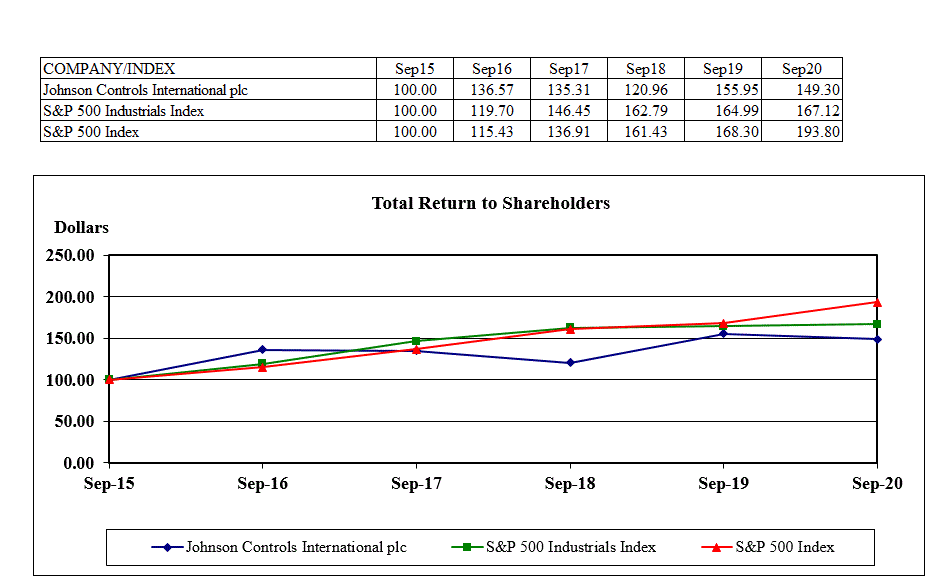
The line graph below compares the cumulative total shareholder return on the Company's ordinary shares with the cumulative total return of companies on the Standard & Poor’s ("S&P’s") 500 Stock Index and the companies on the S&P 500 Industrials Index. This graph assumes the investment of $100 on September 30, 2015 and the reinvestment of all dividends since that date.
Item 6. SELECTED FINANCIAL DATA
The following selected financial data reflects the results of operations, financial position data and ordinary share information for the fiscal years ended September 30, 2016 through September 30, 2020 (dollars in millions, except per share data).
| Year ended September 30, | |||||||||||||||||||||||||||||
| 2020 | 2019 | 2018 | 2017 | 2016 | |||||||||||||||||||||||||
| OPERATING RESULTS | |||||||||||||||||||||||||||||
| Net sales | $ | 22,317 | $ | 23,968 | $ | 23,400 | $ | 22,835 | $ | 14,184 | |||||||||||||||||||
| Segment EBITA (1) | 2,948 | 3,041 | 3,138 | 2,831 | 1,427 | ||||||||||||||||||||||||
| Income (loss) from continuing operations attributable to Johnson Controls (6) | 631 | 1,100 | 1,175 | 672 | (10) | ||||||||||||||||||||||||
| Net income (loss) attributable to Johnson Controls | 631 | 5,674 | 2,162 | 1,611 | (868) | ||||||||||||||||||||||||
| Earnings (loss) per share from continuing operations (6) | |||||||||||||||||||||||||||||
| Basic | $ | 0.84 | $ | 1.26 | $ | 1.27 | $ | 0.72 | $ | (0.01) | |||||||||||||||||||
| Diluted | 0.84 | 1.26 | 1.26 | 0.71 | (0.01) | ||||||||||||||||||||||||
| Return on average shareholders’ equity attributable to Johnson Controls (2) (6) | 3 | % | 5 | % | 6 | % | 3 | % | — | % | |||||||||||||||||||
| Capital expenditures | $ | 443 | $ | 586 | $ | 645 | $ | 760 | $ | 491 | |||||||||||||||||||
| Depreciation and amortization | 822 | 825 | 824 | 919 | 382 | ||||||||||||||||||||||||
| Number of employees | 97,000 | 104,000 | 122,000 | 121,000 | 209,000 | ||||||||||||||||||||||||
| FINANCIAL POSITION | |||||||||||||||||||||||||||||
| Working capital (as defined) (3) | $ | 147 | $ | 975 | $ | 471 | $ | 449 | $ | (619) | |||||||||||||||||||
| Total assets | 40,815 | 42,287 | 48,797 | 51,884 | 63,179 | ||||||||||||||||||||||||
| Long-term debt | 7,526 | 6,708 | 9,623 | 11,885 | 10,966 | ||||||||||||||||||||||||
| Total debt | 7,819 | 7,219 | 10,930 | 13,465 | 12,636 | ||||||||||||||||||||||||
| Shareholders' equity attributable to Johnson Controls | 17,447 | 19,766 | 21,164 | 20,447 | 24,118 | ||||||||||||||||||||||||
| Total debt to capitalization (4) | 31 | % | 27 | % | 34 | % | 40 | % | 34 | % | |||||||||||||||||||
| Net book value per share (5) | $ | 24.03 | $ | 25.42 | $ | 22.88 | $ | 22.03 | $ | 25.77 | |||||||||||||||||||
| ORDINARY SHARE INFORMATION | |||||||||||||||||||||||||||||
| Dividends per share | $ | 1.04 | $ | 1.04 | $ | 1.04 | $ | 1.00 | $ | 1.16 | |||||||||||||||||||
| Market prices | |||||||||||||||||||||||||||||
| High | $ | 44.82 | $ | 44.65 | $ | 42.60 | $ | 46.17 | $ | 48.97 | |||||||||||||||||||
| Low | 22.78 | 28.30 | 32.89 | 36.74 | 30.30 | ||||||||||||||||||||||||
| Weighted average shares (in millions) | |||||||||||||||||||||||||||||
| Basic | 751.0 | 870.2 | 925.7 | 935.3 | 667.4 | ||||||||||||||||||||||||
| Diluted | 753.6 | 874.3 | 931.7 | 944.6 | 672.6 | ||||||||||||||||||||||||
| Number of shareholders | 33,776 | 35,367 | 37,836 | 40,260 | 41,299 |
(1)Segment earnings before interest, taxes and amortization ("EBITA") is calculated as income from continuing operations before income taxes and noncontrolling interests, excluding general corporate expenses, intangible asset amortization, net financing charges, restructuring and impairment costs, and net mark-to-market adjustments related to pension and postretirement plans and restricted asbestos investments. Refer to Note 19, “Segment Information,” of the notes to consolidated financial statements for a reconciliation of segment EBITA to income from continuing operations before income taxes.
(2)Return on average shareholders’ equity attributable to Johnson Controls represents income from continuing operations attributable to Johnson Controls divided by average shareholders’ equity attributable to Johnson Controls.
(3)Working capital is defined as current assets less current liabilities, excluding cash, short-term debt, the current portion of long-term debt, and the current portions of assets and liabilities held for sale.
(4)Total debt to total capitalization represents total debt divided by the sum of total debt and shareholders’ equity attributable to Johnson Controls.
(5)Net book value per share represents shareholders’ equity attributable to Johnson Controls divided by the number of shares outstanding at the end of the period.
(6)Income (loss) from continuing operations attributable to Johnson Controls includes $783 million, $235 million, $255 million, $347 million and $222 million of significant restructuring and impairment costs in fiscal year 2020, 2019, 2018, 2017 and 2016, respectively. It also includes $274 million, $618 million, $(24) million, $(384) million and $341 million of net mark-to-market losses (gains) in fiscal year 2020, 2019, 2018, 2017 and 2016, respectively. The preceding amounts are stated on a pre-tax basis.
Item 7. MANAGEMENT’S DISCUSSION AND ANALYSIS OF FINANCIAL CONDITION AND RESULTS OF OPERATIONS
General
The Company engineers, manufactures and commissions building products and systems, including residential and commercial HVAC equipment, industrial refrigeration systems, controls, security systems, fire detection systems and fire suppression solutions. The Company further serves customers by providing technical services, including maintenance, repair, retrofit and replacement of equipment (in the HVAC, security and fire-protection space), energy-management consulting and data-driven “smart building” services and solutions powered by its digital platforms and capabilities.
This discussion summarizes the significant factors affecting the consolidated operating results, financial condition and liquidity of the Company for the fiscal year ended September 30, 2020. This discussion should be read in conjunction with Item 8, the consolidated financial statements and the notes to consolidated financial statements. A detailed discussion of the 2019 to 2018 year-over-year changes are not included herein and can be found in the Management's Discussion and Analysis section in the Company's 2019 Annual Report on Form 10-K filed November 21, 2019.
Impact of COVID-19 pandemic
The global outbreak of COVID-19 has severely restricted the level of economic activity around the world and has caused a significant contraction in the global economy. In response to this outbreak, the governments of many countries, states, cities and other geographic regions have taken preventative or protective actions, such as imposing restrictions on travel and business operations.
The Company’s affiliates, employees, suppliers, customers and others have been and may continue to be restricted or prevented from conducting normal business activities, including as a result of shutdowns, travel restrictions and other actions that may be requested or mandated by governmental authorities. Such actions have and may in the future prevent the Company from accessing the facilities of its customers to deliver and install products, provide services and complete maintenance. In addition, some of the Company’s customers have chosen to delay or abandon projects on which the Company provides products and/or services as a result of such actions. Although some governments have lifted shutdown orders and similar restrictions, a resurgence in the spread of COVID-19 could cause the reinstitution of such preventive or protective measures. While a substantial portion of the Company's businesses have been classified as an essential business in jurisdictions in which facility closures have been mandated, some of its facilities have nevertheless been ordered to close, and we can give no assurance that there will not be additional closures in the future or that our businesses will be classified as essential in each of the jurisdictions in which we operate.
In response to the challenges presented by COVID-19, the Company has focused its efforts on preserving the health and safety of its employees and customers, as well as maintaining the continuity of its operations. The Company has modified its business practices in response to the COVID-19 outbreak, including restricting non-essential employee travel, implementation of remote work protocols, and cancellation of physical participation in meetings, events and conferences. The Company has also instituted preventive measures at its facilities, including enhanced health and safety protocols, temperature screening, requiring face coverings for all employees and encouraging employees to follow similar protocols when away from work. The Company has adopted a multifaceted framework to guide its decision making when evaluating the readiness of its facilities to safely reopen and operate, and will continue to monitor and audit its facilities to ensure that they are in compliance with the Company’s COVID-19 safety requirements.
In the second quarter of fiscal 2020, the Company experienced a temporary reduction of its manufacturing and operating capacity in China as a result of government-mandated actions to control the spread of COVID-19. In the third quarter of fiscal 2020, the Company experienced similar reductions as a result of government-mandated actions in India and Mexico. During the fourth quarter of fiscal 2020, the Company’s facilities were generally able to operate at normal levels, though its manufacturing capacity in India continues to be reduced as a result of continued lockdowns in the region. The Company has experienced, and may continue to experience, disruptions or delays in its supply chain as a result of government-mandated actions, which has resulted in higher supply chain costs to the Company in order to maintain the supply of materials and components for its products.
In order to mitigate disruptions to its supply chain and manufacturing capacity, the Company took actions including redistributing its manufacturing capacity to facilities and regions unaffected by shutdown orders, accelerating the purchase and shipment of components from suppliers in identified hot spots, diversifying the Company’s supplier base, conducting government outreach to support the Company’s and its suppliers’ designations as essential businesses, and expanded its existing supplier financing programs to support supplier viability and business continuity. While these actions have generally been successful in preserving the Company’s supply chain and manufacturing capacity, the potential resurgence of COVID-19 in various jurisdictions could lead to further disruptions.
The Company experienced a decline in demand and volumes in its global businesses as a result of the impact of efforts to contain the spread of COVID-19. Specifically, the Company experienced lower demand due to restricted access to customer sites to perform service and installation work as well as reduced discretionary capital spending by the Company's customers. In response, the Company quickly moved to execute temporary and permanent cost mitigation actions to offset a portion of the impact of COVID-19 on the demand for its products and services, such as deferring or reducing capital expenditures, implementing cost structure changes, short-term furloughing of salaried employees and limiting discretionary spending including corporate expense. These measures were in addition to the Company's previously disclosed fiscal 2020 restructuring plan. Although the Company intends that the temporary cost mitigation actions initiated in fiscal 2020 will cease in fiscal 2021, the necessity of future cost mitigation actions will depend on the continued impact of COVID-19, which is highly uncertain.
The global pandemic has also provided the Company with the opportunity to help its customers prepare to re-open by delivering solutions and support that enhance the safety and increase the efficiency of their operations. The Company has seen an increase in demand for its products and solutions that promote building health and optimize customers’ infrastructure, including thermal cameras, indoor air quality, location-based services for contact tracing and touchless access control.
During the second quarter of fiscal 2020, the Company determined that it had a triggering event requiring assessment of impairment for certain of its indefinite-lived intangible assets due to declines in revenue directly attributable to the COVID-19 pandemic. As a result, the Company recorded an impairment charge of $62 million related primarily to the Company's retail business indefinite-lived intangible assets within restructuring and impairment costs in the consolidated statements of income in the second quarter of fiscal 2020. During the third quarter of fiscal 2020, the Company determined that it had a triggering event requiring assessment of impairment for certain of its indefinite-lived intangible assets, long-lived assets and goodwill due to declines in revenue and further declines in forecasted cash flows in its North Ame
Showing the first 8K of 86K characters. Open the full section
Item 7A. QUANTITATIVE AND QUALITATIVE DISCLOSURES ABOUT MARKET RISK
See "Risk Management" included in Item 7 - Management’s Discussion and Analysis of Financial Condition and Results of Operations.
Item 8. FINANCIAL STATEMENTS AND SUPPLEMENTARY DATA
Index to Consolidated Financial Statements

Report of Independent Registered Public Accounting Firm
To the Board of Directors and Shareholders of Johnson Controls International plc
Opinions on the Financial Statements and Internal Control over Financial Reporting
We have audited the accompanying consolidated statements of financial position of Johnson Controls International plc and its subsidiaries (the “Company”) as of September 30, 2020 and 2019, and the related consolidated statements of income, of comprehensive income (loss), of shareholders’ equity attributable to Johnson Controls ordinary shareholders, and of cash flows for each of the three years in the period ended September 30, 2020, including the related notes and financial statement schedule listed in the accompanying index (collectively referred to as the “consolidated financial statements”). We also have audited the Company's internal control over financial reporting as of September 30, 2020, based on criteria established in Internal Control - Integrated Framework (2013) issued by the Committee of Sponsoring Organizations of the Treadway Commission (COSO).
In our opinion, the consolidated financial statements referred to above present fairly, in all material respects, the financial position of the Company as of September 30, 2020 and 2019, and the results of its operations and its cash flows for each of the three years in the period ended September 30, 2020 in conformity with accounting principles generally accepted in the United States of America. Also in our opinion, the Company maintained, in all material respects, effective internal control over financial reporting as of September 30, 2020, based on criteria established in Internal Control - Integrated Framework (2013) issued by the COSO.
Change in Accounting Principle
As discussed in Note 1 to the consolidated financial statements, the Company changed the manner in which it accounts for leases as of October 1, 2019.
Basis for Opinions
The Company's management is responsible for these consolidated financial statements, for maintaining effective internal control over financial reporting, and for its assessment of the effectiveness of internal control over financial reporting, included in Management’s Report on Internal Control Over Financial Reporting appearing under Item 9A. Our responsibility is to express opinions on the Company’s consolidated financial statements and on the Company's internal control over financial reporting based on our audits. We are a public accounting firm registered with the Public Company Accounting Oversight Board (United States) (PCAOB) and are required to be independent with respect to the Company in accordance with the U.S. federal securities laws and the applicable rules and regulations of the Securities and Exchange Commission and the PCAOB.
We conducted our audits in accordance with the standards of the PCAOB. Those standards require that we plan and perform the audits to obtain reasonable assurance about whether the consolidated financial statements are free of material misstatement, whether due to error or fraud, and whether effective internal control over financial reporting was maintained in all material respects.
Our audits of the consolidated financial statements included performing procedures to assess the risks of material misstatement of the consolidated financial statements, whether due to error or fraud, and performing procedures that respond to those risks. Such procedures included examining, on a test basis, evidence regarding the amounts and disclosures in the consolidated financial statements. Our audits also included evaluating the accounting principles used and significant estimates made by management, as well as evaluating the overall presentation of the consolidated financial statements. Our audit of internal control over financial reporting included obtaining an understanding of internal control over financial reporting, assessing the risk that a material weakness exists, and testing and evaluating the design and operating effectiveness of internal control based
on the assessed risk. Our audits also included performing such other procedures as we considered necessary in the circumstances. We believe that our audits provide a reasonable basis for our opinions.
Definition and Limitations of Internal Control over Financial Reporting
A company’s internal control over financial reporting is a process designed to provide reasonable assurance regarding the reliability of financial reporting and the preparation of financial statements for external purposes in accordance with generally accepted accounting principles. A company’s internal control over financial reporting includes those policies and procedures that (i) pertain to the maintenance of records that, in reasonable detail, accurately and fairly reflect the transactions and dispositions of the assets of the company; (ii) provide reasonable assurance that transactions are recorded as necessary to permit preparation of financial statements in accordance with generally accepted accounting principles, and
Showing the first 8K of 311K characters. Open the full section
Item 9. CHANGES IN AND DISAGREEMENTS WITH ACCOUNTANTS ON ACCOUNTING AND FINANCIAL DISCLOSURE
None.
Item 9A. CONTROLS AND PROCEDURES
Disclosure Controls and Procedures
The Company’s management, with the participation of the Company’s Chief Executive Officer and Chief Financial Officer, has evaluated the effectiveness of the Company’s disclosure controls and procedures (as such term is defined in Rule 13a-15(e) under the Securities Exchange Act of 1934, as amended (the "Exchange Act")) as of the end of the period covered by this report. Based on such evaluations, the Company’s Chief Executive Officer and Chief Financial Officer have concluded that, as of the end of such period, the Company’s disclosure controls and procedures are effective in recording, processing, summarizing, and reporting, on a timely basis, information required to be disclosed by the Company in the reports that it files or submits under the Exchange Act, and that information is accumulated and communicated to the Company’s management, including the Company’s Chief Executive Officer and Chief Financial Officer, as appropriate, to allow timely decisions regarding required disclosure.
Management’s Report on Internal Control Over Financial Reporting
The Company’s management is responsible for establishing and maintaining adequate internal control over financial reporting, as such term is defined in Exchange Act Rule 13a-15(f). The Company’s management, with the participation of the Company’s Chief Executive Officer and Chief Financial Officer, has evaluated the effectiveness of the Company’s internal control over financial reporting based on the framework in Internal Control-Integrated Framework (2013) issued by the Committee of Sponsoring Organizations of the Treadway Commission. Based on this evaluation, the Company’s management has concluded that, as of September 30, 2020, the Company’s internal control over financial reporting was effective.
Because of its inherent limitations, internal control over financial reporting may not prevent or detect misstatements. Also, projections of any evaluation of effectiveness to future periods are subject to risk that controls may become inadequate because of changes in conditions, or that the degree of compliance with the policies or procedures may deteriorate.
PricewaterhouseCoopers LLP, an independent registered public accounting firm, has audited the Company’s consolidated financial statements and the effectiveness of internal control over financial reporting as of September 30, 2020 as stated in its report which is included in Item 8 of this Form 10-K and is incorporated by reference herein.
Changes in Internal Control Over Financial Reporting
There have been no changes in the Company’s internal control over financial reporting during the quarter ended September 30, 2020, that have materially affected, or are reasonably likely to materially affect, the Company’s internal control over financial reporting.
Item 9B. OTHER INFORMATION
CFO Succession
As previously disclosed in the Company's Current Report on Form 8-K filed on August 18, 2020, Olivier Leonetti will succeed Brian Stief as the Company's Chief Financial Officer and Principal Financial Officer on the date immediately following the date of the filing of this Annual Report on Form 10-K. Mr. Stief will remain in the role of Vice Chairman until his retirement.
PART III
In response to Part III, Items 10, 11, 12, 13 and 14, parts of the Company’s definitive proxy statement (to be filed pursuant to Regulation 14A within 120 days after Registrant’s fiscal year-end of September 30, 2020) for its annual meeting to be held on March 10, 2021, are incorporated by reference in this Form 10-K.
Item 10. DIRECTORS, EXECUTIVE OFFICERS AND CORPORATE GOVERNANCE
The information relating to directors and nominees of Johnson Controls is set forth under the caption “Proposal Number One” in Johnson Controls’ proxy statement for its annual meeting of shareholders to be held on March 10, 2021 (the “Johnson Controls Proxy Statement”) and is incorporated by reference herein. Information about executive officers is included in Part I, Item 4 of this Annual Report on Form 10-K. The information required by Items 405, 407(c)(3), (d)(4) and (d)(5) of Regulation S-K is contained under the captions “Governance of the Company - Nomination of Directors and Board Diversity,” “Governance of the Company - Board Committees”, and “Committees of the Board - Audit Committee” of the Johnson Controls Proxy Statement and such information is incorporated by reference herein.
Code of Ethics
Johnson Controls has adopted a code of ethics for directors, officers (including the Company’s principal executive officer, principal financial officer and principal accounting officer) and employees, known as Values First, The Johnson Controls Code of Ethics. The Code of Ethics is available on the Company’s website at www.valuesfirst.johnsoncontrols.com. The Company posts any amendments to or waivers of its Code of Ethics (to the extent applicable to the Company’s directors or executive officers) at the same location on the Company’s website. In addition, copies of the Code of Ethics may be obtained in print without charge upon written request by any stockholder to the office of the Company at One Albert Quay, Cork, Ireland.
Item 11. EXECUTIVE COMPENSATION
The information required by Item 402 of Regulation S-K is contained under the captions “Compensation Discussion & Analysis” (excluding the information under the caption “Compensation Committee Report on Executive Compensation”), “Executive Compensation Tables” and “Compensation of Non-Employee Directors” of the Johnson Controls Proxy Statement. Such information is incorporated by reference.
The information required by Items 407(e)(4) and (e)(5) of Regulation S-K is contained under the captions “Committees of the Board - Compensation Committee Interlocks and Insider Participation” and “Compensation Discussion & Analysis - Compensation Committee Report on Executive Compensation” of the Johnson Controls Proxy Statement. Such information (other than the Compensation Committee Report on Executive Compensation, which shall not be deemed to be “filed”) is incorporated by reference.
Item 12. SECURITY OWNERSHIP OF CERTAIN BENEFICIAL OWNERS AND MANAGEMENT AND RELATED STOCKHOLDER MATTERS
The information in the Johnson Controls Proxy Statement set forth under the caption "Security Ownership of Certain Beneficial Owners and Management" is incorporated herein by reference.
The following table provides information about the Company's equity compensation plans as of September 30, 2020:
| (a) | (b) | (c) | ||||||||||||||||||
| Number of Securities to be Issued upon Exercise of Outstanding Options, Warrants and Rights | Weighted-Average Exercise Price of Outstanding Options, Warrants and Rights | Number of Securities Remaining Available for Future Issuance Under Equity Compensation Plans (Excluding Securities Reflected in Column (a)) | ||||||||||||||||||
| Plan Category | ||||||||||||||||||||
| Equity compensation plans approved by shareholders | 10,114,905 | $ | 37.14 | 26,553,821 | ||||||||||||||||
| Equity compensation plans not approved by shareholders | — | — | — | |||||||||||||||||
| Total | 10,114,905 | $ | 37.14 | 26,553,821 |
Item 13. CERTAIN RELATIONSHIPS AND RELATED TRANSACTIONS, AND DIRECTOR INDEPENDENCE
The information in the Johnson Controls Proxy Statement set forth under the captions “Committees of the Board,” “Governance of the Company - Director Independence,” and “Governance of the Company - Other Directorships, Conflicts and Related Party Transactions,” is incorporated herein by reference.
Item 14. PRINCIPAL ACCOUNTING FEES AND SERVICES
The information in the Johnson Controls Proxy Statement set forth under “Proposal Number Two” related to the appointment of auditors is incorporated herein by reference.
PART IV
Item 15. EXHIBITS, FINANCIAL STATEMENT SCHEDULES
| Page in Form 10-K | ||||||||
| (a) The following documents are filed as part of this Form 10-K: | ||||||||
| (1) Financial Statements | ||||||||
| Report of Independent Registered Public Accounting Firm | 47 | |||||||
| Consolidated Statements of Income for the years ended September 30, 2020, 2019 and 2018 | 50 | |||||||
| Consolidated Statements of Comprehensive Income (Loss) for the years ended September 30, 2020, 2019 and 2018 | 51 | |||||||
| Consolidated Statements of Financial Position at September 30, 2020 and 2019 | 52 | |||||||
| Consolidated Statements of Cash Flows for the years ended September 30, 2020, 2019 and 2018 | 53 | |||||||
| Consolidated Statements of Shareholders’ Equity for the years ended September 30, 2020, 2019 and 2018 | 54 | |||||||
| Notes to Consolidated Financial Statements | 55 | |||||||
| (2) Financial Statement Schedule | ||||||||
| For the years ended September 30, 2020, 2019 and 2018: | ||||||||
| Schedule II - Valuation and Qualifying Accounts | 113 | |||||||
| (3) Exhibits | ||||||||
| Reference is made to the separate exhibit index contained on page 117 filed herewith. |
All other schedules are omitted because they are not applicable, or the required information is shown in the financial statements or notes thereto.
Financial statements of 50% or less-owned companies have been omitted because the proportionate share of their profit before income taxes and total assets are individually less than 20% of the respective consolidated amounts, and investments in such companies are less than 20% of consolidated total assets. Refer to Note 20, "Non-Consolidated Partially-Owned Affiliates" of the notes to consolidated financial statements for the summarized financial data for the Company’s nonconsolidated partially-owned affiliates for fiscal 2019 and 2018. In the fourth quarter of fiscal 2020, the Company early adopted SEC Release No 33 – 10786 which, among other things, modified the significance test required in SEC Regulation S-X, Rule 1-02(w) by changing the income test to use the lower measure of significance based on income from continuing operations before taxes or revenue. Under the modified income test, none of the Company’s non-consolidated partially-owned affiliates, either individually or in the aggregate, are considered significant subsidiaries.
Item 16. FORM 10-K SUMMARY
Not applicable.
Johnson Controls International plc
Index to Exhibits
(a) (1) and (2) Financial Statements and Supplementary Data - See Item 8
(b) Exhibit Index:
Johnson Controls International plc
Index to Exhibits
Johnson Controls International plc
Index to Exhibits
Johnson Controls International plc
Index to Exhibits
Johnson Controls International plc
Index to Exhibits
SIGNATURES
Pursuant to the requirements of Section 13 or 15(d) of the Securities Exchange Act of 1934, the registrant has duly caused this report to be signed on its behalf by the undersigned, thereunto duly authorized.
| JOHNSON CONTROLS INTERNATIONAL PLC | |||||
| By | /s/ Brian J. Stief | ||||
| Brian J. Stief | |||||
| Vice Chairman and Chief Financial Officer | |||||
| Date: | November 16, 2020 |
Pursuant to the requirements of the Securities Exchange Act of 1934, this report has been signed below as of November 16, 2020, by the following persons on behalf of the registrant and in the capacities indicated:
| /s/ George R. Oliver George R. Oliver Chairman and Chief Executive Officer (Principal Executive Officer) | /s/ Brian J. Stief Brian J. Stief Vice Chairman and Chief Financial Officer (Principal Financial Officer) | |||||||
| /s/ Robert M. VanHimbergen Robert M. VanHimbergen Vice President and Corporate Controller (Principal Accounting Officer) | /s/ Jean Blackwell Jean Blackwell Director | |||||||
| /s/ Pierre Cohade Pierre Cohade Director | /s/ Mike Daniels Mike Daniels Director | |||||||
| /s/ Juan Pablo del Valle Perochena Juan Pablo del Valle Perochena Director | /s/ Roy Dunbar Roy Dunbar Director | |||||||
| /s/ Gretchen R. Haggerty Gretchen R. Haggerty Director | /s/ Simone Menne Simone Menne Director | |||||||
| /s/ Jürgen Tinggren Jürgen Tinggren Director | /s/ Mark P. Vergnano Mark P. Vergnano Director | |||||||
| /s/ David Yost David Yost Director | /s/ John D. Young John D. Young Director | |||||||