 filings.tools
Item 7. MANAGEMENT’S DISCUSSION AND ANALYSIS OF FINANCIAL CONDITION AND RESULTS OF OPERATIONS
114K characters. Original on sec.gov · Markdown
Item 7. MANAGEMENT’S DISCUSSION AND ANALYSIS OF FINANCIAL CONDITION AND RESULTS OF OPERATIONS
This MDA includes information relating to Alliant Energy, IPL and WPL, as well as AEF and Corporate Services. Where appropriate, information relating to a specific entity has been segregated and labeled as such. The following discussion and analysis should be read in conjunction with the Financial Statements and Notes included in this report. Unless otherwise noted, all “per share” references in MDA refer to earnings per diluted share. In addition, this MDA includes certain financial information for 2020 compared to 2019. Refer to MDA in the combined 2019 Form 10-K for details on certain financial information for 2019 compared to 2018.
OVERVIEW
Strategy and Mission
Alliant Energy’s mission is to deliver affordable energy solutions and exceptional service that its customers and communities count on - safely, efficiently and responsibly. The mission is supported by a strategy focused on meeting the evolving expectations of customers while providing an attractive return for investors, as well as serving its customers and building strong communities. This strategy includes the following key elements:
Providing affordable energy solutions to customers - Alliant Energy’s strategy focuses on affordable energy solutions that support retention and growth of its existing customers and attract new customers to its service territories.
Key Highlights -
-
WPL maintaining flat base rates in 2020 and 2021 by utilizing Federal Tax Reform benefits and lower fuel costs to offset higher revenue requirements from rate base additions.
-
IPL’s renewable energy rider became effective February 26, 2020, which allows for annual adjustments to electric rates charged to IPL’s retail electric customers for actual renewable energy costs incurred to fund IPL’s 1,000 MW of wind generating facilities placed in service in 2019 and 2020, and tax benefits.
-
Providing $35 million of billing credits to IPL’s retail electric customers beginning in the third quarter of 2020 through June 2021, largely driven by Federal Tax Reform benefits for customers.
-
Providing $42 million of billing credits to IPL’s retail electric customers in the second quarter of 2020 through its transmission cost rider for amounts previously collected in rates.
-
Significant fuel cost reductions achieved in 2020 and further reductions in fuel cost expected in 2021 as a result of expansion of renewable generation, operating highly efficient, low cost natural gas facilities and shortening the term of IPL’s DAEC PPA by 5 years.
-
Changes in recovery amounts for energy efficiency costs through the energy efficiency rider resulted in lower costs for IPL’s retail electric and gas customers in 2020.
Making customer-focused investments - Alliant Energy’s strategic priorities include making significant customer-focused investments toward cleaner energy and sustainable customer solutions. Alliant Energy’s strategy drives a capital allocation process focused on: 1) transitioning its generation portfolio to meet the growing interest of customers for cleaner sources of energy, 2) upgrading its electric and gas distribution systems to strengthen safety and resiliency, as well as enable distributed energy solutions in its service territories, and 3) enhancing its customers’ experience with evolving technology and greater flexibility.
Key Highlights (refer to “Customer Investments” for details) -
-
IPL’s completion of more than 500 MW of new wind farms: Whispering Willow North (201 MW in January 2020), Golden Plains (200 MW in March 2020) and Richland (131 MW in September 2020).
-
WPL’s completion of the natural gas-fired West Riverside Energy Center (723 MW in May 2020), the Kossuth wind farm (152 MW in October 2020) and the expansion of its gas distribution system in Western Wisconsin in November 2020.
-
Planned development and acquisition of additional renewable energy, including approximately 1,000 MW of solar generation at WPL by the end of 2023, approximately 400 MW of solar generation by the end of 2023 at IPL and approximately 100 MW of distributed energy resources, including community solar and energy storage systems beginning in 2021 at IPL. In addition, WPL may also develop additional solar generation and distributed energy resources.
Growing customer demand - Alliant Energy’s strategy supports expanding electric and gas usage in its service territories by promoting electrification initiatives and economic development in the communities it serves.
Key Highlights -
- WPL entered into a wholesale power supply agreement with Consolidated Water Power Company, which was effective January 1, 2021 and is expected to bring approximately 60 MW of load to WPL’s electric system.
| 23 |
- Alliant Energy has various development-ready sites throughout Iowa and Wisconsin, including the 1,300-acre Big Cedar Industrial Center Mega-site in Cedar Rapids, Iowa, and the 730-acre Prairie View Industrial Center Super Park in Ames, Iowa, which are rail-served ready-to-build manufacturing and industrial sites in close proximity to the regional airport and interstate freeways and access IPL’s electric services. The Big Cedar Industrial Center Mega-site also accesses Travero’s rail and warehousing services. In addition, the Beaver Dam Commerce Park is a 520-acre ready-to-build manufacturing and industrial site in Beaver Dam, Wisconsin, with access to commercial and freight airports, interstate freeways and WPL’s electric services.
COVID-19
The outbreak of COVID-19 has become a global pandemic and Alliant Energy’s service territories are not immune to the challenges presented by COVID-19. Despite these challenges, Alliant Energy, IPL and WPL continue to focus on providing the critical, reliable service their customers depend on, while emphasizing the health and welfare of their employees, customers and communities. Alliant Energy, IPL and WPL have not experienced significant impacts on their overall business operations, financial condition, results of operations or cash flows; however, the degree to which the COVID-19 pandemic may impact such items in the future is currently unknown and will depend on future developments of the pandemic as well as possible additional actions by government and regulatory authorities. Alliant Energy has mitigated the impact of sales declines from COVID-19 by accelerating planned cost transformation activities. Actual and potential impacts from COVID-19 include, but are not limited to, the following:
Operational and Supply Chain Impacts - Alliant Energy has modified certain business practices to help ensure the health and safety of its employees, contractors, customers and vendors consistent with orders and best practices issued by government and regulatory authorities. For example, Alliant Energy implemented its business continuity and pandemic plans for critical items and services, including travel restrictions, physical distancing, working-from-home protocols, and rescheduling of planned EGU outages. Alliant Energy also temporarily suspended service disconnects, waived late payment fees for its customers, and modified reconnect service procedures to ensure continuity of service for customers unable to pay their bills and consistency with regulatory orders.
While Alliant Energy has not experienced any significant issues to-date, it continues to monitor potential disruptions or constraints in materials and supplies from key suppliers. Alliant Energy’s construction projects are currently progressing as planned with added safety protocols, and while it continues to monitor its supply chain, there have been no immediate disruptions. Alliant Energy’s wind farms under construction during the pandemic were placed in service as previously planned to meet the timing requirements to qualify for the maximum renewable tax credits. In addition, Alliant Energy does not currently expect any material changes to its construction and acquisition expenditures plans disclosed in “Liquidity and Capital Resources” resulting from COVID-19.
Alliant Energy has not experienced, and currently does not expect, an interruption in its ability to provide electric and natural gas services to its customers. Alliant Energy currently expects to incur incremental direct expenses related to certain of these operational and supply chain impacts but does not expect them to have a material impact on its results of operations.
Customer Impacts - COVID-19 has resulted in various travel restrictions and closures of commercial spaces and industrial facilities in Alliant Energy’s service territories. While the total expected impact of COVID-19 on future sales is currently unknown, Alliant Energy has experienced higher electric residential sales and lower electric commercial and industrial sales since the outset of the pandemic, and expects these sales trends by customer class to continue into 2021 but at lower impacts than in 2020. In 2020 compared to 2019, Alliant Energy’s retail electric residential temperature-normalized sales increased 3%, and its retail electric commercial and industrial temperature-normalized sales decreased 4% in aggregate. In addition, Alliant Energy has not experienced a material increase in customer bankruptcies in 2020.
Liquidity and Capital Resources Impacts - In response to the uncertainty of the impacts of COVID-19, Alliant Energy enhanced its liquidity position in the first quarter of 2020 by settling $222 million under the equity forward sale agreements and AEF accelerating the refinancing of its $300 million term-loan credit agreement that would have been due in April 2020. Alliant Energy also enhanced its liquidity position by accelerating and/or increasing the size of new debt offerings in 2020, including WPL's issuance of $350 million of debentures due 2050 in April 2020, IPL's issuance of $400 million of senior debentures due 2030 in June 2020 and AEF's issuance of $200 million of senior notes due 2026 in November 2020. Alliant Energy maintains a single credit facility, which allows borrowing capacity to shift among Alliant Energy (at the parent company level), IPL and WPL, as needed. During March and April 2020, Alliant Energy and WPL borrowed under the single credit facility for a portion of their temporary cash needs to obtain more favorable interest rates than available in the commercial paper market at that time. In addition, IPL maintains a sales of accounts receivable program as an alternative financing source; however, if customer arrears were to exceed certain levels, IPL’s access to the program may be restricted.
Alliant Energy, IPL and WPL currently expect to maintain compliance with the financial covenants of the credit facility agreement, and Alliant Energy currently expects to maintain compliance with the financial covenants in AEF’s term loan credit agreement. In addition, Alliant Energy currently expects to have adequate liquidity to fulfill its contractual obligations, access to capital markets and continue with its planned quarterly dividend payments.
| 24 |
Credit Risk Impacts - Alliant Energy’s temporary suspension of service disconnects and waivers of late payment fees for its customers, as well as broad economic factors, may negatively impact its customers’ willingness and ability to pay, which could increase customer arrears and bad debts, and negatively impact Alliant Energy’s cash flows from operations. Currently, Alliant Energy does not anticipate any material credit risk related to its commodity transactions.
Regulatory Impacts - In March 2020, WPL received authorization from the PSCW to defer certain incremental costs incurred resulting from COVID-19, including bad debt expenses and foregone revenues from late payment fees. In August 2020, IPL received authorization from the IUB for utilization of a regulatory asset account to track increased expenses and other financial impacts incurred after March 1, 2020 resulting from COVID-19. The recovery of any authorized deferrals will be addressed in future regulatory proceedings. In 2020, such amounts were not material.
Legislative Impacts - In March 2020, the Coronavirus Aid, Relief, and Economic Security Act (CARES Act) was enacted. The most significant provision of the CARES Act for Alliant Energy relates to an acceleration of refunds of existing alternative minimum tax credits to increase liquidity. In July 2020, Alliant Energy received $11 million of credits that otherwise would have been received in 2021 and 2022. In addition, Alliant Energy has deferred certain 2020 payroll taxes to 2021 and 2022. The CARES Act also provides additional funding to the Low Income Home Energy Assistance Program, which assists certain of Alliant Energy’s customers with managing their energy costs, as well as financial support for certain of Alliant Energy’s residential, small business and non-profit customers.
In December 2020, the Coronavirus Response and Relief Supplemental Appropriations Act of 2021 (CRRSA) was enacted. The most significant provision of the CRRSA Act for Alliant Energy relates to the extension of certain renewable tax credits, and as a result, Alliant Energy will evaluate additional opportunities for repowering of its existing wind farms and additional solar projects beyond 2023. The CRRSA Act also provides additional funding to the Low Income Home Energy Assistance Program, as well as financial support for certain of Alliant Energy’s residential, small business and non-profit customers.
Derecho Windstorm
In August 2020, a derecho windstorm caused considerable damage to IPL’s electric distribution system in its service territory, and over 250,000 of its customers lost power. IPL completed its initial restoration efforts in August 2020 and permanent repairs to the system will continue into 2021. Refer to Note 2 for further discussion, including IPL’s current estimate and requested regulatory treatment of certain incremental costs and benefits incurred resulting from the windstorm.
RESULTS OF OPERATIONS
Results of operations include financial information prepared in accordance with GAAP as well as utility electric margins and utility gas margins, which are not measures of financial performance under GAAP. Utility electric margins are defined as electric revenues less electric production fuel, purchased power and electric transmission service expenses. Utility gas margins are defined as gas revenues less cost of gas sold. Utility electric margins and utility gas margins are non-GAAP financial measures because they exclude other utility and non-utility revenues, other operation and maintenance expenses, depreciation and amortization expenses, and taxes other than income tax expense.
Management believes that utility electric and gas margins provide a meaningful basis for evaluating and managing utility operations since electric production fuel, purchased power and electric transmission service expenses and cost of gas sold are generally passed through to customers, and therefore, result in changes to electric and gas revenues that are comparable to changes in such expenses. The presentation of utility electric and gas margins herein is intended to provide supplemental information for investors regarding operating performance. These utility electric and gas margins may not be comparable to how other entities define utility electric and gas margin. Furthermore, these measures are not intended to replace operating income as determined in accordance with GAAP as an indicator of operating performance.
Additionally, the table below includes EPS for Utilities and Corporate Services, ATC Holdings, and Non-utility and Parent, which are non-GAAP financial measures. Alliant Energy believes these non-GAAP financial measures are useful to investors because they facilitate an understanding of segment performance and trends, and provide additional information about Alliant Energy’s operations on a basis consistent with the measures that management uses to manage its operations and evaluate its performance.
Financial Results Overview - Alliant Energy’s net income and EPS attributable to Alliant Energy common shareowners were as follows (dollars in millions, except per share amounts):
| 2020 | 2019 | ||||||||||||||||||||||
| Income (Loss) | EPS | Income (Loss) | EPS | ||||||||||||||||||||
| Utilities and Corporate Services | $586 | $2.36 | $529 | $2.22 | |||||||||||||||||||
| ATC Holdings | 34 | 0.14 | 34 | 0.14 | |||||||||||||||||||
| Non-utility and Parent | (6) | (0.03) | (6) | (0.03) | |||||||||||||||||||
| Alliant Energy Consolidated | $614 | $2.47 | $557 | $2.33 |
| 25 |
Alliant Energy’s Utilities and Corporate Services income increased $57 million in 2020 compared to 2019. The increase was primarily due to higher earnings resulting from IPL’s and WPL’s increasing rate base. This item was partially offset by higher depreciation expense, lower AFUDC and higher WPL electric fuel-related costs, net of recoveries.
Operating income and a reconciliation of utility electric and gas margins to the most directly comparable GAAP measure, operating income, was as follows (in millions):
| Alliant Energy | IPL | WPL | |||||||||||||||||||||||||||||||||||||||||||||||||||
| 2020 | 2019 | 2020 | 2019 | 2020 | 2019 | ||||||||||||||||||||||||||||||||||||||||||||||||
| Operating income | $740 | $778 | $410 | $403 | $306 | $347 | |||||||||||||||||||||||||||||||||||||||||||||||
| Electric utility revenues | $2,920 | $3,064 | $1,695 | $1,781 | $1,225 | $1,283 | |||||||||||||||||||||||||||||||||||||||||||||||
| Electric production fuel and purchased power expenses | (652) | (777) | (352) | (435) | (300) | (342) | |||||||||||||||||||||||||||||||||||||||||||||||
| Electric transmission service expense | (449) | (481) | (298) | (340) | (151) | (141) | |||||||||||||||||||||||||||||||||||||||||||||||
| Utility Electric Margin (non-GAAP) | 1,819 | 1,806 | 1,045 | 1,006 | 774 | 800 | |||||||||||||||||||||||||||||||||||||||||||||||
| Gas utility revenues | 373 | 455 | 208 | 264 | 165 | 191 | |||||||||||||||||||||||||||||||||||||||||||||||
| Cost of gas sold | (182) | (222) | (99) | (120) | (83) | (102) | |||||||||||||||||||||||||||||||||||||||||||||||
| Utility Gas Margin (non-GAAP) | 191 | 233 | 109 | 144 | 82 | 89 | |||||||||||||||||||||||||||||||||||||||||||||||
| Other utility revenues | 49 | 46 | 44 | 44 | 5 | 2 | |||||||||||||||||||||||||||||||||||||||||||||||
| Non-utility revenues | 74 | 83 | — | — | — | — | |||||||||||||||||||||||||||||||||||||||||||||||
| Other operation and maintenance expenses | (670) | (712) | (375) | (404) | (254) | (261) | |||||||||||||||||||||||||||||||||||||||||||||||
| Depreciation and amortization expenses | (615) | (567) | (356) | (327) | (254) | (236) | |||||||||||||||||||||||||||||||||||||||||||||||
| Taxes other than income tax expense | (108) | (111) | (57) | (60) | (47) | (47) | |||||||||||||||||||||||||||||||||||||||||||||||
| Operating income | $740 | $778 | $410 | $403 | $306 | $347 |
Operating Income Variances - Variances between periods in operating income for 2020 compared to 2019 were as follows (in millions):
| Alliant Energy | IPL | WPL | |||||||||||||||
| Total higher (lower) utility electric margin variance (Refer to details below) | $13 | $39 | ($26) | ||||||||||||||
| Total lower utility gas margin variance (Refer to details below) | (42) | (35) | (7) | ||||||||||||||
| Total lower other operation and maintenance expenses variance (Refer to details below) | 42 | 29 | 7 | ||||||||||||||
| Higher depreciation and amortization expense primarily due to additional plant in service in 2019 and 2020, including IPL’s new wind generation and WPL’s West Riverside Energy Center | (48) | (29) | (18) | ||||||||||||||
| Other | (3) | 3 | 3 | ||||||||||||||
| ($38) | $7 | ($41) |
Electric and Gas Revenues and Sales Summary - Electric and gas revenues (in millions), and MWh and Dth sales (in thousands), were as follows:
| Electric | Gas | ||||||||||||||||||||||||||||||||||||||||||||||||||||||||||
| Revenues | MWhs Sold | Revenues | Dths Sold | ||||||||||||||||||||||||||||||||||||||||||||||||||||||||
| 2020 | 2019 | 2020 | 2019 | 2020 | 2019 | 2020 | 2019 | ||||||||||||||||||||||||||||||||||||||||||||||||||||
| Alliant Energy | |||||||||||||||||||||||||||||||||||||||||||||||||||||||||||
| Retail | $2,652 | $2,751 | 24,535 | 25,121 | $333 | $408 | 48,808 | 55,850 | |||||||||||||||||||||||||||||||||||||||||||||||||||
| Sales for resale | 204 | 250 | 6,046 | 6,594 | N/A | N/A | N/A | N/A | |||||||||||||||||||||||||||||||||||||||||||||||||||
| Transportation/Other | 64 | 63 | 71 | 79 | 40 | 47 | 102,790 | 97,135 | |||||||||||||||||||||||||||||||||||||||||||||||||||
| $2,920 | $3,064 | 30,652 | 31,794 | $373 | $455 | 151,598 | 152,985 | ||||||||||||||||||||||||||||||||||||||||||||||||||||
| IPL | |||||||||||||||||||||||||||||||||||||||||||||||||||||||||||
| Retail | $1,564 | $1,615 | 13,830 | 14,142 | $183 | $236 | 25,508 | 29,498 | |||||||||||||||||||||||||||||||||||||||||||||||||||
| Sales for resale | 88 | 128 | 3,485 | 4,479 | N/A | N/A | N/A | N/A | |||||||||||||||||||||||||||||||||||||||||||||||||||
| Transportation/Other | 43 | 38 | 34 | 36 | 25 | 28 | 39,543 | 38,323 | |||||||||||||||||||||||||||||||||||||||||||||||||||
| $1,695 | $1,781 | 17,349 | 18,657 | $208 | $264 | 65,051 | 67,821 | ||||||||||||||||||||||||||||||||||||||||||||||||||||
| WPL | |||||||||||||||||||||||||||||||||||||||||||||||||||||||||||
| Retail | $1,088 | $1,136 | 10,705 | 10,979 | $150 | $172 | 23,300 | 26,352 | |||||||||||||||||||||||||||||||||||||||||||||||||||
| Sales for resale | 116 | 122 | 2,561 | 2,115 | N/A | N/A | N/A | N/A | |||||||||||||||||||||||||||||||||||||||||||||||||||
| Transportation/Other | 21 | 25 | 37 | 43 | 15 | 19 | 63,247 | 58,812 | |||||||||||||||||||||||||||||||||||||||||||||||||||
| $1,225 | $1,283 | 13,303 | 13,137 | $165 | $191 | 86,547 | 85,164 |
| 26 |
Sales Trends and Temperatures - Alliant Energy’s retail electric and gas sales volumes decreased 2% and 13% in 2020 compared to 2019, respectively, primarily due to the impacts from COVID-19, the derecho windstorm, and changes in temperatures in Alliant Energy’s service territories, partially offset by an extra day of sales in 2020 due to leap year. In 2020, COVID-19 impacts on sales volumes resulted in increases for retail electric residential sales volumes and decreases for retail electric commercial and industrial sales volumes.
Estimated increases (decreases) to electric and gas margins from the impacts of temperatures were as follows (in millions):
| Electric Margins | Gas Margins | ||||||||||||||||||||||||||||||||||||||||||||||
| 2020 | 2019 | 2020 | 2019 | ||||||||||||||||||||||||||||||||||||||||||||
| IPL | $1 | $10 | $— | $5 | |||||||||||||||||||||||||||||||||||||||||||
| WPL | 3 | 4 | (1) | 3 | |||||||||||||||||||||||||||||||||||||||||||
| Total Alliant Energy | $4 | $14 | ($1) | $8 |
Utility Electric Margin Variances - The following items contributed to increased (decreased) utility electric margins for 2020 compared to 2019 (in millions):
| Alliant Energy | IPL | WPL | |||||||||||||||
| Impact of IPL’s retail electric final and interim rate increases effective February 2020 and April 2019, respectively (a) | $63 | $63 | $— | ||||||||||||||
| Higher revenues at IPL due to credits on customers’ bills in 2019 related to production tax credits through the fuel-related cost recovery mechanism (offset by changes in income tax) | 16 | 16 | — | ||||||||||||||
| Lower purchased electric capacity expense at WPL | 8 | — | 8 | ||||||||||||||
| Higher revenues at IPL due to changes in electric tax benefit rider credits on customers’ bills (offset by changes in income tax expense) | 6 | 6 | — | ||||||||||||||
| Higher WPL electric fuel-related costs, net of recoveries | (18) | — | (18) | ||||||||||||||
| Lower revenues at IPL due to credits on customers’ bills in 2020 related to excess deferred amortization through the tax benefit rider (offset by changes in income tax) | (15) | (15) | — | ||||||||||||||
| Changes in timing of collection of electric transmission service costs at WPL | (10) | — | (10) | ||||||||||||||
| Estimated changes in sales volumes caused by temperatures | (10) | (9) | (1) | ||||||||||||||
| Lower revenues at IPL related to changes in recovery amounts for energy efficiency costs through the energy efficiency rider (offset by changes in energy efficiency expense) | (8) | (8) | — | ||||||||||||||
| Other (includes lower temperature-normalized sales primarily due to the derecho windstorm and COVID-19 impacts) | (19) | (14) | (5) | ||||||||||||||
| $13 | $39 | ($26) |
(a)IPL’s interim retail electric base rate increase was effective April 1, 2019 and final retail electric base rate increase was effective February 26, 2020. Effective with final rates, the recovery of, and return on, IPL’s new wind generation placed in service in 2019 and 2020 is provided through the renewable energy rider. Both interim and final rate increases include a reduction for anticipated production tax credits for IPL’s new wind generation. This reduction is expected to be offset by a reduction in income tax expense resulting from production tax credits recognized from this new wind generation. Refer to Note 2 for further discussion.
Utility Gas Margin Variances - The following items contributed to increased (decreased) utility gas margins for 2020 compared to 2019 (in millions):
| Alliant Energy | IPL | WPL | |||||||||||||||
| Lower revenues at IPL related to changes in recovery amounts for energy efficiency costs through the energy efficiency rider (offset by changes in energy efficiency expense) | ($34) | ($34) | $— | ||||||||||||||
| Estimated changes in sales volumes caused by temperatures | (9) | (5) | (4) | ||||||||||||||
| Impact of IPL’s retail gas rate increase effective January 2020 | 11 | 11 | — | ||||||||||||||
| Other (includes lower temperature-normalized sales primarily due to COVID-19 impacts) | (10) | (7) | (3) | ||||||||||||||
| ($42) | ($35) | ($7) |
| 27 |
Other Operation and Maintenance Expenses Variances - The following items contributed to (increased) decreased other operation and maintenance expenses for 2020 compared to 2019 (in millions):
| Alliant Energy | IPL | WPL | |||||||||||||||
| Lower energy efficiency expense at IPL (primarily offset by lower electric and gas revenues) | $39 | $39 | $— | ||||||||||||||
| Lower incentive compensation expense | 9 | 6 | 3 | ||||||||||||||
| Credit loss adjustments related to guarantees for an affiliate of Whiting Petroleum (Refer to Note 17(d)) | 7 | — | — | ||||||||||||||
| Higher generation operation and maintenance expenses (primarily related to new generation, including wind at IPL and WPL and West Riverside at WPL) | (8) | (4) | (4) | ||||||||||||||
| Other | (5) | (12) | 8 | ||||||||||||||
| $42 | $29 | $7 |
Other Income and Deductions Variances - The following items contributed to (increased) decreased other income and deductions for 2020 compared to 2019 (in millions):
| Alliant Energy | IPL | WPL | |||||||||||||||
| Higher interest expense primarily due to higher average outstanding long-term debt balances, partially offset by lower interest rates on short-term debt outstanding at Alliant Energy and WPL | ($2) | ($12) | ($2) | ||||||||||||||
| Lower AFUDC primarily due to changes in CWIP balances related to IPL’s new wind generation and WPL’s West Riverside Energy Center and new wind generation | (38) | (26) | (12) | ||||||||||||||
| Other (Refer to Note 6 for details of increased income from unconsolidated equity investments) | 9 | — | 3 | ||||||||||||||
| ($31) | ($38) | ($11) |
Income Taxes - Refer to Note 12 for details of effective income tax rates.
Other Future Considerations - In addition to items discussed in this report, the following key items could impact Alliant Energy’s, IPL’s and WPL’s future financial condition or results of operations:
-
Financing Plans -** WPL currently expects to issue up to $300 million of long-term debt in 2021. Alliant Energy currently expects to issue up to $25 million of common stock in 2021 through its Shareowner Direct Plan.
-
Common Stock Dividends -** Alliant Energy announced a 6% increase in its targeted 2021 annual common stock dividend to $1.61 per share, which is equivalent to a quarterly rate of $0.4025 per share, beginning with the February 2021 dividend payment. The timing and amount of future dividends is subject to an approved dividend declaration from Alliant Energy’s Board of Directors, and is dependent upon earnings expectations, capital requirements, and general financial business conditions, among other factors.
-
Higher Earnings on Increasing Rate Base -** Alliant Energy, IPL and WPL currently expect an increase in earnings in 2021 compared to 2020 due to impacts from increasing revenue requirements related to investments in the utility business, including IPL’s and WPL’s wind investments, WPL’s Western Wisconsin gas distribution system expansion, and the impacts of IPL’s DAEC PPA amendment buyout payment.
-
Extreme Temperatures -** In February 2021, portions of the central and southern U.S., including Alliant Energy’s service territories, experienced a prolonged period of very cold temperatures and a series of winter storms. This resulted in significant volatility and increases in commodity prices caused by higher demand for electricity and natural gas and disruptions in commodity supply. As a result, Alliant Energy currently expects to incur higher electric production fuel and cost of gas sold expenses in 2021 compared to 2020 related to the extreme temperatures and winter storms. Any changes in electric production fuel and cost of gas sold is expected to be recovered through IPL’s and WPL’s cost recovery mechanisms resulting in impacts to customer bills in 2021. As a result of these impacts to customers during a pandemic, Alliant Energy plans to work with the respective commissions to evaluate the recovery of any higher costs over a longer period of time.
-
Depreciation and Amortization Expenses - Alliant Energy, IPL and WPL currently expect an increase in depreciation and amortization expenses in 2021 compared to 2020 due to property additions, including IPL’s and WPL’s expansion of wind generation and WPL’s natural gas-fired West Riverside Energy Center.
-
Allowance for Funds Used During Construction -** Alliant Energy currently expects AFUDC to decrease in 2021 compared to 2020 primarily due to decreased CWIP balances related to IPL’s and WPL’s wind generation and WPL’s West Riverside Energy Center, which were placed in service in 2020.
| 28 |
CUSTOMER INVESTMENTS
Alliant Energy’s, IPL’s and WPL’s strategic priorities include making significant customer-focused investments toward cleaner energy and sustainable customer solutions. These priorities include:
Environmental Stewardship
Alliant Energy’s environmental stewardship is focused on meeting its customers’ energy needs in an economical, efficient and sustainable manner. Alliant Energy proactively considers future environmental compliance requirements and proposed regulations in its planning, decision-making, construction and ongoing operations activities. Alliant Energy is focused on executing a long-term strategy to deliver reliable and affordable energy with lower emissions independent of changing policies and political landscape. To achieve these long-term goals, Alliant Energy will transition away from coal-fired EGUs and incorporate more renewable energy, distributed energy resources, energy efficiency, demand response, highly-efficient natural gas-fired EGUs and other emerging technologies such as energy storage. Alliant Energy’s voluntary environmental-related goals and achievements include the following:
-
Reduced air emissions for sulfur dioxide by 90%, nitrogen oxide by 80% and mercury by 90% from 2005 levels, which it achieved in 2019.
-
By 2030, reduce CO2 emissions by 50% and water supply by 75% from 2005 levels from its owned fossil-fueled generation, as well as transition 100% of its light-duty fleet vehicles to be electric.
-
By 2040, eliminate all coal-fired EGUs from its generating fleet.
-
By 2050, achieve an aspirational goal of net-zero CO2 emissions from the electricity it generates.
Future updates to sustainable energy plans and attaining these goals will depend on future economic developments, evolving energy technologies and emerging trends in Alliant Energy’s service territories.
Renewable Generation
Alliant Energy’s cleaner energy strategy, or Clean Energy Blueprint, includes the planned development and acquisition of additional renewable energy, including approximately 1,000 MW of solar generation at WPL by the end of 2023, approximately 400 MW of solar generation by the end of 2023 at IPL and approximately 100 MW of distributed energy resources, including community solar and energy storage systems beginning in 2021 at IPL. Alliant Energy, IPL and WPL continue to evaluate additional opportunities to add more renewable generation, including repowering of existing wind farms and additional solar generation and distributed energy resources. Estimated capital expenditures for these planned projects for 2021 through 2024 are included in the “Renewable projects” line in the construction and acquisition table in “Liquidity and Capital Resources.” IPL and WPL currently assume that a portion of the construction costs for the new solar generation will be financed by a tax equity partner, which is discussed in “IPL and WPL Solar Project Tax Equity Credits” in “Liquidity and Capital Resources.” In addition, Alliant Energy completed the construction and acquisition of approximately 1,200 MW of wind generation in aggregate (approximately 1,000 MW at IPL and approximately 200 MW at WPL) from 2018 through 2020.
WPL’s Solar Generation - In May 2020, WPL filed a CA with the PSCW for approval to acquire, construct, own, and operate 675 MW of new solar generation in the following Wisconsin counties: Grant (200 MW in 2023), Sheboygan (150 MW in 2022), Wood (150 MW in 2022), Jefferson (75 MW in 2022), Richland (50 MW in 2022) and Rock (50 MW in 2023). The 675 MW of new solar generation would replace energy and capacity being eliminated with the planned retirement of the coal-fired Edgewater Generating Station (414 MW) by the end of 2022, and Columbia Unit 1 by the end of 2023 and Columbia Unit 2 by the end of 2024 (595 MW in aggregate). In addition, WPL currently expects to file a second CA with the PSCW in the first half of 2021 for approximately 325 MW of new solar generation. As a result of WPL’s neighboring utilities anticipated exercise of their options to purchase a partial ownership interest in West Riverside, WPL anticipates additional capacity needs by 2024.
IPL’s Solar Generation and Distributed Energy Resources - IPL’s plans include development and acquisition of up to 400 MW of solar generation by the end of 2023 and up to 100 MW of distributed energy resources, including community solar and energy storage systems beginning in 2021. IPL currently plans to file for advance rate-making principles for up to 400 MW of solar generation in the first half of 2021. The 400 MW of new solar generation would help replace a portion of the energy and capacity expected to be eliminated with the planned retirement of the coal-fired Lansing Generating Station (275 MW) by the end of 2022 and the expected reduction of energy and capacity resulting from the planned fuel switch of the Burlington Generating Station (212 MW) from coal to natural gas by the end of 2021.
IPL’s Expansion of Wind Generation - In 2016 and 2018, IPL received approvals from the IUB for advance rate-making principles for 1,000 MW of new wind generation. IPL completed the construction of various wind farms as follows:
| Wind Site | Nameplate Capacity | In-service Date | Location | |||||||||||||||||
| Upland Prairie | 299 MW | March 2019 | Clay and Dickinson Counties, Iowa | |||||||||||||||||
| English Farms | 172 MW | March 2019 | Poweshiek County, Iowa | |||||||||||||||||
| Whispering Willow North | 201 MW | January 2020 | Franklin County, Iowa | |||||||||||||||||
| Golden Plains | 200 MW | March 2020 | Winnebago and Kossuth Counties, Iowa | |||||||||||||||||
| Richland | 131 MW | September 2020 | Sac County, Iowa |
| 29 |
WPL’s Expansion of Wind Generation - In October 2020, WPL completed the construction of the Kossuth wind farm (152 MW) in Kossuth County, Iowa, pursuant to approvals from the PSCW. In addition, WPL acquired a partial ownership interest in the assets of the Forward Wind Energy Center located in Wisconsin (59 MW) in 2018, pursuant to approvals from the PSCW and FERC.
Complementary Generation Investments
WPL’s Construction of West Riverside Natural Gas-fired Generating Station - In 2016, WPL received an order from the PSCW authorizing WPL to construct a natural gas-fired combined-cycle EGU in Beloit, Wisconsin, referred to as West Riverside. WPL’s construction of West Riverside began in 2016 and the 723 MW EGU was placed in service in May 2020. West Riverside replaces energy and capacity being eliminated with the retirements of various EGUs.
WPL entered into agreements with neighboring utilities and electric cooperatives that provide each of them options to purchase a partial ownership interest in West Riverside. The purchase price for such options is based on the ownership interest acquired and the net book value of West Riverside on the date of the purchase. The exercise of the WPSC and MGE options is subject to PSCW approval, and the timing and ownership amounts of the options are as follows:
| Counterparty | Option Amount and Timing | |||||||
| Wisconsin Public Service Corporation (WPSC) | Up to 200 MW may be exercised through May 2024 (no more than 100 MW to be acquired prior to May 2022) (a) | |||||||
| Madison Gas and Electric Company (MGE) | Up to 50 MW may be exercised through May 2025 (no more than 25 MW to be acquired prior to May 2022) | |||||||
| Electric cooperatives | Approximately 60 MW were exercised January 2018 |
(a)If WPSC exercises its options, WPL may exercise reciprocal options, subject to approval by the PSCW, to purchase up to 200 MW of any natural-gas combined-cycle EGU that either WPSC or its affiliated utility, Wisconsin Electric Power Company, places in service within 10 years of the date West Riverside is placed in service.
Plant Retirements and Fuel Switching - The current strategy includes the retirement, or fuel switch from coal to natural gas, of various EGUs in the next several years. IPL currently expects to retire the coal-fired Lansing Generating Station (275 MW) by the end of 2022 and fuel switch the Burlington Generating Station (212 MW) from coal to natural gas by the end of 2021. WPL currently expects to retire the coal-fired Edgewater Generating Station (414 MW) by the end of 2022, Columbia Unit 1 by the end of 2023 and Columbia Unit 2 by the end of 2024. Alliant Energy, IPL and WPL are working with MISO, state regulatory commissions and other regulatory agencies, as required, to determine the timing of these actions, which are subject to change depending on operational, regulatory, market and other factors. Refer to Note 3 for additional details on these EGUs, as well as Note 17(e) for discussion of IPL’s requirements to fuel switch or retire certain EGUs under a Consent Decree.
Other Customer-focused Investments
Electric and Gas Distribution Systems - Customer-focused investments include replacing, modernizing and upgrading infrastructure in the electric and gas distribution systems. Electric system investments will focus on areas such as improving resiliency with more underground electric distribution and enabling distributed energy solutions with higher capacity lines. Gas system investments will focus on pipeline replacement to ensure safety and pipeline expansion to support reliability and economic development. Estimated capital expenditures for expected and current electric and gas distribution infrastructure projects for 2021 through 2024 are included in the “Electric and gas distribution systems” lines in the construction and acquisition expenditures table in “Liquidity and Capital Resources.”
Fiber Optic Telecommunication Network - Alliant Energy is currently installing fiber optic routes between its facilities to enhance its communications network to improve resiliency and reliability of, and enable and strengthen, the integrated grid network to help serve its customers.
Gas Pipeline Expansion - IPL and WPL currently expect to make investments to extend various gas distribution systems to provide natural gas to unserved or underserved areas in their service territories. In April 2020, WPL received authorization from the PSCW to expand its gas distribution system in Western Wisconsin, which was completed in November 2020.
Gas Pipeline Safety - In October 2019, the Pipeline and Hazardous Materials Safety Administration published a final rule that updates safety requirements for gas transmission pipelines, and various updated procedures were implemented in July 2020. Plans to address certain requirements for specific pipelines must be developed by July 2021, and remediation efforts must be completed by July 2035. In anticipation of these rule changes, Alliant Energy, IPL and WPL have been proactively replacing certain of IPL’s transmission pipelines and making modifications to certain of WPL’s transmission pipelines. Alliant Energy, IPL, and WPL also continue to evaluate the impact of this final rule and resulting remediation plans on their financial condition and results of operations.
Non-utility business - Alliant Energy continues to explore growth of its Travero businesses and other limited scope opportunities outside of, but complimentary to, Alliant Energy’s core utility business. This non-utility strategy continues to evolve through exploration of modest strategic opportunities that are accretive to earnings and cash flows within and outside of Alliant Energy’s service territories.
| 30 |
RATE MATTERS
Rate Reviews
Retail Base Rate Filings - Base rate changes reflect both returns on additions to infrastructure and recovery of changes in costs incurred or expected to be incurred. Given that a portion of the rate changes will offset changes in costs, revenues from rate changes should not be expected to result in an equal change in net income for either IPL or WPL.
IPL’s Retail Electric and Gas Rate Reviews (2020 Forward-looking Test Period) - In 2019, IPL filed retail electric and gas rate review requests with the IUB covering the 2020 forward-looking Test Period. In January 2020, IPL received an order from the IUB approving IPL’s proposed settlement for its retail electric rate review. Final retail electric rates were effective February 26, 2020. In December 2019, IPL received an order from the IUB approving IPL’s proposed settlement for its retail gas rate review. Final retail gas rates were effective January 10, 2020. Refer to Note 2 for details.
IPL currently expects to file a subsequent proceeding with the IUB in the second quarter of 2021 for its 2020 Forward-looking Test Period retail electric and gas rate reviews, which will compare actual revenues and costs to those initially forecasted by IPL. IPL currently does not expect any rate adjustments from the subsequent proceeding.
WPL’s Retail Electric and Gas Rate Review (2021 Forward-looking Test Period) - In December 2020, the PSCW issued an order authorizing WPL to maintain its current retail electric and gas base rates, authorized return on common equity, regulatory capital structure and earnings sharing mechanism through the end of 2021. WPL will utilize anticipated fuel-related cost savings and excess deferred income tax benefits in 2021 to offset the revenue requirement impacts of increasing electric and gas rate base, including the Kossuth wind farm, which was placed in service in October 2020, and the expansion of its gas distribution system in Western Wisconsin, which was placed in service in November 2020.
Planned Rate Review - WPL currently expects to file a retail electric and gas rate review with the PSCW in the second quarter of 2021 for either a single or multiple year forward-looking test period. The key drivers for the anticipated filing include lower excess deferred income tax benefits in 2022 and revenue requirement impacts of increasing electric and gas rate base, including investments in solar generation. Any rate changes granted from this request are expected to be effective on January 1, 2022. WPL currently expects a decision from the PSCW regarding this rate filing by the end of 2021.
Rate Review Details - Details related to IPL’s and WPL’s key jurisdictions were as follows:
| Average | Authorized Return | Common Equity | |||||||||||||||||||||||||||
| Regulatory | Rate Base | on Common | Component of Regulatory | Effective | |||||||||||||||||||||||||
| Body | (in millions) | Equity (a) | Capital Structure | Date | |||||||||||||||||||||||||
| IPL Retail Electric (2020 Test Period) | |||||||||||||||||||||||||||||
| Marshalltown (b) | IUB | $559 | 11.00% | 51.0% | 2/26/2020 | ||||||||||||||||||||||||
| Emery (b) | IUB | 165 | 12.23% | 51.0% | 2/26/2020 | ||||||||||||||||||||||||
| Whispering Willow - East (b) | IUB | 163 | 11.70% | 51.0% | 2/26/2020 | ||||||||||||||||||||||||
| Renewable energy rider (c) | IUB | 1,317 | 10.66% | 51.0% | 2/26/2020 | ||||||||||||||||||||||||
| Other (b) | IUB | 3,767 | 9.50% | 51.0% | 2/26/2020 | ||||||||||||||||||||||||
| IPL Retail Gas (2020 Test Period) (b) | IUB | 557 | 9.60% | 51.0% | 1/10/2020 | ||||||||||||||||||||||||
| IPL Wholesale Electric | FERC | 145 | 10.97% | 50.0% | 1/1/2020 | ||||||||||||||||||||||||
| WPL Retail Electric and Gas | |||||||||||||||||||||||||||||
| Electric (2021 Test Period) (d) | PSCW | 4,167 | 10.00% | 52.5% | 1/1/2021 | ||||||||||||||||||||||||
| Gas (2021 Test Period) (d) | PSCW | 481 | 10.00% | 52.5% | 1/1/2021 | ||||||||||||||||||||||||
| WPL Wholesale Electric | FERC | 296 | 10.90% | 55.0% | 1/1/2020 |
(a)Authorized returns on common equity may not be indicative of actual returns earned or projections of future returns.
(b)Average rate base amounts reflect IPL’s allocated retail share of rate base and do not include CWIP, and were calculated using a forecasted 13-month average for the test period.
(c)Average rate base amounts recovered through IPL’s renewable energy rider mechanism include construction costs incurred to fund IPL’s 1,000 MW of wind generation facilities placed in service in 2019 and 2020 (11.00% return on common equity), production tax credit carryforwards for the 1,000 MW of wind generation facilities (5.00% return on common equity) and certain transmission facilities classified as intangible assets (9.50% return on common equity), and were calculated using a 13-month average.
(d)Average rate base amounts reflect WPL’s allocated retail share of rate base and do not include CWIP or a cash working capital allowance, and were calculated using a forecasted 13-month average for the test period. The PSCW provides a return on selected CWIP and a cash working capital allowance by adjusting the percentage return on rate base.
Other Rate Matters
Federal Tax Reform - Federal Tax Reform resulted in future benefits to customers as a result of remeasurement of accumulated deferred income taxes (approximately $350 million for IPL and $460 million for WPL of retail revenue requirement). The majority of these benefits are subject to tax normalization rules (protected benefits), which limit the rate at which they can be passed on to their electric and gas customers.
| 31 |
For those benefits that were not limited by tax normalization rules (the non-protected benefits), IPL began providing retail electric billing credits that will continue through June 2021, which include $27 million of excess deferred tax benefits. After returning these benefits to customers, IPL is not expected to have any significant remaining non-protected benefits as a result of the original Federal Tax Reform impacts.
WPL provided non-protected benefits back to its retail electric and gas customers in 2019 and 2020. In 2020, WPL utilized approximately $72 million to help maintain base rates at current levels and will utilize approximately $113 million to help maintain base rates at current levels through 2021. The remaining non-protected benefits of approximately $5 million will be addressed in WPL’s future retail electric and gas rate reviews.
LIQUIDITY AND CAPITAL RESOURCES
Overview - Alliant Energy, IPL and WPL expect to maintain adequate liquidity to operate their businesses and implement their strategy as a result of operating cash flows generated by their utility business, and available capacity under a single revolving credit facility and IPL’s sales of accounts receivable program, supplemented by periodic issuances of long-term debt and Alliant Energy equity securities. As summarized below, Alliant Energy, IPL and WPL believe they have the ability to generate and obtain adequate amounts of cash to meet their requirements and plans for cash in the next 12 months and beyond.
COVID-19 and Derecho Windstorm Considerations - Refer to “Overview” in MDA for discussion of COVID-19 and the derecho windstorm and the impacts on Alliant Energy’s, IPL’s and WPL’s liquidity and capital resources.
Liquidity Position - At December 31, 2020, Alliant Energy had $54 million of cash and cash equivalents, $611 million ($318 million at the parent company, $250 million at IPL and $43 million at WPL) of available capacity under the single revolving credit facility and $109 million of available capacity at IPL under its sales of accounts receivable program.
Capital Structure - Alliant Energy, IPL and WPL plan to maintain debt-to-total capitalization ratios that are consistent with investment-grade credit ratings. IPL and WPL expect to maintain capital structures consistent with their authorized levels. Capital structures as of December 31, 2020 were as follows (Common Equity (CE); IPL’s Preferred Stock (PS); Long-term Debt (including current maturities) (LD); Short-term Debt (SD)):
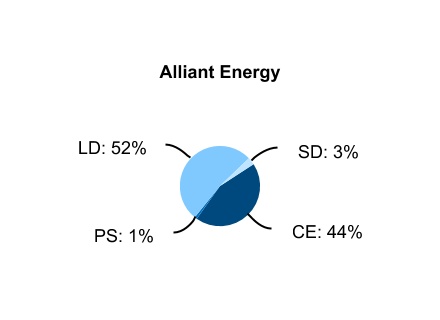
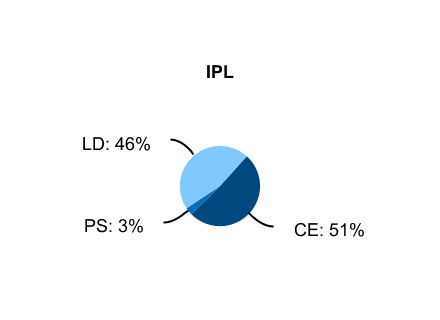
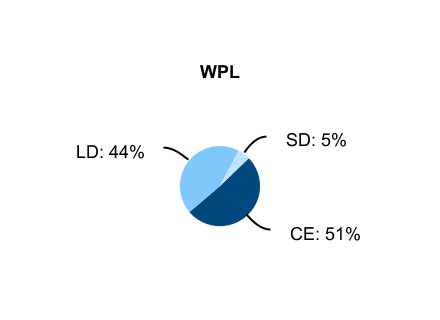
Alliant Energy, IPL and WPL intend to manage their capital structures and liquidity positions in such a way that facilitates their ability to raise funds reliably and on reasonable terms and conditions, while maintaining capital structures consistent with those approved by regulators. In addition to capital structures, other important factors used to determine the characteristics of future financings include financial coverage ratios, capital spending plans and solar construction that is expected to be financed by tax equity partners, regulatory orders and rate-making considerations, levels of debt imputed by rating agencies, market conditions, the impact of tax initiatives and legislation, and any potential proceeds from asset sales. The PSCW factors certain imputed debt adjustments in establishing a regulatory capital structure as part of WPL’s retail rate reviews. The IUB does not make any explicit adjustments for imputed debt in establishing capital ratios used in determining customer rates, although such adjustments are considered by IPL in recommending an appropriate capital structure. Debt imputations by rating agencies include, among others, pension and OPEB obligations and the sales of accounts receivable program.
Credit and Capital Markets - Alliant Energy, IPL and WPL maintain a single revolving credit facility to provide backstop liquidity to their commercial paper programs, and ensure a committed source of liquidity in the event the commercial paper market becomes disrupted. In addition, IPL maintains a sales of accounts receivable program as an alternative financing source; however, if customer arrears were to exceed certain levels, IPL’s access to the program may be restricted.
Primary Sources and Uses of Cash - Alliant Energy’s most significant source of cash is from electric and gas sales to IPL’s and WPL’s customers. Cash from these sales reimburses IPL and WPL for prudently-incurred expenses to provide service to their utility customers and generally provides IPL and WPL a return of and a return on the assets used to provide such services. Capital needed to retire debt and fund capital expenditures related to large strategic projects is expected to be met primarily through external financings.
| 32 |
Cash Flows - Selected information from the cash flows statements was as follows (in millions):
| Alliant Energy | IPL | WPL | ||||||||||||||||||||||||||||||||||||||||||
| 2020 | 2019 | 2020 | 2019 | 2020 | 2019 | |||||||||||||||||||||||||||||||||||||||
| Cash, cash equivalents and restricted cash, January 1 | $18 | $26 | $9 | $12 | $4 | $9 | ||||||||||||||||||||||||||||||||||||||
| Cash flows from (used for): | ||||||||||||||||||||||||||||||||||||||||||||
| Operating activities | 501 | 660 | (6) | 173 | 466 | 423 | ||||||||||||||||||||||||||||||||||||||
| Investing activities | (951) | (1,287) | (301) | (667) | (613) | (557) | ||||||||||||||||||||||||||||||||||||||
| Financing activities | 488 | 619 | 348 | 491 | 146 | 129 | ||||||||||||||||||||||||||||||||||||||
| Net increase (decrease) | 38 | (8) | 41 | (3) | (1) | (5) | ||||||||||||||||||||||||||||||||||||||
| Cash, cash equivalents and restricted cash, December 31 | $56 | $18 | $50 | $9 | $3 | $4 |
Operating Activities - The following items contributed to increased (decreased) operating activity cash flows for 2020 compared to 2019 (in millions):
| Alliant Energy | IPL | WPL | |||||||||||||||
| DAEC PPA amendment buyout payment in 2020 (Refer to Note 2) | ($110) | ($110) | $— | ||||||||||||||
| Amounts issued to IPL’s retail electric customers in 2020 through its transmission cost rider for amounts previously collected in rates (Refer to Note 2) | (42) | (42) | — | ||||||||||||||
| Timing of WPL’s fuel-related cost recoveries from customers | (38) | — | (38) | ||||||||||||||
| Decreased collections from IPL’s gas customers for energy efficiency amounts through the energy efficiency rider | (34) | (34) | — | ||||||||||||||
| Changes in cash collateral and deposit balances at Corporate Services | (24) | — | — | ||||||||||||||
| Decreased collections from IPL’s and WPL’s retail customers caused by temperature impacts on electric and gas sales | (19) | (14) | (5) | ||||||||||||||
| Changes in income taxes paid/refunded | (16) | (25) | 42 | ||||||||||||||
| Credits issued to IPL’s retail electric customers in 2020 through its tax benefit rider related to excess deferred income taxes amortization | (15) | (15) | — | ||||||||||||||
| Changes in interest payments | (6) | (19) | 1 | ||||||||||||||
| Higher collections from IPL’s retail electric and gas base rate increases | 74 | 74 | — | ||||||||||||||
| Changes in levels of production fuel | 28 | 1 | 27 | ||||||||||||||
| Refunds received in 2020 related to the MISO transmission owner return on equity complaint FERC orders (Refer to Note 17(g)) | 20 | 15 | 5 | ||||||||||||||
| Other (primarily due to other changes in working capital) | 23 | (10) | 11 | ||||||||||||||
| ($159) | ($179) | $43 |
Income Tax Payments and Refunds - Income tax (payments) refunds, including refunds of alternative minimum tax credits, were as follows (in millions):
| 2020 | 2019 | ||||||||||||||||
| IPL | ($18) | $7 | |||||||||||||||
| WPL | 13 | (29) | |||||||||||||||
| Other subsidiaries | 10 | 43 | |||||||||||||||
| Alliant Energy | $5 | $21 |
Alliant Energy, IPL and WPL currently do not expect to make any significant federal income tax payments through 2023 based on their current federal net operating loss and credit carryforward positions. While no significant federal income tax payments through 2023 are expected to occur, some tax payments and refunds may occur for state taxes and between consolidated group members (including IPL and WPL) under the tax sharing agreement between Alliant Energy and its subsidiaries. Refer to Note 12 for discussion of the carryforward positions.
Pension Plan Contributions - Alliant Energy, IPL and WPL currently expect to make $39 million, $17 million and $18 million of pension plan contributions in 2021, respectively, based on the funded status and assumed return on assets for each plan as of the December 31, 2020 measurement date. Refer to Note 13(a) for discussion of the current funded levels of pension plans.
| 33 |
Investing Activities - The following items contributed to increased (decreased) investing activity cash flows for 2020 compared to 2019 (in millions):
| Alliant Energy | IPL | WPL | |||||||||||||||
| Lower (higher) utility construction and acquisition expenditures (a) | $246 | $333 | ($87) | ||||||||||||||
| Changes in the amount of cash receipts on sold receivables | 45 | 45 | — | ||||||||||||||
| Refund from ATC in 2020 for construction deposits WPL previously provided to ATC for transmission network upgrades for West Riverside | 42 | — | 42 | ||||||||||||||
| Expenditures for new acquisitions at AEF in 2019 | 13 | — | — | ||||||||||||||
| Other | (10) | (12) | (11) | ||||||||||||||
| $336 | $366 | ($56) |
(a)Largely due to lower expenditures for IPL’s expansion of wind generation, WPL’s West Riverside Energy Center and IPL’s advanced metering infrastructure, partially offset by higher expenditures for IPL’s and WPL’s electric and gas distribution systems (which include the derecho windstorm) and WPL’s expansion of wind generation.
Construction and Acquisition Expenditures - Construction and acquisition expenditures and financing plans are reviewed, approved and updated as part of the strategic planning process. Changes may result from a number of reasons, including regulatory requirements, changing legislation, not obtaining favorable and acceptable regulatory approval on certain projects, improvements in technology and improvements to ensure reliability of the electric and gas distribution systems. Alliant Energy, IPL and WPL have not yet entered into contractual commitments relating to the majority of their anticipated future construction and acquisition expenditures. As a result, they have some discretion with regard to the level and timing of these expenditures. The table below summarizes anticipated construction and acquisition expenditures (in millions). Cost estimates represent Alliant Energy’s, IPL’s and WPL’s portion of construction expenditures and exclude AFUDC and capitalized interest, if applicable. Such estimates do not reflect the assumption that a portion of the construction is expected to be financed by tax equity partners, which is described in more detail below in “IPL and WPL Solar Project Tax Equity Credits.” Refer to “Customer Investments” for further discussion of certain key projects impacting construction and acquisition plans related to the utility business.
| Alliant Energy | IPL | WPL | ||||||||||||||||||||||||||||||||||||||||||
| 2021 | 2022 | 2023 | 2024 | 2021 | 2022 | 2023 | 2024 | 2021 | 2022 | 2023 | 2024 | |||||||||||||||||||||||||||||||||
| Generation: | ||||||||||||||||||||||||||||||||||||||||||||
| Renewable projects | $485 | $750 | $635 | $320 | $45 | $270 | $270 | $50 | $440 | $480 | $365 | $270 | ||||||||||||||||||||||||||||||||
| Other | 90 | 180 | 175 | 90 | 45 | 135 | 135 | 55 | 45 | 45 | 40 | 35 | ||||||||||||||||||||||||||||||||
| Distribution: | ||||||||||||||||||||||||||||||||||||||||||||
| Electric systems | 470 | 435 | 535 | 695 | 240 | 225 | 290 | 375 | 230 | 210 | 245 | 320 | ||||||||||||||||||||||||||||||||
| Gas systems | 70 | 75 | 70 | 70 | 35 | 40 | 30 | 30 | 35 | 35 | 40 | 40 | ||||||||||||||||||||||||||||||||
| Other | 180 | 185 | 190 | 195 | 10 | 10 | 10 | 25 | 15 | 10 | 10 | 10 | ||||||||||||||||||||||||||||||||
| $1,295 | $1,625 | $1,605 | $1,370 | $375 | $680 | $735 | $535 | $765 | $780 | $700 | $675 |
West Riverside Options - WPL entered into agreements with neighboring utilities that provide them options to purchase a partial ownership interest in West Riverside. If such options are exercised, WPL will receive proceeds from the sale. Refer to “Customer Investments” for additional information, including the timing for the potential exercise of options.
Financing Activities - The following items contributed to increased (decreased) financing activity cash flows for 2020 compared to 2019 (in millions):
| Alliant Energy | IPL | WPL | |||||||||||||||
| Lower (higher) payments to retire long-term debt | ($401) | ($200) | $100 | ||||||||||||||
| Lower net proceeds from common stock issuances | (143) | — | — | ||||||||||||||
| Higher common stock dividends | (40) | (68) | (16) | ||||||||||||||
| Higher (lower) net proceeds from issuance of long-term debt | 300 | (200) | — | ||||||||||||||
| Net changes in the amount of commercial paper outstanding | 156 | 50 | 26 | ||||||||||||||
| Higher (lower) capital contributions from IPL’s and WPL’s parent company, Alliant Energy | — | 279 | (100) | ||||||||||||||
| Other | (3) | (4) | 7 | ||||||||||||||
| ($131) | ($143) | $17 |
IPL and WPL Solar Project Tax Equity Credits - IPL and WPL each propose to own and operate their planned solar projects, which are currently expected to qualify for 30% investment tax credits, through a tax equity partnership, with approximately 35% to 45% of the construction costs financed with capital from the tax equity partner. This would allow IPL’s and WPL’s customers to share the costs of the solar projects with an investment partner for 10 years or less, while ensuring their customers receive energy, capacity, and renewable energy credit benefits from the projects. IPL and WPL would expect to purchase the tax equity partner’s interest in the solar projects within 10 years of operation, and then convert to a traditional
| 34 |
ownership structure for the remainder of the useful life of the projects. Assuming a portion of the construction costs are financed by the tax equity partner, IPL would receive approximately $205 million from the tax equity partner in 2023, and WPL would receive approximately $210 million in 2022 and $275 million in 2023. IPL and WPL would expect to include their portion of capital expenditures, less the amounts financed by the tax equity partner, in their respective rate base.
FERC and Public Utility Holding Company Act Financing Authorizations - Under the Public Utility Holding Company Act of 2005, FERC has authority over the issuance of utility securities, except to the extent that a public utility’s primary state regulatory commission has retained jurisdiction over such matters. FERC currently has authority over the issuance of securities by IPL. FERC does not have authority over the issuance of securities by Alliant Energy, WPL, AEF or Corporate Services. In 2019, IPL received authorization from FERC to issue securities in 2020 and 2021 as follows (in millions):
| Initial Authorization | Remaining Capacity as of December 31, 2020 | ||||||||||
| Long-term debt securities issuances in aggregate | $700 | $300 | |||||||||
| Short-term debt securities outstanding at any time (including borrowings from its parent) | 400 | 400 | |||||||||
| Preferred stock issuances in aggregate | 300 | 300 |
State Regulatory Financing Authorizations - In 2017, WPL received authorization from the PSCW to have up to $400 million of short-term borrowings and/or letters of credit outstanding at any time through the earlier of the expiration date of WPL’s credit facility agreement (including extensions) or December 2024. In September 2020, WPL received authorization from the PSCW to issue up to $1 billion of long-term debt securities in aggregate through December 2023.
Shelf Registrations - Alliant Energy, IPL and WPL have current shelf registration statements on file with the SEC for availability to issue unspecified amounts of securities through December 2023. Alliant Energy’s shelf registration statement may be used to issue common stock, debt and other securities. IPL’s and WPL’s shelf registration statements may be used to issue preferred stock and debt securities.
Common Stock Dividends - Payment of common stock dividends is subject to dividend declaration by Alliant Energy’s Board of Directors and is dependent upon, among other factors, regulatory limitations, earnings, cash flows, capital requirements and general financial condition of subsidiaries. Alliant Energy’s general long-term goal is to maintain a dividend payout ratio that is competitive with the industry average. Based on that, Alliant Energy’s goal is to maintain a dividend payout ratio of approximately 60% to 70% of consolidated earnings from continuing operations. Refer to “Results of Operations” for discussion of expected common stock dividends in 2021.
Common Stock Issuances - Refer to Note 7 for discussion of common stock issuances by Alliant Energy in 2019 and 2020, and “Results of Operations” for discussion of expected issuances of common stock in 2021.
Short-term Debt - In 2017, Alliant Energy, IPL and WPL entered into a single revolving credit facility agreement, which expires in August 2023 and is discussed in Note 9(a). There are currently 13 lenders that participate in the credit facility, with respective commitments ranging from $20 million to $130 million. Subject to certain conditions, Alliant Energy, IPL and WPL may exercise one extension option, extending the maturity date by one year. The credit facility has a provision to expand the facility size up to an additional $300 million, for a potential total commitment of $1.3 billion, subject to lender approval for Alliant Energy and subject to lender and regulatory approvals for IPL and WPL.
The credit agreement contains customary events of default, including a cross-default provision that would be triggered if Alliant Energy or certain of its significant subsidiaries (including IPL and WPL) defaults on debt (other than non-recourse debt) totaling $100 million or more. IPL and WPL are subject to a similar cross-default provision with respect to their own respective consolidated debt. A default by Alliant Energy or its non-utility subsidiaries would not trigger a cross-default at IPL or WPL, nor would a default by either of IPL or WPL constitute a cross-default event for the other. If an event of default under the credit agreement occurs and is continuing, then the lenders may declare any outstanding obligations of the defaulting borrower under the credit agreement immediately due and payable.
The single credit facility agreement contains a financial covenant, which requires Alliant Energy, IPL and WPL to maintain certain debt-to-capital ratios in order to borrow under the credit facility. AEF’s term loan credit agreement contains a financial covenant, which requires Alliant Energy to maintain a certain debt-to-capital ratio in order to borrow under the term loan credit agreement. The required debt-to-capital ratios compared to the actual debt-to-capital ratios at December 31, 2020 were as follows:
| Alliant Energy | IPL | WPL | |||||||||||||||
| Requirement, not to exceed | 65% | 65% | 65% | ||||||||||||||
| Actual | 55% | 46% | 50% |
The debt component of the capital ratios includes, when applicable, long- and short-term debt (excluding non-recourse debt and hybrid securities to the extent the total carrying value of such hybrid securities does not exceed 15% of consolidated capital of the applicable borrower), finance lease obligations, certain letters of credit, guarantees of the foregoing and new synthetic leases. Unfunded vested benefits under qualified pension plans and sales of accounts receivable are not included in
| 35 |
the debt-to-capital ratios. The equity component of the capital ratios excludes accumulated other comprehensive income (loss).
Long-term Debt - Refer to Note 9(b) for discussion of issuances and retirements of long-term debt in 2020 and “Results of Operations” for discussion of expected issuances of long-term debt in 2021. In 2019, IPL issued $300 million of 3.6% senior debentures (green bonds) due 2029 and $300 million of 3.5% senior debentures (green bonds) due 2049. In 2019, WPL issued $350 million of 3% debentures due 2029, and a portion of the proceeds from the issuance was used by WPL to refinance its $250 million 5% debentures that matured in 2019.
Impact of Credit Ratings on Liquidity and Collateral Obligations -
Ratings Triggers - The long-term debt of Alliant Energy and its subsidiaries is not subject to any repayment requirements as a result of explicit credit rating downgrades or so-called “ratings triggers.” However, Alliant Energy and its subsidiaries are parties to various agreements that contain provisions dependent on credit ratings. In the event of a significant downgrade, Alliant Energy or its subsidiaries may need to provide credit support, such as letters of credit or cash collateral equal to the amount of any exposure, or may need to unwind contracts or pay underlying obligations. In the event of a significant downgrade, management believes Alliant Energy, IPL and WPL have sufficient liquidity to cover counterparty credit support or collateral requirements under these various agreements. In addition, a downgrade in the credit ratings of Alliant Energy, IPL or WPL, could also result in them paying higher interest rates in future financings, reduce flexibility with future financing plans, reduce their pool of potential lenders, increase their borrowing costs under existing credit facilities or limit their access to the commercial paper market. Credit ratings and outlooks as of the date of this report are as follows:
| Standard & Poor’s Ratings Services | Moody’s Investors Service | |||||||||||||
| Alliant Energy: | Corporate/issuer | A- | Baa2 | |||||||||||
| Commercial paper | A-2 | P-2 | ||||||||||||
| Senior unsecured long-term debt | N/A | N/A | ||||||||||||
| Outlook | Stable | Stable | ||||||||||||
| IPL: | Corporate/issuer | A- | Baa1 | |||||||||||
| Commercial paper | A-2 | P-2 | ||||||||||||
| Senior unsecured long-term debt | A- | Baa1 | ||||||||||||
| Preferred stock | BBB | Baa3 | ||||||||||||
| Outlook | Stable | Stable | ||||||||||||
| WPL: | Corporate/issuer | A | A3 | |||||||||||
| Commercial paper | A-1 | P-2 | ||||||||||||
| Senior unsecured long-term debt | A | A3 | ||||||||||||
| Outlook | Stable | Stable |
Standard & Poor’s Ratings Services and Moody’s Investors Service issued credit ratings of BBB+ and Baa2, respectively, for the senior notes issued by AEF in 2018 and 2020 (with Alliant Energy as guarantor). Credit ratings are not recommendations to buy or sell securities and are subject to change, and each rating should be evaluated independently of any other rating. Each of Alliant Energy, IPL or WPL assumes no obligation to update their respective credit ratings. Refer to Note 15 for additional information on ratings triggers for commodity contracts accounted for as derivatives.
Off-Balance Sheet Arrangements -
Special Purpose Entities - IPL maintains a Receivables Agreement whereby it may sell its customer accounts receivables, unbilled revenues and certain other accounts receivables to a third party through wholly-owned and consolidated special purpose entities. The purchase commitment from the third party to which IPL sells its receivables expires in March 2021. IPL currently expects to amend and extend the purchase commitment. In 2020 and 2019, IPL evaluated the third party that purchases IPL’s receivable assets under the Receivables Agreement and believes that the third party is a VIE; however, IPL concluded consolidation of the third party was not required.
In addition, IPL’s sales of accounts receivable program agreement contains a cross-default provision that is triggered if IPL or Alliant Energy incurs an event of default on debt totaling $100 million or more. If an event of default under IPL’s sales of accounts receivable program agreement occurs, then the counterparty could terminate such agreement. Refer to Note 5(b) for additional information regarding IPL’s sales of accounts receivable program.
Guarantees and Indemnifications - At December 31, 2020, various guarantees and indemnifications are outstanding related to Alliant Energy’s cash equity ownership interest in a non-utility wind farm and prior divestiture activities. Refer to Note 17(d) for additional information.
| 36 |
Certain Financial Commitments -
Contractual Obligations - Alliant Energy, IPL and WPL have various long-term contractual obligations as of December 31, 2020, which include long-term debt maturities in Note 9(b), operating and finance leases in Note 10, capital purchase obligations in Note 17(a), and other purchase obligations in Note 17(b). At December 31, 2020, Alliant Energy, IPL and WPL had no uncertain tax positions recorded as liabilities. Refer to Note 13(a) for anticipated pension and OPEB funding amounts, which are not included in the above tables. Refer to “Construction and Acquisition Expenditures” above for additional information on construction and acquisition programs. In addition, at December 31, 2020, there were various other liabilities included on the balance sheets that, due to the nature of the liabilities, the timing of payments cannot be estimated.
OTHER MATTERS
Market Risk Sensitive Instruments and Positions - Primary market risk exposures are associated with commodity prices, investment prices and interest rates. Risk management policies are used to monitor and assist in mitigating these market risks and derivative instruments are used to manage some of the exposures related to commodity prices. Refer to Notes 1(h) and 15 for further discussion of derivative instruments, and Note 1(g) for details of utility cost recovery mechanisms that significantly reduce commodity risk.
Commodity Price - Alliant Energy, IPL and WPL are exposed to the impact of market fluctuations in the price and transportation costs of commodities they procure and market. Established policies and procedures mitigate risks associated with these market fluctuations, including the use of various commodity derivatives and contracts of various durations for the forward sale and purchase of these commodities. Exposure to commodity price risks in the utility businesses is also significantly mitigated by current rate-making structures in place for recovery of fuel-related costs as well as the cost of natural gas purchased for resale. IPL’s electric and gas tariffs and WPL’s wholesale electric and gas tariffs provide for subsequent monthly adjustments to their tariff rates for material changes in prudently incurred commodity costs. IPL’s and WPL’s rate mechanisms, combined with commodity derivatives, significantly reduce commodity risk associated with their electric and gas margins. WPL’s retail electric margins have modest exposure to the impact of changes in commodity prices due largely to the current retail recovery mechanism in place in Wisconsin for fuel-related costs.
Investment Price - Alliant Energy, IPL and WPL are exposed to investment price risk as a result of their investments in securities, largely related to securities held by their pension and OPEB plans. Refer to Note 13(a) for details of the securities held by their pension and OPEB plans. Refer to “Critical Accounting Policies and Estimates” for the impact on retirement plan costs of changes in the rate of returns earned by plan assets.
Interest Rate - Alliant Energy, IPL and WPL are exposed to risk resulting from changes in interest rates associated with variable-rate borrowings. In addition, Alliant Energy and IPL are exposed to risk resulting from changes in interest rates on cash amounts outstanding under IPL’s sales of accounts receivable program. Assuming the impact of a hypothetical 100 basis point increase in interest rates on variable-rate borrowings and cash amounts outstanding under IPL’s sales of accounts receivable program at December 31, 2020, Alliant Energy’s, IPL’s and WPL’s annual pre-tax expense would increase by approximately $7 million, $0 and $3 million, respectively. Refer to Notes 5(b) and 9 for additional information on cash amounts outstanding under IPL’s sales of accounts receivable program, and short- and long-term variable-rate borrowings, respectively. Refer to “Critical Accounting Policies and Estimates” for the impacts of changes in discount rates on retirement plan obligations and costs.
New Accounting Standards - Refer to Note 1(o) for discussion of new accounting standards impacting Alliant Energy, IPL and WPL.
Critical Accounting Policies and Estimates - Alliant Energy’s, IPL’s and WPL’s financial statements are prepared in conformity with GAAP, which requires management to apply accounting policies, judgments and assumptions, and make estimates that affect results of operations and the amounts of assets and liabilities reported in the financial statements. The following accounting policies and estimates are critical to the business and the understanding of financial results as they require critical assumptions and judgments by management. The results of these assumptions and judgments form the basis for making estimates regarding the results of operations and the amounts of assets and liabilities that are not readily apparent from other sources. Actual financial results may differ materially from estimates. Management has discussed these critical accounting policies and estimates with the Audit Committee of the Board of Directors. Refer to Note 1 for additional discussion of accounting policies and estimates used in the preparation of the financial statements.
Regulatory Assets and Regulatory Liabilities - IPL and WPL are regulated by various federal and state regulatory agencies. As a result, they are subject to GAAP for regulated operations, which recognizes that the actions of a regulator can provide reasonable assurance of the existence of an asset or liability. Regulatory assets or regulatory liabilities arise as a result of a difference between GAAP and actions imposed by the regulatory agencies in the rate-making process. Regulatory assets generally represent incurred costs that have been deferred as such costs are probable of recovery in future customer rates. Regulatory liabilities generally represent obligations to make refunds to customers or amounts collected in rates for which the related costs have not yet been incurred. Regulatory assets and regulatory liabilities are recognized in accordance with the rulings of applicable federal and state regulators, and future regulatory rulings may impact the carrying value and accounting treatment of regulatory assets and regulatory liabilities.
| 37 |
Assumptions and judgments are made each reporting period regarding whether regulatory assets are probable of future recovery and regulatory liabilities are probable future obligations by considering factors such as regulatory environment changes, rate orders issued by the applicable regulatory agencies, historical decisions by such regulatory agencies regarding similar regulatory assets and regulatory liabilities, and subsequent events of such regulatory agencies. The decisions made by regulatory authorities have an impact on the recovery of costs, the rate of return on invested capital and the timing and amount of assets to be recovered by rates. A change in these decisions may result in a material impact on results of operations and the amount of assets and liabilities in the financial statements. Note 2 provides details of the nature and amounts of regulatory assets and regulatory liabilities assessed at December 31, 2020.
Income Taxes - Alliant Energy, IPL and WPL are subject to income taxes in various jurisdictions. Assumptions and judgments are made each reporting period to estimate income tax assets, liabilities, benefits and expenses. Judgments and assumptions are supported by historical data and reasonable projections. Significant changes in these judgments and assumptions could have a material impact on financial condition and results of operations. Alliant Energy’s and IPL’s critical assumptions and judgments for 2020 include estimates of qualifying deductions for repairs expenditures and allocation of mixed service costs due to the impact of Iowa rate-making principles on such property-related differences. Critical assumptions and judgments also include projections of future taxable income used to determine the ability to utilize net operating losses and credit carryforwards prior to their expiration. Refer to Note 12 for further discussion of tax matters.
Effect of Rate-making on Property-related Differences - Alliant Energy’s and IPL’s effective income tax rates are normally impacted by certain property-related differences at IPL for which deferred tax is not recorded in the income statement pursuant to Iowa rate-making principles. Changes in methods or assumptions regarding the amount of IPL’s qualifying repairs expenditures, allocation of mixed service costs, and costs related to retirement or removal of depreciable property could result in a material impact on Alliant Energy’s and IPL’s financial condition and results of operations.
Carryforward Utilization - Significant federal tax credit carryforwards and federal and state net operating loss carryforwards exist for Alliant Energy, IPL and WPL as of December 31, 2020. Based on projections of current and future taxable income, Alliant Energy, IPL and WPL plan to utilize substantially all of these carryforwards prior to their expiration. Taxable income must be reduced by federal net operating losses carryforwards prior to utilizing federal tax credit carryforwards. Alliant Energy does not expect to utilize all of its federal net operating loss carryforwards until 2023, and therefore, currently does not expect to utilize 2002 vintage federal credit carryforwards prior to their expiration in 2022, resulting in valuation allowances that remain as of December 31, 2020. Refer to Note 12 for discussion of expected utilization of 2003 vintage federal credit carryforwards prior to their expiration in 2023, which resulted in the reversal of previously recorded valuation allowances in 2020. Federal credit carryforwards generated from 2003 through 2009, which amount to $17 million for Alliant Energy, are expected to be utilized within five years of expiration. All other federal credit carryforwards and federal net operating loss carryforwards are expected to be utilized more than five years before expiration. Changes in tax regulations or assumptions regarding current and future taxable income could require changes to valuation allowances in the future resulting in a material impact on financial condition and results of operations.
Long-Lived Assets - Periodic assessments regarding the recoverability of certain long-lived assets are completed when factors indicate the carrying value of such assets may not be recoverable or such assets are planned to be sold. These assessments require significant assumptions and judgments by management. The long-lived assets assessed for impairment generally include certain assets within regulated operations that may not be fully recovered from IPL’s and WPL’s customers as a result of regulatory decisions in the future, and assets within non-utility operations that are proposed to be sold or are currently generating operating losses.
Regulated Operations - Alliant Energy’s, IPL’s and WPL’s long-lived assets within their regulated operations that were assessed for impairment and plant abandonment in 2020 included IPL’s and WPL’s generating units subject to early retirement.
Generating Units Subject to Early Retirement - Alliant Energy, IPL and WPL evaluate future plans for their electric generation fleet and have announced the early retirement of certain older and less-efficient EGUs. When it becomes probable that an EGU will be retired before the end of its useful life, Alliant Energy, IPL and WPL must assess whether the EGU meets the criteria to be considered probable of abandonment. EGUs that are considered probable of abandonment generally have material remaining net book values and are expected to cease operations in the near term significantly before the end of their original estimated useful lives. If an EGU meets such criteria to be considered probable of abandonment, Alliant Energy, IPL and WPL must assess the probability of full recovery of the remaining carrying value of such EGU. If it is probable that regulators will not allow full recovery of and a full return on the remaining net book value of the abandoned EGU, an impairment charge is recognized equal to the difference between the remaining carrying value and the present value of the future revenues expected from the abandoned EGU.
Alliant Energy and IPL concluded that Lansing, and Alliant Energy and WPL concluded that Edgewater Unit 5, met the criteria to be considered probable of abandonment in 2020. IPL and WPL are currently allowed a full recovery of and a full return on its respective EGU from both its retail and wholesale customers, and as a result, Alliant Energy, IPL and WPL concluded that no impairment was required as of December 31, 2020. Alliant Energy, IPL and WPL evaluated their other EGUs that are subject to early retirement and determined that no other EGUs met the criteria to be considered probable of abandonment as of December 31, 2020. Note 3 provides additional details of these assets anticipated to be retired early.
| 38 |
Unbilled Revenues - Unbilled revenues are primarily associated with utility operations. Energy sales to individual customers are based on the reading of customers’ meters, which occurs on a systematic basis throughout the month. Amounts of energy delivered to customers since the date of the last meter reading are estimated at the end of each reporting period and the corresponding estimated unbilled revenue is recorded. The unbilled revenue is based on estimates of daily system demand volumes, customer usage by class, temperature impacts, line losses and the most recent customer rates. Such process involves the use of various judgments and assumptions and significant changes in these judgments and assumptions could have a material impact on results of operations. As of December 31, 2020, unbilled revenues related to Alliant Energy’s utility operations were $174 million ($92 million at IPL and $82 million at WPL).
Pensions and Other Postretirement Benefits - Alliant Energy, IPL and WPL sponsor various defined benefit pension and OPEB plans that provide benefits to a significant portion of their employees and retirees. Assumptions and judgments are made periodically to estimate the obligations and costs related to their retirement plans. There are many judgments and assumptions involved in determining an entity’s pension and other postretirement liabilities and costs each period including employee demographics (including life expectancies and compensation levels), discount rates, assumed rates of return and funding. Changes made to plan provisions may also impact current and future benefits costs. Judgments and assumptions are supported by historical data and reasonable projections and are reviewed at least annually. The following table shows the impacts of changing certain key actuarial assumptions discussed above (in millions):
| Defined Benefit Pension Plans | OPEB Plans | |||||||||||||||||||||||||
| Change in Actuarial Assumption | Impact on Projected Benefit Obligation at December 31, 2020 | Impact on 2021 Net Periodic Benefit Costs | Impact on Accumulated Benefit Obligation at December 31, 2020 | Impact on 2021 Net Periodic Benefit Costs | ||||||||||||||||||||||
| Alliant Energy | ||||||||||||||||||||||||||
| 1% change in discount rate | $183 | $11 | $22 | $2 | ||||||||||||||||||||||
| 1% change in expected rate of return | N/A | 10 | N/A | 1 | ||||||||||||||||||||||
| IPL | ||||||||||||||||||||||||||
| 1% change in discount rate | 86 | 6 | 8 | 1 | ||||||||||||||||||||||
| 1% change in expected rate of return | N/A | 4 | N/A | 1 | ||||||||||||||||||||||
| WPL | ||||||||||||||||||||||||||
| 1% change in discount rate | 81 | 5 | 8 | 1 | ||||||||||||||||||||||
| 1% change in expected rate of return | N/A | 4 | N/A | — |
Contingencies - Assumptions and judgments are made each reporting period regarding the future outcome of contingent events. Loss contingency amounts are recorded for any contingent events for which the likelihood of loss is probable and able to be reasonably estimated based upon current available information. The amounts recorded may differ from actuals when the uncertainty is resolved. The estimates made in accounting for contingencies, and the gains and losses that are recorded upon the ultimate resolution of these uncertainties, could have a significant effect on results of operations and the amount of assets and liabilities in the financial statements.
Effective January 1, 2020 upon the adoption of the new accounting standard for credit losses, certain contingencies, such as Alliant Energy Resources, LLC’s guarantees of the partnership obligations of an affiliate of Whiting Petroleum, require estimation each reporting period of the expected credit losses on those contingencies. These estimates require significant judgment and result in recognition of a credit loss liability sooner than the previous accounting standards, which required recognition when the contingency became probable and could be reasonably estimated based on then currently available information. With respect to Alliant Energy’s guarantees of the partnership obligations of an affiliate of Whiting Petroleum, the most significant judgments in determining the credit loss liability were the estimate of the exposure under the guarantees and the methodology used for calculating the credit loss liability. As of December 31, 2020, Alliant Energy currently estimates the exposure to be a portion of the known partnership abandonment obligations. The methodology used to determine the credit loss liability considers both quantitative and qualitative information, which utilizes potential outcomes in a range of possible estimated amounts. Factors considered include market and external data points, the creditworthiness of the other partners, Whiting Petroleum’s emergence from bankruptcy in the third quarter of 2020, and forecasted cash flow expenditures associated with the abandonment obligations based on information made available to Alliant Energy. Note 1(o) provides discussion of the adoption of the new accounting standard for credit losses.
Note 17 provides further discussion of contingencies assessed at December 31, 2020 that may have a material impact on financial condition and results of operations, including impacts to Alliant Energy’s ATC Holdings equity earnings as a result of future changes in FERC’s evaluation of certain MISO return on equity complaints, various pending legal proceedings, guarantees and indemnifications.
Previous: Item 6. SELECTED FINANCIAL DATA · Next: Item 7A. QUANTITATIVE AND QUALITATIVE DISCLOSURES ABOUT MARKET RISK