 filings.tools
Item 1. Business.
73K characters. Original on sec.gov · Markdown
Item 1. Business.
Overview
Nucor Corporation, a Delaware corporation incorporated in 1958, and its affiliates (“Nucor,” the “Company,” “we,” “us” or “our”) manufacture steel and steel products. The Company also produces and procures ferrous and non-ferrous materials primarily for use in its steel manufacturing business. Most of the Company’s operating facilities and customers are located in North America. The Company’s operations include international trading and sales companies that buy and sell steel and steel products manufactured by the Company and others.
Nucor is North America’s largest recycler, using scrap steel as the primary raw material in producing steel and steel products. In 2023, we recycled approximately 18.4 million gross tons of scrap steel.
Segments, Principal Products Produced, and Markets and Marketing
Nucor reports its results in three segments: steel mills, steel products and raw materials. The steel mills segment is Nucor’s largest segment, representing 58% of the Company’s sales to external customers in the year ended December 31, 2023.
We market products from the steel mills and steel products segments mainly through in-house sales forces. We also utilize our internal distribution and trading companies to market our products abroad. The markets for these products are largely tied to end-use markets such as nonresidential construction, durable goods and capital spending that are affected by changes in general economic conditions.
We are a leading domestic provider for most of the products we supply, and, in many cases (e.g., structural steel, merchant bar steel, steel joist and deck, pre-engineered metal buildings, steel piling, cold finish bar steel, steel electrical conduit pipe and insulated metal panels), we are the leading supplier.
In recent years we have embarked on a strategy to advance Nucor’s capabilities and further its value creation, as summarized in our Mission Statement: Grow the Core, Expand Beyond and Live Our Culture.
We have examined and prioritized growth opportunities across our core steelmaking, steel products and raw materials operations, and we have identified and executed on several acquisitions and investments to expand the products and services we offer beyond our traditional capabilities. We believe that the Expand Beyond growth opportunities we are pursuing leverage our core competency as a highly efficient, industrial manufacturer working primarily with steel and steel products, while positioning us to generate attractive profit margins and returns on our invested capital selling products into growing end-use markets.
Steel mills segment
In the steel mills segment, Nucor produces sheet steel (hot-rolled, cold-rolled and galvanized), plate steel, structural steel (wide-flange beams, beam blanks, H-piling and sheet piling) and bar steel (blooms, billets, concrete reinforcing bar, merchant bar and engineered special bar quality (“SBQ”)). Nucor manufactures steel principally from scrap steel and scrap steel substitutes using electric arc furnaces (“EAFs”) along with continuous casting and automated rolling mills. The steel mills segment also includes Nucor’s equity method investment in NuMit LLC (“NuMit”) (see “Steel joint ventures”- below), as well as international trading and distribution companies that buy and sell steel manufactured by the Company and other steel producers.
The steel mills segment sells its products primarily to steel service centers, fabricators and manufacturers located throughout the United States, Canada and Mexico. The steel mills segment sold
approximately 18,552,000 tons to outside customers in 2023. In 2023, 80% of the shipments made by our steel mills segment were to external customers. The remaining 20% of the steel mills segment’s shipments went to our steel products segment.
Bar mills - Nucor has 15 bar mills located across the United States that manufacture a broad range of products, including concrete reinforcing bars, hot-rolled bars, rounds, light shapes, structural angles, channels, wire rod and highway products in carbon and alloy steels. Four of the bar mills have a significant focus on manufacturing SBQ and wire rod products.
Steel produced by our bar mills has a wide usage serving end markets, including the agricultural, automotive, construction, energy, furniture, machinery, metal building, railroad, recreational equipment, shipbuilding, heavy truck and trailer market segments. Considering Nucor’s production capabilities and the mix of bar products generally produced and marketed, the capacity of the bar mills is estimated at approximately 9,560,000 tons per year.
Reinforcing and merchant bar steel are sold in standard sizes and grades, which allows us to maintain inventory levels of these products to meet our customers’ expected orders. Our SBQ products are hot-rolled to exacting specifications primarily servicing the automotive, energy, agricultural, heavy equipment and transportation sectors.
In April 2022, Nucor announced that it will build a new rebar micro mill, with spooling capabilities, in Lexington, North Carolina. The new micro mill is currently under construction.
In February 2024, Nucor announced that the Board of Directors approved $860 million to construct a rebar micro mill in the Pacific Northwest. Nucor is evaluating potential locations, and the project is expected to take two years to construct, subject to regulatory approvals.
Sheet mills - Nucor operates six sheet mills that produce flat-rolled steel for automotive, appliance, construction, pipe and tube and many other industrial and consumer applications. Included in our six sheet mills is California Steel Industries, Inc., in which Nucor has a 51% controlling ownership position. Considering Nucor’s production capabilities and the mix of flat-rolled products generally produced and marketed, the capacity of the sheet mills is estimated at approximately 14,600,000 tons per year. All of our sheet mills are equipped with galvanizing lines and four of them are equipped with cold rolling mills for further processing of hot-rolled sheet steel.
Nucor produces hot-rolled, cold-rolled and galvanized sheet steel to customers’ specifications. Contract sales within the steel mills segment are most notable in our sheet operations, as it is common for contract sales to account for the majority of sheet sales in a given year. We estimate that greater than 80% of our sheet steel sales in 2023 were to contract customers. These sheet sales contracts are noncancellable agreements that generally incorporate monthly or quarterly price adjustments reflecting changes in the current market-based indices and/or raw material cost, and typically have terms ranging from six to 12 months. The balance of our sheet steel sales were made in the spot market at prevailing prices at the time of sale. The number of tons sold to contract customers at any given time depends on a variety of factors, including our consideration of current and future market conditions, our strategy to appropriately balance spot and contract tons in a manner to meet our customers’ requirements while considering the expected profitability, our desire to sustain a diversified customer base, and our end-use customers’ perceptions about future market conditions.
Nucor owns a 51% controlling economic and voting interest in Nucor-JFE Steel Mexico, S. de R.L. de C.V. ("NJSM"). NJSM is a joint venture with JFE Steel Corporation (“JFE”) of Japan that operates a galvanized sheet steel plant in central Mexico with an annual capacity of approximately 400,000 tons, that is expected to supply the country’s automotive market.
In January 2022, Nucor announced it had selected Mason County, West Virginia as the site for its new 3-million-ton state-of-the-art sheet mill. When operational, the new mill will be equipped to produce 84-inch sheet products, and among other features, will include a 76-inch tandem cold mill and two galvanizing lines capable of producing advanced high-end automotive and construction grades.
Structural mills - Nucor operates two structural mills that produce wide-flange steel beams, pilings and heavy structural steel products for fabricators, construction companies, manufacturers and steel service centers. Nucor owns a 51% interest in Nucor-Yamato Steel Company (Limited Partnership) (“Nucor-Yamato”) located in Blytheville, Arkansas. Nucor-Yamato is the only North American producer of high-strength, low-alloy beams. Common applications for the high-strength, low-alloy beams include gravity columns for high-rise buildings, long-span trusses for stadiums and convention centers, and for use in all projects where seismic design is a critical factor. The benefits of high-strength, low-alloy beams are increasingly recognized by Nucor’s customers in the construction sector. These include savings in terms of construction time, weight, space, and overall environmental impact. Nucor sells its high-strength, low-alloy beams under the trade name AEOSTM.
Nucor also owns a steel beam mill in Berkeley County, South Carolina. Considering Nucor’s production capabilities and the mix of structural products generally produced and marketed, the capacity of the two structural mills is estimated at approximately 3,250,000 tons per year. .
Structural steel products come in standard sizes and grades, which allows us to maintain inventory levels of these products to meet our customers’ expected orders.
Plate mills - Nucor operates three plate mills that produce plate for manufacturers of barges, bridges, heavy equipment, rail cars, refinery tanks, ships, wind towers and other items. Our products are further used in the pipe and tube, pressure vessel, transportation and construction industries. Considering Nucor’s production capabilities and the mix of plate products generally produced and marketed, the capacity of the plate mills is estimated at approximately 4,000,000 tons per year.
Plate steel products come in standard sizes and grades, which allows us to maintain inventory levels of these products to meet our customers’ expected orders.
Steel joint venture - Nucor owns a 50% economic and voting interest in NuMit, a company that owns 100% of the equity interest in Steel Technologies LLC (“Steel Technologies”), an operator of 30 strategically located sheet processing facilities in the United States, Canada and Mexico. Steel Technologies transforms flat-rolled steel into products that meet exacting specifications for customers in a wide range of industries, including the automotive, agricultural and consumer goods markets.
Steel products segment
In the steel products segment, Nucor produces steel joists and joist girders, steel deck, galvanized torque tubes used in solar arrays, hollow structural section (“HSS”) steel tubing, electrical conduit, fabricated concrete reinforcing steel, cold finished steel, steel fasteners, steel grating and expanded metal, wire and wire mesh, metal building systems, insulated metal panels, steel racking, overhead doors, and utility towers and structures for communications and energy transmission. The steel products segment also includes our piling distributor.
Our capabilities in insulated metal panels, steel racking, overhead doors and towers and structures have all been acquired over the past several years as part of our Expand Beyond strategy, which we believe can enhance our profit margins, return on invested capital and free cash flow generation and, over time, accelerate our overall growth while reducing the volatility of our earnings. A value driver in each of these businesses is to readily leverage our core competencies as a highly efficient manufacturer of steel products, as well as our inclusive, safety-focused, performance-oriented culture.
Except for our overhead doors business, which at present is focused primarily on the garage door repair and replacement market, our steel products businesses primarily serve the nonresidential construction and infrastructure markets.
Vulcraft/Verco – The Vulcraft/Verco group is the nation’s leading producer of open-web steel joists, joist girders and steel decking, which are used primarily for nonresidential building
construction. Steel joists and joist girders are produced and marketed throughout the United States by seven domestic Vulcraft facilities. The Vulcraft/Verco group’s steel decking is produced and marketed throughout the United States by nine domestic plants. Six of these plants are adjacent to Vulcraft joist facilities. The Vulcraft/Verco group also has two plants in Canada—one in Eastern Canada and one in Western Canada—that produce both joist and deck. The annual joist production capacity is approximately 745,000 tons and the annual deck production capacity is approximately 560,000 tons.
Sales of steel joists, joist girders and steel decking are dependent on the nonresidential building construction market. The majority of steel joists, joist girders and steel decking are used extensively as part of the roof and floor structural support systems in warehouses, data centers, manufacturing buildings, retail stores, shopping centers, schools, hospitals, and, to a lesser extent, in multi-story buildings and apartments. We make these products to our customers’ specifications and typically deliver them directly to a construction site according to a prearranged schedule and sequence. The majority of these contracts are firm, fixed-price contracts that are, in most cases, competitively bid against other suppliers.
Our Vulcraft/Verco group also manufactures and fabricates steel bar grating products at four of its facilities and serves the new construction and maintenance-related markets. The annual production capacity for our grating business is approximately 49,000 tons.
Tubular products – The Nucor Tubular Products (“NTP”) group has eight tubular facilities that are located in close proximity to Nucor’s sheet mills. The NTP group produces HSS steel tubing, mechanical steel tubing, galvanized solar torque tube, piling, sprinkler pipe, heat-treated tubing and electrical conduit. HSS steel tubing, mechanical steel tubing and sprinkler pipe are used in structural and mechanical applications, including nonresidential construction, infrastructure, agricultural, automotive and construction equipment end-use markets. Heat-treated tubing and electrical conduit are primarily used to protect and route electrical wiring in various nonresidential structures such as hospitals, schools, office buildings, hotels, stadiums and shopping malls. Solar torque tube is an essential component for ground-mount solar systems.
Rebar fabrication – Nucor Rebar Fabrication fabricates, installs and distributes rebar for a wide variety of construction work classified as infrastructure (e.g., highways, bridges, reservoirs, utilities and airports) and various building projects, including manufacturing facilities, warehouses, data centers, hospitals, schools, stadiums, commercial office buildings and multi-tenant residential construction. We sell and install fabricated reinforcing products primarily on a construction contract bid basis.
Reinforcing products are essential to concrete construction. They supply tensile strength, as well as additional compressive strength, and protect concrete from cracking. In many markets, Nucor Rebar Fabrication sells reinforcing products on an installed basis (i.e., Nucor Rebar Fabrication fabricates the reinforcing products for a specific application and performs the installation). Nucor Rebar Fabrication operates nearly 70 fabrication facilities across the United States and Canada, with each facility serving a local market. Total annual rebar fabrication capacity is approximately 1,736,000 tons.
Piling products - Skyline Steel LLC and its subsidiaries (“Skyline”) are primarily steel foundation distributors serving the North American market. Skyline distributes products to service marine construction, bridge and highway construction, heavy civil construction, flood protection, underground commercial parking and environmental containment projects in the infrastructure and construction industries. Skyline also manufactures a complete line of geostructural foundation solutions, including threaded bar, micropile, strand anchors and hollow bar. It also processes and fabricates spiral weld pipe piling, rolled and welded pipe piling, and cold-formed sheet piling.
Cold finish - Nucor Cold Finish (“NCF”) is the largest and most diversified producer of cold finished bar products for a wide range of industrial markets in North America, with assets in Canada, Mexico and throughout the United States. The total capacity of the Nucor cold finished bar and wire facilities is approximately 1,069,000 tons per year.
Nucor’s cold finished facilities produce cold finished bars for demanding applications. NCF obtains most of its steel from the Nucor bar mills, ensuring consistent quality and supply through all market conditions. These facilities produce cold-drawn, turned, ground and polished steel bars that are used extensively for shafting and other precision machined applications. NCF produces rounds, hexagons, flats and squares in carbon, alloy and leaded steels. These bars are purchased by the appliance, automotive, construction equipment, electric motor, farm machinery and fluid power industries, as well as by service centers. NCF bars are used in tens of thousands of products. A few examples include anchor bolts, hydraulic cylinders and shafting for air conditioner compressors, ceiling fan motors, garage door openers, electric motors and lawn mowers.
Nucor owns a fully integrated precision castings company, Corporacion POK, S.A. de C.V. (“POK”), with a facility in Guadalajara, Mexico. POK produces complex castings and precision machined products used by the oil and gas, mining and sugar processing industries. POK produces a wide array of precision castings using steel, bronze, iron and specialty alloys. POK complements NCF’s businesses and Nucor’s cold finish facility in Monterrey, Mexico.
Steel mesh and fasteners – Nucor manufactures wire products and industrial fasteners.
Nucor produces mesh at Nucor Steel Connecticut, Inc. and Nucor Wire Products Utah. Nucor also produces mesh in Canada at the Harris Steel Group, Inc. ("Harris") operations of Laurel Steel.
Nucor Fastener’s bolt-making facility in Indiana produces carbon and alloy steel hex head cap screws, hex bolts, structural bolts, nuts and washers, finished hex nuts and custom-engineered fasteners. Nucor fasteners are used in a broad range of markets, including automotive, machine tool, farm implement, construction and military applications.
Buildings group – The Nucor Buildings group is the nation’s leading supplier of pre-engineered metal buildings. Nucor produces metal buildings and components throughout the United States under the following brands: Nucor Building Systems, American Buildings Company and Kirby Building Systems.
The sizes of the buildings that can be produced range from less than 1,000 square feet to more than 1,000,000 square feet. Complete metal building packages can be customized and combined with other materials such as glass, wood and masonry to produce cost-effective, energy efficient, aesthetically pleasing buildings designed to the customers’ special requirements. The buildings are sold primarily through independent builder distribution networks in order to provide fast-track, customized solutions for building owners. The primary markets served are commercial, industrial and institutional buildings, including distribution centers, data centers, automobile dealerships, retail centers, schools and manufacturing facilities.
Insulated metal panels (“IMP”) – We believe the Nucor Insulated Panels Group, which includes industry leading brands, CENTRIA and Metl-Span, broadens the value-added solutions that the Nucor Buildings group can provide to targeted end markets such as warehousing, distribution and data centers. We expect these end-use markets to continue to grow in the coming years. IMPs facilitate cost-effective climate control in the built environment and reduce energy usage and overall operations related greenhouse gas (“GHG”) emissions for owners and lessees.
Warehouse Systems – Nucor Warehouse Systems (“NWS”) produces and installs custom designed steel racking systems for a variety of applications, including data centers and warehouses.
Overhead doors – In June 2022, Nucor acquired C.H.I. Overhead Doors, LLC (“CHI”), a leading manufacturer of overhead doors for residential and commercial markets in the United States and Canada. We believe that by leveraging Nucor’s existing sales channels into the broader nonresidential construction market we can facilitate CHI’s continuing growth. CHI has two manufacturing locations.
Towers & Structures – In August 2022, Nucor acquired Summit Utility Structures LLC and a related company, Sovereign Steel Manufacturing LLC. These companies form Nucor Towers & Structures (“NTS”). NTS produces metal poles and other steel structures for utility infrastructure and highway signage.
In 2023, Nucor announced it will build two new manufacturing locations to expand NTS adjacent to Nucor's existing steel mills in Decatur, Alabama and Crawfordsville, Indiana.
Raw materials segment
In the raw materials segment, Nucor produces DRI and, through our DJJ subsidiary, brokers ferrous and nonferrous metals, pig iron, HBI and DRI; supplies ferro-alloys; and processes ferrous and nonferrous scrap metal. The raw materials segment also includes our natural gas production operations and our industrial gas business, Universal Industrial Gases. Nucor’s raw materials investments are focused on creating an advantage for its steelmaking operations, through a global information network and a multi-pronged and flexible approach to raw materials supply.
Scrap recycling and brokerage operations - DJJ operates six regional scrap recycling companies across the United States that together have shredders capable of processing approximately 5,878,000 tons of ferrous scrap annually. DJJ’s scrap recycling operations use expertise and technology to maximize metal recovery and minimize waste.
DJJ is the leading broker of ferrous scrap in North America and is a global trader of scrap metal, pig iron and other metallics. In addition to sourcing steel scrap for Nucor’s mills, DJJ is a global trader of ferro-alloys and nonferrous metals. DJJ’s logistics team owns and operates one of the largest independent fleets of railcars in the United States dedicated to the movement of scrap and steel and also offers railcar leasing and railcar fleet management services. These activities have value to Nucor as the leading and most diversified North American steel producer.
Our primary external customers for ferrous scrap are EAF steel mills and foundries that use ferrous scrap as a raw material in their manufacturing process. External customers purchasing nonferrous scrap metal include aluminum can producers, secondary aluminum smelters, steel mills, and other processors and consumers of various nonferrous metals. We market scrap metal products and related services to our external customers through in-house sales forces. In 2023, approximately 8% of the ferrous and nonferrous metals and scrap substitute tons we brokered and processed were sold to external customers. We consumed the balance in our steel mills.
Direct reduced iron operations - DRI is a substitute material for high-quality grades of scrap and pig iron. Nucor operates two DRI plants which supplied approximately 3,350,000 metric tons of material with world-class metallization rates and carbon content to our steel mills in 2023. Nucor’s wholly owned subsidiary, Nu-Iron Unlimited, is located in Trinidad and benefits from a low-cost supply of natural gas and favorable logistics for inbound iron ore and shipment of DRI to the United States. Nucor’s second DRI plant in Louisiana also benefits from favorable logistics and proximity to its steel mill customers.
Nucor’s DRI production and brokering capabilities provide our steel mills flexibility to quickly adjust their metallic input mix to changing market conditions, enabling them to maintain competitiveness in the often-volatile ferrous scrap market. With the potential for high-quality scrap to become scarcer, coupled with the risk of third-party supplier disruptions, Nucor’s DRI facilities provide a greater degree of certainty over metallics supply to its steel mills.
Natural gas production programs - Nucor owns operating wells and leasehold interests in natural gas properties in the South Piceance Basin in the Western Slope of Colorado.
Nucor’s access to a long-term, low-cost supply of natural gas is a component in the execution of Nucor’s raw material strategy. Natural gas produced by Nucor’s production operations is sold to third parties to partially offset our exposure to changes in the price of natural gas consumed by our DRI plant in Louisiana and our steel mills in the United States.
Process Gases – Universal Industrial Gases ("UIG") provides the capability to build and operate our own air separation units to serve our steel mills, providing us with an alternative to long term service contracts with outside providers. Where economies of scale and regional market conditions warrant, we can also sell excess output from these plants on a merchant basis. As of December 31, 2023, Nucor had six industrial gas plants operating, and eight others at various stages of commissioning, construction, or planning.
Customers and Markets
We have a diverse customer base and are not dependent on any single customer. Our largest single customer in 2023 represented approximately 5% of sales and consistently pays within terms. Our steel mills use a significant portion of the products of the raw materials segment while our steel products segment uses approximately 20% of our steel mills' output.
We believe that nonresidential construction is the largest end-use market that we serve. Products from our steel mills and steel products segments are used in a variety of nonresidential construction applications (e.g., commercial, industrial and infrastructure).
In recent years, we have come to see our EAF-based steelmaking method, with its lower GHG intensity when compared with blast furnace technology that is reliant on mined or extracted virgin iron ore and coking coal, as a competitive advantage for reasons beyond its flexible, highly variable cost base. Customers are expressing greater concern for the GHG emissions in their supply chains and are prioritizing sourcing their steel requirements from EAF-based steelmakers for incorporation into their projects and products.
We have developed branded product lines to leverage this, and other advantages conferred by our specialized capabilities:
Our AEOSTM line of high-strength, low-alloy steel beams is one such example. AEOSTM’s benefits are increasingly recognized by Nucor’s customers in the construction sector. These include savings in terms of construction time, weight, space and overall environmental impact.
Our ECONIQTM line of net zero carbon steel is another example. We launched ECONIQTM during 2021 and have found interest from customers in both the automotive and construction end-use markets. These are the two largest end-use markets for steel in the United States.
Our ElcyonTM line of sustainable heavy gauge steel plate product will be made specifically for America’s wind energy producers. We launched ElcyonTM in January 2023 and plan to manufacture this product at our new plate mill in Brandenburg, Kentucky.
We have also invested in people and processes to organize more of our commercial activities around large customers and end-use markets (e.g., automotive, construction, wind energy and solar energy). We have developed dedicated teams tasked with developing relationships and educating decision makers in these sectors.
General Development of Our Business in Recent Years
Consistent with our strategy to Grow the Core, Expand Beyond and Live our Culture, Nucor has invested significant capital in recent years to expand our product portfolio to include more value-added
steel mill products and capabilities, improve our cost structure, enhance our operational flexibility and increase our exposure to markets with attractive growth prospects, such as data centers and renewable energy. These investments totaled approximately $10.92 billion over the last three years, with approximately 54% going to capital expenditures and the remainder going to acquisitions. We believe that these investments will help us deliver higher returns on invested capital and long-term growth. Further, we believe shifting our product mix to a greater proportion of value-added products will make our overall business less volatile.
In our steel mills segment, Nucor has initiated several new capital projects and an acquisition of a majority ownership position of a steel mill to support our expansion of value-added product offerings and cost-reduction strategies.
Nucor has completed construction of its approximately $650 million investment to modernize and expand the production capability at its Gallatin flat-rolled sheet mill located in Ghent, Kentucky. The project increased the production capability of the mill from approximately 1,600,000 tons to approximately 2,800,000 tons annually. This enables the Gallatin mill to cast new, thicker slabs and wider coils, expanding our product capabilities so that we can serve new markets, such as API (American Petroleum Institute) grade pipelines and new opportunities in the heavy equipment sector.
Nucor has completed construction of its approximately $1.70 billion state-of-the-art plate mill in Brandenburg, Kentucky on the Ohio River. The new plate mill rolled its first plate in December 2022 and completed final commissioning and began shipping tons to customers in the first quarter of 2023. Nucor Steel Brandenburg is still in its ramp-up phase and we estimate that the mill will ship approximately 500,000 tons in 2024. We expect the mill to be capable of producing approximately 1,200,000 tons per year of steel plate products. With the capability to manufacture nearly all the different types of plate products consumed in the United States, we believe this mill will position Nucor as the supplier of choice in the domestic plate market. We expect domestic demand for steel plate to grow in the coming years as wind farms are permitted and developed with increasing frequency. Steel plate is essential to constructing onshore and offshore wind towers, as is steel rebar.
In January 2022, Nucor announced that its new state-of-the-art sheet mill will be located in Mason County, West Virginia. The project is estimated at a net cost of $3.1 billion, which is net of $275 million in cash proceeds received from the State of West Virginia for costs related to the site location. Construction of the new sheet mill began in the third quarter of 2023 after receiving all the necessary permits, and is expected to take two to three years to complete.
Nucor Steel West Virginia (“NSWV”) is expected to have an annual production capacity of approximately 3,000,000 tons. The new mill will be equipped to produce 84-inch sheet products, and among other features, will include a 76-inch tandem cold mill and two galvanizing lines. Galvanizing capabilities will include an advanced high-end automotive line with full inspection capabilities as well as a construction-grade line. In addition to its advanced capabilities and strategic location, the new greenfield mill’s product mix is anticipated to have a significantly lower GHG intensity than blast furnace based competitors who have historically supplied the region.
In February 2022, Nucor completed its acquisition of a majority ownership position in California Steel Industries, Inc. (“CSI”) by purchasing a 50% equity ownership interest from a subsidiary of Vale S.A. (Vale) for a cash purchase price of $400 million, adjusted for net debt and working capital at closing, as well as a 1% equity ownership stake from JFE. CSI is a flat-rolled steel converter based in Fontana, California.
Our acquisition of CSI expanded the reach of Nucor’s sheet mill group to the west coast of the United States and increased our exposure to more value-added sheet steel. CSI’s product capabilities include hot rolled, pickled and oiled, cold rolled and galvanized sheet steels, as well as electric resistance welded pipe. Its annual capacity is approximately 2,000,000 tons.
In April 2022, Nucor announced that it will build its new rebar micro mill, with spooling capabilities, in Lexington, North Carolina. This will be Nucor's third rebar micro mill, joining its existing micro mills in Missouri and Florida. We expect this $350 million investment to have an annual capacity of approximately 430,000 tons and we expect it to be in operation in 2024.
These mills are referred to as micro mills because they have a smaller operational footprint than our traditional rebar mills, as well as less productive capacity – typically about 400,000 tons per year. This makes them suitable for regional markets and enables us to serve these markets with a logistics cost advantage relative to competitors operating from further away. Micro mills also have a lower environmental footprint due to their smaller size and the fact that their plant design does not typically include a natural gas fired reheat furnace that is common in many steel mills.
Nucor has made strategic acquisitions in the steel products segment over the last three years. These were largely to further the Expand Beyond component of our strategy.
In August 2021, Nucor acquired the assets of the IMP business of Cornerstone for a cash purchase price of approximately $1.0 billion. The acquired IMP business is comprised of two industry leading brands, CENTRIA and Metl-Span. The brands are now part of the Nucor Insulated Panel group, which also includes the Company's initial IMP business, TrueCore.
We believe this acquisition has broadened the value-added solutions that the Nucor Buildings group provides to targeted end markets such as warehousing, distribution and data centers. We expect these end-use markets to continue to grow in the coming years and that the use of IMP products within them will also increase. IMPs facilitate cost-effective climate control in the built environment and reduce energy usage and overall operations-related GHG emissions for owners and lessees.
In August 2021, Nucor acquired Hannibal, now known as Nucor Warehouse Systems, for $370 million. Hannibal was a leading national provider of racking solutions to warehouses and serves the e-commerce, industrial, food storage and retail segments. Hannibal has manufacturing facilities in Los Angeles and Houston, as well as three distribution centers. It utilizes sheet and bar steel, as well as steel decking, wire deck and fasteners to produce its racking solutions, providing potential supply chain efficiencies with other Nucor businesses. In addition to manufacturing racking solutions, Hannibal works closely with customers during the construction and design phases of a warehouse build-out by offering turn-key services such as installation, procurement and facility integration. Hannibal also provides retrofit services to support customers’ efforts to modernize and/or repurpose existing facilities.
In April 2022, Nucor expanded its steel racking capabilities by acquiring Elite Storage Solutions for $75 million. This acquisition combined with Nucor’s initial steel racking business, Hannibal, form the NWS group.
In June 2022, Nucor completed the largest acquisition in its history with the purchase of CHI for approximately $3 billion. CHI is a leading manufacturer of overhead doors for residential and commercial markets in the United States and Canada. Commercial overhead doors are used in warehousing and retail, areas that Nucor has focused its attention on recently through other value-added products such as insulated metal panels and steel racking solutions. It is expected that the CHI acquisition also will benefit from supply chain efficiencies due to Nucor’s paint line investments at its Hickman, Arkansas and Crawfordsville, Indiana sheet mills.
CHI has approximately 800 teammates across two manufacturing plants in Arthur, Illinois, and Terre Haute, Indiana, and regional warehouses located in California, Colorado, New Hampshire and New Jersey. With a highly diversified national customer network of professional garage door dealers, CHI is able to maintain minimal inventory levels and realize industry-leading fulfillment times, while providing direct delivery to customers.
Capital Allocation Strategy
Our highest capital allocation priority is to invest in our business for profitable long-term growth through our multi-pronged strategy of optimizing existing operations, greenfield expansions and acquisitions.
Our second priority is to return capital to our stockholders through cash dividends and share repurchases. Nucor has paid $1.53 billion in dividends to its stockholders during the past three years. That dividend payout represents 7% of cash flows from operations during that three-year period. The Company repurchased $1.55 billion of its common stock in 2023 ($2.76 billion in 2022 and $3.28 billion in 2021).
We intend to return at least 40% of our net income to stockholders over time via a combination of both cash dividends and share repurchases. Over the past three years, we have returned approximately 48% of our net income in this manner. At December 31, 2023, the Company had approximately $3.32 billion available for share repurchases under the currently authorized share repurchase program.
We intend to execute on our capital allocation strategy while maintaining a strong balance sheet, with relatively low financial leverage, as measured in terms of debt to total capital, as well as ample liquidity. At year-end 2023, our debt to total capital was approximately 24% and we had cash and cash equivalents, short-term investments and restricted cash and cash equivalents on hand of $7.13 billion. At the end of 2023, Nucor had the strongest credit ratings in the North American steel sector (A-/A-/Baa1) with stable outlooks at Standard & Poor’s, Fitch Ratings and Moody’s.
Competition
We compete in a variety of steel and metal markets, including markets for finished steel products, unfinished steel products and raw materials. These markets are highly competitive with many domestic and foreign firms participating, and, as a result of this highly competitive environment, we find that we primarily compete on price and service.
In our steel mills segment, our EAF steel mills face many different forms of competition, including domestic integrated steel producers (who use iron ore converted into liquid form in a blast furnace as their basic raw material instead of scrap steel), other domestic EAF steel mills, steel imports and alternative materials. Large domestic integrated steel producers have the ability to manufacture a variety of products but face significantly higher energy costs and are often burdened with higher capital and fixed operating costs. EAF-based steel producers, such as Nucor, are sensitive to increases in scrap prices but tend to have lower capital and fixed operating costs compared with large integrated steel producers. EAF-based steel producers also typically emit fewer GHGs per ton of steel produced than integrated steel producers.
Global steel production overcapacity continues to be an ongoing risk to Nucor and the entire steel industry. The Organisation for Economic Cooperation and Development ( the “OECD”) estimated that global steel production overcapacity would grow from approximately 556.1 million metric tons in 2022 to approximately 610.8 million tons in 2023, with additional global capacity coming online and economic uncertainty in some parts of the world, particularly China, impacting steel demand. An OECD report states that in Asia, 75 percent of the new capacity coming online between 2024 and 2026 will utilize blast furnace technology. Other regions of the world are not expected to see new blast furnace projects in those years. Adding additional blast furnace capacity will increase carbon emissions. See 'Item 1A. Risk Factors- Industry Specific Risk Factors" for further discussion of overcapacity risks.
China continues to be the largest steel producing country. In 2023, despite much slower economic growth and a continuing downturn in its property market, China still produced more than one billion tons of steel, near its all-time record, accounting for approximately 54% of all steel produced globally.
Circumvention of trade duties also continues to pose a risk. Besides producing over a billion tons of steel in its own country, China is investing heavily in steel production in other countries which is one way it tries to avoid being subject to trade duties on exports to the U.S. market. According to the OECD, Chinese steel companies will account for 65% of cross-border investments or joint venture investments in 2023 or later and will account for more than 80% of the investment in new steelmaking capacity in southeast Asian countries.
The Section 232 steel tariffs enacted in 2018 and successful trade cases have been effective in keeping unfairly traded imports out of the U.S. market. The U.S. government has reached agreements with several allied countries to replace applicable Section 232 tariffs on steel with quota systems or other trade agreements.
The U.S. and European Union are also negotiating the world’s first carbon-based sectoral arrangement, the Global Arrangement on Sustainable Steel and Aluminum, that will restrict access to their markets for higher-emitting steel imports and countries that dump cheap imports. Other countries will be able to join if they meet criteria for restoring market orientation and reducing trade in high-carbon steel and aluminum products. At the end of 2023, the U.S. and EU agreed to extend both the negotiations and existing tariff rate quotas into 2025.
During 2023, sunset review hearings by the U.S. International Trade Commission kept in place antidumping (AD) and countervailing duties (CVD) orders on cut-to-length steel plate from several countries. Trade remedy orders such as these play a key role in allowing the American steel industry to compete on a level playing field against unfairly traded imports, and recent sunset reviews have left the orders almost entirely in place. Sunset reviews are typically held with respect to specific exporters and products every five years.
In December of 2022, the World Trade Organization (WTO) ruled that the Section 232 tariffs violated U.S. WTO commitments. The U.S. government has appealed the ruling. Imports of finished steel in 2023 were down approximately 14% from 2022 levels and finished steel imports accounted for approximately 21% of U.S. market share.
We also experience competition from other materials. Depending on our customers’ end use of our products, there are often other materials, such as concrete, aluminum, plastics, composites and wood that compete with our steel products. When the price of steel relative to other raw materials rises, these alternatives can become more attractive to our customers.
In our steel products segment we manufacture a wide range of products that primarily have construction applications. In each of our product lines, we face competition from well capitalized domestic and international providers offering similar products and services. We compete on price, service (e.g., consulting on engineering requirements, facilitating logistics, and timeliness of order fulfillment) and quality (e.g., reliably producing to exacting custom specifications). We believe we have established a reputation as a market leader who can consistently meet customer needs for these products in a timely manner due to our nationwide footprint of modern production facilities and entrepreneurial, performance driven culture.
Competition in our scrap and raw materials business is also vigorous. The scrap metals market consists of many firms and is highly fragmented. Firms typically compete on price and geographic proximity to the sources of scrap metal.
Backlog
In the steel mills segment, Nucor’s backlog of orders was approximately $3.27 billion and $2.33 billion at December 31, 2023 and 2022, respectively. Order backlog for the steel mills segment includes only orders from external customers and excludes orders from other Nucor businesses. Nucor’s backlog of orders in the steel products segment was approximately $4.97 billion and $6.65 billion at December 31,
2023 and 2022, respectively. The majority of these orders are expected to be filled within one year. Order backlog within our raw materials segment is not meaningful because the vast majority of the raw materials that segment produces are used internally.
Sources and Availability of Raw Materials
An ample supply of high-quality scrap and scrap substitutes is critical to support Nucor’s ability to produce high-quality steel. The goal of Nucor’s raw materials segment is to safely produce, source, trade and transport steelmaking raw materials. Nucor’s raw materials investments are focused on creating an advantage for our steelmaking operations, through a global information network and flexible approach to metallics supply.
Scrap and scrap substitutes are the most significant element in the total cost of steel production. The average cost of scrap and scrap substitutes used in our steel mills segment decreased approximately 14% from $492 per gross ton used in 2022 to $421 per gross ton used in 2023. On average, it takes approximately 1.1 tons of scrap and scrap substitutes to produce one ton of steel. We employ variable steel pricing mechanisms so that we are better able to maintain operating margins and meet our customer commitments as scrap and scrap substitute costs fluctuate.
Nucor remains focused on securing reliable access to low-cost raw material inputs as they are the Company’s largest expense. We believe Nucor’s broad, balanced supply chain is an important strength which allows us to reduce the cost of our steelmaking operations, create a shorter supply chain and have greater control over our metallic inputs. Our investment in DRI production facilities and scrap yards, as well as our access to international raw materials markets, provides Nucor with significant flexibility in optimizing our raw material mix. Additionally, having a significant portion of our raw materials supply under our control minimizes risk associated with the global sourcing of raw materials, particularly since a good deal of scrap substitutes comes from regions of the world that have historically experienced greater political turmoil, such as Ukraine, Russia and Brazil. We believe the continued successful implementation of our raw material strategy, including key investments in DRI production, as well as in the scrap brokerage and processing services performed by our team at DJJ, gives us greater control over our metallic inputs and thus helps us navigate significant fluctuations in the availability and costs of critical inputs.
DJJ acquires ferrous scrap from numerous sources, including manufacturers of products made from steel, industrial plants, scrap dealers, peddlers, auto wreckers and demolition firms. In recent years, we have developed closed loop recycling programs with some of our larger customers, through which we are able to reliably source more high purity prime scrap while reducing the waste inherent in our customers’ operations.
We purchase pig iron as needed primarily from overseas sources. We received over 1,600,000 gross tons of pig iron in 2023. Our DRI plants in Trinidad and Louisiana supplied approximately 3,350,000 metric tons of DRI to our steel mills in 2023. The primary raw material for our DRI facilities is pelletized iron ore, which we purchase from various international suppliers.
The primary raw material for our steel products segment is steel produced by Nucor’s steel mills.
Energy Consumption and Costs
Steel manufacturing is considered an energy-intensive, trade exposed industry. As a result, we continuously strive to make our operations in all three of our business segments more energy efficient. In addition, we proactively engage with suppliers, regulators and other energy industry participants to ensure the continued domestic availability of reliable, low-cost sources of energy in various forms.
Our steelmaking operations utilize EAFs for 100% of their production. The total energy consumed by Nucor includes electricity, natural gas, oxygen and carbon raw material inputs. For the scrap melting
process, electricity is the primary energy source, with natural gas combustion serving as the fuel for reheat furnaces and other pre-heating operations. Our DRI facilities in Trinidad and Louisiana are also large consumers of natural gas.
The availability and prices of electricity and natural gas are influenced by many factors, including changes in supply and demand, the regulatory environment and pipeline/transmission infrastructure.
We use a variety of strategies to manage our exposure to price risk of natural gas, including financial hedges and physical hedges resulting from our owned natural gas drilling operations. In addition to the currently producing wells in the Piceance Basin, Nucor owns leasehold interests in natural gas properties in the South Piceance Basin, in the Western Slope of Colorado. To support Nucor’s operating wells and potential future well developments on these properties, Nucor has entered into long-term agreements directly with third-party gathering and processing service providers. Natural gas produced by Nucor’s drilling operations is sold to partially offset our exposure to changes in the price of natural gas consumed by our DRI plant in Louisiana, and by our steel mills in the United States. Nucor has full discretion on its participation in all future drilling capital investments, however, in the fourth quarter of 2022 we decided that it is unlikely that we will develop the remaining portions of our unproved oil and natural gas properties.
We closely monitor developments in public policy relating to energy production and consumption. We engage with policymakers to provide technical information that can inform policy decisions and avoid unintended adverse consequences of legislative and regulatory actions. We believe that a thoughtful approach to domestic energy policy can help ensure that steel and steel products manufactured in the United States remain competitive in the global marketplace.
Reducing Greenhouse Gas Emissions
While steel is widely understood to be essential in any modern economy, and is increasingly seen as a critical material for addressing challenges associated with climate change, the sector also has received increased attention for its GHG emissions and their potential contribution to climate change.
As the leading U.S. supplier of numerous essential steel products using primarily recycled ferrous scrap metal, we believe we are in a competitively advantageous position. Our circular production process has one third the greenhouse gas emissions intensity of the average traditional extractive steelmaking process using a blast furnace.
We are committed to further reducing our GHG footprint over time. In November 2023, we announced net-zero, science-based greenhouse gas (GHG) targets for 2050 and established a new interim emissions reduction target for 2030. These new GHG intensity targets are defined by the Global Steel Climate Council’s (GSCC) “Steel Climate Standard”, an ambitious standard that is aligned with both the Paris Climate Agreement’s emission reduction goals for the steel sector by 2050, and the International Energy Agency’s “Net Zero by 2050: A Roadmap for the Global Energy System” glidepath.
Nucor’s net-zero 2050 and interim 2030 targets include scopes 1, 2, and 3 emissions from the production of hot rolled steel as defined by the GSCC, making Nucor the first diversified steelmaker in the U.S. to set GHG reduction targets encompassing all three scopes.
We plan to achieve our goals by increasing the use of clean electricity, deploying carbon capture and sequestration where practical and developing near zero GHG ironmaking technologies, as well as through the development and deployment of technologies enabling us to reduce our consumption of injection and charge carbon and natural gas.
Clean Electricity Initiatives
GHG emissions associated with our consumption of electrical power constitute approximately 21% of our current footprint.
We have invested in two companies developing next generation nuclear power technology, and we are exploring ways in which we can work with these companies and with our electric utility partners to accelerate deployment of these technologies on the regional power grids serving our operations, as they mature and become scalable.
Currently, we are a party to two Power Purchase Agreements (“PPAs”). Under these PPAs, we have agreed to purchase for a fixed price output from one solar and one wind project in the United States. The PPAs are structured for monthly financial settlement. We have undertaken these initiatives to support the ongoing transition of the U.S. power grid to a greater reliance on renewable power. As part of these arrangements, we will also receive Renewable Energy Credits (“RECs”) commensurate with the renewable power we purchase. These RECs can be applied against a portion of our GHG emissions, enabling us to receive credit for reducing them. The pay-fixed, receive-floating nature of this arrangement also offsets a portion of our exposure to higher prices for electricity over the life of the contract. We continue to evaluate and consider similar additional transactions, as well as opportunities to deploy renewable power generation and storage assets on site at our facilities.
Carbon Capture and Sequestration (CCS) Activity
In 2023, we signed an agreement with Exxon Mobil to capture, transport, and store carbon from our DRI plant in Convent, Louisiana. ExxonMobil will capture between 600,000 and 800,000 metric tons per year of CO2 from our DRI plant and store the CO2 at an ExxonMobil-owned facility in Louisiana. We expect start-up in 2026. ExxonMobil will receive the related tax credits and pay us a fee for each ton of CO2 we supply.
Near Zero Ironmaking
We have invested in Electra, a company that is working to develop and scale a process to produce carbon-free iron that can be used to make steel. Electra’s technology relies on intermittent, clean energy to refine low-grade iron ores through electrochemical and hydrometallurgical processes. Electra’s process operates at 60°C and removes critical impurities from low-grade ores to produce high purity iron that can be charged directly into EAF steelmaking. Electra’s technology is unproven at scale at this stage.
We have entered into a partnership with Tata Steel to explore the possibility of scaling and commercializing HIsarna, a technology that enables the production of iron from low grade iron ore fines without using coke ovens. Coke ovens consume bituminous coal at high temperature to make coke, an essential ingredient for producing iron in a blast furnace. Both coke ovens and blast furnaces are GHG emissions intensive. While the HIsarna process produces GHG emissions, its CO2 rich waste gas stream can be more readily captured and sequestered. HISarna also produces a slag co-product that has high value for use in the cement industry.
Government Regulations
Our business operations are subject to numerous federal, state and local laws and regulations, the most significant of which are intended to protect our teammates and the environment. Due to the nature of the steel industry, we are subject to substantial regulations related to safety in the workplace. In addition to the requirements of the state and local governments of the communities in which we operate, we must comply with federal health and safety regulations and environmental regulations, the most significant of which are enforced by the Occupational Safety and Health Administration (“OSHA”) and the Environmental Protection Agency ("EPA"). Safety and environmental stewardship are important values to Nucor. We expect that capital expenditures we will direct toward our efforts in these areas will total approximately $280 million in 2024.
Nucor operates a robust and sustainable environmental program that incorporates the concept of each individual teammate, as well as management, being responsible for environmental performance. All steel mills that have been owned and operated by Nucor for over five years are ISO 14001 certified. Achieving ISO 14001 certification requires Nucor’s steel mills to implement an environmental management system with measurable targets and objectives, such as reducing the use of oil and grease and minimizing electricity use.
The principal federal environmental laws that regulate our business include the Clean Air Act (the “CAA”), which regulates air emissions; the Clean Water Act (the “CWA”), which regulates water withdrawals and discharges; the Resource Conservation and Recovery Act (the “RCRA”), which addresses solid and hazardous waste treatment, storage and disposal; and the Comprehensive Environmental Response, Compensation and Liability Act (the “CERCLA”), which governs releases of hazardous substances, and remediation of contaminated sites. Our operations are also subject to state and local environmental laws and regulations.
As it relates to air emission rates, EAFs are the most efficient and cleanest steel making process commercially available today. In comparison to blast furnaces, EAF emissions of sulfur oxides, particulate matter and GHGs per ton of steel are significantly less than integrated steelmaking operations utilizing blast furnaces. Operating EAFs instead of blast furnaces is a proven air quality improvement strategy. In addition, each of our steel mills operates air pollution control devices (baghouses) to collect and capture particulate emissions (“EAF dust”) from the steelmaking process.
The primary raw material of Nucor’s steelmaking operations is scrap metal. The process of recycling scrap metal generates particulate matter emissions that includes contaminants such as paint, zinc, lead, chrome and other metals. Initially, the particulate matter captured and collected is classified as a listed hazardous waste under the RCRA. However, because these contaminants contain valuable metals, the EAF dust is recycled to recover these metals. Nucor sends all but a small fraction of the EAF dust it collects to recycling facilities that recover the zinc, lead, chrome and other valuable metals from this dust.
In addition to recycling EAF dust, Nucor mills beneficially reuse steel slag in road materials as a granular base, embankments, engineered fill, highway shoulders, and hot mix asphalt pavement. The physical, chemical, mechanical and thermal properties of steel slag provide a vital resource for construction companies and activities. We take considerable pride in our recycling efforts.
Not only does the RCRA establish standards for the management of solid and hazardous wastes, the RCRA also addresses the environmental impact of contamination from waste disposal activities and from recycling and storage of most wastes. Periodically, past waste disposal activities that were legal when conducted that may now pose a contamination threat are discovered. When the U.S. Environmental Protection Agency determines these off-site properties are contaminated, Nucor quickly evaluates such claims and, if Nucor is determined to be responsible, we do our part to remediate our share of such issues. Nucor believes all identified liabilities under the RCRA are either currently being resolved or have been fully resolved.
Nucor is also not presently considered a major contributor to any major cleanups under the CERCLA for which Nucor has been named a potentially responsible party. Nucor regularly evaluates these types of potential liabilities and, if appropriate, maintains reserves appropriate to remediate the identified liabilities. Under the RCRA, private citizens may also bring an action against the operator of a regulated facility for potential damages and payment of cleanup costs. Nucor believes that its system of internal evaluation and due diligence provides reasonable assurance as to these types of potential liabilities so that compliance with these regulations will not have a material adverse effect on our results of operations, cash flows or financial condition beyond that already reflected in the reserves established for them.
To protect water resources, the CWA regulates water withdrawals and discharges. When applicable, Nucor maintains water withdrawal and discharge permits at its facilities under the national pollutant discharge elimination system program of the CWA and conducts its operations in compliance with those permits. Nucor also maintains permits from local governments if the facility discharges into publicly owned treatment works.
Capital expenditures at our existing facilities that are associated with environmental regulation compliance for 2023 and 2024 are estimated to be less than $100 million per year.
Human Capital Resources
Culture, Organization and Compensation
We consider our teammates the most important part of Nucor and believe that our culture—and the encouragement that we provide to our teammates to “grow the core; expand beyond; and live our culture” —provides us with a competitive advantage.
While our business strategy shapes "what we do", our culture shapes "how" we go about doing it. We believe adherence to the key tenets of our culture — safety, integrity, trust, innovation, open communication, teamwork, inclusion, courage, can-do attitude and ownership — is a powerful differentiator for Nucor and positions the Company favorably to deliver ongoing stockholder value to our investors.
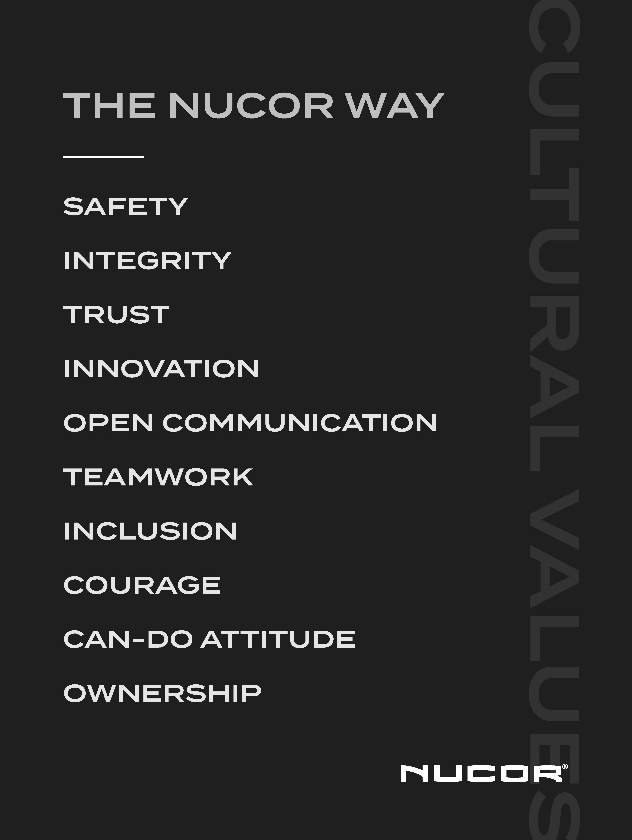
Nucor has a streamlined organizational structure that allows our teammates to make quick decisions and innovate. Our organization is also highly decentralized, with most day-to-day operating decisions made by our division general managers and their teams. With approximately 32,000 teammates, fewer than 200 work in our principal executive offices in Charlotte, North Carolina. By empowering our teammates, our goal is to foster an entrepreneurial mindset, along with a strong sense of personal responsibility and a culture of accountability and belonging. This empowerment is reinforced by our compensation policies (see discussion on “Pay for Performance” in Our Teammates - Compensation, Training & Development section below) to drive results and contribute to our success.
Teammate input is essential for us to maintain our culture of empowered teammates enabling efficient operational decisions. Aside from our practice of everyday open communication, we periodically ask our teammates to formally provide feedback. Since 1986, we have asked our teammates to complete a comprehensive survey in order to gather feedback on a range of topics, including matters relating to the effectiveness of our culture. We view the survey as an important tool in continually improving our company and ensuring our teammates remain engaged and satisfied. This survey is conducted every three years, the last of which was conducted in 2022. In the most recent survey, 89% of the responses were favorable in the category of “Satisfaction & Commitment.” The overall percentage of negative responses in the most recent survey has dropped by 25 percentage points since the survey began in 1986. The next survey will be conducted in the summer of 2025. Teammates of certain previously acquired businesses – which accounted for approximately 15% of our workforce as of December 31, 2023 – complete a comparable survey that has also shown an improving trend over time.
Safety, Diversity, Equity and Inclusion
One of Nucor’s core values is our teammates’ well-being and safety, and it is our goal to become the safest steel company in the world. Our foremost responsibility is to work safely, which requires our teammates to identify unsafe conditions and activities and mitigate these hazards. We will continue working to eliminate exposures that can lead to injury and encourage our teammates to share their ideas for safety improvement. Two key metrics Nucor uses to measure safety are: the Injury/Illness Rate and Days Away, Restricted and Transfer (“DART”) Case Rate.
Nucor calculates the annual Injury/Illness Rate by dividing the number of work-related injuries and illnesses by the total number of hours worked by all Nucor teammates in a given year, and then multiplying the resulting percentage by 200,000, the equivalent of 100 full-time employees working 40 hours per week, 50 weeks per year. In 2023, we achieved an annual Injury/Illness Rate of 0.79, which marks the fifth consecutive year of a reduced rate. This marks an improvement over our annual Injury/Illness Rate of 0.95 in 2022.
Nucor uses the DART Case Rate to assess and manage the risk of serious injury in the workplace. Nucor calculates the annual DART Case Rate by dividing the number of cases resulting in days away from work, restricted work activity and/or job transfers by the total number of hours worked by all Nucor teammates in a given year, and then multiplying the resulting percentage by 200,000, the equivalent of 100 full-time employees working 40 hours per week, 50 weeks per year. In 2023, we achieved an annual DART Case Rate of 0.36 (0.43 in 2022).
Since 1998, Nucor has used the President’s Safety Award to recognize divisions that achieve strong records of safety performance based on objective metrics. The President’s Safety Award has the following three levels: Platinum, which is awarded to divisions with zero recordable illnesses or injuries; Gold, which is awarded to divisions that have an Illness/Injury Rate below 0.6 and a DART Case Rate below one-third of the national average for their NAICS code; and Silver, which is awarded to divisions that achieve one-third the national average on Illness/Injury Rate and DART Case Rate. In 2023, 31 divisions achieved the Platinum level award, 17 divisions achieved the Gold level award and 24 divisions achieved the Silver level award. Nucor also has 24 OSHA Voluntary Protection Program Sites, OSHA’s highest level of recognition.
In 2020, the Company introduced the Nucor President’s Safety Cup as a way to foster more safety benchmarking throughout the Company. The President’s Safety Cup is an additional annual award that is presented to the region that has the best safety record across all of Nucor. Not only does this reward a facility for exceeding their individual safety goals, but it encourages our teams to innovate and to share ideas and improve safety as a group. The President’s Safety Cup trophy travels among the mills and divisions that make up the winning region.
We believe, however, that safety is about more than just avoiding injuries. At Nucor, safety means making sure our teammates feel safe, welcome and valued when they come to work each day. We are accelerating our diversity, equity and inclusion efforts with the objective of ensuring that each teammate feels a sense of belonging at Nucor. By creating an inclusive workplace, we believe we will attract top talent, foster innovation, increase a sense of empowerment and make Nucor a stronger company. Over the past two years, approximately 31% of Nucor teammates hired or promoted to the Manager or General Manager level were diverse.
Some of the initiatives focused on inclusion, equity and diversity we have launched include:
Conducting focused discussion groups to share experiences of the workplace and the effects of race and gender;
Taking feedback onboard to enhance training and development;
Webcasts by diverse senior leaders sharing their career progression and life experiences
Increasing focus and intensity of engagement with supportive external partners, such as:
o
National Society of Black Engineers;
o
Society of Women Engineers;
o
National Society of Hispanic Professional Engineers;
o
INROADS (non-profit focused on addressing the lack of diversity in corporate America)
o
Tuskegee University; and
o
Purdue University’s Women in Engineering Program and Minorities in Engineering Program.
Our Teammates - Compensation, Training & Development
Nucor had approximately 32,000 teammates as of December 31, 2023. The vast majority of our teammates are located in the United States, with only a small number of teammates located outside of North America. Our operations are highly automated, allowing us to improve safety outcomes and take advantage of lower employment costs while still providing our teammates with compensation that we believe is highly competitive as compared to businesses in our industry. At Nucor, we believe in “Pay-for-Performance.” Nucor teammates typically earn a significant part of their compensation based on their productivity. Production teammates work under group incentives that provide increased earnings for increased production. This additional incentive compensation is paid weekly in most cases. Nucor has also historically contributed 10% of earnings before federal taxes to a profit sharing plan for the majority of teammates below the officer level. We believe such compensation practices incentivize our workforce and reinforce our culture.
While Nucor seeks to hire qualified and talented individuals as new teammates, we also believe in developing the skills of our existing team by providing educational and on-the-job training, in addition to safety training. Further, Nucor believes it is important for senior management to also be familiar with, and have had direct experience running, Nucor’s mills and other operational divisions. The vast majority of our teammates are not represented by labor unions and we believe our teammate turnover is low.
At Nucor, we believe that a diversity of perspectives and background helps to facilitate the “Nucor Way” as we work to “grow the core; expand beyond; and live our culture.” We also believe that recruiting and hiring the best talent available will continue to provide us with the best opportunity for continued future success.
Policies
Nucor has a long history of conducting our businesses in a manner consistent with high standards of social responsibility. We have adopted a comprehensive Human Rights Policy, which operates in conjunction with many other Nucor policies related to ethical conduct and human rights, including our Standards of Business Conduct and Ethics, Code of Ethics for Senior Financial Professionals, Supplier Code of Conduct and Policy on Eliminating Forced Labor from our Supply Chain.
More information about our social strategies, including our most recent Equal Employment Opportunity EEO-1 report, can be found at www.nucor.com/esg.
Available Information
Nucor’s Annual Report on Form 10-K, Quarterly Reports on Form 10-Q, Current Reports on Form 8-K, and any amendments to these reports, as well as proxy statements and other information, are available on our website at www.nucor.com, as soon as reasonably practicable after Nucor files these documents electronically with, or furnishes them to, the U.S. Securities and Exchange Commission (the “SEC”).
We use the investor relations portion of our website, www.nucor.com/investors, to distribute information, including as a means of disclosing material, non-public information and for complying with our disclosure obligations under Regulation FD. We routinely post and make accessible financial and other information regarding the Company on our website. Accordingly, investors should monitor the investor relations portion of our website, in addition to our press releases, SEC filings and other public communications. Except as otherwise expressly stated in these documents, the information contained on our website or available by hyperlink from our website is not a part of this report and is not incorporated into this report or any other documents we file with, or furnish to, the SEC.
Previous: Cover and table of contents · Next: Item 1A. . Risk Factors