 filings.tools
Insulet 10-K 2015-12-31
Filed 2016-02-29. 21 sections, 353K characters. Original on sec.gov · Markdown · JSON
Cover and table of contents
10-K 1 podd-2015x12x31_10xk.htm 10-K
UNITED STATES SECURITIES AND EXCHANGE COMMISSION
Washington, D.C. 20549
Form 10-K
| x | ANNUAL REPORT PURSUANT TO SECTION 13 OR 15(d) OF THE SECURITIES EXCHANGE ACT OF 1934 |
| For the fiscal year ended December 31, 2015 |
| ¨ | TRANSITION REPORT PURSUANT TO SECTION 13 OR 15(d) OF THE SECURITIES EXCHANGE ACT OF 1934 |
| For the transition period from to |
Commission File Number 001-33462
INSULET CORPORATION
(Exact name of Registrant as specified in its charter)
| Delaware | 04-3523891 | |
| (State or Other Jurisdiction of Incorporation or Organization) | (I.R.S. Employer Identification No.) | |
| 600 Technology Park Drive, Suite 200 Billerica, Massachusetts | 01821 | |
| (Address of Principal Executive Offices) | (Zip Code) |
Registrant’s telephone number, including area code:
(978) 600-7000
Securities registered pursuant to Section 12(b) of the Act:
| Title of Each Class | Name of Each Exchange on Which Registered | |
| Common Stock, $0.001 Par Value Per Share | The NASDAQ Stock Market, LLC | |
| Preferred Stock Purchase Rights | The NASDAQ Stock Market, LLC |
Securities registered pursuant to Section 12(g) of the Act:
None
Indicate by check mark if the registrant is a well-known seasoned issuer, as defined in Rule 405 of the Securities Act. Yes x No ¨
Indicate by check mark if the registrant is not required to file reports pursuant to Section 13 or Section 15(d) of the Act. Yes ¨ No x
Indicate by check mark whether the registrant (1) has filed all reports required to be filed by Section 13 or 15(d) of the Securities Exchange Act of 1934 during the preceding 12 months (or for such shorter period that the Registrant was required to file such reports) and (2) has been subject to such filing requirements for the past 90 days. Yes x No ¨
Indicate by check mark whether the registrant has submitted electronically and posted on its corporate Web site, if any, every Interactive Data File required to be submitted and posted pursuant to Rule 405 of Regulation S-T (§ 232.405 of this chapter) during the preceding 12 months (or for such shorter period that the registrant was required to submit and post such files). Yes x No ¨
Indicate by check mark if disclosure of delinquent filers pursuant to Item 405 of Regulation S-K (§ 229.405) is not contained herein, and will not be contained, to the best of registrant’s knowledge, in definitive proxy or information statements incorporated by reference in Part III of this Form 10-K or any amendment to this Form 10-K. ¨
Indicate by check mark whether the registrant is a large accelerated filer, an accelerated filer, a non-accelerated filer, or a smaller reporting company. See the definitions of “large accelerated filer,” “accelerated filer” and “smaller reporting company” in Rule 12b-2 of the Exchange Act. (Check one):
| Large accelerated filer x | Accelerated filer o | Non-accelerated filer o | Smaller reporting company o | |||
| (Do not check if a smaller reporting company) |
Indicate by check mark whether the Registrant is a shell company (as defined in Rule 12b-2 of the Exchange Act). Yes ¨ No x
The aggregate market value of the common stock held by non-affiliates of the registrant computed by reference to the last reported sale price of the Common Stock as reported on The NASDAQ Global Market on June 30, 2015 was approximately $1.8 billion.
The number of shares outstanding of each of the registrant’s classes of common stock as of February 25, 2016:
| Title of Class | Shares Outstanding | |
| Common Stock, $0.001 Par Value Per Share | 57,015,489 | |
| Preferred Stock Purchase Rights | — |
DOCUMENTS INCORPORATED BY REFERENCE
The registrant intends to file a proxy statement pursuant to Regulation 14A within 120 days of the end of the fiscal year ended December 31, 2015. Portions of such proxy statement are incorporated by reference into Part III of this Annual Report on Form 10-K.
INSULET CORPORATION
Table Of Contents
PART I
Item 1. Business
Overview
We are primarily engaged in the development, manufacturing and sale of our proprietary OmniPod Insulin Management System (the “OmniPod System”), an innovative, discreet and easy-to-use continuous insulin delivery system for people with insulin-dependent diabetes. The OmniPod System features a small, lightweight, self-adhesive disposable tubeless OmniPod device which is worn on the body for approximately three days at a time and its wireless companion, the handheld Personal Diabetes Manager (“PDM”). Conventional insulin pumps require people with insulin-dependent diabetes to learn to use, manage and wear a number of cumbersome components, including up to 42 inches of tubing. In contrast, the OmniPod System features only two discreet, easy-to-use devices that eliminate the need for a bulky pump, tubing and separate blood glucose meter, provides for virtually pain-free automated cannula insertion, communicates wirelessly and integrates a blood glucose meter. We believe that the OmniPod System’s unique proprietary design and features allow people with insulin-dependent diabetes to manage their diabetes with unprecedented freedom, comfort, convenience, and ease.
We began commercial sale of the OmniPod System in the United States in 2005. We sell the OmniPod System and other diabetes management supplies in the United States through direct sales to customers or through our distribution partners. The OmniPod System is currently available in multiple countries in Europe, Canada and Israel. In July 2015, we executed an asset purchase agreement with GlaxoSmithKline ("GSK") whereby we acquired assets associated with the Canadian distribution of our products and we assumed the distribution, sales, marketing, training and support activities for the OmniPod system in Canada. Additional information regarding this acquisition is provided in note 3 to the consolidated financial statements included under Item 8 of this Form 10-K.
In addition to using the OmniPod® for insulin delivery, we also partner with global pharmaceutical and biotechnology companies to tailor the OmniPod technology platform for the delivery of subcutaneous drugs across multiple therapeutic areas.
In June 2011, we acquired Neighborhood Holdings, Inc. and its wholly-owned subsidiaries (collectively, “Neighborhood Diabetes”). Through Neighborhood Diabetes, we provided customers with blood glucose testing supplies, traditional insulin pumps, pump supplies and pharmaceuticals, processing claims as either durable medical equipment or through pharmacy benefits. In February 2016, we sold Neighborhood Diabetes to Liberty Medical LLC ("Liberty Medical"). Additional information regarding the sale of Neighborhood Diabetes is provided in note 18 to the consolidated financial statements included under Item 8 of this Form 10-K.
Insulet Corporation is a Delaware corporation formed in 2000. Our principal offices are located at 600 Technology Park Drive, Suite 200, Billerica, Massachusetts 01821, and our telephone number is (978) 600-7000. Our website address is http://www.insulet.com. We make available, free of charge, on or through our website, our annual reports on Form 10-K, quarterly reports on Form 10-Q, current reports on Form 8-K, proxy statements and any amendments to those reports filed or furnished pursuant to Section 13(a) or 15(d) of the Securities Exchange Act of 1934, as amended, as soon as reasonably practicable after such material is electronically filed with or furnished to the Securities and Exchange Commission. The information on our website is not part of this Annual Report on Form 10-K for the year ended December 31, 2015.
Our Market
Diabetes is a chronic, life-threatening disease for which there is no known cure. Diabetes is caused by the body’s inability to produce or effectively utilize the hormone insulin. This inability prevents the body from adequately regulating blood glucose levels. Glucose, the primary source of energy for cells, must be maintained at certain concentrations in the blood in order to permit optimal cell function and health. In people with diabetes, blood glucose levels fluctuate between very high levels, a condition known as hyperglycemia, and very low levels, a condition called hypoglycemia. Hyperglycemia can lead to serious short-term complications, such as confusion, vomiting, dehydration and loss of consciousness and long-term complications, such as blindness, kidney disease, nervous system disease, occlusive vascular diseases, stroke and cardiovascular disease, or death. Hypoglycemia can lead to confusion, loss of consciousness or death.
Diabetes is typically classified as either Type 1 or Type 2:
| • | Type 1 diabetes is characterized by the body’s nearly complete inability to produce insulin. It is frequently diagnosed during childhood or adolescence. Individuals with Type 1 diabetes require daily insulin therapy, typically administered via injections or continuous infusion through pump therapy, to survive. |
| • | Type 2 diabetes, the more common form of diabetes, is characterized by the body’s inability to either properly utilize insulin or produce enough insulin. Historically, Type 2 diabetes has occurred in later adulthood, but its incidence is increasing among the younger population, due primarily to increasing childhood obesity. Initially, many people with Type 2 diabetes attempt to manage their diabetes with improvements in diet, exercise and/or oral medications. As their diabetes advances, some patients progress to multiple drug therapy, which often includes insulin therapy. Guidelines, including those published by the American Diabetes Association in 2014, suggest more aggressive treatment for people with Type 2 diabetes, including the early adoption of insulin therapy and more frequent testing. It is now becoming more accepted for insulin therapy to be started earlier in people with Type 2 diabetes, and, in some cases, as part of the initial treatment. |
Throughout this Annual Report on Form 10-K, we refer to both Type 1 diabetes and insulin-requiring Type 2 diabetes as insulin-dependent diabetes.
The OmniPod Delivery System is an automated drug delivery platform. In addition to using the Pod for insulin delivery we have also partnered with multiple pharmaceutical and biotechnology companies that utilize a customized form of the OmniPod system to deliver a drug over a specified interval of time, at a certain administered volume.
Managing Diabetes
Diabetes Management Challenges
Diabetes is often frustrating and difficult for patients to manage. Blood glucose levels can be affected by the carbohydrate and fat content of meals, exercise, stress, illness or impending illness, hormonal releases, variability in insulin absorption and changes in the effects of insulin on the body. For people with insulin-dependent diabetes, many corrections, consisting of the administration of additional insulin or ingestion of additional carbohydrates, are needed throughout the day in order to maintain blood glucose levels within normal ranges. Achieving this result can be very difficult without multiple daily injections of insulin or the use of continuous subcutaneous insulin infusion (“CSII”) therapy. Patients attempting to control their blood glucose levels tightly to prevent the long-term complications associated with fluctuations in blood glucose levels are at greater risk for overcorrection and the resultant hypoglycemia. As a result, many patients have difficulty managing their diabetes optimally. Additionally, the time spent in managing diabetes, the swings in blood glucose levels and the fear of hypoglycemia can all render diabetes management overwhelming to patients and their families.
Current Insulin Therapy
People with insulin-dependent diabetes need a continuous supply of insulin, known as basal insulin, to provide for background metabolic needs. In addition to basal insulin, people with insulin-dependent diabetes require supplemental insulin, known as bolus insulin, to compensate for carbohydrates ingested during meals or snacks or for a high blood glucose level.
There are three primary types of insulin therapy practiced today: conventional therapy; multiple daily injection (“MDI”) therapy using syringes or insulin pens; and CSII therapy using insulin pumps. Both MDI and CSII therapies are considered intensive insulin management therapies.
Many healthcare professionals believe that intensive insulin management therapies are superior to conventional therapies in delaying the onset and reducing the severity of diabetes-related complications. As a result, we believe that the use of intensive insulin management therapies has significantly expanded over the past decade, and that many Type 1 patients manage their diabetes using an intensive insulin management therapy. A significantly smaller percentage of people with insulin-requiring Type 2 diabetes manage their diabetes using an intensive insulin management therapy.
The OmniPod System
The OmniPod Insulin Management System is an innovative continuous insulin delivery system that provides all the proven benefits of CSII therapy in a way no conventional insulin pump can. The System's innovative design and features allows people with insulin-dependent diabetes to live their life, and manage their diabetes, with unprecedented freedom, comfort, convenience, and ease.
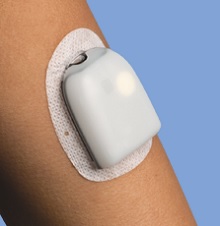

The long-term health benefits of better blood glucose control are well known. Maintaining near-normal blood glucose levels can help people with insulin-dependent diabetes live a longer, healthier life with fewer diabetes-related complications. The OmniPod System also has many practical, everyday benefits, including convenience, freedom, flexibility and ease of use.
Continuous insulin delivery at preset rates eliminates the need for injections and the interruptions that come with them. In addition, with the OmniPod System, insulin delivery can be changed with the press of a button to adapt to snacks or unexpected changes in daily routine.
The OmniPod System works much like the pancreas of a person without diabetes by delivering insulin in two ways:
| • | A small, constant background supply of insulin (called a basal rate) is delivered automatically at a programmed rate, all day and night. |
| • | An extra dose of insulin (called a bolus) can be delivered when a patient needs it to match the carbohydrates in a meal or snacks or to correct high blood glucose. |
The OmniPod System is a discreet two part design, the OmniPod (Pod) and the PDM, that eliminates the need for the external tubing required with conventional pumps.
| • | The Pod is a small, lightweight, self-adhesive device that the patient fills with insulin and wear directly on the body. The Pod delivers precise, personalized doses of insulin into the body through a small flexible tube (called a cannula), based on instructions that the patient programs into the Pod's wireless companion, the PDM. |
| • | The PDM is a wireless, handheld device that programs the Pod with the patient's personalized insulin-delivery instructions, wirelessly monitors the Pod's operation and includes a FreeStyle® blood glucose meter. |
We have designed the OmniPod System to fit within the normal daily routines of patients. The OmniPod System requires the fewest steps to start insulin delivery of all CSII therapies on the market by automating much of the process. In addition, the OmniPod System consists of just two devices, as opposed to up to seven for conventional insulin pumps. As a result, the OmniPod System is easy for patients to use, which reduces the training burden on healthcare professionals. We believe that the OmniPod System’s overall ease of use makes it very attractive to people with insulin-dependent diabetes. We also believe that the OmniPod System’s ease of use and substantially lower training burden helps to redefine which diabetes patients are appropriate for CSII therapy, enabling healthcare professionals to prescribe CSII therapy to a broader pool of patients.
The OmniPod System’s unique patented design and proprietary manufacturing process have enabled us to provide CSII therapy at a relatively low up-front investment compared to conventional insulin pumps. We believe that our pricing model reduces the risk of investing in CSII therapy for third-party payors and makes CSII therapy much more accessible for people with insulin-dependent diabetes.
Research and Development
Our current research and development efforts are primarily focused on the development of mobile applications for the OmniPod, including a Bluetooth-enabled PDM, integration with continuous glucose monitoring technology, an artificial pancreas platform, and development to support the use of concentrated insulin for Type I and Type II patients with higher insulin-requirements. In addition to insulin delivery, we continue to work with multiple pharmaceutical and biotechnology companies on alternative uses for our OmniPod System technology to use our technology as a delivery platform for a range of different pharmaceuticals.
Manufacturing and Quality Assurance
We believe a key contributing factor to the overall attractiveness of the OmniPod System is the disposable OmniPod continuous insulin delivery device. In order to manufacture sufficient volumes and achieve a cost-effective per unit production price for the OmniPod, we have designed the OmniPod to be manufactured through a semi-automated process.
We are currently producing the OmniPod on varying degrees of semi-automated manufacturing lines at a facility in China, operated by a subsidiary of Flextronics International Ltd. (“Flextronics”). We purchase OmniPods pursuant to our agreement with Flextronics. Under the agreement, Flextronics agrees to supply us with OmniPods at a price reflective of the forecast that we provide pursuant to the agreement. The current term of the agreement expires in December 2017 and is subject to automatic renewal for one-year successive terms subsequently. It may be terminated by either party upon compliance with certain advance written notice provisions that are intended to provide the parties with sufficient time to make alternative arrangements.
We seek to increase manufacturing capacity and reduce the per-unit production cost for the OmniPod. We continue to invest in our manufacturing capacity in order to meet our expected 2016 demand and beyond for the OmniPod.
We rely on outside vendors for the supply of components, sub-assemblies, and various services used in the manufacture of the OmniPod System. Although a number of these suppliers are sole-source suppliers, we continue to focus on identifying alternate supply sources and duplicate custom tooling.
All outside vendors produce the components to our specifications and they are audited periodically by our Quality Assurance Department to ensure conformity with the specifications, policies and procedures for the OmniPods. Our Quality Assurance Department also inspects and tests the OmniPods at various steps in the manufacturing cycle to facilitate compliance with our stringent specifications. We have received approval of our Quality Management System from the BSI Group London, U.K., an accredited Notified Body for CE Marking and the International Standards Organization (“ISO”). Processes utilized in the manufacture, test and release of the OmniPod have been verified and validated as required by the U.S. Federal Food and Drug Administration ("FDA") and other regulatory bodies. As a medical device manufacturer and distributor, our manufacturing facilities and the facilities of our suppliers and sterilizer are subject to periodic inspection by the FDA, our notified body and certain corresponding state agencies.
Intellectual Property
We believe that to maintain a competitive advantage, we must develop and preserve the proprietary aspect of our technologies. We rely on a combination of copyright, patent, trademark, trade secret and other intellectual property laws, non-disclosure agreements and other measures to protect our proprietary rights. Currently, we require our employees, consultants and advisors to execute non-disclosure agreements in connection with their employment, consulting or advisory relationships with us, where appropriate. We also require our employees, consultants and advisors who we expect to work on our current or future products to agree to disclose and assign to us all inventions conceived during their work with us that are developed using our property or which relate to our business. Despite any measures taken to protect our intellectual property, unauthorized parties may attempt to copy aspects of the OmniPod System or to obtain and use information that we regard as proprietary.
Patents. As of December 31, 2015, we had obtained 15 issued United States patents, and had 10 additional pending United States patent applications. We believe it will take up to four years, and possibly longer, for the most recent of these U.S. patent applications to result in issued patents. We are also seeking patent protection for our proprietary technology in other countries and regions throughout the world. The issued patents and pending patent applications cover, among other things:
| • | the basic architecture of the OmniPod System, including the pump and the PDM; |
| • | the OmniPod shape memory alloy drive system; |
| • | the OmniPod System cannula insertion system; |
| • | communication features between system components; |
| • | software for controlling the OmniPod System; and |
| • | various novel aspects of the OmniPod System and potential future generations of OmniPod Systems. |
Trademarks. We have registered various trademarks associated with our business, including INSULET, OMNIPOD and the OMNIPOD design with the United States Patent and Trademark Office on the Principal Register and in other appropriate jurisdictions.
Markets and Distribution Methods
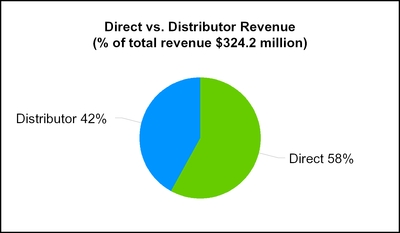
We sell our OmniPod System through a combination of direct sales representatives and independent distributors in both the United States and outside of the United States. Independent distributors can represent as much as 40% of our total sales in the United States. We have been distributing the OmniPod System in certain countries in Europe, through Ypsomed Distribution AG ("Ypsomed"), since 2010. In Canada, we had historically sold our product through an independent distributor, however we acquired that business in July 2015.
For the year ending December 31, 2015 the percentage of our total consolidated revenue from direct sales and independent distributors was as follows:
Comprehensive approach across three interrelated constituencies. Our sales and marketing effort for the OmniPod System is focused on patient retention and growing patient, clinician and payor demand for the OmniPod System. We have a uniform sales and marketing approach, aligned across patients, physicians and providers, to capitalize on the unique benefits of our OmniPod technology. We have three areas of focus:
| • | First, build patient awareness about the features and benefits that the OmniPod System provides. |
| • | Second, build physician support by increasing the clinical evidence that clearly demonstrates the benefits that the OmniPod System provides. |
| • | Third, provide payors with the clinical and economic justification of why the OmniPod System is a greater benefit for the patients whom they insure. |
Training. We believe that patient training is critical to ensure successful outcomes and retain patients on the OmniPod System. We have streamlined our new patient training by developing improved online resources, a standardized approach as well as increasing our field clinician team to directly train our new patients.
Customer Support. We seek to provide our customers with high quality customer support, from product ordering to insurance investigation, order fulfillment and ongoing support. We have integrated our customer support systems with our sales, reimbursement and billing processes and also offer support by telephone and through our website to provide customers with seamless and reliable customer support.
Competition
The medical device industry is intensely competitive, subject to rapid change and significantly affected by new product introductions and other market activities of industry participants. The majority of our patients have previously undertaken MDI therapy, which is substantially less expensive than CSII therapy. The OmniPod System competes with a number of existing insulin delivery devices as well as other methods for the treatment of diabetes. Medtronic MiniMed, a division of Medtronic has historically held the majority share of the conventional insulin pump market in the United States. Other significant competitors in the United States are Animas Corporation, a division of Johnson & Johnson, and Tandem Diabetes Care, Inc. We also compete with drug delivery device companies such as West Pharmaceuticals.
Several of our competitors are large, well-capitalized companies with significantly more market share and resources than we have. They are able to spend aggressively on product development, marketing, sales and other product initiatives. Some of these competitors have:
| • | significantly greater name recognition; |
| • | established relations with healthcare professionals, customers and third-party payors; |
| • | larger and more established sales forces and distribution networks; |
| • | greater experience in conducting research and development, manufacturing, clinical trials, marketing and obtaining regulatory approval for products; and |
| • | greater financial and human resources for product development, sales and marketing and patent litigation. |
In addition to the established insulin pump competitors, several companies are working to develop and market new insulin “patch” pumps and other methods for the treatment of diabetes, such as inhaled insulin. These companies are at various stages of development. The companies working in this area of which we are aware include Medtronic, Johnson & Johnson, Valeritas Inc., Cellnovo Limited, VinCentra, Debiotech S.A., Becton Dickinson and Co., Enable Injections, Sensile Medical and Unilife.
Government Regulation
Domestic Regulation. The OmniPod System is a medical device subject to extensive and ongoing regulation by the FDA and other federal, state, and local regulatory bodies. FDA regulations govern, among other things, product design and development, pre-clinical and clinical testing, manufacturing, labeling, post-market adverse event reporting, post-market surveillance, complaint handling, repair or recall of products, product storage, record keeping, pre-market clearance or approval, advertising and promotion, and sales and distribution.
FDA’s Pre-Market Notification (510(k)) and Pre-Market Approval Requirements. Unless an exemption applies, each medical device we seek to commercially distribute in the United States will require either prior 510(k) clearance or pre-market approval (“PMA”) from the FDA. The FDA classifies medical devices into one of three classes. Devices deemed to pose low to moderate risk are placed in either class I or II, which, absent an exemption, requires the manufacturer to submit to the FDA a premarket notification requesting permission for commercial distribution. This process is known as 510(k) clearance. Some low risk devices are exempt from this requirement. Devices deemed by the FDA to pose the greatest risk, such as life-sustaining, life-supporting or implantable devices, or devices deemed not substantially equivalent to a previously cleared 510(k) device, are placed in class III, requiring approval of a PMA application. We have obtained 510(k) clearance for the OmniPod System. Both the 510(k) clearance and PMA processes can be expensive and lengthy and entail significant user fees, unless an exemption is available.
In order to obtain pre-market approval and, in some cases, a 510(k) clearance, a product sponsor must conduct well-controlled clinical trials designed to test the safety and effectiveness of the product. Conducting clinical trials generally entails a long, costly and uncertain process that is subject to delays and failure at any stage. The data obtained from clinical trials may be inadequate to support approval or clearance of a submission. In addition, the occurrence of unexpected findings in connection with clinical trials may prevent or delay obtaining approval or clearance. If we conduct clinical trials, they may be delayed or halted, or be inadequate to support approval or clearance.
| • | 510(k) Clearance. To obtain 510(k) clearance for any of our potential future devices (or for certain modifications to devices that have previously received 510(k) clearance), we must submit a pre-market notification demonstrating that the proposed device is substantially equivalent to a previously cleared 510(k) device or a pre-amendment device that was in commercial distribution before May 28, 1976 for which the FDA has not yet called for the submission of a PMA application. The FDA’s 510(k) clearance pathway generally takes from three to twelve months from the date the application is completed, but can take significantly longer. After a medical device receives 510(k) clearance, any modification that could significantly affect its safety or effectiveness, or that would constitute a significant change in its intended use, requires a new 510(k) clearance or, depending on the modification, could require a PMA application. The FDA requires each manufacturer to make this determination initially, but the FDA can review any such decision and can disagree with a manufacturer’s determination. As further described below, as part of an inspection conducted by the FDA in December of 2015, we agreed to submit a 510(k) for modifications previously made to the OmniPod System. In addition, we also agreed to submit a 510(k) associated with the field action described below that we initiated in October 2015. |
If the FDA disagrees with a manufacturer’s determination regarding whether a new premarket submission is required for the modification of an existing device, the FDA can, at its discretion, require the manufacturer to cease marketing and/or recall the modified device until 510(k) clearance or approval of a PMA application is obtained. In addition, in these circumstances, we may be subject to significant regulatory fines or penalties for failure to submit the requisite PMA application(s).
| • | PMA. Devices deemed by the FDA to pose the greatest risk, such as life-sustaining, life-supporting or implantable devices, devices deemed not substantially equivalent to a previously cleared 510(k) device or devices in commercial distribution before May 28, 1976 for which PMAs have not been required, generally require a PMA before they can be commercially distributed. A PMA application must be supported by extensive data, including technical information, pre-clinical and clinical trials, manufacturing and labeling to demonstrate the safety and effectiveness of the device to the FDA’s satisfaction. After a PMA application is complete, the FDA begins an in-depth review of the submitted information, which generally takes between one and three years, but may take significantly longer. During this review period, the FDA may request additional information or clarification of information already provided. Also during the review period, an advisory panel of experts from outside the FDA may be convened to review and evaluate the application and provide recommendations to the FDA as to the approvability of the device. In addition, the FDA will conduct a pre-approval inspection of the manufacturing facility to ensure compliance with Quality System Regulations, or QSRs, which impose elaborate design development, testing, control, documentation and other quality assurance procedures in the design and manufacturing process. The FDA may approve a PMA application with post-approval conditions intended to ensure the safety and effectiveness of the device including, among other things, restrictions on labeling, promotion, sale and distribution and collection of long-term follow-up data from patients in the clinical study that supported approval. Failure to comply with the conditions of approval can result in materially adverse enforcement action, including the loss or withdrawal of the approval. After any pre-market approval, a new pre-market approval application or application supplement may be required in the event of modifications to the device, its labeling, intended use or indication or its manufacturing process. PMA supplements often require submission of the same type of information as a PMA application, except that the supplement is limited to information needed to support any changes from the device covered by the original PMA application, and may not require as extensive clinical data or the convening of an advisory panel. |
Ongoing Regulation by FDA. Even after a device is placed on the market, regardless of its classification or premarket pathway, numerous regulatory requirements apply. These include, but are not limited to:
| • | establishment registration and device listing; |
| • | quality system regulation, or QSR, which requires manufacturers, including third party manufacturers, to follow stringent design, testing, control, documentation and other quality assurance procedures during all aspects of the manufacturing process; |
| • | labeling regulations and FDA prohibitions against the promotion of products for uncleared, unapproved or “off-label” uses, and other requirements related to promotional activities; |
| • | medical device reporting regulations, which require that manufacturers report to the FDA if their device may have caused or contributed to a death or serious injury or malfunctioned in a way that would likely cause or contribute to a death or serious injury if the malfunction were to recur; |
| • | corrections and removals reporting regulations, which require that manufacturers report to the FDA field corrections and product recalls or removals if undertaken to reduce a risk to health posed by the device or to remedy a violation of the Federal Food, Drug and Cosmetic Act that may present a risk to health. In addition, FDA may order a mandatory recall if there is a reasonable probability that the device would cause serious adverse health consequences or death; and |
| • | post-market surveillance regulations, which apply when necessary to protect the public health or to provide additional safety and effectiveness data for the device. |
With respect to corrections and removals, in July 2015 we implemented a field removal of certain lots due to the possibility that some OmniPod Systems had a higher rate of failure than its current manufacturing standards. In September 2015, as part of our product quality monitoring process, we identified that certain lots of the OmniPod® had a slight increase (1% - 2%) in the reported cases in which the Pod’s cannula failed to deploy. On October 29, 2015, we implemented a field correction to advise patients of the possibility of a needle deployment failure and provided recommendations on how to manage such an event. Both field actions were initiated with the knowledge of the FDA and were reported to the agency in accordance with the requirements of 21 C.F.R. Part 806.
Failure to comply with applicable regulatory requirements can result in enforcement actions by the FDA and other regulatory agencies, which may include any of the following sanctions: untitled letters or warning letters, fines, injunctions, consent decrees, civil or criminal penalties, recall or seizure of our current or future products, operating restrictions, partial suspension or total shutdown of production, refusal of or delay in granting 510(k) clearance or PMA approval of new products or modified products, rescinding previously granted 510(k) clearances or withdrawing previously granted PMA approvals, or refusal to grant export approval of our products.
We are subject to announced and unannounced inspections by the FDA, and these inspections may include the manufacturing facilities of our subcontractors. If, as a result of these inspections, the FDA determines that our equipment, facilities, laboratories or processes do not comply with applicable FDA regulations and conditions of product approval, the FDA may seek civil, criminal or administrative sanctions and/or remedies against us, including the suspension of our manufacturing operations. Since approval of the OmniPod System, we have been subject to FDA inspections of our facility on multiple occasions. Our facility located at 600 Technology Park Drive, Suite 200, Billerica, MA 01821 was inspected by the FDA between March 11, 2015 and March 27, 2015, which resulted in four inspectional observations (FDA Form 483) and a subsequent Warning Letter dated June 5, 2015. We have completed all of the commitments from the Form 483 and Warning Letter responses, but have not yet received notification that the FDA has closed the Warning Letter. More recently, our facility located in Billerica, MA was re-inspected by the FDA between November 30, 2015 and December 11, 2015. This inspection also resulted in four inspectional observations (FDA Form 483). We responded to the most recent inspectional observations on December 31, 2015.
International Regulation. International sales of medical devices are subject to foreign government regulations, which may vary substantially from country to country. The time required to obtain approval by a foreign country may be longer or shorter than that required for FDA clearance or approval, and the requirements may differ. There is a trend towards harmonization of quality system standards among the European Union, United States, Canada and various other industrialized countries. In April 2009, we received CE Mark approval for the original OmniPod System, and in August 2011, we received CE Mark approval for our OmniPod product. The CE Mark gives us authorization to distribute the OmniPod System throughout the European Union and in other countries that recognize the CE Mark. In September 2009, we received Health Canada approval to distribute the original OmniPod System throughout Canada, and in March 2013, we received Health Canada approval for our new OmniPod product. We have been distributing the OmniPod System in certain countries in Europe, through Ypsomed, since 2010. In Canada, we had historically sold our product through a distributor, however as a result of our acquisition in July 2015, we now sell the OmniPod System direct.
Licensure. Several states require that durable medical equipment (“DME”) providers be licensed in order to sell products to patients in that state. Certain of these states require, among other things, that DME providers maintain an in-state location. Although we believe we are in compliance with all applicable state regulations regarding licensure requirements, if we were found to be noncompliant, we could lose our licensure in that state, which could prohibit us from selling our current or future products directly to patients in that state.
In addition, we are subject to certain state laws regarding professional licensure. We believe that our certified diabetes educators are in compliance with all such state laws. However, if our educators or we were to be found non-compliant in a given state, we may need to modify our approach to providing education, clinical support and customer service.
Federal Anti-Kickback and Self-Referral Laws. The Federal Anti-Kickback Statute prohibits the knowing and willful offer, payment, solicitation or receipt of any form of remuneration in return for, or to induce the:
| • | referral of a person; |
| • | furnishing or arranging for the furnishing of items or services reimbursable under Medicare, Medicaid or other governmental programs; or |
| • | purchase, lease, or order of, or the arrangement or recommendation of the purchasing, leasing, or ordering of any item or service reimbursable under Medicare, Medicaid or other governmental programs. |
We provide the initial training to patients necessary for appropriate use of the OmniPod System either through our own diabetes educators or by contracting with outside diabetes educators that have completed a Certified Pod Trainer training course. Outside diabetes educators are reimbursed for their services at contracted rates deemed to be consistent with the market. Although we believe that these arrangements do not violate the law, regulatory authorities may determine otherwise, especially as enforcement of this law historically has been a high priority for the federal government. In addition, because we may provide some coding and billing information to purchasers of the OmniPod System, and because we cannot assure that the government will regard any billing errors that may be made as inadvertent, the federal anti-kickback legislation may apply to us. Noncompliance with the federal anti-kickback legislation can result in exclusion from Medicare, Medicaid or other governmental programs, restrictions on operating in certain jurisdictions, as well as civil and criminal penalties, any of which could have an adverse effect on our business and results of operations.
Federal law also includes a provision commonly known as the “Stark Law,” which prohibits a physician from referring Medicare or Medicaid patients to an entity providing “designated health services,” including a company that furnishes durable medical equipment, in which the physician has an ownership or investment interest or with which the physician has entered into a compensation arrangement. Violation of the Stark Law could result in denial of payment, disgorgement of reimbursements received under a noncompliant arrangement, civil penalties, and exclusion from Medicare, Medicaid or other governmental programs. Although we believe that we have structured our provider arrangements to comply with current Stark Law requirements, these arrangements may not expressly meet the requirements for applicable exceptions from the law.
Additionally, as some of these laws are still evolving, we lack definitive guidance as to the application of certain key aspects of these laws as they relate to our arrangements with providers with respect to patient training. We cannot predict the final form that these regulations will take or the effect that the final regulations will have on us. As a result, our provider and training arrangements may ultimately be found not to be in compliance with applicable federal law.
Federal False Claims Act. The Federal False Claims Act provides, in part, that the federal government may bring a lawsuit against any person whom it believes has knowingly presented, or caused to be presented, a false or fraudulent request for payment from the federal government, or who has made a false statement or used a false record to get a claim approved. In addition, amendments in 1986 to the Federal False Claims Act have made it easier for private parties to bring “qui tam” whistleblower lawsuits against companies under the Federal False Claims Act. Penalties include fines ranging from $5,500 to $11,000 for each false claim, plus three times the amount of damages that the federal government sustained because of the act of that person. In any event, we believe that we are in compliance with the federal government’s laws and regulations concerning the filing of reimbursement claims.
Civil Monetary Penalties Law. The Federal Civil Monetary Penalties Law prohibits the offering or transferring of remuneration to a Medicare or Medicaid beneficiary that the person knows or should know is likely to influence the beneficiary’s selection of a particular supplier of Medicare or Medicaid payable items or services. Noncompliance can result in civil money penalties of up to $10,000 for each wrongful act, assessment of three times the amount claimed for each item or service and exclusion from the federal healthcare programs. We believe that our arrangements comply with the requirements of the Federal Civil Monetary Penalties Law.
State Fraud and Abuse Provisions. Many states have also adopted some form of anti-kickback and anti-referral laws and a false claims act. We believe that we are in conformance with such laws. Nevertheless, a determination of liability under such laws could result in fines and penalties and restrictions on our ability to operate in these jurisdictions.
Administrative Simplification of the Health Insurance Portability and Accountability Act of 1996. The Health Insurance Portability and Accountability Act of 1996 (“HIPAA”) mandated the adoption of standards for the exchange of electronic health information in an effort to encourage overall administrative simplification and enhance the effectiveness and efficiency of the healthcare industry. Ensuring privacy and security of patient information is one of the key factors driving the legislation. We believe we are in substantial compliance with the applicable HIPAA regulations.
Patient Protection and Affordable Care Act. The Patient Protection and Affordable Care Act (“ACA”) enacted significant changes to the provision of and payment for healthcare in the United States. Under the ACA and related laws and regulations, federal and state government initiatives are focused on limiting the growth of healthcare costs and implementing changes to healthcare delivery structures. These reforms are intended in part to put increased emphasis on the delivery to patients of more cost-effective therapies. While uncertainty exists regarding some aspects of the ACA, we expect that the ACA will continue to have a significant impact on the delivery of healthcare in the United States and on our business.
Physician Payments Sunshine Act. The Physician Payments Sunshine Act (“Sunshine Act”) seeks to increase the transparency of relationships between medical device, pharmaceutical and other companies and healthcare professionals (“HCPs”). Under the Sunshine Act, we are required to track and publicly report many types of payments made and items of value provided to HCPs. Moreover, several states have imposed similar or more restrictive requirements. In addition, we have adopted policies and codes of conduct regarding our interactions with HCPs. Our failure to adhere to these requirements could materially adversely impact our business and financial results.
Third-Party Reimbursement
In the United States, our products are generally reimbursed by third-party payors, and we bill those payors for products provided to patients. Our fulfillment and reimbursement systems are fully integrated such that product is generally shipped only after confirmation of a physician’s valid statement of medical necessity and current health insurance information. We maintain an insurance benefits investigation department that works to simplify and expedite claims processing and to assist patients in obtaining third-party reimbursement.
We continue to work with third-party payors in the United States to establish coverage and payment for the OmniPod System and other diabetes management supplies. Our coverage contracts with third-party payors typically have a term of between one and three years and set coverage amounts during that term. Typically, coverage contracts automatically renew for specified incremental periods upon expiration, unless one of the parties terminates the contract.
Third-party payors may decline to reimburse for procedures, supplies or services determined not to be “medically necessary” or “reasonable.” In a limited number of cases, some third-party payors have declined to reimburse us for a particular patient because such patient failed to meet its criteria, most often because the patient already received reimbursement for an insulin pump from that payor within the warranty period, which is generally four years, or because the patient did not meet their medical criteria for an insulin infusion device. Common medical criteria for third-party payors approving reimbursement for CSII therapy include a patient having elevated A1c levels, a history of recurring hypoglycemia, fluctuations in blood glucose levels prior to meals or upon waking or, severe glycemic variability.
As part of our international distribution agreements, our distribution partners establish appropriate reimbursement contracts with third-party payors in countries and provinces in which they distribute the OmniPod System prior to distributing the OmniPod System in each territory.
Currently, there is not an established mechanism for Medicare coverage for the majority of the OmniPod System. However, we are continuing a dialogue with Centers for Medicare & Medicaid Services ("CMS") about Medicare coverage for the OmniPod System.
Employees
As of December 31, 2015, we had 647 full-time employees. None of our employees are represented by a collective bargaining agreement, and we have never experienced any work stoppage. We believe that our employee relations are good.
Item 1A. Risk Factors
This Annual Report on Form 10-K contains forward-looking statements. Forward-looking statements relate to future events or our future financial performance.
We generally identify forward looking statements by terminology such as “may,” “will,” “should,” “expects,” “plans,” “anticipates,” “could,” “intends,” “targets,” “projects,” “contemplates,” “believes,” “estimates,” “predicts,” “potential” or “continue” or the negative of these terms or other similar words. These statements are only predictions. We have based these forward-looking statements largely on our current expectations and projections
about future events and financial trends that we believe may affect our business, results of operations and financial condition.
The outcomes of the events described in these forward-looking statements are subject to risks, uncertainties and other factors described in this Item 1A Risk Factors and elsewhere in this Annual Report on Form 10-K. Accordingly, you should not rely upon forward-looking statements as predictions of future events. We cannot assure you that the events and circumstances reflected in the forward-looking statements will be achieved or occur, and actual results could differ materially from those projected in the forward-looking statements. The forward-looking statements made in this Annual Report on Form 10-K relate only to events as of the date of this report. We undertake no obligation to update any forward-looking statement to reflect events or circumstances after the date on which the statement is made or to reflect the occurrence of unanticipated events.
Risks Relating to Our Business
We have incurred significant operating losses since inception and cannot assure you that we will achieve profitability.
Since our inception in 2000, we have incurred significant operating losses. We began commercial sales of the OmniPod System in 2005. For the year ended December 31, 2015, our operating loss was $60.8 million. Our net losses for the years ended December 31, 2015, 2014 and 2013 were $73.5 million, $51.5 million and $45.0 million, respectively. The extent of our future operating losses and the timing of profitability are highly uncertain, and we may never achieve or sustain profitability. As of December 31, 2015, we had an accumulated deficit of $651.5 million.
We may experience significant fluctuations in our quarterly results of operations.
The fluctuations in our quarterly results of operations have resulted, and may continue to result, from numerous factors, including:
| • | delays in shipping due to capacity constraints; |
| • | practices of health insurance companies and other third-party payors with respect to reimbursement for our current or future products; |
| • | market acceptance of the OmniPod System; |
| • | our ability to manufacture the OmniPod efficiently; |
| • | timing of regulatory approvals and clearances; |
| • | new product introductions; |
| • | competition; and |
| • | timing of research and development expenditures. |
These factors, some of which are not within our control, may cause the price of our stock to fluctuate substantially. In particular, if our quarterly results of operations fail to meet or exceed the expectations of securities analysts or investors, our stock price could drop suddenly and significantly. We believe the quarterly comparisons of our financial results are not necessarily meaningful and should not be the only indication of our future performance.
We currently rely on sales of the OmniPod System to generate most of our revenue. The failure of the OmniPod System to achieve and maintain significant market acceptance or any factors that negatively impact sales of this product will adversely affect our business, financial condition and results of operations.
Our main product is the OmniPod System, which we introduced to the market in 2005. We expect to continue to derive a significant portion of our revenue from the sale of this product. Accordingly, our ability to generate revenue is highly reliant on our ability to market and sell the devices that comprise the OmniPod System. Our sales of the OmniPod System may be negatively impacted by many factors, including:
| • | the failure of the OmniPod System to achieve and maintain wide acceptance among opinion leaders in the diabetes treatment community, insulin-prescribing physicians, third-party payors and people with insulin-dependent diabetes; |
| • | manufacturing problems; |
| • | actual or perceived quality problems; |
| • | changes in reimbursement rates or policies relating to the OmniPod System by third-party payors; |
| • | claims that any portion of the OmniPod System infringes on patent rights or other intellectual property rights owned by other parties; |
| • | adverse regulatory or legal actions relating to the OmniPod System; |
| • | damage, destruction or loss of any of the facilities where our products are manufactured or of the equipment therein; |
| • | conversion rate of patient referrals to actual sales of the OmniPod System; |
| • | write-offs of receivables from our customers; |
| • | attrition rates of customers who cease using the OmniPod System; |
| • | competitive pricing and related factors; and |
| • | results of clinical studies relating to the OmniPod System or our competitors’ products. |
If any of these events occurs, our ability to generate revenue could be significantly reduced.
Our ability to achieve profitability from a current net loss level will depend on our ability to sustain or reduce the per unit cost of producing the OmniPod by increasing customer orders, increasing manufacturing volume and productivity and reducing raw material and overhead costs per OmniPod.
Currently, the gross profit from the sale of the OmniPod System is not sufficient to cover our operating expenses. To achieve profitability, we need to, among other things, sustain or reduce the per unit cost of the OmniPod. If we are unable to sustain or reduce raw material and manufacturing overhead costs through volume purchase discounts, negotiation of improved pricing and increased productivity and production capacity, our ability to achieve profitability will be severely constrained. Any increase in manufacturing volumes must be supported by an associated increase in customer orders. Each OmniPod contains limited amounts of precious metals, the costs of which have fluctuated over the recent past. The occurrence of one or more factors that negatively impact the manufacturing or sales of the OmniPod System or increase our raw material costs may prevent us from achieving our desired increase in manufacturing volume, which would prevent us from attaining profitability.
Adverse changes in general economic conditions in the United States and globally could adversely affect us.
We are subject to the risks arising from adverse changes in general economic market conditions. While the U.S. economy appears to be improving at a moderate pace, the worldwide economy remains sluggish. Further deterioration of economic conditions, such as a U.S. or global recession, could negatively impact our current and prospective customers, adversely affect the financial ability of health insurers to pay claims, adversely impact our expenses and ability to obtain financing of our operations, cause delays or other problems with key suppliers and increase the risk of counterparty failures.
Healthcare spending in the United States could be negatively affected in the event of a downturn in the U.S. econom
Showing the first 8K of 98K characters. Open the full section
Item 1B. Unresolved Staff Comments
None.
Item 2. Properties
We lease a total of approximately 120,000 square feet of office space, laboratory, warehousing and other related facilities. Approximately 90,000 of the total square footage consists of laboratory and office space for our corporate headquarters in Billerica, Massachusetts under leases expiring in 2022.
Additionally, we lease approximately 18,000 square feet of warehousing space in Billerica, Massachusetts under a lease expiring in 2019. We lease other facilities in Canada, Singapore, New York and Florida containing a total of approximately 12,000 square feet under leases expiring from July 2016 to July 2019.
Item 3. Legal Proceedings
The information required by this Item is provided under "Legal Proceedings" in note 13 to the consolidated financial statements included under Item 8 of this Form 10-K, and is incorporated herein by reference.
Item 4. Mine Safety Disclosures
Not applicable.
PART II
Item 5. Market for Registrant's Common Equity, Related Stockholder Matters and Issuer Purchases of Equity Securities
MARKET FOR REGISTRANT'S COMMON EQUITY
Our common stock has been listed on The NASDAQ Global Market under the trading symbol “PODD” since our initial public offering on May 15, 2007. The following table sets forth the high and low closing sales prices of our common stock, as reported by The NASDAQ Global Market, for each of the periods listed.
| High | Low | ||||||
| Fiscal Year 2014 | |||||||
| First Quarter | $ | 50.18 | $ | 35.83 | |||
| Second Quarter | $ | 49.07 | $ | 31.69 | |||
| Third Quarter | $ | 41.11 | $ | 32.94 | |||
| Fourth Quarter | $ | 47.51 | $ | 36.75 | |||
| Fiscal Year 2015 | |||||||
| First Quarter | $ | 45.18 | $ | 29.39 | |||
| Second Quarter | $ | 31.85 | $ | 26.23 | |||
| Third Quarter | $ | 34.39 | $ | 25.64 | |||
| Fourth Quarter | $ | 39.32 | $ | 26.36 |
As of February 25, 2015, there were approximately 11 registered holders of record of our common stock. The number of beneficial stockholders of our shares is greater than the number of stockholders of record.
Performance Graph
The chart set forth below shows the value of an investment of $100 on December 31, 2010 in each of Insulet Corporation common stock, the NASDAQ Composite Index, and the NASDAQ Health Care Index. All values assume reinvestment of the pre-tax value of dividends paid by companies included in these indices and are calculated as of December 31, 2015. The historical stock price performance of our common stock shown in the performance graph below is not necessarily indicative of future stock price performance.

| 2010 | 2011 | 2012 | 2013 | 2014 | 2015 | |||||||||||||
| Insulet Corporation | $ | 100 | $ | 121 | $ | 137 | $ | 239 | $ | 297 | $ | 244 | ||||||
| NASDAQ Composite | 100 | 101 | 117 | 166 | 189 | 200 | ||||||||||||
| NASDAQ Health Care | 100 | 106 | 132 | 204 | 259 | 271 |
The material in this performance graph is not soliciting material, is not deemed filed with the Securities and Exchange Commission (“SEC”) and is not incorporated by reference in any filing of Insulet Corporation under the Securities Act of 1933, as amended (the “Securities Act”) or the Exchange Act of 1934, as amended, whether made on, before or after the date of this filing and irrespective of any general incorporation language in such filing.
Dividend Policy
We currently intend to retain future earnings for the development, operation and expansion of our business and do not anticipate paying any cash dividends in the foreseeable future.
Securities Authorized For Issuance Under Equity Compensation Plans
The following table sets forth information regarding securities authorized for issuance under our equity compensation plans as of December 31, 2015.
| Plan Category | Number of securities to be issued upon exercise of outstanding options, warrants and rights (a) | Weighted average exercise price of outstanding options, warrants and rights (b) | Number of securities remaining available for future issuance under equity compensation plans (excluding securities reflected in column (a)) (c) | |||||||
| Equity compensation plans approved by security holders(1) | 2,929,887 | $ | 23.43 | 6,152,904 | ||||||
| Equity compensation plans not approved by security holders(2) | 881,277 | $ | 28.87 | — | ||||||
| Total(4) | 3,811,164 | $ | 24.69 | 6,152,904 | (3) |
(1) Includes our Amended and Restated 2007 Stock Option and Incentive Plan. Outstanding restricted stock units convert to common stock without the payment of consideration. As of December 31, 2015, 655,792 restricted stock units were outstanding. The weighted-average exercise price of outstanding options as of such date issued under these Plans (excluding restricted stock units) was $30.19
(2) Consists of the following inducement grants made to certain executive officers upon their initial hire by us: one inducement grant of 499,468 shares of non-qualified stock option awards made to Patrick J. Sullivan upon being hired by us in September 2014; one inducement grant of 26,756 non-qualified stock options and 18,182 restricted stock units (6,060 of which were exercised during the year ended December 31, 2015) made to Brad Thomas upon being hired by us in November 2014; one inducement grant of 79,936 non-qualified stock options and 56,965 restricted stock units made to Shacey Petrovic upon being hired by us in February 2015; one inducement grant of 58,852 non-qualified stock options and 43,028 restricted stock units made to Michael Levitz upon being hired by us in May 2015; one inducement grant of 29,581 non-qualified stock options and 21,627 restricted stock units made to David Colleran upon being hired by us in June 2015; and one inducement grant of 30,511 non-qualified stock options and 22,431 restricted stock units to Michael Spears upon being hired by us in July 2015. These non-qualified stock option awards and restricted stock units were granted outside of our Amended and Restated 2007 Stock Option and Incentive Plan in compliance with Nasdaq Listing Rule 5635.
(3) The maximum number of shares of our common stock that remain available for future issuance under our 2007 Stock Option and Incentive Plan as of December 31, 2015 is 6,152,904 shares.
(4) As of December 31, 2015, 811,965 restricted stock units were outstanding. The weighted-average exercise price of outstanding options as of such date issued as inducement grants (excluding restricted stock units) was $35.08.
For more information relating to our equity compensation plans, see footnote 14 to our consolidated financial statements.
Issuer Repurchases of Equity Securities
We did not repurchase any of our equity securities during the quarter ended December 31, 2015, nor issue any securities that were not registered under Securities Act.
Purchases of Equity Securities by the Issuer and Affiliated Purchasers
None.
Item 6. Selected Financial Data
| Years Ended December 31, | |||||||||||||||||||
| 2015 | 2014 | 2013 | 2012 | 2011(3) | |||||||||||||||
| (In thousands, except share and per share data) | |||||||||||||||||||
| Consolidated Statements of Operations Data: | |||||||||||||||||||
| Revenue | $ | 324,225 | $ | 288,720 | $ | 247,084 | $ | 211,369 | $ | 152,255 | |||||||||
| Cost of revenue | 176,071 | 145,432 | 134,683 | 119,033 | 85,543 | ||||||||||||||
| Gross profit | 148,154 | 143,288 | 112,401 | 92,336 | 66,712 | ||||||||||||||
| Operating expenses: | |||||||||||||||||||
| Research and development | 43,208 | 27,900 | 21,765 | 24,359 | 21,863 | ||||||||||||||
| Sales and marketing | 88,352 | 60,844 | 55,694 | 52,708 | 43,233 | ||||||||||||||
| General and administrative(4) | 77,359 | 66,841 | 64,077 | 51,240 | 44,083 | ||||||||||||||
| Total operating expenses | 208,919 | 155,585 | 141,536 | 128,307 | 109,179 | ||||||||||||||
| Operating loss | (60,765 | ) | (12,297 | ) | (29,135 | ) | (35,971 | ) | (42,467 | ) | |||||||||
| Interest and other expense, net | (12,464 | ) | (39,061 | ) | (15,739 | ) | (15,684 | ) | (14,576 | ) | |||||||||
| Income tax benefit (expense) | (291 | ) | (142 | ) | (100 | ) | (212 | ) | 11,212 | ||||||||||
| Net loss | $ | (73,520 | ) | $ | (51,500 | ) | $ | (44,974 | ) | $ | (51,867 | ) | $ | (45,831 | ) | ||||
| Net loss per share basic and diluted | $ | (1.29 | ) | $ | (0.93 | ) | $ | (0.83 | ) | $ | (1.08 | ) | $ | (0.98 | ) | ||||
| Weighted-average number of shares used in calculating net loss per share(1) | 56,785,646 | 55,628,542 | 54,010,887 | 47,924,324 | 46,689,880 | ||||||||||||||
| As of December 31, | |||||||||||||||||||
| 2015 | 2014 | 2013 | 2012 | 2011(3) | |||||||||||||||
| (In thousands) | |||||||||||||||||||
| Consolidated Balance Sheet Data: | |||||||||||||||||||
| Cash and cash equivalents | $ | 122,672 | $ | 151,193 | $ | 149,727 | $ | 57,293 | $ | 93,955 | |||||||||
| Working capital | $ | 125,605 | $ | 163,900 | $ | 155,824 | $ | 61,650 | $ | 104,640 | |||||||||
| Total assets | $ | 275,126 | $ | 297,182 | $ | 286,541 | $ | 196,055 | $ | 218,725 | |||||||||
| Current portion of long-term debt and capital lease obligations | $ | 5,519 | $ | 3,380 | $ | 2,637 | $ | 14,429 | $ | — | |||||||||
| Long-term debt and capital lease obligations(2) | $ | 171,967 | $ | 166,283 | $ | 117,627 | $ | 101,726 | $ | 105,943 | |||||||||
| Other long-term liabilities | $ | 3,952 | $ | 2,774 | $ | 1,943 | $ | 1,867 | $ | 2,052 | |||||||||
| Total stockholders’ equity | $ | 34,051 | $ | 83,829 | $ | 124,597 | $ | 44,176 | $ | 82,735 |
| (1) | In June 2011, we issued 1.2 million shares in connection with the acquisition of Neighborhood Diabetes. In January 2013, we sold 4.7 million shares of common stock to the public. In July 2014, we issued 0.3 million shares of common stock in connection with the repurchase of the 3.75% Senior Convertible Notes. See Footnote 14 to our consolidated financial statements included in this Annual Report on Form 10-K. |
| (2) | In June 2008, we sold $85.0 million principal amount of 5.375% Convertible Senior Notes due June 2013 in a private placement to qualified institutional buyers pursuant to Rule 144A under the Securities Act of 1933, as amended. In June 2011, we issued $143.8 million of 3.75% Convertible Notes due June 2016 and repurchased $70 million in principal of the 5.375% Notes. In June 2014, we issued $201.3 million of 2% Convertible Notes due June 2019 and repurchased $114.9 million in 3.75% Notes. In July 2014, the remaining principal balance of the 3.75% Notes were converted and the principal was settled in cash. In 2013 and 2014 we acquired $9.0 million and $1.5 million, respectively, of manufacturing equipment under capital leases. See Footnotes 5 and 6 to our consolidated financial statements included in this Annual Report on Form 10-K. |
| (3) | On June 1, 2011, we completed the acquisition of Neighborhood Diabetes, a durable medical equipment distributor, specializing in direct to consumer sales of diabetes supplies for an aggregate purchase price of approximately $37.9 million in cash and $24.4 million in common stock. Neighborhood Diabetes supplied its customers with blood glucose testing supplies, insulin pumps, pump supplies, pharmaceuticals, and other products for the management and treatment of diabetes. |
| (4) | Included an impairment charge of $9.1 million related to the impairment of the Neighborhood Diabetes asset group. See Footnote 11 to our consolidated financial statements included in this Annual Report on Form 10-K. |
Item 7. Management's Discussion and Analysis of Financial Condition and Results of Operations
Executive Level Overview
We are primarily engaged in the development, manufacturing and sale of our proprietary OmniPod System, an innovative, discreet and easy-to-use continuous insulin delivery system for people with insulin-dependent diabetes. The OmniPod System features a small, lightweight, self-adhesive disposable tubeless OmniPod device which is worn on the body for approximately three days at a time and its wireless companion, the handheld PDM. Conventional insulin pumps require people with insulin-dependent diabetes to learn to use, manage and wear a number of cumbersome components, including up to 42 inches of tubing. In contrast, the OmniPod System features only two discreet, easy-to-use devices that eliminate the need for a bulky pump, tubing and separate blood glucose meter, provides for virtually pain-free automated cannula insertion, communicates wirelessly and integrates a blood glucose meter. We believe that the OmniPod System’s unique proprietary design and features allow people with insulin-dependent diabetes to manage their diabetes with unprecedented freedom, comfort, convenience, and ease.
We began commercial sale of the OmniPod System in the United States in 2005. We sell the OmniPod System and other diabetes management supplies in the United States through direct sales to customers or through our distribution partners. The OmniPod System is currently available in multiple countries in Europe, Canada and Israel. In July 2015, we executed an asset purchase agreement with GSK whereby we acquired assets associated with the Canadian distribution of our products and we assumed the distribution, sales, marketing, training and support activities for the OmniPod system in Canada. Additional information regarding this acquisition is provided in note 3 to the consolidated financial statements included under Item 8 of this Form 10-K.
In addition to using the Pod for insulin delivery, we also partner with global pharmaceutical and biotechnology companies to tailor the OmniPod technology platform for the delivery of subcutaneous drugs across multiple therapeutic areas.
In June 2011, we acquired Neighborhood Diabetes. Through Neighborhood Diabetes, we provided customers with blood glucose testing supplies, traditional insulin pumps, pump supplies and pharmaceuticals and had the ability to process claims as either durable medical equipment or through pharmacy benefits. In February 2016, we sold Neighborhood Diabetes to Liberty Medical. Additional information regarding the sale of our Neighborhood Diabetes business is provided in note 18 to the consolidated financial statements included under Item 8 of this Form 10-K.
Highlights and Recent Developments:
| • | Exceeded expectation within our Drug Delivery business with initial launch of the OmniPod technology for use with Amgen's Neulasta product and expanded the pipeline to six development agreements. |
| • | Sold our Neighborhood Diabetes business in February 2016 to focus on faster growing innovative products. |
| • | Signed development agreement with Eli Lilly and Company for OmniPod delivery of U200 concentrated insulin, significantly expanding OmniPod's addressable market for Type 1 and Type 2 diabetes. |
| • | Signed development agreement with algorithm partner for OmniPod Artificial Pancreas. |
2015 Revenue Results:
| • | Total revenue of $324.2 million |
| ◦ | U.S. OmniPod revenue of $186.8 million |
| ◦ | International OmniPod revenue of $40.3 million |
| ◦ | Drug Delivery revenue of $34.0 million |
| ◦ | Neighborhood Diabetes revenue of $63.1 million. |
Our long-term financial objective is to achieve and sustain profitable growth. Our efforts in 2016 will be focused primarily on the expansion of our customer base in the United States and internationally and increasing our profitability. Achieving these objectives is expected to require additional investments in certain personnel and initiatives, as well as enhancements to our manufacturing efficiency and effectiveness. We believe that we will continue to incur net losses in the near term in order to achieve these objectives. However, we believe that the accomplishment of our near term objectives will have a positive impact on our financial condition in the future.
Components of Financial Operations
Revenue. We derive most of our revenue from global sales of the OmniPod System. Our revenue also includes (i) sales through Neighborhood Diabetes of other diabetes related products including blood glucose testing supplies, traditional insulin pumps, pump supplies and other pharmaceuticals to customers and third-party distributors who resell the product to customers and (ii) sales of devices based on the OmniPod technology platform to global pharmaceutical and biotechnology companies for the delivery of subcutaneous drugs across multiple therapeutic areas.
In June 2011, we entered into a development agreement with a U.S. based pharmaceutical company (the "Development Agreement”). Under the Development Agreement, we were required to perform design, development, regulatory, and other services to support the pharmaceutical company as it worked to obtain regulatory approval to use our drug delivery technology as a delivery method for its pharmaceutical. The pharmaceutical company received regulatory approval in December 2014 and now purchases product from us for use with its pharmaceutical under a supply agreement.
Cost of revenue. Cost of revenue consists primarily of raw material, labor, warranty, inventory reserve and overhead costs such as freight-in and depreciation and the cost of products we acquire from third party suppliers.
Research and development. Research and development expenses consist primarily of personnel costs and outside services within our product development, regulatory and clinical functions, and product development projects. We generally expense research and development costs as incurred.
Sales and marketing. Sales and marketing expenses consist primarily of personnel costs within our sales, marketing, reimbursement support, customer care and training functions, sales commissions paid to our sales representatives and costs associated with participation in medical conferences, physician symposia and promotional activities.
General and administrative. General and administrative expenses consist primarily of salaries and other related costs for personnel serving the executive, finance, legal, information technology and human resource functions, as well as legal fees, accounting fees, insurance costs, bad debt expenses, shipping, handling and facilities-related costs.
Results of Operations
This section discusses our consolidated results of operations for 2015 compared to 2014, as well as 2014 compared to 2013, and should be read in conjunction with the consolidated financial statements and accompanying notes included under Item 8 of this Form 10-K.
| TABLE 1: RESULTS OF OPERATIONS | |||||||||||||||||||||||||||||
|---|---|---|---|---|---|---|---|---|---|---|---|---|---|---|---|---|---|---|---|---|---|---|---|---|---|---|---|---|---|
| Years Ended December 31, | Years Ended December 31, | ||||||||||||||||||||||||||||
| (In Thousands) | 2015 | 2014 | $ Change | % Change | 2014 | 2013 | $ Change | % Change | |||||||||||||||||||||
| Revenue | $ | 324,225 | $ | 288,720 | $ | 35,505 | 12 | % | $ | 288,720 | $ | 247,084 | $ | 41,636 | 17 | % | |||||||||||||
| Cost of revenue | 176,071 | 145,432 | 30,639 | 21 | % | 145,432 | 134,683 | 10,749 | 8 | % | |||||||||||||||||||
| Gross profit | 148,154 | 143,288 | 4,866 | 3 | % | 143,288 | 112,401 | 30,887 | 27 | % | |||||||||||||||||||
| Gross margin | 45.7 | % | 49.6 | % | 49.6 | % | 45.5 | % | |||||||||||||||||||||
| Operating expenses: | |||||||||||||||||||||||||||||
| Research and development | 43,208 | 27,900 | 15,308 | 55 | % | 27,900 | 21,765 | 6,135 | 28 | % | |||||||||||||||||||
| Sales and marketing | 88,352 | 60,844 | 27,508 | 45 | % | 60,844 | 55,694 | 5,150 | 9 | % | |||||||||||||||||||
| General and administrative | 77,359 | 66,841 | 10,518 | 16 | % | 66,841 | 64,077 | 2,764 | 4 | % | |||||||||||||||||||
| Total operating expenses | 208,919 | 155,585 | 53,334 | 34 | % | 155,585 | 141,536 | 14,049 | 10 | % | |||||||||||||||||||
| Operating loss | (60,765 | ) | (12,297 | ) | 48,468 | 394 | % | (12,297 | ) | (29,135 | ) | (16,838 | ) | (58 | )% | ||||||||||||||
| Interest and other expense, net | (12,464 | ) | (39,061 | ) | (26,597 | ) | (68 | )% | (39,061 | ) | (15,739 | ) | 23,322 | 148 | % | ||||||||||||||
| Income tax expense | (291 | ) | (142 | ) | 149 | 105 | % | (142 | ) | (100 | ) | 42 | 42 | % | |||||||||||||||
| Net loss | $ | (73,520 | ) | $ | (51,500 | ) | $ | 22,020 | 43 | % | $ | (51,500 | ) | $ | (44,974 | ) | $ | 6,526 | 15 | % |
Comparison of the Years Ended December 31, 2015 and December 31, 2014
Revenue
Our total revenue increased to $324.2 million, up $35.5 million, or 12%, in the year ended 2015 compared to the year ended 2014, primarily led by growth in U.S. OmniPod revenue and our on-body injection device for drug delivery, offset by lower international OmniPod revenue. Our U.S. OmniPod revenue increased to $186.8 million, up $13.2 million, or 8%, reflecting growth in our installed base of OmniPod users, offset in part by unfavorable distributor ordering patterns and a reduction in royalty revenues of $3.2 million. Our drug delivery revenue increased to $34.0 million, up $28.6 million, due to strong growth in demand for our on-body injection device following regulatory approval in December 2014. Our Neighborhood Diabetes revenue increased to $63.1 million, up $3.4 million, or 6%, reflecting growth in patient demand. Our international OmniPod revenue decreased to $40.3 million, down $9.7 million, or 19%, primarily reflecting lower distributor sales due to changes in distributor ordering patterns despite continued growth in our installed base of OmniPod users. This decrease internationally was partially offset by growth in Canada (we acquired our Canadian distributor in July 2015).
For the year ending December 31, 2016 we expect strong revenue growth in our continuing operations from all of our product lines as we continue our expansion in the United States and internationally. As we increase commercial sales with our drug delivery partners, we expect that the revenue from our on-body injection devices will be a higher relative percentage of our overall growth. In the fourth quarter of 2015, we continued to see strong growth of approximately 20% in U.S. OmniPod new patient starts and expect this pattern to continue. New patient starts is an early indicator of future growth in our recurring revenue model rather than an explanation of growth for a given quarterly period. Increased revenue is dependent upon the success of our sales efforts, our customer retention and our ability to produce our products in sufficient volumes as our patient base grows and is subject to other risks and uncertainties. Beginning in the first quarter of 2016, Neighborhood Diabetes will be reported as discontinued operations, and not included in revenue, as a result of the sale in February 2016.
Cost of Revenue
Cost of revenue increased $30.6 million in the year ended 2015 compared to the same period in 2014 primarily due to an increase in sales volumes, as well as $11.5 million of costs directly and indirectly attributable to a voluntary Field Safety Notification that we initiated in November 2015 after identifying certain lots of OmniPod product which had a slight increase in the reported cases in which the needle mechanism failed to deploy or there was a delay in the deployment of the needle mechanism. The product manufactured in this condition was contained prior to distribution and will ultimately be scrapped.
Gross Margin
Gross margin in the year ended 2015 decreased by approximately 4 points compared to the same period in 2014. The decrease primarily resulted from approximately $11.5 million of costs directly and indirectly attributable to the voluntary field safety notification. The decrease in gross margin also reflects an increased investment in product quality and related policies and procedures to stand behind our products, which contributed to a $3.3 million increase in warranty expense year over year, of which $0.4 million related to the voluntary field safety notification.
For the year ending December 31, 2016, we expect gross margin to increase primarily from enhancements to our manufacturing efficiency and effectiveness, a favorable product mix primarily driven by the sale of our Neighborhood Diabetes business.
Research and Development
Research and development expenses increased $15.3 million to $43.2 million for the year ended December 31, 2015, compared to $27.9 million for the same period in 2014. The increase was the result of expenses related to our development projects, including a new PDM, the use of concentrated insulin for patients with higher insulin-resistance and investment in our artificial pancreas program, as well as expenses related to software development costs of $10.5 million.
For the year ending December 31, 2016, we expect overall research and development spending to increase due to the development efforts on our on-going projects including mobile application development, integration with continuous glucose monitoring technology, development efforts with Eli Lilly and Company for the use of concentrated insulin, our artificial pancreas program, and the continued investment to support the use our technology as a delivery platform for other pharmaceuticals.
Sales and Marketing
Sales and marketing expenses increased $27.5 million to $88.4 million for the year ended December 31, 2015, compared to $60.8 million for the same period in 2014. The increase was mainly the result of a $19.9 million increase in employee related expenses associated with the expansion of our sales force and customer support personnel. Additionally, there was a $7.3 million increase in costs associated with marketing campaigns, new market opportunities and other strategic initiatives as we continue to expand awareness of the OmniPod System and our on-body injection devices for drug delivery.
We expect sales and marketing expenses in the year ending December 31, 2016 to increase as we see the full-year impact of the 2015 commercial team expansion and invest in initiatives that will enhance awareness, customer satisfaction and drive increased adoption of the OmniPod System as well as increased adoption of our technology as a delivery platform for other pharmaceuticals.
General and Administrative
General and administrative expenses increased $10.5 million to $77.4 million for the year ended December 31, 2015, compared to $66.8 million for the same period in 2014, mainly the result of the $9.1 million impairment charge associated with our Neighborhood Diabetes business, a $2.0 million increase in expenses associated with claims and settlements, and an increase of $1.8 million in technology and license fees and technology consulting services. Additionally, there was an increase in shipping costs of $1.0 million, an increase of $0.8 million in audit, professional services and consulting fees and an increase in employee related expenses of $0.8 million. This increase was offset by a decrease in legal fees of approximately $7.4 million related to the Becton, Dickinson and Company litigation settlement in 2014.
For the year ending December 31, 2016, we expect overall general and administrative expenses to increase as compared to 2015 as we continue to grow the business and make investments in our operating structure to support this continued growth.
Interest and Other Expense, Net
Interest and other expense, net was $12.5 million for the year ended December 31, 2015, compared to $39.1 million for the year ended December 31, 2014. The significant changes in interest and other expense, net was primarily related to the loss from extinguishment of long-term debt of $23.2 million in 2014 as well as the change in interest rate on our long-term debt to 2% in mid 2014 from 3.75%.
Income Tax Expense
In the years ended December 31, 2015 and 2014 Income tax expense was $0.3 million and $0.1 million, respectively. Income tax expense is comprised of a current and deferred portion. The current portion primarily related to state and foreign taxes and the deferred portion primarily related to federal and state tax amounts.
Additional information regarding income tax expenses is provided in note 16 to the consolidated financial statements included under Item 8 of this Form 10-K.
Comparison of the Years Ended December 31, 2014 and December 31, 2013
Revenue
Total revenue increased $41.6 million in the year ended 2014 compared to the same period in 2013, primarily the result of an increase in U.S. and international OmniPod revenue, partially offset by lower revenue from Neighborhood Diabetes. Our U.S. OmniPod revenue increased to $173.6 million, up $22.2 million, or 15%, reflecting growth in our installed base of OmniPod users. Our international OmniPod revenue increased to $50.0 million, up $25.5 million, reflecting increased installed base as well as increased stock of on hand inventory from our international distributor during 2014. Our Neighborhood Diabetes revenue decreased to $59.7 million, down $4.1 million, or 6%, reflecting a reduction in revenue related to certain mail-order diabetic testing supplies such as blood glucose testing strips and lancets to Medicare beneficiaries that we were no longer eligible to service under the Medicare Durable Medical Equipment, Prosthetics, Orthotics, and Supplies ("DMEPOS") Competitive Bidding Program, which took effect on July 1, 2013.
Cost of Revenue
In the year ended December 31, 2014, cost of revenue increased $10.7 million compared to the same period in 2013 primarily due to higher sales volumes in the United States and internationally. These increases were partially offset by lower per-unit costs of the OmniPod System resulting from cost savings on raw materials, volume discounts from our suppliers and increased absorption of manufacturing overhead driven by increased production volumes.
Gross Margin
Gross margin in the year ended 2014 increased by approximately 4 points compared to the same period in 2013 due to efficiencies in the manufacturing process.
Research and Development
Research and development expenses increased $6.1 million to $27.9 million for the year ended December 31, 2014, compared to $21.8 million for the same period in 2013. The increase was primarily the result of expenses related to our development projects and included a $3.3 million increase in employee related expenses. Additionally, we incurred a $2.0 million increase in consulting and temporary labor related to our development projects and a $0.5 million increase in supplies and consumables.
Sales and Marketing
Sales and marketing expenses increased $5.1 million to $60.8 million for the year ended December 31, 2014, compared to $55.7 million for the same period in 2013. The increase was primarily the result of a $3.5 million increase in employee related expenses including management transition costs and stock-based compensation and costs related to the addition of employees as we continue to expand our sales force. Additionally, we incurred a $1.2 million increase in costs associated with marketing campaigns and other advertising costs.
General and Administrative
General and administrative expenses increased $2.7 million to $66.8 million for the year ended December 31, 2014, compared to $64.1 million for the same period in 2013 The increase included approximately $9.1 million related to management retirement and transition costs, an increase of $1.2 million in employee related expenses including stock compensation and $0.5 million in infrastructure costs. The increase was partially offset by a year over year decrease of $4.0 million in legal expenses, $2.5 million of nonrecurring impairment charges for equipment no longer being used which was recorded in 2013, a decrease of $0.9 million in amortization expense related to the customer relationship asset acquired in the June 2011 acquisition of Neighborhood Diabetes, and a decrease of $0.7 million in shipping expenses.
Interest and Other Expense, Net
Interest and other expense, net was $39.1 million and $15.7 million for the years ended December 31, 2014 and 2013, respectively. The significant change in interest and other expense, net was primarily related to the loss from extinguishment of long-term debt of $23.2 million in 2014, as well as the change in interest rate on our long-term debt to 2% in mid 2014 from 3.75% in the prior periods.
Income Tax Expense
Income tax expense was $0.1 million for both the years ended December 31, 2014 and 2013. Income tax expense is comprised of a current and deferred portion. The current portion primarily related to state and foreign taxes and the deferred portion primarily related to federal and state tax amounts.
Liquidity and Capital Resources
As of December 31, 2015, we had $122.7 million in cash and cash equivalents. We believe that our current cash and cash equivalents, together with the cash expected to be generated from sales, will be sufficient to meet our projected operating and debt service requirements for at least the next twelve months.
Equity
In July 2014, in connection with the extinguishment of $28.5 million in principal amount of 3.75% Notes (as defined below), we issued 348,535 shares of common stock to the holders representing the conversion value in excess of the principal amount.
Additional information about our common stock issuances is provided in note 14 to the consolidated financial statements included under Item 8 of this Form 10-K.
Debt
In June 2014 we sold $201.3 million in principal amount of 2% Convertible Senior Notes due June 15, 2019 (the "2% Notes"). The interest rate on the notes is 2% per annum, payable semi-annually in arrears in cash on June 15 and December 15 of each year. The 2% Notes are convertible into our common stock at an initial conversion rate of 21.5019 shares of common stock per $1,000 principal amount of the 2% Notes, which is equivalent to a conversion price of approximately $46.51 per share, subject to adjustment under certain circumstances.
Cash interest expense related to the 2% Notes was $4.0 million and $2.3 million in the years ended December 31, 2015 and 2014, respectively. Non-cash interest expense related to the 2% Notes was $7.7 million and $4.0 million in the years ended December 31, 2015 and 2014, respectively.
As of December 31, 2015, we included $171.7 million on the balance sheet in long-term debt related to the 2% Notes, which represents the principal amount of the notes, less unamortized debt discount and deferred financing costs.
Additional information regarding our debt issuances is provided in note 5 to the consolidated financial statements included under Item 8 of this Form 10-K.
Capital Leases
As of December 31, 2015 and December 31, 2014, we have approximately $13.7 million and $8.0 million of manufacturing equipment acquired under capital leases, respectively. The obligations under the capital leases are being repaid in equal monthly installments over 24 to 36 month terms and include principal and interest payments with an effective interest rate of 13% to 17%. At December 31, 2015, $5.5 million was included in current liabilities and $0.3 million was included in long-term liabilities on our balance sheet related to these capital leases.
Additional information regarding our capital leases is provided in note 6 to the consolidated financial statements included under Item 8 of this Form 10-K.
Summary of Cash Flows
| Years Ended December 31, | ||||||||||||
| (In thousands) | 2015 | 2014 | 2013 | |||||||||
| Cash (used in) provided by: | ||||||||||||
| Operating activities | $ | (12,552 | ) | $ | 8,920 | $ | 3,348 | |||||
| Investing activities | (15,323 | ) | (11,486 | ) | (7,307 | ) | ||||||
| Financing activities | (371 | ) | 4,032 | 96,393 | ||||||||
| Effect of exchange rate changes on cash | (275 | ) | — | — | ||||||||
| Net (decrease) increase in cash and cash equivalents | $ | (28,521 | ) | $ | 1,466 | $ | 92,434 |
Operating Activities
Our net cash used in operating activities for the year ended December 31, 2015 was $12.6 million compared to net cash provided by operating activities of $8.9 million in the year ended December 31, 2014. The decrease was primarily due to the increased investment in business operations in 2015 to support the growth of the business.
Our net cash provided by operating activities was $8.9 million for the year ended December 31, 2014 compared to $3.3 million in 2013. The $5.6 million increase in net cash provided by operating activities was primarily attributable to a lower net loss after non-cash adjustments including debt extinguishment costs and stock based compensation expense. This is partially offset by changes in working capital requirements, including an increase in accounts receivable and inventory.
Investing Activities
Our net cash used in investing activities in the year ended December 31, 2015 was $15.3 million compared to $11.5 million in 2014. The $3.8 million increase primarily related to the acquisition of our Canadian distributor in July 2015 of $4.7 million, partially offset by lower capital purchases.
Net cash used in investing activities in the year ended December 31, 2014 was $11.5 million compared to $7.3 million in 2013. The $4.2 million increase primarily related to the purchases of property and equipment, of which the majority related to the purchase of manufacturing equipment for use in the production of the OmniPod System.
Financing Activities
We had net cash used in financing activities for the year ended December 31, 2015 of $0.4 million compared to $4.0 million in net cash provided by financing activities in 2014. The $4.4 million decrease was primarily attributable to the increase in payments due to our purchase of additional capital lease property and equipment in 2015 as well as a $5.0 million net decrease in proceeds related to the 2014 issuance of long term debt.
Net cash provided by financing activities in the year ended December 31, 2014 was $4.0 million compared to $96.4 million in 2013. The decrease mainly related to the net proceeds from the 2013 issuance of common stock in connection with the public offering and the exercise of employee stock options.
Commitments and Contingencies
We lease our facilities in Massachusetts, New York, Florida, Canada and Singapore. Our leases are accounted for as operating leases. The leases generally provide for a base rent plus real estate taxes and certain operating expenses related to the leases.
Certain of our operating lease agreements contain scheduled rent increases. Rent expense is recorded using the straight-line method and deferred rent is included in other liabilities in the accompanying balance sheets.
The following table summarizes our principal obligations as of December 31, 2015 (in thousands):
| Contractual Obligations | Total | 2016 | 2017 | 2018 | 2019 | 2020 | Later | |||||||||||||||||||||
| Operating lease obligations | $ | 15,174 | $ | 2,285 | $ | 2,322 | $ | 2,306 | $ | 2,181 | $ | 2,146 | $ | 3,934 | ||||||||||||||
| Debt obligations(1) | 215,170 | 4,025 | 4,025 | 4,025 | 203,095 | — | — | |||||||||||||||||||||
| Capital lease obligations(2) | 6,143 | 5,874 | 269 | — | — | — | — | |||||||||||||||||||||
| Purchase obligations | 2,000 | 2,000 | — | — | — | — | — | |||||||||||||||||||||
| Total contractual obligations | $ | 238,487 | $ | 14,184 | $ | 6,616 | $ | 6,331 | $ | 205,276 | $ | 2,146 | $ | 3,934 |
| (1) | The interest rate on the convertible debt is 2% per annum. We have included future payments of interest on the long-term debt in our obligations. |
| (2) | The effective interest rate on the capital lease obligations is 13-17%. We have included future payments of interest on the capital leases in our obligations. |
Legal Proceedings
The significant estimates and judgments related with establishing litigation reserves are discussed under "Legal Proceedings" in note 13 of the consolidated financial statements included under Item 8 of this Form 10-K.
Off-Balance Sheet Arrangements
As of December 31, 2015, we did not have any off-balance sheet financing arrangements.
Critical Accounting Policies and Estimates
Our financial statements are based on the selection and application of generally accepted accounting principles, which require us to make estimates and assumptions about future events that affect the amounts reported in our financial statements and the accompanying notes. Future events and their effects cannot be determined with certainty. Therefore, the determination of estimates requires the exercise of judgment. Actual results could differ from those estimates, and any such differences may be material to our financial statements.
Based on the sensitivity of reported financial statement amounts to the underlying estimates and assumptions, the relatively more significant accounting policies applied by us have been identified by management as those associated with the following:
-
Revenue recognition
-
Stock-based compensation and equity investments
-
Business Combinations
-
Goodwill
-
Intangibles and other long-lived assets
-
Accounts receivable and allowance for doubtful accounts
-
Warranty
Additional information on our critical accounting estimates and significant accounting policies, including references to applicable footnotes, is provided in note 2 to the consolidated financial statements included under Item 8 of this Form 10-K.
Recent Accounting Pronouncements
Information with respect to recent accounting developments is provided in note 2 to the consolidated financial statements included under Item 8 of this Form 10-K.
Item 7A. Quantitative and Qualitative Disclosures about Market Risk
We do not use derivative financial instruments in our investment portfolio and have no foreign exchange contracts. Our financial instruments consist of cash, cash equivalents, accounts receivable, accounts payable, accrued expenses and long-term obligations. We consider investments that, when purchased, have a remaining maturity of 90 days or less to be cash equivalents. The primary objectives of our investment strategy are to preserve principal, maintain proper liquidity to meet operating needs and maximize yields. To minimize our exposure to an adverse shift in interest rates, we invest mainly in cash equivalents. We do not believe that a 10% change in interest rates would have a material impact on the fair value of our investment portfolio or our interest income.
As of December 31, 2015, we had outstanding debt recorded on our consolidated balance sheet of $201.3 million related to our 2% Notes and $5.8 million related to capital lease obligations. As the interest rates are fixed, changes in interest rates do not affect the value of our debt or capital lease obligations.
Foreign Currency Exchange Risk. Our business is subject to risks, including, but not limited to: unique economic conditions, changes in political climate, differing tax structures, other regulations and restrictions, and foreign exchange rate volatility. We are exposed to currency exchange rate fluctuations related to our subsidiary operations in Canada and Singapore.
Fluctuations in foreign currency rates could affect our sales, cost of goods and operating margins and could result in exchange losses. In addition, currency devaluations can result in a loss if we hold deposits of that currency. A hypothetical 10% increase or decrease in foreign currencies that we transact in would not have a material adverse impact on our business, financial condition or results of operations.
Item 8. Financial Statements and Supplementary Data
Our financial statements as of December 31, 2015 and 2014 and for each of the three years in the period ended December 31, 2015, and the Report of the Registered Independent Public Accounting Firm are included in this report as listed in the index.
Report of Independent Registered Public Accounting Firm
The Board of Directors and Stockholders of
Insulet Corporation
We have audited the accompanying consolidated balance sheets of Insulet Corporation as of December 31, 2015 and 2014, and the related consolidated statements of operations, comprehensive loss, stockholders' equity and cash flows for each of the three years in the period ended December 31, 2015. Our audits also include the financial statement schedule listed in the Index at Item 15(a). These financial statements and schedule are the responsibility of the Company's management. Our responsibility is to express an opinion on these financial statements and schedule based on our audits.
We conducted our audits in accordance with the standards of the Public Company Accounting Oversight Board (United States). Those standards require that we plan and perform the audit to obtain reasonable assurance about whether the financial statements are free of material misstatement. An audit includes examining, on a test basis, evidence supporting the amounts and disclosures in the financial statements. An audit also includes assessing the accounting principles used and significant estimates made by management, as well as evaluating the overall financial statement presentation. We believe that our audits provide a reasonable basis for our opinion.
In our opinion, the financial statements referred to above present fairly, in all material respects, the consolidated financial position of Insulet Corporation at December 31, 2015 and 2014, and the consolidated results of its operations and its cash flows for each of the three years in the period ended December 31, 2015, in conformity with U.S. generally accepted accounting principles. Also, in our opinion, the related financial statement schedule, when considered in relation to the basic financial statements taken as a whole, presents fairly in all material respects the information set forth therein.
As discussed in Note 2 to the consolidated financial statements, the Company changed its method for presenting debt issuance costs as a result of the adoption of the amendments to the FASB Accounting Standards Codification resulting from Accounting Standards Update No. 2015-03, ‘‘Simplifying the Presentation of Debt Issuance Costs,’’ effective December 31, 2015.
We also have audited, in accordance with the standards of the Public Company Accounting Oversight Board (United States), Insulet Corporation's internal control over financial reporting as of December 31, 2015, based on criteria established in Internal Control-Integrated Framework issued by the Committee of Sponsoring Organizations of the Treadway Commission 2013 framework and our report dated February 29, 2016 expressed an unqualified opinion thereon.
/s/ Ernst & Young LLP
Boston, Massachusetts
February 29, 2016
INSULET CORPORATION
CONSOLIDATED BALANCE SHEETS
| December 31, 2015 | December 31, 2014 | ||||||
| (In thousands, except share and per share data) | |||||||
| ASSETS | |||||||
| Current Assets | |||||||
| Cash and cash equivalents | $ | 122,672 | $ | 151,193 | |||
| Accounts receivable, net | 48,387 | 39,882 | |||||
| Inventories, net | 14,043 | 13,099 | |||||
| Prepaid expenses and other current assets | 5,659 | 4,022 | |||||
| Total current assets | 190,761 | 208,196 | |||||
| Property and equipment, net | 41,793 | 37,069 | |||||
| Intangible assets, net | 2,721 | 14,064 | |||||
| Goodwill | 39,747 | 37,536 | |||||
| Other assets | 104 | 317 | |||||
| Total assets | $ | 275,126 | $ | 297,182 | |||
| LIABILITIES AND STOCKHOLDERS’ EQUITY | |||||||
| Current Liabilities | |||||||
| Accounts payable | $ | 18,649 | $ | 14,659 | |||
| Accrued expenses and other current liabilities | 38,627 | 24,703 | |||||
| Deferred revenue | 2,361 | 1,554 | |||||
| Current portion of capital lease obligations | 5,519 | 3,380 | |||||
| Total current liabilities | 65,156 | 44,296 | |||||
| Capital lease obligations | 269 | 2,263 | |||||
| Long-term debt, net of discount | 171,698 | 164,020 | |||||
| Other long-term liabilities | 3,952 | 2,774 | |||||
| Total liabilities | 241,075 | 213,353 | |||||
| Commitments and contingencies (Note 13) | |||||||
| Stockholders’ Equity | |||||||
| Preferred stock, $.001 par value: | |||||||
| Authorized: 5,000,000 shares at December 31, 2015 and 2014. Issued and outstanding: zero shares at December 31, 2015 and 2014. | — | — | |||||
| Common stock, $.001 par value: | |||||||
| Authorized: 100,000,000 shares at December 31, 2015 and 2014. Issued and outstanding: 56,954,830 and 56,299,022 shares at December 31, 2015 and 2014, respectively. | 57 | 56 | |||||
| Additional paid-in capital | 686,193 | 661,811 | |||||
| Accumulated other comprehensive loss | (654 | ) | (13 | ) | |||
| Accumulated deficit | (651,545 | ) | (578,025 | ) | |||
| Total stockholders’ equity | 34,051 | 83,829 | |||||
| Total liabilities and stockholders’ equity | $ | 275,126 | $ | 297,182 |
The accompanying notes are an integral part of these consolidated financial statements.
INSULET CORPORATION
CONSOLIDATED STATEMENTS OF OPERATIONS
| Years Ended December 31, | ||||||||||||
| (In thousands, except share and per share data) | 2015 | 2014 | 2013 | |||||||||
| Revenue | $ | 324,225 | $ | 288,720 | $ | 247,084 | ||||||
| Cost of revenue | 176,071 | 145,432 | 134,683 | |||||||||
| Gross profit | 148,154 | 143,288 | 112,401 | |||||||||
| Operating expenses: | ||||||||||||
| Research and development | 43,208 | 27,900 | 21,765 | |||||||||
| Sales and marketing | 88,352 | 60,844 | 55,694 | |||||||||
| General and administrative | 77,359 | 66,841 | 64,077 | |||||||||
| Total operating expenses | 208,919 |
Showing the first 8K of 119K characters. Open the full section
Item 9. CHANGES IN AND DISAGREEMENTS WITH ACCOUNTANTS ON ACCOUNTING AND FINANCIAL DISCLOSURE
None.
Item 9A. Controls and Procedures
Disclosure Controls and Procedures
Our management, with the participation of our chief executive officer and chief financial officer, evaluated the effectiveness of our disclosure controls and procedures as of December 31, 2015. The term “disclosure controls and procedures,” as defined in Rules 13a-15(e) and 15d-15(e) under the Securities Exchange Act of 1934, as amended (the “Exchange Act”) means controls and other procedures of a company that are designed to ensure that information required to be disclosed by a company in the reports that it files or submits under the Exchange Act is recorded, processed, summarized and reported, within the time periods specified in the Securities and Exchange Commission’s rules and forms. Disclosure controls and procedures include, without limitation, controls and procedures designed to ensure that information required to be disclosed by a company in the reports that it files or submits under the Exchange Act is accumulated and communicated to the company’s management, including its principal executive and principal financial officers, as appropriate to allow timely decisions regarding required disclosure. Management recognizes that any controls and procedures, no matter how well designed and operated, can provide only reasonable assurance of achieving their objectives and management necessarily applies its judgment in evaluating the cost-benefit relationship of possible controls and procedures. Based on the evaluation of our disclosure controls and procedures as of December 31, 2015, our chief executive officer and chief financial officer concluded that, as of such date, our disclosure controls and procedures were effective at a reasonable assurance level.
Changes in Internal Control Over Financial Reporting
There were no changes in our internal control over financial reporting during the three months ended December 31, 2015 that have materially affected, or are reasonably likely to materially affect, our internal control over financial reporting.
Management's Annual Report on Internal Control Over Financial Reporting
Our management is responsible for establishing and maintaining adequate internal control over financial reporting as such term is defined in Exchange Act Rule 13a — 15(f). Our internal control system was designed to provide reasonable assurance to our management and the Board of Directors regarding the preparation and fair presentation of published financial statements. All internal control systems, no matter how well designed have inherent limitations. Therefore, even those systems determined to be effective can provide only reasonable assurance with respect to financial statement preparation and presentation. Our management assessed the effectiveness of our internal control over financial reporting as of December 31, 2015. In making this assessment, our management used the criteria set forth by the Committee of Sponsoring Organizations of the Treadway Commission 2013 (“COSO”) in Internal Control — Integrated Framework (the COSO criteria).
The scope of management's assessment of the effectiveness of internal control over financial reporting as of December 31, 2015 excluded an assessment of the internal control over financial reporting of Insulet Canada. Insulet Canada is the Company’s wholly owned subsidiary which is comprised of the assets and operations of GSK's Canadian distribution business which was acquired during the current year. The results of this acquired company are included in our 2015 consolidated financial statements and represent approximately 3% of consolidated total assets as of December 31, 2015 and 2% (for a partial year) of consolidated revenue for Insulet Corporation for the year then ended.
Based on our assessment we believe that, as of December 31, 2015, our internal control over financial reporting is effective based on those criteria. The effectiveness of our internal control over financial reporting as of December 31, 2015 has been audited by Ernst & Young LLP, an independent registered public accounting firm, as stated in their report which appears below.
Report of Independent Registered Public Accounting Firm
The Board of Directors and Stockholders of
Insulet Corporation
We have audited Insulet Corporation’s internal control over financial reporting as of December 31, 2015, based on criteria established in Internal Control-Integrated Framework issued by the Committee of Sponsoring Organizations of the Treadway Commission 2013 framework (the COSO criteria). Insulet Corporation’s management is responsible for maintaining effective internal control over financial reporting, and for its assessment of the effectiveness of internal control over financial reporting included in the accompanying Management’s Annual Report on Internal Control over Financial Reporting. Our responsibility is to express an opinion on the company’s internal control over financial reporting based on our audit.
We conducted our audit in accordance with the standards of the Public Company Accounting Oversight Board (United States). Those standards require that we plan and perform the audit to obtain reasonable assurance about whether effective internal control over financial reporting was maintained in all material respects. Our audit included obtaining an understanding of internal control over financial reporting, assessing the risk that a material weakness exists, testing and evaluating the design and operating effectiveness of internal control based on the assessed risk, and performing such other procedures as we considered necessary in the circumstances. We believe that our audit provides a reasonable basis for our opinion.
A company’s internal control over financial reporting is a process designed to provide reasonable assurance regarding the reliability of financial reporting and the preparation of financial statements for external purposes in accordance with generally accepted accounting principles. A company’s internal control over financial reporting includes those policies and procedures that (1) pertain to the maintenance of records that, in reasonable detail, accurately and fairly reflect the transactions and dispositions of the assets of the company; (2) provide reasonable assurance that transactions are recorded as necessary to permit preparation of financial statements in accordance with generally accepted accounting principles, and that receipts and expenditures of the company are being made only in accordance with authorizations of management and directors of the company; and (3) provide reasonable assurance regarding prevention or timely detection of unauthorized acquisition, use, or disposition of the company’s assets that could have a material effect on the financial statements.
Because of its inherent limitations, internal control over financial reporting may not prevent or detect misstatements. Also, projections of any evaluation of effectiveness to future periods are subject to the risk that controls may become inadequate because of changes in conditions, or that the degree of compliance with the policies or procedures may deteriorate.
As indicated in the accompanying Management’s Annual Report on Internal Control over Financial Reporting, management’s assessment of and conclusion on the effectiveness of internal control over financial reporting did not include the internal controls of Insulet Canada. Insulet Canada is the Company’s wholly owned subsidiary which is comprised of the assets and operations of GSK's Canadian distribution business which was acquired during the current year. Insulet Canada is included in the 2015 consolidated financial statements of Insulet Corporation and represents approximately 3% of consolidated total assets as of December 31, 2015 and 2% (for a partial year) of consolidated revenue for Insulet Corporation for the year then ended. Our audit of internal control over financial reporting of Insulet Corporation also did not include an evaluation of the internal control over financial reporting of Insulet Canada.
In our opinion, Insulet Corporation maintained, in all material respects, effective internal control over financial reporting as of December 31, 2015, based on the COSO criteria.
We also have audited, in accordance with the standards of the Public Company Accounting Oversight Board (United States), the consolidated balance sheets as of December 31, 2015 and 2014, and the related consolidated statements of operations, comprehensive loss, stockholders' equity and cash flows for each of the three years in the period ended December 31, 2015 of Insulet Corporation and our report dated February 29, 2016 expressed an unqualified opinion.
/s/ Ernst & Young LLP
Boston, Massachusetts
February 29, 2016
Item 9B. OTHER INFORMATION
None.
PART III
Item 10. Directors, Executive Officers and Corporate Governance
Certain information required by this Item 10 relating to our directors, executive officers and corporate governance is incorporated by reference herein from our proxy statement in connection with our 2016 annual meeting of stockholders, which proxy statement will be filed with the Securities and Exchange Commission (the “SEC”) not later than 120 days after the close of our year ended December 31, 2015.
Audit Committee Financial Expert
As of December 31, 2015, the audit committee of our board of directors consisted of Steven Sobieski (Chairman), Regina Sommer, Joseph Zakrzewski and Dr. Jessica Hopfield. In February 2016, David A. Lemoine joined the board of directors and the audit committee of the board of directors. Our board of directors has determined that each member of the audit committee is “independent” as that term is defined in the rules of the SEC and the applicable Nasdaq rules. Our board of directors has determined that Mr. Sobieski, Ms. Sommer, and Mr. Lemoine all qualify as an “audit committee financial expert” as such term is defined in the rules of the SEC. In making its determination, our board of directors considered the nature and scope of the experiences and responsibilities these members have previously had with reporting companies. Stockholders should understand that this designation is a disclosure requirement of the SEC related to the experience and understanding of the members of the audit committee with respect to certain accounting and auditing matters. The designation does not impose upon any duties, obligations or liability upon the members of the audit committee that are greater than are generally imposed on other members of the audit committee and our board of directors and designation as an audit committee financial expert pursuant to this SEC requirement does not affect the duties, obligations or liability of any other member of the audit committee or the board of directors.
Code of Ethics
We have adopted a “code of ethics,” as defined by regulations promulgated under the Securities Act of 1933, as amended, and the Securities Exchange Act of 1934 as amended, that applies to all of our directors and employees worldwide, including our principal executive officer, principal financial officer, principal accounting officer or controller, or persons performing similar functions. A current copy of the Code of Business Conduct and Ethics is available at the Corporate Governance section of our website at http://www.insulet.com. A copy of the Code of Business Conduct and Ethics may also be obtained, free of charge, upon a request directed to: 600 Technology Park Drive, Suite 200, Billerica, Massachusetts 01821, Attention: Secretary. We intend to disclose any amendment to or waiver of a provision of the Code of Business Conduct and Ethics that applies to our principal executive officer, principal financial officer, principal accounting officer or controller, or persons performing similar functions, by posting such information on our website available at http://www.insulet.com.
For more corporate governance information, you are invited to access the Corporate Governance section of our website available at http://www.insulet.com.
Item 11. Executive Compensation
Certain information required by this Item 11 relating to remuneration of directors and executive officers and other transactions involving management is incorporated by reference herein from our proxy statement in connection with our 2016 annual meeting of stockholders, which proxy statement will be filed with the Securities and Exchange Commission not later than 120 days after the close of our year ended December 31, 2015.
Item 12. Security Ownership of Certain Beneficial Owners and Management and Related Stockholder Matters
Certain information required by this Item 12 relating to security ownership of certain beneficial owners and management is incorporated by reference herein from our proxy statement in connection with our 2016 annual meeting of stockholders, which proxy statement will be filed with the Securities and Exchange Commission not later than 120 days after the close of our fiscal year ended December 31, 2015. For information on securities authorized for issuance under equity compensation plans, see the section entitled “Market for Registrant’s Common Equity, Related Stockholders Matters, and Issuer Purchases of Equity Securities “ in Part II, Item 5. in this Annual Report on Form 10-K.
Item 13. Certain Relationships and Related Transactions, and Director Independence
Certain information required by this Item 13 relating to certain relationships and related transactions, and director independence is incorporated by reference herein from our proxy statement in connection with our 2016 annual meeting of stockholders, which proxy statement will be filed with the Securities and Exchange Commission not later than 120 days after the close of our year ended December 31, 2015.
Item 14. Principal Accounting Fees and Services
Certain information required by this Item 14 regarding principal accounting fees and services is set forth under “Principal Accounting Fees and Services” in our proxy statement in connection with our 2016 annual meeting of stockholders, which proxy statement will be filed with the Securities and Exchange Commission not later than 120 days after the close of our year ended December 31, 2015.
Item 15. Exhibits, Financial Statement Schedules
| (A)(1) FINANCIAL STATEMENTS | ||
| The following consolidated financial statements of Insulet Corporation are included in Item 8 hereof: | ||
| Report of Independent Registered Public Accounting Firm | ||
| Consolidated Balance Sheets - Years ended December 31, 2015 and 2014 | ||
| Consolidated Statements of Operations - Years ended December 31, 2015, 2014 and 2013 | ||
| Consolidated Statements of Comprehensive Loss - Years ended December 31, 2015, 2014 and 2013 | ||
| Consolidated Statements of Stockholders' Equity - Years ended December 31, 2015, 2014 and 2013 | ||
| Consolidated Statements of Cash Flows - Years ended December 31, 2015, 2014 and 2013 | ||
| Notes to Consolidated Financial Statements | ||
| (A)(2) FINANCIAL STATEMENT SCHEDULES | ||
| Certain schedules to the consolidated financial statements have been omitted if they were not required by Article 9 of Regulation S-X or if, under the related instructions, they were inapplicable, or the information was contained elsewhere herein. | ||
| (A)(3) EXHIBITS | ||
| The exhibits listed in the Exhibit Index following the signature page of this Form 10-K are filed herewith or are incorporated herein by reference to other SEC filings. |
SIGNATURES
Pursuant to the requirements of Section 13 or 15(d) of the Securities Exchange Act of 1934, the Registrant has caused this report to be signed on its behalf by the undersigned thereunto duly authorized.
| INSULET CORPORATION (Registrant) | |
| Date: February 29, 2016 | /s/ Patrick J. Sullivan |
| Patrick J. Sullivan | |
| President and Chief Executive Officer (Principal Executive Officer) |
| Date: February 29, 2016 | /s/ Michael L. Levitz |
| Michael L. Levitz | |
| Chief Financial Officer (Principal Financial and Accounting Officer) |
POWER OF ATTORNEY AND SIGNATURES
We, the undersigned officers and directors of Insulet Corporation, hereby severally constitute and appoint Patrick J. Sullivan and Michael L. Levitz, and each of them singly, our true and lawful attorneys, with full power to them and each of them singly, to sign for us in our names in the capacities indicated below, on all amendments to this Report, and generally to do all things in our names and on our behalf in such capacities to enable Insulet Corporation to comply with the provisions of the Securities Exchange Act of 1934, as amended, and all requirements of the Securities and Exchange Commission.
Pursuant to the requirements of the Securities Exchange Act of 1934, this Report has been signed below by the following persons on behalf of the Registrant and in the capacities on February 29, 2016.
| Signature | Title | |
| /s/ Patrick J. Sullivan | President, Chief Executive Officer and Director | |
| Patrick J. Sullivan | (Principal Executive Officer) | |
| /s/ Michael L. Levitz | Chief Financial Officer | |
| Michael L. Levitz | (Principal Financial and Accounting Officer) | |
| /s/ Sally Crawford | ||
| Sally Crawford | Director | |
| /s/ John Fallon, M.D. | ||
| John Fallon, M.D. | Director | |
| /s/ Dr. Jessica Hopfield | ||
| Dr. Jessica Hopfield | Director | |
| /s/ David A. Lemoine | ||
| David Lemoine | Director | |
| /s/ Timothy J. Scannell | ||
| Timothy J. Scannell | Director | |
| /s/ Steven Sobieski | ||
| Steven Sobieski | Director | |
| /s/ Regina Sommer | ||
| Regina Sommer | Director | |
| /s/ Joseph Zakrzewski | ||
| Joseph Zakrzewski | Director |
EXHIBIT INDEX
Listed and indexed below are all Exhibits filed as part of this report.
| Number | Description |
| 3.1(4) | Eighth Amended and Restated Certificate of Incorporation of the Registrant |
| 3.2(40) | Amended and Restated By-laws of the Registrant |
| 4.1(4) | Specimen Stock Certificate |
| 4.2(9) | Certificate of Designations, Preferences and Rights of a Series of Preferred Stock of Insulet Corporation classifying and designating the Series A Junior Participating Cumulative Preferred Stock |
| 4.3(9) | Shareholder Rights Agreement, dated as of November 14, 2008, between Insulet Corporation and Registrar and Transfer Company, as Rights Agent |
| 4.4(11) | Amendment, dated September 25, 2009, to Shareholder Rights Agreement, dated as of November 14, 2008, between Insulet Corporation and Computershare Trust Company, As Rights Agent |
| 4.5(27) | Indenture, dated as of June 9, 2014, between Insulet Corporation and Wells Fargo Bank, National Association, as Trustee |
| 4.6(27) | Form of 2.00% Convertible Senior Notes due 2019 (included in Exhibit 33.3) |
| 10.1(2)+ | Development and License Agreement between TheraSense, Inc. and Insulet Corporation, dated January 23, 2002 |
| 10.2(1) | Insulet Corporation 2000 Stock Option and Incentive Plan |
| 10.3(31) | Form of Non-Qualified Stock Option Agreement for Company Employees under the Second Amended and Restated 2007 Stock Option and Incentive Plan |
| 10.4(31) | Form of Non-Qualified Stock Option Agreement for Non-Employee Directors under the Second Amended and Restated 2007 Stock Option and Incentive Plan |
| 10.5(31) | Form of Time Vesting Restricted Stock Unit Agreement for Employees under the Second Amended and Restated 2007 Stock Option and Incentive Plan |
| 10.6(31) | Form of Incentive Stock Option Agreement under the Second Amended and Restated 2007 Stock Option and Incentive Plan |
| 10.7(1) | Employment Agreement between Duane DeSisto and Insulet Corporation, dated May 4, 2005 |
| 10.8(3) | Form of Employee Non-Competition and Non-Solicitation Agreement by and between Insulet Corporation and each of its executive officers |
| 10.9(5)+ | Master Supply Agreement between Insulet Corporation and Flextronic Marketing (L) Ltd., dated January 3, 2007 |
| 10.10(5)+ | Addendum to Master Supply Agreement between Insulet Corporation and Flextronic Marketing (L) Ltd., dated October 4, 2007 |
| 10.11(6)+ | Amendment No. 1 to Development and License Agreement, dated as of March 3, 2008, by and between Abbott Diabetes Care, Inc. (ADC), formerly known as TheraSense, Inc., and Insulet Corporation. |
| 10.12(31) | Amended and Restated Executive Severance Plan |
| 10.13(8) | Seconded Amended and Restated 2007 Stock Option and Incentive Plan |
| 10.14(12) | Offer Letter by and between Insulet Corporation and Brian Roberts, dated March 2, 2009 |
| 10.15(14) | Offer Letter by and between Insulet Corporation and Peter Devlin, dated July 16, 2009 |
| 10.16(32) | Insulet Corporation Second Amended and Restated 2007 Employee Stock Purchase Plan |
| 10.17(16)+ | Distribution Agreement dated January 4, 2010 by and between Insulet Corporation and Ypsomed Distribution AG |
| 10.18(17)+ | Amendment No. 2 to Development and License Agreement, dated as of June 30, 2010, by and between ADC formerly known as TheraSense, Inc., and Insulet Corporation |
| 10.19(20) | Offer Letter by and between Insulet Corporation and Paul Lucidi, dated May 11, 2010 |
| 10.20(21) | Offer Letter by and between Insulet Corporation and Charles Liamos |
| Number | Description |
| 10.21(22) | Amendment No. 1 to Distribution Agreement dated April 10, 2012 by and between Insulet Corporation and Ypsomed Distribution AG |
| 10.22(22) | Amendment No. 3 to Development and License Agreement, dated as of April 5, 2011 by and between ADC and Insulet Corporation |
| 10.23(22) | Amendment No. 4 to Development and License Agreement, dated as of March 29, 2012 by and between ADC and Insulet Corporation |
| 10.24(23) | Amendment No. 5 to Development and License Agreement, dated as of June 21, 2012 by and between ADC and Insulet Corporation |
| 10.25(24)+ | Settlement and Cross-License Agreement, dated September 18, 2013, by and among the Company and Medtronic Inc., Medtronic MiniMed Inc., and Medtronic Puerto Rico Operations Co. |
| 10.26(31) | Form of Time Vesting Restricted Stock Unit Agreement for Singapore Employees under the Second Amended and Restated 2007 Stock Option and Incentive Plan |
| 10.27(31) | Form of Time Vesting Restricted Stock Unit Agreement for Non-Employee Directors under the Second Amended and Restated 2007 Stock Option and Incentive Plan |
| 10.28(31) | Form of Incentive Stock Option Agreement for Section 16 Officers under the Second Amended and Restated 2007 Stock Option and Incentive Plan |
| 10.29(31) | Form of Non-Qualified Stock Option Agreement for Section 16 Officers under the Second Amended and Restated 2007 Stock Option and Incentive Plan |
| 10.30(31) | Form of Time Vesting Restricted Stock Unit Agreement for Employees at the Vice President Level and Above under the Second Amended and Restated 2007 Stock Option and Incentive Plan |
| 10.31(31) | Form of Time Vesting Restricted Stock Unit Agreement for Section 16 Officers under the Second Amended and Restated 2007 Stock Option and Incentive Plan |
| 10.32(26) | Convertible Notes Underwriting Agreement dated June 4, 2014 between Insulet Corporation and J.P. Morgan Securities LLC, as underwriter. |
| 10.33(28) | Third Addendum to Manufacturing Services Agreement between Insulet Corporation and Flextronics Marketing (L) Ltd., dated May 29, 2014 |
| 10.34(28) | Four Addendum to Manufacturing Services Agreement between Insulet Corporation and Flextronics Marketing (L) Ltd., dated July 15, 2014 |
| 10.35(28) | Fifth Addendum to Manufacturing Services Agreement between Insulet Corporation and Flextronics Marketing (L) Ltd., dated July 15, 2014 |
| 10.36(29) | Retirement Agreement by and between Insulet Corporation and Duane DeSisto dated September 16, 2014 |
| 10.37(29) | Employment Agreement by and between Insulet Corporation and Patrick J. Sullivan dated September 16, 2014 |
| 10.38(30) | Agreement by and between Insulet Corporation and Brian K. Roberts dated November 5, 2014 |
| 10.39(31) | Form of Non-Qualified Stock Option Agreement for Patrick J. Sullivan under the Second Amended and Restated 2007 Stock Option and Incentive Plan |
| 10.40(31) | Form of Incentive Stock Option Agreement for Christopher Barber under the Second Amended and Restated 2007 Stock Option and Incentive Plan |
| 10.41(31) | Form of Time Vesting Restricted Stock Unit Agreement for Christopher Barber under the Second Amended and Restated 2007 Stock Option and Incentive Plan |
| 10.42(31) | Form of Incentive Stock Option Agreement under the Second Amended and Restated 2007 Stock Option and Incentive Plan - October 2014 New Hires |
| 10.43(33) | Rules and Conditions for the Directors' Compensation Program |
| 10.44(33) | Form of UK Time Vesting Restricted Stock Unit Agreement for Employees at the Vice President Level and Above under the Second Amended and Restated 2007 Stock Option and Incentive Plan |
| 10.45(33) | Form of Incentive Stock Option Agreement under the Second Amended and Restated 2007 Stock Option and Incentive Plan - 2015 Sales Plan |
| 10.46(33) | Form of Non-Qualified Stock Option Agreement for Brad Thomas under the Second Amended and Restated 2007 Stock Option and Incentive Plan |
| Number | Description |
| 10.47(33) | Form of Non-Qualified Stock Option Agreement for Shacey Petrovic under the Second Amended and Restated 2007 Stock Option and Incentive Plan |
| 10.48(33) | Form of Time Vesting Restricted Stock Unit Agreement for Brad Thomas under the Second Amended and Restated 2007 Stock Option and Incentive Plan |
| 10.49(33) | Form of Time Vesting Restricted Stock Unit Agreement for Shacey Petrovic under the Second Amended and Restated 2007 Stock Option and Incentive Plan |
| 10.50(33) | Form of UK Non-Qualified Stock Option Agreement for Employees at the Vice President Level and Above under the Second Amended and Restated 2007 Stock Option and Incentive Plan |
| 10.51(34) | Agreement by and between Insulet Corporation and Michael Levitz dated March 23, 2015 |
| 10.52(34) | Agreement by and between Insulet Corporation and Allison Dorval dated April 1, 2015 |
| 10.53(35) | Third Amended and Restated 2007 Stock Option and Incentive Plan |
| 10.54(36) | Agreement by and between Insulet Corporation and Patrick Ryan dated June 25, 2015 |
| 10.55(37) | Form of Canada Non-Qualified Stock Option Agreement for Company Employees under the Insulet Corporation Second Amended and Restated 2007 Stock Option and Incentive Plan |
| 10.56(37) | Form of Canada Time Vesting Restricted Stock Unit Agreement under the Insulet Corporation Second Amended and Restated 2007 Stock Option and Incentive Plan |
| 10.57(37) | Form of Performance Vesting Restricted Stock Unit Agreement under the Insulet Corporation Second Amended and Restated 2007 Stock Option and Incentive Plan |
| 10.58(37) | Form of Incentive Stock Option Agreement under the Insulet Corporation Third Amended and Restated 2007 Stock Option and Incentive Plan |
| 10.59 | Form of Non-Executive Employee Time Vesting Restricted Stock Unit Agreement under the Insulet Corporation Third Amended and Restated 2007 Stock Option and Incentive Plan |
| 10.60 | Form of Non-Executive Employee Incentive Stock Option Agreement under the Insulet Corporation Third Amended and Restated 2007 Stock Option and Incentive Plan |
| 10.61 | Form of Section 16 Officer Time Vesting Restricted Stock Unit Agreement under the Insulet Corporation Third Amended and Restated 2007 Stock Option and Incentive Plan |
| 10.62 | Form of Section 16 Officer Incentive Stock Option Agreement under the Insulet Corporation Third Amended and Restated 2007 Stock Option and Incentive Plan |
| 10.63 | Form of Vice President Time Vesting Restricted Stock Unit Agreement under the Insulet Corporation Third Amended and Restated 2007 Stock Option and Incentive Plan |
| 10.64 | Form of Vice President Incentive Stock Option Agreement under the Insulet Corporation Third Amended and Restated 2007 Stock Option and Incentive Plan |
| 10.65(38) | Agreement by and between Insulet Corporation and Peter J. Devlin dated January 6, 2015 |
| 10.66(39) | Form of Non-Qualified Stock Option Agreement for Michael Levitz, David Colleran and Michael Spears |
| 10.67(39) | Form of Time Vesting Restricted Stock Unit Agreement for Michael Levitz, David Colleran and Michael Spears |
| 12.1(25) | Insulet Corporation Statement Regarding Computation of Ratios of Earnings to Fixed Charges |
| 21.1 | Subsidiaries of the Registrant |
| 23.1 | Consent of Independent Registered Public Accounting Firm (Ernst & Young LLP) |
| 24.1 | Power of Attorney (included on signature page) |
| 31.1 | Certification pursuant to Section 302 of the Sarbanes-Oxley Act of 2002 by Chief Executive Officer. |
| 31.2 | Certification pursuant to Section 302 of the Sarbanes-Oxley Act of 2002 by Chief Financial Officer. |
| 32.1* | Certification pursuant to 18 U.S.C. Section 1350, as adopted pursuant to Section 906 of the Sarbanes-Oxley Act of 2002, by Chief Executive Officer and Chief Financial Officer. |
| Number | Description |
| 101 | The following materials from Insulet Corporation’s Annual Report on Form 10-K for the year ended December 31, 2015 formatted in XBRL (eXtensible Business Reporting Language): (i) the Consolidated Balance Sheets; (ii) the Consolidated Statements of Operations; (iii) the Consolidated Statements of Comprehensive Loss; (iv) the Consolidated Statements of Changes in Stockholders’ Equity; (v) the Consolidated Statements of Cash Flows |
| * | This certification shall not be deemed “filed” for purposes of Section 18 of the Securities Exchange Act of 1934, or otherwise subject to the liability of that Section, nor shall it be deemed to be incorporated by reference into any filing under the Securities Act of 1933 or the Securities Exchange Act of 1934. |
| + | Confidential treatment granted as to certain portions of this exhibit. |
| (1) | Incorporated by reference to Amendment No. 2 to our Registration Statement on Form S-1 (File No. 333-140694) filed April 25, 2007 |
| (2) | Incorporated by reference to Amendment No. 3 to our Registration Statement on Form S-1 (File No. 333-140694) filed May 8, 2007 |
| (3) | Incorporated by reference to our Registration Statement on Form S-1 (File No. 333-140694) filed February 14, 2007 |
| (4) | Incorporated by reference to our Registration Statement on Form S-8 (No. 333-144636) filed July 17, 2007 |
| (5) | Incorporated by reference to our Registration Statement on Form S-1 (File No. 333-146810) filed October 19, 2007 |
| (6) | Incorporated by reference to our Current Report on Form 8-K, filed March 5, 2008 |
| (7) | Incorporated by reference to our Current Report on Form 8-K, filed June 20, 2008 |
| (8) | Incorporated by reference to our Definitive Proxy Statement on Form DEF14A, filed April 2, 2012 |
| (9) | Incorporated by reference to our Form 8-A, filed November 20, 2008 |
| (10) | Incorporated by reference to our Current Report on Form 8-K, filed March 16, 2009 |
| (11) | Incorporated by reference to our Current Report on Form 8-A/A, filed September 28, 2009 |
| (12) | Incorporated by reference to our Current Report on Form 8-K, filed March 5, 2009 |
| (13) | Incorporated by reference to our Current Report on Form 8-K, filed September 28, 2009 |
| (14) | Incorporated by reference to our Annual Report on Form 10-K, filed March 9, 2010 |
| (15) | Incorporated by reference to our Current Report on Form 8-K, filed June 21, 2010 |
| (16) | Incorporated by reference to our Quarterly Report on Form 10-Q/A, filed November 19, 2010 |
| (17) | Incorporated by reference to our Quarterly Report on Form 10-Q/A, filed November 19, 2010 |
| (18) | Incorporated by reference to our Current Report on Form 8-K, filed June 7, 2011 |
| (19) | Incorporated by reference to our Current Report on Form 8-K, filed July 5, 2011 |
| (20) | Incorporated by reference to our Annual Report on Form 10-K, filed March 10, 2011 |
| (21) | Incorporated by reference to our Current Report on Form 8-K, filed January 10, 2011 |
| (22) | Incorporated by reference to our Quarterly Report on Form 10-Q, filed May 9, 2012 |
| (23) | Incorporated by reference to our Quarterly Report on Form 10-Q, filed August 8, 2012 |
| (24) | Incorporated by reference to our Quarterly Report on Form 10-Q, filed November 7, 2013 |
| (25) | Incorporated by reference to our Registration Statement on Form S-3, filed June 22, 2011 |
| (26) | Incorporated by reference to our Current Report on Form 8-K, filed June 6, 2014 |
| (27) | Incorporated by reference to our Current Report on Form 8-K, filed June 12, 2014 |
| (28) | Incorporated by reference to our Quarterly Report on Form 10-Q, filed August 7, 2014 |
| (29) | Incorporated by reference to our Current Report on Form 8-K, filed September 16, 2014 |
| (30) | Incorporated by reference to our Current Report on Form 8-K, filed November 5, 2014 |
| (31) | Incorporated by reference to our Quarterly Report on Form 10-Q, filed November 5, 2014 |
| (32) | Incorporated by reference to our Annual Report on Form 10-K, filed February 28, 2014 |
| (33) | Incorporated by reference to our Annual Report on Form 10-K, filed February 26, 2015 |
| (34) | Incorporated by reference to our Current Report on Form 8-K, filed April 1, 2015 |
| (35) | Incorporated by reference to our Definitive Proxy Statement on Form DEF14A, filed April 2, 2015 |
| (36) | Incorporated by reference to our Current Report on Form 8-K, filed June 30, 2015 |
| (37) | Incorporated by reference to our Quarterly Report on Form 10-Q, filed August 12, 2015 |
| (38) | Incorporated by reference to our Current Report on Form 8-K, filed January 7, 2015 |
| (39) | Incorporated by reference to our Registration Statement on Form S-8 (No. 333-208387) filed December 8, 2015 |
| (40) | Incorporated by reference to our Current Report on Forn 8-K, filed February 26, 2016 |