 filings.tools
Charles Schwab 10-K 2021-12-31
Filed 2022-02-24. 23 sections, 654K characters. Original on sec.gov · Markdown · JSON
Cover and table of contents
UNITED STATES
SECURITIES AND EXCHANGE COMMISSION
Washington, D.C. 20549
FORM 10-K
| ☒ | ANNUAL REPORT PURSUANT TO SECTION 13 OR 15(d) OF THE SECURITIES EXCHANGE ACT OF 1934 |
For the fiscal year ended December 31, 2021
or
| ☐ | TRANSITION REPORT PURSUANT TO SECTION 13 OR 15(d) OF THE SECURITIES EXCHANGE ACT OF 1934 |
For the transition period from ________ to ________
Commission File Number: 1-9700
THE CHARLES SCHWAB CORPORATION
(Exact name of registrant as specified in its charter)
| Delaware | 94-3025021 | ||||||||||
| (State or other jurisdiction of incorporation or organization) | (I.R.S. Employer Identification No.) |
3000 Schwab Way, Westlake, TX 76262
(Address of principal executive offices and zip code)
Registrant’s telephone number, including area code: (817) 859-5000
Securities registered pursuant to Section 12(b) of the Act:
| Title of each class | Trading Symbol(s) | Name of each exchange on which registered | ||||||
| Common Stock – $.01 par value per share | SCHW | New York Stock Exchange | ||||||
| Depositary Shares, each representing a 1/40th ownership interest in a share of 5.95% Non-Cumulative Preferred Stock, Series D | SCHW PrD | New York Stock Exchange | ||||||
| Depositary Shares, each representing a 1/40th ownership interest in a share of 4.450% Non-Cumulative Preferred Stock, Series J | SCHW PrJ | New York Stock Exchange |
Securities registered pursuant to Section 12(g) of the Act: None
Indicate by check mark if the registrant is a well-known seasoned issuer, as defined in Rule 405 of the Securities Act. Yes ☒ No ☐
Indicate by check mark if the registrant is not required to file reports pursuant to Section 13 or Section 15(d) of the Exchange Act. Yes ☐ No ☒
Indicate by check mark whether the registrant (1) has filed all reports required to be filed by Section 13 or 15(d) of the Securities Exchange Act of 1934 during the preceding 12 months (or for such shorter period that the registrant was required to file such reports), and (2) has been subject to such filing requirements for the past 90 days. Yes ☒ No ☐
Indicate by check mark whether the registrant has submitted electronically every Interactive Data File required to be submitted pursuant to Rule 405 of Regulation S-T during the preceding 12 months (or for such shorter period that the registrant was required to submit such files). Yes ☒ No ☐
Indicate by check mark whether the registrant is a large accelerated filer, an accelerated filer, a non-accelerated filer, a smaller reporting company, or an emerging growth company. See the definitions of “large accelerated filer,” “accelerated filer,” “smaller reporting company,” and “emerging growth company” in Rule 12b-2 of the Exchange Act.
Large accelerated filer ☒ Accelerated filer ☐
Non-accelerated filer ☐ Smaller reporting company ☐
Emerging growth company ☐
If an emerging growth company, indicate by check mark if the registrant has elected not to use the extended transition period for complying with any new or revised financial accounting standards provided pursuant to Section 13(a) of the Exchange Act. ☐
Indicate by check mark whether the registrant has filed a report on and attestation to its management’s assessment of the effectiveness of its internal control over financial reporting under Section 404(b) of the Sarbanes-Oxley Act (15 U.S.C. 7262(b)) by the registered public accounting firm that prepared or issued its audit report. ☒
Indicate by check mark whether the registrant is a shell company (as defined in Rule 12b-2 of the Exchange Act). Yes ☐ No ☒
As of June 30, 2021, the aggregate market value of the voting stock held by non-affiliates of the registrant was $122.9 billion. For purposes of this information, the outstanding shares of Common Stock owned by directors and executive officers of the registrant were deemed to be shares of the voting stock held by affiliates.
As of January 31, 2022, 1,814,620,775 shares of $.01 par value Common Stock and 79,293,695 shares of $.01 par value Nonvoting Common Stock were outstanding.
DOCUMENTS INCORPORATED BY REFERENCE
Part III of this Form 10-K incorporates certain information contained in the registrant’s definitive proxy statement for its annual meeting of stockholders, to be held May 17, 2022, by reference to that document.
THE CHARLES SCHWAB CORPORATION
Annual Report On Form 10-K
For Fiscal Year Ended December 31, 2021
TABLE OF CONTENTS
THE CHARLES SCHWAB CORPORATION
PART I
Item 1. Business
General Corporate Overview
The Charles Schwab Corporation (CSC) is a savings and loan holding company. CSC engages, through its subsidiaries (collectively referred to as Schwab or the Company), in wealth management, securities brokerage, banking, asset management, custody, and financial advisory services. At December 31, 2021, Schwab had $8.14 trillion in client assets, 33.2 million active brokerage accounts, 2.2 million corporate retirement plan participants, and 1.6 million banking accounts.
Principal business subsidiaries of CSC include the following:
-
Charles Schwab & Co., Inc. (CS&Co), incorporated in 1971, a securities broker-dealer;
-
TD Ameritrade, Inc., an introducing securities broker-dealer;
-
TD Ameritrade Clearing, Inc. (TDAC), a securities broker-dealer that provides trade execution and clearing services to TD Ameritrade, Inc.;
-
Charles Schwab Bank, SSB (CSB), our principal banking entity; and
-
Charles Schwab Investment Management, Inc. (CSIM), the investment advisor for Schwab’s proprietary mutual funds (Schwab Funds®) and for Schwab’s exchange-traded funds (Schwab ETFs™).
Unless otherwise indicated, the terms “Schwab,” “the Company,” “we,” “us,” or “our” mean CSC together with its consolidated subsidiaries.
Schwab provides financial services to individuals and institutional clients through two segments – Investor Services and Advisor Services. The Investor Services segment provides retail brokerage, investment advisory, and banking and trust services to individual investors, and retirement plan services, as well as other corporate brokerage services, to businesses and their employees. The Advisor Services segment provides custodial, trading, banking and trust, and support services, as well as retirement business services, to independent registered investment advisors (RIAs), independent retirement advisors, and recordkeepers. These services are further described in the segment discussion below.
Effective January 1, 2021, CSC changed the designation of its corporate headquarters from San Francisco, California to Westlake, Texas. The Company maintains a nationwide presence across a network of branches and operations centers, and our Westlake location provides a centrally located hub for the Company.
Business Strategy and Competitive Environment
Schwab was founded on the belief that all Americans deserve access to a better investing experience. Although much has changed in the intervening years, our purpose remains clear – to champion every client’s goals with passion and integrity. Guided by this purpose and our vision of creating the most trusted leader in investment services, management has adopted a strategy described as “Through Clients’ Eyes.”
This strategy emphasizes placing clients’ perspectives, needs, and desires at the forefront. Because investing plays a fundamental role in building financial security, we strive to deliver a better investing experience for our clients – individual investors and the people and institutions who serve them – by disrupting longstanding industry practices on their behalf and providing superior service. We also aim to offer a broad range of products and solutions to meet client needs with a focus on transparency, value, and trust. In addition, management works to couple Schwab’s scale and resources with ongoing expense discipline to keep costs low and ensure that products and solutions are affordable as well as responsive to client needs. In combination, these are the key elements of our “no trade-offs” approach to serving investors. We believe that following this strategy is the best way to maximize our market valuation and stockholder returns over time.
Management estimates that investable wealth in the United States (U.S.) (consisting of assets in defined contribution, retail wealth management and brokerage, and registered investment advisor channels, along with bank deposits) currently exceeds $70 trillion, which means the Company’s $8.14 trillion in client assets leaves substantial opportunity for growth. Our strategy is based on the principle that developing trusted relationships will translate into more assets from both new and
- 1 -
THE CHARLES SCHWAB CORPORATION
existing clients, ultimately driving more revenue, and along with expense discipline and thoughtful capital management, will generate earnings growth and build long-term stockholder value.
Within Investor Services, our competition in serving individual investors spans brokerage, wealth management, and asset management firms, as well as banks and trust companies. In the Advisor Services arena, we compete with institutional custodians, traditional and discount brokers, banks, and trust companies.
Across both segments, our key competitive advantages are:
-
Scale and Size of the Business – As one of the largest investment services firms in the U.S., we are able to spread operating costs and amortize new investments over a large base of clients, and harness the resources to evolve capabilities to meet client needs.
-
Operating Efficiency – Coupled with scale, our operating efficiency and sharing of infrastructure across different businesses creates a cost advantage that enables us to competitively price products and services while profitably serving clients of various sizes across multiple channels.
-
Operating Structure – Providing bank and asset management services to broker-dealer clients helps serve a wider array of needs, thereby deepening relationships, enhancing the stability of client assets, and enabling diversified revenue streams.
-
Brand and Corporate Reputation – In an industry dependent on trust, Schwab’s reputation and brand across multiple constituents enable us to attract clients and employees while credibly introducing new products to the market.
-
Service Culture – Delivering a great client experience earns the trust and loyalty of clients and increases the likelihood that those clients will refer others.
-
Willingness to Disrupt – Management’s willingness to challenge the status quo, including our own business practices, to benefit clients fosters innovation and continuous improvement, which helps to attract more clients and assets.
Business and Asset Acquisitions
Acquisition of TD Ameritrade
Effective October 6, 2020, the Company completed its acquisition of TD Ameritrade Holding Corporation (TDA Holding) and its consolidated subsidiaries (collectively referred to as “TD Ameritrade” or “TDA”). TD Ameritrade provides securities brokerage services, including trade execution, clearing services, and margin lending, through its broker-dealer subsidiaries; and futures and foreign exchange trade execution services through its futures commission merchant (FCM) and forex dealer member (FDM) subsidiary.
TDA provides services to individual retail investors and to RIAs predominantly through the Internet, a national branch network, and relationships with RIAs. TD Ameritrade’s sources of net revenues primarily consist of trading revenue, bank deposit account fees, net interest revenue, and asset management and administration fees.
-
TDA’s trading revenue includes commissions earned on trades of certain securities and derivatives, as well as order flow revenue.
-
Bank deposit account fees are earned through an insured deposit account agreement with TD Bank USA, National Association and TD Bank, National Association (together, the TD Depository Institutions), as well as bank deposit account sweep agreements with other third-party depository institutions, whereby uninvested cash held within eligible brokerage client accounts is swept into deposit accounts at the TD Depository Institutions and other third-party depository institutions.
-
TDA’s net interest revenue is generated primarily through margin lending, securities lending activity, as well as segregated and operating cash and investments. Interest-bearing liabilities primarily consist of interest-bearing payables to bro
Showing the first 8K of 61K characters. Open the full section
Item 1A. Risk Factors
We face a variety of risks that may affect our operations, financial results, or stock price and many of those risks are driven by factors that we cannot control or predict. The following discussion addresses those risks that management believes are the most significant, although there may be other risks that could arise, or may prove to be more significant than expected, that may affect our operations or financial results.
For a discussion of our risk management governance and processes, including operational risk, compliance risk, credit risk, market risk, and liquidity risk, see Risk Management and Capital Management in Part II, Item 7.
Economic and Market Risks
The challenging economic environment triggered by the coronavirus (COVID-19) pandemic has impacted and will continue to impact our business, results of operations, and financial condition.
The onset of the COVID‑19 pandemic adversely impacted the economic environment and credit markets, leading to lower interest rates across the curve, heightened volatility in the financial markets, and market-driven credit spread movements in certain sectors within our portfolio of investment securities. Although certain economic conditions improved in 2021, the pandemic continues to evolve and certain impacts of the pandemic, including short-term interest rates, may continue to have a negative impact on our net interest revenue, bank deposit account fee revenue, and asset management and administration fees. Additionally, in March 2020, we experienced a significant increase in client cash balances held at our bank and broker-dealer subsidiaries which caused our Tier 1 Leverage Ratio to decline into the buffer we maintain between our long-term operating objective and our regulatory requirement. We will continue to have limits on our ability to return excess capital to stockholders, including through share repurchases, until the ratio returns to higher levels.
The pandemic has also impacted our client service quality at times. Certain of our client service response and processing times increased as a result of very high levels of client engagement and our clients experienced and may continue to occasionally experience delays accessing and using our website and mobile applications. While we have focused on hiring additional client service employees, we, like many employers, continue to face challenges retaining and hiring employees. In addition, we recently experienced and may again experience staffing shortages at our call centers and branches due to the rapid spread of new variants of COVID-19. Many of our employees and those of our outsourced service providers are working remotely and this has at times contributed to the increase in response and processing times, particularly when we have experienced the temporary loss of services from some of our outsourced service providers. We consider service quality to be an important part of the client experience and our failure to meet client expectations could result in decreased client satisfaction.
These and other impacts of the COVID‑19 pandemic have had and will likely continue to have the effect of heightening many of the other risks described elsewhere in this “Risk Factors” section. The extent to which the COVID‑19 pandemic, or the emergence of another wide-spread health crisis, impacts our business, results of operations and financial condition will depend on future developments, which are highly uncertain, including the scope and duration of the outbreak, actions taken by governmental authorities to contain the financial and economic impact and the spread of the outbreak, the effect on our clients, employees, and outsourced service providers, changes in credit quality and spreads, and reactions in the financial markets.
Developments in the business, economic, and geopolitical environment could negatively impact our business.
Our business can be adversely affected by the general environment – economic, corporate, securities market, regulatory, and geopolitical developments all play a role in client asset valuations, trading activity, interest rates, and overall investor engagement, and are outside of our control. Deterioration in the housing and credit markets, reduction in interest rates, and decreases in securities valuations negatively impact our results of operations and capital resources.
- 13 -
THE CHARLES SCHWAB CORPORATION
The monetary policies of the Federal Reserve, which regulates the supply of money and credit in the United States, have a significant effect on our operating results. Actions taken by the Federal Reserve, including changes in its target funds rate and balance sheet management, are difficult to predict and can affect our net interest revenue and bank deposit account fees. These policies could also have implications for clients’ allocation to cash; higher or lower client cash balances have an impact on our capital requirements as well as liquidity implications if such changes in allocation are sudden.
A significant change in client cash allocations could negatively impact our income.
We rely heavily on client cash balances to generate revenue. Cash awaiting investment in a portion of our client brokerage accounts is swept to our banking subsidiaries and those bank deposits are then used to extend loans to clients and purchase investment securities. We also sweep a portion of such cash to unconsolidated third-party financial institutions pursuant to the IDA agreement and agreements with other third-party financial institutions, through which we earn bank deposit account fees. A significant reduction in our clients’ allocation to cash, a change in the allocation of that cash, or a transfer of cash away from the Company, could reduce our income.
Significant interest rate changes could affect our profitability.
The direction and level of interest rates are important factors in our earnings. A decline in interest rates may have a negative impact on our net interest revenue and our bank deposit account fee revenue. A low interest rate environment may also have a negative impact on our asset management and administration fee revenues when we have to waive a portion of our management fees for certain Schwab-sponsored money market mutual funds in order to continue providing a positive return to clients. The significant reduction in interest rates related to the COVID-19 pandemic has had, and will continue to have, a negative impact on our revenue related to interest rates and has caused us to waive management fees for certain funds.
Although we believe we are positioned to benefit from a rising interest rate environment, a rise in interest rates may cause our funding costs to increase if market conditions or the competitive environment induces us to raise our interest rates to avoid losing deposits, or replace deposits with higher cost funding sources without offsetting increases in yields on interest-earning assets can reduce our net interest revenue.
The announced phase-out of the London Interbank Offered Rate (LIBOR) could negatively impact our net interest revenue and will continue to require operational work.
Certain securities in our investment portfolio, the floating rate loans we offered, and certain series of our outstanding preferred stock reference LIBOR as the benchmark rate to determine the applicable interest rate, payment amount or floating dividend rates. While we have substantially transitioned our financial models and systems away from LIBOR, in limited circumstances we still use LIBOR. When LIBOR is discontinued as announced, there will be uncertainty or differences in the calculation of the applicable interest rate or payment amount depending on the terms of the governing instruments. This could result in different financial performance for previously booked transactions. The calculation of interest rates under the replacement benchmarks could also impact our net interest revenue. LIBOR may also perform differently during the phase-out period than in the past which could result in lower interest payments and a reduction in the value of certain securities in our investment portfolio. In addition, further operational work will be required to transition our legacy loan portfolio to alternate reference rates that are consistent with the fallback language included in the contracts. See also Part II – Item 7. – Risk Management for additional information regarding the Company’s consideration of the phase-out of LIBOR.
Compliance Risks
Extensive regulation of our businesses may subject us to significant penalties or limitations on business activities.
As a participant in the securities, banking, and financial services industries, we are subject to extensive regulation under federal, state, and foreign laws by governmental agencies, supervisory authorities and SROs. The costs and uncertainty related to complying with such regulations continue to increase. These regulations affect our business operations and impose capital, client protection, and market conduct requirements on us as well as restrictions on the activities that we are allowed to conduct. We become subject to increasing regulatory scrutiny as we grow.
Regulators have broad discretion in connection with their supervisory and enforcement activities and examination policies and could prevent us from pursuing our business strategy. Regulators could also limit our ability to grow, including adding assets, launching new products, making acquisitions, and undertaking strategic investments. Our banking regulators could require CSC and/or our banking subsidiaries to hold more capital, increase liquidity, or limit their ability to pay dividends or CSC’s ability to repurchase or redeem shares. Despite our efforts to comply with applicable legal requirements, there are a
- 14 -
THE CHARLES SCHWAB CORPORATION
number of risks, particularly in areas where applicable laws or regulations may be unclear or where regulators could revise their previous guidance. Any enforcement actions or other proceedings brought by our regulators against us or our affiliates, officers or employees could result in fines, penalties, cease and desist orders, enforcement actions, suspension, disqualification or expulsion, or other disciplinary sanctions, including limitations on our business activities, any of which could harm our reputation and adversely affect our results of operations and financial condition.
While we maintain systems and procedures designed to ensure that we comply with applicable laws and regulations, violations could occur. In addition, some legal/regulatory frameworks provide for the imposition of fines or penalties for noncompliance even though the noncompliance was inadvertent or unintentional and even though systems and procedures reasonably designed to prevent violations were in place at the time. There may be other negative consequences resulting from a finding of noncompliance, including restrictions on certain activities. Such a finding may also damage our reputation and our relationships with our regulators and could restrict the ability of institutional investment managers to invest in our securities.
Legislation or changes in rules and regulations could negatively affect our business and financial results.
New legislation, rules, regulations and guidance, or changes in the interpretation or enforcement of existing federal, state, foreign and SRO rules, regulations and guidance, including changes relating to mutual funds, standards of conduct with clients, conflicts of interest, regulatory treatment of deposit accounts, and order routing practices and order-related revenues may directly affect our operations and profitability or our specific business lines. Our profitability could also be affected by rules and regulations that impact the business and financial communities generally, including changes to the laws governing taxation, electronic commerce, client privacy and security of client data. In addition, the rules and regulations could result in limitations on the lines of business we conduct, modifications to our business practices, more stringent capital and liquidity requirements, increased deposit insurance assessments or additional costs and could limit our ability to return capital to stockholders. These changes may also require us to invest significant management attention and resources to evaluate and make necessary changes to our compliance, risk management, treasury and operations functions.
Failure to meet capital adequacy and liquidity guidelines could affect our financial condition.
CSC, together with its banking, broker-dealer, and FCM/FDM subsidiaries, must meet certain capital and liquidity standards, subject to qualitative judgments by regulators about the adequacy of our capital and our internal assessment of our capital needs. The Uniform Net Capital Rule limits the ability of our broker-dealer entities to transfer capital to CSC and other affiliates. New regulatory capital, liquidity, capital planning, and stress testing requirements may limit or otherwise restrict how we utilize our capital, including paying dividends, stock repurchases, and redemptions, and may require us to increase our capital and/or liquidity or to limit our growth. Failure by either CSC or its banking subsidiaries to meet minimum capital requirements could result in certain mandatory and additional discretionary actions by regulators that, if undertaken, could have a negative impact on us. In addition, failure by CSC or our banking subsidiaries to maintain a sufficient amount of capital to satisfy their capital conservation buffer and countercyclical capital buffer requirements would result in restrictions on our ability to make capital distributions and discretionary cash bonus payments to executive officers. Any requirement that we increase our regulatory capital, replace certain capital instruments which presently qualify as Tier 1 Capital, or increase regulatory capital ratios or liquidity, could require us to liquidate assets, deleverage or otherwise change our business and/or investment plans, which may adversely affect our financial results. Issuing additional common stock would dilute the ownership of existing stockholders.
In January 2021, the Federal Reserve adopted a final rule, effective with the 2022 CCAR cycle, making large savings and loan holding companies, including CSC, subject to the CCAR process, which requires submission of an annual capital plan. The plan must include a description of all planned capital actions, including dividends or stock repurchases, over a nine-quarter planning horizon beginning with the first quarter of the calendar year the capital plan is submitted. The rule also imposes a stress capital buffer requirement, floored at 2.5 percent of risk-weighted assets, that will replace CSC’s current 2.5 percent capital conservation buffer for our risk-based capital ratios. The stress capital buffer will equal, as a percentage of total risk-weighted assets, the sum of (i) the difference between a firm’s starting common equity Tier 1 capital ratio and the low point under the severely adverse scenario of the Federal Reserve’s supervisory stress test plus (ii) the ratio of the firm’s projected four quarters of common stock dividends for the fourth through seventh quarters of the planning horizon to risk-weighted assets as projected under CCAR. The imposition of a stress capital buffer requirement could change the way in which our minimum risk-based capital ratios are calculated and make us subject to progressively more stringent constraints on capital actions if we approach our minimum ratios. This could lead to restrictions on our ability to pay or increase dividends or otherwise return capital to stockholders.
- 15 -
THE CHARLES SCHWAB CORPORATION
If the average of CSC’s total consolidated assets for four consecutive calendar quarters reaches $700 billion, or if the average of cross-jurisdictional activity for four consecutive calendar quarters reaches $75 billion, CSC will become subject to more stringent Category II requirements, including annual stress testing, the advanced approaches framework, and the inability to opt out of including AOCI in regulatory capital calculations. At December 31, 2021, CSC had approximately $670 billion in total assets and cross-jurisdictional activity of approximately $32 billion.
We are subject to litigation and regulatory investigations and proceedings and may not be successful in defending against claims or proceedings.
The financial services industry faces significant litigation and regulatory risks. We are subject to claims and lawsuits in the ordinary course of business, including arbitrations, class actions and other litigation, some of which include claims for substantial or unspecified damages. We are also the subject of inquiries, investigations, and proceedings by regulatory and other governmental agencies.
Litigation and arbitration claims include those brought by our clients and the clients of third party advisors whose assets are custodied with us. Claims from clients of third party advisors may allege losses due to investment decisions made by the third party advisors or the advisors’ misconduct. Litigation claims also include claims from third parties alleging infringement of their intellectual property rights (e.g., patents). Such litigation can require the expenditure of significant company resources. If we were found to have infringed on a third-party patent, or other intellectual property rights, we could incur substantial damages, and in some circumstances could be enjoined from using certain technology, or providing certain products or services.
Actions brought against us may result in settlements, awards, injunctions, fines, penalties or other results adverse to us, including reputational harm. Even if we are successful in defending against these actions, the defense of such matters may result in us incurring significant expenses. A substantial judgment, settlement, fine, or penalty could be material to our operating results or cash flows for a particular future period, depending on our results for that period. In market downturns and periods of heightened volatility, the volume of legal claims and amount of damages sought in litigation and regulatory proceedings against financial services companies have historically increased.
Operational Risk
Security breaches of our systems, or those of our clients or third parties, may subject us to significant liability and damage our reputation.
Our business involves the secure processing, storage, and transmission of confidential information about our clients and us. Information security risks for financial institutions are increasing, in part because of the use of the internet and mobile and cloud technologies to conduct financial transactions, and the increased sophistication and activities of organized crime, activists, hackers and other external parties, including foreign state actors. Our systems and those of other financial institutions have been and will continue to be the target of cyber attacks, malicious code, computer viruses, ransomware, and denial of service attacks that could result in unauthorized access, misuse, loss or destruction of data (including confidential client information), account takeovers, unavailability of service or other events. Despite our efforts to ensure the integrity of our systems, we may not be able to anticipate or to implement effective preventive measures against all security breaches of these types, especially because the techniques used change frequently or are not recognized until launched, and because security attacks can originate from a wide variety of sources. Data security breaches may also result from non-technical means, for example, employee misconduct.
Given the high volume of transactions that we process, the large number of clients, counterparties and third-party service providers with which we do business, including cloud service providers, and the increasing sophistication of cyber attacks, a cyber attack could occur and persist for an extended period of time before being detected. The extent of a particular cyber attack and the steps we may need to take to investigate the attack may not be immediately clear, and it may take a significant amount of time before an investigation is completed and full and reliable information about the attack is known. During such time we would not necessarily know the extent of the harm or how best to remediate it, and certain errors or actions could be repeated or compounded before they are discovered and remediated, all or any of which would further increase the costs and consequences of a cyber attack.
Security breaches, including breaches of our security measures or those of our third-party service providers or clients, could result in a violation of applicable privacy and other laws and could subject us to significant liability or loss that may not be covered by insurance, actions by our regulators, damage to our reputation, or a loss of confidence in our security measures
- 16 -
THE CHARLES SCHWAB CORPORATION
which could harm our business. We may be required to expend significant additional resources to modify our protective measures or to investigate and remediate vulnerabilities or other exposures.
We also face risk related to external fraud involving the misappropriation and use of clients’ user names, passwords or other personal information to gain access to our clients’ financial accounts. This could occur from the compromise of clients’ personal electronic devices or as a result of a data security breach at an unrelated company where clients’ personal information is taken and then made available to fraudsters. Such risk has grown in recent years due to the increased sophistication and activities of organized crime and other external parties, including foreign state-sponsored parties. Losses reimbursed to clients under our guarantee against unauthorized account activity could have a negative impact on our business, financial condition and results of operations.
Technology and operational failures or errors could subject us to losses, litigation, regulatory actions, and reputational damage.
We must process, record and monitor a large number of transactions and our operations are highly dependent on the integrity of our technology systems and our ability to make timely enhancements and additions to our systems. System interruptions, errors or downtime can result from a variety of causes, including changes in client use patterns, technological failure, changes to our systems, linkages with third-party systems and power failures and can have a significant impact on our business and operations. Our systems are vulnerable to disruptions from human error, execution errors, errors in models such as those used for asset management, capital planning and management, risk management, stress testing and compliance, employee misconduct, unauthorized trading, external fraud, computer viruses, distributed denial of service attacks, cyber attacks, terrorist attacks, natural disaster, extreme weather, power outage, capacity constraints, software flaws, events impacting key business partners and vendors, and similar events. For example, we and other financial institutions have been the target of various denial of service attacks that have, in certain circumstances, made websites, mobile applications and email unavailable for periods of time. Cloud technologies are critical to the operation of our systems and platforms and our reliance on cloud technologies is growing. Cloud service disruptions may lead to delays in accessing data that is important to our businesses and may hinder our clients’ access to our platforms. It could take an extended period of time to restore full functionality to our technology or other operating systems in the event of an unforeseen occurrence, which could affect our ability to process and settle client transactions. Moreover, instances of fraud or other misconduct might also negatively impact our reputation and client confidence in the Company, in addition to any direct losses that might result from such instances. The ways that fraudulent activity is attempted is continuously evolving and while we monitor for new types of fraud, there may be a delay in recognizing the fraud is happening. Besides potential losses, shutting down the fraudulent activity often requires a balance with client experience. Despite our efforts to identify areas of risk, oversee operational areas involving risk, and implement policies and procedures designed to manage these risks, there can be no assurance that we will not suffer unexpected losses, reputational damage or regulatory action due to technology or other operational failures or errors, including those of our vendors or other third parties.
While we devote substantial attention and resources to the reliability, capacity and scalability of our systems, extraordinary trading volumes, such as those that occurred in 2020 and the first quarter of 2021, could cause our computer systems to operate at unacceptably slow speeds or even fail, affecting our ability to process client transactions and potentially resulting in some clients’ orders being executed at prices they did not anticipate. For example, certain of our client service response and processing times increased in 2020 as a result of very high levels of client engagement and our clients experienced delays accessing our systems during periods when there was an unusually high volume of client activity. Disruptions in service and slower system response times could result in substantial losses, decreased client satisfaction, reputational damage, and regulatory inquiries. We are also dependent on the integrity and performance of securities exchanges, clearing houses, market makers, dealers, and other intermediaries to which client orders are routed for execution and settlement. System failures and constraints and transaction errors at such intermediaries could result in delays and erroneous or unanticipated execution prices and cancelled orders, cause substantial losses for us and for our clients, and subject us to claims from our clients for damages, and cause reputational harm.
Our investment management operations may subject us to fiduciary or other legal liability for client losses.
Fund and trust management and administration are complex activities and include functions such as recordkeeping and accounting, security pricing, corporate actions, compliance with investment restrictions, daily net asset value computations, account reconciliations, and required distributions to fund shareholders. Failure to properly perform operational tasks, or the misrepresentation of our services and products could subject us to regulatory sanctions, penalties or litigation and result in reputational damage, liability to clients, and the termination of investment management or administration agreements and the withdrawal of assets under our management.
- 17 -
THE CHARLES SCHWAB CORPORATION
In the management and administration of funds and client accounts, we use quantitative models and other tools and resources to support investment decisions and processes, including those related to risk assessment, portfolio management, trading and hedging activities and product valuations. Errors in the design, function, or underlying assumptions used in these models and tools, particularly if we fail to detect the errors over an extended period, could subject us to claims of a breach of fiduciary duty and potentially large liabilities for make-whole payments, litigation, and/or regulatory fines.
We rely on outsourced service providers to perform key functions.
We rely on external service providers to perform certain key technology, cloud infrastructure, processing, servicing, and support functions. These service providers face technology, operating, business, and economic risks, and any significant failures by them, including the improper use or disclosure of our confidential client, employee, or company information, could cause us to incur losses and could harm our reputation. An interruption in or the cessation of service by any external service provider as a result of systems failures, capacity constraints, financial difficulties, natural disasters, extreme weather, power outage, public health crises, political developments or for any other reason, and our inability to make alternative arrangements in a timely manner could disrupt our operations, impact our ability to offer certain products and services, and result in financial losses to us. As a result of certain stay at home restrictions related to the COVID-19 pandemic, we temporarily lost the services from some of our outsourced service providers which contributed to increased client service response and processing times. Switching to an alternative service provider may require a transition period and result in less efficient operations.
We rely on financial intermediaries to execute and settle client orders.
We rely on market makers, dealers, securities exchanges, clearing houses, and other financial intermediaries to execute and settle our clients’ orders. The unwillingness or inability of any of these parties to perform their usual functions coupled with the unavailability of alternative arrangements could result in our clients’ orders not getting executed or settled. This may be due to market volatility, uneconomic trading conditions, capacity constraints, financial constraints, system failures, unanticipated trading halts invoked by securities exchanges, market closures, or other reasons. Our inability to get client orders executed or settled because of the unwillingness or inability of these parties to perform their usual functions could result in client dissatisfaction and reputational harm and expose us to client claims for damages.
Liquidity Risk
A significant decrease in our liquidity could negatively affect our business as well as reduce client confidence in us.
Maintaining adequate liquidity is crucial to our business operations, including transaction settlement, custody requirements, and lending commitments, among other liquidity needs. We meet our liquidity needs primarily from working capital and cash generated by client activity as well as external financing. Fluctuations in client cash or deposit balances, as well as market conditions or changes in regulatory treatment of client deposits, may affect our ability to meet our liquidity needs. A reduction in our liquidity position could reduce client confidence in us, which could result in the transfer of client assets and accounts, or could cause us to fail to satisfy our liquidity requirements, including the LCR. In addition, if our broker-dealer or depository institution subsidiaries fail to meet regulatory capital guidelines, regulators could limit the subsidiaries’ operations or their ability to upstream funds to CSC, which could reduce CSC’s liquidity and adversely affect its ability to repay debt, pay dividends on CSC’s preferred stock, or return capital to common stockholders. In addition, CSC may need to provide additional funding to such subsidiaries.
Factors which may adversely affect our liquidity position include CS&Co and TDAC having temporary liquidity demands due to timing differences between brokerage transaction settlements and the availability of segregated cash balances, fluctuations in cash held in banking or brokerage client accounts, a dramatic increase in our lending activities (including margin, mortgage-related, and personal lending), increased capital requirements, changes in regulatory guidance or interpretations, other regulatory changes, or a loss of market or client confidence in us resulting in unanticipated withdrawals of client funds. As a member firm of securities and derivatives clearing houses, we are required to deposit cash, stock and/or government securities for margin requirements and to clearing funds. The margin requirements may fluctuate significantly from time to time based upon the nature and size of clients’ trading activity and market volatility. For example, as a result of recent market volatility the National Securities Clearing Corporation increased margin requirements for member firms and we were required to deposit additional funds. Clearing houses could also require additional funds from member firms if a clearing member defaults on its obligations to the clearing house in an amount larger than its own margin and clearing fund deposits.
- 18 -
THE CHARLES SCHWAB CORPORATION
When available cash is not sufficient for our liquidity needs, we may seek external financing. During periods of disruptions in the credit and capital markets, potential sources of external financing could be reduced, and borrowing costs could increase. Although CSC, CS&Co, and TDAC maintain uncommitted, unsecured bank credit lines and CSC has a commercial paper issuance program, as well as a universal shelf registration statement filed with the SEC which can be used to sell securities, financing may not be available on acceptable terms or at all due to market conditions or disruptions in the credit markets. In addition, a significant downgrade in the Company’s credit ratings could increase its borrowing costs and limit its access to the capital markets.
Credit Risk
We may suffer significant losses from our credit exposures.
Our businesses are subject to the risk that a client, counterparty or issuer will fail to perform its contractual obligations, or that the value of collateral held to secure obligations will prove to be inadequate. While we have policies and procedures designed to manage this risk, the policies and procedures may not be fully effective. Our exposure mainly results from margin lending, clients’ options and futures trading, securities lending, mortgage lending, pledged asset lending, our role as a counterparty in financial contracts and investing activities, and indirectly from the investing activities of certain of the proprietary funds we sponsor.
When clients purchase securities on margin, borrow on lines of credit collateralized by securities, or trade options or futures, we are subject to the risk that clients may default on their obligations when the value of the securities and cash in their accounts falls below the amount of clients’ indebtedness. Abrupt changes in securities valuations and the failure of clients to meet margin calls could result in substantial losses, especially if there is a lack of liquidity. As a result of our TD Ameritrade acquisition, our margin, options and futures business has materially increased and market liquidity may represent an increased risk.
We have exposure to credit risk associated with our investments. Those investments are subject to price fluctuations. Loss of value of securities can negatively affect earnings if management determines that such loss of value has resulted from a credit loss. The evaluation of whether a credit loss exists is a matter of judgment, which includes the assessment of multiple factors. If management determines that a security’s decline in fair value is the result of a credit loss, an allowance for credit losses on the security will be recorded and a corresponding loss will be recognized in current earnings. Even if a decline in fair value of a security is not determined to have resulted from a credit loss, if we were ever forced to sell the security sooner than intended prior to maturity due to liquidity needs, we would have to recognize any unrealized losses at that time.
Our bank loans primarily consist of First Mortgages, HELOCs, and PALs. Increases in delinquency and default rates, housing and stock price declines, increases in the unemployment rate, and other economic factors, including from the continuing impact of the COVID-19 pandemic, can result in increases in allowances for credit losses and related credit loss expense, as well as write downs on such loans.
Heightened credit exposures to specific counterparties or instruments can increase our risk of loss. Examples include:
-
Large positions in financial instruments collateralized by assets with similar economic characteristics or in securities of a single issuer or industry;
-
Mortgage loans and HELOCs to banking clients which are secured by properties in the same geographic region; and
-
Client margins, options or futures, pledged assets, and securities lending activities collateralized by or linked to securities of a single issuer, index, or industry.
We sponsor a number of proprietary money market mutual funds and other proprietary funds. Although we have no obligation to do so, we may decide for competitive or other reasons to provide credit, liquidity or other support to our funds in the event of significant declines in valuation of fund holdings or significant redemption activity that exceeds available liquidity. Such support could cause us to take significant charges, could reduce our liquidity and, in certain situations, could, with respect to proprietary funds other than money market mutual funds, result in us having to consolidate one or more funds in our financial statements. If we choose not to provide credit, liquidity or other support in such a situation, we could suffer reputational damage and its business could be adversely affected.
- 19 -
THE CHARLES SCHWAB CORPORATION
Risks Related to Our TD Ameritrade Acquisition
We may fail to realize the anticipated cost savings and other benefits of the TD Ameritrade acquisition, which could adversely affect the value of our stock.
The success of our TD Ameritrade acquisition will continue to depend, in significant part, on our ability to realize the anticipated cost savings and other benefits from integrating the businesses of Schwab and TD Ameritrade which is subject to certain risks. If we are not able to successfully combine the businesses of Schwab and TD Ameritrade within the anticipated time frame, or at all, the anticipated cost savings and other benefits of the merger may not be realized fully or at all or may take longer to realize than expected, the combined business may not perform as expected and the value of our common stock may be adversely affected.
It is possible that the integration process could result in the loss of key Schwab or TD Ameritrade employees, the loss of clients, the disruption of either company’s or both companies’ ongoing businesses or in unexpected integration issues, higher than expected integration costs and an overall post-completion integration process that takes longer than originally anticipated.
Most of the integration planning and execution work is currently being done remotely due to the COVID-19 pandemic. The inability to work in-person and on-site with information technology and management oversight has and will continue to make some of the integration work more challenging, particularly with regard to technology. We will need to continue to hire a significant number of technology personnel and contract staff and rely on a number of critical technology vendors in order to complete the integration work relating to technology platforms and systems within the target timeframe. In addition, we may experience delays in acquiring the technology and infrastructure components needed for the integration due to pandemic-related supply chain disruptions. We have to make certain assumptions for integration planning and subsequent changes to integration plans impact the timing and cost of the integration. For example, as a result of the higher levels of trading volumes that we recently experienced, we had to increase capacity from the original technology build-out plan. In addition, at times the attention of certain members of our management and other resources may be diverted from integration work to critical day-to-day business operations. We may also encounter challenges integrating TD Ameritrade technologies into Schwab platforms. Any of these factors could make timely achievement of integration milestones more challenging, particularly with regard to technology and systems.
We will continue to incur significant integration costs in connection with the integration of TD Ameritrade.
We will continue to incur significant non-recurring costs related to formulating and implementing integration plans with respect to combining the operations of Schwab and TD Ameritrade, including technology-related, workforce and facilities consolidation costs. We continue to assess the magnitude of these costs, and additional unanticipated costs may be incurred in the integration of the two companies’ businesses.
We may have difficulty attracting, motivating and retaining executives and other employees during the integration of TD Ameritrade.
Uncertainty about the effect of the TD Ameritrade integration on Schwab and TD Ameritrade employees may impair our ability to attract, retain and motivate personnel. Employee retention may be particularly challenging during the integration process, as employees of Schwab and TD Ameritrade may experience uncertainty about their future roles with the combined business. If employees of Schwab or TD Ameritrade depart, the integration of the companies may be more difficult and the combined business may be harmed. Furthermore, we may have to incur significant costs in identifying, hiring and retaining replacements for departing employees and may lose significant expertise and talent relating to the businesses of Schwab or TD Ameritrade, and our ability to realize the anticipated benefits of the acquisition may be adversely affected. In addition, there could be disruptions to or distractions for the workforce and management associated with integrating employees into Schwab.
- 20 -
THE CHARLES SCHWAB CORPORATION
The TD Ameritrade acquisition may not be accretive to our earnings per share, which may negatively affect the market price of our common stock.
Based on the anticipated synergies between Schwab and TD Ameritrade, we expect the acquisition to be accretive to our earnings per share in the third year following completion of the merger. However, future events and conditions could reduce or delay the accretion that is currently projected or result in the acquisition being dilutive to our earnings per share, including adverse changes in market conditions, additional transaction and integration related costs and other factors such as the failure to realize some or all of the benefits anticipated in the acquisition. Any dilution of, reduction in, or delay of any accretion to, our earnings per share could cause the price of shares of our common stock to decline or grow at a reduced rate.
Other Business Risks
Potential strategic transactions could have a negative impact on our financial position.
We evaluate potential strategic transactions, including business combinations, acquisitions, and dispositions. Any such transaction could have a material impact on our financial position, results of operations, or cash flows. The process of evaluating, negotiating, effecting, and integrating any such strategic transaction may divert management’s attention from other business concerns, and might cause the loss of key clients, employees, and business partners. Moreover, integrating businesses and systems may result in unforeseen expenditures as well as numerous risks and uncertainties, including the need to integrate operational, financial, and management information systems and management controls, integrate relationships with clients and business partners, and manage facilities and employees in different geographic areas. The integration process could result in the disruption of ongoing businesses or changes to inconsistent standards, controls, procedures and policies that could adversely affect our ability to maintain relationships with clients, employees, outsourced service providers and vendors. In addition, an acquisition may cause us to assume liabilities or become subject to litigation or regulatory proceedings or require the amortization of a large amount of acquired intangible assets. Further, we may not realize the anticipated benefits from an acquisition in a timely manner or at all (including without limitation the recent acquisition of TD Ameritrade), and any future acquisition could be dilutive to our current stockholders’ percentage ownership or to earnings per common share (EPS).
Our acquisitions and dispositions are typically subject to closing conditions, including regulatory approvals and the absence of material adverse changes in the business, operations or financial condition of the entity or part of an entity being acquired or sold. To the extent we enter into an agreement to buy or sell an entity or part of an entity, there can be no guarantee that the transaction will close when expected, or at all. If a material transaction does not close, our stock price could decline.
Our industry is highly competitive and characterized by aggressive price competition.
We operate in a highly competitive environment with a broad array of competitors from large integrated banks to venture-capital backed private companies. We continually monitor our pricing in relation to competitors and periodically adjust interest rates on deposits and loans, fees for advisory services, expense ratios on mutual funds and ETFs, trade commission rates, and other pricing and incentives to sustain our competitive position. Increased price competition from other financial services firms to attract clients, such as reduced commissions, higher deposit rates, reduced mutual fund or ETF expense ratios, or the increased use of incentives, could impact our results of operations and financial condition.
We face competition in hiring and retaining qualified employees.
The market for qualified personnel in our business is highly competitive. At various times, different functions and roles are in especially high demand in the market, compelling us to pay more to attract talent. Recently, the challenge and cost for us to retain and hire talent has increased. In September 2021, we implemented a 5% salary increase for almost all of our employees. Our ability to continue to compete effectively will depend upon our ability to attract new employees and retain existing employees while managing compensation costs.
We need to continue to hire a significant number of technology personnel and contract staff to complete the TD Ameritrade integration work within the target timeframe. Demand for skilled technology professionals is high and we may experience delays in hiring the appropriate skilled resources.
- 21 -
THE CHARLES SCHWAB CORPORATION
Our stock price has fluctuated historically, and may continue to fluctuate.
Our stock price can be volatile. Among the factors that may affect the volatility of our stock price are the following:
-
Speculation in the investment community or the press about, or actual changes in, our competitive position, organizational structure, executive team, operations, financial condition, financial reporting and results, expense discipline, strategic transactions, progress on achieving the expected benefits from our TD Ameritrade acquisition, or ratings from third parties;
-
The announcement of new products, services, acquisitions, or dispositions by us or our competitors;
-
Increases or decreases in revenue or earnings, changes in earnings estimates by the investment community, and variations between estimated financial results and actual financial results; and
-
Sales of a substantial number of shares of our common stock by large stockholders.
Changes in the stock market generally, or as it concerns our industry, as well as geopolitical, corporate, regulatory, business, and economic factors may also affect our stock price.
Future sales of CSC’s equity securities may adversely affect the market price of CSC’s common stock and result in dilution.
CSC’s certificate of incorporation authorizes CSC’s Board of Directors, among other things, to issue additional shares of common or preferred stock or securities convertible or exchangeable into equity securities, without stockholder approval.
CSC may issue additional equity or convertible securities to raise additional capital or for other purposes. The issuance of any additional equity or convertible securities could be substantially dilutive to holders of CSC’s common stock and may adversely affect the market price of CSC’s common stock.
Our ongoing relationships with TD Bank and its affiliates could have a negative impact on us.
Although our acquisition of TD Ameritrade was structured such that completion of the merger would not result in CSC either (i) being deemed to be “controlled” by TD Bank (as that term is interpreted by the Federal Reserve under the BHC Act or HOLA) or (ii) being deemed to be in “control” of any of TD Bank’s depository institutions, changes in circumstances could trigger presumptions of control under the Federal Reserve’s regulations. This could occur if TD Bank and its affiliates own more than 9.9% of Schwab common stock, as interpreted in accordance with the applicable rules of the Federal Reserve. While the Stockholder Agreement between CSC and TD Bank prohibits TD Bank and its affiliates from exceeding the 9.9% threshold, it could happen unintentionally. This presumption of control could also be triggered if the revenue generated to either us or to any of the TD Bank depository institutions exceeds a certain percentage. The Stockholder Agreement contains provisions to address such situations.
Under the IDA agreement, we are only permitted to reduce the deposit balances swept to the TD Depository Institutions by a set amount during each 12-month period, subject to certain limitations and adjustments including only moving IDA balances designated as floating-rate obligations and maintaining a minimum $50 billion IDA sweep balance through June 2031. The bank deposit account fee revenue that we earn related to the IDA agreement may be less than the net interest revenue that we could have earned if the deposit balances were swept to our banking subsidiaries rather than the TD Depository Institutions. When we are permitted to reduce the IDA balances, we can only move the balances to our banking subsidiaries if we have sufficient capital. In addition, in a low rate environment it is possible that the sweep arrangement fee computation could result in a negative amount that we would be required to pay the TD Depository Institutions, resulting in us having an expense rather than revenue.
Item 1B. Unresolved Staff Comments
None.
- 22 -
THE CHARLES SCHWAB CORPORATION
Item 2. Properties
As part of our real estate energy management program, Schwab incorporates sustainable practices and procedures to guide our facilities’ design, materials, and building technologies. A summary of Schwab’s significant locations is presented in the following table.
| December 31, 2021 | Square Footage | |||||||
| (amounts in thousands) | Leased | Owned | ||||||
| Location | ||||||||
| Corporate headquarters: | ||||||||
| Westlake, TX | 188 | 687 | ||||||
| Service and other office space: | ||||||||
| Denver, CO | — | 767 | ||||||
| Phoenix, AZ | 32 | 728 | ||||||
| Omaha, NE | 119 | 578 | ||||||
| Austin, TX | — | 561 | ||||||
| San Francisco, CA | 417 | — | ||||||
| Southlake, TX | 13 | 375 | ||||||
| St. Louis, MO | — | 319 | ||||||
| Chicago, IL | 237 | — | ||||||
| Jersey City, NJ | 208 | — | ||||||
| Indianapolis, IN | — | 161 | ||||||
| Orlando, FL | 159 | — | ||||||
| Richfield, OH | — | 117 | ||||||
| San Diego, CA | 111 | — | ||||||
| El Paso, TX | — | 105 |
The square footage amounts presented in the table above are net of space that has been subleased to third parties. Our corporate headquarters, data centers, offices, and service centers support both of our segments.
The Company’s acquisition of TD Ameritrade expanded the Company’s branch footprint. As of December 31, 2021, the Company had approximately 400 domestic branch offices in 48 states and the District of Columbia, as well as locations in Puerto Rico, the United Kingdom, Hong Kong, and Singapore. Substantially all branch offices are located in leased premises.
Item 3. Legal Proceedings
For a discussion of legal proceedings, see Item 8 – Note 15.
Item 4. Mine Safety Disclosures
Not applicable.
- 23 -
THE CHARLES SCHWAB CORPORATION
PART II
Item 5. Market for Registrant’s Common Equity, Related Stockholder Matters, and Issuer Purchases of Equity Securities
Market Information
CSC’s common stock is listed on The New York Stock Exchange under the ticker symbol SCHW. The number of common stockholders of record as of January 31, 2022, was 5,451. The closing market price per share on that date was $87.70.
The following graph shows a five-year comparison of cumulative total returns for CSC’s common stock, the Standard & Poor’s® 500 Index, and the Dow Jones U.S. Investment Services Index, each of which assumes an initial investment of $100 and reinvestment of dividends.
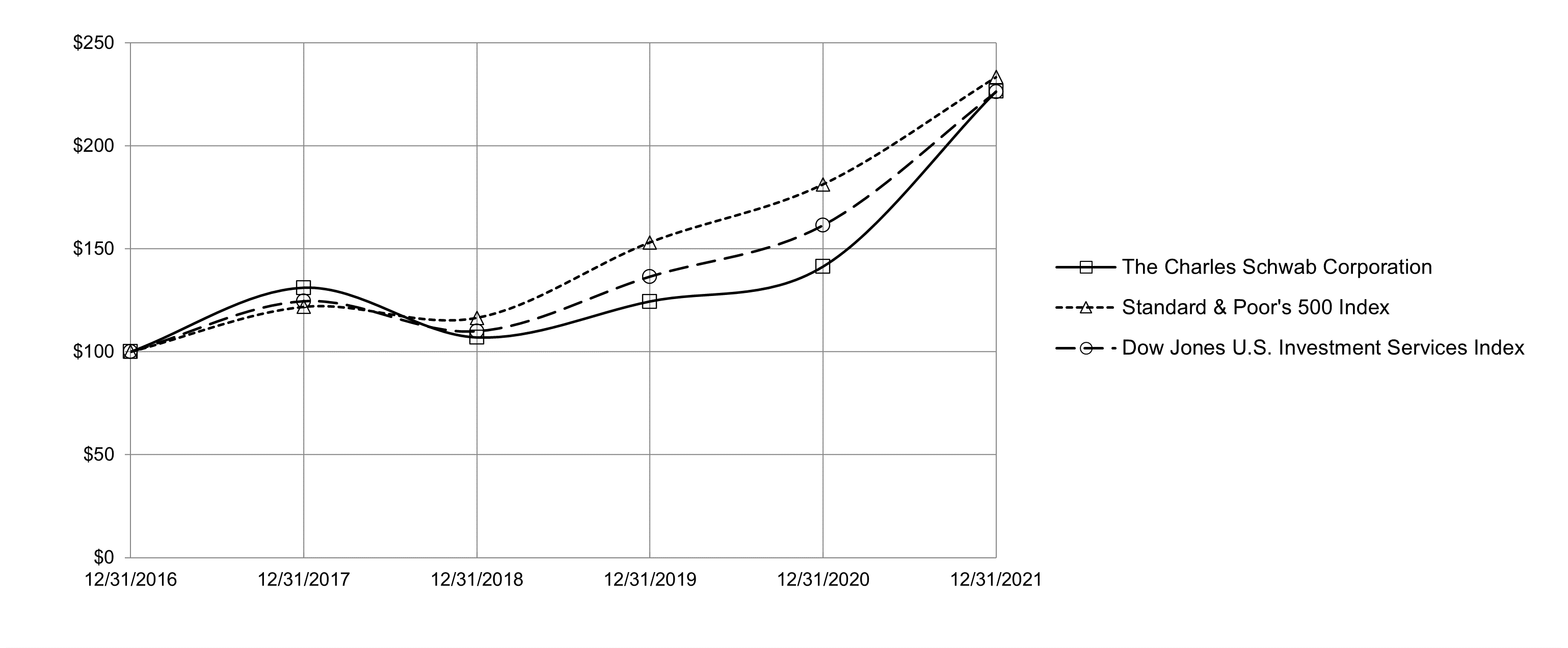
| December 31, | 2016 | 2017 | 2018 | 2019 | 2020 | 2021 | |||||||||||||||||||||||||||||
| The Charles Schwab Corporation | $ | 100 | $ | 131 | $ | 107 | $ | 125 | $ | 141 | $ | 227 | |||||||||||||||||||||||
| Standard & Poor’s 500 Index | $ | 100 | $ | 122 | $ | 116 | $ | 153 | $ | 181 | $ | 233 | |||||||||||||||||||||||
| Dow Jones U.S. Investment Services Index | $ | 100 | $ | 125 | $ | 110 | $ | 137 | $ | 161 | $ | 226 |
Securities Authorized for Issuance Under Equity Compensation Plans
For information relating to compensation plans under which our equity securities are authorized for issuance, see Item 8 – Note 21 and Part III – Item 12.
- 24 -
THE CHARLES SCHWAB CORPORATION
Issuer Purchases of Equity Securities
The following table summarizes purchases made by or on behalf of CSC of its common stock for each calendar month in the fourth quarter of 2021 (in millions, except number of shares, which are in thousands, and per share amounts):
| Month | Total Number of Shares Purchased | Average Price Paid per Share | Total Number of Shares Purchased as Part of Publicly Announced Program | Approximate Dollar Value of Shares That May Yet Be Purchased Under the Publicly Announced Program | |||||||||||||||||||
| October: | |||||||||||||||||||||||
| Share repurchase program (1) | — | $ | — | — | $ | 1,780 | |||||||||||||||||
| Employee transactions (2) | 39 | $ | 74.16 | N/A | N/A | ||||||||||||||||||
| November: | |||||||||||||||||||||||
| Share repurchase program (1) | — | $ | — | — | $ | 1,780 | |||||||||||||||||
| Employee transactions (2) | 614 | $ | 82.07 | N/A | N/A | ||||||||||||||||||
| December: | |||||||||||||||||||||||
| Share repurchase program (1) | — | $ | — | — | $ | 1,780 | |||||||||||||||||
| Employee transactions (2) | 120 | $ | 80.73 | N/A | N/A | ||||||||||||||||||
| Total: | |||||||||||||||||||||||
| Share repurchase program (1) | — | $ | — | — | $ | 1,780 | |||||||||||||||||
| Employee transactions (2) | 773 | $ | 81.46 | N/A | N/A |
(1) All shares were repurchased under an authorization approved by CSC’s Board of Directors of up to $4.0 billion of common stock publicly announced by CSC on January 30, 2019. The authorization does not have an expiration date.
(2) Includes restricted shares withheld (under the terms of grants under employee stock incentive plans) to offset tax withholding obligations that occur upon vesting and release of restricted shares. CSC may receive shares delivered or attested to pay the exercise price and/or to satisfy tax withholding obligations by employees who exercise stock options granted under employee stock incentive plans, which are commonly referred to as stock swap exercises.
N/A Not applicable.
Item 6. Reserved
- 25 -
THE CHARLES SCHWAB CORPORATION
Management’s Discussion and Analysis of Financial Condition and Results of Operations
(Tabular Amounts in Millions, Except Ratios, or as Noted)
Item 7. Management’s Discussion and Analysis of Financial Condition and Results of Operations
FORWARD-LOOKING STATEMENTS
In addition to historical information, this Annual Report on Form 10-K contains “forward-looking statements” within the meaning of Section 27A of the Securities Act, and Section 21E of the Securities Exchange Act of 1934. Forward-looking statements are identified by words such as “believe,” “anticipate,” “expect,” “intend,” “plan,” “will,” “may,” “estimate,” “appear,” “could,” “would,” “expand,” “aim,” “maintain,” “continue,” “seek,” and other similar expressions. In addition, any statements that refer to expectations, projections, or other characterizations of future events or circumstances are forward-looking statements.
These forward-looking statements, which reflect management’s beliefs, objectives, and expectations as of the date hereof, are estimates based on the best judgment of Schwab’s senior management. These statements relate to, among other things:
-
Maximizing our market valuation and stockholder returns over time; our belief that developing trusted relationships will translate into more client assets which drives revenue and, along with expense discipline and thoughtful capital management, generates earnings growth and builds stockholder value; and maintaining our market position (see Business Strategy and Competitive Environment and Products and Services in Part I, Item 1);
-
Expected benefits from the TD Ameritrade and other recently completed acquisitions; and expected timing for the TD Ameritrade client conversion (see Business and Asset Acquisitions in Part I, Item 1; Overview – Business and Asset Acquisitions in Part II, Item 7; Business Acquisitions in Part II, Item 8 – Note 3; and Exit and Other Related Liabilities in Note 16);
-
The impact of legal proceedings and regulatory matters (see Legal Proceedings in Part I, Item 3; and Commitments and Contingencies in Part II, Item 8 – Note 15);
-
Driving strategic priorities of scale and efficiency, win-win monetization and segmentation (see Overview in Part II, Item 7);
-
Cost estimates and timing related to the TD Ameritrade integration, including acquisition and integration-related costs and capital expenditures, cost synergies, and exit and other related costs (see Overview – Business and Asset Acquisitions in Part II, Item 7; Results of Operations – Total Expenses Excluding Interest; and Exit and Other Related Liabilities in Part II, Item 8 – Note 16);
-
The adjustment of rates paid on client-related liabilities; and money market fund fee waivers (see Results of Operations – Net Interest Revenue and Asset Management and Administration Fees in Part II, Item 7);
-
Capital expenditures (see Results of Operations – Total Expenses Excluding Interest in Part II, Item 7);
-
The phase-out of the use of LIBOR (see Risk Management – Expected Phase-out of LIBOR in Part II, Item 7);
-
Sources of liquidity, capital, and level of dividends; and Tier 1 Leverage Ratio operating objective (see Liquidity Risk, Capital Management, Regulatory Capital Requirements, and Dividends in Part II, Item 7);
-
The migration of IDA balances to our balance sheet (see Capital Management – Regulatory Capital Requirements in Part II, Item 7; and Commitments and Contingencies in Part II, Item 8 – Note 15);
-
The expected impact of new accounting standards not yet adopted (see Summary of Significant Accounting Policies in Part II, Item 8 – Note 2); and
-
The likelihood of indemnification and guarantee payment obligations and clients failing to fulfill contractual obligations (see Commitments and Contingencies in Part II, Item 8 – Note 15 and Financial Instruments Subject to Off-Balance Sheet Credit Risk – Client Trade Settlement in Note 17).
Achievement of the expressed beliefs, objectives and expectations described in these statements is subject to certain risks and uncertainties that could cause actual results to differ materially from the expressed beliefs, objectives, and expectations. Readers are cautioned not to place undue reliance on these forward-looking statements, which speak only as of the date of this Annual Report on Form 10-K or, in the case of documents incorporated by reference, as of the date of those documents.
Important factors that may cause actual results to differ include, but are not limited to:
-
General market conditions, including equity valuations, trading activity, the level of interest rates – which can impact money market fund fee waivers, and credit spreads;
-
Our ability to attract and retain clients, develop trusted relationships, and grow client assets;
-
Client use of our advisory and lending solutions and other products and services;
-
The level of client assets, including cash balances;
-
Competitive pressure on pricing, including deposit rates;
- 26 -
THE CHARLES SCHWAB CORPORATION
Management’s Discussion and Analysis of Financial Condition and Results of Operations
(Tabular Amounts in Millions, Except Ratios, or as Noted)
-
Client sensitivity to rates;
-
Regulatory guidance;
-
Capital and liquidity needs and management;
-
Our ability to manage expenses;
-
Our ability to attract and retain talent;
-
Our ability to develop and launch new and enhanced products, services, and capabilities, as well as enhance our infrastructure, in a timely and successful manner;
-
Our ability to monetize client assets;
-
The scope and duration of the COVID-19 pandemic and actions taken by governmental authorities to contain the spread of the virus and the economic impact;
-
Our ability to support client activity levels;
-
The risk that expected cost synergies and other benefits from the TD Ameritrade and other recent acquisitions may not be fully realized or may take longer to realize than expected and that integration-related expenses may be higher than expected;
-
The ability to successfully implement integration strategies and plans relating to TD Ameritrade;
-
The timing and scope of integration-related and other technology projects;
-
Real estate and workforce decisions;
-
Migrations of BDA balances;
-
Prepayment levels for mortgage-backed securities;
-
Client cash allocations;
-
LIBOR trends;
-
Adverse developments in litigation or regulatory matters and any related charges;
-
Potential breaches of contractual terms for which we have indemnification and guarantee obligations; and
-
Client activity, including daily average trades; margin balances; and balance sheet cash.
Certain of these factors, as well as general risk factors affecting the Company, are discussed in greater detail in Risk Factors in Part I, Item 1A.
- 27 -
THE CHARLES SCHWAB CORPORATION
Management’s Discussion and Analysis of Financial Condition and Results of Operations
(Tabular Amounts in Millions, Except Ratios, or as Noted)
GLOSSARY OF TERMS
Active brokerage accounts: Brokerage accounts with activity within the preceding 270 days.
Accumulated Other Comprehensive Income (AOCI): A component of stockholders’ equity which primarily includes unrealized gains and losses on available for sale (AFS) securities.
Asset-backed securities: Debt securities backed by financial assets such as loans or receivables.
Assets receiving ongoing advisory services: Market value of all client assets custodied at the Company under the guidance of an independent advisor or enrolled in one of Schwab’s advice solutions at the end of the reporting period.
Bank deposit account balances (BDA balances): Clients’ uninvested cash balances held off-balance sheet in deposit accounts at unconsolidated third-party financial institutions, pursuant to the IDA agreement and agreements with other third-party financial institutions. Average BDA balances represent the daily average balance for the reporting period.
Basel III: Global regulatory standards on bank capital adequacy and liquidity issued by the Basel Committee on Banking Supervision.
Basis point: One basis point equals 1/100th of 1%, or 0.01%.
Client assets: T
Showing the first 8K of 172K characters. Open the full section
Item 7A. Quantitative and Qualitative Disclosures About Market Risk
For a discussion of the quantitative and qualitative disclosures about market risk, see Risk Management in Part II, Item 7.
- 59 -
THE CHARLES SCHWAB CORPORATION
Item 8. Financial Statements and Supplementary Data
TABLE OF CONTENTS
- 60 -
THE CHARLES SCHWAB CORPORATION
| Consolidated Statements of Income | |||||||||||||||||
| (In Millions, Except Per Share Amounts) | |||||||||||||||||
| Year Ended December 31, | 2021 | 2020 | 2019 | ||||||||||||||
| Net Revenues | |||||||||||||||||
| Interest revenue | $ | 8,506 | $ | 6,531 | $ | 7,580 | |||||||||||
| Interest expense | (476) | (418) | (1,064) | ||||||||||||||
| Net interest revenue | 8,030 | 6,113 | 6,516 | ||||||||||||||
| Asset management and administration fees (1) | 4,274 | 3,475 | 3,211 | ||||||||||||||
| Trading revenue | 4,152 | 1,416 | 752 | ||||||||||||||
| Bank deposit account fees | 1,315 | 355 | — | ||||||||||||||
| Other | 749 | 332 | 242 | ||||||||||||||
| Total net revenues | 18,520 | 11,691 | 10,721 | ||||||||||||||
| Expenses Excluding Interest | |||||||||||||||||
| Compensation and benefits | 5,450 | 3,954 | 3,320 | ||||||||||||||
| Professional services | 994 | 843 | 702 | ||||||||||||||
| Occupancy and equipment | 976 | 703 | 559 | ||||||||||||||
| Advertising and market development | 485 | 326 | 307 | ||||||||||||||
| Communications | 587 | 353 | 253 | ||||||||||||||
| Depreciation and amortization | 549 | 414 | 322 | ||||||||||||||
| Amortization of acquired intangible assets | 615 | 190 | 27 | ||||||||||||||
| Regulatory fees and assessments | 275 | 163 | 122 | ||||||||||||||
| Other | 876 | 445 | 261 | ||||||||||||||
| Total expenses excluding interest | 10,807 | 7,391 | 5,873 | ||||||||||||||
| Income before taxes on income | 7,713 | 4,3 |
Showing the first 8K of 284K characters. Open the full section
Item 9. Changes in and Disagreements With Accountants on Accounting and Financial Disclosure
None.
Item 9A. Controls and Procedures
Evaluation of disclosure controls and procedures: The management of the Company, with the participation of the Company’s Chief Executive Officer and Chief Financial Officer, has evaluated the effectiveness of the Company’s disclosure controls and procedures (as defined in Rule 13a-15(e) under the Securities Exchange Act of 1934) as of December 31, 2021. Based on this evaluation, the Company’s Chief Executive Officer and Chief Financial Officer have concluded that the Company’s disclosure controls and procedures were effective as of December 31, 2021.
Changes in internal control over financial reporting: No change in the Company’s internal control over financial reporting (as defined in Rule 13a-15(f) under the Securities Exchange Act of 1934) was identified during the quarter ended December 31, 2021, that has materially affected, or is reasonable likely to materially affect, the Company’s internal control over financial reporting.
Management’s Report on Internal Control Over Financial Reporting and the Report of Independent Registered Public Accounting Firm are included in Item 8.
Item 9B. Other Information
None.
Item 9C. Disclosure Regarding Foreign Jurisdictions That Prevent Inspections
Not applicable.
PART III
Item 10. Directors, Executive Officers, and Corporate Governance
The information relating to directors of CSC required to be furnished pursuant to this item is incorporated by reference from portions of the Company’s definitive proxy statement for its annual meeting of stockholders to be filed with the SEC pursuant to Regulation 14A by April 30, 2022 (the Proxy Statement) under “Members of the Board of Directors,” “Board Structure and Committees,” and “Director Nominations.” The Company’s Code of Conduct and Business Ethics, applicable to directors and all employees, including senior financial officers, is available on the Company’s website at https://www.aboutschwab.com/governance. If the Company makes any amendments to or grants any waivers from its Code of Conduct and Business Ethics, which are required to be disclosed pursuant to the Securities Exchange Act of 1934, the Company will make such disclosures on this website.
- 122 -
THE CHARLES SCHWAB CORPORATION
Schwab Executive Officers of the Registrant
The following table provides certain information about each of the Company’s executive officers as of December 31, 2021.
| Executive Officers of the Registrant | |||||||||||
| Name | Age | Title | |||||||||
| Charles R. Schwab | 84 | Chairman of the Board | |||||||||
| Walter W. Bettinger II | 61 | Chief Executive Officer | |||||||||
| Richard A. Wurster | 48 | President | |||||||||
| Bernard J. Clark | 63 | Managing Director, Head of Advisor Services | |||||||||
| Jonathan M. Craig | 50 | Managing Director, Head of Investor Services & Marketing | |||||||||
| Peter B. Crawford | 53 | Managing Director, Chief Financial Officer | |||||||||
| Joseph R. Martinetto | 59 | Managing Director, Chief Operating Officer | |||||||||
| Peter J. Morgan III | 57 | Managing Director, General Counsel | |||||||||
| Nigel J. Murtagh | 58 | Managing Director, Chief Risk Officer |
Mr. Schwab has been Chairman of the Board and a director of CSC since its incorporation in 1986. He also served as Chief Executive Officer of CSC from 1986 to 1997 and as Co-Chief Executive Officer from 1998 until 2003. He was re-appointed Chief Executive Officer in 2004 and served in that role until 2008. He served as Chairman of the Board and a director of CS&Co until 2018. Mr. Schwab is also Chairman of CSB.
Mr. Bettinger has been Chief Executive Officer of CSC since 2008. He serves on the Board of Directors of CSC, CSB, and TD Ameritrade Holding Corporation, and is Chairman and trustee of The Charles Schwab Family of Funds, Schwab Investments, Schwab Capital Trust, Schwab Annuity Portfolios, Laudus Trust, and Schwab Strategic Trust, all registered investment companies and affiliates of CSC. Mr. Bettinger served as Director, President and Chief Executive Officer of CS&Co from 2008 until October 2021. Mr. Bettinger served as President of CSC from 2007 to 2021, CSC Chief Operating Officer from 2007 until 2008, and as Executive Vice President and President – Schwab Investor Services of CSC and CS&Co from 2005 to 2007. Mr. Bettinger joined Schwab in 1995.
Mr. Wurster has been President of CSC and CS&Co since October 2021. He served as CEO of Charles Schwab Investment Management, Inc. from 2019 to 2021 and CEO of Charles Schwab Investment Advisory, Inc. from 2018 to 2021. Mr. Wurster was CEO of ThomasPartners, Inc. and Windhaven Investment Management, Inc., subsidiaries of CSC, from 2016 to 2018. Mr. Wurster joined Schwab in 2016.
Mr. Clark has been Managing Director since 2022 and Executive Vice President – Advisor Services of CSC since 2012. Mr. Clark has served as Executive Vice President – Advisor Services of CS&Co since 2010. From 2006 until 2010, Mr. Clark served as Senior Vice President – Schwab Institutional Sales of CS&Co. Mr. Clark joined Schwab in 1998.
Mr. Craig has been Managing Director, Head of Investor Services and Marketing since 2022. Prior to that he served as Senior Executive Vice President from 2018 to 2021, Executive Vice President – Client and Marketing Solutions from 2017 until 2018 and Executive Vice President and Chief Marketing Officer from 2012 until 2018. Mr. Craig joined Schwab in 2000.
Mr. Crawford has been Managing Director since 2022 and Executive Vice President and Chief Financial Officer of CSC and CS&Co since 2017. Prior to his appointment as Chief Financial Officer, Mr. Crawford was Executive Vice President of Finance from 2015 to 2017. He served as Senior Vice President of Schwab’s asset management and client solutions organization from 2008 to 2015. He joined the Board of Directors of TD Ameritrade Holding Corporation in 2020, and has served on the Board of Directors of CS&Co since 2018. Mr. Crawford joined Schwab in 2001.
Mr. Martinetto has been Managing Director since 2022, Senior Executive Vice President of CSC and CS&Co since 2015, and Chief Operating Officer of CSC and CS&Co since 2018. He served as Chief Financial Officer of CSC and CS&Co from 2007 until 2017, and Executive Vice President of CSC and CS&Co from 2007 until 2015. He also serves on the Board of Directors of CS&Co and TD Ameritrade Holding Corporation; he served on the Board of Directors of CSB from 2010 until 2020. Additionally, Mr. Martinetto is a trustee of The Charles Schwab Family of Funds, Schwab Investments, Schwab Capital Trust, Schwab Annuity Portfolios, Laudus Trust, and Schwab Strategic Trust. Mr. Martinetto joined Schwab in 1997.
Mr. Morgan has been Managing Director since 2022, and served as Executive Vice President, General Counsel and Corporate Secretary of CSC since 2019. He also serves as Executive Vice President & Corporate Secretary of CS&Co; he was Senior
- 123 -
THE CHARLES SCHWAB CORPORATION
Vice President and Deputy General Counsel of CS&Co from 2009 to January 2020. He has served as General Counsel of CSB since 2009, including as Executive Vice President and General Counsel of CSB since 2019, and as Senior Vice President and General Counsel from 2015 to 2019. Mr. Morgan joined Schwab in 1999.
Mr. Murtagh has been Managing Director since 2022 and Executive Vice President – Corporate Risk and Chief Risk Officer since 2012. He served as Senior Vice President and Chief Credit Officer of CS&Co from 2002 until 2012 and of CSC from 2008 until 2012 when he was also Head of Fixed Income Research for Charles Schwab Investment Management. Mr. Murtagh joined Schwab in 2000.
Item 11. Executive Compensation
The information required to be furnished pursuant to this item is incorporated by reference from portions of the Proxy Statement under “Compensation Discussion and Analysis,” “Executive Compensation Tables – 2021 Summary Compensation Table,” “Executive Compensation Tables – 2021 Grants of Plan-Based Awards Table,” “Executive Compensation Tables – Narrative to Summary Compensation and Grants of Plan-Based Awards Tables,” “Executive Compensation Tables – 2021 Termination and Change in Control Benefits Table,” “Executive Compensation Tables – Outstanding Equity Awards as of December 31, 2021,” “Executive Compensation Tables – 2021 Option Exercises and Stock Vested Table,” “Executive Compensation Tables – 2021 Nonqualified Deferred Compensation Table,” “Director Compensation,” and “Compensation Committee Interlocks and Insider Participation.” In addition, the information from a portion of the Proxy Statement under “Compensation Committee Report,” is incorporated by reference from the Proxy Statement and furnished on this Form 10-K, and shall not be deemed “filed” for purposes of Section 18 of the Securities Exchange Act of 1934, nor shall it be deemed incorporated by reference in any filing under the Securities Act of 1933.
Item 12. Security Ownership of Certain Beneficial Owners and Management and Related Stockholder Matters
The information required to be furnished pursuant to this item is incorporated by reference from portions of the Proxy Statement under “Security Ownership of Certain Beneficial Owners and Management” and “Securities Authorized for Issuance under Equity Compensation Plans.”
Item 13. Certain Relationships and Related Transactions, and Director Independence
The information required to be furnished pursuant to this item is incorporated by reference from portions of the Proxy Statement under “Transactions with Related Persons” and “Director Independence.”
Item 14. Principal Accountant Fees and Services
The information required to be furnished pursuant to this item is incorporated by reference from a portion of the Proxy Statement under “Auditor Fees.”
- 124 -
THE CHARLES SCHWAB CORPORATION
PART IV
Item 15. Exhibits, Financial Statement Schedules
(a) Documents filed as part of this Report
- Financial Statements
The financial statements and independent auditors’ report are included in Item 8 and are listed below:
Consolidated Statements of Income
Consolidated Statements of Comprehensive Income
Consolidated Balance Sheets
Consolidated Statements of Stockholders’ Equity
Consolidated Statements of Cash Flows
Notes to Consolidated Financial Statements
Report of Independent Registered Public Accounting Firm
- Financial Statement Schedules
Other financial statement schedules required pursuant to this Item are omitted because of the absence of conditions under which they are required or because the information is included in the Company’s consolidated financial statements and notes in Item 8.
- 125 -
THE CHARLES SCHWAB CORPORATION
(b) Exhibits
The exhibits listed below are filed as part of this annual report on Form 10-K.
- 126 -
THE CHARLES SCHWAB CORPORATION
- 127 -
THE CHARLES SCHWAB CORPORATION
- 128 -
THE CHARLES SCHWAB CORPORATION
- The schedules have been omitted pursuant to Item 601(b)(2) of Regulation S-K. Schwab agrees to furnish supplementally a copy of such schedules and exhibits, or any section thereof, to the SEC upon request.
** Certain confidential information contained in this agreement has been omitted because it is not material and would be competitively harmful if publicly disclosed.
Item 16. Form 10-K Summary
None.
- 129 -
THE CHARLES SCHWAB CORPORATION
SIGNATURES
Pursuant to the requirements of Section 13 or 15(d) of the Securities Exchange Act of 1934, the registrant has duly caused this report to be signed on its behalf by the undersigned, thereunto duly authorized, on February 24, 2022.
| THE CHARLES SCHWAB CORPORATION | ||||||||
| (Registrant) | ||||||||
| BY: | /s/ Walter W. Bettinger II | |||||||
| Walter W. Bettinger II | ||||||||
| Chief Executive Officer |
Pursuant to the requirements of the Securities Exchange Act of 1934, this report has been signed below by the following persons on behalf of the registrant and in the capacities indicated, on February 24, 2022.
| Signature / Title | Signature / Title | |||||||
| /s/ Walter W. Bettinger II | /s/ Peter Crawford | |||||||
| Walter W. Bettinger II, | Peter Crawford, | |||||||
| Chief Executive Officer and Director | Managing Director, Executive Vice President, and Chief Financial Officer (principal financial and accounting officer) | |||||||
| /s/ Charles R. Schwab | /s/ John K. Adams, Jr. | |||||||
| Charles R. Schwab, Chairman of the Board | John K. Adams, Jr., Director | |||||||
| /s/ Marianne C. Brown | /s/ Joan T. Dea | |||||||
| Marianne C. Brown, Director | Joan T. Dea, Director | |||||||
| /s/ Christopher V. Dodds | /s/ Stephen A. Ellis | |||||||
| Christopher V. Dodds, Director | Stephen A. Ellis, Director | |||||||
| /s/ Mark A. Goldfarb | /s/ William S. Haraf | |||||||
| Mark A. Goldfarb, Director | William S. Haraf, Director | |||||||
| /s/ Frank C. Herringer | /s/ Brian M. Levitt | |||||||
| Frank C. Herringer, Director | Brian M. Levitt, Director | |||||||
| /s/ Gerri K. Martin-Flickinger | /s/ Bharat B. Masrani | |||||||
| Gerri K. Martin-Flickinger, Director | Bharat B. Masrani, Director | |||||||
| /s/ Todd M. Ricketts | /s/ Charles A. Ruffel | |||||||
| Todd M. Ricketts, Director | Charles A. Ruffel, Director | |||||||
| /s/ Arun Sarin | /s/ Paula A. Sneed | |||||||
| Arun Sarin, Director | Paula A. Sneed, Director |
- 130 -
THE CHARLES SCHWAB CORPORATION
| SUPPLEMENTAL INFORMATION | |||||
| Disclosure | Page | ||||
| Average Balance Sheets and Net Interest Revenue | F-2 | ||||
| Analysis of Changes in Net Interest Revenue | F-3 | ||||
| Bank Loan Portfolio | F-4 | ||||
| Allowance for Credit Losses on Bank Loans | F-4 - F5 | ||||
| Bank Deposits | F-5 | ||||
F-1
THE CHARLES SCHWAB CORPORATION
Supplemental Financial Data (Unaudited)
(Dollars in Millions)
As a savings and loan holding company, the Company provides the following supplemental information pursuant to Subpart 1400 of Regulation S-K. Other information required by Subpart 1400 of Regulation S-K is presented throughout this Annual Report on Form 10-K.
1. Average Balance Sheets and Net Interest Revenue
| For the Year Ended December 31, | 2021 | 2020 | 2019 | ||||||||||||||||||||||||||
| Average | Average | Average | Average | Average | Average | ||||||||||||||||||||||||
| Balance | Interest | Rate | Balance | Interest | Rate | Balance | Interest | Rate | |||||||||||||||||||||
| Assets: | |||||||||||||||||||||||||||||
| Cash and cash equivalents | $ | 40,325 | $ | 40 | 0.10 | % | $ | 39,052 | $ | 120 | 0.30 | % | $ | 23,512 | $ | 518 | 2.17 | % | |||||||||||
| Cash and investments segregated | 43,942 | 24 | 0.05 | % | 34,100 | 141 | 0.41 | % | 15,694 | 345 | 2.17 | % | |||||||||||||||||
| Receivables from brokerage clients | 77,768 | 2,455 | 3.11 | % | 28,058 | 848 | 2.97 | % | 19,270 | 821 | 4.20 | % | |||||||||||||||||
| Available for sale securities (1,2) | 357,122 | 4,641 | 1.30 | % | 253,555 | 4,537 | 1.78 | % | 58,181 | 1,560 | 2.67 | % | |||||||||||||||||
| Held to maturity securities (2) | — | — | — | — | — | — | 134,708 | 3,591 | 2.65 | % | |||||||||||||||||||
| Bank loans (3) | 28,789 | 620 | 2.15 | % | 20,932 | 545 | 2.60 | % | 16,832 | 584 | 3.47 | % | |||||||||||||||||
| Total interest-earning assets | 547,946 | 7,780 | 1.41 | % | 375,697 | 6,191 | 1.64 | % | 268,197 | 7,419 | 2.75 | % | |||||||||||||||||
| Securities lending revenue | 720 | 334 | 147 | ||||||||||||||||||||||||||
| Other interest revenue | 6 | 6 | 14 | ||||||||||||||||||||||||||
| Total interest-earning assets | 547,946 | 8,506 | 1.54 | % | 375,697 | 6,531 | 1.73 | % | 268,197 | 7,580 | 2.80 | % | |||||||||||||||||
| Non-interest-earning assets (4,5) | 41,930 | 38,608 | 11,559 | ||||||||||||||||||||||||||
| Total assets | $ | 589,876 | $ | 414,305 | $ | 279,756 | |||||||||||||||||||||||
| Liabilities and Stockholders’ Equity: | |||||||||||||||||||||||||||||
| Bank deposits | $ | 381,549 | $ | 54 | 0.01 | % | $ | 291,206 | $ | 93 | 0.03 | % | $ | 212,605 | $ | 700 | 0.33 | % | |||||||||||
| Payables to brokerage clients | 91,667 | 9 | 0.01 | % | 46,347 | 12 | 0.02 | % | 24,353 | 79 | 0.33 | % | |||||||||||||||||
| Short-term borrowings (6) | 3,040 | 9 | 0.30 | % | 89 | — | 0.20 | % | 17 | — | 2.36 | % | |||||||||||||||||
| Long-term debt | 17,704 | 384 | 2.17 | % | 8,992 | 289 | 3.22 | % | 7,199 | 258 | 3.58 | % | |||||||||||||||||
| Total interest-bearing liabilities | 493,960 | 456 | 0.09 | % | 346,634 | 394 | 0.11 | % | 244,174 | 1,037 | 0.42 | % | |||||||||||||||||
| Securities lending expense | 24 | 33 | 38 | ||||||||||||||||||||||||||
| Other interest expense | (4) | (9) | (11) | ||||||||||||||||||||||||||
| Non-interest-bearing liabilities (4,7) | 39,182 | 32,486 | 14,170 | ||||||||||||||||||||||||||
| Total liabilities (8) | 533,142 | 476 | 0.09 | % | 379,120 | 418 | 0.11 | % | 258,344 | 1,064 | 0.39 | % | |||||||||||||||||
| Stockholders’ equity (4) | 56,734 | 35,185 | 21,412 | ||||||||||||||||||||||||||
| Total liabilities and stockholders’ equity | $ | 589,876 | $ | 414,305 | $ | 279,756 | |||||||||||||||||||||||
| Net interest revenue | $ | 8,030 | $ | 6,113 | $ | 6,516 | |||||||||||||||||||||||
| Net yield on interest-earning assets | 1.45 | % | 1.62 | % | 2.41 | % |
(1) Amounts calculated based on amortized cost.
(2) On January 1, 2020, the Company transferred all of its investment securities designated as HTM to the AFS category, as described in Item 8 – Note 6.
(3) Includes average principal balances of nonaccrual loans.
(4) Average balance calculation based on month end balances.
(5) Non-interest-earning assets include equipment, office facilities, and property – net, goodwill, acquired intangible assets – net, and other assets that do not generate interest income.
(6) Interest revenue or expense was less than $500 thousand in the period or periods presented.
(7) Non-interest-bearing liabilities consist of other liabilities that do not generate interest expense.
(8)Average rate calculation based on total funding sources.
F-2
THE CHARLES SCHWAB CORPORATION
Supplemental Financial Data (Unaudited)
(Dollars in Millions)
2. Analysis of Changes in Net Interest Revenue
An analysis of the year-to-year changes in the categories of interest revenue and interest expense resulting from changes in volume and rate is as follows:
| 2021 Compared to 2020 Increase (Decrease) Due to Change in: | 2020 Compared to 2019 Increase (Decrease) Due to Change in: | ||||||||||||||||||||||||||||||||||
| Average Volume | Average Rate | Total | Average Volume | Average Rate | Total | ||||||||||||||||||||||||||||||
| Interest-earning assets: | |||||||||||||||||||||||||||||||||||
| Cash and cash equivalents (1) | $ | 4 | $ | (84) | $ | (80) | $ | 337 | $ | (735) | $ | (398) | |||||||||||||||||||||||
| Cash and investments segregated | 40 | (157) | (117) | 399 | (603) | (204) | |||||||||||||||||||||||||||||
| Receivables from brokerage clients | 1,476 | 131 | 1,607 | 369 | (342) | 27 | |||||||||||||||||||||||||||||
| Available for sale securities (2,3) | 1,843 | (1,739) | 104 | 5,237 | (2,260) | 2,977 | |||||||||||||||||||||||||||||
| Held to maturity securities (3) | — | — | — | (3,591) | — | (3,591) | |||||||||||||||||||||||||||||
| Bank loans (4) | 204 | (129) | 75 | 142 | (181) | (39) | |||||||||||||||||||||||||||||
| Securities lending revenue | — | 386 | 386 | — | 187 | 187 | |||||||||||||||||||||||||||||
| Other interest revenue | — | — | — | — | (8) | (8) | |||||||||||||||||||||||||||||
| Total interest-earning assets | $ | 3,567 | $ | (1,592) | $ | 1,975 | $ | 2,893 | $ | (3,942) | $ | (1,049) | |||||||||||||||||||||||
| Interest-bearing sources of funds: | |||||||||||||||||||||||||||||||||||
| Bank deposits | $ | 27 | $ | (66) | $ | (39) | $ | 259 | $ | (866) | $ | (607) | |||||||||||||||||||||||
| Payables to brokerage clients | 9 | (12) | (3) | 73 | (140) | (67) | |||||||||||||||||||||||||||||
| Short-term borrowings | 6 | 3 | 9 | 2 | (2) | — | |||||||||||||||||||||||||||||
| Long-term debt | 281 | (186) | 95 | 64 | (33) | 31 | |||||||||||||||||||||||||||||
| Securities lending expense | — | (9) | (9) | — | (5) | (5) | |||||||||||||||||||||||||||||
| Other interest expense | — | 5 | 5 | — | 2 | 2 | |||||||||||||||||||||||||||||
| Total sources on which interest is paid | 323 | (265) | 58 | 398 | (1,044) | (646) | |||||||||||||||||||||||||||||
| Change in net interest revenue | $ | 3,244 | $ | (1,327) | $ | 1,917 | $ | 2,495 | $ | (2,898) | $ | (403) |
Changes that are not due solely to volume or rate have been allocated to rate.
(1) Includes deposits with banks and short-term investments.
(2) Amounts have been calculated based on amortized cost.
(3) On January 1, 2020, the Company transferred all of its investment securities designated as HTM to the AFS category, as described in Item 8 – Note 6.
(4) Includes average principal balances of nonaccrual loans.
F-3
THE CHARLES SCHWAB CORPORATION
Supplemental Financial Data (Unaudited)
(Dollars in Millions)
3. Bank Loan Portfolio
The maturities of the bank loan portfolio are described below:
| December 31, 2021 | Within 1 year | After 1 year through 5 years | After 5 years through 15 years | After 15 years | Total | ||||||||||||||||||||||||
| Residential real estate: | |||||||||||||||||||||||||||||
| First Mortgages | $ | — | $ | 4 | $ | 1,575 | $ | 19,511 | $ | 21,090 | |||||||||||||||||||
| HELOCs | 295 | 137 | 216 | — | 648 | ||||||||||||||||||||||||
| Total residential real estate | 295 | 141 | 1,791 | 19,511 | 21,738 | ||||||||||||||||||||||||
| Pledged asset lines | 11,373 | 1,336 | — | — | 12,709 | ||||||||||||||||||||||||
| Other | 5 | 197 | 5 | — | 207 | ||||||||||||||||||||||||
| Total | $ | 11,673 | $ | 1,674 | $ | 1,796 | $ | 19,511 | $ | 34,654 |
Note: Maturities in the above table are based upon the contractual terms of the loans. The maturities for HELOCs are based on an initial draw period of ten years.
The interest sensitivity of loans with contractual maturities in excess of one year is as follows:
| December 31, 2021 | After 1 year through 5 years | After 5 years through 15 years | After 15 years | ||||||||||||||
| Loans with floating or adjustable interest rates | |||||||||||||||||
| Residential real estate: | |||||||||||||||||
| First Mortgages | $ | — | $ | 32 | $ | 17,058 | |||||||||||
| HELOCs | 137 | 216 | — | ||||||||||||||
| Total residential real estate | 137 | 248 | 17,058 | ||||||||||||||
| Pledged asset lines | 1,336 | — | — | ||||||||||||||
| Other | 1 | 2 | — | ||||||||||||||
| Total loans with floating or adjustable interest rates | 1,474 | 250 | 17,058 | ||||||||||||||
| Loans with predetermined interest rates | |||||||||||||||||
| Residential real estate: | |||||||||||||||||
| First Mortgages | $ | 4 | $ | 1,543 | $ | 2,453 | |||||||||||
| HELOCs | — | — | — | ||||||||||||||
| Total residential real estate | 4 | 1,543 | 2,453 | ||||||||||||||
| Pledged asset lines | — | — | — | ||||||||||||||
| Other | 196 | 3 | — | ||||||||||||||
| Total loans with predetermined interest rates | 200 | 1,546 | 2,453 | ||||||||||||||
| Total | $ | 1,674 | $ | 1,796 | $ | 19,511 |
4. Allowance for Credit Losses on Bank Loans
The following table presents several credit ratios related to the Company’s bank loans portfolio. See Item 8 – Note 7 for the values underlying these ratios:
| December 31, | 2021 | 2020 | |||||||||
| Allowance for credit losses to total year-end loans | 0.05 | % | 0.13 | % | |||||||
| Nonaccrual loans to total year-end loans | 0.10 | % | 0.37 | % | |||||||
| Allowance for credit losses to total nonaccrual year-end loans | 51 | % | 34 | % |
F-4
THE CHARLES SCHWAB CORPORATION
Supplemental Financial Data (Unaudited)
(Dollars in Millions)
The following table presents information regarding average loans outstanding during the period and the ratio of net charge-offs (recoveries) during the period to average loans outstanding:
| Year ended December 31, | 2021 | 2020 | 2019 | ||||||||||||||||||||||||||||||||
| Average loans | Net charge-offs (recoveries) to average loans | Average loans | Net charge-offs (recoveries) to average loans | Average loans | Net charge-offs (recoveries) to average loans | ||||||||||||||||||||||||||||||
| Residential real estate: | |||||||||||||||||||||||||||||||||||
| First Mortgages | $ | 17,673 | — | $ | 13,635 | (.01) | % | $ | 10,610 | (.01) | % | ||||||||||||||||||||||||
| HELOCs | 731 | (.14) | % | 981 | — | 1,306 | (.08) | % | |||||||||||||||||||||||||||
| Total residential real estate | 18,404 | (.01) | % | 14,616 | (.01) | % | 11,916 | (.02) | % | ||||||||||||||||||||||||||
| Pledged asset lines | 10,201 | — | 6,125 | — | 4,746 | — | |||||||||||||||||||||||||||||
| Other | 184 | .54 | % | 191 | — | 170 | — | ||||||||||||||||||||||||||||
| Total | $ | 28,789 | — | $ | 20,932 | — | $ | 16,832 | (.01) | % |
The increase in the Company’s average loan portfolio in the periods presented has been driven by growth in First Mortgages and PALs. Growth in these loan types is due in large part to the low interest rate environment seen throughout the periods presented and Schwab’s overall growth in client accounts and net new client assets.
The following table presents the allocation of the allowance for credit losses for bank loans and loans by category as a percentage of total bank loans:
| December 31, | 2021 | 2020 | |||||||||||||||||||||
| Allowance for Credit Losses | Percent of loans to total loans | Allowance for Credit Losses | Percent of loans to total loans | ||||||||||||||||||||
| Residential real estate: | |||||||||||||||||||||||
| First Mortgages | $ | 13 | 60 | % | $ | 22 | 62 | % | |||||||||||||||
| HELOCs | 2 | 2 | % | 5 | 4 | % | |||||||||||||||||
| Total residential real estate | 15 | 62 | % | 27 | 66 | % | |||||||||||||||||
| Pledged asset lines | — | 37 | % | — | 33 | % | |||||||||||||||||
| Other | 3 | 1 | % | 3 | 1 | % | |||||||||||||||||
| Total | $ | 18 | 100 | % | $ | 30 | 100 | % |
5. Bank Deposits
The following table presents the average amount of and the average rate paid on deposit categories that are in excess of ten percent of average total bank deposits:
| December 31, | 2021 | 2020 | |||||||||||||||
| Amount | Rate | Amount | Rate | ||||||||||||||
| Analysis of average daily deposits: | |||||||||||||||||
| Money market and other savings deposits | $ | 349,665 | 0.01 | % | $ | 271,534 | 0.03 | % | |||||||||
As of December 31, 2021 and 2020, uninsured bank deposits totaled approximately $134.8 billion and $89.3 billion, respectively.
As of December 31, 2021, the Company’s bank deposits did not include any time deposits that were in excess of FDIC insurance limits or otherwise uninsured.
F-5