 filings.tools
Item 1. Business.
30K characters. Original on sec.gov · Markdown
Item 1. Business.
All references in this report to “Registrant,” “Company,” “SLB,” “we” or “our” are to Schlumberger Limited (Schlumberger N.V.) and its consolidated subsidiaries.
We are SLB, a global technology company driving energy innovation for a balanced planet. With a global presence in more than 100 countries and employees representing almost twice as many nationalities, we work each day on innovating energy technology, delivering digital at scale, decarbonizing industries, and developing and scaling new energy systems that accelerate the energy transition.
Today, the world faces the challenge of providing secure and affordable energy to meet growing demand, while rapidly decarbonizing for a sustainable future. With nearly a century of market and technology leadership, SLB is well positioned and committed to being a leader in providing solutions to address this trilemma.
In October 2022, we changed our brand name to SLB and unveiled a new logo that underscores our vision for a decarbonized energy future. This bold change highlighted our leadership as a global technology company focused on driving energy innovation within traditional energy sources and beyond. The SLB brand builds on nearly a century of technology innovation and industrialization. Our identity symbolizes SLB's commitment to moving farther and faster in facilitating the world's energy needs today and forging the road ahead for a sustainable future.
SLB is organized under four Divisions that combine and integrate SLB’s technologies, enhancing our ability to support the emerging long-term growth opportunities in each of these market segments. The four Divisions are:
Digital & Integration
Reservoir Performance
Well Construction
Production Systems
Digital & Integration – Combines SLB’s industry-leading digital solutions and data products with its integrated offering of Asset Performance Solutions (“APS”). This Division enables greater performance for our customers by reducing cycle times and risk, accelerating returns, increasing productivity, and lowering costs and carbon emissions.
The primary offerings comprising this Division are:
Digital Solutions: Includes products, services, and solutions that span the energy value chain from subsurface characterization through field development and hydrocarbon production to carbon management and the integration of adjacent energy systems. Offerings are founded upon proprietary and open-source data platform technologies, industry-leading simulators, and workflow tools, and include domain-specific application of innovative digital capabilities, such as artificial intelligence ("AI") and machine learning. Solutions are deployable on traditional on-premise IT infrastructures, the cloud, and the edge, allowing for full market coverage irrespective of customer constraints. Digital Solutions also provides comprehensive reservoir interpretation and data processing services, enabled by a scientifically advanced platform and innovative subsurface imaging techniques for exploration data, and includes one of the industry’s most extensive exploration data libraries.
Asset Performance Solutions: Offers an integrated business model for field production projects. Combines SLB’s services and products with drilling rig management and specialized engineering and project management expertise, to provide a complete solution from well construction to production improvement. As of December 31, 2024, SLB’s APS portfolio primarily consisted of three field production projects in Ecuador and one in Canada.
Reservoir Performance – Consists of reservoir-centric technologies and services that are critical to optimizing reservoir productivity and performance. Reservoir Performance develops and deploys innovative technologies and services to evaluate, intervene, and stimulate reservoirs providing customers with greater insights into their assets and maximizing their return on investment.
The primary offerings comprising this Division are:
Evaluation: Provides the measurement, interpretation, and insights necessary to understand the subsurface geology and fluids through wireline logging, downhole testing and rock and fluid analysis services.
Stimulation: Provides services to restore or enhance well productivity through hydraulic fracturing, matrix stimulation, and water treatment.
Intervention: Provides a comprehensive approach to oil and gas operators to increase their intervention success rates and maximize recovery from brownfields through cased hole wireline and perforations, coiled-tubing interventions, slickline, and reservoir monitoring.
Well Construction – Combines the full portfolio of products and services to optimize well placement and performance, maximize drilling efficiency, and improve wellbore assurance. Well Construction provides operators and drilling rig manufacturers with services and products related to the design and construction of a well.
The primary offerings comprising this Division are:
Measurements: Provides services and associated engineering support for mud logging for geological and drilling surveillance, directional drilling, measurement-while-drilling, and logging-while-drilling services for all well profiles.
Drilling Fluids: Supplies individually engineered drilling fluid systems that improve drilling performance and maintain well control and wellbore stability throughout drilling operations as well as products and services that secure and protect well casings while isolating fluid zones and maximizing wellbore activity.
Equipment: Provides drilling equipment, including pressure control equipment and rotary drilling equipment, and services for drilling contractors, operators, and rental tool companies, and shipyards as well as land drilling rigs and related services.
Drilling: Designs, manufactures, and markets roller cone and fixed cutter drill bits for all drilling environments, as well as a wide variety of bottomhole assembly and borehole enlargement technologies for drilling operations.
Integrated Well Construction: Provides integrated solutions to construct or change the architecture of wells, including well planning, well drilling (including autonomous drilling), engineering, supervision, logistics, procurement and contracting of third parties, and drilling rig management.
Production Systems – Develops technologies and provides expertise that enhances production and recovery from subsurface reservoirs to the surface, into pipelines, and to refineries. Production Systems provides a comprehensive portfolio of equipment and services including subsurface production systems, subsea and surface equipment and services, and midstream production systems.
The primary offerings comprising this Division are:
Subsea Production Systems: Through its OneSubsea™ joint venture, provides integrated solutions, products, systems, and services for the subsea market, including wellheads, subsea trees, manifolds and flowline connectors, control systems, connectors and services designed to maximize reservoir recovery and extend the life of each field.
Artificial Lift: Provides lifting solutions using electrical submersible pumps, gas lift equipment, progressing cavity pumps, and surface horizontal pumping systems.
Completions: Supplies well completion services and equipment that includes packers, safety valves, and sand control technology, as well as a range of intelligent systems that enable real-time visibility and performance monitoring.
Surface Production Systems: Designs and manufactures onshore and offshore systems including wellheads, valves, chokes, actuators, and surface trees, and provides fracturing and flow back services to operators.
Midstream Production Systems: Enables efficient monetization of subsurface assets using standard and custom-designed onshore, offshore, and downstream processing and chemical treatment systems, as well as unique, reservoir-driven, fit-for-purpose integrated production systems for accelerating first production and maximizing project economics.
Valves: Serves the upstream, midstream, and downstream markets with a broad portfolio of valves that are primarily used to control and direct the flow of hydrocarbons as they are moved from wellheads through flow lines, gathering lines, and transmission systems to refineries, petrochemical plants, and industrial centers for processing.
SLB's four Divisions operate through a geographical structure of four Basins that are aligned with critical concentrations of activity: Americas Land, Offshore Atlantic, Middle East & North Africa, and Asia. The Basins are configured around common regional characteristics that enable us to deploy fit-for-purpose technologies, operating models, and skills to meet the specific customer needs in each Basin. The Basins are further organized into GeoUnits, which can be a region, a single country, or comprise several countries. With a strong focus on customers, the Basins identify opportunities for growth, and are focused on agility, responsiveness, and competitiveness.
Supporting the Divisions is a global network of research and development centers. Through these centers we advance SLB’s technology programs to enhance industry efficiency, lower finding and producing costs, improve productivity, maximize reserve recovery, and increase asset value safely, securely, and sustainably. These centers also support SLB's investments in lower carbon energy sources and carbon capture technologies.
ChampionX Transaction
On April 2, 2024, SLB announced a definitive agreement to purchase ChampionX Corporation ("ChampionX") in an all-stock transaction. ChampionX is a global leader in chemistry solutions, artificial lift systems, and highly engineered equipment and technologies that help companies drill for and produce oil and gas safely, efficiently, and sustainably around the world. Under the terms of the agreement, ChampionX shareholders will receive 0.735 shares of SLB common stock in exchange for each ChampionX share. At the closing of the transaction ChampionX shareholders will own approximately 9% of SLB's outstanding shares of common stock. ChampionX reported revenue of approximately $2.7 billion for the nine months ended September 30, 2024. The transaction, which is subject to regulatory approvals and other customary closing conditions, received the approval of the ChampionX stockholders at a special meeting held on June 18, 2024. It is anticipated that the transaction will close in the first quarter of 2025.
Corporate Strategy
The evolving marketplace will require bold new technologies and ideas, digital transformation and a deep commitment to sustainability. With a balanced energy transition in mind, our strategy is focused on three engines of growth: Core, Digital, and New Energy.
Core
Consisting of our Reservoir Performance, WeIl Construction and Production Systems Divisions, Core remains SLB’s largest engine of growth. Building on decades of technology advancement, we will continue innovating new products, services and technologies that make the exploration, development and production of oil and gas assets cleaner, more cost effective, and more efficient, with lower carbon emissions and less impact on the environment.
We continue to build on our fit-for-basin approach and technology access initiatives, developing bespoke and custom technology tailored to the regions and environments in which we operate. This strategy allows us to address the rapid evolution of our industry into more regional markets, each with distinct resource plays and economics.
With the continued growth of digitally enabled technologies that improve efficiency and performance, including our Transition Technologies™ portfolio and our SLB End-to-end Emissions Solutions (SEES) methane elimination business, SLB provides solutions that enable customers to increase production from their reserves at a competitive cost and at a lower carbon intensity per barrel equivalent.
Digital
Digital capabilities continue to grow throughout the energy industry as a key element of the complex systems required to meet current energy demand, improve efficiency and to harness the promise of a lower-carbon future. SLB is uniquely positioned to support customers on their digital journeys by providing an offering which spans planning and operational workflows, underpinned by a data platform which allows customers to realize efficiency gains through AI.
SLB’s customers have access to leading digital products that help to meet their sustainability goals by driving transparency, better measurement, more effective planning, and more impactful and reliable outcomes. To continue elevating customer offerings, we are accelerating the adoption of our proprietary Delfi™ offering, an open, scalable, and secure cloud-based software environment.
Our cloud-based solutions allow our customers to transition from our established software applications to our Delfi digital platform, and shift from a user-based license model to software-as-a-service (SaaS) subscriptions. This enables customers to evolve from legacy infrastructure and deliver new levels of value creation, with access to key resources such as storage and increased computing power from our cloud partners and our industry-leading simulators. Our evolving offering of on-premises solutions allows us to support the digital transition journey of customers that prefer or are required to maintain data solutions locally.
Through our LumiTM data and AI platform, we also enable data-driven decision making for our customers across the energy industry. Data from a wide variety of sources across the subsurface and operations value chain can be accessed, facilitating AI-driven decision making at scale. The platform can connect diverse industry data sources, inclusive of on-premises data platforms and customer data infrastructure.
We are also focused on using digital technology to enhance operational performance for our customers. Our software products sold directly to customers, which are agnostic to equipment provider, enable automation and autonomy to reduce cost and improve performance. However, we also provide digital services to enhance the SLB equipment and service offering in our Core Divisions. Many of these services use embedded AI to automate insights and differentiate our service delivery offering.
New Energy
New Energy offers a significant opportunity to use SLB’s experience and scale to drive innovation for a low-carbon economy spanning industries beyond oil and gas. We are building a broad, diverse portfolio across New Energy sectors, selected for their materiality and adjacency to existing SLB strengths and our ability to offer differentiated technology.
Our New Energy portfolio builds on several fundamental SLB strengths: our unique subsurface domain expertise, applicable beyond oil and gas; our ability to design and deploy complex processing and production systems as an original equipment manufacturer; our differentiated track record for innovation and industrialization; and our ability to deploy at scale in any region of the world with local knowledge and talent.
SLB will continue building businesses and forging partnerships across various industries to focus on three key areas: Industrial Decarbonization, Renewables and Energy Efficiency, and Critical Minerals.
Industrial Decarbonization focuses on providing technology and business solutions in the field of carbon capture and sequestration (“CCS”) and low-carbon hydrogen for hard-to-abate industries.
SLB has been in the CCS business for more than three decades and is actively progressing technologies to enable widespread adoption of CCS at scale. Our expertise extends beyond subsurface characterization and well construction to include capture technology, project economics, technology selection, and permitting. This includes the recent establishment of SLB Capturi, offering a modular product platform of industrial-scale carbon capture solutions. In addition, SLB is developing digital platforms to support emissions management for carbon and methane that will allow clients to measure, monitor, and plan abatement strategies.
SLB has also invested in Genvia, a unique private-public partnership that combines SLB’s expertise and experience with that of the French Atomic Energy and Alternative Energies Commission and partners. Genvia aims to deliver the most efficient and cost-effective solid oxide electrolyzer technology for producing clean hydrogen in hard-to-abate industrial settings—a key component of the energy transition.
Renewables and Energy Efficiency refers to our technology and business solutions designed to enable renewable energy expansion and greater energy efficiency, with a focus on geothermal, geoenergy, and energy storage.
Geothermal power leverages the heat of the earth to generate electricity or provide heat directly, by tapping into subsurface hot water and steam zones.
Geoenergy uses the ambient temperatures beneath the earth's surface to act as a thermal battery and dramatically reduce energy consumption from heating and cooling buildings, driving both efficiency and decarbonization.
Stationary energy storage is a key enabler to make variable renewable energy sources (such as solar or wind) a larger component of the world’s electricity systems enabling power to be delivered in the right place, at the right time, to meet demand. As renewables become a greater percentage of the energy mix, the need increases for additional long-duration energy storage to ensure the efficiency of renewable assets and the reliability of electricity systems.
Critical Minerals is a business area where SLB is applying its knowledge of extraction technologies and processing to the location and sourcing of critical minerals, such as lithium from brine deposits, which will be required to support the energy transition. An example of this is our demonstration plant in Clayton Valley, Nevada, which integrates direct lithium extraction, concentration and conversion technologies to more sustainably produce lithium at scale. This is achieved much faster than conventional methods, while using significantly less land, water and chemical reagents.
Sustainability
SLB’s emissions reduction strategy is at the center of our identity and vision, and our commitment to a sustainable future is underscored by bold science-backed targets aligned with the Paris Agreement. In 2021, SLB became the first company in the energy services industry to commit to a 2050 net-zero greenhouse gas (“GHG”) emissions target including all three emission scopes.
By setting targets based on SLB’s total 2019 baseline GHG footprint—inclusive of Scope 3 emissions (which accounted for approximately 95% of SLB’s baseline)—and not just its Scope 1 and 2 footprint, SLB’s comprehensive emissions reduction roadmap addresses the entire energy value chain.
SLB’s 2050 net-zero target is supported by the following interim milestones, using 2019 as the baseline year:
- by 2025, a 30% reduction in Scope 1 and Scope 2 emissions;
- by 2030, a 50% reduction in Scope 1 and Scope 2 emissions; and
- by 2030, a 30% reduction in Scope 3 emissions.
SLB’s Scope 1 and 2 emissions primarily come from fuel use and electricity consumption. SLB’s Scope 3 emissions are indirect, such as emissions from customers’ use of SLB technology and emissions from our use of third-party goods and services.
There are three key components to SLB achieving the 2050 net-zero target: reducing operational emissions, reducing customer emissions that occur while using SLB technology, and taking carbon-negative actions of sufficient scale to offset any residual operating and technology emissions that SLB may have in 2050.
In tandem with our 2050 net-zero commitment, SLB introduced a portfolio of Transition Technologies™ in 2021. This portfolio includes a select group of products and services that quantifiably reduce our customers’ GHG emissions footprint, while continuing to drive high performance, reliability, and efficiency. This portfolio is supported by an impact quantification framework and will continue to grow as sustainability is further embedded in SLB’s research and development process.
Human Capital
As a leading global technology company that operates in more than 100 countries with a workforce of approximately 110,000 people from diverse backgrounds, cultures, and nationalities, one of SLB’s greatest strengths is the diversity of our people. We believe that our ability to attract, develop, motivate, and retain a highly competent and diverse workforce has been paramount to our success for many decades. We recognize that cultivating diversity and promoting inclusion are essential to attracting the best talent from around the world and enabling creativity and innovation to drive business success. We believe our strong culture focused on workforce diversity, inclusivity, and learning and development results in the best possible working environment for all our people.
Workforce Diversity
SLB's long-standing commitment to national and cultural diversity is reflected in our workforce composition and our philosophy to recruit and develop people from the communities in which we operate. Our workforce nationality mix generally aligns with the revenue derived from the countries in which we work, as reflected in the charts below. This fosters a culture that is global in outlook, yet local in practice.
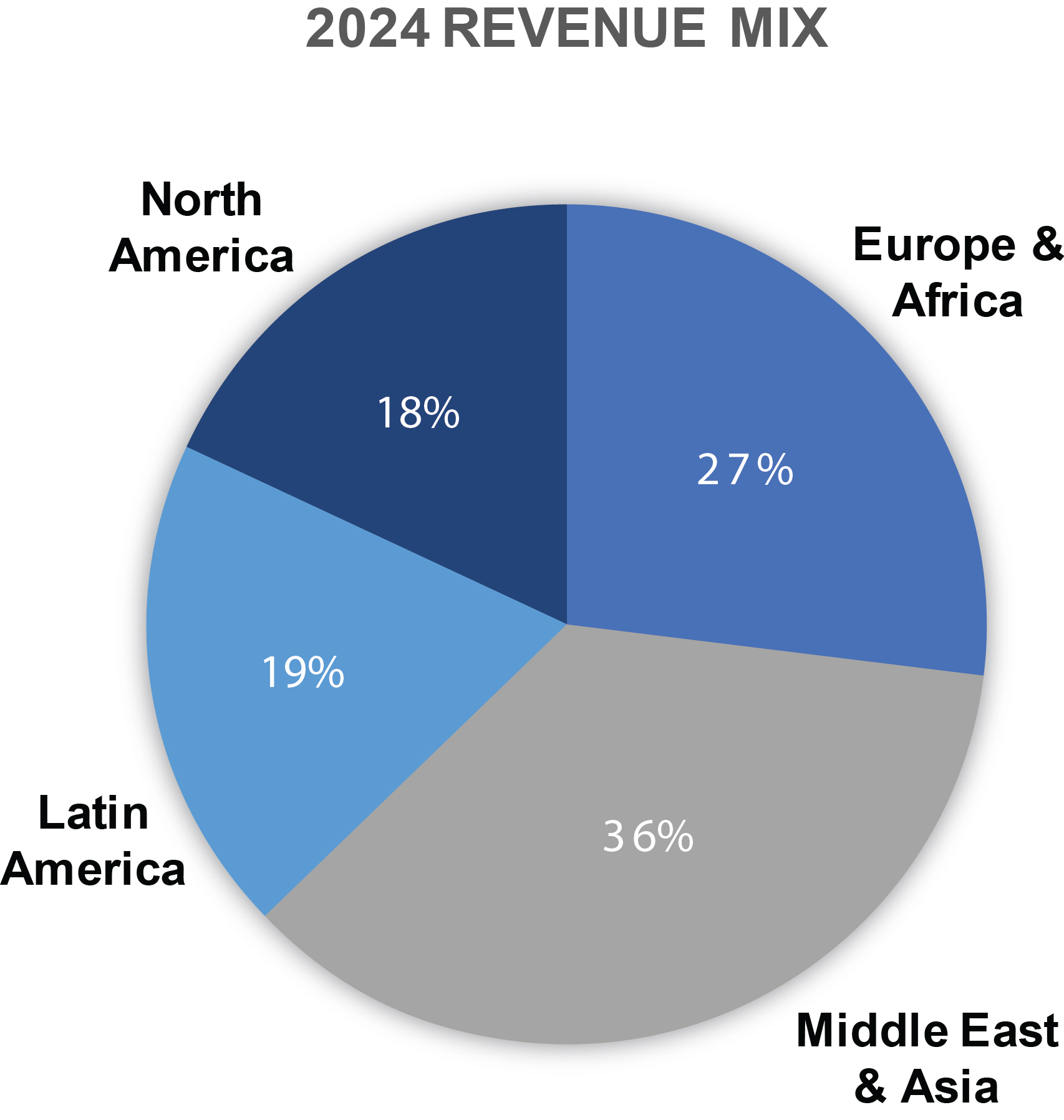 | 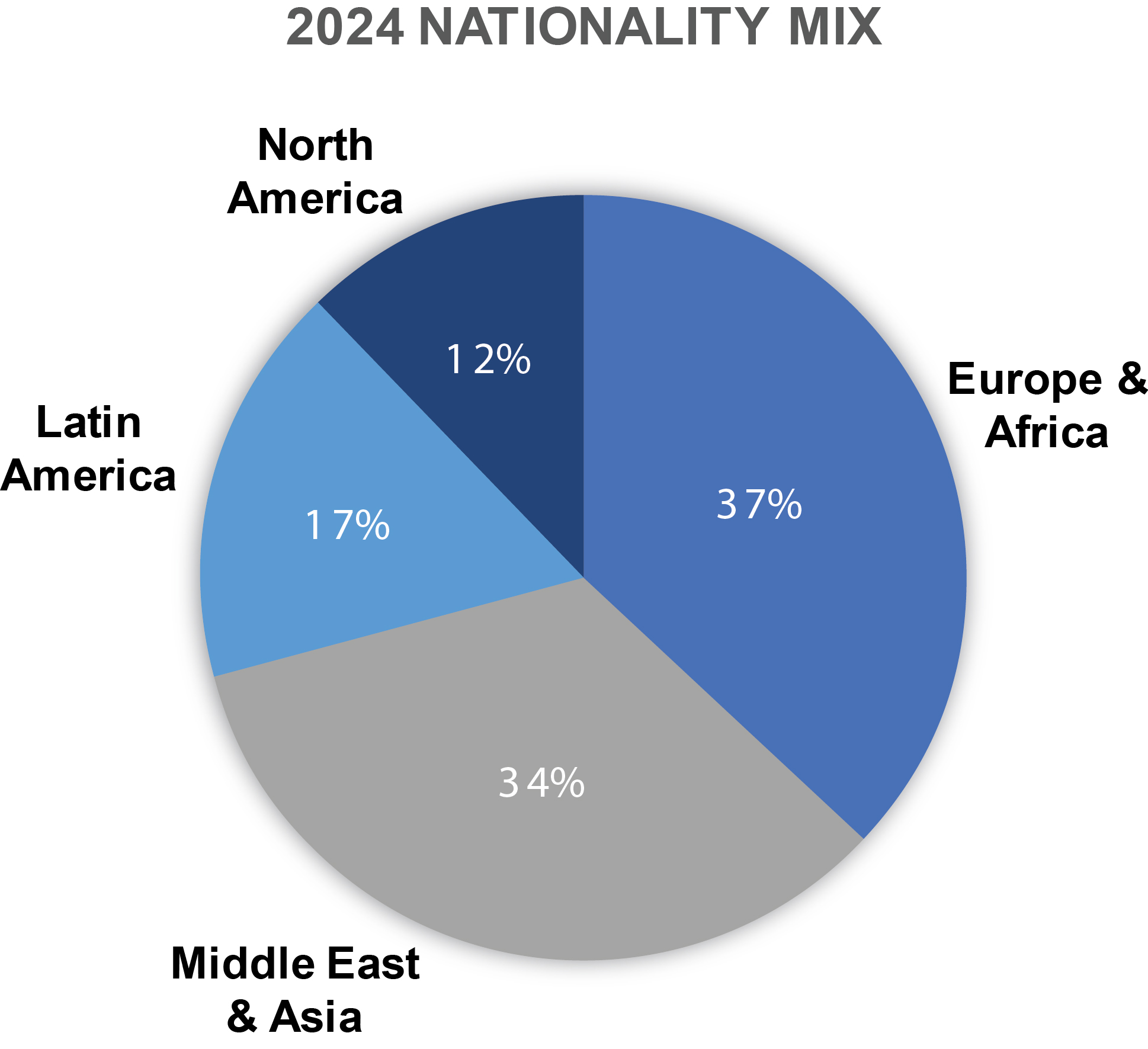 |
SLB also recognizes the importance of gender diversity as a source of creativity, innovation, and competitive advantage. We are committed to leading our industry in this area and, in this regard, a number of years ago we established goals of having women represent 25% of our salaried workforce by 2025 and 30% by 2030. We reached our first milestone ahead of schedule, as women represented 25% of our salaried workforce as of December 31, 2024.
Inclusivity
We are building on our diversity to foster a strong culture of inclusion, in which each person can feel accepted, respected, and empowered to perform at their best. SLB has numerous global policies and programs to support our inclusive culture, including:
a Code of Conduct that outlines the standards of behavior and ethics that all employees are expected to follow, and that prohibits any form of discrimination, harassment, or retaliation;
a diversity, equity, and inclusion (“DEI”) strategy supported by a network of inclusion champions that promote DEI awareness and best practices; and
a mobility program that enables employees to gain international exposure and experience and develop cross-cultural competencies.
Learning and Development
SLB invests significantly in the learning and development of our people. We encourage a growth mindset and provide opportunities to our people for continuous learning throughout their career. This investment allows us to accelerate personal development while maximizing performance, fostering an agile workforce with the skills necessary to lead SLB today and into the future.
SLB believes that through diversity, inclusivity, and growth mindset, we can support our people to reach their full potential, which unlocks value for all of our stakeholders.
Competition
The principal methods of competition within the energy services industry are technological innovation, quality of service, and price differentiation. These factors vary geographically and are dependent upon the different services and products that SLB offers. SLB has numerous competitors, both large and small.
Intellectual Property
SLB owns or controls one of the industry’s leading portfolios of intellectual property, including but not limited to patents, proprietary information, trade secrets, and software tools and applications that, in the aggregate, are material to SLB’s business. While SLB seeks and holds a significant number of patents covering various products and processes, no particular patent or group of patents is material to SLB’s business.
Seasonality
Seasonal changes in weather and significant weather events can temporarily affect the delivery of SLB’s products and services. For example, the spring thaw in Canada and other Northern climates and consequent road restrictions can affect activity levels, while the winter months in the North Sea, Russia, and China can produce severe weather conditions that can temporarily reduce levels of activity. In addition, hurricanes and typhoons can disrupt coastal and offshore operations. Furthermore, customer spending patterns for exploration data, software, and other products may result in higher activity in the fourth quarter of the year as clients seek to fully utilize their annual budgets. Conversely, customer budget constraints in North America may lead to lower demand for our services and products in the fourth quarter of the year.
Customers
SLB’s primary customers are national oil companies, large integrated oil companies, and independent operators. No single customer exceeded 10% of SLB's consolidated revenue during each of 2024, 2023, and 2022.
Governmental Regulations
SLB is subject to numerous environmental and other governmental and regulatory requirements related to its operations worldwide. For additional details, see “Item 1(a). Risk Factors – Legal and Regulatory Risks,” which is incorporated by reference in this Item 1.
Corporate Information
SLB was founded in 1926. Schlumberger Limited, the NYSE-listed parent of the SLB family of companies, is incorporated under the laws of Curaçao and has executive offices in Paris, Houston, London, and The Hague. The Company changed its brand name to SLB in 2022 but did not change the legal name of its listed parent company, which remains Schlumberger Limited.
Available Information
The SLB website is www.slb.com. SLB uses its Investor Relations website, https://investorcenter.slb.com/, as a routine channel for distribution of important information, including news releases, analyst presentations, and financial information. SLB makes available, free of charge through its Investor Relations website at https://investorcenter.slb.com/, access to its Annual Reports on Form 10-K, Quarterly Reports on Form 10-Q, Current Reports on Form 8-K, proxy statements and Forms 3, 4 and 5 filed on behalf of directors and executive officers, and amendments to each of those reports, as soon as reasonably practicable after such material is filed with or furnished to the SEC. Alternatively, you may access these reports at the SEC’s website at www.sec.gov. Copies are also available, without charge, from SLB Investor Relations, 5599 San Felipe, Houston, Texas 77056. Unless expressly noted, the information on its website or any other website is not incorporated by reference in this Form 10-K and should not be considered part of this Form 10-K or any other filing SLB makes with the SEC.
Information About Our Executive Officers
The following table sets forth, as of January 22, 2025, the names and ages of SLB’s executive officers, including all offices and positions held by each executive officer during the past five years.
| Name | Age | Current Position and Five-Year Business Experience |
| Olivier Le Peuch | 61 | Chief Executive Officer and Director, since August 2019. |
| Khaled Al Mogharbel | 54 | Executive Vice President, Geographies, since July 2020; and Executive Vice President, Operations, April 2019 to June 2020. |
| Stephane Biguet | 56 | Executive Vice President and Chief Financial Officer, since January 2020. |
| Abdellah Merad | 51 | Executive Vice President, Core Services and Equipment, since April 2022; and Executive Vice President, Performance Management, May 2019 to March 2022. |
| Demosthenis Pafitis | 57 | Chief Technology Officer, since February 2020; and Senior Vice President, SLB 4.0 Platforms, December 2017 to January 2020. |
| Dianne Ralston | 58 | Chief Legal Officer, since December 2020, and Secretary, since April 2021; and Executive Vice President, Chief Legal Officer, and Secretary, TechnipFMC plc (a global oilfield services company), January 2017 to September 2020. |
| Carmen Rando Bejar | 47 | Chief People Officer, since April 2022; and Vice President, Global Business Services, September 2019 to March 2022. |
| Rakesh Jaggi | 55 | President, Digital and Integration, since April 2023; and Senior Vice President, Sales & Commercial, May 2019 to March 2023. |
| Gavin Rennick | 50 | President, New Energy, since April 2022; and Vice President, Human Resources, February 2019 to March 2022. |
| Kevin Fyfe | 51 | Vice President and Treasurer, since July 2022; and Vice President and Controller, October 2017 to June 2022. |
| Howard Guild | 53 | Chief Accounting Officer, since July 2005. |
| Ugo Prechner | 47 | Vice President and Controller, since August 2022; Well Construction Controller, July 2020 to July 2022; and Controller Operations, August 2019 to June 2020. |
| Vijay Kasibhatla | 61 | Director, Mergers and Acquisitions, since January 2013. |
Previous: Cover and table of contents · Next: Item 1A. Risk Factors.