 filings.tools
Item 1. BUSINESS
81K characters. Original on sec.gov · Markdown
Item 1. BUSINESS
Unless otherwise noted in this report, any description of "we," "us" or "our" includes Molson Coors Beverage Company ("MCBC" or the "Company"), principally a holding company, and its operating and non-operating subsidiaries included within our reporting segments. As of December 31, 2021, we changed the names of our reporting segments to the Americas and EMEA&APAC segments (formerly named the North America segment and Europe segment, respectively) to better reflect the geographic locations encompassed within the reportable segments. This change to our segment names had no impact on the composition of our segments, our financial position, results of operations, cash flow or segment level results previously reported. Our Americas segment operates in the U.S., Canada and various countries in the Caribbean, Latin and South America and our EMEA&APAC segment operates in Bulgaria, Croatia, Czech Republic, Hungary, Montenegro, the Republic of Ireland, Romania, Serbia, the U.K., various other European countries, and certain countries within the Middle East, Africa and Asia Pacific. Certain figures and certain discussions of markets throughout this section focus on the largest regions of our Americas segment and excludes discussion of Latin America and the Caribbean due to data not being readily available. Certain figures and certain discussions of markets throughout this section focus on the largest region of our EMEA&APAC segment and excludes discussions of the Middle East, Africa and APAC due to data not being readily available.
Unless otherwise indicated, information in this report is presented in USD and comparisons are to comparable prior periods. Our primary operating currencies, other than the USD, include the CAD, the GBP, and our Central European operating currencies such as the EUR, CZK, HRK and RSD.
Background
For more than two centuries, we have been brewing beverages that unite people to celebrate all life’s moments. From Coors Light, Miller Lite, Molson Canadian, Carling, and Staropramen to Coors Banquet, Blue Moon Belgian White, Blue Moon LightSky, Vizzy, Coors Seltzer, Leinenkugel’s Summer Shandy, Creemore Springs, Hop Valley and more, we produce many beloved and iconic beer brands. While our Company’s history is rooted in beer, we offer a modern portfolio that expands beyond the beer aisle as well. As a business, our ambition is to be the first choice for our people, our consumers and our customers, and our success depends on our ability to make our products available to meet a wide range of consumer segments and occasions.
Molson and Coors were founded in 1786 and 1873, respectively. Our commitment to producing the highest quality beers is a key part of our heritage and remains so to this day. Our brands are designed to appeal to a wide range of consumer tastes, styles and price preferences. Coors was incorporated in June 1913 under the laws of the state of Colorado. In October 2003, Coors merged with and into Adolph Coors Company, a Delaware corporation. In February 2005, Adolph Coors Company merged with Molson Inc. ("the Merger"). Upon completion of the Merger, Adolph Coors Company changed its name to Molson Coors Brewing Company. On October 11, 2016, we entered into a purchase agreement with Anheuser-Busch InBev SA/NV to acquire 100% of the outstanding equity and voting interests of MillerCoors, previously a joint venture between MCBC and the former SABMiller plc. In January 2020, we changed our name from Molson Coors Brewing Company to Molson Coors Beverage Company in connection with our expansion beyond the beer aisle.
Our revitalization plan, announced on October 28, 2019, focuses on the execution of the following principal strategies: building on the strength of our iconic core brands, growing our above premium portfolio, expanding beyond the beer aisle and investing in our capabilities and supporting our people and communities. Through the execution of the revitalization plan, we broadened our range of products and offerings within our portfolio to also include, among others, hard seltzers, ready to drink beverages and a variety of non-alcoholic beverage offerings. In order to support the overall premiumization of our portfolio, we have strategically de-prioritized certain non-core economy SKUs. The revitalization plan is intended to drive sustainable net sales and earnings growth, despite potential volume declines as the portfolio mix shifts towards a higher composition of above premium products.
Coronavirus Global Pandemic
Starting at the end of the first quarter of 2020, the coronavirus pandemic had a material adverse effect on our operations, liquidity, financial condition and results of operations. In 2021, we saw improvements in the marketplace related to the coronavirus global pandemic as on-premise locations began to re-open around the world at varying degrees, despite setbacks in certain markets related to the outbreak of new variants. The extent to which our operations will continue to be impacted by the coronavirus pandemic will depend largely on future developments, which are highly uncertain and cannot be accurately predicted, including the level of governmental or societal orders or restrictions on public gatherings and on-premise venues, including any vaccine mandates or testing requirements, the severity and duration of the coronavirus pandemic by market, including outbreaks of variants, changes in consumer behavior, inflationary pressures resulting from the coronavirus pandemic, the rate of vaccination and the efficacy of vaccines against the coronavirus and related variants. We continue to actively monitor the ongoing evolution of the coronavirus pandemic and resulting impacts to our business.
See further discussion of the status of the coronavirus pandemic and its impacts on our Company, including the on- and off-premise impacts to our segments in Part II. Item 7. Management's Discussion and Analysis.
Industry Overview
The brewing industry has significantly evolved over the years to become an increasingly global beer market. The industry was previously founded on local presence with modest international expansion achieved through export, license and partnership arrangements. Over time the market has become increasingly complex as the consolidation of brewers has occurred globally, resulting in a small number of large global brewers representing the majority of the worldwide beer market. In addition to the consolidation and the acquisitive nature of the industry, exports, licensing and partnership arrangements continued to be used and these transactions typically occurred between the same global competitors that make up the majority of the market. At the same time, smaller local brewers within certain established markets have experienced accelerated growth as consumers increasingly place value on locally-produced, regionally-sourced products. In addition to the growth of smaller local craft breweries, changing consumer trends are pushing the industry toward above premium, including flavored malt beverages, craft beer and beyond beer altogether. In recent years, the hard seltzer market has emerged and has experienced significant growth, particularly in the U.S. While we do not believe that the rapid growth will continue as the market has matured, we do believe the hard seltzer market will continue to be of importance. As the beer industry continues its evolution of consolidation and diversification of its products to meet consumer demand with broadening preferences, we believe large global brewers are uniquely positioned to leverage the scale, depth of product portfolio and industry knowledge to continue to lead the market forward. We believe we are well positioned to compete in this continually evolving market, particularly in beer, hard seltzer and beyond.
Global Competitors' Market Capitalization
We evaluate ourselves in relation to other global brewers using various metrics, including overall market capitalization, volume, net sales, gross margins and net profits, as well as our position within each of our core markets, with the goal to be the first choice for our people, consumers and customers. To provide a perspective of the relative size of the major participants in the global brewing market, the market capitalization of our primary global competitors, based on foreign exchange rates as of December 31, 2021, were as follows:
| Market Capitalization | |||||
| (In billions) | |||||
| Anheuser-Busch InBev SA/NV ("ABI") | $ | 122.1 | |||
| Heineken N.V. ("Heineken") | $ | 64.7 | |||
| Carlsberg Group ("Carlsberg") | $ | 25.5 | |||
| Asahi Group Holdings, Ltd. ("Asahi") | $ | 19.7 | |||
| MCBC | $ | 10.2 |
Our Products
We have a diverse portfolio of beloved and iconic owned and partner brands including Blue Moon, Carling, Coors Banquet, Coors Light, Miller High Life, Miller Genuine Draft, Miller Lite and Staropramen. We continue to invest in and focus on growing these brands. In addition to these iconic brands, we offer products in the above premium, including flavored malt beverages (which includes hard seltzers), craft and ready to drink beverages, premium (which includes premium lights) and economy segments. Further, our modern and growing portfolio expands beyond the beer aisle as well. We craft and distribute high-quality, innovative beverages with the purpose of uniting people to celebrate all life’s moments. The following includes the primary brands sold in each of our segments.
Brands sold in the Americas Segment
| Arizona Hard Green Tea*(3)* | Hop Valley brands | Redd's*(4)* | ||||||||||||
| Arnold Palmer Spiked*(3)* | Icehouse | Revolver brands | ||||||||||||
| Atwater Brewing brands | Keystone | Rickard's | ||||||||||||
| Belgian Moon | La Colombe*(5)* | Staropramen | ||||||||||||
| Belgian Moon LightSky | Le Trou du Diable | Steel Reserve | ||||||||||||
| Blue Moon | Leinenkugel's | Terrapin brands | ||||||||||||
| Blue Moon LightSky | Mad Jack | Topo Chico Hard Seltzer*(6)* | ||||||||||||
| Brasseurs de Montréal brands | Mickey's | Vizzy Hard Seltzer | ||||||||||||
| Carling | Miller64 | ZOA*(7)* | ||||||||||||
| Carling Black Label | Miller Genuine Draft | |||||||||||||
| Coors Banquet | Miller High Life | Licensed premium import brands**(2)** | ||||||||||||
| Coors Edge | Miller Lite | Dos Equis | ||||||||||||
| Coors Light | Milwaukee's Best | Heineken | ||||||||||||
| Coors Original | Molson Canadian | Heineken 0.0 | ||||||||||||
| Coors Seltzer | Molson Dry | Moretti | ||||||||||||
| Coors Slice | Molson Export | Sol | ||||||||||||
| Creemore Springs | Molson Ultra | Strongbow cider | ||||||||||||
| Exel | Old Style Pilsner | |||||||||||||
| Granville Island | Olde English | |||||||||||||
| Hamm's | Peroni Nastro Azurro*(1)* | |||||||||||||
| Henry's Hard Soda | Pilsner Urquell*(1)* | |||||||||||||
| (1) Under perpetual royalty-free license from Asahi. | ||||||||||||||
| (2) Under license from Heineken. The brand Heineken is under license in Canada only. The brand Sol is under license in the U.S. and Canada. | ||||||||||||||
| (3) In partnership with Hornell Brewing, an affiliate of Arizona Beverages. | ||||||||||||||
| (4) Under perpetual royalty-free license from ABI. | ||||||||||||||
| (5) Under a distribution agreement with La Colombe Torrefaction, Inc. | ||||||||||||||
| (6) Under brand authorization agreements with The Coca Cola Company. | ||||||||||||||
| (7) Under a distribution agreement with Zoa Energy, LLC. |
Brands sold in the EMEA&APAC Segment
| Aspall Cider | Cobra*(1)* | Niksicko | ||||||||||||
| Bavaria*(1)* | Coors | Ozujsko | ||||||||||||
| Beck's*(1)* | Corona Extra*(1)* | Rekorderling Cider*(1)* | ||||||||||||
| Bergenbier | Jelen | Sharp's Doom Bar | ||||||||||||
| Blue Moon | Kamenitza | Staropramen | ||||||||||||
| Borsodi | Lowenbrau*(1)* | Stella Artois*(1)* | ||||||||||||
| Branik | Madri | Three Fold Hard Seltzer | ||||||||||||
| Carling | Miller Genuine Draft | |||||||||||||
| (1) The European business has licensing and distribution agreements with various other brewers through which it also brews and distributes Beck's, Lowenbrau and Stella Artois, as well as a distribution agreement for the exclusive distribution of the Corona brand, throughout the Central European countries in which we operate. We have an agreement with Dutch brewer, Bavaria, for the exclusive on-premise and off-premise rights to the sales, distribution and customer marketing of Bavaria and its portfolio of brands in the U.K. We have an agreement for licensed brewing and distribution of the Bavaria portfolio in Croatia, Bosnia and Herzegovina, Serbia and Montenegro. We also distribute the Rekorderlig cider brand in the U.K. and the Republic of Ireland. In the U.K., we also sell the Cobra brands through the Cobra Beer Partnership Ltd. joint venture. Additionally, in order to be able to provide a full line of beer and other beverages to our U.K. on-premise customers, we sell "factored" brands, which are third-party beverage brands for which we provide distribution to retail, typically on a non-exclusive basis. |
Our Segments
In 2021, we operated the following segments: Americas and EMEA&APAC. A separate operating team manages each segment and each segment manufactures, markets, distributes and sells beer as well as offers a modern and growing portfolio that expands beyond the beer aisle. No single customer accounted for more than 10% of our consolidated sales in 2021, 2020 or 2019.
Americas Segment
-
Headquarters: Chicago, Illinois
-
Approximately 9,800 employees as of December 31, 2021
-
North America's oldest beer company and second largest brewer by volume in North America, representing approximately 20% of the total 2021 North America beer market, which is the largest region of our Americas segment.
-
Currently operating nine primary breweries, ten craft breweries and two container operations.
The Americas segment also includes a partnership arrangement related to the distribution of beer in Ontario, Canada, Brewers' Retail Inc. ("BRI"), and in the western provinces of Canada, Brewers' Distributor Ltd. ("BDL"). BRI and BDL are accounted for under the equity method of accounting. The majority of ownership in BRI resides with Molson Canada 2005 (a wholly-owned subsidiary of our Company), Labatt Breweries of Canada LP (a subsidiary of ABI) and Sleeman Breweries Ltd. (a subsidiary of Sapporo International). BDL is jointly owned by Molson Canada 2005 and ABI. In addition, we have an agreement with Heineken that grants us the right to import, market, distribute and sell certain Heineken products in Canada. The Americas segment also includes Truss, our joint venture with HEXO Corp. ("HEXO") in Canada which produces and markets non-alcoholic, cannabis-infused beverages in Canada.
Additionally, in the third quarter of 2020, in collaboration with D.G. Yuengling & Son, Inc. ("Yuengling"), we formed The Yuengling Company LLC ("TYC"), a joint venture equally owned by MCBC and DGY West Holdings, LP ("DGY West") that, pursuant to an operating agreement, was formed to expand commercialization of Yuengling's brands for any new market expansion outside of Yuengling's then 22-state footprint and New England. During the third quarter of 2021, TYC commenced retail operations with its first product sales in the state of Texas.
Sales and Distribution
Our go to market strategy differs slightly between the geographic regions of the Americas segment due to the differences in regulations among those geographic areas.
In the U.S., beer is generally distributed through a three-tier system consisting of manufacturers, distributors and retailers. A national network of approximately 350 independent distributors and one Company-owned distributor, Coors Distributing Company, purchases our products and distributes them to on- and off-premise retail accounts. Coors Distributing Company distributed approximately 2% of our total owned and non-owned Americas segment volume in 2021. Transportation of our product to distributors in the U.S. is primarily contracted through third-party logistics providers and shipped by truckload. We have long-term contracts in place with third-party logistics providers to mitigate price fluctuations in freight costs. In instances where transportation needs cannot be met by contracted freight carriers, we utilize the spot freight market. Over the years, the trucking industry has experienced an aging driver demographic which has led to a decreased supply of truck drivers. Additionally, since the onset of the coronavirus pandemic, this trend accelerated as the trucking industry has seen an increased shortage in truck drivers which has resulted in inflation across certain supply chains. In response to trends seen within the transportation industry, we have begun to transport more products via railway, through insulated boxcars or intermodal shipping containers, as an action taken to mitigate the level of inflation seen in freight costs within the trucking industry.
In Canada, because provincial governments regulate the beer industry and provincial liquor boards control the distribution and retail sale of alcohol products, distribution strategies vary by province. The transportation of our products in Canada varies by the go to market strategy in each province.
In Ontario, beer is primarily purchased at retail outlets operated by BRI, at government-regulated retail outlets operated by the Liquor Control Board of Ontario ("LCBO"), at approved agents of the LCBO, at certain licensed grocery stores, or at any bar, restaurant, or tavern licensed by the LCBO to sell alcohol for on-premise consumption. The BRI retail outlets operate under The Beer Store name. Brewers may deliver directly to BRI's outlets or may choose to use BRI's distribution centers to access retail stores in Ontario, the LCBO system, the grocery channel and licensed establishments. We primarily distribute our products to The Beer Store by truckload. In June 2019, the Ontario government adopted a bill that, if enacted, would terminate a 10-year Master Framework Agreement that was originally signed between the previous government administration and Molson Coors, Labatt Brewing Company Limited, Sleeman Breweries Ltd., and BRI in 2015 and governs the terms of the beer distribution and retail systems in Ontario through 2025. See Part I, Item 1A. Risk Factors, Part II, Item 7. Management's
Discussion and Analysis of Financial Condition and Results of Operations and Part II, Item 8 Financial Statements and Supplementary Data, Note 18, "Commitments and Contingencies" for further discussion.
In Québec, the distribution and sale of beer is governed by the Québec Alcohol Corporation ("SAQ"). Beer is distributed to retail outlets, primarily by truckload, directly by each brewer or through approved independent agents. We are the agent for the licensed brands we distribute. The brewer or agent distributes the products to permit holders for retail sales for on-premise consumption. Québec retail sales for off-premise consumption are made through grocery and convenience stores, as well as government operated outlets.
BDL manages the distribution of our products throughout British Columbia, Alberta, Manitoba and Saskatchewan. Our products can be purchased by consumers at the government's Liquor Distribution Branch retail outlet, at any independently owned and licensed retail store or at any licensed establishment for on-premise consumption in British Columbia and, in Alberta, at retail outlets licensed by the Alberta Gaming and Liquor Commission or licensees such as bars, hotels and restaurants. BDL primarily distributes products to customers by truckload. Our products are distributed and sold by local liquor boards in the Maritime Provinces, except Newfoundland, independent distributors in Newfoundland and government liquor commissioners in Yukon, Northwest territories and Nunavut.
In the Caribbean, Latin and South America, we use a combination of export models and license agreements to sell Blue Moon, Coors Light, Miller Genuine Draft, Miller High Life, Miller Lite and other brands. In our export model markets, we import beer from the U.S. and sell it through agreements with independent distributors. In license markets, we have established exclusive licensing agreements with brewers and distributors for the manufacturing and distribution of our products. In certain of our markets, we rely on a combination of these agreements.
Channels
References to on- and off-premise sales volumes are sales to retailers, which we believe is a useful data point relative to consumer trends.
In the Americas segment, the on-premise channel includes sales to bars and restaurants while the off-premise channel includes sales in convenience stores, grocery stores, liquor stores and other retail outlets including The Beer Store in Ontario, Canada which is Canada's largest beer retailer.
The following table reflects the industry channel share trends over the last five years in the largest regions of our Americas segment, the U.S. and Canada. Percentages reflect estimates based on market data currently available.
| Industry channel trend | |||||||||||||||||||||||||||||
| 2021 | 2020 | 2019 | 2018 | 2017 | |||||||||||||||||||||||||
| On-premise | 13 | % | 9 | % | 16 | % | 16 | % | 16 | % | |||||||||||||||||||
| Off-premise | 87 | % | 91 | % | 84 | % | 84 | % | 84 | % |
Prior to the year ended December 31, 2020, the split between on-premise and off-premise remained relatively stable. During the year ended December 31, 2020, we experienced a significant adverse impact resulting from the closure of the on-premise channel and increased restrictions as a result of the on-set of the coronavirus pandemic which effectively shut down the on-premise channel in the U.S. and Canada which began in March 2020 and continued into June 2020. During the second half of 2020, we saw a limited on-premise channel reopening in the U.S. and Canada as the on-premise channel was restricted at varying degrees. During the year ended December 31, 2021, we began to see a return to the on-premise channel in the U.S. and Canada as a result of the on-premise channel progressively reopening. However, business and consumer uncertainty in this channel persisted and, as a result, we did not see a full return to pre-pandemic levels. While improvement has occurred in many provinces in Canada in 2021, the level of restrictions continues to evolve, frequently moving along a spectrum between full lock down and the easing of restrictions based on the evolution of the coronavirus pandemic and related variants.
As we continue to recover from the coronavirus pandemic, any governmental or societal impositions of restrictions on public gatherings, including any vaccine mandates or testing requirements, especially if prolonged in nature will continue to impact on-premise traffic and, in turn, our business. See Part II. Item 7. Management's Discussion and Analysis, "Items Affecting Reported Results" & "Segment Results of Operations—Americas", for further details.
Manufacturing, Production and Packaging
Brewing Raw Materials
We use high quality ingredients to brew our products. Hops used to brew our products are purchased from suppliers in the U.S. and Europe. These contracts vary in length based on market conditions and cover our supply requirements through 2022.
We malt a majority of our production requirements in the U.S. and Canada, using barley purchased primarily under annual contracts from independent farmers located predominately in the western U.S. and Canadian Prairies. In addition, we source barley malt from three other commercial providers, from which we have a committed supply until at least 2022. Other brewing adjuncts are sourced from three main suppliers, all in the U.S. and Canada, with committed supply through 2022. Other malt and cereal grains are purchased primarily from suppliers in the U.S. and Canada.
In the U.S. and Canada, we both own and lease water rights, as well as purchase water through local municipalities and communities, to provide for and sustain brewing operations in case of a prolonged drought in the regions where we have operations.
We do not currently anticipate future difficulties in accessing water or agricultural products used in our brewing process in the near term.
Packaging Materials
The following summarizes the percentage of packaging materials by type for the largest regions of our Americas segment, the U.S. and Canada, for the year ended December 31, 2021. In recent years, we saw a shift to aluminum cans from glass bottles, and this trend accelerated during the year ended December 31, 2020 as a result of the on-premise channel closing at various degrees from March 2020 into June 2020. While we saw a shift back from aluminum cans to kegs during the year ended December 31, 2021, as a result of the on-premise progressively reopening, aluminum cans continue to represent a greater percentage of packaging materials as compared to the years prior to the coronavirus pandemic.
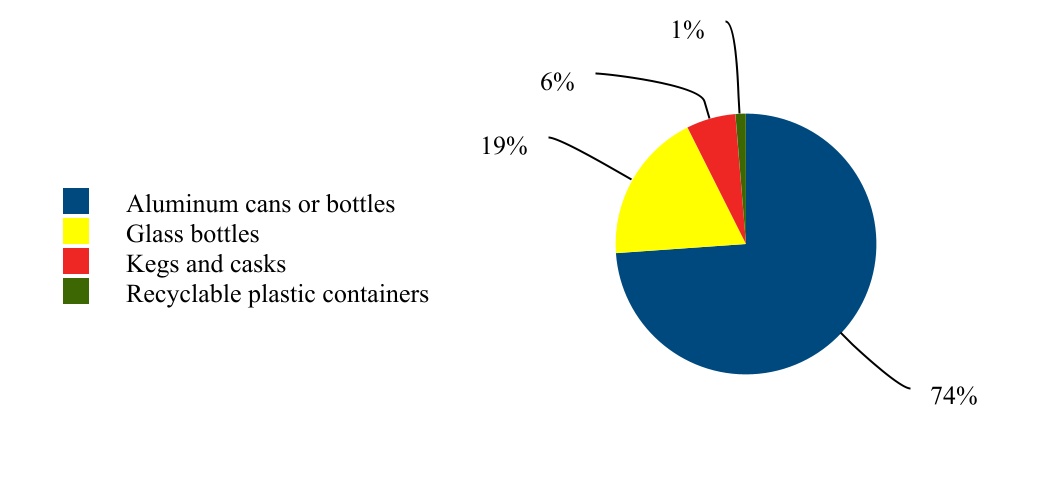
Aluminum cans or bottles
-
A portion of the aluminum cans and ends was purchased from Rocky Mountain Metal Container ("RMMC"), our joint venture with Ball Corporation ("Ball"), whose production facilities, which are leased from us, are located near our brewery in Golden, Colorado.
-
In addition to the supply agreement with RMMC, we have a supply agreement with Ball to purchase aluminum containers in addition to what is supplied through RMMC. The supply agreement with Ball expires on December 31, 2023. Additionally, we have commercial arrangements with other can suppliers to provide sleek cans. We are currently in negotiations with these sleek can suppliers and do not anticipate an issue in finalizing these contracts.
-
The RMMC joint venture agreement along with the cans and ends purchase agreement are in process of being renegotiated and we do not anticipate an issue in finalizing these contracts.
-
In Canada, we source cans and ends from two primary providers with the related contracts ending December 31, 2023.
Glass bottles
- A portion of the glass bottles was provided by Rocky Mountain Bottle Company ("RMBC"), our joint venture with Owens-Brockway Glass Container, Inc. ("Owens"), whose production facilities, which are leased from us, are located in Wheat Ridge, Colorado. The RMBC joint venture agreement expires on July 31, 2025.
-
In addition to the supply agreement with RMBC, we have a supply agreement with Owens for requirements in excess of RMBC's production, which expires on March 31, 2022. We are currently renegotiating the agreement and do not anticipate an issue in extending these contracts.
-
In Canada, we single source glass bottles and have a committed supply through March 2022. We are currently in negotiations and do not anticipate an issue in renegotiating and extending the contract.
-
The standard bottle for beer brewed in Canada is the 341 ml returnable bottle and represents the vast majority of our bottle sales.
-
The distribution systems in each Canadian province generally provide the collection network for returnable glass bottles and aluminum cans.
Kegs and casks
-
Kegs are packaged in half, quarter and one-sixth barrel stainless steel kegs in the U.S. and packaged in 58.67 liter, 50 liter, 30 liter and 20 liter kegs in Canada.
-
A limited number of kegs are purchased each year, and we have no long-term supply agreement.
Across the Americas segment, crowns, labels, corrugate and paperboard are purchased from a small number of sources unique to each product. In Canada, the standard returnable bottle requires significant investment behind our returnable bottle inventory and bottling equipment.
While we have experienced some challenges in obtaining supplies required for certain packaging materials in 2021 as a result of the global supply chain disruption, partially due to the impact of the coronavirus pandemic, these more severe supply constraints were short term in nature and overall, did not impact our ability to produce product and meet production forecasts.
Contract Manufacturing
We have agreements to brew, package and ship products for Pabst Brewing Company, LLC ("Pabst") and TYC, and an agreement with Labatt USA Operating Co, LLC to brew and package certain Labatt brands for export.
Seasonality of the Business
Total industry volume is sensitive to factors such as weather, changes in demographics, consumer preferences and drinking occasions. Weather conditions consisting of high temperatures and extended periods of warm and dry weather favor increased consumption of our products, while unseasonably cool or wet weather, especially during the summer months, adversely affects our sales volumes and net sales. Accordingly, consumption of beer in the Americas segment is seasonal, with nearly 37% of sales volume occurring during the months from May through August.
Known Trends and Competitive Conditions
2021 Beer Industry Overview
The beer industry in the largest regions of our Americas segment, the U.S. and Canada, is highly competitive, and the two largest brewers, ABI and MCBC together represented the majority of the market in 2021. However, the two largest brewers lost share in 2021 due to volume growth in the flavored malt beverage (including hard seltzers), import and super premium portfolios as consumer preferences continue to shift within the industry to above premium. We believe growing or even maintaining our market share will require building on the strength of our core brands, premiumizing our portfolio and continuing to increase our presence in the fast-growing areas of the industry and beyond the beer aisle.
The following table summarizes the estimated percentage market share by volume of beer (including flavored malt beverages) and other alcohol beverages, including wine and spirits, as a component of the overall U.S. and Canada alcohol market over the last five years. We anticipate that the 2021 data, when available, will reflect a continuation of the recent consumer trends. Percentages reflect estimates based on market data currently available.
| 2020 | 2019 | 2018 | 2017 | 2016 | |||||||||||||||||||||||||
| Beer | 47 | % | 48 | % | 49 | % | 49 | % | 50 | % | |||||||||||||||||||
| Other alcohol beverages | 53 | % | 52 | % | 51 | % | 51 | % | 50 | % |
Our Competitive Position
Our portfolio of beers competes with numerous above premium, premium and economy brands. These competing brands are produced by international, national, regional and local brewers. We compete most directly with ABI brands, but also compete with imports and other providers of craft beer and flavored malt beverages. Our products also compete with other alcohol beverages, including wine and spirits, and thus their competitive position is affected by consumer preferences between and among these other categories. Driven by, among other things, increased spirits advertising, a narrowing price gap with wine and spirits, along with increased wine and spirits sales execution, sales of wine and spirits have grown faster than sales of beer in recent years, resulting in a reduction in the beer segment's lead in the overall alcohol beverage market.
The following table summarizes the estimated percentage share of the largest regions of our Americas segment, U.S. and Canada, represented by MCBC, ABI and all other brewers over the last five years. Current year percentages reflect estimates based on market data currently available.
| 2021 | 2020 | 2019 | 2018 | 2017 | |||||||||||||||||||||||||
| MCBC's share | 21 | % | 22 | % | 23 | % | 24 | % | 25 | % | |||||||||||||||||||
| ABI's share | 40 | % | 41 | % | 41 | % | 42 | % | 42 | % | |||||||||||||||||||
| Others' share | 39 | % | 37 | % | 36 | % | 34 | % | 33 | % |
Regulation
The U.S. beer business is regulated by federal, state and local governments. These regulations govern many parts of our operations, including brewing, marketing and advertising, transportation, distributor relationships, sales and environmental issues. To operate our facilities, we must obtain and maintain numerous permits, licenses and approvals from various governmental agencies, including the U.S. Department of Treasury, Alcohol and Tobacco Tax and Trade Bureau, the U.S. Department of Agriculture, the U.S. Food and Drug Administration, state alcohol regulatory agencies and state and federal environmental agencies.
U.S. governmental entities also levy taxes and may require bonds to ensure compliance with applicable laws and regulations. In 2021, our U.S. business excise taxes on malt beverages were approximately $15 per hectoliter sold on a reported basis. This included the impact of the U.S. Craft Beverage Modernization and Tax Reform Act, which took effect on January 1, 2018 for all qualified large domestic brewers and importers, and was made permanent by the U.S. Consolidated Appropriations Act 2021 on December 27, 2020. This law resulted in reduced U.S. federal excise taxes by $2 per barrel on the first six million barrels, which equated to $1.70 per hectoliter on this portion of our 2021 volume sold. Our practice is to transfer a portion of these savings to distributors consistent with the revenue splitting approach of our U.S. business' economic model. Excise taxes are levied in specific state and local jurisdictions at varying rates. Refer to Part I—Item 1A. Risk Factors for risks associated with the regulatory environment in the U.S.
In Canada, provincial governments regulate the production, marketing, distribution, selling and pricing of beer (including the establishment of minimum prices), and impose commodity taxes, mark-ups and license fees in relation to its production, distribution and sale. In addition, the Canadian federal government regulates the advertising, labeling, quality control, and international trade of beer, and also imposes commodity taxes on both domestically produced and imported beer. Both levels of government are also similarly involved in other categories of alcoholic beverages produced or imported into Canada. In 2021, our Canadian business excise taxes, federal and provincial, were approximately $59 per hectoliter sold on a reported basis. Further, certain bilateral and multilateral treaties entered into by the federal government, provincial governments and certain foreign governments, especially with the U.S., affect the Canadian beer industry.
EMEA&APAC Segment
-
Headquarters: Burton-on-Trent, U.K.
-
Approximately 6,500 employees as of December 31, 2021
-
Europe's second largest brewer by volume, on a combined basis, within the countries in which we operate, with an approximate aggregate 18% market share (excluding factored products) in 2021.
-
Currently operating eleven primary breweries, seven craft breweries and one cidery.
-
The EMEA&APAC segment operates in Bulgaria, Croatia, Czech Republic, Hungary, Montenegro, the Republic of Ireland, Romania, Serbia, the U.K., various other European countries, and certain countries within the Middle East, Africa and Asia Pacific.
The majority of our EMEA&APAC segment sales are in the U.K., Croatia, Czech Republic and Romania. Our portfolio includes beers that have the largest share in their respective countries, such as Carling in the U.K., Ozujsko in Croatia, and Niksicko in Montenegro. We have beers that rank in the top three in market share in their respective segments throughout the region, such as Bergenbier in Romania, Jelen in Serbia and Borsodi in Hungary*.* Additionally, we sell Staropramen and Miller Genuine Draft in various countries. Our EMEA&APAC segment includes our consolidated joint venture arrangement for the production and distribution of Cobra brands in the U.K. and factored brand sales (beverage brands owned by other companies but sold and delivered to retail by us).
Sales and Distribution
In the European countries in which we operate, beer is generally distributed through either a two-tier system consisting of manufacturers and retailers, or a three-tier system consisting of manufacturers, distributors and retailers. Distribution activities for both the on-premise and off-premise channels are conducted primarily by third-party logistics providers. Most of our beer in the U.K. is sold directly to retailers. We have an agreement with Tradeteam Ltd. ("Tradeteam," a subsidiary of DHL) to provide the distribution of our products throughout the U.K. until April 2029. We utilize several hundred third-party logistics providers across our Central European operations. We also conduct a small amount of secondary distribution in Czech Republic utilizing our own fleet of vehicles. It is also common in the U.K. for brewers to distribute beer, wine, spirits, and other products owned and produced by other companies, which we refer to as factored brands, to the on-premise channel (bars and restaurants). Approximately 14% of our EMEA&APAC segment net sales in 2021 represented factored brands.
In addition, we have an agreement with Heineken whereby they sell, market and distribute Coors in the Republic of Ireland, as well as agreements with ABI to brew and distribute Beck's, Stella Artois and Lowenbrau, and to distribute Hoegaarden, Leffe, and Corona in Central Europe.
Our operations in Africa, the Middle East and Asia Pacific include markets such as Australia, South Africa and South Korea, with the sale and distribution completed under local license agreements, or through the import of our brands with sale through local distributors.
Channels
In the EMEA&APAC segment, excluding the Middle East, Africa and Asia-Pacific, the on-premise channel includes sales to pubs and restaurants. The installation and maintenance of draught beer dispensing equipment in the on-premise channel is generally the responsibility of the brewer. Accordingly, we own refrigeration units and other equipment used to dispense beer from kegs to consumers that are used in on-premise outlets. This includes beer lines, cooling equipment, taps and counter mounts. The off-premise channel includes sales to supermarkets, convenience stores, liquor stores, distributors and wholesalers. Over the last few years, throughout the EMEA&APAC segment the off-premise channel has become increasingly concentrated among a small number of super-store chains.
Generally, over the years, industry volumes across countries in which we operate in have shifted from the higher-margin on-premise channel, where products are consumed in pubs and restaurants, to the lower-margin off-premise channel, also referred to as the "take-home" market. The years ended December 31, 2020 and 2021 proved unique as both years were impacted significantly by the coronavirus pandemic. As perspective, we estimate that in 2019 pre-pandemic levels, approximately 60% and 75% of our U.K. financial volumes and net sales, respectively, were from the on-premise channel. The U.K. comprised approximately 55% of our EMEA&APAC net sales, which were $1,986.4 million for the year ended December 31, 2019.
During the year ended December 31, 2020, we experienced a significant adverse impact resulting from the closure of, or increased restrictions to, the on-premise channel as a result of the on-set of the coronavirus pandemic which effectively shut down the on-premise channel from March 2020 into July 2020 in the U.K., and was mostly closed again as a result of a second lockdown during the fourth quarter of 2020. For the year-ended December 31, 2020, we estimate approximately 40% and 50%
of our U.K. financial volumes and net sales, respectively, was from the on-premise channel. The U.K. comprised approximately 45% of our EMEA&APAC segment net sales, which were $1,431.9 million for the year ended December 31, 2020.
While on-premise volumes progressively improved throughout 2021 as bars and restaurants reopened with restrictions, due to implications of the new coronavirus variant, consumer behavior in the U.K. and across Central Europe became more uncertain as individuals were encouraged to work from home and reduce other personal interactions during the fourth quarter of 2021. For the year-ended December 31, 2021, we estimate that approximately 50% and 65% of our U.K. financial volumes and net sales, respectively, was from the on-premise channel. The U.K. comprised approximately 55% of our EMEA&APAC segment net sales, which were $1,802.3 million for the year ended December 31, 2021. Although we experienced improvements within the on-premise channel in 2021, business and consumer uncertainty in the channel has persisted, and as a result, we did not see a full return to pre-pandemic levels. In addition, enhanced restrictions returned in the fourth quarter of 2021 as a result of the risk of coronavirus variants. See Part II. Item 7. Management's Discussion and Analysis, "Items Affective Reported Results" & Segment Results of Operations—"EMEA&APAC", for further details of the impact of the coronavirus pandemic on the EMEA&APAC segment.
Manufacturing, Production and Packaging
Brewing Raw Materials
We use high quality ingredients to brew our products. During 2021, our malt requirements were sourced from third-party suppliers. We have multiple agreements with various suppliers that cover almost all of our total required malt, with terms ending in 2022 through 2027. Hops are purchased under various contracts with suppliers in Germany, Czech Republic and Slovenia, which contribute to our anticipated requirements through 2026 in line with our planned supply coverage strategy. Adjuncts are purchased under various contracts with local producers, which are typically crop year contracts commencing in October of each year. Water used in the brewing process is sourced from various wells and through water rights and supply contracts. We do not currently anticipate future difficulties in accessing required water or agricultural products used in our brewing process in the near term.
Packaging Materials
The following summarizes the percentage of packaging materials by type for the largest region of our EMEA&APAC segment for the year ended December 31, 2021. In recent years, we have seen a shift to aluminum cans from kegs as industry volumes in Europe have shifted from on-premise to off-premise and this trend accelerated during the year ended December 31, 2020 as a result of the on-premise channel closing at various degrees for most of the second and fourth quarters. While we have seen a shift back from aluminum cans to kegs during the year ended December 31, 2021 as a result of the on-premise progressively reopening, aluminum cans continue to represent a greater percentage of packaging materials in the EMEA&APAC segment as compared to years prior to the coronavirus pandemic.
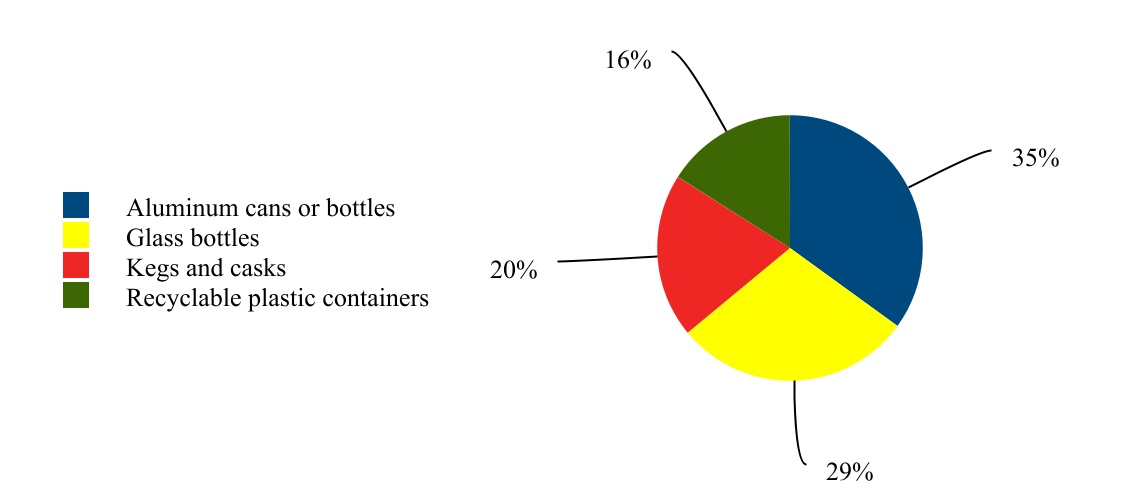
Aluminum cans or bottles
- We have long-term agreements with various suppliers that cover all of our required supply of cans, with terms ending in 2023 through 2026.
Glass bottles
- Our glass returnable bottles are sourced under various agreements with third-party suppliers.
Kegs and casks
- A limited number of kegs are purchased each year from various suppliers, and we have no long-term supply commitment. We are currently in the process of signing new agreements which would cover all of our requirements for kegs in 2022.
Recyclable plastic containers
- We have multiple agreements with various manufacturers in the region, covering 100% of our requirements, which expire in 2024. We signed a new agreement that expires in 2025 and the rest of our agreements are in renegotiations. We do not currently anticipate an issue in renegotiating and extending the remaining contracts or otherwise being able to access recyclable plastic containers.
Crowns, labels and corrugate are purchased from sources unique to each category. We do not currently foresee future difficulties in accessing these or other packaging materials in the near term.
Seasonality of Business
In our EMEA&APAC segment, the beer industry is subject to seasonal sales fluctuations primarily influenced by holidays, weather and by certain major televised sporting events. Weather conditions consisting of high temperatures and extended periods of warm and dry weather favor increased consumption of our products, while unseasonably cool or wet weather, especially during the summer months, adversely affects our sales volumes. Accordingly, the peak selling seasons typically occur during the summer and during the Christmas and New Year holiday season.
Known Trends and Competitive Conditions
2021 Beer Industry Overview
Our beers compete not only with similar products from competitors, but also with other alcohol beverages, including wines and spirits. As the global economy continues to recover from the impacts of the coronavirus pandemic, continued restrictions to the on-premise channel, if prolonged in nature, will continue to impact the beer industry in the EMEA&APAC regions. The following table summarizes the estimated percentage market share by volume of beer and other alcohol beverages, including wine and spirits, as a component of the overall alcohol market, within the countries in which we have production facilities, over the last five years, for which data is currently available. We anticipate that 2021 data, when available, will reflect a continuation of the recent consumer trends. Percentages reflect estimates based on market data currently available.
| 2020 | 2019 | 2018 | 2017 | 2016 | |||||||||||||||||||||||||
| Beer | 29 | % | 29 | % | 30 | % | 30 | % | 30 | % | |||||||||||||||||||
| Other alcohol beverages | 71 | % | 71 | % | 70 | % | 70 | % | 70 | % |
Our Competitive Position
In the European countries where we currently operate, our primary competitors are ABI, Asahi, Carlsberg and Heineken. We believe our brand portfolio gives us strong representation in all major beer categories. The following table summarizes our estimated percentage share of the beer market within the countries where we operate and our primary competitors over the last five years. Current year percentages reflect estimates based on market data currently available. Prior year percentages reflect the market data available subsequent to the filing of the prior year annual report.
| 2021 | 2020 | 2019 | 2018 | 2017 | |||||||||||||||||||||||||
| MCBC's share | 18 | % | 18 | % | 19 | % | 20 | % | 20 | % | |||||||||||||||||||
| Primary competitors' share | 64 | % | 63 | % | 60 | % | 57 | % | 56 | % | |||||||||||||||||||
| Others' share | 18 | % | 19 | % | 21 | % | 23 | % | 24 | % |
Regulation
Each country that is part of our EMEA&APAC segment where we carry out significant brewing or distribution activities is either a member of the European Union ("EU") or a current candidate to join, with the exception of the U.K., which left the EU during 2020, and Bosnia, Montenegro and Serbia which are potential EU candidates. As such, there are similarities in the
regulations that apply to many parts of our EMEA&APAC segment's operations and products, including brewing, food safety, labeling and packaging, marketing and advertising, environmental, health and safety, employment and data protection regulations. To operate breweries and conduct our business in these countries, we must obtain and maintain numerous permits and licenses from various governmental agencies.
The government(s) of each country in which we sell our products levies excise taxes on alcohol beverages. EU member countries' laws on excise taxes are consistent with the EU Directives and use the same measurements based on either alcohol by volume or Plato degrees. Non-EU countries use various taxation methods, including flat excise rate per volume or methods that may be similar to those used in the EU. In the year ended December 31, 2021, the excise taxes for our EMEA&APAC segment were approximately $45 per hectoliter on a reported basis. Refer to Part I—Item 1A. Risk Factors for risks associated with the regulatory environment in EMEA&APAC.
Unallocated
We have certain activity that is not allocated to our segments, and primarily includes financing-related costs such as interest expense and income, foreign exchange gains and losses on intercompany balances related to financing and other treasury-related activities, and the unrealized changes in fair value on our commodity swaps not designated in hedging relationships recorded within cost of goods sold, which are later reclassified when realized to the segment in which the underlying exposure resides. Additionally, only the service cost component of net periodic pension and OPEB cost is reported within each operating segment, and all other components remain unallocated.
Other Information
Environmental Matters
Our operations are subject to a variety of extensive and changing federal, state and local environmental laws, regulations and ordinances that govern activities or operations that may have an impact on human health or the environment. Such laws, regulations or ordinances may impose liability for the cost of remediation, and for certain damages resulting from sites of past releases of hazardous materials. Our policy is to comply with all such legal requirements. While we cannot predict our eventual aggregate cost for the environmental and related matters in which we may be or are currently involved, we believe that any payments, if required, for these matters would be made over a period of time in amounts that would not be material in any one year to our operating results, cash flows, or our financial or competitive position. We believe adequate reserves have been provided for losses that are probable and estimable. However, there can be no assurance that environmental laws will not become more stringent in the future or that we will not incur material costs in the future in order to comply with such laws. See Part II—Item 8 Financial Statements and Supplementary Data, Note 18, "Commitments and Contingencies" under the caption "Environmental" for additional information regarding environmental matters.
Global Intellectual Property
We own trademarks on the majority of the brands we produce and have licenses for the remainder. We also hold several patent and design registrations with expiration dates through 2038 relating to brewing methods, beer dispensing systems, packaging and certain other innovations. We are not reliant on patent royalties for our financial success. Therefore, these expirations are not expected to have a significant impact on our business.
Sustainability
We believe in producing beverages we can be proud of, from grain to glass. Our Imprint is MCBC's approach to sustainability and the right way to grow our business for a better tomorrow. Our Imprint is integral to how we will build long-term value for society and our shareholders, while leaving a positive imprint on our communities, on our people and planet.
We have a long legacy of commitment to sustainability.
In 2012, MCBC became a charter member of the International Alliance for Responsible Drinking ("IARD"). This collaborative industry body represents the 13 leading beer, wine and spirits companies, and partners with public sector, civil society and private stakeholders. IARD works with governments globally to support the WHO NCD Global Monitoring Framework target of 10% reduction in harmful use of alcohol by 2025.
In 2017, we launched Our Imprint 2025 agenda, which included a set of ambitious goals across a range of matters relating to environmental sustainability and community and people. We further added to these goals in 2019, incorporating our ambition to make our packaging more sustainable. These goals include our commitment to use more recycled materials in our plastic packaging, improve recycling solutions in our key markets and make 100% of our packaging reusable, recyclable or compostable by 2025.
In 2021, we added a new target to increase diverse representation in our company by 2023 and streamlined Our Imprint 2025 strategy to reflect our four priority focus areas. The four areas where we believe we can make the greatest contribution and demonstrate leadership include: diversity, equity and inclusion ("DEI"), water, climate and packaging. The enhanced focus areas aim to address the expectations of our consumers and stakeholders, while we continue to make our operations even more resource efficient and resilient.
More information about Our Imprint 2025 goals can be found on our sustainability website, www.MolsonCoorsOurImprint.com, which includes:
-
Environmental, Social and Governance Report 2021, which presents the most recent progress made against our certain goals and includes more details on the underlying data, processes and policies that support ESG topics; and
-
Sustainable Development Goals Impact Report 2021, which shows how MCBC is taking action to contribute to the 17 global goals set forth by the United Nations by 2030.
The information provided on our website (or any other website referred to in this report) is not part of this report and is not incorporated by reference as part of this report.
Human Capital Management
We have a global and varied workforce, with major employee centers in the U.S., Canada, the U.K. and Romania. As of the end of 2021, we employed approximately 16,300 employees within our business globally with approximately 9,800 within our Americas segment and 6,500 within our EMEA&APAC segment. Of the approximately 16,300 employees, approximately 600 of our employees are in our Global Business Services Centers based in Milwaukee, Wisconsin and Bucharest, Romania. As of the end of 2021, approximately 32% and 26% of our Americas segment and EMEA&APAC segment workforces, respectively, are represented by trade unions or councils, which are subject to collective bargaining agreements, which come due for renegotiation from time to time.
Our People-First Culture
We believe that people are the heart of our Company. We strive to create a culture where people are encouraged to and feel comfortable about bringing their diverse perspectives and experiences to the table. As a global company, we believe we have a responsibility to nurture a workforce that reflects our local communities. We believe this makes us a better employer, partner and company of choice for our consumers and customers, and it is why we are committed to championing DEI.
We strive to be a provider of meaningful experiences for our employees and a safe and healthy workplace for all employees. We believe that building a diverse and inclusive workforce is a significant contributor to our success as a business and to deliver on our purpose, and that we value and respect our differences. We believe that diversity and equity with inclusion is the key to collaboration and a winning team culture. A significant component of the revitalization plan announced in October 2019 was the launch of a refreshed purpose (uniting people to celebrate all life’s moments), ambition (first choice for our people, consumers and customers) and shared company values (the first of which is Putting People First), all designed with a purpose of shifting the culture of the organization to drive stronger employee and business engagement. In addition, we refreshed and stream-lined our ESG strategy in 2021 to further focus on areas in which we believe we can have the biggest impact, including a focus on people. More information about our ESG strategy can be found in our ESG Report, located on our sustainability website, www.MolsonCoorsOurImprint.com. The information provided on our website (or any other website referred to in this report) is not part of this report and is not incorporated by reference as part of this report.
Board and Management Oversight
With the overarching goals described in the preceding paragraph as guides, the leadership team and the chief people and diversity officers for the Americas and EMEA&APAC segments are tasked with managing all employment-related matters including recruitment, retention, leadership and development, compensation planning, succession planning, performance management, and DEI. The Compensation and Human Resource Committee ("CHR Committee") of the Board of Directors is responsible for establishing and reviewing the overall compensation philosophy of our Company and providing oversight on certain human capital matters, including our talent retention and development, leadership development, talent pipeline, programs and systems for performance management and DEI initiatives. Further, the CHR Committee is responsible for overseeing our progress against our social initiatives related to human capital management. The Audit Committee oversees our ESG and sustainability programs and reporting, as well as its enterprise risk management program to identify and mitigate potential risks, including human capital issues. The Board of Directors receives regular reports and recommendations from management and the board committees to help guide our strategy on retaining and developing a diverse and talented workforce.
Diversity, Equity and Inclusion
We believe DEI should be deeply embedded in our corporate culture and how we operate, from how we work together to how we grow as a company. In 2020, we created a new position of Vice President of Diversity, Equity & Inclusion to help ensure we have a robust DEI strategy. We accelerated our DEI efforts by creating a three-year DEI roadmap and action plan for the U.S. and Canada as a result of an assessment of our existing culture, programs and talent management processes. We identified the strengths and opportunities for improvement in our corporate culture through discussions with Company executives and senior leaders, our focus groups and our employees.
In order to further increase awareness around DEI issues, we launched a Month of Inclusion in 2021, which builds on the Week of Inclusion we introduced in 2020. The Month of Inclusion brings together our U.S. and Canada employees, and our Western Europe employees, respectively, to focus on prioritizing inclusion, equity and workplace respect. This year’s Month of Inclusion included a variety of presentations, interactive sessions and fireside chats with leaders and external experts that were centered around our five corporate values and designed to be conversation starters to help facilitate potentially difficult discussions.
We promote and maintain employee resource groups ("ERGs") for a number of different communities in our employee population - by race/ethnicity, by gender, LGBTQ+, early professionals, young families, and veterans, amongst others. These ERGs are aimed to help foster a diverse, inclusive workplace aligned with our values and culture. We encourage participation in these groups as we believe it provides an open forum for individual employees who may share similar concerns or experiences. We also rely on these ERGs to help activate our DEI strategy through community building and creating a culture of allyship. In the U.S. and Canada, the ERGs host monthly Inclusion in Action events on different topics helping employees build knowledge, broaden perspective and develop meaningful understanding of various viewpoints.
In addition, as part of our wider DEI strategy, an Inclusion & Diversity Director, EMEA&APAC, was appointed in 2021. In EMEA&APAC, over 5,500 employees completed a Respect at Work learning module and over 500 leaders completed an Inclusive Leader training program. We believe these actions underline our commitment to accelerating our DEI efforts to help build an inclusive culture where our people feel accepted and valued.
As we work to a more diverse workforce and management team, we developed programs to encourage the recruitment, retention and training of diverse leaders and working to ensure we have a highly skilled and diverse workforce.
Talent Development
We encourage our employees to develop their careers and learn every day and have embedded that belief in our core company values as “Learn Every Day.” Our aim is to help employees unlock their full potential so they can thrive in their current job and also realize new, potential growth opportunities. In 2021, we launched a new talent planning experience, which is designed to help us understand our employee’s ambitions and identify growth opportunities that fit their needs, as well as the needs of our Company.
We also promote and emphasize leadership and development opportunities for our employees which includes our First Choice Learning Center, in-person and online training programs, and experiential training opportunities to encourage and promote employee health and safety, assist in building core competencies, learning best practices and developing leadership capabilities. In addition, employee performance is assessed at year-end based on achievement of individual goals and the degree to which our values are modeled to achieve them.
Compensation and Benefits
We offer competitive, affordable and comprehensive benefits. We recognize excellence and differentiate rewards based on both what we do and how we do it – which we intend to be equally weighted to help strengthen our culture and promote our Company as a great place to work while at the same achieving our business results. We believe these compensation rewards motivate us to be bold and decisive and ignite growth. Our incentive programs hold us accountable for living out our values to achieve our short- and long-term goals.
Our employees are able to participate in our Total Rewards program that in general provides a competitive base salary, incentive plans, health, dental, and vision insurance plans, a 401(k) option in certain regions with a potential employer match, paid time off plans, including parental leave policies in many locations, an engaging Wellness Program and an Employee Assistance Program. Our business units comply with applicable maternity leave laws and, in many countries, we go further to provide flexible work schedules and extended leave for new parents. We routinely benchmark our global compensation and benefits programs to ensure they are competitive, inclusive, aligned with our company culture and allow our employees to meet their individual needs and the needs of their families.
Engaging Our Employees
We believe that engaging our employees, through surveys during the onboarding process and throughout the employee journey, provides us with valuable insight into how we can develop our company culture to help ensure that our people feel supported and able to thrive at our company. We use a “continuous listening” model to try to ensure that we understand how our employees are feeling and what they are thinking throughout the year. We gauge our employees’ sentiments through a quarterly Employee Experience survey in the U.S. and Canada and bi-annual surveys in EMEA&APAC. These surveys focus on topics such as our culture, values, DEI efforts, well-being and leadership. In addition, our CEO regularly hosts live online question and answer sessions available to all employees. We believe these sessions also help create a company culture where open, honest dialogue is supported and encouraged, and where people are empowered to raise questions and concerns about our business and our culture.
Employee Health and Safety
We aim to ensure that our employees have a healthy and safe work environment. Our supply chain has adopted and implemented a framework we call world class supply chain 2.0 at many of our brewery and other locations. As part of that framework, our environment, health and safety ("EHS") policy guides our efforts in maintaining safe and healthy workplaces where we take a proactive approach to the identification and control of environment, health and safety risks. We develop our safety programs to promote a sense of ownership for personal safety and safety of colleagues at all levels of the business. We work to improve our EHS performance through training and other methodologies that aim to prevent workplace injuries and illness, and reduce environmental impacts of our operations.
Our safety focus was further evident during our response to the coronavirus pandemic where we implemented additional health and safety measures in the breweries and our distribution centers, ensuring these federally designated essential operations could continue to operate and we could protect our employees. We enhanced our cleaning protocols at the majority of our facilities including enhanced sanitization, social distancing, cloth facemasks and hand sanitizers, and for a period of time, instituted paid and unpaid coronavirus specific leave programs.
Promoting Employee Well-Being
We promote healthy lifestyles across our global enterprise by offering health benefits, wellness and work/life balance programs that are tailored to employees' needs and culture by work location. In the U.S. and Canada, employees can participate in our wellness programs through a mobile phone application that incentivizes healthy habits and lifestyles. The need for remote work and social distancing has changed the dynamics of the workplace so we have responded by providing resources to help support not only the physical health of our employees, but also their mental health and well-being. These resources include connections to virtual healthcare, remote fitness and wellness support, and a free employee assistance program for coping with stress, feelings of isolation and anxiety.
Available Information
We file with, or furnish to, the SEC reports, including our annual report on Form 10-K, quarterly reports on Form 10-Q, current reports on Form 8-K and amendments to those reports pursuant to Section 13(a) or 15(d) of the Exchange Act. These reports are available free of charge via EDGAR through the SEC website (www.sec.gov) and are also available free of charge on our corporate website (www.molsoncoors.com) as soon as reasonably practicable after they are electronically filed with or furnished to the SEC. The foregoing website addresses are provided as inactive textual references only. The information provided on our website (or any other website referred to in this report) is not part of this report and is not incorporated by reference as part of this report.
Information About Our Executive Officers
The following table sets forth certain information regarding our executive officers as of February 23, 2022:
| Name | Age | Position | ||||||||||||
| Gavin D.K. Hattersley | 59 | President and Chief Executive Officer | ||||||||||||
| Tracey I. Joubert | 55 | Chief Financial Officer | ||||||||||||
| Sergey Yeskov | 45 | Chief Executive Officer of Molson Coors EMEA&APAC | ||||||||||||
| Peter J. Marino | 49 | President, Emerging Growth | ||||||||||||
| Anne-Marie Wieland D'Angelo | 45 | Chief Legal and Government Affairs Officer | ||||||||||||
| Michelle E. St. Jacques | 44 | Chief Marketing Officer |
Previous: Cover and table of contents · Next: Item 1A. RISK FACTORS