 filings.tools
Item 1. Business
49K characters. Original on sec.gov · Markdown
Item 1. Business
OVERVIEW
Sixty years ago, in September 1958, the first BankAmericard credit card was issued in Fresno, California. BankAmericard became Visa in 1976 and expanded globally. Ten years ago, in March 2008, Visa Inc. completed the largest initial public offering at that time on the New York Stock Exchange. These milestones have helped establish Visa as one of the world’s leading payments technology companies.
Though Visa has evolved and grown over the course of the last six decades, our fundamental business model has remained the same:
| • | We provide transaction processing services (primarily authorization, clearing and settlement) to our financial institution and merchant clients through VisaNet, our global processing platform. During fiscal 2018, we saw 182 billion payments and cash transactions with Visa’s brand, equating to an average of 500 million transactions a day. Of the 182 billion total transactions, 124.3 billion were processed by Visa. |
| • | We offer a wide range of Visa-branded payment products, which our financial institution clients use to develop and offer core business solutions, credit, debit, prepaid and cash access programs for account holders (individuals, businesses and government entities). Our scale and reach are made possible by a network of 15,900 financial institution clients that issue Visa-branded products. During fiscal 2018, Visa’s total payments and cash volume grew to $11.2 trillion and more than 3.3 billion cards were available worldwide to be used at nearly 54 million business and merchant locations. |
| • | We provide other value-added services to our clients, including fraud and risk management, debit issuer processing, loyalty services, dispute management, digital services like tokenization, as well as consulting and analytics. |
| • | We manage and promote our brands to the benefit of our clients and partners through advertising, promotional and sponsorship initiatives with the Olympic Games, FIFA and the National Football League, among others. We also use these sponsorship assets to showcase our payment innovations. |
In recent years, we have evolved our organization to accelerate the migration of digital payments across new channels including ecommerce, mobile and wearables.
| • | We have adopted new digital payment and security technologies, such as contactless and tokenization. |
| • | We have accelerated the pace of change in digital payments by making application programming interfaces (APIs) available in an effort to increase access to our network, products and services, offering innovation opportunities at our ten global innovation network locations, and building partnerships with new players, such as financial technology companies, commonly known as fintechs. |
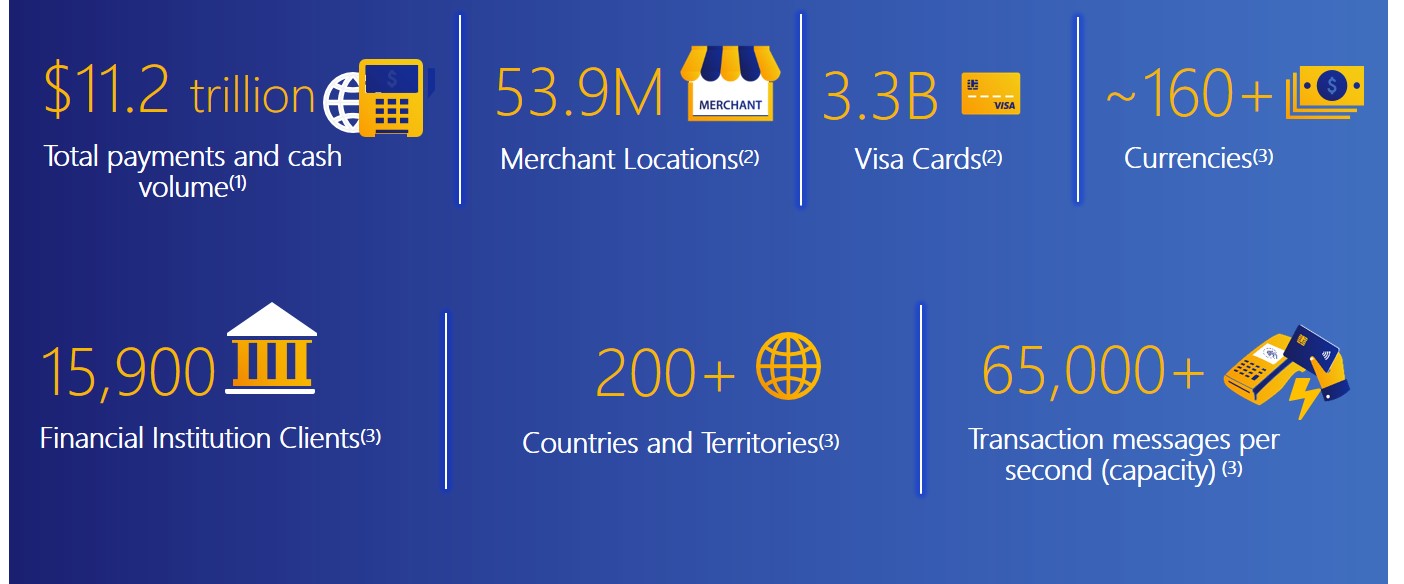
| (1) | Transacted on our payment products for the 12 months ended June 30, 2018 |
| (2) | As of June 30, 2018 |
| (3) | As of September 30, 2018 |
Two years ago, our industry reached a milestone when digital payments surpassed cash payments worldwide for the first time. Despite this growth, we have a significant opportunity to displace cash payments. In 2018, approximately $17 trillion of payments were conducted using cash and checks. There is additional opportunity among new payment flows, including person-to-person (P2P), business-to-business (B2B), business-to-consumer (B2C) and government-to-consumer (G2C) payments.
Visa’s Network
Our four-party model seeks to facilitate secure, reliable and convenient transactions between financial institutions, merchants and account holders through our advanced transaction processing network, VisaNet. VisaNet authorizes, clears and settles a diverse range of payment transactions, and allows us to provide our financial institution and merchant clients with a wide range of products, platforms, and value-added services.
In recent years, we have broadened our network model to incorporate fintechs in an effort to deliver additional value to clients and consumers. As digital payments evolve, we are increasingly engaging new partners, including messaging platforms, technology providers, and device manufacturers to capture new payment flows.
We believe our network is core to the growth of our business and the expansion of digital commerce globally.
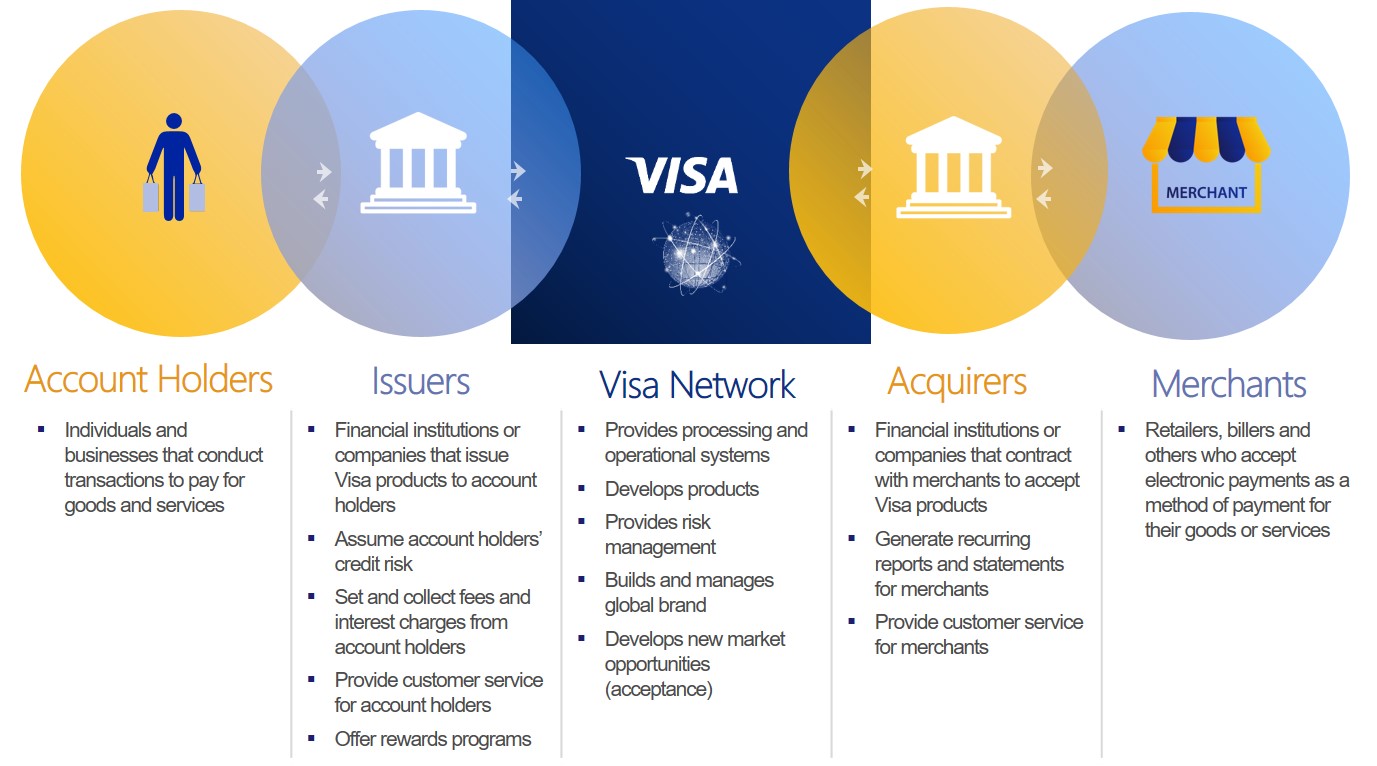
Account holder and merchant relationships are managed primarily by our financial institution clients and merchant acquirers, including processors and independent service organizations.
Visa is not a financial institution. We do not issue cards, extend credit, or set rates and fees for account holders of Visa products. We do not earn revenues from, or bear credit risk with respect to, interest or fees paid by account holders on Visa products. Interchange reimbursement fees represent a transfer of value between the financial institutions participating in our open-loop payments network. We administer the collection and remittance of interchange reimbursement fees through the settlement process, but we generally do not receive any revenue related to interchange reimbursement fees. In addition, we do not receive as revenue the fees that merchants are charged directly for acceptance by their acquirers.
Strategic Focus
Visa’s vision — to be the best way to pay and be paid, for everyone, everywhere — guides our purpose. Our mission — to connect the world through the most innovative, reliable, and secure payments network, enabling individuals, businesses, and economies to thrive — is underpinned by seven strategic pillars:
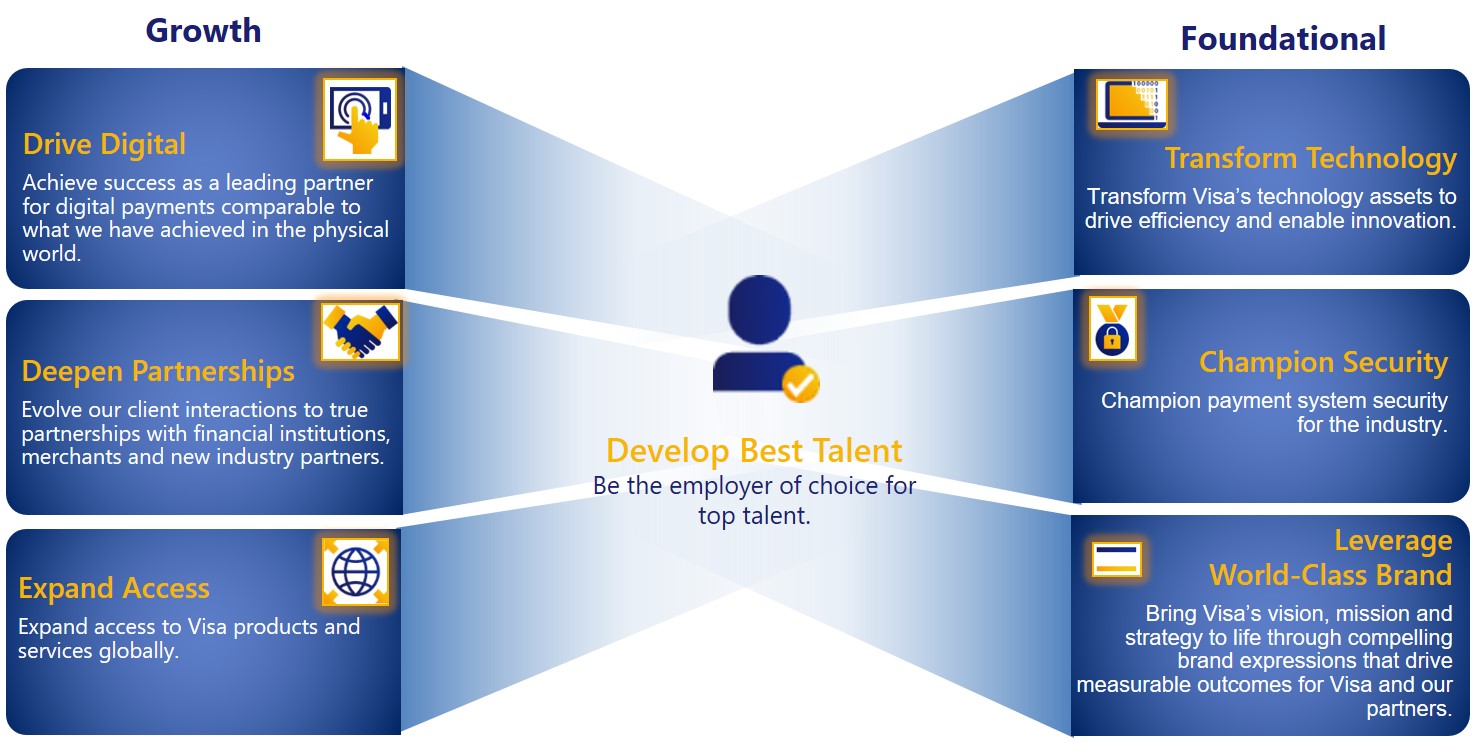
Transform Technology
Visa is a technology company. In recent years, we have shifted our proprietary technology architecture to a more open architecture across our software, hardware and networking platforms. The Visa Developer Platform provides application developers with access to certain of Visa’s products, services and technology via APIs, in an effort to enable business partners to create new commerce experiences and increase the speed and depth of payment innovations that leverage Visa’s products, services and technology.
Champion Security
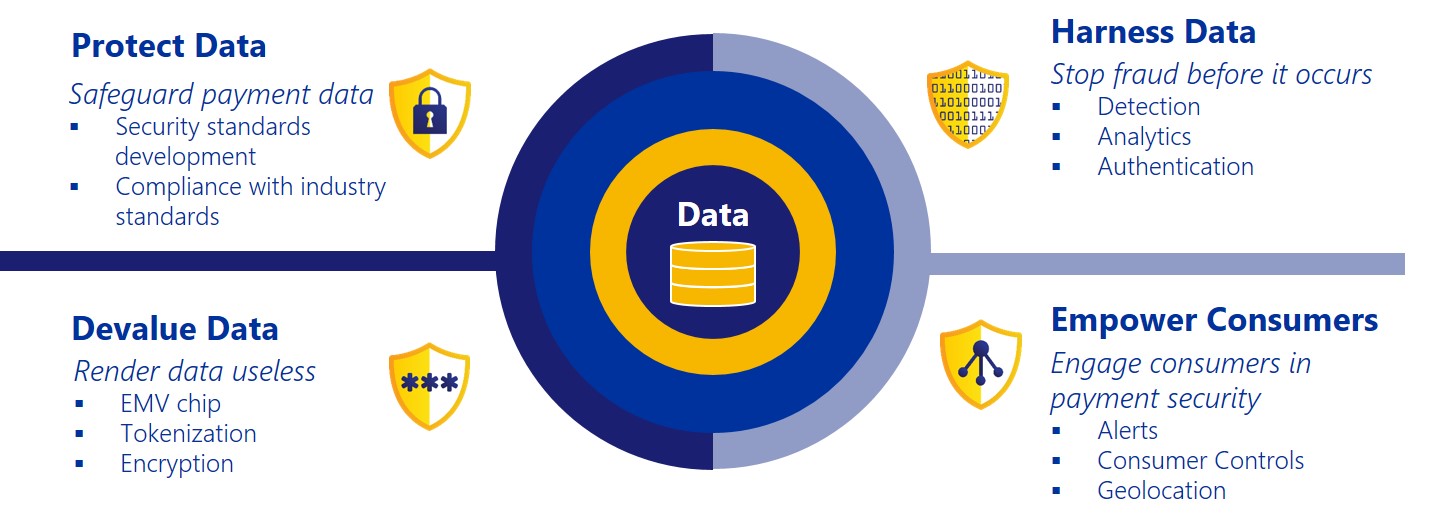
We have focused many of our investments, partnerships, and expertise to enhance the security of our network, and to enable consumers and businesses to pay and be paid with confidence. As payment methods evolve, we are focused on the following four areas:
| • | Protecting payment data with a payments architecture that complies with industry standards |
| • | Rendering sensitive payment data useless by deploying technologies such as EMV® chip, EMV tokenization, and encryption |
| • | Using predictive analytics, artificial intelligence, and insights in an effort to identify and prevent fraud before it happens |
| • | Empowering consumers to actively protect their own financial information and transactions |
Leverage our World-class Brand
The Visa brand is one of the world’s most recognized, trusted, and valuable brands. Anchored on the notion that Visa is “everywhere you want to be,” we believe the brand stands for acceptance, security, convenience, speed, and reliability. In recognition of its strength among clients and consumers, the Visa brand is ranked highly in a number of brand studies, including BrandZ Top 100 Most Valuable Global Brands Study, Forbes World’s Most Valuable Brands, Interbrand’s Best Global Brands, and YouGov Brand Index. Our brand strength helps us to deliver added value to financial institutions, merchants, clients and partners through compelling brand expressions, a wide-range of products and services, and innovative marketing efforts.
Develop the Best Talent
Visa’s employees are one of our most important assets. Visa’s approximately 17,000 employees in 119 locations across the world embody our vision and drive our growth. As a truly global enterprise with the integration of Visa Europe, we are adding new talent and expertise to Visa. At the same time, Visa is building a culture of empowered leadership. This focus is intended to provide functional and market leaders greater autonomy and authority to respond quickly and decisively to the needs of our clients and innovate to capture new digital commerce opportunities.
Drive Digital
Visa transactions today take place across a variety of devices and transaction types. Visa has developed various products, partnerships and platforms in an effort to enable fast and secure commerce on cards, phones, laptops and other form factors. Visa offers a token service, which can be used to replace payment card account numbers with a unique one-time use code, or token, in an effort to make transactions more secure. In doing so, we aim to increase consumer confidence in the security of devices and other solutions that are used to initiate and make payments.
In parallel, Visa is supporting and enabling our clients and partners to harness digital commerce opportunities through Visa Digital Solutions. Visa Digital Solutions is a growing portfolio of Visa payment services and authentication technologies that enable tokenization, online commerce and push payment services to be securely embedded in new products. Our growing portfolio of Visa payment services and authentication technologies enable tokenization and online commerce as well as facilitate secure, cost-effective P2P, B2C, B2B and G2C payment services.
Deepen Partnerships
Visa’s business has been built on a foundation of long-standing and mutually-beneficial partnerships. We seek to differentiate our relationships with our clients by offering access to our global network, payment products, value-added services and payment expertise. We have also expanded our partnerships to include technology leaders, governments, non-governmental organizations and fintechs.
Expand Access
The core of Visa’s mission — to connect the world — is based on the belief that everyone, everywhere should have access to the speed, convenience and reliability of digital payments.
Despite the best efforts of governments and the private sector, an estimated 1.7 billion people worldwide lack access to safe and reliable financial services. Mobile connectivity, new acceptance devices untethered to landline infrastructure and new partnerships are enabling digital payments in remote and challenging environments.
In 2018, we made a strategic decision to focus much of our social impact efforts on enabling micro and small enterprises to succeed. Visa and the Visa Foundation are committed to help low-income, financially underserved micro and small enterprises around the world. This initiative is good for small enterprises and the global economy. Sixty-five percent of all new private sector jobs in the U.S. and 60 percent of new jobs in developing economies are in the small and micro-business sector.
Fiscal 2018 Key Statistics
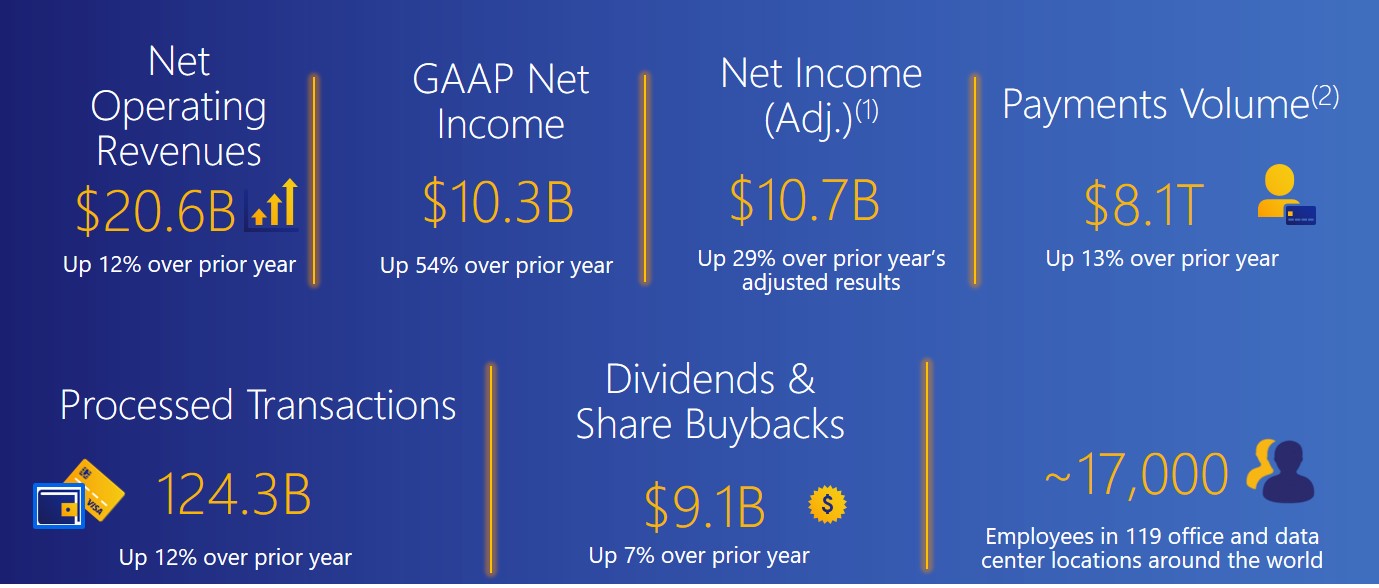 (1) Please see Item 7—Management’s Discussion and Analysis of Financial Condition and Results of Operations for a reconciliation of our adjusted
financial results.
| (2) | For the 12 months ended June 30, 2018, upon which fiscal 2018 service revenues are based. |
KEY INITIATIVES
Visa Europe Integration
In fiscal 2018, we completed the final stages of the Visa Europe technology migration, which was a multi-year process that brought our European clients onto VisaNet. The unified global platform aims to increase the speed-to-market, resilience and availability of innovative solutions to our European clients. As a result, clients will see expanded services including greater support of Visa Direct transactions, real-time risk management, tokenization and global dispute capabilities. In addition, we migrated the fraud scoring and case management service in Europe to our global platform. Clients will benefit from a unified security architecture built on multiple redundant layers of cyber defense designed to protect them from data security breaches and service disruptions.
Interchange Multidistrict Litigation
We reached a damages class settlement in the U.S. interchange multidistrict litigation (MDL) in September 2018. The settlement has been submitted to the district court for preliminary approval, and following such approval, merchant class members will be given the opportunity to opt out of or object to the settlement. The district court will then determine whether to finally approve the settlement. This damages class settlement does not resolve the injunctive relief class claims seeking modifications to network rules. See Note 17—Legal Matters to our consolidated financial statements included in Item 8—Financial Statements and Supplementary Data of this report for a discussion of the MDL.
How We Work with Partners – Global Innovation Network, Visa Developer Platform, Certifications, and Startups
Our global innovation network with ten locations in key markets such as Dubai, London, Miami, San Francisco, and Singapore fosters collaboration with our financial institution and merchant clients, partners, and developers to help spur the creation of innovative payment and commerce applications and solutions. By providing access to Visa capabilities through APIs, the Visa Developer Platform is designed to enable global partners to transform ideas into new digital commerce, payment, or related experiences or solutions. For example, the Visa Everywhere Initiative is a global innovation program active in more than 80 countries since 2015 that tasks start-ups to solve commerce challenges, further enhance their own product propositions and provide new solutions for our network of partners.
We also make investments in companies around the world that we believe may further our vision and strategic objectives, support deeper engagement with key partners, or expand access to payment solutions worldwide. In 2018, we made several investments in the fintech industry and unveiled a new program in Europe, which we are implementing around the world, called fintech fast-track. The fintech fast-track program provides an accelerated and simplified onboarding process for startup and early growth-stage companies to become Visa issuers. In addition, through the Visa Ready certification program, we provide the structure that allows partners to introduce devices, software, and solutions that can securely initiate or accept Visa payments.
Separately, Visa also launched an investment program to invest up to $100 million to support the fintech ecosystem with the focus on supporting start-up businesses that are innovating in open banking and those using emerging technologies that have the potential to create new commerce experiences.
PRODUCTS & SERVICES
For decades, our growth has been driven by the strength of our core business solutions, credit, debit, and prepaid products, as well as our global ATM network. The ability to access available funds, a line of credit, or a prepaid account has provided consumers and businesses flexibility and convenience.
Core Products
Business Solutions: We offer a portfolio of business payment solutions including small business, corporate (travel) cards, purchasing cards, virtual accounts, and disbursement accounts covering most major industry segments around the world. Business solutions are designed to bring efficiency, controls, and automation to small businesses, commercial and government payment processes, ranging from employee travel to fully integrated, invoice-based payables.
Credit: Credit cards are issued by financial institutions to allow consumers and businesses to access credit to pay for goods and services. Visa does not extend credit; however, we provide combinations of card benefits, including technology, authorization, fraud tools, and brand support that financial institutions use to enable their credit products. We also partner with our clients on product design, consumer segmentation, and consumer experience design to help financial institutions better deliver products and services that match their consumers’ needs.
Debit: Debit cards are issued by financial institutions to allow consumers and small businesses to purchase goods and services using funds held in their demand deposit accounts. Debit cards enable cardholders to transact — in person, online, or via mobile — without needing cash or checks and without accessing a line of credit. Visa provides a strong brand; the network infrastructure and processing; acceptance; product features and support; risk tools and services; and industry expertise to help issuers optimize their debit offerings.
Prepaid: Prepaid products draw from a designated balance funded by individuals, corporations, or governments. Prepaid cards address many consumer-use cases and needs including, general purpose reloadable, payroll, government and corporate disbursements, healthcare, gift, and travel. Prepaid cards also play an important part in financial inclusion, bringing payment solutions to those with limited or no access to traditional banking products.
Global ATM: The Visa/PLUS Global ATM network provides account holders with convenient cash access in more than 200 countries and territories worldwide through issuing and acquiring partnerships with both financial institutions and independent ATM operators.
Processing Infrastructure
VisaNet is designed to be one of the world’s most secure, reliable and interoperable global payments networks. VisaNet is built on a high-performance architecture that allows us to analyze each authorization we process in real time and provide value-added processing services such as risk scoring and tokenization. It provides the infrastructure for delivering innovation and other payment system enhancements for domestic payments and cross-border international transactions globally.
VisaNet consists of five main areas:
Software: Sitting at the center of Visa’s technology platform is a set of commercial software applications powering authorization, clearing, and settlement, as well as value-added services for our clients.
Hardware: Our software runs on powerful servers, mainframes and data storage systems that are capable of processing more than 65,000 transaction messages per second.
Processing Centers: Our hardware resides in four global processing centers, which are located on three continents. Our global processing centers are designed to synchronize in real time, so that if one system encounters an issue, transactions are rerouted almost instantly and automatically to another.
Telecommunications: We connect our clients and partners to VisaNet through a global, private telecommunications network that is designed for redundancies and to provide security and availability of our products and services.
Security: Finally, we have multiple layers of advanced security tools to protect our technology footprint at the enterprise, network, operating system, and application levels. To strengthen our security and cyber defenses, we continue to deploy new tools and measures to help safeguard our network and the wider ecosystem from hackers and cyber-attacks.
Together, these systems are designed to deliver security, convenience and service that our account holders, clients and partners expect of the Visa brand.
Digital Product
Visa Direct: Visa Direct is our push payment platform that facilitates fund transfers by our financial institution clients which allows businesses, governments, and consumers to utilize VisaNet processing capabilities to transfer funds from an originating account to another account via card credentials. The transfer is made with the same level of security protection, network reliability and ease-of-use that Visa uses for other types of transactions. Push payments represent one of our biggest incremental payment flow opportunities. This global platform enables faster payments solutions for a range of new use cases, including P2P, B2B and B2C disbursements, cross-border remittances and bill pay.
Visa Direct is currently operating in more than 150 countries. Over seventy of those countries are enabled for fast funds acceptance through Visa Direct, with funds typically posted in seconds and no longer than 30 minutes. Global growth for Visa Direct means enabling acquirers, processors, and merchants to leverage their existing network connections to build new services, capabilities, and solutions with global scale and reach.
In certain emerging markets, push payments allow consumers to use their enabled mobile applications to “push” money to a business account conveniently using an alias (e.g. QR code), for payment of goods and services. Visa’s QR code scan-to-pay functionality enables low-cost, quick to market alternatives for promoting digital payment acceptance at small and medium size merchants.
Visa Token Service: The Visa Token Service (VTS) replaces sensitive account information, such as the 16-digit account number, with a unique digital identifier called a token. The token enables payments to be initiated and communicated to Visa without the account holder or acquirer being required to expose personal account numbers (PANs) that could be compromised.
In fiscal 2018, we expanded VTS presence in ten new markets for a total of 40 markets. We also enabled more than 20 new global and regional token requestors in fiscal 2018. Because of the added security measures, token transactions tend to have lower rates of fraud and higher rates of authorization than PANs, a key value proposition for clients to implement and use tokens. This year, we also signed several significant merchants and gateways to use or otherwise participate in our token service. By expanding access to the Visa Token Service to new partners, we expect Visa issuers and other partners to offer or enable secure digital payments across an increasing range of solutions and circumstances.
Visa Checkout: Visa Checkout offers consumers an expedited and secure payment experience for online and mobile transactions. This is particularly important as digital commerce continues to shift from desktop devices to mobile devices, where shoppers have higher abandonment rates of their items in their shopping carts. At the end of fiscal 2018, Visa Checkout has over 40 million consumer accounts in 26 countries, driven by growth in Europe and the United States. We also launched Visa Checkout Open Platform (VCOP) in fiscal 2017. VCOP allows digital wallet partners to integrate with Visa Checkout, thereby providing consumers with improved online and in-application payment services. In doing so, consumers have additional options for paying online. We plan to start migrating our Visa Checkout users in select markets to Secure Remote Commerce in mid- to late-2019.
Secure Remote Commerce: In 2018, we announced our support of the EMV Secure Remote Commerce (SRC) specifications and the creation of the Visa Digital Commerce Program (Visa DCP). Our Visa DCP platform is an implementation of the EMV Secure Remote Commerce technical framework and specifications that enables a merchant to provide a consistent, streamlined digital checkout experience to consumers, including a common acceptance mark, and to obtain secure customer payment information and enhance the security for digital transactions and stored credentials. Visa DCP includes Visa’s SRC and Visa Token Service platforms. Visa DCP is planned for launch in the middle of 2019.
Contactless
Contactless payments allow consumers to tap-to-pay with a card or near field communication (NFC) enabled device at a terminal enabled with NFC technology. Contactless technology offers consumers an additional checkout option while providing the same security as an EMV chip card and helps merchants move customers through their check-out lines faster. At the end of fiscal 2018, nearly one in four of all face-to-face Visa domestic transactions running over our global network were contactless, up from 15% at the end of fiscal 2017. In many parts of the globe, including most of Europe, Canada, and parts of Asia, contactless is mature and accounts for more than half of all face-to-face transactions.
Additionally, contactless payments could provide new payment opportunities in areas such as transit. Transport for London has now seen over 1.7 billion contactless journeys and Translink in Vancouver and Milan Metro launched in the summer of 2018. Additionally, many other transit agencies globally have announced plans to launch contactless payments (e.g. New York Metropolitan Transportation Authority, Singapore Land Transport Authority and Metro Rio). In 2018, we focused on growing contactless card issuance and enabling contactless acceptance in under-penetrated markets, such as the United States.
Merchant Products
We have a suite of products and services to help merchants reduce their payment fraud and improve customer loyalty. Visa Commerce Network, and CyberSource’s product offerings are examples of Visa’s continued investment to deliver industry-leading products and capabilities to our merchant partners.
Visa Commerce Network uses our global payments network to enable merchants to promote relevant offers to acquire new customers, drive loyalty, and increase sales. For example, Uber and Visa Commerce Network have partnered to introduce Visa Local Offers, a card-linked offer program that rewards enrolled U.S. Visa account holders for shopping at thousands of featured merchants in the United States. Uber credits are awarded to the riders’ Uber accounts on qualifying purchases – eliminating the need for coupons or promo codes.
The CyberSource platform enables merchants to accept payments online, in-app or on the mobile web, and in-person. CyberSource’s small business solutions are represented by the Authorize.Net brand in North America. CyberSource provides modular, digital capabilities far beyond the traditional gateway function of connecting merchants to payment processing. Using CyberSource services, merchants of all sizes can improve the way their consumers engage and transact, mitigate fraud and security risk, lower operational costs and adapt to changing business requirements. CyberSource’s global footprint lets merchants accept payments in over 200 countries and territories across the world and includes a broad choice of acquirer and processor partners, payment types and hardware components. Merchants connect to CyberSource directly through APIs or via pre-built integrations to various ecommerce and point-of-sale platforms. Similarly, CyberSource offers the same technology platform to support acquirers as well as comprehensive payment management solutions and support to attract, retain, and grow their merchant base.
Risk Products & Payment Security Initiatives
We continue to develop our suite of risk products and solutions to help financial institution and merchant clients minimize risk and enable secure commerce. 3-D Secure technology is a fraud detection protocol which provides a data connection between digital merchants, payment networks and financial institutions to be able to analyze and share more intelligence information about transactions to boost security and improve the checkout and user experience. The 3-D Secure standard has been updated and will modernize online security, fully embracing the benefit of always-on connectivity across multiple devices. The new standard will enable ten times more data to be exchanged between financial institutions and merchants, allowing our clients to have greater accuracy in identifying both legitimate and fraudulent transactions.
We are also advancing the adoption of biometric authentication as a more secure alternative to passwords, which can be guessed or stolen. To help financial institutions and merchants more quickly adopt emerging biometric authentication solutions, we launched Visa ID Intelligence, a platform that provides a curated selection of leading third-party authentication technologies. Our clients can create, test and adopt new authentication solutions with simple integrations using Visa APIs and software developer’s kits.
Financial data security breaches continue to drive financial institution and merchant losses and can undermine consumer confidence in digital payments. We are investing in more proactive malware and threat identification to help stop fraud and data loss before it occurs. Through our eCommerce Threat Disruption (eTD) capability, we can trace malicious servers and identify compromised merchant websites where skimmer code may have been injected. We have already successfully disrupted criminal servers driving ecommerce merchant compromises. We also conduct testing to identify possible future threats in the context of known vulnerabilities and provide clients with actionable threat intelligence.
We are also providing more robust data-driven insights that help our clients improve their fraud and authorization performance. Visa’s data analytics capabilities and interactive delivery platforms enable our clients to assess their performance relative to peers and test alternate fraud procedures to model possible improvements.
In addition to our new initiatives, we continue to improve existing products and services such as Visa Risk Manager, Visa Advanced Authorization, Visa Mobile Location Confirmation, Visa Consumer Controls and Visa Transaction Advisor, which provide data driven tools to issuers, acquirers and merchants to detect and prevent fraud and improve account holder and transaction authentication, as well as providing account holders the ability to track and manage their payment activity on enrolled accounts.
Beyond our risk products and solutions, we continue to work with the Payment Card Industry Security Standards Council, EMVCo, and other industry standards organizations to develop and support standards for payment data security, EMV Chip payment technology, EMV Payment Tokenization, EMV SRC and EMV 3-D Secure. We also partner with financial institutions, merchants, governments, and law enforcement agencies to help identify fraud and share information about security best practices, threat intelligence, and legal and regulatory developments.
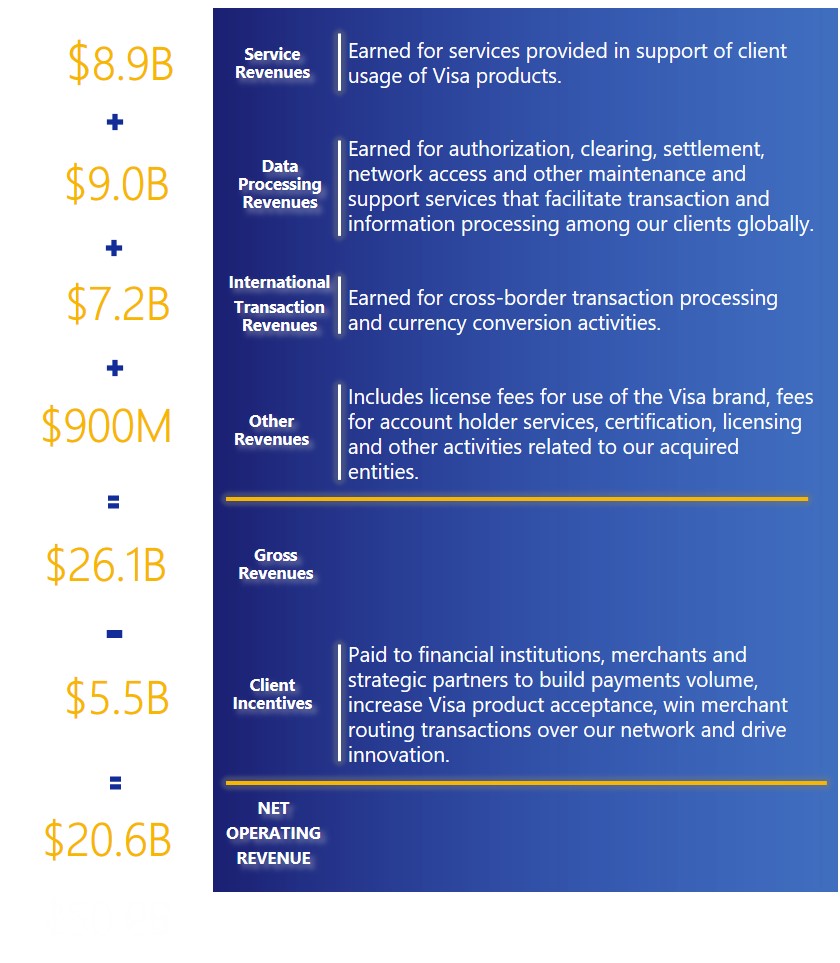
NET OPERATING REVENUES
Our gross revenues consist of service revenues, data processing revenues, international transaction revenues, and other revenues. Net operating revenues are gross revenues reduced by costs incurred under client incentive arrangements. We have one reportable segment, Payment Services.
Revenue Details
COMPETITION
The global payments industry continues to undergo dynamic change. Existing and emerging competitors compete with Visa’s network and payment solutions for consumers and for participation by financial institutions and merchants. Technology and innovation are shifting consumer habits and driving growth opportunities in ecommerce, mobile payments, blockchain technology and digital currencies. These advances are enabling new entrants, many of which depart from traditional network payment models. In certain countries, the evolving regulatory landscape is changing how we compete, creating local networks, or enabling additional processing competition.
We compete against all forms of payment. This includes paper-based payments, primarily cash and checks, and all forms of electronic payments. Our electronic payment competitors principally include:
Global or Multi-Regional Networks, which typically offer a range of branded, general purpose card payment products that can be used at millions of merchant locations around the world. Examples include MasterCard, American Express, Discover, JCB, and UnionPay. These competitors may be more concentrated in specific geographic regions, such as JCB in Japan and Discover in the United States, or have a leading position in certain countries. For example, UnionPay operates the sole domestic acceptance mark in China and is expanding into other global markets. See Item 1A—Risk Factors—Regulatory Risks—Government-imposed restrictions on international payment systems may prevent us from competing against providers in certain countries, including significant markets such as China, India and Russia. Based on available data, Visa is one of the largest retail electronic funds transfer networks used throughout the world. The following chart compares our network with these network competitors for calendar year 2017(1):
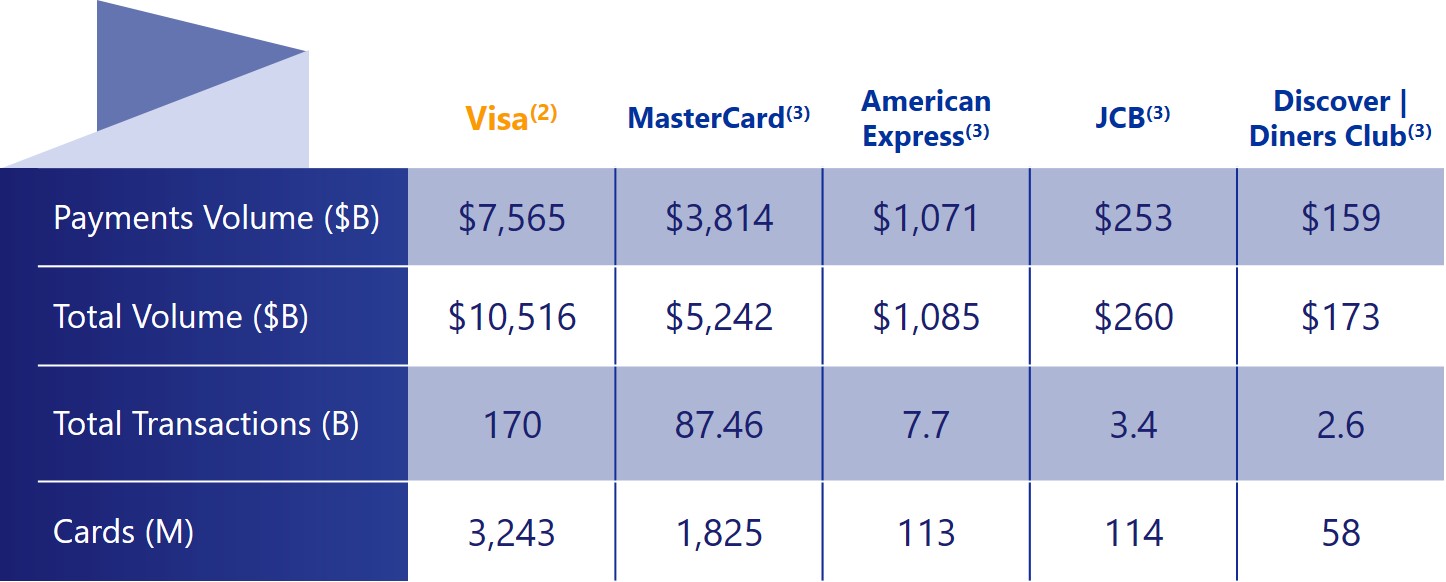
| (1) | UnionPay, which operates primarily within the Chinese domestic market, is not included in this table as Visa currently does not compete in that market under local law. Although we are uncertain how UnionPay reports certain volumes, reportedly its numbers could approach or exceed some of those listed in this chart. |
| (2) | The data presented are provided by our financial institution clients. Previously submitted information may be updated and all data are subject to review by Visa. |
| (3) | MasterCard, American Express, JCB and Discover/Diners Club data sourced from The Nilson Report issue 1130 (April 2018). Includes all consumer and commercial credit, debit and prepaid cards. Some figures are estimates and currency figures are in U.S. dollars. MasterCard excludes Maestro and Cirrus figures. American Express includes figures for third-party issuers. Discover figures consist of U.S. data only and include third-party issuers. JCB figures include third-party issuers and other payment-related products. |
Local and regional networks, that operate in many countries, often with the support of government influence or mandate. In some cases, they are owned by financial institutions. These networks typically focus on debit payment products and may have strong local acceptance, and recognizable brands. Examples include STAR, NYCE, and Pulse in the United States, Interac in Canada, EFTPOS in Australia and Mir in Russia.
Alternate Payment Providers, which often have a primary focus of enabling payments through ecommerce and mobile channels, but are expanding or may expand their offerings to the physical point of sale. These companies may process payments using in-house account transfers between parties, electronic funds transfer networks like the Automated Clearing House (ACH), global or local networks like Visa, or some combination of the foregoing. In some cases, these entities are both a partner and a competitor to Visa. Examples of alternate payment providers include PayPal, Alipay, and WeChat. Alipay and WeChat Pay are among the fastest growing mobile payment providers in the world and pose a competitive challenge to Visa and other international networks outside of China.
Other Electronic Payments Networks like the ACH in the United States are often regulated by local governments. Historically focused on interbank transfers, many are adding capabilities that may make them more competitive for retail payments. MasterCard acquired VocaLink Holdings Limited in 2016, which provides faster payments and alternative payments technology that competes with our Visa Direct offering, among other things. We also compete with closed-loop payment systems, emerging payments networks, wire transfers, and electronic benefit transfers.
Payment Processors, which we compete with for the processing of Visa transactions or which may benefit from mandates requiring them to handle processing under local regulation. For example, as a result of regulation in Europe under the Interchange Fee Regulation (IFR), we may face competition from other networks, processors, and other third-parties who could process Visa transactions directly with issuers and acquirers.
We believe our fundamental value proposition of acceptance, security, convenience, speed, and reliability offers us a key competitive advantage. We succeed in part because we understand the needs of the individual markets in which we operate and partner with local financial institutions, merchants, governments, non-governmental organizations, and business organizations to provide tailored solutions. We believe Visa is well-positioned competitively, due to our global brand, our broad set of Visa-branded payment products, and our proven track record of processing payment transactions securely and reliably through VisaNet.
SEASONALITY
We generally do not experience any pronounced seasonality in our business. No individual quarter of fiscal 2018 or fiscal 2017 accounted for more than 30% of our operating revenues in those years.
WORKING CAPITAL
Payments settlement due to and from our financial institution clients can represent a substantial daily working capital requirement. Most U.S. dollar settlements are settled within the same day and do not result in a receivable or payable balance, while settlement in currencies other than the U.S. dollar generally remain outstanding for one to two business days, which is consistent with industry practice for such transactions.
GOVERNMENT REGULATION
As a global payments technology company, we are subject to complex and evolving global regulations in the various jurisdictions in which our products and services are used. The most significant government regulations that impact our business are discussed below. For further discussion of how global regulations may impact our business, see Item 1A—Risk Factors—Regulatory Risks.
Anti-corruption, Anti-money Laundering, Anti-terrorism, and Sanctions. We are subject to anti-corruption laws and regulations, including the U.S. Foreign Corrupt Practices Act (FCPA), the UK Bribery Act, and other laws that generally prohibit the making or offering of improper payments to foreign government officials and political figures for the purpose of obtaining or retaining business or to gain an unfair business advantage. We are also subject to anti-money laundering and anti-terrorist financing laws and regulations, including the U.S. Bank Secrecy Act. In addition, we are subject to economic and trade sanctions programs administered by the Office of Foreign Assets Control (OFAC) in the United States. Therefore, we do not permit financial institutions or other entities that are domiciled in countries or territories subject to comprehensive OFAC trade sanctions (currently, Cuba, Iran, North Korea, Syria, and Crimea), or that are included on OFAC’s list of Specially Designated Nationals and Blocked Persons, to issue or acquire Visa cards or engage in transactions using our services.
Government-imposed Market Participation and Restrictions. Certain governments, including China, India, Indonesia, Russia, Thailand and Vietnam, have taken actions to advantage domestic payments systems and/or certain issuers, payments networks, or processors, including by imposing regulations that favor domestic providers, impose local ownership requirements on processors, require data localization, or mandate domestic processing be done in that country.
Interchange Rates and Fees. An increasing number of jurisdictions around the world regulate or influence debit and credit interchange reimbursement rates in their regions. For example, the Dodd-Frank Wall Street Reform and Consumer Act (Dodd-Frank Act) in the United States limits interchange reimbursement rates for certain debit card transactions, the European Union’s (EU) IFR limits interchange rates in Europe (as discussed below) and the Reserve Bank of Australia and the Central Bank of Brazil regulate average permissible levels of interchange.
Internet Transactions. Many jurisdictions have adopted regulations that require payments system participants to monitor, identify, filter, restrict, or take other actions with regard to certain types of payment transactions on the Internet, such as gambling and the purchase of cigarettes or alcohol.
Network Exclusivity and Routing. In the United States, the Dodd-Frank Act limits network exclusivity and preferred routing arrangements for the debit and prepaid market segments. Other jurisdictions impose similar limitations, such as the IFR’s prohibition on restrictions that prevent multiple payment brands or functionality on the same card.
No-surcharge Rules. We have historically enforced rules that prohibit merchants from charging higher prices to consumers who pay using Visa products instead of other means. However, merchants’ ability to surcharge varies by geographic market as well as Visa product type, and continues to be impacted by litigation, regulation, and legislation.
Privacy and Data Protection. Aspects of our operations or business are subject to privacy, data use and data security regulations, which impact the way we use and handle data, operate our products and services, and even impact our ability to offer a product or service. In addition, regulators are proposing new laws or regulations which could require Visa to adopt certain cybersecurity and data handling practices. In many jurisdictions consumers must be notified in the event of a data security breach, and such notification requirements continue to increase in scope and cost. The changing privacy laws in the United States (e.g. California Consumer Privacy Act), Europe, Brazil and elsewhere, including the adoption by the European Union of the General Data Protection Regulation (GDPR) effective in May 2018, create new individual privacy rights and impose increased obligations on companies handling personal data.
Supervisory Oversight of the Payments Industry. Visa is subject to financial sector oversight and regulation in substantially all of the jurisdictions in which we operate. In the United States, for example, the Federal Financial Institutions Examination Council (FFIEC) has supervisory oversight over Visa under applicable federal banking laws and policies as a technology service provider to U.S. financial institutions. The federal banking agencies comprising the FFIEC are the Federal Reserve Board, the Comptroller of the Currency, the Federal Deposit Insurance Corporation and the National Credit Union Administration. Visa also may be separately examined by the Bureau of Consumer Financial Protection as a service provider to the banks that issue Visa-branded consumer credit and debit card products. Central banks in other countries, including Russia, Ukraine, and the United Kingdom (as discussed below), have recognized or designated Visa as a retail payment system under various types of financial stability regulations. Visa is also subject to oversight by banking and financial sector authorities in other jurisdictions, such as Brazil and Hong Kong.
European Regulations and Supervisory Oversight. Visa Europe continues to be subject to complex and evolving regulation in the European Economic Area. Visa Europe has been designated as a Recognized Payment System in the United Kingdom, bringing it within the scope of the Bank of England’s supervisory powers and subject to various requirements, including on issues such as governance and risk management designed to maintain the stability of the United Kingdom’s financial system. Visa Europe is also subject to the European Central Bank’s oversight, whose main focus is on the functioning of card payments, as well as the security, operational reliability, and business continuity of the schemes and their payment instruments. Furthermore, Visa Europe is regulated by the United Kingdom’s Payment Systems Regulator (PSR), which has wide ranging powers and authority to review our business practices, systems, rules and fees with respect to promoting competition and innovation in the United Kingdom, and ensuring payments meet account holder needs. The PSR is also the regulator responsible for monitoring Visa Europe’s compliance with the IFR in the United Kingdom. The IFR regulates interchange rates within Europe, requires Visa Europe to separate its payment card scheme activities from processing activities for accounting, organization, and decision-making purposes within the European Union and imposes limitations on network exclusivity and routing. National competent authorities in the EU are responsible for monitoring and enforcing the IFR in their markets.
There are other regulations in the European Union that impact our business, as discussed above, including, privacy and data protection, anti-bribery, anti-money laundering, anti-terrorism and sanctions. Other recent regulatory changes in Europe such as the second Payment Services Directive (PSD2) require, among other things, that our financial institution clients provide certain customer account access rights to emerging non-financial institution players. PSD2 also includes strong customer authentication requirements for certain transactions that could impose both operational complexity on Visa and negatively impact consumer payment experiences.
As discussed in Item 1A—Risk Factors—Business Risks—The United Kingdom’s withdrawal from the European Union could harm our business and financial results, Brexit could lead to further legal and regulatory complexity in Europe.
Additional Regulatory Developments. Various regulatory agencies also continue to examine a wide variety of other issues, including mobile payment transactions, tokenization, access rights for non-financial institutions, money transfer, identity theft, account management guidelines, disclosure rules, security, and marketing that could affect our financial institution clients and us. Furthermore, following the passage of PSD2 in Europe, several countries, including Australia, Canada, Hong Kong and Mexico are contemplating granting various types of access rights to third party processors, including access to consumer account data maintained by our financial institution clients, which could have implications for our business as well.
ADDITIONAL INFORMATION
Visa Inc. was incorporated in Delaware in May 2007 and we completed our initial public offering in March 2008. Prior to 2007 when Visa was reorganized, Visa served its member financial institutions through Visa International and regional member-owned associations (e.g., Visa U.S.A. Inc., Visa Canada Corporation). As part of the 2007 reorganization, these associations became a part of Visa Inc. in October 2007, with the exception of Visa Europe Limited, which continued to operate as an association until our acquisition in June 2016.
AVAILABLE INFORMATION
We are subject to the reporting requirements of the Securities Exchange Act of 1934, as amended (Exchange Act) and its rules and regulations. The Exchange Act requires us to file periodic reports, proxy statements and other information with the U.S. Securities and Exchange Commission (SEC). Copies of these reports, proxy statements and other information can be viewed at http://www.sec.gov. Our corporate website is accessible at http://corporate.visa.com. We make available, free of charge, on our investor relations website at http://investor.visa.com our annual reports on Form 10-K, our quarterly reports on Form 10-Q, our current reports on Form 8-K and any amendments to those reports as soon as reasonably practicable after they are electronically filed with, or furnished to, the SEC. We also may include supplemental financial information on our investor relations website at http://investor.visa.com and may use this website as a means of disclosing material, non-public information and for complying with our disclosure obligations under Regulation FD. Accordingly, investors should monitor such portions of our investor relations website, in addition to following SEC filings and publicly available conference calls. The information contained on, or accessible through, our corporate website, including the information contained on our investor relations website, is not incorporated by reference into this report or any other report filed with, or furnished to, the SEC.
Previous: Cover and table of contents · Next: Item 1A. Risk Factors