 filings.tools
Item 1. Business
54K characters. Original on sec.gov · Markdown
Item 1. Business
OVERVIEW
Visa is the world’s leader in digital payments. Our mission is to connect the world through the most innovative, reliable and secure payments network — enabling individuals, businesses and economies to thrive. We facilitate commerce across more than 200 countries and territories among a global set of consumers, merchants, financial institutions, businesses, strategic partners and government entities.
Since Visa’s inception in 1958, Visa has been in the business of facilitating payments between consumers and businesses. With new ways to pay, we are evolving into a company that enables money movement for everyone, everywhere. To accomplish this, we are continually focused on extending, enhancing and investing in our proprietary network, VisaNet, while seeking new ways to offer products and services and become a single connection point for initiating any transaction, both on the Visa network and beyond.
This has enabled Visa to become one of the world’s largest electronic payments networks based on payments volume and number of transactions. Our fundamental business model is based on the following:
| • | We facilitate secure, reliable and convenient transactions between financial institutions, merchants and account holders. We traditionally have referred to this as the ‘four party’ model. As the payments ecosystem continues to evolve, we are continuing to broaden this model to include digital banks, wallets and a range of financial technology companies (fintechs), governments and non-governmental organizations. We provide transaction processing services (primarily authorization, clearing and settlement) to our financial institution and merchant clients through VisaNet, our global processing platform. During fiscal year 2019, we saw 201.9 billion payments and cash transactions with Visa’s brand, equating to an average of 553 million transactions a day. Of the 201.9 billion total transactions, 138.3 billion were processed by Visa. |
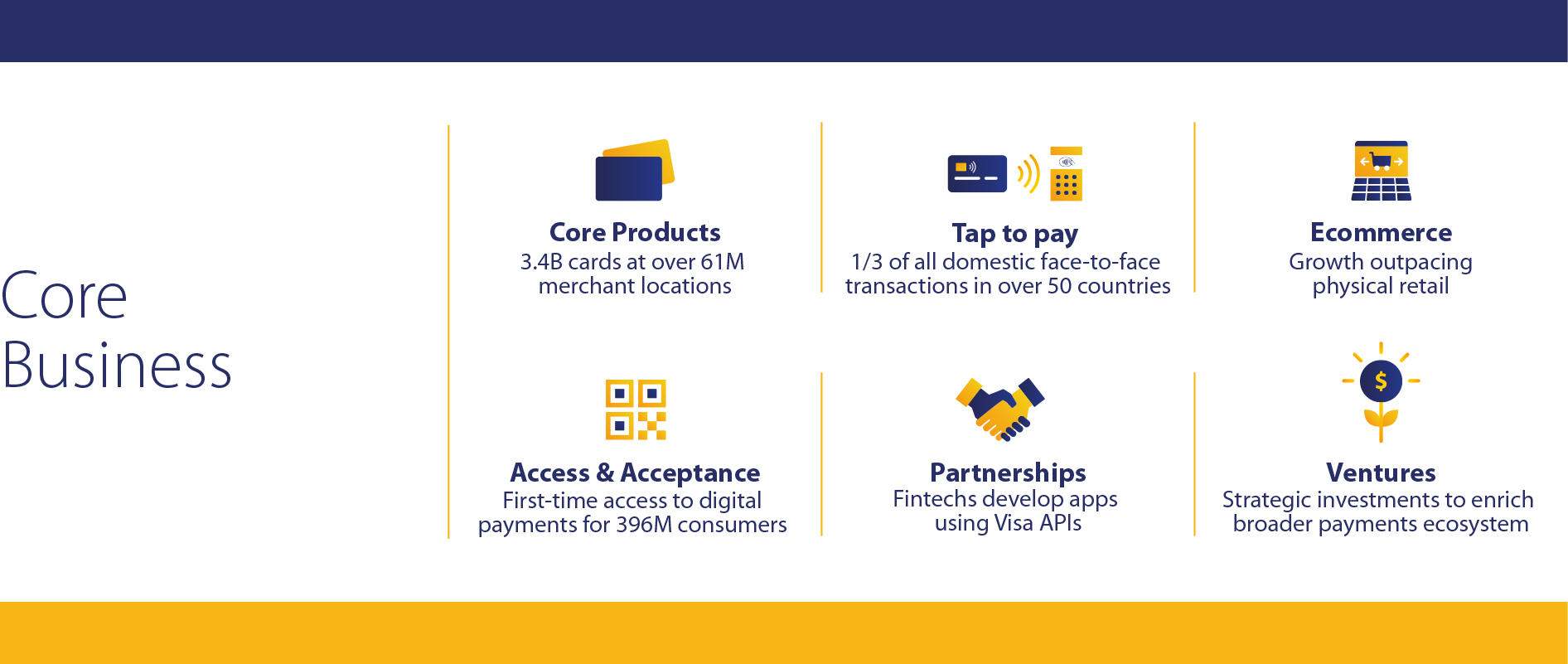
| • | We offer a wide range of Visa-branded payment products that our 15,500 financial institution clients use to develop and offer core business solutions, including credit, debit, prepaid and cash access programs for individual, business and government account holders. During fiscal year 2019, Visa’s total payments and cash volume grew to $11.6 trillion and more than 3.4 billion cards were available worldwide to be used at more than 61 million merchant locations. |
| • | We take an open, partnership approach and seek to provide value by enabling access to our global network, including offering our technology capabilities through application programming interfaces (APIs). Additionally, we enter into partnerships with both traditional and emerging players to innovate and expand the payments ecosystem. This approach helps our partners leverage the resources of our platform to scale and grow their businesses more quickly and effectively. |
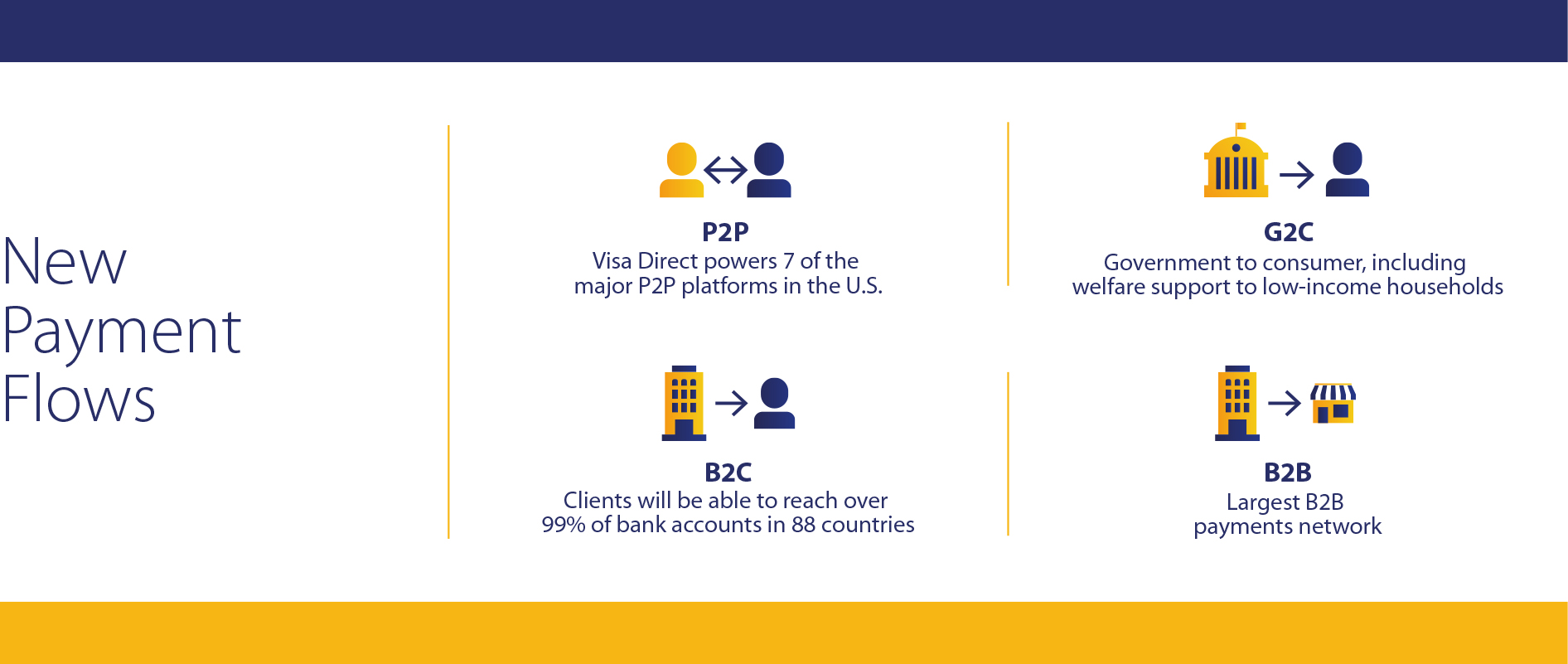
| • | We are accelerating the migration to digital payments by enabling new types of transactions beyond the core consumer-to-business (C2B) payments. These include person-to-person (P2P), business-to-consumer (B2C), business-to-business (B2B) and government-to-consumer (G2C) payments. |
| • | We provide value-added services to our clients, including consulting and analytics, fraud management and security services, merchant solutions, processing capabilities and digital services like tokenization. |
| • | We invest in and promote our brand to the benefit of our clients and partners through advertising, promotional and sponsorship initiatives with FIFA, the International Olympic Committee and the International Paralympic Committee, and the National Football League, among others. We also use these sponsorship assets to showcase our payment innovations. |
FISCAL YEAR 2019 KEY STATISTICS
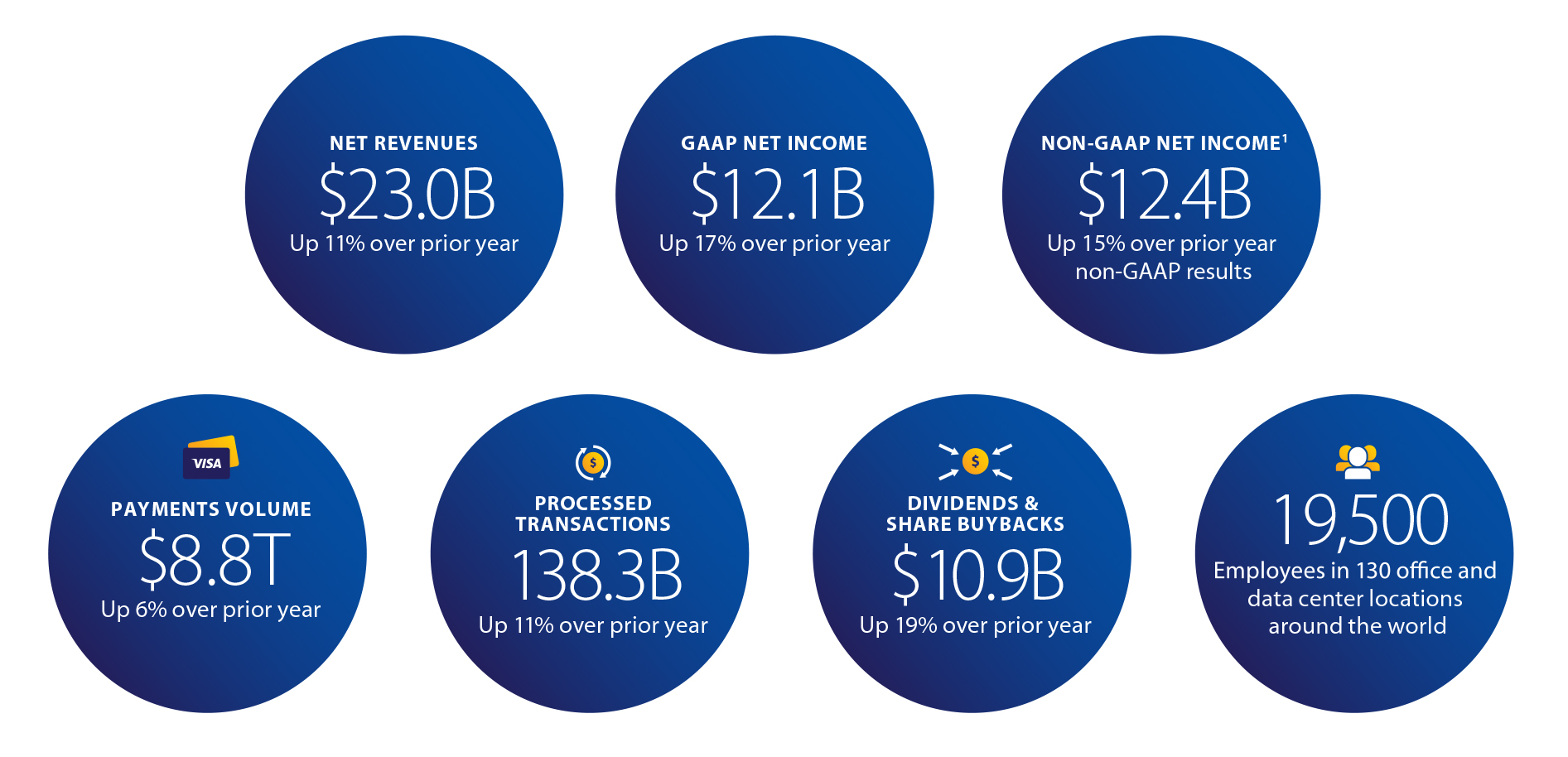
| (1) | Please see Item 7–Management’s Discussion and Analysis of Financial Condition and Results of Operations for a reconciliation of our non-GAAP financial results. |
Revenue Details
Net revenues consist of service revenues, data processing revenues, international transaction revenues, and other revenues minus costs incurred under client incentive arrangements. We have one reportable segment, which is Payment Services.
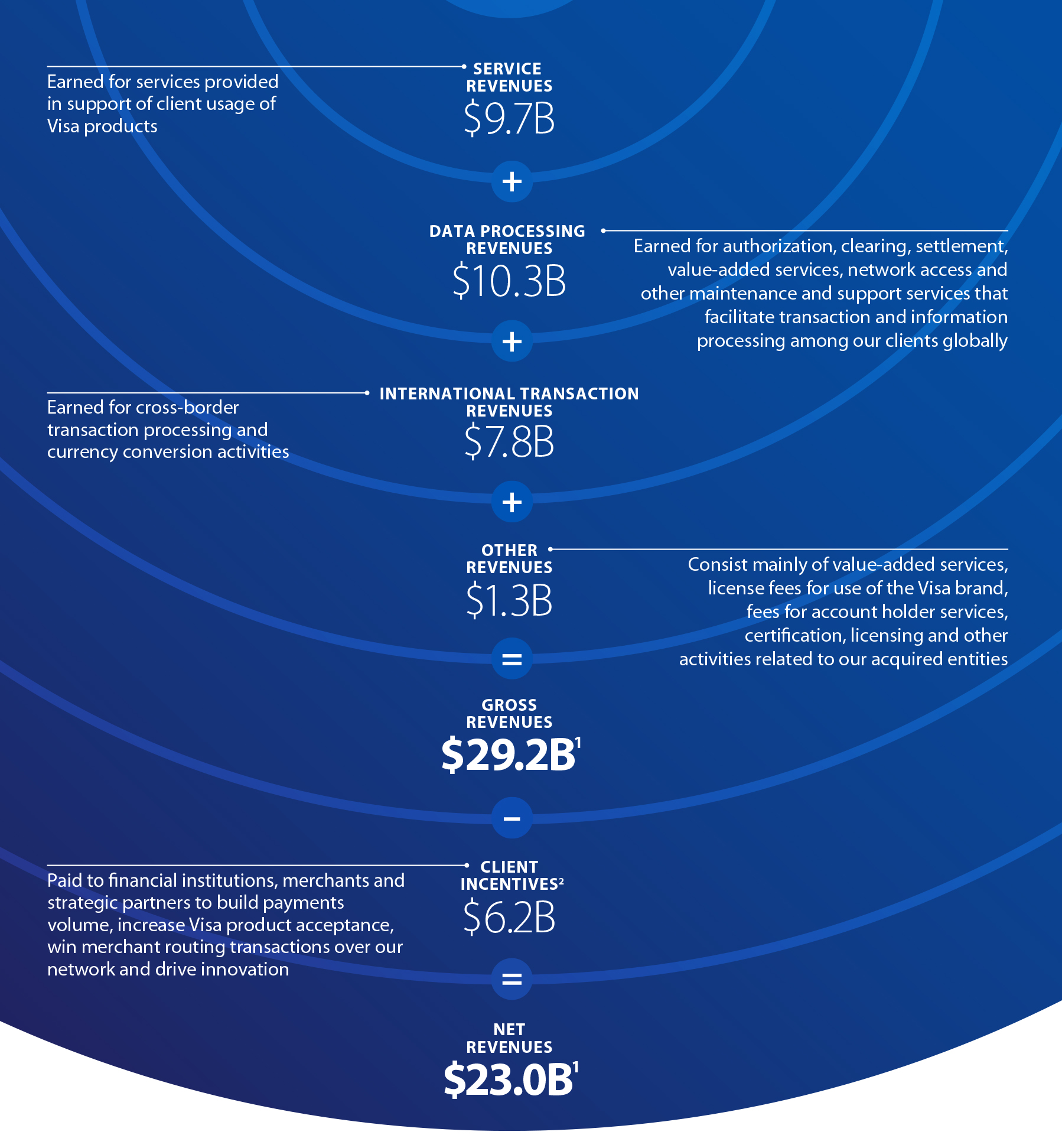
(1) Figures in the tables may not recalculate exactly due to rounding.
(2) Please see Note 3—Revenues to our consolidated financial statements included in Item 8. Financial Statements and Supplementary Data for the impact of the new revenue standard.
Visa earns revenue by facilitating commerce across more than 200 countries and territories among a global set of consumers, merchants, financial institutions, businesses, strategic partners and government entities. Visa is not a financial institution. We do not issue cards, extend credit, or set rates and fees for account holders of Visa products. That is the role of our financial institution clients. We do not earn revenues from, or bear credit risk with respect to, interest or fees paid by account holders on Visa products. Interchange reimbursement fees represent a transfer of value between the financial institutions participating in our open-loop payments network. We administer the collection and remittance of interchange reimbursement fees through the settlement process, but we generally do not receive any revenue related to interchange reimbursement fees. In addition, we do not receive as revenue the fees that merchants are charged directly for acceptance by their acquirers.
ACCELERATING OUR BUSINESS: FISCAL YEAR 2019 KEY FOCUS AREAS
As technology evolves from wired to wireless solutions — driven by technology developments such as the expansion of mobile technology and the rise of 5G networks — there are significant opportunities to grow digital payments. To capture this growth, we are strengthening our core business while simultaneously evolving our organization to seize opportunities to open new payment flows, expand access, build our acceptance footprint and grow our base of partners and clients. We are also building and acquiring new capabilities that can add value to our clients as we strengthen the foundation of our business: technology, security, brand and talent.
Core Business
For decades, Visa’s growth has been driven by the strength of our core business solutions — credit, debit and prepaid products — as well as our global ATM network. As the pace of change accelerates each year, helped by the advancement of technology and our focus on the user experience in payments, we see significant opportunity for continued growth. We are accelerating efforts to move approximately $17 trillion in consumer spending and $15-20 trillion of B2B spending still done in cash and check to cards and digital credentials on the Visa network.
1. Core Products
Business Solutions: We offer a portfolio of business payment solutions, including small business, corporate (travel) cards, purchasing cards, virtual cards/digital credentials, non-card cross-border B2B payment options and disbursement accounts, covering most major industry segments around the world. Business solutions are designed to bring efficiency, controls and automation to small businesses, commercial and government payment processes, ranging from employee travel to fully integrated, invoice-based payables.
Credit: Credit cards and digital credentials are issued by financial institutions and used by co-brand partners and fintechs to allow consumers and businesses to access credit to pay for goods and services. Visa does not extend credit to account holders; however, we provide card benefits, including technology, authorization, fraud tools and brand support that issuers use to enable their credit products. We also work with our clients on product design, consumer segmentation and consumer experience design to help our clients deliver products and services that match their consumers’ needs.
Debit: Debit cards and digital credentials are issued by financial institutions to allow consumers and small businesses to purchase goods and services using funds held in their bank accounts. Debit cards enable account holders to transact — in person, online or via mobile — without needing cash or checks and without accessing a line of credit. Visa provides a strong brand, the network infrastructure (which includes processing, acceptance, product features and support, risk tools and services) and industry expertise to help issuers optimize their debit offerings.
Prepaid: Prepaid products draw from a designated balance funded by individuals, businesses or governments. Prepaid cards address many use cases and needs, including general purpose reloadable, payroll, government and corporate disbursements, healthcare, gift and travel. Prepaid cards also play an important part in financial inclusion, bringing payment solutions to those with limited or no access to traditional banking products.
Global ATM: The Visa/PLUS Global ATM network provides account holders with cash access in more than 200 countries and territories worldwide through issuing and acquiring partnerships with both financial institutions and independent ATM operators.
Tap to Pay
Contactless payments — or when a consumer taps to pay at checkout with a contactless card or mobile phone — continues to see strong adoption around the world. In 2019, excluding the United States (“U.S.”), tap to pay had surpassed 50 percent of face-to-face transactions that ran over the Visa network. This is up from less than 30 percent just two years ago. There are now more than 50 countries where tapping to pay represents at least a third of all domestic face-to-face transactions processed on our network, up from 35 countries at the end of last fiscal year.
The U.S. is starting to catch up to this global adoption rate. In 2019, U.S. financial institutions began issuing contactless cards to customers nationwide. There are now more than 100 million Visa contactless cards in the U.S., and we expect that number to grow to 300 million by the end of 2020.
Contactless payments can also open up new payment experiences, such as transit. Transit continues to be an important use case for introducing consumers to the benefits of tapping to pay. In 2019, Visa helped launch contactless transit solutions in cities around the world, including Belarus, Edinburgh, Florence, Manchester, Miami, Milan, New York, Rio de Janeiro, Singapore, São Paulo and more — making it easier for people to get around while reducing operating costs for private and public transport operators.
Ecommerce
Ecommerce has drastically evolved since the first online purchase was made on the Visa network 25 years ago. Digital commerce growth is outpacing physical retail growth, and we expect this to continue. This presents an opportunity to evolve both the security and consumer experience around ecommerce. As a result, we are helping to transform the digital checkout experience by adding more security and removing friction with the launch of click to pay. Enabled by the EMV® Secure Remote Commerce Specifications, click to pay simplifies the checkout experience, eliminating the need for a consumer to enter payment details each time they are purchasing digital services or shopping online. This means greater consistency and fewer steps at checkout, regardless of one’s payment choice. In October 2019, click to pay went live with select merchants in the U.S., and we expect full commercial migration of Visa Checkout to happen in early 2020. Consumers can click to pay with confidence when they see a common checkout button with network logos and a stylized depiction of a fast forward icon  . (1)
. (1)
| (1) The SRC payment icon is available for use in connection with implementations of the EMV® Secure Remote Commerce Specification. The SRC payment icon image files are provided following execution of the EMVCo Trademark License Agreement for SRC Payment Icon and may only be used in conformance with the Secure Remote Commerce (SRC): Payment Icon Reproduction Requirements. |
Growing Access and Acceptance
A key component of how we expand our business focuses on growing access and increasing acceptance of our products around the world. Mobile connectivity, new acceptance devices untethered to landline infrastructure and new partnerships are enabling Visa payments in categories where card acceptance has typically been low, such as rent, parking and vending machines. We accomplish this in a few ways:
Drive new acceptance categories to uncover additional growth. We continue to expand our acceptance footprint in both mature and emerging markets, and we remain committed to growing access and acceptance so that businesses and devices are enabled to send and receive funds via the Visa network. For example, Visa has grown acceptance in the U.S. vending machine category by enabling more than two million devices as new acceptance locations, which still leaves an estimated 50 percent of vending machines available for upgrade. Street parking represents a similar opportunity.
Ensuring seamless experiences for cross-border transactions. As commerce continues to flow across borders, we are simplifying and streamlining how funds flow for both consumers and businesses. Cross-border ecommerce is also a growing opportunity. Consumers purchasing something from a foreign website are expected to account for $900 billion in gross merchandise volume by 2020, representing an estimated 22 percent share of the global ecommerce market.(2)
Enhancing inclusive financial access. According to the World Bank, 1.7 billion people worldwide still lack access to formal financial services, which means they do not have access to the services that can help facilitate the growth of their economic livelihood. As part of the World Bank’s goal of Universal Financial Access by 2020, in 2015 we committed to reaching 500 million consumers by 2020. At the end of 2018, we reached 396 million consumers worldwide with first-time access to a digital payment product through a Visa-branded account in partnership with local financial institutions.
Our scan to pay service has emerged as one of our most successful low-cost acceptance solutions for merchants, enabling the growth of digital payments in developing economies and remote locations. In some countries, the infrastructure for traditional payments technology simply may not exist. With scan to pay, a business needs only to display a QR code to accept digital payments, saving the cost, time and complexity of installing a terminal and telecommunications wiring. Scan to pay is already live in parts of Africa, Eastern Europe, the Middle East and Asia, with plans to expand into emerging markets of all sizes and regions.
In India, we continue to work with local acquirers to expand access and strengthen consumer demand for electronic payments. The total acceptance points in India have expanded to more than five million, including more than one million QR points this year. In Mexico, we are executing a program to grow the penetration of electronic payments, supporting the introduction of mobile point-of-sale (mPOS) and new acceptance technologies through our payment facilitator and acquirer partners.
Our social impact work also supports women’s empowerment and the expansion of financial inclusion through programs that support skill-development and access to networks and financial services for under and unbanked populations.
In January 2019, we launched She’s Next, Empowered by Visa, which connects women business owners to their communities, funding options and payment technologies through workshops, training and mentorship. To date, Visa has signed up and hosted women entrepreneurs at workshops across North America, including Atlanta, Los Angeles, New York City, Toronto and Washington D.C.
Open Partnership Model
For more than 60 years, mutually beneficial partnerships have been fundamental to Visa’s business model. We traditionally have operated in a four-party model, facilitating transactions between issuers, acquirers, merchants and account holders. As the payment ecosystem grows, so too does Visa’s partnership model. Today, our partnerships extend to technology companies, fintechs, governments and non-governmental organizations.
| (2)_http://www.ipc.be/services/markets-and-regulations/e-commerce-market-insights/e-commerce-articles/global-ecommercefigures-2017#infographic |
Fintechs continue to be key enablers around the world in helping to expand access through electronic payments, open new points of acceptance, drive new payment flows and create new ways to pay and be paid. Visa has the ability to help these companies grow and scale their payment innovations around the world, with increased safety and speed. Visa is continuing to increase its reach and scope to address fintech needs by partnering directly with them and with the platforms that service them around the world.
We are designing Visa services to more efficiently meet our partners’ needs. Visa Fintech Fast Track, a program that enables nimble start-ups to more easily scale and leverage the reach, capabilities and security Visa offers, is now available to clients globally. Additionally, the new Visa Partner portal provides comprehensive services and resources — everything from information about API services to how to think about issuer processing — to help fintechs and all of our ecosystem partners bring new ways to pay to life.
Ventures
Visa continues to make strategic investments in some companies that are enriching the broader payments ecosystem. Through these strategic investments, Visa seeks to promote complementary, value-added services, enable new use cases, and expand the distribution and utility of our payments network.
2. New Payment Flows
Over the last several years, Visa has invested in expanding beyond C2B payments to capture growth in new payment flows such as P2P, B2C, B2B and G2C payments. Today, partners are increasingly using Visa’s network infrastructure and capabilities to enable Visa to unlock a growing market opportunity.
Visa Direct
Visa Direct continues to be one of the most meaningful ways in which we are capturing new types of payments that were previously made by cash, check or Account Clearing House (ACH). Visa Direct, Visa’s real-time(3) push payments service, reverses the traditional card payment flow by allowing payment originators, through their acquirer, to push funds directly to cards, better meeting consumer and business needs. For example, a ride sharing company can pay its drivers after a shift by transferring their pay directly to a Visa product. Visa Direct helps enable domestic and cross-border payouts for consumers and small businesses in more than 170 countries. Its capabilities modernize money movement, offering enhanced choice and convenience in how money is sent and received. We have announced several Visa Direct partnerships that have helped drive transaction growth to more than 100 percent year-over-year growth this year.
| (3) Actual fund availability depends on receiving financial institution and region. Visa requires fast-funds enabled issuers to make funds available to their recipient account holders within a maximum of 30 minutes of approving the transaction. |
Today, Visa Direct powers seven of the major P2P platforms in the U.S. In the last year, Visa Direct transactions have been sent from 90 countries to the more than 170 countries where Visa Direct is currently available.
Cross-border payments have continued to be a focal point for Visa Direct, with key partnerships announced throughout the year. With Visa Direct, Visa is extending the reach and capabilities of our global network to create a payment solution that is less constrained by time, borders or networks.
Earthport
In July 2019, Visa acquired Earthport, which provides cross-border payment services to banks, money transfer service providers and businesses via one of the world’s largest independent ACH networks. Before Earthport, Visa could reach about half of the world’s bank accounts, accessing them using Visa Direct and sending money to Visa credentials, such as debit or credit cards. Through a combination of the existing Visa network and the addition of the Earthport network, Visa clients will soon be able to push payments to the majority of the world’s banked population, reaching more than 99 percent of bank accounts in 88 countries, including the top 50 markets. Our vision is to enable our clients to reach bank accounts of consumers and small businesses in almost 200 countries via a single connection. Integration efforts are underway, and we expect to launch a pilot of our first fully integrated Visa Direct and Earthport experience by the end of the 2019 calendar year.
B2B
We are also extending our network with B2B payments. Businesses spend an estimated $120 trillion each year, offering tremendous room for us to continue to grow our business. Our strategy is two-fold: invest in and grow our existing commercial card solutions and capture new payment flows by innovating in the non-card payments space.
Our existing commercial card solutions generated more than $1 trillion in payments volume in fiscal year 2019, making Visa the largest card payment network for B2B payments in the world. We continue to invest across our small business, travel and entertainment, purchasing, fleet and virtual card solutions to further digitize how businesses pay other businesses.
In 2019, we commercially launched Visa B2B Connect, a multilateral network that operates separately from VisaNet and facilitates B2B cross-border transactions directly from an originating bank to the recipient bank. This network gives financial institutions the ability to quickly and securely process high-value corporate cross-border payments globally and helps simplify and speed up the way businesses pay other businesses around the world. Visa B2B Connect’s current reach includes more than 60 countries with the goal to expand to more than 100 countries in 2020.
We are actively working with strategic partners and clients to increase the adoption of electronic payments in the accounts receivable and accounts payable space across large and medium-sized markets, as well as the small business category in key areas such as bill payment.
3. Value-Added Services
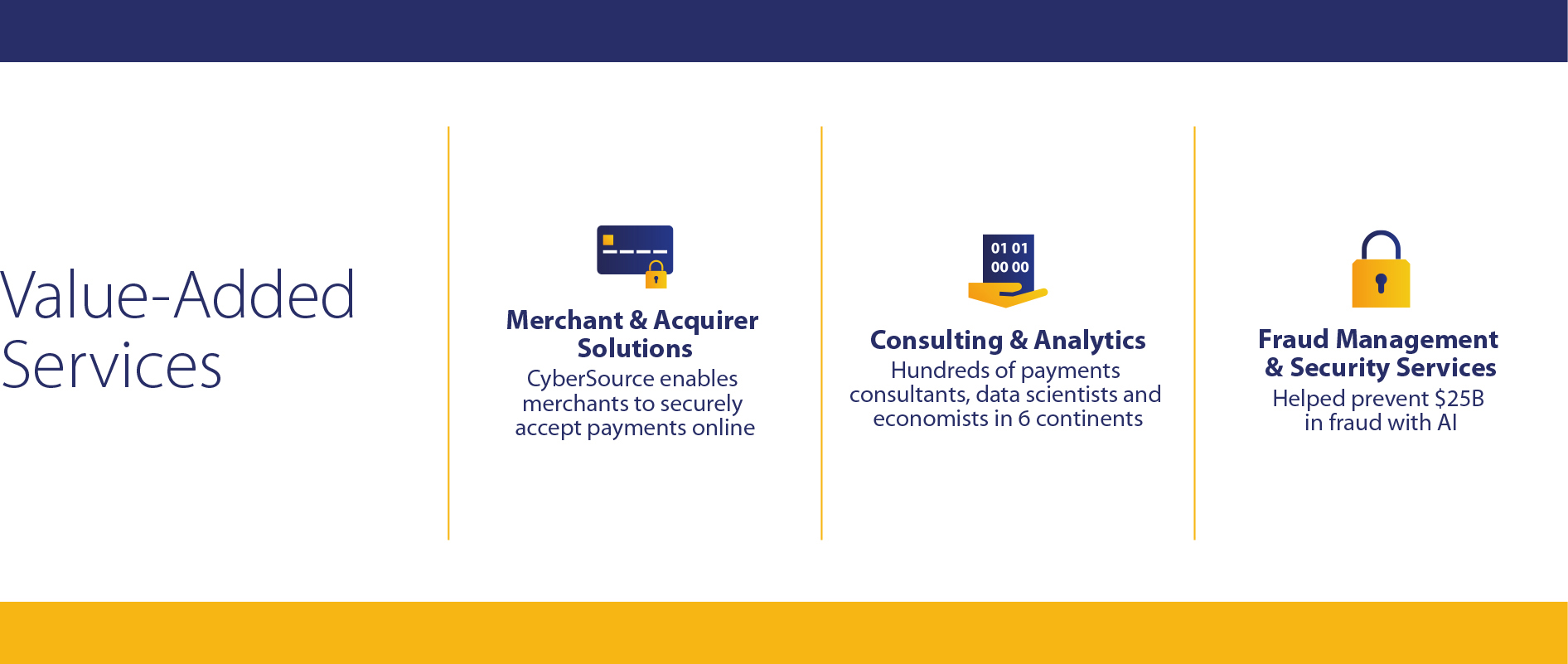
As the payments category expands, both in scope and size, there is a growing opportunity to broaden our revenue streams by expanding the capabilities of our existing network in addition to selectively offering our services to other payment providers. We are accomplishing this through both organic investment and strategic acquisitions. Today, we offer several enhanced capabilities and services, including fraud prevention and security, processing, loyalty, merchant and digital solutions, consulting and data solutions.
Visa Consulting and Analytics
Visa Consulting and Analytics is the payments consulting advisory arm of Visa. This group is a client-facing global team of several hundred payments consultants, data scientists and economists across six continents. The combination of our deep payments expertise, our breadth of data and our economic intelligence allows us to identify actionable insights, recommendations and solutions that drive better business decisions and outcomes for clients.
Fraud Management and Security Services
Trust is at the core of Visa. Through an evolving and multilayered approach, Visa strives to expect the unexpected, constantly monitoring our network and sharing intelligence with our partners. Our multi-prong security strategy is based on empowering consumers and clients through tools, resources and controls so that others can make more informed risk decisions. To provide these tools, we invest in intelligence and technologies that improve fraud and authorization performance. Visa Advanced Authorization risk scores every Visa-processed transaction in about one millisecond, an average of 379 million times a day. In the last year, Visa’s artificial intelligence-powered risk scoring engine helped financial institutions prevent about $25 billion in fraud.
We believe security is an integral driver for growth and innovation. Several developments over the course of 2019 help demonstrate our approach:
| • | We continued to see the benefits of chip technology in preventing counterfeit fraud and reducing the amount and rate of fraud taking place in-person at physical stores. In the U.S., for example, our most recent data shows an 87 percent decline in counterfeit fraud at chip-enabled merchants since 2015, when the industry began to deploy chip technology. |
| • | EMV® 3-D Secure (3DS) is a new generation of the protocol — developed by Visa, other payment brands and industry participants as part of EMVCo — and is designed to protect accounts from unauthorized use across desktop, laptop, mobile or other connected devices, making online purchases easier and more secure. In 2019, Visa branded its 3DS program as Visa Secure (formerly Verified by Visa). The Visa Secure visual badge, combined with descriptive language emphasizing, “Your online transactions are secure with Visa,” will be the way consumers encounter Visa’s 3DS offering. |
Visa is also committed to helping protect the broader payments ecosystem from growing cyber threats through continued investments in intelligence and technology. Companies today must be responsible for securing their businesses from increasingly sophisticated tactics by cyber criminals. Visa provides a suite of capabilities that are a core benefit of being part of the Visa network. Our security capabilities help protect the integrity of the payments ecosystem by seeking to detect and disrupt fraud threats targeting financial institutions and merchants. We combine payment and cyber intelligence, insights and learnings from client/partner breach investigations and law enforcement engagement to help financial institutions and merchants solve critical security challenges.
Visa Token Service
Visa Token Service creates a secure environment to help drive innovation in online and mobile commerce. The technology works by replacing a consumer’s card-related sensitive information, such as personal account number, with a unique identifier, or token, which protects transactions in a number of ways, including when a card or shopper is not physically present. Launched in 2014, tokenization has been brought to scale over the last five years. Visa Token Service is available in more than 100 markets.
In October 2019, Visa acquired the token services and ticketing businesses of Rambus Inc. The combination of Visa’s card network tokenization capabilities with the local and account tokenization technology of Rambus will facilitate safer, more secure payments across a broader range of global commerce types.
Merchant and Acquirer Solutions
CyberSource’s product offerings are examples of Visa’s continued investment to deliver industry-leading products and capabilities to our merchant and acquirer partners. The CyberSource platform enables merchants to accept payments online, in-app or on the mobile web and in-person. CyberSource’s small business solutions are represented by the Authorize.Net brand in North America. CyberSource provides modular, digital capabilities beyond the traditional gateway function of connecting merchants to payment processing. As part of CyberSource's solution to acquirers, we are enabling acquirers to leverage our capabilities to drive more innovation in the payments ecosystem.
Using CyberSource services, merchants of all sizes can improve the way their consumers engage and transact, mitigate fraud and security risk, lower operational costs and adapt to changing business requirements. CyberSource’s global footprint lets merchants accept payments in more than 190 countries and territories around the world and includes a broad choice of acquirer and processor partners, payment types and hardware components.
This year, we announced the acquisition of Payworks, a point-of-sale software solution that enables acquirers to support merchant terminal payments via the cloud, helping merchants seamlessly and quickly implement new functionality, designed to create better customer experiences and lower merchant operating costs. Payworks will add in-store payment processing capabilities to CyberSource's ecommerce payment platform to create a fully integrated omni-channel payment acceptance solution.
Visa also completed the acquisition of Verifi, a leader in technology solutions to reduce chargebacks. Verifi’s technology enables the quick resolution of disputes by connecting issuers to the data of more than 25,000 merchants as soon as an account holder calls with an issue. This tool reduces costs and time spent for all stakeholders in a disputed transaction.
4. Foundational
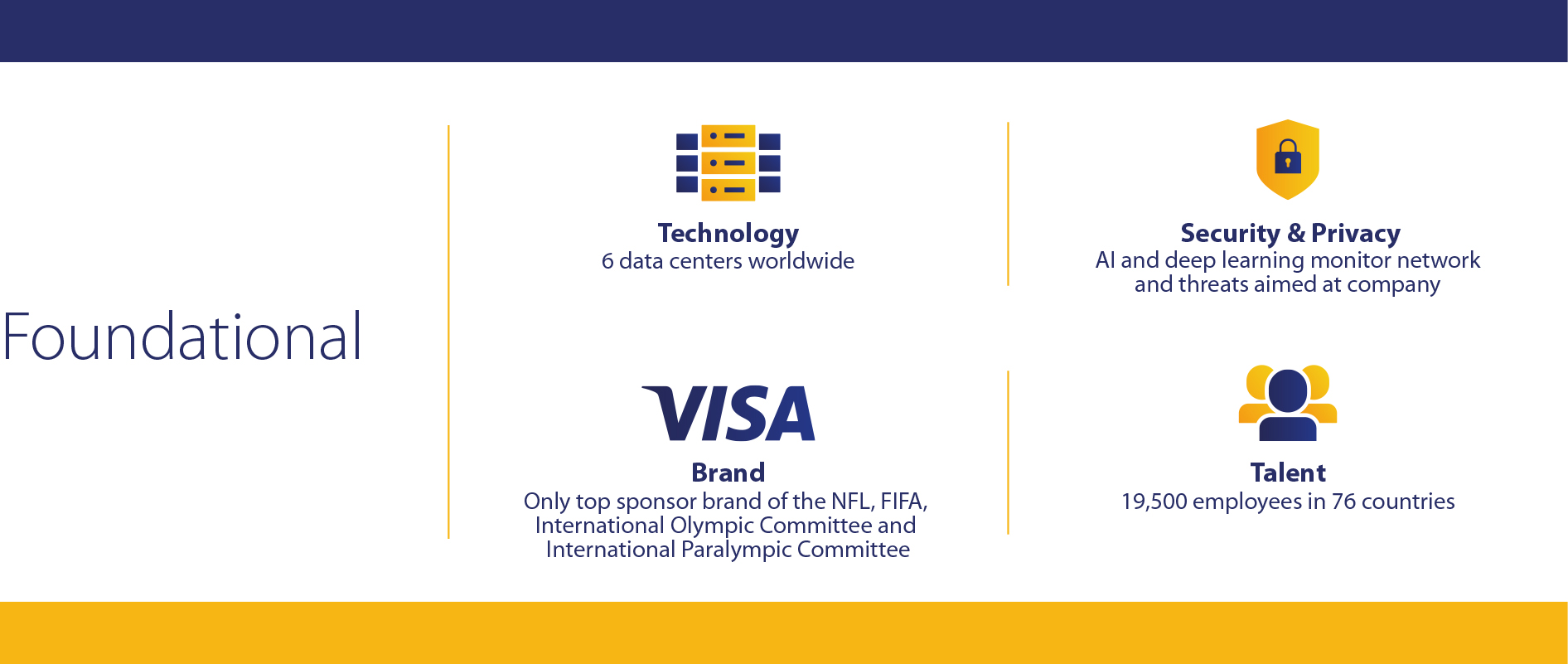
The foundations of our business are our technology, security, brand and talent.
Technology
Visa’s technology platform consists of software, hardware, data centers and a vast telecommunications infrastructure, each with a distinct architecture and operational footprint wrapped with several layers of security and protection technologies. Together, these systems deliver the secure, convenient and reliable service that our clients and consumers expect of the Visa brand.
Software
As part of our global technology environment, we build and securely operate hundreds of commercial applications using a diverse set of technologies. Our software powers the core functions of our transaction processing — including authorization, clearing and settlement, and risk scoring — as well as all of our value-added services. These applications together work to provide essential services to the payments ecosystem.
Hardware
We rely on a diverse array of sophisticated infrastructure systems that are tailored to our services. Visa's infrastructure is designed and configured with layers of redundancies. We have multiple instances of our software running on separate pieces of hardware, which is designed to provide continuous availability. Our disaster recovery capabilities are tiered so that our real-time transaction processing services can be continuously available.
Data Centers
Visa operates six data centers that are a critical part of our global processing environment and are built with the capacity to support Visa’s growing power, cooling and space needs. All of our data centers have high redundancy of network connectivity, power and cooling designed to provide continuous availability of systems. We are continuing to reduce the carbon footprint of our data centers by deploying efficiency improvement strategies, including LED lighting, variable airflow automation controls and hot-and-cold air containment technologies.
Telecommunications
We connect our clients and partners to Visa’s data centers through a massive telecommunications network covering more than 10 million route miles. Each network node is connected through redundant links, designed to provide high levels of security, availability and performance for our products and services.
Security
In parallel with our role in advancing the security of the broader payments ecosystem, Visa remains committed to championing cybersecurity. Our multifaceted security approach includes deploying security tools that help keep our clients and consumers safe, while providing solutions that make Visa the best way to pay and be paid.
We invest significantly in our comprehensive approach to cybersecurity at Visa. We deploy security technologies to protect against data confidentiality, integrity and availability risks, emphasizing core cybersecurity capabilities to minimize risk exposure. Our in-depth security approach applies multiple layers of protection to reduce the risk of any single control failing. These measures include the following:
| • | A formal program to devalue sensitive and/or personal data through various cryptographic means |
| • | Embedded security in the software development lifecycle |
| • | Identity and access management controls to protect against unauthorized access |
| • | Development of advanced cyber detection and response capabilities |
For example, Visa uses AI and deep learning technology to monitor our network and understand the threats aimed at our company. Our platform collects billions of security logs each day, providing insight across the network and within our infrastructure. We combine this data with external intelligence on attacks observed outside of our data centers and network. Using machine learning tools, we focus on the events that appear to pose a risk, enabling our cybersecurity team to intervene. We operate this platform globally, with teams in multiple time zones detecting and responding 24x7x365.
Brand
The Visa brand is one of the world’s most recognized, trusted and valuable brands. Anchored on the notion that Visa is “Everywhere You Want To Be,” the Visa brand stands for acceptance, security, convenience, speed and reliability. In recognition of its strength among clients and consumers, the Visa brand consistently ranks highly in multiple brand studies, including #1 on Forbes World’s Best Regarded Companies (2019), #5 on BrandZ Top 100 Most Valuable Global Brands (2019), Forbes World’s Most Valuable Brands and Interbrand’s Best Global Brands, among others.
Our brand strength helps us to deliver added value to financial institutions, merchants, clients and partners through compelling brand expressions, a wide-range of products and services and innovative marketing efforts. In a consumer study by Visa in 16 countries, when consumers see the Visa logo, they are 3.5 times more likely to think the website is more secure.
In fiscal year 2019, we renewed our 25-year relationship with the National Football League, and continued our global sponsorship of FIFA, the International Olympic Committee and the International Paralympic Committee. Visa is the only brand in the world that is a top sponsor of these properties, and is also the largest sponsor of women’s football in the world. At the upcoming Olympic and Paralympic Games Tokyo 2020, this opportunity will be on full display when we will use our brand and technology to bring Japan’s vision for a future of digital payments to life.
Talent
Visa’s workforce continues to grow, increasing from approximately 17,000 employees in fiscal year 2018 to 19,500 employees in fiscal year 2019. This growth has been fueled in part by acquisitions, with growth in the regions outpacing growth in the San Francisco Bay Area. At the end of fiscal year 2019, Visa’s global workforce was 59 percent male and 41 percent female. Increasing the representation of women and under-represented minorities remain an area of focus for management. Visa’s commitment to diversity recruiting includes partnering with organizations such as AfroTech, AnitaB.org, Catalyst, Diversity Best Practices, the National Society of Black Engineers, the Society of Hispanic Professional Engineers, Watermark - Silicon Valley Conference for Women, Women in CyberSecurity, Women in Payments and many others to support and develop a diverse talent pipeline. Visa is committed to pay equity for employees doing similar work, regardless of gender, race or ethnicity, and conducts pay equity analyses on an annual basis.
We assess employee engagement through our annual employee survey, which provides feedback on a variety of topics, such as company direction and strategy, diversity and inclusion, individual development, collaboration and trust. For the second year in a row, we had an exceptional response rate of 95 percent with improvement in the survey results across the board and no items with notably declining scores.
INTELLECTUAL PROPERTY
We own and manage the Visa brand, which stands for acceptance, security, convenience, speed and reliability. Our portfolio of Visa-owned trademarks are important to our business. Generally, trademark registrations are valid indefinitely as long as they are in use and/or maintained. We give our clients access to these assets through agreements with our issuers and acquirers, which authorize the use of our trademarks in connection with their participation in our payments network. We also own a number of patents, patent applications and other intellectual property relating to payment solutions, transaction processing, security systems and other matters. We rely on a combination of patent, trademark, copyright and trade secret laws in the U.S. and other jurisdictions, as well as confidentiality procedures and contractual provisions, to protect our proprietary technology.
COMPETITION
The global payments industry continues to undergo dynamic change. Existing and emerging competitors compete with Visa’s network and payment solutions for consumers and for participation by financial institutions and merchants. Technology and innovation are shifting consumer habits and driving growth opportunities in ecommerce, mobile payments, blockchain technology and digital currencies. These advances are enabling new entrants, many of which depart from traditional network payment models. In certain countries, the evolving regulatory landscape is changing how we compete, creating local networks or enabling additional processing competition.
We compete against all forms of payment. This includes paper-based payments, primarily cash and checks, and all forms of electronic payments. Our electronic payment competitors principally include:
Global or Multi-Regional Networks**:** These networks typically offer a range of branded, general purpose card payment products that can be used at millions of merchant locations around the world. Examples include Mastercard, American Express, Discover, JCB and UnionPay. These competitors may be more concentrated in specific geographic regions, such as JCB in Japan and Discover in the U.S., or have a leading position in certain countries. For example, UnionPay operates the sole domestic card acceptance mark in China and is expanding into other global markets. See Item 1A — Risk Factors — Regulatory Risks — Government-imposed restrictions on international payment systems may prevent us from competing against providers in certain countries, including significant markets such as China, India and Russia. Based on available data, Visa is one of the largest retail electronic funds transfer networks used throughout the world. The following chart compares our network with these network competitors for calendar year 2018(4):
| Visa | Mastercard | American Express | JCB | Diners Club | |||||
| Payments Volume ($B) | 8,449 | 4,338 | 1,169 | 283 | 172 | ||||
| Total Volume ($B) | 11,380 | 5,901 | 1,184 | 290 | 187 | ||||
| Total Transactions (B) | 188 | 103 | 8 | 4 | 3 | ||||
| Cards (M) | 3,359 | 2,022 | 114 | 127 | 63 |
(4) MasterCard, American Express, JCB and Discover/Diners Club data sourced from The Nilson Report issue 1154 (May 2019). Mastercard excludes Maestro and Cirrus figures. American Express, Diners Club/Discover, and JCB include business from third-party issuers. JCB figures include other payment-related products and some figures are estimates.
Local and Regional Networks**:** Operated in many countries, these networks often have the support of government influence or mandate. In some cases, they are owned by financial institutions. These networks typically focus on debit payment products and may have strong local acceptance, and recognizable brands. Examples include STAR, NYCE, and Pulse in the U.S., Interac in Canada, EFTPOS in Australia and Mir in Russia.
Alternate Payment Providers**:** These providers often have a primary focus of enabling payments through ecommerce and mobile channels, but are expanding or may expand their offerings to the physical point of sale. These companies may process payments using in-house account transfers between parties, electronic funds transfer networks like the ACH, global or local networks like Visa, or some combination of the foregoing. In some cases, these entities are both a partner and a competitor to Visa.
ACH and Real Time Payment (RTP) Networks**:** These networks are often governed by local regulations. Primarily focused on interbank transfers, many are adding capabilities that may make them more competitive for retail payments. We also compete with closed-loop payment systems, emerging payments networks, wire transfers and electronic benefit transfers.
Payment Processors**:** We compete with payment processors for the processing of Visa transactions. These processors may benefit from mandates requiring them to handle processing under local regulation. For example, as a result of regulation in Europe under the Interchange Fee Regulation (IFR), we may face competition from other networks, processors and other third-parties who could process Visa transactions directly with issuers and acquirers.
We believe our fundamental value proposition of acceptance, security, convenience, speed and reliability offers us a key competitive advantage. We succeed in part because we understand the needs of the individual markets in which we operate and partner with local financial institutions, merchants, fintechs, governments, non-governmental organizations and business organizations to provide tailored solutions. We believe Visa is well-positioned competitively due to our global brand, our broad set of Visa-branded payment products and our proven track record of processing payment transactions securely and reliably through VisaNet.
SEASONALITY
We generally do not experience any pronounced seasonality in our business. No individual quarter of fiscal 2019 or fiscal 2018 accounted for more than 30 percent of our net revenues in those years.
WORKING CAPITAL
Payments settlement due to and from our financial institution clients can represent a substantial daily working capital requirement. Most U.S. dollar settlements are settled within the same day and do not result in a receivable or payable balance, while settlement in currencies other than the U.S. dollar generally remain outstanding for one to two business days, which is consistent with industry practice for such transactions.
GOVERNMENT REGULATION
As a global payments technology company, we are subject to complex and evolving global regulations in the various jurisdictions in which our products and services are used. The most significant government regulations that impact our business are discussed below. For further discussion of how global regulations may impact our business, see Item 1A-Risk Factors-Regulatory Risks.
Anti-Corruption, Anti-Money Laundering, Anti-Terrorism and Sanctions: We are subject to anti-corruption laws and regulations, including the U.S. Foreign Corrupt Practices Act (FCPA), the UK Bribery Act and other laws that generally prohibit the making or offering of improper payments to foreign government officials and political figures for the purpose of obtaining or retaining business or to gain an unfair business advantage. We are also subject to anti-money laundering and anti-terrorist financing laws and regulations, including the U.S. Bank Secrecy Act. In addition, we are subject to economic and trade sanctions programs administered by the Office of Foreign Assets Control (OFAC) in the U.S. Therefore, we do not permit financial institutions or other entities that are domiciled in countries or territories subject to comprehensive OFAC trade sanctions (currently, Cuba, Iran, North Korea, Syria and Crimea), or that are included on OFAC’s list of Specially Designated Nationals and Blocked Persons, to issue or acquire Visa cards or engage in transactions using our services.
Government-Imposed Market Participation and Restrictions: Certain governments, including China, India, Indonesia, Russia, Thailand and Vietnam, have taken actions to promote domestic payments systems and/or certain issuers, payments networks or processors, by imposing regulations that favor domestic providers, impose local ownership requirements on processors, require data localization or mandate domestic processing be done in that country.
Interchange Rates and Fees: An increasing number of jurisdictions around the world regulate or influence debit and credit interchange reimbursement rates in their regions. For example, the Dodd-Frank Wall Street Reform and Consumer Act (Dodd-Frank Act) in the U.S. limits interchange reimbursement rates for certain debit card transactions, the European Union’s (EU) IFR limits interchange rates in Europe (as discussed below) and the Reserve Bank of Australia and the Central Bank of Brazil regulate average permissible levels of interchange.
Internet Transactions: Many jurisdictions have adopted regulations that require payments system participants to monitor, identify, filter, restrict or take other actions with regard to certain types of payment transactions on the Internet, such as gambling and the purchase of cigarettes or alcohol.
Network Exclusivity and Routing: In the U.S., the Dodd-Frank Act limits network exclusivity and preferred routing arrangements for the debit and prepaid market segments. Other jurisdictions impose similar limitations, such as the IFR’s prohibition in Europe on restrictions that prevent multiple payment brands or functionality on the same card.
No-surcharge Rules: We have historically enforced rules that prohibit merchants from charging higher prices to consumers who pay using Visa products instead of other means. However, merchants’ ability to surcharge varies by geographic market as well as Visa product type, and continues to be impacted by litigation, regulation and legislation.
Privacy and Data Protection: Aspects of our operations or business are subject to privacy, data use and data security regulations, which impact the way we use and handle data, operate our products and services and even impact our ability to offer a product or service. In addition, regulators are proposing new laws or regulations that could require Visa to adopt certain cybersecurity and data-handling practices, create new individual privacy rights and impose increased obligations on companies handling personal data.
Supervisory Oversight of the Payments Industry: Visa is subject to financial sector oversight and regulation in substantially all of the jurisdictions in which we operate. In the U.S., for example, the Federal Financial Institutions Examination Council (FFIEC) has supervisory oversight over Visa under applicable federal banking laws and policies as a technology service provider to U.S. financial institutions. The federal banking agencies comprising the FFIEC are the Federal Reserve Board, the Comptroller of the Currency, the Federal Deposit Insurance Corporation and the National Credit Union Administration. Visa also may be separately examined by the Bureau of Consumer Financial Protection as a service provider to the banks that issue Visa-branded consumer credit and debit card products. Central banks in other countries/regions, including Europe, Russia, Ukraine and the United Kingdom (as discussed below), have recognized or designated Visa as a retail payment system under various types of financial stability regulations. Visa is also subject to oversight by banking and financial sector authorities in other jurisdictions, such as Brazil and Hong Kong.
European Regulations and Supervisory Oversight: Visa in Europe continues to be subject to complex and evolving regulation in the European Economic Area (EEA). Visa Europe is designated as a Recognized Payment System in the United Kingdom, bringing it within the scope of the Bank of England’s supervisory powers and subject to various requirements, including on issues such as governance and risk management designed to maintain the stability of the United Kingdom’s financial system. Visa Europe is also subject to the European Central Bank’s oversight, whose main focus is on the smooth operation of payment systems in the Euro area, including the security, operational reliability, and business continuity of the payment systems. Furthermore, Visa Europe is regulated by the United Kingdom’s Payment Systems Regulator (PSR), which has wide ranging powers and authority to review our business practices, systems, rules and fees with respect to promoting competition and innovation in the United Kingdom, and ensuring payments meet account holder needs. The PSR is also the regulator responsible for monitoring Visa Europe’s compliance with the IFR in the United Kingdom. The IFR regulates interchange rates within Europe, requires Visa Europe to separate its payment card scheme activities from processing activities for accounting, organization, and decision-making purposes within the EU and imposes limitations on network exclusivity and routing. National competent authorities in the EU are responsible for monitoring and enforcing the IFR in their markets.
There are other regulations in the European Union that impact our business, as discussed above, including privacy and data protection, anti-bribery, anti-money laundering, anti-terrorism and sanctions. Other recent regulatory changes in Europe, such as the second Payment Services Directive (PSD2), require, among other things, that our financial institution clients provide certain customer account access rights to emerging non-financial institution players. PSD2 also includes strong customer authentication requirements for certain transactions that could impose both operational complexity on Visa and negatively impact consumer payment experiences.
As discussed in Item 1A — Risk Factors — Business Risks — The United Kingdom’s withdrawal from the European Union could harm our business and financial results, Brexit could lead to further legal and regulatory complexity in Europe.
Additional Regulatory Developments: Various regulatory agencies also continue to examine a wide variety of other issues, including mobile payment transactions, tokenization, access rights for non-financial institutions, money transfer, identity theft, account management guidelines, disclosure rules, security and marketing that could affect our financial institution clients and us. Furthermore, following the passage of PSD2 in Europe, several countries, including Australia, Brazil, Canada, Hong Kong and Mexico, are contemplating granting various types of access rights to third-party processors, including access to consumer account data maintained by our financial institution clients, which could have implications for our business as well.
AVAILABLE INFORMATION
Visa Inc. was incorporated in Delaware in May 2007, and we completed our initial public offering in March 2008. Prior to 2007 when Visa was reorganized, Visa served its member financial institutions through Visa International and regional member-owned associations (e.g., Visa U.S.A. Inc. and Visa Canada Corporation). As part of the 2007 reorganization, these associations became a part of Visa Inc. in October 2007, with the exception of Visa Europe Limited, which continued to operate as an association until our acquisition in June 2016. Please see Item 8. Financial Statements and Supplementary Data-Notes to the Consolidated Financial Statements-Note 14-Stockholders’ Equity for information regarding our capital structure.
Our corporate website is http://corporate.visa.com. Our annual reports on Form 10-K, our quarterly reports on Form 10-Q, our current reports on Form 8-K, proxy statements and any amendments to those reports filed or furnished pursuant to the Securities Exchange Act of 1934, as amended, can be viewed at http://www.sec.gov and our investor relations website at http://investor.visa.com as soon as reasonably practicable after these materials are electronically filed with or furnished to the U.S. Securities and Exchange Commission (SEC). In addition, we routinely post financial and other information, which could be deemed to be material to investors, on our investor relations website. Information regarding our corporate responsibility and sustainability initiatives are also available on our website at http://www.visa.com/responsibility. The content of any of our websites referred to in this report is not incorporated by reference into this report or any other filings with the SEC.
Previous: Cover and table of contents · Next: Item 1A. Risk Factors