 filings.tools
Item 1. Business.
84K characters. Original on sec.gov · Markdown
Item 1. Business.
Overview
Zoetis Inc. is a global leader in the animal health industry, focused on the discovery, development, manufacture and commercialization of medicines, vaccines, diagnostic products and services, biodevices, genetic tests and precision animal health technology. We have a diversified business, commercializing products across eight core species: dogs, cats and horses (collectively, companion animals) and cattle, swine, poultry, fish and sheep (collectively, livestock); and within seven major product categories: vaccines, parasiticides, anti-infectives, dermatology, other pharmaceutical products, medicated feed additives and animal health diagnostics. For 70 years, we have been innovating ways to predict, prevent, detect, and treat animal illness, and continue to stand by those raising and caring for animals worldwide - from livestock farmers to veterinarians and pet owners.
We were incorporated in Delaware in July 2012 and prior to that the company was a business unit of Pfizer Inc. (Pfizer). The address of our principal executive offices is 10 Sylvan Way, Parsippany, New Jersey 07054. Unless the context requires otherwise, references to “Zoetis,” “the company,” “we,” “us” or “our” in this Annual Report on Form 10-K for the fiscal year ended December 31, 2021 (2021 Annual Report) refer to Zoetis Inc., a Delaware corporation, and its subsidiaries. In addition, unless the context requires otherwise, references to “Pfizer” in this 2021 Annual Report refer to Pfizer Inc., a Delaware corporation, and its subsidiaries.
Operating Segments
The animal health medicines, vaccines and diagnostics market is characterized by meaningful differences in customer needs across different regions. This is due to a variety of factors, including:
-
economic differences, such as standards of living in developed markets as compared to emerging markets;
-
cultural differences, such as dietary preferences for different animal proteins, pet ownership preferences and pet care standards;
-
epidemiological differences, such as the prevalence of certain bacterial and viral strains and disease dynamics;
-
treatment differences, such as utilization of different types of medicines and vaccines, as well as the pace of adoption of new technologies;
-
environmental differences, such as seasonality, climate and the availability of arable land and fresh water; and
-
regulatory differences, such as standards for product approval and manufacturing.
As a result of these differences, among other things, we organize and operate our business in two segments:
-
United States (U.S.)** with revenue of $4,042 million, or 52% of total revenue for the year ended December 31, 2021; and
-
International** with revenue of $3,652 million, or 47% of total revenue for the year ended December 31, 2021.
Within each of these operating segments, we offer a diversified product portfolio for both companion animal and livestock customers so that we can capitalize on local trends and customer needs.
In addition, our Client Supply Services (CSS) organization which provides contract manufacturing services to third parties, and our human health products, together represented approximately 1% of our total revenue for the year ended December 31, 2021.
1 |
Our 2021 revenue for the U.S. and key international markets, together with the percentage of revenue attributable to companion animal and livestock products in those markets, is as follows:
| (MILLIONS OF DOLLARS) | Revenue | Companion Animal | Livestock | ||||||||
| United States | $4,042 | 74% | 26% | ||||||||
| Total International | $3,652 | 47% | 53% | ||||||||
| Australia | $259 | 47% | 53% | ||||||||
| Brazil | $312 | 33% | 67% | ||||||||
| Canada | $232 | 58% | 42% | ||||||||
| Chile | $136 | 21% | 79% | ||||||||
| China | $357 | 53% | 47% | ||||||||
| France | $132 | 56% | 44% | ||||||||
| Germany | $183 | 64% | 36% | ||||||||
| Italy | $115 | 66% | 34% | ||||||||
| Japan | $186 | 67% | 33% | ||||||||
| Mexico | $133 | 29% | 71% | ||||||||
| Spain | $128 | 46% | 54% | ||||||||
| United Kingdom | $234 | 68% | 32% | ||||||||
| Other Developed | $467 | 45% | 55% | ||||||||
| Other Emerging | $778 | 34% | 66% |
For additional information regarding our performance in each of these operating segments and the impact of foreign exchange rates, see Item 7. Management's Discussion and Analysis of Financial Condition and Results of Operations and Item 8. Financial Statements and Supplementary Data:
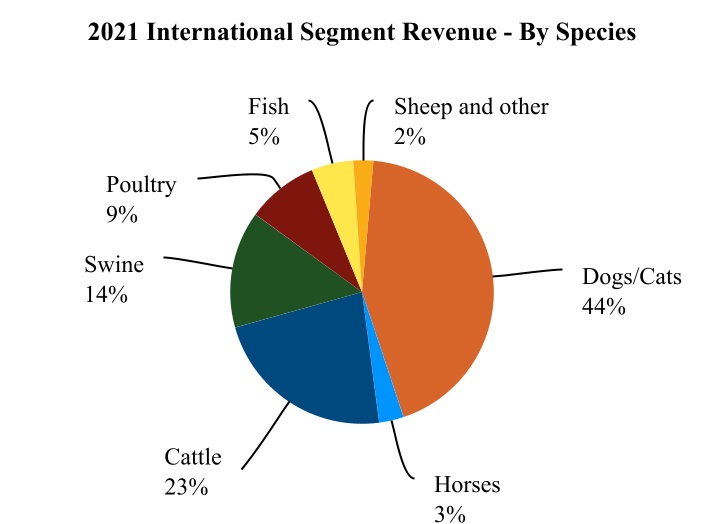
Notes to Consolidated Financial Statements—Note 4. Revenue and Note 19. Segment Information. Our 2021 reported revenue for each segment, by species, is as follows:

2 |
Products
Over the course of our history, we have focused on developing a diverse portfolio of animal health products that deliver solutions across the continuum of care. We refer to all different brands of a particular product, or its dosage forms for all species, as a product line. We have approximately 300 comprehensive product lines, including products for both companion animals and livestock within each of our major product categories.
Our companion animal products help extend and improve the quality of life for pets; increase convenience and compliance for pet owners; and help veterinarians improve the quality of their care and the efficiency of their businesses. Growth in the companion animal medicines, vaccines and diagnostics sector is driven by economic development, related increases in disposable income and increases in pet ownership and spending on pet care. Companion animals are also living longer, deepening the human-animal bond, receiving increased medical treatment and benefiting from advances in animal health medicines, vaccines and diagnostics. Companion animal products represented approximately 60% of our revenue for the year ended December 31, 2021.
Our livestock products primarily help prevent or treat diseases and conditions to allow veterinarians and producers to care for their animals and to enable the cost-effective and sustainable production of safe, high-quality animal protein. Human population growth, increasing standards of living and a greater focus on sustainable food production are important long-term growth drivers for our livestock products in three major ways. First, population growth and increasing standards of living drive demand for improved nutrition, particularly through increased consumption of animal protein. Second, population growth leads to greater natural resource constraints driving a need for enhanced productivity. Finally, as standards of living improve and the global food chain faces increased scrutiny, there is more focus on food quality, sustainability, safety and reliability of supply. Livestock products represented approximately 39% of our revenue for the year ended December 31, 2021.
In addition, our CSS organization, which provides contract manufacturing services to third parties, and our human health products, together represented approximately 1% of our total revenue for the year ended December 31, 2021.
Our major product categories are:
-
vaccines: biological preparations that help prevent diseases of the respiratory, gastrointestinal and reproductive tracts or induce a specific immune response;
-
parasiticides: products that prevent or eliminate external and internal parasites such as fleas, ticks and worms;
-
anti-infectives**: products that prevent, kill or slow the growth of bacteria, fungi or protozoa;
-
dermatology products: products that relieve itch associated with allergic conditions and atopic dermatitis;
-
other pharmaceutical products**: pain and sedation, antiemetic, reproductive, and oncology products;
-
medicated feed additives: products added to animal feed that provide medicines to livestock; and
-
animal health diagnostics: blood and urine analysis testing capabilities, including point-of-care diagnostic products, instruments and reagents, rapid immunoassay tests, reference laboratory kits and services and blood glucose monitors.
Our remaining revenue is derived from other non-pharmaceutical product categories, such as nutritionals and agribusiness, as well as products and services in biodevices, genetic tests and precision animal health.
As part of our growth strategy, we focus on the discovery and development of new chemical, biopharmaceutical and biological entities, as well as product lifecycle innovation, primarily through our research and development (R&D) group. Historically, a substantial portion of our products and revenue has been the result of product lifecycle innovation where we actively work to broaden the value of existing products by developing claims in additional species, more convenient formulations and combinations, and by expanding usage into more countries. For example, the first product in our ceftiofur line was an anti-infective approved for treating bovine respiratory disease (BRD) in cattle that was administered via intramuscular injection. Through follow-on studies and reformulations, we have expanded the product line into additional cattle claims and administration routes, as well as other species and regions. The ceftiofur product line currently includes the brands Excede®, Excenel®, Naxcel® and Spectramast®.
The following are examples of our first-in-class and/or best-in-class products that we have launched in recent years and products that we believe may represent platforms for future product lifecycle innovation (listed alphabetically):
-
Apoquel®, the first Janus kinase inhibitor for use in veterinary medicine, was approved for the control of pruritus associated with allergic dermatitis and the control of atopic dermatitis in dogs at least 12 months of age. Since January 2014, we launched Apoquel in key markets including the U.S., Europe, Japan, Brazil, Australia and China. In 2021, a chewable version of Apoquel was approved in the European Union (EU) and the U.K.;
-
Core EQ Innovator™, the first and only vaccine for horses to contain all five core equine disease antigens - West Nile, Eastern and Western Equine encephalomyelitis, tetanus and rabies - in one combination, was approved in the U.S. in 2018 and in Canada in 2019;
-
Cytopoint®, the first canine monoclonal antibody (mAb) to help reduce the clinical signs of atopic dermatitis (such as itching) in dogs of any age, was licensed in the U.S. in 2016 (and was later granted an expanded indication to treat allergic dermatitis in 2018). The product has been approved in major markets since 2016, including Canada, the EU, New Zealand, Australia, Brazil and Mexico, and was approved in China in 2021. An injection given once every four to eight weeks, Cytopoint neutralizes interleukin-31, a protein that has been demonstrated to trigger itching in dogs;
-
Fostera® PCV MH was introduced in November 2013 in the U.S. and approved in the EU in 2015 and Australia in 2017. It was developed to help protect pigs from porcine circovirus-associated disease (PCVAD) and enzootic pneumonia caused by M. hyopneumoniae (M. hyo). The one-bottle formulation of Fostera PCV MH allows the convenience of a one-dose program or the flexibility of a two-dose program. Fostera Gold PCV MH, the only vaccine to contain two PCV2 genotypes and long-lasting M. hyo coverage, was approved in the U.S. and Canada in 2018, Brazil and Mexico in 2019 and Australia, Europe (under the name CircoMax Myco) and Japan in 2020. The Fostera franchise also includes Fostera/Suvaxyn® PRRS, which was approved in the U.S. in 2015 and in Taiwan, Vietnam and EU countries in
3 |
- This vaccine offers protection against both the respiratory and reproductive forms of disease caused by porcine reproductive and respiratory syndrome (PRRS) virus;
-
Librela® (bedinvetmab), the first injectable mAb therapy for monthly alleviation of osteoarthritis (OA) pain in dogs, was approved in the EU and Switzerland in 2020, and Canada, Brazil, and the U.K. in 2021;
-
Poulvac® Procerta™ HVT-ND, our first vector vaccine that helps protect against Marek’s disease and Newcastle disease, highly contagious viral infections affecting poultry, was approved in the U.S. in 2019. In 2020, we expanded our line of recombinant vector vaccines with the launch of Poulvac Procerta HVT-IBD, which helps protect against Marek's disease and provides early protection against the contemporary infectious bursal disease (IBD) viruses. In 2021, we expanded Poulvac Procerta HVT-ND into new markets, including Brazil, Canada and the Philippines;
-
ProHeart® 12 (moxidectin), a once-yearly injection to prevent heartworm disease in dogs 12 months of age and older, was approved in the U.S. in 2019;
-
Simparica® (sarolaner) Chewables, a monthly chewable tablet for dogs to control fleas and ticks, was approved in the EU and New Zealand in 2015, the U.S., Canada, Australia, and Brazil (Simparic) in 2016, Japan and additional European, Latin American and Asia Pacific markets in 2017, and China in 2020. Simparica Trio®, a triple combination parasiticide for dogs, was approved in the EU and Canada in 2019, the U.S. and Australia in 2020, and Japan and Mexico in 2021. This product is a key internal lifecycle innovation that combines flea and tick treatment (sarolaner) with the prevention of heartworm disease and treatment of gastrointestinal parasites;
-
SolensiaTM (frunevetmab), the first injectable mAb therapy for monthly alleviation of OA pain in cats, was approved in Switzerland in 2020, Canada, the EU and the U.K. in 2021 and the U.S. in 2022;
-
Stronghold® Plus (selamectin/sarolaner), a topical combination product that treats ticks, fleas, ear mites, lice and gastrointestinal worms and prevents heartworm disease in cats, received European Commission approval in 2017. In 2018, this product was approved in the U.S., Japan and Canada (Revolution® Plus) and in 2021 this product was approved in China (Revolution Plus); and
-
Vanguard®/Versican® is a market leading vaccine line for dogs intended to help prevent a range of diseases. Since 2016, Zoetis has added new and innovative enhancements to its Vanguard line in the U.S. with Vanguard crLyme, Vanguard Rapid Resp Intranasal, Vanguard B Oral, and Vanguard CIV H3N2/H3N8. In 2019, the company received approval for Versican Plus Bb Oral, the first oral vaccine for dogs in Europe. It provides long-lasting protection against Bordetella bronchiseptica, a primary component of the canine infectious respiratory disease complex (CIRDC). In 2021, Vanguard Intranasal I-III was approved in China.
We pursue the development of new vaccines for emerging infectious diseases, with an operating philosophy of “first to know and fast to market.” Examples of the successful execution of this strategy include the first experimental COVID-19 vaccine to help protect the health and well-being of more than 100 mammalian species living in zoos around the world; the first equine vaccine for West Nile virus in the U.S. and EU; the first swine vaccine for pandemic H1N1 influenza virus in the U.S.; the first fully licensed vaccine to help reduce disease caused by the Georgia 08 variant of infectious bronchitis virus (IBV) in poultry; a conditionally licensed vaccine to help fight porcine epidemic diarrhea virus (PEDv) in the U.S.; and the first conditionally licensed vaccine to help prevent the H3N2 type of canine influenza that emerged in the U.S. In 2019, Zoetis established a research facility with Texas A&M University to develop vaccines for transboundary and emerging diseases in animals, including Foot-and-Mouth Disease (FMD), a virus that can cause serious illness in cattle, pigs, and sheep. In 2020, the company opened a research lab at Colorado State University in a partnership to increase our understanding of the potential use of immunomodulators in livestock that would reduce the need for antibiotics, as well as advance our understanding of the biology of key diseases affecting companion animals which could lead to new therapies that can treat chronic health conditions in pets.
Additionally, the Pharmaq business of Zoetis is the global leader in vaccines and innovation for aquatic health products. Pharmaq added to its leading Alpha Ject® vaccine line with approval of Alpha Ject Micro 1 TiLa in Brazil and Colombia, and Alpha Ject Micro 1 Si in Honduras in 2019, as well as Alpha Ject Micro 4-2 in Chile in 2020. Pharmaq also launched Alpha Flux® in Chile in 2019, a parasiticide that helps salmon farmers control sea lice infestations, one of the major challenges in the aquatic health industry. In 2020, Pharmaq received approval in Norway for Alpha ERM Salar, a water-based injectable vaccine that helps protect salmon from red mouth, a common bacterial infection. Pharmaq also established a new diagnostics lab in Norway, the country with the highest density of salmon fish farmers in the world, that will serve as a hub for research and testing. In 2020, Zoetis acquired Fish Vet Group to expand the geographic reach and enhance the diagnostics expertise and testing services of the Pharmaq business for fish farmers in major aquaculture markets.
Zoetis enhanced the portfolio of its diagnostic products with the acquisition in 2018 of Abaxis, Inc. (Abaxis), a leading provider of veterinary point-of-care diagnostic instruments. With this acquisition came the VetScan® portfolio of benchtop and handheld diagnostic instruments and consumables, which serves a large customer base of veterinary practices both in the U.S. and international markets. In 2019, the company acquired Phoenix Central Laboratory for Veterinarians, Inc. (Phoenix Lab) and ZNLabs, LLC (ZNLabs) marking its entry into reference laboratory services and building on a strategy to develop a more comprehensive diagnostics offering with enhanced value for veterinarians. In 2020, the company acquired a third veterinary reference lab business, Ethos Diagnostic Science. The Zoetis diagnostic portfolio also includes the Witness®, Serelisa® and ProFlok® lines of immunodiagnostic kits, which provide disease detection capabilities for various species, including dogs, cats, cattle, pigs and poultry. In 2020, the company launched Vetscan Imagyst™ in the U.S., Australia, Ireland, New Zealand, and the U.K. In 2021 we expanded to Canada, Spain, Germany, Italy, Netherlands, Belgium and Luxembourg. Imagyst uses a combination of image recognition technology, algorithms and cloud-based artificial intelligence (AI) to deliver rapid testing results to veterinary clinics. In 2021, the company added digital cytology testing to the Vetscan Imagyst platform, which offers a network of expert remote pathologists in addition to AI technology for fecal testing. As Zoetis continues to develop additional innovative applications for Vetscan Imagyst, it plans to seamlessly integrate even more new capabilities into the platform, helping veterinarians provide the best possible care for dogs and cats.
Zoetis also entered the field of animal nutritionals with the acquisition of Platinum Performance in 2019. The acquisition brings us premium nutritional product formulas and a unique approach to the field of scientific wellness for horses, dogs and cats.
4 |
In 2021, our two top-selling products, Apoquel and Simparica/Simparica Trio, each contributed approximately 10% of our revenue. Combined with our next three top-selling products, Revolution®/Revolution Plus/Stronghold, Cytopoint and the ceftiofur line, these five products contributed approximately 33% of our revenue. In 2021, our ten top-selling product lines contributed 47% of our revenue.
Our product lines and products that represented approximately 1% or more of our revenue in 2021, which comprise 61% of our total revenue, are as follows (listed alphabetically by product category):
Companion animal products
| Product line / product | Description | Primary species | ||||||||||||
| Vaccines | ||||||||||||||
| Vanguard® L4 (4-way Lepto) | Compatible with the Vanguard line and helps protect against leptospirosis caused by Leptospira canicola, L. grippotyphosa, L. icterohaemorrhagiae and L. pomona | Dogs | ||||||||||||
| Vanguard® line | Aids in preventing canine distemper caused by canine distemper virus; infectious canine hepatitis caused by canine adenovirus type 1; respiratory disease caused by canine adenovirus type 2; canine parainfluenza caused by canine parainfluenza virus; canine parvoviral enteritis caused by canine parvovirus; Lyme disease and subclinical arthritis associated with Borrelia burgdorferi, the causative agent of Lyme disease; and Rapid Resp - a group of three vaccines combating infections in dogs caused by Bordetella bronchiseptica, canine parainfluenza and canine adenovirus; canine influenza vaccines; and an oral vaccine for Bordatella bronchiseptica | Dogs | ||||||||||||
| Anti-infectives | ||||||||||||||
| Clavamox® / Synulox® | A broad-spectrum antibiotic and the first potentiated penicillin approved for use in dogs and cats | Cats, dogs | ||||||||||||
| Convenia® | Anti-infective for the treatment of common bacterial skin infections that provides a course of treatment in a single injection | Cats, dogs | ||||||||||||
| Parasiticides | ||||||||||||||
| ProHeart® | Prevents heartworm infestation; also for treatment of existing larval and adult hookworm infections | Dogs | ||||||||||||
| Revolution® / Revolution® Plus / Stronghold® line | An antiparasitic for protection against fleas, heartworm disease and ear mites in cats and dogs; sarcoptic mites and American dog tick in dogs and roundworms and hookworms for cats | Cats, dogs | ||||||||||||
| Simparica®/ Simparica Trio® | A monthly chewable tablet for dogs to control fleas and ticks; Simparica Trio, also a monthly chewable tablet, is a triple combination parasiticide that delivers all-in-one protection from fleas and ticks, as well as heartworm disease, roundworms and hookworms | Dogs | ||||||||||||
| Other Pharmaceutical Products | ||||||||||||||
| Cerenia® | A medication that prevents and treats acute vomiting in dogs, treats acute vomiting in cats and prevents vomiting due to motion sickness in dogs | Cats, dogs | ||||||||||||
| Rimadyl® | For the relief of pain and inflammation associated with osteoarthritis and for the control of postoperative pain associated with soft tissue and orthopedic surgeries | Dogs | ||||||||||||
| Dermatology | ||||||||||||||
| Apoquel® | A selective inhibitor of the Janus Kinase 1 enzyme that controls pruritus associated with allergic dermatitis and control of atopic dermatitis in dogs at least 12 months of age | Dogs | ||||||||||||
| Cytopoint® | An injectable to help reduce the clinical signs such as itching of atopic dermatitis in dogs of any age | Dogs | ||||||||||||
| Animal Health Diagnostics | ||||||||||||||
| VetScan® | A portfolio of benchtop and handheld diagnostic instruments, rapid tests and associated consumables | Cats, dogs |
5 |
Livestock products
| Product line / product | Description | Primary species | ||||||||||||
| Vaccines | ||||||||||||||
| Improvac / Improvest / Vivax | Reduces boar taint, as an alternative to surgical castration and suppression of estrus in gilts | Swine | ||||||||||||
| Rispoval® / Bovishield® line | Aids in preventing three key viruses involved in cattle pneumonia-BRSV, PI 3 virus and BVD-viruses as well as other respiratory diseases, depending on formulation | Cattle | ||||||||||||
| Suvaxyn® / Fostera® | Aids in preventing or controlling diseases associated with major pig pathogens such as porcine circovirus type 2 (PCV2), porcine reproductive and respiratory syndrome virus (PRRSv) and Mycoplasma hyopneumoniae (M. hyo), depending on formulations | Swine | ||||||||||||
| Anti-infectives | ||||||||||||||
| Ceftiofur injectable line | Broad-spectrum cephalosporin antibiotic active against gram-positive and gram-negative bacteria, including ß-lactamase-producing strains, with some formulations producing a single course of therapy in one injection | Cattle, sheep, swine | ||||||||||||
| Draxxin® | Single-dose low-volume antibiotic for the treatment and prevention of bovine and swine respiratory disease, infectious bovine keratoconjunctivitis and bovine foot rot. This franchise also includes Draxxin KP/Draxxin Plus, an injectable for the treatment of bovine respiratory disease that combines the antimicrobial properties of Draxxin with the anti-inflammatory, analgesic and antipyretic properties of the non-steroidal Ketoprofen to rapidly reduce fever in a single dose. | Cattle, sheep, swine | ||||||||||||
| Spectramast® | Treatment of subclinical or clinical mastitis in dry or lactating dairy cattle, delivered via intramammary infusion; same active ingredient as the ceftiofur line | Cattle | ||||||||||||
| Terramycin® line | Antibiotic for the treatment of susceptible infections | Cattle, poultry, sheep, swine | ||||||||||||
| Parasiticides | ||||||||||||||
| Dectomax® | Injectable or pour-on endectocide, characterized by extended duration of activity, for the treatment and control of internal and external parasite infections | Cattle, swine | ||||||||||||
| Medicated Feed Additives | ||||||||||||||
| Lincomycin line | Controls necrotic enteritis; treatment of dysentery (bloody scours), control of ileitis and treatment/reduction in severity of mycoplasmal pneumonia | Swine, poultry | ||||||||||||
International Operations
We directly market our products in approximately 45 countries across North America, Europe, Africa, Asia, Australia and South America, and our products are sold in more than 100 countries. Operations outside the U.S. accounted for 47% of our total revenue for the year ended December 31, 2021. Through our efforts to establish an early and direct presence in many emerging markets, such as Brazil, Chile, China and Mexico, emerging markets contributed 22% of our total revenue for the year ended December 31, 2021.
Our international businesses are subject, in varying degrees, to a number of risks inherent in carrying on business in other countries. These include, among other things, currency fluctuations, capital and exchange control regulations, expropriation and other restrictive government actions. See Item 1A. Risk Factors— Risks related to operating in foreign jurisdictions.
Sales and Marketing
Our sales organization includes sales representatives and technical and veterinary operations specialists. In markets where we do not have a direct commercial presence, we generally contract with distributors that provide logistics and sales and marketing support for our products.
Our sales representatives visit our customers, including veterinarians and livestock producers, to provide information and to promote and sell our products and services. Our technical and veterinary operations specialists, who generally have advanced veterinary medicine degrees, provide scientific consulting focused on disease management and herd management, training and education on diverse topics, including responsible product use. These direct relationships with customers allow us to understand the needs of our customers. Additionally, our sales representatives and technical and veterinary operations specialists partner with customers to provide training and support in areas of disease awareness and treatment protocols, including the use of our products. As a result of these relationships, our sales and consulting visits are typically longer, more meaningful and provide us with better access to customer decision makers as compared to those in human health. In certain markets, including the U.S., pet owners are taking a more active role in product purchasing decisions, and as a result we are increasingly investing in direct-to-consumer marketing efforts. As of December 31, 2021, our sales organization consisted of approximately 3,800 employees.
Our companion animal and livestock products are primarily available by prescription through a veterinarian. On a more limited basis, in certain markets, we sell certain products through retail and e-commerce outlets. We also market our products by advertising to veterinarians, livestock producers and pet owners.
6 |
Customers
We primarily sell our companion animal products to veterinarians or to third-party veterinary distributors that typically then sell our products to veterinarians, and in each case veterinarians then typically sell our products to pet owners. We sell our livestock products directly to a diverse set of livestock producers, including beef and dairy farmers as well as pork and poultry operations, and to veterinarians, third-party veterinary distributors and retail outlets that then typically sell the products to livestock producers. Our two largest customers, both distributors, represented approximately 14% and 9%, respectively, of our revenue for the year ended December 31, 2021, and no other customer represented more than 7% of our revenue for the same period.
Research and Development
Our research and development (R&D) operations are comprised of a dedicated veterinary medicine R&D organization, external alliances and other operations focused on the development, registration and regulatory maintenance of our products. In addition, we have R&D operations focused on diagnostics, devices, data, digital and other technological innovation. We incurred R&D expenses of $508 million in 2021, $463 million in 2020 and $457 million in 2019.
Our R&D efforts are comprised of more than 300 programs and reflect our commitment to develop better solutions. We create new insights for predicting, preventing, detecting and treating health conditions that result in the development of new platforms of knowledge which become the basis for continuous innovation. Leveraging internal discoveries, complemented by diverse external research collaborations, results in the delivery of novel vaccine, pharmaceutical, biopharmaceutical, biodevice and diagnostic products and services to help our customers face their toughest challenges. While the development of new chemical, biopharmaceutical and biological entities through new product R&D plays a critical role in our growth strategies, a significant share of our R&D investment (including regulatory functions) is focused on product lifecycle innovation. A commitment to continuous innovation, based on customer need, ensures we actively work to broaden the value of existing products by developing claims in additional species, more convenient formulations, routes of administration and combinations, and by expanding usage into more countries. We also create opportunities by integrating product offerings to optimize solutions based on the totality of customer need.
We prioritize our R&D spending on an annual basis with the goal of aligning our research and business objectives, and do not disaggregate our R&D operations by research stage or by therapeutic area for purposes of managing our business. We make our strategic investments in R&D based on four criteria: strategic fit and importance to our current portfolio; technical feasibility of development and manufacture; return on investment; and the needs of customers and the market. A centralized portfolio management function links development plans with financial systems to build a comprehensive view of the status of project progression and spend. This view facilitates our ability to set targets for project timing and goals for investment efficiency. The allocation of our R&D investment between product lifecycle innovation and new product development, in addition to our ability to leverage the discoveries of our existing R&D and other industries, supports a cost-effective, efficient, sustainable and relatively predictable R&D process.
We regularly enter into agreements with external parties that enable us to collaborate on research programs or gain access to substrates and technologies (such as new devices). Some of our external partnerships involve funding from a non-governmental organization or a government grant. We are generally responsible for providing technical direction and supplemental expertise for, as well as investment in, such external partnerships. Depending on the nature of the agreement, we may act as the commercialization partner for discoveries that originate during the period of collaborative research, or we may own or have exclusive rights to any intellectual property that enables the development of proprietary products or models.
As of December 31, 2021, we employed approximately 1,300 employees in our global R&D operations. Our R&D headquarters is located in Kalamazoo, Michigan. We have R&D operations co-located with manufacturing sites in Louvain-la-Neuve, Belgium; Campinas, Brazil; Suzhou, China; Farum, Denmark; Olot, Spain; Union City, California; Charles City, Iowa; Kalamazoo, Michigan; Durham, North Carolina; and Lincoln, Nebraska, U.S. We co-locate R&D operations with manufacturing sites to facilitate the efficient transfer of production processes from our laboratories to manufacturing. In addition, we maintain R&D operations in Sydney, Australia; Zaventem, Belgium; São Paulo, Brazil; Beijing, China; Thane, India; Oslo, Norway; Hong Ngu, Vietnam; Con Tho, Vietnam; Fort Collins, Colorado and College Station, Texas, U.S. Each site is designed to meet the regulatory requirements for working with chemical or infectious disease agents, as appropriate.
Manufacturing and Supply Chain
Our products are manufactured at both sites operated by us and sites operated by third-party contract manufacturing organizations, which we refer to as CMOs. We have a global manufacturing network of 28 sites.
7 |
Our global manufacturing network is comprised of the following sites:
| Site | Location | Site | Location | |||||||||||||||||
| Buellton | California, U.S. | Melbourne | Australia | |||||||||||||||||
| Campinas | Brazil | Olot | Spain | |||||||||||||||||
| Catania | Italy | Overhalla | Norway | |||||||||||||||||
| Charles City | Iowa, U.S. | Rathdrum | Ireland | |||||||||||||||||
| Chicago Heights | Illinois, U.S. | Salisbury | Maryland, U.S. | |||||||||||||||||
| Durham | North Carolina, U.S. | San Diego | California, U.S. | |||||||||||||||||
| Eagle Grove | Iowa, U.S. | Suzhou | China | |||||||||||||||||
| Farum | Denmark | Tallaght | Ireland | |||||||||||||||||
| Jilin | China | Tullamore | Ireland | |||||||||||||||||
| Kalamazoo | Michigan, U.S. | Union City | California, U.S. | |||||||||||||||||
| Klofta | Norway | Weibern | Austria | |||||||||||||||||
| Lincoln | Nebraska, U.S. | Wellington | New Zealand | |||||||||||||||||
| Louvain-la-Neuve | Belgium | White Hall | Illinois, U.S. | |||||||||||||||||
| Medolla | Italy | Willow Island | West Virginia, U.S. |
We own the majority of these sites, with the exception of our facilities in Buellton, California (U.S.), Durham, North Carolina (U.S.), Klofta (Norway), Medolla (Italy), Melbourne (Australia), San Diego, California (U.S.), Tullamore (Ireland), Union City, California (U.S.) and Weibern (Austria), which are leased sites.
We are currently in the process of qualifying a second manufacturing site in Suzhou (China).
Our global manufacturing and supply chain is supported by a network of CMOs. As of December 31, 2021, this network was comprised of 136 CMOs, including those centrally-managed as well as locally-manged CMOs.
We select CMOs based on several factors: (i) their ability to reliably supply products or materials that meet our quality standards at an optimized cost; (ii) their access to niche products and technologies; (iii) capacity; and (iv) financial efficiency analyses. Our regional and global manufacturing teams seek to ensure that all of the CMOs we use adhere to our standards of manufacturing quality.
We purchase certain raw materials necessary for the commercial production of our products from a variety of third-party suppliers. We utilize logistics service providers as a part of our global supply chain, primarily for shipping and logistics support.
We intend to continue our efficiency improvement programs in our manufacturing and supply chain organization, including Six Sigma and Lean capabilities, which are processes intended to improve manufacturing efficiency. We have strong globally managed and coordinated quality control and quality assurance programs in place at our global manufacturing network sites, and we regularly inspect and audit our global manufacturing network and CMO sites.
Competition
Although our business is the largest based on revenue in the animal health industry (which includes medicines, vaccines and diagnostics), we face competition in the regions in which we compete. Principal drivers of competition vary depending on the particular region, species, product category and individual product, and include new product development, quality, price, service and promotion to veterinary professionals, pet owners and livestock producers.
Our primary competitors include animal health medicines, vaccines and diagnostic companies such as Boehringer Ingelheim Animal Health Inc., the animal health division of Boehringer Ingelheim GmbH; Merck Animal Health, the animal health division of Merck & Co., Inc.; Elanco Animal Health; and IDEXX Laboratories. There are also several new start-up companies working in the animal health area. In addition, we compete with hundreds of other producers of animal health products throughout the world.
The level of competition from generic products varies from market to market. Unlike in the human health market, there is no large, well-capitalized company focused on generic animal health products that exists as a global competitor in the industry. Historically, the reasons for this include the relatively smaller average market size of each product opportunity, the importance of direct distribution and education to veterinarians and livestock producers and the primarily self-pay nature of the business. In addition, companion animal health products are often directly prescribed and dispensed by veterinarians. For more information regarding the generic competition we have and expect to encounter as patents on certain of our key products expire, see Item 1. Business - Intellectual Property.
The importance of quality and safety concerns to pet owners, veterinarians and livestock producers also contributes to animal health brand loyalty. As a result, we believe that significant brand loyalty to products often continues after the loss of patent-based and regulatory exclusivity.
Intellectual Property
Our technology, brands and other intellectual property are important elements of our business. We rely on patent, trademark, copyright and trade secret laws, as well as regulatory exclusivity periods and non-disclosure agreements to protect our intellectual property rights. Our policy is to vigorously protect, enforce and defend our rights to our intellectual property, as appropriate.
8 |
Our product portfolio enjoys the protection of approximately 6,250 granted patents and 1,400 pending patent applications, filed in more than 50 countries, with a focus on our major markets, including Australia, Brazil, Canada, China, Europe, Japan and the U.S., as well as other countries with strong patent systems. Many of the patents and patent applications in our portfolio are the result of our in-house research and development, while other patents and patent applications in our portfolio were wholly or partially developed by third parties and are licensed to Zoetis.
Patents for individual products expire at different times based on the date of the patent filing (or sometimes the date of patent grant) and the legal term of patents in the countries where such patents are obtained. Below is a summary of our recent and upcoming key patent expirations.
-
Patents relating to the active ingredient (tulathromycin) and formulation of Draxxin have expired, with the exception of the active ingredient and formulation patents in Japan that expire in 2023 and 2025, respectively. In Brazil, there are patents for the active ingredient and formulation which expire in February 2022 and in 2025, respectively, although their current status is uncertain. Generic or other competing tulathromycin products are now marketed in many markets including the U.S., Europe, Canada, Mexico and Australia, as well as in many smaller markets, and are now marketed for swine in Brazil. Additional marketing authorizations for generic tulathromycin products may be granted in various markets in the future. Sales of Draxxin have been negatively affected by generic competition in the markets where the patents have expired.
-
All patents relating to the active ingredient of Excede/Naxcel (ceftiofur crystalline free acid) have expired. The patents covering the commercial formulation of Excede in the U.S., Japan and Brazil extend to 2024, 2026 and 2027, respectively, but the corresponding patents in Europe, Canada and Australia expired in September 2021. The commercial method of administration patent relevant to the product line expires in 2023 in the U.S., Europe and Australia, and in 2028 in Japan. Generic versions of Excede have entered the market in Mexico and Russia. At this time, the market entry of a generic version of Excede in the U.S. is not anticipated before 2024.
-
All patents relating to Revolution/Stronghold containing selamectin as the sole active ingredient have expired. Generic versions of selamectin are now sold in markets including the U.S., Europe, Australia and Canada. Selamectin is one of the active ingredients in our combination parasiticide product, Revolution Plus/Stronghold Plus, which is separately patent protected.
-
The patent for the active ingredient of Convenia (cefovecin sodium) has expired in all countries, and the patents covering the commercial formulation expire in Europe, Australia, Canada and Japan in November 2022, in the U.S. in October 2023, and in Brazil in 2025.
-
The patent for the active ingredient of Cerenia has expired in all countries and the formulation patents relevant to the injectable product line expire between 2025 and 2028. Generic versions of Cerenia injectable have been registered and marketed in Europe, and we are aware that regulatory approval of at least one generic version of Cerenia injectable is currently being pursued in the U.S. There is also a pending registration for generic version of Cerenia injectable in Australia.
-
All patents covering ProHeart 6 and ProHeart 12 have expired.
Zoetis typically enforces its patents vigorously as appropriate both within and outside the U.S., including by filing infringement claims against other parties.
Additionally, many of our vaccine products are based on proprietary master seeds and proprietary or patented adjuvant formulations. We actively seek to protect our proprietary information, including our trade secrets and proprietary know-how, by seeking to require our employees, consultants, advisors and partners to enter into confidentiality agreements and other arrangements upon the commencement of their employment or engagement.
Following our separation from Pfizer, Pfizer licensed to us the right to use certain intellectual property rights in the animal health field. We licensed to Pfizer the right to use certain of our trademarks and substantially all of our other intellectual property rights in the human health field and all other fields outside of animal health. In addition, Pfizer granted us a perpetual license to use certain of Pfizer's product name trademarks.
We seek to file and maintain trademarks around the world based on commercial activities in most regions where we have, or desire to have, a business presence for a particular product or service. We currently maintain more than 9,000 trademark applications and registrations in our market countries, identifying products and services dedicated to the care of companion animals and livestock.
Regulatory
The sale of animal health products is governed by the laws and regulations specific to each country in which we market our products. To maintain compliance with these regulatory requirements, we have established processes, systems, and dedicated resources with end-to-end involvement from product concept to launch and maintenance in the market. Our regulatory function actively engages in dialogue with various global agencies regarding their policies that relate to animal health products. In the majority of our markets, the relevant animal health authority is separate from those governing human medicinal products.
United States
United States Food and Drug Administration (FDA). The regulatory body that is responsible for the regulation of animal health pharmaceuticals in the U.S. is the Center for Veterinary Medicine (CVM), housed within the FDA. All manufacturers of animal health pharmaceuticals must show their products to be safe, effective and produced by a consistent method of manufacture as defined under the Federal Food, Drug and Cosmetic Act. The FDA's basis for approving a drug application is documented in a Freedom of Information Summary. Post-approval monitoring of products is required by law, with reports being provided to the CVM's Surveillance and Compliance group. Reports of product quality defects, adverse events or unexpected results are submitted in accordance with the legal and agency requirements.
United States Department of Agriculture (USDA). The regulatory body in the U.S. for veterinary vaccines is the USDA. The USDA's Center for Veterinary Biologics is responsible for the regulation of animal health vaccines, including certain immunotherapeutics. All manufacturers of animal health biologicals must show their products to be pure, safe, effective and produced by a consistent method of manufacture as defined under the Virus Serum Toxin Act. Post-approval monitoring of products is required. Reports of product quality defects, adverse events or unexpected results are submitted in accordance with the agency requirements.
9 |
Environmental Protection Agency (EPA). The main regulatory body in the U.S. for veterinary pesticides is the EPA. The EPA's Office of Pesticide Programs is responsible for the regulation of pesticide products applied to animals. All manufacturers of animal health pesticides must show their products, when used according to specifications, will not cause “unreasonable adverse effects to man or the environment” as stated in the Federal Insecticide, Fungicide, and Rodenticide Act. Within the U.S., pesticide products that are approved by the EPA must also be approved by individual state pesticide authorities before distribution in that state. Post-approval monitoring of products is required, with reports provided to the EPA and some state regulatory agencies.
In addition, the U.S. Foreign Corrupt Practices Act (FCPA) prohibits U.S. corporations and their representatives from offering, promising, authorizing or making payments to any foreign government official, government staff member, political party or political candidate in an attempt to obtain or retain business abroad. The scope of the FCPA includes interactions with certain healthcare professionals in many countries. Other countries have enacted similar anti-corruption laws and/or regulations.
We are also subject to foreign trade controls administered by certain U.S. government agencies, including the Bureau of Industry and Security within the Commerce Department, Customs and Border Protection within the Department of Homeland Security and the U.S. Department of the Treasury’s Office of Foreign Assets Control (OFAC). As a global animal health company, we conduct business in multiple jurisdictions throughout the world. This includes supplying medicines and medical products for use in Iran and shipment of products to Iran, and conducting related activities, in accordance with a general license issued by OFAC and in line with our corporate policies. As previously disclosed, we acquired Platinum Performance (Platinum) in August 2019. During the integration process, after the closing of the acquisition, we discovered that Platinum had initiated certain transactions involving sales of food, medicine or devices to individuals or entities who may have been resident in or had ties to Iran. These sales were not conducted pursuant to a general license from OFAC and potentially violated the Iranian Transactions and Sanctions Regulations (ITSR) administered by OFAC. We submitted an initial voluntary disclosure to OFAC in February 2020 while our internal investigation was ongoing. After concluding our internal investigation, in December 2020, we submitted a final voluntary disclosure to OFAC and the U.S. Department of Justice regarding these transactions.
As a result of our acquisition of Abaxis, our product portfolio includes human medical devices, which are subject to regulation in the U.S. by the FDA under the Federal Food, Drug, and Cosmetic Act, including the 1976 Medical Device Amendments and the Quality System Regulation, and the Clinical Laboratory Improvement Amendments of 1988, and by the Department of Health and Human Services Office for Civil Rights under the Health Insurance Portability and Accountability Act of 1996. Post-market surveillance is required, with reports provided to the FDA in accordance with agency requirements.
Outside the United States
EU. The European Medicines Agency (EMA) is the centralized regulatory agency of the EU. The agency is responsible for the scientific evaluation of medicines developed by healthcare companies seeking centralized approval for use in the EU. The agency has a veterinary review section distinct from the medical review section. The Committee for Medicinal Products for Veterinary Use (CVMP) is responsible for scientific and technical review of the submissions for innovative pharmaceuticals, biopharmaceuticals and vaccines. After the CVMP issues a positive opinion on the approvability of a product, the EU commission reviews the opinion and, if they agree with the CVMP, they grant the product market authorization. Once granted by the European Commission, a centralized marketing authorization is valid in all EU and European Economic Area-European Free Trade Association states. Products can also be registered in the EU via a decentralized and mutual recognition routes under the supervision of the Co-ordination Group for Mutual Recognition and Decentralized Procedures - Veterinary (CMDv). This co-ordination group is composed of one representative per member state from each national regulatory agency, including Norway, Iceland and Liechtenstein. The mutual recognition and decentralized procedures allow submissions of pharmaceuticals and vaccines. A series of Regulations, Directives, Guidelines and EU Pharmacopeia Monographs provide the requirements for product approval in the EU. In general, these requirements are similar to those in the U.S., requiring demonstrated evidence of, safety, efficacy, and quality/consistency of manufacturing processes. We are also subject to the EU General Data Protection Regulation (GDPR) that requires us to meet enhanced requirements regarding the handling of personal data, including its use, protection and the rights of data subjects to request correction or deletion of their personal data.
China. The Ministry of Agriculture and Rural Affairs (MARA), a ministerial-level component of the State Council, drafts and implements policies related to agriculture, rural areas and rural residents, and regulates crop farming, animal husbandry, fisheries, agriculture mechanization and the quality of agriculture products. MARA is also the regulatory body responsible for the regulation and control of pharmaceuticals, biologicals and medicated feed additives for animal use. Regulatory requirements in China have become increasingly stringent, with MARA recently issuing new regulations and changes to the regulatory review process.
Brazil. The Ministry of Agriculture, Livestock and Food Supply (MAPA) is the regulatory body in Brazil that is responsible for the regulation and control of pharmaceuticals, biologicals and medicated feed additives for animal use. MAPA's regulatory activities are conducted through the Secretary of Agricultural Defense and its Livestock Products Inspection Department. In addition, regulatory activities are conducted at a local level through the Federal Agriculture Superintendence. These activities include the inspection and licensing of both manufacturing and commercial establishments for veterinary products, as well as the submission, review and approval of pharmaceuticals, biologicals, and medicated feed additives. MAPA is one of the most active regulatory agencies in Latin America, having permanent seats at several international animal health forums, such as Codex Alimentarius, World Organization for Animal Health and Committee of Veterinary Medicines for the Americas. MAPA was also invited to be a Latin American representative at meetings of the International Cooperation on Harmonisation of Technical Requirements for Registration of Veterinary Medicinal Products (VICH). Several normative instructions issued by MAPA have set regulatory trends in Latin America.
Australia. The Australian Pesticides and Veterinary Medicines Authority (APVMA) is an Australian government statutory authority established in 1993 to centralize the registration of all agricultural and veterinary products for the Australian marketplace. Previously each State and Territory government had its own system of registration. The APVMA assesses applications from companies and individuals seeking registration or a permit so they can supply their product to the marketplace. Applications undergo rigorous assessment using the expertise of the APVMA's scientific staff and drawing on the technical knowledge of other relevant scientific organizations, Commonwealth government departments and state agriculture departments. If the product works as intended and the scientific data confirms that when used as directed on the product label it will have no harmful or unintended effects on people, animals, the environment or international trade, the APVMA will register the product. As well as registering new
10 |
agricultural and veterinary products, the APVMA receives and reviews adverse event information which may be submitted by registrants or members of the public. The APVMA also reviews registered products when particular concerns are raised about their safety and effectiveness. The review of a product may result in confirmation of its registration, or it may see registration continue with some changes to the way the product can be used. In some cases the review may result in the registration of a product being canceled and the product taken off the market.
Rest of world. Country-specific regulatory laws have provisions that include requirements for certain labeling, safety, efficacy, and manufacturers' quality control procedures (to assure the consistency of the products), as well as company records and reports. With the exception of the EU, most other countries' regulatory agencies will generally refer to the FDA, USDA, EU and other international animal health entities, including the World Organization for Animal Health and Codex Alimentarius, in establishing standards and regulations for veterinary pharmaceuticals and vaccines.
Global policy and guidance
Joint FAO/WHO Expert Committee on Food Additives. The Joint FAO/WHO Expert Committee on Food Additives is an international expert scientific committee that is administered jointly by the Food and Agriculture Organization of the United Nations (FAO) and the World Health Organization (WHO). They provide a risk assessment/safety evaluation of residues of veterinary drugs in animal products, exposure and residue definition and maximum residue limit proposals for veterinary drugs. We work with them to establish acceptable safe levels of residual product in food-producing animals after treatment. This in turn enables the calculation of appropriate withdrawal times for our products prior to an animal entering the food chain.
Advertising and promotion review. Promotion of regulated animal health products is controlled by regulations in many countries. These rules generally restrict advertising and promotion to those claims and uses that have been reviewed and endorsed by the applicable agency. We conduct a review of promotion materials for compliance with the local and regional requirements in the markets where we sell animal health products.
Food Safety Inspection Service/generally recognized as safe. The FDA is authorized to determine the safety of substances (including “generally recognized as safe” substances, food additives and color additives), as well as prescribing safe conditions of use. However, although the FDA has the responsibility for determining the safety of substances, the Food Safety and Inspection Service, the public health agency in the USDA, still retains, under the tenets of the Federal Meat Inspection Act and the Poultry Products Inspection Act and their implementing regulations, the authority to determine whether new substances and new uses of previously approved substances are suitable for use in meat and poultry products.
International Cooperation on Harmonisation of Technical Requirements for Registration of Veterinary Medicinal Products (VICH). VICH is a trilateral (EU-Japan-USA) program aimed at harmonizing technical requirements for veterinary product registration. The objectives of the VICH are as follows:
-
Establish and implement harmonized technical requirements for the registration of veterinary medicinal products in the VICH regions, which meet high quality, safety and efficacy standards and minimize the use of test animals and costs of product development.
-
Provide a basis for wider international harmonization of registration requirements through the VICH Outreach Forum (VOF).
-
Monitor and maintain existing VICH guidelines, taking particular note of the VICH work program and, where necessary, update these VICH guidelines.
-
Ensure efficient processes for maintaining and monitoring consistent interpretation of data requirements following the implementation of VICH guidelines.
-
By means of a constructive dialogue between regulatory authorities and industry, provide technical guidance enabling response to significant emerging global issues and science that impact on regulatory requirements within the VICH regions.
Human Capital Management
As of December 31, 2021, we had approximately 12,100 employees worldwide, which included approximately 5,900 employees in the U.S. and approximately 6,200 in other jurisdictions. We view the strength of our leadership team and our talented colleagues around the world as a critical component of our past and future success. We are committed to continuing to be a company our colleagues can be proud of and to attracting, retaining and developing the best talent in the industry through our focus on workplace culture and engagement, diversity, equity and inclusion (DE&I), talent recruitment, development and retention, benefits and compensation, and employee health and safety. The Human Resources Committee of our Board of Directors is responsible for overseeing talent development, DE&I, and employee engagement programs and policies, and the Quality and Innovation Committee regularly reviews employee health and safety metrics.
Certain of our employees are members of unions, works councils, trade associations or are otherwise subject to collective bargaining agreements in particular jurisdictions, including a small number of employees in the U.S.
Workplace Culture and Employee Engagement
We have established Core Beliefs that are the foundation of the commitments we make to each other, our customers and our stakeholders every day:
-
Our Colleagues Make the Difference
-
Always Do the Right Thing
-
Customer Obsessed
-
Run It Like You Own It
-
We are One Zoetis
We value responsibility and integrity. Our Code of Conduct contains general guidelines for conducting business with the highest standards of ethics. We are committed to an environment where open, honest communications are the expectation, not the exception. We have an Open Door Policy where colleagues are encouraged to present ideas, concerns, questions, problems or suggestions directly to any level of leadership within Zoetis, without fear of retaliation.
11 |
We assess colleague engagement and key drivers enabling organizational performance by regularly conducting employee engagement surveys. Our engagement rate in 2021 was 88%. Insights from the Company’s engagement survey are used to develop both company-wide and business function level organizational and talent development plans.
Diversity, Equity and Inclusion (DE&I)
We strive to create an environment where colleagues feel valued and cared for and understand the important role we play in embracing diversity to improve the quality of our innovation, collaboration and relationships. Our Chief Talent, Diversity, Equity & Inclusion Officer, reporting to our Chief Human Resources Officer, oversees a team dedicated to executing on our diversity, equity and inclusion strategy, which is reviewed with our executive leadership team and Board of Directors throughout each year.
Our DE&I focus and commitment begins with our leadership team of diverse backgrounds, experiences and ethnicities (for example, 45% of the executive team, including our Chief Executive Officer, are women), and it is demonstrated in our support of our colleagues and industry. We are committed to accelerating inclusion, equity and more diverse representation across the company. In May 2021, we released our first Sustainability Report, which included aspirations for change to make Zoetis and our industry more inclusive, including specific aspirations focused on increasing the representation of people of color and women within our company by the end of 2025 (as compared to 2020).
-
Increase representation of women at the director level and above globally from 32% to 40%;
-
Increase overall representation among people of color in the U.S. from 21% to 25%;
-
Increase representation of Black colleagues in the U.S. from 4% to 5%; and
-
Increase representation of Latinx colleagues in the U.S. from 5% to 6%.
We offer eight Colleague Resource Groups, which are an important catalyst to foster a diverse, inclusive environment, while positively impacting our business and community. In 2021, we offered DE&I training to all our employees.
Talent Recruitment, Development and Retention
We employ a variety of career development, employee benefits, policies and compensation programs designed to attract, develop and retain our colleagues. Employee benefits and policies are designed for diverse needs including generous parental leave policies and expanded adoption, fertility and surrogacy benefits for all colleagues equitably. We have internal programs designed to develop and retain talent, including a talent portal, mentoring programs, career planning resources, leadership development programs, performance management and training programs. In particular, our R&D team recruits scientists and research and development personnel from universities and scientific associations and forums and leverages a variety of R&D-specific talent tools. In 2021, our voluntary attrition rate was 11%.
Compensation and Benefits
We strive to support our colleagues’ well-being and enable them to achieve their best at work and at home. Our compensation and benefits programs are designed to support colleague well-being including physical and mental health, financial wellness, and family and lifestyle resources. We recognize the diverse needs of our colleagues around the world and have developed comprehensive programs that vary by country and region to best address them. In the U.S., these benefits include flexible work arrangements, educational assistance, mental health support, and inclusive family-friendly benefits like fully paid parental leave, including for adoptions, fathers and same sex partners, as well as fertility and surrogacy benefits. During the COVID-19 pandemic, we enhanced our childcare benefits and our flexible work arrangements to support our colleagues in managing their work and family responsibilities.
We are proud of our continuing record of being recognized as a top employer by esteemed publications and organizations around the world.
Employee Health and Safety
We are committed to ensuring a safe working environment for our colleagues, and our Global Environmental Health and Safety (EHS) Policy standards define EHS performance requirements for each site, procedures and recommended practices. Our sites have injury prevention programs, and we strive to build a best-in-class safety culture. Our procedures emphasize the need for the cause of injuries to be investigated and for action plans to be implemented to mitigate potential recurrence.
We track health and safety performance metrics including total injury rate (TIR), lost time injury rate (LTIR), restricted work injuries and medical treatment injuries on a monthly basis for all manufacturing and research and development sites, as well as for U.S. offices, field force, fleet and logistics. Since 2018, we have tracked TIR and LTIR for all our operations worldwide. Our safety programs have resulted in strong safety performance, with TIR and LTIR rates being lower than the industry averages.
In response to the COVID-19 pandemic, we have implemented and continue to implement additional safety measures in all our facilities.
Information about our Executive Officers
Kristin C. Peck
Age 50
Chief Executive Officer and Director
Ms. Peck has served as our Chief Executive Officer since January 2020 and as a director since October 2019. Prior to becoming CEO, Ms. Peck was Executive Vice President and Group President, U.S. Operations, Business Development and Strategy at Zoetis from March 2018 to December 2019. Ms. Peck previously served as our Executive Vice President and President, U.S. Operations from May 2015 to February 2018 and Executive Vice President and Group President from October 2012 through April 2015. In these roles, Ms. Peck helped usher Zoetis through its Initial Public Offering in 2013 and has been a driving force of change in areas including Global Manufacturing and Supply, Global Poultry, Global Diagnostics, Corporate Development, and New Product Marketing and Global Market Research. Ms. Peck joined Pfizer in 2004 and held various positions, including Executive Vice President, Worldwide Business Development and Innovation and as a member of Pfizer's Executive Leadership Team.
12 |
Wetteny Joseph
Age 49
Executive Vice President and Chief Financial Officer
Mr. Joseph has served as our Executive Vice President and Chief Financial Officer since June 2021. Mr. Joseph joined Zoetis from Catalent, where he served for 13 years, most recently as Senior Vice President and Chief Financial Officer of Catalent from February 2018 to May 2021. Mr. Joseph joined Catalent in 2008 as Vice President and Corporate Controller and held senior finance positions until October 2015, when he was named President, Clinical Supply Services, one of the company's principal business units. Before joining Catalent, Mr. Joseph held a variety of senior financial positions at the industrial distribution company HD Supply, including as CFO of its plumbing and HVAC business unit. He also served as Corporate Controller for Hughes Supply, a Fortune 500, NYSE-listed company that was acquired by Home Depot and became part of HD Supply. In his early career, Mr. Joseph spent six years at PricewaterhouseCoopers as an auditor and strategic financial advisor across a variety of industries.
Timothy J. Bettington
Age 48
Executive Vice President and President, U.S. Operations and Global Customer Experience
Mr. Bettington has served as our Executive Vice President and President, U.S. Operations since January 2020. Mr. Bettington joined Zoetis from Boehringer Ingelheim (BI) where he served for 12 years, most recently as North American Region Head of Commercial Operations for BI’s animal health business from January 2017 to December 2019. Mr. Bettington was also BI’s Global Head of Customer Experience from August 2015 to December 2016, and Vice President of Sales and Marketing for the United States from April 2012 to July 2015. Prior to BI, Mr. Bettington served as Senior Manager Food Animal Marketing at Novartis Animal Health from February 2006 to March 2008.
Heidi C. Chen
Age 55
Executive Vice President, General Counsel and Corporate Secretary; Lead of Human Health Diagnostics
Ms. Chen has served as our Executive Vice President and General Counsel since October 2012, and as our Corporate Secretary since July 2012. Since January 2020, Ms. Chen has had oversight responsibility for our Human Health Diagnostics business. Ms. Chen joined Pfizer in 1998 and held various legal and compliance positions of increasing responsibility, including Vice President and Chief Counsel of Pfizer Animal Health, our predecessor company, and lead counsel for Pfizer’s Established Products (generics) business.
Glenn David
Age 50
Executive Vice President and Group President, International Operations, Aquaculture, BioDevices and Pet Insurance
Mr. David has served as our Executive Vice President and Group President, International Operations, Aquaculture, BioDevices and Pet Insurance since June 2021. He served as our Executive Vice President and Chief Financial Officer from 2016 to 2021. He served as our Senior Vice President of Finance Operations from 2013 to 2016 and as acting Chief Financial Officer from April 2014 through August 2014. Mr. David joined Pfizer in 1999 and held various financial positions, including Vice President of Global Finance for Pfizer Animal Health, our predecessor company, and Vice President of Finance for the U.S. Primary Care franchise.
Jeannette Ferran Astorga
Age 47
Executive Vice President, Corporate Affairs, Communications and Chief Sustainability Officer
Ms. Ferran Astorga has served as our Executive Vice President, Corporate Affairs, Communications and Chief Sustainability Officer since January 2022 and also serves as President of the Zoetis Foundation. She joined Zoetis in September 2020 as Vice President, Head of Sustainability. Prior to joining Zoetis, Ms. Ferran Astorga was Vice President of Corporate Responsibility at the ascena Retail Group, a Fortune 500 company where she served since 2015 leading the global team responsible for supply chain compliance and sustainability, diversity and inclusion, and corporate philanthropy. Ms. Ferran Astorga held a variety of management roles with increasing responsibility at ANN INC., a NYSE-listed women’s fashion retail company that was acquired by ascena Retail Group.
Roxanne Lagano
Age 57
Executive Vice President, Chief Human Resources Officer and Global Operations
Ms. Lagano has served as our Executive Vice President and Chief Human Resources Officer since November 2012 and was given responsibility for the Global Operations and Security functions in January 2020. She previously had oversight of the company’s Corporate Communications function from 2015 to 2019. Ms. Lagano joined Pfizer in 1997 and held various positions, including Senior Vice President, Global Compensation, Benefits and Wellness and Senior Director, Business Transactions, Pfizer Worldwide Human Resources.
Wafaa Mamilli
Age 54
Executive Vice President and Chief Information and Digital Officer
Ms. Mamilli has served as our Executive Vice President and Chief Information and Digital Officer since January 2020. Ms. Mamilli joined Zoetis from Eli Lilly and Company where she most recently served as Global Chief Information Officer for business units from January 2019 to January 2020. Prior to that, she was Eli Lilly’s Chief Information Security Officer from March 2016 to March 2019 and Information Officer for the Diabetes Business Unit & Real World Evidence from May 2014 to March 2016.
13 |
Abhay Nayak
Age 34
Executive Vice President, Head of Strategy, Accelerated Growth Businesses and Commercial Development
Mr. Nayak has served as our Head of Strategy and Accelerated Growth Businesses since November 2020, and became an Executive Vice President in February 2021. Previously, he served as our Head of Global Strategy, Commercial Development and Customer Experience from January 2020 to November 2020 and as our Head of Corporate Strategy from July 2018 to December 2019. Prior to Zoetis, Mr. Nayak was a consultant at McKinsey & Company from July 2015 to June 2018, and previously served as an Assistant Vice President at Barclays Bank Plc in their Investment Banking Division in London.
Robert J. Polzer
Age 53
Executive Vice President and President, Research and Development
Dr. Polzer has served as our Executive Vice President and President, Research and Development since January 2022. Dr. Polzer joined Zoetis in 2015 as the Head of Global Therapeutics. Prior to Zoetis, Dr. Polzer spent over 20 years with Pfizer in drug metabolism research with roles of increasing organizational impact including global leadership of Pharmcokinetics, Dynamics, and Metabolism.
Roman Trawicki
Age 58
Executive Vice President and President, Global Manufacturing and Supply
Mr. Trawicki has served as our Executive Vice President and President, Global Manufacturing and Supply since May 2015. He joined Zoetis in January 2015 as President, Global Manufacturing and Supply. From 2009 to 2014, he was GE Healthcare’s General Manager of Global Supply Chain for Medical Diagnostics.
Environmental, Health and Safety
We are subject to various federal, state, local and foreign environmental, health and safety laws and regulations. These laws and regulations govern matters such as the emission and discharge of hazardous materials into the ground, air or water; the generation, use, storage, handling, treatment, packaging, transportation, exposure to, and disposal of hazardous and biological materials, including recordkeeping, reporting and registration requirements; and the health and safety of our employees. Due to our operations, these laws and regulations also require us to obtain, and comply with, permits, registrations or other authorizations issued by governmental authorities. These authorities can modify or revoke our permits, registrations or other authorizations and can enforce compliance through fines and injunctions.
Certain environmental laws, such as the U.S. Comprehensive Environmental Response, Compensation and Liability Act of 1980, as amended (CERCLA), impose joint and several liability, without regard to fault, for cleanup costs on persons who disposed of or released hazardous substances into the environment, including at third-party sites or offsite disposal locations, or those who currently own or operate (or formerly owned or operated) sites where such a release occurred. In addition to clean-up actions brought by federal, state, local and foreign governmental entities, private parties could raise personal injury or other claims against us due to the presence of, or exposure to, hazardous materials on, from or otherwise relating to such a property.
We have made, and intend to continue to make, necessary expenditures for compliance with applicable environmental, health and safety laws and regulations. We are also a party to proceedings in which the primary relief sought is the cost of past and/or future remediation, or remedial measures to mitigate or remediate pollution. In connection with such proceedings, and otherwise, we are investigating and cleaning up environmental contamination from past industrial activity at certain sites, or financing other parties' completion of such activities. As a result, we incurred capital and operational expenditures in 2021 for environmental compliance purposes and for the clean-up of certain past industrial activities as follows:
-
environmental-related capital expenditures - approximately $11 million; and
-
other environmental-related expenditures - approximately $16 million.
However, we may not have identified all of the potential environmental liabilities relating to our current and former properties, or those liabilities associated with off-site disposal locations. Such liability could have a material adverse effect on our operating results and financial condition. Furthermore, regulatory agencies are showing increasing concern over the impact of animal health products and livestock operations on the environment. This increased regulatory scrutiny may necessitate that additional time and resources be spent to address these concerns in both new and existing products.
In connection with past acquisitions and divestitures, we have undertaken certain indemnification obligations that require us, or may require us in the future, to conduct or finance environmental cleanups at sites that we no longer own or operate. We have also entered into indemnification agreements in which we are being indemnified for various environmental cleanups; however, such indemnities are limited in both time and scope and may be further limited in the presence of new information, or may not be available at all.
While we cannot predict with certainty our future capital expenditures or operating costs for environmental compliance or remediation of contaminated sites, we currently have no reason to believe that they will have a material adverse effect on our operating results or financial condition.
Available Information
The company's Internet website address is www.zoetis.com. On our website, the company makes available, free of charge, its annual, quarterly and current reports, including amendments to such reports, as soon as reasonably practicable after the company electronically files such material with, or furnishes such material to, the Securities and Exchange Commission (SEC). The SEC maintains an Internet website that contains reports, proxy and information statements and other information regarding issuers that file electronically with the SEC at www.sec.gov.
14 |
Also available on our website is information relating to corporate governance at Zoetis and our Board of Directors, including as follows: our Corporate Governance Principles; Director Qualification Standards; Zoetis Code of Conduct (for all of our employees, including our Chief Executive Officer, Chief Financial Officer and Principal Accounting Officer, and Controller); Code of Business Conduct and Ethics for our Directors; Board Committees and Committee Charters; and ways to communicate by email with our Directors. We will provide any of the foregoing information without charge upon written request to our Corporate Secretary, Zoetis Inc., 10 Sylvan Way, Parsippany, New Jersey 07054. Information relating to shareholder services is also available on our website. We will disclose any future amendments to, or waivers from, provisions of these ethics policies and standards affecting our Chief Executive Officer, Chief Financial Officer and Principal Accounting Officer, and Controller on our website as promptly as practicable, as may be required under applicable SEC and NYSE rules.
We use our website (www.zoetis.com) as a means of disclosing material non-public information and for complying with our disclosure obligations under Regulation Fair Disclosure promulgated by the SEC. These disclosures are included in the “Investors” and “News & Media” sections of our website. Accordingly, investors should monitor these portions of our website, in addition to following our press releases, SEC filings and public conference calls and webcasts.
The information contained on our website does not constitute, and shall not be deemed to constitute, a part of this 2021 Annual Report, or any other report we file with, or furnish to, the SEC. Our references to the URLs for websites are intended to be inactive textual references only.
15 |
Previous: Cover and table of contents · Next: Item 1A. Risk Factors.