 filings.tools
Item 1. Business
81K characters. Original on sec.gov ·
Item 1. Business
BUSINESS
Overview
Ares is a leading global alternative investment manager with $148.9 billion of assets under management and over 1,200 employees in over 20 offices in more than 10 countries. We offer our investors a range of investment strategies and seek to deliver attractive performance to an investor base that includes over 850 direct institutional relationships and a significant retail investor base across our publicly traded and sub-advised funds. Since our inception in 1997, we have adhered to a disciplined investment philosophy that focuses on delivering strong risk-adjusted investment returns through market cycles. Ares believes each of its three distinct but complementary investment groups in Credit, Private Equity and Real Estate is a market leader based on assets under management and investment performance. We believe we create value for our stakeholders not only through our investment performance, but also by expanding our product offering, enhancing our distribution channels, increasing our global presence, investing in our non-investment functions, securing strategic partnerships and completing strategic acquisitions and portfolio purchases.
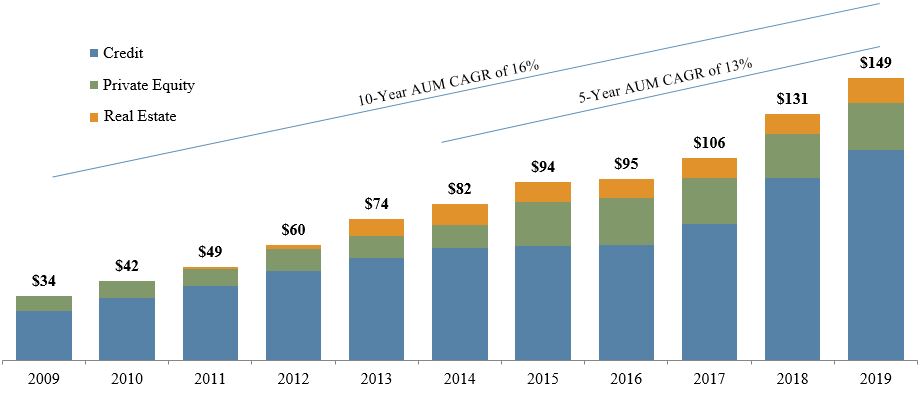
Our AUM has grown to $148.9 billion as of December 31, 2019 from $34.0 billion a decade earlier. As shown in the chart below, over the past five and ten years, our assets under management have achieved a compound annual growth rate (“CAGR”) of 13% and 16%, respectively ($ in billions):
We have an established track record of delivering strong risk-adjusted returns through market cycles. We believe our consistent and strong performance in a broad range of alternative assets has been shaped by several distinguishing features of our platform:
-
Comprehensive Multi-Asset Class Expertise and Flexible Capital: Our proficiency at evaluating every level of the capital structure, from senior debt to common equity, across companies, structured assets, infrastructure, power and energy assets, and real estate projects enables us to effectively assess relative value. This proficiency is complemented by our flexibility in deploying capital in a range of structures and different market environments to maximize risk-adjusted returns.
-
Differentiated Market Intelligence: Our proprietary research on approximately 60 industries and insights from a broad, global investment portfolio enable us to more effectively diligence and structure our products and investments.
-
Consistent Investment Approach: We believe our rigorous, credit-oriented investment approach across each of our investment groups is a key contributor to our strong investment performance and ability to expand our product offering.
-
Robust Sourcing Model: Our investment professionals’ local market presence and ability to effectively cross-source for other investment groups generates a robust pipeline of high-quality investment opportunities across our platform.
-
Talented and Committed Professionals: We attract, develop and retain highly accomplished investment professionals who not only demonstrate deep and broad investment expertise but also have a strong sense of commitment to our firm.
-
Collaborative Culture: We share ideas, relationships and information across our investment groups, which enables us to more effectively source, evaluate and manage investments.
Integrated Investment Platform and Process
We operate our firm as an integrated investment platform with a collaborative culture that emphasizes sharing of knowledge and expertise. We believe the exchange of information enhances our ability to analyze investments, deploy capital and improve the performance of our funds and portfolio companies. We have established deep and sophisticated independent research capabilities in approximately 60 industries and insights from active investments in over 1,700 companies, over 625 alternative credit investments and over 290 properties. In order to better collaborate on the information insights we possess across our investment platform, we formed a Global Markets Committee that meets monthly to share investing activities and market insights across our investment groups and the impact these market trends are having on our global investment strategies. Our extensive network of investment professionals includes local and geographically positioned individuals with the knowledge, experience and relationships that enable them to identify and take advantage of a wide range of investment opportunities.
Our investment process leverages the power of the Ares platform and an extensive network of professionals across our investment areas to identify and source attractive risk adjusted return opportunities while emphasizing capital preservation. We utilize our collective market and company knowledge, proprietary internal industry and company research, third party information and financial modeling to drive fundamental credit analysis and investment selection. We are able to invest up and down a company’s capital structure, which we believe helps us capitalize on out-performance opportunities and assess relative value for a particular investment. The investment committees of our investment groups review and evaluate investment opportunities in a framework that includes a qualitative and quantitative assessment of the key risks of each investment. We do not have a centralized investment committee and instead our investment committees are structured with overlapping membership from different investment groups to ensure consistency of approach and shared investment experience. In addition, each fund, account or other vehicle has investment policies and procedures that generally contain requirements and limitations, such as concentrations of securities, industries, and geographies in which a fund, account or other vehicle will invest, as well as other limitations required by law.
-
Credit**: Our experienced team takes a value-oriented approach and uses market technical analysis and fundamental research to identify investments that offer attractive value in comparison to the fundamental credit risk profile. We use our flexibility, structuring expertise and self-origination capabilities to invest across capital structures to best meet the full spectrum of our clients’ financing needs. Each investment decision involves an intensive due diligence process that includes research into the target company, its industry, its growth prospects and its ability to withstand adverse conditions, as appropriate. Members of our investment committees average approximately 25 years of relevant middle-market lending, alternative credit and liquid credit experience.
-
Private Equity**: Our private equity professionals have a demonstrated ability to deploy flexible capital, which allows them to stay both active and disciplined in various market environments. At the center of our investment process is a systematic approach that emphasizes rigorous due diligence at the company and market level in addition to a risk-adjusted return value assessment. Our investment process is comprised of a five-part process: (1) generate robust pipeline, (2) perform initial screening, (3) conduct due diligence, (4) seek investment approval, and (5) use a systematic approach to value creation. Our Private Equity Group employs a “pull model” with portfolio management whereby a team can access the Ares network for any number of value-creating levers that have been identified.
-
Real Estate**: With our experienced team, along with our expansive network of relationships, our Real Estate Group invests in opportunities across both real estate equity and debt investing. Our Real Estate Group's equity investments focus on implementing hands-on value creation initiatives to mismanaged and capital-starved assets, as well as new
development, ultimately selling stabilized assets back into the market. Our debt strategies leverage our Real Estate Group's diverse sources of capital to directly originate and manage commercial mortgage investments on properties that range from stabilized to requiring hands-on value creation. Our Real Estate Group's activities are managed by dedicated equity and debt teams in the U.S. and Europe. Our investment process includes a rigorous analysis of property cash flows, local real estate fundamentals, demographics, industry, market and tenanting trends, among other criteria. By identifying key risks, appropriate pricing and structure is determined based on market, credit-worthiness of tenants or other deal-specific risks identified early in the process.
We also recognize the importance of considering environmental, social and governance (“ESG”) factors in our investment process and have adopted an ESG policy for the conduct of our business. We work collaboratively with our various underwriting, asset management, legal and compliance teams to appropriately integrate relevant ESG considerations into our investment process.
Breadth, Depth and Tenure of our Senior Management
Ares was built upon the fundamental principle that each of our distinct but complementary investment groups benefits from being part of our broader platform. We believe that our strong performance, consistent growth and high talent retention through economic cycles is due largely to the effective application of this principle across our broad organization of over 1,200 employees. The management of our operating businesses is currently overseen by our Executive Management Committee which typically meets weekly to discuss strategy and operational matters. The members of the Executive Management Committee are Michael Arougheti, David Kaplan, Antony Ressler, Bennett Rosenthal, Ryan Berry, R. Kipp deVeer and Michael McFerran. We also have a Management Committee comprised of senior leadership from our investment, investor relations, marketing and business operations teams, which meets periodically to discuss our business, including investment and operating performance, fundraising, market conditions, strategic initiatives and other firm matters. Each of our investment groups is led by its own deep leadership team of highly accomplished investment professionals, who average approximately 25 years of experience managing investments in, advising, underwriting and restructuring companies. While primarily focused on managing strategies within their own investment group, these senior professionals are integrated within our platform through economic, cultural and structural measures. Our senior professionals have the opportunity to participate in the incentive programs of multiple investment groups to reward collaboration across our investment activities. This collaboration takes place on a daily basis and is formally promoted through internal systems and widely attended weekly or monthly meetings.
2019 Highlights
Fundraising
In 2019, we raised $23.8 billion in gross new capital for more than 75 different funds. Of the $23.8 billion, $16.2 billion was raised directly from 151 institutional investors (100 existing and 51 new to Ares) and $7.6 billion was raised through intermediaries. The charts below summarize our gross new capital commitments by investment group and strategy ($ in billions):

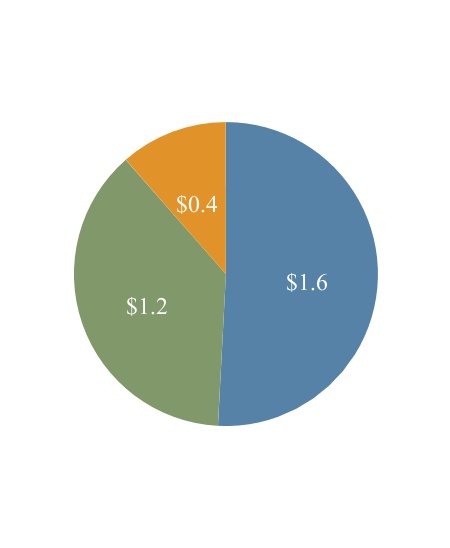
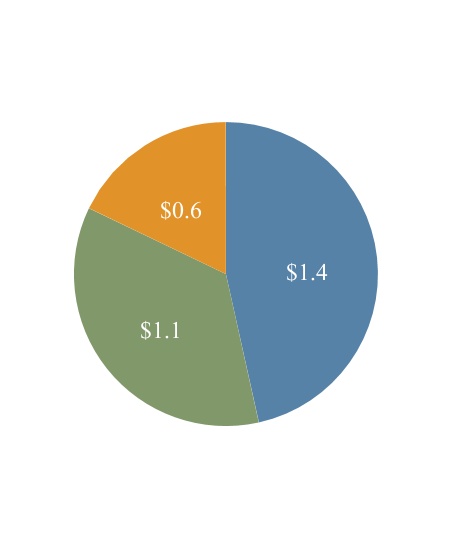
| Credit: $17.5 | Private Equity $3.2 | Real Estate: $3.1 |
| U.S. Direct Lending | Syndicated Loans | Alternative Credit | Special Opportunities | Corporate Private Equity | Energy Opportunities | Real Estate Debt | European Real Estate Equity | U.S. Real Estate Equity | |||||||||||||||||||||||||||||||||||||||||||||||||||
| European Direct Lending | High Yield | Multi-Asset Credit |
Capital Deployment
We took advantage of our diverse global platform to invest more than $27.4 billion (excluding permanent capital) globally in 2019 as shown in the following charts ($ in billions):


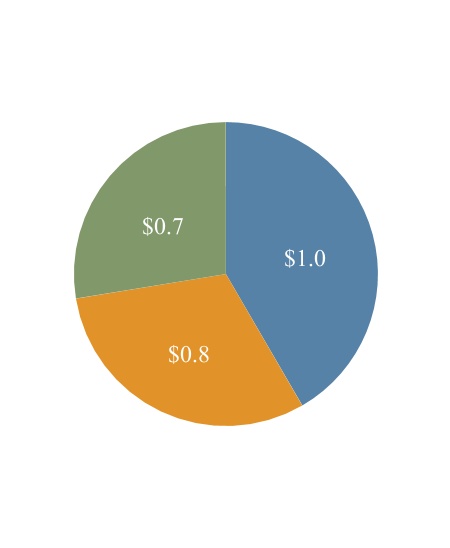
| Credit $20.3 | Private Equity: $4.6 | Real Estate: $2.5 |
| European Direct Lending | U.S. Direct Lending | Syndicated Loans | Corporate Private Equity | Special Opportunities | Infrastructure and Power | Real Estate Debt | U.S. Real Estate Equity | European Real Estate Equity | |||||||||||||||||||||||||||||||||||||||||||||||||||
| Alternative Credit | Multi-Asset Credit | High Yield | Energy Opportunities |
Of the $27.4 billion invested, $21.5 billion was tied to our drawdown funds. Our capital deployment in drawdown funds comprised of the following ($ in billions):
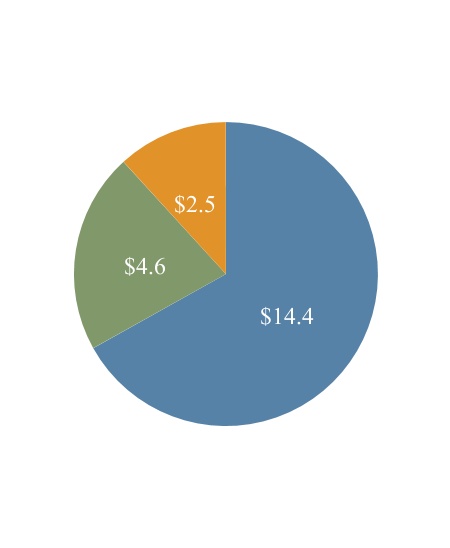
| Credit | Private Equity | Real Estate |
Strategic Initiatives
On July 9, 2019, we expanded our existing insurance platform, Ares Insurance Solutions, through the launch of Aspida Financial (“Aspida”). Aspida entered into an agreement to acquire a Michigan-domiciled insurance company and its insurance operations. The insurance company is headquartered in North Carolina and has historically offered life insurance, annuities and reinsurance products and services. The transaction is expected to close during 2020, subject to regulatory approval and other closing conditions.
On January 21, 2020, we entered into a definitive agreement to acquire a controlling interest in SSG Capital Holdings Limited and its operating subsidiaries (collectively, “SSG”), a leading Asian alternative asset management firm. Headquartered in Hong Kong with offices across Asia, SSG manages private credit and special situations funds. Supported by a global, institutional investor base, we believe SSG is a widely recognized investment firm in Asia given its numerous industry distinctions and accolades for its lending and distressed activities. SSG is led by an experienced management team that has invested across various market cycles, transaction types and Asian countries, including India, Indonesia, China and Thailand. The transaction consideration will be primarily comprised of shares of our Class A common stock subject to a multi-year lock-up and includes a cash component. In certain circumstances, Ares may acquire full ownership of SSG pursuant to a contractual arrangement that may be initiated by Ares or the equity holders of SSG. The transaction is expected to close in the second or third quarter of 2020 and is subject to customary closing conditions, including regulatory approvals.
Investment Groups
Each of our investment groups employs a disciplined, credit-oriented investment philosophy and is managed by a seasoned leadership team of senior professionals with extensive experience investing in, advising, underwriting and restructuring companies, power and energy assets, and real estate properties.
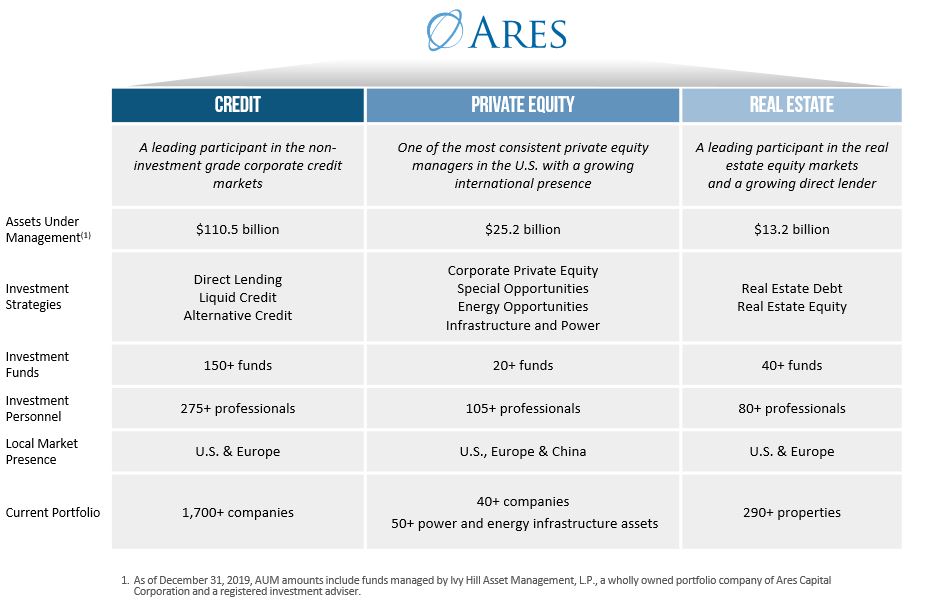
Cr****edit Group
Our Credit Group is a leading manager of credit strategies across the non-investment grade credit universe, with $110.5 billion of AUM and over 150 funds as of December 31, 2019. The Credit Group provides solutions for investors seeking to access a range of credit assets, including liquid credit, alternative credit products and direct lending markets. The Credit
Group capitalizes on opportunities across traded and non-traded corporate, consumer and real estate debt across the U.S. and European markets. It additionally provides investors access to directly originated fixed and floating rate credit assets and with the ability to capitalize on illiquidity premiums across the credit spectrum.
The Credit Group offers the following credit strategies across the liquid and illiquid spectrum:
Liquid Credit: Our liquid credit investment solutions help investors access the syndicated loan and high yield bond markets, among other asset categories. We focus on capitalizing on opportunities across traded corporate credit. As of December 31, 2019, our liquid credit strategy team advised over 65 funds with $28.4 billion of AUM.
- Syndicated Loans: Our syndicated loans strategy delivers a diversified portfolio of liquid, traded
non-investment grade secured loans to corporate issuers. We focus on evaluating individual credit opportunities related primarily to non-investment grade senior secured loans and primarily target first lien secured debt, with a secondary focus on second lien loans, mezzanine loans, high yield bonds and unsecured loans.
*•*High Yield Bonds: Our high yield bonds strategy employs a value-driven philosophy, utilizing fundamental research to identify non-investment grade corporate issuers. We primarily seek a diversified portfolio of liquid, traded non-investment grade corporate bonds. This approach incorporates secured, unsecured and subordinated debt instruments of issuers in both North America and Europe.
- Multi-Asset Credit: Our multi-asset credit strategy combines both syndicated loans and high yield bonds, as well as other asset categories including structured credit, special situations and related credit instruments into a single portfolio. These portfolios are designed to offer investors a flexible solution to global credit investing by allowing us to tactically allocate between multiple asset classes in various market conditions. This strategy invests globally, can be highly customized, and is designed to “go anywhere” within the liquid, non-investment grade credit universe.
Alternative Credit: Our alternative credit strategy seeks to capitalize on asset-focused investment opportunities that fall outside of traditional, well-defined markets such as corporate debt, real estate and private equity. As of December 31, 2019, our team managed $7.6 billion in AUM in over 15 private commingled funds and separately managed accounts ("SMAs") for a global investor base. Our alternative credit strategy emphasizes downside protection and capital preservation through a focus on investments that tend to share the following key attributes: asset security, covenants, structural protections and cash flow velocity. Our investment approach is designed to capture and create value by focusing on investments with features that protect and preserve principal by leveraging our firm's platform insights to assess risk and relative value.
Direct Lending: Our direct lending strategy is one of the largest self-originating direct lenders to the U.S. and European markets, with $74.5 billion of AUM and over 75 funds and investment vehicles as of December 31, 2019. Our direct lending strategy has a multi-channel origination strategy designed to address a broad set of investment opportunities in the middle market. We focus on being the lead or sole lender to our portfolio companies which we believe allows us to exert greater influence over deal terms, capital structure, documentation, fees and pricing, while securing our position as a preferred source of financing for our transaction partners. The group maintains a flexible investment strategy with the capability to invest in first lien senior secured loans (including "unitranche" loans which are loans that combine senior and mezzanine debt, generally in a first lien position), second lien senior secured loans, mezzanine debt and non-control equity co-investments in middle market companies and power generation projects. We manage various types of funds within our U.S. and European direct lending teams that include commingled funds, SMAs for large institutional investors seeking tailored investment solutions and joint venture lending programs.
U.S. Direct Lending: Our U.S. team is comprised of approximately 140 investment professionals in eight offices. Our team covers more than 600 financial sponsors and provides a wide range of financing solutions to middle-market companies that typically range from $10 to $250 million in earnings before interest, tax, depreciation and amortization (“EBITDA”). As of December 31, 2019, our U.S. direct lending team and its affiliates advised over 50 funds totaling $48.4 billion in AUM. Our U.S. team manages corporate lending activities primarily through our inaugural vehicle and publicly traded business development company, ARCC, as well as private commingled funds and SMAs. Primary areas of focus for our U.S. Direct Lending teams include:
-
Ares Capital Corporation: ARCC is a leading specialty finance company that provides one-stop debt and equity financing solutions to U.S. middle market companies and power generation projects.
-
U.S. Commingled Funds and Separate Accounts*:* Outside of ARCC, U.S. direct lending also generates fees from other funds, including: Ares Private Credit Solutions, which focuses on junior debt investments in upper middle-market companies; Ares Senior Direct Lending Fund, which focuses on first lien senior secured loans to quality North American middle market companies through a variety of vehicles; Ares Commercial Finance, which focuses on asset-based and cash flow loans to middle-market and specialty finance companies; and SMAs for large institutional investors. AUM from U.S. commingled funds and SMAs accounts totaled $23.9 billion as of December 31, 2019.
European Direct Lending: Our European team is comprised of approximately 55 investment professionals in seven offices. Our team covers approximately 300 financial sponsors and is one of the most significant participants in the European middle-market. We provide a wide range of financing opportunities to middle-market companies that typically range from €10 to €100 million in EBITDA. As of December 31, 2019, our European direct lending team advised over 25 commingled funds and managed accounts totaling $26.1 billion in AUM.
The following charts present the Credit Group’s AUM and FPAUM as of December 31, 2019 by investment strategy ($ in billions):

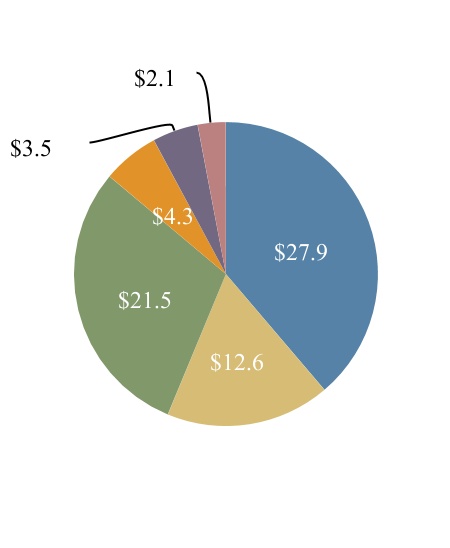
| AUM: $110.5 | FPAUM: $71.9 |
| U.S. Direct Lending | European Direct Lending | Syndicated Loans | Alternative Credit | High Yield | Multi-Asset Credit | ||||||||||||||||||||||||||||||
Private Equity Group
Our Private Equity Group has achieved compelling investment returns for a loyal and growing group of high profile limited partners and, as of December 31, 2019, had $25.2 billion of AUM. Our Private Equity Group broadly categorizes its investment activities into four strategies: Corporate Private Equity, Infrastructure and Power, Special Opportunities and Energy Opportunities. Our private equity professionals have a demonstrated ability to deploy flexible capital, which allows them to stay both active and disciplined in various market environments. The group’s activities are managed by three dedicated investment teams in North America, Europe and China. The group manages flagship funds focused primarily on North America and, to a lesser extent, Europe, special opportunities funds, infrastructure and power funds and growth funds in China.
Corporate Private Equity: Certain of our senior private equity professionals have been working together since 1990 and raised our first corporate private equity fund in 2003. Our team has grown to approximately 70 investment professionals based in Los Angeles, Chicago, London, Shanghai, and Hong Kong. In the U.S. and London, we pursue four principal transactions types: prudently leveraged control buyouts, growth equity, rescue/deleveraging capital and distressed buyouts/discounted debt accumulation. This flexible capital approach, together with the broad resources of the Ares platform, widens our universe of potential investment opportunities and allows us to remain active in different markets and be highly selective in making investments across various market environments.
Infrastructure and Power: Our infrastructure and power team has approximately 15 investment professionals and takes a value-added approach that seeks cash-generating assets with strong downside protection and potential for capital appreciation throughout the climate infrastructure, natural gas generation, and energy transportation sectors. We utilize a broad origination strategy, flexible investment approach, and leverage industry relationships and the Ares platform to seek attractive risk-adjusted returns across the infrastructure and power industry. We believe our experience across the asset life cycle, flexible capital approach, and broad infrastructure expertise positions us well to take advantage of the transitioning infrastructure industry.
Special Opportunities: Our special opportunities team has approximately 15 investment professionals and employs a flexible capital strategy to target non-control positions across a broad spectrum of stressed, distressed and opportunistic situations. We target businesses undergoing stress or transformational change that we believe present asymmetric risk/reward opportunities that offer strong downside protection and the potential for significant upside participation. We employ our deep credit expertise, proprietary research and robust sourcing model to capitalize on current market trends. This opportunistic approach allows us to invest in both private and public transaction types across a broad range of industries, asset classes and geographies.
Energy Opportunities: Our energy opportunities strategy targets opportunities in the energy industry where its flexible capital can provide attractive risk-adjusted returns while mitigating commodity risk. We seek to enhance downside protection by utilizing (i) conservative capital structures and robust hedging programs to mitigate commodity price risk in traditional investments and (ii) senior capital to mitigate risk in structured investments. This approach enables us to capitalize on opportunities arising from the structural changes occurring in the energy market, which requires an increasing need for flexible capital to fund production and infrastructure growth.
The following charts present the Private Equity Group’s AUM and FPAUM as of December 31, 2019 by investment strategy ($ in billions):
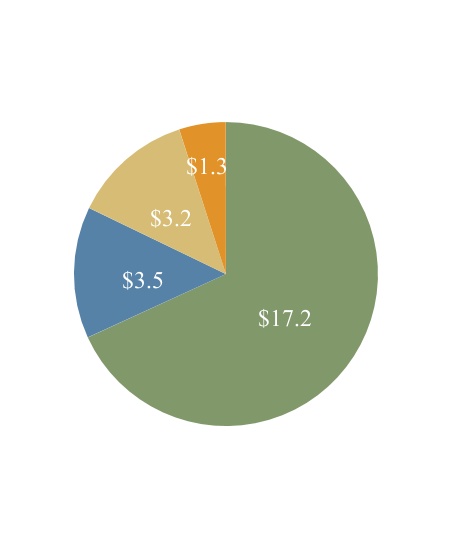
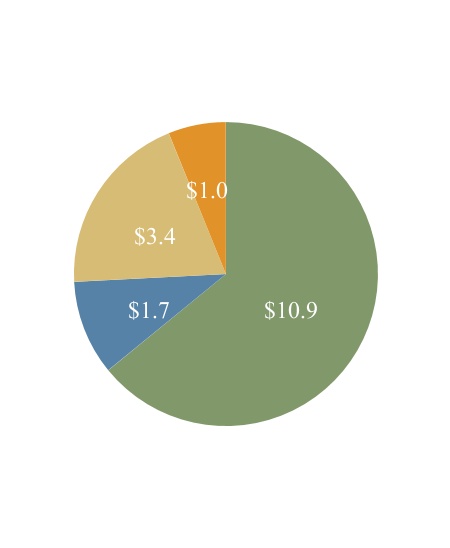
| AUM: $25.2 | FPAUM: $17.0 |
| Corporate Private Equity | Special Opportunities | Infrastructure and Power | Energy Opportunities |
Real Estate Group
Our Real Estate Group manages comprehensive equity and debt strategies, with $13.2 billion of assets under management as of December 31, 2019. With our experienced team, along with our expansive network of relationships, our Real Estate Group capitalizes on opportunities across both real estate equity and debt investing. Our equity investments focus on implementing hands-on value creation initiatives to mismanaged and capital-starved assets, as well as new development, ultimately selling stabilized assets back into the market. Our debt strategies leverage the Real Estate Group’s diverse sources of
capital to directly originate and manage commercial mortgage investments on properties that range from stabilized to requiring hands-on value creation. The Real Estate Group has achieved significant scale in a short period of time through various acquisitions and successful fundraising efforts. Today, the group provides investors access to its capabilities through several vehicles: U.S. and European real estate equity commingled funds, real estate equity and real estate debt SMAs and a publicly traded commercial mortgage REIT, ACRE. The group’s activities are managed by dedicated equity and debt teams in the U.S. and Europe.
Real Estate Equity: Our real estate equity team, with approximately 55 investment professionals across ten offices, has extensive private equity experience in the United States and Europe. Our team primarily acquires and improves assets through renovations, repositioning and retenanting as well as selective developments in the United States and Western Europe. As of December 31, 2019, our real estate equity team advised over 35 investment vehicles totaling $8.4 billion in AUM. Primary areas of focus for our Real Estate Group equity teams include:
-
Real Estate Equity Value-Add**:** Our U.S. and European value-add funds focus on under-managed and under-funded assets, seeking to create value by buying assets at attractive valuations as well as through active asset management of income-producing properties, including multifamily, industrial, retail, office, hotel and industrial properties across the United States and Western Europe.
-
Real Estate Equity Opportunistic**:** Our U.S. and European opportunistic real estate funds capitalize on increased investor demand for developed and stabilized assets by focusing on manufacturing core assets through development, redevelopment and fixing distressed capital structures across all major property types including multifamily, hotel, office, retail and industrial properties across the United States and Europe.
Real Estate Debt: Our real estate debt team of approximately 25 professionals directly originates and invests in a wide range of self-originated financing opportunities for middle-market owners and operators of U.S. commercial real estate. As of December 31, 2019, our real estate debt team advised four investment vehicles totaling $4.8 billion in AUM. In addition to managing private funds, our real estate debt team deploys capital through ACRE, primarily focused on directly originating, managing and servicing a diversified portfolio of commercial real estate debt-related investments.
The following charts present the Real Estate Group’s AUM and FPAUM as of December 31, 2019 by investment strategy ($ in billions):

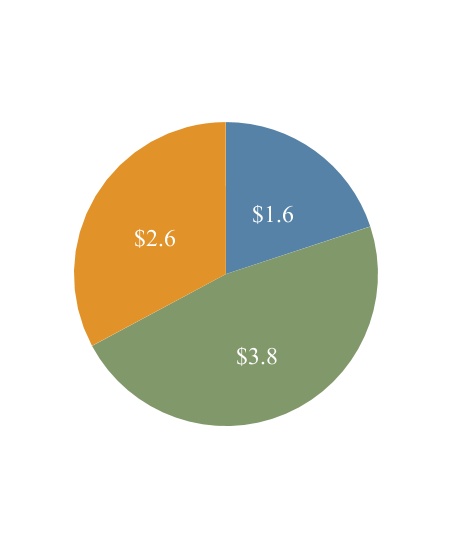
| AUM: $13.2 | FPAUM: $8.0 |
| Real Estate Debt | European Real Estate Equity | U.S. Real Estate Equity | |||||||||||||||
Product Offering
To meet investors’ growing demand for alternative investments, we manage investments in an increasingly comprehensive range of funds across a spectrum of compelling and complementary strategies. We have demonstrated an ability to consistently generate attractive and differentiated investment returns across these investment strategies and through various market environments. We believe the breadth of our product offering, our expertise in various investment strategies and our proficiency in attracting and satisfying our growing institutional and retail client base has enabled and will continue to enable us to increase our AUM across each of our investment groups. Our fundraising efforts historically have been spread across investment strategies and have not been dependent on the success of any one strategy.
Investor Base and Fundraising
Our diverse investor base includes direct institutional relationships and a significant number of retail investors. Our high-quality institutional investor base includes corporate and public pension funds, insurance companies, sovereign wealth funds, banks, investment managers, endowments and foundations. We have grown the number of these relationships from approximately 600 in 2014 to over 850 in 2019.
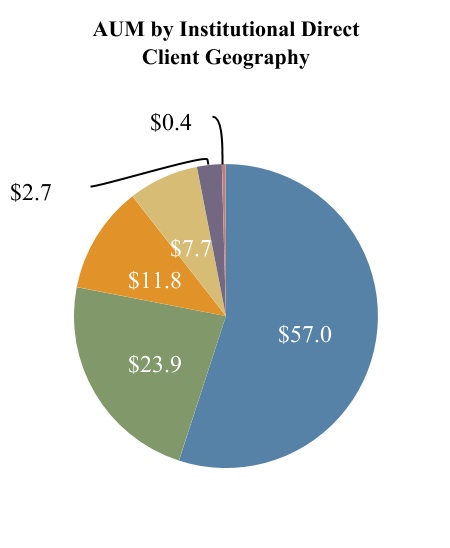
As of December 31, 2019, $103.5 billion, or approximately 70% of our $148.9 billion of AUM, was attributable to our direct institutional relationships. As of December 31, 2019, our total AUM was divided by channel, and further our institutional direct AUM by client type and geographic origin as follows ($ in billions):
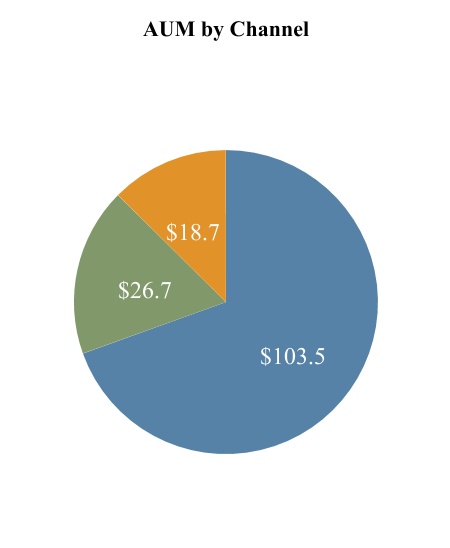
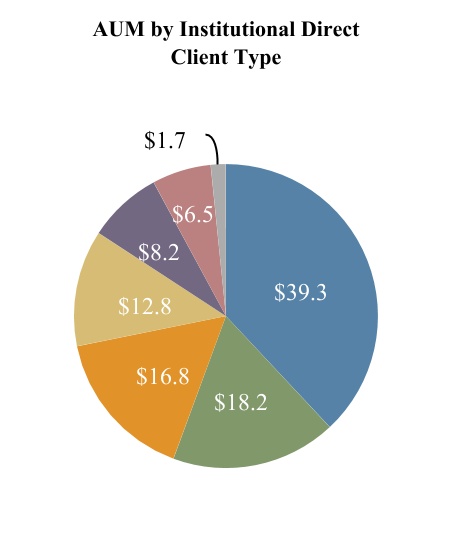
| Institutional Direct | Public Entities and Related | Institutional Intermediaries | Pension | Bank/ Private Bank | Insurance | North America | Europe | Asia | |||||||||||||||||||||||||||||||||||||||||||||||||||
| Sovereign Wealth Fund | Investment Manager | Other | Middle East | Australia | Other | ||||||||||||||||||||||||||||||||||||||||||||||||||||||
| Endowment |
The following chart presents the AUM of investors committed to more than one of our funds as of December 31, 2019 compared to December 31, 2014 ($ in billions):

We believe that the AUM of multi-fund investors demonstrates our investors’ satisfaction with our performance, disciplined management of their capital and diverse product offering. Their loyalty has facilitated the growth of our existing businesses and we believe improves our ability to raise new funds and successor funds in existing strategies in the future.
Institutional investors are demonstrating a growing interest in SMAs, which include contractual arrangements and single investor vehicles and funds, because these accounts can provide investors with greater levels of transparency, liquidity and control over their investments as compared to more traditional commingled funds. As of December 31, 2019, approximately $39.3 billion, or 38%, of our direct institutional AUM was managed through SMAs compared to $14.1 billion, or 32%, of our direct institutional AUM as of December 31, 2014.
Our publicly traded entities and their affiliates, including ARCC, ACRE and ARDC, account for approximately $19.5 billion of our AUM. We have over 550 institutional investors and over 200,000 retail investor accounts across our three publicly traded vehicles.
We believe that client relationships are fundamental to our business and that our performance across our investment groups coupled with our focus on client service has resulted in strong relationships with our investors. Our dedicated and extensive in-house strategy and relationship management teams, comprised of approximately 120 professionals located in North America, Europe, Asia and the Middle East, is dedicated to raising capital globally across all of our funds, servicing existing fund investors and tailoring offerings to meet their needs, developing products to complement our existing offerings, and deepening existing relationships to expand them across our platform. Our most recent efforts included a launching a strategic joint venture with Fidante Partners to expand our presence in Australia. Our senior relationship management team maintains an active and transparent dialogue with an expansive list of investors. This team is supported by product managers and investor relations professionals, with deep experience in each of our complementary investment groups, who are dedicated to servicing our existing and prospective investors.
Operations Management Group
The OMG consists of shared resource groups to support our reportable segments by providing infrastructure and administrative support in the areas of accounting/finance, operations, information technology, strategy and relationship management, legal, compliance and human resources. Our clients seek to partner with investment management firms that not only have compelling investment track records across multiple investment products but also possess seasoned infrastructure support functions. As such, significant investments have been made to develop the OMG. We have successfully launched new business lines, integrated acquired businesses into the operations and created scale within the OMG to support a much larger platform in the future.
Employees
Diversity is key to our firm’s open culture and long-term success. Ares offers a multitude of programs, training and resources to recruit and support an inclusive and diverse workforce and promote an environment that combines a wide range of
experiences and perspectives. We recognize the important link between employee engagement and company performance and seek opportunities to solicit employee feedback. We also strive to foster a supportive environment that cultivates professional growth and development and encourages team members to continuously develop their skills. As of December 31, 2019, we had over 1,200 employees, comprised of over 450 professionals in our investment groups and over 750 operations management professionals, located in over 20 offices in more than 10 countries.
Organizational Structure
The simplified diagram below (which omits certain intermediate holding companies) depicts our legal organizational structure. Ownership information in the diagram below is presented as of December 31, 2019. Ares Management Corporation is a holding company and through subsidiaries is the general partner of each of the Ares Operating Group entities and operates and controls the business and affairs of the Ares Operating Group. Ares Management Corporation consolidates the financial results of the Ares Operating Group entities, their consolidated subsidiaries and certain consolidated funds.
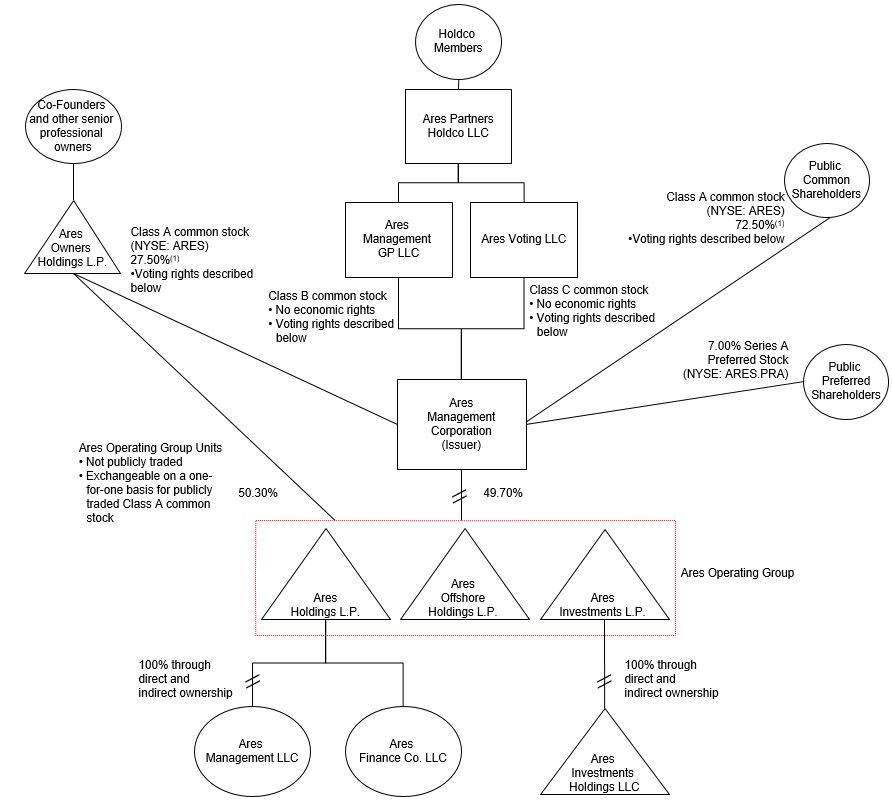
(1)Assuming the full exchange of Ares Operating Group Units for shares of our Class A common stock, as of December 31, 2019, Ares Owners Holdings L.P. holds 63.97% and the public holds 36.03% of Ares Management Corporation.
Holding Company Structure
The Company elected to be treated as a corporation for U.S. federal and state income tax purposes (the "Tax Election") effective March 1, 2018. In addition, the Company completed its state law conversion from a Delaware limited partnership to a Delaware corporation (the "Conversion") effective on November 26, 2018 (the "Effective Date"). At the Effective Date, (i) each common share of the Company outstanding immediately prior to the Effective Date converted into one issued and outstanding, fully paid and nonassessable share of Class A common stock, $0.01 par value per share, of the Company, (ii) the general partner share of the Company outstanding immediately prior to the Effective Date converted into 1,000 issued and outstanding, fully paid and nonassessable shares of Class B common stock, $0.01 par value per share of the Company, (iii) the special voting share of the Company outstanding immediately prior to the Effective Date converted into one issued and outstanding, fully paid and nonassessable share of Class C common stock, $0.01 par value per share, of the Company, and (iv) each preferred share of the Company outstanding immediately prior to the Effective Date converted into one issued and outstanding, fully paid and nonassessable share of the Series A Preferred Stock.
As a result of the Conversion, except as otherwise expressly provided in the Certificate of Incorporation, our common stockholders are entitled to vote on all matters on which stockholders of a corporation are generally entitled to vote under the Delaware General Corporation Law (the “DGCL”), including the election of our board of directors. Holders of shares of our Class A common stock became entitled to one vote per share of our Class A common stock. On any date on which the Ares Ownership Condition (as defined in the Certificate of Incorporation) is satisfied, holders of shares of our Class B common stock are, in the aggregate, entitled to a number of votes equal to (x) four times the aggregate number of votes attributable to our Class A common stock minus (y) the aggregate number of votes attributable to our Class C common stock. On any date on which the Ares Ownership Condition is not satisfied, holders of shares of our Class B common stock are not entitled to vote on any matter submitted to a vote of our stockholders. The holder of shares of our Class C common stock is generally entitled to a number of votes equal to the number of Ares Operating Group Units (as defined in the Certificate of Incorporation) held of record by each Ares Operating Group Limited Partner (as defined in the Certificate of Incorporation) other than the Company and its subsidiaries. Ares Management GP LLC is the sole holder of shares of our Class B common stock and Ares Voting LLC is the sole holder of shares of our Class C common stock. Our Class B common stock and our Class C common stock are non-economic and holders thereof shall not be entitled to (i) dividends from the Company or (ii) receive any assets of the Company in the event of any dissolution, liquidation or winding up of the Company. Ares Management GP LLC and Ares Voting LLC are both wholly-owned by Ares Partners Holdco LLC. As a result, the Company is a “controlled company” within the meaning of the corporate governance standards of the New York Stock Exchange ("NYSE") and qualifies for exceptions from certain corporate governance rules of the NYSE. Except as provided in the Certificate of Incorporation and the Company’s Bylaws and under the DGCL and the rules of the NYSE, shares of the Series A Preferred Stock are generally non-voting.
Accordingly, Ares Management Corporation and any direct subsidiaries of Ares Management Corporation that are treated as corporations for U.S. federal income tax purposes and that are the holders of Ares Operating Group Units are (and, in the case of Ares Offshore Holdings, Ltd., may be) subject to U.S. federal, state and local income taxes in respect of their interests in the Ares Operating Group entities. The Ares Operating Group entities are treated as partnerships for U.S. federal income tax purposes. An entity that is treated as a partnership for U.S. federal income tax purposes generally incurs no U.S. federal income tax liability at the entity level. Instead, each partner is required to take into account its allocable share of items of income, gain, loss, deduction and credit of the partnership in computing its U.S. federal, state and local income tax liability each taxable year, whether or not cash distributions are made.
Each of the Ares Operating Group entities has an identical number of partnership units outstanding. Ares Management Corporation holds through subsidiaries a number of Ares Operating Group Units equal to the number of shares of Class A common stock that Ares Management Corporation has issued. The Ares Operating Group Units held by Ares Management Corporation and its subsidiaries are economically identical in all respects to the Ares Operating Group Units that are not held by Ares Management Corporation and its subsidiaries. Accordingly, Ares Management Corporation receives the distributive share of income of the Ares Operating Group from its equity interest in the Ares Operating Group. The Ares Operating Group Units and our shares of Class A common stock held directly or indirectly by our senior professional owners are generally subject to restrictions on transfer and other provisions.
Structure and Operation of our Funds
We conduct the management of our funds and other similar private vehicles primarily through organizing a partnership or limited liability structure in which entities organized by us accept commitments and/or funds for investment from institutional investors and other investors. Such commitments are generally drawn down from investors on an as needed basis to fund investments over a specified term. Our Credit Group funds also include structured funds in which the investor’s capital is fully funded into the fund upon or soon after the subscription for interests in the fund. The CLOs that we manage are structured
investment vehicles that are generally private limited liability companies. Our drawdown funds are generally organized as limited partnerships or limited liability companies. However, there are non-U.S. funds that are structured as corporate or non-partnership entities under applicable law. We also advise a number of investors through SMA relationships structured as contractual arrangements or single investor vehicles. In the case of our SMAs that are not structured as single investor vehicles, the investor, rather than us, generally controls custody of the investments with respect to which we advise. Three of the vehicles that we manage are publicly traded corporations. The publicly traded corporations do not have redemption provisions or a requirement to return capital to investors upon exiting the investments made with such capital, except as required by applicable law (including distribution requirements that must be met to maintain RIC or REIT status). However, ACRE’s charter includes certain limitations relating to the ownership or purported transfer of its common stock in violation of the REIT ownership requirements.
Our funds are generally advised by Ares Management LLC, which is registered under the Investment Advisers Act of 1940, as amended (the "Investment Advisers Act") or a wholly owned subsidiary thereof. Responsibility for the day-to-day operations of each investment vehicle is typically delegated to the Ares entity serving as investment adviser pursuant to an investment advisory (or similar) agreement. Generally, the material terms of our investment advisory agreements relate to the scope of services to be rendered by the investment adviser to the applicable vehicle, the calculation of management fees to be borne by investors in our investment vehicles and certain rights of termination with respect to our investment advisory agreements. With the exception of certain of the publicly traded corporations, the investment vehicles themselves do not generally register as investment companies under the Investment Company Act of 1940, as amended (the “Investment Company Act”), in reliance on applicable exemptions thereunder.
The governing agreements of many of our funds provide that, subject to certain conditions, third-party investors in those funds have the right to terminate the investment period or the fund without cause. The governing agreements of some of our funds provide that, subject to certain conditions, third-party investors have the right to remove the general partner. In addition, the governing agreements of certain of our funds provide that upon the occurrence of certain events, including in the event that certain “key persons” in our funds do not meet specified time commitments, the investment period will be suspended or the investors have the right to vote to terminate the investment period in accordance with specified procedures.
Fee Structure
Management Fees
The investment adviser of each of our funds and certain SMAs generally receives an annual management fee based upon a percentage of the fund’s capital commitments, contributed capital, net assets value or invested capital during the investment period and the fund’s invested capital after the investment period, except for the investment advisers to certain of our SMAs, which receive an annual management fee that is based upon a percentage of invested capital, contributed capital or net asset value throughout the term of the fund or separately managed account. We also may receive special fees, including commitment, arrangement, underwriting, agency, portfolio management, monitoring and other similar fees, some of which may be accelerated upon a sale of the underlying portfolio investment. In certain circumstances we are contractually required to offset certain amounts of such special fees against future management fees relating to the applicable fund. In addition, we may receive transaction fees from certain affiliated funds for activities related to fund transactions, such as loan originations.
The investment adviser of each of our CLOs typically receives annual management fees based on the gross aggregate collateral balance for CLOs, at par, adjusted for defaulted or discounted collateral. The management fees of CLOs accounted for approximately 3% of our total management fees on a consolidated basis and 7% on an unconsolidated basis for the year ended December 31, 2019.
The management fees we receive from our drawdown style funds are typically payable on a quarterly basis over the life of the fund and do not fluctuate with the changes in investment performance of the fund. The investment management agreements we enter into with clients in connection with contractual SMAs may generally be terminated by such clients with reasonably short prior written notice. The management fees we receive from our SMAs are generally paid on a periodic basis (typically quarterly, subject to the termination rights described above) and are based on either invested capital or on the net asset value of the separately managed account.
We receive management fees in accordance with the investment advisory and management agreements we have with the publicly traded vehicles we manage. Base management fees we receive from ARCC are paid quarterly and proportionately increase or decrease based on ARCC’s total assets (reduced by cash and cash equivalents). ARCC Part I Fees are also generally paid quarterly and proportionately increase or decrease based on ARCC’s net investment income (before ARCC Part I Fees and ARCC Part II Fees (as defined in “Item 7. Management’s Discussion and Analysis of Financial Condition and Results of
Operations—Components of Consolidated Results of Operations—Revenues”)), subject to a fixed hurdle rate. We classify ARCC Part I Fees with management fees as they are predictable and recurring in nature, and not subject to contingent repayment. Management fees we receive from ARDC are generally paid monthly and proportionately increase or decrease based on the closed-end fund's total assets minus liabilities (other than liabilities relating to indebtedness). Management fees we receive from ACRE are generally paid quarterly based on ACRE’s stockholders’ equity. Our investment management agreements of our permanent capital vehicles must be reviewed or approved annually by their boards of directors (including a majority of its independent directors).
Performance Income
We may receive performance income from a majority of our funds and performance income may be either an incentive fee or a special allocation of income, which we refer to as a carried interest. Performance income is recorded when specified investment returns are achieved by the fund. We typically award certain of our professionals with participation in such performance income.
Incentive Fees
The general partners, managers or similar entities of certain of our funds or accounts receive performance-based fees. Such performance based fees are generally based on the net appreciation per annum of the applicable fund or account, subject to certain net loss carry-forward provisions, high-watermarks and/or a preferred returns. Such performance based fees may also be based on a fund or accounts cumulative net appreciation to date, in some cases subject to a high-watermark or a preferred return. Incentive fees are realized at the end of a measurement period, typically quarterly or annually. Realized incentive fees are generally higher during the second half of the year due to the nature of certain Credit Group funds that typically realize incentive fees at the end of the calendar year. Once realized, such performance based fees are generally are not subject to a contingent repayment obligation.
Incentive Fees from Publicly Traded Vehicles
We are entitled to receive incentive fees in accordance with the investment advisory and management agreements we have with ARCC and ACRE. We may receive ARCC Part II Fees, which are not paid unless ARCC achieves cumulative aggregate realized capital gains (net of cumulative aggregate realized capital losses and aggregate unrealized capital depreciation). Incentive fees we receive from ACRE are based on a percentage of the difference between ACRE’s core earnings (as defined in ACRE’s management agreement) and an amount derived from the weighted average issue price per share of ACRE’s common stock in its public offerings multiplied by the weighted average number of shares of ACRE's common stock outstanding.
Carried Interest
The general partner or an affiliate of certain of our funds may be entitled to receive carried interest from a fund. Carried interest entitles the general partner (or an affiliate) to a special allocation of income and gains from a fund, and is typically structured as a net profits interest in the applicable fund. Carried interest is generally calculated on a “realized gain” basis, and the general partner of a fund is generally entitled to a carried interest between 10% and 20% of the net realized income and gains (generally taking into account unrealized losses) generated by such fund. Net realized income or loss is not netted between or among funds.
For most funds, the carried interest is subject to a preferred return ranging from 5% to 8%, subject in most cases to a catch-up allocation to the general partner. Generally, if at the termination of a fund (and in some cases at interim points in the life of a fund), the fund has not achieved investment returns that exceed the preferred return threshold or the general partner receives net profits over the life of the fund in excess of its allocable share under the applicable partnership agreement, the general partner will be obligated to repay an amount equal to the extent the previously distributed carried interest exceeds the amounts to which the general partner is entitled. These repayment obligations may be related to amounts previously distributed to us and our senior professionals and are generally referred to as contingent repayment obligations.
Although a portion of any dividends paid by us may include carried interest received by us, we do not intend to seek fulfillment of any contingent repayment obligation by seeking to have holders of our Class A common stock return any portion of such dividends attributable to carried interest associated with any contingent repayment obligation. Contingent repayment obligations operate with respect to only a given fund’s net investment performance and carried interest of other funds are not netted for determining this contingent obligation. Although a contingent repayment obligation is several to each person who received a distribution, and not a joint obligation, and our professionals who receive carried interest have guaranteed repayment of such contingent obligation, the governing agreements of our funds generally provide that, if a recipient does not fund his or her respective share, we may have to fund such additional amounts beyond the amount of carried interest we retained, although we generally will retain the right to pursue remedies against those carried interest recipients who fail to fund their obligations.
For additional information concerning the contingent repayment obligations we could face, see “Item 1A. Risk Factors—We may need to pay these contingent obligations if and when they are triggered under the governing agreements with our investors.”
Capital Invested In and Through Our Funds
To further align our interests with those of investors in our funds, we have invested the firm’s capital and that of our professionals in the funds we sponsor and manage. General partner capital commitments to our funds are determined separately with respect to our funds and, generally, are less than 5% of the total commitments of any particular fund. We determine the general partner capital commitments based on a variety of factors, including regulatory requirements, investor requirements, estimates regarding liquidity over the estimated time period during which commitments will be funded, estimates regarding the amounts of capital that may be appropriate for other opportunities or other funds we may be in the process of raising or are considering raising, prevailing industry standards with respect to sponsor commitments and our general working capital requirements. We generally offer to our senior professionals a part of the general partner commitments to our large commingled funds. Our general partner capital commitments are typically funded with cash and not with carried interest or deferral of management fees. For more information, see “Item 7. Management’s Discussion and Analysis of Financial Condition and Results of Operations—Liquidity and Capital Resources—Sources and Uses of Liquidity.”
Regulatory and Compliance Matters
Our businesses, as well as the financial services industry, generally are subject to extensive regulation, including periodic examinations, by governmental agencies and self-regulatory organizations or exchanges in the U.S. and foreign jurisdictions in which we operate relating to, among other things, antitrust laws, anti-money laundering laws, anti-bribery laws relating to foreign officials, tax laws and privacy laws with respect to client and other information, and some of our funds invest in businesses that operate in highly regulated industries. Each of the regulatory bodies with jurisdiction over us has regulatory powers dealing with many aspects of financial services, including the authority to grant, and in specific circumstances to cancel, permissions to carry on particular activities. Any failure to comply with these rules and regulations could expose us to liability and/or reputational damage. Additional legislation, increasing global regulatory oversight of fundraising activities, changes in rules promulgated by self-regulatory organizations or exchanges or changes in the interpretation or enforcement of existing laws and rules, either in the United States or elsewhere, may directly affect our mode of operation and profitability. See “Item 1A. Risk Factors-Risks Related to Our Businesses-Extensive regulation affects our activities and creates the potential for significant liabilities and penalties that could adversely affect our businesses and results of operations,” “-Failure to comply with “pay to play” regulations implemented by the SEC and certain states, and changes to the “pay to play” regulatory regimes, could adversely affect our businesses,” and “-Regulatory changes in jurisdictions outside the United States could adversely affect our businesses,” “-We are subject to risks related to corporate social responsibility,” and “-Regulations governing ARCC’s operation as a business development company affects its ability to raise, and the way in which it raises, additional capital.”
Rigorous legal and compliance analysis of our businesses and investments is important to our culture. We strive to maintain a culture of compliance through the use of policies and procedures such as oversight compliance, codes of ethics, compliance systems, communication of compliance guidance and employee education and training. All employees must annually certify their understanding of and compliance with key global Ares policies, procedures and code of ethics. We have a compliance group that monitors our compliance with the regulatory requirements to which we are subject and manages our compliance policies and procedures. Our Chief Compliance Officer supervises our compliance group, which is responsible for monitoring all regulatory and compliance matters that affect our activities. Our compliance policies and procedures address a variety of regulatory and compliance risks such as the handling of material non-public information, position reporting, personal securities trading, valuation of investments on a fund-specific basis, document retention, potential conflicts of interest and the allocation of investment opportunities.
Many jurisdictions in which we operate have laws and regulations relating to data privacy, cybersecurity and protection of personal information, including the General Data Protection Regulation, which expands data protection rules for individuals within the European Union (the “EU”) and for personal data exported outside the EU, and the California Consumer Privacy Act, which creates new rights and obligations related to personal data of residents (and households) in California. Any determination of a failure to comply with any such laws or regulations could result in fines and/or sanctions, as well as reputational harm. Moreover, to the extent that these laws and regulations or the enforcement of the same become more stringent, or if new laws or regulations or enacted, our financial performance or plans for growth may be adversely impacted.
United States
The SEC oversees the activities of our subsidiaries that are registered investment advisers under the Investment Advisers Act. The Financial Industry Regulatory Authority (“FINRA”) and the SEC oversee the activities of our wholly owned subsidiary Ares Investor Services LLC ("AIS"), as a registered broker-dealer. In connection with certain investments made by funds in our Private Equity Group, certain of our subsidiaries and funds are subject to audits by the Defense Security Service to determine whether we are under foreign ownership, control or influence. In addition, we regularly rely on exemptions from various requirements of the Securities Act of 1933, as amended (the “Securities Act”), the Securities Exchange Act of 1934, as amended (the “Exchange Act”), the Investment Company Act, the Commodity Exchange Act and the U.S. Employee Retirement Income Security Act of 1974, as amended (“ERISA”). These exemptions are sometimes highly complex and may in certain circumstances depend on compliance by third parties who we do not control.
Additionally, the SEC and various self-regulatory organizations have in recent years increased their regulatory activities in respect of investment management firms. See "Item 1A. Risk Factors-Risks Related to Our Businesses-Extensive regulation affects our activities and creates potential for significant liabilities and penalties that could adversely affect our businesses and results of operations."
Funds and Portfolio Companies of our Funds
All of our funds are advised by SEC registered investment advisers (or wholly owned subsidiaries thereof). Registered investment advisers are subject to more stringent requirements and regulations under the Investment Advisers Act than unregistered investment advisers. Such requirements relate to, among other things, fiduciary duties to clients, maintaining an effective compliance program, managing conflicts of interest and general anti-fraud prohibitions. In addition, the SEC requires investment advisers registered or required to register with the SEC under the Investment Advisers Act that advise one or more private funds and have at least $150 million in private fund assets under management to periodically file reports on Form PF. We have filed, and will continue to file, quarterly reports on Form PF, which has resulted in increased administrative costs and a significant amount of attention and time to be spent by our personnel.
Further, the SEC has highlighted valuation practices as one of its areas of focus in investment adviser examinations and has instituted enforcement actions against advisers for misleading investors about valuation. If the SEC were to investigate and find errors in our methodologies or procedures, we and/or members of our management could be subject to penalties and fines, which could harm our reputation and our business, financial condition and results of operations could be materially and adversely affected.
ARCC is a registered investment company that has elected to be treated as a business development company under the Investment Company Act. ARDC and certain other funds are registered investment companies under the Investment Company Act. Each of the registered investment companies has elected, for U.S. federal tax purposes, to be treated as a regulated investment company ("RIC") under Subchapter M of the U.S. Internal Revenue Code of 1986, as amended (the “Code”). To maintain its RIC status under the Code, a RIC must timely distribute an amount equal to at least 90% of its investment company taxable income (as defined by the Code, which generally includes net ordinary income and net short term capital gains) to its stockholders. In addition, a RIC generally will be required to pay an excise tax equal to 4% on certain undistributed taxable income unless it distributes in a timely manner an amount at least equal to the sum of (i) 98% of its ordinary income recognized during a calendar year and (ii) 98.2% of its capital gain net income, as defined by the Code, recognized during a calendar year and (iii) any income recognized, but not distributed, in preceding years. The taxable income on which a RIC pays excise tax is generally distributed to its stockholders in the next tax year. Depending on the level of taxable income earned in a tax year, a RIC may choose to carry forward such taxable income for distribution in the following year, and pay any applicable excise tax. In addition, as a business development company, ARCC must not acquire any assets other than “qualifying assets” specified in the Investment Company Act unless, at the time the acquisition is made, at least 70% of ARCC’s total assets are qualifying assets (with certain limited exceptions). Qualifying assets include investments in “eligible portfolio companies.” ARCC is also generally prohibited from issuing and selling its common stock at a price below net asset value per share and from incurring indebtedness (including for this purpose, preferred stock), if ARCC’s asset coverage, as calculated pursuant to the Investment Company Act, equals less than 150% after such incurrence.
ACRE has elected and qualified to be taxed as a real estate investment trust, or REIT, under the Code. To maintain its qualification as a REIT, ACRE must distribute at least 90% of its taxable income to its stockholders and meet, on a continuing basis, certain other complex requirements under the Code.
AIS, our wholly owned subsidiary, is registered as a broker-dealer with the SEC, which maintains licenses in many states, and is a member of FINRA. As a broker-dealer, this subsidiary is subject to regulation and oversight by the SEC and state securities regulators. In addition, FINRA, a self-regulatory organization that is subject to oversight by the SEC, promulgates and enforces rules governing the conduct of, and examines the activities of, its member firms. Due to the limited
authority granted to our subsidiary in its capacity as a broker-dealer, it is not required to comply with certain regulations covering trade practices among broker-dealers and the use and safekeeping of customers’ funds and securities. As a registered broker-dealer and member of a self-regulatory organization, AIS is, however, subject to the SEC’s uniform net capital rule. Rule 15c3-1 of the Exchange Act, which specifies the minimum level of net capital a broker-dealer must maintain and also requires that a significant part of a broker-dealer’s assets be kept in relatively liquid form. See "Item 1A. Risk Factors-Risks Related to Our Businesses-Political and regulatory conditions, including the effects of negative publicity surrounding the financial industry in general and proposed legislation, could adversely affect our businesses or cause a material increase in our tax liability."
Other Jurisdictions
Certain of our subsidiaries operate outside the United States. In Luxembourg, Ares Management Luxembourg (“AM Lux”) is subject to authorization and regulation by the Commission de Surveillance du Secteur Financier (“CSSF”). In the United Kingdom (the “U.K.”), Ares Management Limited (“AML”) and Ares Management UK Limited (“AMUKL”) are subject to regulation and authorization by the U.K. Financial Conduct Authority (“the FCA”). Ares European Loan Management LLP (“AELM”), which procures certain services from Ares Management Limited, is also subject to regulation by the FCA.
AM Lux, AML, AMUKL and AELM (the “European Entities”) all operate within European legislative frameworks, which include legislation that is both directly applicable to the European Entities and legislation that must be implemented by European member states at a national level. When implementing European measures at a national level, member states often have some degree of discretion as to the manner of implementation, and as a result the rules in some areas are not harmonized across the European Economic Area (the "EEA”). In addition, member states may have their own national laws and rules governing the operation of firms in the financial sector which are unrelated to any European legislative initiative. In some circumstances other Ares entities are or become subject to EU laws or the law of European member states, including with respect to marketing our funds to investors in the EEA.
AM Lux and AMUKL are both alternative investment fund managers (“AIFMs”). Their operations are primarily governed by Directive 2011/61/EU on Alternative Investment Fund Managers and other associated legislation, rules and guidance (“AIFMD” or the “Directive”). AML and AELM are both investment firms within the meaning of Directive 2014/65/EU on Markets in Financial Instruments (“MiFID II”). The operations of AML and AELM are primarily governed by MiFID II and other associated legislation, rules and guidance. The main business of the European Entities is to provide asset management services to clients from within the EEA. The European Entities operate primarily within different regulatory frameworks in part because they provide different services to different types of clients.
The U.K. exited the EU on January 31, 2020. The withdrawal agreement between the U.K. and the EU provides for a transitional period up to December 31, 2020 at the earliest, during which the terms of the U.K.'s future relationship with the EU are expected to be negotiated. EEA passporting rights remain available to the relevant U.K. entities during the transitional period. However, there remains considerable uncertainty as to the duration of the transitional period, and the terms of the U.K.’s future relationship in the EU, creating continuing uncertainty as to the full extent to which the businesses of the U.K. Regulated Entities could be adversely affected by Brexit. Despite the U.K.’s departure, new and existing EU legislation is expected to continue to impact our business in the U.K .(whether because its effect is preserved in the U.K. as a matter of domestic policy or because the U.K. adopts new EU legislative initiatives either under the terms of the withdrawal agreement or, potentially, under the terms of a future trade agreement) and other EEA member states where we have operations. The U.K.'s departure has the potential to change the legislative and regulatory frameworks within which AML, AMUKL and AELM operate, which could adversely affect our businesses or cause a material increase in our tax liability.
Competition
The investment management industry is intensely competitive, and we expect it to remain so. We compete globally and on a regional, industry and asset basis.
We face competition both in the pursuit of fund investors and investment opportunities. Generally, our competition varies across business lines, geographies and financial markets. We compete for outside investors based on a variety of factors, including investment performance, investor perception of investment managers’ drive, focus and alignment of interest, quality of service provided to and duration of relationship with investors, breath of our product offering, business reputation and the level of fees and expenses charged for services. We compete for investment opportunities both at our funds and for strategic acquisitions by us based on a variety of factors, including breadth of market coverage and relationships, access to capital, transaction execution skills, the range of products and services offered, innovation and price, and we expect that competition will continue to increase.
We expect to face competition in our direct lending, trading, acquisitions and other investment activities primarily from business development companies, credit and real estate funds, specialized funds, hedge fund sponsors, financial institutions, private equity funds, corporate buyers and other parties. Many of these competitors in some of our businesses are substantially larger and have considerably greater financial, technical and marketing resources than are available to us. Many of these competitors have similar investment objectives to us, which may create additional competition for investment opportunities. Some of these competitors may also have a lower cost of capital and access to funding sources that are not available to us, which may create competitive disadvantages for us with respect to investment opportunities. In addition, some of these competitors may have higher risk tolerances, different risk assessments or lower return thresholds, which could allow them to consider a wider variety of investments and to bid more aggressively than us for investments that we want to make. Corporate buyers may be able to achieve synergistic cost savings with regard to an investment that may provide them with a competitive advantage in bidding for an investment. Lastly, institutional and individual investors are allocating increasing amounts of capital to alternative investment strategies. Several large institutional investors have announced a desire to consolidate their investments in a more limited number of managers. We expect that this will cause competition in our industry to intensify and could lead to a reduction in the size and duration of pricing inefficiencies that many of our funds seek to exploit.
Competition is also intense for the attraction and retention of qualified employees. Our ability to continue to compete effectively in our businesses will depend upon our ability to attract new employees and retain and motivate our existing employees.
For additional information concerning the competitive risks that we face, see “Item 1A. Risk Factors—Risks Related to Our Businesses—The investment management business is intensely competitive.”
Available Information
Ares Management Corporation completed its conversion from a Delaware limited partnership to a Delaware corporation effective on November 26, 2018. We were formed as a Delaware limited partnership on November 15, 2013. Our principal executive offices are located at 2000 Avenue of the Stars, 12th Floor, Los Angeles, California 90067, and our telephone number is (310) 201-4100.
Our website address is http://www.aresmgmt.com. Information on our website is not a part of this report and is not incorporated by reference herein. We make available free of charge on our website or provide a link on our website to our Annual Report on Form 10-K, Quarterly Reports on Form 10-Q, Current Reports on Form 8-K, proxy statements and any amendments to those reports filed or furnished pursuant to Section 13(a) or 15(d) of the Exchange Act, as soon as reasonably practicable after those reports are electronically filed with, or furnished to, the SEC. To access these filings, go to the “Investor Resources” section of our website and then click on “SEC Filings.” In addition, these reports and the other documents we file with the SEC are available at a website maintained by the SEC at http://www.sec.gov.
Previous: Cover and table of contents · Next: Item 1A. Risk Factors