 filings.tools
Item 1. Business
94K characters. Original on sec.gov · Markdown
Item 1. Business
Overview
Biogen Idec is a global biopharmaceutical company focused on discovering, developing, manufacturing and delivering therapies for neurological, autoimmune and hematologic disorders. Our principal marketed products include AVONEX, PLEGRIDY, TECFIDERA, TYSABRI, and FAMPYRA for multiple sclerosis (MS), ALPROLIX for hemophilia B and ELOCTATE for hemophilia A. We also collaborate on the development and commercialization of RITUXAN for the treatment of non-Hodgkin's lymphoma, chronic lymphocytic leukemia and other conditions and share profits and losses for GAZYVA which is approved for the treatment of chronic lymphocytic leukemia.
We are focused on discovering and developing new therapies that improve the lives of patients having diseases with high unmet medical needs. We support our mission through the commitment of significant resources to research and development programs and business development opportunities, particularly within areas of our scientific, manufacturing and technical expertise - neurology, immunology and hematology, and scientific adjacencies.
We were formed as a corporation in the State of California in 1985 under the name IDEC Pharmaceuticals Corporation and reincorporated as a Delaware corporation in 1997. In 2003, we acquired Biogen, Inc. and changed our corporate name to Biogen Idec Inc.
Marketed Products
The following charts show our product sales and unconsolidated joint business revenues by principal product and geography as a percentage of revenue for the years ended December 31, 2014, 2013 and 2012.
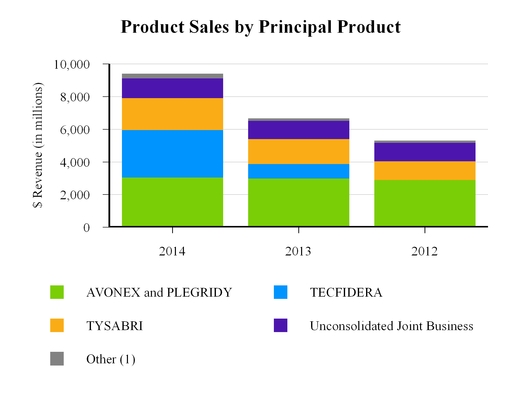
(1) Other includes FAMPYRA, ALPROLIX, ELOCTATE and FUMADERM.
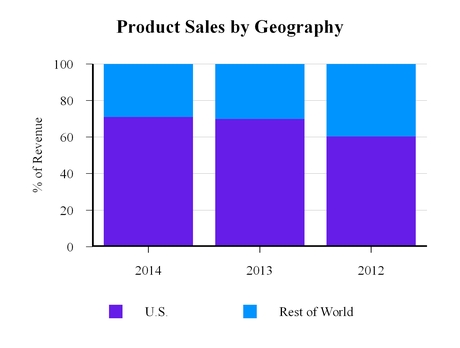
Product sales for AVONEX, TECFIDERA and TYSABRI and unconsolidated joint business revenues for RITUXAN each accounted for more than 10% of our total revenue for the years ended December 31, 2014 and 2013, and AVONEX, TYSABRI and RITUXAN each accounted for more than 10% of our total revenue for the year ended December 31, 2012. For additional financial information about our product and other revenues and geographic areas in which we operate, please read Note 25, Segment Information to our consolidated financial statements, Item 6. Selected Financial Data and Item 7. Management's Discussion and Analysis of Financial Condition and Results of Operations included in this report. A discussion of the risks attendant to our operations is set forth in the “Risk Factors” section of this report.
Multiple Sclerosis (MS) Products
We develop, manufacture and market a number of products designed to treat patients with MS. MS is a progressive neurological disease in which the body loses the ability to transmit messages along nerve cells, leading to a loss of muscle control, paralysis and, in some cases, death. Patients with active relapsing MS experience an uneven pattern of disease progression characterized by periods of stability that are interrupted by flare-ups of the disease after which the patient returns to a new baseline of functioning. Our MS products include:
| • | AVONEX (interferon beta-1a), an intramuscular injectable therapy, indicated for the treatment of patients with relapsing forms of MS. AVONEX is a recombinant form of the interferon beta protein produced in the body in response to viral infection. The principal markets for AVONEX are the U.S., United Kingdom, France, Germany, Italy and Spain. |
| • | PLEGRIDY (peginterferon beta-1a), a subcutaneous injectable therapy, indicated in the U.S. for the treatment of patients with relapsing forms of MS and in the European Union (E.U.) for relapsing-remitting MS (RRMS). PLEGRIDY received approval from the European Commission (EC) in July 2014 and the U.S. Food and Drug Administration (FDA) in August 2014. |
| • | TECFIDERA (dimethyl fumarate), an oral therapy indicated in the U.S. for the treatment of patients with relapsing forms of MS and in the EU for people with RRMS. TECFIDERA was approved by the FDA in March 2013 and the EC in February 2014. |
| • | TYSABRI (natalizumab), a monoclonal antibody approved in numerous countries as a monotherapy for the treatment of patients with relapsing forms of MS. TYSABRI is also approved in the U.S. to treat Crohn's disease, an inflammatory disease of the intestines. The principal markets for TYSABRI in MS are the U.S., the United Kingdom, France, Germany, Italy and Spain. TYSABRI was approved in Japan in March 2014. |
| • | FAMPYRA (prolonged-release fampridine tablets), is indicated for the improvement of walking ability in adult patients with MS. FAMPYRA is a prolonged-release tablet formulation of the drug fampridine. We have a license from Acorda Therapeutics, Inc. (Acorda) to develop and commercialize FAMPYRA in all markets outside the U.S. Our principal markets for FAMPRYA are France, Germany, Spain and Canada. For information about our agreement with Acorda, please read Note 20, Collaborative and Other Relationships to our consolidated financial statements included in this report. |
Hemophilia Products
We develop, manufacture and market products designed to treat patients with hemophilia A and B. Hemophilia A is caused by having substantially reduced or no Factor VIII activity and hemophilia B is caused by having substantially reduced or no Factor IX activity, each of which is needed for normal blood clotting. People with hemophilia A and B experience bleeding episodes that may cause pain, irreversible joint damage and life-threatening hemorrhages. Prophylactic infusions of Factor VIII or Factor IX, as applicable, temporarily replace clotting factor necessary to control bleeding and prevent new bleeding episodes. Our products for hemophilia A and B include:
| • | ALPROLIX [Coagulation Factor IX (Recombinant), Fc Fusion Protein], a recombinant DNA-derived, coagulation Factor IX concentrate indicated in the U.S. for treatment in adults and children with hemophilia B for control and prevention of bleeding episodes, perioperative management and routine prophylaxis to prevent or reduce the frequency of bleeding episodes. ALPROLIX was approved by the FDA in March 2014 and in Japan in June 2014. |
| • | ELOCTATE [Antihemophilic Factor (Recombinant), Fc Fusion Protein], a recombinant DNA-derived, antihemophilic factor indicated in the U.S. for treatment in adults and children with hemophilia A for control and prevention of bleeding episodes, perioperative management and routine prophylaxis to prevent or reduce the frequency of bleeding episodes. ELOCTATE was approved by the FDA in June 2014 and in Japan in December 2014. |
We collaborate with Swedish Orphan Biovitrum AB (Sobi) to jointly develop and commercialize Factor VIII and Factor IX hemophilia products, including ELOCTATE and ALPROLIX. For information about our agreement with Sobi, please read Note 20, Collaborative and Other Relationships to our consolidated financial statements included in this report.
Genentech Collaboration
We collaborate with Genentech, Inc. (Genentech), a wholly-owned member of the Roche Group, on the development and commercialization of RITUXAN. We also share operating profits and losses relating to GAZYVA with Genentech in the U.S. The Roche Group and its sub-licensees maintain sole responsibility for the development, manufacturing and commercialization of GAZYVA in the U.S. For information about our unconsolidated joint business and agreement with Genentech, please read Note 1, Summary of Significant Accounting Policies and Note 20, Collaborative and Other Relationships to our consolidated financial statements included in this report.
| • | RITUXAN (rituximab), a widely prescribed monoclonal antibody used to treat non-Hodgkin's lymphoma, rheumatoid arthritis, chronic lymphocytic leukemia (CLL) and two forms of ANCA-associated vasculitis. Non-Hodgkin's lymphoma and CLL are cancers that affect lymphocytes, which are a type of white blood cell that help to fight infection. Rheumatoid arthritis is a chronic disease that occurs when the immune system mistakenly attacks the body's joints, resulting in inflammation, pain and joint damage. ANCA-associated vasculitis is a rare autoimmune disease that largely affects the small blood vessels of the kidneys, lungs, sinuses, and a variety of other organs. |
| • | GAZYVA (obinutuzumab), in combination with chlorambucil, is indicated for the treatment of patients with previously untreated CLL. The FDA granted GAZYVA breakthrough therapy designation due to the significance of the positive progression-free survival results from the Phase 3 CLL11 clinical trial and the serious and life threatening nature of CLL. GAZYVA was approved by the FDA in November 2013. |
Other
| • | FUMADERM (fumaric acid esters), a prolonged-release tablet formulation approved in Germany only for the treatment of adult patients with moderate to severe plaque psoriasis. Psoriasis is a skin disease in which cells build up on the skin surface and form scales and red patches. |
Marketing and Distribution
We promote our products in the U.S., most of the major countries of the E.U. and Japan primarily through our own sales forces and marketing groups. In some countries, particularly in areas where we continue to expand into new geographic areas, we partner with third parties. We focus our sales and marketing efforts on specialist physicians in private practice or at major medical centers. We use customary pharmaceutical company practices to market our products and to educate physicians, such as sales representatives calling on individual physicians, advertisements, professional symposia, direct mail, public relations and other methods. We provide customer service and other related programs for our products, such as disease and product specific websites, insurance research services and order, delivery and fulfillment services. We have also established programs in the U.S. which provide qualified uninsured or underinsured patients with marketed products at no or reduced charge, based on specific eligibility criteria.
We distribute our products in the U.S. principally through wholesale distributors of pharmaceutical products, mail order specialty distributors or shipping service providers. In other countries, the distribution of our products varies from country to country, including through wholesale distributors of pharmaceutical products and third party distribution partners who are responsible for most marketing and distribution activities.
RITUXAN and GAZYVA are marketed and distributed by the Roche Group and its sublicensees.
Our product sales to two wholesale distributors, AmerisourceBergen and McKesson, each accounted for more than 10% of our total revenues for the years ended December 31, 2014, 2013 and 2012, and on a combined basis, these wholesale distributors accounted for approximately 60%, 56% and 30% of our gross product revenues for such years, respectively.
Research and Development Programs
A commitment to research is fundamental to our company’s mission. Our research and development strategy is to discover and develop differentiated molecules that improve safety or efficacy for unmet medical needs. By applying our expertise in biologics and our growing capabilities in small molecule, antisense, gene therapy, gene editing and other technologies, we target specific medical needs where new or better treatments are needed.
We intend to continue committing significant resources to research and development opportunities. As part of our ongoing research and development efforts, we have devoted significant resources to conducting clinical studies to advance the development of new pharmaceutical products and technologies and to explore the utility of our existing products in treating disorders beyond those currently approved in their labels. For the years ended December 31, 2014, 2013 and 2012, research and development expenses were $1,893.4 million, $1,444.1 million and $1,334.9 million, respectively.
The table below highlights our current research and development programs that are in clinical trials. Drug development involves a high degree of risk and investment, and the status, timing and scope of our development programs are subject to change. Important factors that could adversely affect our drug development efforts are discussed in the “Risk Factors” section of this report.
| Therapeutic Area | Product Candidate | Targeted Indications | Collaborator (1) | Status | ||||
| Neurology | ZINBRYTA (daclizumab high yield process) | MS | AbbVie Biotherapeutics | Phase 3 completed; Expect to submit MAA to FDA and EMA in 2015 | ||||
| TYSABRI (natalizumab) | Secondary progressive MS | None | Phase 3 | |||||
| Acute Ischemic Stroke | None | Phase 2 | ||||||
| ISIS - SMNRx | Spinal muscular atrophy | Isis Pharmaceuticals | Phase 3 | |||||
| Anti-LINGO | Acute Optic Neuritis | None | Phase 2 | |||||
| MS | None | Phase 2 | ||||||
| Neublastin | Neuropathic pain | None | Phase 2 | |||||
| BIIB037 | Alzheimer’s disease | Neurimmune SubOne AG | Phase 1b; Preparing for Phase 3 | |||||
| BAN2401 | Alzheimer’s disease | Eisai | Phase 2 | |||||
| E2609 | Alzheimer’s disease | Eisai | Phase 2 | |||||
| ISIS - DMPKRx | Myotonic Dystrophy | Isis Pharmaceuticals | Phase 1 | |||||
| BIIB061 | MS | None | Phase 1 | |||||
| Hematology | ALPROLIX [Coagulation Factor IX (Recombinant), Fc Fusion Protein] | Hemophilia B | Swedish Orphan Biovitrum | Expect to submit MAA to EMA in 2015 | ||||
| ELOCTATE [Antihemophilic Factor (Recombinant), Fc Fusion Protein] | Hemophilia A | Swedish Orphan Biovitrum | MAA submitted and under regulatory review by EMA | |||||
| Immunology | STX-100 | Idiopathic pulmonary fibrosis | None | Phase 2a | ||||
| Anti-TWEAK | Lupus nephritis | None | Phase 2 | |||||
| Anti-CD40 Ligand | Systemic lupus erythematosus | UCB Pharma | Phase 1b | |||||
| Anti-BDCA2 | Systemic lupus erythematosus | None | Phase 1 | |||||
| Other | GAZYVA (obinutuzumab) | Non-Hodgkin’s lymphoma | Genentech (Roche Group) | Phase 3 | ||||
| Lupus nephritis | Genentech (Roche Group) | Phase 2 |
| (1) | For information about certain of our agreements with collaborators and other third parties, please see “Business Relationships” below and Note 20, Collaborative and Other Relationships to our consolidated financial statements included in this report. |
Late Stage Product Candidates
Additional information about our late stage product candidates, which includes programs in Phase 3 development or in registration stage, is set forth below.
ZINBRYTA (daclizumab high yield process)
ZINBRYTA is a monoclonal antibody that is being tested in RRMS. In June 2014, we announced positive top-line results from the Phase 3 DECIDE clinical trial, which investigated ZINBRYTA as a potential once-monthly, subcutaneous treatment for RRMS. Results showed that ZINBRYTA was superior on the study's primary endpoint, demonstrating a statistically significant reduction in annualized relapse rates when compared to interferon beta-1a (AVONEX).
TYSABRI (natalizumab)
In May 2013, we completed patient enrollment in a Phase 3 study of TYSABRI in secondary progressive MS, known as ASCEND. The study has a duration of approximately two years and involves approximately 875 patients. Secondary progressive MS is characterized by a steady progression of nerve damage, symptoms and disability.
ELOCTATE [Antihemophilic Factor (Recombinant), Fc Fusion Protein]
In June 2014, ELOCTATE, a recombinant factor VIII Fc fusion protein (rFVIIIFc), was approved by the FDA for the treatment of hemophilia A. In October 2014, we submitted a marketing authorization application (MAA) to the European Medicines Agency (EMA) for ELOCTA, the trade name for ELOCTATE in the E.U. The regulatory application included results from A-LONG, the pivotal Phase 3 clinical study that examined the efficacy, safety and pharmacokinetics of rFVIIIFc in males 12 years of age and older with severe hemophilia A and from Kids A-LONG, the Phase 3 clinical study that evaluated the efficacy and safety of rFVIIIFc in children with hemophilia A under the age of 12.
ALPROLIX [Coagulation Factor IX (Recombinant), Fc Fusion Protein]
In March 2014, ALPROLIX was approved by the FDA for the treatment of hemophilia B. Pediatric data will be required as part of the MAA for ALPROLIX that we plan to submit to the EMA. We have initiated Kids B-LONG, a global pediatric study evaluating the efficacy and safety of recombinant factor IX Fc fusion protein (rFIXFc) in children with hemophilia B under the age of 12.
GAZYVA
The Roche Group is managing the following Phase 3 studies of GAZYVA:
| • | GOYA: investigating the efficacy and safety of GAZYVA in combination with CHOP chemotherapy compared to RITUXAN with CHOP chemotherapy in previously untreated patients with CD20-positive diffuse large B-cell lymphoma. |
| • | GALLIUM: investigating the efficacy and safety of GAZYVA in combination with chemotherapy followed by maintenance with GAZYVA compared to RITUXAN in combination with chemotherapy followed by maintenance with RITUXAN in previously untreated patients with indolent non-Hodgkin's lymphoma. |
| • | GADOLIN: investigating the efficacy and safety of GAZYVA plus bendamustine compared with bendamustine alone in patients with RITUXAN-refractory, indolent non-Hodgkin's lymphoma. In February 2015, the Roche Group announced positive results from the Phase 3 GADOLIN study. At a pre-planned interim analysis, an independent data monitoring committee determined that the study met its primary endpoint early, showing that people lived significantly longer without disease worsening or death (progression-free survival) when treated with GAZYVA plus bendamustine followed by GAZYVA alone, compared to bendamustine alone. |
ISIS-SMNRx
In August 2014, Isis Pharmaceuticals, Inc. (Isis) announced the initiation of a pivotal Phase 3 study evaluating ISIS-SMNRx in infants with spinal muscular atrophy (SMA), the most common genetic cause of infant mortality. This Phase 3 study, known as ENDEAR, is a randomized, double-blind, sham-procedure controlled thirteen month study in approximately 110 infants diagnosed with SMA. The study will evaluate the efficacy and safety of a 12mg dose of ISIS-SMNRx with a primary endpoint of survival or permanent ventilation.
In November 2014, Isis announced the initiation of a pivotal Phase 3 study evaluating the efficacy and safety of ISIS-SMNRx in non-ambulatory children with SMA. This Phase 3 study, known as CHERISH, is a randomized, double-blind, sham-procedure controlled fifteen month study in approximately 120 children with SMA. The study will evaluate the efficacy and safety of a 12mg dose of ISIS-SMNRx with a primary endpoint of a change in the Hammersmith Functional Motor Scale-Expanded, a validated method to measure changes in muscle function in patients with SMA.
Business Relationships
As part of our business strategy, we establish business relationships, including joint ventures and collaborative arrangements with other companies, universities and medical research institutions to assist in the clinical development and/or commercialization of certain of our products and product candidates and to provide support for our research programs. We also evaluate opportunities for acquiring products or rights to products and technologies that are complementary to our business from other companies, universities and medical research institutions.
Below is a brief description of our significant relationships and collaborations that expand our pipeline and provide us with certain rights to existing and potential new products and technologies. For more information regarding certain of these relationships, including their ongoing financial and accounting impact on our business, please read Note 20, Collaborative and Other Relationships to our consolidated financial statements included in this report.
| • | AbbVie Biotherapeutics, Inc. - We have a collaboration agreement with AbbVie Biotherapeutics, Inc. aimed at advancing the development and commercialization of ZINBRYTA (daclizumab high yield process) in MS. |
| • | Acorda Therapeutics, Inc. - We collaborate with Acorda to develop and commercialize products containing fampridine in markets outside the U.S. We also have responsibility for regulatory activities and the future clinical development of related products in those markets. |
| • | Eisai Co., Ltd. - In 2014, we entered into a collaboration with Eisai Co., Ltd. (Eisai) to jointly develop and commercialize E2609 and BAN2401, two Eisai product candidates for the treatment of Alzheimer’s disease. The agreement also provides Eisai with options to jointly develop and commercialize two of our candidates for Alzheimer’s disease, the anti-amyloid beta antibody BIIB037 and an anti-tau monoclonal antibody, upon the exchange of clinical data. |
| • | Genentech (Roche Group) - We collaborate with Genentech on the development and commercialization of RITUXAN. In addition, in the U.S. we share operating profits and losses relating to GAZYVA with Genentech. The Roche Group and its sub-licensees maintain sole responsibility for the development, manufacturing and commercialization of GAZYVA in the U.S. |
| • | Isis Pharmaceuticals, Inc. - We have three separate exclusive, worldwide option and collaboration agreements with Isis under which both companies will develop and commercialize antisense therapeutics for up to three gene targets, Isis’ product candidates for the treatment of myotonic dystrophy type 1, and the antisense investigational candidate, ISIS-SMNRx for the treatment of SMA. We also have a six-year research collaboration agreement with Isis, which we entered into in 2013, under which both companies will perform discovery level research and develop and commercialize antisense and other therapeutics for the treatment of neurological disorders. |
| • | Samsung Bioepis - We have an agreement with Samsung BioLogics Co. Ltd. (Samsung Biologics), that established an entity, Samsung Bioepis, to develop, manufacture and market biosimilar pharmaceuticals. In December 2013, pursuant to our agreement with Samsung Biologics, we exercised our right to enter into an agreement with Samsung Bioepis to commercialize anti-TNF biosimilar product candidates in Europe. Under the agreement, we will be responsible for commercialization of these product candidates across Europe. In January 2015, Samsung Bioepis' MAA for its ENBREL (etanercept) biosimilar candidate, SB4, was validated and accepted for review by the EMA. |
| • | Sangamo BioSciences, Inc. - In 2014, we entered into an exclusive worldwide research, development and commercialization collaboration and license agreement with Sangamo BioSciences, Inc. (Sangamo) under which both companies will develop and commercialize product candidates using gene editing technologies for the treatment of two inherited blood disorders, sickle cell disease and beta-thalassemia. |
| • | Swedish Orphan Biovitrum AB - We collaborate with Sobi to jointly develop and commercialize Factor VIII and Factor IX hemophilia products, including ELOCTATE and ALPROLIX. We have commercial rights for North America and for rest of the world markets outside of Europe, Russia, Turkey and certain countries in the Middle East. Subject to the exercise of an opt-in right that Sobi may exercise with respect to each product developed under the collaboration, Sobi will have commercial rights in Europe, Russia, Turkey and certain countries in the Middle East for the applicable product. In November 2014, Sobi exercised its opt-in right to assume final development and commercialization of ELOCTA in those territories. |
Patents and Other Proprietary Rights
Patents are important to obtaining and protecting exclusive rights in our drugs and drug candidates. We regularly seek patent protection in the U.S. and in selected countries outside the U.S. for inventions originating from our research and development efforts. In addition, we license rights to various patents and patent applications. U.S. patents, as well as most foreign patents, are generally effective for 20 years from the date the earliest application was filed; however, U.S. patents that issue on applications filed before June 8, 1995 may be effective until 17 years from the issue date, if that is later than the 20 year date. In some cases, the patent term may be extended to recapture a portion of the term lost during FDA regulatory review or, in the case of the U.S., because of U.S. Patent and Trademark Office (USPTO) delays in prosecuting the application. Specifically, in the U.S., under the Drug Price Competition and Patent Term Restoration Act of 1984, commonly known as the Hatch-Waxman Act, the term of a patent that covers an FDA-approved drug may also be eligible for patent term extension (for up to five years, but not beyond a total of 14 years from the date of product approval) as compensation for patent term lost during the FDA regulatory review process. The duration and extension of the term of foreign patents varies similarly, in accordance with local law. For example, supplementary protection certificates (SPCs) on some of our products have been granted in a number of European countries, compensating in part for delays in obtaining marketing approval.
Regulatory exclusivity, which may consist of regulatory data protection and market protection, also can provide meaningful protection for our products. Regulatory data protection provides to the holder of a drug or biologic marketing authorization, for a set period of time, the exclusive use of the proprietary pre-clinical and clinical data that it created at significant cost and submitted to the applicable regulatory authority to obtain approval of its product. Our products also may qualify for market protection from regulatory authorities, pursuant to which a regulatory authority may not permit for a set period of time, the approval or commercialization of another product containing the same active ingredient(s) as our product. After that set period of time, third parties are then permitted to rely upon our data to obtain approval of their abbreviated applications to market (e.g., generic drugs and biosimilars). Although the World Trade Organization's agreement on trade-related aspects of intellectual property rights (TRIPS) requires signatory countries to provide regulatory exclusivity to innovative pharmaceutical products, implementation and enforcement varies widely from country to country.
We also rely upon other forms of unpatented confidential information to remain competitive. We protect such information principally through confidentiality agreements with our employees, consultants, outside scientific collaborators, scientists whose research we sponsor and other advisers. In the case of our employees, these agreements also provide, in compliance with relevant law, that inventions and other intellectual property conceived by such employees during their employment shall be our exclusive property.
Our trademarks are important to us and are generally covered by trademark applications or registrations in the USPTO and the patent or trademark offices of other countries. We also use trademarks licensed from third parties, such as the trademark FAMPYRA which we license from Acorda Therapeutics. Trademark protection varies in accordance with local law, and continues in some countries as long as the trademark is used and in other countries as long as the trademark is registered. Trademark registrations generally are for fixed but renewable terms.
A discussion of certain risks and uncertainties that may affect our patent position and proprietary rights is set forth in the “Risk Factors” section of this report.
Additional information about the patents, expected regulatory exclusivities and other proprietary rights covering our marketed products is set forth below.
AVONEX and PLEGRIDY
We have several U.S. patents and patent applications, and a number of corresponding foreign counterparts, related to AVONEX and/or PLEGRIDY. Our U.S. patent no. 7,588,755 claims the use of recombinant beta interferon for immunomodulation or treating a viral condition, viral disease, cancers or tumors. This patent, which expires in September 2026, covers the treatment of MS with AVONEX and PLEGRIDY. A discussion of legal proceedings related to this patent is set forth in Note 21, Litigation to our consolidated financial statements included in this report.
Additionally, we and another party each own a pending U.S. patent application related to recombinant interferon-beta protein. These applications, which fall outside of the General Agreement on Tariffs and Trade (GATT) amendments to the U.S. patent statute, are not published by the USPTO and, if they mature into granted patents, may be entitled to a term of seventeen years from the grant date. There is a pending interference proceeding in the USPTO involving these applications. We do not know whether either of these applications will mature into patents with claims relevant to AVONEX or to PLEGRIDY.
Additional protection for PLEGRIDY is provided by patents and patent applications with expiration dates out to 2025 in the U.S. and 2019 in the E.U., with the potential for patent term extension. PLEGRIDY is also entitled to regulatory exclusivity until 2026 in the U.S. and 2024 in the E.U.
TECFIDERA
We have several U.S. patents and patent applications, and a number of corresponding foreign counterparts, related to TECFIDERA.
Our principal U.S. patents and expiration dates, subject to pending applications for patent term extension, are:
| • | U.S. patent no. 6,509,376, having claims to formulations of dimethyl fumarate for use in the treatment of autoimmune diseases including MS, expiring in 2019; |
| • | U.S. patent no. 7,320,999, having claims to a method of treating MS using dimethyl fumarate, expiring in 2020; |
| • | U.S. patent no. 7,619,001, having claims to a method of treating MS using dimethyl fumarate, monomethyl fumarate, or a combination thereof, expiring in 2018; |
| • | U.S. patent no. 7,803,840, having claims to a method of treating an autoimmune disease selected from autoimmune polyarthritis and MS using dimethyl fumarate, expiring in 2018; |
| • | U.S. patent no. 8,399,514, covering the dosing regimen of 480 mg per day of dimethyl fumarate, monomethyl fumarate or combinations thereof for treating MS, expiring in 2028; |
| • | U.S. patent no. 8,524,773, having claims to a method of treating MS using dimethyl fumarate, expiring in 2018; and |
| • | U.S. patent no. 8,759,393, having claims to formulations of dimethyl fumarate, expiring in 2019. |
Our principal European patents and expiration dates, subject to pending applications for supplemental patent certificates, are:
| • | European patent no. (EP) 1131065, directed to formulations of dimethyl fumarate and to uses thereof for treating autoimmune diseases, including MS, expiring in 2019; and |
| • | EP 2137537, the counterpart patent to our U.S. patent covering the dosing regimen of 480 mg per day of dimethyl fumarate or monomethyl fumarate for treating MS, expiring in 2028. |
In addition to patent protection, in the U.S. TECFIDERA is entitled to regulatory exclusivity until 2018. In the E.U., TECFIDERA is entitled to regulatory exclusivity until 2024.
TYSABRI
We have patents and patent applications covering TYSABRI in the U.S. and other countries. These patents and patent applications cover TYSABRI and related manufacturing methods, as well as various methods of treatment using the product. The principal patents covering the product and use of the product to treat MS are U.S. patent nos. 5,840,299 and 6,602,503 and EP 0804237, which expire between 2017 and 2020 (including supplementary protection certificates in many European countries). Additional U.S. and E.U. patents and applications covering methods of treatment using the product expire in 2023.
In addition to patent protection, TYSABRI is entitled to regulatory exclusivity until 2016 in both the U.S. and the E.U.
FAMPYRA
We have an exclusive license under two European granted patents, several pending European patent applications and numerous corresponding non-U.S. counterpart applications related to FAMPYRA. EP 0484186B1 claims pharmaceutical formulations containing aminopyridines including fampridine. This patent expired in November 2011 but is subject to pending and granted supplemental protection certificates which, where granted, will extend the patent term to 2016 on a country-by-country basis. EP 1732548B1, which claims sustained-release aminopyridine compositions for increasing walking speed in patients with MS, and EP 2377536B1, which claims sustained-release aminopyridine compositions for treating multiple sclerosis, expire in 2025 but are subject to pending and granted supplemental protection certificates which, where granted, will extend one of the patents’ term to 2026 on a country-by-country basis. In addition to these patent rights, FAMPYRA is covered by regulatory exclusivity in Europe until 2021.
ELOCTATE and ALPROLIX
We have several U.S. patents and patent applications, and a number of corresponding foreign counterparts, related to ELOCTATE and ALPROLIX and their use. The principal patents include U.S. patents nos. 7,404,956, 8,329,182, 7,348,004 and 7,862,820. These patents will expire between 2024 and 2025, and some may be entitled to additional patent term pursuant to the patent term extension provisions of the U.S. patent laws. Related European patents EP 1624891 and EP 1625209 expire in 2024 and may be entitled to additional patent term in at least some countries upon approval. Additionally, pending patent applications, if granted, would provide additional patent protection through 2034. ELOCTATE and ALPROLIX are both entitled to regulatory exclusivity in the U.S. until 2026.
RITUXAN and Anti-CD20 Antibodies
We have several U.S. patents and patent applications, and numerous corresponding foreign counterparts, directed to anti-CD20 antibody technology, including RITUXAN. The principal patents with claims to RITUXAN or its uses expire in the U.S. between 2015 and 2018 and expired in the rest of the world in 2013, subject to any available patent term extensions. In addition, we and our collaborator Genentech, have additional patents and patent applications directed to anti-CD20 antibodies and their uses to treat various diseases. Genentech has principal responsibility for managing the intellectual property portfolio for RITUXAN and the other anti-CD20 antibodies under our agreements with Genentech.
Competition
Competition in the biopharmaceutical industries is intense and comes from many sources, including specialized biotechnology firms and large pharmaceutical companies. Many of our competitors are working to develop products similar to those we are developing or already market and have considerable experience in undertaking clinical trials and in obtaining regulatory approval to market pharmaceutical products. Certain of these companies have substantially greater financial, marketing and research and development resources than we do.
We believe that competition and leadership in the industry is based on managerial and technological excellence and innovation as well as establishing patent and other proprietary positions through research and development. The achievement of a leadership position also depends largely upon our ability to identify and exploit commercially the products resulting from research and the availability of adequate financial resources to fund facilities, equipment, personnel, clinical testing, manufacturing and marketing. Another key aspect of remaining competitive within the industry is recruiting and retaining leading scientists and technicians. We believe that we have been successful in attracting skilled and experienced scientific personnel.
Competition among products approved for sale may be based, among other things, on patent position, product efficacy, safety, convenience/delivery devices, reliability, availability and price. In addition, early entry of a new pharmaceutical product into the market may have important advantages in gaining product acceptance and market share. Accordingly, the relative speed with which we can develop products, complete the testing and approval process and supply commercial quantities of products will have an important impact on our competitive position.
The introduction of new products or technologies, including the development of new processes or technologies by competitors or new information about existing products may result in increased competition for our marketed products or could result in pricing pressure on our products. It is also possible that the development of new treatment options or standards of care could reduce the use of our products or may limit the utility and application of ongoing clinical trials for our product candidates. We may also face increased competitive pressures as a result of generics and the emergence of biosimilars in the U.S. and E.U. If a generic or biosimilar version of one of our products were approved, it could reduce our sales of that product.
Additional information about the competition that our marketed products face is set forth below.
AVONEX, PLEGRIDY, TYSABRI and TECFIDERA
AVONEX, PLEGRIDY, TYSABRI and TECFIDERA each compete with one or more of the following products:
| Competing Product | Competitor | |
| COPAXONE (glatiramer acetate) | Teva Pharmaceuticals Industries Ltd. | |
| REBIF (interferon-beta-1) | Merck KGaA (and co-promoted with Pfizer Inc. in the U.S.) | |
| BETASERON/BETAFERON (interferon-beta-1b) | Bayer Group | |
| EXTAVIA (interferon-beta-1b) | Novartis AG | |
| GILENYA (fingolimod) | Novartis AG | |
| AUBAGIO (teriflunomide) | Sanofi | |
| LEMTRADA (alemtuzumab) | Sanofi |
Competition in the MS market is intense. Along with us, a number of companies are working to develop additional treatments for MS that may in the future compete with AVONEX, PLEGRIDY, TYSABRI, TECFIDERA or all of them. In addition, the commercialization of our own products, including new products such as TECFIDERA and PLEGRIDY, and the possible future introduction of generics, related prodrug derivatives or biosimilars of existing products may negatively impact future sales of our MS products.
FAMPYRA
FAMPYRA is indicated as a treatment to improve walking in adult patients with MS who have walking disability and is the first treatment that addresses this unmet medical need with demonstrated efficacy in people with all types of MS. FAMPYRA is currently the only therapy approved to improve walking in patients with MS.
FUMADERM
FUMADERM competes with several different types of therapies in the psoriasis market within Germany, including oral systemics such as methotrexate and cyclosporine.
RITUXAN and GAZYVA in Oncology
RITUXAN and GAZYVA compete with several different types of therapies in the oncology market, including:
| Competing Product | Competitor | |
| TREANDA (bendamustine HCL) | Cephalon (Teva Pharmaceuticals) | |
| ARZERRA (ofatumumab) | GenMab in collaboration with GlaxoSmithKline | |
| IMBRUVICA (ibrutinib) | Pharmacyclics and Janssen | |
| ZYDELIG (idelalisib) | Gilead |
We also expect that over time GAZYVA will compete with RITUXAN in the oncology market. In addition, we are aware of other anti-CD20 molecules, including biosimilars, in development that, if successfully developed and approved, may compete with RITUXAN and GAZYVA in the oncology market.
RITUXAN in Rheumatoid Arthritis (RA)
RITUXAN competes with several different types of therapies in the RA market, including:
| Competing Product/Type of Therapy | Competitor | |
| Traditional Therapies: | ||
| Disease-modifying anti-rheumatic drugs such as steroids, methotrexate and cyclosporine | Numerous competitors | |
| TNF Inhibitors: | ||
| REMICADE (infliximab) | Johnson & Johnson | |
| SIMPONI and SIMPONI ARIA (golimumab) | Johnson & Johnson | |
| HUMIRA (adalimumab) | AbbVie | |
| ENBREL (etanercept) | Amgen and Pfizer | |
| CIMZIA (certolizumab pegol) | UCB, S.A. | |
| ORENCIA (abatacept) | Bristol-Myers Squibb Company | |
| ACTEMRA (tocilizumab) | Roche Group | |
| XELJANZ (tofacitinib) | Pfizer |
We are also aware of other products, including biosimilars, in development that, if successfully developed and approved, may compete with RITUXAN in the RA market.
ELOCTATE and ALPROLIX
ELOCTATE and ALPROLIX compete with recombinant short-acting Factor VIII and IX products, respectively, including:
| Competing Product | Competitor | |
| ELOCTATE: | ||
| ADVATE [Antihemophilic Factor (Recombinant)] | Baxter | |
| KOGENATE FS [Antihemophilic Factor (Recombinant)] | Bayer | |
| HELIXATE FS [Antihemophilic Factor (Recombinant)] | CSL Behring | |
| XYNTHA [Antihemophilic Factor (Recombinant)], Plasma/Albumin-Free | Pfizer | |
| ALPROLIX: | ||
| BENEFIX Coagulation Factor IX (Recombinant) | Pfizer | |
| RIXUBIS [Coagulation Factor IX (Recombinant)] | Baxter |
Our hemophilia products also compete with a number of plasma-derived short-acting Factor VIII and IX products. We are also aware of other longer-acting products as well as other technologies, such as gene therapies, that are in development, and if successfully developed and approved may compete with our hemophilia products.
Regulatory
Our current and contemplated activities and the products and processes that will result from such activities are subject to substantial government regulation.
Regulation of Pharmaceuticals
Product Approval and Post-Approval Regulation in the United States
Before new pharmaceutical products may be sold in the U.S., preclinical studies and clinical trials of the products must be conducted and the results submitted to the FDA for approval. With limited exceptions, the FDA requires companies to register both pre-approval and post-approval clinical trials and disclose clinical trial results in public databases. Failure to register a trial or disclose study results within the required time periods could result in penalties, including civil monetary penalties. Clinical trial programs must establish efficacy, determine an appropriate dose and dosing regimen, and define the conditions for safe use. This is a high-risk process that requires stepwise clinical studies in which the candidate product must successfully meet predetermined endpoints. The results of the preclinical and clinical testing of a product are then submitted to the FDA in the form of a Biologics License Application (BLA) or a New Drug Application (NDA). In response to a BLA or NDA, the FDA may grant marketing approval, request additional information or deny the application if it determines the application does not provide an adequate basis for approval.
Product development and receipt of regulatory approval takes a number of years, involves the expenditure of substantial resources and depends on a number of factors, including the severity of the disease in question, the availability of alternative treatments, potential safety signals observed in preclinical or clinical tests, and the risks and benefits of the product as demonstrated in clinical trials. The FDA has substantial discretion in the product approval process, and it is impossible to predict with any certainty whether and when the FDA will grant marketing approval. The agency may on occasion require the sponsor of a BLA or NDA to conduct additional clinical studies or to provide other scientific or technical information about the product, and these additional requirements may lead to unanticipated delay or expense. Furthermore, even if a product is approved, the approval may be subject to limitations based on the FDA's interpretation of the existing pre-clinical or clinical data.
The FDA has developed four distinct approaches intended to make therapeutically important drugs available as rapidly as possible, especially when the drugs are the first available treatment or have advantages over existing treatments: accelerated approval, fast track, breakthrough therapy, and priority review.
The FDA may grant “accelerated approval” status to products that treat serious or life-threatening illnesses and that provide meaningful therapeutic benefits to patients over existing treatments. Under this pathway, the FDA may approve a product based on surrogate endpoints, or clinical endpoints other than survival or irreversible morbidity. When approval is based on surrogate endpoints or clinical endpoints other than survival or morbidity, the sponsor will be required to conduct additional post-approval clinical studies to verify and describe clinical benefit. Under the agency's accelerated approval regulations, if the FDA concludes that a drug that has been shown to be effective can be safely used only if distribution or use is restricted, it may require certain post-marketing restrictions as necessary to assure safe use. In addition, for products approved under accelerated approval, sponsors may be required to submit all copies of their promotional materials, including advertisements, to the FDA at least thirty days prior to initial dissemination. The FDA may withdraw approval under accelerated approval after a hearing if, for instance, post-marketing studies fail to verify any clinical benefit, it becomes clear that restrictions on the distribution of the product are inadequate to ensure its safe use, or if a sponsor fails to comply with the conditions of the accelerated approval.
In addition, the FDA may grant “fast track” status to products that treat serious diseases or conditions and fill an unmet medical need. Fast track is a process designed to expedite the review of such products by providing, among other things, more frequent meetings with the FDA to discuss the product's development plan, more frequent written correspondence from the FDA about trial design, eligibility for accelerated approval, and rolling review, which allows submission of individually completed sections of a NDA or BLA for FDA review before the entire filing is completed. Fast track status does not ensure that a product will be developed more quickly or receive FDA approval.
The FDA may also grant “breakthrough therapy” status to drugs designed to treat, alone or in combination with another drug or drugs, a serious or life-threatening disease or condition and for which preliminary evidence suggests a substantial improvement over existing therapies. Such drugs need not address an unmet need, but are nevertheless eligible for expedited review if they offer the potential for an improvement. Breakthrough therapy status entitles the sponsor to earlier and more frequent meetings with the FDA regarding the development of nonclinical and clinical data and permits the FDA to offer product development or regulatory advice for the purpose of shortening the time to product approval. Breakthrough therapy status does not guarantee that a product will be developed or reviewed more quickly and does not ensure FDA approval.
Finally, the FDA may grant “priority review” status to products that offer major advances in treatment or provide a treatment where no adequate therapy exists. Priority review is intended to reduce the time it takes for the FDA to review a NDA or BLA.
Regardless of the approval pathway employed, the FDA may require a sponsor to conduct additional post-marketing studies as a condition of approval to provide data on safety and effectiveness. If a sponsor fails to conduct the required studies, the agency may withdraw its approval. In addition, if the FDA concludes that a drug that has been shown to be effective can be safely used only if distribution or use is restricted, it can mandate post-marketing restrictions as necessary to assure safe use. In such a case, the sponsor may be required to establish rigorous systems to assure use of the product under safe conditions. These systems are usually referred to as Risk Evaluation and Mitigation Strategies (REMS). The FDA can impose financial penalties for failing to comply with certain post-marketing commitments, including REMS. In addition, any changes to an approved REMS must be reviewed and approved by the FDA prior to implementation.
We monitor information on side effects and adverse events reported during clinical studies and after marketing approval and report such information and events to regulatory agencies. Non-compliance with the FDA's safety reporting requirements may result in civil or criminal penalties. Side effects or adverse events that are reported during clinical trials can delay, impede, or prevent marketing approval. Based on new safety information that emerges after approval, the FDA can mandate product labeling changes, impose a new REMS or the addition of elements to an existing REMS, require new post-marketing studies (including additional clinical trials), or suspend or withdraw approval of the product. These requirements may affect our ability to maintain marketing approval of our products or require us to make significant expenditures to obtain or maintain such approvals.
If we seek to make certain types of changes to an approved product, such as adding a new indication, making certain manufacturing changes, or changing manufacturers or suppliers of certain ingredients or components, the FDA will need to review and approve such changes in advance. In the case of a new indication, we are required to demonstrate with additional clinical data that the product is safe and effective for a use other than that initially approved. FDA regulatory review may result in denial or modification of the planned changes, or requirements to conduct additional tests or evaluations that can substantially delay or increase the cost of the planned changes.
In addition, the FDA regulates all advertising and promotion activities and communications for products under its jurisdiction both before and after approval. A company can make only those claims relating to safety and efficacy that are approved by the FDA. However, physicians may prescribe legally available drugs for uses that are not described in the drug's labeling. Such off-label uses are common across medical specialties, and often reflect a physician's belief that the off-label use is the best treatment for patients. The FDA does not regulate the behavior of physicians in their choice of treatments, but the FDA regulations do impose stringent restrictions on manufacturers' communications regarding off-label uses. Failure to comply with applicable FDA requirements may subject a company to adverse publicity, enforcement action by the FDA, corrective advertising, and the full range of civil and criminal penalties available to the FDA.
Regulation of Combination Products
Combination products are defined by the FDA to include products comprised of two or more regulated components (e.g., a biologic and a device). Biologics and devices each have their own regulatory requirements, and combination products may have additional requirements. Some of our marketed products meet this definition and are regulated under this framework and similar regulations outside the U.S., and we expect that some of our pipeline product candidates may be evaluated for regulatory approval under this framework as well.
Product Approval and Post-Approval Regulation Outside the United States
We market our products in numerous jurisdictions outside the U.S. Most of these jurisdictions have product approval and post-approval regulatory processes that are similar in principle to those in the U.S. In Europe, where most of our ex-U.S. efforts are focused, there are several tracks for marketing approval, depending on the type of product for which approval is sought. Under the centralized procedure, a company submits a single application to the EMA. The marketing application is similar to the NDA or BLA in the U.S. and is evaluated by the Committee for Medicinal Products for Human Use (CHMP), the expert scientific committee of the EMA. If the CHMP determines that the marketing application fulfills the requirements for quality, safety, and efficacy, it will submit a favorable opinion to the EC. The CHMP opinion is not binding, but is typically adopted by the EC. A marketing application approved by the EC is valid in all member states. The centralized procedure is required for all biological products, orphan medicinal products, and new treatments for neurodegenerative disorders, and it is available for certain other products, including those which constitute a significant therapeutic, scientific or technical innovation.
In addition to the centralized procedure, Europe also has: (1) a nationalized procedure, which requires a separate application to and approval determination by each country; (2) a decentralized procedure, whereby applicants submit identical applications to several countries and receive simultaneous approval; and (3) a mutual recognition procedure, where applicants submit an application to one country for review and other countries may accept or reject the initial decision. Regardless of the approval process employed, various parties share responsibilities for the monitoring, detection, and evaluation of adverse events post-approval, including national authorities, the EMA, the EC, and the marketing authorization holder. In some regions, it is possible to receive an “accelerated” review whereby the national regulatory authority will commit to truncated review timelines for products that meet specific medical needs.
Good Manufacturing Practices
Regulatory agencies regulate and inspect equipment, facilities, and processes used in the manufacturing and testing of pharmaceutical and biologic products prior to approving a product. If, after receiving clearance from regulatory agencies, a company makes a material change in manufacturing equipment, location, or process, additional regulatory review and approval may be required. We also must adhere to current Good Manufacturing Practices (cGMP) and product-specific regulations enforced by regulatory agencies following product approval. The FDA, the EMA and other regulatory agencies also conduct periodic visits to re-inspect equipment, facilities, and processes following the initial approval of a product. If, as a result of these inspections, it is determined that our equipment, facilities, or processes do not comply with applicable regulations and conditions of product approval, regulatory agencies may seek civil, criminal, or administrative sanctions or remedies against us, including significant financial penalties and the suspension of our manufacturing operations.
Good Clinical Practices
The FDA, the EMA and other regulatory agencies promulgate regulations and standards for designing, conducting, monitoring, auditing and reporting the results of clinical trials to ensure that the data and results are accurate and that the rights and welfare of trial participants are adequately protected (commonly referred to as current Good Clinical Practices (cGCP)). Regulatory agencies enforce cGCP through periodic inspections of trial sponsors, principal investigators and trial sites, contract research organizations (CROs), and institutional review boards. If our studies fail to comply with applicable cGCP, the clinical data generated in our clinical trials may be deemed unreliable and relevant regulatory agencies may require us to perform additional clinical trials before approving our marketing applications. Noncompliance can also result in civil or criminal sanctions. We rely on third parties, including CROs, to carry out many of our clinical trial-related activities. Failure of such third parties to comply with cGCP can likewise result in rejection of our clinical trial data or other sanctions.
Approval of Biosimilars
In March 2010, U.S. healthcare reform legislation known as the Affordable Care Act, amended the Public Health Service Act (PHSA), to authorize the FDA to approve biological products, referred to as biosimilars or follow-on biologics, that are shown to be highly similar to previously approved biological products based upon potentially abbreviated data packages. The approval pathway for biosimilars does, however, grant a biologics manufacturer a 12 year period of exclusivity from the date of approval of its biological product before biosimilar competition can be introduced. The FDA has released draft guidance documents as part of the implementation of the abbreviated approval pathway for biosimilars and these have not yet been finalized. The FDA has indicated that it is still evaluating a number of relevant issues, and additional guidance documents are expected to be released, including guidance on the criteria for interchangeability (which the FDA has indicated would be a “higher standard” than biosimilarity), naming, labeling and clinical pharmacology.
Biosimilars legislation has also been in place in the E.U. since 2003. In December 2012, guidelines issued by the EMA for approving biosimilars of marketed monoclonal antibody products became effective. In the E.U., biosimilars have been approved under a specialized pathway of centralized procedures. The pathway allows sponsors of a biosimilar to seek and obtain regulatory approval based in part on the clinical trial data of an innovator product to which the biosimilar has been demonstrated to be “similar”. In many cases, this allows biosimilars to be brought to market without conducting the full complement of clinical trials typically required for novel biologic drugs.
Orphan Drug Act
Under the U.S. Orphan Drug Act, the FDA may grant orphan drug designation to drugs or biologics intended to treat a “rare disease or condition,” which generally is a disease or condition that affects fewer than 200,000 individuals in the U.S. If a product which has an orphan drug designation subsequently receives the first FDA approval for the indication for which it has such designation, the product is entitled to orphan exclusivity, i.e., the FDA may not approve any other applications to market the same drug for the same indication for a period of seven years following marketing approval, except in certain very limited circumstances, such as if the later product is shown to be clinically superior to the orphan product. Legislation similar to the U.S. Orphan Drug Act has been enacted in other countries to encourage the research, development and marketing of medicines to treat, prevent or diagnose rare diseases. In the E.U., medicinal products intended for diagnosis, prevention or treatment of life-threatening or very serious diseases affecting less than five in 10,000 people receive 10-year market exclusivity, protocol assistance, and access to the centralized procedure for marketing authorization.
Regulation Pertaining to Pricing and Reimbursement
In both domestic and foreign markets, sales of our products depend, in part, on the availability and amount of reimbursement by third party payors, including governments and private health plans. Governments may regulate coverage, reimbursement and pricing of our products to control cost or affect utilization of our products. Private health plans may also seek to manage cost and utilization by implementing coverage and reimbursement limitations. Substantial uncertainty exists regarding the reimbursement by third party payors of newly approved health care products. The U.S. and foreign governments regularly consider reform measures that affect health care coverage and costs. For example, provisions of the Affordable Care Act have resulted in changes in the way health care is paid for by both governmental and private insurers, including increased rebates owed by manufacturers under the Medicaid Drug Rebate Program, annual fees and taxes on manufacturers of certain branded prescription drugs, the requirement that manufacturers participate in a discount program for certain outpatient drugs under Medicare Part D and the expansion of the number of hospitals eligible for discounts under Section 340B of the PHSA. Such reforms have had and are expected to continue to have a significant impact on our business.
Within the U.S.
Medicaid is a joint federal and state program that is administered by the states for low income and disabled beneficiaries. Under the Medicaid Drug Rebate Program, we are required to pay a rebate for each unit of product reimbursed by the state Medicaid programs. For most brand name drugs, the amount of the basic rebate for each product is set by law as the greater of 23.1% (17.1% for clotting factors and certain other products) of the average manufacturer price (AMP) or the difference between AMP and the best price available from us to any customer (with limited exceptions). The rebate amount must be adjusted upward if AMP increases more than inflation (measured by the Consumer Price Index - Urban). This adjustment can cause the total rebate amount to exceed the minimum 23.1% (or 17.1%) basic rebate amount. The rebate amount is calculated each quarter based on our report of current AMP and best price for each of our products to the Centers for Medicare & Medicaid Services (CMS). The requirements for calculating AMP and best price are complex. We are required to report any revisions to AMP or best price previously reported within a certain period, which revisions could affect our rebate liability for prior quarters. In addition, if we fail to provide information timely or we are found to have knowingly submitted false information to the government, the statute governing the Medicaid Drug Rebate Program provides for civil monetary penalties.
Medicare is a federal program that is administered by the federal government that covers individuals age 65 and over as well as those with certain disabilities. Medicare Part B generally covers drugs that must be administered by physicians or other health care practitioners; are provided in connection with certain durable medical equipment; or are certain oral anti-cancer drugs and certain oral immunosuppressive drugs. Medicare Part B pays for such drugs under a payment methodology based on the average sales price (ASP) of the drugs. Manufacturers, including us, are required to provide ASP information to the CMS on a quarterly basis. The manufacturer-submitted information is used to calculate Medicare payment rates. The current payment rate for Medicare Part B drugs is ASP plus 6%. The payment rates for drugs in the hospital outpatient setting are subject to periodic adjustment. The CMS also has the statutory authority to adjust payment rates for specific drugs outside the hospital outpatient setting based on a comparison of ASP payment rates to widely available market prices or to AMP, which could decrease Medicare payment rates, but the authority has not yet been implemented. If a manufacturer is found to have made a misrepresentation in the reporting of ASP, the governing statute provides for civil monetary penalties.
Medicare Part D provides coverage to enrolled Medicare patients for self-administered drugs (i.e., drugs that are not administered by a physician). Medicare Part D is administered by private prescription drug plans approved by the U.S. government and each drug plan establishes its own Medicare Part D formulary for prescription drug coverage and pricing, which the drug plan may modify from time-to-time. The prescription drug plans negotiate pricing with manufacturers and may condition formulary placement on the availability of manufacturer discounts. In addition, manufacturers, including us, are required to provide to CMS a 50% discount on brand name prescription drugs utilized by Medicare Part D beneficiaries when those beneficiaries reach the coverage gap in their drug benefits.
Our products are subject to discounted pricing when purchased by federal agencies via the Federal Supply Schedule (FSS). FSS participation is required for our products to be covered and reimbursed by the Veterans Administration, Department of Defense, Coast Guard, and Public Health Service (PHS). Coverage under Medicaid, Medicare and the PHS pharmaceutical pricing program is also conditioned upon FSS participation. FSS pricing is intended not to exceed the price that we charge our most-favored non-federal customer for a product. In addition, prices for drugs purchased by the Veterans Administration, Department of Defense (including drugs purchased by military personnel and dependents through the TriCare retail pharmacy program), Coast Guard, and PHS are subject to a cap on pricing equal to 76% of the non-federal average manufacturer price (non-FAMP). An additional discount applies if non-FAMP increases more than inflation (measured by the Consumer Price Index - Urban). In addition, if we fail to provide information timely or we are found to have knowingly submitted false information to the government, the governing statute provides for civil monetary penalties.
To maintain coverage of our products under the Medicaid Drug Rebate Program and Medicare Part B, we are required to extend significant discounts to certain covered entities that purchase products under Section 340B of the PHS pharmaceutical pricing program. Purchasers eligible for discounts include hospitals that serve a disproportionate share of financially needy patients, community health clinics, hemophilia treatment centers and other entities that receive certain types of grants under the PHSA. For all of our products, we must agree to charge a price that will not exceed the amount determined under statute (the “ceiling price”) when we sell outpatient drugs to these covered entities. In addition, we may, but are not required to, offer these covered entities a price lower than the 340B ceiling price. The 340B discount formula is based on AMP and is generally similar to the level of rebates calculated under the Medicaid Drug Rebate Program.
Outside the U.S.
Outside the U.S., the E.U. represents our major market. Within the E.U., our products are paid for by a variety of payors, with governments being the primary source of payment. Governments may determine or influence reimbursement of products. Governments may also set prices or otherwise regulate pricing. Negotiating prices with governmental authorities can delay commercialization of our products. Governments may use a variety of cost-containment measures to control the cost of products, including price cuts, mandatory rebates, value-based pricing, and reference pricing (i.e., referencing prices in other countries and using those reference prices to set a price). Budgetary pressures in many E.U. countries are continuing to cause governments to consider or implement various cost-containment measures, such as price freezes, increased price cuts and rebates, and expanded generic substitution and patient cost-sharing. If budget pressures continue, governments may implement additional cost-containment measures.
Regulation Pertaining to Sales and Marketing
We are subject to various federal and state laws pertaining to health care “fraud and abuse,” including anti-kickback laws and false claims laws. Anti-kickback laws generally prohibit a prescription drug manufacturer from soliciting, offering, receiving, or paying any remuneration to generate business, including the purchase or prescription of a particular drug. Although the specific provisions of these laws vary, their scope is generally broad and there may be no regulations, guidance or court decisions that clarify how the laws apply to particular industry practices. There is therefore a possibility that our practices might be challenged under the anti-kickback or similar laws. False claims laws prohibit anyone from knowingly and willingly presenting, or causing to be presented for payment to third party payors (including Medicare and Medicaid) claims for reimbursed drugs or services that are false or fraudulent, claims for items or services not provided as claimed, or claims for medically unnecessary items or services. Our activities relating to the sale and marketing of our products may be subject to scrutiny under these laws. Violations of fraud and abuse laws may be punishable by criminal or civil sanctions, including fines and civil monetary penalties, and exclusion from federal health care programs (including Medicare and Medicaid). In the U.S., federal and state authorities are paying increased attention to enforcement of these laws within the pharmaceutical industry and private individuals have been active in alleging violations of the laws and bringing suits on behalf of the government under the federal civil False Claims Act. If we were subject to allegations concerning, or were convicted of violating, these laws, our business could be harmed.
Laws and regulations have been enacted by the federal government and various states to regulate the sales and marketing practices of pharmaceutical manufacturers. The laws and regulations generally limit financial interactions between manufacturers and health care providers or require disclosure to the government and public of such interactions. The laws include federal “sunshine” provisions enacted in 2010 as part of the comprehensive federal health care reform legislation. The sunshine provisions apply to pharmaceutical manufacturers with products reimbursed under certain government programs and require those manufacturers to disclose annually to the federal government (for re-disclosure to the public) certain payments made to physicians and certain other healthcare practitioners or to teaching hospitals. State laws may also require disclosure of pharmaceutical pricing information and marketing expenditures. Many of these laws and regulations contain ambiguous requirements. Given the lack of clarity in laws and their implementation, our reporting actions could be subject to the penalty provisions of the pertinent federal and state laws and regulations. Outside the U.S., other countries have implemented requirements for disclosure of financial interactions with healthcare providers and additional countries may consider or implement such laws.
Other Regulations
Foreign Anti-Corruption
We are subject to various federal and foreign laws that govern our international business practices with respect to payments to government officials. Those laws include the U.S. Foreign Corrupt Practices Act (FCPA), which prohibits U.S. companies and their representatives from paying, offering to pay, promising, or authorizing the payment of anything of value to any foreign government official, government staff member, political party, or political candidate for the purpose of obtaining or retaining business or to otherwise obtain favorable treatment or influence a person working in an official capacity. In many countries, the health care professionals we regularly interact with may meet the FCPA's definition of a foreign government official. The FCPA also requires public companies to make and keep books and records that accurately and fairly reflect their transactions and to devise and maintain an adequate system of internal accounting controls.
The laws to which we are subject also include the U.K. Bribery Act 2010 (Bribery Act) which proscribes giving and receiving bribes in the public and private sectors, bribing a foreign public official, and failing to have adequate procedures to prevent employees and other agents from giving bribes. U.S. companies that conduct business in the United Kingdom generally will be subject to the Bribery Act. Penalties under the Bribery Act include potentially unlimited fines for companies and criminal sanctions for corporate officers under certain circumstances.
NIH Guidelines
We conduct research at our U.S. facilities in compliance with the current U.S. National Institutes of Health Guidelines for Research Involving Recombinant DNA Molecules (NIH Guidelines). By local ordinance, we are required to, among other things, comply with the NIH Guidelines in relation to our facilities in Cambridge, Massachusetts and Research Triangle Park (RTP), North Carolina and are required to operate pursuant to certain permits.
Other Laws
Our present and future business has been and will continue to be subject to various other laws and regulations. Various laws, regulations and recommendations relating to data privacy and protection, safe working conditions, laboratory practices, the experimental use of animals, and the purchase, storage, movement, import, export and use and disposal of hazardous or potentially hazardous substances, including radioactive compounds and infectious disease agents, used in connection with our research work are or may be applicable to our activities. Certain agreements entered into by us involving exclusive license rights may be subject to national or international antitrust regulatory control, the effect of which cannot be predicted. The extent of government regulation, which might result from future legislation or administrative action, cannot accurately be predicted.
Environmental Matters
We strive to comply in all material respects with applicable laws and regulations concerning the environment. While it is impossible to predict accurately the future costs associated with environmental compliance and potential remediation activities, compliance with environmental laws is not expected to require significant capital expenditures and has not had, and is not expected to have, a material adverse effect on our operations or competitive position.
Manufacturing
We have three licensed biologics manufacturing facilities, which are located in RTP, North Carolina, Cambridge, Massachusetts, and Hillerød, Denmark. The RTP site includes a 105,000 square foot biologics manufacturing facility, which contains 6,000 (3 x 2,000) liters of bioreactor capacity, as well as a 175,000 square foot Large-Scale Manufacturing (LSM) plant which contains 90,000 (6 x 15,000) liters of bioreactor capacity. The Cambridge site is a 67,000 square foot biologics manufacturing facility that contains 10,000 (5 x 2,000) liters of bioreactor capacity. The Hillerød site is a 228,000 square foot LSM plant that contains 90,000 (6 x 15,000) liters of bioreactor capacity.
We rely on our manufacturing facilities in Cambridge, Massachusetts, RTP, North Carolina and Hillerød, Denmark for the production of drug substance for certain of our large molecule products and product candidates. Genentech is responsible for all worldwide manufacturing activities for bulk RITUXAN and GAZYVA and has sourced the manufacture of certain bulk RITUXAN and GAZYVA requirements to a third party. We principally use third parties to manufacture the active pharmaceutical ingredient (API) and the final product for our small molecule products and product candidates, including TECFIDERA and FUMADERM, and the final drug product for our large molecule products and product candidates. Acorda Therapeutics supplies FAMPYRA to us pursuant to its supply agreement with Alkermes, Inc.
In December 2012, we entered into an arrangement with Eisai to lease a portion of their facility in RTP to manufacture oral solid dose products supplementing our outsourced small molecule manufacturing capabilities. That facility also manufactures oral solid dose products for Eisai. As part of that arrangement, Eisai may provide us with packaging services for oral solid dose products. In December 2014, we submitted an application to the FDA to approve the manufacture of TECFIDERA 240 mg drug product at this facility. We intend to continue to utilize third party contract manufacturing organizations to manufacture the API and final product for our small molecule products and product candidates, which we intend to supplement through our internal oral solid dose manufacturing capabilities.
We source all of our fill-finish and the majority of final product assembly and storage operations for our products, along with a substantial part of our packaging operations, to a concentrated group of third party contract manufacturing organizations. We have internal label and packaging capability for clinical and commercial products at our Cambridge and Hillerød facilities. Raw materials, delivery devices, such as syringes and auto-injectors, and other supplies required for the production of our products and product candidates are procured from various third party suppliers and manufacturers in quantities adequate to meet our needs. Continuity of supply of such raw materials, devices and supplies is assured using a strategy of dual sourcing where possible or by a risk-based inventory strategy. Our third party service providers, suppliers and manufacturers may be subject to routine cGMP inspections by the FDA or comparable agencies in other jurisdictions and undergo assessment and certification by our quality management group.
We believe that our manufacturing facilities, together with the third party contract manufacturing organizations we outsource to, currently provide sufficient capacity for our products. We provide contract manufacturing services to Samsung Bioepis, a related party that develops, manufactures and markets biosimilars. We intend to continue to monitor the sufficiency of our manufacturing capacity in light of the development of our product pipeline.
Our Employees
As of December 31, 2014, we had approximately 7,550 employees worldwide.
Our Executive Officers (as of February 4, 2015)
George A. Scangos, Ph.D., 66, is our Chief Executive Officer and has served in this position since July 2010. From 1996 to July 2010, Dr. Scangos served as the President and Chief Executive Officer of Exelixis, Inc., a drug discovery and development company, where he continues to serve on the board. From 1993 to 1996, Dr. Scangos served as President of Bayer Biotechnology, where he was responsible for research, business development, process development, manufacturing, engineering and quality assurance of Bayer’s biological products. Before joining Bayer in 1987, Dr. Scangos was a professor of biology at Johns Hopkins University for six years, where he is still an adjunct professor. Dr. Scangos served as non-executive Chairman of Anadys Pharmaceuticals, Inc., a biopharmaceutical company, from 2005 to July 2010 and was a director of the company from 2003 to July 2010. He also served as the Chair of the California Healthcare Institute in 2010 and was a member of the board of the Global Alliance for TB Drug Development until 2010. Dr. Scangos is Treasurer of the Board of Directors of Pharmaceutical Research and Manufacturers of America (PhRMA), a member of the Boards of Trustees of the Boston Museum of Science and the Biomedical Science Careers Program, and a member of the National Board of Visitors of the University of California, Davis School of Medicine. Dr. Scangos is also on the Board of Directors of Agilent Technologies, Inc., a provider of bioanalytical and electronic measurement solutions. Dr. Scangos received his B.A. in Biology from Cornell University and Ph.D. in Microbiology from the University of Massachusetts, and was a Jane Coffin Childs Post-Doctoral Fellow at Yale University.
Susan H. Alexander, 58, is our Executive Vice President, Chief Legal Officer and Corporate Secretary and has served in these positions since December 2011. Prior to that, from 2006 to December 2011, Ms. Alexander served as our Executive Vice President, General Counsel and Corporate Secretary. From 2003 to January 2006, Ms. Alexander served as the Senior Vice President, General Counsel and Corporate Secretary of PAREXEL International Corporation, a biopharmaceutical services company. From 2001 to 2003, Ms. Alexander served as General Counsel of IONA Technologies, a software company. From 1995 to 2001, Ms. Alexander served as Counsel at Cabot Corporation, a specialty chemicals and performance materials company. Prior to that, Ms. Alexander was a partner at the law firms of Hinckley, Allen & Snyder and Fine & Ambrogne. Ms. Alexander received her B.A. from Wellesley College and her J.D. from Boston University School of Law.
Spyros Artavanis-Tsakonas, Ph.D., 68, is our Senior Vice President, Chief Scientific Officer and has served in this position since May 2013. Prior to his appointment in May 2013, Dr. Artavanis-Tsakonas served as our interim Chief Scientific Officer while on sabbatical from Harvard Medical School from March 2012 to May 2013. Dr. Artavanis-Tsakonas has been a Professor of Cell Biology at the Harvard Medical School since 1999. Prior to that, from 1999 through 2012, he was Professor, Collège de France, serving as Chair of Biology and Genetics of Development, and from 1999 to 2007, he was also the K.J. Isselbacher- P. Schwartz Professor at the Massachusetts General Hospital Cancer Center and Director of Developmental Biology and Cancer at the Harvard Medical School. Dr. Artavanis-Tsakonas is the scientific co-founder of Exelixis Pharmaceuticals, Inc., a drug discovery and development company, Cellzome, a drug discovery and development company, and Anadys Pharmaceuticals, Inc., a biopharmaceutical company. Dr. Artavanis-Tsakonas obtained his M.Sc. in Chemistry from the Federal Institute of Technology, Zurich and a Ph.D. in Molecular Biology from the University of Cambridge, England. His postdoctoral research was completed at Biozentrum, University of Basel and Stanford University.
Paul J. Clancy, 53, is our Executive Vice President, Finance and Chief Financial Officer and has served in these positions since August 2007. Mr. Clancy joined Biogen, Inc. in 2001 and has held several senior executive positions with us, including Vice President of Business Planning, Portfolio Management and U.S. Marketing, and Senior Vice President of Finance with responsibilities for leading the Treasury, Tax, Investor Relations and Business Planning groups. Prior to that, he spent 13 years at PepsiCo, a food and beverage company, serving in a range of financial and general management positions. Mr. Clancy serves on the board of directors of Agios Pharmaceuticals, Inc. and Incyte Corporation, both biopharmaceutical companies. Mr. Clancy received his B.S. in Finance from Babson College and M.B.A. from Columbia University.
Gregory F. Covino, 49, is our Vice President, Finance and Chief Accounting Officer and has served in this position since April 2012. Prior to that, Mr. Covino served at Boston Scientific Corporation, a medical device company, as Vice President, Corporate Analysis and Control since March 2010, having responsibility for the company's internal audit function, and as Vice President, Finance, International from February 2008 to March 2010, having responsibility for the financial activities of the company's international division. Prior to that, Mr. Covino held several finance positions at Hubbell Incorporated, an electrical products company, including Vice President, Chief Accounting Officer and Controller from 2002 to January 2008, Interim Chief Financial Officer from 2004 to 2005, and Director, Corporate Accounting from 1999 to 2002. Mr. Covino received his B.S. in Business Administration from Bryant University.
John G. Cox, 52, is our Executive Vice President, Pharmaceutical Operations and Technology and has served in this position since June 2010. Mr. Cox joined Biogen, Inc. in 2003 and has held several senior executive positions with us, including Senior Vice President of Technical Operations, Senior Vice President of Global Manufacturing, and Vice President of Manufacturing and General Manager of Biogen Idec’s operations in RTP. Prior to that, Mr. Cox held a number of senior operational roles at Diosynth Inc., a life sciences manufacturing and services company, where he worked in technology transfer, validation and purification. Prior to that, Mr. Cox focused on the same areas at Wyeth Corporation, a life sciences company, from 1993 to 2000. Mr. Cox serves on the board of directors of Repligen Corporation, a life sciences company. Mr. Cox received his B.S. in Biology from Arizona State University, M.B.A. from the University of Michigan and M.S. in Cell Biology from California State University.
Kenneth Di Pietro, 56, is our Executive Vice President, Human Resources and has served in this position since January 2012. Mr. Di Pietro joined Biogen Idec from Lenovo Group, a technology company, where he served as Senior Vice President, Human Resources from 2005 to June 2011. From 2003 to 2005, he served as Corporate Vice President, Human Resources at Microsoft Corporation, a technology company. From 1999 to 2002, Mr. Di Pietro worked as Vice President, Human Resources at Dell Inc., a technology company. Prior to that, he spent 17 years at PepsiCo, a food and beverage company, serving in a range of human resource and general management positions. Mr. DiPietro serves on the board of directors of InVivo Therapeutics Corporation, a medical device company. Mr. Di Pietro received his B.S. in Industrial and Labor Relations from Cornell University.
Steven H. Holtzman, 60, is our Executive Vice President, Corporate Development and has served in this position since January 2011. Prior to that, Mr. Holtzman was a founder of Infinity Pharmaceuticals, Inc., a drug discovery and development company, where he served as Chair of the Board of Directors from company inception in 2001 to November 2012, Executive Chair of the Board of Directors in 2010 and as Chief Executive Officer from 2001 to December 2009. From 1994 to 2001, Mr. Holtzman was Chief Business Officer at Millennium Pharmaceuticals Inc., a biopharmaceutical company. From 1986 to 1994, he was a founder, member of the Board of Directors and Executive Vice President of DNX Corporation, a biotechnology company. From 1996 to 2001, Mr. Holtzman served as presidential appointee to the national Bioethics Advisory Commission. Mr. Holtzman received his B.A. from Michigan State University and B.Phil. graduate degree from Oxford University which he attended as a Rhodes Scholar.
Adriana (Andi) Karaboutis, 52, is our Executive Vice President, Technology and Business Solutions and has served in this position since September 2014. Prior to joining us, Ms. Karaboutis was Vice President and Global Chief Information Officer of Dell, Inc., where she was responsible for leading a global IT organization focused on powering Dell as an end-to-end technology solutions provider. Prior to joining Dell in 2010, Ms. Karaboutis spent over 20 years at General Motors and Ford Motor Company in various international leadership positions including computer-integrated manufacturing, supply chain operations, and information technology. Ms. Karaboutis serves on the board of directors of Advance Auto Parts, an automotive after market parts provider. Ms. Karaboutis received a B.S. in Computer Science from Wayne State University in Detroit, Michigan.
Tony Kingsley, 51, is our Executive Vice President, Global Commercial Operations and has served in this position since November 2011. From January 2010 to November 2011, Mr. Kingsley served as our Senior Vice President, U.S. Commercial Operations. Prior to that, he served as Senior Vice President and General Manager of the Gynecological Surgical Products business at Hologic, Inc., a provider of diagnostic and surgical products, from October 2007 to November 2009, and as Division President, Diagnostic Products at Cytyc Corp., a provider of diagnostic and medical device products, from July 2006 to October 2007. In those roles, Mr. Kingsley ran commercial, manufacturing and research and development functions. From 1991 to 2006, he was a Partner at McKinsey & Company focusing on the biotechnology, pharmaceutical and medical device industries. Mr. Kingsley received his B.A. in Government from Dartmouth College and M.B.A. from Harvard Graduate School of Business Administration.
Adam Koppel, M.D., Ph.D., 45, is our Senior Vice President and Chief Strategy Officer, responsible for leading corporate strategy and portfolio management, and has served in this position since May 2014. Prior to joining us, Dr. Koppel served as a Managing Director of Brookside Capital, the public-equity affiliate of Bain Capital, since November 2003. Prior to Brookside Capital, he served as Associate Principal with McKinsey & Company, where he consulted to companies in the pharmaceutical and biotechnology industries. Dr. Koppel serves on the board of directors of PTC Therapeutics, Inc. and Trevena, Inc., both biopharmaceutical companies. Dr. Koppel received an M.D. and Ph.D. from the University of Pennsylvania School of Medicine, an M.B.A. from the Wharton School of the University of Pennsylvania and a B.A. from Harvard University.
Alfred W. Sandrock, Jr., M.D., Ph.D., 57, is our Group Senior Vice President, Chief Medical Officer and has served in this position since May 2013. From February 2012 to April 2013, Dr. Sandrock served as our Senior Vice President, Chief Medical Officer. Prior to that, Dr. Sandrock held several senior executive positions since joining us in 1998, including Senior Vice President of Development Sciences, Senior Vice President of Neurology Research and Development and Vice President of Clinical Development, Neurology. Dr. Sandrock received his B.A. in Human Biology from Stanford University, an M.D. from Harvard Medical School, and a Ph.D. in Neurobiology from Harvard University. He completed an internship in Medicine, a residency and chief residency in Neurology, and a clinical fellowship in Neuromuscular Disease and Clinical Neurophysiology (electromyography) at Massachusetts General Hospital.
Douglas E. Williams, Ph.D., 56, is our Executive Vice President, Research and Development and has served in this position since January 2011. Prior to that, Dr. Williams held several senior executive positions at ZymoGenetics, Inc., a biopharmaceutical company, including Chief Executive Officer and Director, from January 2009 to October 2010; President and Chief Scientific Officer, from July 2007 to January 2009; and Executive Vice President, Research and Development and Chief Scientific Officer, from 2004 to July 2007. Prior to that, he held leadership positions within the biotechnology industry, including Chief Scientific Officer and Executive Vice President of Research and Development at Seattle Genetics, Inc., a biotechnology company, from 2003 to 2004, and Senior Vice President and Washington Site Leader at Amgen Inc., a biotechnology company, in 2002. Dr. Williams also served in a series of scientific and senior leadership positions during a decade at Immunex Corp., a biopharmaceutical company, including Executive Vice President and Chief Technology Officer, Senior Vice President of Discovery Research, Vice President of Research and Development, and as a director. Prior to that, Dr. Williams served on the faculty of the Indiana University School of Medicine and the Department of Laboratory Medicine at the Roswell Park Memorial Institute, in Buffalo, New York. Dr. Williams serves on the boards of directors of Regulus Therapeutics Inc. and Ironwood Pharmaceuticals, both life sciences companies. Dr. Williams received his B.S. in biological sciences from the University of Massachusetts, Lowell and Ph.D. in physiology from the State University of New York at Buffalo, Roswell Park Memorial Institute Division.
Available Information
Our principal executive offices are located at 225 Binney Street, Cambridge, MA 02142 and our telephone number is (617) 679-2000. Our website address is www.biogenidec.com. We make available free of charge through the Investors section of our website our Annual Reports on Form 10-K, Quarterly Reports on Form 10-Q, Current Reports on Form 8-K and all amendments to those reports as soon as reasonably practicable after such material is electronically filed with or furnished to the Securities and Exchange Commission (SEC). We include our website address in this report only as an inactive textual reference and do not intend it to be an active link to our website. The contents of our website are not incorporated into this report.
Previous: Cover and table of contents · Next: Item 1A. Risk Factors