 filings.tools
Item 1. BUSINESS
64K characters. Original on sec.gov · Markdown
Item 1. BUSINESS
A. GENERAL
Alliant Energy was incorporated in Wisconsin in 1981 and maintains its principal executive offices in Madison, Wisconsin. Alliant Energy operates as a regulated investor-owned public utility holding company. Alliant Energy’s primary focus is to provide regulated electric and natural gas service to approximately 960,000 electric and approximately 410,000 natural gas customers in the Midwest through its two public utility subsidiaries, IPL and WPL. The primary first tier wholly-owned subsidiaries of Alliant Energy are as follows:
- IPL - was incorporated in 1925 in Iowa as Iowa Railway and Light Corporation. IPL is a public utility engaged principally in the generation and distribution of electricity and the distribution and transportation of natural gas to retail customers in select markets in Iowa. IPL provides utility services to incorporated communities as directed by the IUB and utilizes non-exclusive franchises, which cover the use of public right-of-ways for utility facilities in incorporated communities for a maximum term of 25 years. At December 31, 2016, IPL supplied electric and natural gas service to
approximately 490,000 and 220,000 retail customers, respectively, in Iowa. IPL also sells electricity to wholesale customers in Minnesota, Illinois and Iowa. IPL is also engaged in the generation and distribution of steam for two customers in Cedar Rapids, Iowa. In 2016, 2015 and 2014, IPL had no single customer for which electric, gas, steam and/or other sales accounted for 10% or more of IPL’s consolidated revenues.
-
WPL - was incorporated in 1917 in Wisconsin as Eastern Wisconsin Electric Company. WPL is a public utility engaged principally in the generation and distribution of electricity and the distribution and transportation of natural gas to retail customers in select markets in Wisconsin. WPL operates in municipalities pursuant to permits of indefinite duration and state statutes authorizing utility operation in areas annexed by a municipality. At December 31, 2016, WPL supplied electric and natural gas service to approximately 470,000 and 190,000 retail customers, respectively. WPL also sells electricity to wholesale customers in Wisconsin. In 2016, 2015 and 2014, WPL had no single customer for which electric, gas and/or other sales accounted for 10% or more of WPL’s consolidated revenues. WPL’s consolidated subsidiary, WPL Transco, held Alliant Energy’s investment in ATC until December 31, 2016. Refer to Note 6(a) for discussion of WPL’s transfer of its investment in ATC to ATI on December 31, 2016.
-
AEF - was created in 2016 in Wisconsin as a limited liability company. Alliant Energy’s non-regulated investments are organized under AEF. Refer to “Information Relating to Non-regulated Operations” for additional details.
-
CORPORATE SERVICES - was incorporated in 1997 in Iowa. Corporate Services provides administrative services to Alliant Energy, IPL, WPL and AEF.
Refer to Note 17 for further discussion of business segments, which information is incorporated herein by reference.
B. INFORMATION RELATING TO ALLIANT ENERGY ON A CONSOLIDATED BASIS
- EMPLOYEES - At December 31, 2016, Alliant Energy, IPL and WPL had the following full- and part-time employees:
| Total | Number of | Percentage of Employees | |||
| Number of | Bargaining Unit | Covered by Collective | |||
| Employees | Employees | Bargaining Agreements | |||
| Alliant Energy | 3,978 | 2,244 | 56% | ||
| IPL | 1,679 | 1,095 | 65% | ||
| WPL | 1,286 | 1,044 | 81% |
The majority of IPL’s bargaining unit employees are covered by the International Brotherhood of Electrical Workers Local 204 (Cedar Rapids) collective bargaining agreement, which expires on August 31, 2017. All of WPL’s bargaining unit employees are covered by the International Brotherhood of Electrical Workers Local 965 collective bargaining agreement, which expires on May 31, 2019.
-
CAPITAL EXPENDITURE AND INVESTMENT PLANS - Refer to “Liquidity and Capital Resources” in MDA for discussion of anticipated construction and acquisition expenditures for 2017 through 2020.
-
REGULATION - Alliant Energy, IPL and WPL are subject to regulation by various federal, state and local agencies. The following includes the primary regulations impacting Alliant Energy’s, IPL’s and WPL’s businesses.
FERC -
Public Utility Holding Company Act of 2005 - Alliant Energy is registered with FERC as a public utility holding company, pursuant to the Public Utility Holding Company Act of 2005, and is required to maintain certain records and to report certain transactions involving its public utilities, service company and other entities regulated by FERC. Corporate Services, IPL and WPL are subject to regulation by FERC under the Public Utility Holding Company Act of 2005 for various matters including, but not limited to, affiliate transactions, public utility mergers, acquisitions and dispositions, and books, records and accounting requirements.
Energy Policy Act - The Energy Policy Act requires creation of an Electric Reliability Organization to provide oversight by FERC. FERC designated North American Electric Reliability Corporation as the overarching Electric Reliability Organization. Midwest Reliability Organization, which is a regional member of North American Electric Reliability Corporation, has direct responsibility for mandatory electric reliability standards for IPL and WPL.
Federal Power Act - FERC also has jurisdiction, under the Federal Power Act, over certain electric utility facilities and operations, electric wholesale and transmission rates, dividend payments, issuance of IPL’s securities, and accounting practices of Corporate Services, IPL and WPL.
Electric Wholesale Rates - IPL and WPL receive wholesale electric market-based rate authority from FERC. Market-based rate authorization allows for wholesale sales of electricity within the MISO market and in transactions directly with third parties, based on the market value of the transactions. IPL and WPL also have FERC-approved cost of service formula based rates related to the provision of firm full- and partial-requirement wholesale electric sales, which allow for true-ups to actual costs, including fuel costs.
Electric Transmission Rates - FERC regulates the rates charged for electric transmission facilities used in interstate commerce. Neither IPL nor WPL own or operate electric transmission facilities; however, both IPL and WPL pay for the use of the interstate electric transmission system based upon FERC-regulated rates. IPL and WPL rely primarily on the use of the ITC and ATC transmission systems, respectively. Due to the formula rates used by ITC and ATC to charge their customers and possible future changes to these rates, there is uncertainty regarding IPL’s and WPL’s future electric transmission service expense. Refer to “Other Future Considerations” in MDA for further discussion of electric transmission service expense.
Natural Gas Act - FERC regulates the transportation and sale for resale of natural gas in interstate commerce under the Natural Gas Act. Under the Natural Gas Act, FERC has authority over certain natural gas facilities and operations of IPL and WPL.
IUB - IPL is subject to regulation by the IUB for various matters including, but not limited to, retail utility rates and standards of service, accounting requirements, sales of assets with values that exceed 3% of IPL’s revenues, and approval of the location and construction of EGUs.
Retail Utility Base Rates - IPL files periodic requests with the IUB for retail rate changes, which are based on historical test periods. The historical test periods may be adjusted for certain known and measurable changes to capital investments, cost of capital and operating and maintenance expenses consistent with IUB rules and regulations. Interim retail rates can be placed in effect 10 days after the rate application filing, subject to refund, and must be based on previously established regulatory principles. The IUB must decide on requests for retail rate changes within 10 months of the date of the application for which changes are filed, or the interim rates granted become permanent.
Retail Commodity Cost Recovery Mechanisms - Refer to Note 1(g) for discussion of IPL’s retail electric and natural gas tariffs, which contain automatic adjustment clauses for changes in prudently incurred commodity costs required to serve its retail customers.
Retail Electric Transmission Cost Recovery Mechanism - Refer to Note 1(g) for discussion of a transmission cost recovery rider utilized by IPL for recovery of its electric transmission service expense from its retail electric customers.
Energy Efficiency Cost Recovery Mechanism - In accordance with Iowa law, IPL is required to file an EEP every five years with the IUB. An EEP provides a utility’s plan and related budget to achieve specified levels of electric and gas energy savings. IUB approval demonstrates that IPL’s EEP is reasonably expected to achieve cost-effective delivery of the energy efficiency programs. Refer to Note 1(g) for discussion of the recovery of IPL’s energy efficiency costs from its retail electric and gas customers.
Electric Generating Units - IPL must obtain a certificate of public convenience, use and necessity (GCU Certificate) from the IUB in order to construct a new, or significantly alter (including fuel switching) an existing, EGU located in Iowa with 25 MW or more of capacity. IPL’s ownership and operation of EGUs (including those located outside the state of Iowa) to serve Iowa customers is subject to retail utility rate regulation by the IUB.
Gas Pipeline Projects - IPL must obtain a pipeline permit from the IUB related to the siting of utility gas pipelines in Iowa that will be operated at a pressure over 150 pounds per square inch and will transport gas from a gathering or storage facility to a distribution system or single, large volume customer.
Advance Rate-making Principles - Iowa law provides Iowa utilities with rate-making principles prior to making certain generation investments in Iowa. As a result, IPL may file for, and the IUB must render a decision on, rate-making principles for EGUs located in Iowa, including any new combined-cycle natural gas-fired EGU, any renewable generating resource such as a wind facility, and base-load (nuclear or coal-fired generation) EGUs with a nameplate generating capacity of 300
MW or more. Upon approval of rate-making principles by the IUB, IPL must either build the EGU under the approved rate-making principles, or not at all.
Electric Generating Unit Environmental Controls Projects - IPL is required to submit an updated EPB biennially to the IUB setting out a multi-year plan and budget for managing regulated emissions from its coal-fired EGUs in a cost-effective manner. IPL must simultaneously submit this plan and budget to the Iowa Department of Natural Resources for a determination of whether the plan and budget meet state environmental requirements for regulated emissions. The reasonable costs associated with implementing the approved plan are expected to be included in IPL’s future retail electric rates.
PSCW - Alliant Energy is subject to regulation by the PSCW for the type and amount of Alliant Energy’s investments in non-utility businesses and other affiliated interest activities, among other matters. WPL is also subject to regulation by the PSCW related to its operations in Wisconsin for various matters including, but not limited to, retail utility rates and standards of service, accounting requirements, issuance and use of proceeds of securities, affiliate transactions, approval of the location and construction of EGUs and certain other additions and extensions to facilities.
Retail Utility Base Rates - WPL files periodic requests with the PSCW for retail rate changes. These filings are required to be based on forward-looking test periods. There is no statutory time limit for the PSCW to decide retail base rate requests. However, the PSCW attempts to process retail base rate cases in approximately 10 months and has the ability to approve interim retail rate relief, subject to refund, if necessary. Currently, WPL is required to defer a portion of its earnings if its annual regulatory return on common equity exceeds certain levels and is allowed to request a change in retail base rates if its annual return on common equity falls below a certain level.
Retail Commodity Cost Recovery Mechanisms - WPL’s retail electric base rates include estimates of annual fuel-related costs anticipated during the forward-looking test period. WPL’s retail natural gas tariffs contain an automatic adjustment clause for changes in prudently incurred natural gas costs required to serve its retail gas customers. Refer to Note 1(g) for discussion of the recovery of these costs from WPL’s retail electric and gas customers.
Retail Electric Transmission Cost Recovery - WPL’s retail electric base rates include estimates of electric transmission service expense anticipated during the forward-looking test period. Refer to Note 1(g) for discussion of the recovery of WPL’s electric transmission service expense from its retail electric customers.
Energy Efficiency Cost Recovery - WPL contributes 1.2% of its annual retail utility revenues to help fund Focus on Energy, Wisconsin’s state-wide energy efficiency and renewable energy resource program. Refer to Note 1(g) for discussion of the recovery of WPL’s energy efficiency costs from its retail electric and gas customers.
New Electric Generating Units - A CA application is required to be filed with the PSCW for construction approval of any new EGU with a capacity of less than 100 MW and a project cost of $10.7 million or more. WPL must obtain a CPCN from the PSCW in order to construct a new EGU in Wisconsin with a capacity of 100 MW or more. In addition, WPL’s ownership and operation of EGUs (including those located outside the state of Wisconsin) to serve Wisconsin customers is subject to retail utility rate regulation by the PSCW.
Electric Generating Unit Upgrades and Electric Distribution Projects- A CA application is required to be filed with the PSCW for construction approval of any additions to EGUs, including environmental controls projects, as well as electric distribution projects, with estimated project costs of $10.7 million or more.
Gas Distribution Projects - A CA application is required to be filed with the PSCW for construction approval of gas projects with an estimated project cost of $2.5 million or more and at any time that WPL requests to extend gas service to a new portion of its service territory.
Advance Rate-making Principles - Wisconsin law provides Wisconsin utilities with the opportunity to request rate-making principles prior to the purchase or construction of any EGU utilized to serve Wisconsin customers. WPL is not obligated to file for or accept authorized rate-making principles under Wisconsin law. WPL can proceed with an approved project under traditional rate-making terms or accept authorized rate-making principles under Wisconsin law.
Environmental - Extensive environmental laws and regulations are applicable as a result of current and past operations. The environmental laws and regulations relate to the protection of the environment and health and safety matters, including those governing air emissions; water discharges; protection of habitat for potentially threatened and endangered species; the
management, storage and disposal of hazardous materials; and the clean-up of contaminated sites, including former MGP sites.
The EPA administers certain federal regulatory programs and has delegated the administration of other environmental regulatory programs to the applicable state environmental agencies. State agencies generally have jurisdiction over air and water quality, hazardous substances management, transportation and clean-up, and solid waste management requirements. In certain cases, the state environmental agencies have delegated the administration of environmental programs to local agencies.
Federal, state and local permits are regularly obtained to assure compliance with environmental laws and regulations. Costs associated with such compliance are expected to continue in the future. Prudently incurred compliance and remediation costs for IPL and WPL are anticipated to be recoverable, in whole or part, through future rate case proceedings. Refer to “Environmental Matters” in MDA and Note 16(e) for further discussion of electric and gas environmental matters, including current or proposed environmental regulations. Refer to “Strategic Overview” in MDA for details of future environmental compliance plans to adhere to applicable environmental requirements.
- STRATEGIC OVERVIEW - Refer to “Strategic Overview” in MDA for discussion of various strategic actions by Alliant Energy, IPL and WPL.
C. INFORMATION RELATING TO UTILITY OPERATIONS
Alliant Energy’s utility business (IPL and WPL) has three segments: a) electric operations; b) gas operations; and c) other, which includes IPL’s steam operations and the unallocated portions of the utility business. IPL’s and WPL’s operating revenues as a percentage of total revenues for these utility business segments were as follows:
| IPL | WPL |
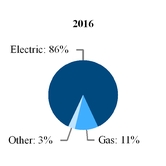

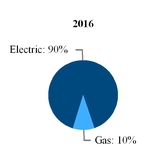
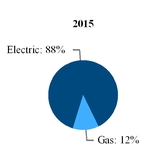
- ELECTRIC UTILITY OPERATIONS
General - Electric utility operations represent the largest operating segment for Alliant Energy, IPL and WPL. Alliant Energy’s electric utility operations are located in the Midwest with IPL providing retail electric service in Iowa and WPL providing retail and wholesale electric service in Wisconsin. IPL also sells electricity to wholesale customers in Minnesota, Illinois and Iowa. Refer to the “Electric Operating Information” tables for additional details regarding electric utility operations.
Customers - IPL and WPL provide electric utility service to a diversified base of retail customers in several industries, with the largest concentrations in the food and industrial manufacturing, chemical (including ethanol) and paper industries. IPL and WPL also sell electricity to wholesale customers, which primarily consist of municipalities and rural electric cooperatives. Refer to “Strategic Overview” in MDA for discussion of recent agreements with certain of WPL’s electric wholesale customers related to WPL’s Riverside expansion. Refer to “Other Future Considerations” in MDA for discussion of notifications provided to each of IPL and WPL to terminate certain of their wholesale power supply agreements.
Seasonality - Electric sales are seasonal to some extent with the annual peak normally occurring in the summer months due to air conditioning requirements. Electric sales are also impacted to a certain extent in the winter months due to heating requirements. Refer to the “Electric Operating Information” tables for additional details regarding maximum summer and winter peak hour demands.
Competition - Retail electric customers in Iowa and Wisconsin currently do not have the ability to choose their electric supplier, and IPL and WPL have obligations to serve all their retail electric customers. Although electric service in Iowa and Wisconsin is regulated, IPL and WPL still face competition from self-generation by large industrial customers, customer- and third party-owned generation (e.g. solar panels), alternative energy sources, and petitions to municipalize (Iowa) as well as
service territory expansions by municipal utilities through annexations (Wisconsin). In addition, IPL’s and WPL’s wholesale customers may choose to purchase their electric energy and capacity needs from the MISO market, independent power producers or other utilities. Alliant Energy’s strategic plan includes actions to retain current customers and attract new customers into IPL’s and WPL’s service territories in an effort to keep energy rates low for all of their customers. Refer to “Strategic Overview” in MDA for discussion of the growth element of the strategic plan, which includes accelerating the growth of customers’ electric usage.
Renewable Energy Standards - Iowa and Wisconsin have RES, which establish the minimum amount of energy IPL and WPL must supply from renewable resources. IPL primarily relies upon renewable energy generated from the wind projects it owns and renewable energy acquired under PPAs to meet these requirements. WPL utilizes its current renewable portfolio, which primarily consists of wind and hydro, to meet these requirements. IPL and WPL currently meet or exceed their respective RES requirements.
Energy Efficiency Programs - Several energy efficiency programs and initiatives help customers reduce their energy usage and related costs through the use of new energy efficient equipment, products and practices. The following are current key energy efficiency programs:
IPL EEP - In 2013, IPL received an order from the IUB approving IPL’s EEP for 2014 through 2018. The EEP includes IPL spending approximately $400 million for electric and natural gas energy efficiency programs in Iowa from 2014 through 2018, and is expected to conserve electric and natural gas usage equal to that of more than 100,000 homes.
Focus on Energy Program - In 2016, WPL contributed 1.2% of its annual retail utility revenues to help fund Focus on Energy, Wisconsin’s state-wide energy efficiency and renewable energy resource program.
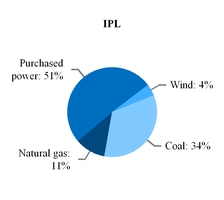
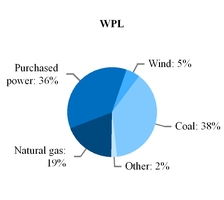
Electric Supply - Alliant Energy, IPL and WPL have met, and expect to continue meeting, customer demand of electricity through a mix of electric supply including owned EGUs, PPAs and additional purchases from wholesale energy markets. Alliant Energy expects its mix of electric supply to change in the next several years with IPL’s construction of Marshalltown, WPL’s construction of the Riverside expansion, IPL’s approved 500 MW of additional wind generation and the proposed retirement of various EGUs. Long-term generation plans are intended to meet customer demand, reduce carbon emissions, reduce reliance on wholesale market purchases and mitigate the impacts of future EGU retirements while maintaining compliance with long-term electric demand planning reserve margins, environmental requirements and RES established by regulators. Alliant Energy, IPL and WPL currently expect to meet utility customer demand in the future. However, unanticipated regional or local reliability issues could still arise in the event of outages or unexpected delays in the construction of new generating and/or transmission facilities, retirement of EGUs, EGU outages, transmission system outages or extended periods of extreme weather conditions. Refer to the “Electric Operating Information” tables for a profile of the sources of electric supply used to meet customer demand from 2014 to 2016. Refer to “Strategic Overview” in MDA for details of future generation plans.
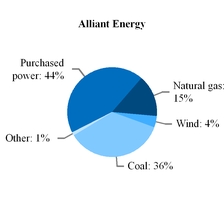
Sources of Electric Energy - In 2016, sources of electric energy were approximately as follows:
Electric Demand Planning Reserve Margin - IPL and WPL are required to maintain a planning reserve margin above their load at the time of the MISO-wide peak to ensure reliability of electric service to their customers. The required installed capacity reserve margin is 15.8% and the required unforced capacity reserve margin is 7.8% for the June 1, 2017 through May 31, 2018 MISO planning year. IPL and WPL currently have adequate capacity to meet such MISO planning reserve margin requirements.
Generation - IPL and WPL own a portfolio of EGUs located in Iowa, Wisconsin and Minnesota with a diversified fuel mix including natural gas, renewable resources and coal. Refer to “Properties” in Item 2 for details of IPL’s and WPL’s EGUs. Refer to Note 1(g) for discussion of IPL’s and WPL’s rate recovery of fuel-related costs and Note 16(b) for details on IPL’s and WPL’s natural gas, coal and purchased power commitments.
Fuel Costs - The average cost of delivered fuel per million British Thermal Units used for electric generation was as follows:
| IPL | WPL | ||||||||||||||||||||||
| 2016 | 2015 | 2014 | 2016 | 2015 | 2014 | ||||||||||||||||||
| All fuels | $2.17 | $2.21 | $2.50 | $2.61 | $2.67 | $2.82 | |||||||||||||||||
| Natural gas (a) | 2.86 | 3.37 | 6.05 | 3.25 | 3.68 | 5.51 | |||||||||||||||||
| Coal | 1.98 | 1.94 | 2.05 | 2.47 | 2.49 | 2.22 |
| (a) | The average cost of natural gas includes commodity and transportation costs as well as realized gains and losses from swap and option contracts used to hedge the price of natural gas volumes expected to be used by IPL’s and WPL’s natural gas-fired EGUs. |
Natural Gas - As discussed in “Properties” in Item 2, Alliant Energy, IPL and WPL own several natural gas-fired EGUs. WPL also has exclusive rights to the output of AEF’s Sheboygan Falls facility under an affiliated lease agreement. These facilities help meet customer demand for electricity generally during peak hour demands and when natural gas prices are low enough to make natural gas-fired generation economical compared to other fuel sources, such as occurred in 2016 and 2015. Alliant Energy manages the gas supply to these gas-fired EGUs and helps ensure an adequate supply is available at known prices through a combination of gas commodity, pipeline transportation and storage agreements held by IPL and WPL for 2017 through 2028. Alliant Energy, IPL and WPL believe they are reasonably insulated against gas price volatility for these EGUs given their use of forward contracts and hedging practices, as well as their regulatory cost-recovery mechanisms. Refer to “Strategic Overview” in MDA for discussion of IPL’s construction of Marshalltown and WPL’s construction of the Riverside expansion, both of which are natural gas-fired combined-cycle EGUs.
Wind - As discussed in “Properties” in Item 2, IPL owns the Whispering Willow - East wind farm and WPL owns the Cedar Ridge and Bent Tree wind farms. All or some of the renewable energy attributes associated with generation from these sources may be used in future years to comply with RES or other regulatory requirements, or sold to third parties in the form of renewable energy credits or other environmental commodities. Refer to “Strategic Overview” in MDA for discussion of IPL’s and WPL’s planned and potential addition of wind generation to Alliant Energy’s resources portfolio.
Coal - Coal is one of the fuel sources for owned EGUs. Coal contracts entered into with different suppliers help ensure that a specified supply of coal is available, and delivered, at known prices for IPL’s and WPL’s coal-fired EGUs for 2017 through 2019. Alliant Energy, IPL and WPL believe their coal supply portfolio represents a reasonable balance between the risks of insufficient supplies and those associated with being unable to respond to future coal market changes. Remaining coal requirements are expected to be met from either future term contracts or purchases in the spot market. Nearly all of the coal utilized by IPL and WPL is from the Wyoming Powder River Basin. Coal inventory levels have been impacted by continued lower natural gas prices, which can make natural gas-fired generation more economical compared to other fuel sources, such as coal. Coal inventory levels have also been impacted by lower electric demand due to milder temperatures during portions of 2015 and 2016. In 2015 and 2016, three of Alliant Energy’s coal suppliers filed for restructuring under Chapter 11 of the U.S. Bankruptcy Code. Two coal suppliers have emerged from Chapter 11 restructuring. There has been no significant impact to Alliant Energy, IPL and WPL as a result of these bankruptcy filings.
Alliant Energy, IPL and WPL believe they are reasonably insulated against coal price volatility given their current coal procurement process, the specific coal market in their primary purchase region and regulatory cost-recovery mechanisms. The coal procurement process supports periodic purchases, staggering of contract terms, stair-stepped levels of supply going forward and supplier diversity. Similarly, given the term lengths of their transportation agreements and, as appropriate, strategic alignment of agreement expirations for negotiation purposes, Alliant Energy, IPL and WPL believe they are reasonably insulated against future higher coal transportation rates from the major railroads.
Purchased Power - IPL and WPL periodically enter into PPAs and purchase electricity from wholesale energy markets to meet a portion of their customer demand for electricity. IPL’s most significant PPA is for the purchase of up to 431 MWs of capacity and the resulting energy from DAEC for a term from February 2014 through December 2025. WPL’s most significant PPA is for the purchase of 150 MWs of energy for a term from January 2014 through December 2018.
IPL’s DAEC PPA - In 2013, the IUB issued an order allowing IPL to proceed with a PPA for the purchase of capacity and energy generated by DAEC located near Palo, Iowa. The IUB also authorized IPL to recover the Iowa retail portion of the cost of the DAEC PPA from Iowa retail electric customers through the energy adjustment clause. The terms of the PPA provide IPL the right to the counterparty’s entire output quantities (70% of the total plant output) in exchange for payment from IPL to the counterparty based on the amount of MWhs received by IPL. Among the terms and conditions of the PPA are guarantees by the counterparty to provide minimum amounts of capacity and energy. The PPA also contains provisions for the replacement of energy from alternative sources under certain conditions as well as provisions that convey to IPL the potential environmental attributes associated with its portion of the output from DAEC.
Electric Transmission - IPL and WPL do not own electric transmission assets and currently receive substantially all their electric transmission services from ITC and ATC, respectively. ITC and ATC are independent for-profit, transmission-only companies and are transmission-owning members of the MISO Regional Transmission Organization, Midwest Reliability Organization and Reliability First Corporation Regional Entities. The annual transmission service rates that ITC or ATC charges their customers are calculated each calendar year using a FERC-approved cost of service formula rate referred to as Attachment “O.” Because Attachment “O” is a FERC-approved formula rate, ITC and ATC can implement new rates each calendar year without filing a request with FERC. However, new rates are subject to challenge by either FERC or customers. If the rates proposed by ITC or ATC are determined by FERC to be unjust or unreasonable or another mechanism is determined by FERC to be just and reasonable, ITC’s or ATC’s rates would change accordingly.
Refer to “Other Future Considerations” in MDA for additional information regarding transmission service charges from ITC and ATC, as well as discussion of a complaint pending with FERC regarding the level of return on equity that MISO transmission owners (including ITC and ATC) should be allowed to utilize in calculating the rates they charge their customers. Refer to Note 1(g) for discussion of a transmission cost rider utilized by IPL for recovery of its electric transmission service expense, and discussion of WPL’s electric transmission service expense, which is recovered from its retail electric customers through changes in base rates determined during periodic rate proceedings. Note 1(g) also discusses escrow accounting treatment for electric transmission service expense through 2018 pursuant to PSCW orders. Refer to Note 18 for details of agreements between ATC and WPL.
ATC - As of December 31, 2016, ATI holds all of Alliant Energy’s investment in ATC and funds capital contributions to ATC, which are included in “Other” in the construction and acquisition expenditures table in “Liquidity and Capital Resources” in MDA. Alliant Energy currently anticipates that ATI will fund capital contributions of approximately $23 million, $14 million, $6 million and $8 million to ATC in 2017, 2018, 2019 and 2020, respectively, to help fund future proposed transmission projects. These future proposed transmission projects require approval from various regulatory agencies to construct. In addition, refer to “Other Future Considerations” in MDA for discussion of potential changes to ATC’s return on equity, which may result in changes to equity income and dividends from ATC in the future.
In 2011, Duke Energy Corporation and ATC announced the creation of DATC, a joint venture that is expected to acquire, build, own and operate new electric transmission infrastructure in North America. DATC continues to evaluate new projects and opportunities, and participates in a competitive bidding process on projects it considers to be viable. The expenditures in the construction and acquisition expenditures table in “Liquidity and Capital Resources” in MDA do not include any capital contributions for potential DATC projects.
MISO Markets - IPL and WPL are members of MISO, a FERC-approved Regional Transmission Organization, which is responsible for monitoring and ensuring equal access to the transmission system in their footprint. IPL and WPL participate in the wholesale energy and ancillary services markets operated by MISO, which are discussed in more detail below. As agent for IPL and WPL, Corporate Services enters into energy, capacity, ancillary services, and transmission sale and purchase transactions within MISO. Corporate Services assigns such sales and purchases between IPL and WPL based on statements received from MISO. Refer to Note 18 for additional discussion of these assigned amounts.
Wholesale Energy Market - IPL and WPL participate in the wholesale energy market operated by MISO. The market dictates the process by which IPL and WPL buy and sell wholesale electricity, obtain transmission services, schedule generation and ensure resource adequacy to reliably serve load. MISO generally dispatches the lowest cost generators, while recognizing current system constraints, to reduce costs for purchasers in the wholesale energy market. The market is intended to send price signals to stakeholders about where generation or transmission system expansion is needed. In addition, MISO may dispatch generators that support reliability needs, but that would not have operated based on economic needs. In these cases, MISO’s settlement assures that these generators are made whole financially for their variable costs.
Ancillary Services Market - IPL and WPL also participate in MISO’s ancillary services market, which integrates the procurement and use of regulation and contingency reserves with the existing wholesale energy market to ensure reliability of electricity supply. Regulation reserves refer to generation available to meet the moment-to-moment changes in generation that are necessary to meet changes in electricity demand. Contingency reserves refer to additional generation or demand response resources, either on-line or that can be brought on-line within 10 minutes, to meet certain major events such as the loss of a large EGU or transmission line.
Financial Transmission Rights and Auction Revenue Rights - In areas of constrained transmission capacity, costs could be higher due to congestion and its impact on locational marginal prices. FTRs provide a hedge for certain congestion costs that occur in the MISO energy market. MISO allocates auction revenue rights to IPL and WPL annually based on a fiscal year from June 1 through May 31 and historical use of the transmission system. The revenue rights associated with the allocated auction revenue rights are used by IPL and WPL to acquire FTRs through the FTR auctions operated by MISO.
Multi-value Projects - The MISO tariffs billed to IPL and WPL include costs related to various shared transmission projects, including multi-value projects. Such projects include new large scale transmission projects that enable the reliable and economic delivery of energy or provide economic value across the MISO footprint. Multi-value project costs are socialized across the entire MISO footprint based on energy usage. The MISO tariffs billed to IPL and WPL also include a portion of the costs related to other shared transmission projects, including projects designed to reduce market congestion, and to ensure compliance with applicable reliability standards. The MISO tariffs billed to IPL and WPL are expected to increase in the future due to the increased number of shared transmission projects occurring in the MISO region.
Resource Adequacy - MISO conducts various studies regarding reliability of electric service to ensure its market participants have adequate resources to meet MISO’s forecasted peak load obligations plus a reserve margin. Only accredited capacity assigned to EGUs is available to meet these requirements. To connect to the transmission system, MISO requires an EGU to obtain an interconnection agreement. In order for an EGU to receive accredited capacity, it must meet MISO capacity accreditation requirements, which can include satisfying transmission requirements identified in its interconnection agreement prior to the MISO planning year. New EGUs like Marshalltown and the Riverside expansion, or IPL’s and WPL’s planned additional wind generation, may not initially receive full accredited capacity based on the inability to satisfy all identified transmission requirements. Therefore, full accredited capacity may not be granted to such EGUs until all identified transmission requirements are resolved.
Attachment Y Notices - MISO requires its market participants who own EGUs to submit an Attachment Y Notice if they plan to retire an EGU, reduce EGU capacity or suspend all or a portion of EGU operations for a period longer than two months. Refer to “Properties” in Item 2 for discussion of EGUs that IPL and WPL currently plan to retire or modify, such as changing from coal-fired to an alternative fuel source, in the next few years.
Electric Environmental Matters - Refer to Note 16(e) and “Environmental Matters” in MDA for discussion of electric environmental matters, including current or proposed environmental regulations.
| Electric Operating Information - Alliant Energy | 2016 | 2015 | 2014 | ||||||||
| Operating Revenues (in millions): | |||||||||||
| Residential (a) | $1,001.1 | $983.0 | $994.5 | ||||||||
| Commercial (a) | 712.6 | 667.8 | 658.0 | ||||||||
| Industrial (a) | 787.1 | 763.4 | 735.1 | ||||||||
| Industrial - co-generation | 64.0 | 59.9 | 63.9 | ||||||||
| Retail subtotal | 2,564.8 | 2,474.1 | 2,451.5 | ||||||||
| Sales for resale: | |||||||||||
| Wholesale (a) | 256.6 | 221.0 | 206.6 | ||||||||
| Bulk power and other | 10.1 | 28.5 | 2.9 | ||||||||
| Other | 44.0 | 46.9 | 52.6 | ||||||||
| Total | $2,875.5 | $2,770.5 | $2,713.6 | ||||||||
| Electric Sales (000s MWh): | |||||||||||
| Residential (a) | 7,152 | 7,271 | 7,697 | ||||||||
| Commercial (a) | 6,545 | 6,374 | 6,449 | ||||||||
| Industrial (a) | 10,702 | 10,820 | 10,813 | ||||||||
| Industrial - co-generation | 940 | 915 | 1,008 | ||||||||
| Retail subtotal | 25,339 | 25,380 | 25,967 | ||||||||
| Sales for resale: | |||||||||||
| Wholesale (a) | 4,039 | 3,614 | 3,586 | ||||||||
| Bulk power and other | 360 | 1,228 | 335 | ||||||||
| Other | 100 | 129 | 155 | ||||||||
| Total | 29,838 | 30,351 | 30,043 | ||||||||
| Customers (End of Period): | |||||||||||
| Residential (a) | 811,459 | 809,634 | 850,322 | ||||||||
| Commercial (a) | 141,528 | 137,870 | 139,138 | ||||||||
| Industrial (a) | 2,546 | 2,544 | 2,871 | ||||||||
| Other | 2,785 | 2,930 | 3,662 | ||||||||
| Total | 958,318 | 952,978 | 995,993 | ||||||||
| Other Selected Electric Data: | |||||||||||
| Maximum summer peak hour demand (MW) | 5,615 | 5,385 | 5,426 | ||||||||
| Maximum winter peak hour demand (MW) | 4,559 | 4,668 | 4,803 | ||||||||
| Cooling degree days (b): | |||||||||||
| Cedar Rapids, Iowa (IPL) (normal - 766) | 971 | 732 | 670 | ||||||||
| Madison, Wisconsin (WPL) (normal - 662) | 780 | 665 | 620 | ||||||||
| Sources of electric energy (000s MWh): | |||||||||||
| Gas | 4,505 | 4,738 | 2,971 | ||||||||
| Purchased power: | |||||||||||
| Nuclear | 3,444 | 3,741 | 3,133 | ||||||||
| Wind (c) | 1,079 | 1,190 | 1,252 | ||||||||
| Other (c) | 8,912 | 6,675 | 8,074 | ||||||||
| Wind (c) | 1,382 | 1,441 | 1,390 | ||||||||
| Coal | 11,019 | 13,040 | 13,818 | ||||||||
| Other (c) | 228 | 189 | 212 | ||||||||
| Total | 30,569 | 31,014 | 30,850 | ||||||||
| Revenue per KWh sold to retail customers (cents) | 10.12 | 9.75 | 9.44 |
| (a) | In 2015, Alliant Energy sold its electric distribution assets in Minnesota to Southern Minnesota Energy Cooperative. At the date of the sale, Alliant Energy had approximately 42,000 retail electric customers in Minnesota. Prior to the asset sale, the electric sales to these retail customers are included in residential, commercial and industrial retail sales. Subsequent to the asset sale, the related electric sales are included in wholesale electric sales pursuant to a wholesale power supply agreement between IPL and Southern Minnesota Energy Cooperative, which is discussed in Note 3. |
| (b) | Cooling degree days are calculated using a simple average of the high and low temperatures each day compared to a 65 degree base. Normal degree days are calculated using a rolling 20-year average of historical cooling degree days. Refer to “Gas Utility Operations” below for details of heating degree days. |
| (c) | All or some of the renewable energy attributes associated with generation from these sources may be used in future years to comply with renewable energy standards or other regulatory requirements, or sold to third parties in the form of renewable energy credits or other environmental commodities. |
| Electric Operating Information | IPL | WPL | |||||||||||||||||||||
| 2016 | 2015 | 2014 | 2016 | 2015 | 2014 | ||||||||||||||||||
| Operating Revenues (in millions): | |||||||||||||||||||||||
| Residential (a) | $536.7 | $540.3 | $556.4 | $464.4 | $442.7 | $438.1 | |||||||||||||||||
| Commercial (a) | 445.4 | 416.3 | 410.2 | 267.2 | 251.5 | 247.8 | |||||||||||||||||
| Industrial (a) | 396.4 | 393.7 | 394.6 | 390.7 | 369.7 | 340.5 | |||||||||||||||||
| Industrial - co-generation | 64.0 | 59.9 | 63.9 | N/A | N/A | N/A | |||||||||||||||||
| Retail subtotal | 1,442.5 | 1,410.2 | 1,425.1 | 1,122.3 | 1,063.9 | 1,026.4 | |||||||||||||||||
| Sales for resale: | |||||||||||||||||||||||
| Wholesale (a) | 94.2 | 56.4 | 32.2 | 162.4 | 164.6 | 174.4 | |||||||||||||||||
| Bulk power and other | 3.6 | 5.1 | 2.1 | 6.5 | 23.4 | 0.8 | |||||||||||||||||
| Other | 29.4 | 32.1 | 33.9 | 14.6 | 14.8 | 18.7 | |||||||||||||||||
| Total | $1,569.7 | $1,503.8 | $1,493.3 | $1,305.8 | $1,266.7 | $1,220.3 | |||||||||||||||||
| Electric Sales (000s MWh): | |||||||||||||||||||||||
| Residential (a) | 3,633 | 3,843 | 4,164 | 3,519 | 3,428 | 3,533 | |||||||||||||||||
| Commercial (a) | 4,159 | 4,059 | 4,099 | 2,386 | 2,315 | 2,350 | |||||||||||||||||
| Industrial (a) | 5,791 | 6,007 | 6,124 | 4,911 | 4,813 | 4,689 | |||||||||||||||||
| Industrial - co-generation | 940 | 915 | 1,008 | N/A | N/A | N/A | |||||||||||||||||
| Retail subtotal | 14,523 | 14,824 | 15,395 | 10,816 | 10,556 | 10,572 | |||||||||||||||||
| Sales for resale: | |||||||||||||||||||||||
| Wholesale (a) | 1,360 | 845 | 485 | 2,679 | 2,769 | 3,101 | |||||||||||||||||
| Bulk power and other | 46 | 178 | 59 | 314 | 1,050 | 276 | |||||||||||||||||
| Other | 41 | 67 | 81 | 59 | 62 | 74 | |||||||||||||||||
| Total | 15,970 | 15,914 | 16,020 | 13,868 | 14,437 | 14,023 | |||||||||||||||||
| Customers (End of Period): | |||||||||||||||||||||||
| Residential (a) | 403,558 | 406,028 | 445,483 | 407,901 | 403,606 | 404,839 | |||||||||||||||||
| Commercial (a) | 83,936 | 80,982 | 81,853 | 57,592 | 56,888 | 57,285 | |||||||||||||||||
| Industrial (a) | 1,511 | 1,572 | 1,856 | 1,035 | 972 | 1,015 | |||||||||||||||||
| Other | 862 | 1,050 | 1,385 | 1,923 | 1,880 | 2,277 | |||||||||||||||||
| Total | 489,867 | 489,632 | 530,577 | 468,451 | 463,346 | 465,416 | |||||||||||||||||
| Other Selected Electric Data: | |||||||||||||||||||||||
| Maximum summer peak hour demand (MW) | 2,996 | 3,005 | 2,840 | 2,681 | 2,564 | 2,594 | |||||||||||||||||
| Maximum winter peak hour demand (MW) | 2,479 | 2,531 | 2,601 | 2,131 | 2,153 | 2,202 | |||||||||||||||||
| Cooling degree days (b): | |||||||||||||||||||||||
| Cedar Rapids, Iowa (IPL) (normal - 766) | 971 | 732 | 670 | N/A | N/A | N/A | |||||||||||||||||
| Madison, Wisconsin (WPL) (normal - 662) | N/A | N/A | N/A | 780 | 665 | 620 | |||||||||||||||||
| Sources of electric energy (000s MWh): | |||||||||||||||||||||||
| Gas | 1,838 | 1,874 | 1,069 | 2,667 | 2,864 | 1,902 | |||||||||||||||||
| Purchased power: | |||||||||||||||||||||||
| Nuclear | 3,444 | 3,741 | 3,133 | N/A | N/A | N/A | |||||||||||||||||
| Wind (c) | 635 | 757 | 798 | 444 | 433 | 454 | |||||||||||||||||
| Other (c) | 4,267 | 3,015 | 3,802 | 4,645 | 3,660 | 4,272 | |||||||||||||||||
| Wind (c) | 630 | 653 | 622 | 752 | 788 | 768 | |||||||||||||||||
| Coal | 5,598 | 6,263 | 7,092 | 5,421 | 6,777 | 6,726 | |||||||||||||||||
| Other (c) | 6 | 5 | 12 | 222 | 184 | 200 | |||||||||||||||||
| Total | 16,418 | 16,308 | 16,528 | 14,151 | 14,706 | 14,322 | |||||||||||||||||
| Revenue per KWh sold to retail customers (cents) | 9.93 | 9.51 | 9.26 | 10.38 | 10.08 | 9.71 |
| (a) | In 2015, IPL sold its electric distribution assets in Minnesota to Southern Minnesota Energy Cooperative. At the date of the sale, IPL had approximately 42,000 retail electric customers in Minnesota. Prior to the asset sale, the electric sales to these retail customers are included in IPL’s residential, commercial and industrial retail sales. Subsequent to the asset sale, the related electric sales are included in IPL’s wholesale electric sales pursuant to a wholesale power supply agreement between IPL and Southern Minnesota Energy Cooperative, which is discussed in Note 3. |
| (b) | Cooling degree days are calculated using a simple average of the high and low temperatures each day compared to a 65 degree base. Normal degree days are calculated using a rolling 20-year average of historical cooling degree days. Refer to “Gas Utility Operations” below for details of heating degree days. |
| (c) | All or some of the renewable energy attributes associated with generation from these sources may be used in future years to comply with renewable energy standards or other regulatory requirements, or sold to third parties in the form of renewable energy credits or other environmental commodities. |
- GAS UTILITY OPERATIONS
General - Gas utility operations represent the second largest operating segment for Alliant Energy, IPL and WPL. Alliant Energy’s gas utility operations are located in the Midwest with IPL providing gas service in Iowa and WPL providing gas service in Wisconsin. Refer to the “Gas Operating Information” tables for additional details regarding gas utility operations. Refer to Note 1(g) for information relating to utility natural gas cost recovery mechanisms and Note 16(b) for discussion of natural gas commitments.
Customers - IPL and WPL provide gas utility service to a diversified base of retail customers and industries, including research, education, hospitality, manufacturing and chemicals (including ethanol). In addition, IPL and WPL provide transportation service to commercial and industrial customers by moving customer-owned gas through Alliant Energy’s distribution systems to the customers’ meters.
Seasonality - Gas sales follow a seasonal pattern with an annual base-load of gas and a large heating peak occurring during the winter season. Natural gas obtained from producers, marketers and brokers, as well as gas in storage, is utilized to meet the peak heating season requirements. Storage contracts generally allow IPL and WPL to purchase gas in the summer and inject it into underground storage fields, and remove it from storage fields in the winter to deliver to customers. Refer to the “Gas Operating Information” tables for details regarding maximum daily winter peak demands.
Competition - Gas customers in Iowa and Wisconsin currently do not have the ability to choose their gas distributor, and IPL and WPL have obligations to serve all their gas customers. While the gas utility distribution function is expected to remain a regulated function, sales of the natural gas commodity and related services are subject to competition from third-parties who provide alternative fuel sources (e.g. propane). However, when natural gas service is available for a given area, customers in such area have generally selected natural gas over propane as a more cost competitive solution for their fuel needs. Alliant Energy, IPL and WPL are also currently extending various gas distribution systems in their existing Iowa and Wisconsin service territories to serve new customer demand. Refer to “Strategic Overview” in MDA for further discussion of gas distribution systems, as well as discussion of the growth element of Alliant Energy’s strategic plan, which includes accelerating the growth of customers’ gas usage.
Gas Supply - IPL and WPL maintain purchase agreements with over 70 suppliers of natural gas from various gas producing regions of the U.S. and Canada. In providing gas commodity service to retail customers, Corporate Services administers a diversified portfolio of transportation and storage contracts on behalf of IPL and WPL. The tariffs for IPL’s and WPL’s retail gas customers provide for subsequent adjustments to their rates for the cost of gas sold to these customers. As a result, natural gas prices do not have a material impact on IPL’s or WPL’s gas margins.
Gas Demand Planning Reserve Margin - IPL and WPL are required to maintain adequate pipeline capacity to ensure they meet their customers’ maximum daily system demand requirements. IPL and WPL currently have planning reserve margins of 4% and 5%, respectively, above their forecasted maximum daily system demand requirements from November 2016 through March 2017.
Gas Environmental Matters - Refer to Note 16(e) and “Environmental Matters” in MDA for discussion of gas environmental matters.
| Gas Operating Information - Alliant Energy | 2016 | 2015 | 2014 | ||||||||
| Operating Revenues (in millions): | |||||||||||
| Residential (a) | $197.6 | $215.1 | $287.5 | ||||||||
| Commercial (a) | 109.6 | 120.5 | 172.8 | ||||||||
| Industrial (a) | 15.2 | 14.3 | 23.4 | ||||||||
| Retail subtotal (a) | 322.4 | 349.9 | 483.7 | ||||||||
| Transportation/other | 33.0 | 31.3 | 33.8 | ||||||||
| Total | $355.4 | $381.2 | $517.5 | ||||||||
| Gas Sales (000s Dths): | |||||||||||
| Residential (a) | 25,571 | 26,672 | 31,718 | ||||||||
| Commercial (a) | 18,820 | 18,966 | 23,301 | ||||||||
| Industrial (a) | 3,352 | 2,997 | 3,710 | ||||||||
| Retail subtotal (a) | 47,743 | 48,635 | 58,729 | ||||||||
| Transportation/other | 77,485 | 74,162 | 64,717 | ||||||||
| Total | 125,228 | 122,797 | 123,446 | ||||||||
| Retail Customers at End of Period (a): | |||||||||||
| Residential | 366,786 | 364,415 | 373,319 | ||||||||
| Commercial | 44,587 | 44,613 | 46,180 | ||||||||
| Industrial | 385 | 377 | 428 | ||||||||
| Total | 411,758 | 409,405 | 419,927 | ||||||||
| Other Selected Gas Data: | |||||||||||
| Heating degree days (b): | |||||||||||
| Cedar Rapids, Iowa (IPL) (normal - 6,798) | 5,933 | 6,300 | 7,657 | ||||||||
| Madison, Wisconsin (WPL) (normal - 7,082) | 6,420 | 6,667 | 7,884 | ||||||||
| Revenue per Dth sold to retail customers | $6.75 | $7.19 | $8.24 | ||||||||
| Purchased gas costs per Dth sold to retail customers | $3.99 | $4.40 | $5.52 |
| Gas Operating Information | IPL | WPL | |||||||||||||||||||||
| 2016 | 2015 | 2014 | 2016 | 2015 | 2014 | ||||||||||||||||||
| Operating Revenues (in millions): | |||||||||||||||||||||||
| Residential (a) | $110.6 | $120.0 | $162.5 | $87.0 | $95.1 | $125.0 | |||||||||||||||||
| Commercial (a) | 61.9 | 67.9 | 96.1 | 47.7 | 52.6 | 76.7 | |||||||||||||||||
| Industrial (a) | 10.6 | 10.5 | 17.4 | 4.6 | 3.8 | 6.0 | |||||||||||||||||
| Retail subtotal (a) | 183.1 | 198.4 | 276.0 | 139.3 | 151.5 | 207.7 | |||||||||||||||||
| Transportation/other | 20.9 | 18.9 | 20.5 | 12.1 | 12.4 | 13.3 | |||||||||||||||||
| Total | $204.0 | $217.3 | $296.5 | $151.4 | $163.9 | $221.0 | |||||||||||||||||
| Gas Sales (000s Dths): | |||||||||||||||||||||||
| Residential (a) | 13,788 | 14,472 | 17,839 | 11,783 | 12,200 | 13,879 | |||||||||||||||||
| Commercial (a) | 10,143 | 10,166 | 12,641 | 8,677 | 8,800 | 10,660 | |||||||||||||||||
| Industrial (a) | 2,299 | 2,239 | 2,804 | 1,053 | 758 | 906 | |||||||||||||||||
| Retail subtotal (a) | 26,230 | 26,877 | 33,284 | 21,513 | 21,758 | 25,445 | |||||||||||||||||
| Transportation/other | 37,158 | 34,129 | 31,377 | 40,327 | 40,033 | 33,340 | |||||||||||||||||
| Total | 63,388 | 61,006 | 64,661 | 61,840 | 61,791 | 58,785 | |||||||||||||||||
| Retail Customers at End of Period (a): | |||||||||||||||||||||||
| Residential | 199,326 | 199,408 | 208,240 | 167,460 | 165,007 | 165,079 | |||||||||||||||||
| Commercial | 24,882 | 25,289 | 26,530 | 19,705 | 19,324 | 19,650 | |||||||||||||||||
| Industrial | 212 | 217 | 244 | 173 | 160 | 184 | |||||||||||||||||
| Total | 224,420 | 224,914 | 235,014 | 187,338 | 184,491 | 184,913 | |||||||||||||||||
| Other Selected Gas Data: | |||||||||||||||||||||||
| Maximum daily winter peak demand (Dth) | 262,409 | 267,314 | 296,190 | 203,655 | 209,289 | 234,837 | |||||||||||||||||
| Heating degree days (b): | |||||||||||||||||||||||
| Cedar Rapids, Iowa (IPL) (normal - 6,798) | 5,933 | 6,300 | 7,657 | N/A | N/A | N/A | |||||||||||||||||
| Madison, Wisconsin (WPL) (normal - 7,082) | N/A | N/A | N/A | 6,420 | 6,667 | 7,884 | |||||||||||||||||
| Revenue per Dth sold to retail customers | $6.98 | $7.38 | $8.29 | $6.48 | $6.96 | $8.16 | |||||||||||||||||
| Purchased gas cost per Dth sold to retail customers | $4.21 | $4.53 | $5.54 | $3.72 | $4.25 | $5.48 |
| (a) | In April 2015, IPL sold its natural gas distribution assets in Minnesota. At the date of the sale, IPL had approximately 11,000 retail gas customers in Minnesota. |
| (b) | Heating degree days are calculated using a simple average of the high and low temperatures each day compared to a 65 degree base. Normal degree days are calculated using a rolling 20-year average of historical heating degree days. |
- OTHER UTILITY OPERATIONS - STEAM - IPL’s Prairie Creek facility is the primary source of steam for IPL’s two high-pressure steam customers. These customers are each under contract through 2025 for minimum quantities of annual steam usage, with certain conditions.
D. INFORMATION RELATING TO NON-REGULATED OPERATIONS
AEF manages a portfolio of wholly-owned subsidiaries and additional investments through the following distinct platforms:
Non-regulated Generation - owns Sheboygan Falls, a 347 MW, simple-cycle, natural gas-fired EGU near Sheboygan Falls, Wisconsin, which is leased to WPL for an initial period of 20 years ending in 2025, and the 99 MW Franklin County wind farm in Franklin County, Iowa. In February 2017, FERC issued an order approving the transfer of the Franklin County wind farm from AEF to IPL. Alliant Energy and IPL currently expect to complete this transfer in 2017.
Transportation - includes a short-line railway that provides freight service between Cedar Rapids, Iowa and Iowa City, Iowa; a barge terminal and hauling services on the Mississippi River; and other transfer and storage services.
Other non-regulated investments - includes ATI, which currently holds all of Alliant Energy’s investment in ATC, and several other modest investments.
Previous: Cover and table of contents · Next: Item 1A. RISK FACTORS