 filings.tools
Item 1. Business
195K characters. Original on sec.gov · Markdown
Item 1. Business
Moderna is a leader in the creation of the field of messenger RNA (mRNA) medicine. By working at the intersection of science, technology and health for more than a decade, we have developed medicines at unprecedented speed and efficiency, including one of the earliest and most effective COVID-19 vaccines.
Our mRNA platform has enabled the development of therapeutics and vaccines for infectious diseases, immuno-oncology, rare diseases and autoimmune diseases. With a unique culture and a global team driven by the Moderna values and mindsets to responsibly change the future of human health, we strive to deliver the greatest possible impact to people through mRNA medicines.
Our first commercial product, Spikevax (our COVID-19 vaccine), has helped hundreds of millions of people worldwide combat COVID-19. SARS-CoV-2, the virus that causes COVID-19, continues to evolve and in 2023, the COVID-19 vaccine market transitioned to an endemic, seasonal commercial market. To adapt to the evolving market, we significantly resized our manufacturing infrastructure to help position our COVID-19 franchise for future profitability. We achieved 2023 net product sales of $6.7 billion, with $6.1 billion of COVID-19 vaccine sales, and recognition of approximately $0.6 billion of deferred revenue related to our efforts with Gavi, The Vaccine Alliance. In the United States, we achieved 48% market share in the retail market for the 2023 fall season, compared to 37% in the 2022 fall season.
Beyond COVID-19, in 2023, we prepared for the potential 2024 launch of our investigational respiratory syncytial virus (RSV) vaccine for adults, which we expect to further demonstrate the commercial potential of our mRNA platform. In cancer, we reported additional data from our Phase 2b trial evaluating our individualized neoantigen therapy (INT) in combination with Merck’s KEYTRUDA in melanoma patients compared to KEYTRUDA alone. The treatment continued to show significant and clinically meaningful improvement in recurrence-free survival and reduced the risk of recurrence or death by 49%. We believe that these data, with a median follow-up of approximately three years, demonstrate the durability of the therapy, and we have initiated Phase 3 studies in the adjuvant setting in patients with high-risk melanoma and non-small cell lung cancer. We and Merck plan to rapidly expand our clinical trials to additional tumor types.
Having demonstrated clinical benefit in multiple infectious disease areas and skin cancer, as well as potential clinical benefit for several rare genetic diseases, we continue to advance a broad and diverse pipeline and are focused on execution to deliver for patients. Our pipeline includes 45 therapeutic and vaccine programs, nine of which are in late-stage development.
THE mRNA OPPORTUNITY
mRNA, the software of life
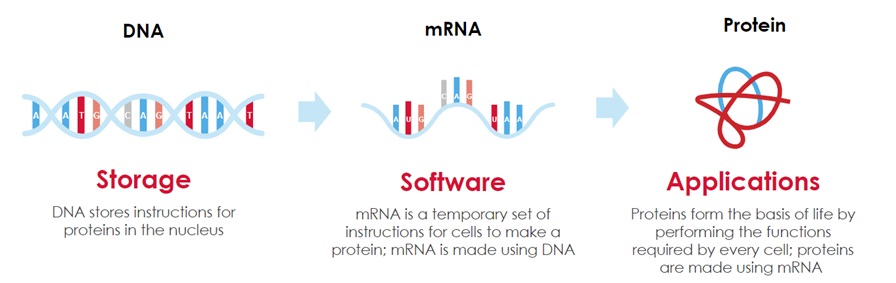
mRNA transfers the information stored in our genes to the cellular machinery that makes all the proteins required for life. Our genes are stored as sequences of DNA which contain the instructions to make specific proteins. DNA serves as a hard drive, safely storing these instructions in the cell’s nucleus until they are needed by the cell.
When a cell needs to produce a protein, the instructions to make that protein are copied from the DNA to mRNA, which serves as the template for protein production. Each mRNA molecule contains the instructions to produce a specific protein with a distinct function in the body. mRNA transmits those instructions to cellular machinery, called ribosomes, that make copies of the required protein.
We see mRNA functioning as the “software of life.” Every cell uses mRNA to provide real time instructions to make the proteins necessary to drive all aspects of biology, including in human health and disease. This was codified as the central dogma of molecular biology over 60 years ago, and is exemplified in the schematic below.
Table of Contents
The structure of mRNA
mRNA is a linear polymer comprising four monomers called nucleotides: adenosine (A), guanosine (G), cytosine (C) and uridine (U). Within the region of the molecule that codes for a protein (the coding region), the sequence of these four nucleotides forms a language made up of three-letter words called codons. The first codon, or start codon (AUG), signals where the ribosome should start protein synthesis. To know what protein to make, the ribosome then progresses along the mRNA one codon at a time, appending the appropriate amino acid to the growing protein. To end protein synthesis, three different codons (UAA, UAG, and UGA) serve as stop signals, telling the ribosome where to terminate protein synthesis. In total, there are 64 potential codons, but only 20 amino acids that are used to build proteins; therefore, multiple codons can encode for the same amino acid.
The process of protein production is called translation because the ribosome is reading in one language (a sequence of codons) and outputting in another language (a sequence of amino acids). The coding region is analogous to a sentence in English. Much like a start codon, a capitalized word can indicate the start of a sentence. Codons within the coding region resemble groups of letters representing words. The end of the sentence is signaled by a period in English, or a stop codon for mRNA.
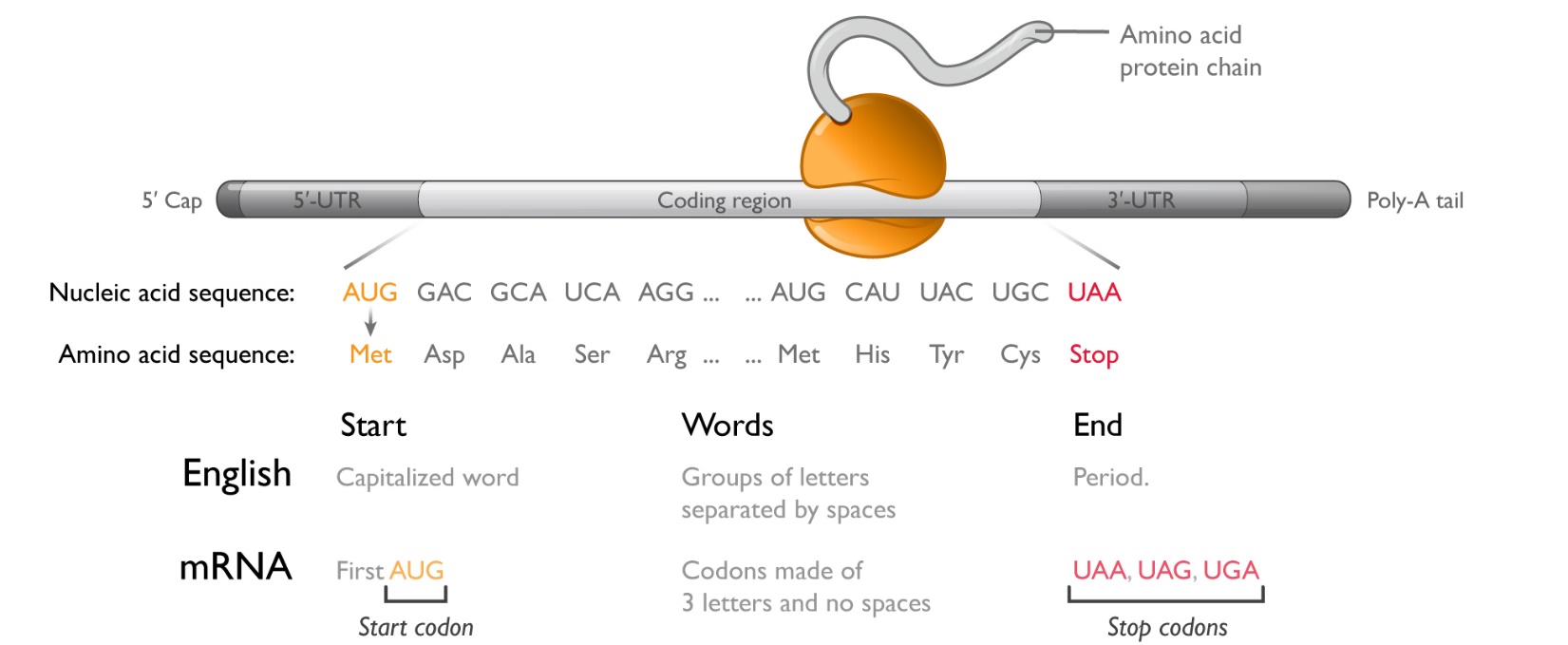
In every cell, hundreds of thousands of mRNAs make hundreds of millions of proteins every day. A typical protein contains 200-600 amino acids; therefore, a typical mRNA coding region ranges from 600-1,800 nucleotides. In addition to the coding region, mRNAs contain four other key features: (1) the 5’ untranslated region (5’-UTR); (2) the 3’ untranslated region (3’-UTR); (3) the 5’ cap; and (4) a 3’ polyadenosine (poly-A) tail. The sequence of nucleotides in the 5’-UTR influences how efficiently the ribosome initiates protein synthesis, whereas the sequence of nucleotides in the 3’-UTR contains information about which cell types should translate that mRNA and how long the mRNA should last. The 5’ cap and 3’ poly-A tail enhance ribosome engagement and protect the mRNA from attack by intracellular enzymes that digest mRNA from its ends.
Table of Contents
The intrinsic advantages of using mRNA as a medicine
mRNA possesses inherent characteristics that we believe position it to have a profound impact on human health:
-
mRNA is used by every cell to produce all proteins:** mRNA is used to make every type of protein, including secreted, membrane and intracellular proteins, in varying quantities over time, in different locations and in various combinations. Given the universal role of mRNA in protein production, we believe that mRNA medicines could have broad applicability across human disease.
-
Making proteins inside one’s own cells mimics human biology:** Tailored mRNA can be sent into cells to instruct them to produce specific protein therapeutics or vaccine antigens and provides certain advantages over traditional approaches to medicine, where a protein or chemical is introduced to the body.
-
mRNA has a simple and flexible chemical structure:** Each mRNA molecule comprises four chemically similar nucleotides to encode proteins made from up to 20 chemically different amino acids. To make the full diversity of possible proteins, only simple sequence changes are required in mRNA, instead of starting from scratch for each new vaccine or therapy.
-
mRNA has classic pharmacologic features:** mRNA possesses many of the attractive pharmacologic features of most modern medicines, including reproducible activity, predictable potency and well-behaved dose dependency; mRNA also provides the ability to adjust dosing based on an individual patient’s needs, including stopping or lowering the dose, to seek to promote safety and tolerability.
Our ability to rapidly develop, manufacture and commercialize vaccines against COVID-19 demonstrates the potential mRNA medicines have to help people and patients in far-reaching ways that could exceed the impact of traditional approaches to medicine.
We believe that the main advantages of mRNA as compared to traditional medicine are:
1.mRNA could create an unprecedented abundance and diversity of medicines. mRNA’s breadth of applicability has the potential to create an extraordinary number of new mRNA medicines that are currently beyond the reach of recombinant protein technology.
2.Advances in the development of our mRNA medicines reduce risks across our portfolio. mRNA medicines share fundamental features that can be leveraged across our portfolio. We believe that once safety and proof of protein production has been established in one program, the technology and biology risks of related programs that use similar mRNA technologies, delivery technologies and manufacturing processes will decrease significantly.
3.mRNA technology can accelerate discovery and development. The software-like features of mRNA enable rapid in silico design and the use of automated high-throughput synthesis processes that permit discovery to proceed in parallel rather than sequentially. We believe these mRNA features can also accelerate drug development by allowing the use of shared manufacturing processes and infrastructure.
4.The ability to leverage shared processes and infrastructure can drive significant capital efficiency over time. We believe the manufacturing requirements of different mRNA medicines are similar and that at commercial scale, a portfolio of mRNA medicines will benefit from shared capital expenditures.
OUR STRATEGY
We believe that the development of mRNA medicines represents a significant breakthrough for patients, our industry and human health globally. Our success in developing one of the earliest and most effective COVID-19 vaccines, at unprecedented speed and efficiency, demonstrates the promise of mRNA medicine. Our COVID-19 vaccine has helped hundreds of millions of people worldwide combat COVID-19. Beyond COVID-19, our platform continues to be highly productive, with 45 programs currently in development, spanning infectious diseases, immuno-oncology, rare diseases and autoimmune diseases.
Across our respiratory vaccines, latent and other vaccines, oncology and rare disease franchises, we are aiming to launch up to 15 new products over the next five years. We have formulated strategic objectives to help enable our near- and long-term goals:
1.Deliver an unrivalled respiratory vaccine franchise. We are developing vaccines against COVID-19, seasonal flu and RSV individually, while pursuing parallel development of combination vaccines. Recognizing that COVID-19 is likely to pose an ongoing health burden, we are making it an important piece of our business with our vaccines against COVID-19 and our investigational combination vaccine against flu and COVID-19. In parallel, we are preparing for the potential 2024 launch of our investigational RSV vaccine for older adults, which is expected to further demonstrate the commercial potential of our mRNA platform. We expect that our anticipated respiratory product launches in 2024 and 2025 will allow us to recognize efficiencies from our growing pipeline.
Table of Contents
2.Advance multiple latent virus and other vaccines. We are developing vaccines against latent and other viruses with unmet or underserved needs, including cytomegalovirus (CMV), Epstein-Barr virus (EBV), herpes simplex virus (HSV), varicella zoster virus (VZV), norovirus, HIV and Lyme disease. We anticipate potential efficacy data from the pivotal Phase 3 study of our CMV vaccine candidate in 2024. CMV is the most common infectious cause of birth defects in the United States and has been designated as a top priority in new vaccine development by the U.S. National Academy of Medicine for more than two decades.
3.Accelerate a large portfolio of late-stage clinical trials in INT to deliver a transformative impact in cancer treatments. In 2023, we reported data from our Phase 2b trial evaluating our INT in combination with Merck’s KEYTRUDA in melanoma patients compared to KEYTRUDA alone, which we believe demonstrates the durability of the therapy. We have launched Phase 3 trials for both adjuvant melanoma and non-small cell lung cancer (NSCLC), and plan to expand the development program to additional tumor types.
4.Accelerate investment in three rare disease programs to pursue potential launches. We have demonstrated the potential for clinical benefit in three different rare genetic diseases (propionic acidemia (PA), methylmalonic acidemia (MMA) and glycogen storage disease type 1a (GSD1a)), and expect to advance our PA and MMA programs into pivotal studies in 2024.
5.Deliver the next-generation pipeline and platform. We have demonstrated clinical benefit in multiple infectious disease vaccines and in skin cancer, as well as potential clinical benefit in three different rare genetic diseases. Based on these clinical successes, we continue to advance a broad and diverse pipeline and are focused on execution to deliver for patients. We plan to continue to invest in our science and our platform to expand mRNA applications and advance new programs into clinical studies.
OUR PLATFORM
Overview of our platform
Our mRNA “platform” refers to our accumulated knowledge and capabilities in basic and applied sciences. Our platform incorporates advances across three key components—mRNA, delivery and the manufacturing process— to advance our medicines. We integrate these components and combine different versions of mRNA delivery and process into each of our medicines.
Our platform: mRNA science advancements
We continue to invest in both basic and applied research, seeking to advance both the state of our technology and the state of the scientific community’s understanding of mRNA. Examples of advances in mRNA science that combine nucleotide chemistry, sequence engineering and targeting elements are described below.
mRNA chemistry: Modified nucleotides to mitigate immune system activation: The innate immune system has evolved to protect cells from foreign RNA, such as viral RNA, by inducing inflammation and suppressing mRNA translation once detected. Many cells surveil their environment through sensors called toll-like-receptors (TLRs). These include types that are activated by the presence of double-stranded RNA (TLR3) or uridine containing RNA fragments (TLR7, TLR8). Additionally, all cells have cytosolic double-stranded RNA, sensors, including retinoic acid inducible gene-I (RIG-I) that are sensitive to foreign RNA inside the cell.
The immune and cellular response to mRNA is complex, context specific, and often linked to the sensing of uridine. To minimize undesired immune responses to our potential mRNA medicines, our platform employs chemically-modified uridine nucleotides to minimize recognition by both immune cell sensors such as TLR3/7/8, and broadly-distributed cytosolic receptors such as RIG-I.
mRNA sequence engineering: Maximizing protein expression: mRNA exists transiently in the cytoplasm, during which time it can be translated into thousands of proteins before eventually being degraded. Our platform applies bioinformatic, biochemical, and biological screening capabilities, most of which have been invented internally that aim to optimize the amount of protein produced per mRNA. We have identified proprietary sequences for the 5’-UTR that have been observed to increase the likelihood that a ribosome bound to the 5’-end of the mRNA transcript will find the desired start codon and reliably initiate translation of the coding region. We additionally design the nucleotide sequence of the coding region to maximize its successful translation into protein.
Targeting elements: Enabling tissue-targeted translation: All nucleated cells in the body are capable of translating mRNA, resulting in pharmacologic activity in any cell in which mRNA is delivered and translated. To minimize or prevent potential off-target effects, our platform employs technologies that regulate mRNA translation in select cell types. Cells often contain short RNA sequences, called microRNAs or miRNAs, that bind to mRNA to regulate protein translation at the mRNA level. Different cell types have different concentrations of specific microRNAs, in effect giving cells a microRNA signature. microRNA binding directly to mRNA effectively silences or reduces mRNA translation and promotes mRNA degradation. We design microRNA binding sites into
Table of Contents
the 3’-UTR of our potential mRNA medicines so that if our mRNA is delivered to cells with such microRNAs, it will be minimally translated and rapidly degraded.
Our platform: Delivery science
Our mRNA can, in specific instances, be delivered by direct injection to a tissue in a simple saline formulation without lipid nanoparticles (LNPs) to locally produce small amounts of pharmacologically active protein. However, the blood and interstitial fluids in humans contain significant RNA degrading enzymes that rapidly degrade any extracellular mRNA and prevent broader distribution without LNPs. Additionally, cell membranes tend to act as a significant barrier to entry of large, negatively-charged molecules such as mRNA. We have therefore invested heavily in delivery science and have developed LNP technologies to enable delivery of larger quantities of mRNA to target tissues.
LNPs are generally composed of four components: an amino lipid, a phospholipid, cholesterol, and a pegylated-lipid (PEG-lipid). Each component, as well as the overall composition, or mix of components, contributes to the properties of each LNP system. LNPs containing mRNA injected into the body rapidly bind proteins that can drive uptake of LNPs into cells. Once internalized in endosomes within cells, the LNPs are designed to escape the endosome and release their mRNA cargo into the cell cytoplasm, where the mRNA can be translated to make a protein and have the desired therapeutic effect. Any mRNA and LNP components that do not escape the endosome are typically delivered to lysosomes where they are degraded by the natural process of cellular digestion. Examples of tools we developed by using our platform include proprietary LNP formulations that address the steps of mRNA delivery, including cell uptake, endosomal escape, and subsequent lipid metabolism, and for avoidance of counterproductive interactions with the immune system.
Chemistry: Novel lipid chemistry to potentially improve safety and tolerability: Our proprietary LNP systems are designed to be highly tolerated and minimize any LNP vehicle-related toxicities with repeat administration in vivo. To overcome limitations of previous LNP formulations, we have engineered amino lipids to avoid the immune system and to be rapidly biodegradable relative to prior lipids.
Composition: Proprietary LNPs enhance delivery efficiency: Our platform includes extensive in-house expertise in medicinal chemistry, which we have applied to design large libraries of novel lipids. Using these libraries in combination with our discovery biology capabilities, we have conducted high throughput screens for desired LNP properties and believe that we have made fundamental discoveries in preclinical studies about the relationships between structural motifs of lipids and LNP performance for protein expression.
Surface properties: Novel LNP design to avoid immune recognition: We have designed our proprietary LNP systems for sustained pharmacology upon repeat dosing by eliminating or altering features that activate the immune system. These are based on insights into the surface properties of LNPs. Upon repeated dosing, surface features on traditional LNPs such as amino lipids, phospholipids, and PEG-lipids, can be recognized by the immune system, leading to rapid clearance from the bloodstream, a decrease in potency upon repeat dosing, and an increase in inflammation. Based on our insights into these mechanisms, we have engineered our LNP systems to reduce or eliminate undesirable surface features. In clinical studies for our systemic therapeutic product candidates that use our novel LNP systems, we have been able to repeat dose with negligible or undetectable loss in potency, liver damage, and immune system activation.
Our platform: Manufacturing process science
We invest significantly in manufacturing process science to impart more potent features to our mRNA and LNPs, and to invent the technological capabilities necessary to manufacture our mRNA medicines at scales ranging from micrograms to kilograms, as well as achieve pharmaceutical properties such as solubility and shelf life. We view developing these goals of manufacturing and pharmaceutical properties as appropriate for each program, based on its stage of development.
mRNA manufacturing process: Improving pharmacology: Our platform creates mRNA using a cell-free approach called in vitro transcription in which an RNA polymerase enzyme binds to and transcribes a DNA template, adding the nucleotides encoded by the DNA to the growing RNA strand. Following transcription, we employ proprietary purification techniques to ensure that our mRNA is free from undesired synthesis components and impurities that could activate the immune system in an indiscriminate manner. Applying our understanding of the basic science underlying each step in the manufacturing process, we have designed proprietary manufacturing processes to impart desirable pharmacologic features, for example increasing potency in a vaccine.
Table of Contents
LNP manufacturing process: Improving pharmacology: Our platform technology includes synthetic processes to produce LNPs. Traditionally LNPs are assembled by dissolving the four molecular components, amino lipid, phospholipid, cholesterol, and PEG-lipid, in ethanol and then mixing this with mRNA in an aqueous buffer. The resulting mixture is then purified to isolate LNPs from impurities. Such impurities include molecular components that have not been incorporated into particles, un-encapsulated mRNA that could activate the immune system, and particles outside of the desired size range. Going beyond optimization of traditional manufacturing processes, we have invested in understanding and measuring the various biochemical and physical interactions during LNP assembly and purification. We have additionally developed state-of-the-art analytical techniques necessary to characterize our LNPs and biological systems to analyze their in vitro and in vivo performance. With these insights, we have identified manufacturing process parameters that drive LNP performance, for example, the potency in a secreted therapeutic setting. These insights have allowed us to make significant improvements in the efficiency of our processing and the potency of our LNPs.
OUR MODALITIES
Our vision for harnessing the power of mRNA through modalities
Within our platform, we invest in science to invent novel ways to deliver mRNA into various cell types. Each novel delivery system is a new application, which we call a “modality.” While the programs within a modality may target diverse diseases, they share similar mRNA characteristics and manufacturing processes to achieve shared product features.
We believe that the high technological correlation within a modality allows us to rapidly accelerate the expansion of programs within that modality based on learnings from the earlier programs, while the lower technology correlation between modalities allows us to compartmentalize the technology risks. Additionally, because programs within a modality pursue diverse diseases, they often have uncorrelated biology risk. Each time we add a modality and a new product candidate to our portfolio, we create a network effect because each incremental program can help us gain additional insight into the other programs in our pipeline.
Although developing a new modality is difficult, time-consuming and expensive, we believe our experience and technology provide us with unique advantages in the development of mRNA medicines. Over the last decade, we have developed a number of modalities, each with one or many product candidates in the clinic. We believe that our ongoing investments in our platform will lead to the identification of additional modalities and expand the utility of our existing modalities and the diversity of our pipeline.
Our current modalities
Our current modalities are described below. More detail regarding our current programs in each modality is provided below under “—Our Pipeline.”
-
Infectious disease vaccines:** The goal of our infectious disease vaccines is to safely pre-expose the immune system to a small quantity of a protein from a pathogen, called an antigen, so that the immune system is prepared to fight the pathogen if exposed in the future, and prevent infection or disease. Our infectious disease vaccines include those targeting respiratory viruses, latent viruses and enteric viruses, as well as bacterial vaccines and public health vaccines. We believe mRNA vaccines have several advantages, including the ability to mimic many aspects of various infections, the ability to combine antigens for compelling product profiles, the rapid discovery and advancement of programs into the clinic and the capital efficiency and speed from shared manufacturing processes and infrastructure.
-
Cancer vaccines and therapeutics:** The goal of a cancer therapy is to safely expose the patient’s immune system to tumor-related antigens, known as neoantigens, to enable the immune system to elicit a more effective antitumor response. Our cancer therapies modality is focused on the use of mRNA to express neoantigens found in a particular tumor in order to elicit an immune response via T cells that recognize those neoantigens, and therefore the tumor. These neoantigens can either be unique to a patient or can be related to a driver oncogene found across subsets of patients. Recent breakthroughs in cancer immunotherapy, such as checkpoint inhibitors and chimeric antigen receptor T cell therapies, have demonstrated that powerful antitumor responses can be achieved by activating antigen specific T cells. We believe one approach to improve the efficacy of checkpoint inhibitors is to develop vaccines that increase both the number and antitumor activity of a patient’s T cells that recognize tumor neoantigens. We believe that mRNA technology is an attractive approach for cancer therapies for several reasons, including the ability to deliver multiple personalized neoantigens in a single mRNA molecule, and that mRNA encoding for neoantigens is translated and processed by patients’ endogenous cellular mechanisms for presentation to the immune system.
-
Rare disease intracellular therapeutics:** The goal of this modality is to provide intracellular proteins, such as intracellular enzymes and organelle-specific proteins, as safe, tolerable, and efficacious therapies. Our mRNA medicines aim to increase levels of intracellular proteins to achieve a therapeutic effect in one or more tissues or cell types and our initial focus is on rare genetic diseases. Intracellular therapeutics are not currently addressable with recombinant proteins, which are typically
Table of Contents
administered systematically and cannot reach inside of the cell. Our potential advantages in these areas include encoding for intracellular and organelle-specific proteins and the production of hard-to-make or complex proteins with native post-translational modifications.
-
Intratumoral immuno-oncology:** The goal of this modality is to treat or cure cancer by transforming the tumor microenvironment to drive anti-cancer T cell responses against tumors. The outlook for any patients with advanced cancer remains poor, especially in patients with tumors that have little immune system engagement, sometimes termed immunologically “cold.” In conjunction with a checkpoint inhibitor, we aim to activate the immune system against these otherwise immunologically cold tumors. Intratumoral administration allows for localized effect of these therapeutics that could be toxic if administered systemically. We believe our approach to intratumoral immuno-oncology using mRNA medicines could complement checkpoint inhibitors and has several advantages over recombinant protein-based drugs, including production of membrane-associated immune stimulatory proteins, multiplexing of mRNA to access multiple immune stimulatory pathways and creation of engineered mRNA sequences to reduce off-target effects.
-
Inhaled pulmonary therapeutics:** The goal of this modality is to develop mRNA medicines that can be delivered to the lung as safe, tolerable and efficacious therapies. We are developing nebulized LNP formulations that can transfect airway epithelial cells to deliver mRNA into the lungs of patients in order to express proteins coded in the mRNA. We aim to leverage our technology for pulmonary diseases in patients for whom there are no existing effective therapies. Our potential advantages in these areas include lung-associated production of secreted, membrane-associated or intracellular hard-to-make or complex proteins.
-
Systemic secreted and cell surface therapeutics:** The goal of this modality is to provide secreted proteins, such as antibodies or enzyme replacement therapies across a wide range of diseases, such as heart failure, infectious diseases, and rare genetic diseases. Our mRNA medicines instruct various cells of the human body to secrete proteins for therapeutic effect. Systemically delivered, secreted and cell surface therapeutics, we believe, would allow us to target areas of biology that cannot be addressed using recombinant proteins. Our potential advantages in this area include encoding for hard-to-make or complex secreted or membrane-associated proteins, multiplexing of mRNA to encode for multiple proteins with complementary activity, native post-translational modifications and sustained production of proteins, which can increase exposure to proteins with short half-lives.
OUR PIPELINE
Over the last decade, we have advanced in parallel a diverse development pipeline that currently consists of 45 therapeutic and vaccine programs, nine of which are in late-stage development. The scope of our pipeline reflects the breadth of biology addressable using mRNA technology. Our selection process for advancing new product candidates reflects both program-specific and portfolio-wide considerations. Program-specific criteria include, among other relevant factors, the severity of the unmet medical need, the biology risk of our chosen target or disease, the feasibility of clinical development, the costs of development and the commercial opportunity. Portfolio-wide considerations include the ability to demonstrate technical success for our platform components within a modality, thereby increasing the probability of success and learnings for subsequent programs in the modality and in some cases in other modalities.
The diversity of proteins made from mRNA within our development pipeline is shown in the figure below.
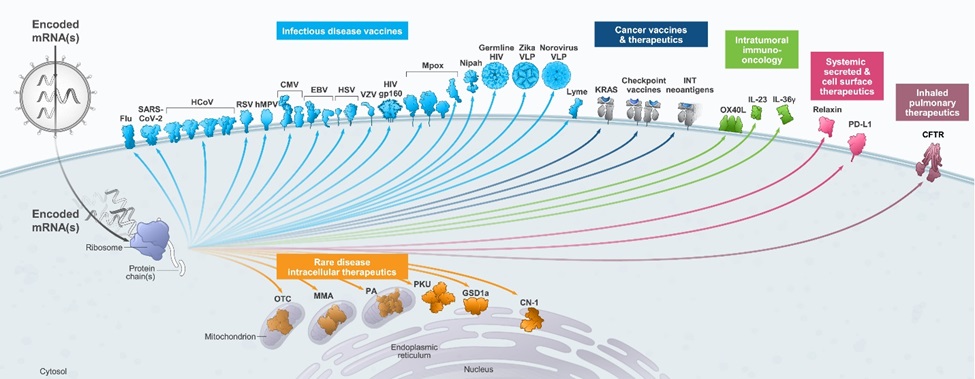
Table of Contents
Our full pipeline, grouped by modalities, is shown in the figure below:

Table of Contents
INFECTIOUS DISEASE VACCINES MODALITY
We have 31 different infectious disease vaccine programs, of which 30 have entered the clinic. Our infectious disease vaccines modality includes vaccines against respiratory viruses, latent viruses and enteric viruses, as well as bacterial vaccines and public health vaccines.
Infectious disease vaccines: Vaccines against respiratory viruses
COVID-19 vaccines (mRNA-1273/Spikevax®, next-generation mRNA-1283)
Our COVID-19 vaccine is approved or authorized for use in more than 70 countries. COVID-19 is caused by the SARS-CoV-2 virus that was first identified in humans in 2019, driving a global pandemic resulting in millions of deaths. The risk of mortality increases with age and the risk of severe disease and mortality increases for persons with certain pre-existing diseases or comorbid conditions, such as cardiovascular disease, diabetes, chronic lung disease and obesity.
Our COVID-19 vaccine continues to be a key tool in fighting COVID-19 as the SARS-CoV-2 virus evolves. As part of our strategy to combat the virus, we have continued to develop and assess variant-specific versions of our COVID-19 vaccine. In September 2023, we received regulatory approvals in major markets for our updated COVID-19 vaccine (mRNA-1273.815), which targets the XBB.1.5 subvariant of SARS-CoV-2. We developed mRNA-1273.815 in accordance with regulatory guidance, with the goal of broadening vaccine-induced immunity and providing protection against circulating SARS-CoV-2 XBB lineage variants. We have also observed preliminary clinical trial data showing that mRNA-1273.815 generates a robust immune response against other variants of SARS-CoV-2.
The FDA has approved mRNA-1273.815 for individuals ages 12 years and older, and granted Emergency Use Authorization for individuals six months through 11 years of age. mRNA-1273.815 has also been authorized for individuals six months and older in other key markets, including the EU, Canada and Japan.
Forward-looking references to our COVID-19 vaccine in this Annual Report on Form 10-K may include future modifications to mRNA-1273 or other product candidates that are designed to provide protection against variants of the SARS-CoV-2 virus.
In addition to our approved or authorized COVID-19 vaccines, we have advanced other COVID-19 vaccine candidates into the clinic as part of our effort to fight the evolving SARS-CoV-2 virus. Our next-generation COVID-19 vaccine, which is designed to be refrigerator-stable (mRNA-1283), is in a pivotal Phase 3 study, and we anticipate data from the trial in the first half of 2024. Our goal with mRNA-1283 is to facilitate easier distribution and administration by healthcare providers. Further, as SARS-CoV-2 evolves, we continue to perform continuous epidemiological monitoring, genomic surveillance and risk assessments of variants of concern to determine which new variants may have the ability to circumvent immunity provided by currently approved COVID-19 vaccines. For variants that appear to be growing in circulation and have evolved the ability to evade immunity, we proactively develop new product candidates. We have taken several of these candidates to clinical trials, and our monitoring activities allow for expedited delivery of new vaccines in the event that regulatory agencies request specific vaccine composition updates to address public health needs.
COVID-19 Commercial, Manufacturing and Supply Updates
Net product sales of our COVID-19 vaccine were $6.7 billion in 2023, which accounted for all of our product revenues. We anticipate that sales of our COVID-19 vaccine in 2024 will provide a significant portion of our commercial revenues for the coming year. Prior to the third quarter of 2023, we sold our COVID-19 vaccine to the U.S. Government, foreign governments and international organizations. In the third quarter of 2023, we commenced sales of our latest COVID-19 vaccine to the U.S. commercial market, in addition to continuing sales to foreign governments and international organizations.
With COVID-19 entering an endemic phase in 2023, we saw increased seasonality for sales, with greater demand in the fall/winter season in each hemisphere as countries sought to provide vaccinations to their populations. We expect this seasonality to continue in future years in the endemic market. As such, we resized our global manufacturing footprint in 2023 to account for demand in the endemic market. For further information on the sales and manufacturing of our COVID-19 vaccine, see “–Manufacturing” and “Management’s Discussion and Analysis of Financial Condition and Results of Operations” below.
Table of Contents
RSV vaccine (mRNA-1345)
Respiratory syncytial virus (RSV) is one of the most common causes of lower respiratory disease in children under the age of five and in older adults. Populations that are especially vulnerable to developing severe RSV infections include infants, young children, children and adults with chronic medical conditions and older adults. Most children are infected at least once by age two. In the United States, it is estimated that over two million children younger than five receive medical attention and up to 80,000 are hospitalized due to RSV infection annually. RSV also causes a substantial burden of respiratory illness in older adults. RSV infection causes up to 160,000 hospitalizations and up to 10,000 deaths per year in adults aged 65 years or older in the United States.
We are developing an RSV vaccine (mRNA-1345) for children, pregnant women and adults. mRNA-1345 encodes an engineered form of the RSV F protein stabilized in the prefusion conformation and is formulated in our proprietary LNP. In January 2023, we announced that mRNA-1345 had met primary efficacy endpoints in the pivotal Phase 3 trial in older adults, ages 60 and older. mRNA-1345 demonstrated vaccine efficacy (VE) of 83.7% (95.88% CI: 66.1%, 92.2%; p<0.0001) against RSV-associated lower respiratory tract disease (RSV-LRTD) as defined by two or more symptoms. The other primary efficacy endpoint against RSV-LRTD defined by three or more symptoms was also met, with a VE of 82.4% (96.36% CI: 34.8%, 95.3%; p=0.0078). mRNA-1345 was generally well-tolerated with no safety concerns identified. Based on the positive topline data from the pivotal Phase 3 efficacy trial, the FDA granted mRNA-1345 Breakthrough Therapy Designation for the prevention of RSV-LRTD in adults 60 years or older.
We have submitted marketing authorization applications in several major markets for the prevention of RSV-associated lower respiratory tract disease (RSV-LRTD) and acute respiratory disease (ARD) in adults 60 years or older. We expect regulatory approvals beginning in the first half of 2024.
We have additional Phase 3 studies ongoing in adults to explore co-administration with licensed flu or COVID-19 vaccines, revaccination with mRNA-1345 and expansion to adults aged 18 and older who are at high risk for severe RSV disease. In pediatrics, mRNA-1345 is ongoing in Phase 1 and Phase 2 studies, and we are conducting a Phase 2 study in maternal populations.
Seasonal influenza vaccines (mRNA-1010, mRNA-1011, mRNA-1012, mRNA-1020 and mRNA-1030)
The World Health Organization (WHO) estimates that seasonal influenza viruses cause three to five million cases of severe illness and 290,000 to 650,000 deaths each year, resulting in a severe challenge to public health. Currently licensed seasonal influenza vaccines rarely exceed 60% overall effectiveness and can provide low effectiveness during years when the circulating viruses do not match the strains selected for the vaccine antigens.
Our mRNA seasonal influenza vaccine program is taking an iterative approach to development. Our first-generation seasonal influenza vaccine candidate (mRNA-1010) encodes for the hemagglutinin (HA) proteins of the strains recommended by the WHO. We are intending to subsequently improve upon the first-generation candidate through inclusion of additional HA antigens that could provide expanded coverage of co-circulating strains, as well as broadening protection through the addition of another influenza protein, the neuraminidase (NA). We also aim to work with the WHO, regulators and public health authorities to enable strain selection closer to the influenza season to provide a better match to the circulating viruses.
The inclusion of additional HA antigens is being tested in our mRNA-1011/1012 programs, and the addition of NA antigens is being tested in our mRNA-1020/1030 programs. We aim to ultimately combine both approaches into a single next-generation vaccine.
In February 2023, we announced interim results from the P301 study of mRNA-1010. The results indicated that mRNA-1010 achieved higher seroconversion rates for A/H3N2 and A/H1N1, as well as superiority on geometric mean titer ratios for A/H3N2 and non-inferiority on geometric mean titer rations for A/H1N1. Non-inferiority was not met for either endpoints for the influenza B/Victoria- or B/Yamagata-lineage strains. mRNA-1010 showed an acceptable safety and tolerability profile. In April 2023, we announced the P302 study of mRNA-1010 did not accrue sufficient cases at the interim efficacy analysis to declare early success in the Phase 3 Northern Hemisphere efficacy trial. In September 2023, we announced the P303 immunogenicity and safety study of mRNA-1010 met all 8 co-primary endpoints with an updated formulation that was able to generate an improved immune response to influenza B strains. mRNA-1010 also elicited higher titers than the licensed comparator against all strains in this study. An additional study to compare immunogenicity of mRNA-1010 against an enhanced influenza vaccine comparator is currently ongoing. Conversations with regulators regarding filing for approval of mRNA-1010 are currently ongoing and we intend to file for regulatory approval in 2024.
Phase 1/2 studies for our mRNA-1011/1012 and mRNA-1020/1030 programs have been initiated and interim results have been presented at scientific meetings.
Combination vaccines (mRNA-1083, mRNA-1230, mRNA-1045 and mRNA-1365)
We are developing combination vaccine candidates to protect against a range of respiratory diseases.
Table of Contents
mRNA-1083, our next-generation COVID-19 and seasonal influenza combination vaccine, encodes the same antigens as our first-generation seasonal influenza vaccine (mRNA-1010) and our next-generation COVID-19 vaccine (mRNA-1283). In a Phase 1/2 trial, mRNA-1083 showed strong immunogenicity against influenza and COVID-19 compared to licensed standalone vaccines, with an acceptable reactogenicity and safety profile. In October 2023, we initiated a Phase 3 trial in adults 50 years and older. The trial is fully enrolled and data is anticipated in 2024.
We are also conducting Phase 1 studies for mRNA-1230, our COVID-19, seasonal flu and RSV combination vaccine, and mRNA-1045, our seasonal flu and RSV combination vaccine.
Enrollment is ongoing in a Phase 1 trial of mRNA-1365, our RSV and hMPV combination vaccine, in children five to under 24 months of age. In February 2024, the FDA granted Fast Track Designation for mRNA-1365.
Infectious disease vaccines: Vaccines against latent viruses
CMV vaccine (mRNA-1647)
Human cytomegalovirus (CMV) is a common human pathogen and member of the herpes virus family. Congenital CMV results from infected mothers transmitting the virus to their unborn child and it is the leading infectious cause of birth defects in the United States, with approximately 25,000 newborns in the U.S. infected annually. There is currently no available vaccine for CMV and a vaccine that leads to durable immunity in women of child-bearing age would address a critical unmet need in the prevention of congenital CMV infection.
Our CMV vaccine candidate, mRNA-1647, combines six mRNAs in one vaccine, which encode for two proteins located on the surface of CMV: five mRNAs encode the subunits that form the membrane-bound pentamer complex and one mRNA encodes the full-length membrane-bound glycoprotein B (gB). Both pentamer and gB are essential for CMV to infect barrier epithelial surfaces and gain access to the body, which is the first step in CMV infection. mRNA-1647 is designed to produce an immune response against both pentamer and gB for the prevention of CMV infection, which could reduce the risk of birth defects and post-transplant infections.
We are conducting an ongoing Phase 3 study for mRNA-1647, known as CMVictory, to evaluate the safety and efficacy of mRNA-1647 against primary CMV infection in female participants 16 to 40 years of age. The study is fully enrolled, both for the adult and adolescent (ages 16 to <18) cohorts. Timing of the readout will depend upon the number of CMV cases accrued in the study. We anticipate potential efficacy data from the study in 2024.
We are also conducting a Phase 1/2a study of mRNA-1647 in participants 9 to 15 years of age. We enrolled the first participant in November 2022, and the study is evaluating the safety and immunogenicity of mRNA-1647 to inform the selection of a dose level for subsequent development in this age group.
Additionally, in April 2023 we announced that a Phase 2 proof-of-concept study for mRNA-1647 in allogeneic hematopoietic cell transplant (HCT) patients had started enrollment.
EBV vaccine (mRNA-1189 and mRNA-1195)
Epstein-Barr virus (EBV) is a member of the herpesvirus family that is related to CMV and infects approximately 90% of people in the U.S. by adulthood, with primary infection typically occurring during childhood or late adolescence (approximately 50% and 89% seropositivity, respectively). EBV is the major cause of infectious mononucleosis, accounting for over 90% of the approximately one to two million cases in the U.S. each year. Infectious mononucleosis can debilitate patients for weeks to months and, in some cases, can lead to hospitalization due to complications such as splenic rupture. EBV infection is also associated with the development and progression of certain lymphoproliferative disorders, cancers and autoimmune diseases. In particular, EBV infection and infectious mononucleosis are associated with increased risk of developing multiple sclerosis, an autoimmune disease of the central nervous system.
We are developing two EBV vaccine candidates—a vaccine to prevent infectious mononucleosis (mRNA-1189) and a vaccine to prevent the longer-term sequelae of EBV infection (mRNA-1195). Similar to our CMV vaccine (mRNA-1647) product concept, we believe that an effective EBV vaccine must generate an immune response to antigens that are required for viral entry in susceptible cell types. mRNA-1189 is designed to elicit an immune response to EBV envelope glycoproteins, which are required for infection of both epithelial and B cells. mRNA-1189 contains four mRNAs encoding for these proteins encapsulated in our proprietary LNPs. mRNA-1195 encodes for entry glycoproteins and latent antigens and will be investigated in the context of post-transplant lymphoproliferative disorders and multiple sclerosis.
We are conducting Phase 1, randomized, observer-blind, placebo-controlled studies of mRNA-1189 and mRNA-1195. The primary purpose of these studies is to assess the safety, tolerability and immunogenicity of these vaccine candidates.
Table of Contents
HSV vaccine (mRNA-1608)
Herpes simplex viruses (HSV), commonly known as herpes, are categorized into two types: HSV-1 primarily spreads by oral contact and is most commonly associated with cold sores, and HSV-2 spreads through sexual contact and is the major cause of recurrent genital herpes. Both viruses establish life-long latent infections within nearby sensory neurons from which they can reactivate and re-infect the skin. There is a significant burden of disease from HSV genital infections. Diagnosed, symptomatic genital herpes causes a reduction in quality of life, which antivirals (current standard of care) only partially restore. In the United States, approximately 18.6 million adults ages 18 to 49 years are living with HSV-2. Globally, an estimated 492 million persons have HSV-2 infection, representing 13% of the world’s population aged 15 to 49 years. We believe that an HSV vaccine could deliver similar efficacy as suppressive antiviral treatments and could improve compliance and quality of life. We aim to induce a strong antibody response with neutralizing and effector functionality combined with cell-mediated immunity.
We are conducting a Phase 1/2, randomized, observer-blind, controlled, dose-ranging study of mRNA-1608, our HSV vaccine candidate against recurrent HSV-2 disease, in health adults 18 to 55 years of age with recurrent HSV-2 genital herpes. The primary purpose of this study is to assess safety and immunogenicity data, and establish a proof-of-concept of clinical benefit.
VZV vaccine (mRNA-1468)
Herpes zoster, also known as shingles, is caused by the varicella zoster virus (VZV) and occurs in approximately one in three adults in their lifetime and incidence significantly increases at approximately 50 years of age. Protective immunity against VZV wanes as the immune system ages, allowing reactivation of the virus from latently infected neurons, causing painful and itchy lesions. Serious herpes zoster complications include postherpetic neuralgia (10-13% of herpes zoster cases), bacterial coinfections and cranial and peripheral palsies; 1-4% of individuals with herpes zoster cases are hospitalized for complications. Severity of disease and likelihood of complications, including postherpetic neuralgia (PHN) also increases with age. People with immunocompromising conditions, people with autoimmune disease using immunosuppressive therapies, people living with HIV and hematopoietic stem cell (HSCT) and organ transplant recipients have an increased risk of developing herpes zoster. The current standard of care is Shingrix, an FDA-approved vaccine for the prevention of shingles in adults 50 years and older. It is more than 90% effective against herpes zoster in adults aged 50-70 with only a slight reduction in efficacy for adults over age 70.
We are conducting an ongoing Phase 1/2, randomized, observer-blind, active-controlled, dose-ranging study to evaluate the safety, reactogenicity and immunogenicity of mRNA-1468, compared head-to-head with Shingrix, in healthy adults, aged 50 years and older. The first participant was dosed in February 2023 and enrollment of 500 participants was completed in June 2023.
HIV vaccine (mRNA-1644 and mRNA-1574)
HIV is the virus responsible for acquired immunodeficiency syndrome (AIDS), a lifelong, progressive illness with no effective cure. Approximately 38 million people worldwide are currently living with HIV, with 1.2 million in the U.S. Approximately 1.5 million new infections of HIV are acquired worldwide every year and approximately 680,000 people die annually due to complications from HIV/AIDS. The primary routes of transmission are sexual intercourse and IV drug use, putting young adults at the highest risk of infection. From 2000 to 2015, a total of $562.6 billion globally was spent on care, treatment and prevention of HIV, representing a significant economic burden.
We are developing two HIV vaccine candidates—mRNA-1644 and mRNA-1574—both of which are in ongoing Phase 1 clinical trials. In collaboration with the International AIDS Vaccine Initiative (IAVI) and the Bill & Melinda Gates Foundation, mRNA-1644 is testing a novel HIV vaccine strategy in humans as delivered by mRNA to elicit broadly neutralizing HIV-1 antibodies (bnAbs) through sequential vaccination of novel prime and boost antigens that induce specific B-cell responses. In collaboration with IAVI, Scripps, NIH and the HIV Vaccine Trials Network, mRNA-1574 is testing multiple native-like HIV trimer mRNAs in humans to improve our understanding of how to make stable and immunogenic native-HIV trimers.
Table of Contents
Infectious disease vaccines: Vaccines against enteric viruses
Norovirus vaccines (mRNA-1403 and mRNA-1405)
Among enteric viruses, norovirus is a leading cause of diarrheal disease, also referred to as acute gastroenteritis (AGE) globally, resulting in substantial health care burden. Norovirus is estimated to be the causative agent in 18% of all AGE cases worldwide. The highest incidence globally is in young children, and in low-income countries, there are approximately 70,000 deaths annually caused by norovirus in children under 5 years of age. In high-income countries, incidence is also highest among young children, but deaths and other severe outcomes are concentrated primarily among older adults and immunocompromised patients. Norovirus is also associated with large, costly and difficult to control outbreaks in closed and semi-closed settings, such as daycares, cruise ships, long term care facilities and other healthcare settings. The burden of norovirus among older adults is expected to rise along with societal aging and an increased need for institutionalized care. In the U.S., norovirus causes an estimated 20 million infections, 100,000 hospitalizations and 900 deaths per year. Globally, there are approximately 650 million infections annually with approximately 200,000 deaths across all ages.
Norovirus has broad genetic diversity; the virus is classified into 10 genogroups and 49 genotypes, 30 of which are known to infect humans. Vaccine development has been challenging to date for many reasons, including the lack of a robust cell culture system, no reliable immune markers of norovirus protection and the broad and shifting diversity of genotypes. A multivalent vaccine with broad genotype coverage is needed to maximize protection against the genotypes most frequently associated with AGE in young children and older adults.
We are currently developing pentavalent (mRNA-1405) and trivalent (mRNA-1403) vaccine candidates for norovirus. Both candidates are in a Phase 1 study to evaluate safety, reactogenicity and immunogenicity in healthy adult participants 18 to 49 years of age and 60 to 80 years of age. Approximately 660 participants were enrolled in the Phase 1 study, and dosing was completed in December 2023.
Infectious disease vaccines: Bacterial vaccines
Lyme vaccines (mRNA-1975 and mRNA-1982)
Approximately 120,000 Lyme disease cases are reported per year in the U.S. and Europe. With rising atmospheric temperatures, Lyme territory continues to increase in the U.S. Lyme disease burden follows a bimodal age distribution, affecting mainly children under 15 and older adults. Patients can develop rash, fever, headaches, fatigue, joint pain, swelling, stiffness and headaches. Older adults appear more likely to have an unfavorable treatment response and more common neurologic manifestations as compared with younger patients. There are no approved vaccines to prevent Lyme disease in humans currently on the market.
To address Lyme's biological complexity, we are advancing a seven-valent and single-valent approach with two Lyme disease vaccine candidates being developed in parallel. mRNA-1982 is designed to elicit antibodies specific for Borrelia burgdorferi, which causes almost all Lyme disease in the U.S. mRNA-1975 is designed to elicit antibodies specific for the four major Borrelia species causing disease in the U.S. and Europe.
Both the seven-valent (mRNA-1975) and single-valent (mRNA-1982) vaccines are in a Phase 1/2, randomized, observer-blind, placebo-controlled, dose-ranging study to evaluate safety and immunogenicity in healthy participants 18 through 70 years of age. We have completed enrollment of approximately 800 participants in this study. In January 2024, the FDA granted Fast Track Designation to our Lyme disease program.
Infectious disease vaccines: Public health vaccines
Zika vaccine (mRNA-1893)
The Zika virus is a single stranded RNA virus of the Flaviviridae family. Seroepidemiology data suggest that it is endemic to regions of Africa and Asia, where the Aedes mosquito vectors are found. Zika virus is predominantly spread by mosquitos from the Aedes genus, but it can also be transmitted congenitally, sexually and through blood donation. Zika infection is usually asymptomatic or mild in adults, leading to fever, rash and conjunctivitis. However, infection of women during pregnancy can result in devastating microcephaly in newborns. Microcephaly is a birth defect characterized by an abnormally small head and brain, associated with lifelong neurodevelopmental delay, seizures, intellectual disability, balance problems and dwarfism/short stature, resulting in significant disability and requiring lifelong support. In 2007, a Zika infection outbreak progressed across the Pacific islands. An outbreak observed in Brazil in 2015 soon spread across the Americas, which led the WHO to declare Zika a public health emergency of international concern in 2016. During the period, tens of thousands of cases of microcephaly and congenital Zika syndrome were reported in infants. Zika has also been associated with certain neurological sequelae, such as Guillain-Barré syndrome, reported in adults.
Our Zika vaccine candidate, mRNA-1893, encodes for the prME structural protein encapsulated in our proprietary LNP. In partnership with BARDA, we are conducting a Phase 2 study in the United States and Puerto Rico to evaluate mRNA-1893 in approximately 800
Table of Contents
participants. The randomized, placebo-controlled study aims to evaluate the safety, tolerability and reactogenicity of mRNA-1893, as well as evaluate the immunogenicity of two dose levels of mRNA-1893 (one-dose or two-dose schedule) compared to placebo. The study is fully enrolled. We do not anticipate advancing the Zika program into further studies in the absence of further outside funding.
Nipah vaccine (mRNA-1215)
Nipah virus (NiV) is a zoonotic virus transmitted to humans from animals, contaminated food or through direct human-to-human transmission and causes a range of illnesses including fatal encephalitis. Severe respiratory and neurologic complications from NiV have no treatment other than intensive supportive care. The case fatality rate among those infected is estimated at 40-75%. NiV outbreaks cause significant economic burden to impacted regions due to loss of human life and interventions to prevent further spread, such as the slaughter of infected animals. NiV has been identified as the cause of isolated outbreaks in India, Bangladesh, Malaysia and Singapore since 2000 and is included on the WHO R&D Blueprint list of epidemic threats needing urgent R&D action.
In collaboration with the NIH-Vaccine Research Center (VRC), we are conducting an ongoing Phase 1 clinical trial of mRNA-1215, our vaccine candidate against NiV, and testing will be focused on pandemic preparedness. This Phase 1 dose-escalation, open-label clinical trial is the first study of mRNA-1215 in healthy adults to evaluate the safety, tolerability and immunogenicity of a NiV mRNA vaccine candidate. The trial is sponsored and funded by the National Institute of Allergy and Infectious Diseases (NIAID).
Mpox vaccine (mRNA-1769)
Mpox is an infectious viral disease that can occur in humans and some other animals. It is caused by the monkeypox virus, a zoonotic virus in the genus Orthopoxvirus. Transmission of mpox has been associated with direct contact with bodily fluid or sores. Mpox may also be transmitted via respiratory secretion with close face-to-face contact.
The most widely known member of the Orthopoxvirus genus is Variola virus, which causes smallpox. Although smallpox was eradicated in 1977, continued protection from smallpox is of great interest given the lethality of the infection and potential for use as an agent of bioterrorism. Other diseases associated with the Orthopoxvirus genus include cowpox, horsepox and camelpox.
There are two subtypes of the monkeypox virus—Clade I and Clade II. In 2022, an outbreak of the Clade II mpox virus was declared a Public Health Emergency of International Concern by the WHO. The outbreak resulted in approximately 93,000 confirmed cases across 117 countries. More recently, the Clade I monkeypox virus, which is associated with greater mortality, has been reported to be sexual transmitted and there is concern that it may lead to further global outbreaks.
The current standard of care for mpox is Jynneos, which is approved by the FDA for the prevention of mpox and smallpox disease. Our mpox vaccine (mRNA-1769) is designed to express four antigens from the monkeypox virus to provide a range of protection.
We are conducting a randomized, placebo-controlled, dose-ranging, observer-blind Phase 1/2 study to evaluate the safety, tolerability and immunogenicity of mRNA-1769 in healthy participants.
CANCER VACCINES AND THERAPEUTICS MODALITY
Our cancer vaccines and therapeutics modality currently has three development programs, all of which have entered the clinic.
Individualized Neoantigen Therapy (INT) (mRNA-4157)
As tumors grow, they acquire mutations, some of which create new protein segments, or neoantigens, that can be presented on human leukocyte antigen (HLA) molecules in the tumor and recognized as non-self by T cells. While some of these neoantigens could be shared across tumors, the majority are completely unique to an individual patient’s tumor, in addition the presentation of those neoantigens is also dependent on a patient’s specific HLA type.
Our INT, mRNA-4157, uses next generation sequencing and our proprietary algorithm to design an mRNA that encodes up to 34 neoantigens against each individual patient’s tumor mutations with specificity to their HLA type, and is predicted to elicit both class I (CD8) and class II (CD4) responses. The neoantigens are encoded in a single mRNA sequence and formulated in our proprietary LNPs designed for intramuscular injection. INT is manufactured using an automated workflow to enable a rapid turnaround time.
We are developing mRNA-4157 in collaboration with Merck. In September 2022, Merck exercised its option for personalized cancer vaccines, including mRNA-4157, pursuant to the terms of our existing PCV Collaboration and License Agreement with Merck, which was amended and restated in 2018 (PCV Agreement). Pursuant to the PCV Agreement, we and Merck will collaborate on further development and commercialization of mRNA-4157, and we will share costs and any profits and losses worldwide related to mRNA-4157 equally*.*
In December 2022, we announced that the randomized Phase 2 trial of mRNA-4157 had met its primary endpoint. The open-label Phase 2 study is investigating a 1 mg dose of mRNA-4157 in combination with Merck’s pembrolizumab (KEYTRUDA®), compared
Table of Contents
to pembrolizumab alone, for the adjuvant treatment of high-risk resected melanoma. The study showed that mRNA-4157 in combination with KEYTRUDA reduced the risk of recurrence or death by 44% (HR=0.56 [95% CI, 0.31-1.02]; one-sided p value=0.0266) compared with KEYTRUDA alone. The results are the first demonstration of efficacy for an investigational mRNA cancer treatment in a randomized clinical trial in melanoma. Adverse events observed were consistent with those previously reported in a Phase 1 clinical trial, which showed mRNA-4157 to be well-tolerated at all dose levels.
In February 2023, mRNA-4157 received a Breakthrough Therapy Designation from the FDA, and in April 2023 mRNA-4157 received PRIME Scheme Designation from the EMA.
In December 2023, we announced that at a planned median follow-up of approximately three years, mRNA-4157 in combination with KEYTRUDA showed sustained benefit, reducing the risk of recurrence or death by 49% (HR=0.510 [95% CI, 0.288-0.906]; one-sided nominal p=0.0095) and the risk of distant metastasis or death by 62% (HR=0.384 [95% CI, 0.172-0.858]; one-sided nominal p= 0.0077) compared to KEYTRUDA alone in stage III/IV melanoma patients with high risk of recurrence following complete resection. We and Merck have initiated Phase 3 studies in the adjuvant setting in patients with high-risk melanoma and non-small cell lung cancer (NSCLC), and plan to expand to additional tumor types.
KRAS Vaccine (mRNA-5671)
We are evaluating next steps for our KRAS vaccine program (mRNA-5671), having retained all rights to the program from Merck. Enrollment closed in the Phase 1 study led by Merck in early 2022. KRAS is a frequently mutated oncogene in epithelial cancers, primarily lung, colorectal cancer (CRC) and pancreatic cancers. mRNA-5671 is designed to present neoantigens for the four most prevalent KRAS mutations.
Checkpoint cancer vaccine (mRNA-4359)
We are developing a checkpoint cancer vaccine (mRNA-4359) that express Indoleamine 2,3-dioxygenase (IDO) and programmed death-ligand 1 (PD-L1) antigens. We designed mRNA-4359 with the goal of stimulating effector T cells that target and kill suppressive immune and tumor cells that express target antigens. Our initial indications for mRNA-4359 are advanced or metastatic cutaneous melanoma and NSCLC. Our Phase 1 study of mRNA-4359 is ongoing.
INTRATUMORAL IMMUNO-ONCOLOGY MODALITY
Our intratumoral immuno-oncology modality currently has one development program, which is in the clinic.
OX40L/IL-23/IL-36γ (Triplet) (mRNA-2752)
Despite recent advances in immune-mediated therapies for cancer, the outlook for many patients with advanced cancer is poor. We are developing Triplet (mRNA-2752) to drive anti-cancer T cell responses by transforming cold tumor microenvironments into productive, “hotter” immune landscapes with local intratumoral therapies. mRNA-2752 utilizes the intrinsic advantage of mRNA to multiplex and to produce membrane and secreted proteins with mRNA in a single product candidate. Triplet (mRNA-2752) includes three mRNAs encoding human OX40L, IL-23 and IL-36γ that are encapsulated in our proprietary LNP and administered intratumorally. OX40L is a membrane protein, whereas IL-23 and IL-36γ are secreted cytokines. We believe our approach has the advantage of localized high concentration gradients of IL-23 and IL-36γ compared to recombinant proteins administered systemically or intratumorally. Additionally, the mRNA for OX40L encodes for the wild type membrane protein, which we believe recombinant protein technologies cannot enable.
In December 2023, we completed enrollment in our ongoing Phase 1 dose-escalation study of mRNA-2752 for the treatment of advanced or metastatic solid tumor malignancies or lymphoma (as a single agent or in combination with checkpoint inhibitors).
RARE DISEASE INTRACELLULAR THERAPEUTICS
Our rare disease intracellular therapeutics modality currently has six development programs, three of which are in the clinic.
Propionic acidemia (PA) (mRNA-3927)
PA is a rare, inherited metabolic disorder with significant morbidity and mortality, affecting one in 100,000-150,000 individuals worldwide. PA is caused by pathogenic variants in the propionyl-coenzyme A carboxylase (PCC) α or β subunits (PCCA and PCCB genes, respectively), leading to PCC deficiency and subsequent accumulation of toxic metabolites. PA is characterized by recurrent life-threatening metabolic decompensation events (MDEs) and multisystemic complications. Multisystemic complications include neurological manifestations, cardiomyopathy, arrythmias, growth retardation, recurrent pancreatitis, bone marrow suppression and predisposition to infection. Long-term, insults by toxic metabolites cause complications in various organs, and cognitive outcome is
Table of Contents
negatively correlated with the number of MDEs. Currently, there is no approved therapy for PA that targets the underlying root cause of the disease.
Our PA therapy candidate, mRNA-3927, is a novel, IV-administered, LNP-encapsulated dual mRNA therapy that encodes for PCCA and PCCB subunit proteins to restore functional PCC enzyme activity in the liver. By encoding for intracellular proteins, mRNA therapy has a potential role in preventing and treating acute metabolic decompensations.
The global Phase 1/2 clinical trial for mRNA-3927, the Paramount Study, is ongoing and we have fully enrolled all five dose optimization cohorts, as well as a dose confirmation cohort. The objective of the study is to evaluate the safety and pharmacology of mRNA-3927 in patients 1 year of age and older with PA. The primary endpoints are safety and pharmacokinetics and pharmacodynamics. Secondary endpoints include incidence and severity of adverse events (AEs) and change in plasma biomarkers: methylcitric acid (2-MC) and 3-Hydroxypropionic acid (3-HP). We have received Rare Pediatric Disease Designation, Orphan Drug Designation and Fast Track Designation from the FDA and Orphan Designation from the European Commission for the PA program. Several critical milestones have been reached in the trial. mRNA-3927 has been generally well-tolerated to date with no drug-related serious adverse events, no discontinuations due to safety and only mild-to-moderate infusion related reactions (<10% of doses). Due to the objective and disease-defining nature of MDEs, regulators have provided initial support for MDE as a clinically meaningful, preferred primary clinical endpoint for development. Based on the preliminary data, there was a decrease in the number of MDEs post-mRNA-3927 treatment. We expect to advance mRNA-3927 into a pivotal study in 2024.
Methylmalonic acidemia (MMA) (mRNA-3705)
MMA is a rare, inherited metabolic disorder with significant morbidity and mortality caused by a deficiency in an enzyme called methylmalonyl-CoA mutase (MUT). There are an estimated 500-2,000 people with MMA MUT deficiency in the United States based on estimated birth prevalence (0.3-1.2:100,000 newborns) and mortality rates. Mortality is significant, with mortality rates of 50% for those with complete MUT deficiency (mut 0) (median age of death 2 years) and 40% for MMA patients with partial MUT deficiency (mut -) (median age of death 4.5 years) reported in a large European study. MMA mainly affects the pediatric population and usually presents in the first few days or weeks of life. The occurrence of acute metabolic decompensations is the hallmark of the disorder and decompensations are typically more frequent in the first few years of life. Each decompensation is life-threatening and often requires hospitalization and management at an intensive care unit. Survivors often suffer from numerous complications including chronic renal failure and neurologic complications such as movement disorders, developmental delays, and seizures. Consequently, the health-related quality of life for MMA patients and their families is significantly impaired. There are currently no approved therapies that address the underlying defect for MMA.
Our MMA therapy candidate, mRNA-3705, encodes for a missing or deficient hepatic enzyme. In an ongoing Phase 1/2 study, fifteen participants have been dosed. Thus far, all eligible participants have opted to participate in the Open-Label Extension study. To date, mRNA-3705 has generally been well-tolerated with no discontinuations due to safety or meeting protocol defined dose limiting toxicity criteria. Interim results demonstrated encouraging initial pharmacodynamic data, with dose-dependent reductions in methylmalonic acid in cohorts 2 and 3. Early results suggest potential promising changes in clinical endpoints. We are currently dosing our fifth cohort as we prepare to select an optimal dose for expansion. We expect to advance mRNA-3705 into a pivotal study in 2024.
Glycogen storage disease type 1a (GSD1a) (mRNA-3745)
GSD1a is a rare, inherited metabolic disorder caused by a deficiency in the catalytic activity of the intracellular protein glucose 6-phostphatase (G6Pase). GSD1a patients suffer from severe fasting hypoglycemia, hepatomegaly, nephromegaly, lactic acidemia, hypertriglyceridemia, hyperuricemia, hypercholesterolemia, hepatic steatosis and growth retardation. In addition, hepatocellular adenomas occur in 70% to 80% of GSD1a patients by their third decade of life and carries risk of transformation into hepatocellular carcinomas. Proteinuria has been observed in over half of patients above 25 years of age. GSD1a occurs in approximately 1:100,000 live births in the United States and European Union but is more common in Ashkenazi Jews where the incidence is reported to be 1:20,000 live births. There are an estimated 2,500 people in the United States and over 4,000 people in the European Union with GSD1a. Although strict diet therapy, including frequent feeding with uncooked cornstarch, allows GSD1a patients to live into adulthood by preventing hypoglycemia, the underlying pathological processes remain uncorrected resulting in the development of many long-term complications including liver adenomas and hepatocellular carcinoma.
Our GSD1a therapy candidate, mRNA-3745, consists of an mRNA encoding for modified human G6Pase, and has been granted Orphan Drug Designation by the FDA and the European Medicines Agency (EMA). A Phase 1/2 study to evaluate the safety and pharmacology of mRNA-3745 in GSD1a patients 18 years of age and older is ongoing. We have observed encouraging signs of clinical benefit with mRNA-3745.
Table of Contents
Ornithine transcarbamylase (OTC) deficiency (mRNA-3139)
Ornithine transcarbamylase (OTC) deficiency (OTCD) is an X-linked recessive disorder that is the most common urea cycle disorders (UCDs) in humans. OTCD prevents the breakdown and excretion of ammonia, allowing ammonia to accumulate, rising to toxic levels where it affects the central nervous system. With an incidence of approximately 1:57,000 live births, OTCD accounts for nearly half of all UCDs. OTCD causes high mortality and morbidity, particularly in males.
Our OTCD therapy candidate, mRNA-3139, is in preclinical development. mRNA-3139 is a chronic intravenous, mRNA, enzyme replacement therapy for OTCD, which may act as a bridge to liver transplant or a standalone therapeutic depending on efficacy. mRNA-3139 uses the same LNP as in our GSD1a program.
Phenylketonuria (PKU) (mRNA-3210)
PKU is a rare inherited metabolic disease, affecting approximately 40,000 patients in the United States, France, Germany, Italy, Spain and the UK. Mutations in the phenylalanine hydroxylase (PAH) gene encoding the PAH enzyme result in the inability to metabolize the essential amino acid Phe to Tyr in the liver. There is a high unmet medical need for patients with PKU with early and continuous treatment throughout life being fundamental to prevent the development of irreversible neuropsychiatric outcomes.
Our PKU therapy candidate, mRNA-3210, which is in preclinical development, is an mRNA encoding the PAH enzyme encapsulated in the same LNP as that used in our MMA and PA product candidates, with the potential to address the unmet need in PKU patients.
Crigler-Najjar Syndrome Type 1 (CN-1) (mRNA-3351)
CN-1 is a severe condition caused by the mutations in the UGT1A1 gene. CN-1 is characterized by high levels of a toxic substance called bilirubin in the blood (hyperbilirubinemia). It is caused by mutations in the UGT1A1 gene, which results in an inability to break down bilirubin, a substance made by the liver. Without the UGT1A1 enzyme, bilirubin can build up in the body and lead to jaundice and damage to the brain, muscles and nerves. The symptoms become apparent shortly after birth and can be life-threatening. It is estimated that there are only approximately 70-100 known cases of CN-1 in the world. Affected individuals rely on current standard of care, phototherapy treatments of up to 12 hours a day, throughout life. The only definitive treatment is liver transplant, which is associated with its own set of side effects and risk of death.
Our CN-1 therapy candidate, mRNA-3351, consists of an mRNA encoding human UGT1A1 encapsulated in our proprietary LNPs. It is designed to restore the missing or dysfunctional protein that causes CN-1. We have licensed mRNA-3351 to Institute for Life Changing Medicines (ILCM) with no upfront fees and without any downstream payments. The goal of the collaboration is to make an mRNA therapy for the treatment of CN-1 available at no cost to patients. We are collaborating with the ILCM in developing a preclinical package for Investigational New Drug application and Clinical Trial Application filings. ILCM will be responsible for the clinical development of mRNA-3351.
INHALED PULMONARY THERAPEUTICS
Our inhaled pulmonary therapeutics modality currently has one product candidate.
Cystic Fibrosis (CF) (mRNA-3692/VX-522)
CF is a rare genetic disease, which is progressive from birth and leads to multi-organ damage and early death due to lung dysfunction. It is caused by the mutations in the cystic fibrosis transmembrane conductance regulator (CFTR) gene, which results in the loss of CFTR chloride ion channel function. This decreased function of CFTR at the cell surface leads to thick, sticky mucus in multiple organ systems but most pathologically the lungs. There are approximately 92,000 patients living with cystic fibrosis in the United States, Europe, Australia and Canada, with over 5,000 of these patients not being able to benefit from the approved CFTR modulators.
We are collaborating with Vertex on our CF candidate, mRNA-3692/VX-522, which is designed to treat the underlying cause of CF by enabling cells in the lungs to produce functional CFTR protein for the treatment of the 10% of patients who do not produce any modulator-responsive CFTR protein. This would be our first demonstration of a nebulized mRNA therapy.
Vertex has initiated a Phase 1, single ascending dose clinical trial in CF patients who cannot benefit from CFTR modulators, and the FDA has granted VX-522 Fast Track designation. The trial is active and enrolling patients. Vertex expects to complete the single ascending dose study and to initiate the multiple ascending dose study.
Table of Contents
SYSTEMIC SECRETED AND CELL SURFACE THERAPEUTICS MODALITY
Our systemic secreted and cell surface therapeutics modality currently has two active development programs, of which one has entered the clinic.
Relaxin (mRNA-0184)
Relaxin is a naturally occurring hormone that has been shown to promote vasodilation and angiogenesis, regulate extracellular matrix turnover and suppress arrhythmias post myocardial infarction. Relaxin plays an important role in women in pregnancy, but in addition, studies have pointed to its vasodilatory, antifibrotic, anti-inflammatory and other protective effects on multiple organs. There is a large body of evidence to support relaxin’s clinical potential in several therapeutic areas, with its impact on cardiovascular diseases having been studied in both preclinical and clinical settings. Though prior studies have failed to demonstrate long-term benefit in clinical studies, we believe a novel approach can overcome potential flaws of previous approaches.
We are developing mRNA-0184, which encodes for a relaxin fusion protein, to treat decompensated heart failure. Acute heart failure is defined as the new onset or worsening of symptoms and signs of heart failure. In developed countries, heart failure has become a substantial public health problem, affecting 2% of the adult population and acute heart failure is the most frequent cause of unplanned hospital admission in patients over 65 years of age. mRNA-0184 encodes for the relaxin fusion protein. The mRNA sequence of mRNA-0184 is engineered to increase protein expression and prolong half-life.
In December 2022, we initiated dosing in a Phase 1 trial for mRNA-0184 and the trial is ongoing. Our Phase 1 trial is an adaptive, open-label, single ascending dose to single-blind, placebo-controlled, multiple ascending dose study to evaluate the safety, tolerability, pharmacokinetics, and pharmacodynamics of mRNA-0184 in participants with chronic heart failure.
PD-L1 (mRNA-6981)
PD-L1 is a co-inhibitory receptor that can induce anergy in programmed cell death protein 1 (PD-1)-expressing T cells. We intend to induce expression of PD-L1 on myeloid cells to send a tolerizing signal to immune cells in their environment in order to treat autoimmune diseases.
The PD-L1/PD-1 pathway has a critical function in immune regulation and promotes development and function of regulatory T (Treg) cells. PD-L1 is a transmembrane protein expressed on antigen presenting cells, such as dendritic cells and macrophages, activated T cells, B cells and monocytes, as well as peripheral tissues. Its cognate receptor, PD-1, is a co-inhibitory transmembrane protein expressed on T cells, B cells, natural killer cells and thymocytes. Preclinical mouse models deficient in PD-1 spontaneously develop a variety of autoimmune diseases such as arthritis, myocarditis, lupus-like glomerulonephritis and type 1 diabetes, demonstrating the critical role of the PD-L1/PD-1 interaction in maintaining tolerance to self-antigens. Additionally, treatment of cancer patients with PD-1 or PD-L1 inhibitors sometimes results in immune-related adverse events, including the development of hepatitis, dermatitis and colitis, demonstrating the role of PD-1/PD-L1 in human autoimmune reactions.
We believe our PD-L1 therapy may augment PD-L1 expression on cell types similar to those that endogenously express it, and by reducing immune activation, potentially reduce the clinical manifestations of a variety of autoimmune diseases. Our intent is to use our platform to influence myeloid cells, including dendritic cells, to provide additional co-inhibitory signals by augmenting endogenous expression of PD-L1. We believe that this tolerizing signal to lymphocytes may limit autoreactivity in the context of ongoing autoimmune pathology without severe and global suppression of the immune system. Given that our platform allows us to modify myeloid cells in situ, our approach to the creation of a tolerogenic environment may provide unique benefits in treating autoimmune diseases by seeking to restore immune homeostasis.
After undertaking preclinical development, we determined that the current design of mRNA-6981 does not meet our criteria for advancement to the clinic. PD-L1 continues to be an area of interest, and we are currently evaluating other preclinical mRNA candidates.
Table of Contents
MANUFACTURING
Manufacturing plays a critical role in our value chain and our ability to develop our medicines. Our manufacturing capabilities support every stage of the development of our products, from discovery to commercialization. During the research stage of product development, manufacturing provides mRNA drug substance and drug product for platform research and therapeutic area drug discovery. During early development of our product candidates, we manufacture mRNA and drug product for IND-enabling GLP toxicology studies and initial human clinical studies. For late clinical development, we produce mRNA and drug product for Phase 3 trials. At the commercial stage, we manufacture drug substance and drug product in collaboration with our contract manufacturing organizations (CMOs), both in the United States and internationally.
In 2023, as the COVID-19 vaccine market moved from a pandemic to an endemic market, we significantly resized our manufacturing infrastructure and reshaped our supply capabilities to help position our COVID-19 franchise for future profitability.
Overview of our manufacturing operating model
Our manufacturing activities generally focus on:
-
Commercial Production:** Our manufacturing capabilities include state-of-the-art technologies for mRNA and drug substance manufacturing, as well as quality control testing to attain a robust and consistent supply that matches target product profiles. Our manufacturing technology is built to scale-up and support production of products for commercial approval. Our platform allows for efficient manufacturing at scale.
-
Research and Development Support:** The product supply enables platform research and drug discovery in our therapeutic and vaccine areas, in addition to activities related to clinical studies of our product candidates.
We have built a dedicated in-house, multi-building manufacturing campus in Norwood, Massachusetts, the Moderna Technology Center (MTC). The MTC provides supply for our preclinical research, IND-enabling GLP toxicology study supplies, our Phase 1 and Phase 2 pipeline activities, later-stage clinical development activities (e.g., Phase 3 CMV vaccine clinical trials), as well as drug substance commercial production for vaccines. Our vaccine drug substance production for the U.S. market is completed at our MTC campus. The MTC has been designed to allow us to continue to optimize our mRNA products as we explore new pharmaceutical delivery forms in our manufacturing network such as prefilled syringes. The MTC campus has been designed with a high level of automation and state-of-the-art digital integration to handle manufacturing execution, product testing and release, and regulatory filings.
In the second quarter of 2023, we acquired a newly constructed, 140,000 square feet biomanufacturing facility in Marlborough, Massachusetts. The facility is currently undergoing enhancements, including the addition of 60,000 square feet. We expect the facility to be operational in 2025. This new site is strategically intended to support our INT program.
We have also announced agreements with the governments of Australia, Canada and the United Kingdom to establish state-of-the-art mRNA manufacturing facilities in those countries, pursuant to which each government has entered into a multi-year commitment to purchase mRNA products from us, once approved. We expect that these local manufacturing facilities will provide direct access to rapid pandemic response capabilities and our respiratory virus vaccine candidates. We may seek to enter into future agreements with other governments to provide similar manufacturing capabilities in other geographies.
In addition to our internal manufacturing facilities, we also maintain relationships with CMOs in the United States and abroad, providing drug substance and fill-finish capacity for our vaccines. As noted above, during the third quarter of 2023, we resized our manufacturing footprint to reduce our commitments to certain CMOs as a result of lower anticipated demand for COVID-19 vaccines in the endemic market.
Manufacturing technology development
To support our broad pipeline of products, which span multiple therapeutic areas and routes of administration, our platform research and technical development teams closely collaborate to facilitate rapid and seamless clinical translation of scientific breakthroughs. This enables us to develop potential medicines to serve a broad patient population.
Technical development encompasses the design and optimization of robust and consistent manufacturing processes, product characterization, fit-for-purpose formulations and product presentations. For instance, our novel hardware platforms’ automation and robotics, coupled with the flexibility of our in-house digital development systems, allows for thousands of experiments and process parameters across our projects, thus supporting our drug product pharmaceutical readiness. Moreover, our recent technical manufacturing advances have enabled internalization of new key capabilities, including DNA plasmids and small molecules.
Table of Contents
In parallel, we have refined existing processes, resulting in increased manufacturing scale and more robust stability profiles. These improvements allow us significant control over our supply chain, resulting in larger production yields and longer shelf life of our products. Furthermore, formulation development advancements have added new drug product images, including lyophilization, giving us a path from frozen to refrigerated storage conditions.
Our substantial investments in recent years in technical development has enabled the breadth and depth of our pipeline, and laid the foundation to help meet the needs and requirements associated with late-stage development and the commercialization of our products.
Supply of mRNA for All Stages of Product Development and Commercialization
Supply for Research
High-throughput automation and custom engineered equipment allow us to produce and deliver high quality mRNA and formulated constructs in a short period of time: our proprietary platform is capable of producing up to 1,000 lots of mRNA sequences and formulations per month with a turnaround time of a few weeks from sequence to final product. The typical scale of mRNA manufactured by this team is 1-1,000 mg. This has been possible, in part, due to the ability of researchers in the Moderna ecosystem to order constructs through an integrated digital portal that tracks materials end-to-end in less than 45 days. In addition, multiple integrated algorithms that leverage artificial intelligence and machine learning optimize manufacturability, reduce failures and increase quality of mRNA sequences.
Supply for Clinical Development
We have established manufacturing capabilities that support the early development stage of product development in three key areas: GLP Tox, Clinical Studies and INTs. We supply formulated product to conduct IND-enabling GLP toxicology studies. In addition, human clinical studies rely on supply to meet required cGMP standards. This is achieved via internal manufacturing at the MTC campus. Our MTC campus is also suited to enable rapid technology development and scale-up for future needs.
Our manufacturing also produces cGMP INTs. Due to the specialized nature of personalized medicine (i.e., where a batch is specifically designed and manufactured for a single patient), the manufacturing process for INTs has unique requirements. We digitally integrate patient-specific data from sequencing tumor samples to automatically design INTs for patients. We have developed proprietary bioinformatics designed algorithms linked to an automated manufacturing process for rapid production of formulated mRNA, with a typical turnaround time of a few weeks. We have operationalized INT manufacturing at the MTC campus to meet our Phase 1 and 2 pipeline supply needs by using single-use systems with fast “needle-to-needle” turnaround times. Unlike traditional process development, each INT batch is manufactured for a single patient and thus scaled-out (in parallel) with extensive use of automation and robotics to account for the larger number of patients involved in later phases of development and commercialization. We have shown consistent quality in our production of many patient batches, each with unique mRNA sequences. In the second quarter of 2023, we acquired a new manufacturing facility in Marlborough, Massachusetts, which we expect to support our INT program.
Our manufacturing capabilities have allowed us to build our broad pipeline of development programs, including the output required to supply related toxicological and human clinical studies. While the technology that underpins these programs is the same, each program typically requires customization based on target product profiles. These custom features range from varying molecular architecture to different routes of administration, often requiring multivalent products. All programs, with the exception of INT, require that we progressively scale up supply to meet clinical demand requirements across development phases, in addition to the necessary preparation for regulatory approval and commercial production, which demand larger batch sizes. In contrast, the INT program seeks to develop a cancer therapeutic that is designed and manufactured for a specific patient, thus increasing the number of unique batches. As we scale manufacturing output for each program, we plan to continuously improve yield, purity and the pharmaceutical properties of our product candidates.
Supply for Late-Stage Development and Commercialization
As we continue to manufacture our COVID-19 vaccines, our development pipeline continues to advance to later-stage development and towards commercialization. Our platform approach allows us to continue to evolve our manufacturing suites and other capabilities at our manufacturing facilities. mRNA manufacturing is flexible and one plant can manufacture multiple vaccines and therapeutics. Our manufacturing facilities also permit us to manufacture products in parallel. For instance, we can produce drug substance and drug product for our Phase 3 CMV clinical trial while manufacturing COVID-19 drug substance in the same facilities.
Table of Contents
Quality Unit
Quality is core to the way we operate. We seek to ensure quality at Moderna through a combination of a robust Quality Management System (QMS), our quality culture and our people. In accordance with applicable regulations, we have established, documented and implemented a QMS to assure continued compliance with the requirements therein. The QMS facilitates cGMP compliance by implementing practices that identify the various required processes, their application throughout the organization and the sequence of interaction of these processes.
The primary mode of documenting these key practices is through policies, standard operating procedures (SOPs), forms and other quality records, which include an overarching Quality Policy and Quality Manual. We have implemented measurement tools and metrics to monitor, measure, and analyze these practices to support cGMP operations, achieve planned results, and support continuous improvement. We monitor these quality metrics through formal governance processes, including Quality Management Review (QMR), to enable continuous improvement. We have also established an independent Quality Unit that fulfills quality assurance and quality control responsibilities.
Environment, Health, and Safety
We have established a global Environment, Health, and Safety (EHS) organization to foster a safe and healthy work environment with a focus on compliance and sustainability. We achieve this through a combination of training, procedures, digital data collection and reporting tools, and corporate programs that drive towards continuous improvement.
Supply Chain Unit
We have established a global supply chain to enable supply of the raw materials and components used to produce our products, consistent with clinical and preclinical demands. We have worked with our external vendors to characterize critical raw materials and to understand their impact on the quality of drug substance and formulated drug product. We also assess the quality system and performance of our external vendors and work with them to comply with regulatory requirements.
DIGITAL AND AI STRATEGY
Since our founding, we have been a digital-first company, seeking to use the power of digital information to maximize our impact on patients. mRNA is an information molecule, and our company was built on the premise that the natural flow of information in life can be used to develop medicines. Leveraging over a decade of experience developing mRNA medicines, we have built a large library of data that, combined with our platform approach and cloud-native infrastructure, positions us well to scale a digital operating model using artificial intelligence (AI).
Led by our Chief Information Officer, our digital organization partners across all Moderna functions to create an integrated AI ecosystem intended to drive performance and, ultimately, greater patient and business impact. To that end, in 2021, we launched our AI Academy, which offers cross-organization training to all of our employees on topics such as data visualization, machine learning algorithms and AI ethics. Through the AI Academy, our employees learn how to leverage AI in their specific job functions. By embedding AI across our organization, we are able to scale the value of our people and progress toward our goal of becoming a real-time AI company.
AI helps optimize each aspect of our value chain, from drug design to commercial manufacturing and beyond. At the research stage, our digital and AI infrastructure allows our scientists to design novel mRNA constructs, use AI algorithms to optimize them and order them from our high throughput preclinical scale production line. Our capabilities allow us to design mRNA, protein and LNP components with desired properties, such as reduced toxicity or increased stability. At the product development stage, AI helps to improve the efficiency of our clinical trial operations by, for example, forecasting participant enrollment and automating clinical trial data processing.
Our manufacturing processes likewise utilize the power of AI. For example, we leverage a series of fully autonomous, integrated AI algorithms in connection with manufacturing mRNA-4157, our INT candidate. Our proprietary algorithms design the specific therapy for each individual patient and optimize the timely manufacture and delivery of INT to each patient.
At the commercial stage, our digital and commercial organizations came together in 2023 to drive performance and prepare for product launches. Digital and AI are key components of our commercialization strategy, and are vital to our ability to increase our speed to market, enhance our commercial capabilities and continuously improve the quality of our products. We believe that our ability to move with both scale and speed positions us well to pursue our goals related to future product launches.
Further, as generative AI (GenAI) emerged as a transformative technology in 2023, we moved quickly to develop and launch our own internal GenAI product. Recognizing the unique value of Large Language Models (LLMs) to streamline tasks across departments, we launched our internal product in May 2023 after two weeks of development and improved it sequentially thanks to the capabilities of our updated machine learning platform Compute 4.0 for rigorous data management. Approximately 75% of our employees are
Table of Contents
currently active users, embedding the tool into their specific functions for customized support and meaningful improvements to their everyday workflows. This rapid adoption across our company demonstrates the power of our AI-centric culture.
We believe that the integrated AI ecosystem we are building at Moderna will accelerate our mission to deliver the greatest possible impact to people through mRNA medicines.
COMMERCIAL
We are building a differentiated commercial model, with active commercial subsidiaries in key markets across North America, Europe and the Asia-Pacific region. Our growing commercial footprint provides us with local commercial teams in major markets where respiratory vaccines have high utilization rates and sales. To support the build out of our commercial activities in markets around the globe, we have hired talent with extensive pharmaceutical company experience. Our commercial teams also work with third-party distributors and other partners in countries where we do not have a direct presence. Our commercial activities are dependent on regulatory approvals and on agreements that we have made or may make in the future with strategic collaborators.
Before 2023, we sold our COVID-19 vaccine to the U.S. Government, foreign governments and health ministries, Gavi, on behalf of the COVAX Facility, and other international organizations. During the pandemic, these sales were characterized by a relatively limited number of customers that purchased multi-dose vials for distribution through mass vaccination campaigns. As we have transitioned to an endemic market, we have witnessed a shift in demand to single-dose presentations and pre-filled syringes. In 2023, the COVID-19 vaccine market transitioned to an endemic, seasonal commercial market, characterized particularly in the U.S. (our largest market) by a fragmented customer base, less predictability in orders, seasonality of deliveries, significantly lower demand than during the pandemic and the assumption by us of full distribution costs. The private vaccine market is also characterized by market practices regarding rebates, discounts and returns. The COVID-19 vaccine market continues to depend on many evolving factors such as medical need, viral evolution, public health authority recommendations and consumer motivation to vaccinate.
We are also advancing a broader seasonal respiratory vaccine franchise, consisting of single-agent and combination vaccines against RSV, seasonal influenza and COVID-19, which have the highest medical burden among respiratory diseases. We expect regulatory approvals beginning in the first half of 2024 for our RSV vaccine, with multiple respiratory vaccine commercial launches globally over the next several years.
As we advance our portfolio beyond respiratory diseases toward approval, we are also investing in building out our commercial capabilities for other franchises. These franchises include our latent vaccine, rare disease and oncology products, which we expect to launch in the next several years.
We are also working to establish state-of-the-art mRNA manufacturing facilities in Australia, Canada and the United Kingdom, and the government in each of these countries has entered into a multi-year commitment to purchase mRNA products from us, once approved. See “—Manufacturing” above for further detail.
THIRD-PARTY STRATEGIC ALLIANCES
Strategic alliances
We have entered into strategic alliances with a diverse group of collaborators, including pharmaceutical and biotechnology companies, government agencies, academic laboratories, foundations and research institutes with therapeutic area expertise and resources. Through our collaborations, we seek to advance our discovery and development programs, while leveraging our platform and our research and early development capabilities. We also seek to partner with and invest in companies developing other types of therapeutics, such as gene editing and cell-therapy, where we believe we can leverage our core mRNA and LNP capabilities to expand the reach of our technology.
Through certain of our strategic alliances, we share the rewards and risks of developing a new mRNA modality or program, where we may have early research data and desire a strategic collaborator to join us in advancing early development candidates within such modality into the clinic. Representative relationships and associated programs include those with Merck, for our INT programs (mRNA-4157), and Vertex, for our CF program (mRNA-3692).
We view strategic alliances as important drivers for accelerating execution of our goal of rapidly developing mRNA medicines to treat patients across a wide range of medical and disease challenges. To maintain the integrity of our platform, the terms of our strategic collaboration agreements generally provide that either we receive rights to develop and commercialize potential mRNA medicines that we design and manufacture or our strategic collaborators receive rights to develop and commercialize potential mRNA medicines that we design and manufacture, as opposed to granting rights to our strategic collaborators to use our platform to generate new mRNA technologies, and that we generally own intellectual property related to our platform arising from research activities performed under
Table of Contents
the strategic alliance. We plan to continue to identify potential strategic collaborators who can contribute meaningful technology and insights to our programs and allow us to more rapidly expand our impact to broader patient populations.
Below are brief descriptions of certain of our ongoing collaborations. In the fourth quarter of 2023, our Strategic Collaboration and License Agreement with Vertex (the Vertex 2020 Agreement) was concluded and terminated in accordance with the terms of the agreement. The Vertex 2020 Agreement had been aimed at the discovery and development of potential medicines to treat cystic fibrosis (CF) with gene-editing therapies. For additional information on this collaboration, please see Note 5. Collaboration Agreements, to our consolidated financial statements included in this Annual Report on Form 10-K.
Merck—Strategic Alliance for Individualized Neoantigen Therapies
In June 2016, we entered into a Collaboration and License Agreement with Merck for the development and commercialization of personalized mRNA cancer vaccines (also known as INTs), which was subsequently amended and restated in 2018 (the INT Agreement), to develop and commercialize INTs for individual patients using our mRNA vaccine and formulation technology. Under the strategic alliance, we identify genetic mutations present in a particular patient’s tumor cells, synthesize mRNA for these mutations, encapsulate the mRNA in one of our proprietary LNPs and administer to each patient a unique INT designed to specifically activate the patient’s immune system against her or his own cancer cells.
Pursuant to the INT Agreement, we received an upfront payment of $200 million from Merck and we were responsible for designing and researching INTs, providing manufacturing capacity and manufacturing INTs and conducting Phase 1 and Phase 2 clinical trials for INTs, alone and in combination with KEYTRUDA (pembrolizumab), Merck’s anti-PD-1 therapy, all in accordance with an agreed upon development plan and budget.
In September 2022, Merck exercised its option for INTs, including mRNA-4157, pursuant to the terms of the INT Agreement and in October 2022 paid us an option exercise fee of $250 million. Pursuant to the INT Agreement, we and Merck have agreed to collaborate on further development and commercialization of INTs, and we will share costs and any profits or losses worldwide equally.
Vertex—2016 Strategic Alliance in Cystic Fibrosis
In July 2016, we entered into a Strategic Collaboration and License Agreement (Vertex Agreement) with Vertex Pharmaceuticals Incorporated, and Vertex Pharmaceuticals (Europe) Limited (together, Vertex). The Vertex Agreement is aimed at the discovery and development of potential mRNA medicines for the treatment of CF by enabling cells in the lungs of people with CF to produce functional cystic fibrosis transmembrane conductance regulator (CFTR) proteins.
Other Collaborations
In September 2020, we entered into a collaboration with Chiesi Farmaceutici S.p.A. (Chiesi), an international research-focused healthcare group, aimed at the discovery and development of mRNA medicines for the treatment of pulmonary arterial hypertension (PAH), a rare disease characterized by high blood pressure in the arteries of the lungs. Under the terms of the Chiesi agreement, we will lead discovery efforts, and Chiesi will lead development and worldwide commercialization activities and will fund all expenses related to the collaboration.
We have entered into additional collaborations where we have agreed to provide funding in areas where we believe we can leverage our mRNA technology. These collaborations include those with:
-
Carisma Therapeutics**, to discover, develop and commercialize in vivo engineered chimeric antigen receptor monocyte (CAR-M) therapeutics for the treatment of cancer, including solid tumors.
-
CytomX Therapeutics**, to create investigational mRNA-based conditionally activated therapies utilizing our mRNA technologies and CytomX’s Probody platform.
-
Generation Bio Co.**, to combine our biological and technical expertise with core technologies of Generation Bio's non-viral genetic platform.
-
Immatics N.V.**, to pioneer novel and transformative therapies for cancer patients with high unmet medical need.
-
Life Edit Therapeutics**, to discover and develop in vivo mRNA gene editing therapies.
-
Metagenomi**, focused on discovering and advancing new gene editing systems for in vivo human therapeutic applications.
We have made equity investments in Carisma, Generation Bio and Metagenomi pursuant to those collaborations.
Table of Contents
Strategic alliances with government organizations and foundations
Defense Advanced Research Projects Agency (DARPA)
In September 2020, we entered into an agreement with DARPA to fund development of a mobile manufacturing prototype leveraging our existing manufacturing technology that is capable of rapidly producing vaccines and therapeutics.
Biomedical Advanced Research and Development Authority (BARDA)
In September 2016, we received an award of up to approximately $126 million, subsequently adjusted to $117 million in 2021, from BARDA, a component of the Office of the Assistant Secretary for Preparedness and Response (ASPR), within the U.S. Department of Health and Human Services (HHS), to help fund our Zika vaccine program. In September 2022, the performance period of the grant expired, and BARDA was released of the obligation to fund the remaining $36 million of the award.
In April 2020, we entered into an agreement with BARDA for an award of up to $483 million to accelerate development of mRNA-1273, our original COVID-19 vaccine. The agreement has been subsequently amended to provide for additional commitments to support various late-stage clinical development efforts of mRNA-1273, including a 30,000 participant Phase 3 study, pediatric clinical trials, adolescent clinical trials and pharmacovigilance studies. The maximum award from BARDA, inclusive of all amendments, was approximately $1.8 billion. All contract options have been exercised. As of December 31, 2023, the remaining available funding, net of revenue earned was $97 million.
Institute for Life Changing Medicines (ILCM)
In September 2021, we entered into a collaboration agreement with the ILCM to develop a new mRNA therapeutic (mRNA-3351) for type 1 Crigler-Najjar syndrome (CN-1). Under the terms of the agreement, we agreed to license mRNA-3351 to ILCM with no upfront fees, and without any downstream payments. ILCM will be responsible for the clinical development of mRNA-3351.
The Bill & Melinda Gates Foundation
In January 2016, we entered a global health project framework agreement with the Bill & Melinda Gates Foundation to advance mRNA development projects for various infectious diseases. The Bill & Melinda Gates Foundation has committed up to $20 million in grant funding to support our initial project related to the evaluation of antibody combinations in a preclinical setting as well as the conduct of a first-in-human Phase 1 clinical trial of a potential mRNA medicine to help prevent HIV infections. Follow-on projects, which could bring total potential funding under the framework agreement up to $100 million (including the HIV antibody project) to support the development of additional mRNA projects for various infectious diseases, can be proposed and approved until the sixth anniversary of the framework agreement, subject to the terms of the framework agreement, including our obligation to grant to the Bill & Melinda Gates Foundation certain non-exclusive licenses.
INTELLECTUAL PROPERTY
We rely on a combination of intellectual property laws, including patent, trademark, copyright and trade secret, as well as confidentiality and license agreements, to protect our intellectual property and proprietary rights.
Protecting our platform, modality and program investments: Building an expansive, multi-layered IP estate
We have built a substantial IP estate that includes numerous patents and patent applications related to the development and commercialization of mRNA vaccine and therapeutic development candidates, including related platform technologies. Our platform IP protects advances in mRNA design and engineering, proprietary LNP components, delivery systems, processes for the manufacture and purification of drug substances and products and analytical methods. A significant portion of our platform IP estate further provides multi-layered protection for our modalities and programs.
With respect to our IP estate, our solely-owned patent portfolio consists of more than 230 issued or allowed U.S. patents or patent applications and more than 170 granted or allowed patents in jurisdictions outside of the U.S. (including granted European patents that have been validated in numerous European countries) covering certain of our proprietary platform technology, inventions and improvements, and covering key aspects of our clinical and most advanced development candidates. We have over 400 additional pending patent applications that, in many cases, are counterparts to the foregoing U.S. and foreign patents.
Most of the patents and applications (if issued) in our portfolio will not expire until 2033 at the earliest. Any patent that may issue from our most recently filed patent applications is projected to expire between 2042 and 2043, at the earliest. We file additional U.S. and foreign patent applications as necessary to protect our evolving intellectual property positions.
Table of Contents
We also rely on trademarks, copyright, trade secrets and know-how relating to our proprietary technology and programs, continuing innovation, and in-licensing opportunities to develop, strengthen and maintain our proprietary position in the field of mRNA therapeutic and vaccine technologies. We take additional steps, such as entering into confidentiality and license agreements, to protect our intellectually property and proprietary rights. We additionally plan to rely on data exclusivity, market exclusivity and patent term extensions when and where available, and plan to seek and rely on regulatory protection afforded through orphan drug designations. We also possess substantial proprietary know-how associated with related manufacturing processes and expertise.
IP protecting our platform
We have a broad IP estate covering key aspects of our platform. This estate provides multiple layers of protection covering the making and use of the mRNA drug substance and delivery technologies.
With respect to our platform, we have a portfolio that includes U.S. and foreign patents or patent applications covering platform innovations that are related to the design, manufacturing and formulating of mRNA medicines. For example, these patents and patent applications include claims directed to:
-
mRNA chemistry imparting improved properties for vaccine and therapeutic uses;
-
methods for mRNA sequence optimization to enhance the levels and fidelity of proteins expressed from our mRNA medicines;
-
methods for identifying epitopes having superior suitability in cancer vaccine contexts;
-
engineering elements tailored to enhance stability and the in vivo performance of mRNA medicines;
-
LNP delivery systems, including novel lipid components designed for optimal delivery and expression of both therapeutic and vaccine nucleic acids, in particular, prophylactic infectious disease and cancer vaccine nucleic acids, intratumoral immuno-oncology therapeutics, local regenerative therapeutics, systemic therapeutics, and inhaled pulmonary therapeutics; and
-
innovative processes for the manufacture and analysis of mRNA drug substance and formulated drug product.
IP protection
Our IP estate provides protection for the multiple programs both at the product-specific level and at various broader levels. For example, we have patent coverage for LNP-encapsulated mRNAs having specific chemical modification suited for vaccine and therapeutic mRNA use. Our estate also includes IP covering certain LNP-encapsulated mRNAs coding for infectious disease antigens for use in preventing or treating infectious diseases, including those caused by respiratory and latent viruses, as well as bacterial, viral and parasitic diseases known to threaten public health. Our mRNA chemistry, formulation and manufacturing patent applications and related know-how, along with trade secrets, may also provide us with additional IP protection relating to our development candidates.
Respiratory vaccines
For our respiratory vaccines programs, we have pursued patent protection featuring composition of matter and method of use claims. Where we may pursue patent protection may vary based on the unique geographic prevalence of various infectious diseases.
We have filed several patent applications covering our betacoronavirus vaccine program. We are pursuing patent protection for both our existing and next generation betacoronavirus vaccines. A non-exhaustive list of granted patents covering our COVID-19 vaccine can be found in the following table.
Table of Contents
| Patent Number | Country/Region* | Patent Type | Expiration Date** | ||||||||
| 11,524,023 | United States | Composition of Matter | October 22, 2041 | ||||||||
| 11,485,972 | United States | Composition of Matter | May 18, 2038 | ||||||||
| 10,898,574 | United States | Composition of Matter and Method of Use | April 2, 2032 | ||||||||
| 10,703,789 | United States | Composition of Matter | March 9, 2033 | ||||||||
| 10,702,600 | United States | Composition of Matter | October 21, 2036 | ||||||||
| 10,577,403 | United States | Composition of Matter | March 9, 2033 | ||||||||
| 10,442,756 | United States | Composition of Matter | September 16, 2036 | ||||||||
| 10,266,485 | United States | Composition of Matter | September 16, 2036 | ||||||||
| 10,064,959 | United States | Composition of Matter | October 3, 2031 | ||||||||
| 9,868,692 | United States | Composition of Matter | September 16, 2036 | ||||||||
| 3 590 949 | Europe | Composition of Matter and Method of Use | October 3, 2031 | ||||||||
| 3 718 565 | Europe | Composition of Matter | October 21, 2036 |
- Selected granted patents in the U.S. and Europe only. Additional granted and pending patents in the U.S., Europe and other countries may be available.
** Expiration dates listed here include any granted or anticipated patent term adjustment (PTA), but not any patent term extension (PTE) or supplementary protection certificates (SPC).
RSV
We have filed multiple patent families directed to RSV vaccines, including a U.S. patent that issued on October 11, 2022. Our RSV patent portfolio includes multiple families of differing patent breadth. At least four U.S. and European patent applications are pending.
Influenza
We have multiple patent families spanning different levels of breadth, design and antigen valency pending in the U.S., Europe and around the world, including several granted patents.
hMPV
Human metapneumovirus (hMPV) is a single-stranded RNA virus that is used in a combination program. We have patent applications covering our hMPV vaccine pending in the U.S. and Europe, with a granted patent in the U.S.
Latent vaccines
We have vaccine programs and patent applications directed to both the acute and latent forms of diseases caused by various viruses, including CMV, EBV, HSV, VZV and HIV, using both preventative vaccines targeting the acute phase and therapeutic vaccines for treating the latent diseases in those who do become infected.
CMV
The patent coverage for our human CMV vaccine candidate is extensive and is based on a vaccine with six mRNAs encoding a pentamer surface glycoprotein complex and the gB surface glycoprotein. Both pentamer and gB facilitate entry of the virus into different cell types and therefore immune responses targeting these proteins can block virus entry, spread and reactivation. The current patent portfolio contains both compositions of matter and methods of treating subjects using the vaccine. In the U.S., our CMV vaccine is covered by multiple issued U.S. patents of differing breadth. Each family has counterparts consisting of pending applications and issued patents in non-U.S. jurisdictions, including Europe and Japan. A separate family of CMV patents, which includes mRNA-1647 plus mRNA-1443 for use in CMV vaccines for transplant indications, is also yielding patents and applications in foreign jurisdictions are pending.
EBV, HSV and VZV
Similar to CMV, we have multiple patent families pending for each of EBV, HSV and VZV, covering both prophylactic and therapeutic indications. These patent families have also been filed in Europe and Japan.
Public health vaccines
We maintain a multi-program effort at developing vaccines for potential future pandemics and for use in parts of the world with less well-established health care systems. This group of programs include infectious diseases such as flaviviruses such as Zika and dengue
Table of Contents
viruses, HIV, Nipah virus, and the Mpox virus. In addition, programs are ongoing in many bacterial diseases. Specific patent families are being filed on most potential public health programs where possible, but in some scenarios, platform patents may be used to augment patent protection for public health target vaccines.
Individualized neoantigen therapy (INT)
Composition of matter and method claims are being pursued to protect programs within our cancer vaccines modality. Proprietary methods around the making and therapeutic use of our INTs and resulting vaccine compositions are described and claimed in seven pending U.S. patent applications, six pending European patent applications, five pending patent applications in Japan, three pending patent applications and one granted patent in China, and several pending patent applications in New Zealand, South Africa, Asian and South American countries, as well as one PCT application. These applications also relate to various vaccine design formats, in particular, polyepitopic vaccine formats, and methods of treating cancer with such INTs. We also possess substantial know-how and trade secrets relating to the development and commercialization of our cancer vaccine programs, including related manufacturing process and technology.
Likewise, our KRAS antigen cancer vaccine and methods of treating cancer featuring such vaccines are covered in an issued U.S. patent, which includes claims to LNP-encapsulated mRNA encoding mutant KRAS antigens.
Intratumoral immuno-oncology
We have filed numerous patent applications featuring claims to mRNAs encoding immune-stimulatory proteins and methods of treating cancer using such compositions.
Our immuno-oncology programs are designed to be administered intratumorally to alter the tumor microenvironment in favor of mounting an immune response against tumors. Our mRNA program that includes mRNAs that encode OX40L, IL-23 and IL-36γ are covered by two granted European patents, by more than 10 issued U.S. patents, by several pending U.S. and European patent applications and by several pending patent applications in other foreign jurisdictions. These applications feature claims to the mRNA therapeutics as compositions of matter, formulations that include such mRNAs and methods of reducing tumors and treating cancer using these development candidates.
Rare diseases
We have programs featuring expression of therapeutic proteins, e.g., intracellular enzymes for the treatment of rare diseases. For our rare disease programs, we generally pursue patent protection featuring composition of matter and method of use claims, for example, pharmaceutical composition and method of treatment claims. Our most advanced rare disease development candidate is for PA. For this candidate, we have patent applications pending in the United States, Europe, and Japan which cover mRNA encoding the alpha and beta subunits of the enzyme propionyl-CoA carboxylase (PCCA and PCCB, respectively), for the treatment of PA.
For MMA, we have patent applications issued and pending in the U.S. and foreign applications filed in Japan and Europe.
For our PKU development candidate, we have a pending PCT and pending patent applications in the U.S., Europe and Japan covering mRNA encoding phenylalanine hydroxylase (PAH) for the treatment of PKU.
For our Glycogen Storage Disorder, Type 1a (GSD1a) development candidate, we have filed several patent families, including pending U.S. and European patent applications, as well as applications pending in China and Japan covering mRNA encoding glucose 6-phosphatase (G6Pase) for the treatment of this disorder.
For our Crigler-Najjar Syndrome Type 1 (CN-1) development candidate, we have patent applications pending in the U.S., Europe and Japan.
Our ornithine transcarbamylase deficiency (OTC) development candidate is covered by a pending PCT application.
Any U.S. and foreign patents that may issue from these patent families would be expected to expire in 2036 for the earliest of the MMA patents and 2038 to 2042 for the remaining MMA, PA, PKU, GSD1a and CN-1 patents, excluding any patent term adjustments, any patent term extensions and any terminal disclaimers.
As further described below, we have filed or intend to file patent applications on these and other aspects of our technology and development candidates, and as we continue the development of our intended products, we plan to identify additional means of obtaining patent protection that would potentially enhance commercial success, including protection for additional methods of use, formulation, or manufacture.
Table of Contents
Systemic secreted and cell-surface therapeutics
Our systemic secreted and cell-surface therapeutics modality features programs directed to expression of secreted or cell-surface proteins including antibodies, circulating immune modulation factors, secreted enzymes and transmembrane proteins.
Our Relaxin development candidate is covered by several patent families, including granted patents in Japan, China and the U.S., and by additional applications in the U.S. and additional foreign jurisdictions and a pending PCT application.
Our PD-L1 development candidate is covered in pending patent applications filed in the U.S., Japan and Europe.
Inhaled pulmonary therapeutics
Our inhaled pulmonary therapeutics modality currently has one development candidate directed to expression of therapeutic protein in the lungs. This Cystic Fibrosis (CF) development candidate is covered by pending U.S., European and PCT patent applications.
Gene editing
Our gene editing program currently has one filed patent family that includes issued patents in the U.S., Europe and Japan, and also pending applications in these jurisdictions. We plan to file patent applications on development candidates and other aspects of gene editing technology as we continue to innovate both internally and through strategic collaborations.
Trademarks
Our trademark portfolio currently contains at least 1,000 trademark registrations, including at least 22 registrations in the United States and the remaining in Canada, the European Union, the United Kingdom, Israel, China, Japan, Australia, and elsewhere. In addition, we have at least 600 pending trademark applications in more than 95 jurisdictions, including in the aforementioned locations and additional countries throughout Africa, Asia, and South America.
In-licensed intellectual property
While we develop and manufacture our potential mRNA medicines using our internally created mRNA technology platform, we also seek out and evaluate third party technologies and IP that may be complementary to our platform.
Patent sublicense agreements with Cellscript and mRNA RiboTherapeutics
The Trustees of the University of Pennsylvania owns several issued U.S. patents, granted European patents and pending U.S. patent applications directed, in part, to nucleoside-modified mRNAs and their uses (the Penn Modified mRNA Patents). mRNA RiboTherapeutics, Inc. (MRT) obtained an exclusive license to the Penn Modified mRNA Patents and granted its affiliate, Cellscript, LLC (Cellscript), a sublicense to the Penn Modified mRNA Patents in certain fields of use.
In June 2017, we entered into two sublicense agreements, one with Cellscript, and one with MRT, which agreements we collectively refer to as the Cellscript-MRT Agreements. Together, the Cellscript-MRT Agreements grant us a worldwide, sublicensable sublicense to the Penn Modified mRNA Patents to research, develop, make, and commercialize products covered by the Penn Modified mRNA Patents (licensed products), for all in vivo uses in humans and animals, including therapeutic, prophylactic, and diagnostic applications. The Cellscript-MRT Agreements are non-exclusive, although Cellscript and MRT are subject to certain time restrictions on granting additional sublicenses for in vivo uses in humans under the Penn Modified mRNA Patents. The Cellscript-MRT Agreements require us to pay royalties based on annual net sales of licensed products at rates in the low single digits for therapeutic, prophylactic, and diagnostic uses, and royalties based on annual net sales of licensed products sold for research uses at rates in the mid-single digits, subject to certain reductions, with an aggregate minimum floor.
The Cellscript-MRT Agreements will terminate upon the expiration or abandonment of the last to expire or become abandoned of the Penn Modified mRNA Patents. Cellscript or MRT, as applicable, may terminate its respective Cellscript-MRT Agreement if we fail to make required payments or otherwise materially breach the applicable agreement, subject to specified notice and cure provisions. Cellscript or MRT, as applicable, may also terminate the applicable Cellscript-MRT Agreement upon written notice in the event of our bankruptcy or insolvency or if we challenge the validity or enforceability of the Penn Modified mRNA Patents. We have the right to terminate each Cellscript-MRT Agreement at will upon 60 days’ prior notice to Cellscript or MRT, as applicable, provided that we cease all development and commercialization of licensed products upon such termination. If rights to MRT or Cellscript under the Penn Modified mRNA Patents are terminated (e.g., due to bankruptcy of MRT or Cellscript), the terminated party will assign its interest in the respective Cellscript-MRT Agreement to the licensor from which it received rights under the Penn Modified mRNA Patents and our rights will continue under the new licensor.
Table of Contents
Patent license agreement with NIAID
In December 2022, we entered into a non-exclusive patent license agreement with the National Institute of Allergy and Infectious Diseases (NIAID), an Institute or Center of the National Institutes of Health (NIH) to license certain patent rights concerning stabilizing prefusion coronavirus spike proteins and the resulting stabilized proteins for use in COVID-19 vaccine products. Pursuant to the agreement, we have agreed to pay low single-digit royalties on future net sales, a minimum annual royalty payment and certain contingent development, regulatory and commercial milestone payments on a licensed product-by-licensed product basis.
Formulation technology in-licenses
Our development candidates use internally developed formulation technology that we own. We do, however, have rights to use and exploit multiple issued and pending patents covering formulation technologies under licenses from other entities. If in the future we elect to use or to grant our strategic collaborators sublicenses to use these in-licensed formulation technologies, we or our strategic collaborators may be liable for milestone and royalty payment obligations arising from such use. We consider the commercial terms of these licenses and their provisions regarding diligence, insurance, indemnification and other similar matters, to be reasonable and customary for our industry.
HUMAN CAPITAL
We had approximately 5,600 full-time employees in 19 countries around the world as of December 31, 2023. We operate in a highly competitive environment for talent, particularly as we seek to attract and retain talent with experience in the biotechnology and pharmaceutical sectors. Our workforce is highly educated, and as of December 31, 2023, 41% of our employees hold Ph.D., Doctorate, M.D., J.D. or Master’s degrees. Among our employees, as of December 31, 2023, 49% are female. Among our leadership (which we define as employees at the vice president level and above), as of December 31, 2023, approximately 39% are female. 45% of our U.S. employees identify as racially or ethnically diverse as of December 31, 2023, an increase from the prior year. In 2023, for the second year in a row, an outside statistical pay equity analysis confirmed zero statistically significant differences in pay across gender globally and across gender, race and ethnicity in the United States.
Our focus on belonging, inclusion and diversity
We are committed to building a culture of inclusion and belonging for all. In 2023, we continued to act on our commitment to belonging, inclusion and diversity by, among other things:
-
continuing our monitoring and reporting of company-wide gender and ethnicity data;
-
including a belonging, inclusion and diversity focus in every employee engagement survey;
-
continuing to invest in our Employee Resource Groups, which are voluntary, employee-led groups that harness the power of belonging in service to our people, our company and the community at large, including by introducing mCARE, a group dedicated to supporting and empowering our employees who are caregivers and parents;
-
receiving recognition from Disability:IN Inclusion and the American Association of People with Disabilities as a best place to work for Disability Inclusion; and
-
conducting diversity-related events, celebrations and learning opportunities for all employees throughout the year.
Our approach to attracting and retaining talent
We are committed to ensuring that our employees find that their careers at Moderna are filled with purpose, growth and fulfillment. We believe that a career at Moderna provides opportunity for:
-
Impact**: Our people will have the opportunity to do work that is unparalleled in terms of its innovation and scope of impact on people’s lives.
-
Growth**: We provide incredible opportunities for growth and we obsess over learning (as demonstrated, in part, by our Mindsets (see below). We invest substantially in the development of our people.
-
Well-being**: We are committed to the health and well-being of our employees and their families and provide numerous family-friendly benefits and opportunities to be healthy, including monthly contributions to employee lifestyle spending accounts.
-
Inclusion**: We believe in the benefits of bringing together a diverse set of perspectives and backgrounds, and creating an environment where differences are celebrated and leveraged. We measure and hold management accountable to creating an environment of psychological safety.
-
Compelling rewards**: To attract and retain the best talent, we provide competitive rewards that help to drive groundbreaking work and allow employees to share in the value we will create together, including through our equity programs.
-
Giving and volunteering:** Our people have the opportunity to give back to their communities and directly support causes that they are passionate about through volunteer and employee matching donation programs.
Table of Contents
To help promote alignment between our employees and our shareholders, all employees participate in our corporate equity programs through the receipt of equity awards, and the percentage of equity as a component of overall pay mix increases with seniority. We also allow our employees to select how they want the value of their award to be split between stock options and restricted stock units (RSUs). We believe that in addition to incentivizing growth that leads to shareholder value, broad eligibility for our equity programs further embeds our "We behave like owners" mindset and helps promote employee retention as these awards generally vest over a four-year period.
None of our employees are represented by a labor union or works councils, and none of our employees have entered into a collective bargaining agreement with us. A small number of employees in France, Italy and Spain are covered by statutory collective bargaining agreements governing certain benefits and working conditions. We consider our employee relations to be good.
We believe that our employees are highly engaged, and our company and team have been publicly recognized for our leadership, innovation and good corporate citizenship. Science magazine ranked us as a top employer for each of the last nine years. Additionally, in 2023, Biospace ranked us the number one large employer in its 2024 Best Places to Work in Biopharma report for the third consecutive year. We also received a perfect score from the Human Rights Campaign's Equality Index for 2023-2024. We measure employee engagement through a vendor-supplied engagement software, using validated external benchmarks to track employee engagement factors.
We continually monitor employee turnover rates, as our success depends upon retaining our highly trained personnel. We believe that the competitive compensation we offer, along with the combination of the factors listed above, among other factors, have helped reduce voluntary turnover. In 2023, our voluntary turnover rate was approximately 6%.
Our approach to training our employees
To further invest in our teams, we have established a structured training curriculum for our employees so that every employee becomes deeply familiar with our core technology and technologies that might further enable our innovation. In addition, we are focused on creating strong leaders through various management and leadership trainings. We have also built an online library of videos of a variety of scientific material that our employees can access flexibly. This content includes presentations by external speakers at in-house scientific seminars, scientific courses at external universities and peer-to-peer video series in which in-house experts provide an introductory view of complex topics they tackle within their teams.
New employees participate in our Moderna ONE onboarding program, which is an interactive learning experience designed to immerse our people in our culture and Mindsets from day one. Following onboarding, our employees continue to learn throughout their careers at Moderna and we deploy a digital learning management system to track and administer training programs for each of employee.
In December 2021, we launched our Artificial Intelligence (AI) Academy in partnership with Carnegie Mellon University. The AI Academy is intended to educate and empower our employees to identify and integrate AI and machine learning solutions into every Moderna system and process to bring mRNA medicines to patients.
Our culture
As an organization, we are bold, collaborative, curious and relentless. These values are underpinned by a core set of what we call “basecamp” values— integrity, quality, respect. Additionally, with the continued rapid growth of our company, we articulated the Moderna Mindsets, which define how we behave, lead and make decisions. We believe our Mindsets will be integral to our future success, and we integrate them into every facet of how we identify, onboard, grow and manage our talent.
To further develop and retain our workforce, we conduct periodic talent reviews that identify key talent within the organization. We use that data to inform specific development opportunities for key current and potential future leaders, and to support our periodic succession planning activities for key roles. These steps together ensure we have a robust understanding of our workforce and a talent pipeline to grow future leaders, and provide our employees an opportunity to continuously grow and advance in a way that meets their aspirations and talents.
Table of Contents
CORPORATE SOCIAL RESPONSIBILITY
As we pursue our mission to deliver the greatest possible impact to people through mRNA medicines, we have developed a corporate social responsibility (CSR) program that demonstrates our commitment to patients, employees, the environment and local communities. Our CSR framework consists of five key focus areas: medicines for patients, community, governance and ethics, employees and environment. Please refer to our 2022 ESG Report under the “Responsibility—Corporate policies” section of our website, which can be found at www.modernatx.com/responsibility/corporate-policies, as well as our proxy statement related to our 2024 Annual Meeting of Stockholders that we will file with the SEC, for a description of some of the measures we have taken to progress our commitment to corporate social responsibility.
COMPETITION
The biotechnology and pharmaceutical industries utilize rapidly advancing technologies and are characterized by intense competition. There is also a strong emphasis on defense of intellectual property and proprietary products.
mRNA Medicines
We believe that mRNA as a medicine coupled with our capabilities across mRNA technology, drug discovery, development and manufacturing provide us with a competitive advantage. However, we face competition from others developing mRNA vaccines and therapeutics, as well as other medicines that compete or could compete with our products. We face competition from various sources, including large pharmaceutical companies, biotechnology companies, academic institutions, government agencies and public and private research institutions. The continued growth of the mRNA field is leading to increased competitive pressure, including from large and more established pharmaceutical companies. We also face competition when entering into strategic alliances to advance and grow our pipeline.
Our COVID-19 vaccine largely competes against Pfizer/BioNTech’s COVID-19 vaccine, which is also based on mRNA technology. We also compete against other approved or authorized products, including Novavax’s COVID-19 vaccine. Additionally, some competitors have developed COVID-19 treatments, including Pfizer’s antiviral pill, and the existence of such treatments may reduce demand for vaccines.
Competition for the sale of our COVID-19 vaccine is impacted by many factors, including, among others, actual and perceived vaccine efficacy (including against emerging SARS-CoV-2 variants), safety and tolerability, perceptions of mRNA technology, storage and handling conditions and the relative ease of distribution and administration, the timing and scope of regulatory approvals, reimbursement coverage and production and distribution costs. The competitiveness of our COVID-19 vaccines in the future may also depend on whether we successfully produce combination respiratory vaccines, which would combine in a single shot protection against various respiratory diseases, such as seasonal flu, RSV and COVID-19.
Our RSV vaccine, which we expect to launch in 2024, will face competition from existing RSV vaccines, including those produced by Pfizer and GlaxoSmithKline. We are also developing a seasonal flu vaccine, for which there is an existing, well-developed market.
In markets that we enter after competitors have already introduced a competing product, we may have difficulty achieving market share. See “Risk Factors—The pharmaceutical market is intensely competitive, and we may not compete effectively in the market for existing products, new treatment methods and new technologies.”
There are additional companies working on mRNA medicines, some of which have reached commercialization. These companies include BioNTech and Pfizer (alone and in partnership with BioNTech, Beam Therapeutics and others). Others include Sanofi, GlaxoSmithKline and CureVac.
Our Collaborations
We and our strategic collaborators face competition from companies developing therapies in various areas, other than the development of mRNA medicines, related to our collaborations. For example, there are a growing number of pharmaceutical, biotechnology and academic institutions researching and developing autologous and allogeneic CAR-T therapies in both the solid and liquid tumor setting. These CAR-T cell therapies are at various stages of development and approval and could compete against any CAR-M therapeutics we discover, develop and commercialize in collaboration with Carisma Therapeutics.
Similarly, there are many companies and institutions researching and developing other nucleic acid and genetic medicines, which could compete against any therapies for genetic diseases we develop and commercialize in collaboration with Metagenomi or other collaborators.
Table of Contents
Our Growing Commercial Footprint
Our commercial organization was established in 2020 and we have less commercial experience than many of our competitors. We are still growing our commercial footprint, and compete against other companies that have certain competitive advantages over us. See “Risk Factors—Risks related to commercialization and our products.”
GOVERNMENT REGULATION
Government authorities in the United States at the federal, state and local level and in other countries and regions, such as in the European Union (EU) regulate, among other things, the research, development, manufacture and marketing of our products. Generally, before a new medicine can be marketed, considerable data demonstrating its quality, safety and efficacy must be obtained and submitted for review and approved by the competent regulatory authority.
U.S. drug and biological product development
In the United States, the FDA regulates drugs under the Federal Food, Drug, and Cosmetic Act (FDCA) and its implementing regulations and biologics under the FDCA, the Public Health Service Act (PHSA), and their implementing regulations. Both drugs and biologics also are subject to other federal, state and local statutes and regulations. Failure to comply with applicable U.S. requirements at any time during the product development process, approval process or following approval may subject us to administrative or judicial sanctions. These sanctions could include, among other actions, the FDA’s refusal to approve pending applications, license revocation, a clinical hold, untitled or warning letters, product recalls, market withdrawals, product seizures, total or partial suspension of production or distribution, injunctions, fines, refusals of government contracts, restitution, disgorgement and civil or criminal penalties.
Any of our product candidates must be approved by the FDA through a BLA or new drug application (NDA), or supplemental BLA or supplemental NDA, process before they may be legally marketed in the United States.
Preclinical studies
Before any of our development candidates may be tested in humans, the development candidate must undergo rigorous preclinical testing. Preclinical studies include laboratory evaluation of product chemistry and formulation, as well as in vitro and animal studies to assess the potential for adverse events and in some cases to establish a rationale for therapeutic use. The conduct of preclinical studies is subject to federal regulations and requirements, including GLP regulations for safety/toxicology studies. An IND sponsor must submit the results of the preclinical tests, together with manufacturing information, analytical data, any available clinical data or literature and plans for clinical studies, among other things, to the FDA as part of an IND. An IND is a request for authorization from the FDA to administer an investigational product to humans and must become effective before human clinical trials may begin. Unless the FDA raises concerns, an IND automatically becomes effective 30 days after receipt by the FDA. In such a case, the IND sponsor and the FDA must resolve any outstanding concerns before the clinical trial can begin.
Clinical trials
The clinical stage of development involves the administration of the investigational medicine to healthy volunteers or patients under the supervision of qualified investigators and in accordance with GCP requirements. Clinical trials are conducted under protocols detailing, among other things, the objectives of the clinical trial, dosing procedures, subject selection and exclusion criteria and the parameters to be used to monitor subject safety and assess efficacy. Each protocol, and any subsequent amendments to the protocol, must be submitted to the FDA as part of the IND. Furthermore, each clinical trial must be reviewed and approved by an Institutional Review Board (IRB) for each institution at which the clinical trial will be conducted to ensure that the risks to individuals participating in the clinical trials are minimized and are reasonable in relation to anticipated benefits. The IRB also approves the informed consent form that must be provided to clinical trial subjects and monitors the clinical trial until completed. Further, progress reports detailing the results of the clinical trials, among other information, must be submitted at least annually to the FDA and more frequently in other situations, including the occurrence of serious adverse events. Information about certain clinical trials must be submitted within specific timeframes for publication on the www.clinicaltrials.gov website.
Under the U.S. National Institutes of Health Guidelines for Research Involving Recombinant DNA Molecules (NIH Guidelines), supervision of human gene transfer trials includes evaluation and assessment by an institutional biosafety committee (IBC), a local institutional committee that reviews and oversees research utilizing recombinant or synthetic nucleic acid molecules at that institution. While the NIH Guidelines are only mandatory for research being conducted at or sponsored by institutions receiving NIH funding of recombinant or synthetic nucleic acid molecule research, many companies and other institutions not otherwise subject to the NIH Guidelines voluntarily follow them.
Table of Contents
Foreign studies conducted under an IND must meet the same requirements that apply to studies being conducted in the United States. Data from a foreign study not conducted under an IND may be submitted in support of a BLA if the study was conducted in accordance with GCP requirements, and the FDA is able to validate the data.
Clinical trials generally are conducted in three sequential phases, which may overlap:
-
Phase 1 clinical trials generally involve a small number of healthy volunteers or disease-affected patients to assess the metabolism, pharmacologic action, side effect tolerability, and safety of the investigational medicine.
-
Phase 2 clinical trials generally involve disease-affected patients to evaluate proof of concept and/or determine the dosing regimen(s) for subsequent investigations. At the same time, safety and further pharmacokinetic and pharmacodynamic information is collected, possible adverse effects and safety risks are identified, and a preliminary evaluation of efficacy is conducted.
-
Phase 3 clinical trials generally involve a large number of disease-affected patients at multiple sites and are designed to provide the data necessary to demonstrate the effectiveness of the investigational medicine for its intended use, its safety in use and to establish the overall benefit/risk relationship of the investigational medicine, and provide an adequate basis for product labeling.
The FDA may also require post-approval Phase 4 non-registrational studies to explore scientific questions to further characterize safety and efficacy during commercial use of a drug.
The FDA or the clinical trial site may suspend or terminate a clinical trial at any time on various grounds, including a finding that the patients are being exposed to an unacceptable health risk. Similarly, an IRB can suspend or terminate approval of a clinical trial at its institution if the clinical trial is not being conducted in accordance with the IRB’s requirements or if the drug or biologic has been associated with unexpected serious harm to patients. Additionally, some clinical trials are overseen by an independent group of qualified experts organized by the clinical trial sponsor, known as a data safety monitoring board or committee. This group provides authorization for whether a clinical trial may move forward at designated check points based on access to certain data from the clinical trial.
FDA review process
Following completion of the clinical trials, data are analyzed to assess whether the investigational product is safe and effective for the proposed indicated use or uses. The results of preclinical studies and clinical trials are then submitted to the FDA as part of a BLA or NDA, along with proposed labeling, chemistry, and manufacturing information to ensure product quality and other relevant data. A BLA is a request for approval to market a biologic for one or more specified indications and must contain proof of the biologic’s safety, purity, and potency. An NDA for a new drug must contain proof of the drug’s safety and efficacy. To support marketing approval, the data submitted must be sufficient in quality and quantity to establish the safety and efficacy of the investigational product to the satisfaction of the FDA. FDA approval of a BLA or NDA must be obtained before a biologic or drug may be marketed in the United States.
Before approving a BLA or NDA, the FDA will conduct a pre-approval inspection of the manufacturing facilities for the new product to determine whether the facilities comply with cGMP requirements and are adequate to assure consistent production of the product within required specifications. The FDA also may audit data from clinical trials to ensure compliance with GCP requirements. Additionally, the FDA may refer applications for novel products or products which present difficult questions of safety or efficacy to an advisory committee of expert advisors for review, evaluation and a recommendation as to whether the application should be approved and under what conditions, if any. The committee makes a recommendation to the FDA that is not binding but is generally followed.
After the FDA evaluates a BLA or NDA, it will grant marketing approval, request additional information or issue a complete response letter (CRL) outlining the deficiencies in the submission. The CRL may require additional testing or information, including additional preclinical or clinical data, for the FDA to reconsider the BLA or NDA. Even if such additional information and data are submitted, the FDA may decide that the BLA or NDA still does not meet the standards for approval. If the FDA grants approval, it issues an approval letter that authorizes commercial marketing of the product with specific prescribing information for specific indications.
Orphan drug designation
Under the Orphan Drug Act, the FDA may grant orphan designation to a drug or biologic product intended to treat a rare disease or condition, which is generally a disease or condition that affects fewer than 200,000 individuals in the United States, or more than 200,000 individuals in the United States and for which there is no reasonable expectation that the cost of developing and making the product available in the United States for this type of disease or condition will be recovered from sales of the product.
Table of Contents
If a product that has orphan designation subsequently receives the first FDA approval for the disease or condition for which it has such designation, the product is entitled to orphan drug exclusivity, which means that the FDA may not approve any other applications to market the same drug for the same indication for seven years from the date of such approval, except in very limited circumstances, such as if the latter product is shown to be clinically superior to the orphan product.
Expedited development and review programs
The FDA may employ one of several tools to facilitate and expedite the development and review of a medicine, including fast track designation, breakthrough therapy designation, accelerated approval and priority review designation. Fast track designation is designed to facilitate the development and review of a medicine that treats a serious condition and fills an unmet medical need. Breakthrough therapy designation is designed to expedite the development and review of a medicine that treats a serious condition and preliminary clinical evidence demonstrates substantial improvement over available therapies. Priority review designation means the FDA’s goal is to take action on an application within six months of filing. The FDA may grant priority review designation to a medicine that would provide significant improvement in the safety or effectiveness of a treatment, diagnosis or prevention of a serious condition.
A product may also be eligible for accelerated approval if it treats a serious or life-threatening condition and generally provides a meaningful advantage over available therapies. In addition, such product must demonstrate an effect on a surrogate endpoint that is reasonably likely to predict clinical benefit or on a clinical endpoint that can be measured earlier than irreversible morbidity or mortality (IMM) that is reasonably likely to predict an effect on IMM or other clinical benefit. As a condition of approval, the FDA may require that a sponsor of a drug or biologic receiving accelerated approval perform adequate and well-controlled post-marketing clinical trials with due diligence. If the FDA concludes that a drug or biologic shown to be effective can be safely used only if distribution or use is restricted, it will require such post-marketing restrictions, as it deems necessary to assure safe use of the product. Under the Food and Drug Omnibus Reform Act of 2022 (FDORA), the FDA is now permitted to require, as appropriate, that such trials be underway prior to approval or within a specific time period after the date of approval for a product granted accelerated approval. Additionally, under FDORA, the FDA has increased authority for expedited procedures to withdraw its accelerated approval for such drug or biologic if, for example, the confirmatory trial fails to verify the predicted clinical benefit of the product.
Even if a product qualifies for one or more of these programs, the FDA may later decide that the product no longer meets the conditions for qualification or that the time period for FDA review or approval may not be shortened. Furthermore, fast track designation, priority review, accelerated approval, and breakthrough therapy designation do not change the standards for approval.
Emergency Use Authorization (EUA)
The Secretary of Health and Human Services (HHS) may authorize unapproved medical products to be marketed in the context of an actual or potential emergency that has been designated by the U.S. government. The COVID-19 pandemic has been designated as such an emergency. After an emergency has been announced, the Secretary of HHS may authorize the issuance of and thereafter, the FDA Commissioner may issue EUAs for the use of specific products based on certain criteria, including that the product may be effective in diagnosing, treating, or preventing serious or life-threatening diseases when there are no adequate, approved, and available alternatives. An EUA terminates when the emergency determination underlying the EUA terminates. An EUA is not a long-term alternative to obtaining FDA approval, licensure, or clearance for a product. The FDA may revoke an EUA for a variety of reasons, including if the underlying health emergency no longer exists or warrants such authorization.
In the United States, the Public Readiness and Emergency Preparedness Act (PREP Act) provides immunity for manufacturers from all claims under state or federal law for “loss” arising out of the administration or use of a “covered countermeasure.” However, injured persons may still bring a suit for “willful misconduct” against the manufacturer under some circumstances. “Covered countermeasures” include “qualified pandemic or epidemic products,” including products intended to diagnose or treat pandemic or epidemic disease, such as pandemic vaccines. For these immunities to apply, the Secretary of HHS must issue a declaration in cases of public health emergency or “credible risk” of a future public health emergency. On March 17, 2020, the Secretary of HHS issued a declaration under the PREP Act and has issued subsequent amendments thereto to provide liability immunity for activities related to certain countermeasures against COVID-19. While we believe our products sold to the U.S. Government would be covered under the provisions of the PREP Act, this cannot be assured.
Pediatric information
Under the Pediatric Research Equity Act of 2003, all marketing applications for new active ingredients, indications, dosage forms, dosing regimens or routes of administration must contain an assessment of the safety and effectiveness of the product for the claimed indication in pediatric patients unless this requirement is waived, deferred or inapplicable.
Table of Contents
Under the Best Pharmaceuticals for Children Act, a product may be eligible for pediatric exclusivity, which adds six months to existing exclusivity periods and patent terms. This exclusivity may be granted based on the voluntary completion of a pediatric study in accordance with an FDA-issued written request for such a study.
Post-approval requirements
Following approval of a new product, the manufacturer and the approved product are subject to continuing regulation by the FDA, including, among other things, monitoring and record-keeping activities, reporting of adverse experiences, complying with promotion and advertising requirements, and limitations on industry-sponsored scientific and educational activities. Although physicians may prescribe legally available products for off-label uses, manufacturers may not market or promote such uses. Prescription drug and biologic promotional materials must be submitted to the FDA in conjunction with their first use. Further, if there are any modifications to the drug or biologic, including changes in indications, labeling or manufacturing processes or facilities, the applicant may be required to submit and obtain FDA approval of a new BLA or NDA or BLA or NDA supplement, which may require the development of additional data or preclinical studies and clinical trials.
The FDA may also place other conditions on approvals including the requirement for a Risk Evaluation and Mitigation Strategy (REMS) to assure that the benefits of the product outweigh the risks. A REMS could include medication guides, physician communication plans, or elements to assure safe use, such as restricted distribution methods, patient registries, and other risk minimization tools. Newly discovered or developed safety or effectiveness data may require changes to a product’s approved labeling, including the addition of new warnings and contraindications, and also may require the implementation of other risk management measures, including a REMS or the conduct of post-marketing studies to assess a newly discovered safety issue. Product approvals may be withdrawn for non-compliance with regulatory standards, or if problems occur following initial marketing.
FDA regulations require that products be manufactured in specific approved facilities and in accordance with cGMP regulations. Entities involved in the manufacture and distribution of approved drugs or biologics and their third-party manufacturers must comply with cGMP regulations that require, among other things, quality control and quality assurance, the maintenance of records and documentation, and the obligation to investigate and correct any deviations from cGMP. Such entities are required to register their establishments with the FDA and certain state agencies, and are subject to periodic unannounced inspections for compliance with cGMP requirements and other laws. The discovery of violations could result in enforcement actions, and the discovery of problems with a product after approval may result in restrictions on a product, manufacturer, or holder of an approved BLA or NDA, including recall.
U.S. patent term restoration and regulatory data exclusivity
In certain circumstances, some U.S. patents may be eligible for limited patent term extension under the Drug Price Competition and Patent Term Restoration Act of 1984, commonly referred to as the Hatch Waxman Amendments. The Hatch Waxman Amendments permit restoration of the patent term of up to five years as compensation for patent term lost during product development and FDA regulatory review process. Patent term restoration, however, cannot extend the remaining term of a patent beyond a total of 14 years from the product’s approval date. The patent term restoration period is generally one half the time between the effective date of an IND and the submission date of a BLA or NDA, plus the time between the submission date of a BLA or NDA and the approval of that application. Only one patent applicable to an approved product is eligible for such an extension and the application for the extension must be submitted prior to the expiration of the patent. The USPTO, in consultation with the FDA, reviews and approves the application for any patent term extension or restoration.
If the FDA approves a drug product that contains an active ingredient not previously approved, the product is typically entitled to five years of non-patent regulatory data exclusivity. Other products may be entitled to three years of regulatory data exclusivity if approval was based on the FDA’s reliance on new clinical studies essential to approval submitted by the NDA applicant. If the NDA applicant studies the product for use by children, the FDA may grant pediatric exclusivity, which extends by 180 days each existing exclusivity (patent and regulatory) related to the product.
An abbreviated approval pathway for biological products shown to be biosimilar to, or interchangeable with, an FDA-licensed reference biological product was created by the Biologics Price Competition and Innovation Act of 2009 (the BPCI Act). Biosimilarity requires a showing that the product is “highly similar” to the reference product notwithstanding minor differences in clinically inactive components and that there are no clinically meaningful differences between the product and the reference product in terms of safety, purity, and potency. Interchangeability requires that a biological product be biosimilar to the reference product and that the product can be expected to produce the same clinical results as the reference product in any given patient and, for products administered multiple times to an individual, that the product and the reference product may be alternated or switched after one has been previously administered without increasing safety risks or risks of diminished efficacy relative to exclusive use of the reference biological product. A reference biological product is granted 12 years of regulatory data exclusivity from the time of first licensure of the product
Table of Contents
and the FDA will not accept an application for a biosimilar or interchangeable product based on the reference biological product until four years after the date of first licensure of the reference product.
Drug development in the European Economic Area (EEA)
Medicinal products can be marketed in the EEA, which is comprised of the 27 Member States of the EU and Norway, Iceland and Liechtenstein, only if a marketing authorization from the competent regulatory agency has been obtained. Similar to the United States, the various phases of preclinical and clinical research in the EU are subject to significant regulatory controls. Effective since January 2022, the Clinical Trials Regulation (No. 536/2014) aims to streamline and harmonize the procedures for assessment and governance of clinical trials throughout the EU and to require that information on the authorization, conduct and results of each clinical trial conducted in the EU be publicly available.
Pediatric investigation plan
An application for marketing authorization of a medicinal product for human use that is not yet authorized in the EU must include a Pediatric Investigational Plan (PIP) pursuant to the regulation on medicinal products for pediatric use (known as the Paediatric Regulation), unless a waiver applies. A scientific committee established at the European Medicines Agency (EMA), the Paediatric Committee (PDCO) assesses the content of any PIP, waivers, and deferrals for a medicinal product submitted to it and formulates an opinion thereon.
Review and approval process
In the EEA, in order to obtain a marketing authorization from the applicable regulatory authority, a company may submit marketing authorization applications either under a centralized or decentralized procedure. The centralized procedure, which is compulsory for medicines produced by certain biotechnological processes, advanced therapy medicinal products (ATMPs), orphan medicinal products, or those medicines containing a new active substance and intended to treat specific diseases (HIV/AIDS, cancer, neurodegenerative disorders, diabetes, autoimmune and other immune dysfunctions and viral diseases), and optional for those medicines that are highly innovative or contain a new active substance, provides for the grant of a single marketing authorization that is valid throughout the EEA. In addition to the centralized procedure, a marketing authorization can also be obtained in the EEA through a national procedure, which requires a separate application to and approval determination by each country; a decentralized procedure, whereby applicants submit identical applications to several countries and receive simultaneous approval; and a mutual recognition procedure, where applicants submit an application to one country for review and other countries may accept or reject the initial decision.
A conditional marketing authorization may be granted in the EU when comprehensive clinical data for the safety and efficacy of the medicinal product have not been supplied but all the following requirements are met: (i) the risk-benefit balance of the medicine is positive; (ii) it is likely that the applicant will be in a position to provide the comprehensive clinical data post-authorization; (iii) the medicine fulfills an unmet medical need; and (iv) the benefit to public health of the immediate availability on the market of the medicine outweighs the risk that additional data is still required. Conditional marketing authorizations are valid for one year, on a renewable basis. The marketing authorization holder will be required to fulfil specific obligations within certain timeframes, which may include completing ongoing trials or conducting new trials to confirm that the benefit-risk balance is positive. Once such obligations are fulfilled, provided the benefit-risk balance is still positive, a conditional marketing authorization can be converted into a standard marketing authorization.
European regulatory data protection
In the EU, new innovative products authorized for marketing (i.e., reference products) qualify for regulatory data protection consisting of eight years of data exclusivity and an additional two years of market protection upon the grant of a marketing authorization. Data exclusivity prevents generic or biosimilar applicants from referencing the innovator’s data when applying for a generic or biosimilar marketing authorization. During the additional two-year period of market protection, a generic or biosimilar marketing authorization application can be submitted, and the innovator’s data may be referenced, but no generic or biosimilar product can be marketed until the expiration of the market protection period. There is no guarantee that a product will be considered by the EU’s regulatory authorities to be an innovative medicinal product, and products may not qualify for regulatory data protection.
European orphan designation and exclusivity
Orphan drug designation is available in the EU to promote the development of products that are intended for the diagnosis, prevention, or treatment of life threatening or chronically debilitating conditions affecting not more than five in 10,000 persons in the EU community, or where it is unlikely that the development of the medicine would generate sufficient return to justify the necessary investment in its development, and in each case for which no satisfactory method of diagnosis, prevention, or treatment has been
Table of Contents
authorized (or, if a method exists, the product would be a significant benefit to those affected). Medicinal products that receive and maintain orphan drug designation following approval are entitled to 10 years of market exclusivity, which protects against applications for and the grant of marketing authorizations for similar medicinal products in the same therapeutic indication. This period may be reduced to six years if, at the end of the fifth year, it is established that the orphan drug designation criteria are no longer met. During the period of market exclusivity, marketing authorization may only be granted to a similar medicinal product for the same therapeutic indication if: (i) a second applicant can establish that its product, although similar to the authorized product, is safer, more effective or otherwise clinically superior; (ii) the marketing authorization holder for the authorized product consents to a second orphan medicinal product application; or (iii) the marketing authorization holder for the authorized product cannot supply enough orphan medicinal product
The aforementioned EU rules are generally applicable in the EEA.
European data protection regulations
The EU General Data Protection Regulation (GDPR) governs the collection and use of personal data in the EU. The GDPR imposes strict requirements relating to the consent of the individuals to whom the personal data relates, the information provided to the individuals, the security and confidentiality of the personal data, data breach notification and the use of third-party processors in connection with the processing of the personal data. The GDPR also imposes strict rules on the transfer of personal data out of the EU, provides an enforcement authority and imposes large penalties for noncompliance, including the potential for fines of up to €20.0 million or 4% of the annual global revenues of the infringer, whichever is greater. The GDPR also confers a private right of action on data subjects and consumer associations to lodge complaints with competent national data protection authorities, seek judicial remedies and obtain compensation for damages resulting from violations of the GDPR. Non-compliance could also result in the imposition of orders to stop data processing activities.
The UK has incorporated the GDPR into UK law (the UK GDPR).The UK GDPR and the UK Data Protection Act 2018 set out the UK’s data protection regime, which is independent from but aligned to the EU’s data protection regime. Although the UK is regarded as a third country under the EU’s GDPR, the European Commission has issued a decision recognizing the UK as providing adequate protection under the EU GDPR and, therefore, transfers of personal data originating in the EU to the UK remain unrestricted. Like the GDPR, the UK GDPR restricts personal data transfers outside the UK to countries not regarded by the UK as providing adequate protection. The UK government has confirmed that personal data transfers from the UK to the EEA remain free flowing. Non-compliance with the UK GDPR may result in monetary penalties of up to £17.5 million or 4% of worldwide revenue, whichever is higher.
Marketing of medicines in the EU
Similar to the Anti-Kickback Statute prohibition in the United States discussed below, the provision of benefits or advantages to physicians to induce or encourage the prescription, recommendation, endorsement, purchase, supply, order, or use of medicinal products is prohibited in the EU. Infringement of relevant EU laws could result in substantial fines and imprisonment. Payments may be made to physicians in limited circumstances, and in certain EU Member States such payments must be publicly disclosed. Moreover, agreements with physicians for the provision of services often must be the subject of prior notification and approval by the physician’s employer, his or her competent professional organization, and/or the regulatory authorities of the individual EU Member States. These requirements are provided in the national laws, industry codes, or professional codes of conduct, applicable in the EU Member States. Failure to comply with these requirements could result in reputational risk, public reprimands, administrative penalties, fines, or imprisonment.
Rest of the world regulation
Outside of the United States and the EU, the requirements governing the conduct of clinical trials, product licensing, pricing, and reimbursement vary from country to country. If we fail to comply with such requirements, we may be subject to, among other things, fines, suspension or withdrawal of regulatory approvals, product recalls, seizure of products, operating restrictions, or criminal prosecution.
Coverage and reimbursement
Patients who are provided medical treatment for their conditions generally rely on third-party payors to reimburse all or part of the costs associated with their treatment. Coverage and adequate reimbursement from governmental healthcare programs, such as Medicare and Medicaid, and commercial payors is critical to new product acceptance. Government authorities and other third-party payors, such as private health insurers and health maintenance organizations, decide which drugs and treatments they will cover and the amount of reimbursement.
Table of Contents
In the United States, no uniform policy of coverage and reimbursement for products exists among third-party payors. As a result, obtaining coverage and reimbursement approval of a product from a government or other third-party payor is a time-consuming and costly process that could require us to provide to each payor supporting scientific, clinical and cost-effectiveness data for the use of our products on a payor-by-payor basis, with no assurance that coverage and adequate reimbursement will be obtained. In the United States, the principal decisions about reimbursement for new medicines are typically made by the Centers for Medicare & Medicaid Services (CMS). CMS decides whether and to what extent a new medicine will be covered and reimbursed under Medicare and private payors tend to follow CMS to a substantial degree. Even if we obtain coverage for a given product, the resulting reimbursement payment rates might not be adequate for us to achieve or sustain profitability or may require co-payments that patients find unacceptably high. Additionally, third-party payors may not cover, or provide adequate reimbursement for, long-term follow-up evaluations required following the use of product candidates, once approved. Patients are unlikely to use our product candidates, once approved, unless coverage is provided and reimbursement is adequate to cover a significant portion of their cost. There is significant uncertainty related to insurance coverage and reimbursement of newly approved products. It is difficult to predict at this time what third-party payors will decide with respect to the coverage and reimbursement for our product candidates.
Net prices for drugs may be reduced by mandatory discounts or rebates required by government healthcare programs or private payors and by any future relaxation of laws that presently restrict imports of drugs from countries where they may be sold at lower prices than in the United States. In addition, many pharmaceutical manufacturers must calculate and report certain price reporting metrics to the government, such as average sales price and best price. Penalties may apply in some cases when such metrics are not submitted accurately and timely.
We expect that healthcare reform measures that may be adopted in the future may result in more rigorous coverage criteria and in additional downward pressure on the price that we receive for any approved product. Additionally, legislative and regulatory proposals have been made to expand post-approval requirements and restrict sales and promotional activities for pharmaceutical products.
In addition, in some foreign countries, the proposed pricing for a drug must be approved before it may be lawfully marketed. The requirements governing drug pricing vary widely from country to country. For example, the European Union provides options for its Member States to restrict the range of medicinal products for which their national health insurance systems provide reimbursement and to control the prices of medicinal products for human use. To obtain reimbursement or pricing approval, some of these countries may require the completion of clinical trials that compare the cost effectiveness of a particular product candidate to currently available therapies. A Member State may approve a specific price for the medicinal product or it may instead adopt a system of direct or indirect controls on the profitability of the company placing the medicinal product on the market. There can be no assurance that any country that has price controls or reimbursement limitations for pharmaceutical products will allow favorable reimbursement and pricing arrangements for any of our product candidates. Historically, products launched in the European Union do not follow price structures of the United States and generally prices tend to be significantly lower.
For further information on certain risks associated with the pricing and reimbursement of our products see “Risk Factors—Sales of pharmaceutical products depend on the availability and extent of reimbursement from third-party payors, and we may be adversely impacted by changes to such reimbursement policies or rules.”
Other healthcare laws
Healthcare providers, physicians, and third-party payors, including governmental payors, such as Medicare and Medicaid in the United States, will play a primary role in the recommendation and prescription of any marketed products. Any arrangements with these parties implicate certain fraud and abuse and other healthcare laws and regulations. In the United States, these laws include, among others:
-
The Anti-Kickback Statute, which makes it illegal for any person to knowingly and willfully solicit, receive, offer, or pay any remuneration, directly or indirectly, in cash or in kind, that is intended to induce or reward referrals, including the purchase, recommendation, order or prescription of a particular drug or any other good or service, for which payment may be made under a federal healthcare program, such as Medicare or Medicaid.
-
The federal False Claims Act, which imposes civil penalties, including through civil whistleblower or qui tam actions, against individuals or entities (including manufacturers) for, among other things, knowingly presenting, or causing to be presented, false or fraudulent claims for payment by a federal healthcare program or making a false statement or record material to payment of a false claim or avoiding, decreasing, or concealing an obligation to pay money to the federal government.
-
Health Insurance Portability and Accountability Act of 1996 (HIPAA), which imposes criminal and civil liability for, among other things, knowingly and willfully executing a scheme, or attempting to execute a scheme, to defraud any healthcare benefit program, including private payors, or falsifying, concealing, or covering up a material fact or making any materially false statements in connection with the delivery of or payment for healthcare benefits, items or services.
-
HIPAA, as amended by the Health Information Technology for Economic and Clinical Health Act of 2009 (HITECH), and their respective implementing regulations, which impose, among other things, requirements on covered entities and their business associates relating to the privacy and security of individually identifiable health information.
Table of Contents
-
The Physician Payments Sunshine Act, enacted as part of the Patient Protection and Affordable Care Act (ACA), which requires certain pharmaceutical manufacturers with products reimbursed under certain government programs to disclose annually to the federal government (for re-disclosure to the public) certain payments and other transfers of value provided to physicians, teaching hospitals and certain other licensed health care practitioners.
-
Federal government price reporting laws, which require us to calculate and report complex pricing metrics in an accurate and timely manner to government programs.
-
Federal consumer protection and unfair competition laws, which broadly regulate marketplace activities and activities that potentially harm consumers.
-
Analogous state fraud and abuse laws and regulations, such as state anti-kickback and false claims laws, which may be broader in scope and apply regardless of payor.
Additionally, certain state and foreign laws also govern the privacy and security of health information. Such data privacy and security laws may differ from each other in significant ways and often are not pre-empted by HIPAA, thus complicating compliance efforts. For example, the California Consumer Protection Act (CCPA) established a comprehensive privacy framework for covered businesses by creating an expanded definition of personal information, establishing new data privacy rights for consumers in the State of California, imposing special rules on the collection of consumer data from minors, and creating a new and potentially severe statutory damages framework for violations of the CCPA and for businesses that fail to implement reasonable security procedures and practices to prevent data breaches. Further, the California Privacy Rights Act (CPRA), which took effect on January 1, 2023, has established additional obligations with respect to processing and storing personal information. The CPRA significantly modified the CCPA, including by expanding customers' rights with respect to certain sensitive personal information. While clinical trial data and information governed by HIPAA are currently exempt from the current versions of the CCPA and CPRA, other personal information is applicable due to the CPRA’s broader scope. Similar laws have been passed or proposed in numerous other states.
The scope and enforcement of each of these laws is uncertain and subject to rapid change in the current environment of healthcare reform.
Current and future healthcare reform legislation
In the United States and foreign jurisdictions, there have been a number of legislative and regulatory changes and proposed changes regarding the healthcare system that could prevent or delay marketing approval of our investigational medicines, restrict or regulate post-approval activities and affect our ability to profitably sell any approved products. The ACA, for example, contains provisions that subject biological products to potential competition by lower-cost biosimilars and may reduce the profitability of drug products through increased rebates for drugs reimbursed by Medicaid programs, extension of Medicaid rebates to Medicaid managed care plans, mandatory discounts for certain Medicare Part D beneficiaries and, annual fees based on pharmaceutical companies’ share of sales to federal health care programs. Current laws, as well as other healthcare reform measures that may be adopted in the future, may result in more rigorous coverage criteria and in additional downward pressure on the price for any approved products.
In the United States, it is unclear whether the ACA will be overturned or further amended. We cannot predict what effect further changes to the ACA would have on our business. Additionally, other federal health reform measures have been proposed and adopted in the United States since the ACA was enacted, including the Budget Control Act of 2011, which includes provisions to reduce the federal deficit. The Budget Control Act, as amended, resulted in the imposition of 2% reductions in Medicare payments to providers, which began in April 2013 and will remain in effect through 2031 unless additional Congressional action is taken. In 2021, President Biden signed the American Rescue Plan Act of 2021 into law, which eliminated the statutory Medicaid drug rebate cap, previously set at 100% of a drug’s average manufacturer price, for single source and innovator multiple source drugs, beginning in 2024. Due to the Statutory Pay-As-You-Go Act of 2010, estimated budget deficit increases resulting from the American Rescue Plan Act of 2021, and subsequent legislation, Medicare payments to providers will be further reduced starting in 2025 absent further legislation. These laws and regulations may result in additional reductions in Medicare and other healthcare funding and otherwise affect the prices we may obtain for any of our product candidates for which we may obtain regulatory approval or the frequency with which any such product candidate is prescribed or used.
In August 2022, the Inflation Reduction Act of 2022 (IRA) was signed into law. The IRA includes several provisions that will impact our business to varying degrees, including provisions that create a $2,000 out-of-pocket cap for Medicare Part D beneficiaries, impose new manufacturer financial liability on all drugs in Medicare Part D, allow the U.S. government to negotiate Medicare Part B and Part D pricing for certain high-cost drugs and biologics without generic or biosimilar competition, require companies to pay rebates to Medicare for drug prices that increase faster than inflation and delay the rebate rule that would require pass through of pharmacy benefit manager rebates to beneficiaries. The effect of IRA on our business and the healthcare industry in general is not yet known.
Further, there has been heightened governmental scrutiny over the manner in which manufacturers set prices for their marketed products, which have resulted in several Congressional inquiries and proposed bills designed to, among other things, bring more transparency to product pricing, review the relationship between pricing and manufacturer patient programs and reform government program reimbursement methodologies for products. In addition, the federal government, state legislatures, and foreign governments have shown significant interest in implementing cost containment programs, including price-controls and price transparency,
Table of Contents
restrictions on reimbursement, and requirements for substitution of generic products for branded prescription drugs to limit the growth of government paid health care costs. For example, the federal government has passed legislation requiring pharmaceutical manufacturers to provide rebates and discounts to certain entities and governmental payors to participate in federal healthcare programs.
Environment
We are subject to state and federal laws regarding environmental protection and hazardous substances, including the Occupational Safety and Health Act, the Resource Conservation and Recovery Act and the Toxic Substances Control Act. These and other laws govern the use, handling and disposal of various biologic, chemical and radioactive substances used in, and wastes generated by, operations. If our operations result in contamination of the environment, breach of our regulatory obligations or expose individuals to harm, we could be liable for damages and governmental fines. Equivalent laws have been adopted in foreign countries that impose similar obligations.
CORPORATE INFORMATION
We were incorporated under the laws of the State of Delaware on July 22, 2016. We are the successor in interest to Moderna LLC, a limited liability company formed under the laws of the State of Delaware in 2013. Moderna LLC was the successor in interest to Moderna Therapeutics, Inc., a Delaware corporation incorporated in 2009 as Newco LS18, Inc. by Flagship Pioneering. In August 2018, we changed our name from Moderna Therapeutics, Inc. to Moderna, Inc. Our principal corporate office is located at 200 Technology Square, Cambridge, MA 02139, and our telephone number is (617) 714-6500.
Our website, www.modernatx.com, including the Investor Relations section, www.investors.modernatx.com; corporate blog www.modernatx.com/moderna-blog, and our Statements and Perspectives webpage, https://investors.modernatx.com/Statements--Perspectives/default.aspx; as well as our social media channels: Facebook, www.facebook.com/modernatx; X, www.twitter.com/moderna_tx; and LinkedIn, www.linkedin.com/company/modernatx; contain a significant amount of information about us, including financial and other information for investors. We encourage investors to visit these websites and social media channels as information is frequently updated and new information is shared. The information on our website and that we disclose through social media channels is not incorporated by reference in this Annual Report on Form 10-K or in any other filings we make with the Securities and Exchange Commission (the SEC).
We make available free of charge on or through our website certain reports and amendments to those reports that we file with or furnish to the SEC pursuant to Section 13(a) or 15(d) of the Exchange Act as soon as reasonably practicable after we electronically file such material with, or furnish it to, the SEC. These include our Annual Reports on Form 10-K, our Quarterly Reports on Form 10-Q and our Current Reports on Form 8-K, and amendments to those reports.
The SEC also maintains an Internet site (http://www.sec.gov) that contains reports, proxy and information statements, and other information regarding us and other issuers that file electronically with the SEC.
Table of Contents
Previous: Cover and table of contents · Next: Item 1A. Risk Factors