 filings.tools
Item 1. BUSINESS
96K characters. Original on sec.gov · Markdown
Item 1. BUSINESS
OVERVIEW
We are a California-based holding company with energy infrastructure investments in North America. Our businesses invest in, develop and operate energy infrastructure, and provide electric and gas services to customers.
Sempra was formed in 1998 through a business combination of Enova and PE, the holding companies of our regulated public utilities in California: SDG&E, which began operations in 1881, and SoCalGas, which began operations in 1867. We have since expanded our regulated public utility presence into Texas through our 80.25% interest in Oncor and 50% interest in Sharyland Utilities. Sempra Infrastructure’s assets include investments in the U.S. and Mexico with a focus on LNG and net zero solutions, energy networks and clean power.
Business Strategy
Our mission is to be North America’s premier energy infrastructure company. We are primarily focused on transmission and distribution investments, among other areas, that we believe are capable of producing stable cash flows and earnings visibility, with the goal of delivering safe, reliable and increasingly clean forms of energy to customers and increasing shareholder value.
DESCRIPTION OF BUSINESS BY SEGMENT
Our business activities are organized under the following reportable segments:
▪SDG&E
▪SoCalGas
▪Sempra Texas Utilities
▪Sempra Infrastructure
SDG&E
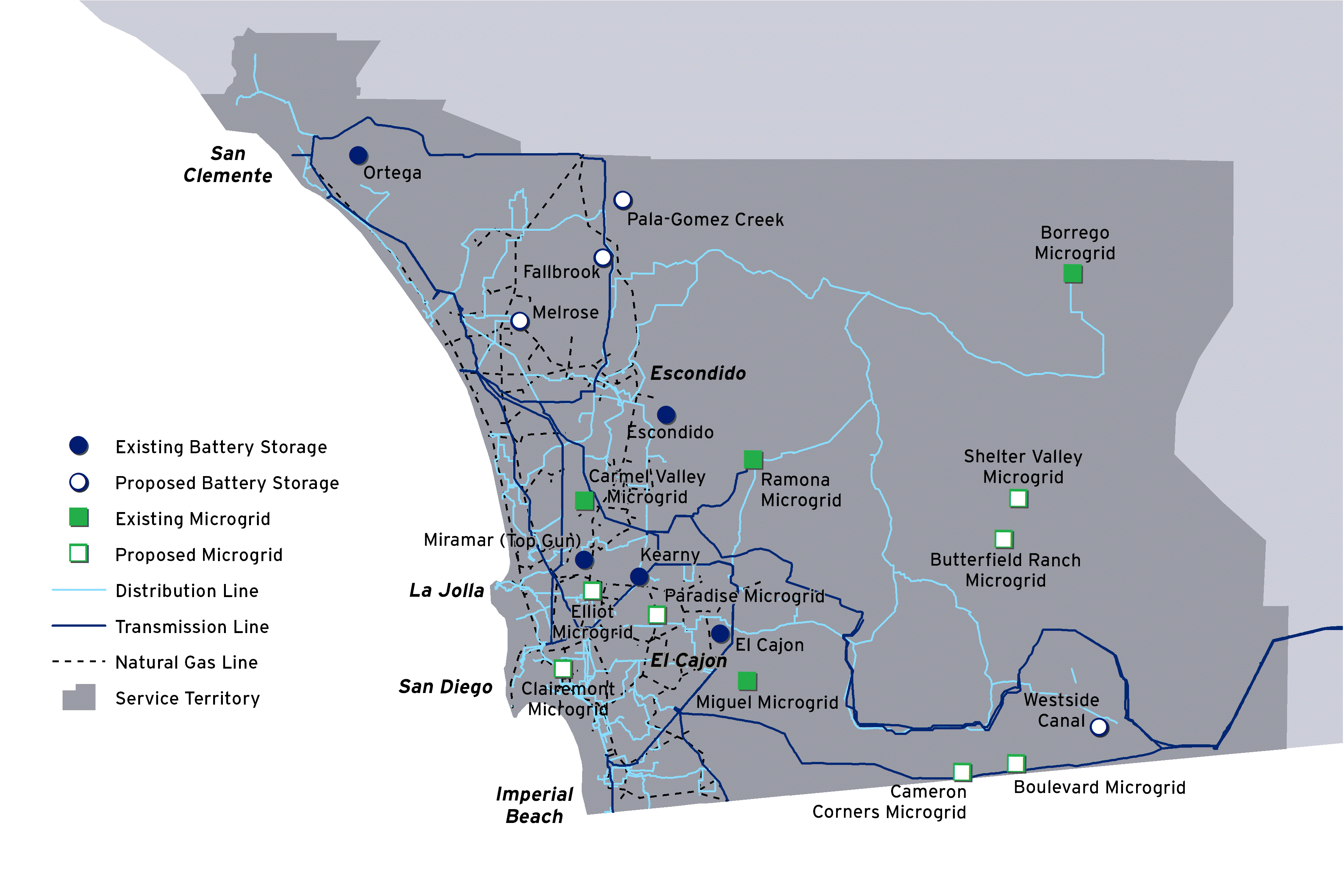
SDG&E is a regulated public utility that provides electric services to a population of, at December 31, 2022, approximately 3.6 million and natural gas services to approximately 3.3 million of that population, covering a 4,100 square mile service territory in Southern California that encompasses San Diego County and an adjacent portion of Orange County.
2022 Form 10-K | 13
SDG&E’s assets at December 31, 2022 covered the following territory:
Electric Utility Operations
Electric Transmission and Distribution System. Service to SDG&E’s customers is supported by its electric transmission and distribution system, which includes substations and overhead and underground lines. These electric facilities are primarily in the San Diego, Imperial and Orange counties of California, and in Arizona and Nevada and consisted of 1,928 miles of transmission lines, 23,928 miles of distribution lines and 157 substations at December 31, 2022. Occasionally, various areas of the service territory require expansion to accommodate customer growth and maintain reliability and safety.
SDG&E’s 500-kV Southwest Powerlink transmission line, which is shared with Arizona Public Service Company and Imperial Irrigation District, extends from Palo Verde, Arizona to San Diego, California. SDG&E’s share of the line is 1,163 MW, although it can be less under certain system conditions. SDG&E’s Sunrise Powerlink is a 500-kV transmission line constructed by SDG&E and operated by the California ISO. Both of these lines together provide SDG&E with import capability of 3,900 MW of power.
Mexico’s Baja California transmission system is connected to SDG&E’s system via two 230-kV interconnections with combined capacity of up to 600 MW in the north-to-south direction and 800 MW in the south-to-north direction. However, it can be less under certain system conditions.
Edison’s transmission system is connected to SDG&E’s system via five 230-kV transmission lines.
2022 Form 10-K | 14
Electric Resources. To meet customer demand, SDG&E supplies power from its own electric generation facilities and procures power on a long-term basis from other suppliers for resale through CPUC-approved purchased-power contracts or purchases on the spot market. SDG&E does not earn any return on commodity sales volumes. SDG&E’s electric resources at December 31, 2022 were as follows:
| SDG&E – ELECTRIC RESOURCES**(1)** | |||||||||||
| Contract | Net operating | ||||||||||
| expiration date | capacity (MW) | % of total | |||||||||
| Owned generation facilities, natural gas(2) | 1,204 | 24 | % | ||||||||
| Purchased-power contracts: | |||||||||||
| Renewables: | |||||||||||
| Wind | 2023 to 2042 | 1,236 | 24 | ||||||||
| Solar | 2030 to 2042 | 1,390 | 27 | ||||||||
| Other | 2023 and thereafter | 37 | 1 | ||||||||
| Tolling and other | 2024 to 2042 | 1,206 | 24 | ||||||||
| Total | 5,073 | 100 | % |
(1) Excludes approximately 321 MW of energy storage owned and approximately 164 MW of energy storage contracted.
(2) SDG&E owns and operates four natural gas-fired power plants, three of which are in California and one is in Nevada.
Charges under contracts with suppliers are based on the amount of energy received or are tolls based on available capacity. Tolling contracts are purchased-power contracts under which SDG&E provides natural gas to the energy supplier.
SDG&E procures natural gas under short-term contracts for its owned generation facilities and for certain tolling contracts associated with purchased-power arrangements. Purchases from various southwestern U.S. suppliers are primarily priced based on published monthly bid-week indices, which can be subject to volatility.
SDG&E participates in the Western Systems Power Pool, which includes an electric-power and transmission-rate agreement that allows access to power trading with more than 300 member utilities, power agencies, energy brokers and power marketers throughout the U.S. and Canada. Participants can make power transactions on standardized terms, including market-based rates, preapproved by the FERC. Participation in the Western Systems Power Pool is intended to assist members in managing power delivery and price risk.
Customers and Demand. SDG&E provides electric services through the generation, transmission and distribution of electricity to the following customer classes:
| SDG&E – ELECTRIC CUSTOMER METERS AND VOLUMES | |||||||||||||||||
| Customer meter count | Volumes(1) (millions of kWh) | ||||||||||||||||
| December 31, | Years ended December 31, | ||||||||||||||||
| 2022 | 2022 | 2021 | 2020 | ||||||||||||||
| Residential | 615,126 | 3,940 | 5,657 | 6,606 | |||||||||||||
| Commercial | 71,661 | 2,850 | 4,128 | 5,873 | |||||||||||||
| Industrial | 471 | 909 | 1,398 | 1,842 | |||||||||||||
| Street and highway lighting | 3,323 | 101 | 115 | 77 | |||||||||||||
| 690,581 | 7,800 | 11,298 | 14,398 | ||||||||||||||
| CCA and DA | 813,304 | 9,900 | 5,916 | 3,482 | |||||||||||||
| Total | 1,503,885 | 17,700 | 17,214 | 17,880 |
(1) Includes intercompany sales.
SDG&E currently provides procurement service for a portion of its customer load. Most customers receive procurement service from a load-serving entity other than SDG&E through programs such as CCA and DA. In such cases, SDG&E no longer procures energy for this departing load. Accordingly, SDG&E’s CCA and DA customers receive primarily transportation and distribution services from SDG&E.
CCA is only available if the customer’s local jurisdiction (city or county) offers such a program and DA is currently limited by a cap based on gigawatt hours. Several jurisdictions in SDG&E's territory have implemented CCA, including the City of San Diego in 2022. Additional jurisdictions are in the process of implementing or considering CCA.
2022 Form 10-K | 15
SDG&E’s historical energy procurement for future deliveries exceeds the needs of its remaining bundled customers as customers have elected CCA and DA services. To help achieve the goal of ratepayer indifference (as to whether or not customers’ energy is procured by SDG&E or by CCA or DA), the CPUC revised the Power Charge Indifference Adjustment framework. The purpose of the framework is to help ensure SDG&E’s procurement cost obligations are more equitably shared among customers served by SDG&E and customers now served by CCA or DA. SDG&E implemented the framework on January 1, 2019.
San Diego’s mild climate and SDG&E’s robust energy efficiency programs contribute to lower consumption by our customers. Rooftop solar installations continue to reduce residential and commercial volumes sold by SDG&E. At December 31, 2022, 2021 and 2020, the residential and commercial rooftop solar capacity in SDG&E’s territory totaled 1,864 MW, 1,620 MW and 1,423 MW, respectively.
Electricity demand is dependent on the health and expansion of the Southern California economy, prices of alternative energy products, consumer preference, environmental regulations, legislation, renewable power generation, the effectiveness of energy efficiency programs, demand-side management impact and distributed generation resources. California’s energy policy supports increased electrification, particularly electrification of vehicles, which could significantly increase sales volumes in the coming years. Other external factors, such as the price of purchased power, the use of hydroelectric power, the use of and further development of renewable energy resources and energy storage, the development of or requirements for new natural gas supply sources, demand for and supply of natural gas and general economic conditions, can also result in significant shifts in the market price of electricity, which may in turn impact demand. Electricity demand is also impacted by seasonal weather patterns (or “seasonality”), tending to increase in the summer months to meet the cooling load and in the winter months to meet the heating load.
Competition. SDG&E faces competition to serve its customer load from distributed and local power generation growth, including solar installations. In addition, the electric industry is undergoing rapid technological change, and third-party energy storage alternatives and other technologies may increasingly compete with SDG&E’s traditional transmission and distribution infrastructure in delivering electricity to consumers.
Natural Gas Utility Operations
We describe SDG&E’s natural gas utility operations below in “Sempra California’s Natural Gas Utility Operations.”
SoCalGas
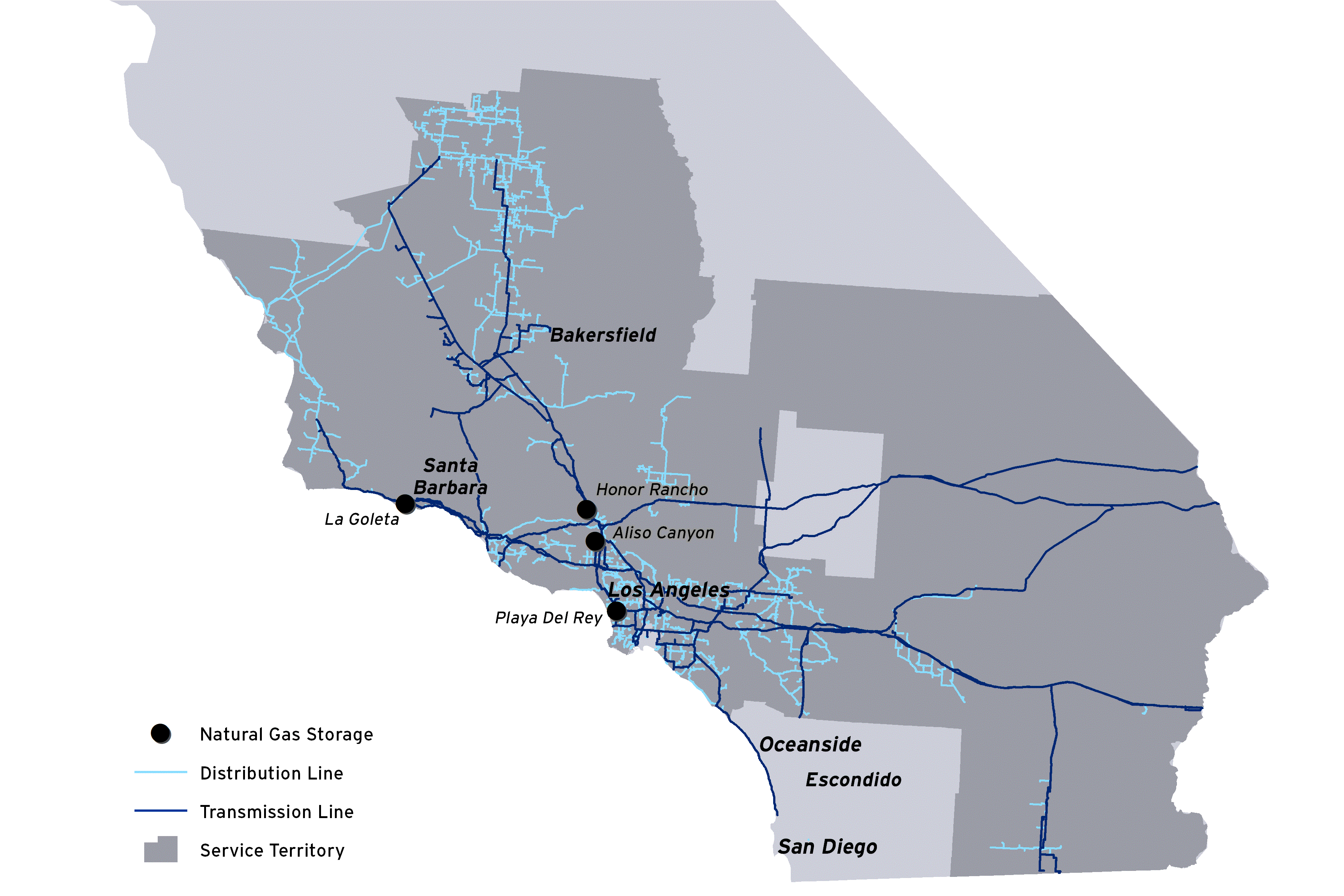
SoCalGas is a regulated public utility that owns and operates a natural gas distribution, transmission and storage system that delivers natural gas to a population of, at December 31, 2022, approximately 21.1 million, covering a 24,000 square mile service territory that encompasses Southern California and portions of central California (excluding San Diego County, the City of Long Beach and the desert area of San Bernardino County).
2022 Form 10-K | 16
SoCalGas’ assets at December 31, 2022 covered the following territory:
Natural Gas Utility Operations
We describe SoCalGas’ natural gas utility operations below in “Sempra California’s Natural Gas Utility Operations.”
Sempra California’s Natural Gas Utility Operations
Natural Gas Procurement and Transportation
At December 31, 2022, SoCalGas’ natural gas facilities included 3,046 miles of transmission and storage pipelines, 52,020 miles of distribution pipelines, 48,918 miles of service pipelines and nine transmission compressor stations, and SDG&E’s natural gas facilities consisted of 168 miles of transmission pipelines, 9,112 miles of distribution pipelines, 6,718 miles of service pipelines and one compressor station.
SoCalGas’ and SDG&E’s gas transmission pipelines interconnect with four major interstate pipeline systems: El Paso Natural Gas, Transwestern Pipeline, Kern River Pipeline Company, and Mojave Pipeline Company, allowing customers to bring gas supplies into the SoCalGas gas transmission pipeline system from the various out-of-state gas producing basins. Additionally, an interconnection with PG&E’s intrastate gas transmission pipeline system allows gas to flow into SoCalGas’ gas transmission pipeline system. SoCalGas’ gas transmission pipeline system also has an interconnect with a Mexican gas pipeline company at Otay Mesa on the California/Mexico border that allows gas to not only flow south from the gas producing basins in the southwestern U.S., but to also flow north into SoCalGas’ gas transmission pipeline system from LNG-sourced supplies in Mexico. There are also several in-state gas interconnections allowing for delivery of California-produced gas, including a number of direct connections from renewable natural gas producers.
SoCalGas purchases natural gas under short-term and long-term contracts and on the spot market for SDG&E’s and SoCalGas’ core customers. SoCalGas purchases natural gas from various sources, including from Canada, the U.S. Rockies and the southwestern regions of the U.S. Purchases of natural gas are primarily priced based on published monthly bid week indices,
2022 Form 10-K | 17
which can be subject to volatility. The cost of purchases of natural gas for SDG&E’s and SoCalGas’ core customers is billed to those customers without markup.
To support the delivery of natural gas supplies to its distribution system and to meet the needs of customers, SoCalGas has firm and variable interstate pipeline capacity contracts that require the payment of fixed and variable tariffed and negotiated reservation charges to reserve firm transportation rights. Energy companies, primarily El Paso Natural Gas Company, Transwestern Pipeline Company and Kern River Gas Transmission Company, provide transportation services into SoCalGas’ intrastate transmission system for supplies purchased by SoCalGas.
Natural Gas Storage
SoCalGas owns four natural gas storage facilities with a combined working gas capacity of 137 Bcf and 126 injection, withdrawal and observation wells that provide natural gas storage service. SoCalGas’ and SDG&E’s core customers, along with certain third-party market participants, are allocated a portion of SoCalGas’ storage capacity. SoCalGas uses the remaining storage capacity for load balancing services for all customers. Natural gas withdrawn from storage is important to help maintain service reliability during peak demand periods, including consumer heating needs in the winter, as well as peak electric generation needs in the summer. The Aliso Canyon natural gas storage facility has a storage capacity of 86 Bcf and, subject to the CPUC limitations described below, represents 63% of SoCalGas’ natural gas storage capacity. SoCalGas discovered a natural gas leak at one of its wells at the Aliso Canyon natural gas storage facility in October 2015 and permanently sealed the well in February 2016. SoCalGas was subsequently authorized to make limited withdrawals and injections of natural gas at the Aliso Canyon natural gas storage facility and, on an interim basis, has been directed by the CPUC to maintain up to 41.16 Bcf of working gas at the facility to help achieve reliability for the region as determined by the CPUC. To help maintain system reliability, the CPUC issued a protocol authorizing withdrawals of natural gas from the facility if available gas supply reaches defined thresholds for SoCalGas’ system, or public health and safety is at risk, as determined by the protocol. We discuss the Leak in Note 16 of the Notes to Consolidated Financial Statements, in “Part I – Item 1A. Risk Factors” and in “Part II – Item 7. MD&A – Capital Resources and Liquidity – SoCalGas.”
Customers and Demand
SoCalGas and SDG&E sell, distribute and transport natural gas. SoCalGas purchases and stores natural gas for its core customers in its territory and SDG&E’s territory on a combined portfolio basis. SoCalGas also offers natural gas transportation and storage services for others.
| SEMPRA CALIFORNIA – NATURAL GAS CUSTOMER METERS AND VOLUMES | |||||||||||||||||
| Customer meter count | Volumes (Bcf)(1) | ||||||||||||||||
| December 31, | Years ended December 31, | ||||||||||||||||
| 2022 | 2022 | 2021 | 2020 | ||||||||||||||
| SDG&E: | |||||||||||||||||
| Residential | 878,220 | ||||||||||||||||
| Commercial | 29,180 | ||||||||||||||||
| Electric generation and transportation | 2,540 | ||||||||||||||||
| Natural gas sales | 45 | 46 | 43 | ||||||||||||||
| Transportation | 39 | 38 | 40 | ||||||||||||||
| Total | 909,940 | 84 | 84 | 83 | |||||||||||||
| SoCalGas: | |||||||||||||||||
| Residential | 5,857,280 | ||||||||||||||||
| Commercial | 248,800 | ||||||||||||||||
| Industrial | 24,390 | ||||||||||||||||
| Electric generation and wholesale | 40 | ||||||||||||||||
| Natural gas sales | 304 | 314 | 312 | ||||||||||||||
| Transportation | 586 | 568 | 572 | ||||||||||||||
| Total | 6,130,510 | 890 | 882 | 884 |
(1) Includes intercompany sales.
For regulatory purposes, end-use customers are classified as either core or noncore customers. Core customers are primarily residential and small commercial and industrial customers.
2022 Form 10-K | 18
Most core customers purchase natural gas directly from SoCalGas or SDG&E. While core customers are permitted to purchase their natural gas supplies from producers, marketers or brokers, SoCalGas and SDG&E are obligated to maintain adequate delivery capacity to serve the requirements of all their core customers.
Noncore customers at SoCalGas consist primarily of electric generation, wholesale, and large commercial and industrial customers. A portion of SoCalGas’ noncore customers are non-end-users, which include wholesale customers consisting primarily of other utilities, including SDG&E, or municipally owned natural gas distribution systems. Noncore customers at SDG&E consist primarily of electric generation and large commercial customers.
Noncore customers are responsible for procuring their natural gas requirements, as the regulatory framework does not allow SoCalGas and SDG&E to recover the cost of natural gas procured and delivered to noncore customers.
Natural gas demand largely depends on the health and expansion of the Southern California economy, prices of alternative energy products, consumer preference, environmental regulations, legislation, California’s energy policy supporting increased electrification and renewable power generation, and the effectiveness of energy efficiency programs. Other external factors such as weather, the price of, demand for, and supply sources of electricity, the use of and further development of renewable energy resources and energy storage, development of or requirements for new natural gas supply sources, demand for natural gas outside California, storage levels, transport capacity and availability of supply into California and general economic conditions can also result in significant shifts in the market price of natural gas, which may in turn impact demand.
One of the larger sources for natural gas demand is electric generation. Natural gas-fired electric generation within Southern California (and demand for natural gas supplied to such plants) competes with electric power generated throughout the western U.S. Natural gas transported for electric generating plant customers may be affected by the overall demand for electricity, growth in self-generation from rooftop solar, the addition of more efficient gas technologies, new energy efficiency initiatives, and the degree to which regulatory changes in electric transmission infrastructure investment divert electric generation from SoCalGas’ and SDG&E’s service areas. The demand for natural gas may also fluctuate due to volatility in the demand for electricity due to seasonality, weather conditions and other impacts, and the availability of competing supplies of electricity, such as hydroelectric generation and other renewable energy sources. Given the significant quantity of natural gas-fired generation, we believe natural gas is a dispatchable fuel that can continue to help provide electric reliability in our California service territories.
The natural gas distribution business is subject to seasonality, and cash provided by operating activities generally is greater during and immediately following the winter heating months. As is prevalent in the industry, but subject to current regulatory limitations, SoCalGas typically injects natural gas into storage during the months of April through October, and usually withdraws natural gas from storage during the months of November through March.
Sempra Texas Utilities
Sempra Texas Utilities is comprised of our equity method investments in Oncor Holdings and Sharyland Holdings. Oncor Holdings is an indirect, wholly owned entity of Sempra that owns an 80.25% interest in Oncor. TTI owns the remaining 19.75% interest in Oncor. Sempra owns an indirect, 50% interest in Sharyland Holdings, which owns a 100% interest in Sharyland Utilities.
2022 Form 10-K | 19
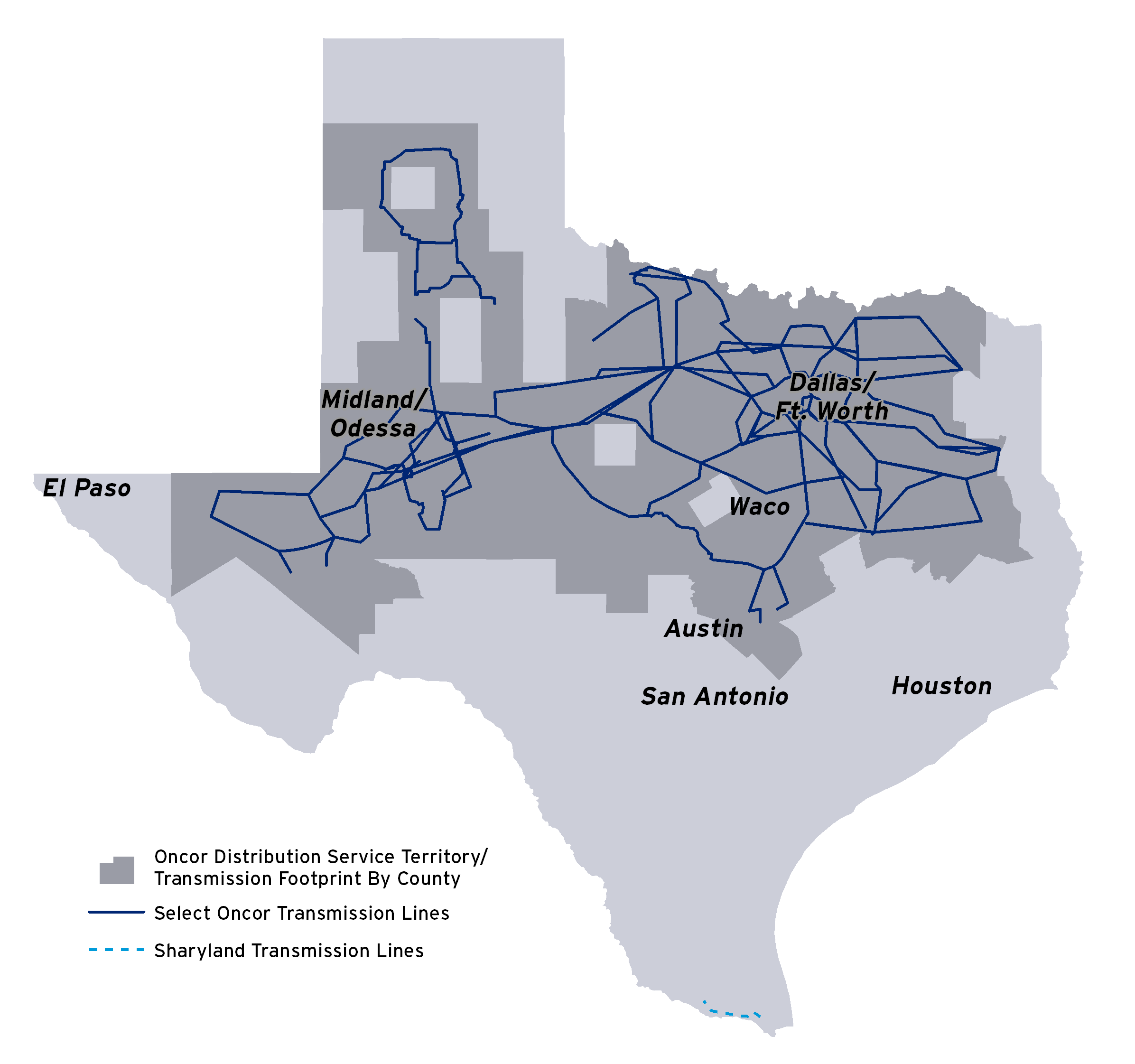
Sempra Texas Utilities’ assets at December 31, 2022 covered the following territory:
Oncor
Oncor is a regulated electricity transmission and distribution utility that operates in the north-central, eastern, western and panhandle regions of Texas. Oncor delivers electricity to end-use consumers through its electrical systems, and also provides transmission grid connections to merchant generation facilities and interconnections to other transmission grids in Texas. Oncor’s transmission and distribution assets are located in over 120 counties and more than 400 incorporated municipalities, including the cities of Dallas and Fort Worth and surrounding suburbs, as well as Waco, Wichita Falls, Odessa, Midland, Tyler, Temple, Killeen and Round Rock, among others. Most of Oncor’s power lines have been constructed over lands of others pursuant to easements or along public highways, streets and rights-of-way pursuant to permits, public utility easements, franchise or other agreements or as otherwise permitted by law.
At December 31, 2022, Oncor had 4,561 employees, including 764 employees covered under a collective bargaining agreement.
Certain ring-fencing measures, governance mechanisms and commitments, which we describe in “Part I – Item 1A. Risk Factors,” are in effect and are intended to enhance Oncor Holdings’ and Oncor’s separateness from their owners and to mitigate the risk that these entities would be negatively impacted by the bankruptcy of, or other adverse financial developments affecting, their owners. Sempra does not control Oncor Holdings or Oncor, and the ring-fencing measures, governance mechanisms and commitments limit our ability to direct the management, policies and operations of Oncor Holdings and Oncor, including the deployment or disposition of their assets, declarations of dividends, strategic planning and other important corporate issues and actions, including limited representation on the Oncor Holdings and Oncor boards of directors. Because Oncor Holdings and Oncor are managed independently (i.e., ring-fenced), we account for our 100% ownership interest in Oncor Holdings as an equity method investment.
Electricity Transmission. Oncor’s electricity transmission business is responsible for the safe and reliable operations of its transmission network and substations. These responsibilities consist of the construction, maintenance and security of transmission
2022 Form 10-K | 20
facilities and substations and the monitoring, controlling and dispatching of high-voltage electricity over its transmission facilities in coordination with ERCOT, which we discuss below in “Regulation – Utility Regulation – ERCOT Market.”
At December 31, 2022, Oncor’s transmission system included approximately 18,268 circuit miles of transmission lines, a total of 1,207 transmission and distribution substations, and interconnection to 146 third-party generation facilities totaling 48,430 MW.
Transmission revenues are provided under tariffs approved by either the PUCT or, to a small degree related to limited interconnection to other markets, the FERC. Network transmission revenues compensate Oncor for delivery of electricity over transmission facilities operating at 60 kV and above. Other services offered by Oncor through its transmission business include system impact studies, facilities studies, transformation service and maintenance of transformer equipment, substations and transmission lines owned by other parties.
Electricity Distribution. Oncor’s electricity distribution business is responsible for the overall safe and reliable operation of distribution facilities, including electricity delivery, power quality, security and system reliability. These responsibilities consist of the ownership, management, construction, maintenance and operation of the electricity distribution system within its certificated service area. Oncor’s distribution system receives electricity from the transmission system through substations and distributes electricity to end-users and wholesale customers through 3,681 distribution feeders.
Oncor’s distribution system included nearly 3.9 million points of delivery at December 31, 2022 and consisted of 123,500 miles of overhead and underground lines.
Distribution revenues from residential and small business users are based on actual monthly consumption (kWh) and distribution revenues from large commercial and industrial users are based on, depending on size and annual load factor, either actual monthly demand (kW) or the greater of actual monthly demand (kW) or 80% of peak monthly demand during the prior eleven months.
Customers and Demand. Oncor operates the largest transmission and distribution system in Texas based on the number of end-use customers and miles of transmission and distribution lines, delivering electricity to nearly 3.9 million homes and businesses, operating more than 141,000 miles of transmission and distribution lines as of December 31, 2022 in a territory with an estimated population of approximately 13 million. The consumers of the electricity Oncor delivers (other than ultimate end-use customers served by an electric cooperative or a municipally owned utility) are free to choose their electricity supplier from retail electric providers who compete for their business. Oncor is not a seller of electricity, nor does it purchase electricity for resale. Rather, Oncor provides transmission services to its electricity distribution business as well as non-affiliated electricity distribution companies, cooperatives and municipally owned utilities. Oncor also provides distribution services, consisting of retail delivery services to retail electric providers that sell electricity to end-use customers, as well as wholesale delivery services to cooperatives and municipally owned utilities. At December 31, 2022, Oncor’s distribution business customers primarily consisted of over 100 retail electric providers that sell the electricity it distributes to consumers in its certificated service areas.
Oncor’s revenues and results of operations are subject to seasonality, weather conditions and other electricity usage drivers, with revenues being highest in the summer.
Competition. Oncor operates in certificated areas designated by the PUCT. The majority of Oncor’s service territory is single certificated, with Oncor as the only certificated electric transmission and distribution provider. However, in multi-certificated areas of Texas, Oncor competes with certain other utilities and rural electric cooperatives for the right to serve end-use customers. In addition, the electric industry is undergoing rapid technological change, and third-party distributed energy resources and other technologies may increasingly compete with Oncor’s traditional transmission and distribution infrastructure in delivering electricity to consumers.
Sharyland Utilities
Sharyland Utilities is a regulated electric transmission utility that owns and operates, at December 31, 2022, approximately 64 miles of electric transmission lines in south Texas, including a direct current line connecting Mexico and assets in McAllen, Texas. Sharyland Utilities is responsible for providing safe, reliable and efficient transmission and substation services and investing to support infrastructure needs in its service territory, which we discuss below in “Regulation – Utility Regulation – ERCOT Market.” Transmission revenues are provided under tariffs approved by the PUCT.
Sempra Infrastructure
Our Sempra Infrastructure segment includes the operating companies of our subsidiary, SI Partners, as well as a holding company and certain services companies. SI Partners is included within our Sempra Infrastructure reportable segment, but is not the same in its entirety as the reportable segment. Sempra Infrastructure develops, builds, operates and invests in energy infrastructure to help enable the energy transition in North American markets and globally.
2022 Form 10-K | 21
Sempra Infrastructure owned a 70% interest in SI Partners at December 31, 2022, following its sale of a 20% NCI in SI Partners to KKR in October 2021 and sale of a 10% NCI in SI Partners to ADIA in June 2022. SI Partners has two authorized classes of limited partnership interests designated as “Class A Units” (which are common voting units) and “Sole Risk Interests” (which are only owned by Sempra, are non-voting and are not considered in the calculation of each limited partner’s respective ownership interests, subject to certain restrictions). We discuss KKR’s and ADIA’s purchases of NCI in SI Partners, as well as SI Partners’ limited partnership agreement that governs the partners’ respective rights and obligations in respect of their ownership interests in SI Partners in Note 1 of the Notes to Consolidated Financial Statements.
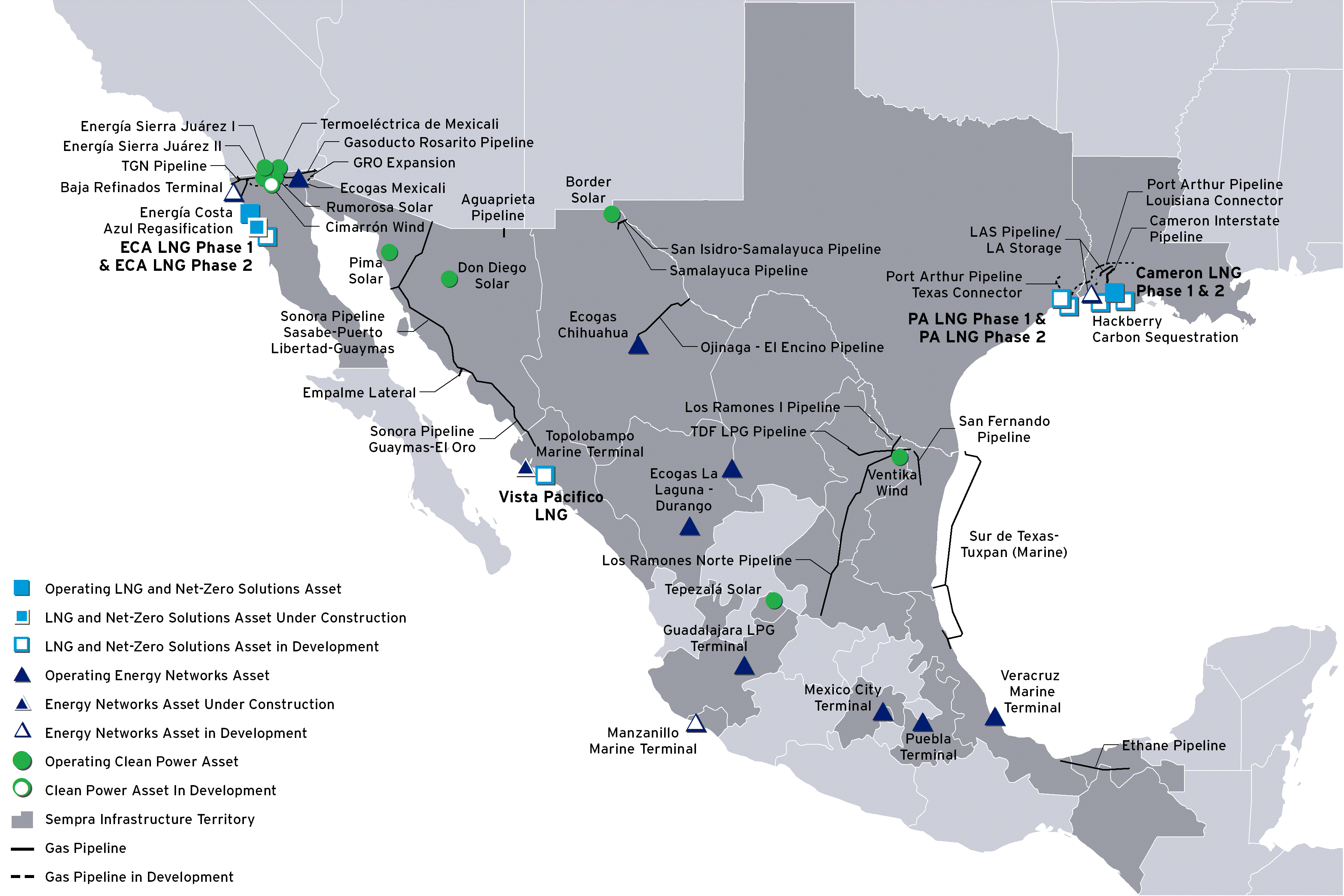
SI Partners held a 100% ownership interest in Sempra LNG Holding, LP and a 99.9% ownership interest in IEnova at December 31, 2022, which consolidates Sempra’s ownership and management of its non-utility, energy infrastructure assets in North America under a single platform. These assets include LNG and natural gas infrastructure in the U.S. and Mexico and renewable energy, LPG and refined products infrastructure in Mexico, which are managed through three business lines: LNG and Net-Zero Solutions, Energy Networks and Clean Power.
At December 31, 2022, Sempra Infrastructure owned or held interests in the following assets:
LNG and Net-Zero Solutions
Sempra Infrastructure’s LNG and Net-Zero Solutions business line is comprised of a natural gas liquefaction portfolio in operation, construction or development, and is focused on energy diversification and the clean energy transition in markets that our customers serve.
Cameron LNG Phase 1 Facility. SI Partners owns 50.2% of Cameron LNG JV, while an affiliate of TotalEnergies SE, an affiliate of Mitsui & Co., Ltd., and Japan LNG Investment, LLC (a company jointly owned by Mitsubishi Corporation and Nippon Yusen Kabushiki Kaisha) each own 16.6% of Cameron LNG JV. We account for our ownership interest in Cameron LNG JV under the equity method. No single owner controls or can unilaterally direct significant activities of Cameron LNG JV.
Cameron LNG JV owns and operates the Cameron LNG Phase 1 facility, a natural gas liquefaction, export, regasification and import facility with three natural gas pre-treatment, processing and liquefaction trains. The Cameron LNG Phase 1 facility is located in Hackberry, Louisiana, along the Calcasieu Ship Channel, which handles significant industrial shipping, including large
2022 Form 10-K | 22
oil and LNG tankers, and is well positioned to supply the Atlantic and Pacific markets. The three liquefaction trains have a combined nameplate capacity of 13.9 Mtpa of LNG with an export capacity of 12 Mtpa of LNG, or approximately 1.7 Bcf of natural gas per day. The Cameron LNG Phase 1 facility has 20-year liquefaction and regasification tolling capacity agreements in place with affiliates of TotalEnergies SE, Mitsubishi Corporation and Mitsui & Co., Ltd., which collectively subscribe for the full nameplate capacity of the three trains at the facility.
ECA Regas Facility. Sempra Infrastructure owns and operates the ECA Regas Facility in Baja California, Mexico, which is capable of processing one Bcf of natural gas per day and has a storage capacity of 320,000 cubic meters in two tanks of 160,000 cubic meters each.
The ECA Regas Facility generates revenues from firm storage service fees under firm storage service agreements and nitrogen injection service agreements with Shell Mexico and Gazprom that expire in 2028, which permit them to collectively use 50% of the terminal’s capacity, with the remaining 50% of the capacity available for Sempra Infrastructure’s use. The land on which the ECA Regas Facility and the ECA LNG liquefaction projects under construction and in development are expected to be situated, as well as land adjacent to those properties, are the subject of litigation. We discuss the ECA Regas Facility arbitration and land litigation in Note 16 of the Notes to Consolidated Financial Statements and “Part I – Item 1A. Risk Factors.”
Sempra Infrastructure uses its 50% capacity at the ECA Regas Facility to satisfy its obligation under an LNG SPA with Tangguh PSC through 2029, which we discuss below, and ECA LNG Phase 1 will be the sole user of this capacity thereafter.
Asset and Supply Optimization. Sempra Infrastructure has an LNG SPA through 2029 with Tangguh PSC for the supply of the equivalent of 500 MMcf of natural gas per day at a price based on the SoCal Border index for natural gas. The LNG SPA allows Tangguh PSC to divert certain LNG volumes to other global markets in exchange for payments of diversion fees. Sempra Infrastructure may also enter into short-term supply agreements to purchase LNG to be received, stored and regasified at the ECA Regas Facility for sale to other parties. Sempra Infrastructure uses the natural gas produced from this LNG to supply a contract for the sale of natural gas to the CFE at prices that are based on the SoCal Border index. If LNG volumes received from Tangguh PSC are not sufficient to satisfy the commitment to the CFE, Sempra Infrastructure may purchase natural gas in the market to satisfy such commitment.
Sempra Infrastructure purchases, transports and sells natural gas, and has customers in both the U.S. and Mexico, including the CFE. Sempra Infrastructure may also purchase natural gas from other Sempra affiliates. Natural gas purchases and transportation arrangements are substantially backed by long-term, U.S. dollar-based contracts for the sale of natural gas to third parties (both U.S. sourced and derived from imported LNG), LNG offtake and natural gas storage and pipeline capacity.
ECA LNG Phase 1 Project. SI Partners owns an 83.4% interest in ECA LNG Phase 1, and an affiliate of TotalEnergies SE owns the remaining 16.6% interest. ECA LNG Phase 1 is constructing a one-train natural gas liquefaction facility at the site of Sempra Infrastructure’s existing ECA Regas Facility with a nameplate capacity of 3.25 Mtpa and an initial offtake capacity of 2.5 Mtpa. We expect the ECA LNG Phase 1 project to commence commercial operations in the summer of 2025.
ECA LNG Phase 1 has definitive 20-year SPAs with an affiliate of TotalEnergies SE for approximately 1.7 Mtpa of LNG and Mitsui & Co., Ltd. for approximately 0.8 Mtpa of LNG.
The construction of the ECA LNG Phase 1 project is subject to numerous risks and uncertainties. For a discussion of these risks and uncertainties, see “Part I – Item 1A. Risk Factors” and “Part II – Item 7. MD&A – Capital Resources and Liquidity – Sempra Infrastructure.”
Additional Potential LNG and Net-Zero Solutions’ Projects. Sempra Infrastructure is evaluating the following development opportunities:
▪Cameron LNG Phase 2 project, an expansion of the Cameron LNG Phase 1 facility
▪ECA LNG Phase 2 project, a large-scale natural gas liquefaction project to be located at the site of Sempra Infrastructure’s existing ECA Regas Facility in Baja California, Mexico
▪PA LNG projects, a large-scale natural gas liquefaction project, to be developed in two phases, and associated infrastructure on a greenfield site in the vicinity of Port Arthur, Texas located along the Sabine-Neches waterway
▪Vista Pacifico LNG project, a mid-scale natural gas liquefaction project and associated infrastructure in the vicinity of Topolobampo in Sinaloa, Mexico
▪Hackberry Carbon Sequestration project, a carbon capture and sequestration project that is intended to reduce emissions at the Cameron LNG Phase 1 facility and proposed Cameron LNG Phase 2 project
2022 Form 10-K | 23
No final investment decision has been reached for any of these potential projects. The development of these projects is subject to numerous risks and uncertainties. For a discussion of these proposed projects and their risks, see “Part I – Item 1A. Risk Factors” and “Part II – Item 7. MD&A – Capital Resources and Liquidity – Sempra Infrastructure.”
Demand and Competition. North America benefits from numerous competitive advantages as a potential supplier of LNG to world markets, including the following:
▪high levels of developed and undeveloped natural gas resources, including unconventional natural gas and tight oil relative to domestic consumption levels
▪flexible and elastic markets in gas and oil drilling and production resulting in efficient unit costs of gas production
▪availability of extensive pre-existing natural gas pipeline transmission systems and natural gas storage capacity with proximity to production locations
Brownfield liquefaction projects also benefit from the particular competitive advantage of the proximity of pre-existing infrastructure, such as LNG tankage and berths.
Global LNG competition may limit North American LNG exports, as international liquefaction projects attempt to match North American LNG production costs and customer contractual rights such as volume and destination flexibility. It is expected that North American LNG exports will increase competition for current and future global natural gas demand, and thereby facilitate additional growth of a global commodity market for natural gas and LNG.
Cameron LNG JV co-owners and customers compete globally to market and sell LNG to end users, including gas and electric utilities located in LNG-importing countries around the world. By providing liquefaction services, Cameron LNG JV and future LNG export development projects compete indirectly with liquefaction projects currently operating and those under development in the global LNG market. In addition to the U.S., these competitors are located in the Middle East, Southeast Asia, Africa, South America, Australia and Europe. The competitive environment shifted in favor of North American LNG development projects in 2022 in the wake of the war in Ukraine and the resulting focus by European markets on alternative supplies. This shift in demand underscores the attractiveness of long-term contracts from North American LNG projects.
The LNG regasification business is impacted by global LNG market prices. High LNG prices in markets outside the market in which Sempra Infrastructure’s ECA Regas Facility operates have resulted and could continue to result in lower-than-expected deliveries of LNG cargoes to the ECA Regas Facility, which could increase costs if Sempra Infrastructure is instead required to obtain LNG in the open market at prevailing prices. Any inability to obtain expected LNG cargoes could also impact Sempra Infrastructure’s ability to maintain the minimum level of LNG required to keep the ECA Regas Facility in operation at the proper temperature. Prices in international LNG markets through which Sempra Infrastructure must purchase natural gas to meet its contractual obligations to deliver natural gas to customers may also affect how Sempra Infrastructure optimizes its assets and supply, which could have an adverse impact on its earnings.
Energy Networks
Sempra Infrastructure’s Energy Networks business line is comprised of a natural gas transportation and distribution network.
Cross-Border Interconnections and In-Country Pipelines. Sempra Infrastructure develops, builds, operates and invests in systems for the receipt, transportation, compression and delivery of natural gas and ethane. At December 31, 2022, these systems consisted of 1,850 miles of natural gas transmission pipelines plus 124 miles under construction, 16 natural gas compression stations plus one under construction, and 139 miles of ethane pipelines in Mexico. The design capacity of these pipeline assets is over 16,400 MMcf per day of natural gas, 204 MMcf per day of ethane gas and 106,000 barrels per day of ethane liquid. Capacity on Sempra Infrastructure’s pipelines and related assets is substantially contracted under long-term, U.S. dollar-based agreements with major industry participants such as the CFE, Centro Nacional de Control de Gas, PEMEX, Gazprom and other similar counterparties. Some of these pipeline assets are affected by disputes related to the property on which the pipelines are located, which we discuss in Note 16 of the Notes to Consolidated Financial Statements and “Part I – Item 1A. Risk Factors.”
Sempra Infrastructure owns a 40-mile natural gas pipeline in south Louisiana, the Cameron Interstate Pipeline, which links the Cameron LNG Phase 1 facility in Cameron Parish in Louisiana, to five interstate pipelines that offer access to major feed gas supply basins in Texas and the northeast, midcontinent and southeast regions of the U.S. The majority of transportation capacity on the Cameron Interstate Pipeline is under long-term transportation service agreements with shippers for delivery to the Cameron LNG Phase 1 facility.
Natural Gas Distribution. Sempra Infrastructure’s natural gas distribution regulated utility, Ecogas, operates in three separate distribution zones in Mexicali, Chihuahua and La Laguna-Durango, Mexico. At December 31, 2022, Ecogas had approximately 2,952 miles of distribution pipeline, and approximately 150,000 customer meters serving more than 525,000 residential,
2022 Form 10-K | 24
commercial and industrial consumers with sales volume of approximately 10 MMcf per day in 2022. Ecogas relies on supply and transportation services from Sempra Infrastructure, SoCalGas and PEMEX for the natural gas it distributes to its customers.
LPG Storage and Associated Systems. Sempra Infrastructure owns and operates the TDF, S. de R. L. de C. V. (TDF) pipeline system and the Guadalajara LPG terminal. At December 31, 2022, the TDF pipeline system consisted of approximately 118 miles of 12-inch diameter LPG pipeline with a design capacity of 34,000 barrels per day and associated storage and dispatch facilities. The TDF pipeline system runs from PEMEX’s Burgos facility in the Mexican State of Tamaulipas, Mexico to Sempra Infrastructure’s delivery facility near the city of Monterrey, Mexico and is fully contracted to PEMEX on a firm basis through 2027. Sempra Infrastructure’s Guadalajara LPG terminal is an 80,000-barrel LPG storage facility near Guadalajara, Mexico, with associated loading and dispatch facilities, and serves the LPG needs of Guadalajara. The Guadalajara LPG terminal is fully contracted to PEMEX on a firm basis through 2028. Both contracts are U.S. dollar-denominated or referenced and are periodically adjusted for inflation.
Refined Products Storage. Sempra Infrastructure’s refined products storage business develops, constructs and operates systems for the receipt, storage and delivery of refined products, principally gasoline, diesel and jet fuel, throughout the Mexican states of Baja California, Colima, Puebla, Sinaloa, Veracruz and Valle de México for private companies, with a combined storage capacity of 4.6 million barrels fully operating or under construction/commissioning as of December 31, 2022. The inland terminal in the vicinity of Puebla reached commercial operations in October 2022. Construction of the Topolobampo marine terminal was substantially completed in May 2022, at which time commissioning activities commenced. Subject to the receipt of pending permits, we expect the Topolobampo terminal will commence commercial operations in the first half of 2023. Our customer contracts for our refined products storage business are structured as long-term, U.S. dollar-denominated, firm capacity storage agreements with counterparties including Chevron Corporation, Marathon Petroleum Corporation and Valero Energy Corporation. The contracted rate under these contracts is independent from each terminal’s regulated rate as determined by the CRE.
Demand and Competition. Ecogas faces competition from other distributors of natural gas in each of its three distribution zones in Mexicali, Chihuahua and La Laguna-Durango, Mexico as other distributors of natural gas build or consider building natural gas distribution systems. Sempra Infrastructure’s pipeline and storage facilities businesses compete with other regulated and unregulated pipeline and storage facilities. They compete primarily on the basis of price (in terms of storage and transportation fees), available capacity and interconnections to downstream markets. The overall demand for natural gas distribution services increases during the winter months, while the overall demand for power increases during the summer months.
Clean Power
Sempra Infrastructure’s Clean Power business line consists of a renewable energy infrastructure portfolio and a natural gas-fired power plant in Mexico.
Renewable Power Generation. Sempra Infrastructure develops, builds, invests in and operates renewable energy generation facilities that have long-term PPAs to sell the electricity they generate to their customers, which are generally load serving entities, as well as industrial and other customers. Load serving entities sell electric service to their end-users and wholesale customers upon receipt of power delivery from these energy generation facilities, while industrial and other customers consume the electricity to run their facilities. At December 31, 2022, Sempra Infrastructure had a fully contracted, total nameplate capacity of 1,044 MW related to its fully operating wind and solar power generation facilities. Some of these facilities are impacted by regulatory actions by the Mexican government and related litigation, which we discuss in Note 16 of the Notes to Consolidated Financial Statements, “Part I – Item 1A. Risk Factors” and “Part II – Item 7. MD&A – Capital Resources and Liquidity – Sempra Infrastructure.”
2022 Form 10-K | 25
| SEMPRA INFRASTRUCTURE – RENEWABLE POWER GENERATION | |||||||||||
| Location | Contract expiration date | Nameplate capacity (MW) | |||||||||
| Wind power generation facilities: | |||||||||||
| ESJ – first phase | Tecate, Baja California | 2035 | 155 | ||||||||
| ESJ – second phase(1) | Tecate, Baja California | 2042 | 108 | ||||||||
| Ventika | Nuevo León, Mexico | 2036 | 252 | ||||||||
| Solar power generation facilities: | |||||||||||
| Border Solar | Ciudad Juarez, Chihuahua | 2032 and 2037 | 150 | ||||||||
| Don Diego Solar | Benjamin Hill, Sonora | 2034 and 2037 | 125 | ||||||||
| Pima Solar | Caborca, Sonora | 2038 | 110 | ||||||||
| Rumorosa Solar | Tecate, Baja California | 2034 | 44 | ||||||||
| Tepezalá Solar | Aguascalientes | 2034 | 100 | ||||||||
| Total | 1,044 |
(1) Commenced commercial operations in January 2022.
Natural Gas-Fired Generation. Sempra Infrastructure owns and operates the TdM power plant in the vicinity of Mexicali, Baja California, adjacent to the Mexico-U.S. border. TdM is a 625-MW natural gas-fired, combined-cycle power plant that is connected to our Gasoducto Rosarito pipeline system, which enables it to receive regasified LNG from the ECA Regas Facility as well as continental gas supplied from the U.S. on the North Baja pipeline. TdM generates revenue from selling electricity and resource adequacy to the California ISO and to governmental, public utility and wholesale power marketing entities.
Demand and Competition. Sempra Infrastructure competes with Mexican and foreign companies for new energy infrastructure projects in Mexico. Some of its competitors (including public or state-operated companies and their affiliates) may have better access to capital and greater financial and other resources, which could give them a competitive advantage for such projects.
Generation from Sempra Infrastructure’s renewable energy assets is susceptible to fluctuations in naturally occurring conditions such as wind, inclement weather and hours of sunlight. Because Sempra Infrastructure sells power that it generates at its ESJ wind power generation facility into California, Sempra Infrastructure’s future performance and the demand for renewable energy may be impacted by U.S. state mandated requirements to deliver a portion of total energy load from renewable energy sources. The rules governing these requirements in California are generally known as the RPS Program. In California, certification of a generation project by the CEC as an ERR allows the purchase of output from such generation facility to be counted towards fulfillment of the RPS Program requirements, if such purchase meets the provisions of SB X1-2, the California Renewable Energy Resources Act. The RPS Program may affect the demand for output from renewable energy projects developed by Sempra Infrastructure, particularly the demand from California’s utilities. The first phase of ESJ, a wind power generation facility that delivers energy into California, has been certified by the CEC and is in compliance with the RPS Program as of December 31, 2022. Sempra Infrastructure is pursuing ERR certification for the second phase of ESJ.
TdM competes daily with other generating plants that supply power into the California electricity market. Sempra Infrastructure manages commodity price risk at TdM by using a mix of day ahead sales of energy, energy spreads hedging, ancillary services, and short-term to medium-term capacity sales.
Discontinued Operations
We completed the sales of our equity interests in our Peruvian businesses in April 2020 and our Chilean businesses in June 2020. These South American businesses included our former 100% interest in Chilquinta Energía (an electric distribution utility in Chile), our former 83.6% interest in Luz del Sur (an electric distribution utility in Peru) and our former interests in two energy-services companies, Tecnored and Tecsur, which provide electric construction and infrastructure services to Chilquinta Energía and Luz del Sur, respectively, as well as third parties. These businesses and certain activities associated with these businesses are presented as discontinued operations in this report. We provide further information about discontinued operations in Note 5 of the Notes to Consolidated Financial Statements.
REGULATION
We discuss the material effects of compliance with all government regulations, including environmental regulations, on our capital expenditures, earnings and competitive position in “Part II – Item 7. MD&A” and Note 16 of the Notes to Consolidated Financial Statements.
2022 Form 10-K | 26
Utility Regulation
California
SDG&E and SoCalGas are principally regulated at the state level by the CPUC, CEC and CARB.
The CPUC:
▪consists of five commissioners appointed by the Governor of California for staggered, six-year terms;
▪regulates, among other things, SDG&E’s and SoCalGas’ customer rates and conditions of service, sales of securities, rates of return, capital structure, rates of depreciation, and long-term resource procurement, except as described below in “U.S. Federal;”
▪has jurisdiction over the proposed construction of major new electric generation, transmission and distribution, and natural gas storage, transmission and distribution facilities in California;
▪conducts reviews and audits of utility performance and compliance with regulatory guidelines and conducts investigations related to various matters, such as safety, reliability and planning, deregulation, competition and the environment; and
▪regulates the interactions and transactions of SDG&E and SoCalGas with Sempra and its other affiliates.
The CPUC also oversees and regulates other energy-related products and services, including solar and wind energy, bioenergy, alternative energy storage and other forms of renewable energy. In addition, the CPUC’s safety and enforcement role includes inspections, investigations and penalty and citation processes for safety and other violations.
The CEC publishes electric demand forecasts for the state and specific service territories. Based on these forecasts, the CEC:
▪determines the need for additional energy sources and conservation programs;
▪sponsors alternative-energy research and development projects;
▪promotes energy conservation programs to reduce demand for natural gas and electricity within California;
▪maintains a statewide plan of action in case of energy shortages; and
▪certifies power-plant sites and related facilities within California.
The CEC conducts a 20-year forecast of available supplies and prices for every market sector that consumes natural gas in California. This forecast includes resource evaluation, pipeline capacity needs, natural gas demand and wellhead prices, and transportation and distribution costs. This analysis is one of many resource materials used to support SDG&E’s and SoCalGas’ long-term investment decisions.
California requires certain electric retail sellers, including SDG&E, to deliver a significant percentage of their retail energy sales from renewable energy sources. The rules governing this requirement, administered by the CPUC and the CEC, are generally known as the RPS Program. California has implemented a program whereby IOUs providing gas service in California will procure a portion of the natural gas they deliver from biomethane. The proportion of biomethane procured will be phased-in with a state-wide, short-term target in 2025 of 17.6 Bcf per year and a medium-term target in 2030 of 72.8 Bcf per year. SDG&E and SoCalGas are allocated 6.77% and 49.26%, respectively, of the 2025 target, and 7.60% and 52.02%, respectively, of the 2030 target. The rules governing this program are administered by the CPUC under SB 1440.
AB 32, the California Global Warming Solutions Act of 2006, assigns responsibility to CARB for monitoring and establishing policies for reducing GHG emissions. The law requires CARB to develop and adopt a comprehensive plan for achieving real, quantifiable and cost-effective GHG emissions reductions, including a statewide GHG emissions cap, mandatory reporting rules, and regulatory and market mechanisms to achieve reductions of GHG emissions. CARB is a department within the California Environmental Protection Agency, an organization that reports directly to the Governor’s Office. Sempra Infrastructure is also subject to the rules and regulations of CARB.
The California Geologic Energy Management Division, the CPUC, and various other state and local agencies regulate the operation and maintenance of SoCalGas’ natural gas storage facilities.
Texas
Oncor’s and Sharyland Utilities’ rates are regulated at the state level by the PUCT and, in the case of Oncor, at the city level by certain cities. The PUCT has original jurisdiction over wholesale transmission rates and services and retail rates and services in unincorporated areas and in those municipalities that have ceded original jurisdiction to the PUCT, and has exclusive appellate jurisdiction to review the retail rate and service orders and ordinances of municipalities. Generally, the Texas PURA prohibits the collection of any rates or charges by a public utility (as defined by PURA) that do not have the prior approval of the appropriate regulatory authority (i.e., the PUCT or the municipality with original jurisdiction).
2022 Form 10-K | 27
At the state level, PURA requires utility owners or operators of electric transmission facilities to provide open-access wholesale transmission services to third parties at rates and terms that are nondiscriminatory and comparable to the rates and terms of the utility’s own use of its system. The PUCT has adopted rules implementing the state open-access requirements for all utilities that are subject to the PUCT’s jurisdiction over electric transmission services, including Oncor.
U.S. Federal
SDG&E and SoCalGas are also regulated at the federal level by the FERC, the EPA, the DOE and the DOT, and for SDG&E the NRC.
The FERC regulates SDG&E’s and SoCalGas’ interstate sale and transportation of natural gas. The FERC also regulates SDG&E’s transmission and wholesale sales of electricity in interstate commerce, transmission access, rates of return on transmission investment, rates of depreciation, electric rates involving sales for resale and the application of the uniform system of accounts. The U.S. Energy Policy Act governs procedures for requests for electric transmission service. The California IOUs’ electric transmission facilities are under the operational control of the California ISO. As member utilities, Oncor and Sharyland Utilities operate within the ERCOT market, which we discuss below. To a small degree related to limited interconnections to other markets, Oncor’s electric transmission revenues are provided under tariffs approved by the FERC.
The NRC oversees the licensing, construction, operation and decommissioning of nuclear facilities in the U.S., including SONGS, in which SDG&E owns a 20% interest and which was permanently retired in 2013. The NRC and various state regulations require extensive review of these facilities’ safety, radiological and environmental aspects. We provide further discussion of SONGS matters, including the closure and decommissioning of the facility, in Note 15 of the Notes to Consolidated Financial Statements.
The EPA implements federal laws to protect human health and the environment, including federal laws on air quality, water quality, wastewater discharge, solid waste management, and hazardous waste disposal and remediation. The EPA also sets national environmental standards that state and tribal governments implement through their regulations. As a result, SDG&E, SoCalGas, Oncor and Sharyland Utilities are subject to an interrelated framework of environmental laws and regulations.
The DOT, through PHMSA, has established regulations regarding engineering standards and operating procedures, including procedures intended to manage cybersecurity risks, applicable to SDG&E’s and SoCalGas’ natural gas transmission and distribution pipelines, as well as natural gas storage facilities. The DOT has certified the CPUC to administer oversight and compliance with these regulations for the entities they regulate in California.
ERCOT Market
As member utilities, Oncor and Sharyland Utilities operate within the ERCOT market, which represents approximately 90% of the electricity consumption in Texas. ERCOT is the regional reliability coordinating organization for member electricity systems in Texas and the ISO of the interconnected transmission grid for those systems. ERCOT is subject to oversight by the PUCT and the Texas Legislature. ERCOT is responsible for ensuring reliability, adequacy and security of the electric systems, as well as nondiscriminatory access to transmission service by all wholesale market participants, in the ERCOT region. ERCOT’s membership consists of corporate and associate members, including electric cooperatives, municipal power agencies, independent generators, independent power marketers, transmission service providers, distribution service providers, independent retail electric providers and consumers.
The PUCT has primary jurisdiction over the ERCOT market to ensure the adequacy and reliability of power supply across Texas’ main interconnected electric transmission grid. Oncor and Sharyland Utilities, along with other owners of electric transmission and distribution facilities in Texas, participate with the ERCOT ISO and other member utilities in its operations. Each of these Texas utilities has planning, design, construction, operation, maintenance and security responsibility for the portion of the transmission grid and the load-serving substations it owns, primarily within its certificated distribution service area. Each participates with the ERCOT ISO and other ERCOT utilities in obtaining regulatory approvals and planning, designing, constructing and upgrading transmission lines in order to remove any existing constraints and interconnect energy generation on the ERCOT transmission grid. These transmission line projects are necessary to meet reliability needs, support energy production and increase bulk power transfer capability.
Oncor and Sharyland Utilities are subject to reliability standards adopted and enforced by the Texas Reliability Entity, Inc., an independent organization that develops reliability standards for the ERCOT region and monitors and enforces compliance with the standards of the North American Electric Reliability Corporation, including critical infrastructure protection, and ERCOT protocols.
2022 Form 10-K | 28
Other U.S. State and Local Territories Regulation
The South Coast Air Quality Management District is the air pollution control agency responsible for regulating stationary sources of air pollution in the South Coast Air Basin in Southern California. The district’s territory covers all of Orange County and the urban portions of Los Angeles, San Bernardino and Riverside counties.
SDG&E has electric franchise agreements with the two counties and the 27 cities in its electric service territory, and natural gas franchise agreements with the one county and the 18 cities in its natural gas service territory. These franchise agreements allow SDG&E to locate, operate and maintain facilities for the transmission and distribution of electricity or natural gas. Most of the franchise agreements have no expiration dates, while some have expiration dates that range from 2028 to 2041. In June 2021, the City of San Diego approved ordinances granting SDG&E the electric and natural gas franchises for the City of San Diego. These franchise agreements provide SDG&E the opportunity to serve the City of San Diego for the next 20 years, consisting of 10-year agreements that will automatically renew for an additional 10 years unless the City Council voids the automatic renewal with a supermajority vote. These franchise agreements went into effect in July 2021.
SoCalGas has natural gas franchise agreements with the 12 counties and the 232 cities in its service territory. These franchise agreements allow SoCalGas to locate, operate and maintain facilities for the transmission and distribution of natural gas. Most of the franchise agreements have no expiration dates, while some have expiration dates that range from 2023 to 2069, including the Los Angeles County franchise, which is scheduled to expire in June 2023.
Other U.S. Regulation
The FERC regulates certain Sempra Infrastructure assets pursuant to the U.S. Federal Power Act and Natural Gas Act, which provide for FERC jurisdiction over, among other things, sales of wholesale power in interstate commerce, transportation of natural gas in interstate commerce, and siting and permitting of LNG facilities.
The FERC may regulate rates and terms of service based on a cost-of-service approach or, in geographic and product markets determined by the FERC to be sufficiently competitive, rates may be market-based. FERC-regulated rates at Sempra Infrastructure are market-based for wholesale electricity sales, cost-based for the transportation of natural gas, and market-based for the purchase and sale of LNG and natural gas.
Sempra Infrastructure’s investment in Cameron LNG JV is subject to regulations of the DOE regarding the export of LNG. Sempra Infrastructure’s other potential natural gas liquefaction projects would, if completed, be subject to similar regulations.
SDG&E, SoCalGas and businesses in which Sempra Infrastructure invests are subject to the DOT rules and regulations regarding pipeline safety. PHMSA, acting through the Office of Pipeline Safety, is responsible for administering the DOT’s national regulatory program to help ensure the safe transportation of natural gas, petroleum and other hazardous materials by pipelines, including pipelines associated with natural gas storage, and develops regulations and other approaches to risk management to help ensure safety in design, construction, testing, operation, maintenance and emergency response of pipeline facilities. SDG&E, SoCalGas and Sempra Infrastructure are also subject to regulation by the U.S. Commodity Futures Trading Commission.
Foreign Regulation
Operations and projects in our Sempra Infrastructure segment are subject to regulation by the CRE, ASEA, SENER, the Mexican Ministry of Environment and Natural Resources of Mexico (Secretaría del Medio Ambiente y Recursos Naturales), and other labor and environmental agencies of city, state and federal governments in Mexico. New energy infrastructure projects may also require a favorable opinion from Comisión Federal de Competencia Económica (Mexico’s Competition Commission) in order to be constructed and operated.
Licenses and Permits
Our utilities in California and Texas obtain numerous permits, authorizations and licenses for, as applicable, the transmission and distribution of natural gas and electricity and the operation and construction of related assets, including electric generation and natural gas storage facilities, some of which may require periodic renewal.
Sempra Infrastructure obtains numerous permits, authorizations and licenses for its electric and natural gas distribution, generation and transmission systems from the local governments where these services are provided. The permits for generation, transportation, storage and distribution operations at Sempra Infrastructure are generally for 30-year terms, with options for renewal under certain regulatory conditions.
Sempra Infrastructure obtains licenses and permits for the construction, operation and expansion of LNG facilities and for the import and export of LNG and natural gas. Sempra Infrastructure also obtains licenses and permits for the construction and operation of facilities for the receipt, storage and delivery of refined products.
2022 Form 10-K | 29
Sempra Infrastructure obtains permits, authorizations and licenses for the construction and operation of natural gas storage facilities and pipelines, and in connection with participation in the wholesale electricity market.
Most of the permits and licenses associated with Sempra Infrastructure’s construction and operations are for periods generally in alignment with the construction cycle or expected useful life of the asset and in many cases are greater than 20 years.
RATEMAKING MECHANISMS
Sempra California
General Rate Case Proceedings
A CPUC GRC proceeding is designed to set sufficient base rates to allow SDG&E and SoCalGas to recover their reasonable forecasted operating costs and to provide the opportunity to realize their authorized rates of return on their investments. The proceeding generally establishes the test year revenue requirements, which authorizes how much SDG&E and SoCalGas can collect from their customers, and provides for attrition, or annual increases in revenue requirements, for each year following the test year.
We discuss the GRC in Note 4 of the Notes to Consolidated Financial Statements.
Cost of Capital Proceedings
A CPUC cost of capital proceeding every three years determines a utility’s authorized capital structure and authorized return on rate base, which is a weighted-average of the authorized returns on debt, preferred equity and common equity (referred to as return on equity or ROE), weighted on a basis consistent with the authorized capital structure. The authorized return on rate base approved by the CPUC is the rate that SDG&E and SoCalGas use to establish customer rates to finance investments in CPUC-regulated electric distribution and generation, natural gas distribution, transmission and storage assets, as well as general plant and information technology systems investments to support operations.
A cost of capital proceeding also addresses the CCM, which applies in the interim years between required cost of capital applications and considers changes in the cost of capital based on changes in interest rates based on the applicable utility bond index published by Moody’s (the CCM benchmark rate) for each 12-month period ending September 30 (the measurement period). The index applicable to SDG&E and SoCalGas is based on each utility’s credit rating. The CCM benchmark rate is the basis of comparison to determine if the CCM is triggered in each measurement period, which occurs if the change in the applicable Moody’s utility bond index relative to the CCM benchmark rate is larger than plus or minus 1.000% at the end of the measurement period. The CCM, if triggered, would automatically update the authorized cost of debt based on actual costs and update the authorized ROE upward or downward by one-half of the difference between the CCM benchmark rate and the applicable Moody’s utility bond index. Alternatively, each of SDG&E and SoCalGas are permitted to file a cost of capital application in an interim year in which an extraordinary or catastrophic event materially impacts its cost of capital and affects utilities differently than the market as a whole to have its cost of capital determined in lieu of the CCM.
We discuss the cost of capital and CCM in Note 4 of the Notes to Consolidated Financial Statements and in “Part I – Item 1A. Risk Factors.”
Transmission Rate Cases
SDG&E files separately with the FERC for its authorized ROE on FERC-regulated electric transmission operations and assets. The proceeding establishes a ROE and a formulaic rate whereby rates are determined using (i) a base period of historical costs and a forecast of capital investments, and (ii) a true-up period, similar to balancing account treatment, that is designed to provide earnings equal to SDG&E’s actual cost of service including its authorized return on investment. SDG&E makes annual information filings with the FERC in December to update rates for the following calendar year. SDG&E may also file for ROE incentives that might apply under FERC rules. SDG&E’s debt-to-equity ratio is set annually based on the actual ratio at the end of each year.
Incentive Mechanisms
The CPUC applies certain performance-based measures and incentive mechanisms to all California IOUs, under which SDG&E and SoCalGas have earnings potential above the authorized CPUC base operating margin if they achieve or exceed specific performance and operating goals. Generally, for performance-based measures, if performance is above or below specific benchmarks, the utility is eligible for financial awards or subject to financial penalties.
2022 Form 10-K | 30
Other Cost-Based Recovery
The CPUC, and the FERC as it relates to SDG&E, authorize SDG&E and SoCalGas to collect revenue requirements from customers for operating and capital-related costs (depreciation, taxes and return on rate base), including:
▪costs to purchase natural gas and electricity;
▪costs associated with administering public purpose, demand response, and customer energy efficiency programs;
▪other programmatic activities, such as gas distribution, gas transmission, gas storage integrity management and wildfire mitigation; and
▪costs associated with third-party liability insurance premiums.
Authorized costs are recovered as the commodity or service is delivered. To the extent authorized amounts collected vary from actual costs, the differences are generally recovered or refunded in a subsequent period based on the nature of the balancing account mechanism. Generally, the revenue recognition criteria for balanced costs billed to customers are met when the costs are incurred. Because these costs are substantially recovered in rates through a balancing account mechanism, changes in these costs are reflected as changes in revenues. The CPUC and the FERC may impose various review procedures before authorizing recovery or refund of amounts accumulated for authorized programs, including limitations on the program’s total cost, revenue requirement limits or reviews of costs for reasonableness. These procedures could result in delays or disallowances of recovery from ratepayers.
Sempra Texas Utilities
Rates and Cost Recovery
Oncor’s and Sharyland Utilities’ rates are each regulated at the state level by the PUCT and, in the case of Oncor, at the city level by certain cities, and are subject to regulatory rate-setting processes and earnings oversight. This regulatory treatment does not provide assurance as to achievement of earnings levels or recovery of actual costs. Instead, their rates are based on an analysis of each utility’s costs and capital structure in a designated test year, as reviewed and approved in regulatory proceedings. Rate regulation is premised on the full recovery of prudently incurred costs and a reasonable rate of return on invested capital. However, there is no assurance that the PUCT will judge all of the Texas utilities’ costs to have been prudently incurred and therefore fully recoverable. The approved levels of recovery could be significantly less than requested levels. There can also be no assurance that the PUCT will approve other items proposed in any rate proceeding or that the regulatory process in which rates are determined will necessarily result in rates that produce full recovery of the Texas utilities’ actual post-test year costs and/or the return on invested capital allowed by the PUCT.
PUCT rules allow Texas electric utilities providing wholesale or retail distribution service to file applications, under certain circumstances, once per year to recover distribution-related investments placed into service between base rate review proceedings. PUCT rules also allow the Texas utilities to update their transmission rates twice a year between base rate review proceedings to reflect changes in transmission-related invested capital. These applications for interim rate adjustments between base rate reviews, known as “capital tracker” provisions, are intended to encourage investment in the electric system to help ensure reliability and efficiency by helping to shorten the time period between a utility’s investment in transmission and distribution infrastructure and its ability to start recovering and earning a return on such investments. However, all investments included in a capital tracker are ultimately subject to prudence review by the PUCT in the next base rate review, after such assets are put into service.
Capital Structure and Return on Equity
Oncor currently has a PUCT-authorized ROE of 9.8% and an authorized regulatory capital structure of 57.5% debt to 42.5% equity. Oncor filed its base rate review request with the PUCT in May 2022. Resolution of the base rate review requires issuance of a final order by the PUCT, which Oncor expects to receive around the end of the first quarter of 2023. Once the final order is issued, the approved rates will be in effect until the next base rate review is finalized. In accordance with PUCT rules, Oncor must file a comprehensive base rate review within four years of the order setting rates in Oncor’s most recent comprehensive base rate proceeding, unless an extension is otherwise approved by the PUCT. However, the PUCT or any city retaining original jurisdiction over rates may direct Oncor to file a base rate review, or Oncor may voluntarily file a base rate review, any time prior to that filing deadline.
Sharyland Utilities’ 2020 rate case became effective in July 2021 and remains effective until the next rate case is finalized, which we expect could be in late 2025. Sharyland Utilities’ PUCT-authorized ROE is 9.38% and its authorized regulatory capital structure is 60% debt to 40% equity.
2022 Form 10-K | 31
Sempra Infrastructure
Ecogas’ revenues are derived from service and distribution fees charged to its customers in Mexican pesos. The price Ecogas pays to purchase natural gas, which is based on international price indices, is passed through directly to its customers. The service and distribution fees charged by Ecogas are regulated by the CRE, which performs a review of rates every five years and monitors prices charged to end-users. In the fourth quarter of 2020, Ecogas filed its rate case for 2021 through 2025 and is awaiting CRE approval. The tariffs operate under a return-on-asset-base model. In the annual tariff adjustment, rates are adjusted to account for inflation or fluctuations in exchange rates, and inflation indexing includes separate U.S. and Mexican cost components so that U.S. costs can be included in the final distribution rates.
ENVIRONMENTAL MATTERS
We discuss environmental issues affecting us in Note 16 of the Notes to Consolidated Financial Statements and “Part I – Item 1A. Risk Factors.” You should read the following additional information in conjunction with those discussions.
Hazardous Substances
The CPUC’s Hazardous Waste Collaborative mechanism allows California’s IOUs to recover hazardous waste cleanup costs for certain sites, including those related to certain Superfund sites. For sites that are covered by this mechanism, SDG&E and SoCalGas are permitted to recover in rates 90% of hazardous waste cleanup costs and related third-party litigation costs, and 70% of related insurance-litigation expenses. In addition, SDG&E and SoCalGas can retain a percentage of any recoveries from insurance carriers and other third parties to offset the cleanup and associated litigation costs not recovered in rates.
We record estimated liabilities for environmental remediation when amounts are probable and estimable. In addition, we record amounts authorized to be recovered in rates under the Hazardous Waste Collaborative mechanism as regulatory assets.
Air and Water Quality
The natural gas and electric industries are subject to increasingly stringent air quality and GHG emissions standards, such as those established by CARB and the South Coast Air Quality Management District. SDG&E and SoCalGas generally recover the costs to comply with these standards in rates. We discuss GHG emissions standards and credits further in Note 1 of the Notes to Consolidated Financial Statements.
2022 Form 10-K | 32
OTHER MATTERS
Information About Our Executive Officers
| INFORMATION ABOUT EXECUTIVE OFFICERS AT SEMPRA | |||||||||||
| Name | Age(1) | Positions held over last five years | Time in position | ||||||||
| Jeffrey W. Martin | 61 | Chairman | December 2018 to present | ||||||||
| Chief Executive Officer | May 2018 to present | ||||||||||
| President | March 2020 to present | ||||||||||
| Executive Vice President and Chief Financial Officer | January 2017 to May 2018 | ||||||||||
| Kevin C. Sagara | 61 | Executive Vice President and Group President | June 2020 to present | ||||||||
| Chief Executive Officer, SDG&E | September 2018 to June 2020 | ||||||||||
| President, Sempra Renewables | October 2013 to September 2018 | ||||||||||
| Trevor I. Mihalik | 56 | Executive Vice President and Chief Financial Officer | May 2018 to present | ||||||||
| Senior Vice President | December 2013 to April 2018 | ||||||||||
| Controller and Chief Accounting Officer | July 2012 to April 2018 | ||||||||||
| Peter R. Wall | 51 | Senior Vice President | April 2020 to present | ||||||||
| Controller and Chief Accounting Officer | May 2018 to present | ||||||||||
| Vice President | May 2018 to April 2020 | ||||||||||
| Vice President and Chief Financial Officer, Sempra Infrastructure | January 2017 to April 2018 | ||||||||||
| Karen L. Sedgwick | 56 | Chief Administrative Officer and Chief Human Resources Officer | December 2021 to present | ||||||||
| Senior Vice President and Chief Human Resources Officer | September 2020 to December 2021 | ||||||||||
| Chief Human Resources Officer and Chief Administrative Officer, SDG&E | April 2019 to September 2020 | ||||||||||
| Vice President and Treasurer | August 2018 to April 2019 | ||||||||||
| Vice President, Audit Services | January 2014 to August 2018 |
(1) Ages are as of February 28, 2023.
2022 Form 10-K | 33
| INFORMATION ABOUT EXECUTIVE OFFICERS AT SDG&E | |||||||||||
| Name | Age(1) | Positions held over last five years | Time in position | ||||||||
| Caroline A. Winn | 59 | Chief Executive Officer | August 2020 to present | ||||||||
| Chief Operating Officer | January 2017 to July 2020 | ||||||||||
| Bruce A. Folkmann | 55 | President | August 2020 to present | ||||||||
| Chief Financial Officer | March 2015 to present | ||||||||||
| Senior Vice President | August 2019 to July 2020 | ||||||||||
| Controller, Chief Accounting Officer and Treasurer | March 2015 to August 2020 | ||||||||||
| Vice President | March 2015 to August 2019 | ||||||||||
| Vice President, Controller, Chief Financial Officer, Chief Accounting Officer and Treasurer, SoCalGas | March 2015 to June 2019 | ||||||||||
| Kevin Geraghty | 57 | Chief Operating Officer and Chief Safety Officer | June 2022 - Present | ||||||||
| Chief Safety Officer | January 2021 - June 2022 | ||||||||||
| Senior Vice President - Electric Operations | July 2020 - June 2022 | ||||||||||
| Chief Operating Officer and Senior Vice President, Operations, Nevada Energy, an electric and natural gas public utility in Nevada | October 2017 - May 2020 | ||||||||||
| Valerie A. Bille | 44 | Vice President, Controller, Chief Accounting Officer and Treasurer | August 2020 to present | ||||||||
| Assistant Controller, Sempra | June 2019 to August 2020 | ||||||||||
| Assistant Controller | June 2018 to June 2019 | ||||||||||
| Director, Utility Financial Reporting | June 2017 to June 2018 | ||||||||||
| Erbin B. Keith | 62 | Senior Vice President, General Counsel, Chief Risk Officer | October 2022 to present | ||||||||
| Deputy General Counsel, Sempra | March 2019 to October 2022 | ||||||||||
| Chief Regulatory Officer and Special Counsel, Sempra | September 2017 to March 2019 |
(1) Ages are as of February 28, 2023.
| INFORMATION ABOUT EXECUTIVE OFFICERS AT SOCALGAS | |||||||||||
| Name | Age(1) | Positions held over last five years | Time in position | ||||||||
| Scott D. Drury | 57 | Chief Executive Officer | August 2020 to present | ||||||||
| President, SDG&E | January 2017 to July 2020 | ||||||||||
| Maryam S. Brown | 47 | President | March 2019 to present | ||||||||
| Vice President of Federal Government Affairs, Sempra | September 2016 to March 2019 | ||||||||||
| Jimmie I. Cho | 58 | Chief Operating Officer | January 2019 to present | ||||||||
| Senior Vice President of Customer Services and Gas Distribution Operations | April 2018 to January 2019 | ||||||||||
| Senior Vice President of Gas Distribution Operations, SDG&E | April 2018 to January 2019 | ||||||||||
| Senior Vice President of Gas Engineering and Distribution Operations, SoCalGas and SDG&E | October 2017 to April 2018 | ||||||||||
| Mia L. DeMontigny | 50 | Senior Vice President | July 2022 to present | ||||||||
| Chief Financial Officer, Chief Accounting Officer and Treasurer | June 2019 to present | ||||||||||
| Controller | June 2019 to July 2022 | ||||||||||
| Vice President | June 2019 to August 2021 | ||||||||||
| Assistant Controller, Sempra | August 2015 to June 2019 | ||||||||||
| David J. Barrett | 58 | Senior Vice President | July 2022 to present | ||||||||
| General Counsel | January 2019 to present | ||||||||||
| Vice President | January 2019 to July 2022 | ||||||||||
| Associate General Counsel of Gas Infrastructure, Sempra | June 2018 to January 2019 | ||||||||||
| Assistant General Counsel of Gas Infrastructure, Sempra | February 2017 to June 2018 |
(1) Ages are as of February 28, 2023.
2022 Form 10-K | 34
Human Capital
Our ability to advance our mission to be North America’s premier energy infrastructure company largely depends on the safety, engagement, and responsible actions of our employees.
Safety is foundational at Sempra and its subsidiaries. We strive to foster a strong safety culture and reinforce this culture through training programs, benchmarking, review and analysis of safety trends, and sharing lessons learned from safety incidents across our businesses. Our businesses also engage in safety-related scenario planning and simulation, develop and implement operational contingency plans, and review safety plans and procedures with work crews regularly. We also participate in emergency planning and preparedness in the communities we serve and train critical employees in emergency management and response each year. The Safety, Sustainability and Technology committee of the Sempra board of directors assists the board in overseeing the corporation’s oversight programs and performance related to safety, and our executives’ annual incentive compensation is based in part on safety metrics established by the Compensation and Talent Development Committee of the Sempra board of directors.
Our overall culture is another important aspect of our ability to advance our mission. We embrace diversity in our workforce and strive to create a high-performing, inclusive and supportive workplace where employees of all backgrounds and experiences feel valued and respected. We invest in recruiting, developing and retaining high-potential employees who represent the communities we serve, and we provide a range of programs to advance those objectives, including internal and external mentoring and leadership training and workshops, employee resource groups, and a benefits package including wellness benefits and a tuition reimbursement program. We also invest in internal communications programs, including in-person and virtual learning and networking opportunities as well as regular executive communications to employees on topics of interest. In addition, we offer a variety of employee community service opportunities and, at our U.S. operations, we support employees’ personal volunteering and charitable giving through Sempra’s charitable matching program. Employees participate in annual ethics and compliance training, which includes a review of Sempra’s Code of Business Conduct as well as information about resources such as Sempra’s ethics and compliance helpline. We measure culture and employee engagement through a variety of channels including pulse surveys, suggestion boxes and a biannual engagement survey administered by a third party.
The table below shows the number of employees for each of our registrants at December 31, 2022, as well as the percentage of those employees represented by labor unions under various collective bargaining agreements that generally cover wages, benefits, working conditions and other terms and conditions of employment. We did not experience any major work stoppages in 2022 and we maintain constructive relations with our labor unions.
| NUMBER OF EMPLOYEES | |||||||||||||||||
| Number of employees | % of employees covered under collective bargaining agreements | % of employees covered under collective bargaining agreements expiring within one year | |||||||||||||||
| Sempra(1) | 15,785 | 37 | % | — | % | ||||||||||||
| SDG&E | 4,633 | 30 | % | — | % | ||||||||||||
| SoCalGas | 8,460 | 53 | % | — | % |
(1) Excludes employees of equity method investees.
COMPANY WEBSITES
Company website addresses are:
▪Sempra – www.sempra.com
▪SDG&E – www.sdge.com
▪SoCalGas – www.socalgas.com
We make available free of charge on the Sempra website, and for SDG&E and SoCalGas, via a hyperlink on their websites, annual reports on Form 10-K, quarterly reports on Form 10-Q, current reports on Form 8-K, and any amendments to those reports as soon as reasonably practicable after such material is electronically filed with or furnished to the SEC.
The references to our websites in this report are not active hyperlinks and the information contained on, or that can be accessed through, the websites of Sempra, SDG&E and SoCalGas or any other website referenced herein is not a part of or incorporated by reference in this report or any other document that we file with or furnish to the SEC.
2022 Form 10-K | 35
Previous: Cover and table of contents · Next: Item 1A. RISK FACTORS