 filings.tools
Constellation Brands 10-K 2020-02-29
Filed 2020-04-21. 18 sections, 571K characters. Original on sec.gov · Markdown · JSON
Cover and table of contents
UNITED STATES
SECURITIES AND EXCHANGE COMMISSION
WASHINGTON, D.C. 20549
FORM 10-K
| (Mark One) | |
| ☒ | ANNUAL REPORT PURSUANT TO SECTION 13 OR 15(d) OF THE SECURITIES EXCHANGE ACT OF 1934 |
For the fiscal year ended February 29, 2020
or
| ☐ | TRANSITION REPORT PURSUANT TO SECTION 13 OR 15(d) OF THE SECURITIES EXCHANGE ACT OF 1934 |
For the transition period from to
Commission file number 001-08495
CONSTELLATION BRANDS, INC.
(Exact name of registrant as specified in its charter)
| Delaware | 16-0716709 |
| (State or other jurisdiction of incorporation or organization) | (I.R.S. Employer Identification No.) |
207 High Point Drive**,** Building 100**,** Victor**,** New York 14564
(Address of principal executive offices) (Zip code)
Registrant’s telephone number, including area code (585**)** 678-7100
Securities registered pursuant to Section 12(b) of the Act:
| Title of Each Class | Trading Symbol(s) | Name of Each Exchange on Which Registered |
| Class A Common Stock | STZ | New York Stock Exchange |
| Class B Common Stock | STZ.B | New York Stock Exchange |
Securities registered pursuant to Section 12(g) of the Act:
None
Indicate by check mark if the registrant is a well-known seasoned issuer, as defined in Rule 405 of the Securities Act.
Yes ☒ No ☐
Indicate by check mark if the registrant is not required to file reports pursuant to Section 13 or Section 15(d) of the Act.
Yes ☐ No ☒
Indicate by check mark whether the registrant (1) has filed all reports required to be filed by Section 13 or 15(d) of the Securities Exchange Act of 1934 during the preceding 12 months (or for such shorter period that the registrant was required to file such reports), and (2) has been subject to such filing requirements for the past 90 days. Yes ☒ No ☐
Indicate by check mark whether the registrant has submitted electronically every Interactive Data File required to be submitted pursuant to Rule 405 of Regulation S-T (§232.405 of this chapter) during the preceding 12 months (or for such shorter period that the registrant was required to submit such files). Yes ☒ No ☐
Indicate by check mark whether the registrant is a large accelerated filer, an accelerated filer, a non-accelerated filer, a smaller reporting company, or an emerging growth company. See the definitions of “large accelerated filer,” “accelerated filer,” “smaller reporting company,” and “emerging growth company” in Rule 12b-2 of the Exchange Act.
| Large Accelerated Filer | ☒ | Accelerated filer | ☐ |
| Non-accelerated filer | ☐ | Smaller reporting company | ☐ |
| Emerging growth company | ☐ |
If an emerging growth company, indicate by check mark if the registrant has elected not to use the extended transition period for complying with any new or revised financial accounting standards provided pursuant to Section 13(a) of the Exchange Act. ☐
Indicate by check mark whether the registrant is a shell company (as defined in Rule 12b-2 of the Exchange Act). Yes ☐ No ☒
The aggregate market value of the voting and non-voting common equity held by non-affiliates of the registrant, based upon the closing sales prices of the registrant’s Class A and Class B Common Stock as reported on the New York Stock Exchange as of the last business day of the registrant’s most recently completed second fiscal quarter was $32,806,810,830.
| The number of shares outstanding with respect to each of the classes of common stock of Constellation Brands, Inc., as of April 15, 2020, is set forth below: | |
| Class | Number of Shares Outstanding |
| Class A Common Stock, par value $.01 per share | 167,852,917 |
| Class B Common Stock, par value $.01 per share | 23,293,136 |
| Class 1 Common Stock, par value $.01 per share | 1,694,803 |
DOCUMENTS INCORPORATED BY REFERENCE
The Proxy Statement of Constellation Brands, Inc. to be issued for the Annual Meeting of Stockholders which is expected to be held July 21, 2020 is incorporated by reference in Part III to the extent described therein.
TABLE OF CONTENTS
| Page | ||
| PART I | ||
| Item 1. | Business | 1 |
| Item 1A. | Risk Factors | 13 |
| Item 1B. | Unresolved Staff Comments | NA |
| Item 2. | Properties | 27 |
| Item 3. | Legal Proceedings | 27 |
| Item 4. | Mine Safety Disclosures | NA |
| PART II | ||
| Item 5. | Market for Registrant’s Common Equity, Related Stockholder Matters, and Issuer Purchases of Equity Securities | 28 |
| Item 6. | Selected Financial Data | 29 |
| Item 7. | Management’s Discussion and Analysis of Financial Condition and Results of Operations | 31 |
| Item 7A. | Quantitative and Qualitative Disclosures About Market Risk | 56 |
| Item 8. | Financial Statements and Supplementary Data | 58 |
| Item 9. | Changes in and Disagreements With Accountants on Accounting and Financial Disclosure | NA |
| Item 9A. | Controls and Procedures | 122 |
| Item 9B. | Other Information | NA |
| PART III | ||
| Item 10. | Directors, Executive Officers, and Corporate Governance | 122 |
| Item 11. | Executive Compensation | 123 |
| Item 12. | Security Ownership of Certain Beneficial Owners and Management and Related Stockholder Matters | 123 |
| Item 13. | Certain Relationships and Related Transactions, and Director Independence | 124 |
| Item 14. | Principal Accounting Fees and Services | 124 |
| PART IV | ||
| Item 15. | Exhibits, Financial Statement Schedules | 125 |
| Item 16. | Form 10-K Summary | 125 |
| SIGNATURES | 133 | |
| NA = Not Applicable |
This Annual Report on Form 10-K contains “forward-looking statements” within the meaning of Section 27A of the Securities Act of 1933 and Section 21E of the Securities Exchange Act of 1934. These forward-looking statements are subject to a number of risks and uncertainties, many of which are beyond our control, which could cause actual results to differ materially from those set forth in, or implied by, such forward-looking statements. All statements other than statements of historical fact included in this Annual Report on Form 10-K are forward-looking statements, including without limitation:
| • | The statements regarding the current global COVID-19 pandemic. |
| • | The statements under Item 1. “Business” and Item 7. “Management’s Discussion and Analysis of Financial Condition and Results of Operations” regarding: |
| ◦ | our business strategy, future operations, future financial position, future net sales and expected volume trends, expected effective tax rates and anticipated tax liabilities, prospects, plans, and objectives of management; |
| ◦ | information concerning expected or potential actions of third parties, including potential changes to international trade agreements, tariffs, taxes, and other governmental rules and regulations; |
| ◦ | information concerning the future expected balance of supply and demand for our products; |
| ◦ | timing and source of funds for operating activities and Canopy warrant exercises, if any; |
| ◦ | the manner, timing, and duration of the share repurchase program and source of funds for share repurchases; and |
| ◦ | the amount and timing of future dividends. |
| • | The statements regarding our beer expansion, construction, and optimization activities, including anticipated costs and timeframes for completion. |
| • | The statements regarding: |
| ◦ | the volatility of the fair value of our investments in Canopy measured at fair value; |
| ◦ | our activities surrounding our investments in Canopy; |
| ◦ | the time to return to our targeted leverage ratio; |
| ◦ | the New November 2018 Canopy Warrants; and |
| ◦ | our future ownership level in Canopy and our future share of Canopy’s reported earnings and losses. |
| • | The statements regarding the New Wine and Spirits Transactions and the Other Wine and Spirits Transactions, including expected form and amount of consideration, amount and use of expected proceeds, estimated remaining costs, and any expected restructuring charge. |
| • | The statements regarding Canopy’s transaction with Acreage. |
When used in this Annual Report on Form 10-K, the words “anticipate,” “intend,” “expect,” and similar expressions are intended to identify forward-looking statements, although not all forward-looking statements contain such identifying words. All forward-looking statements speak only as of the date of this Annual Report on Form 10-K. We undertake no obligation to update or revise any forward-looking statements, whether as a result of new information, future events, or otherwise. Although we believe that the expectations reflected in the forward-looking statements are reasonable, we can give no assurance that such expectations will prove to be correct. In addition to the risks and uncertainties of ordinary business operations and conditions in the general economy and markets in which we compete, our forward-looking statements contained in this Annual Report on Form 10-K are also subject to the risk and uncertainty that:
| • | the duration and impact of the COVID-19 pandemic, including but not limited to the closure of non-essential businesses, which may include our manufacturing facilities, and other associated governmental containment actions, may vary from our current expectations; |
| • | the actual balance of supply and demand for our products will vary from current expectations due to, among other reasons, actual raw material supply, actual shipments to distributors, and actual consumer demand; |
| • | the actual demand, net sales, and volume trends for our products will vary from current expectations due to, among other reasons, actual shipments to distributors, and actual consumer demand; |
| • | the amount, timing, and source of funds for any share repurchases or Canopy warrant exercises, if any, may vary due to market conditions; our cash and debt position; the impact of the beer |
operations expansion activities; the impact of our investments in Canopy; any future exercise of Canopy warrants; the expected impacts of the New Wine and Spirits Transactions, and the Other Wine and Spirits Transactions; and other factors as determined by management from time to time;
| • | the amount and timing of future dividends may differ from our current expectations if our ability to use cash flow to fund dividends is affected by unanticipated increases in total net debt, we are unable to generate cash flow at anticipated levels, or we fail to generate expected earnings; |
| • | the fair value of our investments in Canopy may vary due to market and economic conditions in Canopy’s markets and business locations; |
| • | accuracy of management’s projections relating to the Canopy investment may vary from management’s current expectations due to Canopy’s actual results of operations and market and economic conditions; |
| • | the timeframe and actual costs associated with the beer operations expansion activities may vary from management’s current expectations due to market conditions, our cash and debt position, receipt of required regulatory approvals by the expected dates and on the expected terms, and other factors as determined by management; |
| • | any consummation of the New Wine and Spirits Transactions, or the Other Wine and Spirits Transactions, and any actual date of consummation of any of them may vary from our current expectations; the actual restructuring charge, if any, will vary based on management’s final plans; the amount of additional loss, if any, on the future write-down of assets held for sale will vary based on the form of consideration, amount of consideration actually received, and future brand performance; |
| • | any impact of U.S. federal laws on the transaction between Acreage and Canopy or upon the implementation of that transaction, or the impact of the Acreage Transaction upon our future ownership level in Canopy or our future share of Canopy’s reported earnings and losses, may vary from management’s current expectations; and |
| • | the time to return to our targeted leverage ratio may vary from management’s current expectations due to market conditions, our ability to generate cash flow at expected levels and our ability to generate expected earnings. |
The New Wine and Spirits Transactions are subject to the satisfaction of certain closing conditions, including receipt of required regulatory clearances and governmental approvals. The Nobilo Transaction is also conditioned on completion of the Revised Wine and Spirits Transaction. Additional important factors that could cause actual results to differ materially from those set forth in or implied by our forward-looking statements contained in this Annual Report on Form 10-K are those described in Item 1A “Risk Factors” and elsewhere in this report and in our other filings with the Securities and Exchange Commission.
Unless the context otherwise requires, the terms “Company,” “CBI,” “we,” “our,” or “us” refer to Constellation Brands, Inc. and its subsidiaries. All references to “net sales” refer to gross sales less promotions, returns and allowances, and excise taxes consistent with the Company’s method of classification. All references to “Fiscal 2020,” “Fiscal 2019,” and “Fiscal 2018” refer to the Company’s fiscal year ended the last day of February of the indicated year. All references to “Fiscal 2021” refer to our fiscal year ending February 28, 2021*. All references to “$” are to U.S. dollars, all references to “C$” are to Canadian dollars, all references to “MXN$” are to Mexican pesos, and all references to “A$” are to Australian dollars. Unless otherwise defined herein, refer to the Notes to the Consolidated Financial Statements under Item 8 of this Annual Report on Form 10-K for the definition of capitalized terms used herein.*
Market positions and industry data discussed in this Annual Report on Form 10-K are as of calendar 2019 and have been obtained or derived from industry and government publications and our estimates. The industry and government publications include: Beer Marketers Insights; Beverage Information Group; Growers Network; Impact Databank Review and Forecast; International Wine and Spirits Research (IWSR); IRI; Beer Institute; and National Alcohol Beverage Control Association. We have not independently verified the data from the industry and government publications. Unless otherwise noted, all references to market positions are based on equivalent unit volume.
| PART I | ITEM 1. BUSINESS | Table of Contents |
Item 1. BUSINESS
Introduction
We are an international producer and marketer of beer, wine, and spirits with operations in the U.S., Mexico, New Zealand, and Italy with powerful, consumer-connected, high-quality brands like Corona Extra, Modelo Especial, Robert Mondavi, Kim Crawford, Meiomi, and SVEDKA Vodka. In the U.S. market, we are one of the top growth contributors at retail among beverage alcohol suppliers. In the U.S. beer market, we are the third-largest beer company and leader in the high-end. We are a leading, higher-end wine and spirits company in the U.S. market. Many of our products are recognized as leaders in their respective categories. This, combined with our strong market positions, makes us a supplier of choice to many of our customers, who include wholesale distributors, retailers, and on-premise locations.
Our mission is to build brands that people love because they are Worth Reaching For. It’s worth our dedication, hard work, and the bold calculated risks we take to deliver more for our consumers, trade partners, shareholders, and communities in which we live and work. It’s what has made us one of the fastest-growing large CPG companies in the U.S. at retail, and it drives our pursuit to deliver what’s next.
Our key values are:
| • | people; |
| • | customer focus; |
| • | entrepreneurship; |
| • | quality; and |
| • | integrity. |
The Company is a Delaware corporation incorporated on December 4, 1972, as the successor to a business founded in 1945. We have approximately 9,000 employees located primarily in the U.S. and Mexico, with our corporate headquarters located in Victor, New York. We conduct our business through entities we wholly own as well as through a variety of joint ventures and other entities.
Strategy
Our overall strategy is to drive industry-leading growth, build unrivaled shareholder value, and shape the future of our industry by building brands that people love. We position our portfolio to benefit from the consumer-led trend toward premiumization, which we believe will continue to result in faster growth rates in the higher-end of the beer, wine, and spirits categories.
To capitalize on premiumization trends, become more competitive, and grow our business, we have employed a strategy dedicated to a combination of organic growth and acquisitions, with a focus on the higher-margin, higher-growth categories of the beverage alcohol industry. Key elements of our strategy include:
| • | leveraging our leading position in total beverage alcohol and our scale with wholesalers and retailers to expand distribution of our product portfolio; |
| • | strengthening relationships with wholesalers and retailers by providing consumer and beverage alcohol insights; |
| • | investing in brand building and innovation activities; |
| • | positioning ourselves for success with consumer-led products that identify, meet, and stay ahead of evolving consumer trends and market dynamics; |
| • | realizing operating efficiencies through expanding and enhancing production capabilities and maximizing asset utilization; and |
| • | developing employees to enhance performance in the marketplace. |
In the beer business, we have solidified our position in the high-end of the U.S. beer market; enhanced our margins, results of operations, and operating cash flow; and provided new avenues for growth. We have made capital investments and acquisitions to increase beer production capacity to support the growth of the business. Additionally, in an effort to more fully compete in growing sectors of
| Constellation Brands, Inc. FY 2020 Form 10-K | #WORTHREACHINGFOR I 1 |
| PART I | ITEM 1. BUSINESS | Table of Contents |
the high-end segment of the U.S. beer market, we have leveraged our innovation capabilities to introduce new brands that align with consumer trends.
In our wine and spirits business, as part of our efforts to focus on higher-end brands, improve margins, and create operating efficiencies, we have acquired higher-margin, higher-growth wine brands and portfolios of brands, including Meiomi and Prisoner. We have strategically optimized the value of this business through the divestiture of the Canadian wine business and the anticipated completion of the transactions to divest a portion of our wine and spirits business, which include lower-margin, lower-growth products. In addition, we have added higher-end brands to our spirits portfolio through the acquisitions of Casa Noble tequila and High West craft whiskeys.
We complemented our total beverage alcohol strategy in an adjacent category by making investments in Canopy, a world-leading, diversified cannabis company. These investments are consistent with our long-term strategy to identify, meet, and stay ahead of evolving consumer trends and market dynamics, and they represent a significant expansion of our strategic relationship to position Canopy as a global leader in cannabis production, branding, intellectual property, and retailing.
For further information on our strategy, see Management’s Discussion and Analysis of Financial Condition and Results of Operations under Item 7. of this Annual Report on Form 10-K (“MD&A”).
Investments, Acquisitions, and Divestitures
In connection with our strategy outlined above, during Fiscal 2020 we completed the following:
| Transaction | Date | Strategic Contribution | ||
| Wine and Spirits Segment | ||||
| Black Velvet Divestiture | November 2019 | Divestiture of the lower-margin Black Velvet Canadian Whisky business and the brands associated with the production facility. | ||
| Nelson’s Green Brier acquisition | May 2019 | Portfolio of award-winning, Tennessee-based craft bourbon and whiskey products. |
For further information about our significant Fiscal 2020, Fiscal 2019, and Fiscal 2018 transactions, refer to (i) MD&A and (ii) Notes 2 and 10 of the Notes to the Consolidated Financial Statements under Item 8 of this Annual Report on Form 10-K (“Notes to the Financial Statements”).
Business Segments
We report our operating results in four segments: (i) Beer, (ii) Wine and Spirits, (iii) Corporate Operations and Other, and (iv) Canopy. The business segments reflect how our operations are managed, how resources are allocated, how operating performance is evaluated by senior management, and the structure of our internal financial reporting. Amounts included below for the Canopy segment represent 100% of Canopy’s reported results on a two-month lag, prepared in accordance with U.S. GAAP, and converted from Canadian dollars to U.S. dollars. Although we own less than 100% of the outstanding shares of Canopy, 100% of the Canopy results are included in the information below and subsequently eliminated in order to reconcile to our consolidated financial statements.
| Constellation Brands, Inc. FY 2020 Form 10-K | #WORTHREACHINGFOR I 2 |
| PART I | ITEM 1. BUSINESS | Table of Contents |
We report net sales in three reportable segments, as follows:
| For the Years Ended | |||||||
| February 29, 2020 | February 28, 2019 | ||||||
| (in millions) | |||||||
| Beer | $ | 5,615.9 | $ | 5,202.1 | |||
| Wine and Spirits: | |||||||
| Wine | 2,367.5 | 2,532.5 | |||||
| Spirits | 360.1 | 381.4 | |||||
| Total Wine and Spirits | 2,727.6 | 2,913.9 | |||||
| Canopy | 290.2 | 48.6 | |||||
| Consolidation and Eliminations | (290.2 | ) | (48.6 | ) | |||
| Consolidated Net Sales | $ | 8,343.5 | $ | 8,116.0 |
Consolidated net sales are as follows:
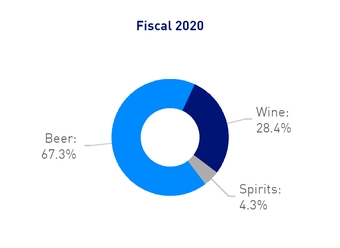
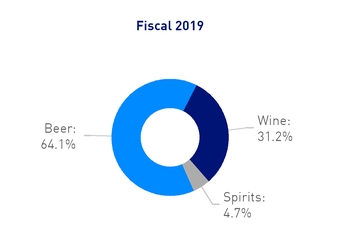
Beer Segment
We are the #1 brewer and seller of imported beer in the U.S. beer market. We are also a leader in the high-end segment of the U.S. beer market, which includes the imported, craft, and domestic super premium beer and alternative beverage alcohol categories. We sell a number of brands in the high-end categories, driven by our imported Mexican beer portfolio.
We have the exclusive right to import, market, and sell these Mexican brands in all 50 states of the U.S.:
| Corona Brand Family | Modelo Brand Family | Other Import Brands | ||
| ● Corona Extra ● Corona Premier ● Corona Familiar ● Corona Light ● Corona Refresca ● Corona Hard Seltzer | ● Modelo Especial ● Modelo Negra ● Modelo Chelada | ● Pacifico ● Victoria |
In the U.S., we are the leading imported beer company and have eight of the 15 top-selling imported beer brands. Modelo Especial is the best-selling imported beer, fourth best-selling beer overall, and the fastest-growing major imported beer brand in the U.S. Corona Extra is the second largest imported beer and seventh best-selling beer overall in the U.S.
| Constellation Brands, Inc. FY 2020 Form 10-K | #WORTHREACHINGFOR I 3 |
| PART I | ITEM 1. BUSINESS | Table of Contents |
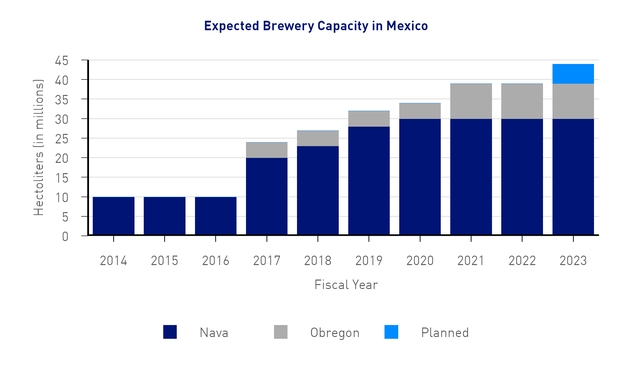
Since the June 2013 acquisition of the imported beer business, we have more than tripled our production capacity in Mexico from 10 million to approximately 34 million hectoliters. Our current production capacity provides us the opportunity to further expand our leadership position in the high-end segment of the U.S. beer market by increasing our investment behind on-trend innovation. As part of these efforts, in Fiscal 2019 we successfully introduced Corona Premier, a lower-calorie, lower-carbohydrate product offering, which has become one of the top growth contributors in the high-end segment of the U.S. beer market. During Fiscal 2020, we launched Corona Refresca and in early Fiscal 2021 we launched Corona Hard Seltzer. The national launches of Corona Refresca and Corona Hard Seltzer are part of efforts to capitalize on the growth of the high-end alternative beverage alcohol category. Additionally, we are continuing efforts focused on increasing sales distribution of products in can, draft, single-serve, and larger package size formats.
Expansion and construction efforts continue under our Mexico Beer Expansion Projects. Since the June 2013 acquisition of the imported beer business, we have invested approximately $4 billion for the Mexico Beer Expansion Projects, with approximately $520 million during Fiscal 2020. To align with our anticipated future growth expectations, we are targeting an additional five million hectoliters of production capacity expansion activities to be completed at the Obregon Brewery and we are exploring options to add further capacity in Mexico to meet our long-term needs.
In March 2020, we sold the Ballast Point craft beer business, including a number of its associated production facilities and brewpubs. This divestiture is consistent with our strategic focus on our high-performing import portfolio and upcoming new product introductions. For additional information regarding the Ballast Point Transaction, refer to “Recent Developments” in MD&A and Note 2 of the Notes to the Financial Statements.
Wine and Spirits Segment
We are a leading, higher-end wine and spirits company in the U.S. market, with a portfolio that includes higher-margin, higher-growth wine and spirits brands. Our wine portfolio is supported by grapes purchased from independent growers, primarily in the U.S., New Zealand, and Chile, and vineyard holdings in the U.S., New Zealand, and Italy. Our wine produced in the U.S., New Zealand, and Italy is primarily marketed in the U.S. In addition, we export our wine products to Canada and other major world markets. Our spirits offerings include SVEDKA Vodka, which is imported from Sweden and is the largest imported vodka brand in the U.S. Our higher-end spirits brands include Casa Noble tequila and High West craft whiskeys.
In the U.S., we have 16 of the 100 top-selling wine brands. Some of our well-known wine and spirits brands and portfolio of brands, sold in the U.S., which comprised our Fiscal 2020 U.S. Power Brands (“Power Brands”), included:
| Wine Brands | Wine Portfolio of Brands | Spirits Brands | ||||
| ● 7 Moons | ● Drylands | ● SIMI | ● Charles Smith | ● Casa Noble | ||
| ● Auros | ● Kim Crawford | ● Spoken Barrel | ● Prisoner | ● High West | ||
| ● Champagne Palmer & Co | ● Meiomi | ● Robert Mondavi | ● Mi CAMPO | |||
| ● Cooper & Thief | ● Mount Veeder | ● Schrader | ● Nelson’s Green Brier | |||
| ● Crafters Union | ● Nobilo (1) | ● SVEDKA | ||||
| ● Cuvée Sauvage | ● Ruffino | ● The Real McCoy |
| (1) | See “Recent Developments” in MD&A and Note 2 of the Notes to the Financial Statements. |
We dedicate a large share of sales and marketing resources to our Power Brands as they represent a majority of our U.S. wine and spirits revenue and profitability, and generally hold strong positions in their respective price categories.
| Constellation Brands, Inc. FY 2020 Form 10-K | #WORTHREACHINGFOR I 4 |
| PART I | ITEM 1. BUSINESS | Table of Contents |
We have been increasing resources in support of on-trend product innovation as we believe this is one of the key drivers of overall beverage alcohol category growth. In wine, we have launched varietal line extensions behind many of our Power Brands, such as Bourbon Barrel Aged Robert Mondavi Private Selection and Meiomi Rosé, and we have introduced newer brands like Derange, Spoken Barrel, Cooper & Thief, and Crafters Union wine in a can. In spirits, we have introduced Mi CAMPO tequila.
In connection with our efforts to increase focus on higher-margin, higher-growth brands, in April 2019, we entered into a definitive agreement to sell a portion of our wine and spirits business, including approximately 30 lower-margin, lower-growth wine and spirits brands, wineries, vineyards, offices, and facilities.
In December 2019, we agreed to revise and supersede the Wine and Spirits Transaction. The revisions to the transaction address competitive concerns raised by the FTC specifically related to the sparkling wine, brandy, dessert wine, and concentrate categories. As a result, the brands Cook’s California Champagne, J. Roget American Champagne, Paul Masson Grande Amber Brandy, and our concentrate business will be excluded from the Revised Wine and Spirits Transaction. The Revised Wine and Spirits Transaction is expected to close around the end of first quarter of fiscal 2021, and is subject to required regulatory clearances and governmental review and approval. Additionally, in a separate, but related, transaction, we agreed that upon execution and delivery of a definitive agreement for the Revised Wine and Spirits Transaction, we would enter into the Nobilo Wine Transaction. The Nobilo Wine Transaction is expected to close by the end of second quarter of fiscal 2021 and is subject to FTC and New Zealand regulatory review and approval. Completion of the Nobilo Transaction is also conditioned on completion of the Revised Wine and Spirits Transaction.
We are pursuing other opportunities to divest the Paul Masson Grande Amber Brandy brand and concentrate business excluded from the Revised Wine and Spirits Transaction to companies with more aligned business strategies.
For further information about these transactions, refer to “Recent Developments” in MD&A and Note 2 of the Notes to the Financial Statements.
Corporate Operations and Other
The Corporate Operations and Other segment includes traditional corporate-related items including costs of executive management, corporate development, corporate finance, corporate growth and strategy, human resources, internal audit, investor relations, legal, public relations, and information technology, as well as our investments made through our corporate venture capital function.
Further information regarding net sales and operating income (loss) of each of our business segments and information regarding geographic areas is set forth in Note 23 of the Notes to the Financial Statements.
Marketing and Distribution
To focus on their respective product categories, build brand equity, and increase sales, our segments employ full-time, in-house marketing, sales, and customer service functions. These functions engage in a range of marketing activities and strategies, including market research, consumer and trade advertising, price promotions, point-of-sale materials, event sponsorship, on-premise promotions, and public relations. Where opportunities exist, particularly with national accounts in the U.S., we leverage our sales and marketing skills across the organization.
In the U.S., our products are primarily distributed by wholesale distributors, with generally separate distribution networks utilized for (i) our beer portfolio and (ii) our wine and spirits portfolio, as well as state alcohol beverage control agencies. As is the case with all other beverage alcohol companies, products sold through these agencies are subject to obtaining and maintaining listings to sell our products in that agency’s state. State governments can affect prices paid by consumers of our products
| Constellation Brands, Inc. FY 2020 Form 10-K | #WORTHREACHINGFOR I 5 |
| PART I | ITEM 1. BUSINESS | Table of Contents |
through the imposition of taxes or, in states in which the government acts as the distributor of our products through an alcohol beverage control agency, by directly setting the retail prices.
Trademarks and Distribution Agreements
Trademarks are an important aspect of our business. We sell products under a number of trademarks, which we own or use under license. Throughout our segments, we also have various licenses and distribution agreements for the sale, or the production and sale, of our products, and products of third parties. These licenses and distribution agreements have varying terms and durations.
Within the Beer segment, we have an exclusive sub-license to use trademarks related to our Mexican beer brands in the U.S. This sub-license agreement is perpetual. Prior to our June 2013 acquisition of the imported beer business, Crown Imports had exclusive importation agreements with the suppliers of certain imported beer products and had an exclusive renewable sub-license to use certain trademarks related to the imported beer brands in the U.S.
Competition
The beverage alcohol industry is highly competitive. We compete on the basis of quality, price, brand recognition, and distribution strength. Our beverage alcohol products compete with other alcoholic and non-alcoholic beverages for consumer purchases, as well as shelf space in retail stores, restaurant presence, and wholesaler attention. We compete with numerous multinational producers and distributors of beverage alcohol products, some of which have greater resources than we do. Our principal competitors include:
| Beer | Anheuser-Busch InBev, Molson Coors, Heineken, The Boston Beer Company, Mark Anthony |
| Wine | E. & J. Gallo Winery, The Wine Group, Trinchero Family Estates, Treasury Wine Estates, Ste. Michelle Wine Estates, Deutsch Family Wine & Spirits |
| Spirits | Diageo, Beam Suntory, Brown-Forman, Sazerac Company, Pernod Ricard |
The Canopy Equity Method Investment makes up the Canopy segment. Canopy operates in the recreational and medicinal cannabis market and they compete with numerous producers and distributors of cannabis products. Canopy’s principal competitors include:
| Canopy | Cronos Group, Aurora Cannabis, Aphria, Tilray |
Production
Our current production capacity in Mexico at our Nava and Obregon breweries is approximately 34 million hectoliters. We are expanding the Obregon Brewery by an incremental five million hectoliters, and based on our anticipated future growth expectations, we intend to expand our production capacity in Mexico to approximately 44 million hectoliters in the future.
Our Daleville facility, located in Roanoke, Virginia, supports our craft and specialty business in addition to our domestic innovation initiatives.
| Constellation Brands, Inc. FY 2020 Form 10-K | #WORTHREACHINGFOR I 6 |
| PART I | ITEM 1. BUSINESS | Table of Contents |
In the U.S., we operate 17 wineries using many varieties of grapes grown principally in the Napa, Sonoma, Monterey, and San Joaquin regions of California. We also operate three wineries in New Zealand and six wineries in Italy. Grapes are crushed at most of our wineries and stored as wine until packaged for sale under our brand names or sold in bulk. The inventories of wine are usually at their highest levels during and after the crush of each year’s grape harvest and are reduced prior to the subsequent year’s crush. Wine inventories are usually at their highest levels in September through November in the U.S. and Italy, and in March through May in New Zealand.
We currently operate three facilities in the U.S. for the production of our High West whiskey brand. The requirements for grains and bulk spirits used in the production of our spirits are purchased from various suppliers.
Certain of our wines and spirits must be aged for multiple years. Therefore, our inventories of wines and spirits may be larger in relation to sales and total assets than in many other businesses.
Sources and Availability of Production Materials
The principal components in the production of our Mexican and craft beer brands include water; agricultural products, such as yeast and grains; and packaging materials, which include glass, aluminum, and cardboard.
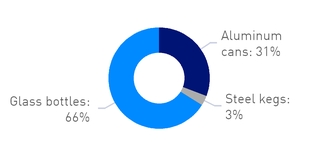
For our Mexican beer brands, packaging materials represent the largest cost component of production, with glass bottles representing the largest cost component of our packaging materials.
For Fiscal 2020, the package format mix of our Mexican beer volume sold in the U.S. was as follows:
The Nava and Obregon breweries receive water originating from aquifers. We believe we have adequate access to water to support the breweries’ on-going requirements, as well as future requirements after the completion of planned expansion activities.
| Constellation Brands, Inc. FY 2020 Form 10-K | #WORTHREACHINGFOR I 7 |
| PART I | ITEM 1. BUSINESS | Table of Contents |
As part of our efforts to solidify our beer glass sourcing strategy over the long-term, we formed an equally-owned joint venture with Owens-Illinois, the world’s largest glass container manufacturer. In December 2014, the joint venture acquired a state-of-the-art glass production plant that is located adjacent to our Nava Brewery in Mexico. The glass plant currently has five operational glass furnaces which supply approximately 55% of the total annual glass bottle supply for our Mexican beer brands. We also have long-term glass supply agreements with other glass producers.
The principal components in the production of our wine and spirits products are agricultural products, such as grapes and grain, and packaging materials, primarily glass.
Most of our annual grape requirements are satisfied by grower purchases from each year’s harvest which normally begins in August and runs through October in the U.S. and Italy, and begins in February and runs through May in New Zealand. We receive grapes from approximately 720 independent growers in the U.S. and approximately 195 independent growers located primarily in New Zealand and Chile. We enter into purchase agreements with a majority of these growers with pricing that generally varies year-to-year and is largely based on then-current market prices.
As of February 29, 2020, we owned or leased approximately 19,700 acres of land and vineyards, either fully bearing or under development, in the U.S., New Zealand, and Italy. This acreage supplies only a small percentage of our overall total grape needs for wine production. However, most of this acreage is used to supply a large portion of the grapes used for the production of certain of our higher-end wines. We continue to consider the purchase or lease of additional vineyards, and additional land for vineyard plantings, to supplement our grape supply.
We believe that we have adequate sources of grape supplies to meet our sales expectations. However, when demand for certain wine products exceeds expectations, we look to source the extra requirements from the bulk wine markets around the world.
The distilled spirits manufactured and imported by us require various agricultural products, neutral grain spirits, and bulk spirits, which we fulfill through purchases from various sources by contractual arrangement and through purchases on the open market. We believe that adequate supplies of the aforementioned products are available at the present time.
We utilize glass and polyethylene terephthalate (“PET”) bottles and other materials such as caps, corks, capsules, labels, wine bags, and cardboard cartons in the bottling and packaging of our wine and spirits products. After grape purchases, glass bottle costs are the largest component of our cost of product sold. In the U.S., the glass bottle industry is highly concentrated with only a small number of producers. We have traditionally obtained, and continue to obtain, our glass requirements from a limited number of producers under long-term supply arrangements. Currently, one producer supplies most of our glass container requirements for our U.S. operations. We have been able to satisfy our requirements with respect to the foregoing and consider our sources of supply to be adequate at this time.
Government Regulation
We are subject to a range of laws and regulations in the countries in which we operate. Where we produce products, we are subject to environmental laws and regulations, and may be required to obtain environmental and alcohol beverage permits and licenses to operate our facilities. Where we market and sell products, we may be subject to laws and regulations on brand registration, packaging and labeling, distribution methods and relationships, pricing and price changes, sales promotions, advertising, and public relations. We are also subject to rules and regulations relating to changes in officers or directors, ownership, or control.
We believe we are in compliance in all material respects with all applicable governmental laws and regulations in the countries in which we operate. We also believe that the cost of administration and
| Constellation Brands, Inc. FY 2020 Form 10-K | #WORTHREACHINGFOR I 8 |
| PART I | ITEM 1. BUSINESS | Table of Contents |
compliance with, and liability under, such laws and regulations does not have, and is not expected to have, a material adverse impact on our financial condition, results of operations, or cash flows.
Seasonality
The beverage alcohol industry is subject to seasonality in each major category. As a result, in response to wholesaler and retailer demand which precedes consumer purchases, our beer sales are typically highest during the first and second quarters of our fiscal year, which correspond to the Spring and Summer periods in the U.S. Our wine and spirits Power Brand sales are typically highest during the third quarter of our fiscal year, primarily due to seasonal holiday buying.
Employees
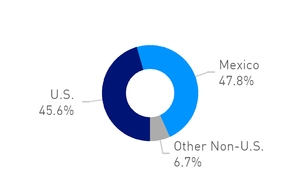
As of March 31, 2020, we had approximately 9,000 employees. We may employ additional workers during the grape crushing seasons. Approximately 17% of our employees are covered by collective bargaining agreements. Collective bargaining agreements expiring within one year are minimal. We consider our employee relations generally to be good.
Employee geographic data is as follows:
Following the close of the anticipated Revised Wine and Spirits Transactions we are estimating a reduction of approximately 700 employees.
Executive Officers of the Company
Information with respect to our current executive officers is as follows:
| NAME | AGE | OFFICE OR POSITION HELD |
| William A. Newlands | 61 | President and Chief Executive Officer |
| Robert Sands | 61 | Executive Chairman of the Board |
| Richard Sands | 69 | Executive Vice Chairman of the Board |
| James O. Bourdeau | 55 | Executive Vice President, General Counsel, and Secretary |
| Garth Hankinson | 52 | Executive Vice President and Chief Financial Officer |
| Robert Hanson | 57 | Executive Vice President and President, Wine & Spirits Division |
| F. Paul Hetterich | 57 | Executive Vice President and President, Beer Division |
| Thomas M. Kane | 59 | Executive Vice President and Chief Human Resources Officer |
| Michael McGrew | 46 | Executive Vice President and Chief Communications and CSR Officer |
| Mallika Monteiro | 41 | Executive Vice President and Chief Growth and Strategy Officer |
| James A. Sabia, Jr. | 58 | Executive Vice President and Chief Marketing Officer |
William A. Newlands is the President and Chief Executive Officer of the Company. He has served as Chief Executive Officer of the Company and as a director since March 2019 and as President since February 2018. He served as Chief Operating Officer from January 2017 through February 2019 and as Executive Vice President of the Company from January 2015 until February 2018. From January 2016 to January 2017 he performed the role of President, Wine & Spirits Division and from January 2015 through January 2016 he performed the role of Chief Growth Officer. Mr. Newlands joined the Company in January 2015. Prior to that he served from October 2011 until August 2014 as Senior Vice President and President, North America of Beam Inc., as Senior Vice President and President, North America of Beam
| Constellation Brands, Inc. FY 2020 Form 10-K | #WORTHREACHINGFOR I 9 |
| PART I | ITEM 1. BUSINESS | Table of Contents |
Global Spirits & Wine, Inc., from December 2010 to October 2011, and as Senior Vice President and President, USA of Beam Global Spirits & Wine, Inc. from February 2008 to December 2010. Beam Inc., a producer and seller of branded distilled spirits products, merged with a subsidiary of Suntory Holding Limited, a Japanese company, in 2014. Prior to October 2011, Beam Global Spirits & Wine, Inc. was the spirits operating segment of Fortune Brands, Inc., which was a leading consumer products company that made and sold branded consumer products worldwide in the distilled spirits, home and security, and golf markets.
Robert Sands is the Executive Chairman of the Board of the Company, having served in the role since March 2019 and as a director since January 1990. Previously, he served as Chief Executive Officer of the Company from July 2007 through February 2019. Mr. Sands also served as President from December 2002 to February 2018, as Chief Operating Officer from December 2002 to July 2007, as Group President from April 2000 through December 2002, as Chief Executive Officer, International from December 1998 through April 2000, as Executive Vice President from October 1993 through April 2000, as General Counsel from June 1986 through May 2000, and as Vice President from June 1990 through October 1993. He is the brother of Richard Sands.
Richard Sands, Ph.D., is the Executive Vice Chairman of the Board of the Company, having served in the role since March 2019. He previously served as Chairman of the Board from September 1999 through February 2019. He has been employed by the Company in various capacities since 1979. He has served as a director since 1982. He served as Chief Executive Officer from October 1993 to July 2007, as Executive Vice President from 1982 to May 1986, as President from May 1986 to December 2002, and as Chief Operating Officer from May 1986 to October 1993. He is the brother of Robert Sands.
James O. Bourdeau is the Executive Vice President and General Counsel of the Company, having served in the role since December 2017 and as the Company’s Secretary since April 2017. Prior to that, he served as the Company’s Senior Vice President and General Counsel, Corporate Development, having performed that role from September 2014 until December 2017. Before joining the Company in September 2014, Mr. Bourdeau was an attorney with the law firm of Nixon Peabody LLP from July 2000 through September 2014, and a partner from February 2005 through September 2014. Mr. Bourdeau was associated with another law firm from 1995 to 2000.
Garth Hankinson is the Executive Vice President and Chief Financial Officer of the Company, having served in the role since January 2020. Prior to that, he served as the Company’s Senior Vice President, Corporate Development, a position he had been in since February 2016, where he was responsible for leading all of the Company’s financial planning, reporting, and analysis activities, as well as all efforts related to mergers, acquisitions, ventures investments, and strategic alliances. From October 2009 until February 2016, he served as the Vice President, Corporate Development of the Company. From October 2007 until October 2009, Mr. Hankinson served as the Vice President, Business Development for Constellation’s prior Canadian business, Constellation Brands Canada, Inc., which was a Canadian subsidiary of the Company during that time. From March 2004 until October 2007, he served as the Director of Corporate Development.
Robert Hanson is the Executive Vice President and President, Wine & Spirits Division of the Company, having served in the role since June 2019. Prior to that, he served as Chief Executive Officer of John Hardy Global Limited, a luxury jewelry brand, since August 2014. He served as Chief Executive Officer and a Director of American Eagle Outfitters, Inc., a leading global specialty retailer of clothing, accessories and personal care products from January 2012 to January 2014. He served Levi Strauss & Co. from 1988 to 2011 in a variety of important leadership roles across multiple brands where he led cross-functional teams, including merchandising, product development, multi-channel operations, marketing and creative teams, in addition to a full support staff. Mr. Hanson’s roles at Levi’s included serving as Global President of the Levi’s Brand from 2010 to 2011; President, Levi’s Strauss Americas/North America from 2006 to 2010; President, Levi’s Brand U.S. from 2001 to 2006; and President/Vice President, Levi’s Europe/Africa/Middle East from 1998 to 2001.
| Constellation Brands, Inc. FY 2020 Form 10-K | #WORTHREACHINGFOR I 10 |
| PART I | ITEM 1. BUSINESS | Table of Contents |
F. Paul Hetterich is the Company’s Executive Vice President and President, Beer Division as well as President of Crown Imports LLC, a wholly-owned subsidiary of the Company having performed these roles since January 2016. He has been an Executive Vice President of the Company since June 2003. From January 2015 through January 2016 he performed the role of Executive Vice President, Corporate Development & Beer Operations. From June 2011 until January 2015 he served as Executive Vice President, Business Development and Corporate Strategy, from July 2009 until June 2011 he served as Executive Vice President, Business Development, Corporate Strategy and International, and from June 2003 until July 2009 he served as Executive Vice President, Business Development and Corporate Strategy. From April 2001 to June 2003 Mr. Hetterich served as the Company’s Senior Vice President, Corporate Development. Prior to that, Mr. Hetterich held several increasingly senior positions in the Company’s marketing and business development groups. Mr. Hetterich has been with the Company since 1986.
Thomas M. Kane is the Executive Vice President and Chief Human Resources Officer of the Company, having served in the role since joining the Company in May 2013. Mr. Kane previously served as Senior Vice President, Human Resources and Government Relations of Armstrong World Industries, Inc., a global producer of flooring products and ceiling systems, from February 2012 to May 2013, he served as its Senior Vice President, Human Resources from August 2010 to February 2012 and served as its Chief Compliance Officer from February 2011 to February 2012. Prior to that, Mr. Kane served as Global Vice President, Human Resources for Black & Decker Power Tools, a manufacturer of power and hand tools, from 2002 to 2010. From 1999 to 2002 Mr. Kane served as Global HR leader of GE Specialty Materials, a large manufacturer of silicone products.
Michael McGrew is the Executive Vice President and Chief Communications and Corporate Social Responsibility (“CSR”) Officer of the Company, having served in the role since April 2020. Prior to that, since January 2019, he served as Senior Vice President, Corporate Communications, as Vice President, Corporate Communications from January 2017 to January 2019, and as Vice President, Communications and Brand Public Relations for Constellation’s beer division from March 2016 to January 2017. He joined the Company in September 2014 as Senior Director, Communications and Brand Public Relations. Prior that, since 2001 Mr. McGrew served in roles of increasing responsibility with W.W. Grainger, Inc., an international provider of industrial supplies and equipment, including most recently as Senior Director, Communications.
Mallika Monteiro is the Executive Vice President and Chief Growth and Strategy Officer of the Company, having served in the role since October 2019. From October 2018 to October 2019 she served as the Company's Senior Vice President and Chief Growth Officer, having joined Constellation in October 2016 as Vice President, Beer Innovation. Prior to joining Constellation, from July 2014 to September 2016, Ms. Monteiro was a Senior Marketing Director at Anheuser Busch InBev, a large multinational brewing company. Prior to joining Anheuser Busch InBev, she served in roles of increasing responsibility with Beam Suntory Inc., a producer and seller of branded distilled spirits products, including as Senior Brand Manager - Vodka, from January 2012 to June 2014, Brand Manager - Cognac from July 2009 to December 2011, and Associate Brand Manager - Jim Beam from July 2007 to June 2009.
James A. Sabia, Jr. is the Executive Vice President and Chief Marketing Officer of the Company, having served in the role since May 2018. Prior to that, Mr. Sabia was the Chief Marketing Officer of the Company’s Beer Division, having performed that role from February 2009 through May 2018. From February 2009 to June 2013, Mr. Sabia was employed by Crown Imports LLC (“Crown”), of which the Company owned a 50% interest and was the Company’s beer business during that period. Effective June 2013, the Company acquired the remaining 50% of Crown, which became a wholly-owned subsidiary of the Company. Mr. Sabia originally joined the Company in August 2007 as Vice President, Marketing for the Company’s spirits business, serving in that capacity until February 2009. Before that, Mr. Sabia was with Molson Coors Brewing Company, a large international brewing company, from 1990 to 2007.
| Constellation Brands, Inc. FY 2020 Form 10-K | #WORTHREACHINGFOR I 11 |
| PART I | ITEM 1. BUSINESS | Table of Contents |
Executive officers of the Company are generally chosen or elected to their positions annually and hold office until the earlier of their removal or resignation or until their successors are chosen and qualified.
Company Information
Our Internet website is https://www.cbrands.com. Our filings with the Securities and Exchange Commission (“SEC”), including our annual report on Form 10-K, quarterly reports on Form 10-Q, current reports on Form 8-K and amendments to those reports, filed or furnished pursuant to Section 13(a) or 15(d) of the Securities Exchange Act of 1934, are accessible free of charge at https://www.cbrands.com as soon as reasonably practicable after we electronically file such material with, or furnish it to, the SEC. The SEC maintains an Internet site that contains reports, proxy, and information statements, and other information regarding issuers, such as ourselves, that file electronically with the SEC. The Internet address of the SEC’s site is https://www.sec.gov.
We have adopted a Chief Executive Officer and Senior Financial Executive Code of Ethics that specifically applies to our chief executive officer, our principal financial officer, and our controller, and is available on our Internet site at https://www.cbrands.com/investors. This Chief Executive Officer and Senior Financial Executive Code of Ethics meets the requirements as set forth in the Securities Exchange Act of 1934, Item 406 of Regulation S-K. We also have adopted a Code of Business Conduct and Ethics that applies to all employees, directors, and officers, including each person who is subject to the Chief Executive Officer and Senior Financial Executive Code of Ethics. The Code of Business Conduct and Ethics is available on our Internet website, together with our Global Code of Responsible Practices for Beverage Alcohol Advertising and Marketing at https://www.cbrands.com/story/policies. Copies of these materials are available in print to any shareholder who requests them. Shareholders should direct such requests in writing to Investor Relations Department, Constellation Brands, Inc., 207 High Point Drive, Building 100, Victor, New York 14564, or by telephoning our Investor Center at 1-888-922-2150.
Our Board of Directors Corporate Governance Guidelines and the Charters of the Board’s Audit Committee, Human Resources Committee (which serves as the Board’s compensation committee) and Corporate Governance Committee (which serves as the Board’s nominating committee) are accessible on our Internet website at https://www.cbrands.com/investors. Amendments to, and waivers granted to our directors and executive officers under our codes of ethics, if any, will be posted in this area of our website.
The information regarding our website and its content is for your convenience only. The content of our website is not deemed to be incorporated by reference in this report or filed with the SEC.
| Constellation Brands, Inc. FY 2020 Form 10-K | #WORTHREACHINGFOR I 12 |
| PART I | ITEM 1A. RISK FACTORS | Table of Contents |
Item 1A. RISK FACTORS
In addition to information discussed elsewhere in this report, you should carefully consider the following factors which could materially affect our business, liquidity, financial condition, and/or results of operations. The risks described below are not the only risks we face. Additional factors not presently known to us or that we currently deem to be immaterial may also have a material adverse effect on our business, liquidity, financial condition, and/or results of operations in future periods.
Operational Risks
Pandemics, such as the current global COVID-19 virus, outbreaks of communicable infections or diseases, or other public health concerns in the markets in which our consumers or employees live and/or in which we or our distributors, retailers, and suppliers operate
Disease outbreaks and other public health conditions could result in disruptions and damage to our business caused by potential negative consumer purchasing behavior as well as disruption to our supply chains, production processes, and operations. Consumer purchasing behavior may be impacted by reduced consumption by consumers who may not be able to leave home or otherwise shop in a normal manner as a result of quarantines or other cancellations of public events and other opportunities to purchase our products, from bar and restaurant closures, or from a reduction in consumer discretionary income due to reduced or limited work and layoffs. Supply disruption may result from restrictions on the ability of employees and others in the supply chain to travel and work, such as caused by quarantine or individual illness, or which may result from border closures imposed by governments to deter the spread of communicable infection or disease, or determinations by us or our suppliers or distributors to temporarily suspend operations in affected areas, or other actions which restrict the ability to distribute our products or which may otherwise negatively impact our ability to produce, bottle and ship our product, for our distributors to distribute our products, or for our suppliers to provide us our raw materials. Ports or channels of entry may be closed or operate at only a portion of capacity, or transportation of product within a region or country may be limited, if workers are unable to report to work due to travel restrictions or personal illness. Our operations and the operations of our suppliers may become less efficient or otherwise become negatively impacted if our executive leaders or other personnel critical to our operations are unable to work or if a significant percentage of the workforce is unable to work or is required to work from home. Our cyber-security could be compromised if persons who are forced to work from home do not maintain adequate information security. A prolonged quarantine or border closure could result in temporary or longer-term disruptions of sales patterns, consumption and trade patterns, supply chains, production processes, and operations. A widespread health crisis, such as the COVID-19 pandemic, could negatively affect the economies and financial markets of many countries resulting in a global economic downturn which could negatively impact demand for our products and our ability to borrow money. Any of these events could have a material adverse effect on our business, liquidity, financial condition, and/or results of operations.
International operations, worldwide and domestic economic trends and financial market conditions, geopolitical uncertainty, or changes to international trade agreements and tariffs, import and excise duties, other taxes, or other governmental rules and regulations
Our products are produced and sold in numerous countries, we have employees in various countries, and we have production facilities currently in the U.S., Mexico, New Zealand, and Italy.
Risks associated with international operations, any of which could have a material adverse effect on our business, liquidity, financial condition, and/or results of operations, include:
| • | changes in local political, economic, social, and labor conditions; |
| • | potential disruption from socio-economic violence, including terrorism and drug-related violence; |
| • | restrictions on foreign ownership and investments or on repatriation of cash earned in countries outside the U.S.; |
| • | import and export requirements and border accessibility; |
| • | currency exchange rate fluctuations; |
| Constellation Brands, Inc. FY 2020 Form 10-K | #WORTHREACHINGFOR I 13 |
| PART I | ITEM 1A. RISK FACTORS | Table of Contents |
| • | a less developed and less certain legal and regulatory environment in some countries, which, among other things, can create uncertainty regarding contract enforcement, intellectual property rights, privacy obligations, real property rights, and liability issues; and |
| • | inadequate levels of compliance with applicable anti-bribery laws, including the Foreign Corrupt Practices Act. |
Unfavorable global or regional economic conditions, including economic slowdown and the disruption, volatility and tightening of credit and capital markets, as well as unemployment, tax increases, governmental spending cuts, or a return of high levels of inflation, could affect consumer spending patterns and purchases of our products. These could also create or exacerbate credit issues, cash flow issues, and other financial hardships for us and our suppliers, distributors, retailers, and consumers. The inability of suppliers, distributors, and retailers to access liquidity could impact our ability to produce and distribute our products.
We are also exposed to risks associated with interest rate fluctuations. We could experience changes in our ability to manage fluctuations in interest rates and, accordingly, there can be no assurance that we will be successful in reducing those risks.
We could also be affected by nationalization of our international operations, unstable governments, unfamiliar or biased legal systems, intergovernmental disputes or animus against the United States. Any determination that our operations or activities did not comply with applicable U.S. or foreign laws or regulations could result in the imposition of fines and penalties, interruptions of business, terminations of necessary licenses and permits, and other legal and equitable sanctions.
The U.S. and other countries in which we operate impose duties, excise taxes, and/or other taxes on beverage alcohol products, and/or on certain raw materials used to produce our beverage alcohol products, in varying amounts. The U.S. federal government or other governmental bodies may propose changes to international trade agreements, tariffs, taxes, and other government rules and regulations. Significant increases in import and excise duties or other taxes on, or that impact, beverage alcohol products could have a material adverse effect on our business, liquidity, financial condition, and/or results of operations. Any such tariffs, particularly on imports from Mexico and any retaliatory tariffs imposed by the Mexican government, may have a material adverse effect on our results of operations, including our sales and profitability.
In addition, federal, state, provincial, local, and foreign governmental agencies extensively regulate the beverage alcohol products industry concerning such matters as licensing, warehousing, trade and pricing practices, permitted and required labeling, advertising and relations with wholesalers and retailers. Certain federal, state, or local regulations also require warning labels and signage. New or revised regulations or increased licensing fees, requirements, or taxes could have a material
Showing the first 8K of 65K characters. Open the full section
Item 2. PROPERTIES
We operate breweries, wineries, distilling plants, and bottling plants, many of which include warehousing and distribution facilities on the premises, and through a joint venture, we operate a glass production plant. In addition to our material properties described below, certain of our businesses maintain office space for sales and similar activities and offsite warehouse and distribution facilities in a variety of geographic locations.
Our corporate headquarters are located in leased offices in Victor, New York. Our segments also maintain leased office spaces in other locations in the U.S. and internationally.
We believe that our facilities, taken as a whole, are in good condition and working order. Within the Wine and Spirits segment, we have adequate capacity to meet our needs for the foreseeable future. Within the Beer segment, we have adequate capacity to meet our current needs and we have undertaken activities to increase our production capacity to address our anticipated future demand. As of February 29, 2020, our material properties by segment, all of which are owned, unless otherwise noted, consist of:
| Beer | Wine and Spirits |
| Breweries ● Compañía Cervecera de Coahuila in Nava, Coahuila, Mexico ● Compañía Cervecera de Obregón in Obregon, Sonora, Mexico Glass production plant ● Industria Vidriera de Coahuila in Nava, Coahuila, Mexico (1) | Wineries ● Canandaigua Winery in Canandaigua, New York, U.S. (2) ● Gonzales Winery in Gonzales, California, U.S. ● Mission Bell Winery in Madera, California, U.S. (2) ● Woodbridge Winery in Acampo, California, U.S. ● Drylands Winery in Marlborough, South Island, New Zealand Warehouse, distribution, and other production facilities ● Lodi Distribution Center in Lodi, California, U.S. (3) ● Pontassieve Winery in Florence, Italy |
| (1) | The glass production plant in Nava, Coahuila, Mexico is owned and operated by an equally-owned joint venture with Owens-Illinois and is located adjacent to our Nava Brewery. |
| (2) | In April 2019, we entered into a definitive agreement to sell a portion of our wine and spirits business, including approximately 30 lower-margin, lower-growth wine and spirits brands, wineries, vineyards, offices, and facilities. The transaction will include two of our material Wine and Spirits segment properties: the Canandaigua Winery and the Mission Bell Winery. For further information about this transaction, refer to “Recent Developments” in MD&A and Note 2 of the Notes to the Financial Statements. |
| (3) | The distribution center in Lodi, California is a leased facility. |
Within our Wine and Spirits segment, as of February 29, 2020, we owned, leased, or had interests in approximately 11,600 acres of vineyards in California (U.S.), 6,800 acres of vineyards in New Zealand, and 1,300 acres of vineyards in Italy.
Item 3. LEGAL PROCEEDINGS
In the ordinary course of their business, the Company and its subsidiaries are subject to lawsuits, arbitrations, claims, and other legal proceedings in connection with their business. Some of the legal actions include claims for substantial or unspecified compensatory and/or punitive damages. A substantial adverse judgment or other unfavorable resolution of these matters could have a material adverse effect on the Company’s financial condition, results of operations, and cash flows. Management believes that the Company has adequate legal defenses with respect to the legal proceedings to which it is a defendant or respondent and that the outcome of these pending proceedings is not likely to have a
| Constellation Brands, Inc. FY 2020 Form 10-K | #WORTHREACHINGFOR I 27 |
| PART I | OTHER KEY INFORMATION | Table of Contents |
material adverse effect on the financial condition, results of operations, or cash flows of the Company. However, the Company is unable to predict the outcome of these matters.
Regulatory Matters – The Company and its subsidiaries are in discussions with various governmental agencies concerning matters raised during regulatory examinations or otherwise subject to such agencies’ inquiry. These matters could result in censures, fines, or other sanctions. Management believes the outcome of any pending regulatory matters will not have a material adverse effect on the Company’s financial condition, results of operations, or cash flows. However, the Company is unable to predict the outcome of these matters.
As previously reported in the Company’s Quarterly Reports on Form 10-Q for the fiscal quarters ended August 31, 2019 and November 30, 2019, on August 21, 2019, Industria Vidriera de Coahuila, S. de R.L. de C.V. (“IVC”), the Mexican subsidiary of a consolidated joint venture of the Company, received from the Procuraduria de Protección al Ambiente de Coahuila (“PROPAEC”) notification of an enforcement action for violations of certain laws in the Mexican state of Coahuila de Zaragoza regulating the discharge of wastewater into the environment. The notification was based on PROPAEC’s evaluation of IVC’s May 22, 2019 response to allegations arising from an inspection of IVC’s facility originally conducted by PROPAEC on April 12, 2018. The allegations against IVC consisted of the discharge of wastewater from evaporators without PROPAEC’s authorization and associated recordkeeping violations under relevant state environmental regulations. On September 19, 2019, IVC paid a penalty of MXN$2,196,740 (approximately $113,000) and related tax of MXN$494,267 (approximately $25,000). The Company believes this matter is fully settled.
Item 5. MARKET FOR REGISTRANT’S COMMON EQUITY, RELATED STOCKHOLDER MATTERS, AND ISSUER PURCHASES OF EQUITY SECURITIES
Our Class A Common Stock and Class B Common Stock trade on the New York Stock Exchange® (“NYSE”) under the symbols STZ and STZ.B, respectively. There is no public trading market for our Class 1 Common Stock. At April 15, 2020, the number of holders of record of our Class A Common Stock, Class B Common Stock, and Class 1 Common Stock were 517, 97, and 13, respectively.
For information regarding dividends and share repurchase programs, see MD&A.
For information on securities authorized for issuance under our equity compensation plans, see Security Ownership of Certain Beneficial Owners and Management and Related Stockholder Matters under Item 12. of this Annual Report on Form 10-K.
| Constellation Brands, Inc. FY 2020 Form 10-K | #WORTHREACHINGFOR I 28 |
| PART II | OTHER KEY INFORMATION | Table of Contents |
Item 6. SELECTED FINANCIAL DATA
The following selected financial data should be read in conjunction with MD&A and our consolidated financial statements and notes thereto under Item 8 of this Annual Report on Form 10-K (the “Financial Statements”).
| For the Years Ended | |||||||||||||||||||
| February 29, 2020 (1) | February 28, 2019 | February 28, 2018 | February 28, 2017 (2) | February 29, 2016 | |||||||||||||||
| (in millions, except per share data) | |||||||||||||||||||
| Sales | $ | 9,113.0 | $ | 8,884.3 | $ | 8,322.1 | $ | 8,051.2 | $ | 7,223.8 | |||||||||
| Excise taxes | (769.5 | ) | (768.3 | ) | (741.8 | ) | (730.1 | ) | (675.4 | ) | |||||||||
| Net sales | 8,343.5 | 8,116.0 | 7,580.3 | 7,321.1 | 6,548.4 | ||||||||||||||
| Cost of product sold (3) | (4,191.6 | ) | (4,035.7 | ) | (3,767.8 | ) | (3,802.1 | ) | (3,606.1 | ) | |||||||||
| Gross profit | 4,151.9 | 4,080.3 | 3,812.5 | 3,519.0 | 2,942.3 | ||||||||||||||
| Selling, general, and administrative expenses (4) | (1,621.8 | ) | (1,668.1 | ) | (1,532.7 | ) | (1,392.4 | ) | (1,177.2 | ) | |||||||||
| Impairment of assets held for sale | (449.7 | ) | — | — | — | — | |||||||||||||
| Gain (loss) on sale of business | 74.1 | — | — | 262.4 | — | ||||||||||||||
| Operating income (loss) | 2,154.5 | 2,412.2 | 2,279.8 | 2,389.0 | 1,765.1 | ||||||||||||||
| Income (loss) from unconsolidated investments (5) (6) (7) | (2,668.6 | ) | 2,101.6 | 487.2 | 27.3 | 51.1 | |||||||||||||
| Interest expense | (428.7 | ) | (367.1 | ) | (332.0 | ) | (333.3 | ) | (313.9 | ) | |||||||||
| Loss on extinguishment of debt (8) | (2.4 | ) | (1.7 | ) | (97.0 | ) | — | (1.1 | ) | ||||||||||
| Income (loss) before income taxes | (945.2 | ) | 4,145.0 | 2,338.0 | 2,083.0 | 1,501.2 | |||||||||||||
| (Provision for) benefit from income taxes (9) | 966.6 | (685.9 | ) | (22.7 | ) | (550.3 | ) | (440.6 | ) | ||||||||||
| Net income (loss) | 21.4 | 3,459.1 | 2,315.3 | 1,532.7 | 1,060.6 | ||||||||||||||
| Net (income) loss attributable to noncontrolling interests | (33.2 | ) | (23.2 | ) | (11.9 | ) | (4.1 | ) | (5.7 | ) | |||||||||
| Net income (loss) attributable to CBI | $ | (11.8 | ) | $ | 3,435.9 | $ | 2,303.4 | $ | 1,528.6 | $ | 1,054.9 | ||||||||
| Net income (loss) per common share attributable to CBI: | |||||||||||||||||||
| Basic – Class A Common Stock | $ | (0.07 | ) | $ | 18.24 | $ | 11.96 | $ | 7.76 | $ | 5.42 | ||||||||
| Basic – Class B Convertible Common Stock | $ | (0.07 | ) | $ | 16.57 | $ | 10.86 | $ | 7.04 | $ | 4.92 | ||||||||
| Diluted – Class A Common Stock | $ | (0.07 | ) | $ | 17.57 | $ | 11.47 | $ | 7.49 | $ | 5.18 | ||||||||
| Diluted – Class B Convertible Common Stock | $ | (0.07 | ) | $ | 16.21 | $ | 10.59 | $ | 6.90 | $ | 4.79 | ||||||||
| Cash dividends declared per common share: | |||||||||||||||||||
| Class A Common Stock | $ | 3.00 | $ | 2.96 | $ | 2.08 | $ | 1.60 | $ | 1.24 | |||||||||
| Class B Convertible Common Stock | $ | 2.72 | $ | 2.68 | $ | 1.88 | $ | 1.44 | $ | 1.12 | |||||||||
| Total assets | $ | 27,323.2 | $ | 29,231.5 | $ | 20,538.7 | $ | 18,602.4 | $ | 16,695.0 | |||||||||
| Long-term debt, including current maturities | $ | 11,945.7 | $ | 12,825.0 | $ | 9,439.9 | $ | 8,631.6 | $ | 7,672.9 |
| (1) | Includes an impairment of long-lived assets held for sale in connection with the New Wine and Spirits Transactions, Other Wine and Spirits Transactions, and the Ballast Point Transaction (refer to Notes 2 and 7 of the Notes to the Financial Statements for additional discussion). Additionally, in November 2019, we sold the Black Velvet Canadian Whisky business and recognized a net gain on sale of business (refer to Note 2 of the Notes to the Financial Statements for additional discussion). |
| Constellation Brands, Inc. FY 2020 Form 10-K | #WORTHREACHINGFOR I 29 |
| PART II | OTHER KEY INFORMATION | Table of Contents |
| (2) | In December 2016, we sold the Wine and Spirits Canadian wine business and recognized a net gain on sale of business. |
| (3) | Includes a loss on inventory write-downs of $102.9 million in connection with the wine and spirits optimization activities for the year ended February 29, 2020 (refer to Note 2 of the Notes to the Financial Statements for additional discussion). |
| (4) | Includes impairment of intangible assets of $11.0 million, $108.0 million, $86.8 million, and $46.0 million for the years ended February 29, 2020, February 28, 2019, February 28, 2018, and February 28, 2017, respectively (refer to Note 7 of the Notes to the Financial Statements for additional discussion). |
| (5) | Includes a net gain in connection with the sale of our Accolade Wine Investment of $99.8 million for the year ended February 28, 2019 (refer to Note 2 of the Notes to the Financial Statements for additional discussion). |
| (6) | Includes unrealized net gain (loss) from the changes in fair value of the Canopy securities measured at fair value of $(2,126.4) million, $1,971.2 million, and $464.3 million for the years ended February 29, 2020, February 28, 2019, and February 28, 2018, respectively (refer to Note 7 of the Notes to the Financial Statements for additional discussion). |
| (7) | Includes equity in earnings (losses) from Canopy of $(575.9) million and $(2.6) million for the years ended February 29, 2020, and February 28, 2019, respectively (refer to Note 10 of the Notes to the Financial Statements for additional discussion). |
| (8) | Consists of a make-whole payment of $73.6 million in connection with the early redemption of our April 2012 senior notes and the write-off of debt issuance costs of $23.4 million in connection with prior-to-maturity repayments of various debt obligations for the year ended February 28, 2018 (refer to Note 13 of the Notes to the Financial Statements for additional discussion). |
| (9) | Includes a net income tax benefit of $547.4 million for the year ended February 29, 2020, resulting from the remeasurement of our deferred tax assets in connection with the enactment of tax reform in Switzerland and a provisional net income tax benefit of $351.2 million for the year ended February 28, 2018, associated with the enactment of the TCJ Act (refer to Note 14 of the Notes to the Financial Statements for additional discussion). |
| Constellation Brands, Inc. FY 2020 Form 10-K | #WORTHREACHINGFOR I 30 |
| PART II | ITEM 7. MD&A | Table of Contents |
Item 7. MANAGEMENT’S DISCUSSION AND ANALYSIS OF FINANCIAL CONDITION AND RESULTS OF OPERATIONS
INTRODUCTION
We have elected to omit discussion on the earliest of the three years covered by the consolidated financial statement presented. Refer to Item 7. “Management’s Discussion and Analysis of Financial Condition and Results of Operations” and “Financial Liquidity and Capital Resources” located in our Form 10-K for the fiscal year ended February 28, 2019, filed on April 23, 2019, for reference to discussion of the fiscal year ended February 28, 2018, the earliest of the three fiscal years presented. This MD&A, which should be read in conjunction with our Financial Statements, provides additional information on our businesses, current developments, financial condition, cash flows, and results of operations. It is organized as follows:
| • | Overview. This section provides a general description of our business, which we believe is important in understanding the results of our operations, financial condition, and potential future trends. |
| • | Strategy*.* This section provides a description of our strategy and a discussion of recent developments, significant investments, acquisitions, and divestitures. |
| • | Results of operations. This section provides an analysis of our results of operations presented on a business segment basis. In addition, a brief description of significant transactions and other items that affect the comparability of the results is provided. |
| • | Financial liquidity and capital resources. This section provides an analysis of our cash flows, outstanding debt, and commitments. Included in the analysis of outstanding debt is a discussion of the amount of financial capacity available to fund our ongoing operations and future commitments, as well as a discussion of other financing arrangements. |
| • | Critical accounting estimates and policies. This section identifies those accounting policies that are considered important to our results of operations and financial condition, require significant judgment and involve significant management estimates. Our significant accounting policies, including those considered to be critical accounting policies, are summarized in Note 1 of the Notes to the Financial Statements. |
OVERVIEW
We are an international beverage alcohol company with a broad portfolio of consumer-preferred high-end imported beer brands, and higher-end wine and spirits brands. Many of our products are recognized as leaders in their respective categories. We are one of the leading U.S. growth drivers at retail among beverage alcohol suppliers. In the U.S. market, we are the third-largest beer company and a leading higher-end wine company.
Through February 28, 2019, our internal management financial reporting consisted of two business divisions: (i) Beer and (ii) Wine and Spirits. Beginning March 1, 2019, as a result of our November 2018 Canopy Investment and a change in our CODM on March 1, 2019, we have changed our internal management financial reporting to consist of three business divisions: (i) Beer, (ii) Wine and Spirits, and (iii) Canopy. Consequently, beginning with the first quarter of fiscal 2020, we report our operating results in four segments: (i) Beer, (ii) Wine and Spirits, (iii) Corporate Operations and Other, and (iv) Canopy. Our Canopy Equity Method Investment makes up the Canopy segment.
In the Beer segment, our portfolio consists of high-end imported and craft beer and alternative beverage alcohol brands. We have an exclusive perpetual brand license to import, market, and sell our
| Constellation Brands, Inc. FY 2020 Form 10-K | #WORTHREACHINGFOR I 31 |
| PART II | ITEM 7. MD&A | Table of Contents |
Mexican beer portfolio in the U.S. In the Wine and Spirits segment, our portfolio includes higher-margin, higher-growth wine brands complemented by certain higher-end spirits brands. Amounts included in the Corporate Operations and Other segment consist of costs of executive management, corporate development, corporate finance, corporate growth and strategy, human resources, internal audit, investor relations, legal, public relations, and information technology, as well as our investments made through our corporate venture capital function. All costs included in the Corporate Operations and Other segment are general costs that are applicable to the consolidated group and are therefore not allocated to the other reportable segments. All costs reported within the Corporate Operations and Other segment are not included in our CODM’s evaluation of the operating income (loss) performance of the other reportable segments. The new business segments reflect how our operations are managed, how resources are allocated, how operating performance is evaluated by senior management, and the structure of our internal financial reporting.
STRATEGY
Our overall strategy is to drive industry-leading growth, build unrivaled shareholder value, and shape the future of our industry by building brands that people love. We believe sharing a toast, unwinding after a day, celebrating milestones, and helping people connect, is Worth Reaching For. We position our portfolio to benefit from the consumer-led trend towards premiumization, which we believe will continue to result in faster growth rates in the higher-end of the beer, wine, and spirits categories. We focus on developing our expertise in consumer insights and category management, as well as our strong distributor network, which provides an effective route-to-market. Additionally, we leverage our scale across the total beverage alcohol market and our level of diversification hedges our portfolio risk. In addition to growing our existing business, we focus on targeted acquisitions of, and investments in, businesses that are higher-margin, higher-growth, consumer-led, have a low integration risk, and/or fill a gap in our portfolio. We also strive to identify, meet, and stay ahead of evolving consumer trends and market dynamics (see “Investments, Acquisitions, and Divestitures – Canopy Investments” below).
We strive to strengthen our portfolio of higher-end beer, wine, and spirits brands and differentiate ourselves through:
| • | leveraging our leading position in total beverage alcohol and our scale with wholesalers and retailers to expand distribution of our product portfolio; |
| • | strengthening relationships with wholesalers and retailers by providing consumer and beverage alcohol insights; |
| • | investing in brand building and innovation activities; |
| • | positioning ourselves for success with consumer-led products that identify, meet, and stay ahead of evolving consumer trends and market dynamics; |
| • | realizing operating efficiencies through expanding and enhancing production capabilities and maximizing asset utilization; and |
| • | developing employees to enhance performance in the marketplace. |
Our business strategy for the Beer segment focuses on leading the high-end segment of the U.S. beer market and includes continued focus on growing our beer portfolio in the U.S. through expanding distribution for key brands, as well as new product development and innovation within the existing portfolio of brands, and continued expansion, construction, and optimization activities for our Mexico beer operations. Additionally, in an effort to more fully compete in growing sectors of the high-end segment of the U.S. beer market, we have leveraged our innovation capabilities to introduce new brands that align with consumer trends. We continue to refine our options to optimize the value of our Beer segment and drive increased focus on our high-performing import portfolio
Showing the first 8K of 99K characters. Open the full section
Item 7A. QUANTITATIVE AND QUALITATIVE DISCLOSURES ABOUT MARKET RISK
As a result of our global operating, investment, acquisition and financing activities, we are exposed to market risk associated with changes in foreign currency exchange rates, commodity prices, interest rates, and equity prices. To manage the volatility relating to these risks, we periodically purchase and/or sell derivative instruments including foreign currency forward and option contracts, commodity swap contracts, interest rate swap contracts and treasury lock contracts. We use derivative instruments to reduce earnings and cash flow volatility resulting from shifts in market rates, as well as to hedge economic exposures. We do not enter into derivative instruments for trading or speculative purposes.
Foreign Currency and Commodity Price Risk
Foreign currency derivative instruments are or may be used to hedge existing foreign currency denominated assets and liabilities, forecasted foreign currency denominated sales/purchases to/from third parties as well as intercompany sales/purchases, intercompany principal and interest payments, and in connection with investments, acquisitions, or divestitures outside the U.S. As of February 29, 2020, we had exposures to foreign currency risk primarily related to the Mexican peso, euro, Canadian dollar, and New Zealand dollar. Approximately 84% of our balance sheet exposures and forecasted transactional exposures for the year ending February 28, 2021, were hedged as of February 29, 2020.
Commodity derivative instruments are or may be used to hedge forecasted commodity purchases from third parties as either economic hedges or accounting hedges. As of February 29, 2020, exposures to commodity price risk which we are currently hedging include aluminum, corn, diesel fuel, natural gas, and wheat prices. Approximately 83% of our forecasted transactional exposures for the year ending February 28, 2021, were hedged as of February 29, 2020.
We have performed a sensitivity analysis to estimate our exposure to market risk of foreign exchange rates and commodity prices reflecting the impact of a hypothetical 10% adverse change in the applicable market. The volatility of the applicable rates and prices is dependent on many factors which cannot be forecasted with reliable accuracy. Losses or gains from the revaluation or settlement of the related underlying positions would substantially offset such losses or gains on the derivative instruments. The aggregate notional value, estimated fair value, and sensitivity analysis for our open foreign currency and commodity derivative instruments are summarized as follows:
| Aggregate Notional Value | Fair Value, Net Asset (Liability) | Increase (Decrease) in Fair Value – Hypothetical 10% Adverse Change | |||||||||||||||||||||
| February 29, 2020 | February 28, 2019 | February 29, 2020 | February 28, 2019 | February 29, 2020 | February 28, 2019 | ||||||||||||||||||
| (in millions) | |||||||||||||||||||||||
| Foreign currency contracts | $ | 3,011.2 | $ | 2,039.6 | $ | 61.9 | $ | 22.5 | $ | (193.3 | ) | $ | (166.5 | ) | |||||||||
| Commodity derivative contracts | $ | 282.8 | $ | 284.7 | $ | (40.3 | ) | $ | (2.9 | ) | $ | 21.7 | $ | 24.4 |
Interest Rate Risk
The estimated fair value of our fixed interest rate debt is subject to interest rate risk, credit risk, and foreign currency risk. In addition, we also have variable interest rate debt outstanding (primarily LIBOR-based), certain of which includes a fixed margin subject to the same risks identified for our fixed interest rate debt.
As of February 29, 2020, we had $375.0 million of outstanding cash flow designated interest rate swap agreements which fixed LIBOR interest rates (to minimize interest rate volatility) on our floating LIBOR rate debt. There were no cash flow designated interest rate swap contracts outstanding as of February 28, 2019. As of February 29, 2020, and February 28, 2019, there were no undesignated interest rate swap contracts outstanding.
| Constellation Brands, Inc. FY 2020 Form 10-K | #WORTHREACHINGFOR I 56 |
| PART II | ITEM 7A. QUANTITATIVE AND QUALITATIVE DISCLOSURES | Table of Contents |
As of February 29, 2020, we had $300.0 million of outstanding cash flow designated treasury lock agreements which fixed 10-year Treasury interest rates (to minimize interest rate volatility) on our future debt issuances. There were no cash flow designated treasury lock contracts outstanding as of February 28, 2019. As of February 29, 2020, and February 28, 2019, there were no undesignated treasury lock contracts outstanding.
We have performed a sensitivity analysis to estimate our exposure to market risk of interest rates reflecting the impact of a hypothetical 1% increase in the prevailing interest rates. The volatility of the applicable rates is dependent on many factors which cannot be forecasted with reliable accuracy. The aggregate notional value, estimated fair value, and sensitivity analysis for our outstanding fixed and variable interest rate debt, including current maturities and open interest rate derivative instruments, are summarized as follows:
| Aggregate Notional Value | Fair Value Net Asset (Liability) | Increase (Decrease) in Fair Value – Hypothetical 1% Rate Increase | |||||||||||||||||||||
| February 29, 2020 | February 28, 2019 | February 29, 2020 | February 28, 2019 | February 29, 2020 | February 28, 2019 | ||||||||||||||||||
| (in millions) | |||||||||||||||||||||||
| Fixed interest rate debt | $ | 10,075.3 | $ | 10,278.9 | $ | (10,942.8 | ) | $ | (10,098.5 | ) | $ | (708.4 | ) | $ | (591.0 | ) | |||||||
| Variable interest rate debt | $ | 2,185.4 | $ | 3,422.7 | $ | (2,232.0 | ) | $ | (3,461.9 | ) | $ | (46.6 | ) | $ | (88.0 | ) | |||||||
| Interest rate swap contracts | $ | 375.0 | $ | — | $ | (0.8 | ) | $ | — | $ | (0.3 | ) | $ | — | |||||||||
| Treasury lock contracts | $ | 300.0 | $ | — | $ | (7.6 | ) | $ | — | $ | (9.7 | ) | $ | — |
Equity Price Risk
The estimated fair value of our investments in the Canopy warrants and the Canopy convertible debt securities are subject to equity price risk, interest rate risk, credit risk, and foreign currency risk. These investments are recognized at fair value utilizing various option-pricing models and have the potential to fluctuate from, among other items, changes in the quoted market price of the underlying equity security. We manage our equity price risk exposure by closely monitoring the financial condition, performance and outlook of Canopy Growth Corporation.
As of February 29, 2020, the fair value of our investments in the Canopy warrants and the Canopy convertible debt securities was $1,117.1 million, with an unrealized net gain (loss) on these investments of $(2,126.4) million recognized in our results of operations for the year ended February 29, 2020. We have performed a sensitivity analysis to estimate our exposure to market risk of the equity price reflecting the impact of a hypothetical 10% adverse change in the quoted market price of the underlying equity security. As of February 29, 2020, such a hypothetical 10% adverse change would have resulted in a decrease in fair value of $172.0 million.
For additional discussion on our market risk, refer to Notes 6 and 7 of the Notes to the Financial Statements.
| Constellation Brands, Inc. FY 2020 Form 10-K | #WORTHREACHINGFOR I 57 |
| PART II | ITEM 8. FINANCIAL STATEMENTS AND SUPPLEMENTARY DATA | Table of Contents |
Item 8. FINANCIAL STATEMENTS AND SUPPLEMENTARY DATA
CONSTELLATION BRANDS, INC. AND SUBSIDIARIES
INDEX TO CONSOLIDATED FINANCIAL STATEMENTS
FEBRUARY 29, 2020
| Page | ||||
| Management’s Annual Report on Internal Control Over Financial Reporting | 59 | |||
| Reports of Independent Registered Public Accounting Firm – KPMG LLP | 60 | |||
| Consolidated Balance Sheets | 65 | |||
| Consolidated Statements of Comprehensive Income (Loss) | 66 | |||
| Consolidated Statements of Changes in Stockholders’ Equity | 67 | |||
| Consolidated Statements of Cash Flows | 68 | |||
| Notes to Consolidated Financial Statements | ||||
| 1 | . | Description of Business, Basis of Presentation, and Summary of Significant Accounting Policies | 70 | |
| 2 | . | Acquisitions, Divestitures, and Business Transformation | 75 | |
| 3 | . | Inventories | 78 | |
| 4 | . | Prepaid Expenses and Other | 78 | |
| 5 | . | Property, Plant, and Equipment | 78 | |
| 6 | . | Derivative Instruments | 79 | |
| 7 | . | Fair Value of Financial Instruments | 82 | |
| 8 | . | Goodwill | 88 | |
| 9 | . | Intangible Assets | 89 | |
| 10 | . | Equity Method Investments | 89 | |
| 11 | . | Other Assets | 93 | |
| 12 | . | Other Accrued Expenses and Liabilities | 93 | |
| 13 | . | Borrowings | 93 | |
| 14 | . | Income Taxes | 100 | |
| 15 | . | Deferred Income Taxes and Other Liabilities | 103 | |
| 16 | . | Leases | 104 | |
| 17 | . | Commitments and Contingencies | 107 | |
| 18 | . | Stockholders' Equity | 108 | |
| 19 | . | Stock-Based Employee Compensation | 110 | |
| 20 | . | Net Income (Loss) Per Common Share Attributable to CBI | 113 | |
| 21 | . | Accumulated Other Comprehensive Income (Loss) | 114 | |
| 22 | . | Significant Customers and Concentration of Credit Risk | 116 | |
| 23 | . | Business Segment Information | 116 | |
| 24 | . | Subsequent Event | 120 | |
| 25 | . | Selected Quarterly Financial Information (unaudited) | 120 |
| Constellation Brands, Inc. FY 2020 Form 10-K | #WORTHREACHINGFOR I 58 |
| PART II | ITEM 8. FINANCIAL STATEMENTS AND SUPPLEMENTARY DATA | Table of Contents |
Management’s Annual Report on Internal Control Over Financial Reporting
Management of Constellation Brands, Inc. and subsidiaries (the “Company”) is responsible for establishing and maintaining an adequate system of internal control over financial reporting. This system is designed to provide reasonable assurance regarding the reliability of financial reporting and the preparation of financial statements for external purposes in accordance with U.S. generally accepted accounting principles.
The Company’s internal control over financial reporting includes those policies and procedures that (i) pertain to the maintenance of records that, in reasonable detail, accurately and fairly reflect the transactions and dispositions of the assets of the Company; (ii) provide reasonable assurance that transactions are recorded as necessary to permit preparation of financial statements in accordance with generally accepted accounting principles, and that receipts and expenditures of the Company are being made only in accordance with authorizations of management and directors of the Company; and (iii) provide reasonable assurance regarding prevention or timely detection of unauthorized acquisition, use, or disposition of the Company’s assets that could have a material effect on the financial statements.
Because of its inherent limitations, a system of internal control over financial reporting can provide only reasonable assurance and may not prevent or detect misstatements. Further, because of changes in conditions, effectiveness of internal controls over financial reporting may vary over time.
Management conducted an evaluation of the effectiveness of the system of internal control over financial reporting based on the framework in Internal Control – Integrated Framework (2013) issued by the Committee of Sponsoring Organizations (COSO) of the Treadway Commission. Based on that evaluation, management concluded that the Company’s internal control over financial reporting was effective as of February 29, 2020.
The effectiveness of the Company’s internal control over financial reporting has been audited by KPMG LLP, an independent registered public accounting firm, as stated in their report which is included herein.
| Constellation Brands, Inc. FY 2020 Form 10-K | #WORTHREACHINGFOR I 59 |
| PART II | ITEM 8. FINANCIAL STATEMENTS AND SUPPLEMENTARY DATA | Table of Contents |
Report of Independent Registered Public Accounting Firm
To the Stockholders and Board of Directors
Constellation Brands, Inc.:
Opinion on Internal Control Over Financial Reporting
We have audited Constellation Brands, Inc. and subsidiaries’ (the Company) internal control over financial reporting as of February 29, 2020, based on criteria established in Internal Control - Integrated Framework (2013) issued by the Committee of Sponsoring Organizations of the Treadway Commission. In our opinion, the Company maintained, in all material respects, effective internal control over financial reporting as of February 29, 2020, based on criteria established in Internal Control - Integrated Framework (2013) issued by the Committee of Sponsoring Organizations of the Treadway Commission.
We also have audited, in accordance with the standards of the Public Company Accounting Oversight Board (United States) (PCAOB), the consolidated balance sheets of the Company as of February 29, 2020, and February 28, 2019, the related consolidated statements of comprehensive income (loss), changes in stockholders’ equity, and cash flows for each of the fiscal years in the three-year period ended February 29, 2020, and the related notes (collectively, the consolidated financial statements), and our report dated April 21, 2020 expressed an unqualified opinion on those consolidated financial statements.
Basis for Opinion
The Company’s management is responsible for maintaining effective internal control over financial reporting and for its assessment of the effectiveness of internal control over financial reporting, included in the accompanying Management’s Annual Report on Internal Control Over Financial Reporting. Our responsibility is to express an opinion on the Company’s internal control over financial reporting based on our audit. We are a public accounting firm registered with the PCAOB and are required to be independent with respect to the Company in accordance with the
Showing the first 8K of 258K characters. Open the full section
Item 9A. CONTROLS AND PROCEDURES
Disclosure Controls and Procedures
Our Chief Executive Officer and our Chief Financial Officer have concluded, based on their evaluation as of the end of the period covered by this report, that the Company’s “disclosure controls and procedures” (as defined in the Securities Exchange Act of 1934 Rules 13a-15(e) and 15d-15(e)) are effective to ensure that information required to be disclosed in the reports that we file or submit under the Securities Exchange Act of 1934 (i) is recorded, processed, summarized and reported within the time periods specified in the Securities and Exchange Commission’s rules and forms, and (ii) is accumulated and communicated to our management, including our Chief Executive Officer and our Chief Financial Officer, as appropriate to allow timely decisions regarding required disclosure.
Internal Control over Financial Reporting
| (a) | See page 59 of this Annual Report on Form 10-K for Management’s Annual Report on Internal Control over Financial Reporting, which is incorporated herein by reference. |
| (b) | See page 60 of this Annual Report on Form 10-K for the attestation report of KPMG LLP, our independent registered public accounting firm, which is incorporated herein by reference. |
| (c) | We are in the process of implementing a new enterprise resource planning system across our business units using a phased approach over the next several years. There will be changes in our internal controls as this system becomes operational at each business unit. On December 1, 2019, our Mexico business unit implemented the new enterprise resource planning system. This resulted in changes in our internal controls for the fiscal quarter ended February 29, 2020. In connection with management’s quarterly evaluation of “internal control over financial reporting” (as defined in the Securities Exchange Act of 1934 Rules 13a-15(f) and 15d-15(f)), no other changes were identified in our internal control over financial reporting during our fiscal quarter ended February 29, 2020 (our fourth fiscal quarter) that have materially affected, or are reasonably likely to materially affect, our internal control over financial reporting. |
Item 10. DIRECTORS, EXECUTIVE OFFICERS, AND CORPORATE GOVERNANCE
The information required by this Item (except for the information regarding executive officers required by Item 401 of Regulation S-K which is included in Part I hereof in accordance with General Instruction G(3)) is incorporated herein by reference to the Proxy Statement to be issued in connection with the Annual Meeting of Stockholders of our Company which is expected to be held on July 21, 2020, under those sections of the Proxy Statement to be titled “Director Nominees” and “The Board of Directors and Committees of the Board.” That Proxy Statement will be filed within 120 days after the end of our fiscal year.
We have adopted the Chief Executive Officer and Senior Financial Executive Code of Ethics which is a code of ethics that applies to our chief executive officer and our senior financial officers. The Chief Executive Officer and Senior Financial Executive Code of Ethics is located on our Internet website at https://www.cbrands.com/investors. Amendments to, and waivers granted under, our Chief Executive Officer and Senior Financial Executive Code of Ethics, if any, will be posted to our website as well. We will provide to anyone, without charge, upon request, a copy of such Code of Ethics. Such requests should be directed in writing to Investor Relations Department, Constellation Brands, Inc., 207 High Point Drive, Building 100, Victor, New York 14564 or by telephoning our Investor Center at 1-888-922-2150.
| Constellation Brands, Inc. FY 2020 Form 10-K | #WORTHREACHINGFOR I 122 |
| PART III | OTHER KEY INFORMATION | Table of Contents |
Item 11. EXECUTIVE COMPENSATION
The information required by this Item is incorporated herein by reference to the Proxy Statement to be issued in connection with the Annual Meeting of Stockholders of our Company which is expected to be held on July 21, 2020, under those sections of the Proxy Statement to be titled “Executive Compensation,” “Compensation Committee Interlocks and Insider Participation,” and “Director Compensation.” That Proxy Statement will be filed within 120 days after the end of our fiscal year. Notwithstanding the foregoing, the Compensation Committee Report included within the section of the Proxy Statement to be titled “Executive Compensation” is only being “furnished” hereunder and shall not be deemed “filed” with the Securities and Exchange Commission or subject to the liabilities of Section 18 of the Securities Exchange Act of 1934.
Item 12. SECURITY OWNERSHIP OF CERTAIN BENEFICIAL OWNERS AND MANAGEMENT AND RELATED STOCKHOLDER MATTERS
The information required by this Item is incorporated herein by reference to the Proxy Statement to be issued in connection with the Annual Meeting of Stockholders of our Company which is expected to be held on July 21, 2020, under that section of the Proxy Statement to be titled “Beneficial Ownership.” That Proxy Statement will be filed within 120 days after the end of our fiscal year.
Securities Authorized for Issuance under Equity Compensation Plans
The following table sets forth information with respect to our compensation plans under which our equity securities may be issued, as of February 29, 2020. The equity compensation plans approved by security holders include our Long-Term Stock Incentive Plan and our 1989 Employee Stock Purchase Plan.
Equity Compensation Plan Information
| (a) | (b) | (c) | |||||||||
| Plan Category | Number of securities to be issued upon exercise of outstanding options, warrants, and rights | Weighted average exercise price of outstanding options, warrants, and rights | Number of securities remaining available for future issuance under equity compensation plans (excluding securities reflected in column (a)) | ||||||||
| Equity compensation plans approved by security holders | 5,174,417 | (1) | $ | 108.87 | (2) | 12,750,724 | (3) | ||||
| Equity compensation plans not approved by security holders | — | $ | — | — | |||||||
| Total | 5,174,417 | $ | 108.87 | 12,750,724 |
| (1) | Includes 377,856 shares of unvested performance share units and 271,143 shares of unvested restricted stock units under our Long-Term Stock Incentive Plan. The unvested performance share units represent the maximum number of shares to be awarded, which ranges from 100% to 200% of the target shares granted. We currently estimate that 170,935 of the target shares granted will be awarded between 100% and 150% of target and 50,814 of the target shares granted will be awarded between 25% and 95% of target based upon our expectations as of February 29, 2020, regarding the achievement of specified performance targets. |
| (2) | Excludes unvested performance share units and unvested restricted stock units under our Long-Term Stock Incentive Plan that can be exercised for no consideration. |
| Constellation Brands, Inc. FY 2020 Form 10-K | #WORTHREACHINGFOR I 123 |
| PART III | OTHER KEY INFORMATION | Table of Contents |
| (3) | Includes 1,353,689 shares of Class A Common Stock under our Employee Stock Purchase Plan remaining available for purchase, of which approximately 34,000 shares are subject to purchase during the current offering period. |
Item 13. CERTAIN RELATIONSHIPS AND RELATED TRANSACTIONS, AND DIRECTOR INDEPENDENCE
The information required by this Item is incorporated herein by reference to the Proxy Statement to be issued in connection with the Annual Meeting of Stockholders of our Company which is expected to be held on July 21, 2020, under those sections of the Proxy Statement to be titled “Director Nominees,” “The Board of Directors and Committees of the Board,” and “Certain Relationships and Related Transactions.” That Proxy Statement will be filed within 120 days after the end of our fiscal year.
Item 14. PRINCIPAL ACCOUNTING FEES AND SERVICES
The information required by this Item is incorporated herein by reference to the Proxy Statement to be issued in connection with the Annual Meeting of Stockholders of our Company which is expected to be held on July 21, 2020, under that section of the Proxy Statement to be titled “Proposal 2 – Ratification of the Selection of KPMG LLP as Independent Registered Public Accounting Firm.” That Proxy Statement will be filed within 120 days after the end of our fiscal year.
| Constellation Brands, Inc. FY 2020 Form 10-K | #WORTHREACHINGFOR I 124 |
| PART IV | OTHER KEY INFORMATION | Table of Contents |
PART IV
Item 15. EXHIBITS, FINANCIAL STATEMENT SCHEDULES
**1.**Financial Statements
The following consolidated financial statements of the Company are submitted herewith:
Management’s Annual Report on Internal Control Over Financial Reporting
Report of Independent Registered Public Accounting Firm – KPMG LLP
Report of Independent Registered Public Accounting Firm – KPMG LLP
Consolidated Balance Sheets – February 29, 2020, and February 28, 2019
Consolidated Statements of Comprehensive Income (Loss) for the years ended February 29, 2020, February 28, 2019, and February 28, 2018
Consolidated Statements of Changes in Stockholders’ Equity for the years ended February 29, 2020, February 28, 2019, and February 28, 2018
Consolidated Statements of Cash Flows for the years ended February 29, 2020, February 28, 2019, and February 28, 2018
Notes to Consolidated Financial Statements
**2.**Financial Statement Schedules
Schedules are not submitted because they are not applicable or not required under Regulation S-X or because the required information is included in the financial statements or notes thereto.
**3.**Exhibits required to be filed by Item 601 of Regulations S-K
The information called for by this Item is incorporated by reference from the Index to Exhibits included in this Annual Report on Form 10-K.
Item 16. FORM 10-K SUMMARY
None.
| Constellation Brands, Inc. FY 2020 Form 10-K | #WORTHREACHINGFOR I 125 |
| PART IV | OTHER KEY INFORMATION | Table of Contents |
| Constellation Brands, Inc. FY 2020 Form 10-K | #WORTHREACHINGFOR I 126 |
| PART IV | OTHER KEY INFORMATION | Table of Contents |
| Constellation Brands, Inc. FY 2020 Form 10-K | #WORTHREACHINGFOR I 127 |
| PART IV | OTHER KEY INFORMATION | Table of Contents |
| Constellation Brands, Inc. FY 2020 Form 10-K | #WORTHREACHINGFOR I 128 |
| PART IV | OTHER KEY INFORMATION | Table of Contents |
| Constellation Brands, Inc. FY 2020 Form 10-K | #WORTHREACHINGFOR I 129 |
| PART IV | OTHER KEY INFORMATION | Table of Contents |
| Constellation Brands, Inc. FY 2020 Form 10-K | #WORTHREACHINGFOR I 130 |
| PART IV | OTHER KEY INFORMATION | Table of Contents |
| Constellation Brands, Inc. FY 2020 Form 10-K | #WORTHREACHINGFOR I 131 |
| PART IV | OTHER KEY INFORMATION | Table of Contents |
| * | Designates management contract or compensatory plan or arrangement. |
| # | Company’s Commission File No. 001-08495. For filings prior to October 4, 1999, use Commission File No. 000-07570. |
| † | The exhibits, disclosure schedules, and other schedules, as applicable, have been omitted pursuant to Item 601(a)(5) of Regulation S-K. Constellation Brands, Inc. agrees to furnish supplementally a copy of such exhibits, disclosure schedules, and other schedules, as applicable, or any section thereof, to the SEC upon request. |
| ‡ | Portions of this exhibit are redacted pursuant to Item 601(b)(2)(ii) of Regulation S-K. |
| + | Portions of this exhibit were redacted pursuant to a confidential treatment request filed with and approved by the Securities and Exchange Commission pursuant to Rule 24b-2 under the Securities Exchange Act of 1934, as amended. |
We agree, upon request of the Securities and Exchange Commission, to furnish copies of each instrument that defines the rights of holders of long-term debt of the Company or its subsidiaries that is not filed herewith pursuant to Item 601(b)(4)(iii)(A) because the total amount of long-term debt authorized under such instrument does not exceed 10% of the total assets of the Company and its subsidiaries on a consolidated basis.
| Constellation Brands, Inc. FY 2020 Form 10-K | #WORTHREACHINGFOR I 132 |
SIGNATURES
Pursuant to the requirements of Section 13 or 15(d) of the Securities Exchange Act of 1934, the registrant has duly caused this report to be signed on its behalf by the undersigned, thereunto duly authorized.
| April 21, 2020 | CONSTELLATION BRANDS, INC. | |
| By: | /s/ William A. Newlands | |
| William A. Newlands President and Chief Executive Officer |
Pursuant to the requirements of the Securities Exchange Act of 1934, this report has been signed below by the following persons on behalf of the registrant and in the capacities and on the dates indicated.
| /s/ William A. Newlands | /s/ Garth Hankinson | |
| William A. Newlands, Director, President and Chief Executive Officer (principal executive officer) | Garth Hankinson, Executive Vice President and Chief Financial Officer (principal financial officer and principal accounting officer) | |
| April 21, 2020 | April 21, 2020 | |
| /s/ Robert Sands | /s/ Richard Sands | |
| Robert Sands, Director and Executive Chairman of the Board | Richard Sands, Director and Executive Vice Chairman of the Board | |
| April 21, 2020 | April 21, 2020 | |
| /s/ Christy Clark | /s/ Jennifer M. Daniels | |
| Christy Clark, Director | Jennifer M. Daniels, Director | |
| April 21, 2020 | April 21, 2020 | |
| /s/ Jerry Fowden | /s/ Ernesto M. Hernández | |
| Jerry Fowden, Director | Ernesto M. Hernández, Director | |
| April 21, 2020 | April 21, 2020 | |
| /s/ Susan Somersille Johnson | /s/ James A. Locke III | |
| Susan Somersille Johnson, Director | James A. Locke III, Director | |
| April 21, 2020 | April 21, 2020 | |
| /s/ Jose Manuel Madero Garza | /s/ Daniel J. McCarthy | |
| Jose Manuel Madero Garza, Director | Daniel J. McCarthy, Director | |
| April 21, 2020 | April 21, 2020 | |
| /s/ Judy A. Schmeling | ||
| Judy A. Schmeling, Director | ||
| April 21, 2020 |
| Constellation Brands, Inc. FY 2020 Form 10-K | #WORTHREACHINGFOR I 133 |