 filings.tools
CenterPoint Energy (CNP) 10-K risk factor changes: FY2017 vs FY2016
The 2017-12-31 10-K against the 2016-12-31 one, compared heading by heading and sentence by sentence. One of these filings carries no fiscal year tag, so its year is the calendar year of the period end.
Item 1A143 rewritten98 added86 removed647 unchanged
All filing items1,260 rewritten961 added717 removed3,109 unchanged
Summary
counted, not written
- Item 1A headings could not be compared: only 0 carried over between the two years, which usually means one filing was read wrongly, so none is reported as new or removed.
- Sentence by sentence, 961 added, 717 removed, 1,260 rewritten and 3,109 unchanged across 17 items that differ.
- New this year: Item 16. Form 10-K Summary.
Sentences by item
22 items, with every count and a link to each item that changed
Underlined words on a shaded ground are new in FY2017; struck-through words were in FY2016. Sentences that are wholly new or wholly gone are labelled rather than marked.
Item 1A. Risk Factors
143 rewritten, 98 added, 86 removed, 647 unchanged
The following, along with any additional legal proceedings identified or incorporated by reference in Item 3 of this report, summarizes the principal risk factors associated with [added: our holding company,] the businesses conducted by our subsidiaries and our interests in [removed: Enable:][added: Enable.]
As a [removed: holding company with no operations of our own,] [added: result,] we [removed: will] depend on distributions from our subsidiaries and from Enable to meet our payment obligations and to pay dividends on our common stock, and provisions of applicable law or contractual restrictions could limit the amount of those distributions.
In addition, provisions of applicable law, such as those limiting the legal sources of dividends, limit our subsidiaries’ [added: and Enable’s] ability to make payments or other distributions to us, and our subsidiaries [added: or Enable] could agree to contractual restrictions on their ability to make distributions.
[added: For a discussion] of risks that may impact the amount of cash distributions we receive with respect to our interests in Enable, please read “ — Additional Risk Factors Affecting Our Interests in Enable Midstream Partners, LP — Our cash flows will be adversely impacted if we receive less cash distributions from Enable than we currently [removed: expect.”][added: expect” and “ — Other Risk Factors Affecting Our Businesses or Our Interests in Enable Midstream Partners, LP — Our or Enable’s potential business strategies and strategic initiatives, including merger and acquisition activities and the disposition of assets or businesses, may not be completed or perform as expected.”]
Our businesses are capital [removed: intensive in nature.][added: intensive.]
We depend [added: (i)] on long-term debt to finance a portion of our capital expenditures and refinance our existing [removed: debt and] [added: debt, (ii)] on short-term borrowings through our revolving credit facilities and commercial paper programs [added: and (iii) on distributions from our interests in Enable] to satisfy liquidity needs to the extent not satisfied by cash flow from our business [removed: operations.][added: operations; we may also depend on the net proceeds from a potential sale of common units we own in Enable.]
As of December 31, [removed: 2016,] [added: 2017,] we had [removed: $8.6] [added: $8.8] billion of outstanding indebtedness on a consolidated basis, which includes [removed: $2.3] [added: $1.9] billion of non-recourse Securitization Bonds.
As of December 31, [removed: 2016,] [added: 2017,] approximately [removed: $850] [added: $50] million principal amount of this debt is required to be paid through [removed: 2019.][added: 2020.]
This amount excludes principal repayments of approximately [removed: $1.3] [added: $1.1] billion on Securitization Bonds, for which dedicated revenue streams exist.
| • | our exposure to GenOn (formerly known as RRI Energy, Inc., Reliant Energy and RRI), a wholly-owned subsidiary of [removed: NRG,] [added: NRG and currently the subject of bankruptcy proceedings,] in connection with certain indemnification obligations; |
As of December 31, [removed: 2016,] [added: 2017,] Houston Electric had approximately [removed: $2.6] [added: $2.9] billion aggregate principal amount of general mortgage bonds outstanding under the General Mortgage, including approximately $118 million held in trust to secure pollution control bonds for which we are obligated.
Additionally, as of December 31, [removed: 2016,] [added: 2017,] Houston Electric had approximately $102 million aggregate principal amount of first mortgage bonds outstanding under the Mortgage.
Approximately [removed: $4.1] [added: $4.2] billion of additional first mortgage bonds and general mortgage bonds in the aggregate could be issued on the basis of retired bonds and 70% of property additions as of December 31, [removed: 2016.][added: 2017.]
Our current credit ratings are discussed in “Management’s Discussion and Analysis of Financial Condition and Results of Operations [removed: —] [added: -] Liquidity and Capital Resources — Other Matters — Impact on Liquidity of a Downgrade in Credit Ratings” in Item 7 of Part II of this report.
[removed: If] [added: For example, if] Enable’s unit price, distributions or earnings were to [removed: decline to levels below those used in our impairment tests in 2015,] [added: decline,] and that decline is deemed to be other than temporary, we could determine that we are unable to recover the carrying value of our equity investment in Enable.
A sustained low Enable common unit price could result in our recording [removed: further] impairment charges in the future.
[removed: If we determine that an] [added: Should our annual] impairment [added: test or another periodic impairment test, as described above, indicate the fair value of our assets] is [removed: indicated,] [added: less than the carrying value,] we would be required to take [removed: an immediate] [added: a] non-cash charge to earnings with a correlative effect on equity and balance sheet leverage as measured by debt to total capitalization.
[removed: Poor] [added: Increased utilization due to changing demographics, poor] investment performance of the pension [removed: plan,] [added: plan and other] factors adversely affecting the calculation of pension liabilities [removed: and increasing health care costs] could unfavorably impact our results of operations, liquidity and financial position.
Further, [removed: increasing health care costs and] the effects of health care reform or any future legislative changes could also materially affect our [added: health care] benefit programs and costs.
Our costs of providing [removed: employee] [added: these] benefits [removed: and related funding requirements] could also increase materially in the future should there be a material reduction in the amount of the recovery of these costs through our rates or should significant delays develop in the timing of the recovery of such costs, which could adversely affect our [removed: financial results.][added: results of operations and liquidity.]
Enable may also use such instruments from time to time to manage its commodity and financial market [removed: risk.][added: risks.]
We, [added: including] our [removed: subsidiaries] [added: subsidiaries,] or Enable could recognize financial losses as a result of volatility in the market values or ineffectiveness of these contracts or should a counterparty fail to perform.
[removed: In] [added: Additionally, in] the absence of actively quoted market prices and pricing information from external sources, the valuation of these financial instruments can involve management’s judgment or use of estimates.
Rate regulation of Houston Electric’s business may delay or deny Houston Electric’s ability to earn [removed: a reasonable] [added: an expected] return and fully recover its costs.
Houston Electric’s rates are regulated by certain municipalities and the PUCT based on an analysis of its invested capital, its expenses and other factors in a test year in comprehensive base rate [removed: proceedings,] [added: proceedings (i.e., general rate cases)] subject to periodic review and [removed: adjustment using][added: adjustment.]
Though several interim [added: rate] adjustment mechanisms have been implemented to reduce the effects of regulatory lag, [removed: such] [added: these] adjustment mechanisms are subject to the applicable regulatory body’s approval and are subject to limitations that may reduce Houston Electric’s ability to adjust rates.
For example, the DCRF mechanism adjusts an electric utility’s rates for increases in net distribution-invested capital (e.g., distribution plant and intangible plant and communication equipment) since its last comprehensive base rate proceeding, but Houston Electric may [added: only] make a DCRF filing [removed: only] once per [removed: year and up to four times between comprehensive rate proceedings.][added: calendar year.]
[removed: The TCOS] mechanism allows a transmission service provider to update its wholesale transmission rates to reflect changes in transmission-related invested capital, but is only available twice [removed: a] [added: per calendar] year.
[removed: Further,] [added: Notwithstanding] the [added: application of the rate mechanisms discussed above, the] regulatory process by which rates are determined is subject to change as a result of the legislative process or rulemaking, as the case may be, and may not always be available or result in rates that will produce recovery of Houston Electric’s costs or enable Houston Electric to earn [removed: a reasonable] [added: an expected] return.
[removed: The] [added: Houston Electric has deployed an] AMS [added: throughout its service territory, which] integrates equipment and computer software from various vendors to eliminate the need for physical meter readings to be taken at consumers’ premises, such as monthly readings for billing purposes and special readings associated with a customer’s change in REPs or the connection or disconnection of electric service.
The FERC has approved the delegation by the NERC of authority for reliability in ERCOT to the [removed: TRE,] [added: Texas RE,] a [removed: functionally independent division of ERCOT.][added: Texas non-profit corporation.]
A substantial portion of Houston Electric’s receivables is concentrated in a small number of REPs, and any delay or default in [removed: payment] [added: such payments] could adversely affect Houston Electric’s cash flows, financial condition and results of operations.
As of December 31, [removed: 2016,] [added: 2017,] Houston Electric did business with approximately [removed: 64] [added: 68] REPs.
Rate regulation of CERC’s business may delay or deny CERC’s ability to earn [removed: a reasonable] [added: an expected] return and fully recover its costs.
CERC’s rates for NGD are regulated by certain municipalities (in Texas only) and state commissions [removed: in the context of comprehensive base rate proceedings, i.e., general rate cases,] based on an analysis of NGD’s invested capital, expenses and other factors in a test year (often either fully or partially [removed: historic),] [added: historic) in comprehensive base rate proceedings,] subject to periodic review and adjustment.
Arkansas [removed: enacted legislation in 2015 allowing] [added: allows] public utilities to elect to have their rates regulated pursuant to a FRP, [removed: but such legislation provides] [added: providing] for a utility’s base rates to be adjusted once a year.
Additionally, in Minnesota, the MPUC implemented a full revenue decoupling pilot [removed: program in 2015,] [added: program,] which separates approved revenues from the amount of natural gas used by its customers.
NGD can make no [removed: assurances] [added: assurance] that [removed: such] filings [added: for such mechanisms] will result in favorable adjustments to [removed: its] rates.
Notwithstanding the application of the rate mechanisms discussed above, the regulatory process [removed: in] [added: by] which rates are determined [added: is subject to change as a result of the legislative process or rulemaking, as the case] may [added: be, and may] not always [added: be available or] result in rates that will produce [removed: full] recovery of NGD’s costs [removed: and] [added: or] enable NGD to earn [removed: a reasonable return on its invested capital.][added: an expected return.]
CERC’s [removed: natural gas distribution] [added: NGD] and [removed: energy services businesses,] [added: Energy Services business,] including transportation and storage, [added: whether through the use of AMAs or other arrangements,] are subject to fluctuations in notional natural gas prices as well as geographic and seasonal natural gas price differentials, which could affect the ability of CERC’s suppliers and customers to meet their obligations or otherwise adversely affect CERC’s [removed: liquidity and] [added: liquidity,] results of operations and financial condition.
However, additional risks and uncertainties either not presently known or not currently believed by management to be material may also adversely affect our businesses.
We are a holding company with no operations or operating assets of our own.
A non-cash impairment charge could materially adversely impact our results of operations and financial condition.
The costs of providing health care benefits to our employees and retirees may increase substantially and adversely affect our results of operations and financial condition.
We provide health care benefits to eligible employees and retirees through self-insured plans.
In recent years, the costs of providing these benefits have risen due to increasing health care costs and increased levels of large individual health care claims and overall health care claims, and we anticipate that such costs will continue to rise.
Any potential changes and resulting cost impacts, which are likely to be passed on to us, cannot be determined with certainty at this time.
If we redeem the ZENS prior to their maturity in 2029, our ultimate tax liability and redemption payments would result in significant cash payments, which would adversely impact our cash flows.
Similarly, a significant amount of exchanges of ZENS by ZENS holders could adversely impact our cash flows.
We have approximately $828 million principal amount of ZENS outstanding as of December 31, 2017.
We own shares of TW Securities equal to approximately 100% of the reference shares used to calculate our obligation to the holders of the ZENS.
We may redeem all of the ZENS at any time at a redemption amount per ZENS equal to the higher of the contingent principal amount per ZENS ($505 million in the aggregate, or $35.54 per ZENS, as of December 31, 2017) or the sum of the current market value of the reference shares attributable to one ZENS at the time of redemption.
In the event we redeem the ZENS, in addition to the redemption amount, we would be required to pay deferred taxes related to the ZENS.
Our ultimate tax liability related to the ZENS continues to increase by the amount of the tax benefit realized each year.
If the ZENS had been redeemed on December 31, 2017, deferred taxes of approximately $521 million would have been payable by us in 2017, based on 2017 tax rates in effect.
In addition, if all the shares of TW Securities had been sold on December 31, 2017 in order to fund the aggregate redemption amount, capital gains taxes of approximately $297 million would have been payable by us in 2017, based on 2017 tax rates in effect.
Similarly, a significant amount of exchanges of ZENS by ZENS holders could adversely impact our cash flows.
This could happen if our creditworthiness were to drop or the market for the ZENS were to become illiquid, or for some other reason.
While funds for the payment of cash upon exchange of ZENS could be obtained from the sale of the shares of TW Securities that we own or from other sources, ZENS exchanges result in a cash outflow because tax deferrals related to the ZENS and TW Securities shares would typically cease when ZENS are exchanged and TW Securities shares are sold.
The TCOS
A significant portion of Houston Electric’s billed receivables from REPs are from affiliates of NRG and Vistra Energy Corp., formerly known as TCEH Corp. Houston Electric’s aggregate billed receivables balance from REPs as of December 31, 2017 was $215 million Approximately 34% and 12% of this amount was owed by affiliates of NRG and Vistra Energy Corp., respectively.
Each of these proceedings is subject to third-party intervention and appeal, and the timing of a general base rate proceeding may be out of CERC’s control.
In addition, changes to the interim adjustment mechanisms could result in an increase in regulatory lag or otherwise impact NGD’s ability to recover its costs in a timely manner.
Access to natural gas supplies and pipeline transmission and storage capacity are essential components of reliable service for CERC’s customers.
CERC depends on third-party service providers to maintain an adequate supply of natural gas and for available storage and intrastate and interstate pipeline capacity to satisfy NGD’s customers’ needs, all of which are critical to system reliability.
CERC purchases substantially all of NGD’s natural gas supply from intrastate and interstate pipelines.
If CERC is unable to secure an independent natural gas supply of its own or through its affiliates or if third-party service providers fail to timely deliver natural gas to meet NGD’s requirements, the resulting decrease in CERC’s natural gas supply in its service territories could have a material adverse effect on its results of operations, cash flows and financial condition.
Additionally, a significant disruption, whether through reduced intrastate and interstate pipeline transmission or storage capacity or other events affecting natural gas supply, including, but not limited to, operational failures, hurricanes, tornadoes, floods, acts of terrorism or cyber-attacks or changes in legislative
or regulatory requirements, could also adversely affect CERC’s business.
Further, to the extent that CERC’s natural gas requirements cannot be met through access to or continued use of existing natural gas infrastructure or if additional infrastructure, including onshore and offshore exploration and production facilities, gathering and processing systems and pipeline and storage capacity is not constructed at a rate that satisfies demand, then CERC’s NGD growth could be negatively affected.
AMAs may be subject to regulatory approval, and such agreements may not be renewed or may be renewed with less favorable terms.
In
| • | any impact on cash levels should any sale of our investment in Enable occur; and |
enter into contracts without minimum volume commitments.
To the extent estimates in the timing of new production are inaccurate, new facilities may be constructed in advance of the actual need for capacity or may not be constructed in time to accommodate volume flows, which could adversely affect Enable’s financial position, results of operations and ability to make cash distributions.
Those rights-of-way to connect new natural gas supplies to existing
If the price at which Enable sells natural gas or NGLs is less than the cost at which Enable purchases natural gas or NGLs under these arrangements, then Enable’s financial position, results of operations and ability to make cash distributions could be adversely affected.
If Enable’s costs increase and it is not able to recover any shortfall of revenue associated with its negotiated rate contracts, the cash flow realized by Enable’s systems could decrease and, therefore, the cash Enable has available for distribution could also decrease.
Under certain circumstances, Spectra Energy Partners, LP could have the right to purchase Enable’s ownership interest in SESH at fair market value.
Enable owns a 50% ownership interest in SESH.
For a discussion
| | |
| --- | --- |
For example, during the year ended December 31, 2015, we determined that an other than temporary decrease in the value of our equity investment in Enable had occurred.
This determination was based on the sustained low Enable common unit price and further declines in such price during the year, as well as the market outlook for continued depressed crude oil and natural gas prices impacting the midstream oil and gas industry.
We wrote down the value of our investment in Enable to its estimated fair value which resulted in impairment charges of $1,225 million for the year ended December 31, 2015.
Additionally, we recorded our share, $621 million, of impairment charges Enable recorded for goodwill and long-lived assets, for a total impairment charge of $1,846 million.
mechanisms like those discussed below.
Houston Electric has deployed an AMS throughout its service territory.
The deployment consisted, among other elements, of replacing existing meters with new electronic meters that record metering data at 15-minute intervals and wirelessly communicate that information to Houston Electric over a bi-directional communications system installed for that purpose.
The PUCT revised its regulations in 2009 to (i) increase the financial qualifications required of REPs that began selling power after January 1, 2009, and (ii) authorize utilities to defer bad debts resulting from defaults by REPs for recovery in a future rate case.
A significant portion of Houston Electric’s billed receivables from REPs are from affiliates of NRG and Energy Future Holdings.
Houston Electric’s aggregate billed receivables balance from REPs as of December 31, 2016 was $193 million.
Approximately 33% and 12% of this amount was owed by affiliates of NRG and Energy Future Holdings, respectively.
In April 2014, Energy Future Holdings publicly disclosed that it and the substantial majority of its direct and indirect subsidiaries, excluding Oncor Electric Delivery Company LLC and its subsidiaries, filed voluntary petitions for relief under Chapter 11 of the United States Bankruptcy Code in the United States Bankruptcy Court for the District of Delaware.
A general rate case is also a very complex and resource intensive proceeding with a relatively long timeline for completion.
The principal difference between Enable’s common units and subordinated units is that in any quarter during the applicable subordination period, holders of the subordinated units are not entitled to receive any distribution of available cash until the common units have received the minimum quarterly distribution plus any arrearages in the payment of the minimum quarterly distribution on common units from prior quarters.
If Enable does not pay distributions on its subordinated units, its subordinated units will not accrue arrearages for those unpaid distributions.
Accordingly, if Enable is unable to pay its minimum quarterly distribution, the amount of cash distributions we receive from Enable may be adversely affected.
Approximately 87% of Enable’s gross margin was generated from fee-based contracts during the year ended December 31, 2016.
based on the economics of the related areas of production.
Because of these factors, even if new natural gas, NGL or crude oil reserves are known to exist in areas served by Enable’s assets, producers may choose not to develop those reserves.
In early 2016, natural gas and crude oil prices dropped to their lowest levels in over 10 years.
Both natural gas and crude oil prices increased moderately in the second half of 2016.
In addition to capital expenditures to support growth, the steeper production decline curves associated with unconventional resource plays may require Enable to incur higher maintenance capital expenditures relative to throughput over time, which will reduce its distributable cash flow.
In the second quarter of 2016, Enable delayed the completion of the Wildhorse Plant, a cryogenic processing facility that it plans to connect to its super-header system in Garvin County, Oklahoma.
Enable also plans to construct natural gas gathering and compression infrastructure to support producer activity.
Under a typical keep-whole arrangement, Enable processes raw natural gas, extracts the NGLs, replaces the extracted NGLs with a Btu equivalent amount of natural gas, delivers the processed and replacement natural gas to the producer, retains the NGLs and sells the NGLs for its own account.
If Enable is unable to sell the NGLs extracted for more than the cost of the replacement natural gas, the margins on its sale of goods will be negatively affected.
Under a typical percent-of-proceeds processing arrangement, Enable purchases raw natural gas at a cost that is based on the amount of natural gas and NGLs contained in the raw natural gas.
Enable then processes the raw natural gas, extracts the NGLs and sells the processed natural gas and NGLs for its own account.
If Enable is unable to sell the processed natural gas and NGLs for more than the cost of the raw natural gas, the margins on its sale of goods will be negatively affected.
Under a typical percent-of-liquids processing arrangement and a typical fee-based arrangement, Enable purchases a portion of the raw natural gas that is equivalent to the amount of NGLs it contains, processes the raw natural gas, extracts the NGLs, returns the processed natural gas to the producer and sells the NGLs for its own account.
If Enable is unable to sell the processed natural gas and NGLs for more than the cost of raw natural gas, the margins on its sale of goods will be negatively affected.
Enable is exposed to credit risks of its customers, and any material nonpayment or nonperformance by its key customers could adversely affect its financial position, results of operations and ability to make cash distributions.
Generally, negotiated rates are in excess of the maximum recourse rates allowed by the FERC, but it is possible that costs to perform services under “negotiated rate” contracts will exceed the revenues obtained under these agreements.
If this occurs, it could decrease the cash flow realized by Enable’s systems and, therefore, decrease the cash it has available for distribution.
The EPA has also announced that it intends to impose methane emission standards for existing sources and has issued information collection requests to companies with production, gathering and boosting, gas processing, storage, and transmission facilities.
For example, in May 2016, the EPA issued final new source performance standard requirements that impose more stringent controls on methane and volatile organic compounds emissions from oil and gas development and production operations, including hydraulic fracturing and other well completion activity.
The EPA also released the final results of its comprehensive research study on the potential adverse impacts that hydraulic fracturing may have on drinking water resources in December 2016.
An excerpt. Shown here: 40 of 143 rewritten, 40 of 98 added and 40 of 86 removed. The counts are complete. For every sentence, read Item 1A. Risk Factors in the FY2017 filing and the FY2016 filing.
Item 7. Management’s Discussion and Analysis of Financial Condition and Results of Operations
242 rewritten, 133 added, 94 removed, 709 unchanged
| • | CES, which obtains and offers competitive variable and fixed-price physical natural gas supplies and services primarily to commercial and industrial customers and electric and natural gas utilities in [removed: 31] [added: 33] states. |
As of December 31, [removed: 2016,] [added: 2017,] we also owned an aggregate of 14,520,000 Series A Preferred Units in Enable, which owns, operates and develops natural gas and crude oil infrastructure assets, and CERC Corp. owned approximately 54.1% of the [added: common units representing] limited partner interests in Enable.
[removed: Given the significant decline in energy] [added: During 2015] and [removed: commodity prices in 2015,] [added: 2016,] the rate of growth in employment in [removed: Houston, which had been greater than the national average, has] [added: Houston] declined [removed: and is now more] in [removed: line] [added: connection] with the [removed: national average.][added: significant decline in energy and commodity prices over that period.]
Also, adverse economic conditions, coupled with concerns for protecting the [removed: environment,] [added: environment and increased availability of alternate energy sources,] may cause consumers to use less energy or avoid expansions of their facilities, resulting in less demand for our services.
[removed: We] [added: As the recent stability in the energy sector gains momentum in 2018, we] anticipate [removed: that] this growth will continue at roughly 2%, in line with [removed: recent years.][added: long-term trends.]
Weather conditions can have a significant impact on energy usage, and we compare our results on a [removed: weather adjusted] [added: weather-adjusted] basis.
Every state in which we distribute natural gas had a warmer than normal winter in [added: 2017,] 2016 and 2015.
[removed: Both] [added: Historically, both] the TDU and NGD have utilized weather hedges [removed: in the past] to help reduce the impact of mild weather on [removed: its] [added: their] financial results.
[removed: However, only the] [added: The] TDU entered [added: into] a weather hedge for the [removed: 2015-2016 and] [added: 2015-2016,] 2016-2017 [added: and 2017-2018 winter] heating seasons.
[removed: We also have various rate] [added: In our non-Texas jurisdictions, weather normalization] mechanisms [added: or decoupling] in [removed: place that] [added: the Minnesota division] help to mitigate the impact of abnormal weather on our financial results.
[removed: Our long-term] [added: Long-term] national trends indicate customers have reduced their energy consumption, [removed: and reduced consumption can] [added: which could] adversely affect our results.
However, due to more affordable energy prices and continued economic improvement in the areas we serve, the trend toward lower usage has [removed: slowed in some of the areas we serve.][added: slowed.]
In Minnesota and Arkansas, [added: there are] rate adjustment mechanisms [added: to] counter the impact of declining usage from energy efficiency improvements.
In addition, in many of our service areas, particularly in the Houston area and Minnesota, we have benefited from growth in the number of [removed: customers.][added: customers, which could mitigate the effects of reduced consumption.]
The profitability of our businesses is influenced significantly by the regulatory treatment we receive from the various state and local regulators who set our electric and [removed: natural] gas distribution rates.
Its operations serve customers [removed: primarily in] [added: throughout] the [removed: central] United States.
The segment benefits from favorable price differentials, either on a geographic [removed: basis] or [removed: on a] seasonal basis.
While this business utilizes financial derivatives to mitigate the effects of price movements, it does not enter into risk management contracts for speculative purposes and [removed: maintains a low] [added: monitors] VaR [added: daily] to avoid significant financial [removed: exposures.][added: exposures to realized income.]
In [removed: 2016,] [added: January 2017,] CES acquired [removed: Continuum,] [added: AEM,] which included approximately [removed: 13,000] [added: 1,000] customers and [removed: 175] [added: 362] Bcf of [added: natural] gas sales.
This acquisition helped drive the overall operating income increase for Energy Services in [removed: 2016] [added: 2017] as compared to [removed: 2015, excluding mark-to-market accounting for derivatives.][added: 2016.]
For more information regarding this acquisition, see Note [removed: 19] [added: 4] to our consolidated financial statements.
Consistent with the regulatory treatment of such costs, we [removed: can] defer the amount of pension expense that differs from the level of pension expense included in our base rates for our Electric Transmission & Distribution business segment and Natural Gas Distribution business segment in Texas.
[removed: Despite recent low commodity prices,] Enable’s long-term view is that natural gas and crude oil production in the U.S. will increase.
As a result, the proven reserves of natural gas and crude oil in the U.S. have significantly [removed: increased and the price of natural gas and crude oil has decreased compared to historical periods.][added: increased.]
[removed: In addition, because Enable’s common units are yield-based securities,] rising market interest rates could impact the relative attractiveness of Enable’s common units to investors.
Volatility in energy and commodity prices, as well as other macro-economic factors could impact the relative [added: attractiveness of Enable’s debt securities to investors.]
For example, the DOT’s PHMSA has established pipeline integrity management programs that require more frequent inspections of pipeline facilities and other preventative measures, which may increase [removed: its] [added: Enable’s] compliance costs and increase the time it takes to obtain required permits.
For the year ended December 31, [removed: 2016,] [added: 2017,] Enable’s top ten natural gas producer customers accounted for approximately [removed: 66%] [added: 70%] of its gathered volumes.
These customers include affiliates of Continental, Vine, GeoSouthern, XTO Energy, [added: Tapstone Energy,] Apache, [removed: Tapstone, Chesapeake,] BP Energy Company, [added: Chesapeake,] Covey Park and [removed: Marathon.][added: Four Point Energy.]
For the year ended December 31, [removed: 2016,] [added: 2017,] Enable’s top transportation and storage customers by revenue were [added: our] affiliates [added: and affiliates] of [removed: CenterPoint Energy,] Spire, [removed: XTO Energy,] American Electric Power Company, OGE, Continental, [added: XTO Energy,] Chesapeake, [removed: Midcoast Energy Partners, EOG Resources] [added: Midcontinent Express Pipeline, Entergy] and [removed: Entergy.][added: Shell.]
Credit risk includes the risk that counterparties that owe Enable money or [removed: energy] [added: commodities] will breach their obligations.
For further [removed: details on the Brazos Valley Connection Project,] [added: details,] see “—Liquidity and Capital Resources —Regulatory Matters [removed: —Houston Electric”] [added: —Brazos Valley Connection Project”] below.
For details related to our pending and completed regulatory proceedings [removed: in 2016,] [added: during 2017,] see “—Liquidity and Capital Resources —Regulatory Matters” below.
For further information [removed: related to] [added: regarding] the [removed: purchase,] [added: impact of Hurricane Harvey,] see Note [removed: 10] [added: 6] to our consolidated financial statements.
[removed: In 2016,] [added: Additionally,] we [removed: and CERC retired a combined $625] [added: issued $500] million aggregate principal amount of [added: unsecured] senior notes, [removed: Houston Electric] [added: CERC Corp.] issued [removed: $600] [added: $300] million aggregate principal amount of [removed: general mortgage bonds,] [added: unsecured senior notes] and [removed: as of February 10, 2017,] Houston Electric [removed: had] issued $300 million aggregate principal amount of general mortgage [removed: bonds in 2017.][added: bonds.]
For further information about our [removed: 2016 and] 2017 debt transactions, see Note 13 to our consolidated financial statements.
For [removed: further] [added: more] information regarding [removed: the Charter merger and its impact on ZENS,] [added: this acquisition,] see Note [removed: 11] [added: 4] to our consolidated financial statements.
For [removed: more information regarding] the [removed: acquisition,] [added: impacts of the tax reform legislation,] see Note [removed: 4] [added: 14] to our consolidated financial statements.
[removed: | • | tax reform and legislation; |][added: Tax Reform]
| • | any direct or indirect effects on our [added: or Enable’s] facilities, operations and financial condition resulting from terrorism, cyber-attacks, data security breaches or other attempts to disrupt our businesses or the businesses of third parties, or other [removed: catastrophic events such as fires, earthquakes, explosions, leaks, floods, droughts, hurricanes, pandemic health events or other occurrences;] |
Relatively low commodity prices compared to pre-2015 levels continued in 2017, and we expect such relatively low prices to continue or slightly improve in 2018.
Due to a slowdown in multi-family residential construction, meter growth in 2017 has declined.
We saw year-over-year residential meter growth decline from 2.3% in 2016 to 1.6% in 2017.
Overall, in 2017 the Houston area experienced a number of record-breaking high and low temperatures, primarily in January-April and in October-November, resulting in a year that was warmer by a tenth of a degree than the previous warmest year, 2012.
In terms of heating degree days, Texas recorded its warmest year and for most other jurisdictions the second warmest year since 1970.
In 2017, our Houston service area experienced above normal warmth with record rainfall during Hurricane Harvey.
However, although NGD did not enter into a weather hedge for the winter of 2015-2016 or 2016-2017, it has entered into a hedge for the 2017-2018 winter season in Texas where no weather normalization mechanisms exist.
At the end of 2017, a weather-driven spike in natural gas prices caused the accrual of unusually high unrealized mark-to-market income, expected to be substantially reversed in the first quarter of 2018 as natural gas prices normalize.
The customer base included more industrial customers, which was complementary to our existing commercial-heavy customer base.
We expect to contribute a minimum of approximately $67 million to our pension plans in 2018.
In addition, because Enable’s common units are yield-based securities,
Tax Reform.
On December 22, 2017, President Trump signed into law comprehensive tax reform legislation informally called The Tax Cuts and Jobs Acts, or TCJA, which resulted in significant changes to federal tax laws effective January 1, 2018.
Hurricane Harvey.
Houston Electric’s electric delivery system and CERC Corp.’s NGD suffered damage as a result of Hurricane Harvey, which struck the Texas coast on Friday, August 25, 2017.
Bailey-Jones Creek Project.
In April 2017, Houston Electric submitted a proposal to ERCOT for an approximately $250 million transmission project in the greater Freeport, Texas area.
For further details, see “—Liquidity and Capital Resources —Regulatory Matters — Bailey-Jones Creek Project” below.
In 2017, we and CERC Corp. retired or redeemed a combined $800 million aggregate principal amount of senior notes.
In June 2017, CenterPoint Energy, Houston Electric and CERC Corp. each entered into amendments to their respective revolving credit facilities to (a) extend the termination date and terminate the swingline loan subfacility under each facility, and (b) for the CenterPoint Energy and CERC Corp. facilities, increase the aggregate commitments under such facilities.
For further information about our 2017 credit facility amendments, see Note 13 to our consolidated financial statements.
| • | tax reform and legislation, including the effects of the TCJA and uncertainties involving state commissions’ and local municipalities’ regulatory requirements and determinations regarding the treatment of EDIT and our rates; |
catastrophic events such as fires, earthquakes, explosions, leaks, floods, droughts, hurricanes, pandemic health events or other occurrences;
| • | changes in interest rates and their impact on our costs of borrowing and the valuation of our pension benefit obligation; |
| • | the extent and effectiveness of our risk management and hedging activities, including, but not limited to our financial and weather hedges; |
2017 Compared to 2016
We reported net income of $1,792 million ($4.13 per diluted share) for 2017 compared to net income of $432 million ($1.00 per diluted share) for 2016.
| • | a $983 million decrease in income tax expense, resulting from a reduction in income tax expense of $1,113 million due to tax reform, discussed further in Note 14 to our consolidated financial statements, offset by a $130 million increase in income tax expense primarily due to higher net income year over year; |
| • | a $113 million increase in operating income discussed below by segment; |
| • | a $25 million decrease in interest expense due to lower weighted average interest rates on outstanding debt; |
| • | a $17 million decrease in losses on early debt redemption; |
| • | a $14 million increase in cash distributions on Series A Preferred Units included in Other Income, net shown above; and |
- a $319 million decrease in gains on marketable securities; and
The effective tax rate of (69%) is primarily due to the remeasurement of our ADFIT liability as a result of the enactment of the TCJA on December 22, 2017, which reduced the U.S. corporate income tax rate from 35% to 21%.
See Note 14 to our consolidated financial statements for a more in depth discussion of the 2017 impacts of the TCJA.
| | 2017 | | | | 2016 | | | | 2015 | | |
2017 Compared to 2016.
| • | higher depreciation, primarily because of ongoing additions to plant in service, and other taxes of $20 million; |
| • | higher operation and maintenance expenses of $19 million, primarily due to higher labor and benefits costs of $10 million and corporate support services expenses of $8 million; |
| • | lower usage of $15 million; and |
We expect this trend to continue in the foreseeable future.
Reviewing recent years, year-over-year meter growth for Houston Electric hit a high in 2014 at 2.4%.
This growth slowed to 2.1% for 2015, largely as a result of the performance of the energy sector.
With some stabilization of the energy section in 2016, Houston Electric meter growth experienced an uptick to 2.3%.
Houston’s average temperature of 71.4 degrees Fahrenheit was the seventh highest (record 2012) going back to 1889.
NGD did not enter a weather hedge for the last two winter seasons as a result of NGD’s Minnesota division implementing a full decoupling pilot in July 2015.
This growth also tends to mitigate the effects of reduced consumption.
The customer base was comprised of a mix similar to our existing business.
In 2015 and 2014, Energy Services exhibited strong commercial and industrial customer results while capitalizing on asset optimization opportunities created by basis volatility.
Extreme cold weather in 2014 also increased throughput and margin from our weather sensitive customers.
We expect to make contributions to our pension plans aggregating approximately $46 million in 2017 but may need to make larger contributions in subsequent years.
In early 2016, natural gas and crude oil prices dropped to their lowest levels in over 10 years.
Both natural gas and crude oil prices increased moderately in the second half of 2016.
If current commodity prices levels persist, or if commodity price levels decline, Enable’s future volumes and cash flows may be negatively impacted.
The EIA projects that the majority of domestic consumption growth will be in the electric power, industrial and liquefaction for export sectors where the aggregate natural gas demand of these sectors is expected to grow from approximately 17.8 trillion cubic feet of natural gas in 2016 to approximately 21.0 trillion cubic feet of natural in 2040.
attractiveness of Enable’s debt securities to investors.
Series A Preferred Units.
In February 2016, we purchased $363 million of Series A Preferred Units from Enable.
For details related to refinancing of our credit facilities and increasing our commercial paper programs, see “—Liquidity and Capital Resources —Other Matters —Credit Facilities” below.
Charter Merger.
In May 2016, Charter’s merger with TWC closed.
Continuum Acquisition.
In April 2016, CES closed the previously announced agreement to acquire the energy services business of Continuum.
In January 2017, CES closed the previously announced agreement to acquire AEM.
| • | effectiveness of our risk management activities; |
The impairment loss reduced the deferred tax liability on our investment in Enable.
2015 Compared to 2014
We reported a net loss of $692 million ($(1.61) per diluted share) for 2015 compared to net income of $611 million ($1.42 per diluted share) for the same period in 2014.
| • | a $256 million increase in the loss on our marketable securities. |
| • | a $712 million decrease in income tax expense; |
| • | a $9 million increase in proceeds received from the settlement of corporate-owned life insurance policies included in Other Income, net shown above; and |
The higher effective tax rate of 39% is primarily due to lower earnings from the impairment of our equity method investment in Enable.
The effective tax rate of 31% for 2014 is primarily due to a $29 million tax benefit recognized upon completion of a tax basis balance sheet review and a $13 million reversal of previously accrued taxes as a result of final positions taken in the 2013 tax returns.
We determined the impact of the $29 million adjustment was not material to any prior period or the year ended December 31, 2014.
2015 Compared to 2014.
- higher usage of $17 million, primarily due to a return to normal weather; and
| • | lower revenues from energy efficiency bonuses of $15 million, including a one-time energy efficiency remand bonus in 2014 of $8 million; |
- higher depreciation of $13 million; and
| • | decreased usage of $25 million as a result of warmer weather compared to the prior year, partially mitigated by weather hedges and weather normalization adjustments; |
| • | increase in taxes of $2 million. |
An excerpt. Shown here: 40 of 242 rewritten, 40 of 133 added and 40 of 94 removed. The counts are complete. For every sentence, read Item 7. Management’s Discussion and Analysis of Financial Condition and Results of Operations in the FY2017 filing and the FY2016 filing.
Item 7A. Quantitative and Qualitative Disclosures About Market Risk
12 rewritten, 6 added, 6 removed, 33 unchanged
As of December 31, [removed: 2016,] [added: 2017,] we had outstanding long-term debt, lease obligations and obligations under our ZENS that subject us to the risk of loss associated with movements in market interest rates.
Our floating rate obligations aggregated [removed: $1.4] [added: $1.8] billion and [removed: $1.1] [added: $1.4] billion as of December 31, [removed: 2016] [added: 2017] and [removed: 2015,] [added: 2016,] respectively.
If the floating interest rates were to increase by 10% from December 31, [removed: 2016] [added: 2017] rates, our combined interest expense would increase by [removed: $1] [added: $3] million annually.
As of December 31, [removed: 2016] [added: 2017] and [removed: 2015,] [added: 2016,] we had outstanding fixed-rate debt (excluding indexed debt securities) aggregating [removed: $7.1] [added: $7] billion and [removed: $7.5] [added: $7.1] billion, respectively, in principal amount and having a fair value of $7.5 billion and [removed: $8.0] [added: $7.5] billion, respectively.
However, the fair value of these instruments would increase by approximately [removed: $207] [added: $218] million if interest rates were to decline by 10% from their levels [removed: at] [added: as of] December 31, [removed: 2016.][added: 2017.]
The debt component of [removed: $114] [added: $122] million at December 31, [removed: 2016] [added: 2017] was a fixed-rate obligation and, therefore, did not expose us to the risk of loss in earnings due to changes in market interest rates.
However, the fair value of the debt component would increase by approximately [removed: $18] [added: $19] million if interest rates were to decline by 10% from levels at December 31, [removed: 2016.][added: 2017.]
Changes in the fair value of the derivative component, a [removed: $717] [added: $668] million recorded liability at December 31, [removed: 2016,] [added: 2017,] are recorded in our Statements of Consolidated Income and, therefore, we are exposed to changes in the fair value of the derivative component as a result of changes in the underlying risk-free interest rate.
If the risk-free interest rate were to increase by 10% from December 31, [removed: 2016] [added: 2017] levels, the fair value of the derivative component liability would increase by approximately [removed: $4] [added: $6] million, which would be recorded as an unrealized loss in our Statements of Consolidated Income.
A decrease of 10% from the December 31, [removed: 2016] [added: 2017] aggregate market value of these shares would result in a net loss of approximately $2 million, which would be recorded as an unrealized loss in our Statements of Consolidated Income.
We measure [removed: the] [added: this] commodity risk [removed: of our non-trading energy derivatives] using a sensitivity analysis.
[removed: At] [added: As of] December 31, [removed: 2016,] [added: 2017,] the recorded fair value of our non-trading energy derivatives was a net asset of [removed: $38] [added: $111] million (before collateral), all of which is related to our Energy Services business segment.
The commodity risk created by these instruments, including the offsetting impact on the market value of natural gas inventory, is described below.
For purposes of this analysis, we estimate commodity price risk by applying a $0.50 change in the forward NYMEX price to our net open fixed price position (including forward fixed price physical contracts, natural gas inventory and fixed price financial contracts) at the end of each period.
A $0.50 change in the forward NYMEX price would have had a combined impact of $5 million on our non-trading energy derivatives net asset and the market value of natural gas inventory.
Commodity price risk is not limited to changes in forward NYMEX prices.
Variation of commodity pricing between the different indices used to mark to market portions of our natural gas inventory (Gas Daily) and the related fair value hedge (NYMEX) can result in volatility to our net income.
Over time, any gains or losses on the sale of storage gas inventory would be offset by gains or losses on the fair value hedges.
The stand-alone commodity risk created by these instruments, without regard to the offsetting effect of the underlying exposure these instruments are intended to hedge, is described below.
The sensitivity analysis performed on our non-trading energy derivatives measures the potential loss in fair value based on a hypothetical 10% movement in energy prices.
An increase of 10% in the market prices of energy commodities from their December 31, 2016 levels would have decreased the fair value of our non-trading energy derivatives net asset by $7 million.
The above analysis of the non-trading energy derivatives utilized for commodity price risk management purposes does not include the favorable impact that the same hypothetical price movement would have on our non-derivative physical purchases and sales of natural gas to which the hedges relate.
Furthermore, the non-trading energy derivative portfolio is managed to complement the physical transaction portfolio, reducing overall risks within limits.
Therefore, the adverse impact to the fair value of the portfolio of non-trading energy derivatives held for hedging purposes associated with the hypothetical changes in commodity prices referenced above is expected to be substantially offset by a favorable impact on the underlying hedged physical transactions.
Item 1. Business
95 rewritten, 97 added, 86 removed, 349 unchanged
| [removed: •] [added: (1)] | Houston [removed: Electric, which] [added: Electric] engages in the electric transmission and distribution business in the Texas Gulf Coast area that includes the city of [removed: Houston;] [added: Houston.] |
| [removed: •] [added: (3)] | [removed: CERC Corp., which owns and] [added: NGD] operates natural gas distribution systems in six [removed: states; and] [added: states.] |
| [removed: •] [added: (4)] | [removed: CES, which] [added: CES] obtains and offers competitive variable and fixed-price physical natural gas supplies and services primarily to commercial and industrial customers and electric and natural gas utilities in [removed: 31] [added: 33] states. |
Changes in or waivers of our Code of Ethics for our Chief Executive Officer and Senior Financial Officers and waivers of our Ethics and Compliance Code for directors or executive officers will be posted on our Internet website within five business days of such change or waiver and maintained for at least 12 months or [added: timely] reported on Item 5.05 of Form 8-K.
Houston Electric is a transmission and distribution electric utility that operates wholly within the state of [removed: Texas.][added: Texas and is a member of ERCOT.]
[removed: Neither] Houston Electric nor any other subsidiary of CenterPoint Energy makes direct retail or wholesale sales of electric energy or owns or operates any electric generating facilities.
On behalf of REPs, Houston Electric delivers electricity from power plants to substations, from one substation to another and to retail electric customers taking power at or above 69 [removed: kilovolts] [added: kV] in locations throughout Houston Electric’s certificated service territory.
ERCOT serves as the [added: independent system operator and] regional reliability [removed: coordinating council] [added: coordinator] for member electric power systems in most of Texas.
The ERCOT market operates under the reliability standards [removed: set] [added: developed] by the [removed: NERC and] [added: NERC,] approved by the [removed: FERC.][added: FERC and monitored and enforced by the Texas RE.]
Houston Electric’s [removed: electric] transmission business, along with those of other owners of transmission facilities in Texas, supports the operation of the ERCOT ISO.
The [removed: transition bonds] [added: Securitization Bonds] are repaid through charges imposed on customers in Houston Electric’s service territory.
At December 31, [removed: 2016,] [added: 2017,] Houston Electric’s customers consisted of approximately [removed: 64] [added: 68] REPs, which sell electricity to more than 2.4 million metered customers in Houston Electric’s certificated service area, and municipalities, electric cooperatives and other distribution companies located outside Houston Electric’s certificated service area.
Each REP is licensed by, and must meet minimum creditworthiness criteria established [removed: by, the PUCT.]
Distributed generation (i.e., power generation located at or near the point of consumption) could result in a reduction of demand for Houston Electric’s [removed: electric] distribution services but has not been a significant factor to date.
Its properties consist primarily of high-voltage electric transmission lines and poles, distribution lines, substations, service centers, service [removed: wires] [added: wires, telecommunications network] and meters.
Electric Lines - [removed: Overhead.][added: Transmission.]
Electric Lines - [removed: Underground.][added: Distribution.]
As of December 31, [removed: 2016,] [added: 2017,] Houston Electric owned [removed: 232] [added: 235] major substation sites having a total installed rated transformer capacity of [removed: 60,854] [added: 64,924] megavolt amperes.
[added: As of December 31, 2017,] Houston Electric [removed: operates] [added: operated] 14 regional service centers located on a total of 292 acres of land.
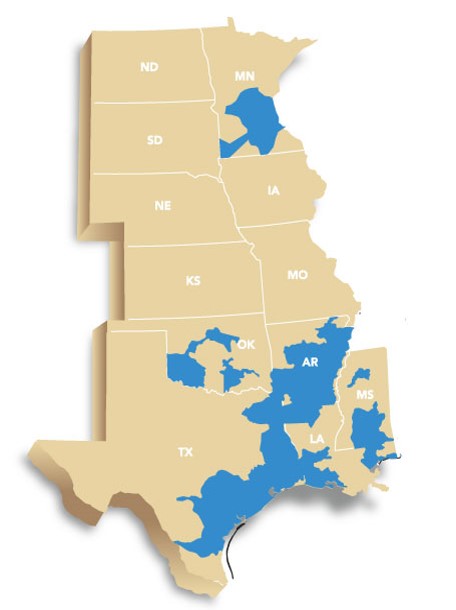
CERC Corp.’s NGD engages in regulated intrastate natural gas sales to, and natural gas transportation and storage for, approximately [removed: 3.4] [added: 3.5] million residential, commercial, industrial and transportation customers in Arkansas, Louisiana, Minnesota, Mississippi, Oklahoma and Texas.
In [removed: 2016,] [added: 2017,] approximately 37% of NGD’s total throughput was to residential customers and approximately 63% was to commercial and industrial and transportation customers.
The table below reflects the number of NGD customers by state as of December 31, [removed: 2016:][added: 2017:]
In [removed: 2016,] [added: 2017,] approximately 66% of NGD’s total throughput occurred in the first and fourth quarters.
In [removed: 2016,] [added: 2017,] NGD purchased virtually all of its natural gas supply pursuant to contracts with remaining terms varying from a few months to four years.
Major suppliers in [removed: 2016] [added: 2017] included the following:
| BP Energy Company/BP Canada Energy Marketing | | [removed: 17.7%] [added: 12.1%] |
| Macquarie [removed: Energy] [added: Energy, LLC] | | [removed: 16.3%] [added: 12.5%] |
| Tenaska Marketing Ventures | | [removed: 14.0%] [added: 18.0%] |
| Kinder Morgan Tejas Pipeline/Kinder Morgan Texas Pipeline | | [removed: 7.1%] [added: 7.4%] |
Numerous other suppliers provided the remaining [removed: 23.4%] [added: 23.2%] of NGD’s natural gas supply requirements.
NGD [added: currently] has [removed: had] AMAs associated with its utility distribution service in Arkansas, Louisiana, Mississippi, Oklahoma and Texas.
[removed: In these] agreements, NGD agrees to release transportation and storage capacity to other parties to manage natural gas storage, supply and delivery arrangements for NGD and to use the released capacity for other purposes when it is not needed for NGD.
As of December 31, [removed: 2016,] [added: 2017,] NGD owned approximately [removed: 74,000] [added: 75,000] linear miles of natural gas distribution mains, varying in size from one-half inch to 24 inches in diameter.
In [removed: 2016,] [added: 2017,] CES marketed approximately [removed: 777] [added: 1,200] Bcf of natural gas, related energy services and transportation to approximately 31,000 customers (including approximately [removed: 8] [added: 21] Bcf to affiliates) in [removed: 31] [added: 33] states.
Not included in the [removed: 2016] [added: 2017] customer count are approximately [removed: 60,000] [added: 72,000] natural gas customers that are served under residential and small commercial choice programs invoiced by their host utility.
For [added: further] information related to this acquisition, see Note [removed: 19] [added: 4] to our consolidated financial statements.
CES offers a variety of natural gas management services to gas utilities, large industrial customers, electric generators, smaller commercial and industrial customers, municipalities, educational [removed: institutions] [added: institutions, government facilities] and hospitals.
[removed: CES’] [added: CES’s] processes and risk control environment are designed to measure and value imbalances on a real-time basis to ensure that [removed: CES’] [added: CES’s] exposure to commodity price risk is kept to a minimum.
[added: CES optimizes its use of these] various tools to minimize its supply costs and does not engage in speculative commodity trading.
The VaR limit within which CES currently operates, a $4 million maximum set by the [removed: board] [added: Board] of [removed: directors,] [added: Directors,] is consistent with [removed: CES’] [added: CES’s] operational objective of matching its aggregate sales obligations (including the swing associated with load following services) with its supply portfolio in a manner that minimizes its total cost of supply.
Our simplified corporate structure is shown below:
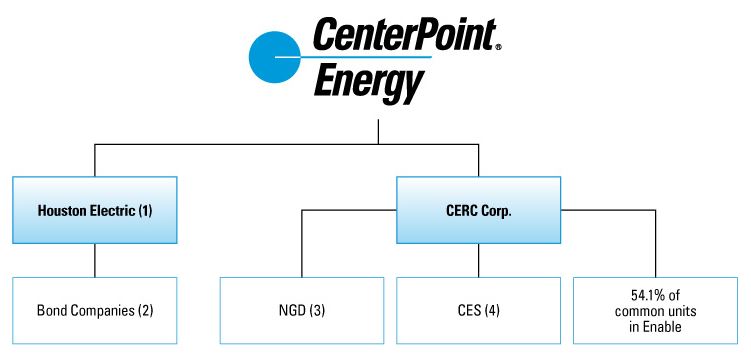
| (2) | Bond Companies are wholly-owned, bankruptcy remote entities formed solely for the purpose of purchasing and owning transition or system restoration property through the issuance of Securitization Bonds. |
| (5) | Represents limited partner interests in Enable, which owns, operates and develops natural gas and crude oil infrastructure assets. For additional information regarding our interest in Enable, see Note 10 to our consolidated financial statements. |
 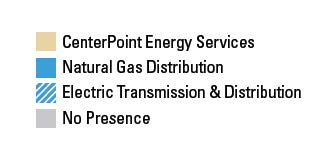
For a discussion of operating income by segment, see “Management’s Discussion and Analysis of Financial Condition and Results of Operations — Results of Operations by Business Segment” in Item 7 of Part II of this report.
Neither
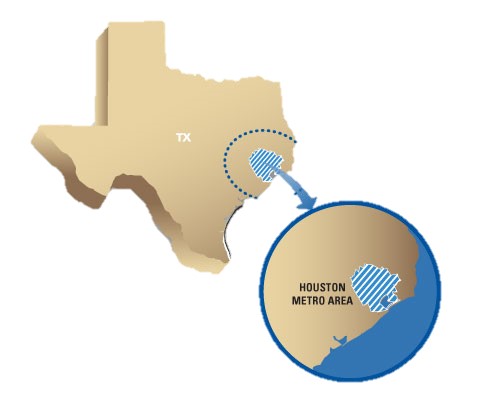
Houston Electric’s service territory is depicted below:
Bond Companies
Houston Electric has special purpose subsidiaries consisting of the Bond Companies, which it consolidates.
The consolidated special purpose subsidiaries are wholly-owned, bankruptcy remote entities that were formed solely for the purpose of purchasing and owning transition or system restoration property through the issuance of Securitization Bonds, and conducting activities incidental thereto.
For further discussion of the Securitization Bonds and the outstanding balances as of December 31, 2017 and 2016, see Note 13 to our consolidated financial statements.
by, the PUCT.
For information regarding Houston Electric’s major customers, see Note 18 to our consolidated financial statements.
Utility Technology
Houston Electric’s Smart Grid is comprised of the AMS, IG, ADMS and private telecommunications network.
Since 2009, Houston Electric has deployed fully operational advanced meters to virtually all of its 2.4 million metered customers, automated 31 substations, installed 872 IG Switching Devices on more than 200 circuits, built a wireless radio frequency mesh telecommunications network across Houston Electric’s 5,000-square mile footprint, and enabled real-time grid monitoring and control, which leverages information from smart meters and field sensors to manage system events through the ADMS.
We believe that the Smart Grid is already improving electric distribution service reliability and restoration, enhancing the consumer experience, supporting the growth of renewable energy and helping the environment by reducing carbon emissions.
For information related to debt outstanding under the Mortgage and General Mortgage, see Note 13 to our consolidated financial statements.
As of December 31, 2017, Houston Electric owned and operated the following electric transmission lines:
| | | Circuit Miles | | | | |
| Operating Voltage | | Overhead Lines | | | Underground Lines | |
| 69 kV | | 271 | | | 2 | |
| 138 kV | | 2,198 | | | 24 | |
| 345 kV | | 1,219 | | | — | |
| | | 3,688 | | | 26 | |
As of December 31, 2017, Houston Electric owned 28,883 pole miles of overhead distribution lines and 24,662 circuit miles of underground distribution lines.
NGD’s service territory is depicted below:
| Arkansas | 378,429 | | | 47,965 | | | 426,394 | |
| Louisiana | 230,084 | | | 16,711 | | | 246,795 | |
| Minnesota | 788,832 | | | 70,178 | | | 859,010 | |
| Mississippi | 113,752 | | | 12,567 | | | 126,319 | |
| Oklahoma | 89,074 | | | 10,758 | | | 99,832 | |
| Texas | 1,612,969 | | | 98,472 | | | 1,711,441 | |
| Total NGD | 3,213,140 | | | 256,651 | | | 3,469,791 | |
| CES | | 5.4% |
| Mieco, Inc. | | 5.0% |
| Spire Marketing, Inc. | | 4.9% |
Our indirect, wholly-owned subsidiaries include:
As of December 31, 2016, we also owned an aggregate of 14,520,000 Series A Preferred Units in Enable, which owns, operates and develops natural gas and crude oil infrastructure assets, and CERC Corp. owned approximately 54.1% of the limited partner interests in Enable.
ERCOT Market Framework
Houston Electric is a member of ERCOT.
Within ERCOT, prices for wholesale generation and retail electric sales are unregulated, but services provided by transmission and distribution companies, such as Houston Electric, are regulated by the PUCT.
ERCOT membership is open to consumer groups, investor and municipally-owned electric utilities, rural electric cooperatives, independent generators, power marketers, river authorities and REPs.
The ERCOT market includes most of the State of Texas, other than a portion of the panhandle, portions of the eastern part of the state bordering Arkansas and Louisiana and the area in and around El Paso.
The ERCOT market included available generating capacity of over 78,000 megawatts as of December 31, 2016.
Currently, there are only limited direct current interconnections between the ERCOT market and other power markets in the United States and Mexico.
Within ERCOT, these reliability standards are administered by the TRE.
Its responsibilities include ensuring that electricity production and delivery are accurately accounted for among the generation resources and wholesale buyers and sellers.
The transmission business has planning, design, construction, operation and maintenance responsibility for the portion of the transmission grid and for the load-serving substations it owns, primarily within its certificated area.
Restructuring of the Texas Electric Market
In 1999, the Texas legislature adopted the Texas Electric Choice Plan (Texas electric restructuring law).
Pursuant to that legislation, integrated electric utilities operating within ERCOT were required to unbundle their integrated operations into separate retail sales, power generation and transmission and distribution companies.
The legislation provided for a transition period to move to the new market structure and provided a mechanism for the formerly integrated electric utilities to recover stranded and certain other costs resulting from the transition to competition.
Those costs were recoverable after approval by the PUCT either through the issuance of securitization bonds or through the implementation of a competition transition charge as a rider to the utility’s tariff.
Houston Electric’s integrated utility business was restructured in accordance with the Texas electric restructuring law and its generating stations were sold to third parties.
Ultimately Houston Electric was authorized to recover a total of approximately $5 billion in stranded costs, other charges and related interest.
Most of that amount was recovered through the issuance of transition bonds by special purpose subsidiaries of Houston Electric.
As of December 31, 2016, approximately $1.9 billion aggregate principal amount of transition bonds were outstanding.
Sales to REPs that are affiliates of NRG represented approximately 34%, 35% and 37% of Houston Electric’s transmission and distribution revenues in 2016, 2015 and 2014, respectively.
Sales to REPs that are affiliates of Energy Future Holdings represented approximately 11%, 10% and 10% of Houston Electric’s transmission and distribution revenues in 2016, 2015 and 2014, respectively.
Houston Electric’s aggregate billed receivables balance from REPs as of December 31, 2016 was $193 million.
Approximately 33% and 12% of this amount was owed by affiliates of NRG and Energy Future Holdings, respectively.
AMS
In May 2012, Houston Electric substantially completed the deployment of an AMS, having installed approximately 2.2 million smart meters.
To recover the cost of the AMS, the PUCT approved a monthly surcharge payable by REPs, initially over 12 years and later reduced to six years as a result of DOE grant funds.
The surcharge expired in 2015 and 2016 for residential customers and certain non-residential customers, respectively, and is set to expire in 2017 for the remaining non-residential customers.
The surcharge amounts and duration are subject to adjustment in future proceedings to reflect actual costs incurred and to address required changes in scope.
As of December 31, 2016, Houston Electric had approximately $2.6 billion aggregate principal amount of general mortgage bonds outstanding under the General Mortgage, including approximately $118 million held in trust to secure pollution control bonds for which we are obligated.
Additionally, as of December 31, 2016, Houston Electric had approximately $102 million aggregate principal amount of first mortgage bonds outstanding under the Mortgage.
Houston Electric may issue additional general
mortgage bonds on the basis of retired bonds, 70% of property additions or cash deposited with the trustee.
Approximately $4.1 billion of additional first mortgage bonds and general mortgage bonds in the aggregate could be issued on the basis of retired bonds and 70% of property additions as of December 31, 2016.
However, Houston Electric has contractually agreed that it will not issue additional first mortgage bonds, subject to certain exceptions.
As of December 31, 2016, Houston Electric owned 28,702 pole miles of overhead distribution lines and 3,692 circuit miles of overhead transmission lines, including 287 circuit miles operated at 69,000 volts, 2,188 circuit miles operated at 138,000 volts and 1,217 circuit miles operated at 345,000 volts.
As of December 31, 2016, Houston Electric owned 23,937 circuit miles of underground distribution lines and 26 circuit miles of underground transmission lines, including two circuit miles operated at 69,000 volts and 24 circuit miles operated at 138,000 volts.
| Arkansas | 379,117 | | | 48,161 | | | 427,278 | |
| Louisiana | 230,475 | | | 16,842 | | | 247,317 | |
An excerpt. Shown here: 40 of 95 rewritten, 40 of 97 added and 40 of 86 removed. The counts are complete. For every sentence, read Item 1. Business in the FY2017 filing and the FY2016 filing.
Cover and table of contents
35 rewritten, 30 added, 7 removed, 193 unchanged
| | FOR THE FISCAL YEAR ENDED DECEMBER 31, [removed: 2016] [added: 2017] |
| Large accelerated filer þ | Accelerated filer o | Non-accelerated filer o | Smaller reporting company o | [added: Emerging growth company o |]
| | | (Do not check if a smaller reporting company) | | [added: |]
The aggregate market value of the voting stock held by non-affiliates of CenterPoint Energy, Inc. (CenterPoint Energy) was [removed: $10,273,144,728] [added: $11,722,467,012] as of June 30, [removed: 2016,] [added: 2017,] using the definition of beneficial ownership contained in Rule 13d-3 promulgated pursuant to the Securities Exchange Act of 1934 and excluding shares held by directors and executive officers.
As of February [removed: 10, 2017,] [added: 9, 2018,] CenterPoint Energy had [removed: 430,688,867] [added: 431,048,125] shares of Common Stock outstanding.
Portions of the definitive proxy statement relating to the [removed: 2017] [added: 2018] Annual Meeting of Shareholders of CenterPoint Energy, which will be filed with the Securities and Exchange Commission within 120 days of December 31, [removed: 2016,] [added: 2017,] are incorporated by reference in Item 10, Item 11, Item 12, Item 13 and Item 14 of Part III of this Form 10-K.
| Item 1. | | Business | | [removed: [1](#s76A4225A73E9534EB8BF83C23B96F598)] [added: [1](#s28A190DEA6C05C718AEE67A9C67A363F)] |
| Item 1A. | | Risk Factors | | [removed: [15](#s5E48B42655885BD7B748A10AD1B8E4BC)] [added: [17](#s4305D44B745D5CAB975D16994A7F04B9)] |
| Item 1B. | | Unresolved Staff Comments | | [removed: [40](#s541B273F0E7D5CFF9F9DFC19644B4A5B)] [added: [42](#s114681F1DF0459A3B72478BA679E1FC9)] |
| Item 2. | | Properties | | [removed: [40](#s2CCBE7E488725FCCA9C47500276B6C77)] [added: [42](#s71CAF8BEB626510FAA69B32BADF89149)] |
| Item 3. | | Legal Proceedings | | [removed: [40](#s5FD9A574751D5BEBA594A1052F04F902)] [added: [42](#s164162914BC05301BEDB31E490710CE2)] |
| Item 4. | | Mine Safety Disclosures | | [removed: [40](#sB9D948E82FB65D53842683DA7FD1BD38)] [added: [42](#s2F0BBBD80BF65371B7E419A24D535243)] |
| Item 5. | | Market for Registrants’ Common Equity, Related Stockholder Matters and Issuer Purchases of Equity Securities | | [removed: [41](#sC0A98C9E0EA25B7BB0318B58AE8F3DD7)] [added: [43](#s04EB181681CA56E5A3381B6071BC5288)] |
| Item 6. | | Selected Financial Data | | [removed: [42](#s93E41C9CF5155DD0A282CE5D6471439A)] [added: [44](#sEC433BAC49B95DF0A360CF41C9A6720E)] |
| Item 7. | | Management’s Discussion and Analysis of Financial Condition and Results of Operations | | [removed: [43](#s27CD8846DFB25B71A310EBD2E1B43524)] [added: [45](#s4B888ED86A2A5337B56A3338127F7250)] |
| Item 7A. | | Quantitative and Qualitative Disclosures About Market Risk | | [removed: [67](#sA9666E40D94B529BAED8890F19AB9758)] [added: [70](#s6B56BC2E4FD556169D0DC32A6FCA7E83)] |
| Item 8. | | Financial Statements and Supplementary Data | | [removed: [70](#s980AD0DA03F65CDB95285BA77A665AD1)] [added: [72](#s0625C850646152E8B9EDA644257EAEB6)] |
| Item 9. | | Changes in and Disagreements with Accountants on Accounting and Financial Disclosure | | [removed: [119](#sDA42C0FF74ED5CB3BD8F1D2F4E12D354)] [added: [125](#sD53594BBE2435FED9EC04BDD0431609F)] |
| Item 9A. | | Controls and Procedures | | [removed: [119](#s63137967247758469FA0C67FF5A133A2)] [added: [125](#s481008A8BBAD5ED99C8FA220475D0179)] |
| Item 9B. | | Other Information | | [removed: [122](#s3696559B113056F7BCCDD423BCC3C7C7)] [added: [128](#s5D0638B0A43159A299FC65EF6192F239)] |
| Item 10. | | Directors, Executive Officers and Corporate Governance | | [removed: [122](#sCF55A08340895018A9955C542F075FCE)] [added: [128](#s566B522683815069BC130836D5DA2A06)] |
| Item 11. | | Executive Compensation | | [removed: [122](#sEF1BDFE26ABE585E9DE3E23E3AA240DB)] [added: [128](#s23B4D73DB7BC59F7AF8FE73AEBEF8D30)] |
| Item 12. | | Security Ownership of Certain Beneficial Owners and Management and Related Stockholder Matters | | [removed: [122](#s25E2F84BAE8757EFA42527B412B1AFF6)] [added: [129](#s4D52DFA63D405A5386E49751D8409598)] |
| Item 13. | | Certain Relationships and Related Transactions, and Director Independence | | [removed: [122](#sB416B8CB64FE5921A0DED94EBC2B1763)] [added: [129](#s2D5EE6B0EF5157E9AC83225E9AA01F76)] |
| Item 14. | | Principal Accounting Fees and Services | | [removed: [122](#s45F8B96AC17B5B9D9278E2B177FA05E9)] [added: [129](#sB907983C55E452959C547D097D3727B7)] |
| Item 15. | | Exhibits and Financial Statement Schedules | | [removed: [123](#s3515366ECF3B574987F94E8B0352277B)] [added: [129](#sF1837D69DEAD565282D753B4F19A146F)] |
| AEM | | Atmos Energy Marketing, LLC, [added: previously] a wholly-owned subsidiary of Atmos Energy Holdings, Inc., a wholly-owned subsidiary of Atmos Energy Corporation |
| CEA | | Commodities Exchange Act [added: of 1936] |
| Charter [added: Common] | | Charter Communications, Inc. [added: common stock] |
| [removed: Charter] [added: Time] Common | | [removed: Charter] [added: Time] common stock |
| ICA | | Interstate Commerce Act [added: of 1887] |
| RCRA | | Resource Conservation and Recovery Act [added: of 1976] |
| Series A Preferred Units | | Enable’s 10% Series A Fixed-to-Floating Non-Cumulative Redeemable Perpetual Preferred [removed: Units] [added: Units, representing limited partner interests in Enable] |
| Time [removed: Common] | | Time Inc. [removed: common stock] |
| [removed: TRE] [added: Texas RE] | | Texas Reliability Entity |
10-K 1 cnp_10kx12312017.htm 10-K
If an emerging growth company, indicate by check mark if the registrant has elected not to use the extended transition period for complying with any new or revised financial accounting standards provided pursuant to Section 13(a) of the Exchange Act.
| | | | | |
| --- | --- | --- | --- | --- |
| | | | | |
| Item 16. | | Form 10-K Summary | | [129](#s6f911b3516b44a5fa76e3675721b373b) |
| ADFIT | | Accumulated deferred federal income taxes |
| ADMS | | Advanced Distribution Management System |
| BDA | | Billing Determinant Adjustment, which is a revenue stabilization mechanism used to adjust revenues impacted by declines in natural gas consumption which occurred after the most recent rate case |
| Bond Companies | | Wholly-owned, bankruptcy remote entities formed solely for the purpose of purchasing and owning transition or system restoration property through the issuance of Securitization Bonds |
| Charter merger | | Merger of Charter Communications, Inc. and Time Warner Cable Inc. |
| COLI | | Corporate-owned life insurance |
| Dodd-Frank Act | | Dodd-Frank Wall Street Reform and Consumer Protection Act of 2010 |
| EBITDA | | Earnings before interest, taxes, depreciation and amortization |
| EDIT | | Excess deferred income taxes |
| Gas Daily | | Platts gas daily indices |
| IG | | Intelligent Grid |
| kV | | Kilovolt |
| Meredith | | Meredith Corporation |
| NYMEX | | New York Mercantile Exchange |
| RICE MACT | | Reciprocating Internal Combustion Engines Maximum Achievable Control Technology |
| TBD | | To be determined |
| TCEH Corp. | | Formerly Texas Competitive Electric Holdings Company LLC, predecessor to Vistra Energy Corp. whose major subsidiaries include Luminant and TXU Energy |
| TCJA | | Tax reform legislation informally called the Tax Cuts and Jobs Act of 2017 |
| | | |
| --- | --- | --- |
| | | |
| GLOSSARY (cont.) | | |
| Vistra Energy Corp. | | Texas-based energy company focused on the competitive energy and power generation markets |
vi
10-K 1 cnp_10kx12312016.htm 10-K
| | | | |
| --- | --- | --- | --- |
| Bond Companies | | Transition and system restoration bond companies |
| Energy Future Holdings | | Energy Future Holdings Corp. |
| REIT | | Real Estate Investment Trust |
| Shell | | Royal Dutch Shell plc |
Item 5. Market for Registrant’s Common Equity, Related Stockholder Matters and Issuer Purchases of Equity Securities
8 rewritten, 11 added, 9 removed, 23 unchanged
As of February [removed: 10, 2017,] [added: 9, 2018,] our common stock was held by approximately [removed: 32,130] [added: 30,493] shareholders of record.
| First Quarter | | | | | | | | | $ | [removed: 0.2475] [added: 0.2675] | |
| Second Quarter | | | | | | | | | $ | [removed: 0.2475] [added: 0.2675] | |
| Third Quarter | | | | | | | | | $ | [removed: 0.2475] [added: 0.2675] | |
| Fourth Quarter [added: (1)] | | | | | | | | | $ | [removed: 0.2475] [added: 0.5450] | |
The closing market price of our common stock on December 31, [removed: 2016] [added: 2017] was [removed: $24.64] [added: $28.36] per share.
[added: | (1) |] On [removed: January 5,] [added: October 25,] 2017, our [removed: board] [added: Board] of [removed: directors] [added: Directors] declared a regular quarterly cash dividend of $0.2675 per [added: share of common stock payable on December 8, 2017, to shareholders of record as of the close of business on November 16, 2017. On December 13, 2017, our Board of Directors declared a regular quarterly cash dividend of $0.2775 per] share, payable on March [removed: 10, 2017] [added: 8, 2018] to shareholders of record [added: at the close of business] on February [removed: 16, 2017.][added: 15, 2018. |]
During the quarter ended December 31, [removed: 2016,] [added: 2017,] none of our equity securities registered pursuant to Section 12 of the Securities Exchange Act of 1934 were purchased by or on behalf of us or any of our “affiliated purchasers,” as defined in Rule 10b-18(a)(3) under the Securities Exchange Act of 1934.
| 2017 | | | | | | | | | | | |
| January 3 | | | | | $ | 24.59 | | | | | |
| March 15 | $ | 28.09 | | | | | | | | | |
| May 17 | | | | | $ | 27.17 | | | | | |
| June 1 | $ | 28.93 | | | | | | | | | |
| July 11 | | | | | $ | 27.16 | | | | | |
| September 11 | $ | 30.45 | | | | | | | | | |
| November 30 | $ | 30.01 | | | | | | | | | |
| December 21 | | | | | $ | 27.77 | | | | | |
| | |
| --- | --- |
| 2015 | | | | | | | | | | | |
| January 2 | $ | 23.63 | | | | | | | | | |
| March 31 | | | | | $ | 20.41 | | | | | |
| April 15 | $ | 21.31 | | | | | | | | | |
| June 30 | | | | | $ | 19.03 | | | | | |
| August 14 | $ | 19.92 | | | | | | | | | |
| September 29 | | | | | $ | 17.53 | | | | | |
| October 22 | $ | 19.13 | | | | | | | | | |
| December 10 | | | | | $ | 16.14 | | | | | |
Item 6. Selected Financial Data
25 rewritten, 3 added, 1 removed, 16 unchanged
| | [removed: 2016] [added: 2017] | | | | [removed: 2015] [added: 2016] | | | | [removed: 2014] [added: 2015] | | | | [removed: 2013] [added: 2014] | | | | [removed: 2012] [added: 2013] | | |
| Revenues | $ | [removed: 7,528] [added: 9,614] | | | $ | [removed: 7,386] [added: 7,528] | | | $ | [removed: 9,226] [added: 7,386] | | | $ | [removed: 8,106] [added: 9,226] | | | $ | [removed: 7,452] [added: 8,106] | |
| Equity in earnings (losses) of unconsolidated affiliates | [added: 265 | | | |] 208 | | | | (1,663 | | ) | [removed: (1)] [added: (2)] | 308 | | | | 188 | | | [removed: | 31 | | |]
| Net income (loss) | [removed: $] [added: 1,792] | [added: | | (1) |] 432 | | | [removed: $] | (692 | [removed: )] | [added: )] | [removed: $] | 611 | | | [removed: $] | 311 | | | [removed: $ | 417 | |]
| Basic earnings (loss) per common share | [removed: $] [added: 4.16] | [added: | | |] 1.00 | | | [removed: $] | (1.61 | [removed: )] | [added: )] | [removed: $] | 1.42 | | | [removed: $] | 0.73 | | | [removed: $ | 0.98 | |]
| Diluted earnings (loss) per common share | [removed: $] [added: 4.13] | [removed: 1.00] | | | [removed: $] [added: 1.00] | [removed: (1.61] | [removed: )] | | [removed: $] [added: (1.61] | [removed: 1.42] | [added: )] | | [removed: $] [added: 1.42] | [removed: 0.72] | | | $ | [removed: 0.97] [added: 0.72] | |
| Cash dividends [removed: declared] [added: paid] per common share | $ | [removed: 1.03] [added: 1.07] | | | $ | [removed: 0.99] [added: 1.03] | | | $ | [removed: 0.95] [added: 0.99] | | | $ | [removed: 0.83] [added: 0.95] | | | $ | [removed: 0.81] [added: 0.83] | |
| Dividend payout ratio | [removed: 103] [added: 26] | | % | | [removed: n/a] [added: 103] | | [added: %] | | [removed: 67] [added: n/a] | | [removed: %] | | [removed: 114] [added: 67] | | % | | [removed: 83] [added: 114] | | % |
| Return on average common equity | [added: 44 | | % | |] 12 | | % | | (17 | | )% | | 14 | | % | | 7 | | % | [removed: | 10 | | % |]
| Ratio of earnings to fixed charges | [removed: 2.74] [added: 3.70] | | | | [removed: 2.67] [added: 2.74] | | | | [removed: 2.79] [added: 2.67] | | | | [removed: 2.42] [added: 2.79] | | | | [removed: 2.29] [added: 2.42] | | |
| Book value per common share | $ | [removed: 8.04] [added: 10.88] | | | $ | [removed: 8.05] [added: 8.04] | | | $ | [removed: 10.58] [added: 8.05] | | | $ | [removed: 10.09] [added: 10.58] | | | $ | 10.09 | |
| Market price per common share | [removed: 24.64] [added: 28.36] | | | | [removed: 18.36] [added: 24.64] | | | | [removed: 23.43] [added: 18.36] | | | | [removed: 23.18] [added: 23.43] | | | | [removed: 19.25] [added: 23.18] | | |
| Market price as a percent of book value | [removed: 306] [added: 261] | | % | | [removed: 228] [added: 306] | | % | | [removed: 221] [added: 228] | | % | | [removed: 230] [added: 221] | | % | | [removed: 191] [added: 230] | | % |
| [removed: Limited] [added: Percentage of common units owned representing limited] partner interests [removed: owned] in Enable | 54.1 | | % | | [removed: 55.4] [added: 54.1] | | % | | 55.4 | | % | | [removed: 58.3] [added: 55.4] | | % | | [removed: n/a] [added: 58.3] | | [added: %] |
| Total assets [removed: (2)] [added: (4)] | $ | [removed: 21,829] [added: 22,736] | | | $ | [removed: 21,290] [added: 21,829] | | | $ | [removed: 23,150] [added: 21,290] | | | $ | [removed: 21,816] [added: 23,150] | | | $ | [removed: 22,806] [added: 21,816] | |
| Short-term borrowings | [removed: 35] [added: 39] | | | | [removed: 40] [added: 35] | | | | [removed: 53] [added: 40] | | | | [removed: 43] [added: 53] | | | | [removed: 38] [added: 43] | | |
| Securitization [removed: bonds,] [added: Bonds,] including current maturities [removed: (2)] [added: (3)] | [removed: 2,278] [added: 1,868] | | | | [removed: 2,667] [added: 2,278] | | | | [removed: 3,037] [added: 2,667] | | | | [removed: 3,388] [added: 3,037] | | | | [removed: 3,832] [added: 3,388] | | |
| Other long-term debt, including current maturities [removed: (2)] [added: (3)] | [removed: 6,279] [added: 6,933] | | | | [removed: 6,063] [added: 6,279] | | | | [removed: 5,717] [added: 6,063] | | | | [removed: 4,873] [added: 5,717] | | | | [removed: 5,861] [added: 4,873] | | |
| Common stock equity | [removed: 29] [added: 35] | | % | | [removed: 28] [added: 29] | | % | | [removed: 34] [added: 28] | | % | | 34 | | % | | [removed: 31] [added: 34] | | % |
| Long-term debt, including current maturities | [removed: 71] [added: 65] | | % | | [removed: 72] [added: 71] | | % | | [removed: 66] [added: 72] | | % | | 66 | | % | | [removed: 69] [added: 66] | | % |
| Common stock equity | [removed: 36] [added: 40] | | % | | 36 | | % | | [removed: 44] [added: 36] | | % | | [removed: 47] [added: 44] | | % | | [removed: 42] [added: 47] | | % |
| Long-term debt, excluding [removed: securitization bonds,] [added: Securitization Bonds,] and including current maturities | [removed: 64] [added: 60] | | % | | 64 | | % | | [removed: 56] [added: 64] | | % | | [removed: 53] [added: 56] | | % | | [removed: 58] [added: 53] | | % |
| Capital expenditures | $ | [removed: 1,406] [added: 1,494] | | | $ | [removed: 1,575] [added: 1,406] | | | $ | [removed: 1,402] [added: 1,575] | | | $ | [removed: 1,272] [added: 1,402] | | | $ | [removed: 1,188] [added: 1,272] | |
| [removed: (1)] [added: (2)] | This amount includes $1,846 million of non-cash impairment charges related to Enable. |
| [removed: (2)] [added: (3)] | Amounts for [removed: 2012] [added: 2013] to 2015 have been restated to reflect adoption of ASU 2015-03. |
| (1) | Net income for the year ended December 31, 2017 includes a reduction in income taxes of $1,113 million due to tax reform. See Note 14 to our consolidated financial statements for further discussion of the impacts of tax reform implementation. |
| | |
| --- | --- |
| | | | | | | | | | | | | | | | | | | | |
Item 8. Financial Statements and Supplementary Data
674 rewritten, 354 added, 143 removed, 1,052 unchanged
We have audited the accompanying consolidated balance sheets of CenterPoint Energy, Inc. and subsidiaries (the [removed: “Company”)] [added: "Company")] as of December 31, [removed: 2016 and 2015,] [added: 2017] and [added: 2016,] the related statements of consolidated income, comprehensive income, [removed: shareholders’] [added: shareholders'] equity, and cash [removed: flows] [added: flows,] for each of the three years in the period ended December 31, [removed: 2016.][added: 2017, and the related notes (collectively referred to as the "financial statements").]
Our responsibility is to express an opinion on [removed: these] [added: the Company's] financial statements based on our audits.
We conducted our audits in accordance with the standards of the [removed: Public Company Accounting Oversight Board (United States).][added: PCAOB.]
Those standards require that we plan and perform the audit to obtain reasonable assurance about whether the financial statements are free of material [removed: misstatement.][added: misstatement, whether due to error or fraud.]
[removed: An audit includes] [added: Such procedures included] examining, on a test basis, evidence [removed: supporting] [added: regarding] the amounts and disclosures in the financial statements.
[removed: An audit] [added: Our audits] also [removed: includes assessing] [added: included evaluating] the accounting principles used and significant estimates made by management, as well as evaluating the overall [added: presentation of the] financial [removed: statement presentation.][added: statements.]
In our opinion, [removed: such consolidated] [added: the] financial statements present fairly, in all material respects, the financial position of [removed: CenterPoint Energy, Inc. and subsidiaries] [added: the Company] as of December 31, [removed: 2016] [added: 2017] and [removed: 2015,] [added: 2016,] and the results of [removed: their] [added: its] operations and [removed: their] [added: its] cash flows for each of the three years in the period ended December 31, [removed: 2016,] [added: 2017,] in conformity with accounting principles generally accepted in the United States of America.
We have also audited, in accordance with the standards of the Public Company Accounting Oversight Board (United [removed: States),] [added: States) (PCAOB),] the [removed: Company’s] [added: Company's] internal control over financial reporting as of December 31, [removed: 2016,] [added: 2017,] based on [removed: the] criteria established in Internal [removed: Control—Integrated] [added: Control - Integrated] Framework (2013) issued by the Committee of Sponsoring Organizations of the Treadway Commission and our report dated February [removed: 28, 2017] [added: 22, 2018,] expressed an unqualified opinion on the [removed: Company’s] [added: Company's] internal control over financial reporting.
| | [removed: 2016] [added: 2017] | | | | [removed: 2015] [added: 2016] | | | | [removed: 2014] [added: 2015] | | |
| Utility revenues | $ | [removed: 5,440] [added: 5,603] | | | $ | [removed: 5,448] [added: 5,440] | | | $ | [removed: 6,116] [added: 5,448] | |
| Non-utility revenues | [removed: 2,088] [added: 4,011] | | | | [removed: 1,938] [added: 2,088] | | | | [removed: 3,110] [added: 1,938] | | |
| Total | [removed: 7,528] [added: 9,614] | | | | [removed: 7,386] [added: 7,528] | | | | [removed: 9,226] [added: 7,386] | | |
| Utility natural gas | [removed: 983] [added: 1,109] | | | | [removed: 1,264] [added: 983] | | | | [removed: 1,878] [added: 1,264] | | |
| Non-utility natural gas | [removed: 1,983] [added: 3,785] | | | | [removed: 1,838] [added: 1,983] | | | | [removed: 3,043] [added: 1,838] | | |
| Operation and maintenance | [removed: 2,093] [added: 2,221] | | | | [removed: 2,007] [added: 2,093] | | | | [removed: 1,969] [added: 2,007] | | |
| Depreciation and amortization | [removed: 1,126] [added: 1,036] | | | | [removed: 970] [added: 1,126] | | | | [removed: 1,013] [added: 970] | | |
| Taxes other than income taxes | [removed: 384] [added: 391] | | | | [removed: 374] [added: 384] | | | | [removed: 388] [added: 374] | | |
| Total | [removed: 6,569] [added: 8,542] | | | | [removed: 6,453] [added: 6,569] | | | | [removed: 8,291] [added: 6,453] | | |
| Operating Income | [removed: 959] [added: 1,072] | | | | [removed: 933] [added: 959] | | | | [removed: 935] [added: 933] | | |
| Gain (loss) on marketable securities | [removed: 326] [added: 7] | | | | [removed: (93] [added: 326] | | [removed: )] | | [removed: 163] [added: (93] | | [added: )] |
| Gain (loss) on indexed debt securities | [removed: (413] [added: 49] | | [removed: )] | | [removed: 74] [added: (413] | | [added: )] | | [removed: (86] [added: 74] | | [removed: )] |
| Interest and other finance charges | [removed: (338] [added: (313] | | ) | | [removed: (352] [added: (338] | | ) | | [removed: (353] [added: (352] | | ) |
| Interest on Securitization Bonds | [removed: (91] [added: (77] | | ) | | [removed: (105] [added: (91] | | ) | | [removed: (118] [added: (105] | | ) |
| Equity in earnings (losses) of unconsolidated affiliates | [removed: 208] [added: 265] | | | | [removed: (1,633] [added: 208] | | [removed: )] | | [removed: 308] [added: (1,633] | | [added: )] |
| Other, net | [removed: 35] [added: 60] | | | | [removed: 46] [added: 35] | | | | [removed: 36] [added: 46] | | |
| Total | [removed: (273] [added: (9] | | ) | | [removed: (2,063] [added: (273] | | ) | | [removed: (50] [added: (2,063] | | ) |
| Income (Loss) Before Income Taxes | [removed: 686] [added: 1,063] | | | | [removed: (1,130] [added: 686] | | [removed: )] | | [removed: 885] [added: (1,130] | | [added: )] |
| Income tax expense (benefit) | [removed: 254] [added: (729] | | [added: )] | | [removed: (438] [added: 254] | | [removed: )] | | [removed: 274] [added: (438] | | [added: )] |
| Net Income (Loss) | $ | [removed: 432] [added: 1,792] | | | $ | [removed: (692] [added: 432] | [removed: )] | | $ | [removed: 611] [added: (692] | [added: )] |
| Basic Earnings (Loss) Per Share | $ | [removed: 1.00] [added: 4.16] | | | $ | [removed: (1.61] [added: 1.00] | [removed: )] | | $ | [removed: 1.42] [added: (1.61] | [added: )] |
| Diluted Earnings (Loss) Per Share | $ | [removed: 1.00] [added: 4.13] | | | $ | [removed: (1.61] [added: 1.00] | [removed: )] | | $ | [removed: 1.42] [added: (1.61] | [added: )] |
| Weighted Average Shares Outstanding, Basic | 431 | | | | [removed: 430] [added: 431] | | | | 430 | | |
| Weighted Average Shares Outstanding, Diluted | 434 | | | | [removed: 430] [added: 434] | | | | [removed: 432] [added: 430] | | |
| Adjustment to pension and other postretirement plans (net of tax of [removed: $4, $12] [added: $6, $4] and [removed: $5,] [added: $12,] respectively) | [removed: (7] [added: 6] | | [removed: )] | | [removed: 20] [added: (7] | | [added: )] | | [removed: 3] [added: 20] | | |
| Net deferred gain [added: (loss)] from cash flow hedges (net of tax of [removed: $-0-,] [added: $2,] $-0-, and $-0-, respectively) | [removed: 1] [added: (3] | | [added: )] | | [removed: —] [added: 1] | | | | — | | |
| Reclassification of deferred loss from cash flow hedges realized in net income (net of tax of [removed: $1,] $-0-, [added: $1,] and $-0-, respectively) | [removed: 1] [added: —] | | | | [removed: —] [added: 1] | | | | [removed: 1] [added: —] | | |
| Other comprehensive income (loss) | [removed: (5] [added: 3] | | [removed: )] | | [removed: 20] [added: (5] | | [added: )] | | [removed: 4] [added: 20] | | |
| Comprehensive income (loss) | $ | [removed: 427] [added: 1,795] | | | $ | [removed: (672] [added: 427] | [removed: )] | | $ | [removed: 615] [added: (672] | [added: )] |
| | December 31, 2016 | | | | [removed: December 31, 2015] | | | [added: | | | | | |]
| Cash and cash equivalents [removed: ($340] [added: ($230] and [removed: $264] [added: $340] related to VIEs, respectively) | $ | [removed: 341] [added: 260] | | | $ | [removed: 264] [added: 341] | |
Opinion on the Financial Statements
Basis for Opinion
We are a public accounting firm registered with the PCAOB and are required to be independent with respect to the Company in accordance with the U.S. federal securities laws and the applicable rules and regulations of the Securities and Exchange Commission and the PCAOB.
Our audits included performing procedures to assess the risks of material misstatement of the financial statements, whether due to error or fraud, and performing procedures that respond to those risks.
We have served as the Company's auditor since 1932.
| Dividends accrued | 120 | | | | — | | |
| Net income (loss) | $ | 1,792 | | | $ | 432 | | | $ | (692 | ) |
| Depreciation and amortization | 1,036 | | | | 1,126 | | | | 970 | | |
| Net income (loss) | | | | 1,792 | | | | | | | 432 | | | | | | | (692 | | ) |
| Common stock dividends declared ($1.3475, $1.03 and $0.99 per share, respectively) | | | | (581 | | ) | | | | | (443 | | ) | | | | | (426 | | ) |
| (c) | Equity and Cost Method Investments |
The net assets contributed were deemed to be in-substance real estate and were therefore recorded at historical cost.
For further detail on CenterPoint Energy’s regulatory assets and liabilities, please see Note 6.
| Capitalized interest and AFUDC included in Interest and other finance charges | | $ | 9 | | | $ | 8 | | | $ | 10 | |
| AFUDC equity included in Other Income | | 11 | | | | 7 | | | | 12 | | |
To the extent certain EDIT of CenterPoint Energy’s rate-regulated subsidiaries may be recoverable or payable through future rates, regulatory assets and liabilities have been recorded, respectively.
On December 22, 2017, President Trump signed into law comprehensive tax reform legislation informally called the Tax Cuts and Jobs Acts, or TCJA, which resulted in significant changes to federal tax laws effective January 1, 2018.
See Note 14 for further discussion of the impacts of tax reform implementation.
(o) Cash and Cash Equivalents and Restricted Cash
Restricted cash accounts as of December 31, 2017 and 2016 are reported below.
| Restricted cash included in Prepaid expenses and other current assets | | $ | 35 | | | $ | 40 | |
| Restricted cash included in Other assets | | 1 | | | | — | | |
| Total restricted cash | | $ | 36 | | | $ | 40 | |
Recently Adopted
In March 2016, the FASB issued ASU No. 2016-09, Compensation-Stock Compensation (Topic 718): Improvements to Employee Share-Based Payment Accounting (ASU 2016-09).
The new guidance simplifies several aspects of the accounting for share-based payment transactions, including the income tax consequences, classification of awards as either equity or liabilities, and classification on the statement of cash flows.
CenterPoint Energy adopted this standard as of January 1, 2017.
The adoption did not have a material impact on CenterPoint Energy’s financial position or results of operations.
However, CenterPoint Energy’s statement of cash flows reflects a decrease in financing activity and a corresponding increase in operating activity of $4 million, $3 million and $5 million as of December 31, 2017, 2016 and 2015, respectively, due to the retrospective application of the requirement that cash paid to a tax authority when shares are withheld to satisfy statutory income tax withholding obligations should be presented as a financing rather than as an operating activity.
Issued, Not Yet Effective
As of the first reporting period in which
CenterPoint Energy expects to adopt this standard on January 1, 2019 and is evaluating available transitional practical expedients.
CenterPoint Energy is in the process of reviewing contracts to identify leases as defined in ASU 2016-02 and expects to recognize on the statements of financial position right-of-use assets and lease liabilities for the majority of its leases that are currently classified as operating leases.
ASU 2014-09 eliminates industry specific guidance, including ASC 360-20, and as a result our investment in Enable will no longer be considered in-substance real estate.
Gains or losses on subsequent sales or dilution events in our investment in Enable will be recognized in earnings.
CenterPoint Energy adopted these ASUs on January 1, 2018 using the modified retrospective adoption approach.
CenterPoint Energy adopted this standard on January 1, 2018.
Due to the requirement that cash proceeds from COLI policies be classified as cash inflows from investing activity, there will be an increase in investing activity and a corresponding decrease in operating activity on the statement of cash flows when COLI proceeds are received.
ASU 2017-04 is effective for fiscal years, and interim periods
within those fiscal years, beginning after December 15, 2019, with early adoption permitted.
February 28, 2017
| Notes receivable - affiliated companies | — | | | | 363 | | |
| Exercise of SESH put to Enable | — | | | | 1 | | | | 196 | | |
| Common stock dividends | | | | (443 | | ) | | | | | (426 | | ) | | | | | (408 | | ) |
As of December 31, 2016 and 2015, these removal costs of $1,010 million and $980 million, respectively, are classified as regulatory liabilities in CenterPoint Energy’s Consolidated Balance Sheets.
During 2016, 2015 and 2014, CenterPoint Energy capitalized interest and AFUDC of $8 million, $10 million and $11 million, respectively.
During 2016, 2015 and 2014, CenterPoint Energy recorded AFUDC equity of $7 million, $12 million and $14 million, respectively, which is included in Other Income in its Statements of Consolidated Income.
These restricted cash accounts of $40 million and $35 million as of December 31, 2016 and 2015, respectively, are included in other current assets in CenterPoint Energy’s Consolidated Balance Sheets.
In February 2015, the FASB issued ASU No. 2015-02, Consolidation (Topic 810): Amendments to the Consolidation Analysis (ASU 2015-02).
ASU 2015\-02 changes the analysis that reporting organizations must perform to evaluate whether they should consolidate certain legal entities, such as limited partnerships.
The changes include, among others, modification of the evaluation of whether limited partnerships and similar legal entities are VIEs or voting interest entities and elimination of the presumption that a general partner should consolidate a limited partnership.
ASU 2015-02 does not amend the related party guidance for situations in which power is shared between two or more entities that hold interests in a VIE.
In April 2015, the FASB issued ASU No. 2015-03, Interest-Imputation of Interest (Subtopic 835-30): Simplifying the Presentation of Debt Issuance Cost (ASU 2015-03).
ASU 2015-03 requires that debt issuance costs related to a recognized debt liability be presented in the balance sheet as a direct deduction from the carrying amount of that debt liability, consistent with debt discounts.
The recognition and measurement guidance for debt issuance costs are not affected by ASU 2015-03.
CenterPoint Energy adopted ASU 2015-03 retrospectively on January 1, 2016, which resulted in a reduction of other long-term assets, indexed debt and total long-term debt on its Consolidated Balance Sheets.
CenterPoint Energy had debt issuance costs, excluding amounts related to credit facility arrangements, of $42 million and $44 million as a reduction to long-term debt on its Consolidated Balance Sheets as of December 31, 2016 and 2015, respectively.
In May 2015, the FASB issued ASU No. 2015-07, Fair Value Measurement (Topic 820): Disclosures for Investments in Certain Entities That Calculate Net Asset Value per Share (or Its Equivalent) (ASU 2015-07).
ASU 2015-07 removes the requirement to categorize within the fair value hierarchy investments for which fair values are measured at NAV using the practical expedient.
Entities will be required to disclose the fair value of investments measured using the NAV practical expedient so that financial statement users can reconcile amounts reported in the fair value hierarchy table to amounts reported on the balance sheet.
CenterPoint Energy retrospectively adopted ASU 2015-07 on January 1, 2016, which impacts its employee benefit plan disclosures.
See Note 7 for the impacts on the employee benefit plan disclosures.
In September 2015, the FASB issued ASU No. 2015-16, Business Combinations (Topic 805): Simplifying the Accounting for Measurement-Period Adjustments (ASU 2015-16).
ASU 2015-16 eliminates the requirement for an acquirer in a business combination to account for measurement-period adjustments retrospectively.
Instead, an acquirer would recognize a measurement-period adjustment during the period in which the amount of the adjustment is determined.
CenterPoint Energy prospectively adopted ASU 2015-16 on January 1, 2016, which did not have an impact on its financial position, results of operations or cash flows.
and other aspects related to recognition and measurement of financial assets and financial liabilities.
CenterPoint Energy is considering the impacts of the new guidance on its ability to recognize revenue for certain contracts when collectability is uncertain and its accounting for contributions in aid of construction.
CenterPoint Energy expects to adopt these ASUs on January 1, 2018 and is evaluating the method of adoption.
CenterPoint Energy is currently assessing the impact that this standard will have on its statement of cash flows.
The increase of $13 million in the ARO from the revision in estimates in 2015 is primarily attributable to an increase in estimated disposal costs.
On April 1, 2016, CES, an indirect, wholly-owned subsidiary of CenterPoint Energy, closed the previously announced agreement to acquire the retail energy services business and natural gas wholesale assets of Continuum.
| | | | | |
| --- | --- | --- | --- | --- |
| Total identifiable intangibles | | $ | 38 | | | |
As Continuum was a non-public company that did not prepare interim financial information and the acquisition included the purchase of both businesses and assets, the historical financial information for the businesses and assets acquired was impracticable to obtain.
As a result, pro forma results of the acquired businesses and assets are not presented.
(5) Goodwill
Other intangibles were not material as of December 31, 2016 and 2015.
Stock Options
An excerpt. Shown here: 40 of 674 rewritten, 40 of 354 added and 40 of 143 removed. The counts are complete. For every sentence, read Item 8. Financial Statements and Supplementary Data in the FY2017 filing and the FY2016 filing.
Item 9A. Controls and Procedures
11 rewritten, 6 added, 3 removed, 33 unchanged
Based on that evaluation, our principal executive officer and principal financial officer concluded that our disclosure controls and procedures were effective as of December 31, [removed: 2016] [added: 2017] to provide assurance that information required to be disclosed in our reports filed or submitted under the Exchange Act is recorded, processed, summarized and reported within the time periods specified in the Securities and Exchange Commission’s rules and forms and such information is accumulated and communicated to our management, including our principal executive officer and principal financial officer, as appropriate to allow timely decisions regarding disclosure.
There has been no change in our internal controls over financial reporting that occurred during the three months ended December 31, [removed: 2016] [added: 2017] that has materially affected, or is reasonably likely to materially affect, our internal controls over financial reporting.
Under the supervision and with the participation of our management, including our principal executive officer and principal financial officer, we conducted an evaluation of the effectiveness of our internal control over financial reporting based on the framework in Internal Control — Integrated Framework (2013) issued by the Committee of Sponsoring Organizations of the [added: Treadway Commission.]
Based on our evaluation under the framework in Internal Control — Integrated Framework (2013), our management has concluded that our internal control over financial reporting was effective as of December 31, [removed: 2016.][added: 2017.]
Deloitte & Touche LLP, the Company’s independent registered public accounting firm, has issued an attestation report on the effectiveness of our internal control over financial reporting as of December 31, [removed: 2016] [added: 2017] which is set forth below.
We have audited the internal control over financial reporting of CenterPoint Energy, Inc. and subsidiaries (the “Company”) as of December 31, [removed: 2016,] [added: 2017,] based on criteria established in Internal Control [removed: —] [added: -] Integrated Framework (2013) issued by the Committee of Sponsoring Organizations of the Treadway [removed: Commission.][added: Commission (COSO).]
We conducted our audit in accordance with the standards of the [removed: Public Company Accounting Oversight Board (United States).][added: PCAOB.]
A company’s internal control over financial reporting is a process designed [removed: by, or under the supervision of, the company’s principal executive and principal financial officers, or persons performing similar functions, and effected by the company’s board of directors, management, and other personnel] to provide reasonable assurance regarding the reliability of financial reporting and the preparation of financial statements for external purposes in accordance with generally accepted accounting principles.
Also, projections of any evaluation of [removed: the] effectiveness [removed: of the internal control over financial reporting] to future periods are subject to the risk that [removed: the] controls may become inadequate because of changes in conditions, or that the degree of compliance with the policies or procedures may deteriorate.
In our opinion, the Company maintained, in all material respects, effective internal control over financial reporting as of December 31, [removed: 2016,] [added: 2017,] based on [removed: the] criteria established in Internal Control [removed: —] [added: -] Integrated Framework (2013) issued by [removed: the Committee of Sponsoring Organizations of the Treadway Commission.][added: COSO.]
We have also audited, in accordance with the standards of the Public Company Accounting Oversight Board (United [removed: States),] [added: States) (PCAOB),] the consolidated financial statements as of and for the year ended December 31, [removed: 2016] [added: 2017,] of the Company and our report dated February [removed: 28, 2017] [added: 22, 2018,] expressed an unqualified opinion on those financial statements.
Opinion on Internal Control over Financial Reporting
Basis for Opinion
We are a public accounting firm registered with the PCAOB and are required to be independent with respect to the Company in accordance with the U.S. federal securities laws and the applicable rules and regulations of the Securities and Exchange Commission and the PCAOB.
Definition and Limitations of Internal Control over Financial Reporting
Because of its inherent limitations, internal control over financial reporting may not prevent or detect misstatements.
February 22, 2018
Treadway Commission.
Because of the inherent limitations of internal control over financial reporting, including the possibility of collusion or improper management override of controls, material misstatements due to error or fraud may not be prevented or detected on a timely basis.
February 28, 2017
Item 9B. Other Information
0 rewritten, 12 added, 1 removed, 3 unchanged
Compensatory Arrangements of Certain Officers
Amendments to Forms of Award Agreements under Long-Term Incentive Plan
On February 21, 2018, the Compensation Committee of the Board of Directors of CenterPoint Energy approved new forms of award agreements under CenterPoint Energy’s LTIP for performance share awards and restricted stock unit awards.
Among other things, the newly approved forms of award agreements for officers and director employees provide that a “retirement eligible” (age 55 or greater with at least five years of service) participant, who meets the requirements for enhanced retirement as specified under the agreement will fully vest in the award, subject, in the case of performance share awards, to the achievement of the relevant performance metrics.
The requirements for enhanced retirement include having a sum of age and years of employment equal to 65 or greater, providing at least six months’ written notice of retirement, providing a transition plan and retiring on or after the January 1 immediately following the grant (for restricted stock units) or the first anniversary of the beginning of the designated performance cycle (for performance share awards).
In addition, for officers subject to Section 16 of the Exchange Act, eligibility for enhanced retirement is subject to approval by the Compensation Committee.
In connection with a change in control of CenterPoint Energy (as defined in the LTIP), the newly approved forms of award agreements provide for full vesting if (a) such awards are not assumed or continued, or substituted with a substantially equivalent award, by the surviving or successor entity, or (b) the award holder is terminated (other than due to death, disability, voluntary resignation or for cause) within two years after the date upon which such change in control occurred.
In addition, the newly approved forms of award agreements provide for vesting upon death or termination due to disability.
The newly approved forms of award agreements also include restrictive covenants (confidentiality, non-solicitation and non-competition provisions) that provide for forfeiture of unpaid awards and return of paid awards upon violation.
The description of the forms of award agreements, as amended, is qualified in its entirety by reference to the full text of the forms of performance share award and restricted stock unit award agreements, which are included as Exhibits 10(q)(2), 10(q)(3), 10(q)(5) and 10(q)(7) hereto and incorporated by reference herein.
With respect to the newly approved form of award agreement for restricted stock unit awards (retention) only, such agreement has been updated solely for purposes of the change in control and restrictive covenant provisions described above.
The description of the form of award agreement for restricted stock unit awards (retention), as amended, is qualified in its entirety by reference to the full text of the form of restricted stock unit award agreement (retention), which is included as Exhibit 10(q)(6) hereto and incorporated by reference herein.
None.
Item 10. Directors, Executive Officers and Corporate Governance
1 rewritten, 0 added, 0 removed, 3 unchanged
The information called for by Item 10, to the extent not set forth in “Executive Officers” in Item 1, will be set forth in the definitive proxy statement relating to CenterPoint Energy’s [removed: 2017] [added: 2018] annual meeting of shareholders pursuant to SEC Regulation 14A.
Item 11. Executive Compensation
1 rewritten, 0 added, 0 removed, 3 unchanged
The information called for by Item 11 will be set forth in the definitive proxy statement relating to CenterPoint Energy’s [removed: 2017] [added: 2018] annual meeting of shareholders pursuant to SEC Regulation 14A.
Item 12. Security Ownership of Certain Beneficial Owners and Management and Related Stockholder Matters
1 rewritten, 0 added, 0 removed, 3 unchanged
The information called for by Item 12 will be set forth in the definitive proxy statement relating to CenterPoint Energy’s [removed: 2017] [added: 2018] annual meeting of shareholders pursuant to SEC Regulation 14A.
Item 13. Certain Relationships and Related Transactions, and Director Independence
1 rewritten, 0 added, 0 removed, 3 unchanged
The information called for by Item 13 will be set forth in the definitive proxy statement relating to CenterPoint Energy’s [removed: 2017] [added: 2018] annual meeting of shareholders pursuant to SEC Regulation 14A.
Item 14. Principal Accounting Fees and Services
1 rewritten, 0 added, 0 removed, 4 unchanged
The information called for by Item 14 will be set forth in the definitive proxy statement relating to CenterPoint Energy’s [removed: 2017] [added: 2018] annual meeting of shareholders pursuant to SEC Regulation 14A.
Item 15. Exhibits and Financial Statement Schedules
10 rewritten, 0 added, 281 removed, 7 unchanged
| Report of Independent Registered Public Accounting Firm | [removed: [70](#s980AD0DA03F65CDB95285BA77A665AD1)] [added: [72](#s0625C850646152E8B9EDA644257EAEB6)] |
| Statements of Consolidated Income for the Three Years Ended December 31, [removed: 2016] [added: 2017] | [removed: [71](#s5344AE52A7BB52A1A31D483BFA055AB7)] [added: [73](#sF49856E0A5A350D783A48F8632A958F5)] |
| Statements of Consolidated Comprehensive Income for the Three Years Ended December 31, [removed: 2016] [added: 2017] | [removed: [72](#s27609E842D5658D0AD0E6711BB695E9D)] [added: [74](#s0BCCD10ECE105A829168621E9A02471C)] |
| Consolidated Balance Sheets as of December 31, [removed: 2016] [added: 2017] and [removed: 2015] [added: 2016] | [removed: [73](#s9FC52F3C319D5A71897506E152282BC7)] [added: [75](#s7110B46D687F558ABA27C8CD6D1136B2)] |
| Statements of Consolidated Cash Flows for the Three Years Ended December 31, [removed: 2016] [added: 2017] | [removed: [75](#sD8B707CFF50F5DFBB902F090D1155DAB)] [added: [77](#sC5CEB081921155019A42D917DF53B439)] |
| Statements of Consolidated Shareholders’ Equity for the Three Years Ended December 31, [removed: 2016] [added: 2017] | [removed: [77](#s2311B35955275BF291E4DE1CB9AD4F0E)] [added: [79](#sE42B41F4813959F29303EB03BB990065)] |
| Notes to Consolidated Financial Statements | [removed: [78](#s98AB194E17545F729F6482DBF8BEB205)] [added: [80](#s47C16DC57A1D5E8BBF4C1AF4C487AA9D)] |
The financial statements of Enable Midstream Partners, LP required pursuant to Rule 3-09 of Regulation S-X are included in this filing as Exhibit [removed: 99.3.][added: 99.1.]
(a)(2) Financial Statement Schedules for the Three Years Ended December 31, [removed: 2016.][added: 2017.]
See Index of Exhibits beginning on page [removed: 125,] [added: 130,] which index also includes the management contracts or compensatory plans or arrangements required to be filed as exhibits to this Form 10-K by Item 601(b)(10)(iii) of Regulation S-K.
| | |
| --- | --- |
SIGNATURES
Pursuant to the requirements of Section 13 or 15(d) of the Securities Exchange Act of 1934, the registrant has duly caused this report to be signed on its behalf by the undersigned, thereunto duly authorized, in the City of Houston, the State of Texas, on the 28th day of February, 2017.
| | CENTERPOINT ENERGY, INC. |
| | (Registrant) |
| | By: /s/ Scott M. Prochazka |
| | Scott M. Prochazka |
| | President and Chief Executive Officer |
Pursuant to the requirements of the Securities Exchange Act of 1934, this report has been signed below by the following persons on behalf of the registrant and in the capacities indicated on February 28, 2017.
| | | |
| --- | --- | --- |
| Signature | | Title |
| /s/ SCOTT M. PROCHAZKA | | President, Chief Executive Officer and |
| Scott M. Prochazka | | Director (Principal Executive Officer and Director) |
| /s/ WILLIAM D. ROGERS | | Executive Vice President and Chief |
| William D. Rogers | | Financial Officer (Principal Financial Officer) |
| /s/ KRISTIE L. COLVIN | | Senior Vice President and Chief |
| Kristie L. Colvin | | Accounting Officer (Principal Accounting Officer) |
| /s/ MILTON CARROLL | | Executive Chairman of the Board of Directors |
| Milton Carroll | | |
| /s/ MICHAEL P. JOHNSON | | Director |
| Michael P. Johnson | | |
| /s/ JANIECE M. LONGORIA | | Director |
| Janiece M. Longoria | | |
| /s/ SCOTT J. MCLEAN | | Director |
| Scott J. McLean | | |
| /s/ THEODORE F. POUND | | Director |
| Theodore F. Pound | | |
| /s/ SUSAN O. RHENEY | | Director |
| Susan O. Rheney | | |
| /s/ PHILLIP R. SMITH | | Director |
| Phillip R. Smith | | |
| /s/ JOHN W. SOMERHALDER II | | Director |
| John W. Somerhalder II | | |
| /s/ PETER S. WAREING | | Director |
| Peter S. Wareing | | |
CENTERPOINT ENERGY, INC.
EXHIBITS TO THE ANNUAL REPORT ON FORM 10-K
For Fiscal Year Ended December 31, 2016
An excerpt. Shown here: all 10 rewritten, all 0 added and 40 of 281 removed. The counts are complete. For every sentence, read Item 15. Exhibits and Financial Statement Schedules in the FY2017 filing and the FY2016 filing.
Item 16. Form 10-K Summary
0 rewritten, 211 added, 0 removed, 0 unchanged
New section this year
None.
CENTERPOINT ENERGY, INC.
EXHIBITS TO THE ANNUAL REPORT ON FORM 10-K
For Fiscal Year Ended December 31, 2017
INDEX OF EXHIBITS
Exhibits included with this report are designated by a cross (†); all exhibits not so designated are incorporated herein by reference to a prior filing as indicated.
Exhibits designated by an asterisk (*) are management contracts or compensatory plans or arrangements required to be filed as exhibits to this Form 10-K by Item 601(b)(10)(iii) of Regulation S-K.
CenterPoint Energy has not filed the exhibits and schedules to Exhibit 2.
CenterPoint Energy hereby agrees to furnish supplementally a copy of any schedule omitted from Exhibit 2 to the SEC upon request.
The agreements included as exhibits are included only to provide information to investors regarding their terms.
The agreements listed below may contain representations, warranties and other provisions that were made, among other things, to provide the parties thereto with specified rights and obligations and to allocate risk among them, and such agreements should not be relied upon as constituting or providing any factual disclosures about us, any other persons, any state of affairs or other matters.
| | | | | | | | | |
| --- | --- | --- | --- | --- | --- | --- | --- | --- |
| | | | | | | | | |
| Exhibit Number | | Description | | Report or Registration Statement | | SEC File or Registration Number | | Exhibit Reference |
| 2 | — | [Transaction Agreement dated July 21, 2004 among CenterPoint Energy, Utility Holding, LLC, NN Houston Sub, Inc., Texas Genco Holdings, Inc. (Texas Genco), HPC Merger Sub, Inc. and GC Power Acquisition LLC](http://www.sec.gov/Archives/edgar/data/1130310/000095012904005069/h16953e8vk.txt) | | CenterPoint Energy’s Form 8-K dated July 21, 2004 | | 1-31447 | | 10.1 |
| 3(a) | — | [Restated Articles of Incorporation of CenterPoint Energy](http://www.sec.gov/Archives/edgar/data/1130310/000113031008000004/ex3-2.htm) | | CenterPoint Energy’s Form 8-K dated July 24, 2008 | | 1-31447 | | 3.2 |
| 3(b) | — | [Third Amended and Restated Bylaws of CenterPoint Energy](http://www.sec.gov/Archives/edgar/data/1130310/000119312517056500/d354129dex31.htm) | | CenterPoint Energy’s Form 8-K dated February 21, 2017 | | 1-31447 | | 3.1 |
| 3(c) | — | [Statement of Resolutions Deleting Shares Designated Series A Preferred Stock of CenterPoint Energy](http://www.sec.gov/Archives/edgar/data/1130310/000113031012000011/exhibit3c.htm) | | CenterPoint Energy’s Form 10-K for the year ended December 31, 2011 | | 1-31447 | | 3(c) |
| 4(a) | — | [Form of CenterPoint Energy Stock Certificate](http://www.sec.gov/Archives/edgar/data/1130310/000095012901503771/h90625a1ex4-1.txt) | | CenterPoint Energy’s Registration Statement on Form S-4 | | 333-69502 | | 4.1 |
| 4(b) | — | [Contribution and Registration Agreement dated December 18, 2001 among Reliant Energy, CenterPoint Energy and the Northern Trust Company, trustee under the Reliant Energy, Incorporated Master Retirement Trust](http://www.sec.gov/Archives/edgar/data/1130310/000095012902001679/h95548ex4-3.txt) | | CenterPoint Energy’s Form 10-K for the year ended December 31, 2001 | | 1-31447 | | 4.3 |
| 4(c)(1) | — | Mortgage and Deed of Trust, dated November 1, 1944 between Houston Lighting and Power Company (HL&P) and Chase Bank of Texas, National Association (formerly, South Texas Commercial National Bank of Houston), as Trustee, as amended and supplemented by 20 Supplemental Indentures thereto | | HL&P’s Form S-7 filed on August 25, 1977 | | 2-59748 | | 2(b) |
| 4(c)(2) | — | Twenty-First through Fiftieth Supplemental Indentures to Exhibit 4(c)(1) | | HL&P’s Form 10-K for the year ended December 31, 1989 | | 1-3187 | | 4(a)(2) |
| 4(c)(3) | — | Fifty-First Supplemental Indenture to Exhibit 4(c)(1) dated as of March 25, 1991 | | HL&P’s Form 10-Q for the quarter ended June 30, 1991 | | 1-3187 | | 4(a) |
| 4(c)(4) | — | Fifty-Second through Fifty-Fifth Supplemental Indentures to Exhibit 4(c)(1) each dated as of March 1, 1992 | | HL&P’s Form 10-Q for the quarter ended March 31, 1992 | | 1-3187 | | 4 |
| 4(c)(5) | — | Fifty-Sixth and Fifty-Seventh Supplemental Indentures to Exhibit 4(c)(1) each dated as of October 1, 1992 | | HL&P’s Form 10-Q for the quarter ended September 30, 1992 | | 1-3187 | | 4 |
| | | | | | | | | |
| --- | --- | --- | --- | --- | --- | --- | --- | --- |
| | | | | | | | | |
| 4(c)(6) | — | Fifty-Eighth and Fifty-Ninth Supplemental Indentures to Exhibit 4(c)(1) each dated as of March 1, 1993 | | HL&P’s Form 10-Q for the quarter ended March 31, 1993 | | 1-3187 | | 4 |
| 4(c)(7) | — | Sixtieth Supplemental Indenture to Exhibit 4(c)(1) dated as of July 1, 1993 | | HL&P’s Form 10-Q for the quarter ended June 30, 1993 | | 1-3187 | | 4 |
| 4(c)(8) | — | Sixty-First through Sixty-Third Supplemental Indentures to Exhibit 4(c)(1) each dated as of December 1, 1993 | | HL&P’s Form 10-K for the year ended December 31, 1993 | | 1-3187 | | 4(a)(8) |
| 4(c)(9) | — | Sixty-Fourth and Sixty-Fifth Supplemental Indentures to Exhibit 4(c)(1) each dated as of July 1, 1995 | | HL&P’s Form 10-K for the year ended December 31, 1995 | | 1-3187 | | 4(a)(9) |
| 4(d)(1) | — | [General Mortgage Indenture, dated as of October 10, 2002, between CenterPoint Energy Houston Electric, LLC and JPMorgan Chase Bank, as Trustee](http://www.sec.gov/Archives/edgar/data/48732/000095012902005703/h01010exv4wj1.txt) | | Houston Electric’s Form 10-Q for the quarter ended September 30, 2002 | | 1-3187 | | 4(j)(1) |
| 4(d)(2) | — | [Second Supplemental Indenture to Exhibit 4(d)(1), dated as of October 10, 2002](http://www.sec.gov/Archives/edgar/data/48732/000095012902005703/h01010exv4wj3.txt) | | Houston Electric’s Form 10- Q for the quarter ended September 30, 2002 | | 1-3187 | | 4(j)(3) |
| 4(d)(3) | — | [Third Supplemental Indenture to Exhibit 4(d)(1), dated as of October 10, 2002](http://www.sec.gov/Archives/edgar/data/48732/000095012902005703/h01010exv4wj4.txt) | | Houston Electric’s Form 10-Q for the quarter ended September 30, 2002 | | 1-3187 | | 4(j)(4) |
| 4(d)(4) | — | [Officer’s Certificates dated October 10, 2002 setting forth the form, terms and provisions of the First through Eighth Series of General Mortgage Bonds](http://www.sec.gov/Archives/edgar/data/1130310/000095012904001267/h13311exv4we10.txt) | | CenterPoint Energy’s Form 10-K for the year ended December 31, 2003 | | 1-31447 | | 4(e)(10) |
| 4(d)(5) | — | [Ninth Supplemental Indenture to Exhibit 4(d)(1), dated as of November 12, 2002](http://www.sec.gov/Archives/edgar/data/1130310/000095012903001299/h03755exv4we10.txt) | | CenterPoint Energy’s Form 10-K for the year ended December 31, 2002 | | 1-31447 | | 4(e)(10) |
| 4(d)(6) | — | [Tenth Supplemental Indenture to Exhibit 4(d)(1), dated as of March 18, 2003](http://www.sec.gov/Archives/edgar/data/48732/000089924303000682/dex41.txt) | | CenterPoint Energy’s Form 8-K dated March 13, 2003 | | 1-31447 | | 4.1 |
| 4(d)(7) | — | [Officer’s Certificate dated March 18, 2003 setting forth the form, terms and provisions of the Tenth Series and Eleventh Series of General Mortgage Bonds](http://www.sec.gov/Archives/edgar/data/48732/000089924303000682/dex42.txt) | | CenterPoint Energy’s Form 8-K dated March 13, 2003 | | 1-31447 | | 4.2 |
An excerpt. Shown here: all 0 rewritten, 40 of 211 added and all 0 removed. The counts are complete. For every sentence, read Item 16. Form 10-K Summary in the FY2017 filing.