
Hartford Insurance Group (HIG) 10-K risk factor changes: FY2017 vs FY2016
The 2017-12-31 10-K against the 2016-12-31 one, compared heading by heading and sentence by sentence. One of these filings carries no fiscal year tag, so its year is the calendar year of the period end.
Item 1A25 rewritten18 added289 removed7 unchanged
All filing items2,620 rewritten1,871 added2,332 removed3,531 unchanged
Summary
counted, not written
- Item 1A headings could not be compared: only 0 carried over between the two years, which usually means one filing was read wrongly, so none is reported as new or removed.
- Sentence by sentence, 1,871 added, 2,332 removed, 2,620 rewritten and 3,531 unchanged across 12 items that differ.
Sentences by item
12 items, with every count and a link to each item that changed
| Item | Added | Removed | Rewritten | Unchanged | Page headers and footers changed |
|---|---|---|---|---|---|
| Item 1A. Risk Factors | 18 | 289 | 25 | 7 | 0 |
| Item 7. Management's Discussion and Analysis of Financial Condition and Results of Operations | 229 | 358 | 253 | 364 | 0 |
| Item 1. Business | 344 | 53 | 91 | 223 | 0 |
| Item 3. LEGAL PROCEEDINGS | 14 | 9 | 6 | 9 | 0 |
| Cover and table of contents | 22 | 11 | 49 | 114 | 0 |
| Item 2. PROPERTIES | 0 | 11 | 4 | 2 | 0 |
| Item 5. MARKET FOR THE HARTFORD’S COMMON EQUITY, RELATED STOCKHOLDER MATTERS AND ISSUER PURCHASES OF EQUITY SECURITIES | 12 | 15 | 12 | 21 | 0 |
| Item 6. SELECTED FINANCIAL DATA | 380 | 480 | 661 | 828 | 0 |
| Item 9A. Controls and Procedures | 8 | 3 | 8 | 12 | 0 |
| Item 10. DIRECTORS, AND EXECUTIVE OFFICERS AND CORPORATE GOVERNANCE OF THE HARTFORD | 1 | 2 | 12 | 8 | 0 |
| Item 12. SECURITY OWNERSHIP OF CERTAIN BENEFICIAL OWNERS AND MANAGEMENT AND RELATED STOCKHOLDER MATTERS | 2 | 2 | 16 | 28 | 0 |
| Item 15. Exhibits, Financial Statement Schedules | 841 | 1,099 | 1,483 | 1,915 | 0 |
Underlined words on a shaded ground are new in FY2017; struck-through words were in FY2016. Sentences that are wholly new or wholly gone are labelled rather than marked.
Item 1A. Risk Factors
25 rewritten, 18 added, 289 removed, 7 unchanged
Read the full itemFY2017 item · filed February 23, 2018FY2016 item · filed February 24, 2017
Some of the in-force [removed: business within our Talcott Resolution operations, especially] variable [removed: annuities,] [added: annuity contracts included in discontinued operations] offer guaranteed benefits, including GMDBs and GMWBs.
These [removed: GMDBs] [added: GMBDs] and GMWBs [removed: expose the Company] [added: are exposed] to interest rate risk and significant equity risk.
A decline in equity markets would not only result in lower fee income, but would also increase [removed: our] [added: the Company's] exposure to liability for benefit claims.
[removed: We use reinsurance] [added: Reinsurance] and benefit designs, such as caps, [added: are used] to mitigate the exposure associated with GMDB.
[removed: We also use] [added: To minimize the claim exposure and to reduce the volatility of net income associated with the GMWB liability,] reinsurance [added: is used] in combination with product management actions, such as rider fee increases, investment restrictions and buyout offers, as well as derivative [removed: instruments to attempt to minimize the claim exposure and to reduce the volatility of net income associated with the GMWB liability.][added: instruments.]
[added: The contract issuer remains liable for the guaranteed benefits in the event that] reinsurers or derivative counterparties are unable or unwilling to pay, which could result in a need for additional capital to support in-force business.
From time to time, [removed: we may adjust our] [added: the] risk management program [added: may be adjusted] based on contracts in force, market conditions, or other factors.
While [removed: we believe that] these actions [added: may] improve the efficiency of our risk management [added: efforts] related to these benefits, changes to the risk management program may result in greater statutory and GAAP earnings volatility and, based upon the types of hedging instruments used, can result in potentially material [removed: charges] [added: changes] to net income (loss) in periods of rising equity market pricing levels, higher interest rates and declines in volatility.
[removed: We are] [added: The life and annuity run-off business is] also subject to the risk that these management actions prove ineffective or that unanticipated policyholder behavior, combined with adverse market events, produces economic losses beyond the scope of the risk management techniques employed, which individually or collectively may have a material adverse effect on [removed: our] [added: the] business, financial condition, results of operations and [removed: liquidity.][added: liquidity of the discontinued operations.]
The minimum capital [removed: we] [added: that] must [removed: hold] [added: be held by the life and annuity companies] is based on risk-based capital (“RBC”) formulas for [removed: both] life [removed: and property and casualty companies.]
[removed: Also, in] [added: In] extreme scenarios of equity market declines and other capital market volatility, the amount of additional statutory reserves that [removed: we are required to hold] [added: must be held] for [removed: our] variable annuity guarantees increases at a greater than linear rate.
This reduces the statutory surplus used [added: in calculating RBC ratios.]
[removed: Additionally,] [added: For example,] if the [added: counterparties to the] underlying assets supporting the structured securities we invest in default on their payment obligations, [removed: our] [added: the] securities [added: held] will incur losses.
The inability or unwillingness of any reinsurer to meet its financial [removed: obligations to us,] [added: obligations,] including the impact of any insolvency or rehabilitation proceedings involving a [removed: reinsurer that] [added: reinsurer,] could affect the [removed: Company's] [added: life and annuity companies’] access to collateral held in [removed: trust, could have a material adverse effect on our financial condition, results of operations and liquidity.][added: trust.]
This risk may be magnified by a concentration of reinsurance-related credit risk resulting from the sale of the [removed: Company’s] Individual Life and Retirement [added: Products businesses in 2013 though that business is part of the Talcott Resolution operations being sold to the Buyer.]
[removed: Risks Relating] [added: Life and annuity products also contain risks relating] to [removed: Estimates, Assumptions] [added: estimates, assumptions] and [removed: Valuations][added: valuations.]
If assumptions used in estimating future gross profits differ from actual experience, [removed: we] [added: it] may [removed: be required to] accelerate the amortization of [removed: DAC] [added: deferred acquisition costs ("DAC")] and increase reserves for GMDB and GMWB on variable [removed: annuities, which could adversely affect our results of operation.][added: annuities.]
Deferred acquisition costs for the variable annuity products [added: included in discontinued operations] are amortized over the expected life of the contracts.
The remaining deferred but not yet amortized cost is referred to as the [removed: Deferred Acquisition Cost ("DAC")] [added: DAC] asset.
[removed: We amortize these] [added: These] costs [added: are amortized] based on the ratio of actual gross profits in the period to the present value of current and future estimated gross profits (“EGPs”).
[removed: The Company also establishes] [added: Certain] reserves for GMDB and the life contingent portion of GMWB [added: are valued] using components of EGPs.
In addition, if [removed: our] assumptions about policyholder behavior (e.g., full or partial surrenders, benefit utilization and annuitization) and costs related to mitigating risks, including hedging costs, prove to [removed: be inaccurate or if significant or sustained equity market declines occur, we could be required to accelerate the amortization of DAC related to variable annuity contracts, and increase reserves for GMDB and life-contingent GMWB which would result in a charge to net income.]
Moreover, many of the life and annuity products [removed: that the Company previously sold] [added: included in discontinued operations] benefit from one or more forms of tax-favored status under current federal and state income tax [added: regimes.]
For example, [added: some of] the [removed: Company previously sold] annuity contracts [removed: that] [added: previously sold,] allowed policyholders to defer the recognition of taxable income earned within the contract.
If, however, the tax treatment of earnings accrued inside an annuity contract changed prospectively, and the tax favored status of existing contracts [removed: were] [added: was] grandfathered, holders of existing contracts would be less likely to [removed: surrender, which would make running off our existing life and] [added: surrender their] annuity [removed: business more difficult.][added: contracts.]
A decline in equity markets may result in lower earnings from the life and annuity business where fee income is earned based upon the fair value of the assets under management.
In addition, certain annuity products have guaranteed minimum death benefits ("GMDB") or guaranteed minimum withdrawal benefits ("GMWB") that increase when equity markets decline requiring more statutory capital to be held.
While hedging programs are used to reduce the net economic sensitivity of our potential obligations from guaranteed benefits due to market fluctuations, rising equity markets and/or rising interest rates may nevertheless result in statutory or GAAP losses because of accounting asymmetries between hedging targets and statutory and GAAP accounting principles for the guaranteed benefits.
A low interest rate environment puts pressure on net investment income and could result in lower margins and lower estimated gross profits on certain annuity products included in discontinued operations.
A rise in interest rates, in the absence of other countervailing changes, would reduce the market value of the life and annuity business investment portfolio and, if long-term interest rates were to rise dramatically, certain products within that business might be exposed to disintermediation risk.
Disintermediation risk refers to the risk that policyholders may surrender their contracts in a rising interest rate environment, requiring the liquidation of assets in an unrealized loss position.
companies.
The investment portfolio of the life and annuity business included in discontinued operations is also exposed to losses due to nonperformance or defaults by counterparties.
While a portion of contracts with GMWB riders are reinsured and the majority of GMDB contracts with net amount at risk are reinsured, the insurers that wrote the contracts remain liable as the direct insurer on all risks reinsured.
EGP’s are used to determine if a DAC impairment exists.
be inaccurate or if significant or sustained equity market declines occur, there could be a further acceleration of DAC amortization related to variable annuity contracts, and increased reserves for GMDB and life-contingent GMWB.
As noted above, the 2017 tax reform reduced the value of net deferred tax assets, including net deferred tax assets to be transferred to the Buyer.
Provisions included in the tax reform legislation further limited the corporate dividends received deduction and there is a risk that Congress could further reduce or eliminate the corporate dividends received deduction altogether.
The 2017 tax reform legislation also changed the formula for calculating life insurance reserves, the effect of which is to reduce the amount of tax deductible life insurance reserves.
The 2017 tax reform provided that the amount of that difference be included in income ratably over an eight year period.
In addition,
the 2017 tax reform legislation increased the amount of acquisition expenses that are required to be amortized and lengthened the period of time to fifteen years over which these deferred expenses can be amortized.
Both provisions were intended to increase a life insurer's taxable income base.
operations and liquidity.
For additional information related to risks associated with the adverse development cover, see Part II, Item 7, MD&A - Critical Accounting Estimates - Property & Casualty Other Operations - Adverse Development Cover.
We are vulnerable to losses from catastrophes, both natural and man-made.
Our insurance operations expose us to claims arising out of catastrophes.
Catastrophes can be caused by various unpredictable natural events, including, among others, earthquakes, hurricanes, hailstorms, severe winter weather, wind storms, fires, tornadoes, and pandemics.
Catastrophes can also be man-made, such as terrorist attacks, cyber-attacks, explosions or infrastructure failures.
The geographic distribution of our business subjects us to catastrophe exposure for events occurring in a number of areas, including, but not limited to: hurricanes in Florida, the Gulf Coast, the Northeast and the Atlantic coast regions of the United States; tornadoes and hail in the Midwest and Southeast; earthquakes in California and the New Madrid (Midwest) region of the United States; and the spread of disease.
Any increases in the values and concentrations of insured employees and property in these areas would increase the severity of catastrophic events in the future.
In addition, over time, climate change may increase the severity of certain natural catastrophe events.
Potential examples include, but are not limited to:
| • | an increase in the frequency or severity of wind and thunderstorm and tornado/hailstorm events due to increased convection in the atmosphere, |
| • | more frequent brush fires in certain geographies due to prolonged periods of drought, |
| • | higher incidence of deluge flooding, and |
| • | the potential for an increase in severity of the largest hurricane events due to higher sea surface temperatures. |
Our businesses also have exposure to global or nationally occurring pandemics caused by highly infectious and potentially fatal diseases spread through human, animal or plant populations.
In the event of one or more catastrophes, policyholders may be unable to meet their obligations to pay premiums on our insurance policies.
Further, our liquidity could be constrained by a catastrophe, or multiple catastrophes, which could result in extraordinary losses.
In addition, in part because accounting rules do not permit insurers to reserve for such catastrophic events until they occur, claims from catastrophic events could have a material adverse effect on our business, financial condition, results of operations or liquidity.
The amount we charge for catastrophe exposure may be inadequate if the frequency or severity of catastrophe losses changes over time or if the models we use to estimate the exposure prove inadequate.
In addition, regulators or legislators could limit our ability to charge adequate pricing for catastrophe exposures or shift more responsibility for covering risk.
Terrorism is an example of a significant man-made caused potential catastrophe.
Private sector catastrophe reinsurance is limited and generally unavailable for terrorism losses caused by attacks with nuclear, biological, chemical or radiological weapons.
Reinsurance coverage from the federal government under the Terrorism Risk Insurance Program Reauthorization Act of 2015
(“TRIPRA”) is also limited and only applies for certified acts of terrorism that exceed a certain threshold of industry losses.
Accordingly, the effects of a terrorist attack in the geographic areas we serve may result in claims and related losses for which we do not have adequate reinsurance.
Further, the continued threat of terrorism and the occurrence of terrorist attacks, as well as heightened security measures and military action in response to these threats and attacks or other geopolitical or military crises, may cause significant volatility in global financial markets, disruptions to commerce and reduced economic activity.
These consequences could have an adverse effect on the value of the assets in our investment portfolio as well as those in our separate accounts.
Terrorist attacks also could disrupt our operation centers.
For a further discussion of TRIPRA, see Part II, Item 7, MD&A - Enterprise Risk Management - Insurance Risk Management, Reinsurance as a Risk Management Strategy.
As a result, it is possible that any, or a combination of all, of these factors related to a catastrophe, or multiple catastrophes, whether natural or man-made, can have a material adverse effect on our business, financial condition, results of operations or liquidity.
Pricing for our products is subject to our ability to adequately assess risks, estimate losses and comply with state insurance regulations.
We seek to price our property and casualty and group benefits insurance policies such that insurance premiums and future net investment income earned on premiums received will provide for an acceptable profit in excess of underwriting expenses and the cost of paying claims.
Pricing adequacy depends on a number of factors, including proper evaluation of underwriting risks, the ability to project future claim costs, our expense levels, net investment income realized, our response to rate actions taken by competitors, legal and regulatory developments, and the ability to obtain regulatory approval for rate changes.
State insurance departments regulate many of the premium rates we charge and also propose rate changes for the benefit of the property and casualty consumer at the expense of the insurer, which may not allow us to reach targeted levels of profitability.
In addition to regulating rates, certain states have enacted laws that require a property and casualty insurer to participate in assigned risk plans, reinsurance facilities, joint underwriting associations and other residual market plans.
State regulators also require that an insurer offer property and casualty coverage to all consumers and often restrict an insurer's ability to charge the price it might otherwise charge or restrict an insurer's ability to offer or enforce specific policy deductibles.
In these markets, we may be compelled to underwrite significant amounts of business at lower than desired rates or accept additional risk not contemplated in our existing rates, participate in the operating losses of residual market plans or pay assessments to fund operating deficits of state-sponsored funds, possibly leading to lower returns on equity.
The laws and regulations of many states also limit an insurer's ability to withdraw from one or more lines of insurance in the state, except pursuant to a plan that is approved by the state's insurance department.
Additionally, certain states require insurers to participate in guaranty funds for impaired or insolvent insurance companies.
These funds periodically assess losses against all insurance companies doing business in the state.
An excerpt. Shown here: all 25 rewritten, all 18 added and 40 of 289 removed. The counts are complete. For every sentence, read Item 1A. Risk Factors in the FY2017 filing and the FY2016 filing.
Item 7. Management's Discussion and Analysis of Financial Condition and Results of Operations
253 rewritten, 229 added, 358 removed, 364 unchanged
Read the full itemFY2017 item · filed February 23, 2018FY2016 item · filed February 24, 2017
Credit risk is comprised of three major factors: the risk of change in credit quality, or credit migration risk; the risk of default; and the risk of a change in value due to changes in credit [removed: spread.][added: spreads.]
Impact A decline in creditworthiness is typically associated with an increase in an investment’s credit spread, [added: and] potentially [removed: resulting] [added: result] in an increase in other-than-temporary impairments and an increased probability of a realized loss upon sale.
The Company primarily manages its credit risk by holding a diversified mix of investment grade issuers and counterparties across its investment, reinsurance, and insurance [removed: portfolios.]
| • | Hedging through use of [removed: single name or basket] credit default swaps; |
As of December 31, [removed: 2016,] [added: 2017,] the Company had no investment exposure to any credit concentration risk of a single issuer or counterparty greater than 10% of the Company's stockholders' equity, other than the U.S. government and certain U.S. government securities.
Credit related impairments on investments were [removed: $43] [added: $2] and [removed: $29,] [added: $21,] in [removed: 2016] [added: 2017] and [removed: 2015,] [added: 2016,] respectively.
Reinsurance recoverables Reinsurance recoverables, net of an allowance for uncollectible reinsurance, were [removed: $23,311] [added: $4,061] and [removed: $23,189,] [added: $3,659,] as of December 31, [removed: 2016] [added: 2017] and [removed: 2015,] [added: 2016,] respectively.
Premiums receivable and agents' balances Premiums receivable and agents’ balances, net of an allowance for doubtful accounts, were [removed: $3,731] [added: $3,910] and [removed: $3,537,] [added: $3,730,] as of December 31, [removed: 2016] [added: 2017] and [removed: 2015,] [added: 2016,] respectively.
Downgrades to the credit ratings of the Company’s insurance operating companies may have adverse implications for its use of [removed: derivatives including those used to hedge benefit guarantees of variable annuities.][added: derivatives.]
In some cases, downgrades may give derivative counterparties for over-the-counter [removed: ("OTC")] derivatives and clearing brokers for OTC-cleared derivatives the right to cancel and settle outstanding derivative trades or require additional collateral to be posted.
[added: In addition, downgrades may result in] counterparties and clearing brokers becoming unwilling to engage in or clear additional derivatives or may require collateralization before entering into any new trades.
The Company also generally requires that OTC derivative contracts be governed by an International Swaps and Derivatives Association ("ISDA") Master Agreement, [removed: which is structured by legal entity and by counterparty and permits right of offset.]
In accordance with industry [removed: standard] [added: standards] and the contractual agreements, collateral is typically settled on the [removed: next] [added: same] business day.
The Company currently transacts OTC derivatives in [removed: five] [added: three] legal entities that have a threshold greater than zero.
The maximum combined threshold for a single counterparty across all legal entities that use derivatives and have a threshold greater than zero is [removed: $30.][added: $10.]
As of December 31, [removed: 2016,] [added: 2017,] the maximum combined threshold for all counterparties under a single credit support provider across all legal entities that use derivatives and have a threshold greater than zero was [removed: $60.][added: $10.]
Based on the contractual terms of the collateral agreements, these thresholds may be immediately reduced due to a [added: downgrade in either party’s credit rating.]
For the year ended December 31, [removed: 2016,] [added: 2017,] the Company incurred no losses on derivative instruments due to counterparty default.
The Company uses credit derivatives to purchase credit protection with respect to a single [removed: entity, referenced index,] [added: entity] or [removed: asset pool.][added: referenced index.]
As of December 31, [removed: 2016] [added: 2017] and [removed: 2015,] [added: 2016,] the notional amount related to credit derivatives that purchase credit protection was [removed: $209] [added: $61] and [removed: $423,] [added: $78,] respectively, while the fair value was [removed: $(4)] [added: $1] and [removed: $18,] [added: $(1),] respectively.
[removed: Replication] transactions are used as an economical means to synthetically replicate the characteristics and performance of assets that are permissible investments under the Company’s investment policies.
As of December 31, [removed: 2016] [added: 2017] and [removed: 2015,] [added: 2016,] the notional amount related to credit derivatives that assume credit risk was [removed: $1.3 billion] [added: $823] and [removed: $2.5 billion,] [added: $851,] respectively, while the fair value was [removed: $10] [added: $3] and [removed: $(13),] [added: $6,] respectively.
For further information on credit derivatives, see Note 7 [removed: Derivative Instruments] [added: Derivatives] of Notes to Consolidated Financial Statements.
Sources of Interest Rate Risk The Company has exposure to interest rates arising from its fixed maturity [removed: securities, interest sensitive liabilities] [added: securities] and discount rate assumptions associated with the Company’s pension and other post retirement benefit obligations.
| ñ | Additional [added: net] investment income [added: due to reinvesting at higher yields] | Decrease in the fair value of the fixed [removed: maturity] [added: income] investment portfolio |
| [removed: Lower margin erosion associated with minimum guaranteed crediting rates on certain Talcott Resolution products] | Potential impact on Company's tax planning strategies and, in particular, its ability to utilize tax benefits of previously recognized realized capital losses | |
| ò | Increase in the fair value of the fixed [removed: maturity] [added: income] investment portfolio | Lower net investment income due to reinvesting at lower investment yields |
Key metrics that the Company uses to quantify its exposure to interest rate risk inherent in its invested assets and [removed: interest rate sensitive] [added: the associated] liabilities include duration, convexity and key rate duration.
The Company [added: may] also [removed: utilizes] [added: utilize] a variety of derivative instruments to mitigate interest rate risk associated with its investment portfolio or to hedge liabilities.
[added: The use of such swaps] enables the Company to customize contract terms and conditions to desired objectives and manage the duration profile within established tolerances.
As of December 31, [removed: 2016] [added: 2017] and [removed: 2015,] [added: 2016,] notional amounts pertaining to derivatives utilized to manage interest rate risk, including offsetting positions, totaled [removed: $15.2] [added: $10.2] billion and [removed: $17.8] [added: $10.6] billion, respectively [removed: ($15.1 billion and $17.7 billion, respectively,] related to [removed: investments and $68 and $89, respectively, related to Talcott Resolution liabilities).][added: investments.]
The fair value of these derivatives was [removed: $(969)] [added: $(83)] and [removed: $(796)] [added: $(565)] as of December 31, [removed: 2016] [added: 2017] and [removed: 2015,] [added: 2016,] respectively.
Fixed [removed: maturity] [added: income] investments The fair value of fixed [removed: maturity investments] [added: income investments, which include fixed maturities, commercial mortgage loans, and short-term investments,] was [removed: $56.3] [added: $42.5] billion and [removed: $59.7] [added: $37.2] billion at December 31, [removed: 2016] [added: 2017] and [removed: 2015,] [added: 2016,] respectively.
The weighted average duration of the portfolio, including [removed: fixed maturities, commercial mortgage loans, certain derivatives, and cash equivalents,] [added: derivative instruments,] was approximately [removed: 5.7] [added: 5.2] years and [removed: 5.5] [added: 5.0] years as of December 31, [removed: 2016] [added: 2017] and [removed: 2015,] [added: 2016,] respectively.
[added: Group life and disability product liabilities] The cash outflows associated with [removed: these] [added: contracts issued by the Company's Group Benefits segment, primarily group life and short and long-term disability] policy [removed: liabilities] [added: liabilities,] are not interest rate sensitive but [removed: do] vary based on timing.
[removed: Products in this category] [added: Though the aggregate cash flow payment streams are relatively predictable, these products] may rely upon actuarial pricing assumptions (including mortality and morbidity) and have an element of cash flow uncertainty.
(For further discussion of discounting pension and other postretirement benefit obligations, refer to Note 18 - Employee Benefit Plans of Notes to Consolidated Financial Statements.) As of December 31, [removed: 2016] [added: 2017] and [removed: 2015,] [added: 2016,] the Company had [removed: $1,106] [added: $926] and [removed: $1,443,] [added: $1,106,] respectively, of unfunded liabilities for pension and post-retirement benefit obligations recorded within Other Liabilities in the accompanying Balance Sheets.
Included in the following table is the before-tax change in the net economic value of [removed: investment contracts, including structured settlements, fixed annuity] contracts [removed: and terminal funding agreements] issued by the Company’s [removed: Talcott Resolution segment, as well as disability contracts issued by the Company’s] Group Benefits segment, [added: primarily group life and disability,] for which [removed: the payment rates are] fixed [removed: at contract issuance and/or the] [added: valuation discount rate assumptions are established based upon] investment [removed: experience is substantially absorbed by the Company’s operations,] [added: returns assumed in pricing,] along with the corresponding invested assets.
This analysis does not include the assets and corresponding liabilities of [removed: certain] [added: other] insurance products such as [removed: auto,] [added: automobile,] property, [removed: term life insurance,] [added: workers' compensation] and [removed: certain life contingent annuities.][added: general liability insurance.]
Certain financial instruments, such as limited partnerships and other alternative investments, have been omitted from the analysis [removed: due to] [added: as] the [removed: fact that] [added: interest rate sensitivity of] these investments [added: is] generally [removed: lack sensitivity to interest rate changes.][added: lower and less predictable than fixed income investments.]
portfolios.
which is structured by legal entity and by counterparty and permits right of offset.
Replication
These swaps reference investment grade single corporate issuers and indexes.
In addition, certain product liabilities expose the Company to interest rate risk, in particular short and long-term disability claim reserves.
| Potential increase in Mutual Funds fee income | | |
Management The Company primarily manages its exposure to interest rate risk by constructing investment portfolios that seek to protect the firm from the economic impact associated with changes in interest rates by setting portfolio duration targets that are aligned with the duration of the liabilities that they support.
As of December 31, 2017 and 2016, the Company had $8,512 and $5,772, respectively of reserves for group life and disability contracts with the increase since December 31, 2016 largely due to the acquisition of Aetna's U.S. group life and disability business.
Invested Assets Supporting Group Life and Disability Reserves
| | 2017 | | | | | | 2016 | | | | | |
simulation techniques in compliance with regulatory requirements.
Invested Assets not Supporting Group Life and Disability Reserves
| | 2017 | | | | | | 2016 | | | | | |
Beginning in 2018, changes in the market value of equity securities will be recorded within our reported earnings.
on derivatives, including on embedded product derivatives, thereby negatively impacting our reported earnings.
Actual results could
The Company no longer held these hedges as of December 31, 2017.
| United States Government/Government agencies | $ | 4,492 | | $ | 4,536 | | 12.3 | % | $ | 4,349 | | $ | 4,351 | | 13.5 | % |
| AAA | 5,864 | | | 6,072 | | | 16.4 | % | 5,137 | | | 5,319 | | | 16.5 | % |
| AA | 7,467 | | | 7,810 | | | 21.1 | % | 6,337 | | | 6,621 | | | 20.6 | % |
| A | 8,510 | | | 8,919 | | | 24.1 | % | 6,880 | | | 7,138 | | | 22.2 | % |
| BBB | 7,632 | | | 7,931 | | | 21.5 | % | 6,748 | | | 6,881 | | | 21.4 | % |
| BB & below | 1,647 | | | 1,696 | | | 4.6 | % | 1,845 | | | 1,872 | | | 5.8 | % |
| Total fixed maturities, AFS | $ | 35,612 | | $ | 36,964 | | 100 | % | $ | 31,296 | | $ | 32,182 | | 100 | % |
The fair value of securities increased, as compared to December 31, 2016, primarily due the transfer in of fixed maturities, AFS related to the acquisition of Aetna's U.S. group life and disability business as well as an increase in valuations due to
tighter credit spreads.
| Consumer loans | $ | 925 | | $ | 7 | | $ | (2 | ) | $ | 930 | | 2.5 | % | $ | 1,229 | | $ | 6 | | $ | (4 | ) | $ | 1,231 | | 3.8 | % |
| Other | 194 | | | 2 | | | — | | | 196 | | | 0.5 | % | 156 | | | 2 | | | — | | | 158 | | | 0.5 | % |
| CLOs | 1,257 | | | 3 | | | — | | | 1,260 | | | 3.4 | % | 855 | | | 5 | | | (2 | | ) | 858 | | | 2.7 | % |
| Other | — | | | — | | | — | | | — | | | — | % | 105 | | | 13 | | | — | | | 118 | | | 0.4 | % |
| Agency \[1\] | 1,199 | | | 16 | | | (14 | | ) | 1,201 | | | 3.2 | % | 855 | | | 16 | | | (12 | | ) | 859 | | | 2.7 | % |
| Bonds | 1,726 | | | 32 | | | (9 | | ) | 1,749 | | | 4.7 | % | 1,439 | | | 30 | | | (14 | | ) | 1,455 | | | 4.5 | % |
| Interest only (“IOs”) | 379 | | | 10 | | | (3 | | ) | 386 | | | 1.0 | % | 478 | | | 6 | | | (8 | | ) | 476 | | | 1.5 | % |
| Basic industry | 523 | | | 28 | | | (1 | | ) | 550 | | | 1.5 | % | 420 | | | 15 | | | (3 | | ) | 432 | | | 1.3 | % |
| Capital goods | 1,050 | | | 44 | | | (4 | | ) | 1,090 | | | 2.9 | % | 676 | | | 31 | | | (9 | | ) | 698 | | | 2.2 | % |
| Consumer cyclical | 857 | | | 33 | | | (2 | | ) | 888 | | | 2.4 | % | 766 | | | 24 | | | (7 | | ) | 783 | | | 2.4 | % |
| Consumer non-cyclical | 1,643 | | | 46 | | | (7 | | ) | 1,682 | | | 4.6 | % | 1,637 | | | 47 | | | (27 | | ) | 1,657 | | | 5.1 | % |
| Energy | 1,056 | | | 43 | | | (3 | | ) | 1,096 | | | 3.0 | % | 762 | | | 32 | | | (8 | | ) | 786 | | | 2.4 | % |
| Financial services | 2,722 | | | 77 | | | (10 | | ) | 2,789 | | | 7.5 | % | 2,032 | | | 62 | | | (17 | | ) | 2,077 | | | 6.5 | % |
| Tech./comm. | 1,618 | | | 87 | | | (9 | | ) | 1,696 | | | 4.6 | % | 1,522 | | | 80 | | | (12 | | ) | 1,590 | | | 4.9 | % |
establishing, maintaining and communicating the framework, principles and guidelines of the Company's operational risk management program.
Operational risk mitigation strategies include the following:
| • | Establishing policies and monitoring risk tolerances and exceptions; |
| • | Conducting business risk assessments and implementing action plans where necessary; |
| • | Validating existing crisis management protocols; |
| • | Identifying and monitoring emerging risks; and |
| • | Purchasing insurance coverage. |
Financial Risk
Financial risks include direct and indirect risks to the Company's financial objectives coming from events that impact market conditions or prices.
Some events may cause correlated movement in multiple risk factors.
The primary sources of financial risks are the Company's general account assets and the liabilities and the guarantees which the company has written over various liability products, particularly its fixed and variable annuity guarantees.
Consistent with its risk appetite, the Company establishes financial risk limits to control potential loss on a U.S. GAAP, statutory, and economic basis.
Exposures are actively monitored, and mitigated where appropriate.
The Company uses various risk management strategies, including reinsurance and over-the-counter and exchange traded derivatives with counterparties meeting the appropriate regulatory and due diligence requirements.
Derivatives are utilized to achieve one of four Company-approved objectives: hedging risk arising from interest rate, equity market, commodity market, credit spread and issuer default, price or currency exchange rate risk or volatility; managing liquidity; controlling transaction costs; or entering into synthetic replication transactions.
Derivative activities are monitored and evaluated by the Company’s compliance and risk management teams and reviewed by senior management.
In addition, downgrades may result in
This would restrict the supply of derivative instruments commonly used to hedge variable annuity guarantees, particularly long-dated equity derivatives and interest rate swaps.
downgrade in either party’s credit rating.
These swaps reference investment grade single corporate issuers and baskets, which include customized diversified portfolios of corporate issuers, which are established within sector concentration limits and may be divided into tranches which possess different credit ratings.
In addition, certain product liabilities, including those containing GMWB or GMDB, expose the Company to interest rate risk but also have significant equity risk.
These liabilities are discussed as part of the Variable Product Guarantee Risks and Risk Management section.
Management also evaluates performance of certain Talcott Resolution
products based on net investment spread which is, in part, influenced by changes in interest rates.
| Lower cost of the variable annuity hedge program | Policyholder surrenders, requiring the Company to liquidate assets in an unrealized loss position to fund liability surrender value | |
| | Increased cost of variable annuity hedge program | |
| | Potential margin erosion associated with minimum guaranteed crediting rates on certain Talcott Resolution products | |
Management The Company manages its exposure to interest rate risk by constructing investment portfolios that maintain asset allocation limits and asset/liability duration matching targets which may include the use of derivatives.
The use of such swaps
Part II - Item 7.
Management's Discussion and Analysis of Financial Condition and Results of Operations
These amounts do not include derivatives associated with the Variable Annuity Hedging Program.
Investment contract liabilities and certain insurance product liabilities (e.g., fixed rate annuities) The Company’s issued investment contracts and certain insurance product liabilities, other than non-guaranteed separate accounts, include asset accumulation vehicles such as fixed annuities, guaranteed investment products, other investment and universal life-type contracts and certain insurance products such as long-term disability.
The primary risk associated with these products is that, despite the use of market value adjustment features and surrender charges, the spread between investment return and credited rate may not be sufficient to earn targeted returns.
Asset accumulation vehicles primarily require a fixed rate payment, often for a specified period of time, and fixed rate annuities contain surrender values that are based upon a market value adjustment formula if held for shorter periods.
In addition, certain products such as corporate owned life insurance contracts and the general account portion of Talcott Resolution's variable annuity products credit interest to policyholders subject to market conditions and minimum interest rate guarantees.
As of December 31, 2016 and 2015, the Company had $5,189 and $5,615, respectively, of liabilities for fixed annuities and $194 and $192, respectively, of liabilities for guaranteed investment products.
Structured settlements and other non-investment type product liabilities The Company’s issued non-investment type contracts include structured settlement contracts, terminal funding agreements, on-benefit annuities (i.e., the annuitant is currently receiving benefits) and short-term and long-term disability contracts.
Similar to investment-type products, the aggregate cash flow payment streams are relatively predictable.
As of December 31, 2016 and 2015, the Company had $6,993 and $7,045, respectively, of liabilities for structured settlements and terminal funding agreements, $1,636 and $1,647, respectively, of liabilities for on-benefit payout annuities, and $4,947 and $5,029, respectively of reserves for short-term and long-term disability contracts.
An excerpt. Shown here: 40 of 253 rewritten, 40 of 229 added and 40 of 358 removed. The counts are complete. For every sentence, read Item 7. Management's Discussion and Analysis of Financial Condition and Results of Operations in the FY2017 filing and the FY2016 filing.
Item 1. Business
91 rewritten, 344 added, 53 removed, 223 unchanged
Read the full itemFY2017 item · filed February 23, 2018FY2016 item · filed February 24, 2017
[removed: options and customized pricing based on the] policyholder’s individual risk characteristics.
Through Maxum Specialty Insurance Group [removed: ("Maxum")] [added: ("Maxum"),] small commercial also provides excess and surplus lines coverage to small businesses including umbrella, general liability, property and other coverages.
In small commercial, The Hartford competes against large national carriers, [removed: as well as] regional carriers [removed: in certain territories.][added: and direct writers.]
The small commercial market remains highly competitive [added: and fragmented] as carriers seek to differentiate themselves through product expansion, price reduction, enhanced service and leading technology.
Larger carriers such as The Hartford [removed: have improved] [added: continually advance] their pricing sophistication and ease of doing business with agents and customers through the use of technology, analytics and other capabilities that improve the process of evaluating a risk, quoting new business and servicing customers.
The Company [removed: is] also [removed: adding to its] [added: has] digital capabilities [removed: on-line and through mobile devices] as customers and distributors [added: demand more]
[removed: demand more] access and convenience, and expanding product and underwriting capabilities to accommodate both larger accounts and a broader risk appetite.
The small commercial market has [removed: also] experienced low written premium growth rates [removed: in the] [added: due to] current economic [removed: conditions, though the Company's written premium growth rate has been higher than the industry.][added: conditions.]
[removed: This has put pressure on underwriting margins as competitors] [added: Competitors] seek new business by increasing their underwriting appetite, and deepening their relationships with distribution partners.
In product development and related [removed: areas,] [added: areas] such as claims and risk engineering, the Company is extending its capabilities in industry verticals, such as energy, construction, [removed: auto] [added: automobile] parts manufacturing, food processing and hospitality.
Specialty commercial competes on an [removed: account- by-account] [added: account-by-account] basis due to the complex nature of each transaction.
Part I - Item [removed: 1.][added: 1A.]
[added: This] investment will allow the Company to work more closely with customers to improve long-term account performance.
[removed: Large public director &] officers coverage, specifically excess layers, is under significant competitive price pressure.
[removed: 2016] [added: 2017] Earned Premiums of [removed: $3,898] [added: $3,690] by Line of Business
[removed: 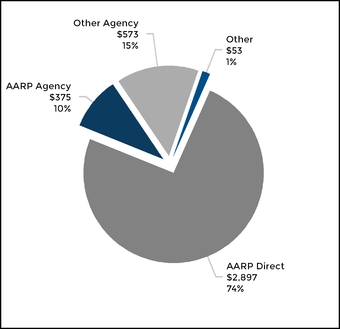][added: ]
[removed: 2016] [added: 2017] Earned Premiums of [removed: $3,898] [added: $3,690] by Product
[removed: 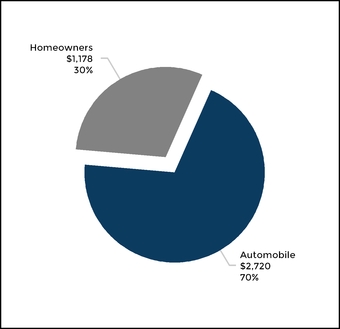][added: ]
| Automobile | Covers damage to an individual insured’s own vehicle due to collision or other perils and is referred to as [removed: auto] [added: automobile] physical damage. In addition to first party [removed: auto] [added: automobile] physical damage, automobile insurance covers liability for bodily injuries and property damage suffered by third parties and losses caused by uninsured or underinsured motorists. Also, under no-fault laws, policies written in some states provide first party personal injury protection. Some of the Company’s personal [removed: auto] [added: automobile] insurance policies also offer personal umbrella liability coverage for an additional premium. |
The Hartford's [removed: auto] [added: automobile] and homeowners products provide coverage options and pricing tailored to a customer's individual risk.
Business sold to AARP members, either direct or through independent agents, amounted to earned premiums of [removed: $3.3 billion,] $3.2 [added: billion, $3.3] billion and [removed: $3.0] [added: $3.2] billion in [removed: 2016, 2015] [added: 2017, 2016] and [removed: 2014,] [added: 2015,] respectively.
During [removed: 2016,] [added: 2017,] Personal Lines continued to refine its [removed: auto] [added: automobile] and home product offerings, i.e., its Open Road Auto and [added: Home Advantage products.]
[removed: Overall rate] levels, price segmentation, rating factors and underwriting procedures were examined and updated to reflect the company’s actual experience with these products.
In direct-to-consumer, Personal Lines markets its products through a mix of media, including direct mail, [added: digital marketing, television as well as digital and print advertising.]
Through the agency channel, Personal Lines provides products and services to customers through a network of [removed: independent agents in the standard personal lines market, primarily serving mature, preferred consumers.]
In addition, its technology platform for telephone sales centers enables sales representatives to provide an enhanced experience for direct-to-consumer customers, positioning The [removed: Company's] [added: Company] to offer unique capabilities to AARP’s member base.
This [removed: agreement] [added: relationship with AARP, which has been in place since 1984,] provides Personal Lines with an important competitive advantage given the expected growth of the population of those over age 50 and the strength of the AARP brand.
Personal Lines [removed: will leverage] [added: leverages] its agency channel to target AARP members and other customer segments that value the advice of an independent agent and recognize the differentiated experience [removed: The] [added: the] Company provides.
Also, new [removed: auto] [added: automobile] technology advancements, including lane departure warnings, backup cameras, automatic braking and active collision alerts, are being deployed rapidly and are expected to improve driver safety and reduce the likelihood of vehicle collisions.
Property & Casualty Other Operations includes certain property and casualty operations, managed by the Company, that have discontinued writing new business and includes substantially all of the Company's asbestos and [removed: environmental("A&E")] [added: environmental ("A&E")] exposures.
[removed: 2016] [added: 2017] Premiums and Fee Income of [removed: $3,223][added: $3,677]
[removed: 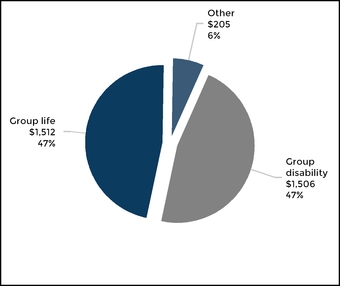][added: ]
| Other Products | Includes other group coverages such as retiree health insurance, critical illness, [removed: accident] [added: accident, hospital indemnity] and [removed: blanket] [added: participant accident] coverages. |
The relatively large size and underwriting capacity of the Group Benefits business [added: provides a competitive advantage over smaller companies.]
Additionally, as employers continue to focus on reducing the cost of employee benefits, [removed: the shift] [added: we expect more companies] to [removed: offering] [added: offer] voluntary products paid for by [removed: employees will become greater.][added: employees.]
The Company [removed: is striving to expand] [added: has expanded] its employer group product offerings, including the voluntary product suite, [removed: such as] [added: including] coverages [added: for short term absences from work, critical illness and accident coverages.]
Mutual Fund [removed: Segment] AUM as of December 31, [removed: 2016 \[1\]][added: 2017]
[removed: 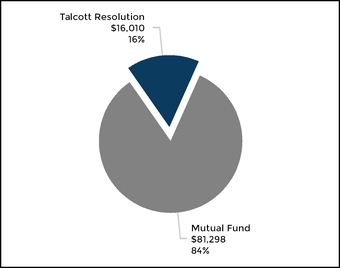][added: ]
\[1\] Includes Mutual Fund Segment AUM for ETPs of [removed: $209.][added: $480.]
[removed: 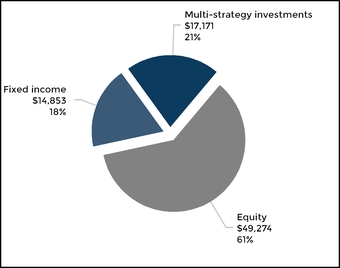][added: ]
Large public director &
Overall rate
independent agents in the standard personal lines market, primarily serving mature, preferred consumers.
On November 1, 2017, the Company's group benefits subsidiary, Hartford Life and Accident Insurance Company ("HLA") acquired Aetna's U.S. group life and disability business through a reinsurance transaction.
Revenues and earnings of the Aetna U.S. group life and disability business are included in operating results of the Company's Group Benefits segment since the acquisition date.
The acquisition of Aetna's U.S. group life and disability business further enhances Group Benefit's distribution footprint by increasing its sales force.
The acquisition also provides Group Benefits an exclusive, multi year collaboration to sell it's group life and disability products through Aetna's medical sales team.
Group Benefits' recent acquisition of Aetna's U.S. group life and disability business further increases its market presence and
competitive capabilities through the addition of industry-leading digital technology and an integrated absence management and claims platform.
Mutual Funds Segment AUM of $115,350 \[1\] as of December 31, 2017
Our comprehensive range of
The Mutual Funds segment expects to continue managing the mutual fund assets of the life and annuity run-off business after the Company closes the sale during 2018, though those assets are expected to continue to decline over time.
The investment products for the life and annuity run-off business held for sale are not actively distributed.
In recent years demand for lower cost passive investment strategies has outpaced demand for actively managed strategies and has taken market share from active managers.
The Company includes in the Corporate category discontinued operations from the Company's life and annuity run-off business accounted for as held for sale, reserves for structured settlement and terminal funding agreement liabilities retained, capital raising
| \[1\] | Includes reserves for future policy benefits and other policyholder funds and benefits payable of $713 and $816, respectively, of which $441 and $492, respectively, relate to the Group Benefits segment with the remainder related to retained life and annuity run-off business reserves within Corporate. |
Total Property & Casualty Reserves as of December 31, 2017
Additional discussion may be found in Notes to Consolidated
Total Group Benefits Reserves as of December 31, 2017
\[1\]Includes $104 of short-term disability ("STD") reserves and $39 of supplemental health reserves.
\[2\]Includes $320 of paid up life reserves, $110 of reserves for conversions to individual life and $11 of other reserves.
Further discussion of The Hartford Group Benefits long-term disability reserves may be found in Part II, Item 7, MD&A — Critical Accounting Estimates — Group Benefits Long-term Disability ("LTD") Reserves, Net of Reinsurance.
Additional discussion may be found in Note 11 - Reserve for Unpaid Losses and Loss Adjustment Expenses of Notes to Consolidated Financial Statements.
legal representation for insureds where appropriate, establishment of case reserves, payment of losses and notification to reinsurers.
In connection with the pending sale of the Company’s life and annuity run-off business, HIMCO will continue to manage a significant majority of the assets for an initial five year term.
Management of The Hartford's Investment Portfolio
The Hartford's Investment Portfolio as of December 31, 2017
These laws require insurance companies, which are
The extent of financial services regulation on business outside the United
As noted below under “Risks Relating to the Pending Sale of Our Life and Annuity Business," the assets and liabilities of the life and annuity run-off business, consisting primarily of the operations of Hartford Life Insurance Company and Hartford Life and Annuity Insurance Company (formerly known as Talcott Resolution), have been accounted for as held for sale as of December 31, 2017, with the operating results of that business included in discontinued operations for all periods presented.
The Company expects the sale to close by June 30, 2018, subject to regulatory approval and other closing conditions.
Apart from interest expense on debt issued and outstanding of Hartford Life, Inc., the holding company of the life and annuity run-off business, and certain tax benefits to be retained by The Hartford, the results from the discontinued operations inure to the buyer.
Accordingly, any earnings or losses of the life and annuity run-off business up until closing will not change the Company's results.
If the sale of the business does not close, we would retain the risks associated with the life and annuity run-off business.
changes in value are reported in earnings.
| • | Equity Markets Risk - A decline in equity markets may result in unrealized capital losses on investments in equity securities recorded against net income and lower earnings from Mutual Funds where fee income is earned based upon the fair value of the assets under management. Equity markets are unpredictable. In early 2018, the equity markets were more volatile than in the months prior, which could be indicative of a greater risk of a decline. |
environmental claims is particularly difficult for insurers and reinsurers.
For additional information related to risks associated with the adverse development cover, see Note 8 - Reinsurance and Note 14 - Commitments and Contingencies of Notes to Consolidated Financial Statements.
We are vulnerable to losses from catastrophes, both natural and man-made.
Our insurance operations expose us to claims arising out of catastrophes.
This
Business
Public construction project work has slowed, resulting in only modest growth for our contract surety business.
Principal Products and Services
Home Advantage products.
digital marketing, television as well as digital and print advertising.
provides a competitive advantage over smaller companies.
for short term absences from work, critical illness and accident coverages.
Mutual Fund AUM as of December 31, 2016
represents variable insurance contracts from the legacy run-off Talcott Resolution variable insurance business and are not actively distributed.
| TALCOTT RESOLUTION |
2016 Revenues of $2,273
Talcott Resolution Account Values as of December 31, 2016 (in billions)
| Individual Variable Annuities | Represents variable insurance contracts entered into between the Company and an individual policyholder. Products provide a current or future income stream based on the value of the individual's contract at annuitization, and can include a variety of guaranteed minimum death and withdrawal benefits. |
| Individual Fixed and Payout Annuities | Fixed Annuities represent fixed insurance contracts entered into between the Company and an individual policyholder. Products guarantee a minimum rate of interest and fixed amount of periodic payments. Payout Annuities represent single premium immediate payouts, deferred and matured annuity contracts. |
| Institutional Annuities | These are principally in the form of structured settlements, terminal funding agreements and guaranteed investment products. Structured settlements are contracts that provide periodic payments to claimants in settlement of a claim, a portion of which is related to the Company’s settlement of its own property and casualty insurance claims. Terminal funding agreements are single premium group annuities, most typically purchased by companies to fund pension plan liabilities. Guaranteed investment products are contracts that guarantee the owner repayment of principal plus a fixed or floating interest rate for a predetermined period of time. |
| Private Placement Life Insurance ("PPLI") | Represents variable life insurance policies that have a cash value which appreciates based on investment performance of funds held and includes individual high net worth and Corporate Owned Life Insurance (COLI). |
| Retirement Plans and Individual Life | Represents Retirement Plans and Individual Life contracts that have been reinsured to Massachusetts Mutual Life Insurance Company ("Mass Mutual") and The Prudential Insurance Company of America ("Prudential"), a subsidiary of Prudential Financial, Inc., respectively. Account values associated with these businesses no longer generate asset-based fee income due to the sales of these businesses through reinsurance. |
Talcott Resolution is comprised of the run-off of the Company's U.S. individual and institutional annuity and PPLI businesses.
The U.S. individual annuity business in run-off includes both variable and fixed annuities with many contracts in an asset accumulation phase before the contract reaches the payout or annuitization phase.
Most of the Company’s variable annuity contracts sold to individuals provide a guaranteed minimum death benefit (GMDB) during the accumulation period that is generally equal to the greater of (a) the contract value at death or (b) premium payments less any prior withdrawals and may include adjustments that increase the benefit, such as for maximum anniversary value (MAV).
In addition, some of the variable annuity contracts provide a guaranteed minimum withdrawal benefit (GMWB) whereby if the account value is reduced to a specified
level through a combination of market declines and withdrawals, the contract holder is entitled to a guaranteed remaining balance (GRB), which is generally equal to premiums less withdrawals.
Many policyholders with a GMDB also have a GMWB.
Policyholders that have a product that offers both guarantees can only receive the GMDB or GMWB, but not both.
The Talcott Resolution business segment also includes the Retirement Plans and Individual Life businesses sold in 2013 through reinsurance agreements with the respective buyers as well as the 2014 sale of Hartford Life Insurance KK, a Japanese company ("HLIKK").
goodwill and other expenses not allocated to the reporting segments.
Unpaid Losses and Loss Adjustment Expenses $27,605 as of December 31, 2016
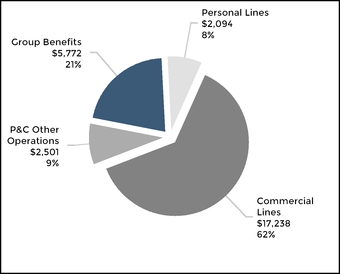
Additional discussion may be found in the Company’s accounting policies for
Reserves for Future Policy Benefits
$13,929 as of December 31, 2016
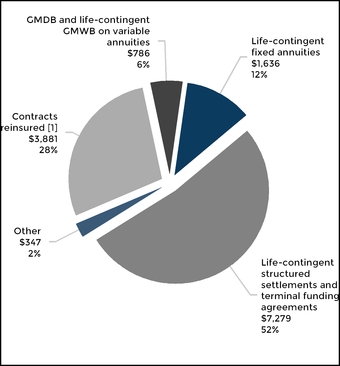
\[1\]Represent reserves for the individual life and retirement plans businesses that are fully reinsured and have an offsetting reinsurance recoverable.
Other Policyholder Funds and Benefits Payable $31,176 as of December 31, 2016

\[1\]Represent reserves for individual life and retirement plans businesses that are fully reinsured and have an offsetting reinsurance recoverable.
adjusted for known trends, the Company’s response to rate actions taken by competitors, its expense levels and expectations about regulatory and legal developments.
| \[2\] | The total includes Talcott Resolution which makes up the other 1% of the total earned premium. |
Hartford Life Insurance Company's corporate owned life insurance products, a variable insurance trust and institutional clients.
An excerpt. Shown here: 40 of 91 rewritten, 40 of 344 added and 40 of 53 removed. The counts are complete. For every sentence, read Item 1. Business in the FY2017 filing and the FY2016 filing.
Item 3. LEGAL PROCEEDINGS
6 rewritten, 14 added, 9 removed, 9 unchanged
Read the full itemFY2017 item · filed February 23, 2018FY2016 item · filed February 24, 2017
Like many other insurers, The Hartford also has been joined in actions by asbestos plaintiffs asserting, among other things, that insurers had a duty to protect the public from the dangers of asbestos and that [removed: insurers committed unfair trade practices by asserting defenses on behalf of their policyholders in the underlying asbestos cases.]
In June 2015, HFMC and HIFSCO moved for summary judgment, and plaintiffs [removed: crossed-moved] [added: cross-moved] for partial summary judgment with respect to [removed: The Hartford Capital Appreciation Fund.][added: one fund.]
[removed: The] [added: In March 2016, the] court [added: denied the plaintiff's motion, and] granted [added: summary] judgment for [removed: HFMC and] HIFSCO [added: and HFMC] with respect to [removed: all claims made by] [added: one fund, leaving six funds and plaintiffs:] The Hartford [removed: Small Company Fund and certain claims made by] [added: Balanced Fund,] The Hartford [added: Capital Appreciation Fund, The Hartford] Floating Rate [removed: Fund.][added: Fund, The]
The court further ruled that the appropriate measure of damages on the surviving claims [removed: is] [added: would be] the difference, if any, between the actual advisory fees paid through trial and [removed: those that could have been paid] [added: the fees permitted] under the applicable legal standard.
A bench trial on the issue of liability was held in November [removed: 2016, and a decision is expected in 2017.][added: 2016.]
[added: Part I -] Item [removed: 5.][added: 3.]
LITIGATION
The Hartford is involved in claims litigation arising in the ordinary course of business, both as a liability insurer defending or providing indemnity for third-party claims brought against insureds and as an insurer defending coverage claims brought against it.
The Hartford accounts for such activity through the establishment of unpaid loss and loss adjustment expense reserves.
Subject to the uncertainties related to The Hartford's asbestos and environmental claims discussed in Note 14 - Commitments and Contingencies of the Notes to Consolidated Financial Statements, management expects that the ultimate liability, if any, with respect to such ordinary-course claims litigation, after consideration of provisions made for potential losses and costs of defense, will not be material to the consolidated financial condition, results of operations or cash flows of The Hartford.
The Hartford is also involved in other kinds of legal actions, some of which assert claims for substantial amounts.
In addition to the matters described below, these actions include, among others, putative state and federal class actions seeking certification of a state or national class.
Such putative class actions have alleged, for example, underpayment of claims or improper underwriting practices in connection with various kinds of insurance policies, such as personal and commercial automobile, property, disability, and inland marine.
The Hartford also is involved in individual actions in which punitive damages are sought, such as claims alleging bad faith in the handling of insurance claims or other allegedly unfair or improper business practices.
insurers committed unfair trade practices by asserting defenses on behalf of their policyholders in the underlying asbestos cases.
Legal Proceedings
During course of litigation, the claims regarding distribution fees were dismissed without prejudice, the lineup funds as plaintiffs changed several times, and the plaintiffs added as a defendant Hartford Funds Management Company (“HFMC”), an indirect subsidiary of the Company that assumed the role of advisor to the funds as of January 2013.
Hartford Growth Opportunities Fund, The Hartford Healthcare Fund and The Hartford Inflation Plus Fund.
In February 2017, the court granted judgment for HIFSCO and HFMC as to all claims.
Plaintiffs have appealed to the United States Court of Appeals for the Third Circuit.
handling of insurance claims or other allegedly unfair improper business practices.
HIFSCO moved to dismiss and, in September 2011, the motion was granted in part and denied in part, with leave to amend the complaint.
In November 2011, plaintiffs filed an amended complaint on behalf of The Hartford Global Health Fund, The Hartford Conservative Allocation Fund, The Hartford Growth Opportunities Fund, The Hartford Inflation Plus Fund, The Hartford Advisors Fund, and The Hartford Capital Appreciation Fund.
Plaintiffs seek to rescind the investment management agreements and distribution plans between HIFSCO and these funds and to recover the total fees charged thereunder or, in the alternative, to recover any improper compensation HIFSCO received, in addition to lost earnings.
HIFSCO filed a partial motion to dismiss the amended complaint and, in December 2012, the court dismissed without prejudice the claims regarding distribution fees and denied the motion with respect to the advisory fees claims.
In March 2014, the plaintiffs filed a new complaint that, among other things, added as new plaintiffs The Hartford Floating Rate Fund and The Hartford Small Company Fund and named as a defendant Hartford Funds Management Company, LLC (“HFMC”), an indirect subsidiary of the Company which assumed the role as advisor to the funds as of January 2013.
In March 2016, the court, in large part, denied summary judgment for all parties.
MARKET FOR THE HARTFORD’S COMMON EQUITY, RELATED STOCKHOLDER MATTERS AND ISSUER PURCHASES OF EQUITY SECURITIES
The Hartford’s common stock is traded on the New York Stock Exchange (“NYSE”) under the trading symbol “HIG”.
Cover and table of contents
49 rewritten, 22 added, 11 removed, 114 unchanged
Read the full itemFY2017 item · filed February 23, 2018FY2016 item · filed February 24, 2017
For the fiscal year ended December 31, [removed: 2016][added: 2017]
[removed: ][added: ]
| • | whether the registrant is a large accelerated filer, an accelerated filer, a non-accelerated filer, [removed: or] a smaller reporting [added: company or an emerging growth] company. See definitions of “large accelerated filer,” “accelerated [removed: filer” and] [added: filer,”] “smaller reporting company” [added: and "emerging growth company"] in Rule 12b-2 of the Exchange Act. | | |
| | Large accelerated filer þ Accelerated filer o Non-accelerated filer o Smaller reporting company o [added: Emerging growth company o] | | |
The aggregate market value of the shares of Common Stock held by non-affiliates of the registrant as of June 30, [removed: 2016] [added: 2017] was approximately [removed: $17] [added: $19] billion, based on the closing price of [removed: $44.38] [added: $52.57] per share of the Common Stock on the New York Stock Exchange on June 30, [removed: 2016.][added: 2017.]
As of February [removed: 22, 2017,] [added: 21, 2018,] there were outstanding [removed: 370,189,269] [added: 356,981,387] shares of Common Stock, $0.01 par value per share, of the registrant.
Portions of the registrant’s definitive proxy statement for its [removed: 2017] [added: 2018] annual meeting of shareholders are incorporated by reference in Part III of this Form 10-K.
FOR THE FISCAL YEAR ENDED DECEMBER 31, [removed: 2016][added: 2017]
| 1A. | [RISK [removed: FACTORS](#s9D4B987999E35DE494AA7C99D563DD13)] [added: FACTORS](#sD69EBAA6088F54699D1A0A6EDAEA9AF0)] | [removed: [18](#s9D4B987999E35DE494AA7C99D563DD13)] [added: [17](#sD69EBAA6088F54699D1A0A6EDAEA9AF0)] |
| 1B. | [UNRESOLVED STAFF [removed: COMMENTS](#s7DD2FFBA778F5B63B50CEE906A6F9D02)] [added: COMMENTS](#sD795852316C9592E9F2AF6196BD7D741)] | None |
| 3 | [LEGAL [removed: PROCEEDINGS](#s73E599B115A35BB3B5FB311ADE3EEC28)] [added: PROCEEDINGS](#sD277FAB29D465EB1BCFA9AD203609903)] | [removed: [28](#s73E599B115A35BB3B5FB311ADE3EEC28)] [added: [28](#sD277FAB29D465EB1BCFA9AD203609903)] |
| 4 | [MINE SAFETY [removed: DISCLOSURES](#s6FC12AD107205F4CB609F2CEFD2A4731)] [added: DISCLOSURES](#sC081BF64832C59649FF705C66D64DE12)] | Not Applicable |
| 5 | [MARKET FOR THE HARTFORD'S COMMON EQUITY, RELATED STOCKHOLDER MATTER AND ISSUER PUCHASES OF EQUITY [removed: SECURITIES](#s6FAA45DB7A215941846897C5C1F58CF6)] [added: SECURITIES](#s8B48D7BE268E5928BFDE8466F83710A0)] | [removed: [29](#s6FAA45DB7A215941846897C5C1F58CF6)] [added: [29](#s8B48D7BE268E5928BFDE8466F83710A0)] |
| 6 | [SELECTED FINANCIAL [removed: DATA](#s19191A41F08D5960B4BB234FE8197EBC)] [added: DATA](#sDA52F500242859B694993A2BFF4D48FE)] | [removed: [32](#s19191A41F08D5960B4BB234FE8197EBC)] [added: [31](#sDA52F500242859B694993A2BFF4D48FE)] |
| 7 | [MANAGEMENT'S DISCUSSION AND ANALYSIS OF FINANCIAL CONDITION AND RESULTS OF [removed: OPERATIONS](#s8C2C8477201850A7AC0B252DF47F1B01)] [added: OPERATIONS](#s90E42D90E3025B07B2E5E37164F1B7DB)] | [removed: [33](#s8C2C8477201850A7AC0B252DF47F1B01)] [added: [32](#s90E42D90E3025B07B2E5E37164F1B7DB)] |
| 7A. | [QUANTITATIVE AND QUALITATIVE DISCLOSURES ABOUT MARKET [removed: RISK](#sE14E30DE9AA2514B8C8C82D47D14CC5F)] [added: RISK](#sC0794E978B9C5D85897174A6C6FCD272)] | \[a\] |
| 8 | [FINANCIAL STATEMENTS AND SUPPLEMENTARY [removed: DATA](#s922F029CCAC55B3A834E638E2297D7A6)] [added: DATA](#s4B4383FBFA3E521DB77282733EFEDFE1)] | \[b\] |
| 9 | [CHANGES IN AND DISAGREEMENTS WITH ACCOUNTANTS ON ACCOUNTING AND FINANCIAL [removed: DISCLOSURE](#s4739A82494ED5DEB9C743791A630F8B0)] [added: DISCLOSURE](#s45CCFE85DBC159839DE0855FE7A444C9)] | None |
| 9A. | [CONTROLS AND [removed: PROCEDURES](#s48338A0882F8525DB631B72AD888FF52)] [added: PROCEDURES](#sF23A2E0BAFE854E1ADE48F5DE0A6438C)] | [removed: [114](#s48338A0882F8525DB631B72AD888FF52)] [added: [108](#sF23A2E0BAFE854E1ADE48F5DE0A6438C)] |
| 9B. | [OTHER [removed: INFORMATION](#s517D772BADB8550DB8D45B2FD1C81E6B)] [added: INFORMATION](#sFBCC46646F30554EA24C18081DB9B202)] | None |
| | [Part [removed: III](#sA400C6BF3A655399BF4B2BBE6A9FF7B3)] [added: III](#s72FED438E77C580982DAF01082E7571E)] | |
| 10 | [DIRECTORS, EXECUTIVE OFFICERS AND CORPORATE GOVERNANCE OF THE [removed: HARTFORD](#s087011A13B885E2494CDF6F7F1F8AE80)] [added: HARTFORD](#s74E98E43638A54838FCC406A240B0875)] | [removed: [116](#s087011A13B885E2494CDF6F7F1F8AE80)] [added: [110](#s74E98E43638A54838FCC406A240B0875)] |
| 11 | [EXECUTIVE [removed: COMPENSATION](#s6DCC99B8FFD2528C9313B296F6138E03)] [added: COMPENSATION](#s82688DB9780557E5BE7F249CA91CE7EE)] | \[c\] |
| 12 | [SECURITY OWNERSHIP OF CERTAIN BENEFICIAL OWNERS AND MANAGEMENT AND RELATED STOCKHOLDER [removed: MATTERS](#sFD826E5E2A7F5DA7AC539F0D7EBBFB5E)] [added: MATTERS](#s27F380E2A0AB59DCA26F4135336D17B1)] | [removed: [117](#sFD826E5E2A7F5DA7AC539F0D7EBBFB5E)] [added: [111](#s27F380E2A0AB59DCA26F4135336D17B1)] |
| 13 | [CERTAIN RELATIONSHIPS AND RELATED TRANSACTIONS, AND DIRECTOR [removed: INDEPENDENCE](#s97195992F2A857168E4B9BA38C7425F3)] [added: INDEPENDENCE](#s974BE43CB14155B98CB0EB5288DE6F0F)] | \[d\] |
| 14 | [PRINCIPAL ACCOUNTING FEES AND [removed: SERVICES](#s3174301D6479585A959B66AC4236FED0)] [added: SERVICES](#s8E2645119DAD5B629D3DBDCFD5B91504)] | \[e\] |
| 15 | [EXHIBITS, FINANCIAL STATEMENT [removed: SCHEDULES](#s7B89E933F8F9515C841D9F46C512E627)] [added: SCHEDULES](#s9A320E6F4FEE5DEB8A0CBCE6BD18B550)] | [removed: [118](#s7B89E933F8F9515C841D9F46C512E627)] [added: [112](#s9A320E6F4FEE5DEB8A0CBCE6BD18B550)] |
| | [removed: [EXHIBITS INDEX](#s6FA3296F9DD55288960AFD1F6473B9EC)] [added: EXHIBITS INDEX] | [removed: [II-3](#s6FA3296F9DD55288960AFD1F6473B9EC)] [added: [I-1](#s88038DF60CCD523E94C7F370EABE1E35)] |
| ◦ | challenges related to the Company’s current operating environment, including global political, economic and market conditions, and the effect of financial market disruptions, economic downturns or other potentially adverse macroeconomic developments on the demand for our [removed: products,] [added: products and] returns in our investment [removed: portfolios and the hedging costs associated with our run-off annuity block;] [added: portfolios;] |
| ◦ | financial risk related to the continued reinvestment of our investment [removed: portfolios and performance of our hedge program for our run-off annuity block;] [added: portfolios;] |
| ◦ | [added: the] volatility in our statutory and United States ("U.S.") Generally Accepted Accounting Principles ("GAAP") earnings and potential material changes to our results resulting from our risk management program to emphasize protection of economic value; |
| ◦ | the potential for further acceleration of deferred policy acquisition cost amortization and an increase in [removed: reserve] [added: reserves] for certain guaranteed benefits in our variable annuities; |
| ◦ | the risks, challenges and uncertainties associated with [removed: our] capital management [removed: plan,] [added: plans,] expense reduction initiatives and other actions, which may include acquisitions, divestitures or restructurings; |
| ◦ | regulatory requirements that could delay, deter or prevent a takeover attempt that shareholders might consider in their best interests; [removed: and] |
| ◦ | the impact of potential changes in accounting principles and related financial reporting [removed: requirements.] [added: requirements;] |
The Hartford Financial Services Group, Inc. (together with its subsidiaries, “The Hartford”, the “Company”, “we”, or “our”) is a holding company for a group of subsidiaries that provide property and casualty insurance, group benefits and mutual funds to individual and business customers in the United [removed: States and continues to administer life insurance and annuity products previously sold.][added: States.]
At December 31, [removed: 2016,] [added: 2017,] total assets and total stockholders’ equity of The Hartford were [removed: $223] [added: $225.3] billion and [removed: $16.9] [added: $13.5] billion, respectively.
The Hartford conducts business principally in [removed: six] [added: five] reporting segments including Commercial Lines, Personal Lines, Property & Casualty ("P&C") Other Operations, Group [removed: Benefits, Mutual Funds] [added: Benefits] and [removed: Talcott Resolution,] [added: Mutual Funds,] as well as a Corporate category.
The Hartford includes in its Corporate category [added: discontinued operations of] the [removed: Company’s] [added: Company's life and annuity run-off business accounted for as held for sale, reserves for structured settlement and terminal funding agreement liabilities retained,] capital raising activities (including debt financing and related interest expense), purchase accounting adjustments related to goodwill and other expenses not allocated to the reporting segments.
[removed: 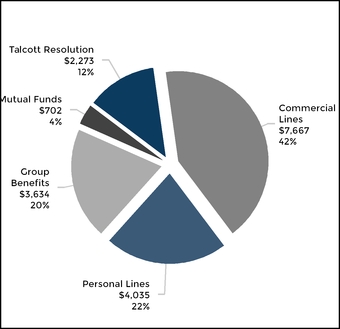][added: ]
10-K 1 hig1231201710-kdocument.htm 10-K
If an emerging growth company, indicate by check mark if the registrant has elected not to use the extended transition period for complying with any new or revised financial accounting standards provided pursuant to Section 13(a) of the Exchange Act.
| | [Part I](#sCA406B5C745A538586BA7BAD8D7118D3) | |
| 1 | [BUSINESS](#s96AC689EB93057BF9A42F1D9988C54CB) | [6](#s96AC689EB93057BF9A42F1D9988C54CB) |
| 2 | [PROPERTIES](#sF1D0D2262E5D540EA76455159E1FB21D) | [28](#sF1D0D2262E5D540EA76455159E1FB21D) |
| | [Part II](#s734CE06A5B0051F39FC551A929D3C8FD) | |
| | [Part IV](#s1C545013AA03549C967296D22EAB0977) | |
| 16 | FORM 10-K SUMMARY | Not Applicable |
| | [SIGNATURES](#sA6087A256B565E85B4C19609AD99F80E) | [I-5](#sA6087A256B565E85B4C19609AD99F80E) |
| • | Risks Related to the Company's Life and Annuity Business in Discontinued Operations |
| ◦ | the risks related to the Company's ability to close its previously announced sale of its life and annuity run-off book of business, which is subject to several closing conditions, including many that are outside of the Company's control; |
| ◦ | the risks related to political, economic and global economic conditions, including interest rate, equity and credit spread risks; |
| ◦ | the impact on our investment portfolio if our investment portfolio is concentrated in any particular segment of the economy; |
| ◦ | risks related to negative rating actions or downgrades in the financial strength and credit ratings of Hartford Life Insurance Company or Hartford Life and Annuity Insurance Company or negative rating actions or downgrades relating to our investments; |
| ◦ | the potential for losses due to our reinsurers’ unwillingness or inability to meet their obligations under reinsurance contracts; |
| ◦ | the potential for differing interpretations of the methodologies, estimations and assumptions that underlie the fair value estimates for investments and the evaluation of other-than-temporary impairments on available for sale securities; |
| ◦ | changes in federal or state tax laws that would impact the tax-favored status of life and annuity contracts; and |
| ◦ | changes in accounting and financial reporting of the liability for future policy benefits, including how the life and annuity businesses account for deferred acquisition costs and market risk benefits on variable annuity contracts and the discounting of life contingent fixed annuities. |
In December 2017, the Company announced the signing of a definitive agreement to sell its life and annuity operating subsidiaries and, accordingly, the assets and liabilities of those subsidiaries have been presented as held for sale with results of operations from that business reflected as discontinued operations.
See Note 20 - Business Dispositions and Discontinued Operations of Notes to Consolidated Financial Statements.
2017 Revenues of $16,974 \[1\] by Segment
professional liability, bond, loss-sensitive workers compensation, general liability, automobile liability and automobile physical damage.
10-K 1 hig1231201610-kdocument.htm 10-K
| | [Part I](#s1F9F99BA702450718304B413C6F107E3) | |
| 1 | [BUSINESS](#s2CEAF4BA722F5C588CF2D084D8677D9C) | [6](#s2CEAF4BA722F5C588CF2D084D8677D9C) |
| 2 | [PROPERTIES](#s84DE811EE41657F08CA71523463E7AF5) | [28](#s84DE811EE41657F08CA71523463E7AF5) |
| | [Part II](#s380C0551C5CF5CB19CAC284C234334CA) | |
| | [Part IV](#sE1719B80B8335A808802353A80BF69E1) | |
| | [SIGNATURES](#s8DCB3B11A554590A9C5DF2A7F978F903) | [II-1](#s8DCB3B11A554590A9C5DF2A7F978F903) |
| ◦ | the potential for further impairments of our goodwill or the potential for changes in valuation allowances against deferred tax assets; |
| ◦ | risks associated with the run-off of our Talcott Resolution business; |
2016 Revenues of $18,300 \[1\] by Segment
United States.
An excerpt. Shown here: 40 of 49 rewritten, all 22 added and all 11 removed. The counts are complete. For every sentence, read Cover and table of contents in the FY2017 filing and the FY2016 filing.
Item 2. PROPERTIES
4 rewritten, 0 added, 11 removed, 2 unchanged
Read the full itemFY2017 item · filed February 23, 2018FY2016 item · filed February 24, 2017
As of December 31, [removed: 2016,] [added: 2017,] The Hartford owned building space of approximately 1.8 million square feet which comprised its Hartford, Connecticut location and other properties within the greater Hartford, Connecticut area.
In addition, as of December 31, [removed: 2016,] [added: 2017,] The Hartford leased approximately [removed: 1.6] [added: 1.7] million square feet, throughout the United States of America, and
approximately [removed: 34] [added: two] thousand square feet, in other countries.
All of the properties owned or leased are used by one or more of all [removed: six] [added: five] reporting segments, depending on the location.
Item 3.
LEGAL PROCEEDINGS
LITIGATION
The Hartford is involved in claims litigation arising in the ordinary course of business, both as a liability insurer defending or providing indemnity for third-party claims brought against insureds and as an insurer defending coverage claims brought against it.
The Hartford accounts for such activity through the establishment of unpaid loss and loss adjustment expense reserves.
Subject to the uncertainties related to The Hartford's asbestos and environmental claims discussed in Note 14 - Commitment and Contingencies of the Notes to Consolidated Financial Statements, management expects that the ultimate liability, if any, with respect to such ordinary-course claims litigation, after consideration of provisions made for potential
losses and costs of defense, will not be material to the consolidated financial condition, results of operations or cash flows of The Hartford.
The Hartford is also involved in other kinds of legal actions, some of which assert claims for substantial amounts.
These actions include, among others, and in addition to the matters in the following description, putative state and federal class actions seeking certification of a state or national class.
Such putative class actions have alleged, for example, underpayment of claims or improper underwriting practices in connection with various kinds of insurance policies, such as personal and commercial automobile, property, disability, life and inland marine.
The Hartford also is involved in individual actions in which punitive damages are sought, such as claims alleging bad faith in the
Item 5. MARKET FOR THE HARTFORD’S COMMON EQUITY, RELATED STOCKHOLDER MATTERS AND ISSUER PURCHASES OF EQUITY SECURITIES
12 rewritten, 12 added, 15 removed, 21 unchanged
Read the full itemFY2017 item · filed February 23, 2018FY2016 item · filed February 24, 2017
On February [removed: 23, 2017,] [added: 22, 2018,] The Hartford’s Board of Directors declared a quarterly dividend of [removed: $0.23] [added: $0.25] per common share payable on April [removed: 3, 2017] [added: 2, 2018] to common shareholders of record as of March [removed: 6, 2017.][added: 5, 2018.]
As of February [removed: 22, 2017,] [added: 21, 2018,] the Company had approximately [removed: 12,692] [added: 11,641] registered holders of record of the Company's common stock.
The closing price of The Hartford’s common stock on the NYSE on February [removed: 22, 2017] [added: 21, 2018] was [removed: $48.69.][added: $53.95.]
On June [removed: 14, 2016,] [added: 12, 2017,] the Company’s Chief Executive Officer certified to the NYSE that he is not aware of any violation by the Company of NYSE corporate governance listing standards, as [added: required by Section 303A.12(a) of the NYSE’s Listed Company Manual.]
[removed: There are also various legal and regulatory limitations governing the extent to which The Hartford’s insurance subsidiaries may] extend credit, pay dividends or otherwise provide funds to The Hartford Financial Services Group, Inc. as discussed in the Liquidity Requirements and Sources [removed: o f] [added: of] Capital section of Part II, Item 7, MD&A — Capital Resources and Liquidity.
| Company/Index | 2012 | | [added: |] 2013 | | 2014 | | 2015 | | 2016 | | [added: 2017 | |]
| The Hartford Financial Services Group, Inc. | [removed: 41.01 | % |] 64.12 | % | 17.13 | % | 6.12 | % | 11.76 | % | [added: 20.26 | % |]
| S&P 500 Index | [removed: 16.00 | % |] 32.39 | % | 13.69 | % | 1.38 | % | 11.96 | % | [added: 21.83 | % |]
| S&P Insurance Composite Index | [removed: 19.09 | % |] 46.71 | % | 8.29 | % | 2.33 | % | 17.58 | % | [added: 16.19 | % |]
| Company/Index | [removed: 2011 | | | 2012 | |] 2013 | | 2014 | | 2015 | | 2016 | | [added: 2017 | |]
| The Hartford Financial Services Group, Inc. | $ | 100 | | [removed: 141.01] [added: 164.12] | | [removed: 231.43] [added: 192.24] | | [removed: 271.08] [added: 204.00] | | [removed: 287.67] [added: 227.99] | | [removed: 321.50] [added: 274.18] | |
[removed: ][added: ]
The Hartford’s common stock is traded on the New York Stock Exchange (“NYSE”) under the trading symbol “HIG”.
| 2017 | | | | | | | | | | | | |
| High | $ | 49.87 | | $ | 52.75 | | $ | 56.81 | | $ | 57.65 | |
| Low | $ | 47.05 | | $ | 47.26 | | $ | 51.64 | | $ | 54.06 | |
| Dividends Declared | $ | 0.23 | | $ | 0.23 | | $ | 0.23 | | $ | 0.25 | |
There are also various legal and regulatory limitations governing the extent to which The Hartford’s insurance subsidiaries may
During the period October 1, 2017 through October 13, 2017, the Company repurchased 0.9 million common shares at an average price of $55.70 per share.
All 0.9 million shares were purchased as part of publicly announced plans or programs.
Effective October 13, 2017, the Company suspended 2017 equity repurchases.
The Company does not currently expect to authorize an equity repurchase plan in 2018.
| S&P 500 Index | $ | 100 | | 132.39 | | 150.51 | | 152.59 | | 170.84 | | 208.14 | |
| S&P Insurance Composite Index | $ | 100 | | 146.71 | | 158.86 | | 162.56 | | 191.15 | | 222.09 | |
| 2015 | | | | | | | | | | | | |
| High | $ | 43.10 | | $ | 42.86 | | $ | 49.53 | | $ | 49.24 | |
| Low | $ | 38.90 | | $ | 40.77 | | $ | 43.03 | | $ | 42.11 | |
| Dividends Declared | $ | 0.18 | | $ | 0.18 | | $ | 0.21 | | $ | 0.21 | |
required by Section 303A.12(a) of the NYSE’s Listed Company Manual.
Repurchases of Common Stock by the Issuer for the Three Months Ended December 31, 2016
| Period | Total Number of Shares Purchased | | Average Price Paid per Share | | | Total Number of Shares Purchased as Part of Publicly Announced Plans or Programs | Approximate Dollar Value of Shares that May Yet Be Purchased Under the Plans or Programs \[1\] | | |
| | | | | | | | (in millions) | | |
| October 1, 2016 – October 31, 2016 | 2,300,136 | | $ | 43.41 | | 2,300,136 | $ | 1,480 | |
| November 1, 2016 – November 30, 2016 | 2,155,600 | | $ | 46.26 | | 2,155,600 | $ | 1,380 | |
| December 1, 2016 – December 31, 2016 | 1,674,947 | | $ | 47.98 | | 1,674,947 | $ | 1,300 | |
| Total | 6,130,683 | | $ | 45.66 | | 6,130,683 | | | |
| \[1\] | In October 2016, the Board of Directors authorized a new equity repurchase plan for $1.3 billion for the period commencing October 31, 2016 through December 31, 2017. The Company’s repurchase authorization permits purchases of common stock, as well as warrants or other derivative securities. Repurchases may be made in the open market, through derivative, accelerated share repurchase and other privately negotiated transactions, and through plans designed to comply with Rule 10b5-1(c) under the Securities Exchange Act of 1934, as amended. The timing of any future repurchases will be dependent upon several factors, including the market price of the Company’s securities, the Company’s capital position, consideration of the effect of any repurchases on the Company’s financial strength or credit ratings, and other corporate considerations. The repurchase program may be modified, extended or terminated by the Board of Directors at any time. |
| S&P 500 Index | $ | 100 | | 116.00 | | 153.57 | | 174.60 | | 177.01 | | 198.18 | |
| S&P Insurance Composite Index | $ | 100 | | 119.09 | | 174.72 | | 189.20 | | 193.60 | | 227.64 | |
Item 6. SELECTED FINANCIAL DATA
661 rewritten, 380 added, 480 removed, 828 unchanged
Read the full itemFY2017 item · filed February 23, 2018FY2016 item · filed February 24, 2017
| in millions, except per share data | [added: 2017 | | |] 2016 | | | 2015 | | | 2014 | | | 2013 | | | [removed: 2012 | | |]
| Income [removed: (loss)] from continuing operations before income taxes | [removed: $ | 804 | | $ | 1,978 | | $] [added: 1,242] | [removed: 1,699] | | [removed: $] [added: 1,409] | [removed: 1,471] | | [removed: $] [added: 1,387] | [removed: (89] | [removed: )] |
| Income from continuing operations, net of tax | [removed: $ | 896 | | $ | 1,673 | | $] [added: 865] | [removed: 1,349] | | [removed: $] [added: 994] | [removed: 1,225] | | [removed: $] [added: 984] | [removed: 220] | |
| Income [removed: (loss)] from discontinued operations, net of tax | [removed: $ |] — | | [removed: $] | [removed: 9 | | $ | (551 | ) | $] [added: —] | [removed: (1,049] | [removed: )] | [removed: $] [added: 7] | [removed: (258] | [removed: )] |
| Net [removed: income] (loss) [added: income] | $ | [removed: 896] [added: (3,131] | [added: )] | $ | [removed: 1,682] [added: 896] | | $ | [removed: 798] [added: 1,682] | | $ | [removed: 176] [added: 798] | | $ | [removed: (38] [added: 176] | [removed: )] |
| Short-term debt | $ | [removed: 416] [added: 320] | | $ | [removed: 275] [added: 416] | | $ | [removed: 456] [added: 275] | | $ | [removed: 438] [added: 456] | | $ | [removed: 320] [added: 438] | |
| Net [removed: income] (loss) [added: income] per common share | | | | | | | | | | | | | | | |
| Basic | $ | [removed: 2.31] [added: (8.61] | [added: )] | $ | [removed: 4.05] [added: 2.31] | | $ | [removed: 1.81] [added: 4.05] | | $ | [removed: 0.37] [added: 1.81] | | $ | [removed: (0.18] [added: 0.37] | [removed: )] |
| Diluted | $ | [removed: 2.27] [added: (8.61] | [added: )] | $ | [removed: 3.96] [added: 2.27] | | $ | [removed: 1.73] [added: 3.96] | | $ | [removed: 0.36] [added: 1.73] | | $ | [removed: (0.17] [added: 0.36] | [removed: )] |
| Cash dividends declared per common share | $ | [removed: 0.86] [added: 0.94] | | $ | [removed: 0.78] [added: 0.86] | | $ | [removed: 0.66] [added: 0.78] | | $ | [removed: 0.50] [added: 0.66] | | $ | [removed: 0.40] [added: 0.50] | |
Actual results are likely to differ, and in the past have differed, materially from those forecast by the Company, depending on the outcome of various factors, including, but not limited to, those set forth in [removed: each] [added: the] following discussion and in Part I, Item 1A, Risk Factors, and those identified from time to time in our other filings with the Securities and Exchange Commission.
On [removed: July 26, 2016,] [added: May 10, 2017,] the Company [removed: announced it had entered into an agreement to sell] [added: completed the sale of] its U.K. property and casualty run-off subsidiaries.
For discussion of [removed: these transactions,] [added: this transaction,] see Note [removed: 2] [added: 20] - Business [removed: Acquisitions,] Dispositions and Discontinued Operations of Notes to Consolidated Financial Statements.
| Key Performance Measures and Ratios | [removed: [33](#s499C559FEA6F5CE7B5B1B743AD8CD08D)] [added: [33](#s1913917B79B95F4083DC43B333BC0BF5)] |
| The Hartford's Operations | [removed: [36](#sA57BD8208A34516C8FD40AEE0F6DDA58)] [added: [36](#s14856CA17ECE514AA249827585468EBD)] |
| Consolidated Results of Operations | [removed: [40](#s6BBFF2C804355759A8F335857BBDD11B)] [added: [39](#sE460B17F90DB50FDAA4973E90CF22E06)] |
| Investment Results | [removed: [42](#s407E19D6C0535CC3A2ED81CE0BE05B65)] [added: [42](#s3A1C34CE0DA35E5C8A57CFD5105EF6E7)] |
| Critical Accounting Estimates | [removed: [44](#s4842CBC9BD965F7C851835B2E98AFD87)] [added: [44](#sC7644B04B17C5C09A9158C88F73AB0EF)] |
| Commercial Lines | [removed: [67](#s1F1BF12848CE5CCBA0A9DE88F78E650C)] [added: [65](#s013354A0D756598D99F6D05127E78A1C)] |
| Personal Lines | [removed: [71](#s6389096F851E51AD91EE6D8F51003EE6)] [added: [69](#sFA91F3345B525CDFA31B6A327F97EE83)] |
| [Property & Casualty Other [removed: Operations](#sB272A29E9FBB5996B0AFCE5EA0F7D65E)] [added: Operations](#s70B15A19D7FF54349374D3D787201DC1)] | [removed: [75](#sB272A29E9FBB5996B0AFCE5EA0F7D65E)] [added: [73](#s70B15A19D7FF54349374D3D787201DC1)] |
| Group Benefits | [removed: [76](#s1FEF33030B2757678494CAABF85356D6)] [added: [75](#s87B22456EE8D5140977DD0296AE31511)] |
| [Mutual [removed: Funds](#s9C1066AE50F95F9BAB3591A8BC685000)] [added: Funds](#sA5C5186A3A13589DB12C4D2B38336E6F)] | [removed: [79](#s9C1066AE50F95F9BAB3591A8BC685000)] [added: [77](#sA5C5186A3A13589DB12C4D2B38336E6F)] |
| [Enterprise Risk [removed: Management](#sCDDFD3D74C67586C8DC898371B604CFD)] [added: Management](#s813963198B775ED5980E124CD82BE618)] | [removed: [85](#sCDDFD3D74C67586C8DC898371B604CFD)] [added: [81](#s813963198B775ED5980E124CD82BE618)] |
| [Capital Resources and [removed: Liquidity](#sA81FCC847F2B506BA652A165BFAB5A3B)] [added: Liquidity](#s643AEF1ED342575E937BD93EB3D715C6)] | [removed: [104](#sA81FCC847F2B506BA652A165BFAB5A3B)] [added: [97](#s643AEF1ED342575E937BD93EB3D715C6)] |
| [Impact of New Accounting [removed: Standards](#s48E427670F1C5951B2A706EABAF1E135)] [added: Standards](#sF7704EC4203553E6916C92737E6D4CC0)] | [removed: [113](#s48E427670F1C5951B2A706EABAF1E135)] [added: [107](#sF7704EC4203553E6916C92737E6D4CC0)] |
[removed: Account value] [added: AUM] is a measure used by the Company because a significant portion of the Company’s [removed: fee income is] [added: mutual fund revenues are] based upon [removed: the level of account value.][added: asset values.]
Assets Under Management (“AUM”)- include [removed: account values,] mutual fund and ETP assets.
It is calculated by dividing (a) [removed: common] [added: total] stockholders' [removed: equity] [added: equity, excluding AOCI, after tax,] by (b) common shares outstanding and dilutive potential common shares.
A catastrophe is an event that causes $25 or more in industry insured property losses and affects a significant number of property and casualty policyholders and [removed: insurers.][added: insurers, as defined by the Property Claim Service office of Verisk.]
The Company [added: believes it is useful to investors]
[added: The Company] believes that core earnings provides investors with a valuable measure of the underlying performance of the Company’s businesses because it reveals trends in our insurance and financial services businesses that may be obscured by including the net effect of certain realized capital gains and losses, certain restructuring and other costs, [added: integration and transaction costs in connection with an acquired business,] pension settlements, loss on extinguishment of debt, [removed: reinsurance] gains and losses [removed: from disposal of businesses,] [added: on reinsurance transactions,] income tax benefit from [added: a] reduction in deferred income tax valuation allowance, [removed: discontinued operations, and the] impact of [removed: Unlocks to DAC, sales inducement assets ("SIA"), and death] [added: tax reform on net deferred tax assets,] and [removed: other insurance benefit reserve balances.][added: results of discontinued operations.]
Accordingly, core earnings excludes the effect of all realized gains and losses [removed: (net of tax and the effects of DAC)] that tend to be [removed: highly] variable from period to period based on capital market conditions.
| | [removed: 2016] [added: 2017] | | | [removed: 2015] [added: 2016] | | | [removed: 2014] [added: 2015] | | |
| Net income | $ | [removed: 896] [added: (3,131] | [added: )] | $ | [removed: 1,682] [added: 896] | | $ | [removed: 798] [added: 1,682] | |
| Less: Net realized capital [removed: losses including DAC,] [added: gains (losses)] excluded from core earnings, before tax | [removed: (256] [added: 160] | | [removed: )] | [removed: (175] [added: (112] | | ) | [removed: (29] [added: (15] | | ) |
| Less: Restructuring and other costs, before tax | — | | | [removed: (20] [added: —] | | [removed: )] | [removed: (76] [added: (20] | | ) |
| Less: Loss on extinguishment of debt, before tax | — | | | [removed: (21] [added: —] | | [removed: )] | [removed: —] [added: (21] | | [added: )] |
| Less: [removed: (Loss) gain] [added: Loss] on reinsurance transactions, before tax | [removed: (650] [added: —] | | [removed: )] | [removed: 28] [added: (650] | | [added: )] | [removed: 23] [added: —] | | |
| Less: Pension settlement, before tax | [removed: —] [added: (750] | | [added: )] | — | | | [removed: (128] [added: —] | | [removed: )] |
| Total revenues | $ | 16,974 | | $ | 16,107 | | $ | 15,997 | | $ | 15,713 | | $ | 15,966 | |
| Total assets | $ | 225,260 | | $ | 224,576 | | $ | 229,616 | | $ | 245,566 | | $ | 278,339 | |
| Total debt (including capital lease obligations) | $ | 4,998 | | $ | 4,910 | | $ | 5,216 | | $ | 5,966 | | $ | 6,401 | |
| Total stockholders’ equity | $ | 13,494 | | $ | 16,903 | | $ | 18,024 | | $ | 19,130 | | $ | 19,217 | |
On December 3, 2017, Hartford Holdings, Inc., a wholly owned subsidiary of the Company, entered into a definitive agreement to sell all of the issued and outstanding equity of Hartford Life, Inc. (“HLI”), a holding company, and its life and annuity operating subsidiaries.
On November 1, 2017, Hartford Life and Accident Insurance Company ("HLA"), a wholly owned subsidiary of the Company, completed the acquisition of Aetna's U.S. group life and disability business through a reinsurance transaction.
Aetna's U.S. group life and disability revenue and earnings since the acquisition date are included in the operating results of the Company's Group Benefits reporting segment.
Certain reclassifications have been made to historical financial information presented in Management's Discussion and Analysis of Financial Condition and Results of Operations ("MD&A") to conform to the current period presentation.
Fee income from installment fees reported by the Commercial Lines and Personal Lines reporting segments has been reclassified from underwriting expenses to fee income and included in total revenues.
The reclassification of installment fees did not impact previously reported underwriting gain (loss), underwriting ratios, or net income (loss) either in the Commercial Lines or Personal Lines reporting segments and did not impact previously reported consolidated net income or core earnings.
Separately, the flood servicing business has been realigned from specialty commercial within the Commercial Lines reporting segment to the Personal Lines reporting segment.
This realignment did not materially impact previously reported Commercial Lines or Personal Lines underwriting results or net income.
The realignment of the flood servicing business did not impact previously reported consolidated net income or core earnings.
Assets and liabilities associated with the Company's life and annuity run-off business are now classified as held for sale.
Unpaid losses and loss adjustment expenses and reinsurance recoverables for structured settlements reserves and recoverables due from the Company's life and annuity run-off business now classified as held for sale have been reclassified into the Company's P&C commercial lines business.
Annuities purchased from third-party life insurers under structured settlements, including from life and annuity run-off obligations held for sale, are recognized as reinsurance recoverables in cases where the Company has not obtained a release from the claimant.
These amounts were previously eliminated in consolidation.
Policy loans have been reclassified to Other investments on the Consolidated Balance Sheets.
Other intangible assets have been reclassified out of Other assets on the Consolidated Balance Sheets into their own line item.
Likewise, amortization of intangible assets has been reclassified out of Insurance operating costs and other expenses on the Consolidated Statements of Operations into their own line item.
| [Corporate](#s2A24BF7AD3D95A27BD7E503EFDAF9F90) | [79](#s2A24BF7AD3D95A27BD7E503EFDAF9F90) |
Book Value per Diluted Share- excluding AOCI, is calculated based upon a non-GAAP financial measure.
The Company provides this measure to enable investors to analyze the amount of the Company's net worth that is primarily attributable to the Company's business operations.
because it eliminates the effect of items that can fluctuate significantly from period to period, primarily based on changes in interest rates.
| Less: Integration and transaction costs associated with acquired business, before tax | (17 | | ) | — | | | — | | |
| Less: Income tax (expense) benefit \[1\] | (669 | | ) | 463 | | | 114 | | |
| Core earnings | $ | 1,014 | | $ | 912 | | $ | 1,131 | |
The expense ratio does not include integration and other transaction costs associated with acquired business.
Conversely, either
considerations, excluding buyout premiums.
renewal earned price increases (decreases) lag renewal written price increases (decreases) by six to twelve months.
For Personal Lines, renewal written price increases represent the total change in premium per policy on those policies that renewed and includes the combined effect of rate changes, amount of insurance and other changes in exposure.
For Personal Lines, other changes in exposure include, but are not limited to, the effect of changes in number of drivers, vehicles and incidents, as well as changes in customer policy elections, such as deductibles and limits.
A reconciliation of
Casualty Other Operations, Group Benefits, and Mutual Funds, as well as a Corporate category.
Similar to Property & Casualty, profitability of the Group Benefits business depends, in large part, on the ability to evaluate and price risks appropriately and make reliable estimates of mortality, morbidity, disability and longevity.
To manage the pricing risk, Group Benefits generally offers term insurance policies, allowing for the adjustment of rates or policy terms in order to minimize the adverse effect of market trends, loss costs, declining interest rates and other factors.
However, as policies are typically sold with rate guarantees of up to three years, pricing for the Company’s products could prove to be inadequate if loss trends emerge adversely during the rate guarantee period.
For some of its products, the Company is required to obtain approval for its premium rates from state insurance departments.
New and renewal business for group benefits business, particularly for long-term disability, are priced using an assumption about expected investment yields over time.
| Total revenues | $ | 18,300 | | $ | 18,377 | | $ | 18,614 | | $ | 20,673 | | $ | 22,086 | |
| Total assets | $ | 223,432 | | $ | 228,348 | | $ | 245,013 | | $ | 277,884 | | $ | 298,513 | |
| Total debt (including capital lease obligations) | $ | 5,052 | | $ | 5,359 | | $ | 6,109 | | $ | 6,544 | | $ | 7,126 | |
| Preferred stock | $ | — | | $ | — | | $ | — | | $ | — | | $ | 556 | |
| Total stockholders’ equity | $ | 16,903 | | $ | 17,642 | | $ | 18,720 | | $ | 18,905 | | $ | 22,447 | |
Part II - Item 7.
Management's Discussion and Analysis of Financial Condition and Results of Operations
MANAGEMENT’S DISCUSSION AND ANALYSIS OF FINANCIAL CONDITION AND RESULTS OF OPERATIONS
On June 30, 2014, the Company completed the sale of all of the issued and outstanding equity of Hartford Life Insurance KK, a Japanese company.
| Talcott Resolution | [81](#s98FC8A225D5556B99F241A58FC1A038E) |
| [Corporate](#s4FB2314E5F3E5D43ADD3A782F9490DFE) | [84](#s4FB2314E5F3E5D43ADD3A782F9490DFE) |
Account Value- includes policyholders’ balances for investment and insurance contracts and reserves for certain future policy benefits for insurance contracts.
These revenues increase or decrease with a rise or fall in assets under management whether caused by changes in the market or through net flows.
AUM is a measure used by the Company because a significant portion of the
Part II - Item 7.
Management's Discussion and Analysis of Financial Condition and Results of Operations
Company’s revenues are based upon asset values.
Book Value per Diluted Share- a U.S. GAAP financial measure that represents a per share assessment of the value of a company's equity.
The Company provides book value per diluted share to enable investors to assess the value of the Company’s equity.
| | For the years ended December 31, | | | | | | | | |
| Less: Unlock benefit (charge), before tax | (2 | | ) | 80 | | | (95 | | ) |
| Core earnings | $ | 1,335 | | $ | 1,650 | | $ | 1,548 | |
Part II - Item 7.
expenses to earned premiums.
Full Surrender Rates- an internal measure of contract surrenders calculated using annualized full surrenders divided by a two-point average of annuity account values.
The full surrender rate represents full contract liquidation and excludes partial withdrawals.
impact of volatile and unpredictable catastrophe losses and prior accident year development.
months for certain Personal Lines auto business and twelve months for substantially all of the remainder of the Company’s Property and Casualty business.
Asset management fees and mortality and expense fees are primarily generated from separate account assets and assets under management.
Cost of insurance charges are assessed on the net amount at risk for investment-oriented life insurance products.
funds, which is heavily influenced by the return realized in the equity markets.
Net flows are comprised of deposits less withdrawals and surrenders, redemptions, death benefits, policy charges and annuitizations of investment type contracts, such as variable annuity contracts.
Net sales are comprised of new sales less redemptions by mutual fund and ETP shareholders.
The Company uses the average daily value of the S&P 500 Index as an indicator for evaluating market returns of the underlying account portfolios for the variable annuity business.
Equity market movements could also result in benefits for or charges against deferred acquisition costs.
The profitability of fixed annuities and other “spread-based” products depends largely on the Company’s ability to earn target spreads between earned investment rates on its general account assets and interest credited to policyholders.
Net income was $896, or $2.31 per basic share and $2.27 per diluted share, down from prior year net income of $1,682, or $4.05 per basic share and $3.96 per diluted share, mostly due to a $423 after-tax loss on a reinsurance transaction covering asbestos and environmental exposures and higher current and prior accident year Personal Lines auto loss costs.
Book value per diluted common share increased to $44.35 from $42.96 as of December 31, 2015 as a result of a 7% decrease in common shares outstanding and dilutive potential common shares, partially offset by a 4% decrease in stockholders' equity resulting from share repurchases and common stockholder dividends in excess of net income during 2016.
Annualized investment yield, after-tax of 3.0%, was consistent with the prior year.
Combined ratio increased to 100.1 from 96.6 in the prior year for Property & Casualty, with deterioration principally in Personal Lines.
An excerpt. Shown here: 40 of 661 rewritten, 40 of 380 added and 40 of 480 removed. The counts are complete. For every sentence, read Item 6. SELECTED FINANCIAL DATA in the FY2017 filing and the FY2016 filing.
Item 9A. Controls and Procedures
8 rewritten, 8 added, 3 removed, 12 unchanged
Read the full itemFY2017 item · filed February 23, 2018FY2016 item · filed February 24, 2017
We have audited the internal control over financial reporting of The Hartford Financial Services Group, Inc. and its subsidiaries (collectively, the "Company") as of December 31, [removed: 2016,] [added: 2017,] based on [removed: the] criteria established in Internal Control - Integrated Framework (2013) issued by the Committee of Sponsoring Organizations of the Treadway [removed: Commission.][added: Commission (COSO).]
The [removed: Company's] [added: Company’s] management is responsible for maintaining effective internal control over financial reporting and for its assessment of the effectiveness of internal control over financial reporting, included in [removed: the accompanying Item 9A.][added: Management’s Annual Report on Internal Control over Financial Reporting.]
We conducted our audit in accordance with the standards of the [removed: Public Company Accounting Oversight Board (United States).][added: PCAOB.]
A [removed: company's] [added: company’s] internal control over financial reporting is a process designed [removed: by, or under the supervision of, the company's principal executive and principal financial officers, or persons performing similar functions, and effected by the company's board of directors, management, and other personnel] to provide reasonable assurance regarding the reliability of financial reporting and the preparation of [removed: consolidated] financial statements for external purposes in accordance with generally accepted accounting principles.
A [removed: company's] [added: company’s] internal control over financial reporting includes those policies and procedures that (1) pertain to the maintenance of records that, in reasonable detail, accurately and fairly reflect the transactions and dispositions of the assets of the company; (2) provide reasonable assurance that transactions are recorded as necessary to permit preparation of [removed: consolidated] financial statements in accordance with generally accepted accounting principles, and that receipts and expenditures of the company are being made only in accordance with authorizations of management and directors of the company; and (3) provide reasonable assurance regarding prevention or timely detection of unauthorized acquisition, use, or disposition of the [removed: company's] [added: company’s] assets that could have a material effect on the [removed: consolidated] financial statements.
Also, projections of any evaluation of [removed: the] effectiveness [removed: of the internal control over financial reporting] to future periods are subject to the risk that [removed: the] controls may become inadequate because of changes in conditions, or that the degree of compliance with the policies or procedures may deteriorate.
In our opinion, the Company maintained, in all material respects, effective internal control over financial reporting as of December 31, [removed: 2016,] [added: 2017,] based on [removed: the] criteria established in Internal [removed: Control-Integrated] [added: Control - Integrated] Framework (2013) issued by [removed: the Committee of Sponsoring Organizations of the Treadway Commission.][added: COSO.]
We have also audited, in accordance with the standards of the Public Company Accounting Oversight Board (United [removed: States),] [added: States) (PCAOB),] the consolidated financial statements [removed: and financial statement schedules] as of and for the year ended December 31, [removed: 2016] [added: 2017,] of the Company and our [removed: report,] [added: report] dated February [removed: 24, 2017,] [added: 23, 2018,] expressed an unqualified opinion on those [removed: consolidated] financial [removed: statements and financial statement schedules.][added: statements.]
Opinion on Internal Control over Financial Reporting
As described in Management’s Annual Report on Internal Control over Financial Reporting, management excluded from its assessment the internal control over financial reporting of Aetna's U.S. group life and disability business, which was acquired on November 1, 2017 and whose financial statements constitutes 2.4% of total assets and 2.2% of revenues of the consolidated financial statements of the Company as of and for the year ended December 31, 2017.
Accordingly, our audit did not include the internal control over financial reporting at the acquired business.
Basis for Opinion
We are a public accounting firm registered with the PCAOB and are required to be independent with respect to the Company in accordance with the U.S. federal securities laws and the applicable rules and regulations of the Securities and Exchange Commission and the PCAOB.
Definition and Limitations of Internal Control over Financial Reporting
Because of its inherent limitations, internal control over financial reporting may not prevent or detect misstatements.
February 23, 2018
Controls and Procedures.
Because of the inherent limitations of internal control over financial reporting, including the possibility of collusion or improper management override of controls, material misstatements due to error or fraud may not be prevented or detected on a timely basis.
February 24, 2017
Item 10. DIRECTORS, AND EXECUTIVE OFFICERS AND CORPORATE GOVERNANCE OF THE HARTFORD
12 rewritten, 1 added, 2 removed, 8 unchanged
Read the full itemFY2017 item · filed February 23, 2018FY2016 item · filed February 24, 2017
Certain of the information called for by Item 10 will be set forth in the definitive proxy statement for the [removed: 2017] [added: 2018] annual meeting of shareholders (the “Proxy Statement”) to be filed by The Hartford with the Securities and Exchange Commission within 120 days after the end of the fiscal year covered by this Form 10-K under the captions and subcaptions “Board and Governance Matters”, “Director Nominees" and "Section (16)(a) Beneficial Ownership Reporting Compliance" and is incorporated herein by reference.
Set forth below is information about the other executive officers of the Company as of February 15, [removed: 2017:][added: 2018:]
| Beth A. Bombara | [removed: 49] [added: 50] | Executive Vice President and Chief Financial Officer (July 2014-present); President of Talcott Resolution (July 2012-July [removed: 2014); Senior Vice President and Controller (June 2007-July 2012)] [added: 2014)] |
| William A. Bloom | [removed: 53] [added: 54] | Executive Vice President of Operations and Technology (August 2014 - present); President of Global Client Services, EXL (July 2010-July 2014) |
| Kathy Bromage | [removed: 59] [added: 60] | Chief Marketing and Communications Officer (June 2015-present); Senior Vice President of Strategy and Marketing, Small Commercial and Senior Vice President of Brand Marketing (July 2012-June [removed: 2015); Senior Vice President, eBusiness (October 2010-June 2012)] [added: 2015)] |
| James E. Davey | [removed: 52] [added: 53] | Executive Vice President and President of The Hartford Mutual Funds (2010-present) |
| Doug Elliot | [removed: 56] [added: 57] | President (July 2014-present); Executive Vice President and President of Commercial Lines (April 2011-July [removed: 2014); President and Chief Executive Officer, HSB Group (July 2007-March 2011)] [added: 2014)] |
| Martha Gervasi | [removed: 55] [added: 56] | Executive Vice President, Human Resources (May [removed: 2012-present); Senior Vice President, Human Resources (November 2010-May 2012)] [added: 2012-present)] |
| Brion Johnson | [removed: 57] [added: 58] | President of Talcott Resolution (July 2014-present); Executive Vice President, Chief Investment Officer (May [removed: 2012-Present); Chief Financial Officer, Hartford Investment Management Company \[1\] (October 2011-May 2012)] [added: 2012-Present)] |
| Scott R. Lewis | [removed: 54] [added: 55] | Senior Vice President and Controller (May 2013-present); Senior Vice President and Chief Financial Officer, Personal Lines (2009-May 2013) |
| David C. Robinson | [removed: 51] [added: 52] | Executive Vice President and General Counsel (June 2015-present); Senior Vice President and Director of Commercial Markets Law (August 2014-May 2015); Senior Vice President and Head of Enterprise Transformation, Strategy and Corporate Development (April 2012-August [removed: 2014); Senior Vice President and Director of Corporate Law (September 2010-April 2012)] [added: 2014)] |
| John Wilcox | [removed: 51] [added: 52] | Chief Strategy and Ventures Officer (September 2016-present); President and Chief Operating Officer, Risk Strategies Company (June 2012-September [removed: 2016); Senior Vice President of Strategic Planning, The Hartford (January 2011-June 2012)] [added: 2016)] |
| Robert Paiano | 56 | Executive Vice President and Chief Risk Officer (June 2017-Present); Senior Vice President & Treasurer (July 2010-May 2017) |
| Robert Rupp | 64 | Executive Vice President and Chief Risk Officer (October 2011-present); Executive Vice President, Head of Enterprise-Wide Market Risk, BONY Mellon (September 2008-October 2011) |
| \[1\] | Denotes a subsidiary of The Hartford. |
Item 12. SECURITY OWNERSHIP OF CERTAIN BENEFICIAL OWNERS AND MANAGEMENT AND RELATED STOCKHOLDER MATTERS
16 rewritten, 2 added, 2 removed, 28 unchanged
Read the full itemFY2017 item · filed February 23, 2018FY2016 item · filed February 24, 2017
The following table provides information as of December 31, [removed: 2016] [added: 2017] about the securities authorized for issuance under the Company’s equity compensation plans.
| \[1\] | The amount shown in this column includes [removed: 4,598,463] [added: 5,212,045] outstanding options awarded under the 2005 Stock Plan and the 2010 Stock Plan. The amount shown in this column includes [removed: 4,912,781] [added: 4,444,226] outstanding restricted stock units and [removed: 941,284] [added: 795,044] outstanding performance shares at 100% of target (which excludes [removed: 236,892] [added: 353,087] shares that vested on December 31, [removed: 2016,] [added: 2017,] related to the [removed: 2014-2016] [added: 2015-2017] performance period) as of December 31, [removed: 2016] [added: 2017] under the 2010 Stock Plan and the 2014 Stock Plan. The maximum number of performance shares that could be awarded is [removed: 1,882,568] [added: 1,590,088] (200% of target) if the Company achieved the highest performance level. Under the 2010 and 2014 Stock Plans, no more than 500,000 shares in the aggregate can be earned by an individual employee with respect to restricted stock unit and performance share awards made in a single calendar year. As a result, the number of shares ultimately distributed to an employee with respect to awards made in the same year will be reduced, if necessary, so that the number does not exceed this limit. |
| \[3\] | Of these shares, [removed: 4,722,165] [added: 4,517,632] remain available for purchase under the ESPP as of December 31, [removed: 2016. 8,535,500] [added: 2017. 8,397,784] shares remain available for issuance as options, restricted stock units, restricted stock awards or performance shares under the 2014 Stock Plan as of December 31, [removed: 2016.] [added: 2017.] |
| [Report of Independent Registered Public Accounting [removed: Firm](#s3DBE8F1A03EC551E82ECA82C38A51282)] [added: Firm](#sCD791DDF13AD5333B4D9543AE9CF998E)] | [removed: [F-2](#s3DBE8F1A03EC551E82ECA82C38A51282)] [added: [F-2](#sCD791DDF13AD5333B4D9543AE9CF998E)] |
| [Consolidated Statements of Operations — For the Years Ended December 31, [removed: 201](#sBA8B3ED8856950989F0868E99DB52842)6, 2015] [added: 201](#sA222AF554D9D55A58749B3508B6B0B61)7, 2016] and [removed: 2014] [added: 2015] | [removed: [F-3](#sBA8B3ED8856950989F0868E99DB52842)] [added: [F-3](#sA222AF554D9D55A58749B3508B6B0B61)] |
| [Consolidated Statements of Comprehensive Income (Loss) — For the Years Ended December 31, [removed: 201](#s3281BD09889351E69C9C391E0A78230E)6, 2015] [added: 201](#sE965A12354B755A09742087AE9DAAE9F)7, 2016] and [removed: 2014] [added: 2015] | [removed: [F-4](#s3281BD09889351E69C9C391E0A78230E)] [added: [F-4](#sE965A12354B755A09742087AE9DAAE9F)] |
| [Consolidated Balance Sheets — As of December 31, [removed: 201](#s7FA3322B47455CFAB60CC4820D7F389B)6] [added: 201](#s1456B6A9377759DDB21DCE799A8EBCB3)7] and [removed: 2015] [added: 2016] | [removed: [F-5](#s7FA3322B47455CFAB60CC4820D7F389B)] [added: [F-5](#s1456B6A9377759DDB21DCE799A8EBCB3)] |
| [Consolidated Statements of Changes in Stockholders’ Equity — For the Years Ended December 31, [removed: 201](#sAE62E222E67A5E43A326EFD6513CC09D)6, 2015] [added: 201](#sB258A215133A5BD2A8338AC94487A353)7, 2016] and [removed: 2014] [added: 2015] | [removed: [F-6](#sAE62E222E67A5E43A326EFD6513CC09D)] [added: [F-6](#sB258A215133A5BD2A8338AC94487A353)] |
| [Consolidated Statements of Cash Flows — For the Years Ended December 31, [removed: 201](#s88964ECB33A15CF99A3095D412548C63)6, 2015] [added: 201](#s5EED204DBC895D19BDA44FA3A352F9E4)7, 2016] and [removed: 2014] [added: 2015] | [removed: [F-7](#s88964ECB33A15CF99A3095D412548C63)] [added: [F-7](#s5EED204DBC895D19BDA44FA3A352F9E4)] |
| [Notes to Consolidated Financial [removed: Statements](#sE60BA8A49D075938A1AE59ECD46D6335)] [added: Statements](#sBBD6F8DAE8CF549A8D4B441281BA72FB)] | [removed: [F-8](#sE60BA8A49D075938A1AE59ECD46D6335)] [added: [F-8](#sBBD6F8DAE8CF549A8D4B441281BA72FB)] |
| [Schedule I — Summary of Investments — Other Than Investments in [removed: Affiliates](#s273F572D99FF50A38496851CBEF5B519)] [added: Affiliates](#sD7C261B2C10E57199CCEB2FC8FF038C1)] | [removed: [S-1](#s273F572D99FF50A38496851CBEF5B519)] [added: [S-1](#sD7C261B2C10E57199CCEB2FC8FF038C1)] |
| [Schedule II — Condensed Financial Information of The Hartford Financial Services Group, [removed: Inc](#sBBC9F7CDEDC05D8EBA757D8F8E8903D6).] [added: Inc](#sB3E425BFD9D754AE95865FB4461024A8).] | S-2 |
| [Schedule III — Supplementary Insurance [removed: Information](#sD96A703B155D5EDAACC5408EB1169B7B)] [added: Information](#sFCB98A74B1B95B7AB98F9DE18CC4913A)] | S-4 |
| [Schedule IV — [removed: Reinsurance](#s1930BBFD7F8858A7865D571275795ED7)] [added: Reinsurance](#sEAF9551B63B65D008B21E7E0C4E8BE23)] | S-6 |
| [Schedule V — Valuation and Qualifying [removed: Accounts](#s31456D26609E5259801E6585EA15CA00)] [added: Accounts](#s9737A96F3D0C5B01AF4F9D80AC6FEE05)] | S-7 |
| [Schedule VI — Supplemental Information Concerning Property and Casualty Insurance [removed: Operations](#s3A9E6AB4EC2752D0AB4560A75E3F6D43)] [added: Operations](#s817F627BF4625CBDBA1C91ED2A03A232)] | S-8 |
| Equity compensation plans approved by stockholders | 10,383,348 | | $ | 37.25 | | 12,915,416 | |
| Total | 10,383,348 | | $ | 37.25 | | 12,915,416 | |
| Equity compensation plans approved by stockholders | 10,452,528 | | $ | 34.31 | | 13,257,665 | |
| Total | 10,452,528 | | $ | 34.31 | | 13,257,665 | |
Item 15. Exhibits, Financial Statement Schedules
1,483 rewritten, 841 added, 1,099 removed, 1,915 unchanged
Read the full itemFY2017 item · filed February 23, 2018FY2016 item · filed February 24, 2017
We have audited the accompanying consolidated balance sheets of The Hartford Financial Services Group, Inc. and its subsidiaries (collectively, the “Company”) as of December 31, [removed: 2016] [added: 2017] and [removed: 2015,] [added: 2016,] and the related consolidated statements of operations, comprehensive income, changes in stockholders’ equity, and cash flows for each of the three years in the period ended December 31, [removed: 2016.][added: 2017, and the related notes and the consolidated financial statement schedules listed in the Index at Item 15 (collectively referred to as the "financial statements").]
These [removed: consolidated] financial statements [removed: and financial statement schedules] are the responsibility of the Company's management.
Our responsibility is to express an opinion on [removed: these consolidated] [added: the Company's] financial statements [removed: and financial statement schedules] based on our audits.
We conducted our audits in accordance with the standards of the [removed: Public Company Accounting Oversight Board (United States).][added: PCAOB.]
Those standards require that we plan and perform the audit to obtain reasonable assurance about whether the [removed: consolidated] financial statements are free of material [removed: misstatement.][added: misstatement, whether due to error or fraud.]
[removed: An audit includes] [added: Such procedures included] examining, on a test basis, evidence [removed: supporting] [added: regarding] the amounts and disclosures in the [removed: consolidated] financial statements.
[removed: An audit] [added: Our audits] also [removed: includes assessing] [added: included evaluating] the accounting principles used and significant estimates made by management, as well as evaluating the overall [removed: consolidated] [added: presentation of the] financial [removed: statement presentation.][added: statements.]
In our opinion, [removed: such consolidated] [added: the] financial statements present fairly, in all material respects, the financial position of [removed: The Hartford Financial Services Group, Inc. and its subsidiaries] [added: the Company] as of December 31, [removed: 2016] [added: 2017] and [removed: 2015,] [added: 2016,] and the results of [removed: their] [added: its] operations and [removed: their] [added: its] cash flows for each of the three years in the period ended December 31, [removed: 2016,] [added: 2017,] in conformity [removed: with] accounting principles generally accepted in the United States of America.
We have also audited, in accordance with the standards of the Public Company Accounting Oversight Board (United [removed: States),] [added: States) (PCAOB),] the Company's internal control over financial reporting as of December 31, [removed: 2016,] [added: 2017,] based on [removed: the] criteria established in Internal Control - Integrated Framework (2013) issued by the Committee of Sponsoring Organizations of the Treadway Commission and our report dated February [removed: 24, 2017] [added: 23, 2018,] expressed an unqualified opinion on the Company's internal control over financial reporting.
| (In millions, except for per share data) | [removed: 2016] [added: 2017] | | | [removed: 2015] [added: 2016] | | | [removed: 2014] [added: 2015] | | |
[removed: |] Net investment income [removed: | 2,961 | | | 3,030 | | | 3,154 | | |]
| Total other-than-temporary impairment (“OTTI”) losses | [removed: (64] [added: (15] | | ) | [removed: (108] [added: (35] | | ) | [removed: (64] [added: (47] | | ) |
| OTTI losses recognized in other comprehensive income [removed: (loss) (“OCI”)] | [removed: 8] [added: 7] | | | [removed: 6] [added: 8] | | | [removed: 5] [added: 6] | | |
| Net OTTI losses recognized in earnings | [removed: (56] [added: (8] | | ) | [removed: (102] [added: (27] | | ) | [removed: (59] [added: (41] | | ) |
| Other net realized capital gains (losses) | [removed: (212] [added: 173] | | [removed: )] | [removed: (54] [added: (83] | | ) | [removed: 75] [added: 29] | | |
| Total [removed: net] realized capital gains (losses) | [removed: (268] [added: $] | [added: —] | [removed: )] | [removed: (156] [added: $] | [added: 4] | [removed: )] | [removed: 16] [added: $] | [added: (4] | [added: )] |
| Other revenues | [removed: 86] [added: 85] | | | [removed: 87] [added: 86] | | | [removed: 112] [added: 87] | | |
| Total revenues | [removed: 18,300] [added: 14] | | | [removed: 18,377] [added: 15] | | | [removed: 18,614] [added: 8] | | |
| Benefits, losses and loss adjustment expenses | [removed: 11,351] [added: 10,174] | | | [removed: 10,775] [added: 9,961] | | | [removed: 10,805] [added: 9,325] | | |
| Amortization of deferred policy acquisition costs [removed: ("DAC")] | [removed: 1,523] [added: 1,417] | | | [removed: 1,502] [added: 1,523] | | | [removed: 1,729] [added: 1,502] | | |
| Insurance operating costs and other expenses | [removed: 3,633] [added: 4,375] | | | [removed: 3,772] [added: 3,341] | | | [removed: 4,028] [added: 3,459] | | |
| Loss on extinguishment of debt | — | | | [removed: 21] [added: —] | | | [removed: —] [added: 21] | | |
| Loss [removed: (gain)] on reinsurance [removed: transactions] [added: transaction] | [removed: 650] [added: —] | | | [removed: (28] [added: 650] | | [removed: )] | [removed: (23] [added: —] | | [removed: )] |
| Total benefits, losses and expenses | [removed: 17,496] [added: 16,251] | | | [removed: 16,399] [added: 15,660] | | | [removed: 16,915] [added: 14,519] | | |
| Income from continuing operations before income taxes | [removed: 804] [added: 723] | | | [removed: 1,978] [added: 447] | | | [removed: 1,699] [added: 1,478] | | |
[removed: |] Income [removed: tax expense (benefit) | (92 | | ) | 305 | | | 350 | | |][added: Tax Expense (Benefit)]
| [added: (Loss)] Income from continuing operations, net of tax | [removed: 896] [added: (262] | | [added: )] | [removed: 1,673] [added: 613] | | | [removed: 1,349] [added: 1,189] | | |
| [removed: Income (loss) from discontinued operations, net of tax] | — | | | [removed: 9] [added: (2] | | [added: )] | [removed: (551] [added: —] | | [removed: )] | [added: (Loss) income from discontinued operations, net of tax |]
| Net income | $ | [removed: 896] [added: (3,131] | [added: )] | $ | [removed: 1,682] [added: 896] | | $ | [removed: 798] [added: 1,682] | |
| [removed: Income] [added: (Loss) income] from continuing operations, net of tax, per common share | | | | | | | | | |
| Basic | $ | [removed: 2.31] [added: (8.61] | [added: )] | $ | [removed: 4.05] [added: 2.31] | | $ | [removed: 1.81] [added: 4.05] | |
| Diluted | $ | [removed: 2.27] [added: (8.61] | [added: )] | $ | [removed: 3.96] [added: 2.27] | | $ | [removed: 1.73] [added: 3.96] | |
| Cash dividends declared per common share | $ | [removed: 0.86] [added: 0.94] | | $ | [removed: 0.78] [added: 0.86] | | $ | [removed: 0.66] [added: 0.78] | |
| (In millions) | [removed: 2016] [added: 2017] | | | [removed: 2015] [added: 2016] | | | [removed: 2014] [added: 2015] | | |
| Net [added: (loss)] income | $ | [removed: 896] [added: (3,131] | [added: )] | $ | [removed: 1,682] [added: 896] | | $ | [removed: 798] [added: 1,682] | |
| Changes in net unrealized gain on securities | [removed: (3] [added: 655] | | [removed: )] | [removed: (1,091] [added: (3] | | ) | [removed: 1,383] [added: (1,091] | | [added: )] |
| Changes in OTTI losses recognized in other comprehensive income | [removed: 4] [added: —] | | | [removed: (2] [added: 4] | | [removed: )] | [removed: 7] [added: (2] | | [added: )] |
| Changes in net gain on cash flow hedging instruments | [removed: (54] [added: (58] | | ) | [removed: (20] [added: (54] | | ) | [removed: 42] [added: (20] | | [added: )] |
| Changes in foreign currency translation adjustments | [removed: 61] [added: 28] | | | [removed: (47] [added: 61] | | [removed: )] | [removed: (99] [added: (47] | | ) |
| Changes in pension and other postretirement plan adjustments | [removed: (16] [added: 375] | | [removed: )] | [removed: (97] [added: (16] | | ) | [removed: (326] [added: (97] | | ) |
Opinion on the Financial Statements
Basis for Opinion
We are a public accounting firm registered with the PCAOB and are required to be independent with respect to the Company in accordance with the U.S. federal securities laws and the applicable rules and regulations of the Securities and Exchange Commission and the PCAOB.
Our audits included performing procedures to assess the risks of material misstatement of the financial statements, whether due to error or fraud, and performing procedures that respond to those risks.
February 23, 2018
We have served as the Company’s auditor since 2002.
| Earned premiums | $ | 14,141 | | $ | 13,697 | | $ | 13,485 | |
| Fee income | 980 | | | 857 | | | 876 | | |
| Interest expense | 316 | | | 327 | | | 346 | | |
| Basic | $ | (0.72 | ) | $ | 1.58 | | $ | 2.86 | |
| Diluted | $ | (0.72 | ) | $ | 1.55 | | $ | 2.80 | |
| Fixed maturities, at fair value using the fair value option | 41 | | | 211 | | |
| Equity securities, available-for-sale, at fair value (cost of $907 and $878) | 1,012 | | | 945 | | |
| Total investments | 45,146 | | | 39,757 | | |
| Deferred income taxes, net | 1,164 | | | 2,999 | | |
| Other assets | 2,230 | | | 2,836 | | |
| Assets held for sale | 164,936 | | | 169,020 | | |
| Total assets | $ | 225,260 | | $ | 224,576 | |
| Unearned premiums | 5,322 | | | 5,392 | | |
| Liabilities held for sale | 162,442 | | | 163,534 | | |
| Total liabilities | 211,766 | | | 207,673 | | |
| Additional Paid-in Capital | | | | | | | | | |
| Retained Earnings | | | | | | | | | |
| Treasury Stock, at cost | | | | | | | | | |
| Accumulated Other Comprehensive Income (Loss), net of tax | | | | | | | | | |
| Common Shares Outstanding | | | | | | | | | |
| Pension settlement expense | 747 | | | — | | | — | | |
| Impact of tax reform on accrued and deferred income taxes | 877 | | | — | | | — | | |
| Proceeds from the issuance of debt | 500 | | | — | | | — | | |
| Net (decrease) increase in cash, including cash classified as assets held for sale | (165 | | ) | 434 | | | 49 | | |
| Less: Net (decrease) increase in cash classified as assets held for sale | (17 | | ) | 249 | | | 47 | | |
| Cash — beginning of period | 328 | | | 143 | | | 141 | | |
| Cash — end of period | $ | 180 | | $ | 328 | | $ | 143 | |
On December 3, 2017, Hartford Holdings, Inc., a wholly owned subsidiary of the Company, entered into a definitive agreement to sell all of the issued and outstanding equity of Hartford Life, Inc. (“HLI”), a holding company, and its life and annuity operating subsidiaries.
On November 1, 2017, Hartford Life and Accident Insurance Company (HLA), a wholly owned subsidiary of the Company, completed the acquisition of Aetna's U.S. group life and disability business through a reinsurance transaction.
line of business or a separate major geographical area of operations.
In particular:
With respect to the Consolidated Statement of Operations:
| • | Billing installment fees that were previously reflected as an offset to insurance operating costs and other expenses are now classified as fee income. |
| • | Flood servicing business has been realigned from specialty commercial within the Commercial Lines reporting segment to the Personal Lines reporting segment. |
The Hartford Financial Services Group, Inc.
Our audits also included the consolidated financial statement schedules listed in the Index at Item 15.
Also, in our opinion, such consolidated financial statement schedules, when considered in relation to the basic consolidated financial statements taken as a whole, present fairly, in all material respects, the information set forth therein.
February 24, 2017
THE HARTFORD FINANCIAL SERVICES GROUP, INC.
| Earned premiums | $ | 13,811 | | $ | 13,577 | | $ | 13,336 | |
| Fee income | 1,710 | | | 1,839 | | | 1,996 | | |
| Interest expense | 339 | | | 357 | | | 376 | | |
| Basic | $ | 2.31 | | $ | 4.03 | | $ | 3.05 | |
| Diluted | $ | 2.27 | | $ | 3.93 | | $ | 2.93 | |
THE HARTFORD FINANCIAL SERVICES GROUP, INC.
THE HARTFORD FINANCIAL SERVICES GROUP, INC.
| Equity securities, available-for-sale, at fair value (cost of $1,020 and $1,135) (includes equity securities, at fair value using the fair value option, of $0 and $282, and variable interest entity assets of $0 and $1) | 1,097 | | | 1,121 | | |
| Policy loans, at outstanding balance | 1,444 | | | 1,447 | | |
| Short-term investments (includes variable interest entity assets, at fair value, of $0 and $3) | 3,244 | | | 1,843 | | |
| Total investments | 70,637 | | | 72,918 | | |
| Cash (includes variable interest entity assets, at fair value, of $5 and $10) | 882 | | | 448 | | |
| Total assets | $ | 223,432 | | $ | 228,348 | |
| Total liabilities | 206,529 | | | 210,706 | | |
THE HARTFORD FINANCIAL SERVICES GROUP, INC.
THE HARTFORD FINANCIAL SERVICES GROUP, INC.
| Net disbursements from investment contracts related to policyholder funds — international variable annuities | — | | | — | | | (3,993 | | ) |
| Net decrease in equity securities, trading | — | | | — | | | 3,993 | | |
| Net increase (decrease) in policy loans | 2 | | | (30 | | ) | (11 | | ) |
| Cash — beginning of period | 448 | | | 399 | | | 1,428 | | |
| Cash — end of period | $ | 882 | | $ | 448 | | $ | 399 | |
THE HARTFORD FINANCIAL SERVICES GROUP, INC.
1.
Also, the Company continues to run-off life and annuity products previously sold.
On June 30, 2014, the Company completed the sale of all of the issued and outstanding equity of HLIKK to ORIX Life Insurance Corporation ("Buyer"), a subsidiary of ORIX Corporation, a Japanese company.
Prior to January 1, 2015, components were identified as discontinued operations if the operations and cash flows of the component had been or would be eliminated from the ongoing operations of the Company as a result of the disposal transaction and the Company would not have any significant continuing involvement in the operations of the component after the disposal transaction.
For transactions occurring January 1, 2015 or later, under updated guidance
Certain of these estimates are particularly sensitive to market conditions, and deterioration and/or volatility in the worldwide debt or equity markets could have a material impact on the Consolidated Financial Statements.
In conjunction with the adoption of ASU 2015-09, Financial Services - Insurance (Topic 944): Disclosures about Short-Duration Contracts, the Company disaggregated unpaid losses and loss adjustment expenses and the reserve for future policy benefits on the Consolidated Balance Sheets in order to provide more clear linkage to the newly required footnote disclosures in Note 11 - Reserve for Unpaid Losses and Loss Adjustment Expenses of Notes to Consolidated Financial Statements.
On January 1, 2016 the Company adopted new consolidation guidance issued by the FASB.
The updates revise when to consolidate variable interest entities ("VIEs") and general partners’ investments in limited partnerships, end the deferral granted for applying the VIE guidance to certain investment companies, and reduce the number of circumstances where a decision maker’s or service provider’s fee arrangement is deemed
THE HARTFORD FINANCIAL SERVICES GROUP, INC.
1.
Basis of Presentation and Significant Accounting Policies (continued)
to be a variable interest in an entity.
An excerpt. Shown here: 40 of 1,483 rewritten, 40 of 841 added and 40 of 1,099 removed. The counts are complete. For every sentence, read Item 15. Exhibits, Financial Statement Schedules in the FY2017 filing and the FY2016 filing.